

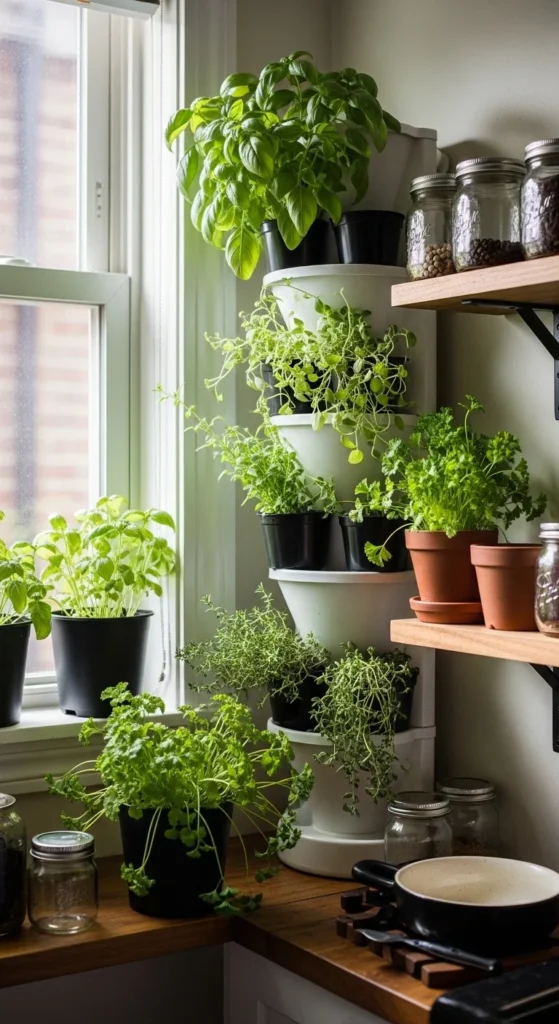
Vertical herb gardens are perfect for small indoor spaces. They save counters, brighten kitchens, and keep fresh herbs within reach. From DIY pallet walls to freestanding towers, there are many ways to grow herbs without sacrificing space. Whether you want a low-maintenance hydroponic system or a simple hanging pot setup, vertical gardens make herbs accessible year-round. They also add greenery and life to any urban apartment or compact kitchen.
1. Hanging Mason Jar Wall
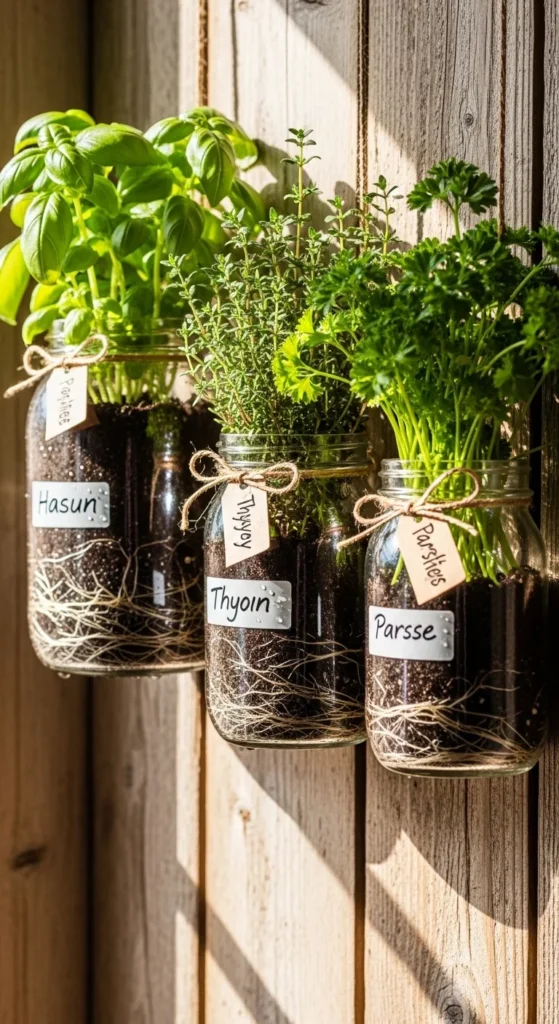
Turn mason jars into a charming vertical herb wall. Hang them on hooks attached to a wooden board. Fill with soil and your favorite herbs like basil, thyme, or parsley. Mason jars show soil moisture, so you know when to water. Use pebbles at the bottom for drainage. This setup is lightweight, budget-friendly, and perfect for renters. Rotate jars occasionally for even sunlight exposure.
2. DIY Pallet Herb Garden
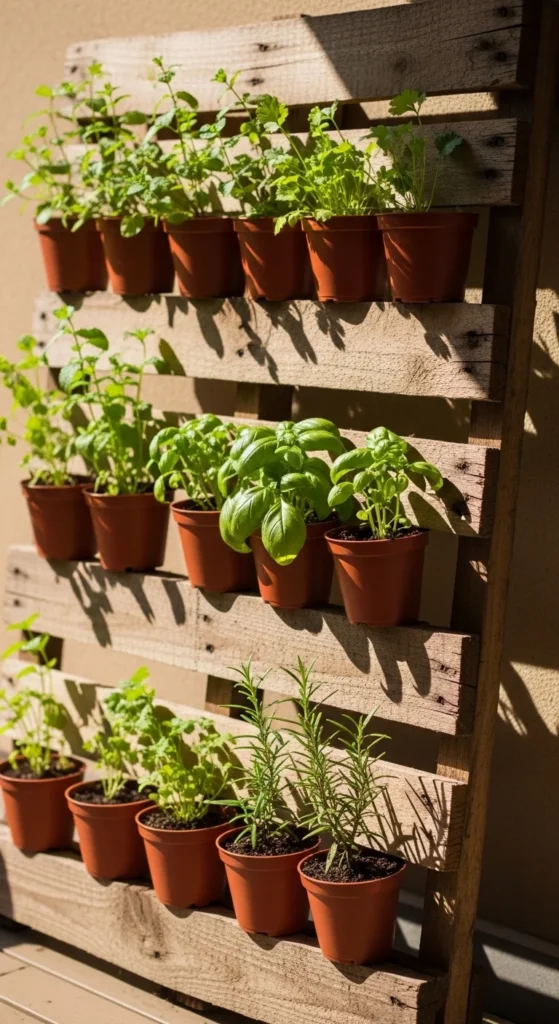
Repurpose a wooden pallet into a vertical garden. Sand and paint if desired, then fill each slot with small pots or soil pockets. Herbs like mint, cilantro, and parsley grow well. Pallets are inexpensive and easy to lean against a wall or hang. Make sure pots are secure and water carefully to prevent dripping. Rotate the pallet occasionally so herbs get even sunlight. This is a low-cost, rustic solution for small kitchens.
3. Stackable Freestanding Tower
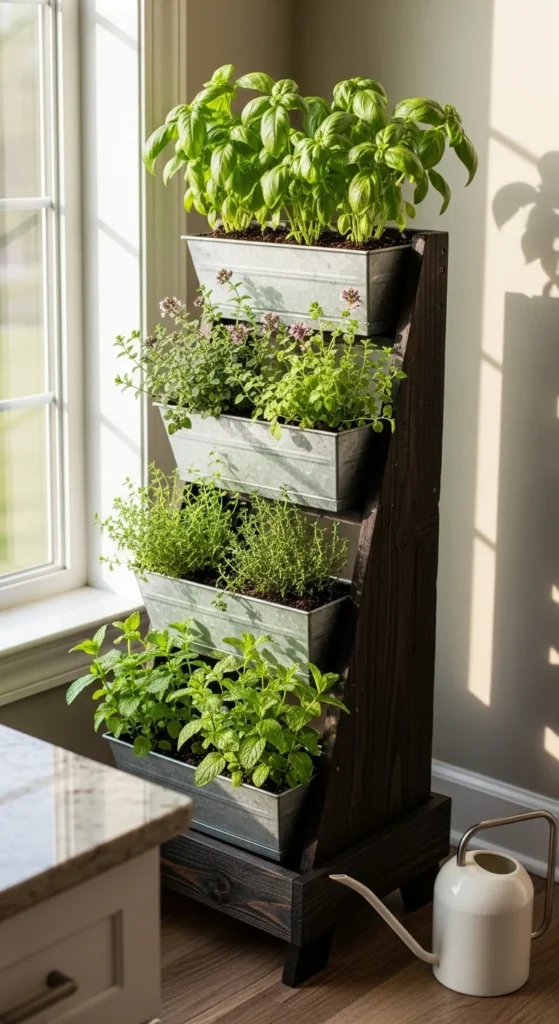
Stackable towers like Mr. Stacky or VIVOSUN save floor space while holding multiple herbs. Each tier has its own pot, making watering simple. Herbs like basil, thyme, and oregano do well. Towers can hold 18–36 plants in a small footprint. Water top-to-bottom to use gravity feeding. Lightweight pots prevent tipping. Perfect for renters or apartments, this vertical setup keeps herbs accessible at eye level, making harvesting easy.
4. Wall-Mounted PVC Pipe Planters
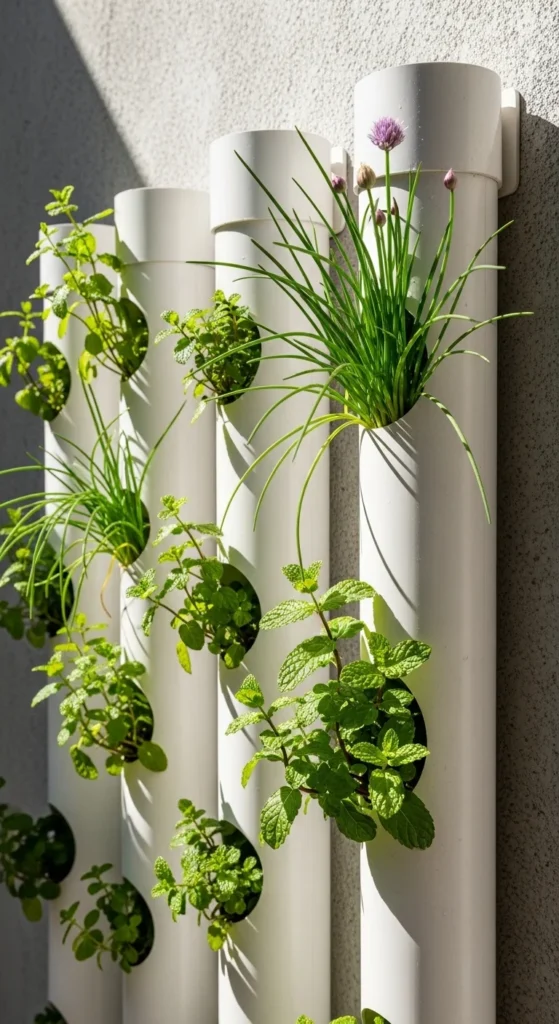
PVC pipes make a creative wall-mounted herb display. Cut slots to insert soil and herbs. Mount pipes securely, filling them with herbs like chives, mint, or oregano. Lightweight and cheap, PVC pipes work for apartments or small kitchens. Water carefully to prevent leaks. Label each pipe for easy identification. Rotate herbs occasionally for balanced sunlight. This system saves floor space and creates a modern, clean look.
5. Hanging Macrame Baskets
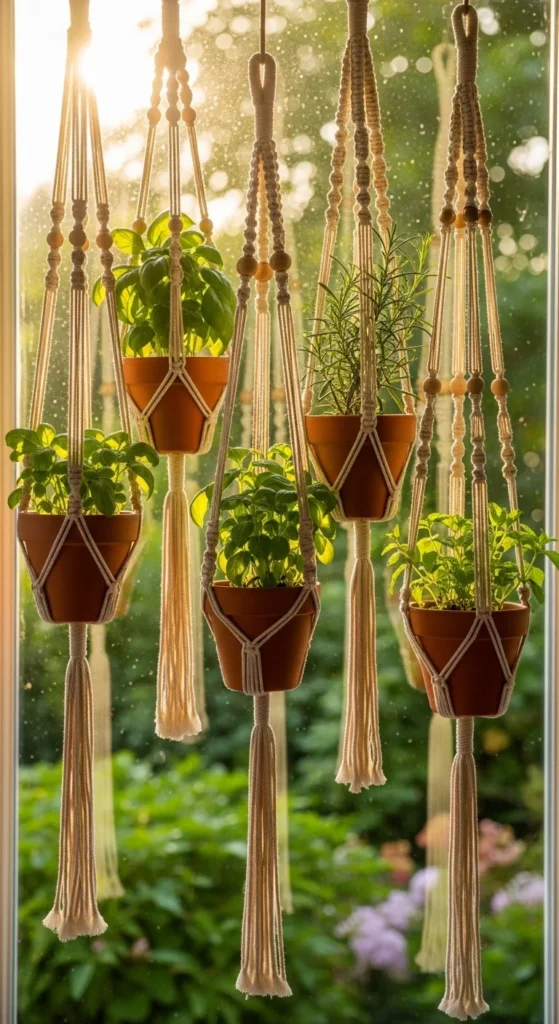
Use macrame cords to suspend small pots from the ceiling. Herbs like basil, parsley, and mint thrive in hanging pots. Macrame adds texture and style to the kitchen. Pots should have drainage holes and saucers to prevent dripping. Hang near windows for sunlight. Lightweight pots prevent stress on hooks. This method is renting-friendly, as hooks can be removed without damage, and it brings greenery into compact spaces.
6. Magnetic Herb Pots on Fridge
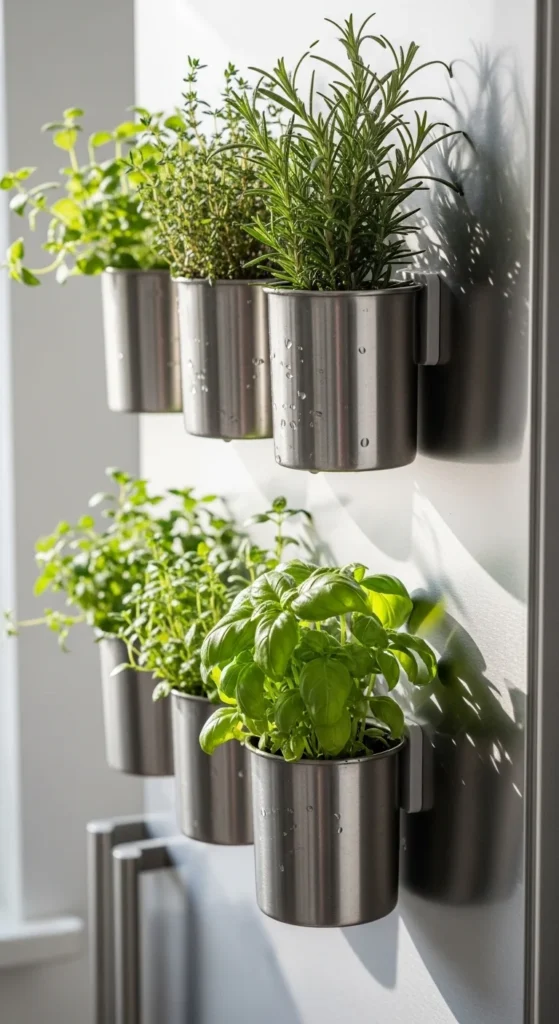
Magnetic pots attach directly to your fridge or metal surfaces, creating a vertical herb garden without wall mounting. Herbs like thyme, rosemary, and basil grow well. Pots should be lightweight and have drainage trays to catch water. Ideal for tiny kitchens, they keep herbs within reach while cooking. Rotate occasionally for light and prune regularly. This space-saving, easy setup is perfect for renters or urban apartments.
7. Tiered Hanging Wire Baskets
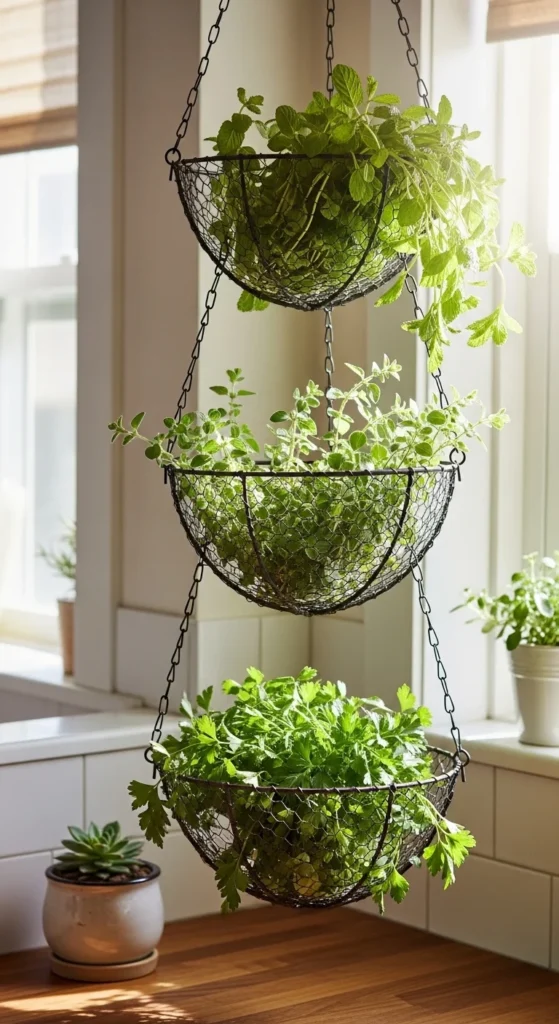
Wire baskets can be stacked vertically with chains. Each basket holds soil and herbs like mint, oregano, and parsley. Lightweight baskets reduce stress on supports. Line baskets with coir or trays to catch water. Hang near windows for sunlight, rotate occasionally, and prune to avoid overcrowding. This vertical method is visually appealing and keeps multiple herbs organized in one compact area.
8. Repurposed Shoe Organizer
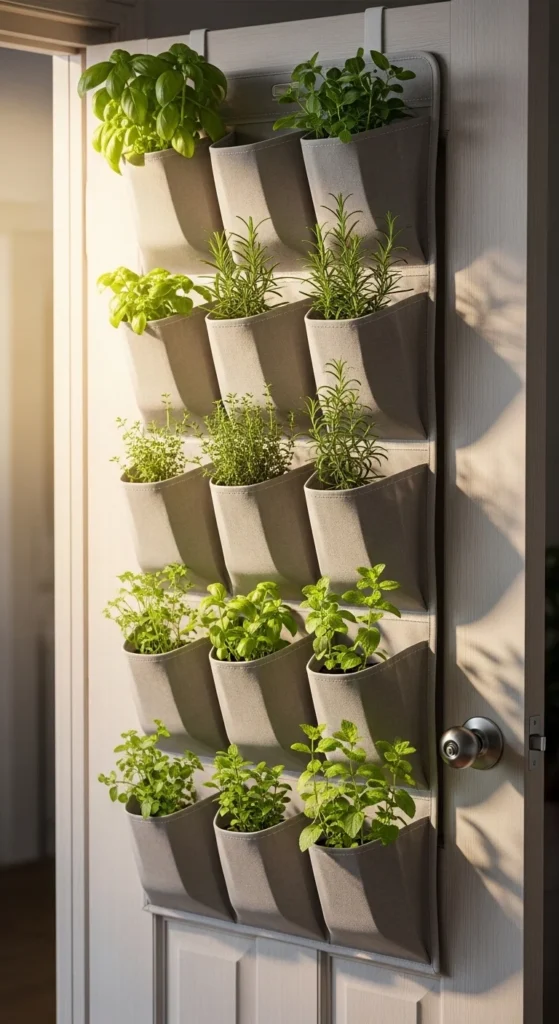
Use a fabric shoe organizer on the back of a door. Each pocket holds small herb pots or soil bags. Herbs like cilantro, basil, and thyme thrive. The pockets keep soil contained and reduce mess. Hang near windows or under grow lights. Lightweight and removable, this method is ideal for renters, saving both counter and wall space. Rotate herbs occasionally to ensure even growth.
9. Hanging Ladder Garden
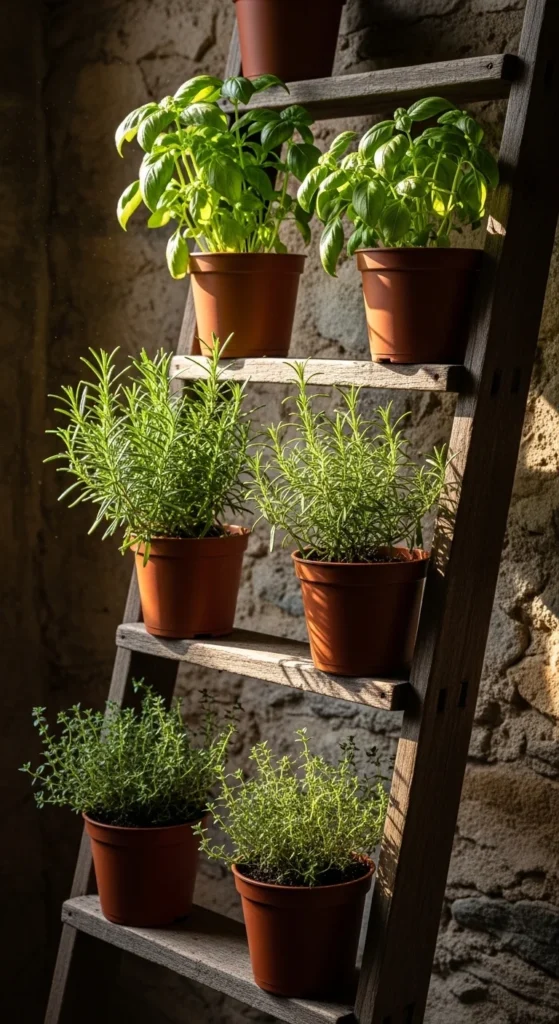
Repurpose a wooden ladder as a vertical herb garden. Place small pots on each rung or hang pots from side hooks. Herbs like basil, rosemary, and thyme work well. Lean the ladder securely against a wall. Rotate herbs for sunlight and water carefully. This method is budget-friendly and adds rustic charm while maximizing vertical space.
10. Floating Shelf with Hanging Pots
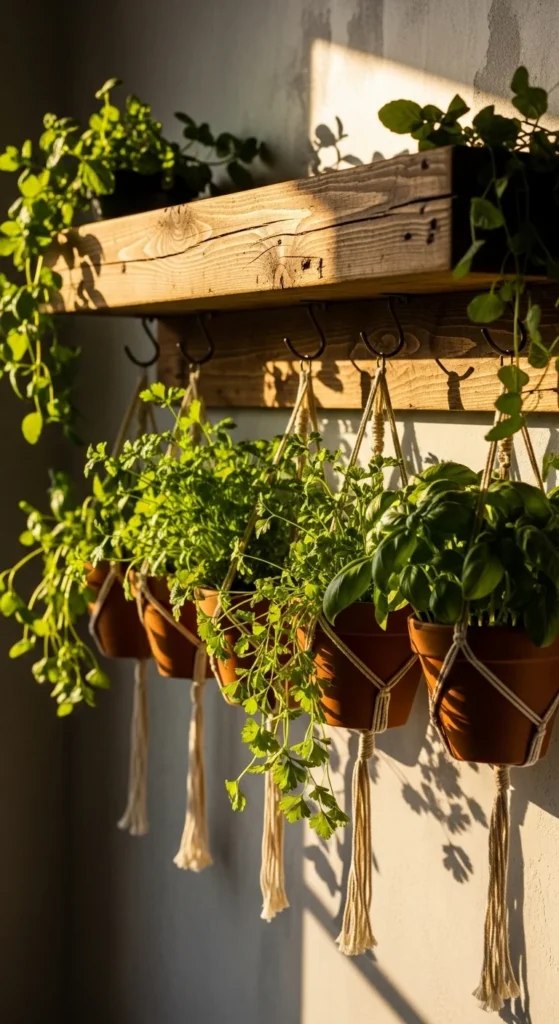
Combine a floating shelf with hanging pots. Shelf holds cookbooks or small décor while herbs hang underneath. Herbs like mint, parsley, and basil thrive. Ensure pots are secure and water carefully. This dual-purpose setup saves counter space and adds greenery at eye level. Rotate herbs occasionally for sunlight. It’s practical and decorative.
11. Hydroponic Vertical Garden
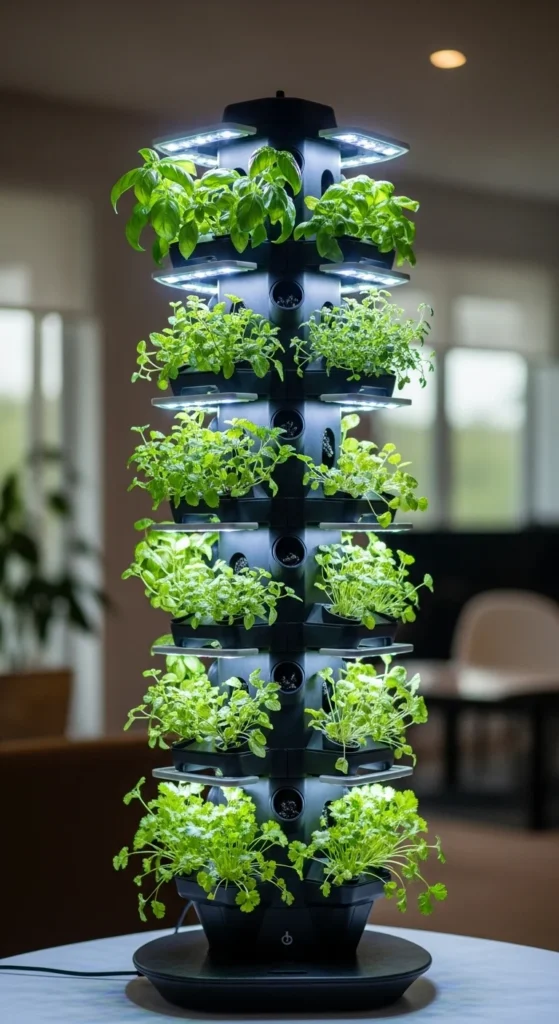
Hydroponic towers like Aerogarden or Lettuce Grow let herbs grow without soil. Nutrient solutions feed the plants. Herbs like basil, oregano, and cilantro do well. They are low-maintenance and mess-free. Place near a power outlet and use LED lights if needed. Perfect for small apartments, hydroponic vertical systems are clean and year-round functional.
12. Bamboo Pocket Wall
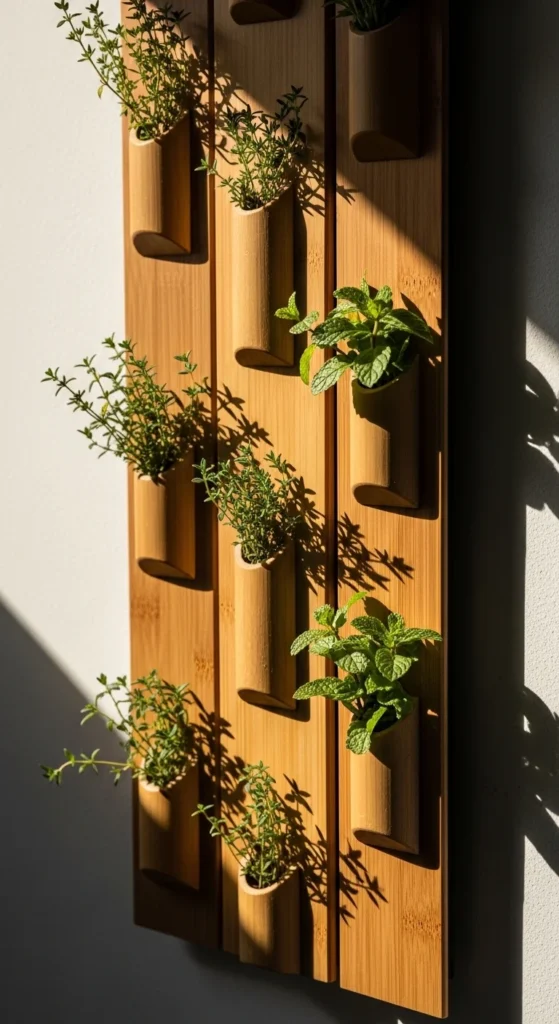
Create herb pockets using bamboo panels. Each pocket holds a small pot or soil insert. Herbs like thyme, mint, and parsley grow well. Lightweight bamboo is renter-friendly. Hang near a window. Water carefully to prevent leaks. Label pockets to keep herbs organized. This natural, sustainable method saves floor space and adds texture to your kitchen.
13. Hanging Terrarium Pots
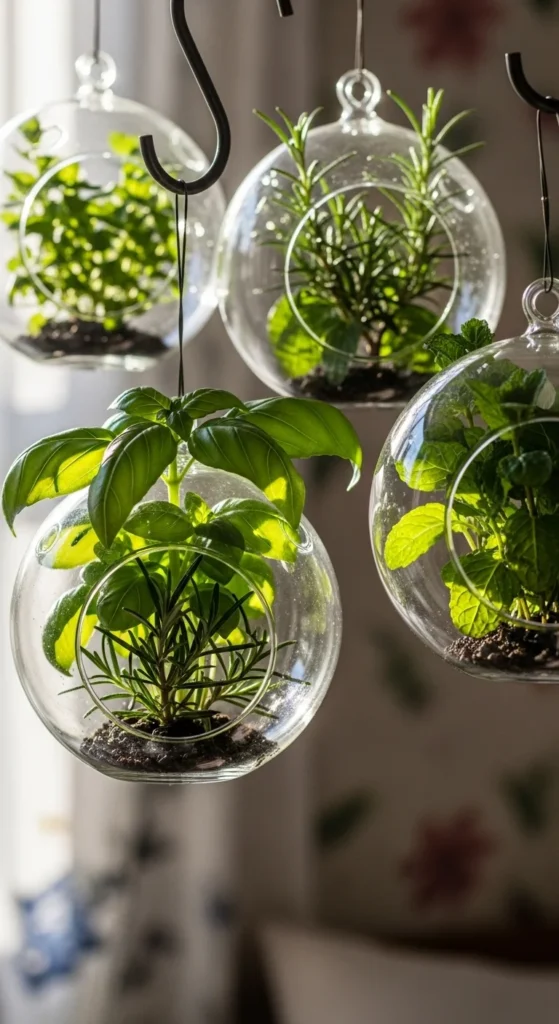
Glass terrarium pots suspend from hooks for a modern look. Herbs like basil, thyme, or oregano thrive in small soil-filled terrariums. Use pebbles at the bottom for drainage. Hang near windows or under grow lights. Terrariums prevent soil spills and allow herbs to be rotated for sunlight. This creates a stylish vertical herb display.
14. Wooden Crate Wall Stack
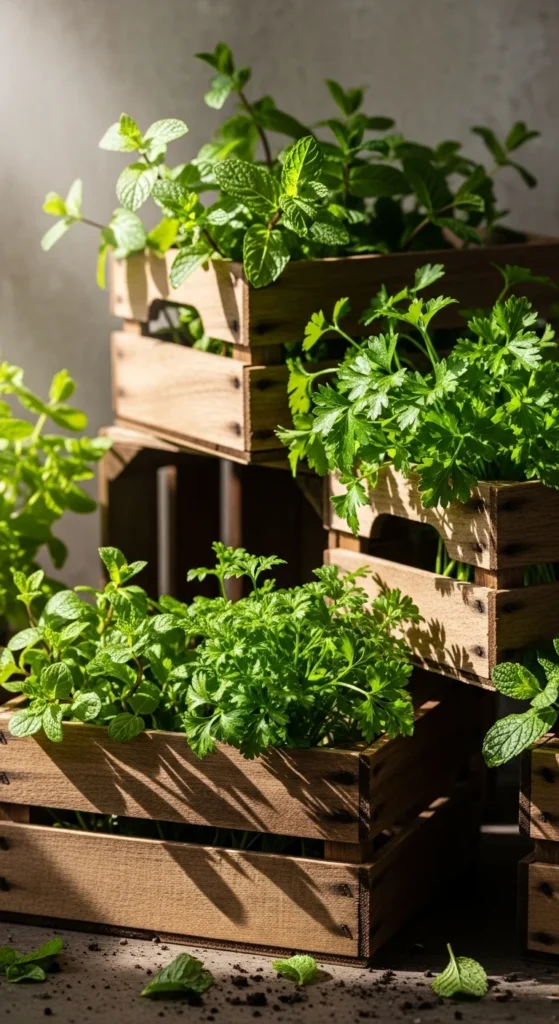
Stack small wooden crates vertically to create a DIY herb wall. Each crate holds soil and herbs like mint, parsley, or cilantro. Secure stacks with screws or brackets if needed. Rotate for sunlight and water carefully. Crates are inexpensive and customizable. This modular vertical design is perfect for small kitchens or urban apartments.
15. Hanging Basket Chandelier
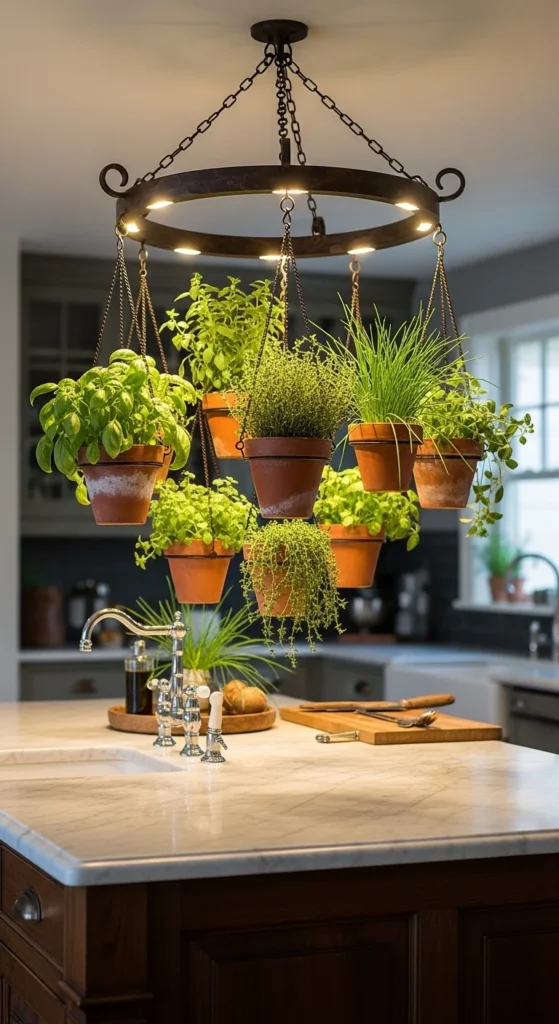
Turn a chandelier frame into a hanging herb garden. Suspend small pots in a circle above a counter or island. Herbs like basil, thyme, and parsley thrive. Use lightweight pots and add drip trays. Rotate herbs for light and prune to prevent overcrowding. This decorative vertical setup keeps herbs accessible at eye level.
16. Wall-Mounted Magnetic Strip
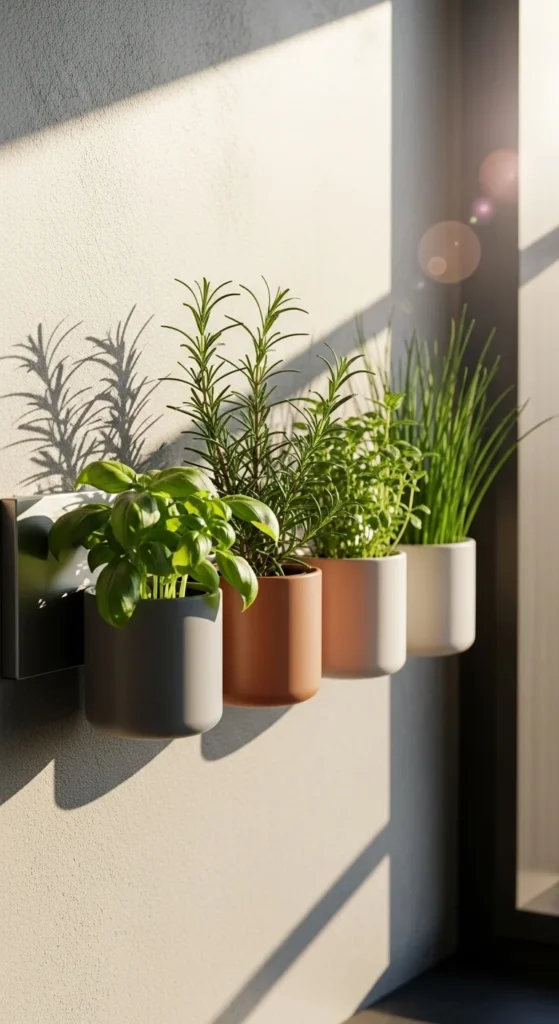
Install a magnetic strip on a wall. Attach small pots with magnets. Herbs like rosemary, basil, and thyme grow well. Keep pots lightweight and add trays to catch drips. Ideal for kitchens with limited counter space. Rotate herbs for sunlight exposure. This modern, minimalist setup saves space while keeping herbs handy.
17. Hanging Bottle Garden
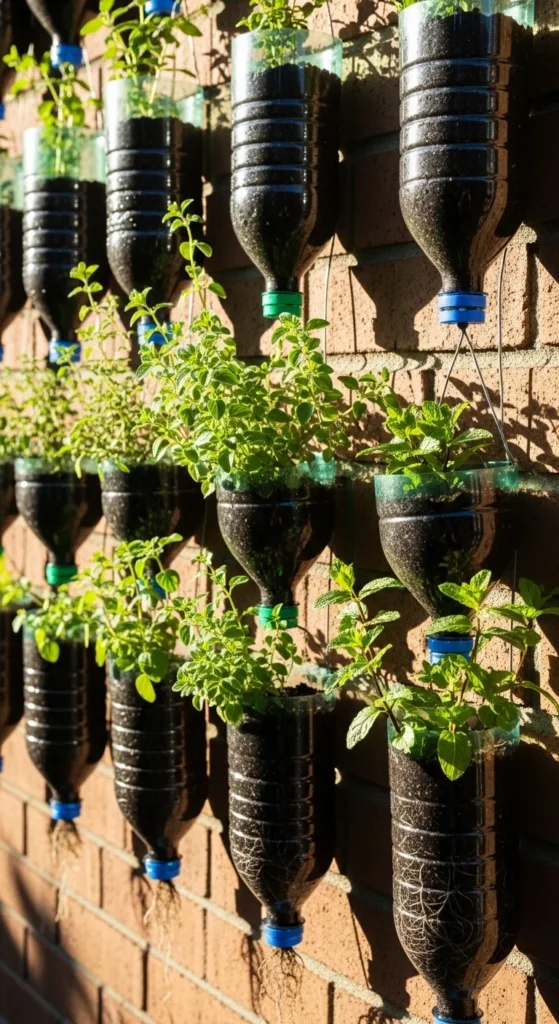
Repurpose plastic bottles for vertical gardens. Cut openings, add soil, and suspend with ropes. Herbs like oregano and mint thrive. Lightweight and eco-friendly, bottles are budget-friendly. Water carefully to avoid leaks. Rotate for sunlight. This DIY vertical method is ideal for compact kitchens or apartments.
18. Ladder Shelf with Hooks
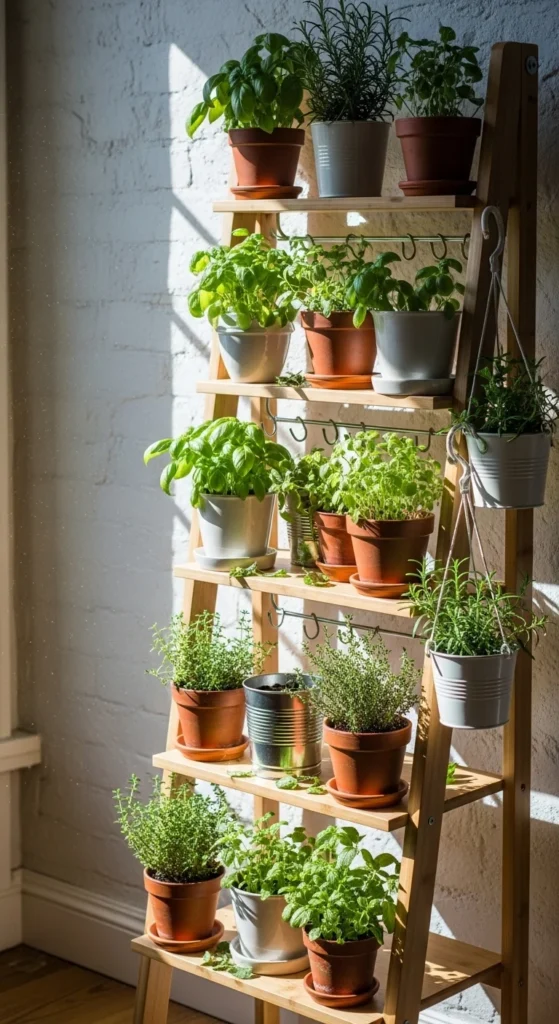
Combine a ladder shelf with hooks. Place small pots on steps and hang additional pots from side hooks. Herbs like basil, mint, and thyme thrive. Rotate for sunlight. Water carefully and prune to avoid overcrowding. This layered vertical design saves space and adds a rustic kitchen element.
19. Fabric Pocket Frame
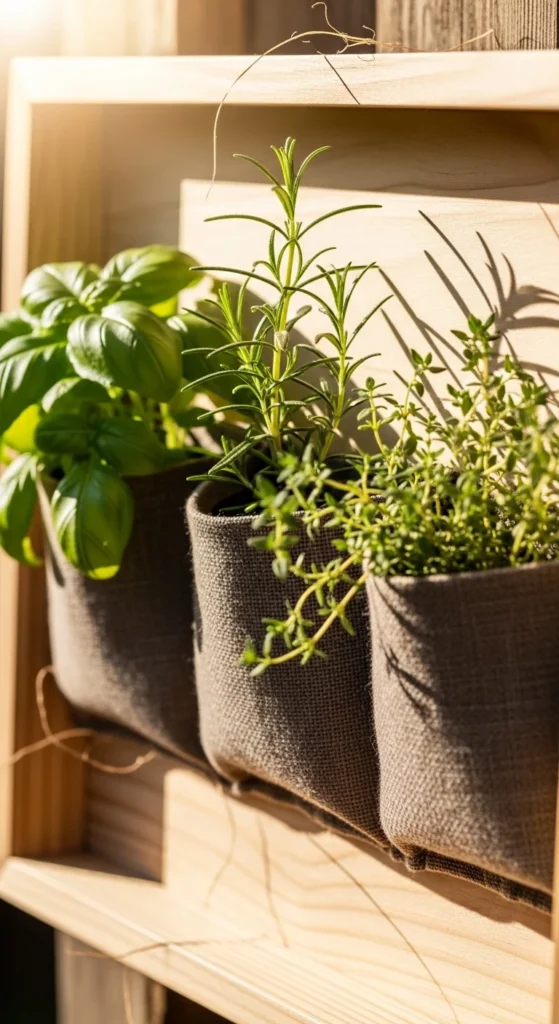
Use fabric pockets on a frame for vertical planting. Each pocket holds soil or small pots. Herbs like basil, cilantro, and parsley grow well. Hang near windows. Lightweight and removable, it’s ideal for renters. Water carefully to avoid dripping. Rotate herbs occasionally for sunlight.
20. Minimalist Rod with Hanging Pots
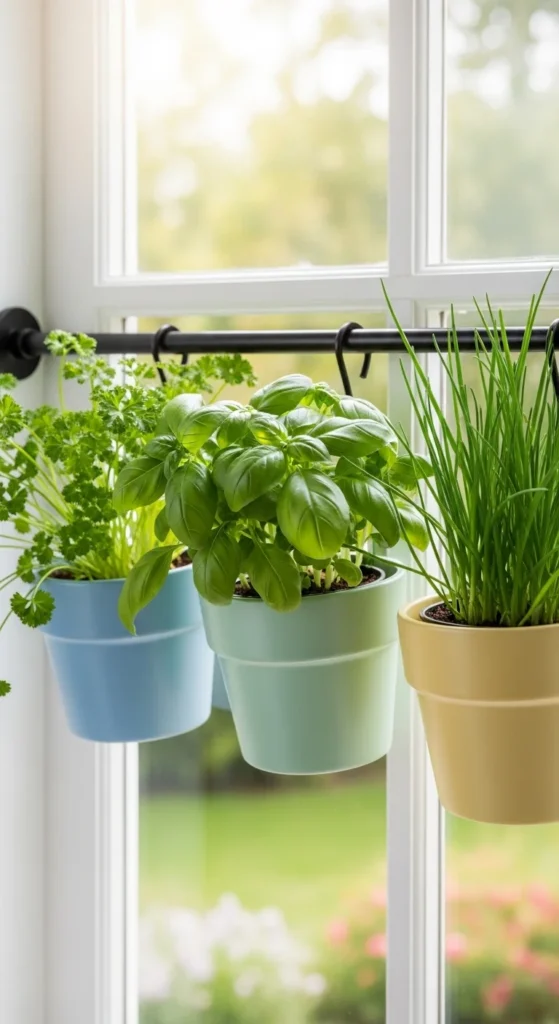
Mount a slim rod on a wall. Hang small pots with herbs like parsley, thyme, and basil. Lightweight pots prevent strain. Water carefully and add trays if needed. Rotate for sunlight. This minimalist setup is perfect for small spaces, offering a neat, vertical display without clutter.
21. Corner Shelf Herb Tower
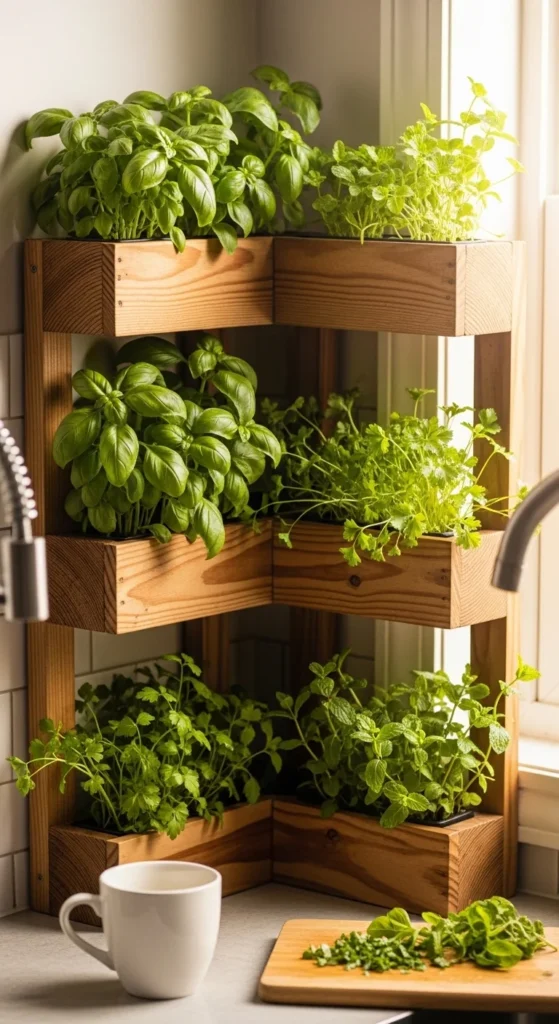
Use a corner shelf to turn unused corners into a vertical herb garden. Each tier holds pots with herbs like basil, parsley, and mint. Maximize vertical space without crowding your kitchen counters. Choose lightweight pots for safety and rotate plants for sunlight exposure. Water carefully to prevent spills. This method is budget-friendly, renter-safe, and adds greenery to overlooked spaces.
22. Hanging Teacup Garden
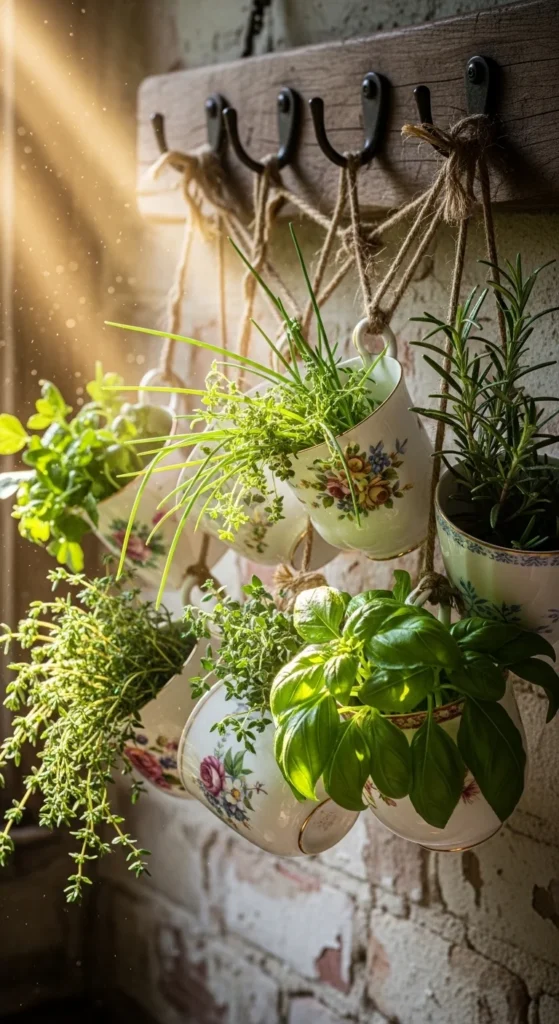
Repurpose old teacups as mini herb planters. Hang them from hooks or nails. Herbs like thyme, chives, and oregano grow well in small amounts of soil. Ensure proper drainage by adding pebbles at the bottom. Rotate cups for sunlight and water gently. This creative vertical solution is whimsical, space-saving, and perfect for small kitchens or apartments.
23. Ladder-Style Window Herb Rack
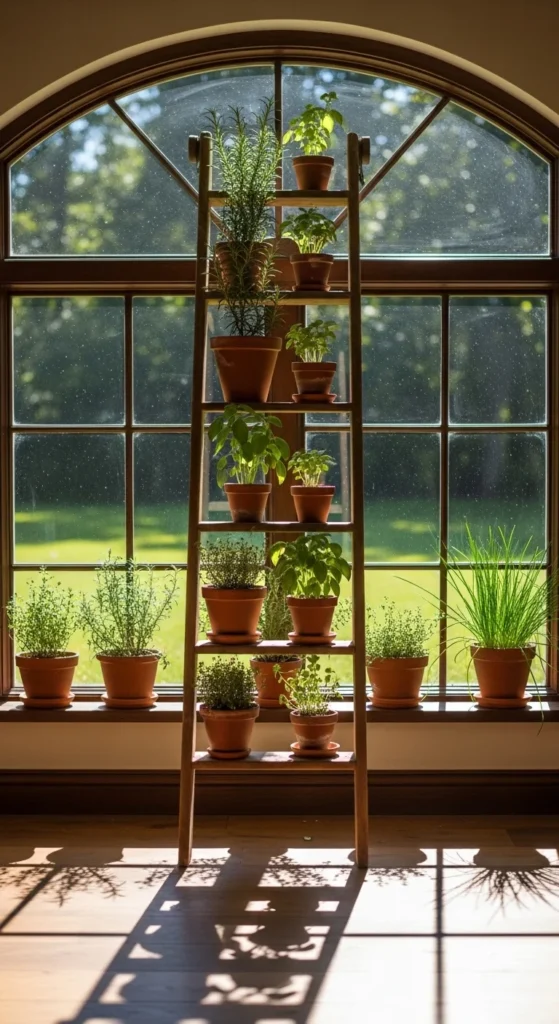
Place a ladder in front of a window for natural light. Pots sit on rungs at varying heights. Herbs like rosemary, basil, and oregano thrive. Water carefully to avoid runoff. Rotate plants occasionally for even growth. This vertical setup is functional, simple, and decorative, turning a plain window corner into a herb garden hotspot.
24. Vertical Crate Stack with Chalkboard Labels
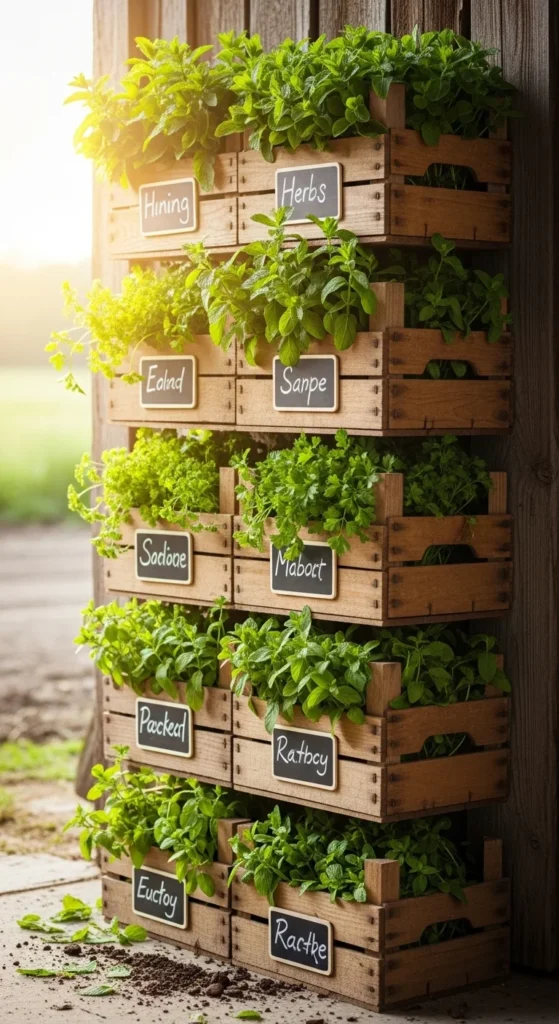
Stack wooden crates vertically and add chalkboard labels to identify herbs. Herbs like mint, parsley, and basil do well. Secure crates to prevent tipping. Rotate plants for sunlight. Water carefully to prevent leaks. Labels make pruning and harvesting easier. This setup is interactive, organized, and looks charming in small indoor spaces.
25. Hanging Seedling Tray System
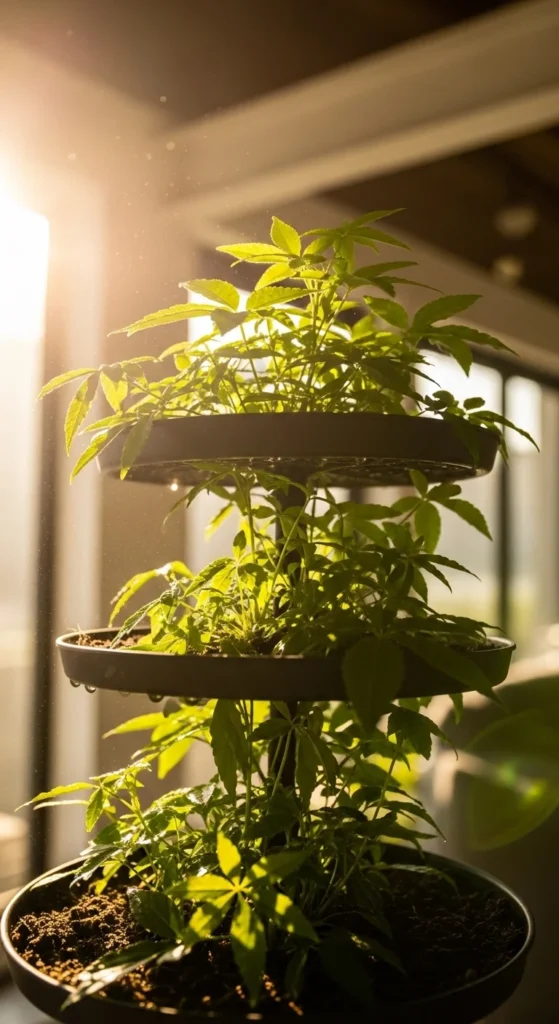
Use suspended seedling trays to create a vertical herb system. Each tray holds small pots or seedling plugs. Herbs like cilantro, basil, and thyme thrive. Ensure trays are secure and water gently. Rotate trays for sunlight exposure. This method maximizes vertical space and allows easy seasonal rotation of herbs in a compact area.
26. Pegboard Vertical Garden
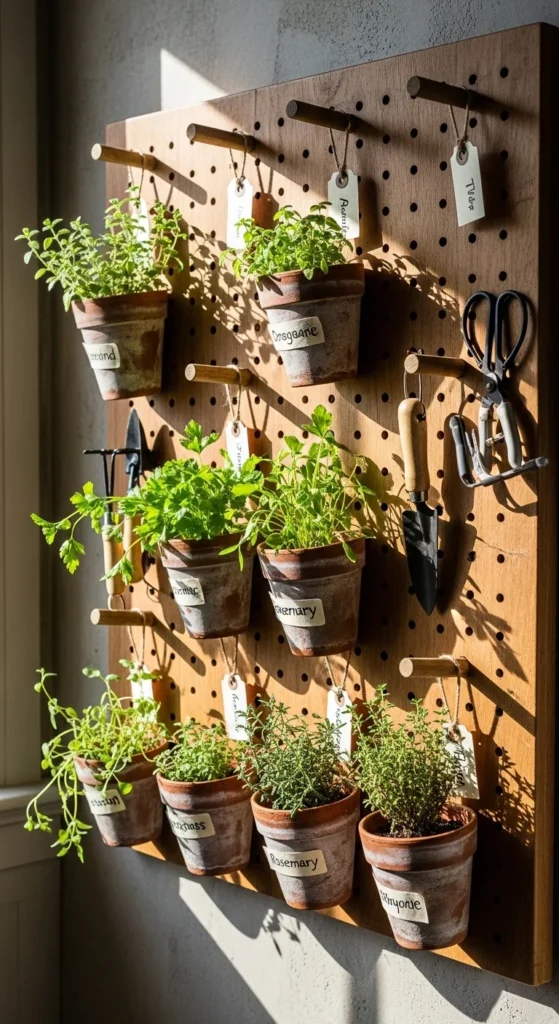
Install a pegboard on your wall. Hang small pots on hooks. Herbs like oregano, parsley, and mint grow well. Move hooks around to adjust plant spacing. Water carefully and rotate herbs for light. Pegboards are customizable, lightweight, and renter-friendly, letting you create a vertical herb display tailored to your space.
27. Hanging Ladder with Macrame Pockets
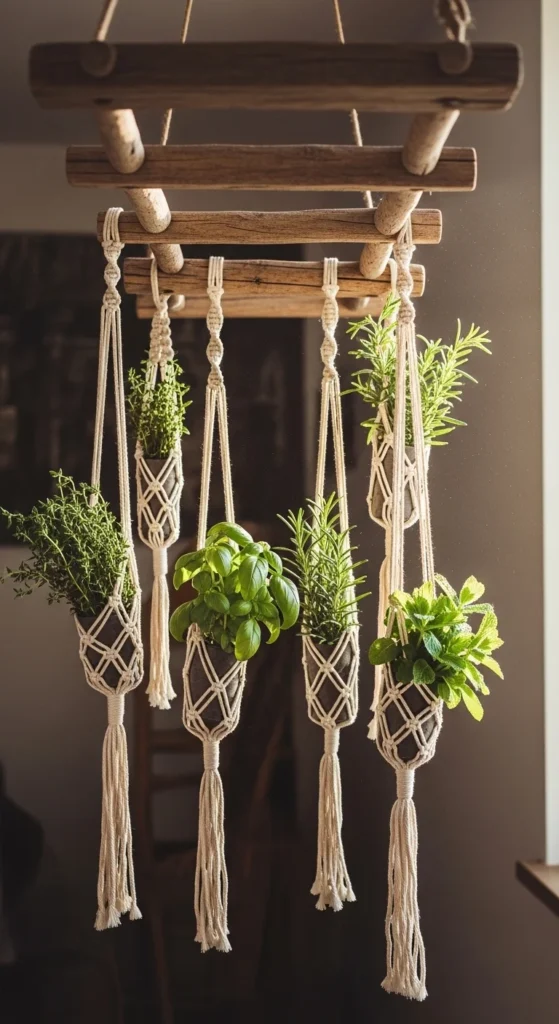
Combine a hanging ladder with macrame pockets. Each pocket holds soil and herbs like thyme, basil, or oregano. Suspend securely from ceiling hooks. Rotate pockets for sunlight and prune to prevent overcrowding. This creative vertical setup is stylish and space-saving, perfect for small kitchens or apartments.
28. Stackable Crate Tower with Mini Planters
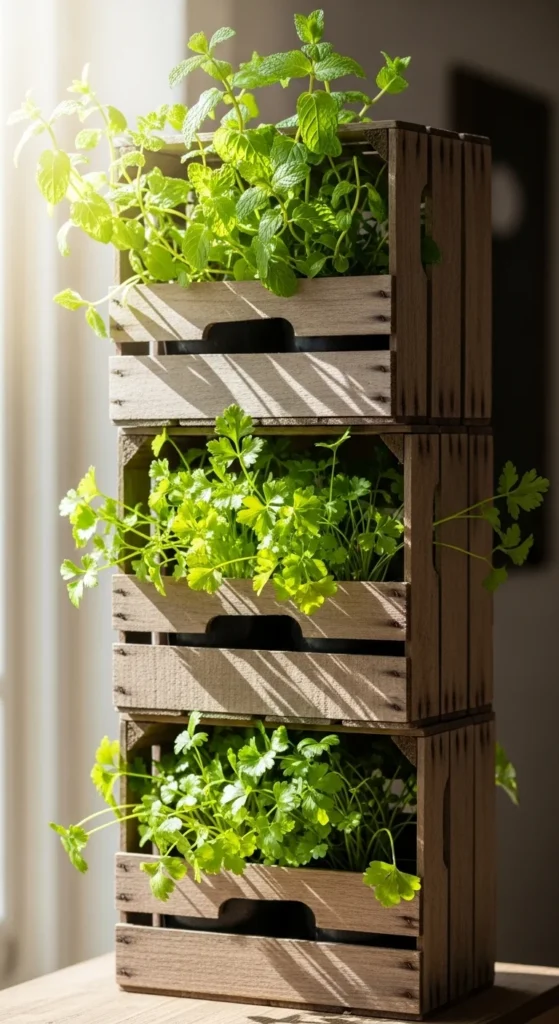
Stack small crates to form a vertical herb tower. Place mini planters in each crate. Herbs like mint, parsley, and chives do well. Secure the stack and rotate plants for sunlight. Water carefully to avoid spillage. Crates can be painted or left natural for style. This modular, low-budget setup maximizes small spaces efficiently.
29. Hanging Bamboo Shelf with Pots
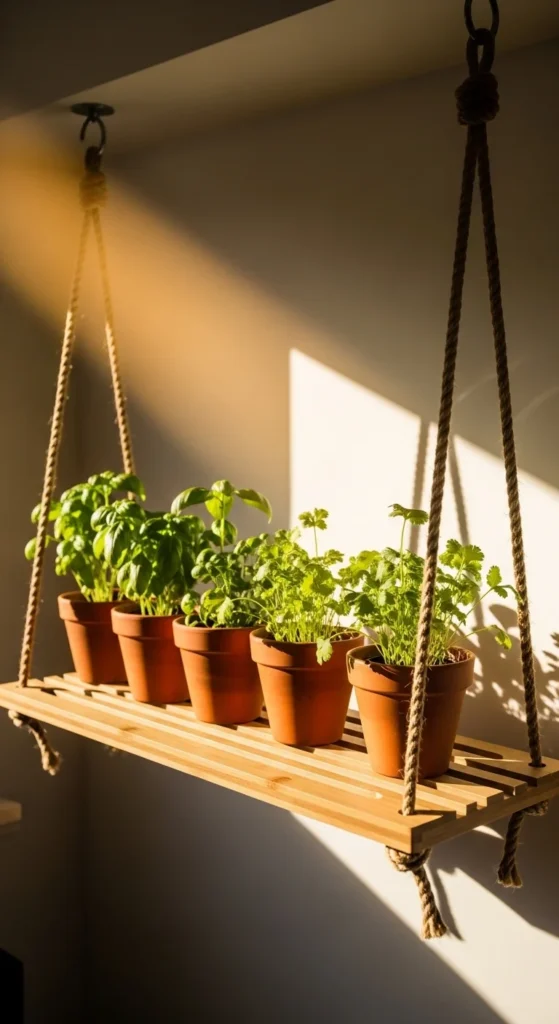
Hang a bamboo shelf from the ceiling. Place small herb pots on it. Herbs like basil, cilantro, and parsley thrive. Water gently to avoid dripping. Rotate pots for sunlight. Bamboo is lightweight and natural-looking, adding charm to small kitchens while keeping herbs accessible.
30. Wall-Mounted Wire Grid Herb Rack
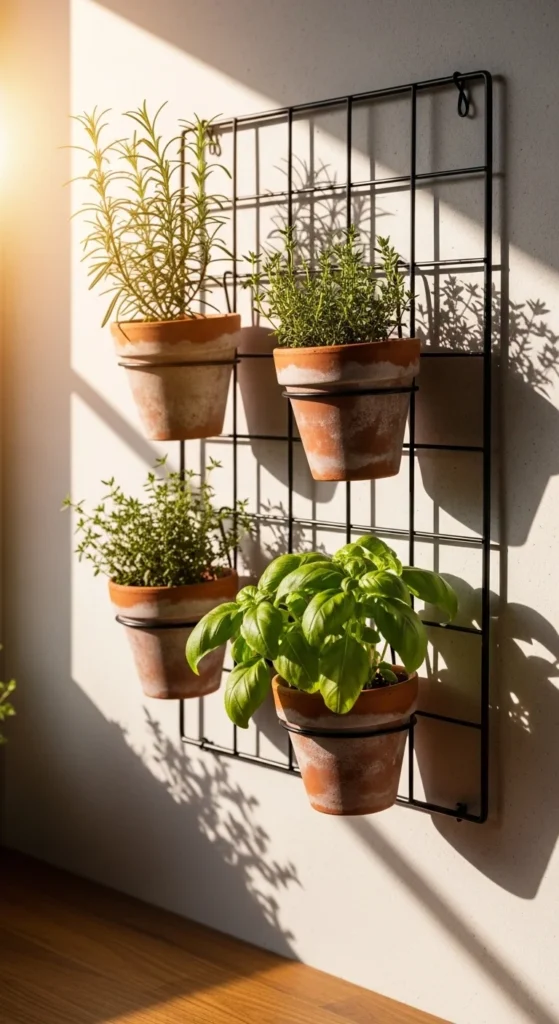
Install a wire grid on your wall. Use clips to attach small herb pots. Herbs like rosemary, thyme, and basil grow well. Rotate plants for sunlight and water carefully. The wire grid is flexible, renter-friendly, and visually organized, turning an empty wall into a vertical herb garden.
Conclusion
From hanging mason jars to hydroponic towers, vertical herb gardens offer practical solutions for small spaces. They provide year-round access to fresh herbs, save floor and counter space, and add greenery to any apartment or kitchen. Start with simple DIY setups or invest in modular towers. By choosing the right herbs, rotating for sunlight, and keeping care simple, you can transform your indoor space into a productive, green oasis.
Leave a Reply