

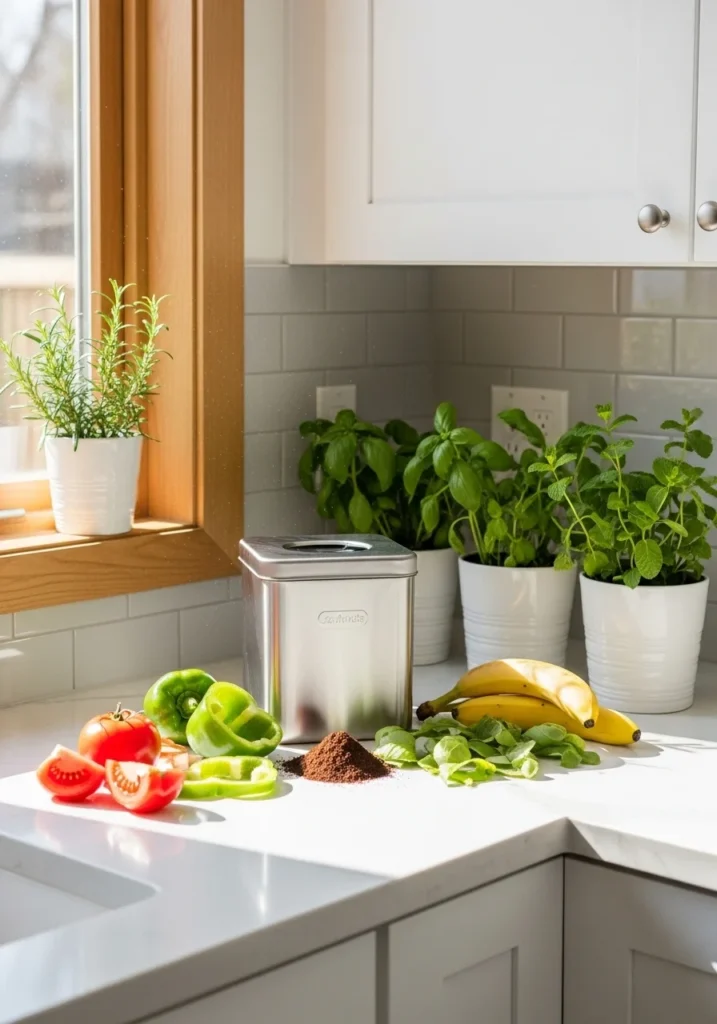
Indoor composting doesn’t have to be messy or complicated. Even in a small apartment or a compact kitchen, you can turn food scraps into nutrient-rich compost. The key is choosing the right system, keeping it odor-free, and sticking to simple routines. From worm bins to Bokashi buckets, there are ways to compost indoors without clutter or pests. This guide walks through 23 practical indoor composting ideas, each designed for small spaces, limited budgets, and real-life kitchens.
1. Countertop Worm Bin for Beginners
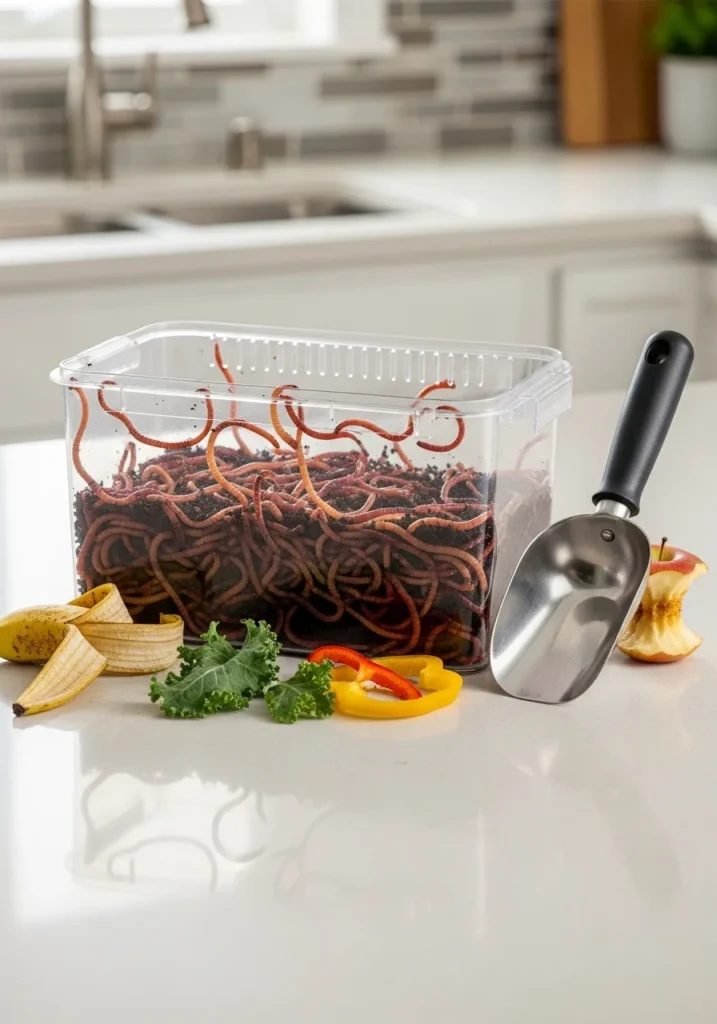
A countertop worm bin is perfect for starting vermicomposting in a small space. Use red wiggler worms in a shallow, ventilated container. Layer food scraps with shredded newspaper or cardboard to keep moisture balanced. Add scraps gradually—avoid overloading. Keep the bin near your sink for convenience. Budget tip: Repurpose a plastic storage container with holes drilled in the lid. Worms thrive on vegetable peels, coffee grounds, and fruit scraps, but avoid oils or dairy. The bin produces rich compost you can add directly to potted plants, keeping your kitchen tidy and your herbs thriving.
2. DIY Bokashi Bucket
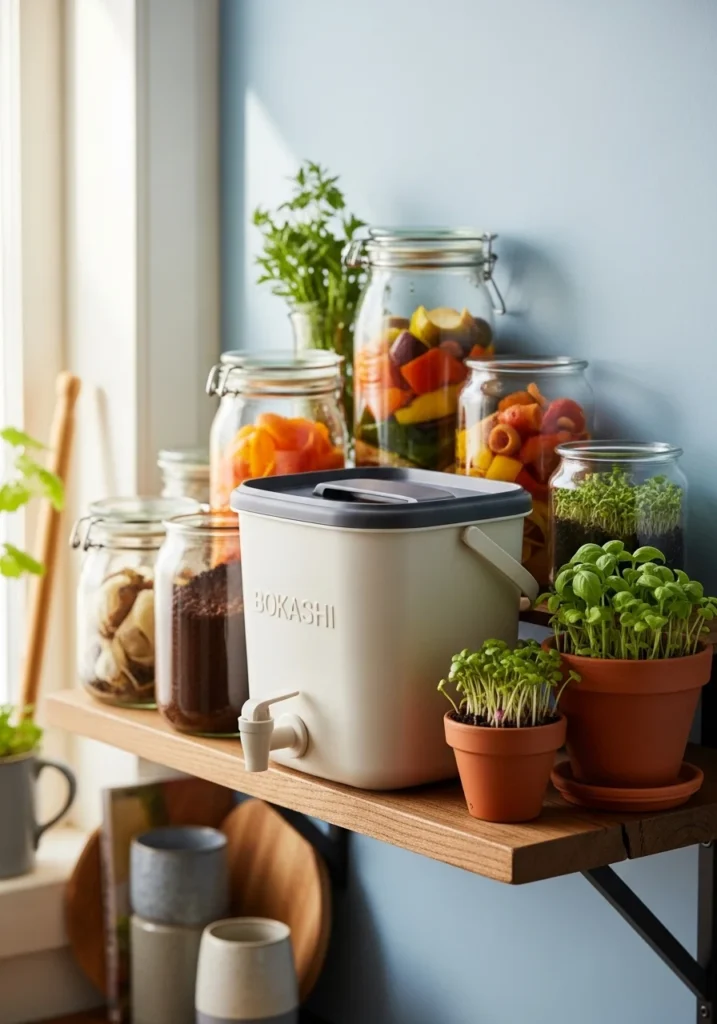
Bokashi composting is ideal if you want to process meat, dairy, and other scraps indoors. Sprinkle Bokashi bran over layers of food waste, pressing down to remove air. Keep the bucket sealed to maintain anaerobic conditions. After fermentation, the material can go into a small garden or even your potted plants. DIY hack: Use a repurposed airtight container with a spigot at the bottom for liquid collection. This method keeps smells minimal, requires little daily effort, and works well on countertops or narrow shelves.
3. Small Aerobic Bin
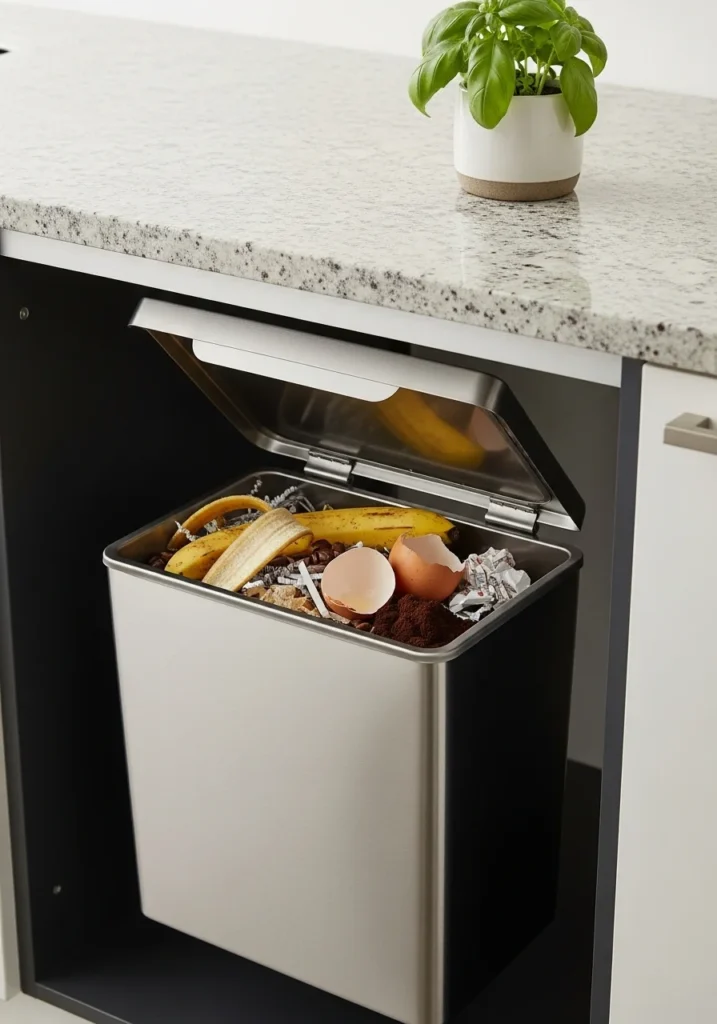
Small aerobic bins work well in tight kitchens. Choose a bin under 5 gallons with ventilation holes. Mix food scraps with shredded newspaper or dry leaves to balance moisture. Stir occasionally to aerate and prevent odor. Tip: Empty it every 2–3 weeks to avoid overfilling. These bins are lightweight, inexpensive, and easy to clean. They’re a simple choice for renters who want indoor composting without bulk or fuss.
4. Electric Food Recycler
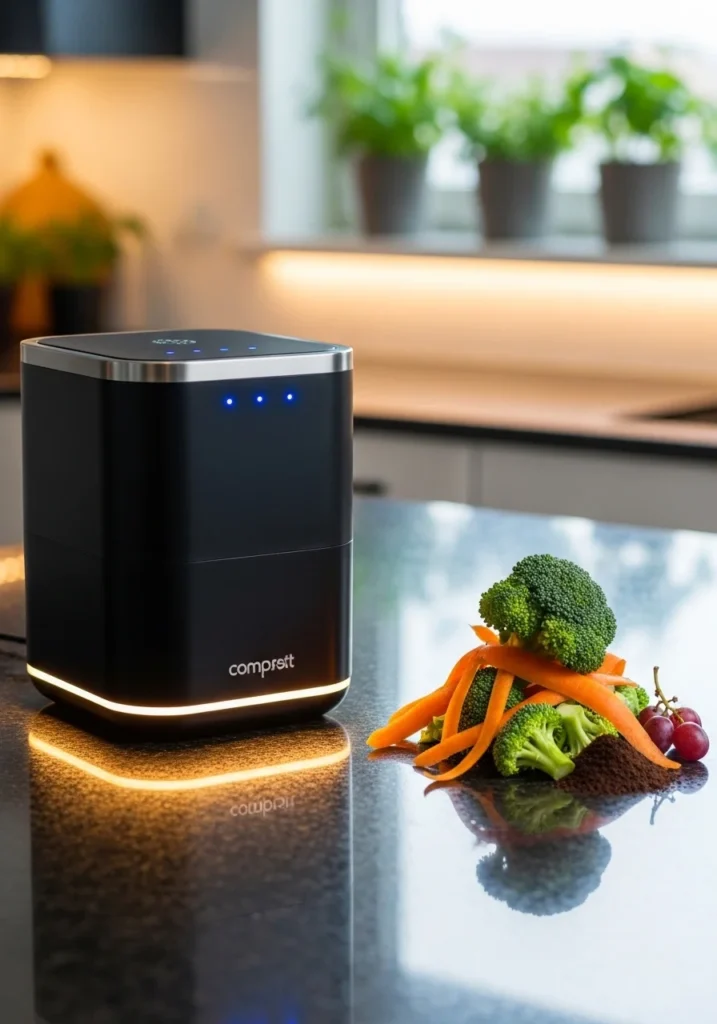
Electric composters like GEME or Reencle process scraps in hours rather than weeks. They grind, heat, and aerate automatically. Perfect for small kitchens where odor control is a priority. Simply add your scraps, press a button, and wait. Most units handle around 2 pounds of food per day, ideal for small households. Although pricier upfront, they save time and keep counters clean. Budget tip: Look for refurbished models or seasonal discounts to make this high-tech solution more affordable.
5. Countertop Bokashi Jar
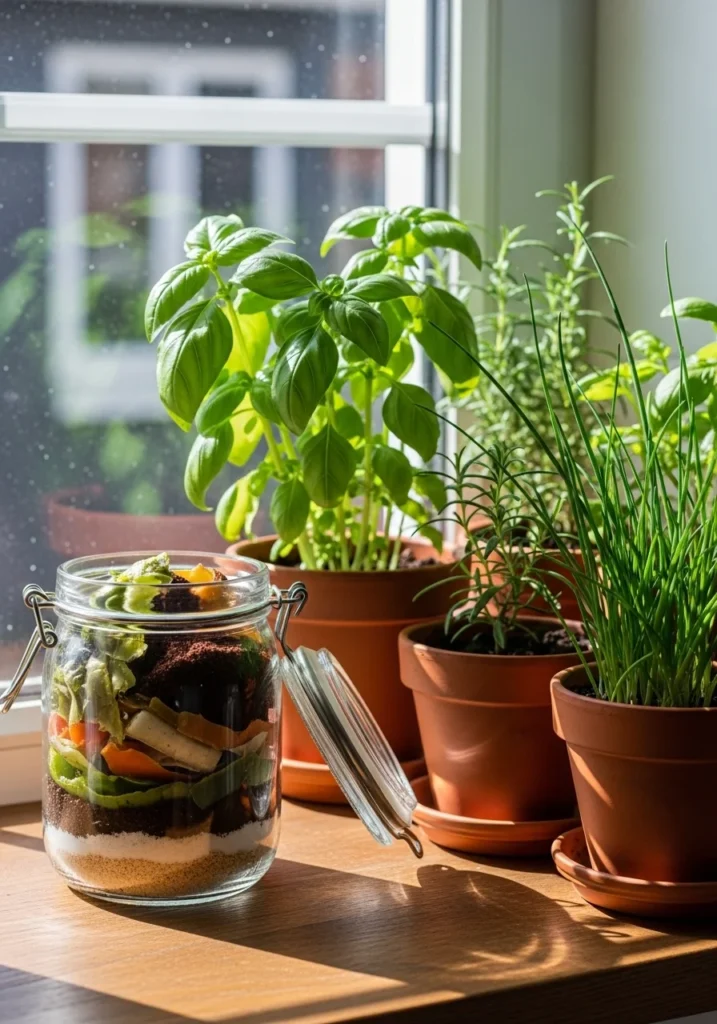
For ultra-compact spaces, a Bokashi jar is perfect. It fits easily on a windowsill or counter. Add scraps with a thin layer of bran, press down, and seal tightly. Collect the liquid separately to dilute as a natural fertilizer. It’s nearly odorless, takes little space, and allows even meat scraps indoors. Pair it with a small potted plant for instant reuse of fermented scraps.
6. Hanging Compost Pouch
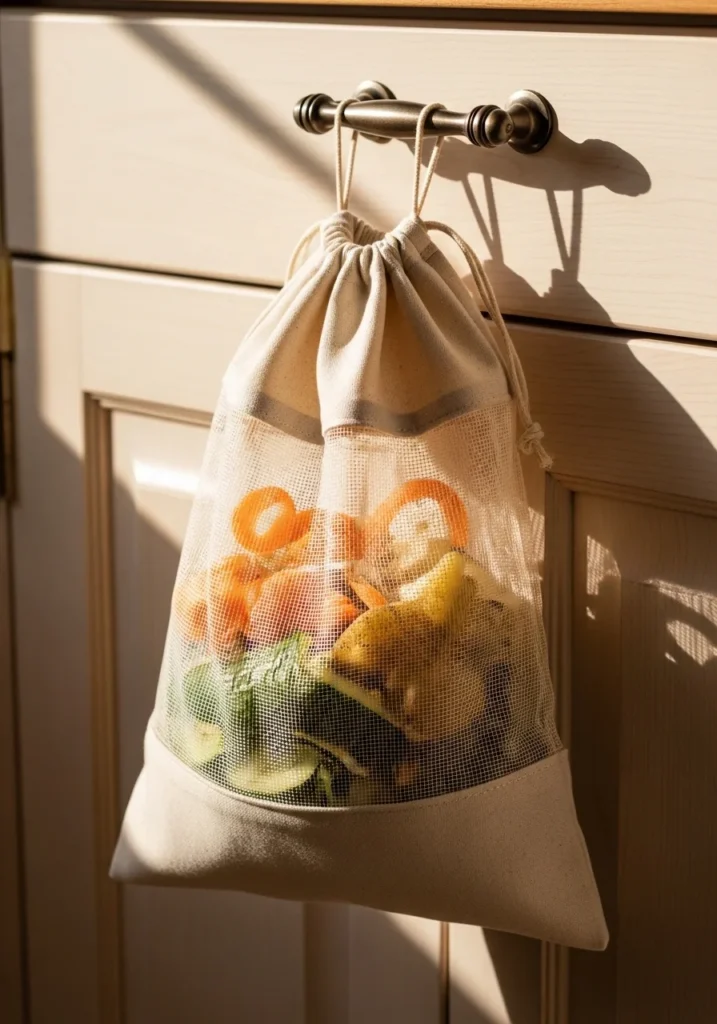
A hanging compost pouch saves counter space. Use breathable canvas or mesh bags with a drip tray underneath. Add daily kitchen scraps and shake gently to mix. Empty every week into a larger compost bin or garden. This method keeps your workspace clean and hands-free. DIY idea: Repurpose a sturdy old tote bag with mesh inserts. Perfect for apartments with no floor space for bins.
7. Stackable Worm Trays
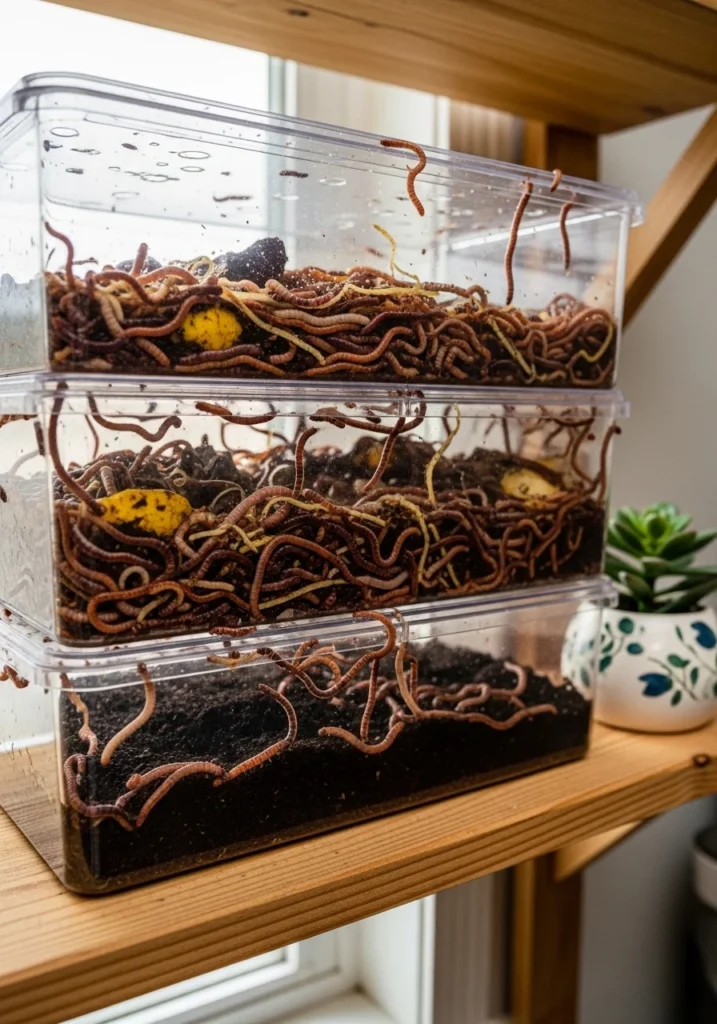
Stackable trays expand vermicomposting vertically. Top trays collect scraps; worms migrate downward as compost forms. This keeps processing continuous and compact. Add bedding like shredded paper and sprinkle water if dry. Space-saving tip: Stack trays near a sunny window but avoid direct heat. Each layer produces ready-to-use castings for potted plants, making small-space composting efficient.
8. Mini Patio Hot Composter
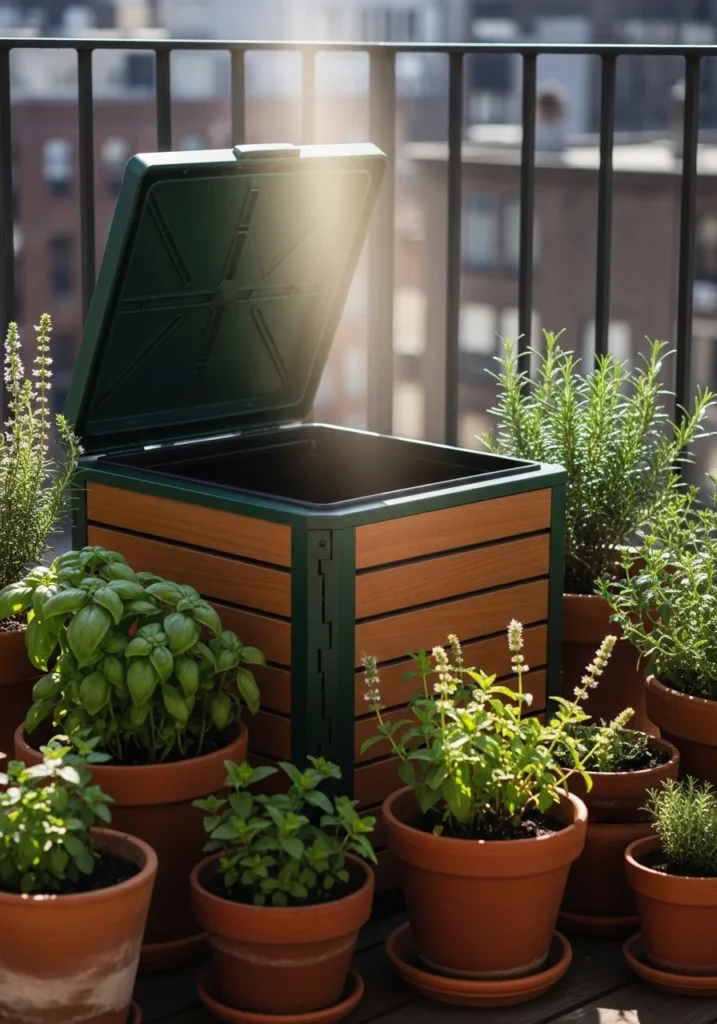
Even balconies can host indoor-style hot composting. A compact, insulated bin retains heat, speeding decomposition. Layer food scraps with brown materials like shredded cardboard. Turn weekly to prevent clumping. Hot composting reduces odor naturally. It’s excellent for small families or homes with a tiny outdoor corner, delivering fast, nutrient-rich compost without a backyard.
9. Compost Drawer
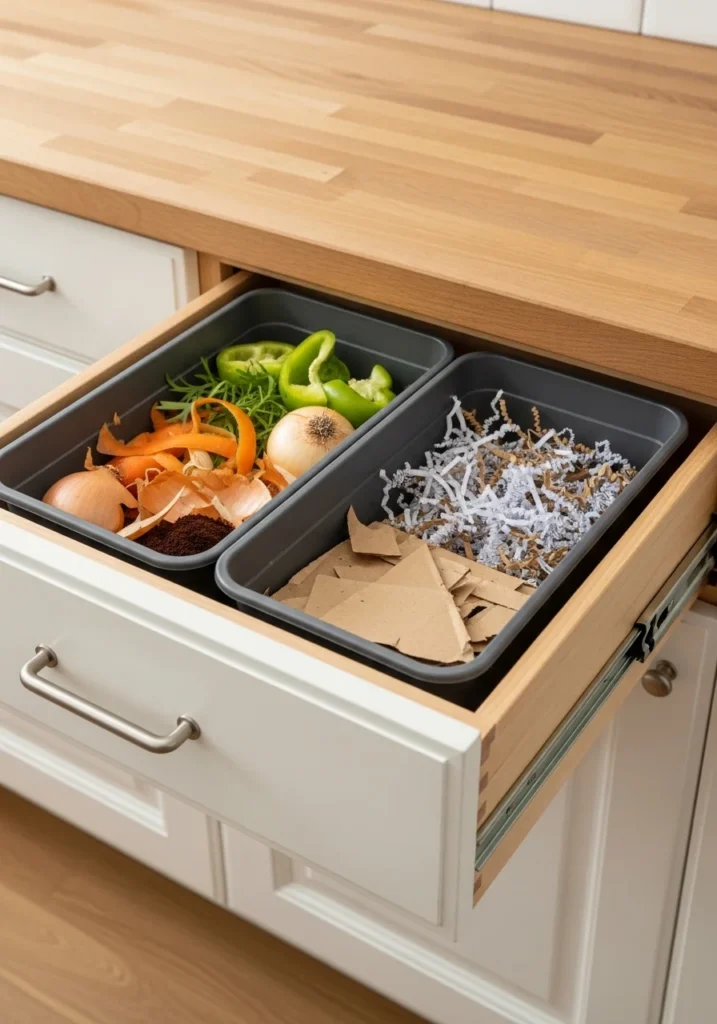
Transform an old drawer into a compost station. Line it with a small tray or plastic insert, drill a few holes for airflow, and add scraps with dry matter. Slide it out daily for maintenance. DIY tip: Keep a small scoop nearby for easy stirring. This method is discreet, integrates seamlessly with your kitchen, and keeps waste out of sight.
10. Glass Jar Mini Compost
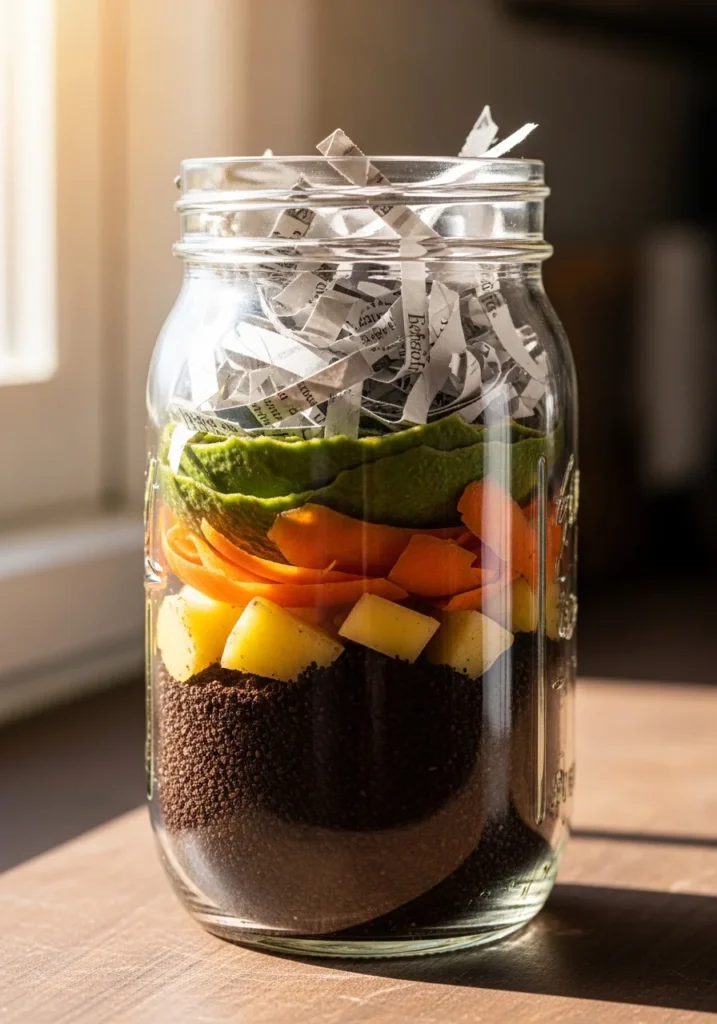
For one-person households, a mason jar mini compost works well. Layer scraps and dry paper or leaves. Seal loosely to allow some airflow. Empty weekly into a larger system or potted plants. Small, tidy, and inexpensive, this method encourages beginners to start composting without committing to a larger bin.
11. Countertop Tumbler
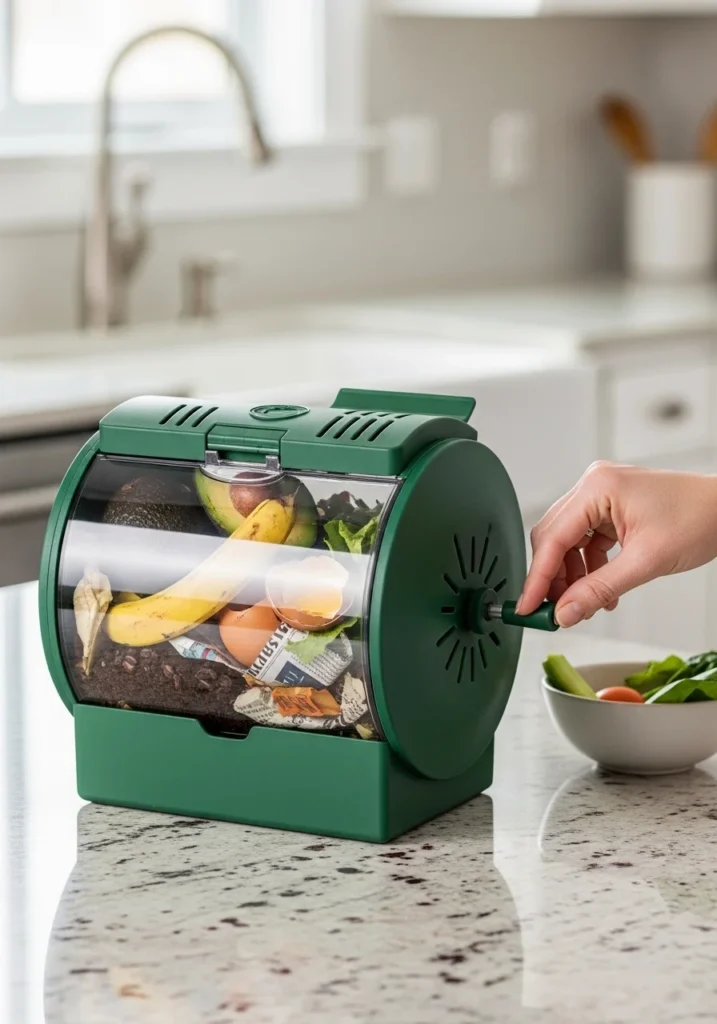
A miniature tumbler keeps compost moving for faster breakdown. Rotate a few times a day to aerate. Layer greens and browns to maintain moisture balance. It’s easy to keep odor-free and fits small kitchens. Tumbler systems are sturdy and reduce manual mixing, making them ideal for small households with moderate food waste.
12. Kitchen Sink Pail
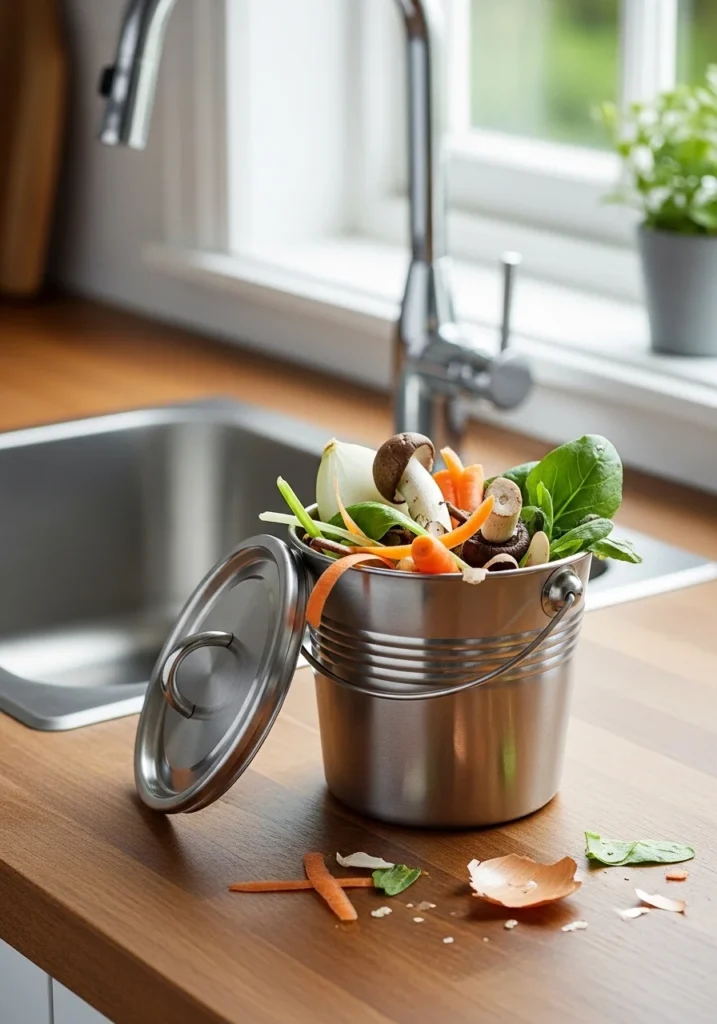
Use a sink-side pail for daily collection. Empty into a bin or Bokashi bucket weekly. Keep a tight-fitting lid to prevent smells. Budget tip: Repurpose a small paint bucket with a lid. This approach minimizes trips, keeps scraps contained, and simplifies daily composting chores.
13. DIY Shallow Tray Compost
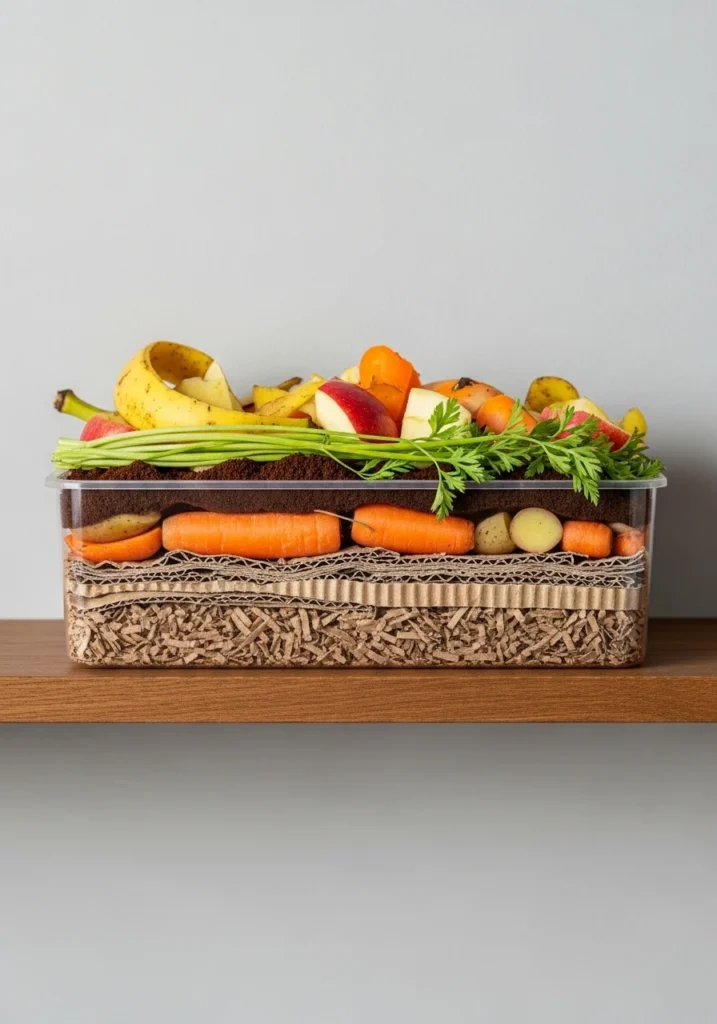
Shallow trays allow surface composting indoors. Spread a thin layer of scraps and cover with dry material. Turn weekly to prevent odor. Perfect for tight counters or shelves. This method is cost-effective, simple to maintain, and produces usable compost for houseplants within a few weeks.
14. Indoor Composting Caddy
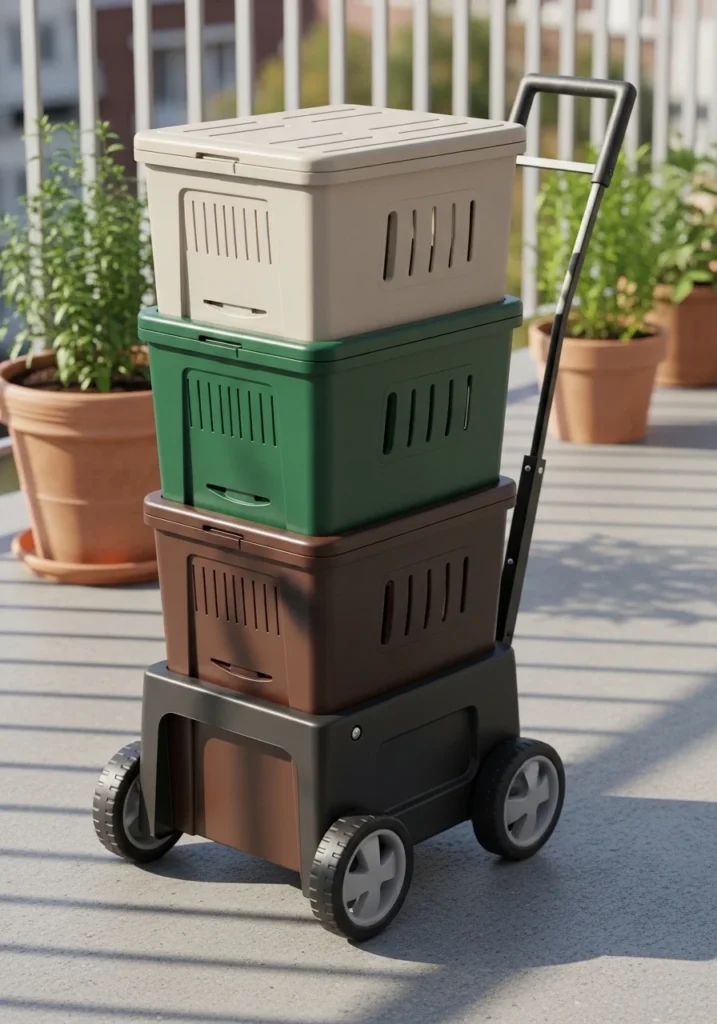
A portable compost caddy keeps bins organized and easy to relocate. Stack bins or buckets and wheel them outside when full. This reduces mess and is flexible for renters. Choose lightweight materials and keep a small scoop for maintenance. It’s practical for apartments with limited space.
15. Mini Compost Crock
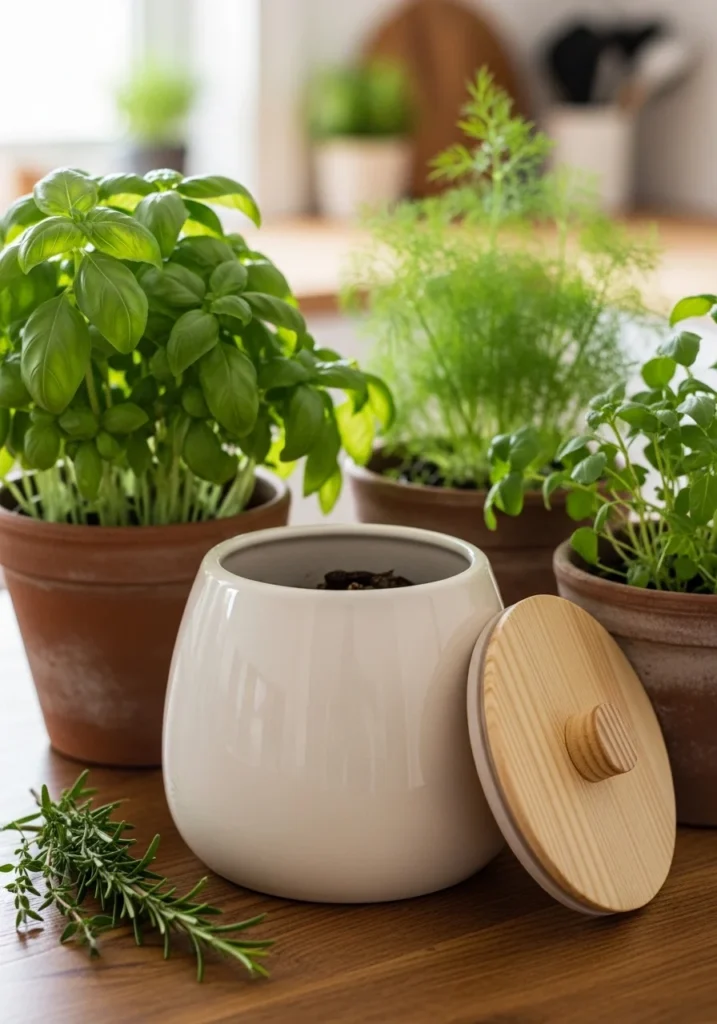
A ceramic crock absorbs moisture and reduces odors naturally. Add scraps and a handful of dry bedding material. Lift the lid occasionally to stir. The crock looks stylish and fits any countertop. It’s low-maintenance and perfect for small-space, low-volume composting.
16. Hanging Wall Pocket Bin
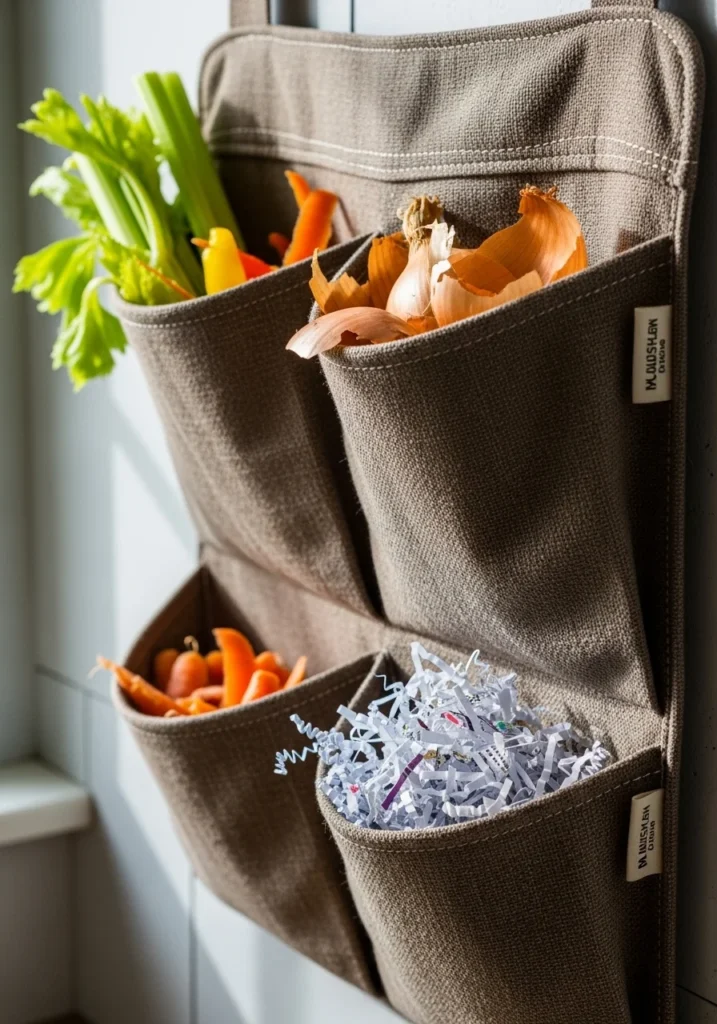
Wall-mounted pocket bins save counter space. Each pocket holds a small amount of scraps. Rotate pockets weekly into a main compost bin. Breathable fabric prevents moisture buildup. Ideal for kitchens with no floor space. This system is visual, accessible, and adds a touch of organization.
17. Indoor Composting Station with Herbs
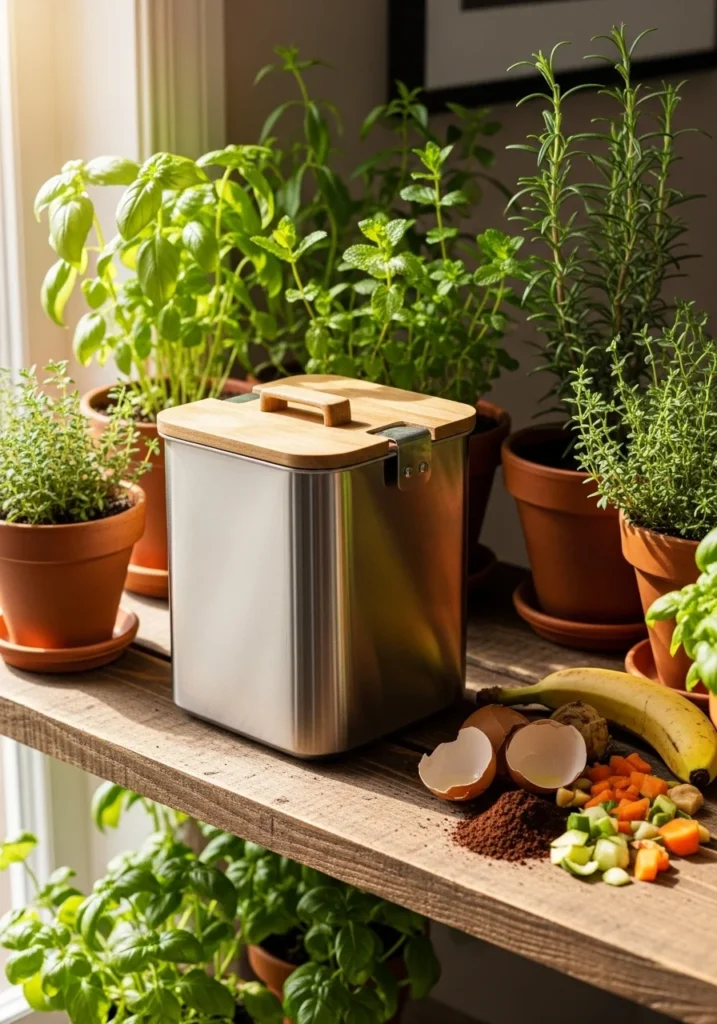
Pairing a compost bin with potted herbs creates a closed loop. Compost scraps, then feed your herbs. It’s practical, keeps plants healthy, and encourages regular use of the bin. Budget-friendly tip: Use any small bin and existing pots. It’s functional, tidy, and adds greenery to the kitchen.
18. Repurposed Plastic Container Bin
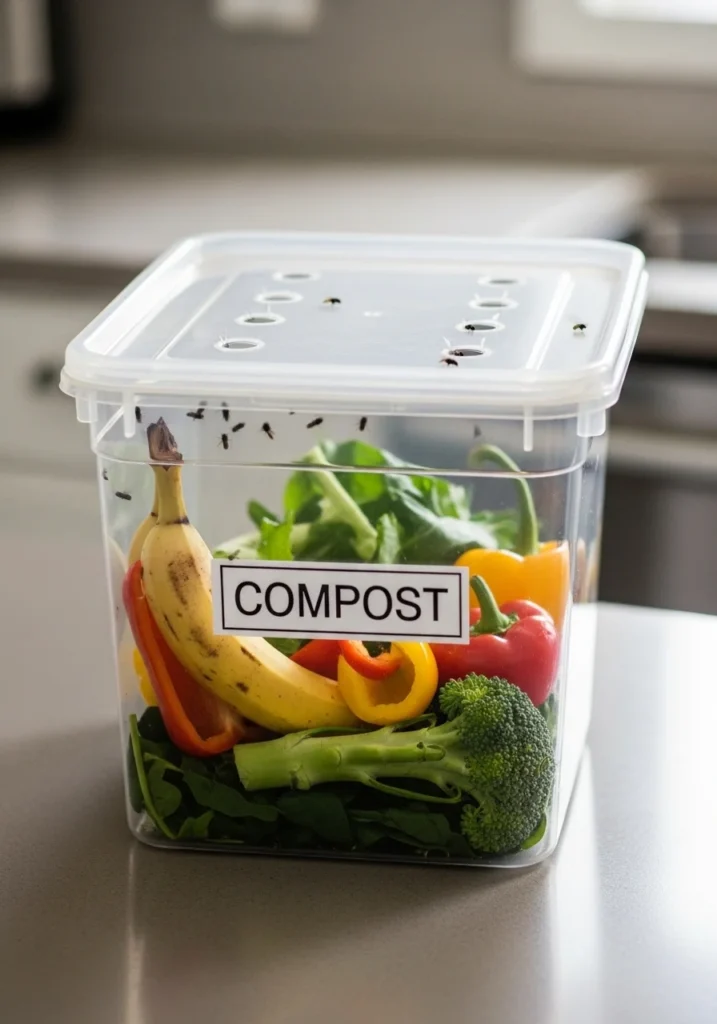
Repurpose an old plastic container into a bin. Drill ventilation holes, layer scraps with paper, and keep a small tray underneath for liquid. Affordable, customizable, and easy to clean, this method allows indoor composting on any budget. Ideal for small apartments where traditional bins may not fit.
19. Under-Sink Compost Bucket
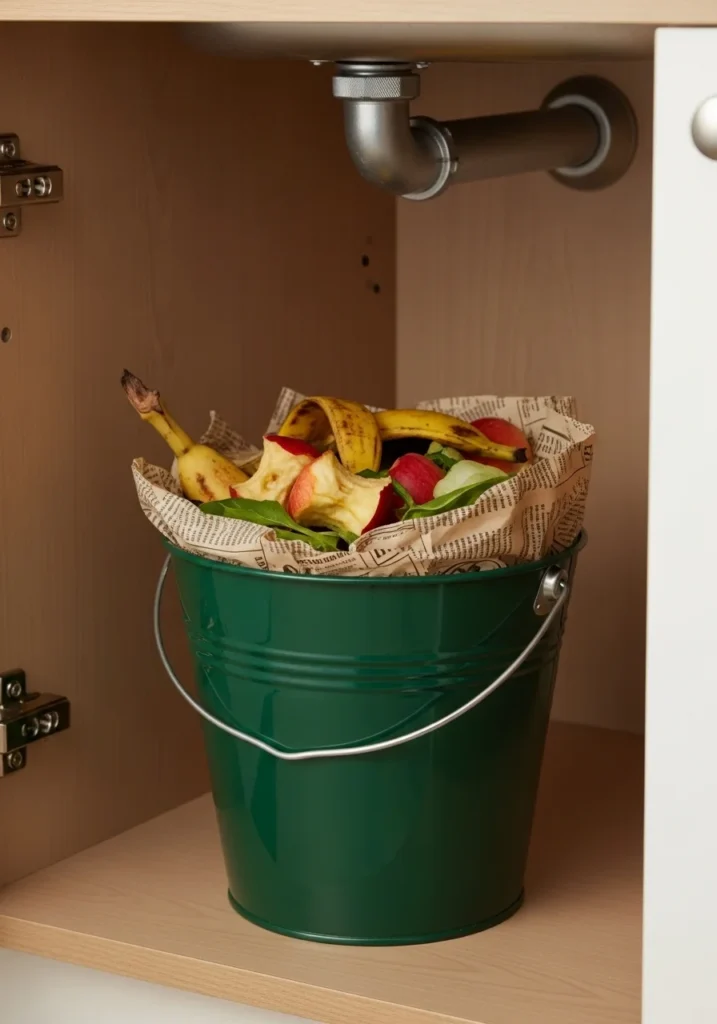
An under-sink bucket hides compost out of sight. Add scraps daily and sprinkle dry material to reduce moisture. Empty weekly into a main bin or Bokashi bucket. This discreet system is perfect for apartments, keeps odors contained, and uses otherwise wasted space.
20. DIY Stackable Jar System
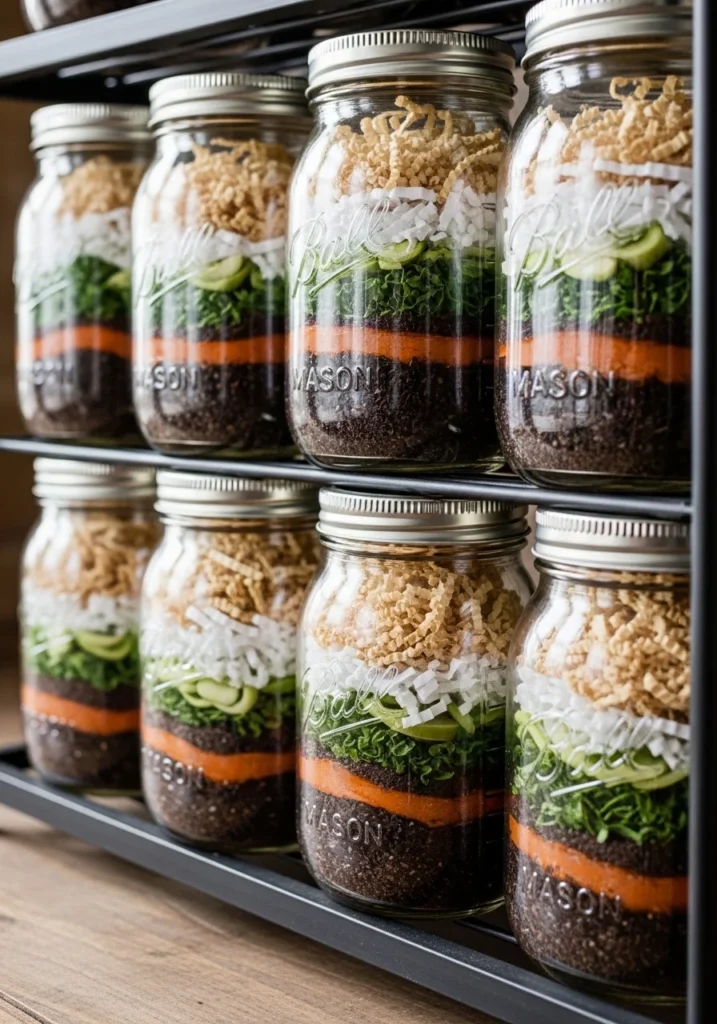
Stacked jars allow segregation and gradual composting. Top jars receive fresh scraps, bottom jars mature. Rotate jars weekly. Ideal for very small kitchens. It’s inexpensive, manageable, and keeps compost contained and tidy, while producing nutrient-rich material for potted plants.
21. Balcony Mini Bin
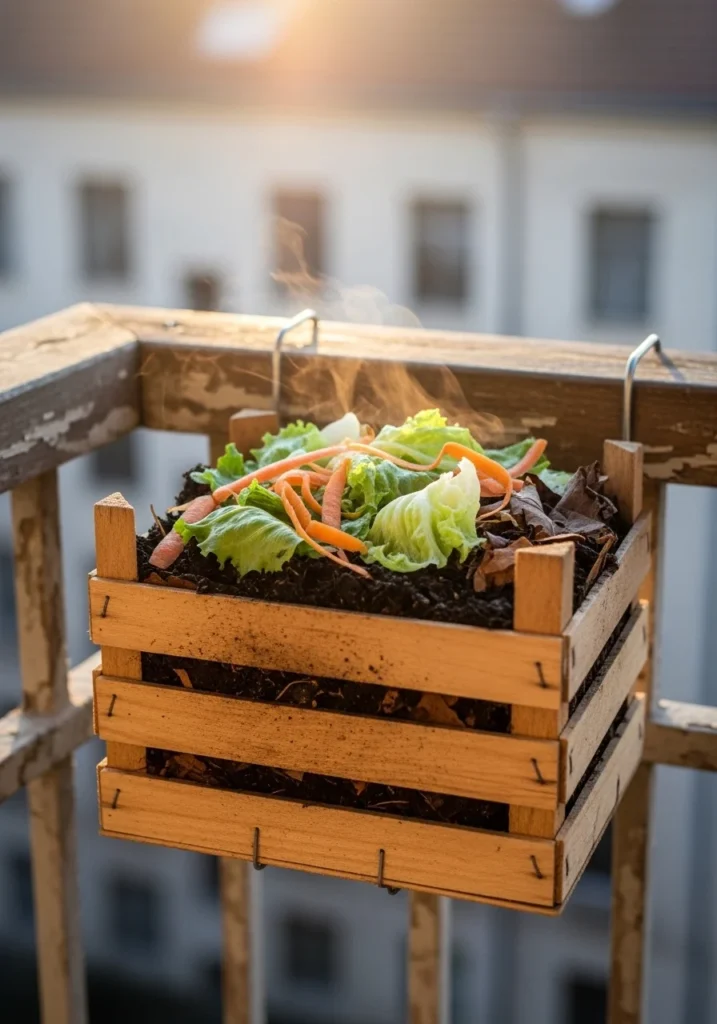
Even tiny balconies can host a compost bin. Choose a compact, ventilated container. Layer scraps with dry material and turn weekly. Sunlight helps moderate moisture and temperature. This method is slightly outdoor but still apartment-friendly, keeping smells outside while producing usable compost.
22. Portable Snack-Sized Bin
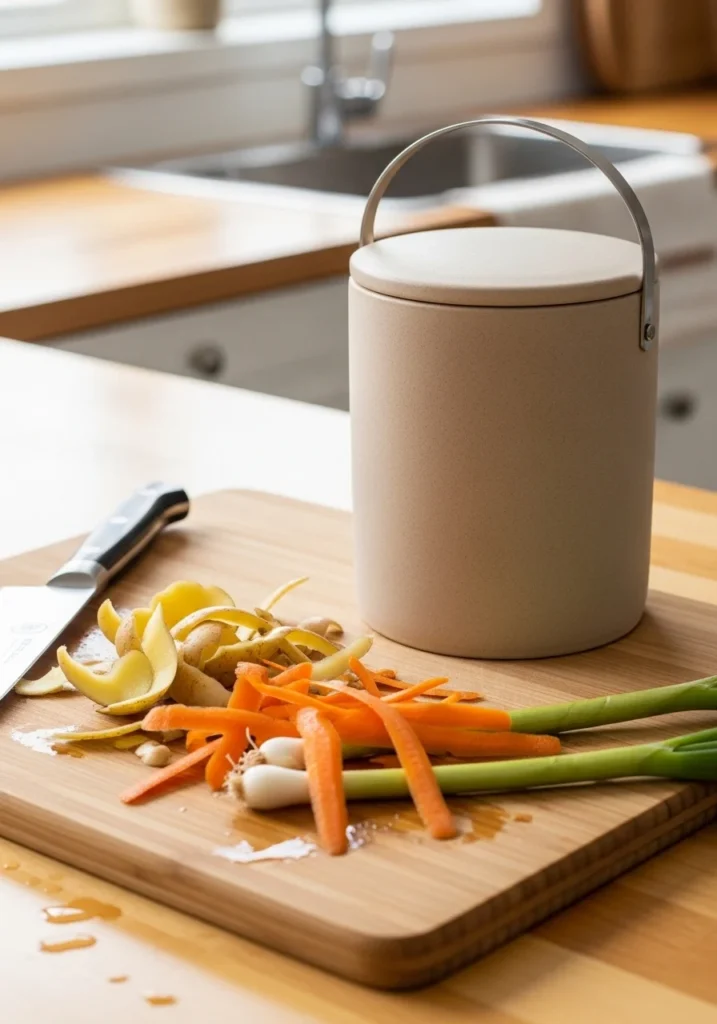
A tiny bin for quick kitchen scraps encourages frequent composting. Keep it on the counter while prepping meals. Empty into a larger system once full. Ideal for single-person households or small kitchens. Lightweight and easy to wash, it makes composting a seamless daily habit.
23. Indoor Compost Flip Tray
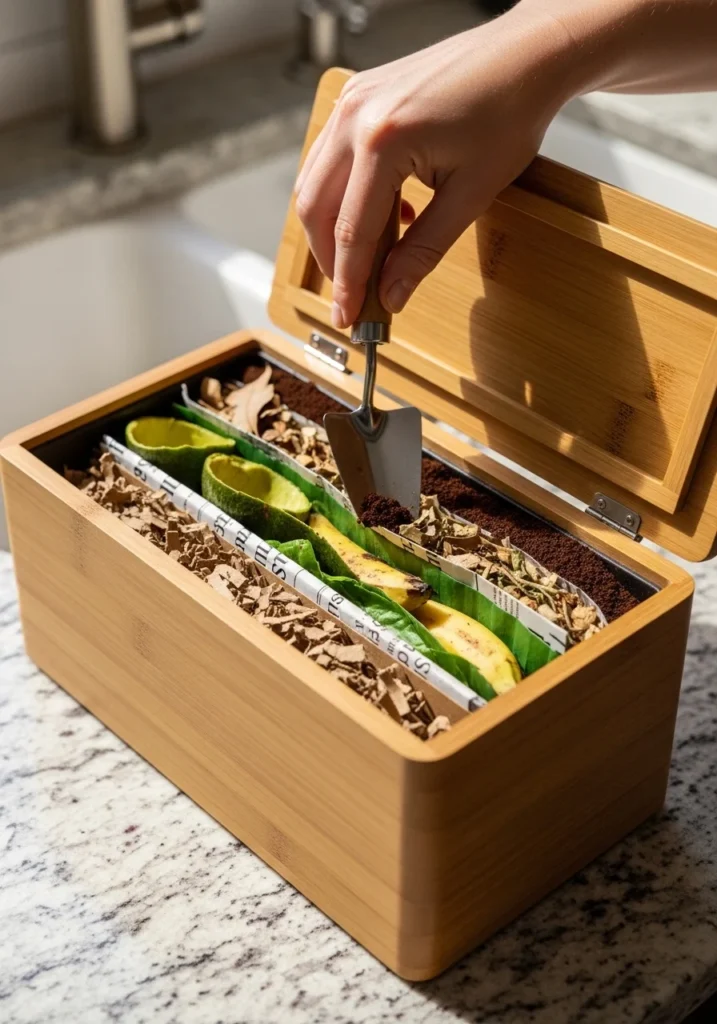
Flip trays allow easy mixing without removing the entire batch. Open the lid, flip or stir scraps, and close again. Prevents odor, aerates material, and fits compact spaces. Affordable and simple, this approach works with shallow bins or DIY setups and keeps small kitchens neat.
Conclusion
Indoor composting can be clean, simple, and surprisingly adaptable to small spaces. Whether you prefer worms, Bokashi, electric units, or DIY bins, there’s a system that fits your kitchen, budget, and lifestyle. Using these 23 ideas, you can reduce food waste, create nutrient-rich compost, and even enhance your indoor plants. Start small, stay consistent, and enjoy the benefits of composting right in your home.

Leave a Reply