

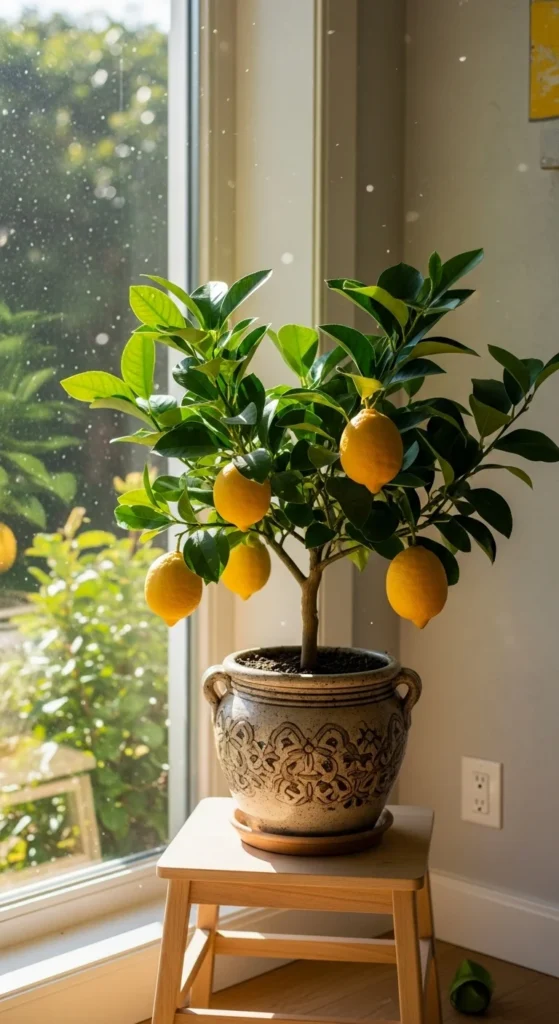
There’s something magical about plucking a fresh lemon or orange from your own indoor tree. The glossy leaves, sweet scent of blossoms, and burst of citrus flavor make it a true joy for any home gardener. And the best part? Growing citrus trees indoors is easier than you think—as long as you understand their needs.
Whether you dream of homegrown limes for cocktails or juicy oranges for breakfast, this guide will show you how to grow citrus trees indoors successfully—all year long.
Choose the Right Citrus Variety
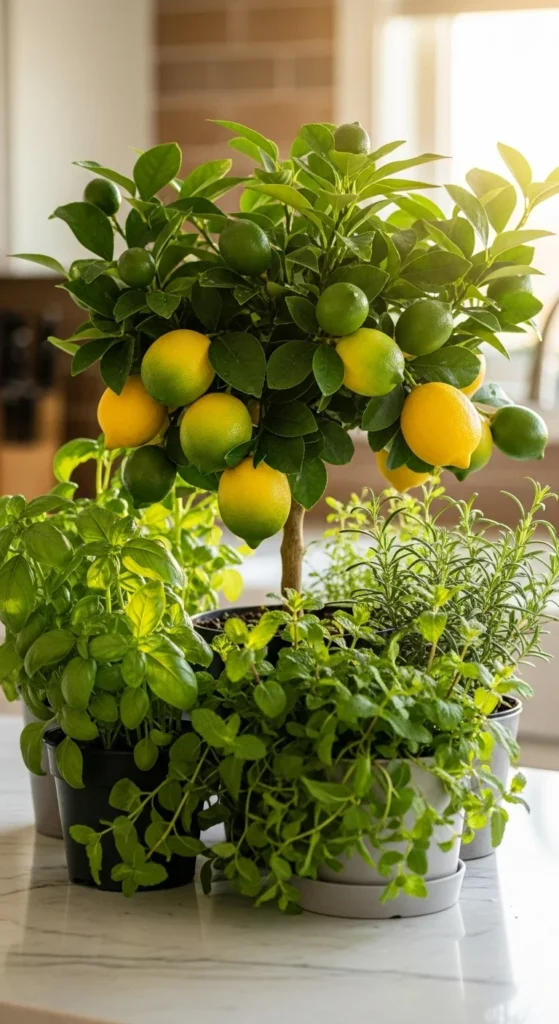
Not all citrus trees thrive indoors. Large varieties can outgrow containers quickly, while dwarf types stay compact and manageable.
Best citrus trees for indoor growing:
- Meyer Lemon: Sweet, fragrant fruit with a thinner skin and a forgiving nature.
- Calamondin Orange: Small and ornamental, ideal for bright kitchens or patios.
- Key Lime: Produces small, tangy fruits perfect for drinks and desserts.
- Kumquat: Hardy and produces bite-sized fruits with edible peels.
Dwarf or semi-dwarf trees are ideal because they’re bred for containers and adapt well to indoor conditions.
Give Them Plenty of Light
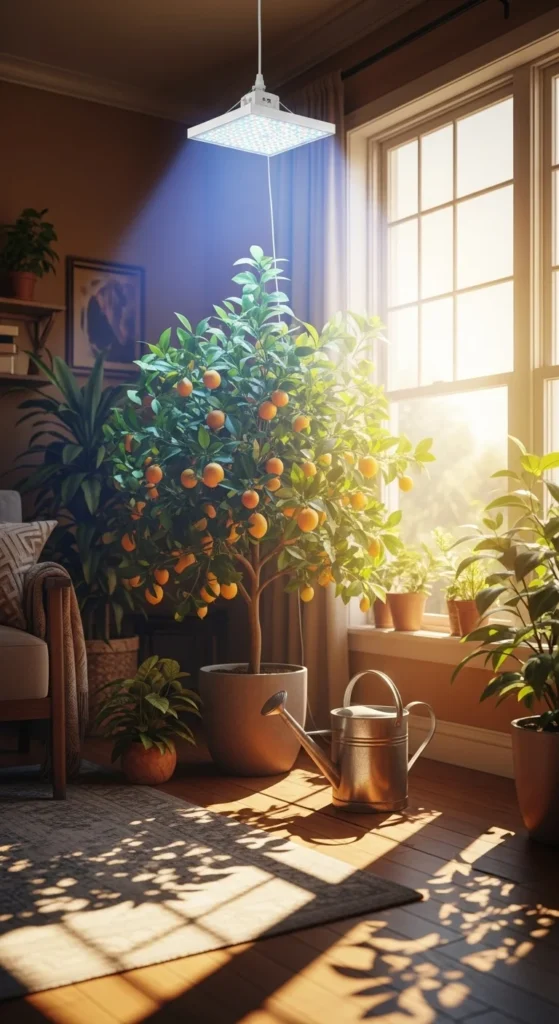
Light is the secret ingredient to healthy citrus. These trees are sun worshippers, needing plenty of brightness to produce fruit and stay lush.
Lighting tips:
- Place your tree in a south- or west-facing window that gets at least 8–12 hours of sunlight daily.
- If natural light is limited, use full-spectrum grow lights for 12–14 hours a day.
- Rotate your plant weekly to ensure even growth and prevent it from leaning toward the light.
In winter, when daylight shortens, supplementing with grow lights can make all the difference in keeping your citrus thriving instead of surviving.
Use the Right Soil and Pot
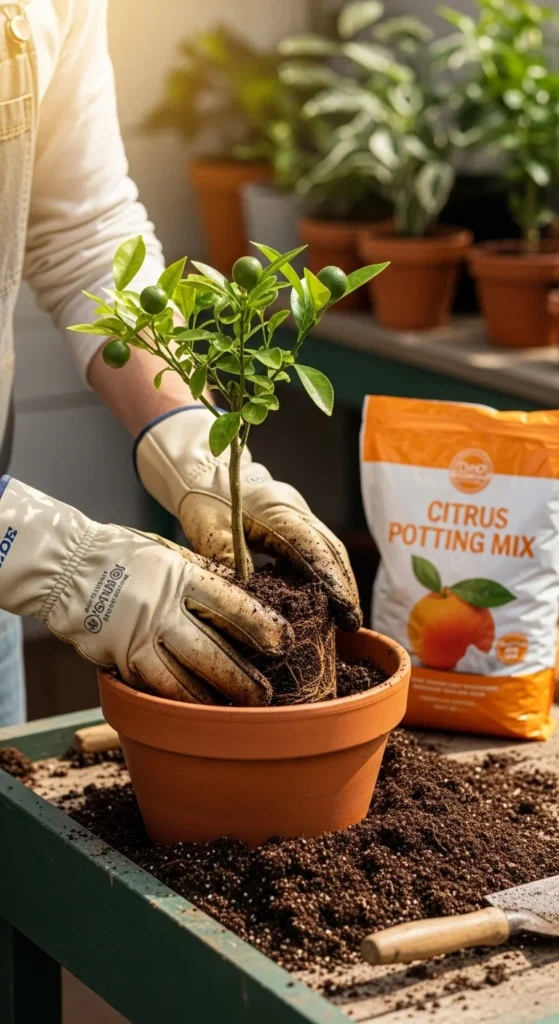
Citrus roots need excellent drainage—they hate sitting in soggy soil.
What to use:
- A well-draining potting mix made for citrus or cactus.
- Add a handful of perlite or sand to boost airflow around roots.
- Choose a pot with multiple drainage holes to prevent waterlogging.
Container tip:
Start with a pot that’s slightly larger than the root ball (12–14 inches wide for young trees). As your tree grows, you can repot every 2–3 years into a larger container.
Water and Feed with Care
Citrus trees are particular about moisture—too much or too little can lead to stress.
Watering basics:
- Water thoroughly but infrequently. Let the top inch of soil dry before watering again.
- Use room-temperature water, not cold tap water.
- Mist leaves occasionally, especially during dry winter months.
Feeding schedule:
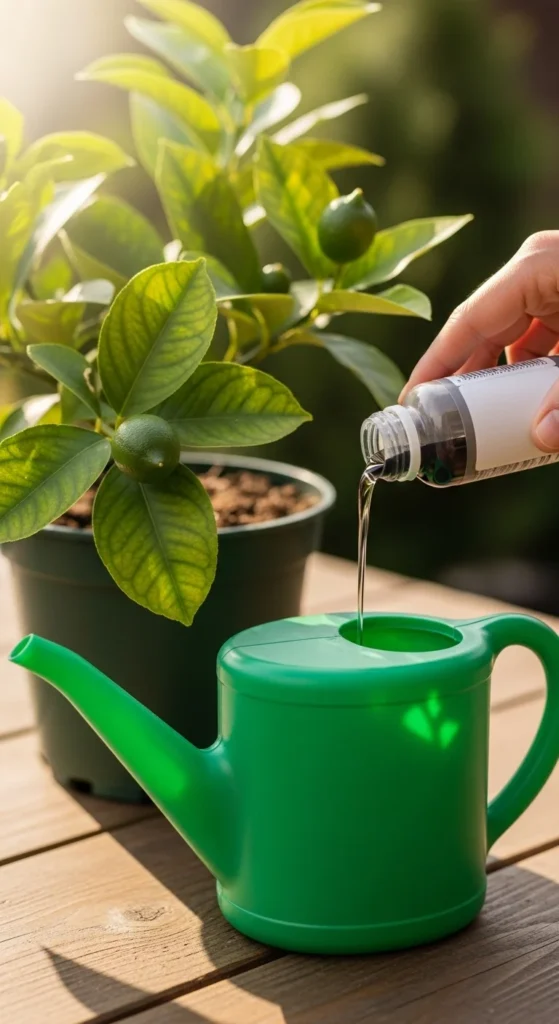
- Use a citrus-specific fertilizer high in nitrogen from spring through fall.
- Feed monthly when the plant is actively growing and blooming.
- Stop fertilizing in winter when growth slows down.
Pro Tip: Pale or yellowing leaves usually signal a nutrient deficiency—especially iron or magnesium. A balanced citrus fertilizer will fix that fast.
Control Temperature and Humidity
Citrus trees thrive in warm, humid environments—just like their tropical origins.
Ideal conditions:
- Temperature: 65–85°F (18–29°C) during the day, and not below 55°F (13°C) at night.
- Humidity: Around 50% or higher helps prevent leaf drop.
To increase humidity:
- Place your pot on a tray of pebbles and water.
- Run a small humidifier nearby during winter heating season.
- Group plants together to create a microclimate of moisture.
Avoid cold drafts and sudden temperature changes—both can shock your citrus tree.
Encourage Pollination and Fruit Set
Indoor citrus trees often need a little help with pollination since bees can’t reach them.
How to hand-pollinate:
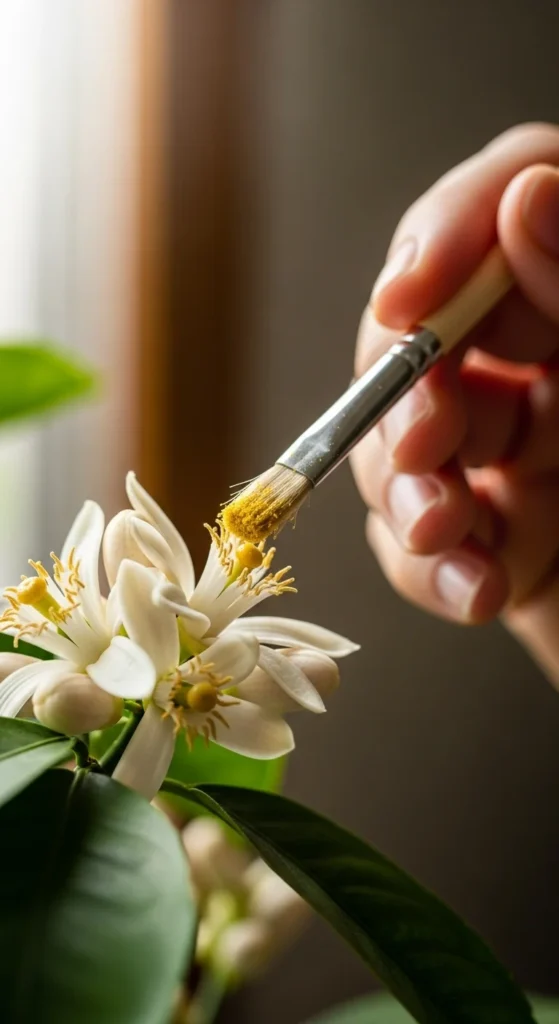
- Use a small paintbrush or cotton swab.
- Gently brush pollen from one flower to another.
- Repeat every few days while the plant is blooming.
Once pollinated, flowers will begin to form tiny green fruits that gradually swell and ripen over time.
Pro Tip: Don’t worry if some flowers or young fruits drop—it’s the tree’s natural way of balancing energy.
Prune and Maintain Regularly
Keep your citrus tree compact and tidy with occasional pruning.
When and how to prune:
- Prune in early spring before new growth starts.
- Remove dead, weak, or crossing branches.
- Trim back leggy stems to maintain shape.
Also, wipe the leaves occasionally with a damp cloth to remove dust and keep them breathing freely.
Watch for common pests like spider mites or scale—if you spot them, wipe leaves with a mix of mild soap and water.
Final Thoughts
Growing citrus trees indoors brings a little sunshine into your home—no matter the season. With the right mix of light, warmth, and care, you’ll enjoy fragrant blossoms and fresh fruit from your own mini orchard.
It’s not just about the harvest—it’s about the joy of watching life flourish right in your living room.

Leave a Reply