

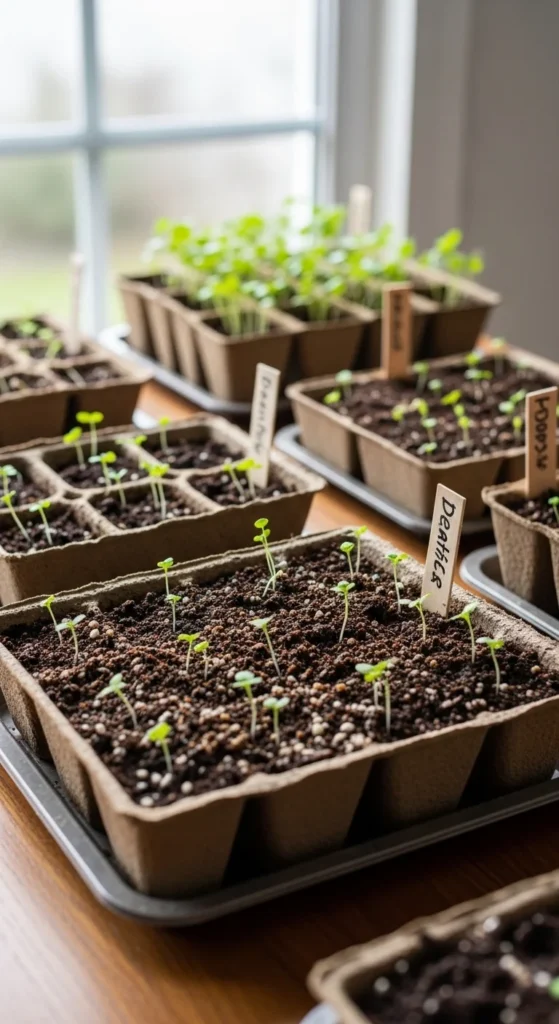
Starting seeds organically can be simple, affordable, and rewarding. When done right, it sets the stage for strong, healthy plants that thrive in your garden. Using compost-rich mixes, gentle watering, and proper light can make a huge difference. This guide covers 23 foolproof organic seed starting tips, each practical, budget-friendly, and easy to follow. From choosing containers to hardening off seedlings, you’ll find clear steps to grow resilient seedlings indoors before transplanting them outside.
1. Use a Living Soil Mix
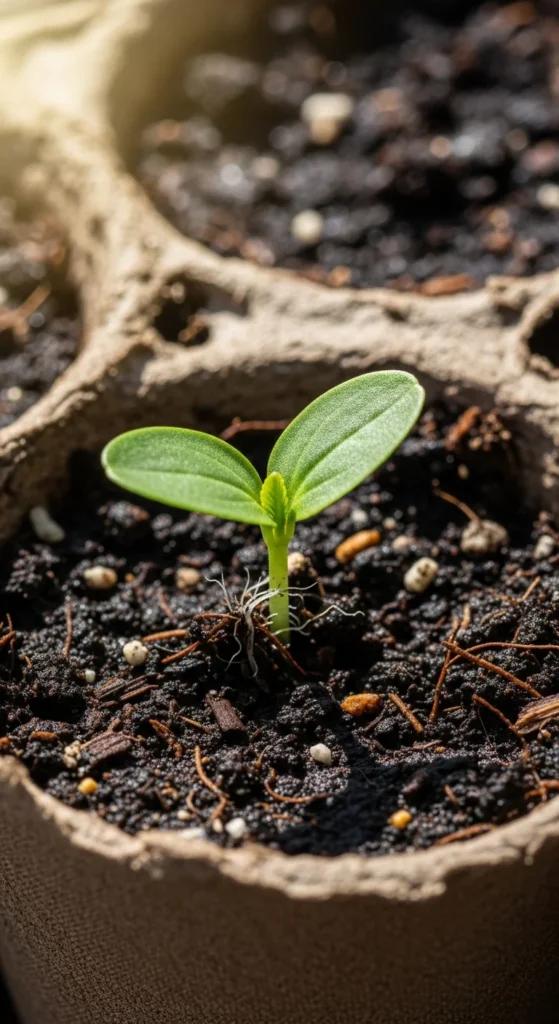
Start with soil rich in organic matter. Mix compost, coco coir, and perlite for light, airy soil. This keeps seeds happy, with good drainage and nutrients. Skip heavy potting soil—it can retain too much water and suffocate roots. DIY mixes save money and give seedlings a natural start. Small DIY tip: sift compost to remove large chunks for uniform texture.
2. Avoid Regular Potting Soil
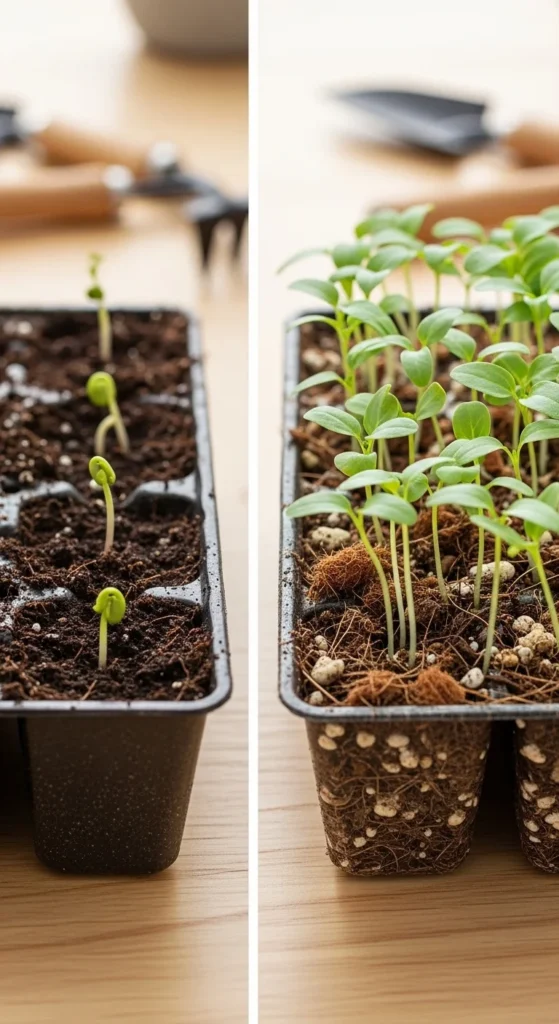
Regular potting soil is often too dense for delicate seeds. It holds water too long and may harbor fungi. Instead, use a seed starting mix, or make your own with compost, vermiculite, and coco coir. Even a small bag of vermiculite can improve drainage. A simple test: soil should feel like a wrung-out sponge, not wet mud.
3. Moist but Not Soggy
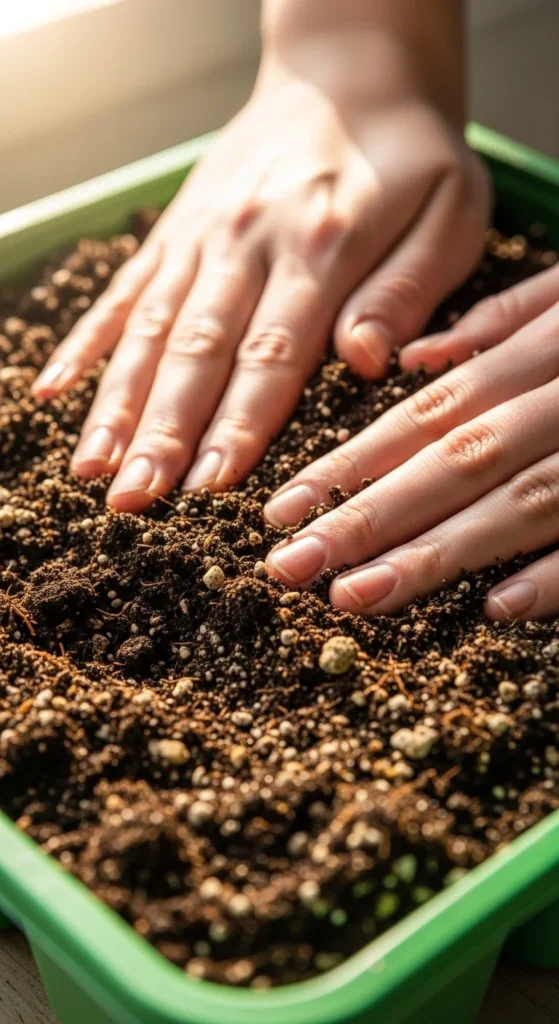
Seeds need consistent moisture. Too dry = slow germination. Too wet = rot. Check by squeezing: soil should hold together, but water shouldn’t drip. Spray water from above or bottom-water trays with shallow pans. Mist lightly daily for tiny seedlings. A DIY tip: cover trays with a clear lid or plastic wrap for humidity, venting slightly to prevent mold.
4. Provide Plenty of Light
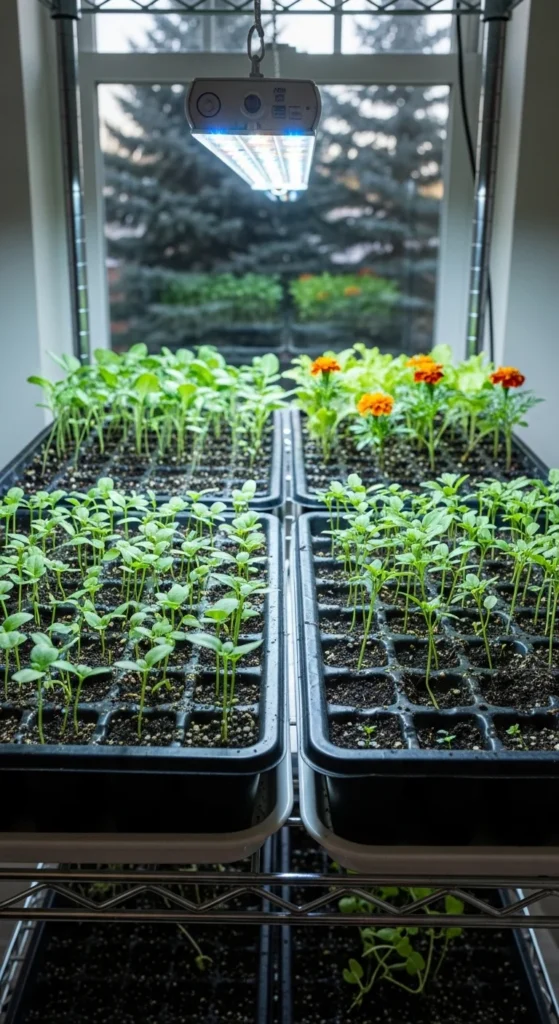
Seedlings need bright light to avoid leggy growth. Place trays in a sunny window or under LED grow lights for 12–16 hours daily. Keep lights 2–4 inches above seedlings and raise as they grow. Tip: use reflective foil or white boards around trays to maximize light without extra electricity.
5. Start Seeds Indoors
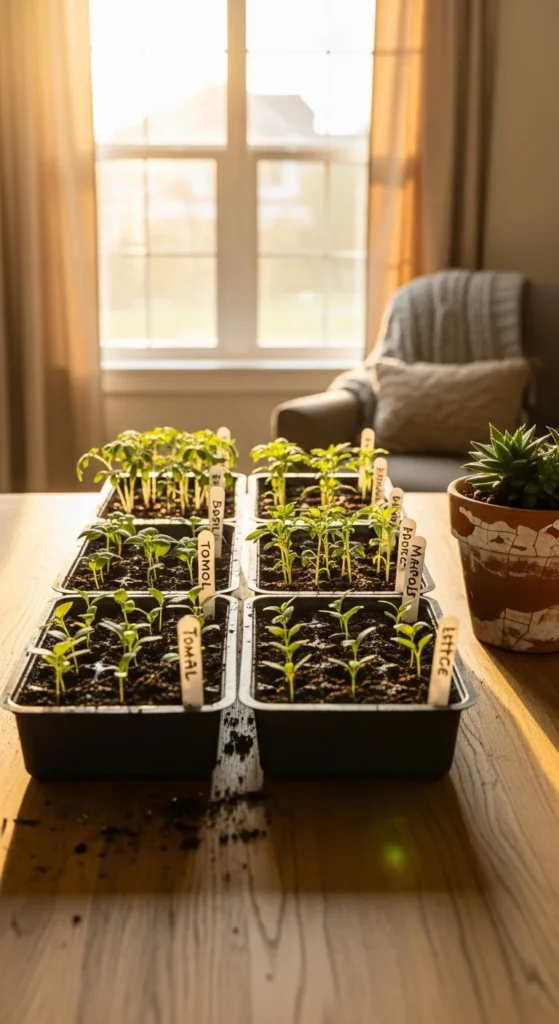
Starting seeds indoors gives you a head start on the growing season. Plant seeds 6–8 weeks before the last frost. Indoor warmth and controlled moisture promote faster germination. Use trays, small pots, or even recycled yogurt cups. Label every tray clearly with seed type and sowing date.
6. Cover for Humidity
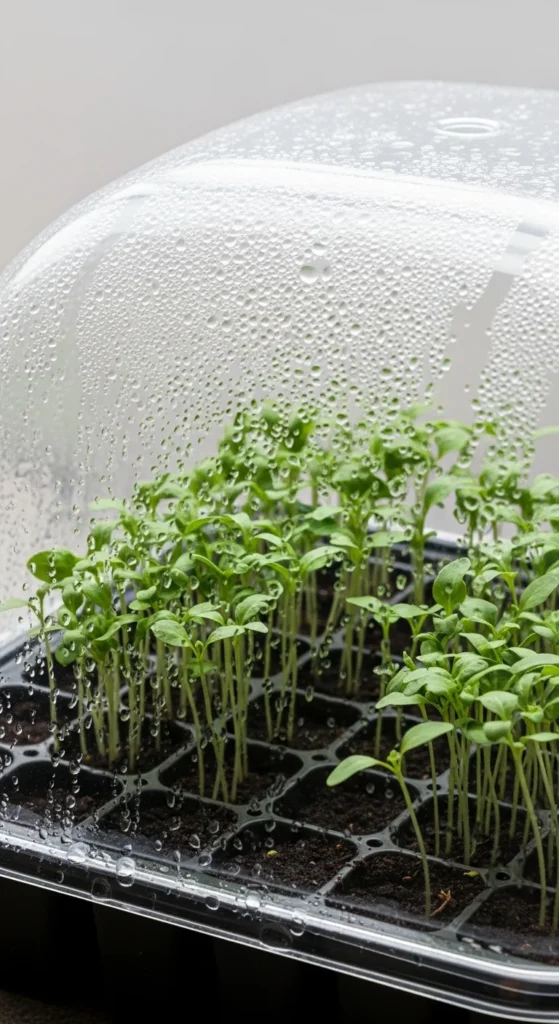
Young seedlings thrive in humid environments. Cover trays with a plastic dome or wrap to hold moisture. Remove cover gradually as seedlings grow and roots develop to prevent fungal growth. Tip: poke small holes for ventilation. This keeps soil evenly damp and protects delicate sprouts.
7. Plant at Proper Depth
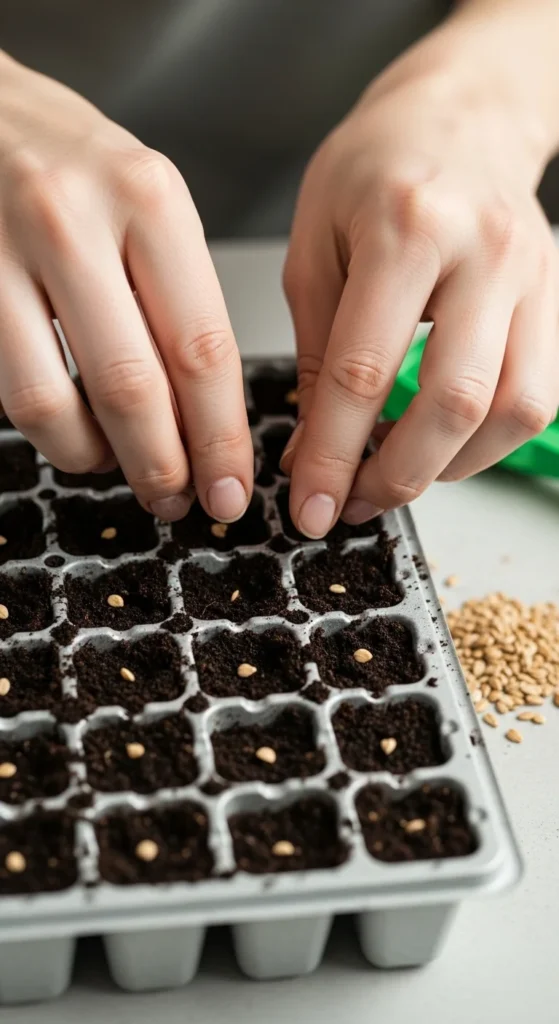
Seed depth matters. Rule of thumb: plant seeds 2–3 times their diameter. Tiny seeds need barely any covering, while larger seeds like beans go deeper. Shallow planting helps germination, and proper depth reduces stretching and leggy seedlings.
8. Thin Seedlings Carefully
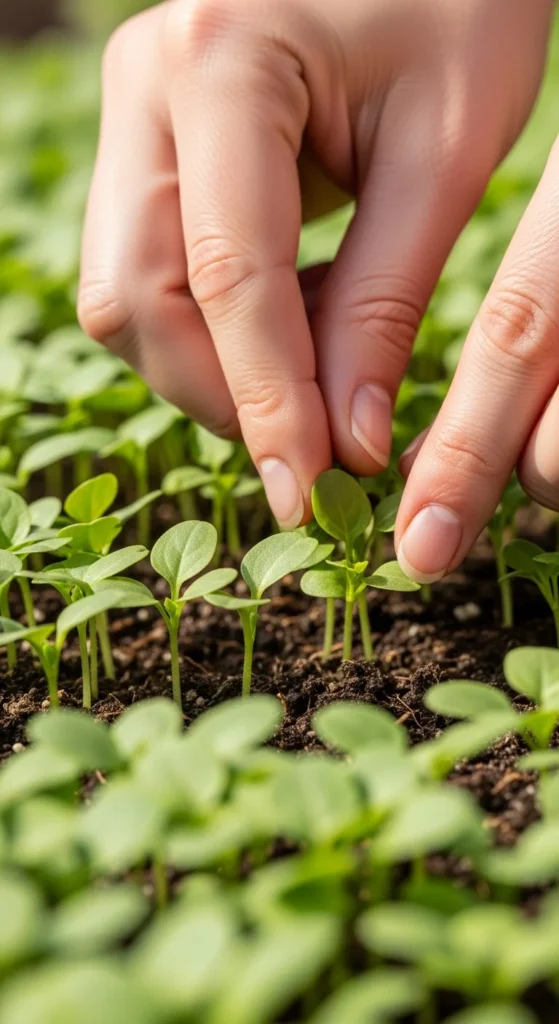
If multiple seeds sprout in one cell, thin to 1–2 strong seedlings. This prevents overcrowding and allows each plant to grow strong roots. Snip weaker seedlings at the soil line—don’t pull—to avoid disturbing roots.
9. Label Every Tray
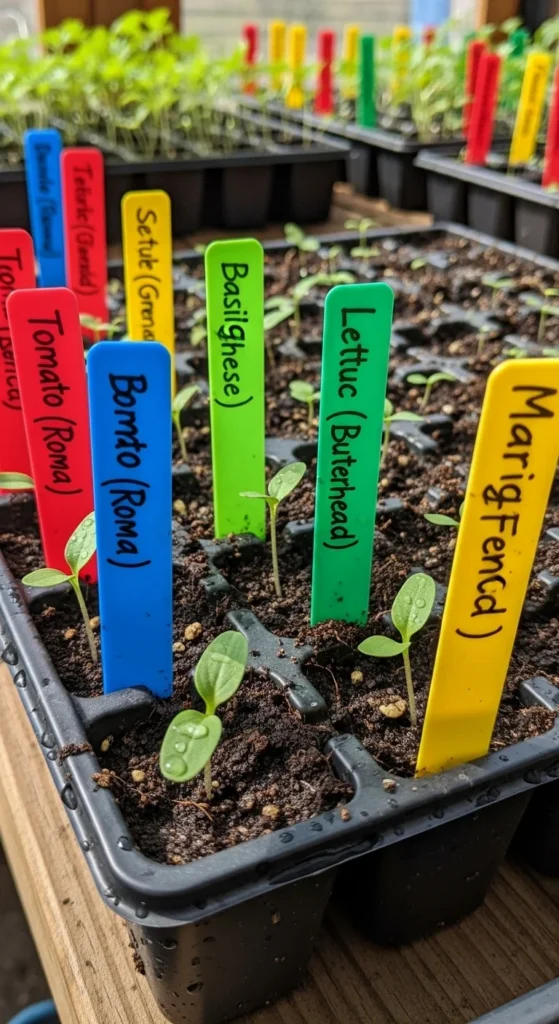
Use labels for seed type and sowing date. This prevents mix-ups and helps track germination. Budget-friendly: cut strips from recycled cardboard or use popsicle sticks. Clearly mark varieties, germination time, and any special care notes.
10. Use Biodegradable Pots
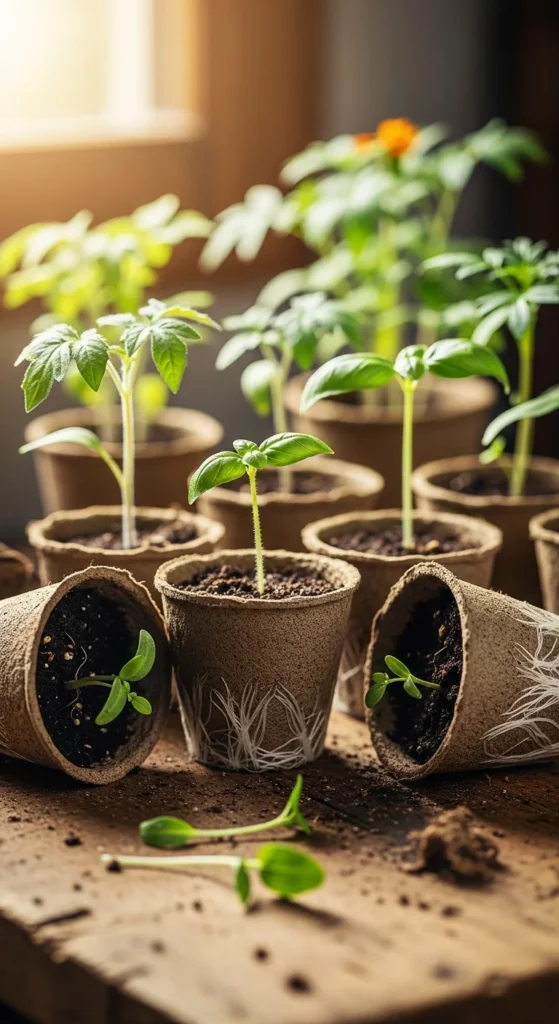
Biodegradable pots save space and transplant stress. Plant seedlings directly into soil with pots intact—roots won’t be disturbed. Use egg cartons, paper cups, or store-bought peat pots. They break down naturally and are eco-friendly.
11. Monitor Temperature
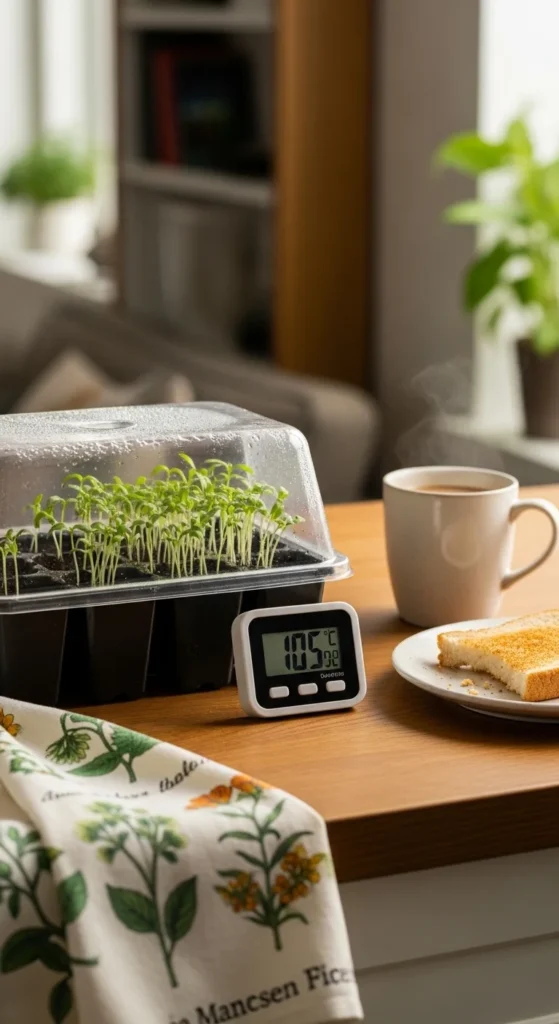
Seeds germinate best in a consistent temperature range. Most veggies prefer 65–75°F. Use a small thermometer to check. DIY tip: keep trays on a warm windowsill or a heating mat to maintain steady warmth.
12. Gentle Watering Technique
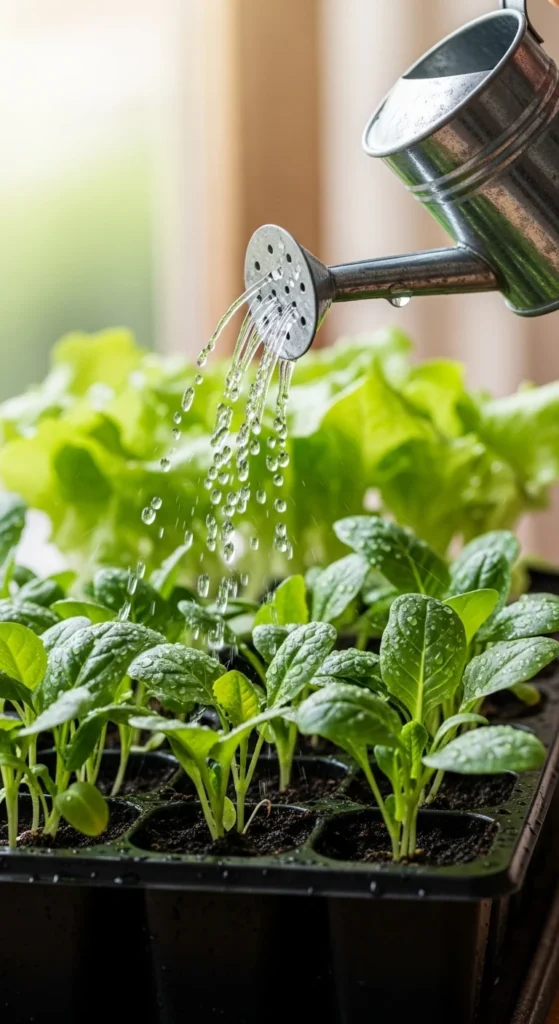
Water seedlings carefully to avoid washing away seeds. Use a fine spray or bottom watering. Bottom watering encourages roots to grow downwards and reduces the risk of mold. Keep soil moist but never soggy.
13. Feed with Organic Tea
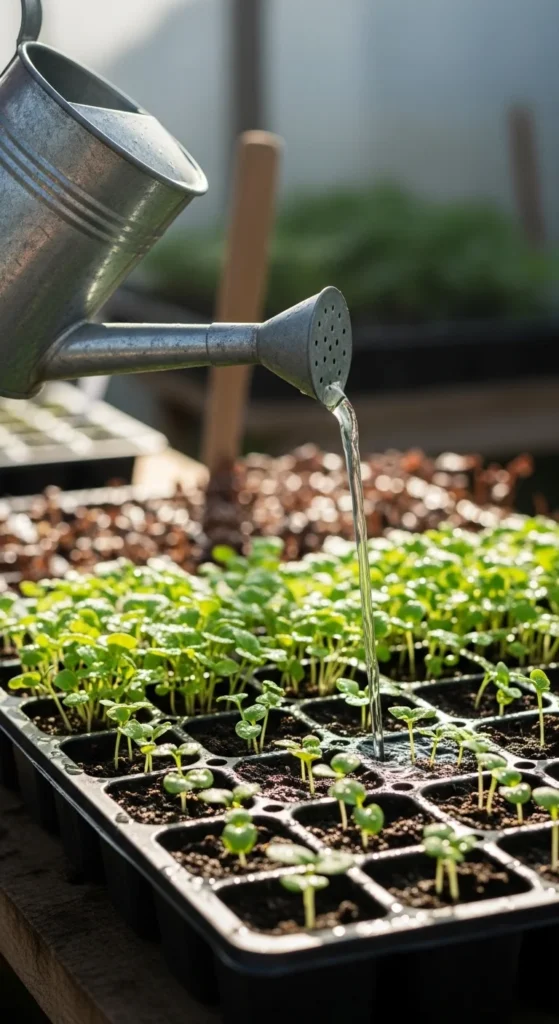
Once seedlings develop a few leaves, feed with weak compost tea or nettle tea. This provides gentle nutrients without chemicals. DIY: steep compost or weeds in water for a day or two, strain, and pour lightly over seedlings weekly.
14. Keep Airflow Strong
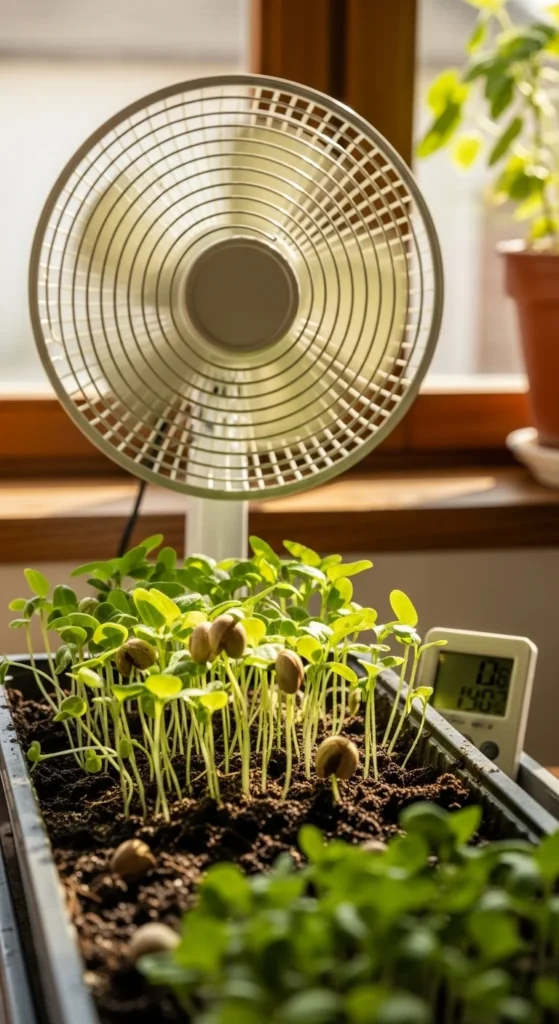
Good airflow prevents fungal growth and strengthens stems. Place a small fan on low near seedlings, running a few hours daily. It simulates outdoor wind and keeps plants compact and strong.
15. Hardening Off Gradually
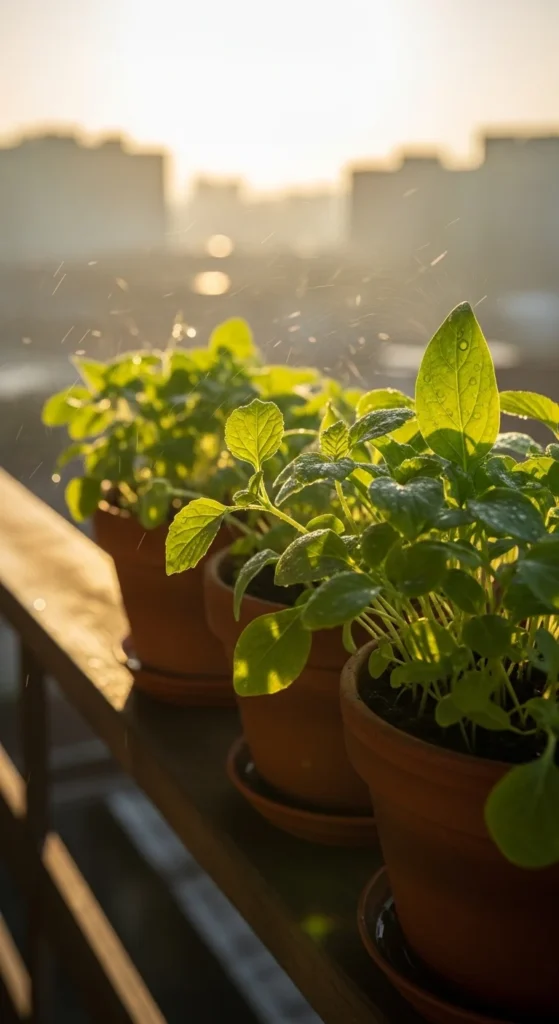
Before planting outside, harden off seedlings. Start with 1–2 hours outside, then increase daily. Gradually expose plants to sun, wind, and cooler temperatures. This reduces transplant shock and improves survival.
16. Companion Plant in Trays
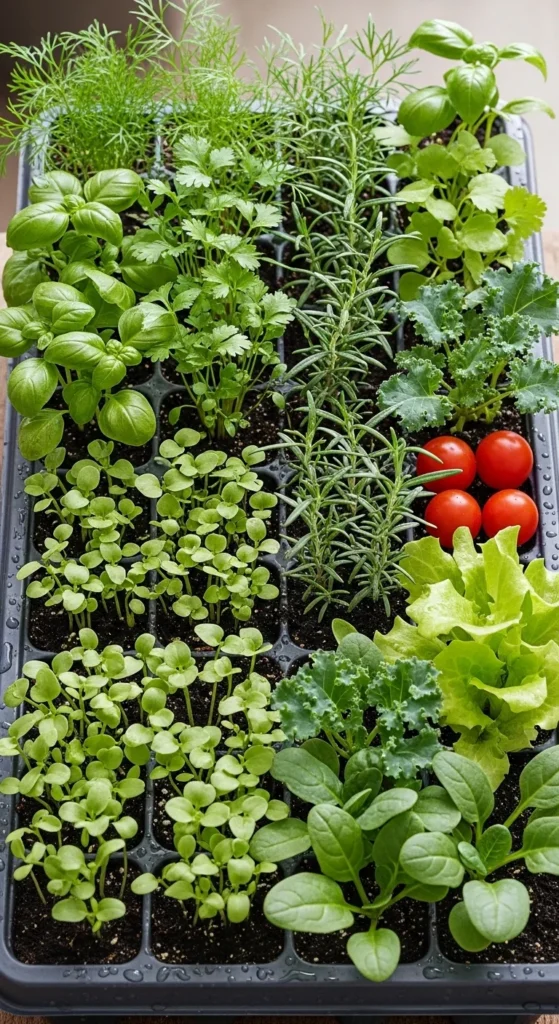
Plant complementary seedlings together. Marigolds can protect young tomatoes. This interplanting approach improves microclimate and pest resistance. Use small groupings in trays to save space and learn companion dynamics early.
17. DIY Seed Tray Options
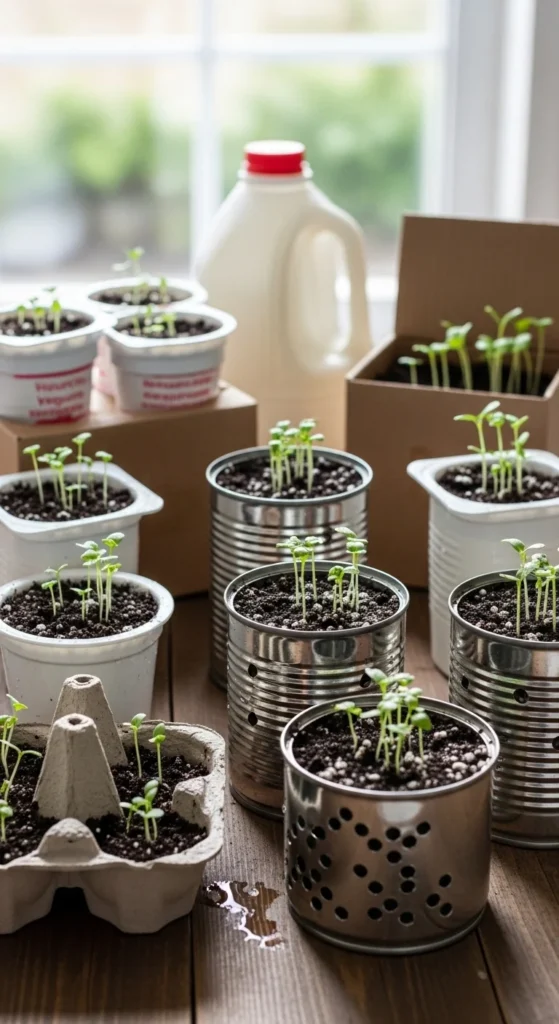
Budget-friendly trays: reuse yogurt cups, egg cartons, or small cardboard boxes. Poke drainage holes and fill with your organic mix. Label and arrange for easy access. You’ll save money and reduce plastic use.
18. Avoid Overcrowding
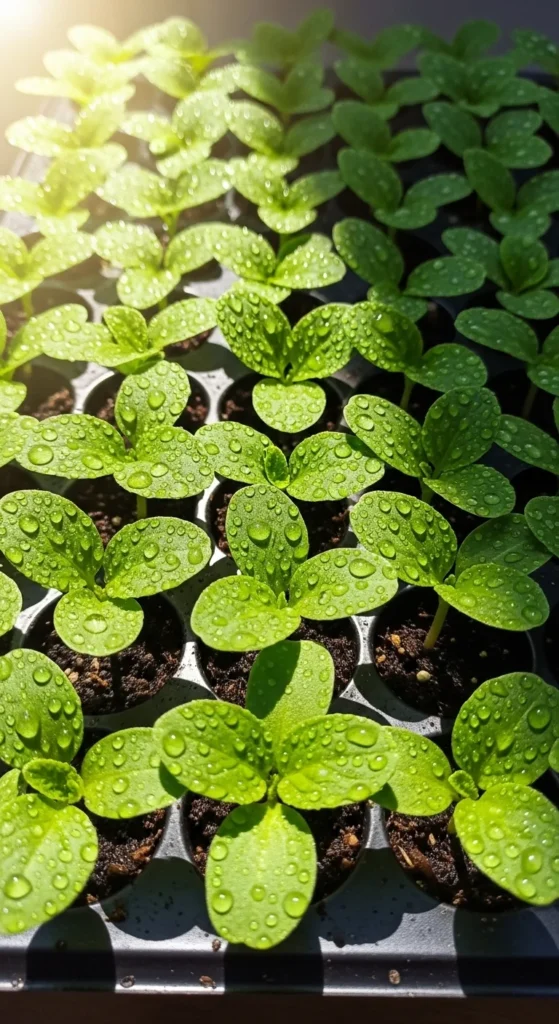
Crowded seedlings compete for light and nutrients. Space seeds evenly. Thin if needed. Healthy spacing encourages strong roots, thicker stems, and prevents fungal problems.
19. Use Fine-Grade Materials
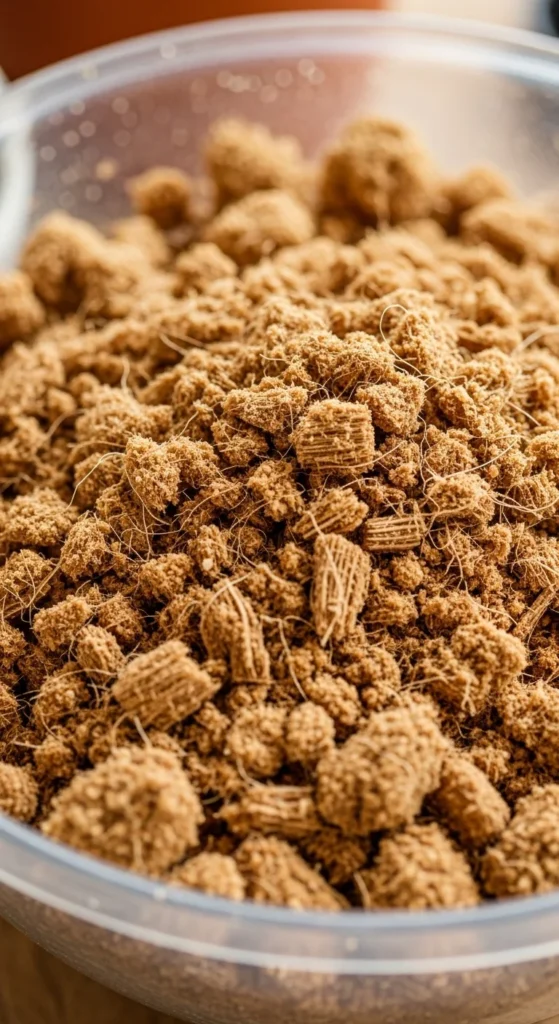
Fine compost and perlite prevent air pockets and ensure seeds contact soil. Large chunks can trap air and block roots. Sift or crush coarse material for uniformity. Seeds germinate faster in fine, even soil.
20. Track Germination Times
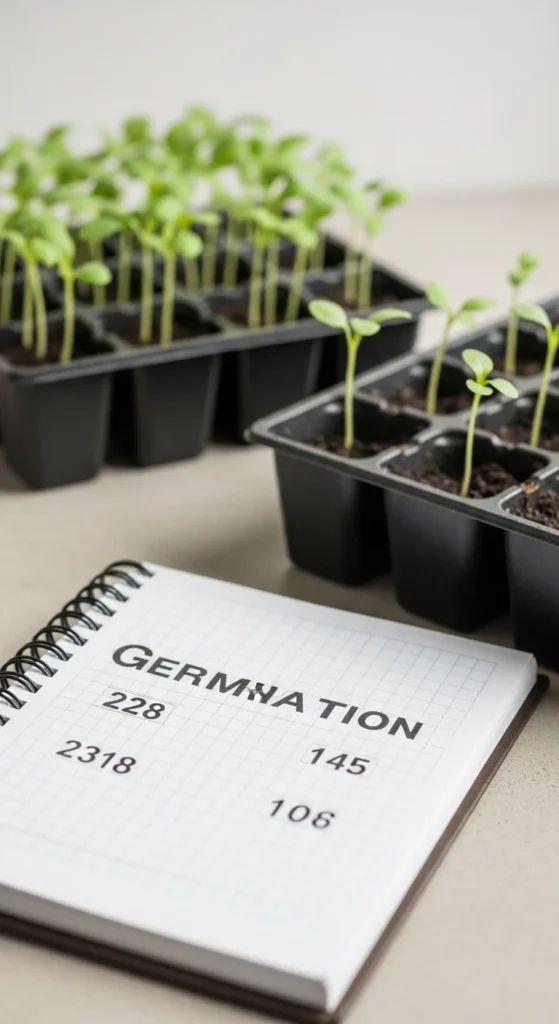
Keep a small journal of seed sowing and germination dates. This helps plan transplanting and future sowings. Note which batches germinated faster or slower to improve next season.
21. Control Humidity Without Mold
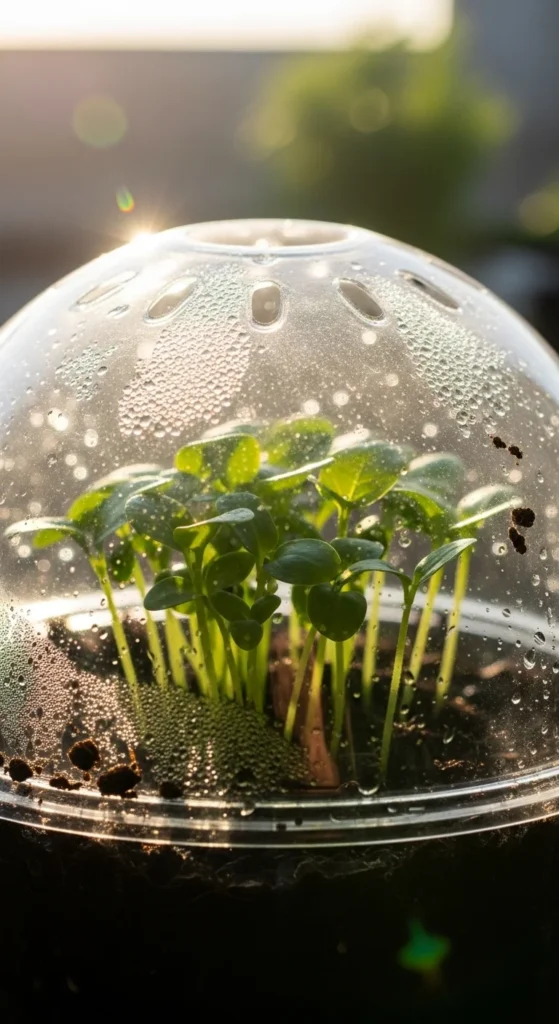
Cover trays for humidity but vent slightly. Open lid daily to reduce condensation. Prevents mold while maintaining moisture. Small holes or slightly ajar plastic wrap works well.
22. Rotate Trays for Even Light
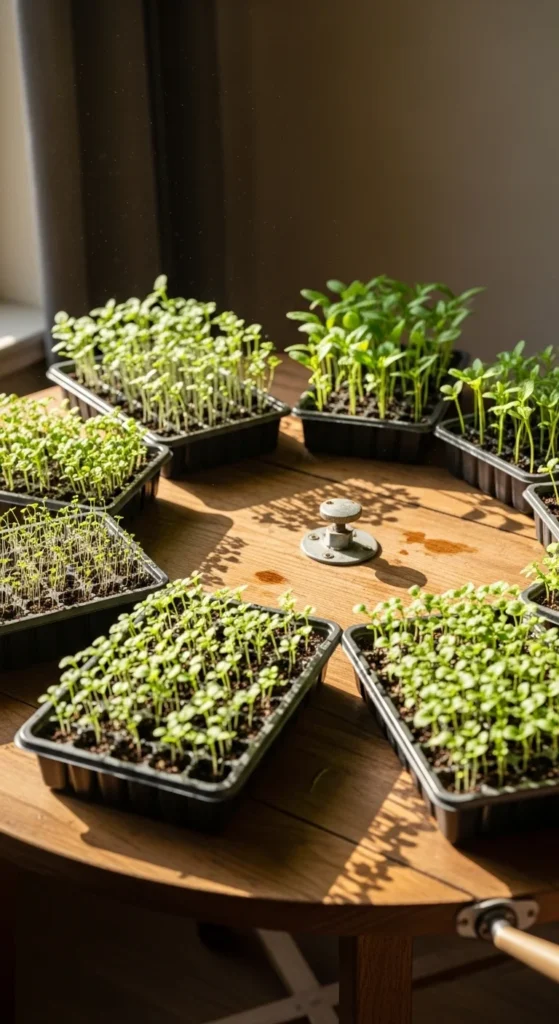
Rotate trays every few days to avoid seedlings leaning toward one light source. This keeps stems straight and leaves evenly green. Simple tip: rotate 180° every 2–3 days.
23. Transplant When Ready
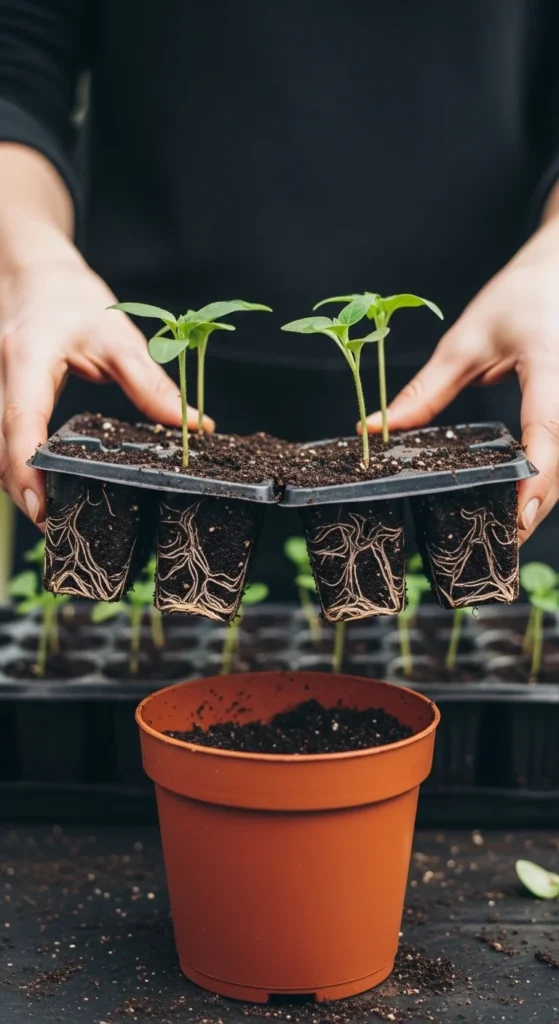
Move seedlings to larger pots or garden beds when roots fill the tray. Handle gently by leaves, not stems. Continue organic care: light waterings, compost tea, and gradual outdoor exposure for best results.
Conclusion
Starting seeds organically doesn’t have to be complicated or expensive. With these 23 practical tips, you can grow strong, healthy seedlings indoors using simple DIY mixes, budget-friendly containers, and careful light and moisture management. Each step—from sowing to hardening off—gives your plants a solid foundation for a thriving garden. Start small, follow these guidelines, and watch your seedlings flourish into robust plants ready for transplanting.
Leave a Reply