

Gardening feels a lot more doable when the growing area sits higher off the ground. That is why elevated raised garden beds keep showing up in patios, balconies, compact backyards, and senior-friendly garden plans. They make planting, watering, and picking simpler for people who do not want to crouch, kneel, or lean over low soil for long stretches. They also help with access, reach, drainage, and soil control in small spaces. Some styles work well for renters. Some fit wheelchairs. Some add storage, wheels, or self-watering features that cut daily work. This list focuses on practical elevated raised garden beds that save space, feel easier on the body, and can be built or bought without turning the project into a headache.
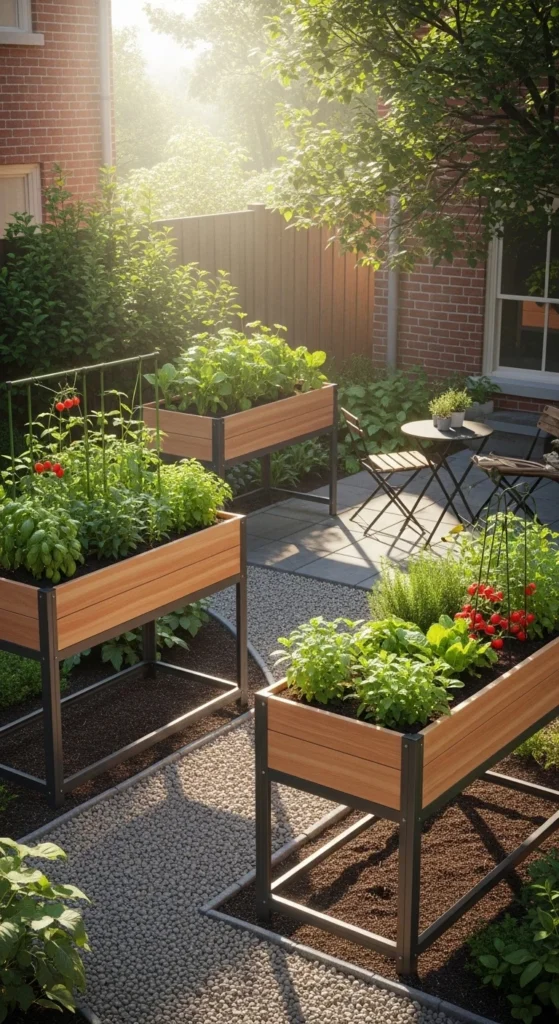
1. Waist-Height Cedar Beds for Daily Harvests
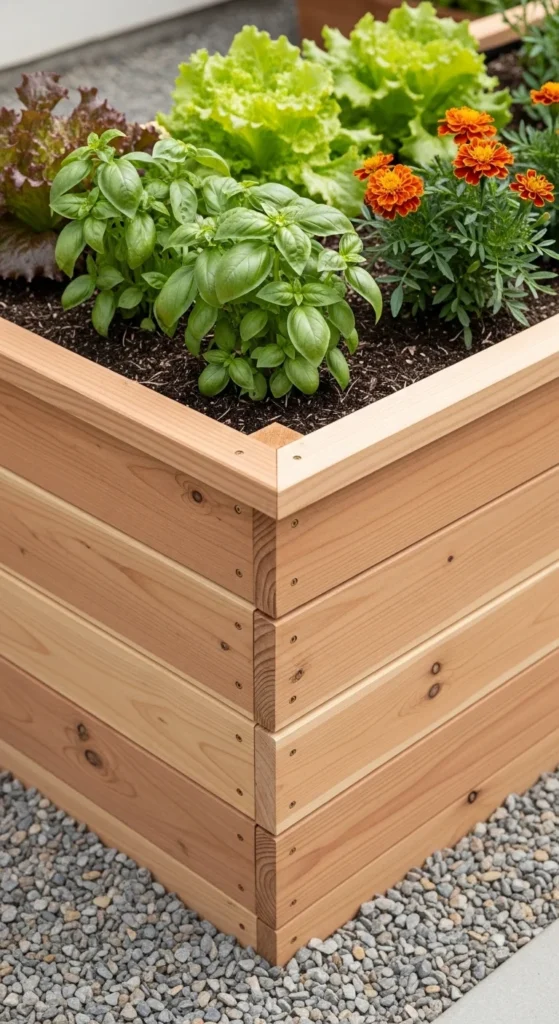
A waist-height cedar bed is one of the easiest ways to make gardening feel less tiring. The growing area sits high enough that planting and picking herbs or salad greens takes far less bending. For many people, that alone makes the garden easier to stick with. Cedar is also a smart material for outdoor use because it handles weather well and looks good even as it ages.
This kind of bed works very well for basil, parsley, lettuce, spinach, radishes, and flowers. It fits nicely on patios, decks, and small backyards. A simple build can use cedar boards, corner posts, and strong legs with cross braces. The design does not have to be fancy. A plain rectangle often works best.
To keep costs lower, use a smaller size at first rather than building a large bed all at once. A narrow bed near the kitchen door can be more useful than a huge setup at the edge of the yard. Add a shelf underneath for a watering can, gloves, and hand tools. That makes the bed even more useful in a tight space.
For gardeners who want comfort, clean lines, and easy access, a cedar bed at waist height is a strong starting point.
2. Open-Underneath Beds for Wheelchair Access
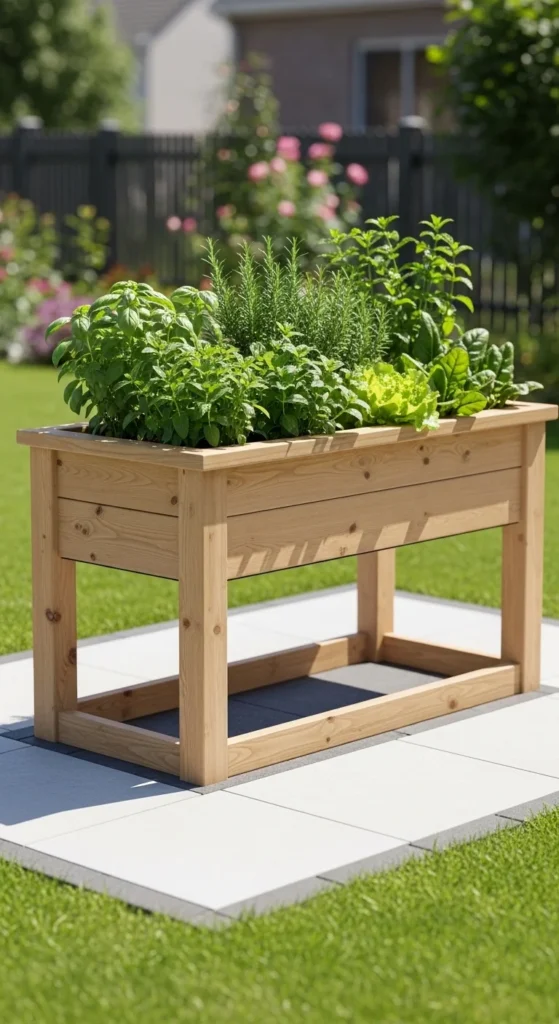
Open-underneath beds are made to give legroom under the planting area. That simple change makes a huge difference for wheelchair users and for anyone who prefers to garden while seated. Instead of reaching over a low box from the outside edge, the gardener can roll in close and work from a more natural position. This makes watering, planting, and trimming feel far more comfortable.
These beds are best kept narrow enough for easy reach. Herbs, lettuce, small flowers, spinach, and green onions are great choices because they stay easy to manage from one side. A smooth path around the bed also matters. Gravel can work, but a firm surface is usually better for wheels than loose stone. Try to leave enough room around the bed for turning and movement.
A simple DIY version can be built with a rectangular wood frame supported by sturdy side panels instead of center legs. That leaves the middle clear. A metal frame can also work if the budget allows. Keep the front edge smooth so arms and knees do not catch on rough corners.
This setup is practical, space-saving, and much easier for people who want gardening to feel welcoming instead of physically frustrating.
3. Self-Watering Beds for Lower Daily Work
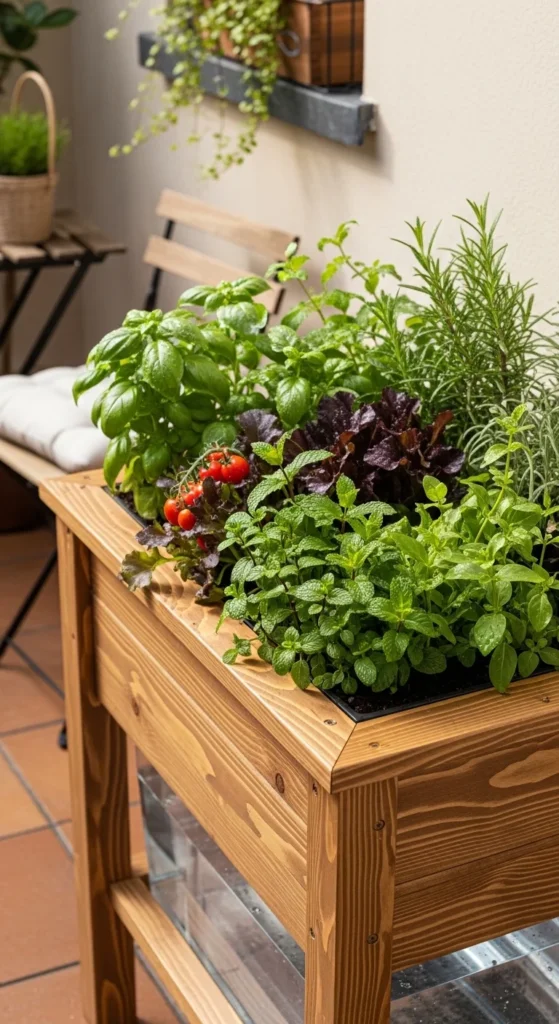
A self-watering elevated bed cuts down on one of the biggest chores in small-space gardening: frequent watering. Since raised beds on legs can dry out faster than ground-level beds, a water reservoir can make the setup much easier to manage. This is especially useful for people with busy schedules, joint pain, or hot patio spaces where the soil dries fast.
These beds work well for herbs, greens, dwarf tomatoes, peppers, and patio vegetables. The built-in reservoir helps keep moisture more even, which is helpful when weather changes quickly. Many ready-made versions come with a fill tube or water gauge, but a budget DIY version can be made by placing a water-holding section below the soil layer with fabric or perforated support above it.
The bed does not need to be huge to be useful. One medium-sized self-watering bed near a sunny wall can produce a lot of herbs and salad greens. Add mulch on top to slow evaporation even more. That small step helps the water last longer and keeps the soil surface from drying too quickly.
For gardeners who want less daily fuss, a self-watering raised bed is a practical answer that saves time and makes the growing routine simpler.
4. Slim Metal Beds for Modern Balconies
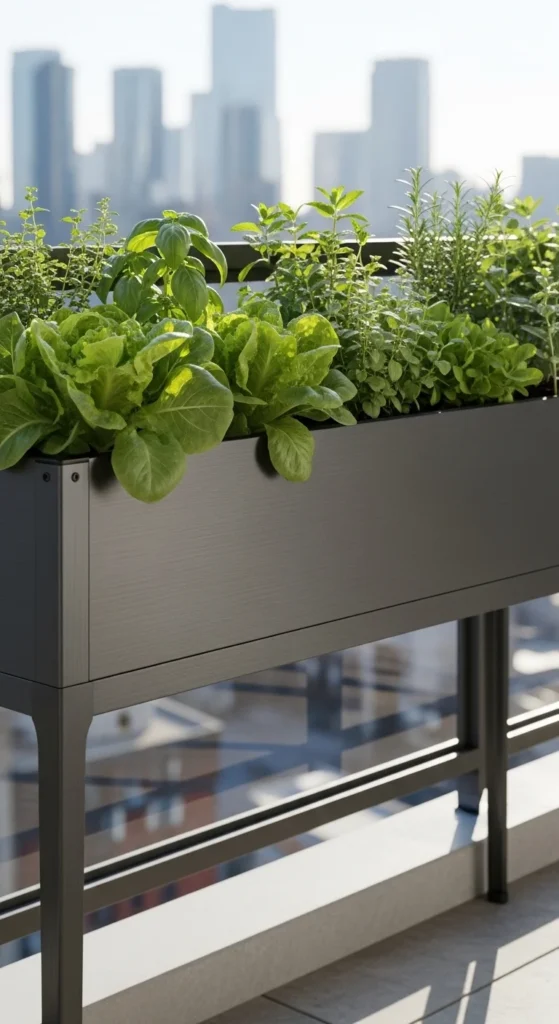
Slim metal beds on legs are a smart match for modern balconies and compact patios. They keep the footprint tight while still giving enough soil depth for herbs, greens, and small vegetables. The narrow profile leaves more walking room, which matters in places where every step counts. Metal also gives a clean, tidy look that pairs well with concrete, tile, and black railing systems.
This style is useful for people who want an organized garden without bulky wood boxes. Rust-resistant legs and panels help the bed hold up well outdoors. Since metal can warm up quickly in strong sun, it helps to mulch the surface and check the soil more often during hotter spells. A long narrow shape works well along a railing or wall.
To keep the budget under control, start with a single bed rather than lining the whole balcony at once. You can also use a metal trough-style container on a custom stand if prefab kits feel too expensive. Just make sure drainage holes are present and the base can handle the weight when watered.
For small-space gardeners who like a cleaner look and a simple footprint, slim metal elevated beds make a lot of sense.
5. Rolling Beds for Chasing the Sun
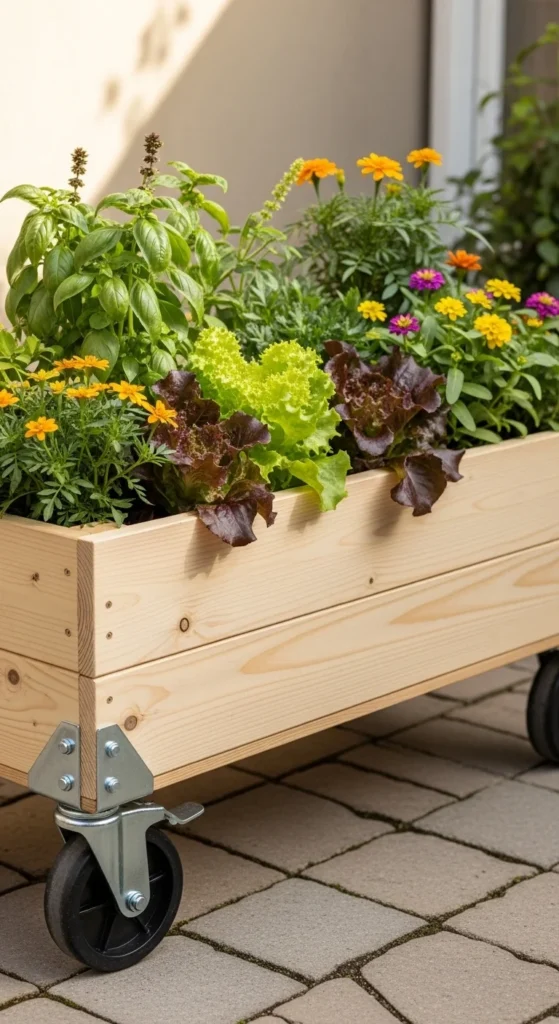
A rolling raised bed is a great fit for patios and balconies where sunlight moves around during the year. Instead of accepting one weak growing spot, the bed can be shifted into better light. That flexibility helps small spaces work harder. It also makes seasonal cleanup easier because the garden can be rolled aside when needed.
This type of bed works best when kept fairly compact. Herbs, lettuce, spinach, green onions, and flowers are ideal because they do not need a huge root zone. Strong locking wheels matter here. Without them, the bed can shift when bumped or when the soil gets heavy after watering. A light but sturdy wood frame often works well, though metal can also suit a modern space.
A cheap DIY version can use a shallow wooden planter mounted on a sturdy plant dolly or caster base. Keep the soil depth matched to the crops so the bed does not become harder to move than expected. Place a tray or mat under it if water runoff could mark the floor.
For renters, balcony gardeners, and anyone dealing with shifting light, a rolling bed adds freedom. That can make a small garden much easier to use well.
6. Trellis Beds for Vertical Vegetables
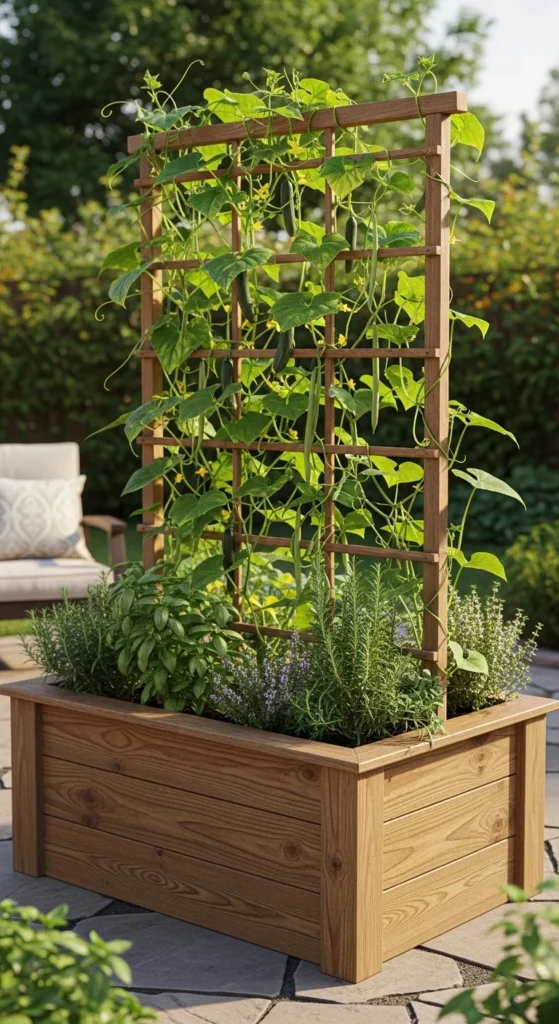
An elevated bed with a trellis gives two kinds of growing space in one footprint. The bed holds roots and low crops, while the trellis gives climbing plants a place to rise instead of spread. This is very useful in small yards, patios, and side areas where floor space is limited but vertical space is still open.
Pole beans, peas, cucumbers, and some small tomatoes can work well with this setup. Below the trellis, herbs or lettuce can fill the front of the bed. That makes the whole structure more productive without making it wider. A cedar or metal bed can support a trellis frame at the back. Just keep the structure strong enough to handle wind and the weight of mature plants.
A budget build can use a plain box on legs with a wire panel or wooden slat frame screwed to the rear corners. If the bed sits on a patio, make sure the base feels solid before plants get large. Add ties or clips as vines grow.
This design is ideal for gardeners who want more harvest from a small space. It keeps the garden compact, easier to reach, and far less messy than sprawling vines on the ground.
7. Dual-Depth Beds for Herbs and Deeper Roots
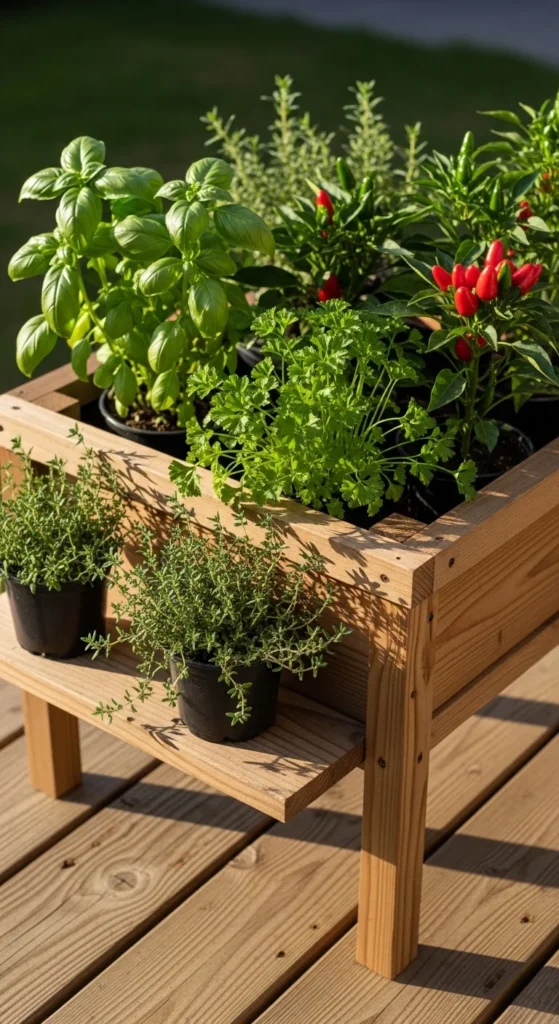
A dual-depth bed gives shallow space for herbs in one section and deeper soil for larger plants in another. That makes the setup more useful than a single-depth box, especially in small spaces where every inch has to do real work. A shallow front shelf can hold basil, thyme, chives, or lettuce, while the deeper rear section handles peppers, carrots, or compact tomatoes.
This layout is easy to understand and easy to use. The shallow front makes frequent harvesting feel more convenient, and the deeper back gives the bed more range. It is a good choice for patios, decks, and side-yard corners where one bed needs to carry a lot of the garden load.
A DIY version can be built with a sloped or stepped base inside the bed. You do not need advanced tools. A simple divider and extra support in the back section can get the job done. Use scrap wood for the inner section if the outer frame already uses better boards. That helps trim the cost.
For gardeners who cook often and want both herbs and vegetables close at hand, a dual-depth bed is a practical design. It keeps the layout neat and makes the planting mix more useful.
8. H-Shaped Beds for Full Reach Access
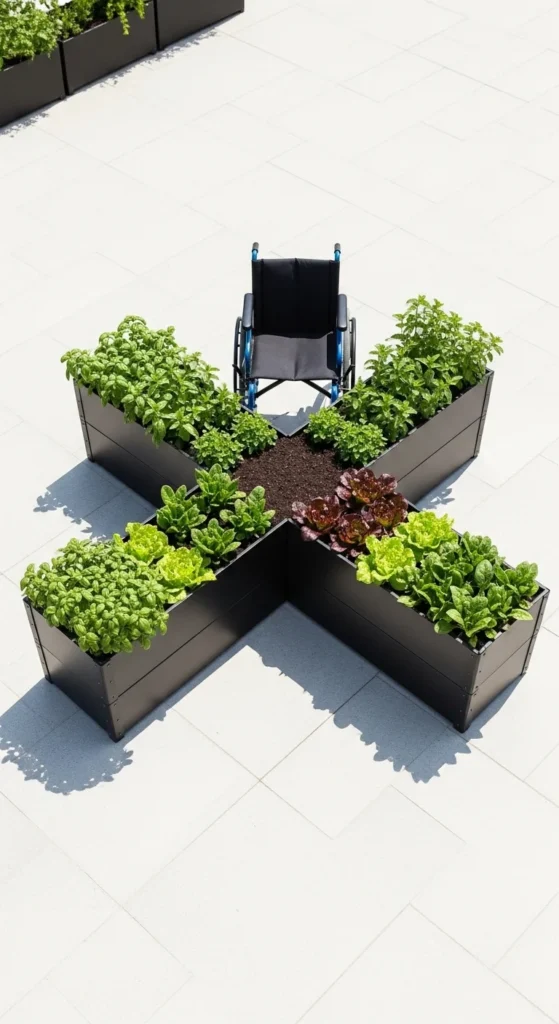
An H-shaped bed is built to improve reach from more than one side. This layout works especially well for wheelchair users and seated gardeners because the center opening allows close access into the planting zone. Instead of leaning over a wide bed, the gardener can move into the center space and work shorter sections from nearby.
This shape can look unusual at first, but it solves a real problem. Corners and wide beds often leave plants too far away. An H-shaped layout fixes that by bringing more of the growing area within arm’s reach. Herbs, salad greens, radishes, and flowers are especially good here because they stay easy to manage from multiple sides.
A budget version can be built by joining narrow rectangular bed sections instead of making one complex frame from scratch. Use sturdy legs and cross supports so the whole structure stays stable. Keep the paths around it wide and smooth for easier movement. On a patio, place the bed where turning space is available.
For gardeners who care most about access, this design stands out. It helps more of the soil area stay reachable, which makes daily garden tasks simpler and much less tiring.
9. Budget Fir Wood Beds for First-Time Gardeners
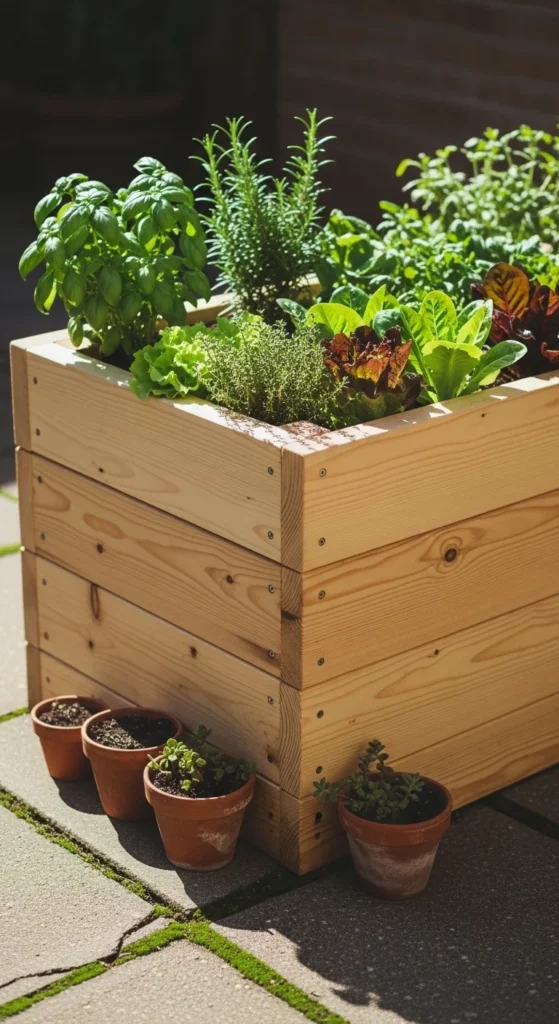
Fir wood beds are often a lower-cost way to start an elevated garden. They may not last as long as cedar, but they can still be a good option for gardeners who want a practical setup without spending too much upfront. For a first project on a patio or in a small backyard, a fir bed gives a manageable way to test the layout and learn what grows well.
This type of bed suits herbs, greens, onions, radishes, and flowers. It is best to keep the size modest so the frame stays easier to move and the material cost stays reasonable. A simple rectangle on four sturdy legs is often enough. Add a lower support shelf if extra stability is needed.
To help the bed last longer, line the inside, keep the wood off standing water, and use a simple outdoor-safe finish on the exterior if desired. A DIY version can be built from standard boards and basic screws without much trouble. Reclaimed lumber can bring the price down even more.
For people who want to try no-bend gardening before investing in a more premium material, a fir bed is a sensible first step. It offers comfort and a useful growing area at a lower price.
10. Resin Beds for Low-Maintenance Patios
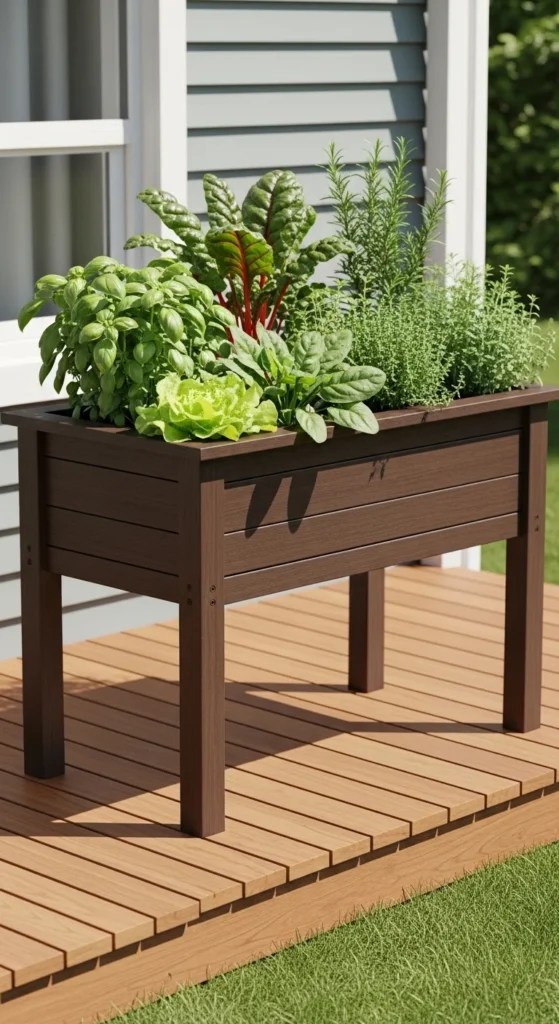
Resin elevated beds appeal to gardeners who want a setup with very little upkeep. They do not rot like wood and usually do not ask for sealing or repainting. That makes them a good choice for decks, patios, and other small spaces where a clean look matters and maintenance time is limited.
These beds work well for herbs, lettuce, spinach, flowers, and patio vegetables. Many come in table-style shapes that feel easy to place near a door or seating area. Since resin styles can vary in strength, it helps to choose a compact size if you are unsure about durability. Some have built-in drainage plugs or simple water features, which can make care easier.
A resin bed is often pricier than a basic DIY wood box, but it can save work later. For a tighter budget, buy one useful bed instead of a full matching set. Use it where you will harvest most often, such as near the kitchen or in the sunniest patio corner. Add lightweight mulch to help the soil hold moisture.
For gardeners who want no-bend comfort without much upkeep, resin beds are easy to live with. They suit modern outdoor spaces and keep the routine simple.
11. Railing-Side Beds for Tight Decks
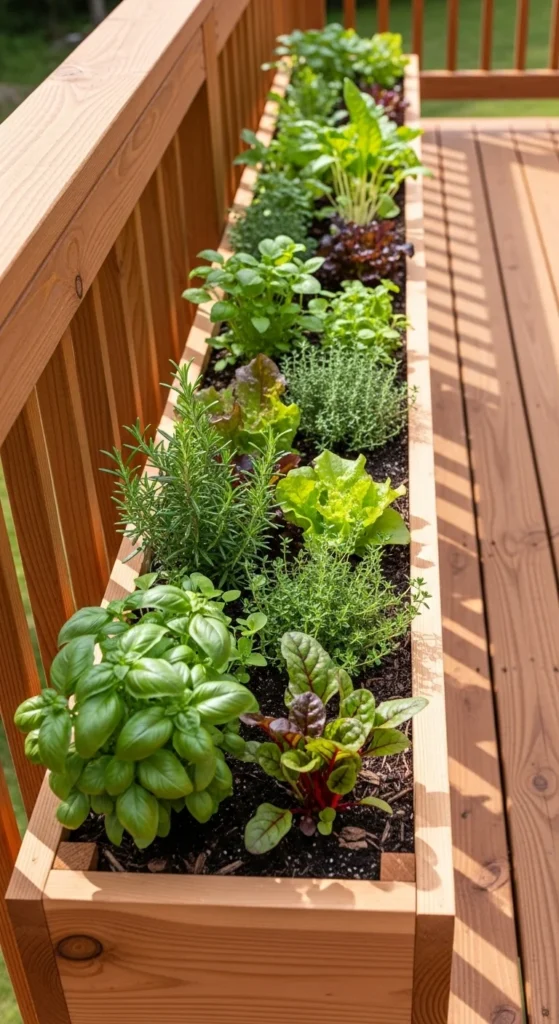
Decks often have slim unused edges that can hold more than a row of small pots. A narrow elevated bed placed along the railing can turn that strip into a productive growing zone while leaving the middle of the deck open. This matters in small outdoor spaces where chairs, tables, and walking paths already compete for room.
A railing-side bed is ideal for herbs, lettuce, spinach, parsley, chives, and edible flowers. Since the layout stays slim, it works best with crops that do not need a lot of spread. The height makes harvesting easy, and the long shape helps keep the design neat and orderly. A cedar or metal frame can both work here.
A budget build can use basic boards cut into a long rectangle with strong legs spaced for support. Keep the width modest so it does not crowd the deck. If wind hits the deck hard, secure the bed well and avoid making it top-heavy. A bottom shelf can hold small tools or act as extra bracing.
This idea is useful for people who want an herb garden close to the house without giving up deck function. It is a tidy, simple way to add growing space where many people least expect it.
12. Corner Beds for Dead Patio Zones
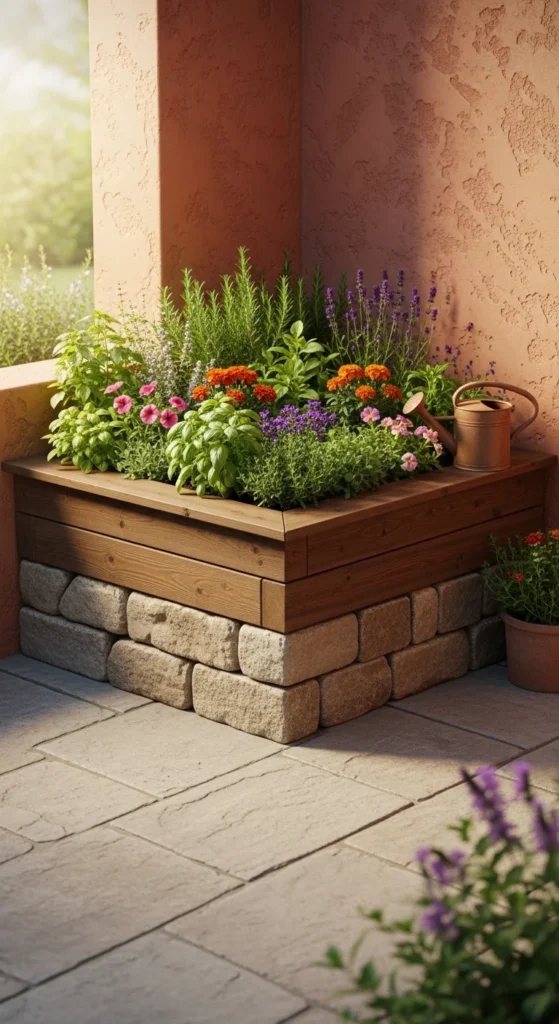
Corners on patios and decks often collect empty pots, old tools, or nothing at all. An elevated corner bed turns that dead zone into a useful planting space without taking over the middle of the area. This is especially helpful in small homes where outdoor square footage is limited and every section has to count.
An L-shaped or wedge-style bed works very well in corners. It can hold herbs, flowers, greens, and a few compact vegetables while still leaving room for seating or foot traffic. The raised height makes access easier, and the corner position helps the garden feel tucked in rather than scattered around the space.
A simple DIY version can use two short rectangular beds set tightly together, or one custom frame made from straight boards. Use the back walls of the corner as a visual guide when sizing the bed. Keep the front sections reachable so plants do not end up too far back. Add a trellis in one corner if you want a bit of vertical growth without widening the bed.
For small patios that feel awkward around the edges, a corner bed is a practical fix. It gives structure to the space and turns a forgotten spot into part of the garden.
13. Beds with Under-Shelf Tool Storage
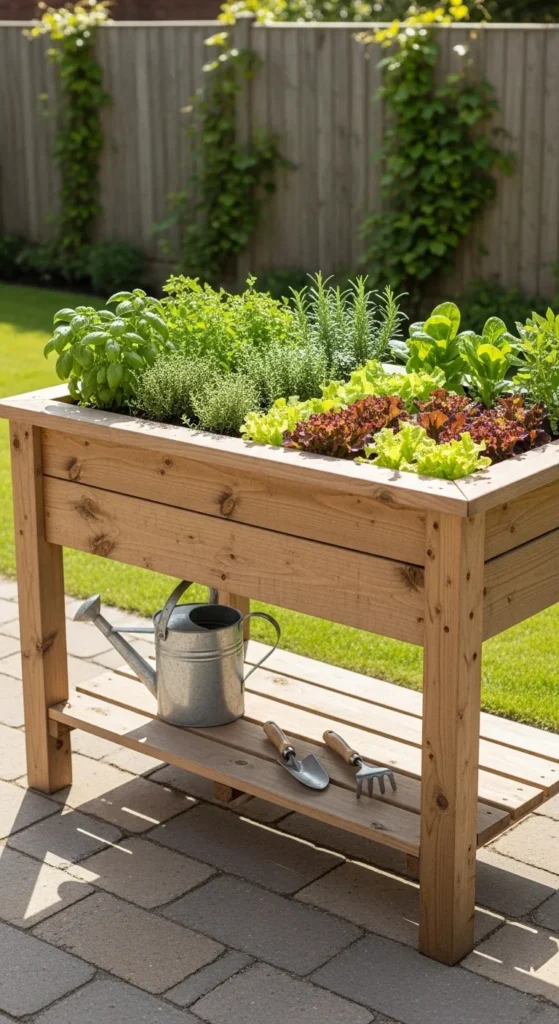
A raised bed with a shelf underneath solves two problems at once. It lifts the plants to a more comfortable height and gives you a storage spot for the small items that usually end up scattered around the patio. In a compact garden, that extra shelf can make the whole area feel far more organized.
This type of bed works well for daily-use crops like herbs, greens, and flowers. Place gloves, a trowel, pruning snips, plant tags, or a watering can on the shelf below. That way, the tools stay close without adding clutter to the seating area or floor. On a small deck or balcony, that kind of order matters a lot.
A DIY version is easy to build. Start with a standard elevated bed frame, then add a slatted shelf between the lower supports. Reclaimed wood works fine for the shelf if the upper box uses better boards. Keep the shelf high enough off the floor to avoid water sitting under it. Add a tray or small bin if you want to hold loose items.
For gardeners who like practical details, under-shelf storage makes an elevated bed even more useful. It keeps the growing area neat and makes routine garden tasks quicker and easier.
14. Drainage-Tap Beds for Cleaner Water Control
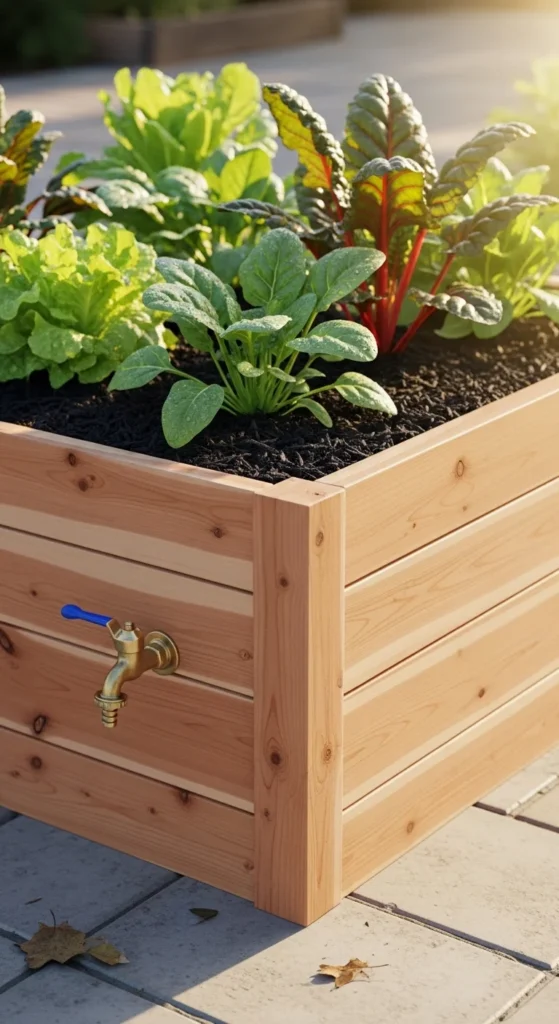
Good drainage matters even more in beds on legs because water cannot sink into the ground below. A drainage tap or outlet gives more control over excess water and helps stop soggy soil from sitting too long at the bottom. This is useful for patios, balconies, and decks where runoff can also create a mess.
Beds with drainage taps work well for herbs, greens, and flowers that prefer even moisture but do not like waterlogged soil. A tap makes it easier to release extra water after heavy rain or overwatering. It can also help when cleaning out the bed at the end of a season. Add mulch to the top layer so the soil keeps moisture longer between watering.
A DIY version can be made by fitting a drain outlet into the base of a lined elevated bed. The design does not need to be complicated, but the outlet should sit low enough to do its job well. Pair it with a catch container if you want to protect the patio surface below.
For gardeners dealing with small hardscape spaces, cleaner water control matters. A drainage tap can reduce mess, help roots stay healthier, and make an elevated bed easier to manage through wet spells.
15. Safety-First Beds with Grab Bars Nearby
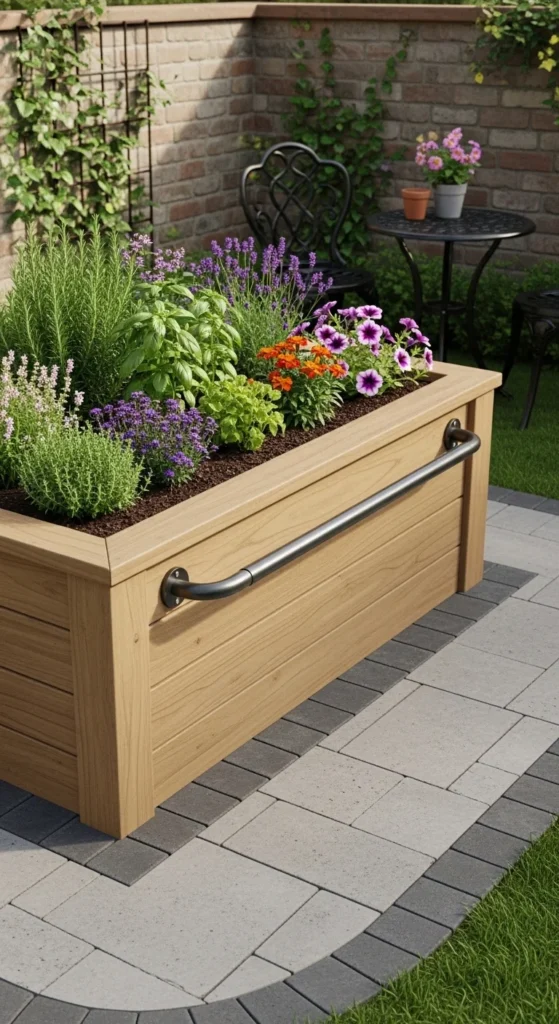
For some gardeners, the garden has to feel stable before it can feel enjoyable. A raised bed placed near a grab bar, rail, wall edge, or sturdy support can help make movement safer during planting and harvesting. This is a helpful setup for older adults or anyone who wants a little more balance support while gardening.
The bed itself can stay simple. A rectangular raised planter on legs with smooth edges and a moderate width often works best. Place it beside a fixed support point where standing up, shifting position, or pausing feels easier. Add a non-slip path underneath and around it if the surface gets slick after watering. Herbs, greens, and flowers are especially good here because they do not ask for heavy lifting or deep reaching.
A low-cost approach can use a standard elevated bed placed beside an existing porch rail or strong fence corner rather than installing new hardware. A bench or seat nearby can also help. Keep tools in a small basket or shelf so there is less bending and fewer tripping hazards.
This type of setup is about comfort and confidence. Small changes in layout can make the garden feel much easier to use day after day.
16. Industrial-Style Beds with Rust-Resistant Legs
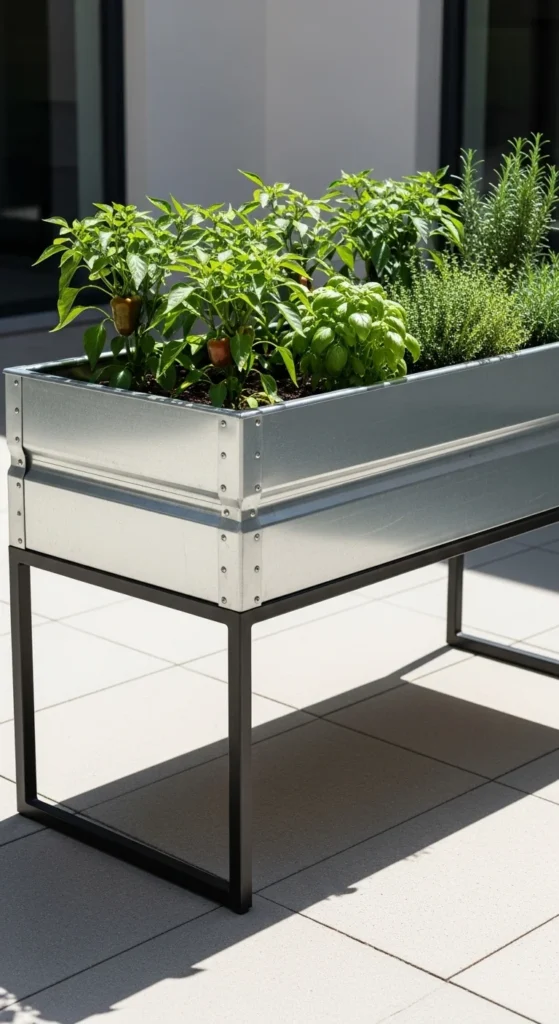
Industrial-style elevated beds bring a cleaner, sharper look to patios and courtyards. Galvanized metal or powder-coated panels paired with rust-resistant legs create a neat structure that works well in modern outdoor settings. This design is useful for gardeners who want a bed that feels strong, tidy, and easy to fit into a small hardscape space.
These beds can hold herbs, peppers, greens, onions, and flowers. Their straight lines help the layout feel organized, which matters when the outdoor area is already small. Since metal surfaces can warm up quickly, it helps to mulch the soil and keep an eye on moisture during heat. Position the bed where it gets good sun but still leaves comfortable walking space.
A cheaper route can use a stock-style metal planter or trough mounted on a custom stand. This gives a similar look without buying a premium kit. Just check the drainage before filling it. A tray or gravel strip below can help manage runoff on tile or concrete.
For small-space gardeners who like modern lines and simple upkeep, this style works well. It keeps the planting zone off the ground and gives the area a clean, put-together look.
17. Reclaimed Wood Beds for Low-Cost DIY Builds
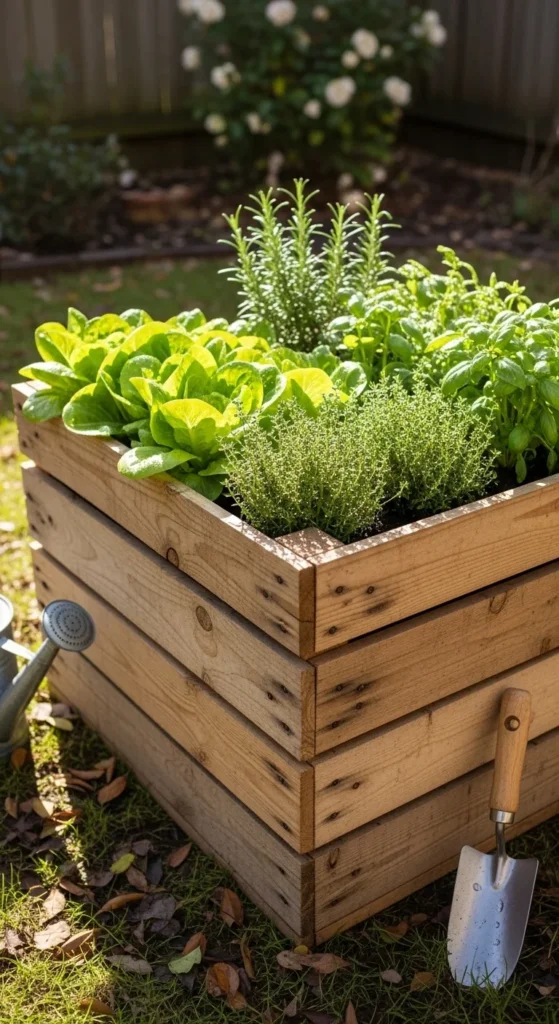
A reclaimed wood bed is a good option for gardeners who want an elevated setup without spending much. Using leftover boards, old shelving parts, or salvaged wood can cut the project cost while still creating a useful garden bed. This approach works best when the build stays simple and the bed size stays modest.
A plain rectangular bed on sturdy legs is often enough. It can hold lettuce, spinach, herbs, flowers, and small root crops. Before using reclaimed wood, check that it is still solid and safe for garden use. Skip anything badly rotted or treated with unknown coatings. Sand rough edges so the bed feels more comfortable to work around.
One easy approach is to reuse a strong wooden crate or shelving unit as the base, then add a lined planting box on top. Another option is building a fresh frame from reclaimed planks and using better wood only where more strength is needed. Add a small bottom shelf if extra bracing is required.
For beginners, reclaimed wood projects keep the risk lower. You can test no-bend gardening without a large bill. If the setup works well, you can always build a longer-lasting version later with new material.
18. Kitchen-Door Herb Beds for Quick Picking
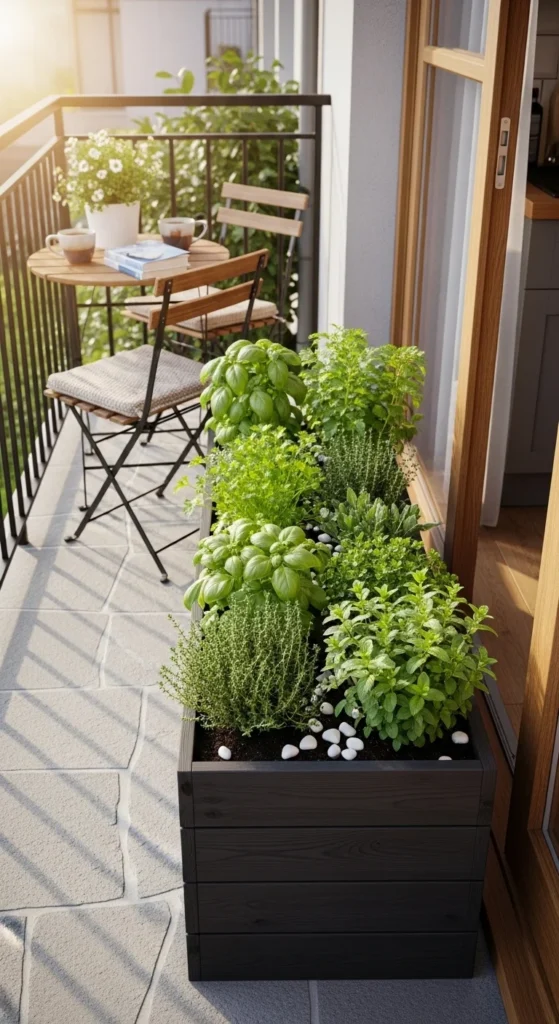
An elevated herb bed placed near the kitchen door may be the most useful bed in the whole home garden. It keeps daily ingredients close and makes quick harvesting easy. Since the bed is off the ground, trimming basil or parsley takes far less bending than picking from a low pot or in-ground patch. That convenience often means the herbs get used more often too.
This setup is perfect for basil, mint, parsley, thyme, oregano, chives, cilantro, and even a little lettuce. The bed does not have to be large. In fact, a narrow compact bed usually works better near an entrance because it keeps the walkway open. A wood or resin planter on legs is often enough for a very productive herb setup.
To keep costs low, start with one simple bed and fill it with the herbs you use most. Use bagged soil, add mulch, and place the bed where watering is easy. If the space is covered, check the sunlight across the day before choosing the exact spot. A small lower shelf can hold snips and a watering can.
For cooks and small-space gardeners alike, this kind of bed makes the garden feel tied to daily life.
19. Salad Beds for Easy Cut-and-Come-Again Crops
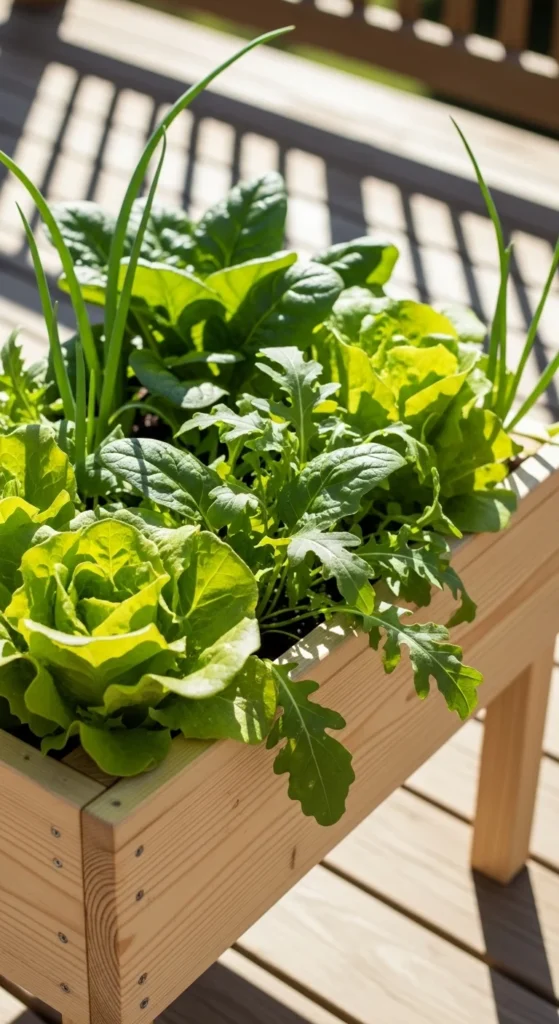
A raised salad bed on legs is a great fit for people who want quick harvests with less physical strain. Salad crops grow fast, do not need deep soil, and are easy to reach in a higher planter. That makes them ideal for elevated garden beds in small spaces. A compact bed can still produce a lot when planted with cut-and-come-again greens.
Lettuce, spinach, arugula, green onions, baby kale, dill, and parsley are good choices here. Because the crops stay fairly shallow-rooted, the bed can remain lighter and easier to support. Place it in a sunny spot near the house if you want frequent use. A narrow bed shape often works best because every plant stays within easy reach.
A budget build can use a simple wooden box with strong legs and a lined base. Add a drain outlet or several holes so water does not linger. Sow new seeds in small sections every week or two for steady picking. A thin layer of mulch helps the soil stay moist and reduces how often watering is needed.
For gardeners who want comfort and regular rewards, a raised salad bed is one of the most practical projects to start with.
20. Wide-Path Beds for Better Movement
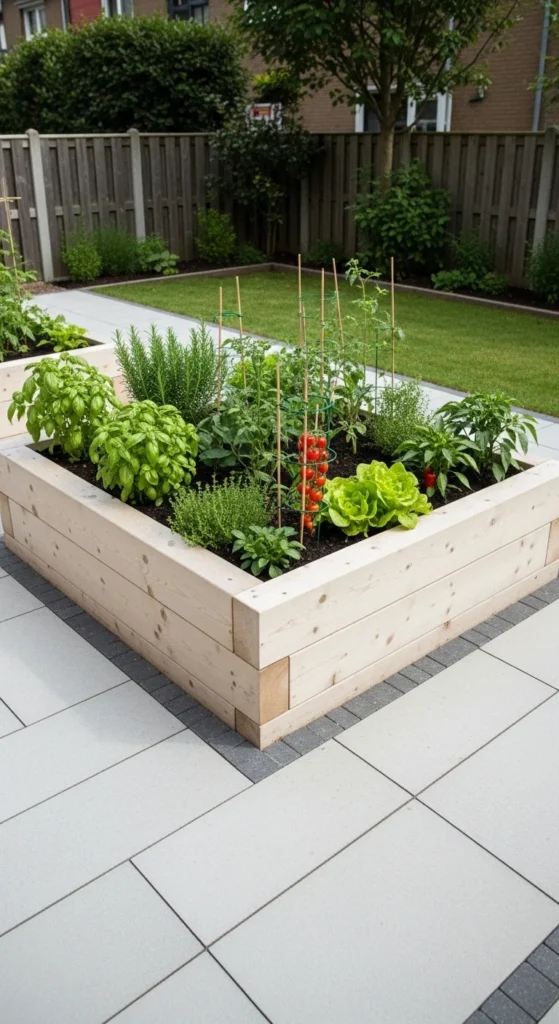
Sometimes the bed itself is fine, but the space around it makes gardening frustrating. That is why wide paths matter in accessible garden design. An elevated bed with enough room around it becomes easier to use for wheelchair users, people with walkers, and anyone who wants more freedom to turn, pause, or carry tools without feeling squeezed.
This setup can use nearly any elevated bed style, but the layout around it is what makes the real difference. A firm path surface is usually easier than loose gravel. Keep the route open and avoid filling it with extra pots, hoses, or décor that narrow movement. A single well-placed bed with good access often works better than several cramped beds.
On a budget, focus on fixing one zone instead of redoing the whole yard. Place the bed near the best light and clear the path to it first. If a wider path is not possible everywhere, make the main working area the easiest one to move through. Herbs, greens, and flowers all suit this kind of setup.
For gardeners who want less strain and less awkward movement, a wide-path layout can matter just as much as the bed design itself.
21. Open-Bottom Beds Over Soil Patches
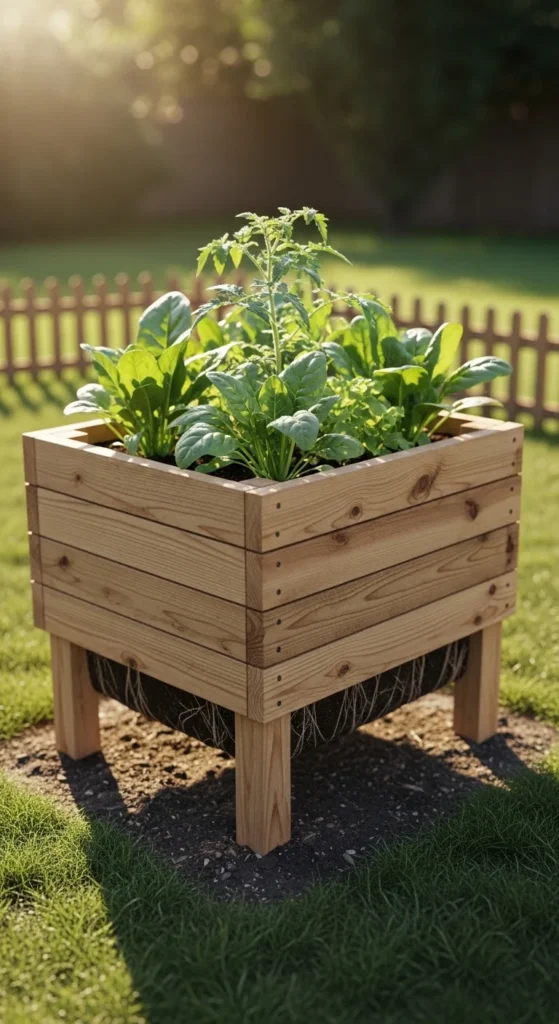
An open-bottom raised bed on legs allows roots to reach into the ground below if the layout is designed that way. This can be useful in a small yard where a gardener wants the comfort of a higher work surface but still wants deeper root growth beneath the frame. It is a practical choice for certain vegetables and for gardeners who already have a usable soil patch in place.
This design works best in a backyard rather than on a deck or balcony. The upper frame gives easier access for planting and care, while the open bottom allows a deeper rooting zone below. Crops like tomatoes, larger peppers, and some root vegetables can benefit from that extra room. The frame should still stay narrow enough for easy reach from the outside.
A DIY version can use sturdy sidewalls and legs, with the bottom left open over prepared ground. Add mulch around the outside to reduce weeds and keep the garden area tidy. Since soil below the bed matters here, it helps to loosen the ground before setting the frame in place.
For people who want comfort without giving up deeper rooting space, this type of bed offers a useful middle ground between in-ground and table-style gardening.
22. Sit-and-Garden Beds for Shorter Work Sessions
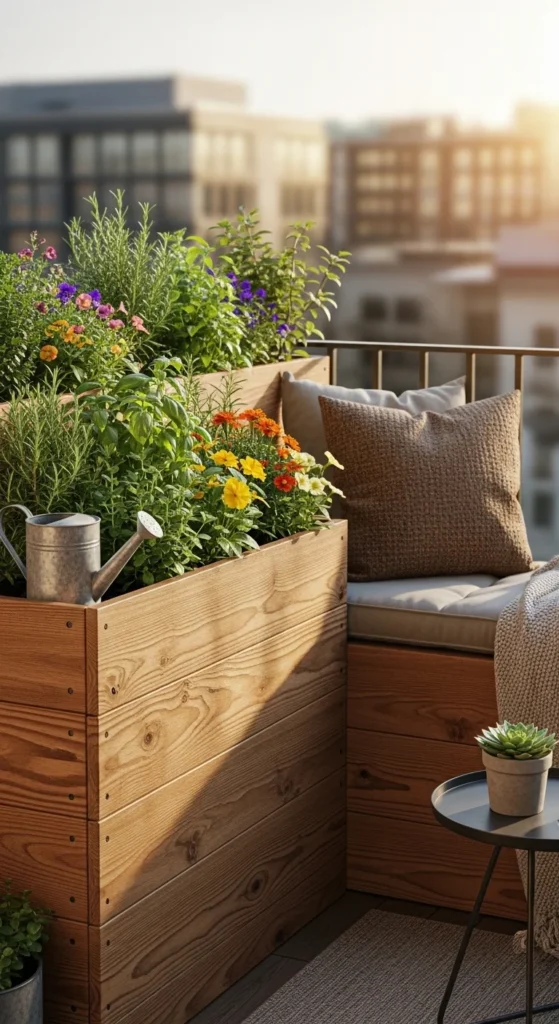
A sit-and-garden bed is built or placed so a chair or bench can stay close by. This is helpful for gardeners who prefer shorter work sessions or want the option to sit while trimming, planting, or watering. When the bed is already raised, adding a seat nearby can make the whole setup much easier on the body.
This approach works well for herbs, flowers, greens, and other crops that are picked often. A smaller bed is usually better here because it keeps all the plants within easy reach from a seated spot. Place the bed where there is enough room for both the chair and a clear path around it. If possible, keep tools on a shelf or hook nearby so the routine feels simple.
A low-cost setup does not require a custom build. A standard elevated bed paired with a weather-safe chair or small bench can do the job. A foldable stool is useful too if space is very tight. Choose a sunny but comfortable location so the bed gets light without turning the seated spot into a hot corner.
For gardeners managing pain, fatigue, or balance issues, this kind of setup can make regular gardening far more realistic.
23. Block-and-Frame Beds for Sturdy Budget Builds
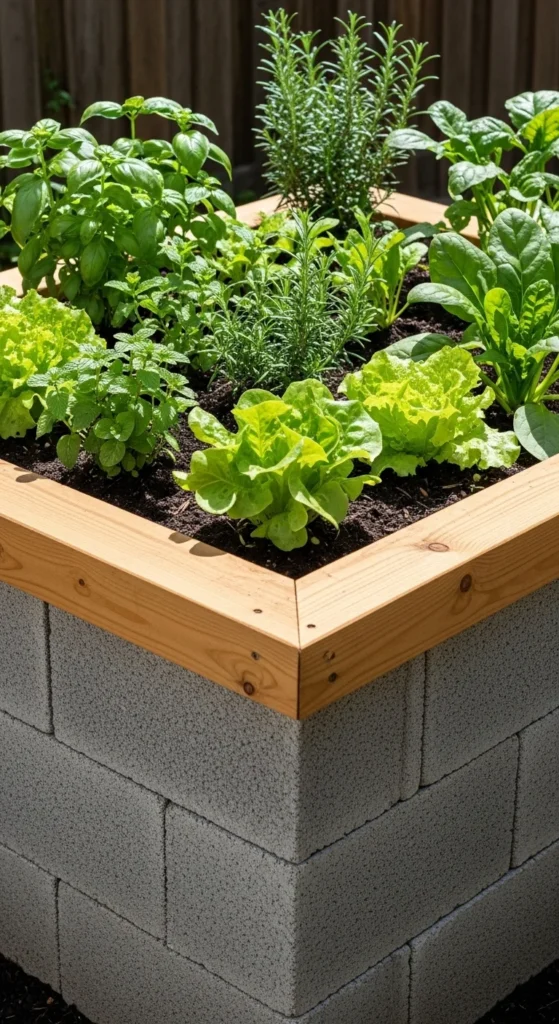
A block-and-frame bed uses simple supports like concrete blocks with a lighter planting frame above. This can be a budget-friendly way to create a higher working height without building a full legged structure from expensive lumber. It works best in small backyards and patios where a strong, fixed setup is acceptable.
The blocks provide solid support, and the upper frame holds the soil. A wood box lined and set on top can create a useful raised bed for herbs, greens, flowers, and even some root crops if the soil depth is decent. Keep the height comfortable and the frame width easy to reach. A plain design usually works best here.
This project can save money because the support system does not rely only on large wood posts. Use simple boards for the upper box and spend a bit more only where strength matters. Check that the surface below is level before assembling the structure. Add a neat path around it so the final setup does not feel too rough.
For gardeners who want a sturdy bed without paying for a full premium kit, this is a practical route. It gives a higher work surface and a simple structure using common materials.
24. Patio Feature Beds That Still Grow Food
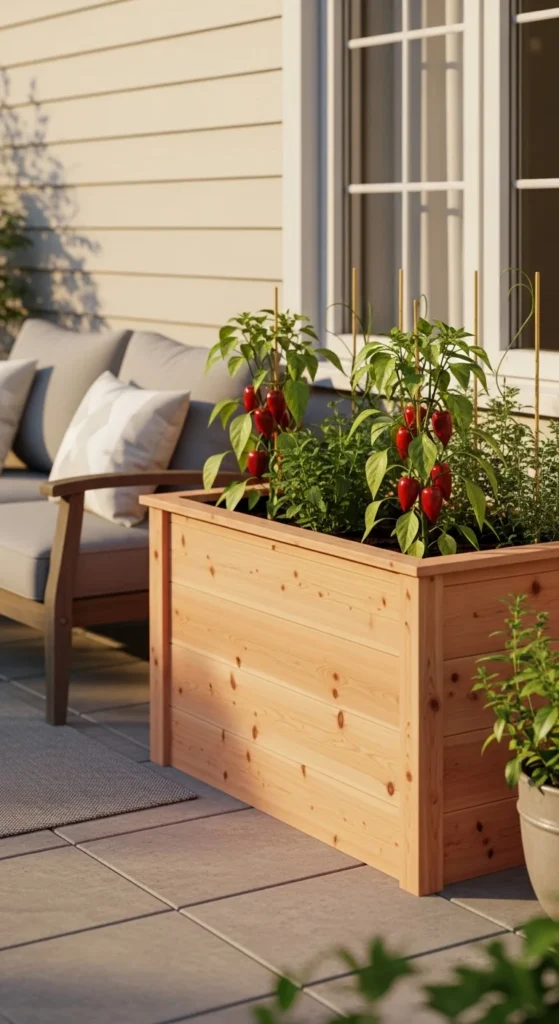
Some elevated beds do more than hold plants. They also help shape the look of the patio. A well-placed cedar or metal bed can act almost like outdoor furniture while still growing herbs, greens, or small vegetables. This is useful for homes where the patio serves both as a sitting area and the main garden zone.
The key is picking a size and finish that suits the surrounding space. A tall narrow bed near a seating edge can look clean and still stay practical. Plant herbs, peppers, flowers, or leafy greens that look full and tidy. Keep the bed from becoming too wide or too deep. Easy reach still matters more than appearance alone.
A budget-friendly route is building one attractive bed instead of several plain ones. Use better boards on the visible outer frame and basic material for inner supports. Add a mulch top layer so the soil surface looks neat. If the patio has a modern look, a slim metal bed may fit better than rustic wood. If it feels softer and more natural, cedar can work well.
For small patios, this type of bed makes sense because it combines gardening and layout in one useful piece.
25. Start-Small Modular Beds You Can Add Later
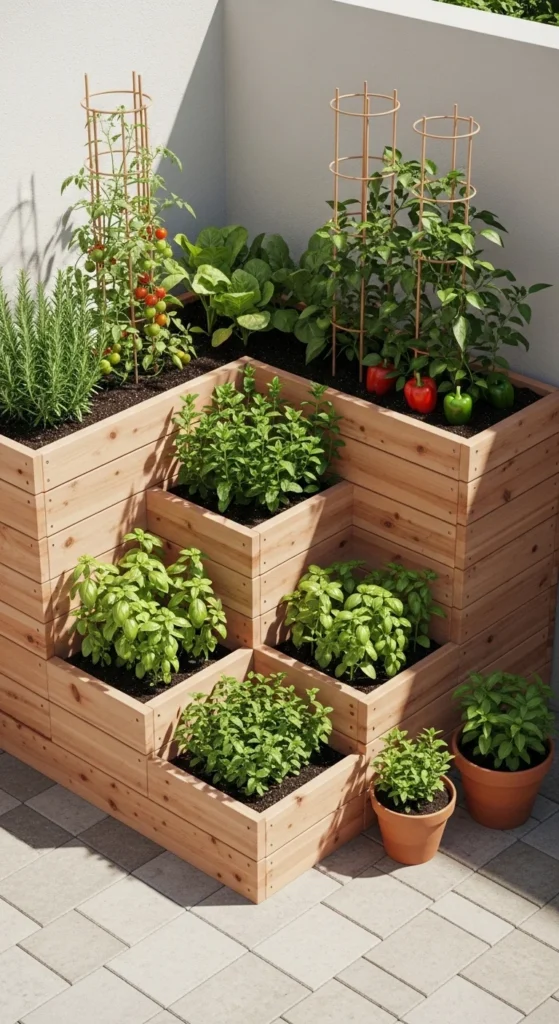
A modular approach is perfect for gardeners who want comfort but do not want to commit to a giant project right away. Instead of building one large elevated setup, start with one or two manageable beds and add more later if the space, budget, and routine all support it. This is a very practical way to grow a small garden over time.
A starter modular setup can include one herb bed near the door and one vegetable bed in the sunniest corner. Later, a trellis bed or wheelchair-friendly bed can join the layout if needed. This keeps the first project more affordable and gives time to learn what actually works in the space. It also avoids spending money on a full system before the gardening habit settles in.
Use repeatable shapes and similar materials so later additions still match. A plain cedar rectangle on legs is a good example. A metal option can work too if the style of the space leans modern. Keep path space in mind from the start so new beds do not crowd movement later.
For many people, the best raised garden plan is the one that grows a bit at a time. That keeps the project realistic and easier to maintain.
Conclusion
Elevated raised garden beds make gardening easier to reach, easier to manage, and easier to fit into small outdoor spaces. They help reduce bending and kneeling, support better access for seniors and wheelchair users, and turn patios, decks, and tight backyard corners into productive growing spots. Some styles focus on self-watering. Others add wheels, open legroom, storage shelves, or trellises for more function in less space. The best choice depends on how the gardener moves, what the space allows, and which crops will get used most often. Start with one practical bed, place it where the light is good and access feels easy, then build from there. A comfortable garden is often the one that gets used the most.
Leave a Reply