

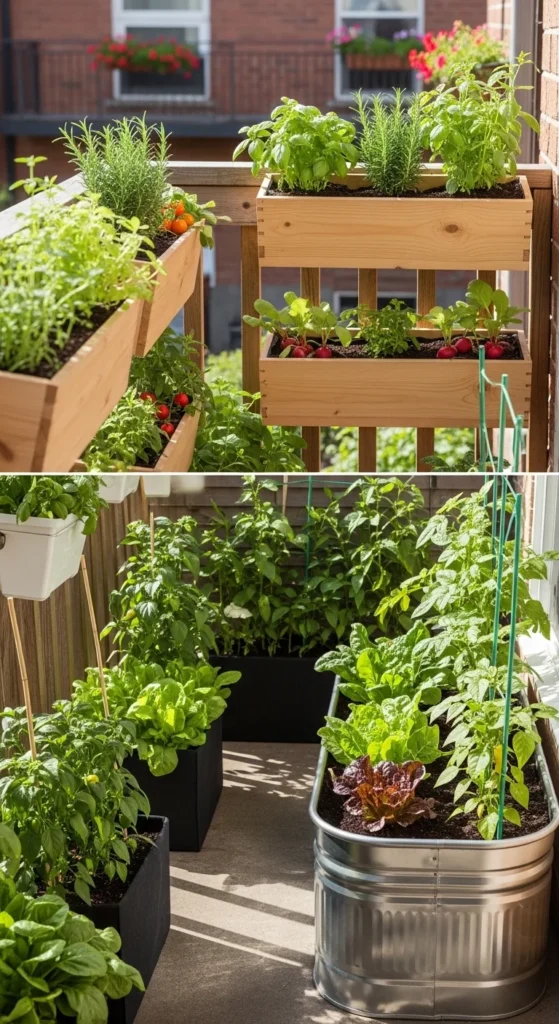
Small spaces can still grow a lot. The secret is picking raised garden beds that fit the area instead of forcing a large layout into a tight spot. A good setup keeps plants easy to reach, protects soil from foot traffic, and makes patios, balconies, side yards, and awkward corners far more useful. It also helps new gardeners start with less mess and less guesswork. Some people want a cheap DIY box. Others want a renter-friendly fabric bed they can move later. Some need taller beds that feel easier on the back. This list is built for all of those goals. Each idea focuses on space-saving raised garden beds that work in real homes, with simple tips, lower-cost material choices, and easy ways to make the most of every square foot.
1. Slim Vertical Beds for Balcony Walls
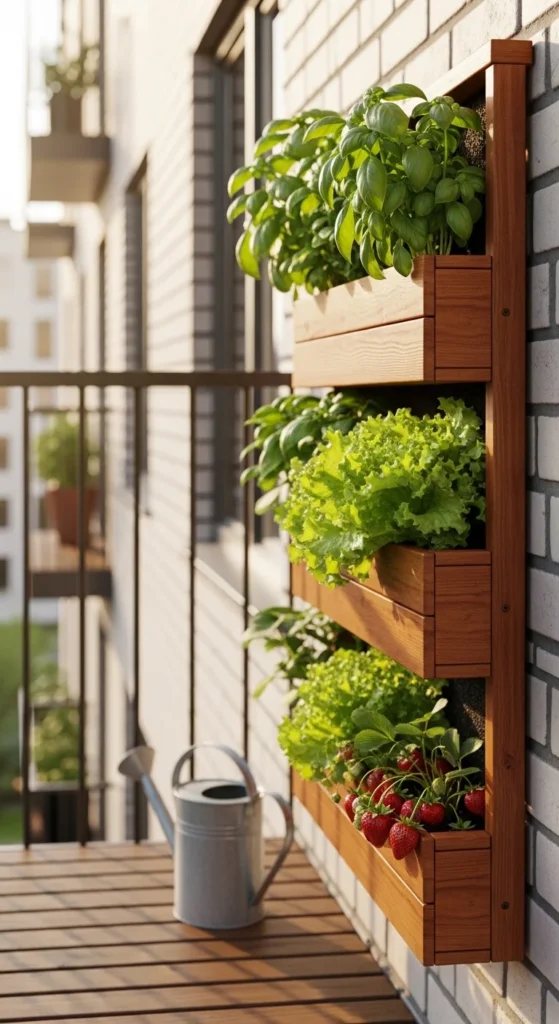
Slim vertical beds make sense when the floor area is tiny but the wall gets good sun. This setup uses height instead of width, which keeps the balcony more open and easier to walk through. Herbs, lettuce, spinach, strawberries, and small flowers all do well here because they do not need very deep soil. A simple DIY version can be made from stacked wooden boxes, wall-mounted planters, or narrow shelf-style frames with lined planting sections.
This idea works well for renters too if drilling is not allowed. A freestanding ladder shelf with planting trays can give a similar look without changing the wall. Keep the heaviest section close to the bottom so it feels stable. Place the bed where it gets at least six hours of light if you want edible plants to do well.
Budget matters in small gardening projects, so start with just two or three levels instead of filling the whole wall at once. Reclaimed boards, secondhand shelving, and plastic grow liners can keep costs down. Add drip trays under each level to stop water from running onto neighbors below. A narrow vertical bed turns one plain wall into a useful little food garden.
2. Fabric Raised Beds for Renters
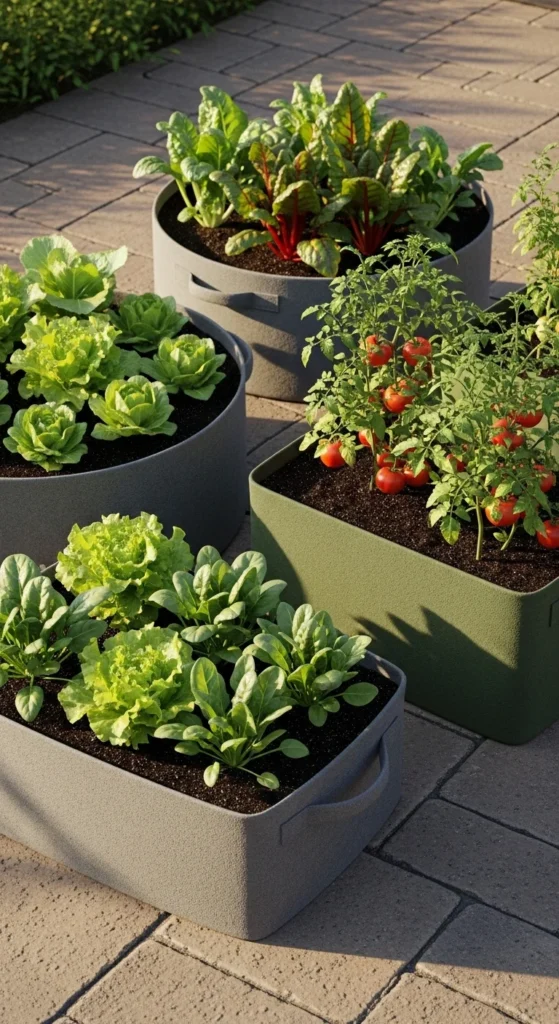
Fabric raised beds are one of the easiest ways to start gardening in a small space. They are light, portable, simple to set up, and often cost less than wood or metal options. That makes them a strong fit for renters, students, or anyone who wants a garden without tools, nails, or permanent changes. They also fold away when the season ends, which helps if storage space is tight.
These beds work well on patios, balconies, rooftops, and small backyards. Breathable fabric helps with drainage and can support healthy root growth. Use them for salad greens, peppers, herbs, beans, and even dwarf tomato varieties. Pick a shape that matches the spot. Long rectangles fit along railings or fences. Round beds work better in open corners.
For a cheap setup, start with one or two beds instead of buying a full group. Put saucers or a waterproof mat under them if they sit on a balcony floor. That keeps the area cleaner and helps avoid water marks. If wind is a problem, place the beds near a wall or use heavier soil in the base.
Fabric beds are also easy to move around if the sunlight shifts during the season. That makes them a practical choice for small-space gardening.
3. Corner Raised Beds for Tight Yard Spaces
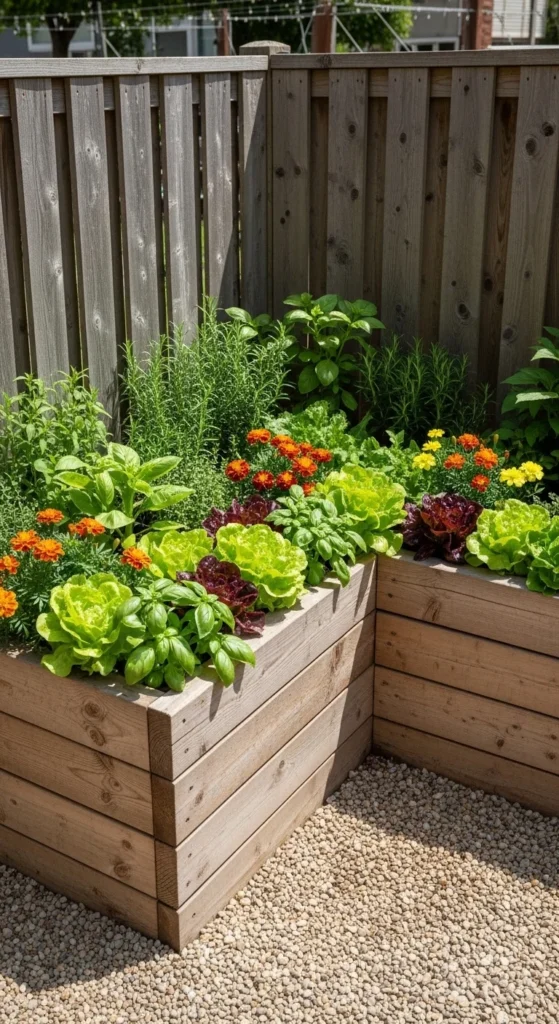
Corners often go unused in small yards. They collect random pots, old tools, or just stay bare. A corner raised bed fixes that by turning dead space into a focused planting zone. L-shaped and wedge-shaped beds fit neatly against fences, walls, or hardscape edges, leaving the middle of the yard more open.
This type of bed is great for herbs, compact vegetables, and flowers that add color to the edge of the space. It also works well if you want a neat layout that feels built in. A corner bed can be made from cedar boards, metal panels, bricks, or low-cost wood planks. If you do not want to build from scratch, corner kits are sold in shapes that suit small areas.
Keep the width easy to reach from the outside. Around three to four feet is usually easier than making the bed too deep. That way you do not step into the soil and pack it down. If the corner gets good sun, it can become one of the most useful spots in the yard.
A simple DIY version can use two short rectangular beds placed in an L shape. Add gravel or mulch around the outside to keep things tidy. This is a smart way to make a small backyard feel more planned without spending too much.
4. Narrow Cedar Boxes for Side Yards
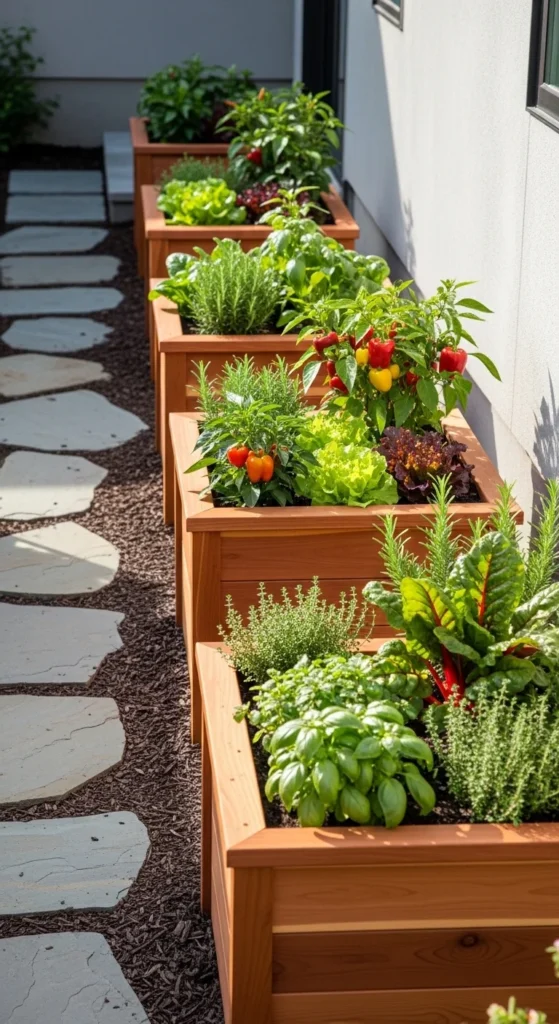
Side yards are often treated like pass-through spaces, but they can grow a lot when planned well. Narrow cedar boxes are a smart fit here because they sit neatly against a wall or fence without eating up the walkway. This layout is useful for homes with only a slim strip of outdoor space. It also helps keep the area organized and attractive.
Cedar is a popular choice because it lasts longer than basic untreated softwood and has a warm natural look. Long rectangular beds work well for herbs, lettuce, radishes, onions, and compact pepper plants. If the side yard gets enough sun, even tomatoes can work in deeper sections. Keep the bed narrow enough that you can still move through the space with ease.
A budget version can use standard cedar fence boards or leftover lumber from another project. A shallow box is often enough for greens and herbs, which keeps material costs lower. Use simple screws, corner braces, and a weed barrier underneath if the bed sits on soil.
To make the side yard feel more inviting, add stepping stones or gravel between the beds. This helps with mud and gives the area a cleaner look. One narrow cedar bed can turn a forgotten strip into a useful growing zone.
5. Stock Tank Beds for Small Patios

Stock tank beds bring a sturdy, industrial look to a small patio while offering plenty of growing room. They are often made of galvanized metal, which holds up well outdoors and gives a clean, simple style that fits both modern and rustic spaces. For small patios, one round or oval stock tank can become the main garden feature without cluttering the whole area.
This option is good for tomatoes, peppers, herbs, bush beans, and flowers. Since stock tanks are deeper than many shallow boxes, they can handle larger root systems too. Just make sure they have proper drainage. Some already do, but many need holes added before planting. Without that, water can sit at the bottom and damage plant roots.
Used stock tanks can sometimes be found at lower prices than custom metal beds. If a full-size version feels too big, look for smaller tanks or tubs with a similar look. Place the bed where it gets strong sun, then surround it with a few small containers for herbs or flowers.
To soften the metal look, add gravel around the base or pair it with a wooden bench or terracotta pots. A stock tank bed is a simple way to create a stylish garden in a small space with very little building work.
6. Tiered Raised Beds for Herb Collections
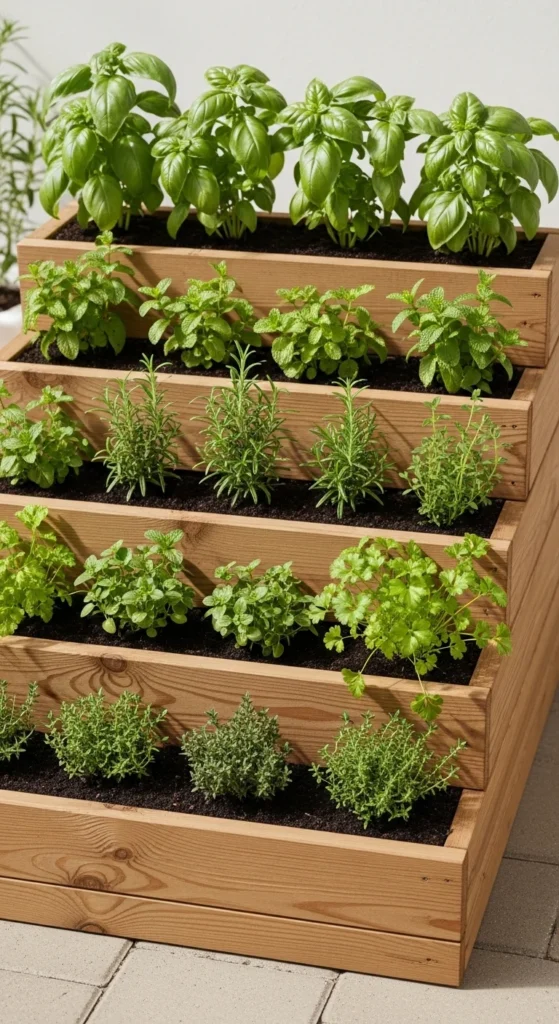
Tiered raised beds are a smart choice for herb gardeners who want a lot of variety in a small footprint. Instead of spreading one flat bed across the ground, this design stacks growing space in steps. That makes it easy to tuck several herbs into one compact area while still keeping each section easy to reach. It also gives the garden a more decorative look.
This setup works especially well on patios, in courtyards, or near the kitchen door. Basil, parsley, thyme, oregano, rosemary, and chives all fit nicely in tiered sections. You can group herbs by how often you use them or by how much water they like. Taller herbs can go toward the back, with shorter plants near the front.
A simple DIY version can be made with three box frames in different sizes, stacked from large to small. Reclaimed wood can keep costs down. You do not need anything fancy. Even basic wooden crates can work if they are lined and supported well. For a cleaner look, stain or seal the outside with a garden-safe product.
Tiered beds also help with plant care. You can spot weeds, trim herbs, and harvest leaves without leaning over one large bed. For small-space cooks, this design gives easy access and plenty of flavor.
7. U-Shaped Beds for Easy Reach
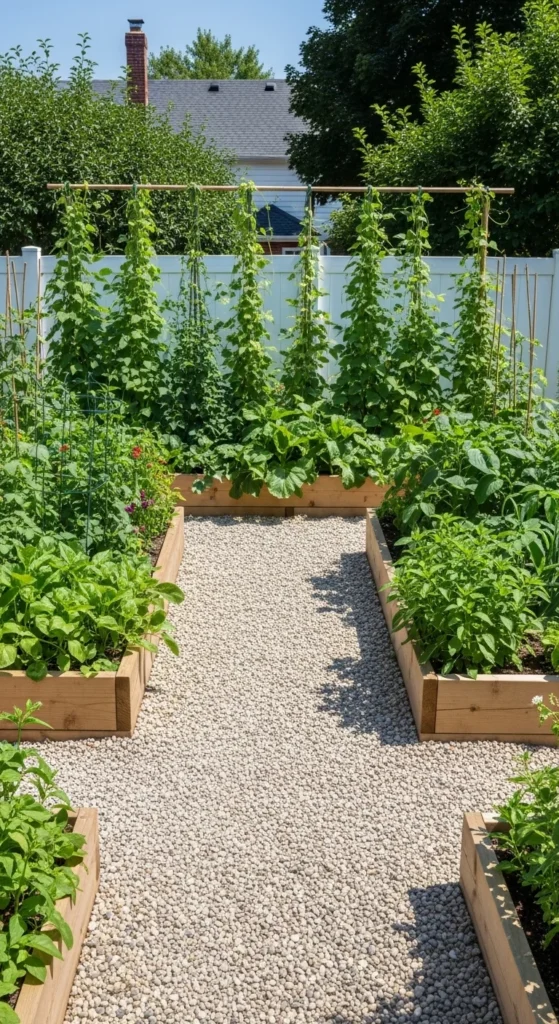
A U-shaped raised bed gives a small yard a lot of planting room without making the center hard to reach. The shape wraps around a narrow standing area, so you can work from the middle and access more plants without stepping into the soil. This is helpful for people who want a productive layout but still want simple maintenance.
This design is a good match for herbs, salad greens, peppers, and compact vegetables. The inner path can be finished with gravel, mulch, bricks, or stepping stones to keep shoes clean. If the yard is very small, the U does not need to be large. Even a shorter version against a fence can provide plenty of growing room.
For a lower-cost build, use standard wood planks and create three connected rectangles. Keep each section within easy arm’s reach. That matters more than making the bed look dramatic. If the bed is too wide, caring for plants becomes annoying fast. Add a small trellis at the back if you want to grow cucumbers or beans upward.
This layout is also helpful for older gardeners or anyone who likes having a stable working zone. A U-shaped bed makes the small yard feel organized, useful, and easy to manage through the season.
8. Raised Beds with Trellis Panels
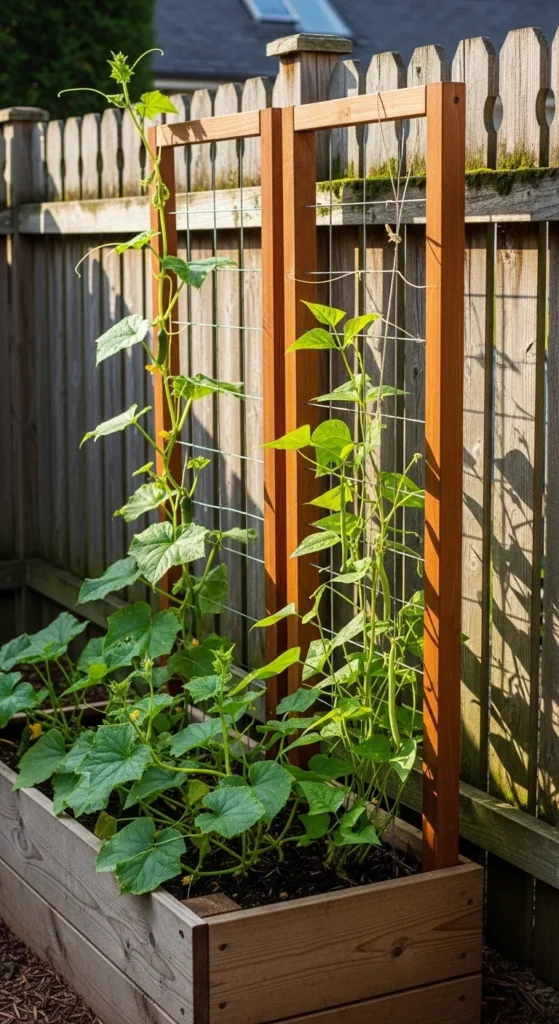
When floor space is tight, a trellis can do half the work. Raised beds with trellis panels let plants climb instead of spreading across the ground. That means more room for other crops and a tidier garden overall. This design is useful in small backyards, patios, and side yards where every foot matters.
Pole beans, cucumbers, peas, and some small squash varieties do well with vertical support. A trellis also keeps fruit cleaner and can make harvesting easier. You can attach a panel to the back of a wooden bed, place an arch between two beds, or use a freestanding frame just behind the box. The bed itself can stay compact while the plants grow upward.
Budget-friendly options include cattle panels, wire mesh, old fence sections, or wood slats. For a neat DIY project, build a simple rectangular bed, then screw a trellis frame onto one side. If wind is strong in your area, anchor it well so it does not wobble once plants get heavy.
This design is especially useful for edible gardens in small spaces. You get both planting depth and climbing height in one area. It is one of the easiest ways to make a compact raised bed produce more.
9. Shallow DIY Beds for Apartment Patios
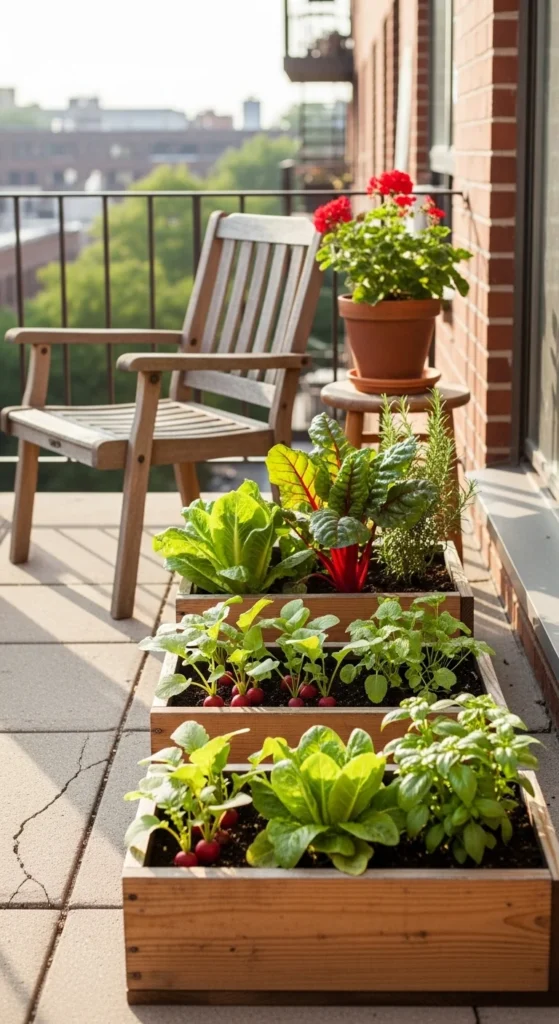
Shallow DIY beds are a practical starting point for apartment patios. They are easier to build, use less soil, and cost less than deep boxes. For people growing herbs, lettuce, spinach, radishes, green onions, or flowers, a shallow bed can do the job well without taking over the whole patio. It is a simple project that feels manageable even for beginners.
A basic version can be built with four boards and a lined base if needed. If the patio is rented, use a freestanding style rather than attaching anything to the surface. Shallow beds are also easier to move when empty, which helps when seasons change or the layout needs adjusting. Keep the shape long and narrow if you want it against a railing or wall.
Use lower-cost lumber, leftover wood, or untreated boards for the frame. Just make sure the base drains well. A cheap plastic liner with a few holes can help protect the patio surface while still letting water escape. Put a tray or mat underneath if runoff might stain the floor.
Because the soil depth is limited, this style works best with crops that stay compact. Start small, learn what grows well in your light, and expand later if the patio setup works.
10. Metal Beds for Clean Modern Looks
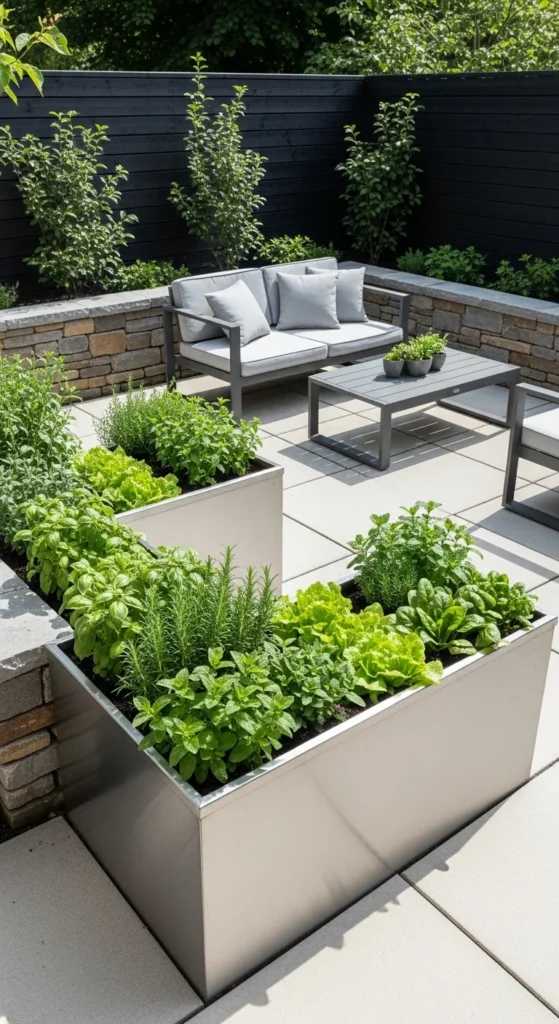
Metal raised beds are a good match for people who want a cleaner, simpler garden style. In small yards and patios, that matters because clutter shows up fast. A metal bed with straight lines can make the whole space feel more ordered. It also pairs well with gravel, concrete, black planters, and minimalist outdoor furniture.
Galvanized metal is a popular choice because it lasts well outdoors and does not rot like wood. Small rectangular beds work for herbs, greens, peppers, and flowers. Deeper styles can also handle tomatoes and root crops. If the bed sits in full sun, watch the moisture level during hotter weeks because metal can warm up faster than wood.
You do not need a custom design to get the look. Many prefab metal kits are sold in sizes that fit compact spaces. For a lower-cost route, a simple metal trough or smaller stock-style container can work in the same way. Just add drainage if it is missing.
To soften the look, place the bed near wood fencing, gravel, or a few terracotta pots. The contrast works well. For a small-space garden, metal beds offer a tidy appearance and a long-lasting structure without asking for much maintenance.
11. Rolling Raised Beds for Flexible Sunlight
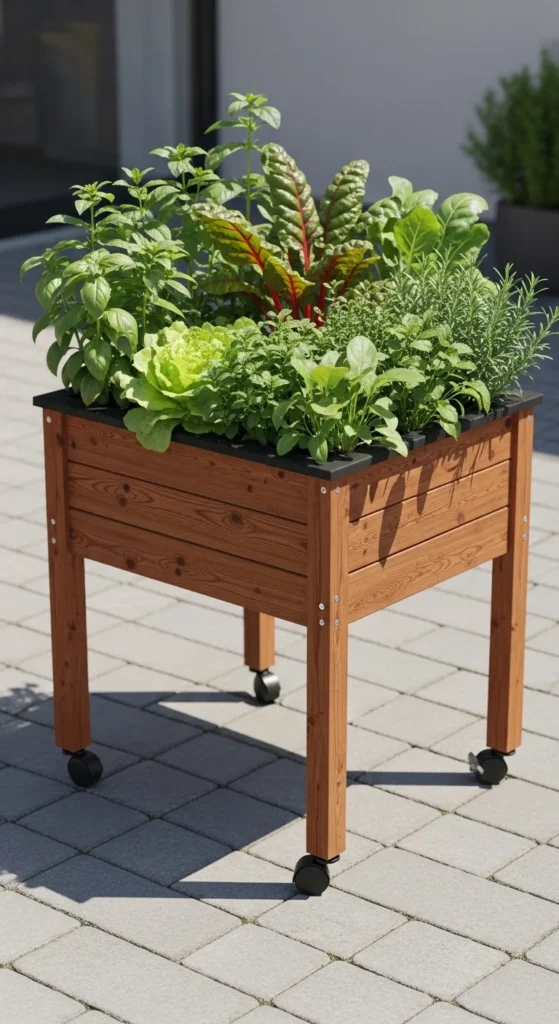
Rolling raised beds are useful when sunlight shifts across a small patio or balcony during the year. Instead of being stuck with one fixed spot, you can move the bed to follow the light. That makes a big difference in spaces where buildings, fences, or railings cast changing shadows. It also helps when you want to clear the area for guests or seasonal cleaning.
This style works best with smaller crops and lighter bed sizes. Herbs, lettuce, spinach, and compact flowers are good choices. A deep bed packed with wet soil can become too heavy, so keep the design modest. Use sturdy caster wheels that lock in place so the bed stays secure after moving. The frame can be made from wood or metal, depending on your budget and style.
A simple DIY option is a shallow wooden box mounted on a strong rolling plant stand. Another approach is using a stocky utility cart with a lined planting tray. Add drainage and catch trays so water does not spill across the floor.
Rolling beds are especially helpful for renters or anyone working with awkward light patterns. Instead of accepting one weak growing spot, you can shift the bed as needed. That small bit of flexibility can make a tight garden far more productive.
12. Elevated Legged Beds for Back-Friendly Gardening
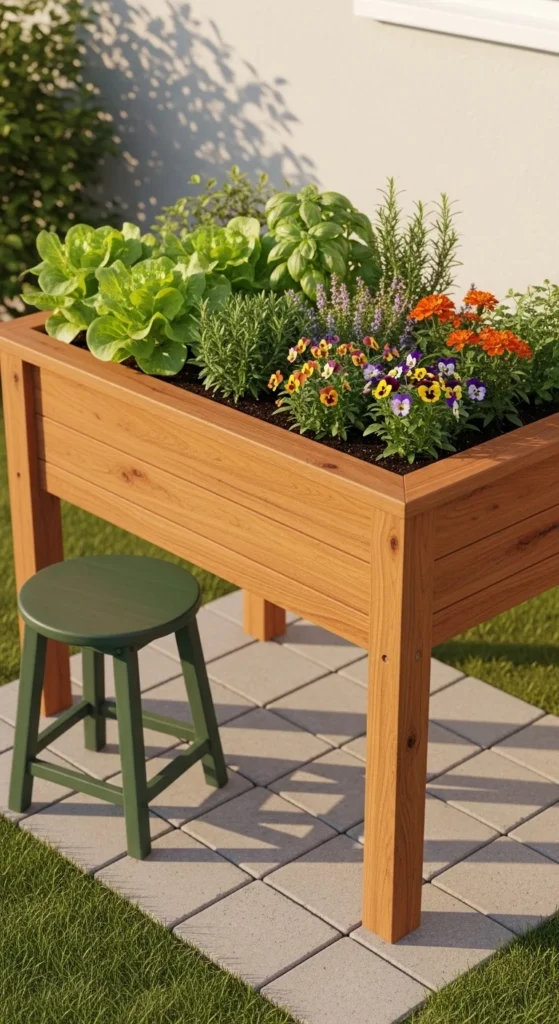
Elevated legged beds are a strong choice for gardeners who want easier access. They lift the soil off the ground, which means less bending, kneeling, and crouching. In a small space, they also create a cleaner look because the bed feels more like a piece of outdoor furniture than a heavy garden box. That makes them a good match for patios, decks, and compact courtyards.
These beds work best for herbs, salad greens, baby carrots, radishes, and compact flowers. Since the soil area is not usually very deep, large root crops and heavy feeders may be less suitable. Still, for day-to-day harvesting, elevated beds are very convenient. They are also helpful for older adults or anyone who wants a more comfortable garden routine.
Prefab versions are common, but a DIY one can be made with a simple box frame on sturdy legs. Use scrap wood for the body if you want to cut costs. Add a shelf below for storing a watering can, hand tools, or extra pots. That makes the setup even more useful in a tiny area.
Place the bed near the kitchen door or seating space for easy picking. In small-space gardening, comfort matters. A bed that feels easy to use gets more attention and better results.
13. L-Shaped Beds for Awkward Patio Edges
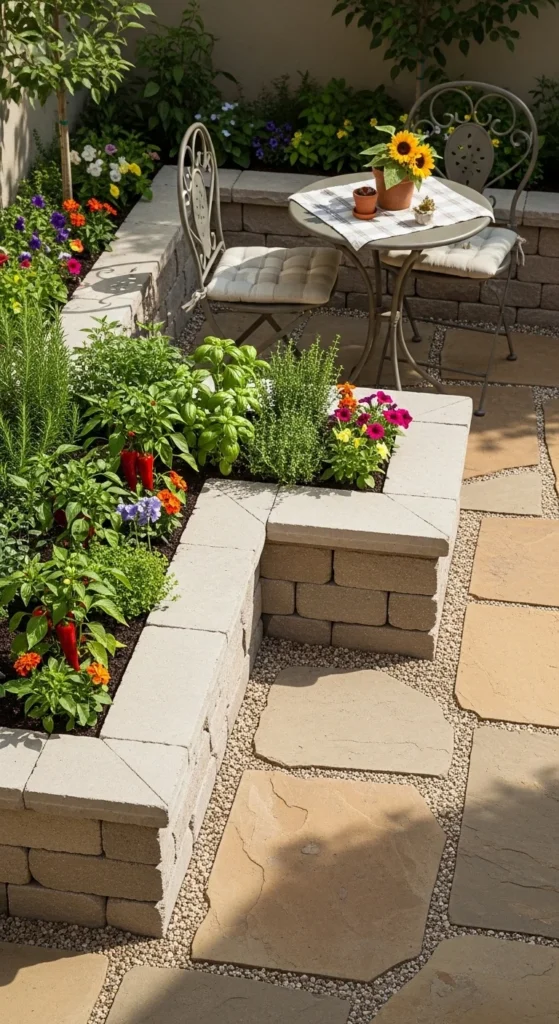
L-shaped raised beds are perfect for patio edges that feel hard to use. Instead of placing one box in the middle and losing open space, this shape follows the border and leaves the center clearer. It is a smart way to work around walls, fences, and corner turns while still gaining a solid amount of planting room.
This layout is useful for mixed planting. Put herbs and leafy greens in the shorter arm, then use the longer side for peppers, bush tomatoes, or flowers. The shape also helps create a natural garden zone without making the patio feel crowded. If the bed runs along a wall, you can even add a trellis on one side for climbing crops.
A lower-cost version can be built from two simple rectangular boxes placed tightly together. You do not have to make a complex frame. Paint or stain them the same color so they read as one piece. If the patio surface needs protection, place the boxes on pavers or a waterproof barrier.
This bed style works well for people who want their small patio to stay useful for both gardening and daily life. You get structure, planting space, and a cleaner layout without taking over the whole area.
14. Modular Beds for Custom Layouts
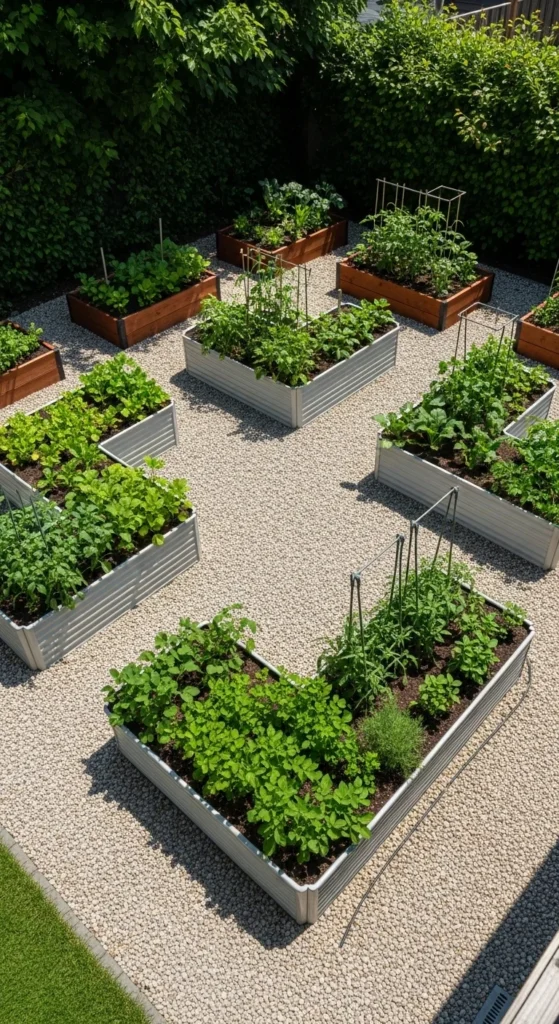
Modular raised beds are built for flexibility. That is what makes them so useful in small spaces. Instead of being locked into one fixed rectangle, you can shape the bed around the area you actually have. This helps when the yard includes odd corners, a narrow strip, or a patio that changes use through the year. Modular kits and simple DIY sections both work well here.
Some modular beds can be arranged as long rectangles, short squares, or larger grouped forms. That makes them useful for renters, new homeowners, and people who like to adjust their setup over time. Start with one section, then add more later if the space and budget allow. This is a practical way to grow a garden without buying a huge setup all at once.
Use modular layouts for herbs, greens, beans, peppers, and flowers. Keep the width easy to reach so you never need to step into the soil. If you are building your own, use repeatable panels or equal-length boards. That makes repairs and changes easier later.
In a small yard, modular beds help you use every nook with less waste. They are especially helpful when the area does not suit one standard garden shape. A custom fit often works far better than a big box.
15. Square Foot Beds for Small Harvests
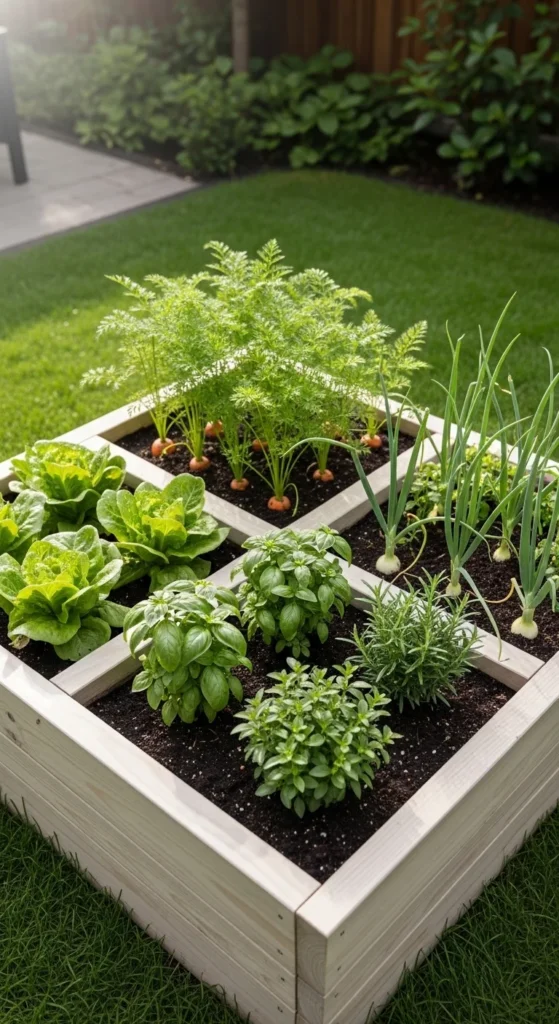
Square foot beds are useful for gardeners who want a simple planting system in a small area. The bed is divided into smaller sections, and each square holds one crop or a set number of plants. This makes the garden easier to plan and helps stop overcrowding, which is a common problem in tight spaces. It is also a helpful format for beginners because the layout feels clear from the start.
A square bed works well on patios, in small backyards, or even in a sunny courtyard. Herbs, lettuce, carrots, onions, radishes, and bush beans all fit nicely into this system. The main goal is to make every part of the bed count. Since the planting spaces are marked, it is easier to rotate crops and spot empty sections that can be replanted.
A DIY version is easy to build with one square frame and a simple string or wood slat grid on top. Use cheap lumber or leftover boards to keep the cost low. Make the bed no wider than you can reach across. Four feet is a common limit for that reason.
For gardeners who like order, this bed style keeps things neat and practical. It helps small-space gardens stay productive without looking messy or hard to manage.
16. Gravel-Framed Raised Beds for Clean Paths
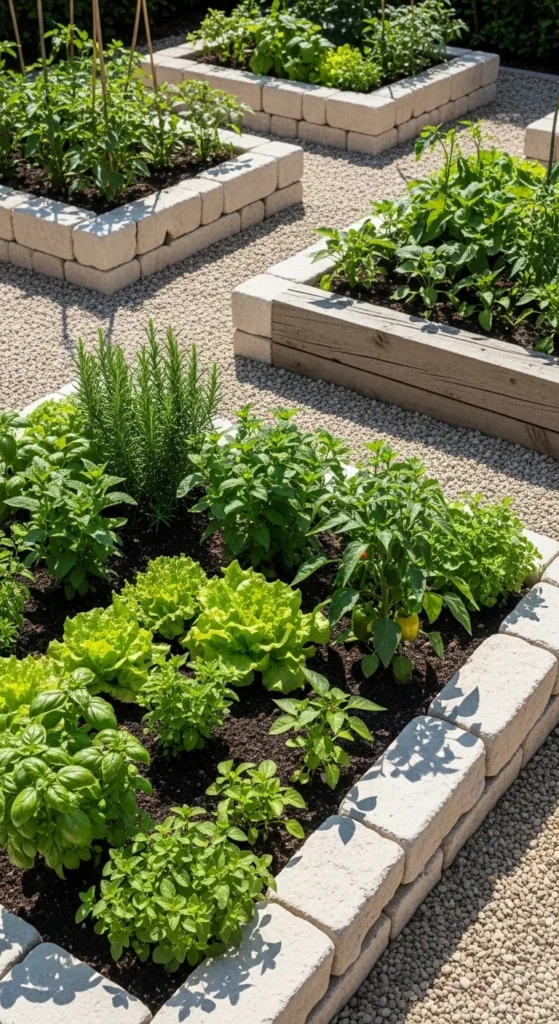
Sometimes the bed itself is not the only issue in a small garden. The walking surface matters too. Gravel-framed raised beds help keep the space tidy, reduce mud, and make the whole area feel more planned. In a small backyard or side yard, that can make a big difference. A simple path around the beds helps define the garden without needing a lot of extra room.
This setup works well with cedar, metal, or stone-edged beds. The gravel creates a clean border and helps stop weeds from taking over the edges. It also gives the garden a finished look that can suit both rustic and modern homes. For people using the front yard or patio edge for growing, this cleaner style often feels easier to live with.
To save money, use basic pea gravel or another affordable local stone. Lay weed fabric first if the ground underneath is rough or weedy. Keep the path just wide enough for comfortable walking. In a tiny space, there is no reason to make it extra broad.
The raised beds can hold herbs, greens, peppers, or flowers, while the gravel keeps the layout simple and low-mess. This is a good idea for gardeners who want a small garden that still looks neat week after week.
17. Fence-Line Raised Beds for Narrow Borders
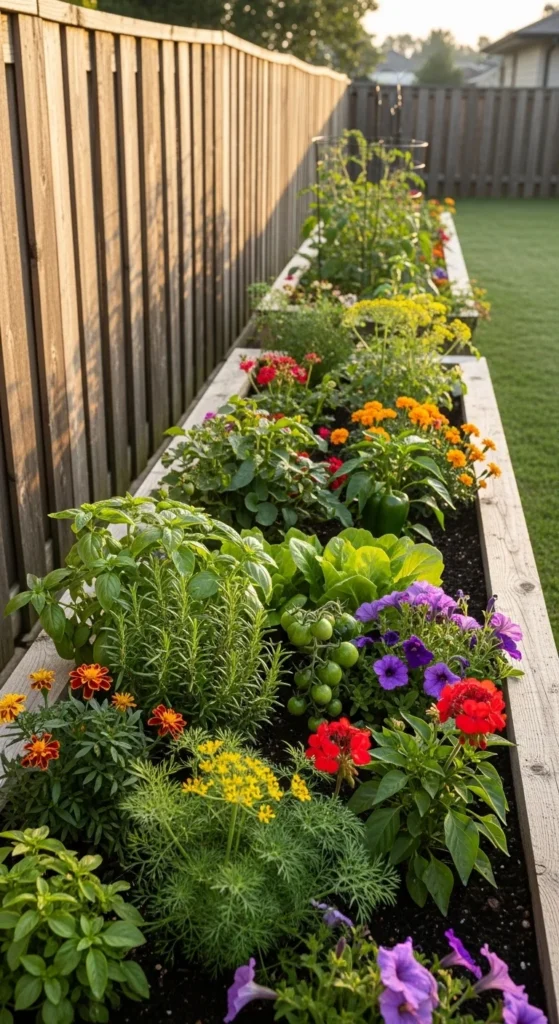
A fence line is one of the best places to add a raised bed in a small yard. It uses the outer edge of the space instead of taking up the center, which leaves more room for walking, seating, or kids’ play. This setup works especially well for narrow backyards and side areas where a full garden plot would feel too wide or out of place.
Long, slim beds are the best fit here. They can hold herbs, lettuce, onions, peppers, marigolds, and even small tomatoes if the bed is deep enough. If the fence gets good light, the space can become far more useful than a plain strip of dirt or grass. Add a trellis if you want cucumbers or beans to grow upward without spreading out.
A budget-friendly build can use standard boards cut to length and supported with simple corner stakes. If the fence is rented or shared, keep the bed freestanding rather than attaching anything directly. Mulch or gravel in front of the bed helps keep the area tidy and easier to walk through after watering.
Fence-line beds are easy to understand and easy to build. They make sense for gardeners who want a lot of planting room but do not want the yard to feel crowded.
18. Mini Beds for Salad Garden Setups
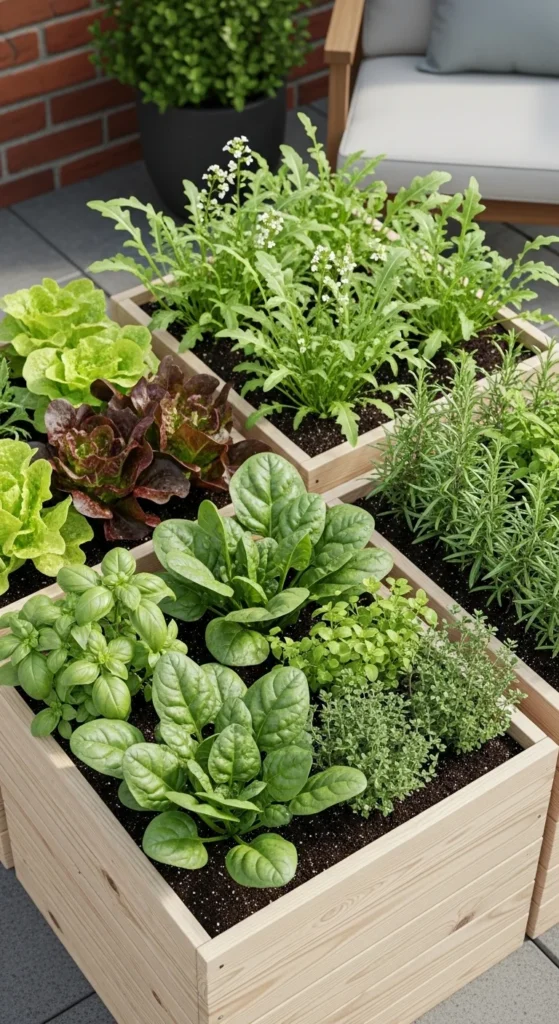
Mini raised beds are perfect for salad gardening in a small space. Instead of one large box, you use several compact beds for leafy greens and herbs. This gives more control over planting times, watering, and crop changes. One bed can hold lettuce, another spinach, another arugula, and another herbs like parsley or dill. That makes harvests feel steady and easy to manage.
This setup is useful on patios, balconies, rooftop areas, and very small backyards. Since salad crops usually do not need deep soil, the beds can stay fairly shallow. That helps keep costs lower and makes moving them easier if needed. Mini beds also suit people who want a tidy layout with clear plant groups instead of one mixed bed.
A cheap DIY route is to build small square boxes from leftover boards or use sturdy crates lined with landscape fabric. Put them in a row along a railing or group them near the kitchen door for quick picking. If one crop finishes early, replant that bed without disturbing the others.
For new gardeners, mini beds are less intimidating than one large project. They keep the work simple and make it easier to learn what grows well in your space.
19. Bed-and-Trellis Combos for Climbing Crops
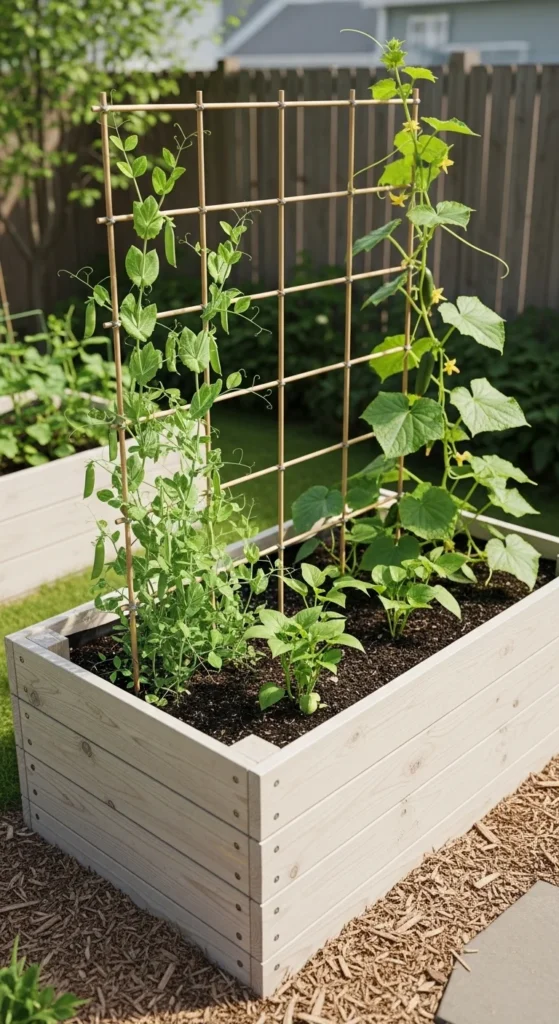
A bed-and-trellis combo is one of the best ways to stretch a small garden. The bed gives roots a clean, defined place to grow, while the trellis lets the plants rise instead of spread. This saves floor space and makes the garden look fuller without making it harder to walk around. For small-space food growing, that is a big win.
Peas, pole beans, cucumbers, and small melons are common choices for this kind of setup. Place the trellis on the north side when possible so it does not cast too much shade on shorter crops. The lower part of the bed can still hold lettuce, herbs, or flowers. That means one compact box can support more than one layer of planting.
A basic DIY version uses a wood bed frame and a wire panel screwed to the back. Even old fencing or repurposed lattice can work if it feels stable. Keep the bed within easy reach from the front. There is no point in adding climbing space if it becomes annoying to harvest from below.
This combo works well in side yards, balconies, and tiny backyards. It helps small gardens act bigger than they are, and it does it with a simple structure that many gardeners can build on a budget.
20. Budget Wood Plank Beds
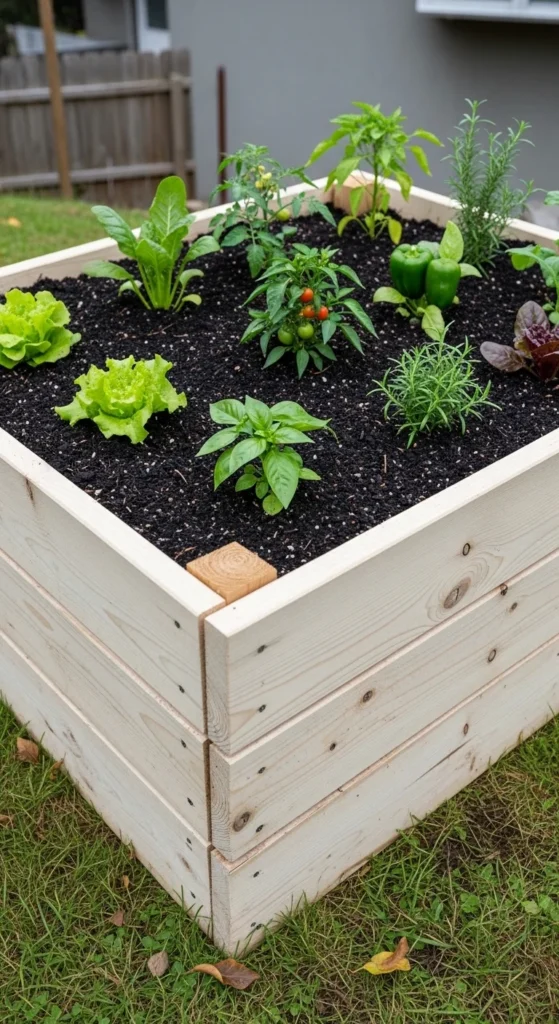
Budget wood plank beds are one of the easiest ways to start a raised garden without spending much. They are simple, practical, and easy to size for the space you have. A basic box made from straight boards can work just as well as a fancy prefab kit. For many people, that is the best way to begin. Build one, plant it, learn from it, then decide whether to make more later.
This style fits almost anywhere. A short rectangle works along a fence. A square fits a patio corner. A long narrow bed can turn a side yard into a growing strip. Use the bed for greens, herbs, onions, radishes, peppers, or compact tomatoes. Keep the width easy to reach so plant care stays simple.
To save more money, look for leftover lumber, reclaimed boards, or discounted cuts at a local yard. Keep the design plain. Four sides, screws, and corner support are enough. If the bed sits on soil, you can leave the bottom open. If it sits on a hard surface, line it and add drainage.
A plain wood plank bed may not look fancy, but it gives new gardeners a low-risk way to start. That matters more than decorative extras.
21. Compact Beds for Front Yard Growing
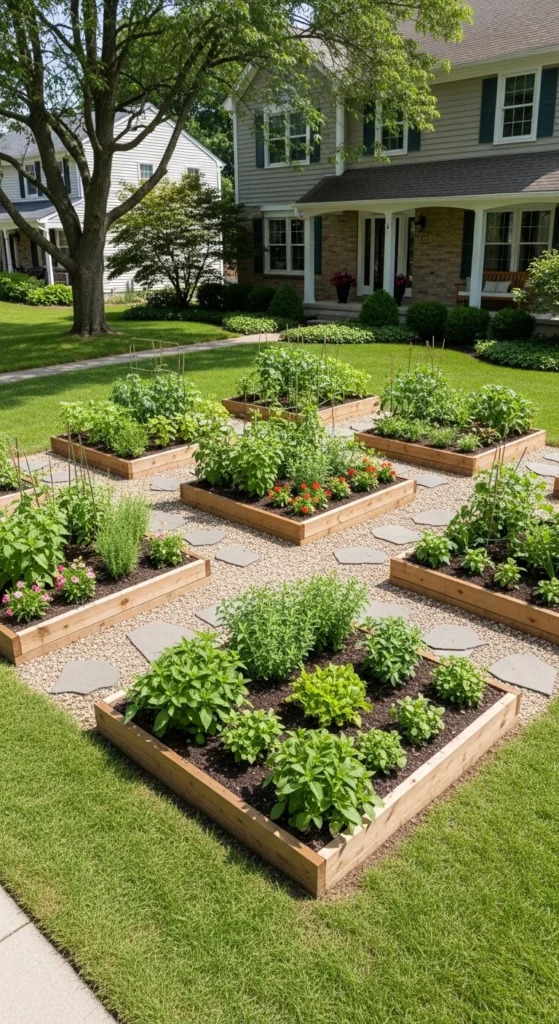
Front yards can be useful growing spaces when the backyard is too small or too shaded. Compact raised beds make that possible without making the area feel messy. The key is keeping the design tidy, low, and well placed. A front yard bed should feel intentional, not like leftover garden supplies dropped on the lawn.
Low rectangular beds or grouped square beds often work best. Plant them with a mix of herbs, greens, flowers, and compact vegetables. Marigolds, lettuce, basil, kale, and peppers can all look good while still being useful. Adding flowers softens the edible garden look and helps the bed fit the front of the home better.
For a budget setup, use plain wood or metal beds with clean edges. Gravel, mulch, or stepping stones around the bed can help it feel more finished. Keep the bed where it gets enough sun and where watering is easy. In a small front yard, one well-placed bed often works better than several scattered ones.
This idea is great for people who want more growing room and do not mind making food part of the home’s visible outdoor space. A compact front yard bed can be both practical and attractive.
22. Raised Beds Around Deck Edges
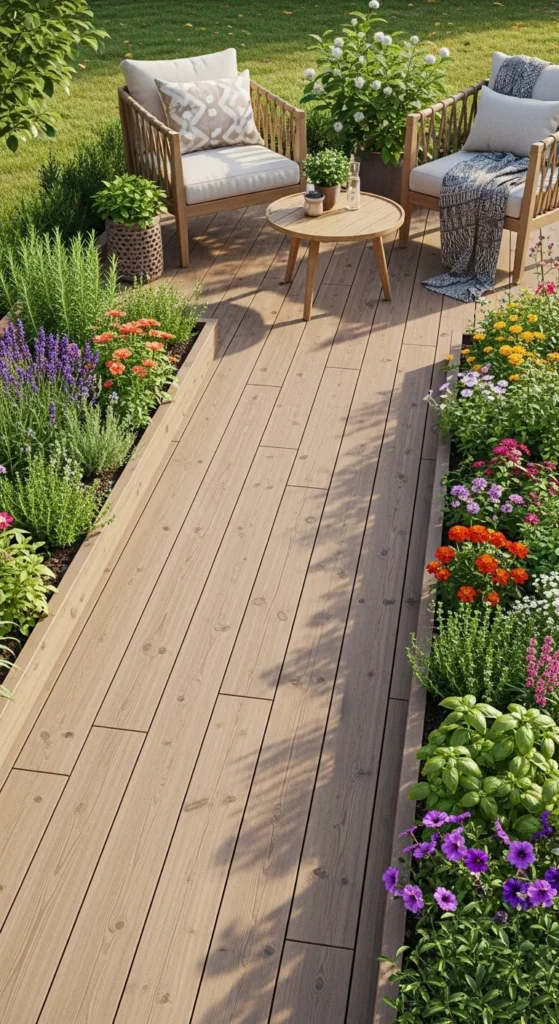
Deck edges are often wasted space. They sit there as plain borders, even though they can hold a lot of planting in a small-footprint garden. Raised beds built around the edge of a deck help frame the seating area while adding herbs, flowers, and vegetables close to the house. This is a smart use of space when the yard itself is limited.
Long, slim beds work best here. They can line one side of the deck or wrap around two sides without blocking movement. Herbs are a great choice because they stay easy to harvest during cooking season. Flowers also work well because they bring color close to the seating area. If the deck gets strong sun, peppers and compact tomatoes can do well too.
A low-cost version can be built from standard planks to match the deck tone. If you rent or do not want to attach anything, use freestanding boxes placed along the edge instead. Keep the height comfortable so the plants are visible but do not feel like a wall.
Deck-edge beds turn a plain sitting area into part of the garden. In small outdoor spaces, that kind of dual use is often the best route.
23. Galvanized Corner Beds for Tough Spots
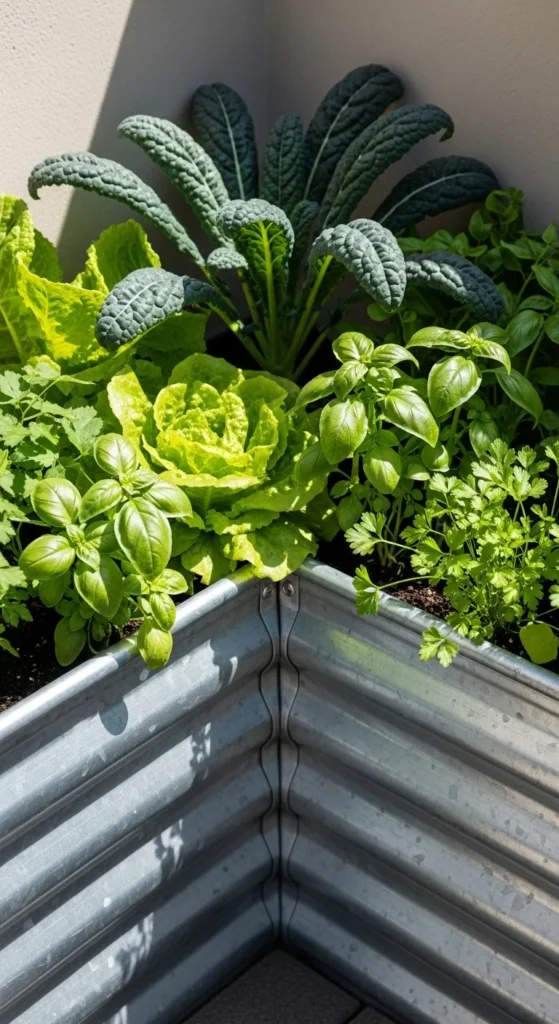
Galvanized corner beds are helpful when a tight nook needs something sturdy and compact. The metal holds its shape well, handles weather with little fuss, and gives a neat look that can fit small modern yards or patios. If a wooden corner bed feels too bulky or too soft in style, metal can be a good answer.
This type of bed is useful in places where two walls meet, near a fence turn, or beside a shed or deck. Use it for herbs, leafy greens, onions, peppers, or flowers. Because the shape follows the corner, it opens up the middle of the yard and makes the layout feel more intentional. That is important in small spaces where every bed affects the whole look.
You can buy corner-style kits, or build a corner layout by joining shorter metal panels. Add gravel or mulch around it to soften the hard edges. If the area gets hot afternoon sun, check the soil more often and mulch the top to help hold moisture. A small trellis behind the bed can add even more planting space.
This style is practical, durable, and visually clean. It is a smart way to turn a forgotten corner into one of the most useful parts of the garden.
24. Keyhole Beds for Small Backyards
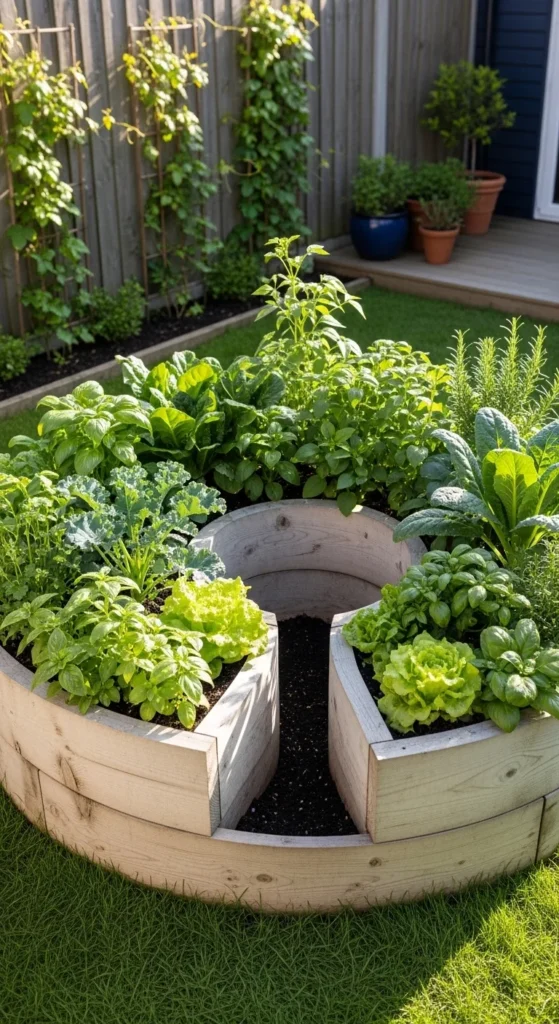
A keyhole bed is a clever layout for gardeners who want more planting room in a small backyard. The shape usually forms a circle or rounded bed with a notch cut into one side, so the center is easier to reach. That means you can fit more growing area into a compact footprint without needing to walk through the bed itself. For small-space gardening, that is a very useful trick.
This kind of bed suits herbs, greens, root crops, and mixed vegetable planting. It can also make a backyard feel more custom and less boxy. A full circular build is one option, but a simpler version can use a curved edge or angled boards to create the same easy-access idea. The main goal is reach, not perfect geometry.
A lower-cost DIY version can be made with reclaimed boards, bricks, blocks, or simple wood planks cut into short sections. Add gravel inside the access notch so the standing area stays neat. If you want a more decorative look, plant flowers around the outer edge and edibles in the middle.
A keyhole bed is a good fit for gardeners who want something a little different without wasting space. It makes harvesting and care easier while giving the garden more character.
25. Raised Beds with Built-In Seating
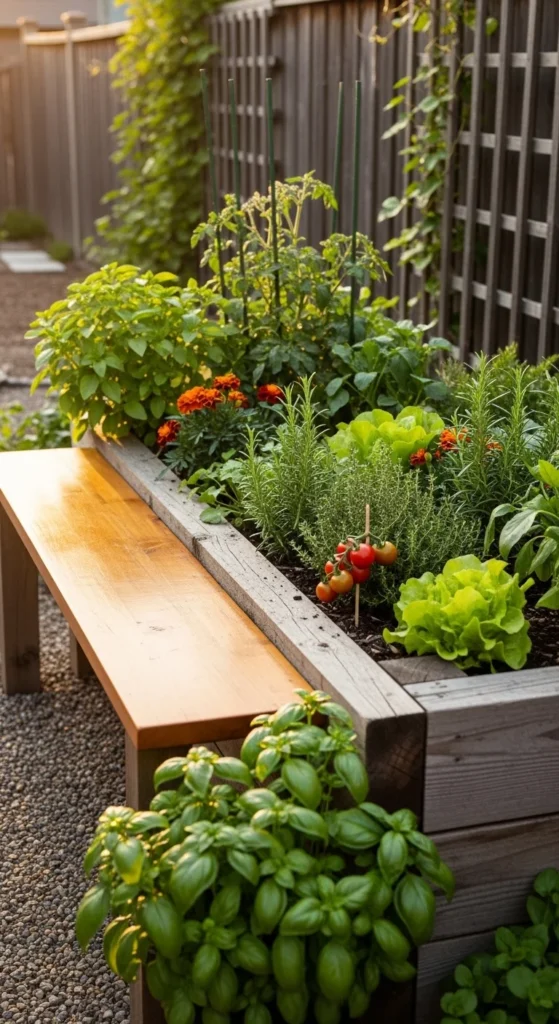
Raised beds with built-in seating are a smart match for tiny outdoor spaces that need to do more than one job. In a small yard or patio, every feature counts. A bed with a seating ledge gives planting space and a place to sit, rest, or work. It can also make the area feel more welcoming, especially if the garden is close to a dining or lounging zone.
This style works well for herbs, flowers, greens, and compact vegetables. The seating edge can run along one side of the bed or wrap around a corner. Keep the width of the planting area manageable so the seat does not make harvesting harder. A ledge about sitting height can also help older gardeners who want a steady place to pause while working.
A budget version can be made by adding a capped board to the top of one side of a basic wooden bed. Use sturdy brackets or thicker framing so it can handle body weight safely. If you do not want a full seat, even a broad top edge can work as a casual perch or tool rest.
This idea is useful in family yards too. It creates a small social spot while still growing food or flowers. In a compact garden, that kind of double use makes a lot of sense.
26. No-Tool Fabric Beds Under $50
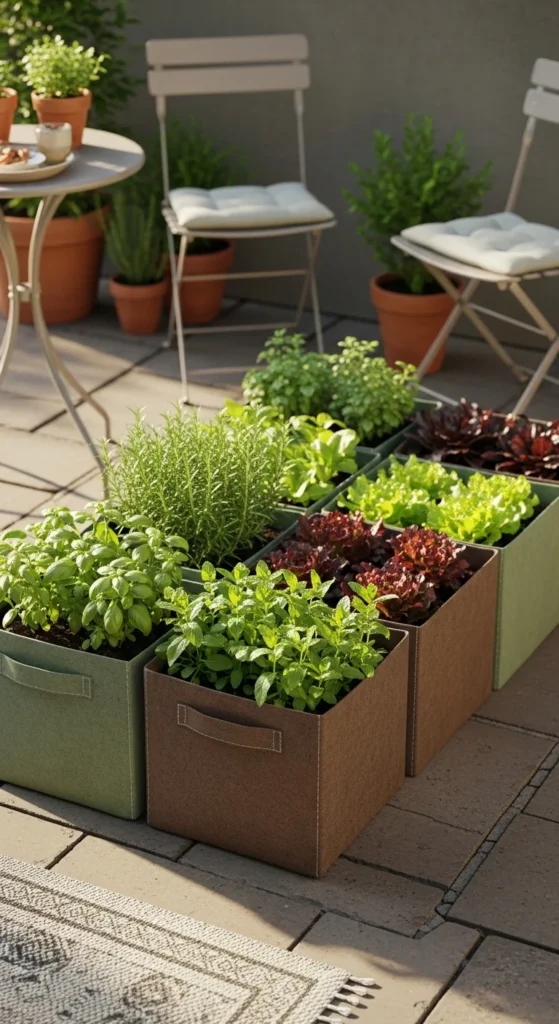
No-tool fabric beds are one of the fastest and cheapest ways to start growing in a small space. Many of them cost less than a wood build, and setup takes only a few minutes. Open the bed, fill it, plant it, and start growing. That simplicity is what makes them so appealing for renters, beginners, and anyone testing whether a garden will work in the space.
These beds are useful for patios, balconies, rooftops, and corners of small yards. Herbs, greens, onions, beans, and compact tomatoes can all do well in the right size. Since many fabric beds are portable, they can be moved around if the sunlight changes or if the layout needs adjusting later. That flexibility is helpful in tight outdoor spaces.
To keep the budget low, start with one bed and one or two easy crops. Lettuce and basil are simple first picks. Use a bagged soil mix rather than buying separate parts at first. Put the bed on a tray, mat, or pavers if you want to protect the surface below. Grouping two small beds often works better than buying one oversized piece.
For gardeners who want to get started fast without building anything, no-tool fabric beds are a very practical option.
27. Rustic Cedar Beds with Simple Paths
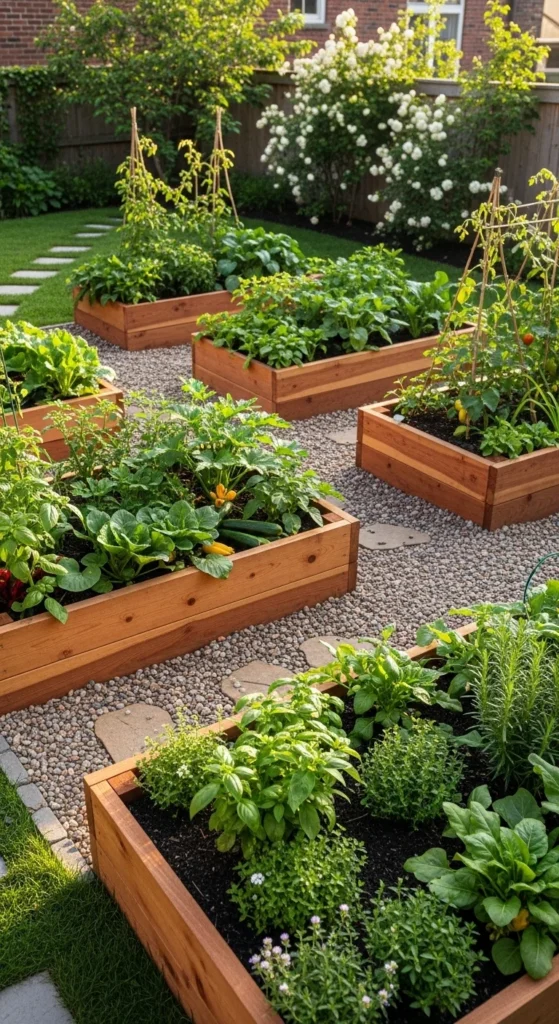
Rustic cedar beds give a small garden warmth without making it feel overdone. The wood ages nicely, suits many home styles, and pairs well with gravel, mulch, terracotta, and stone. In a compact backyard, that softer look can help the garden feel calm and lived in rather than too sharp or too polished. Add a simple path and the whole layout becomes easier to use.
This setup is good for mixed planting. Use one bed for herbs, another for greens, and another for seasonal vegetables. Keep the bed widths easy to reach and the paths just wide enough to walk comfortably. In a small space, every inch matters, so the layout should stay practical. Two or three cedar beds often work better than a large maze of boxes.
To save money, build with standard cedar boards and keep the shape basic. There is no need for fancy trim. A simple frame can still look attractive once the plants fill in. Gravel or mulch between the beds helps with mud and gives the space a cleaner outline.
Rustic cedar beds are a good fit for gardeners who want their small yard to feel productive and inviting at the same time. It is a simple style that tends to age well.
28. Small Raised Beds with Grow Lights
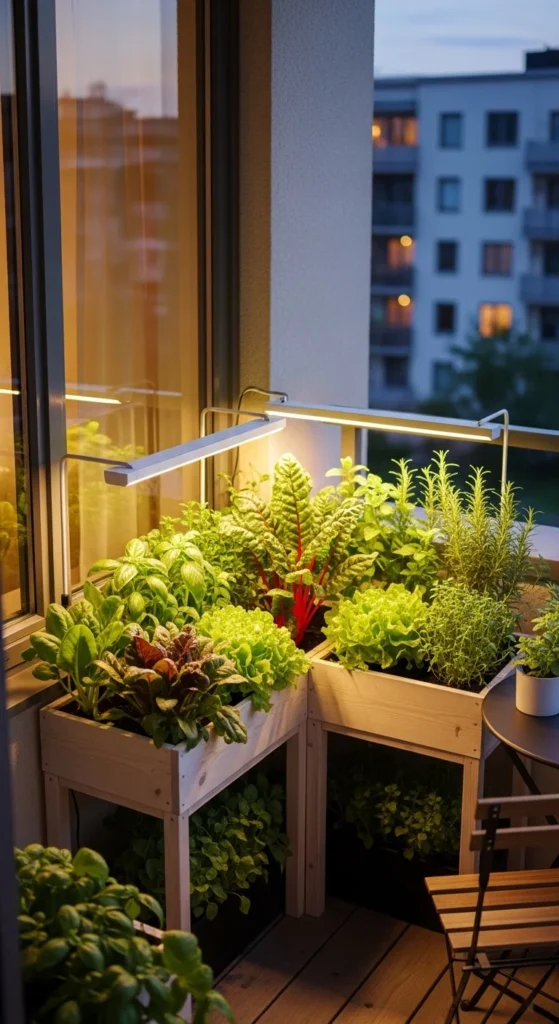
Some small spaces do not get enough direct sun for regular vegetable growing. That does not mean the area is useless. Small raised beds paired with grow lights can help apartment dwellers and patio gardeners keep herbs and greens going where light is limited. This works well for covered balconies, bright indoor-outdoor nooks, and window-adjacent spots.
Leafy greens, basil, parsley, mint, and other compact crops are the best choices here. Keep the bed size modest so the light can cover the planting area evenly. A shallow wooden box or lined tray on a stand works well. If electricity access is easy, clip-on or bar-style grow lights can be mounted above the bed. Use timers so the setup stays simple day to day.
To keep costs down, start with one bed and one light rather than trying to light a full wall of plants at once. Choose crops you actually use in the kitchen. That makes the project more rewarding. A waterproof mat under the bed can help protect the surface.
This setup is not the best match for large fruiting crops, but it can still produce a useful amount of greens in spots that would otherwise stay empty. That makes it worth trying.
29. Portable Raised Beds for Changing Seasons
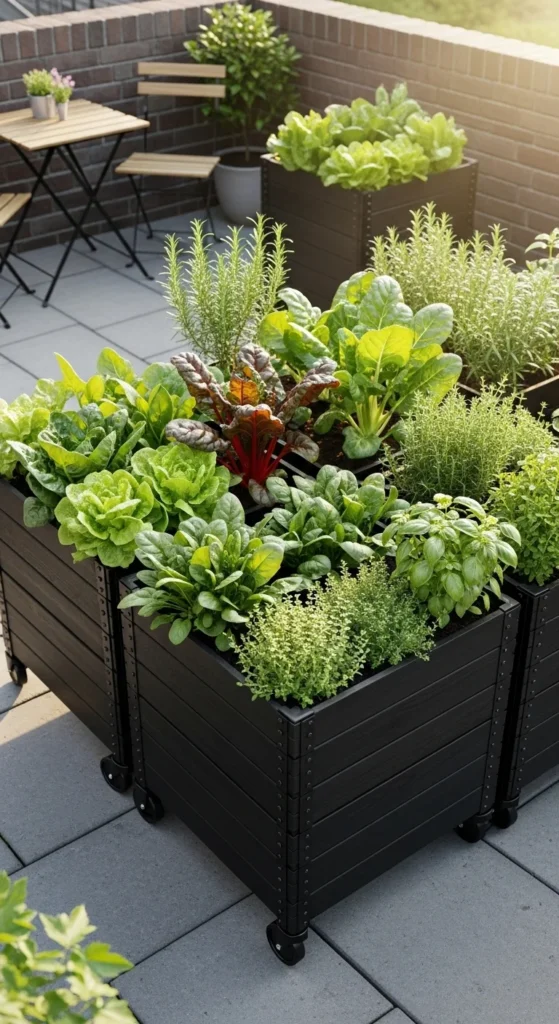
Portable raised beds are ideal for people who like to change the layout as weather, sunlight, or daily use shifts through the year. In spring, the sun may hit one side of the patio. In summer, a different corner may work better. A portable bed lets the garden move with those changes. That can help a small space stay useful instead of fixed in one imperfect arrangement.
These beds can be made from lightweight wood boxes, sturdy fabric planters, or shallow framed containers set on movable bases. Use them for herbs, greens, flowers, and smaller vegetables that do not need a huge root zone. Keep the size realistic. If the bed is too large, it stops being portable once the soil is wet.
A practical DIY option is a narrow wooden planter with side handles. Another is grouping several medium fabric beds instead of using one big unit. That way you can shift only part of the garden when needed. Use trays or mats to protect balcony floors and patios from runoff.
Portable beds are especially helpful for renters and small-space gardeners who like flexibility. When the space has to serve many purposes, a garden that can move around is often easier to live with.
30. Mixed-Material Beds for Style and Function
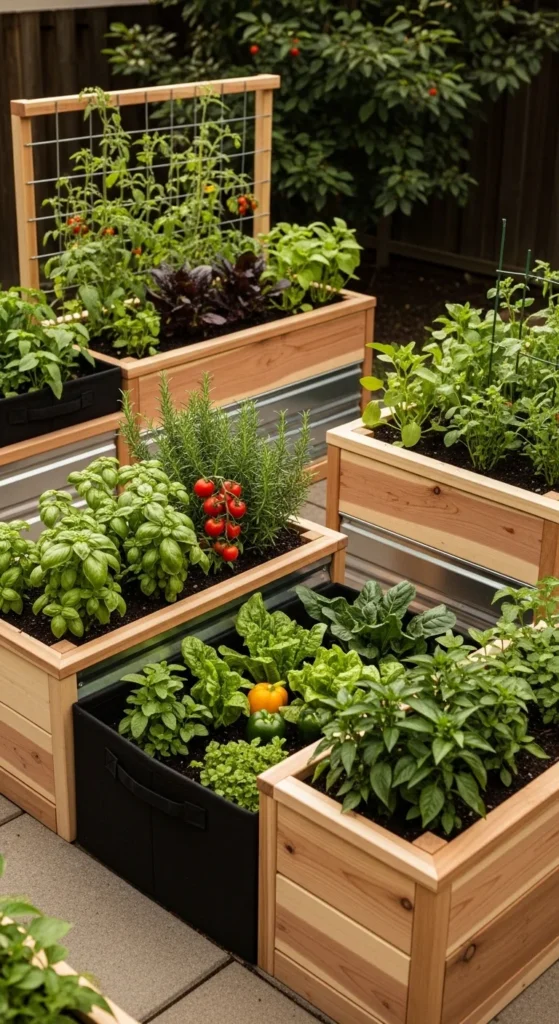
Mixed-material raised beds are a good option when one material does not solve every problem. In a small space, this is often the case. You might want the warmth of cedar near a seating area, the durability of metal in an exposed sunny spot, and the easy portability of fabric on a balcony edge. Using different materials on purpose can make the garden work better without looking random.
The key is repeating a few colors or shapes so the setup still feels connected. For example, pair cedar boxes with one galvanized bed and a couple of dark fabric planters. Keep the scale similar and group beds in a tidy way. This helps the garden feel planned even though the materials differ. Use the wood for herbs, the metal for deeper vegetables, and the fabric for portable seasonal crops.
This route can also help with budget. Instead of buying all one expensive material, use nicer beds where appearance matters most and lower-cost options where function matters more. Start small and add pieces over time.
For gardeners working with patios, balconies, and tiny backyards, mixed-material beds offer freedom. The space can look good and still solve real growing problems without forcing one single design choice everywhere.
Conclusion
A small space does not limit what a garden can become. With the right raised bed style, balconies, side yards, deck edges, patio corners, and narrow backyards can all turn into useful growing spots. Some people will prefer a cheap wood box. Others will like fabric beds, metal kits, or a trellis setup that grows upward instead of outward. The best choice is the one that fits the space, the light, and the daily routine. Start with one bed, grow a few easy crops, and pay attention to what works. Small gardens get better fast when the layout feels simple, reachable, and easy to care for.
Leave a Reply