

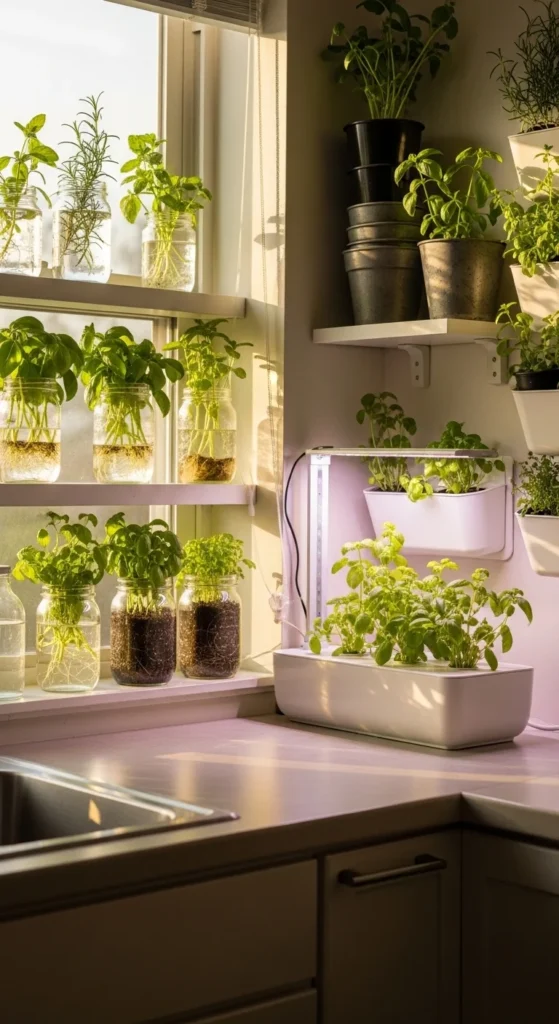
Living in a small apartment doesn’t mean giving up homegrown flavor. A small indoor herb garden can fit on a windowsill, a narrow shelf, or even a blank wall. With compact hydroponic systems, self-watering planters, and simple DIY jars, you can grow basil, mint, thyme, parsley, and chives in tight spaces. Many setups use LED grow lights or smart watering systems, which makes them ideal for beginners. Below are 21 smart small indoor herb garden setups designed for tiny kitchens and compact living.
1. Countertop Hydroponic Pod System
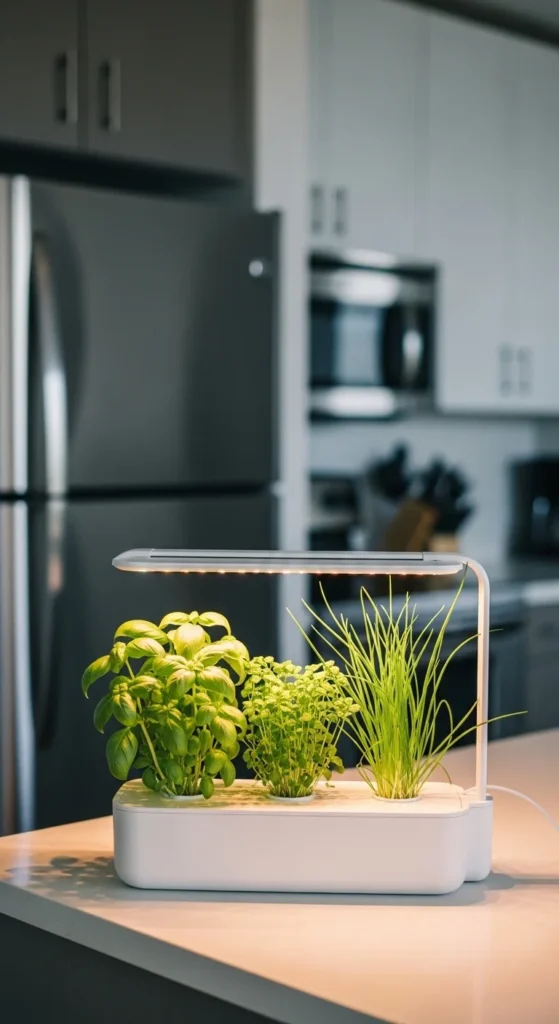
A compact system like the AeroGarden Harvest 2.0 fits neatly on a small counter. Most models are under 12 inches wide. Perfect for tight kitchens.
It uses water and nutrients instead of soil. That means less mess.
The built-in LED grow lights help herbs grow even in low-light homes.
You can grow 3–6 plants at once. Basil and chives perform very well.
Budget tip: Look for refurbished units online. They cost less and work just as well.
Keep the water reservoir filled. That’s the main task.
Place it near your prep area for easy harvesting while cooking.
2. Smart App-Guided Indoor Garden
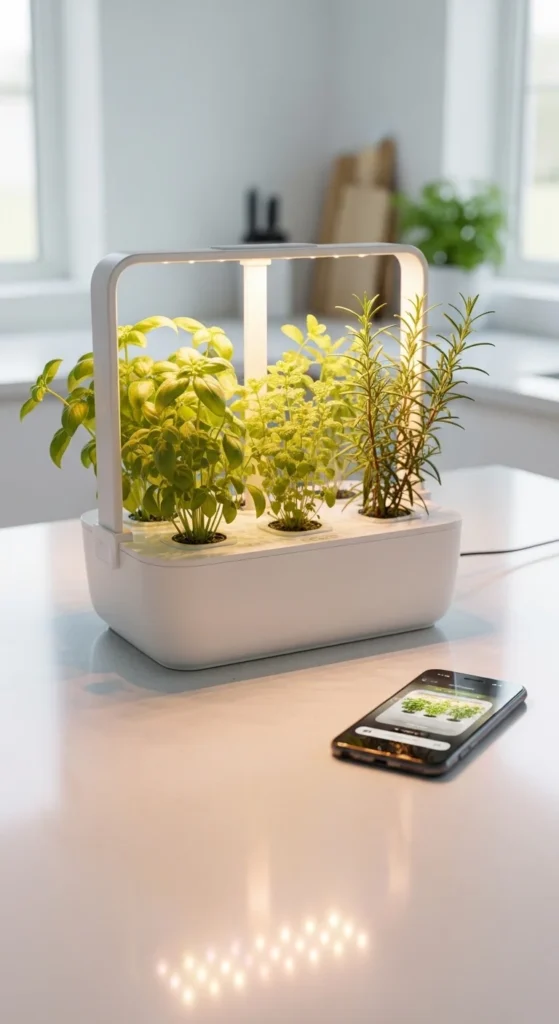
The Click & Grow 9 Pro guides beginners through setup.
It reminds you when to add water. It manages light automatically.
This works well for busy schedules.
It grows multiple herbs in a small footprint.
Great for basil, mint, and parsley.
Budget tip: Start with fewer pods before buying refill packs.
Keep it near an outlet and stable surface.
Low maintenance. High convenience.
3. Self-Watering Windowsill Planter
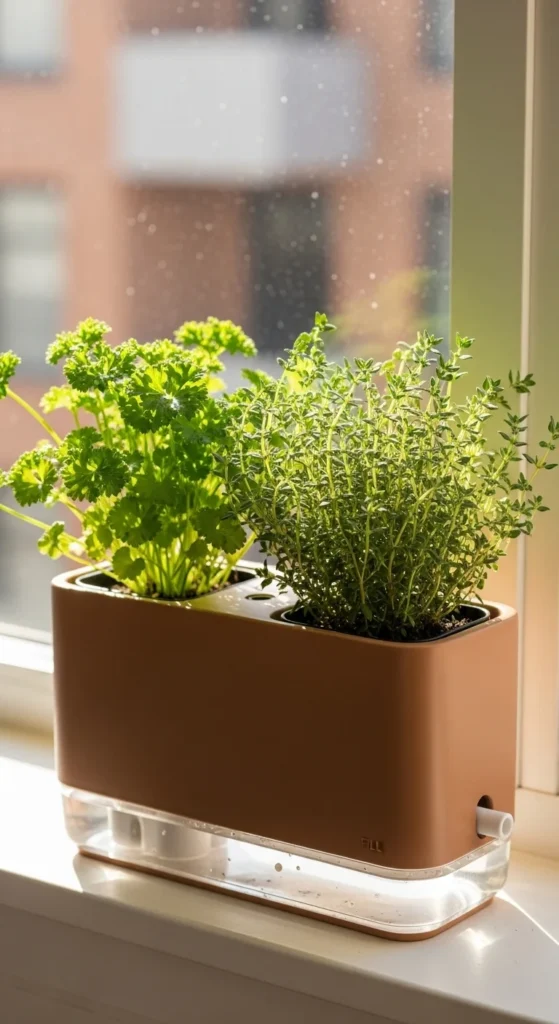
A slim planter with a built-in water reservoir saves time.
Fill the bottom chamber. The soil draws moisture upward.
This reduces overwatering mistakes.
Choose shallow-root herbs like thyme and parsley.
Most herbs grow well in 6–12 inches of soil depth.
Place it in a south-facing window if possible.
If light is limited, add a small clip-on grow light.
Simple. Affordable. Practical.
4. Mason Jar Kratky System
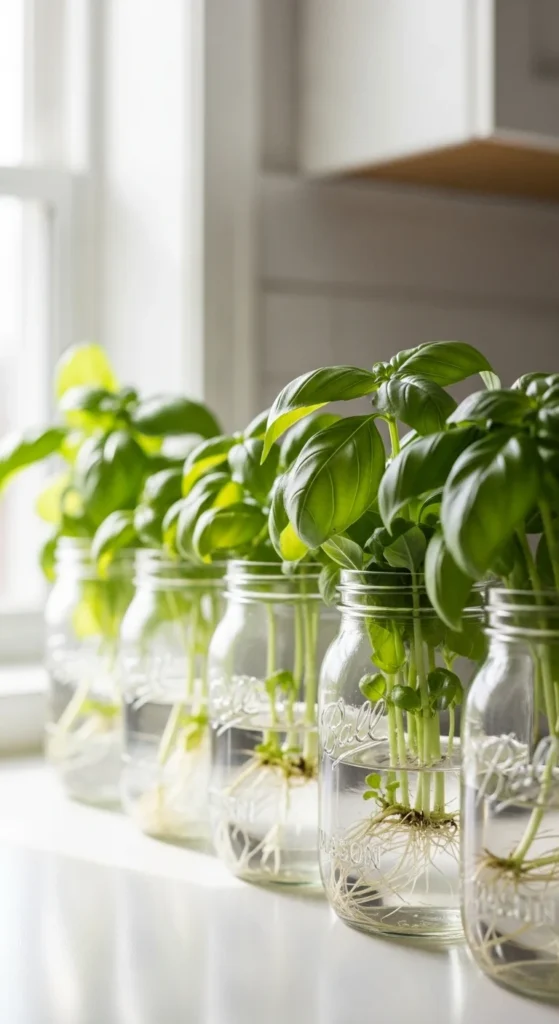
The Kratky method is soil-free and budget friendly.
Use mason jars. Add water and nutrients.
Place a net cup with your plant on top.
Roots grow directly in water.
No electricity required.
Great for basil and mint.
This setup costs very little.
Ideal for renters.
Keep jars near bright windows.
5. Vertical Wall Planter Rack
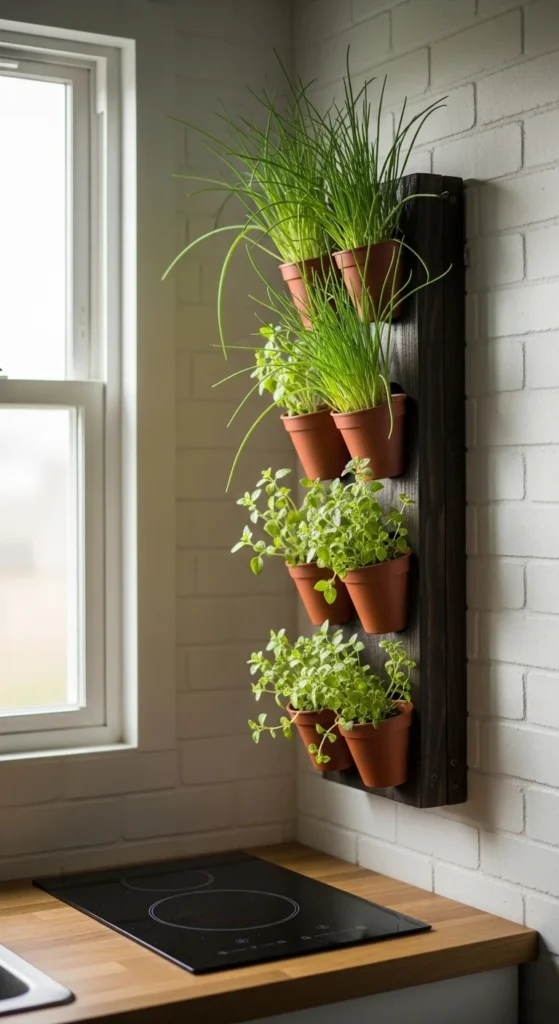
Wall racks save counter space.
Mount lightweight planters on unused wall areas.
Use small pots with drainage holes.
Choose compact herbs.
Add a small LED strip if light is low.
Budget tip: Repurpose shoe organizers with waterproof lining.
Water carefully to avoid spills.
Perfect for narrow kitchens.
6. Stackable Tiered Planters
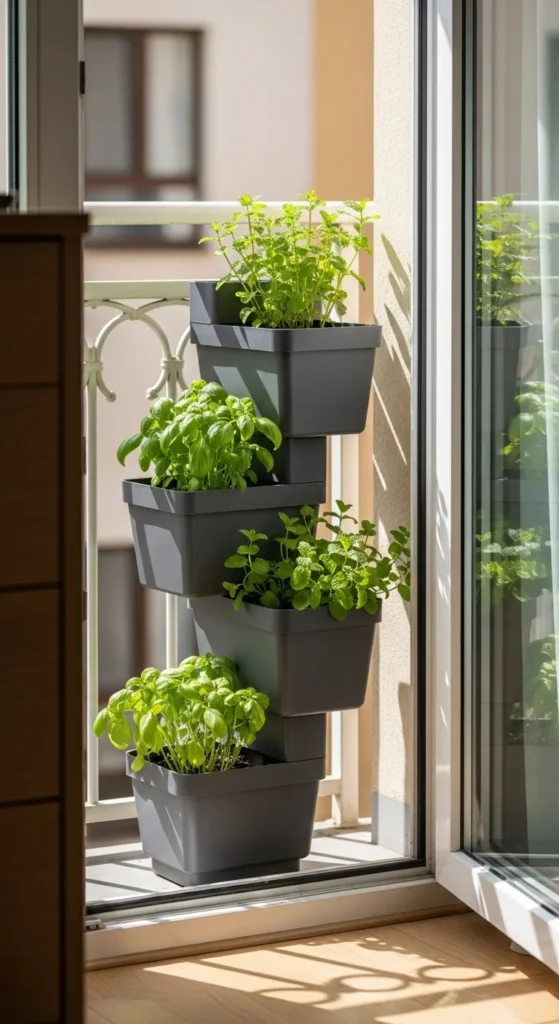
Stacked planters grow upward instead of outward.
Ideal for corners.
Each level holds a different herb.
Use lightweight potting mix.
Rotate levels weekly for even light exposure.
Great for small apartments.
Affordable plastic versions are widely available.
7. Hanging Rail Herb Pots
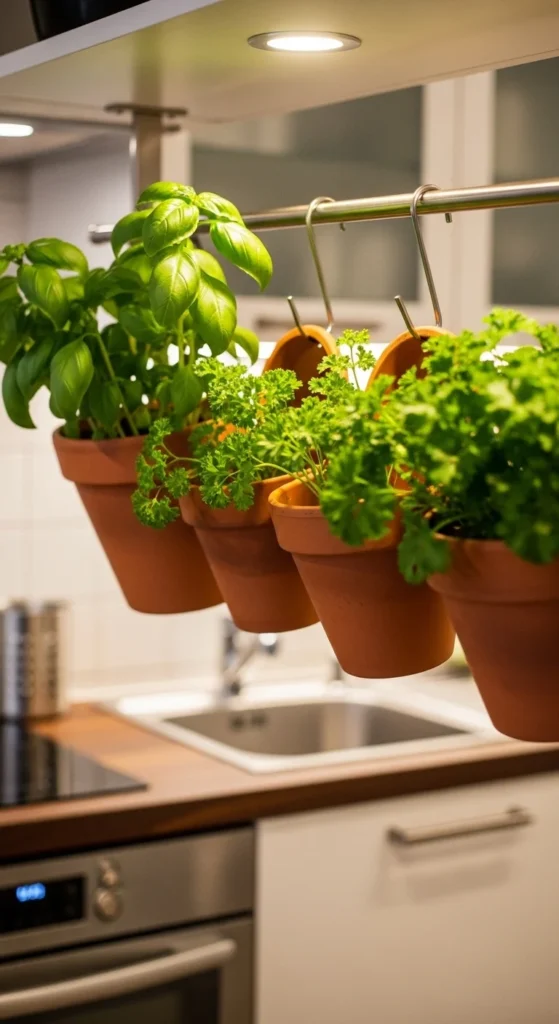
Install a rail under cabinets.
Hang small pots with hooks.
This keeps herbs within reach.
Works well for chives and thyme.
Use lightweight containers.
Water gently to prevent dripping.
Efficient use of vertical space.
8. Under-Cabinet Grow Light Shelf
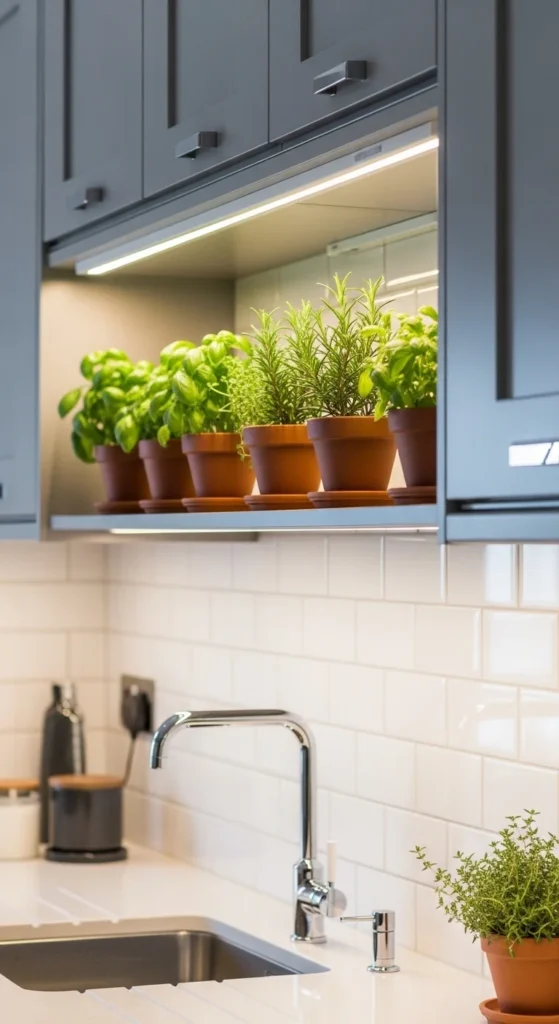
Install a narrow shelf under cabinets.
Attach LED grow lights underneath.
This works well in low-light apartments.
Place 3–4 small pots side by side.
Keep wiring tidy.
Low profile. Functional design.
9. Repurposed Wooden Crate Garden
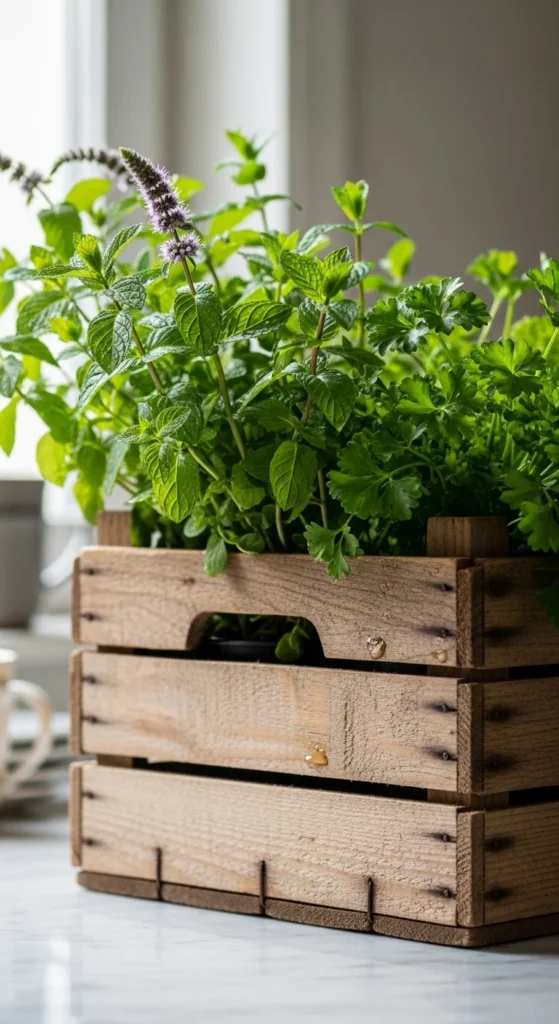
Use an old wooden crate.
Line it with plastic.
Add drainage holes.
Fill with potting mix.
Grow shallow-root herbs.
Cheap and customizable.
10. Compact Rolling Herb Cart
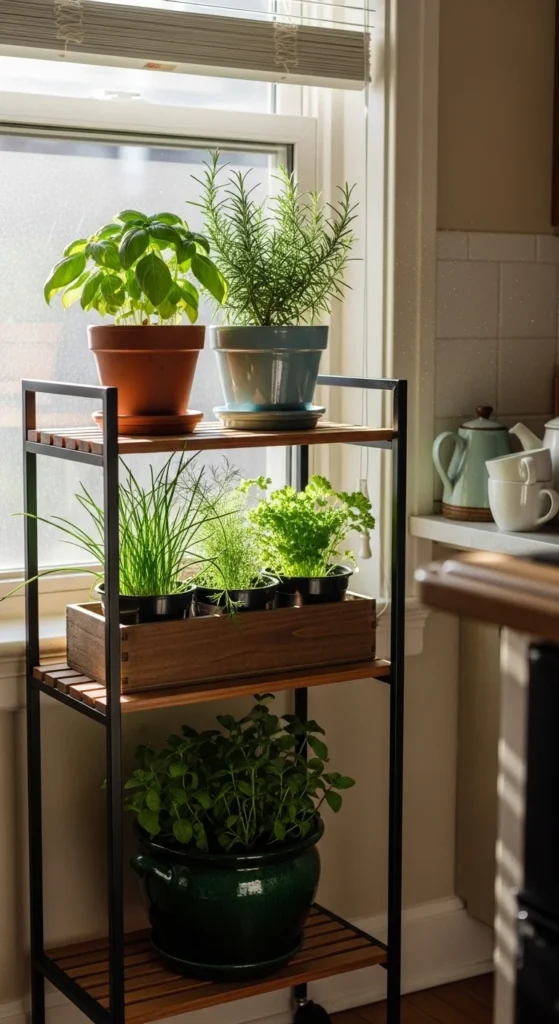
A slim rolling cart moves with the sun.
Place it near windows during the day.
Move away at night.
Great for renters.
Add hooks for tools.
Flexible solution.
11. Mini Greenhouse Cabinet
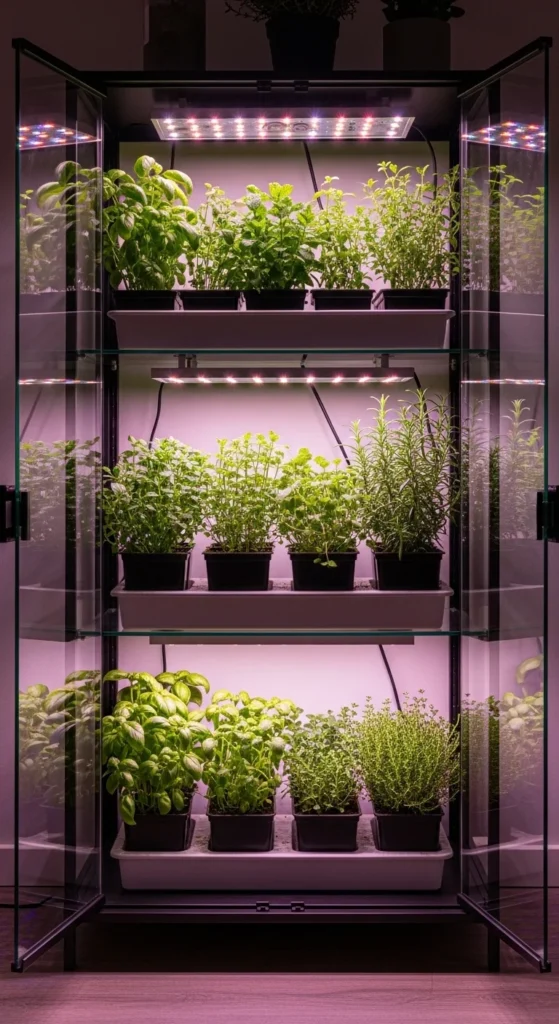
Use a glass cabinet.
Install grow lights inside.
This creates a controlled space.
Good for winter months.
Keeps herbs protected from drafts.
12. Narrow Window Ledge Pots
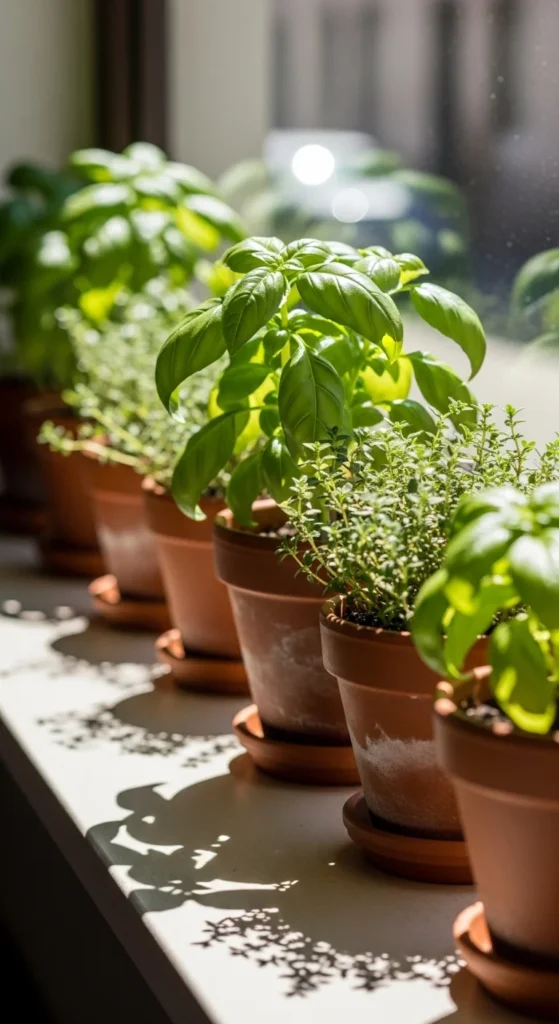
Simple and classic.
Choose pots with drainage holes.
Place saucers underneath.
South-facing windows work best.
Rotate weekly.
Low cost setup.
13. Magnetic Herb Planters
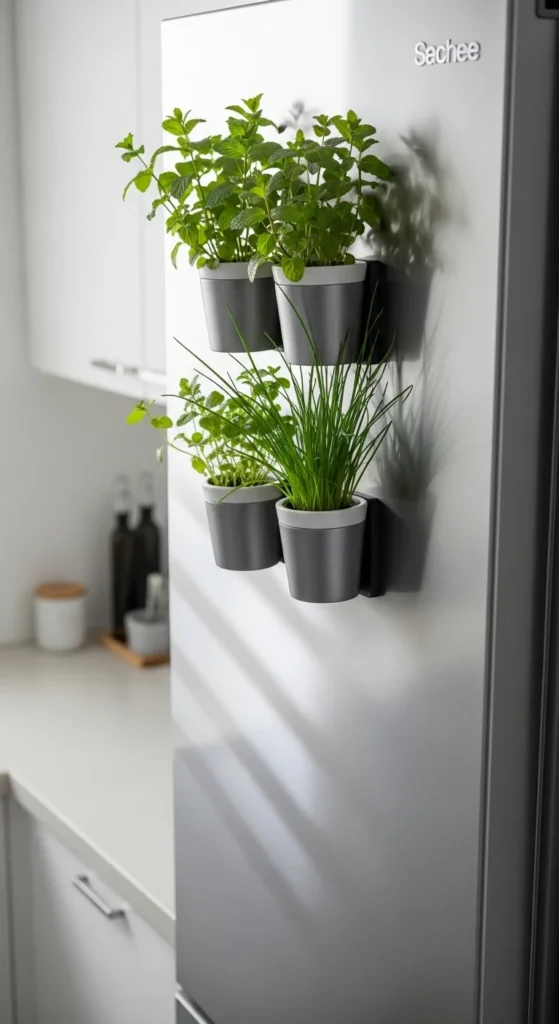
Magnetic planters stick to metal surfaces.
Great for tiny kitchens.
Keep herbs off the counter.
Water lightly.
Fun and practical.
14. Recycled Tin Can Herb Garden
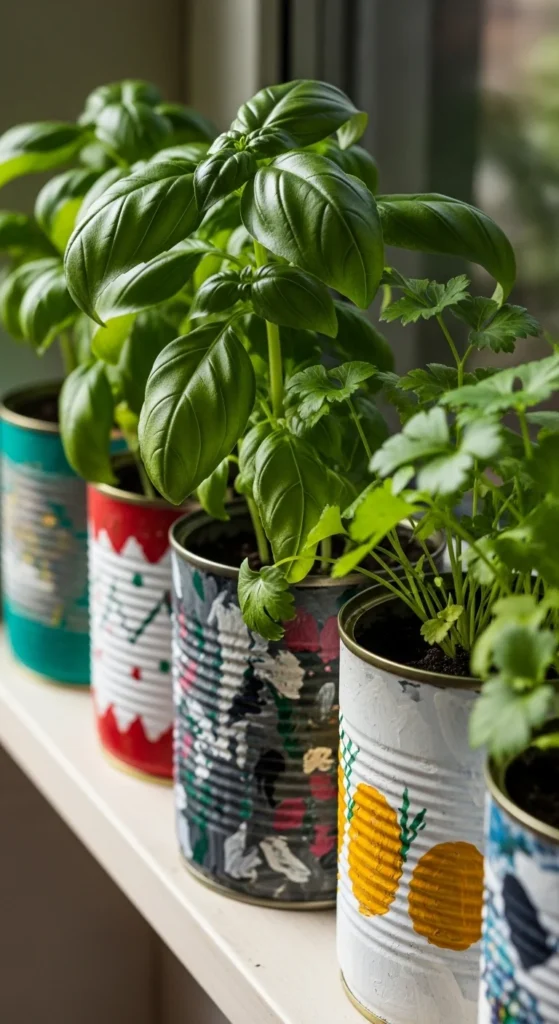
Clean empty cans.
Add drainage holes.
Paint if desired.
Cheap and eco-friendly.
Ideal for beginners.
15. Hanging Glass Terrarium Style
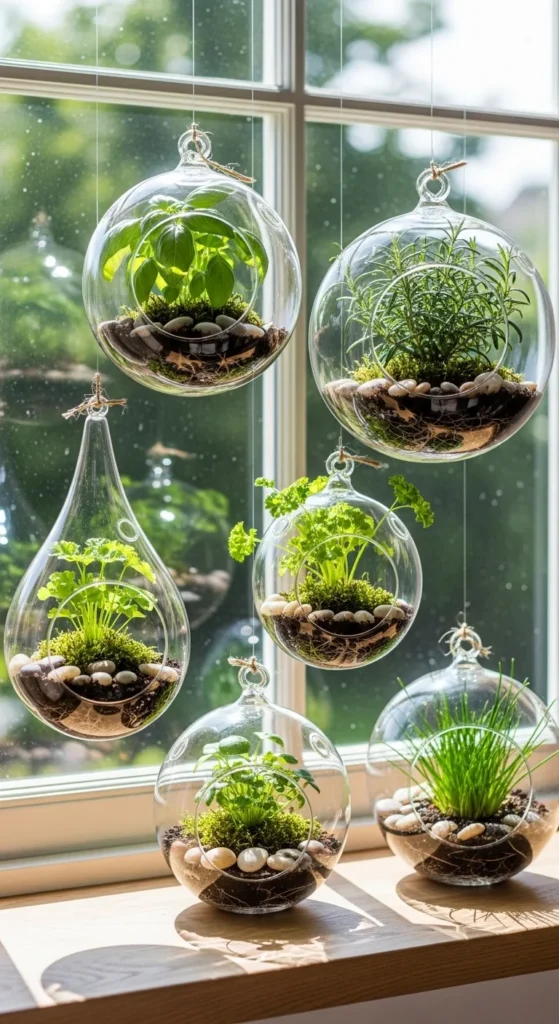
Glass containers hang near windows.
Use lightweight soil.
Grow small herbs.
Check moisture often.
Decorative and compact.
16. Slim Shelf Ladder Garden
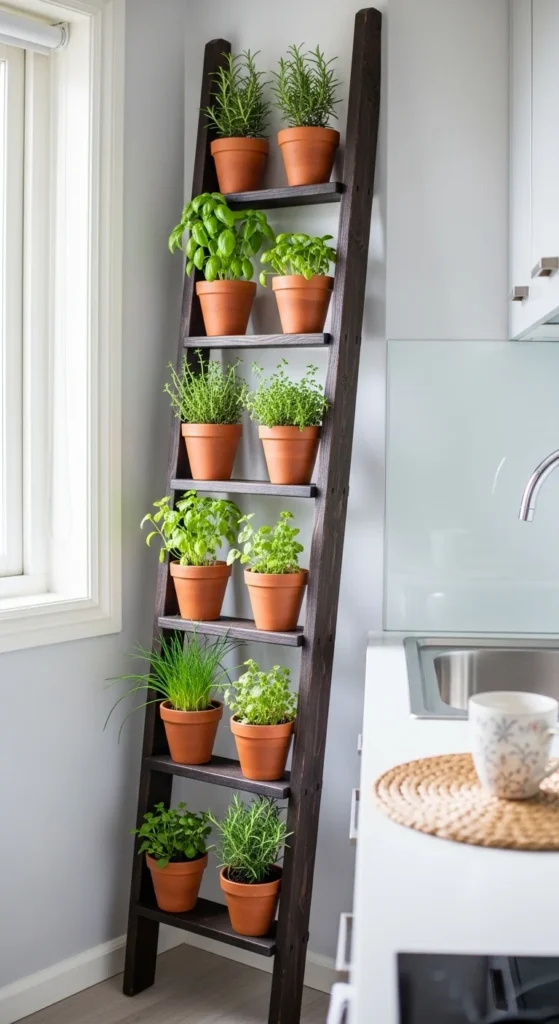
A ladder shelf uses vertical space.
Place taller herbs at bottom.
Smaller herbs on top.
Add grow lights if needed.
Works in tight corners.
17. Drawer-Style Planter Box
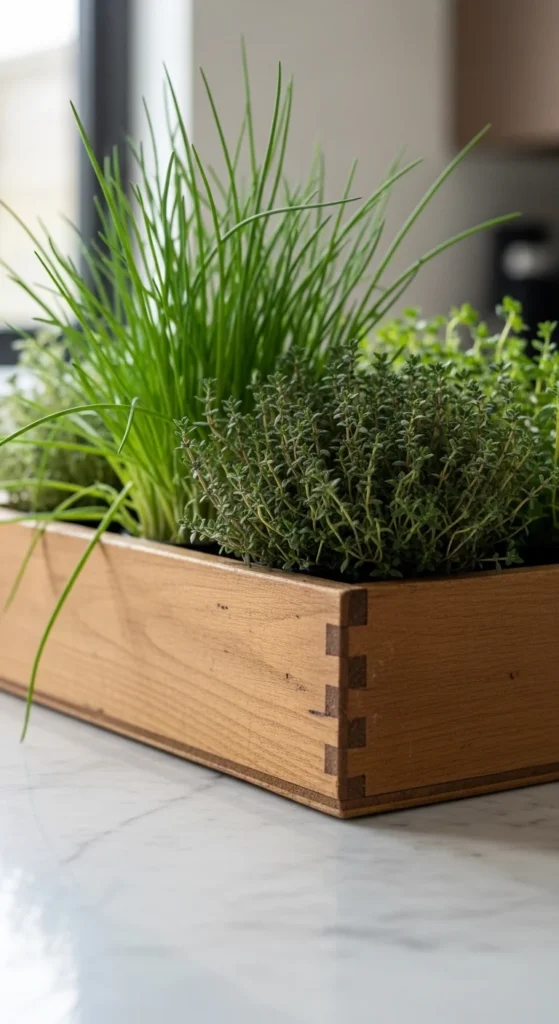
Old drawers can become planters.
Line with plastic.
Add drainage.
Keep soil shallow.
Compact footprint.
18. Countertop Self-Watering Box
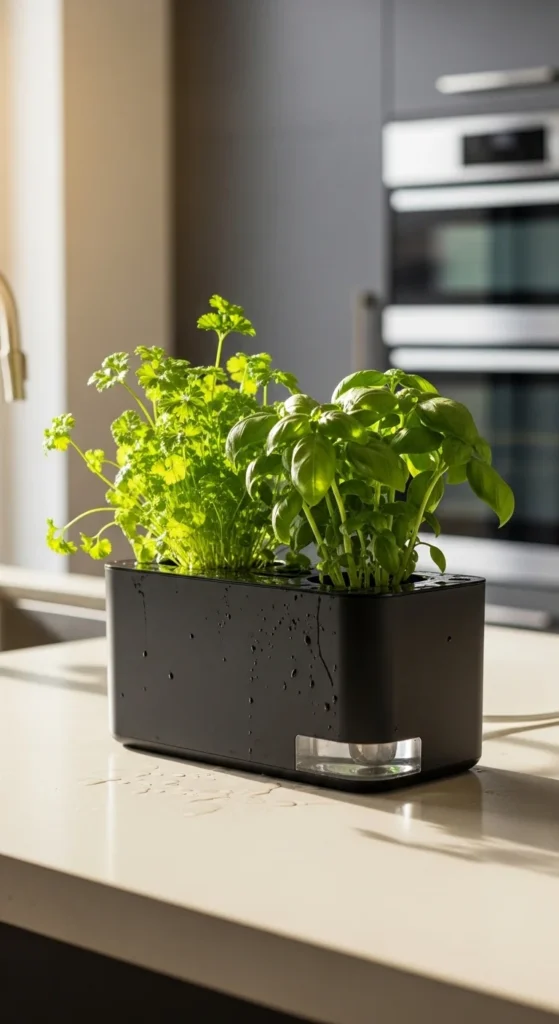
A product like EarthBox reduces watering frequency.
Water from bottom reservoir.
Less risk of root rot.
Compact and reliable.
19. Clip-On Grow Light Corner Setup
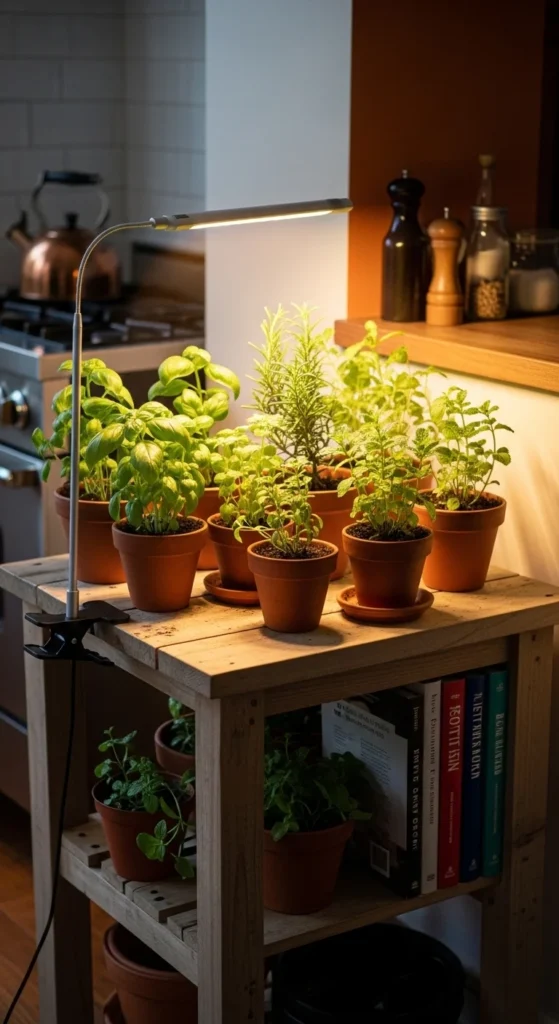
Attach a clip-on LED light.
Place herbs on small table.
Good for dark apartments.
Adjust height as plants grow.
Budget friendly lighting.
20. Grocery Store Herb Propagation Jars
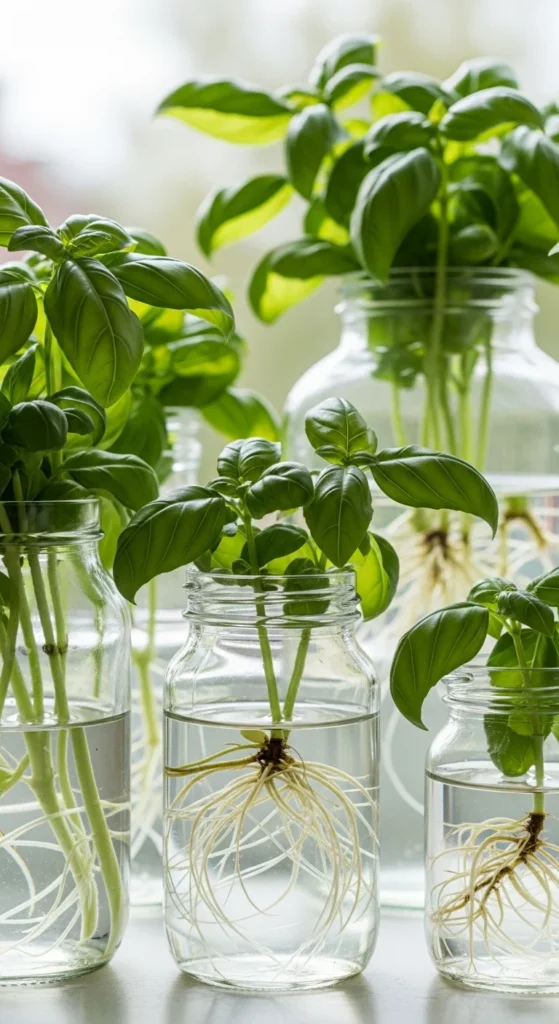
Buy basil from grocery store.
Cut stems.
Place in water.
Roots appear in days.
Plant in soil later.
Zero-cost start.
21. Compact Stack-and-Rail Hybrid Setup
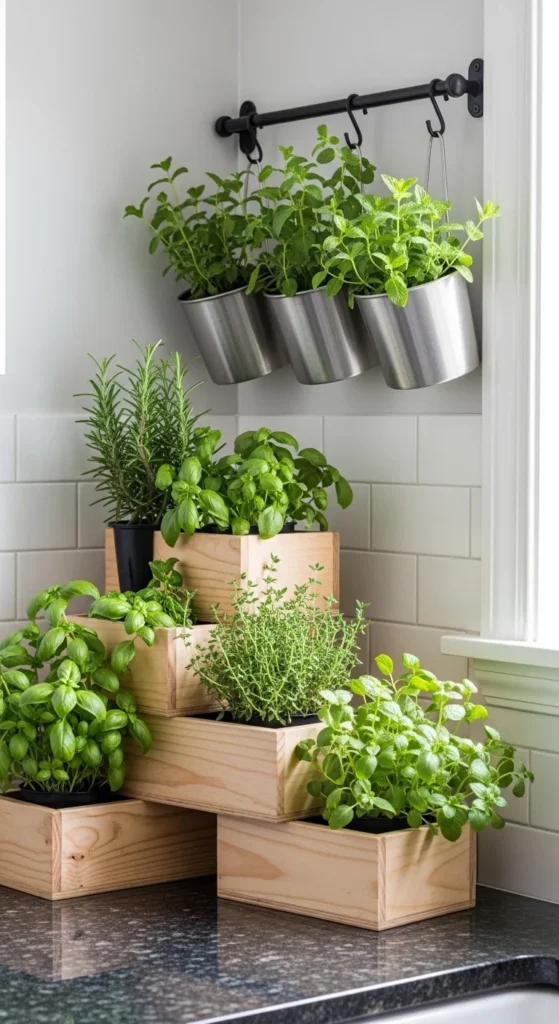
Combine vertical stacking with hanging pots.
Use every inch wisely.
Grow multiple herbs in one corner.
Keep airflow moving.
Prune often to maintain bushy growth.
Small space. Big flavor.
Conclusion
A small indoor herb garden can fit almost anywhere. Windowsills, walls, shelves, and compact counters all work. You can go high-tech with hydroponic pods or keep it simple with mason jars and recycled containers. Focus on good light, proper drainage, and regular trimming. Start with easy herbs like basil and mint. Keep the setup small and manageable. Once you see growth, you’ll want to expand.
Leave a Reply