

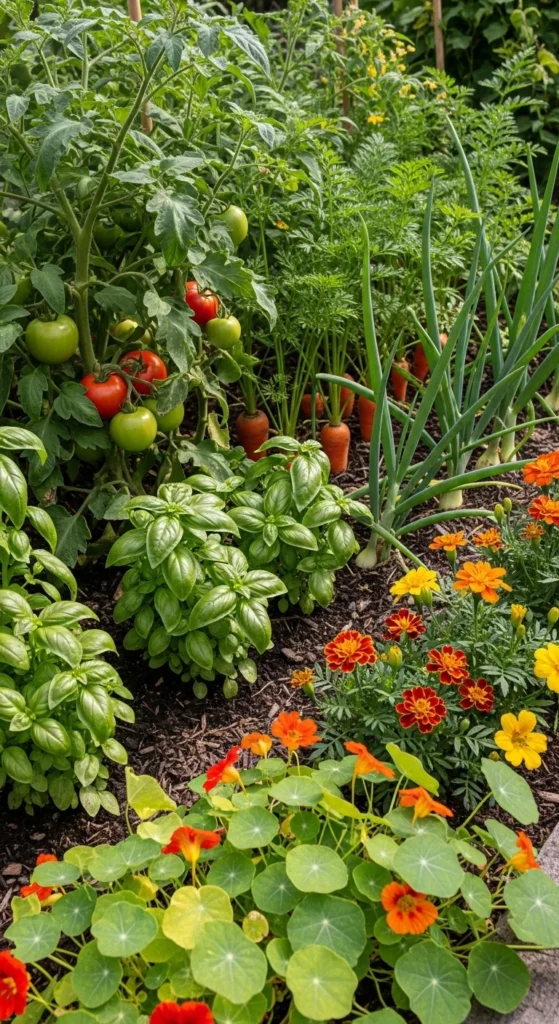
Companion planting vegetables is a simple way to grow more food in the same space while cutting pest problems and helping pollinators find your garden. The idea is practical: pair crops that like similar conditions, use flowers and herbs to pull in helpful insects, and avoid “bad neighbors” that share the same diseases. If you want a garden that feels easier to manage and more productive, these tried-and-true combos give you a clear starting point.
1. Tomatoes + Basil for a Kitchen-Garden Power Pair
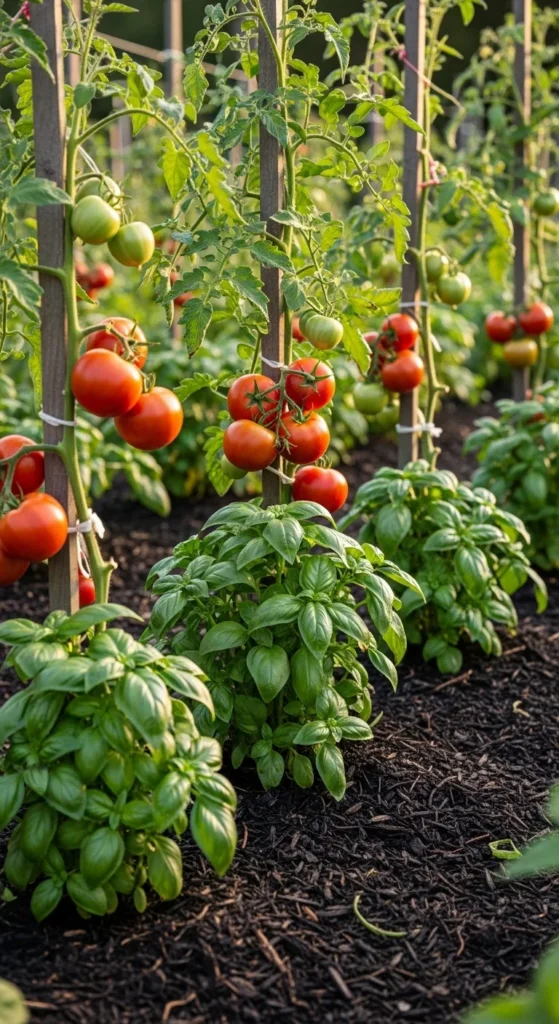
Tomatoes and basil are a classic companion planting combo because they fit the same care routine.
They both like warm soil and steady watering.
Plant basil around tomato stems, leaving a small gap so airflow stays good.
Harvest basil often. It grows bushier and won’t crowd the tomato roots.
Budget tip: Start basil from seed in a reused egg carton. Transplant when it has a few true leaves.
For small beds, try one tomato plant with two basil plants nearby. That’s plenty for most kitchens.
If pests show up, basil won’t solve everything by itself. Still, many gardeners like this pairing because it keeps the bed full and useful.
Add mulch to keep moisture steady.
When you pick tomatoes, you’ll likely pick basil too, which makes the whole bed feel more “worth it.”
2. Carrots + Onions to Confuse Root Pests
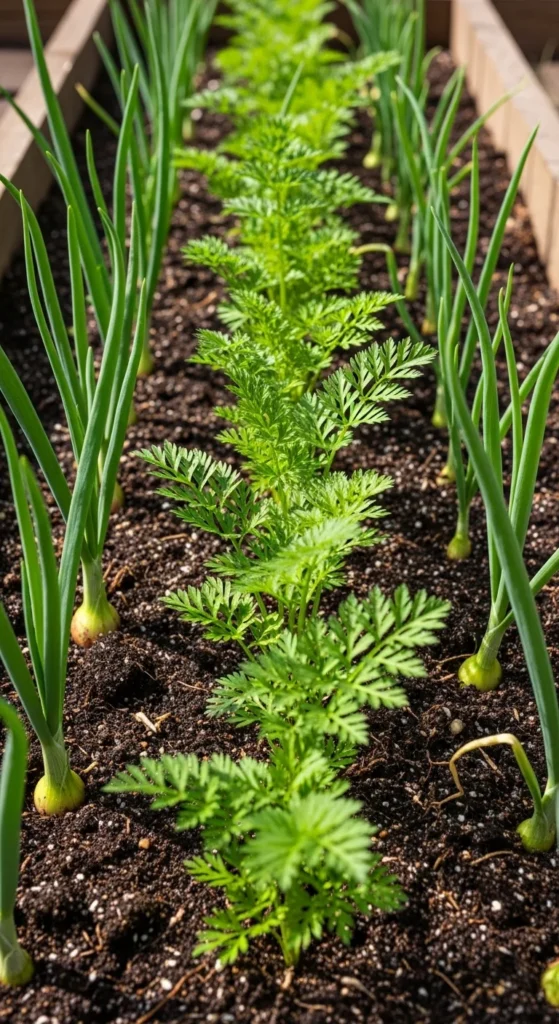
Carrots and onions make a simple, space-smart pairing.
They grow in different shapes. Carrots go down. Onions stay fairly shallow.
Their scents can confuse some common pests that hunt by smell.
Plant onions in a line, then sow carrots beside them.
Budget tip: Use onion sets for quick starts, and carrot seed for cheap volume.
Keep the soil loose for carrots. Don’t compact the bed while planting onions.
Thin carrots early so roots can size up.
This combo is great for small gardens because it uses space well and looks tidy.
Water evenly. Carrots can split if they go from dry to soaked too fast.
If you harvest onions first, carrots still finish fine. If carrots finish first, onions keep going. It’s a handy stagger.
3. Cucumbers + Radishes as a “Scout Crop” Pair
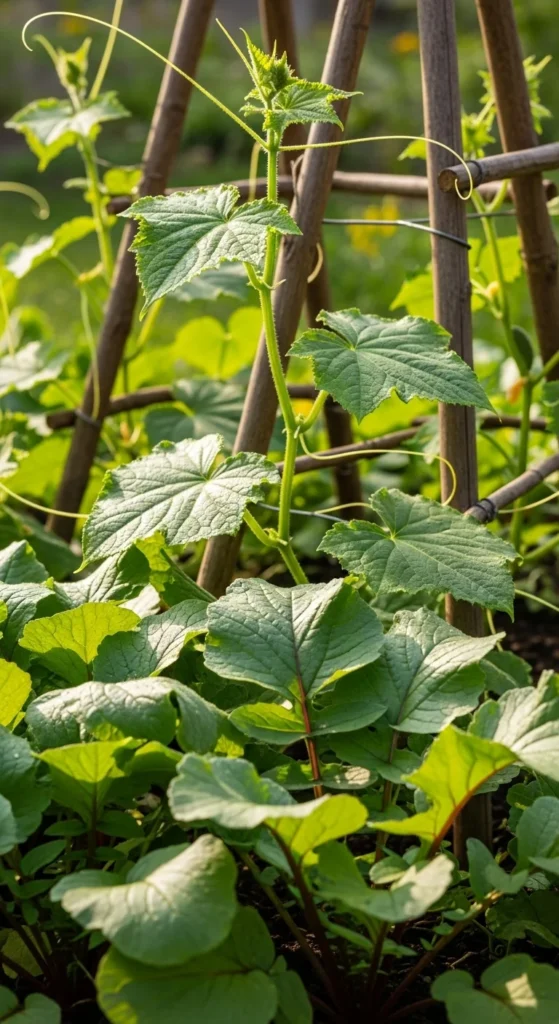
Radishes grow fast. Cucumbers grow longer.
Plant radishes near cucumbers early in the season.
The radishes can act like a “scout crop.” If pests show up early, you’ll see damage on radish leaves quickly.
Harvest radishes before cucumber vines take over.
Budget tip: Radishes are one of the cheapest seeds to buy, and they germinate fast.
Keep cucumbers climbing. A simple trellis saves space and keeps fruit clean.
Once radishes are pulled, add a thin layer of compost and mulch that spot.
This pairing is easy for beginners because it gives you a quick early harvest while you wait for cucumbers.
4. Corn + Beans + Squash for the Three Sisters Bed
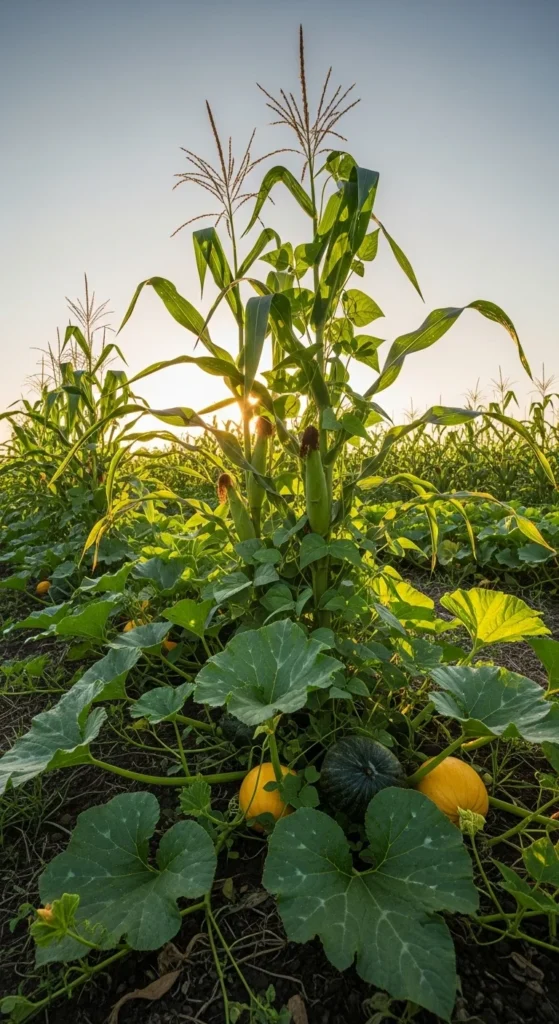
The Three Sisters method pairs corn, beans, and squash in one shared space.
Corn grows tall and becomes a living support.
Beans climb and add nitrogen to the soil.
Squash spreads and shades the ground, which helps cut weeds.
Plant corn first in a block, not a single row. Corn pollinates better in blocks.
When corn is knee-high, plant beans near the stalks.
Plant squash around the edges so vines can run outward.
Budget tip: Start with a small patch. Even a 4×4 section can teach you a lot.
Mulch well, and water deeply. This planting gets thirsty in summer.
It’s a great option when you want one bed to feel full and productive with fewer separate trellises.
5. Marigolds + Root Vegetables as a Border Ring
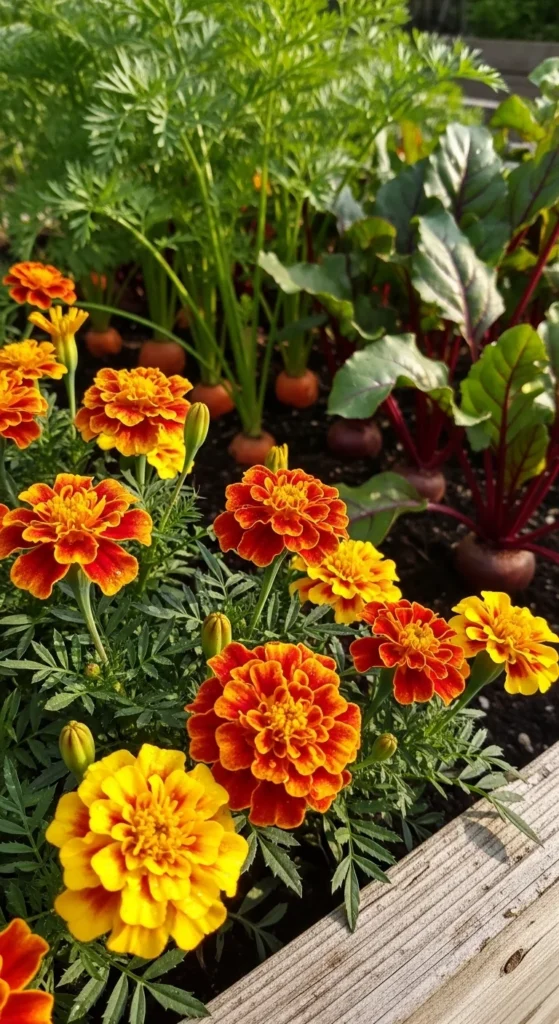
Marigolds are easy to grow and make a strong border plant.
Many gardeners plant them to help reduce nematode issues around roots.
Place marigolds along the outside edge of the bed.
Keep them spaced so they don’t shade your crops.
Budget tip: Grow marigolds from seed. One packet can line several beds.
Deadhead flowers to keep blooms coming.
Even if you plant marigolds mainly for looks, they still help by attracting beneficial insects and making your garden feel lively.
They’re also great “gap fillers” when you have empty corners.
6. Nasturtiums + Brassicas as a Trap Crop Setup
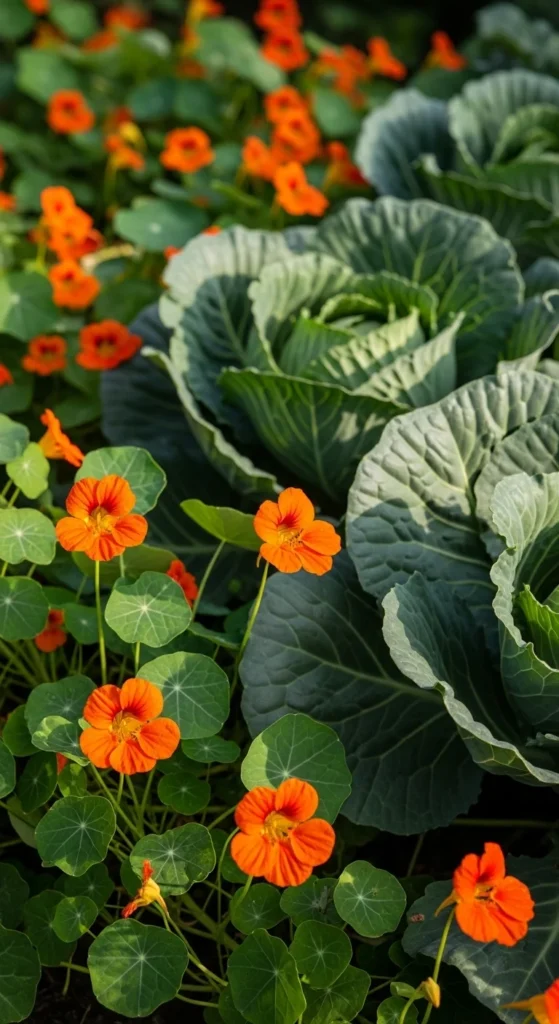
Nasturtiums are often used as trap crops for aphids.
Plant nasturtiums near cabbage, kale, or broccoli.
If aphids show up, they may gather on nasturtium leaves first.
That makes it easier to spot the issue early.
Budget tip: Nasturtiums grow well from seed and don’t require fancy soil.
You can remove heavily infested nasturtium leaves and toss them.
Nasturtiums also trail nicely over raised bed edges, which saves space inside the bed.
They like sun but can handle a little shade.
If you want your garden to look pretty and do double duty, nasturtiums are a solid companion option.
7. Strawberries + Borage for Pollinator Traffic
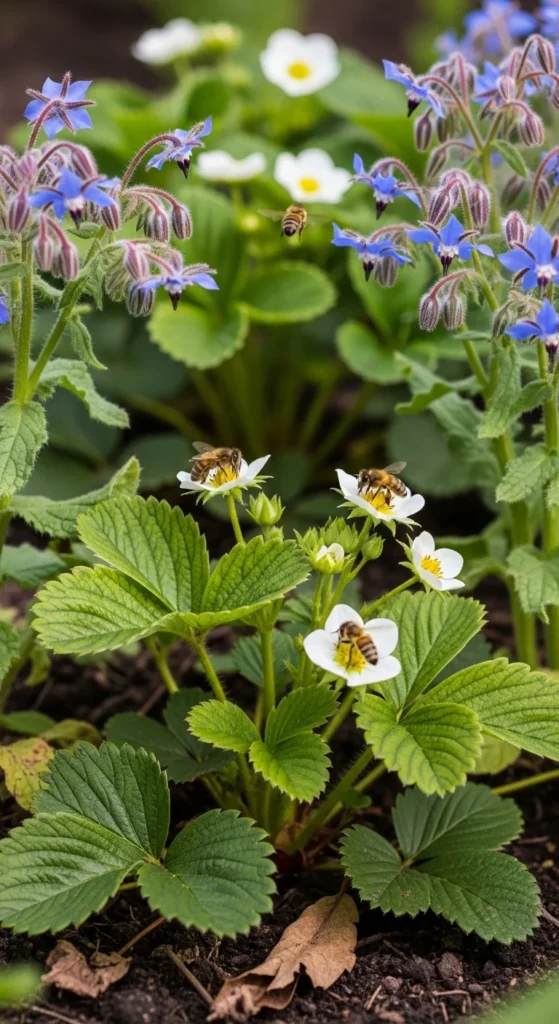
Strawberries often produce more when pollinators visit often.
Borage is known for attracting bees and other pollinators.
Plant borage near strawberries, but give it room. It can grow large.
Budget tip: Plant one borage plant near a strawberry patch rather than filling the whole bed.
Borage can self-seed. If you don’t want that, snip flowers before they drop seeds.
Mulch strawberries well to keep fruit clean.
This combo works well in a mixed garden bed or along the edge of a strawberry patch.
Even if you don’t track yield numbers, you’ll notice more insect activity around the flowers, which is usually a good sign for fruit set.
8. Lettuce Under Tomatoes for Shade Layering
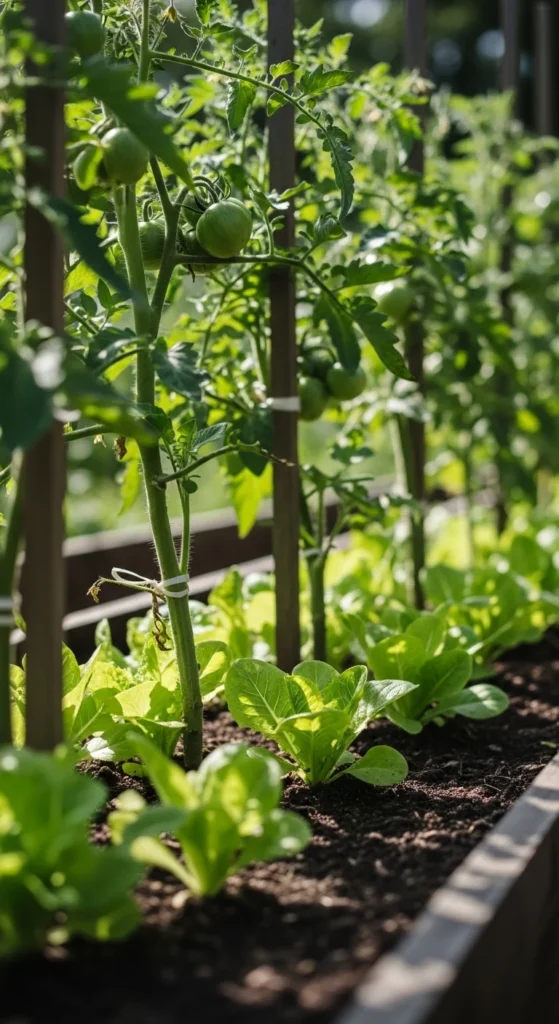
This is a smart “layering” trick.
Plant lettuce early while tomatoes are still small.
As tomatoes grow taller, they cast shade and keep lettuce from bolting too fast in warm weather.
Harvest lettuce regularly. It opens space as tomato roots expand.
Budget tip: Use cut-and-come-again leaf lettuce. You get repeated harvests.
Keep lettuce in the outer ring around tomatoes so you can water both without soaking leaves too much.
When lettuce finishes, replant that space with basil or green onions.
This pairing helps you get two crops from one space in one season without crowding everything at the same time.
9. Garlic Around Peppers as a Scent Barrier
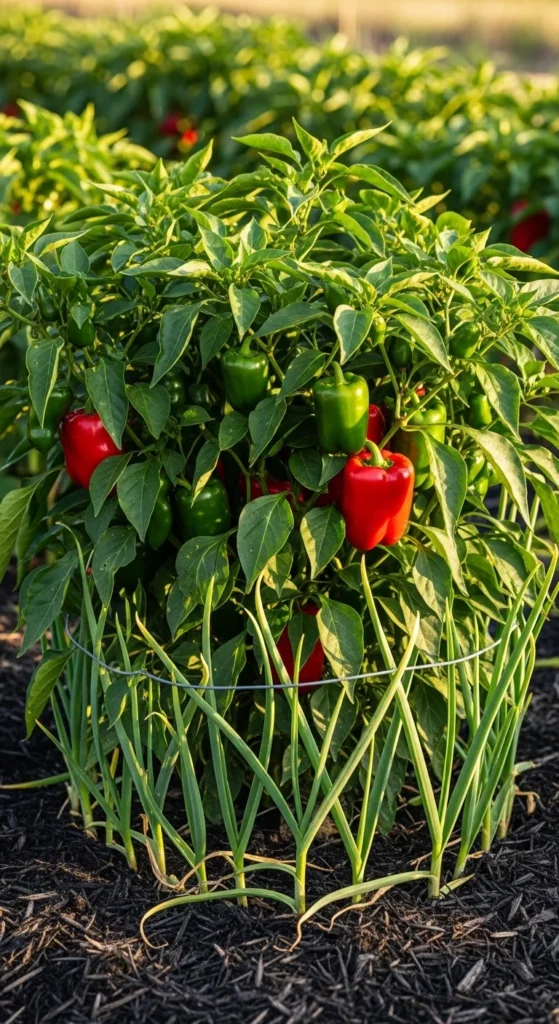
Garlic is an easy companion plant because it takes little space and adds a strong scent.
Plant garlic cloves around pepper plants like a loose ring.
Keep spacing wide enough so peppers still get airflow.
Budget tip: Use garlic from the grocery store only if it’s not treated to prevent sprouting. Seed garlic is more reliable.
Garlic can also be planted in corners where nothing else fits.
When garlic is ready, pull it and free up space for a late-season crop like lettuce.
Even if you mainly grow garlic for cooking, it fits nicely into pepper beds without much effort.
10. Beans + Corn (Even Without Squash)
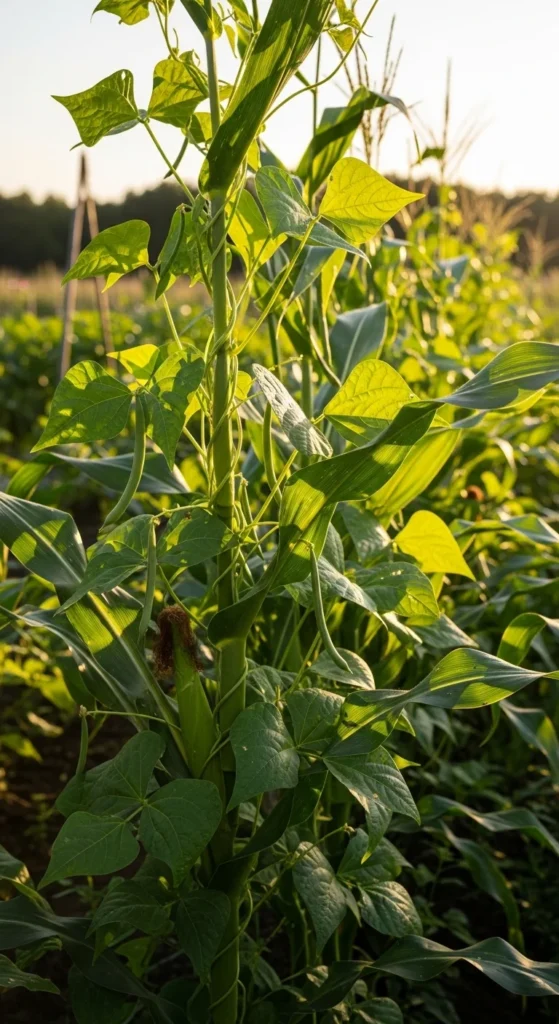
If you don’t want squash vines, you can still pair beans with corn.
Plant corn in a block.
Once corn is established, plant pole beans at the base.
The beans climb the stalks, which saves you from building a big trellis.
Budget tip: Use dry beans from a garden seed aisle rather than specialty varieties at first.
Keep an eye on wind. If corn is tall and thin, heavy beans can pull it over.
Plant corn a bit closer in a block to create support.
This pairing works best when corn stalks are strong and you keep the bed watered during hot spells.
11. Dill Near Cabbage to Invite Helpful Insects
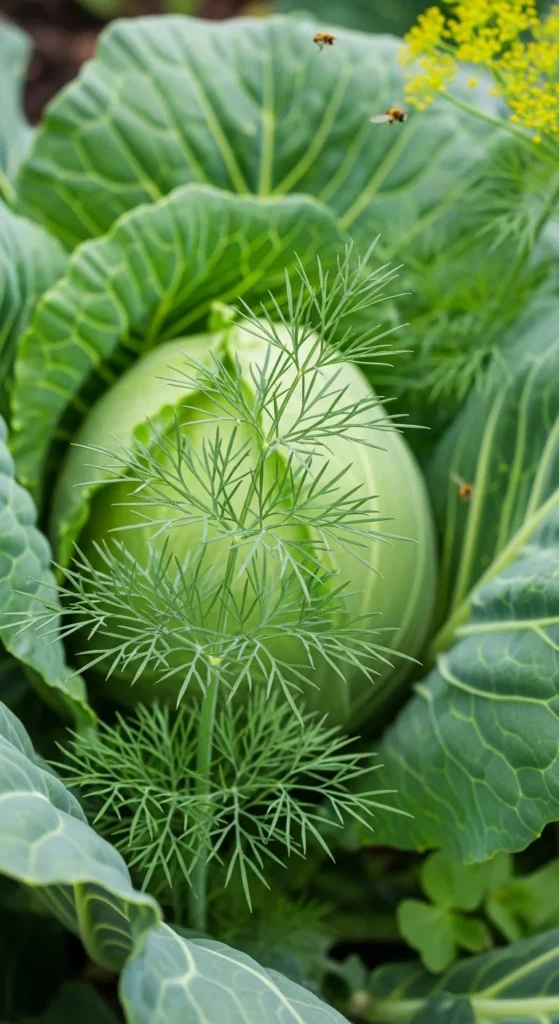
Dill is a great companion herb for gardens dealing with cabbage pests.
It can attract beneficial insects that prey on pests.
Plant dill near brassicas like cabbage and kale, but not so close that it shades them.
Budget tip: Dill grows easily from seed. Sow a little every few weeks.
Let one dill plant flower if you want more beneficial insect activity.
Harvest dill leaves early for cooking, then let later plantings bloom.
This gives you both kitchen value and garden support.
If dill gets too tall, trim it back.
12. Chives Beside Carrots for a Tight Herb Edge
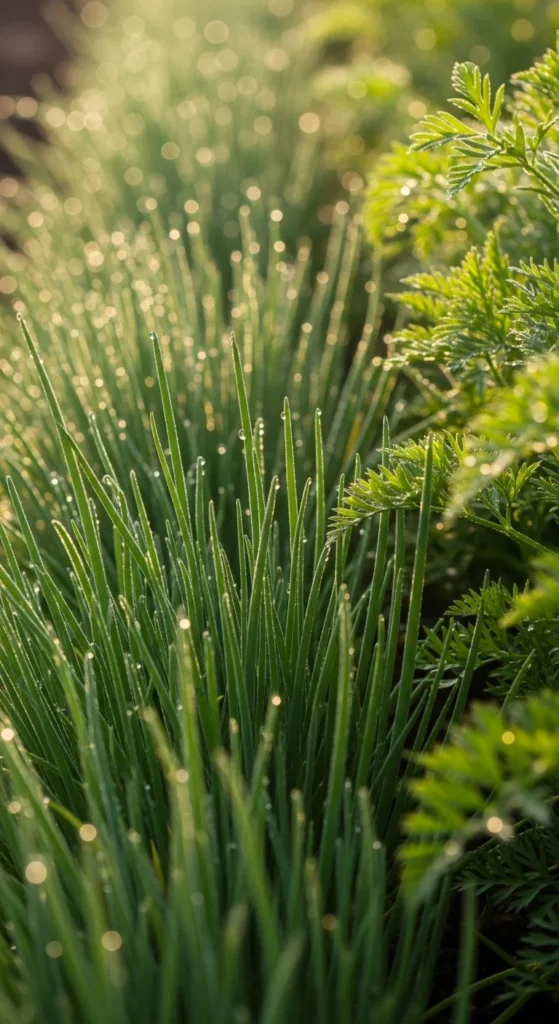
Chives are compact and easy to tuck into edges.
Plant chives in a thin strip beside carrots.
They don’t take much root space and can act as a scent companion.
Budget tip: Divide one chive clump into several smaller clumps. You get multiple plants for free.
Chives come back each year in many climates.
Trim chives often and use them in eggs, salads, and dips.
This is a nice option when you want companions but don’t have room for larger herbs.
Plus, chive flowers are pretty and bring in pollinators.
13. Sunflowers as a Living Trellis for Pole Beans

Sunflowers can act like a natural trellis.
Plant sunflowers first so stems are strong.
Then plant pole beans nearby and guide them to climb.
Budget tip: Use common sunflower seeds. They’re cheap and easy.
Choose a sturdy sunflower variety, not a tiny ornamental type.
Water well, since sunflowers can be thirsty.
This combo is fun in family gardens because it looks dramatic and saves trellis materials.
It also adds flowers for pollinators.
Just keep sunflowers on the north side of the bed so they don’t shade shorter crops.
14. Sweet Alyssum Under Taller Crops for Beneficial Bugs
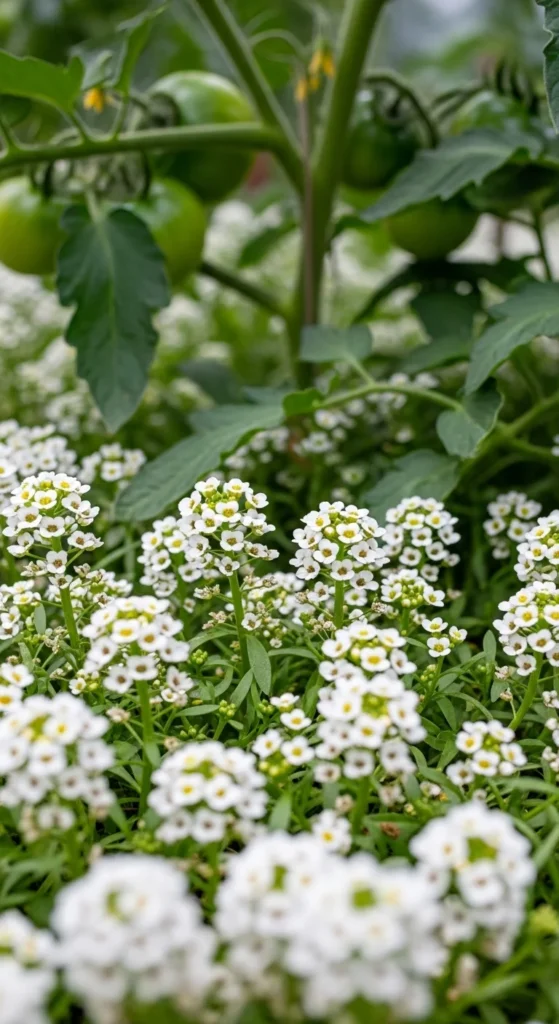
Sweet alyssum makes a low flowering mat.
It can attract beneficial insects and helps cover bare soil.
Plant it along bed edges or under taller crops like peppers and tomatoes.
Budget tip: A small seed packet goes a long way.
Trim it lightly if it starts to spread too far.
It’s also a nice living mulch in spots where you don’t want bare dirt.
If you’re trying to cut weeds without thick straw mulch, alyssum is a good helper.
It’s one of the easiest “flower companions” to add without changing your whole garden plan.
15. Clover Between Rows as Living Ground Cover
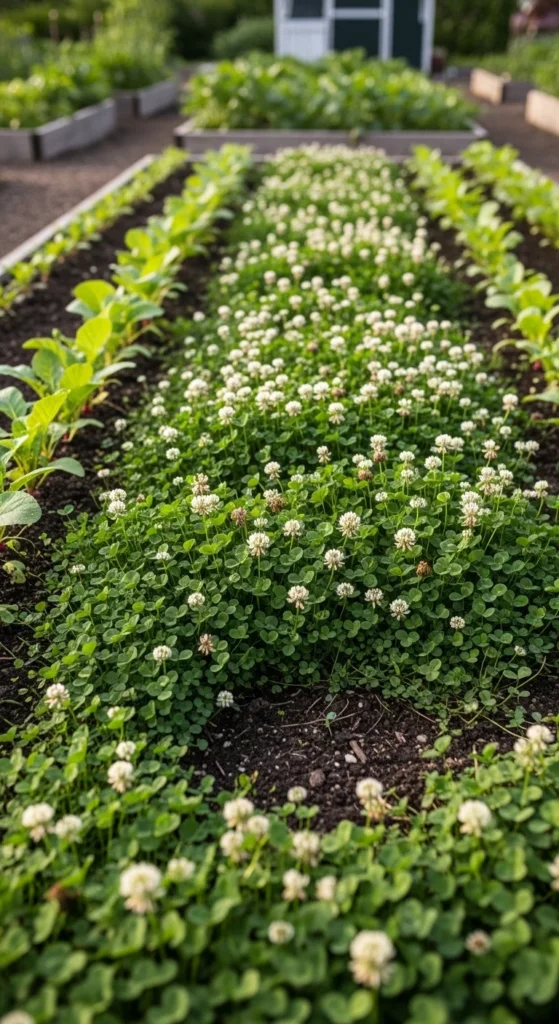
Clover can act as living ground cover.
It helps shade soil and can reduce weeds.
It can also add nitrogen over time when it’s cut back.
Plant clover in pathways or between widely spaced crops.
Budget tip: Use a small bag of clover seed meant for lawns or cover crops.
Keep it trimmed so it doesn’t compete with small seedlings.
For raised beds, clover works best around established plants, not brand-new starts.
If you find it’s getting too thick, pull it back and switch to mulch.
This is a good option for gardeners who want less bare soil showing all season.
16. Lavender Near Brassicas for Pollinator Pull
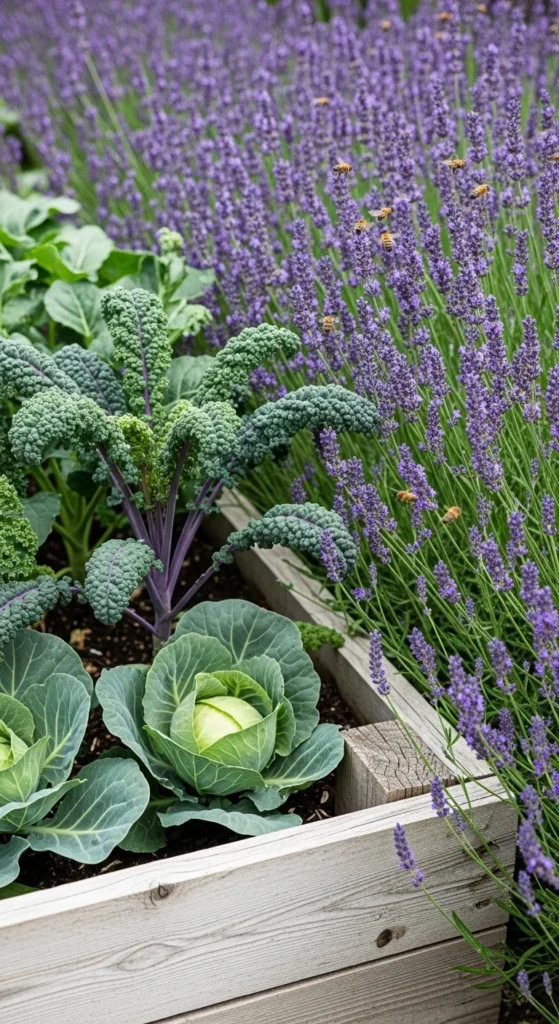
Lavender draws pollinators and brings fragrance to the garden.
Plant it near brassicas and other veggies that benefit from nearby insect activity.
Lavender is a perennial in many areas, so place it where it can stay.
Budget tip: Start with one small lavender plant and take cuttings later.
Lavender likes well-drained soil. In wet beds, plant it at the edge or in a slightly raised spot.
Even if you mainly grow it for scent, it adds flowers that keep insects moving through your garden.
It also looks great as a border plant around raised beds.
17. Yarrow as a “Mineral Helper” Flower Strip
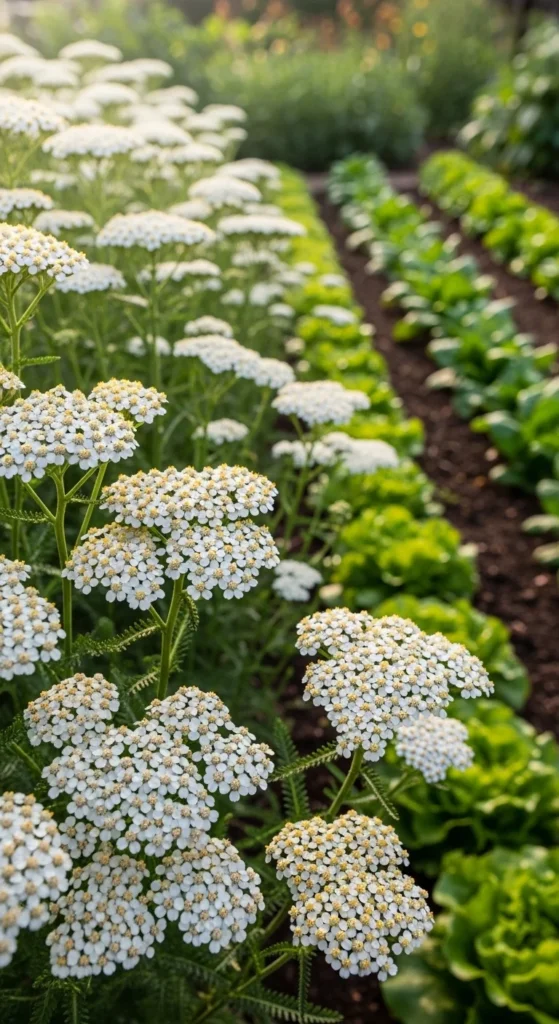
Yarrow is often grown near gardens for its role in supporting soil life and beneficial insects.
Plant yarrow in a strip near your vegetable beds rather than inside tight spaces.
It can get bushy, so give it room.
Budget tip: Buy one plant and divide it after a season or two.
Cut flowers for bouquets and it will often keep blooming.
Even if you don’t think about soil minerals, yarrow still helps by increasing flower diversity around the garden, which supports more insect variety.
That often means fewer pest blow-ups over time.
18. Basil + Peppers for a Compact Herb Pairing
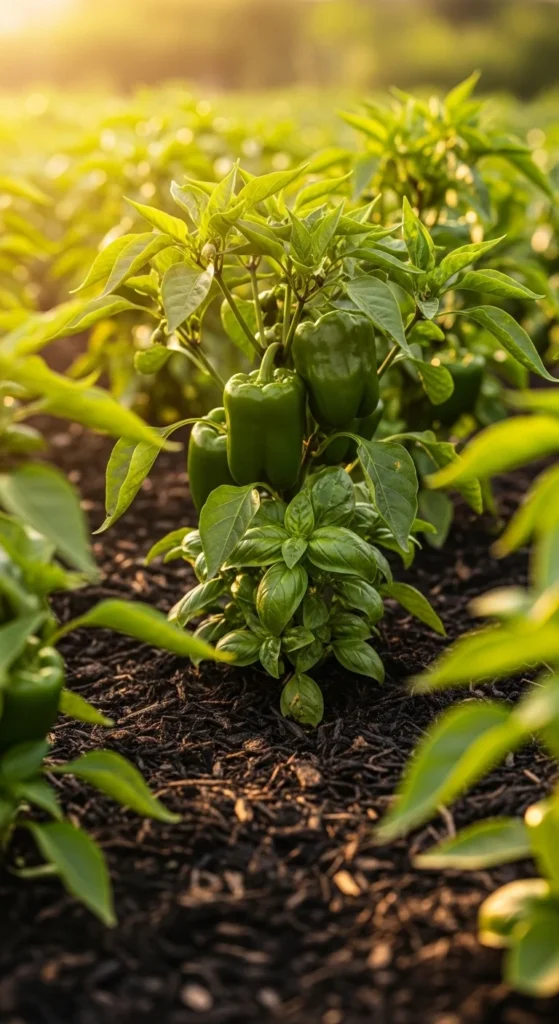
Peppers and basil like similar conditions.
Plant basil between pepper plants if spacing allows.
Keep basil trimmed so peppers still get airflow.
Budget tip: Pinch basil tips weekly. You’ll get more leaves without letting it get woody.
This pairing is perfect for small raised beds because both crops stay fairly compact.
You harvest basil early and often while peppers take their time.
When peppers start fruiting, basil is already paying you back in the kitchen.
Mulch helps both handle hot days.
It’s an easy pairing that fits beginner gardens without complicated planning.
19. Cucumbers + Nasturtiums for Edge Spill + Pest Distraction
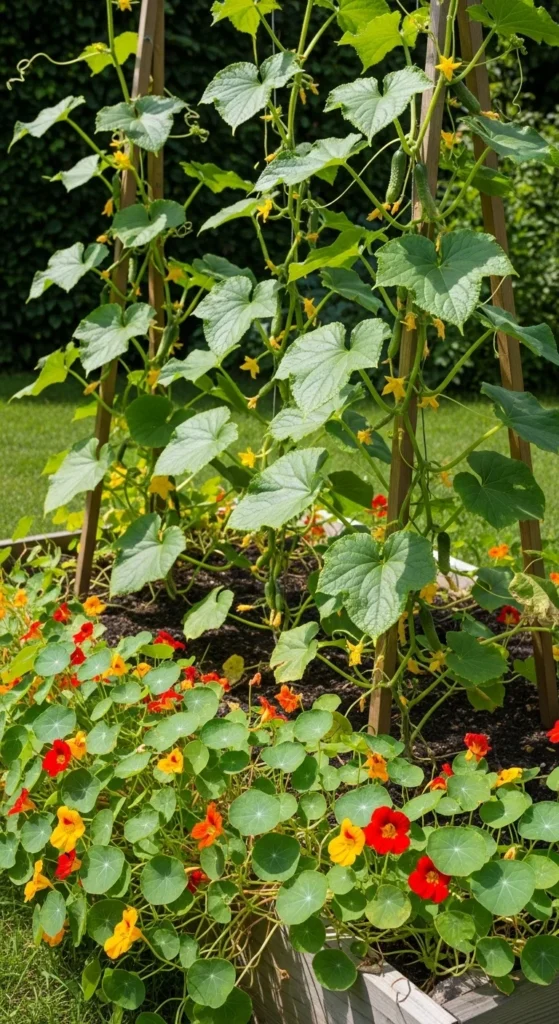
Cucumbers climb. Nasturtiums trail.
That makes them a good space-sharing duo.
Plant cucumbers near a trellis and nasturtiums along the front edge.
The nasturtiums can help distract pests like aphids by giving them another target.
Budget tip: Nasturtiums tolerate poorer soil, so plant them where your bed soil is thinner near the edge.
Keep cucumbers picked. Frequent harvesting keeps vines producing.
This combo makes a raised bed look full and productive without stuffing the center.
20. Onions + Lettuce for Tight Spacing and Staggered Harvests
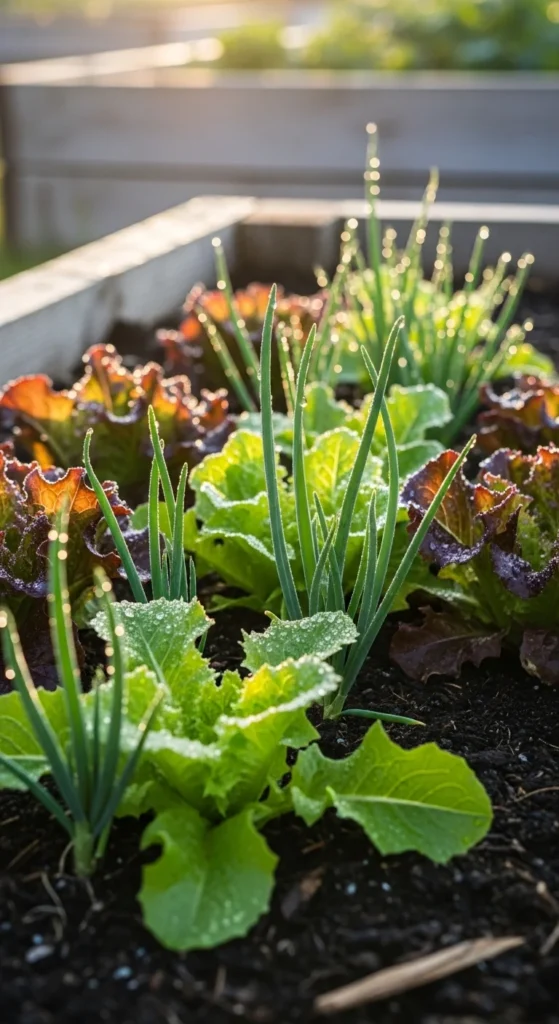
Onions and lettuce can share space well.
Lettuce grows quickly and can be harvested while onions keep growing.
Plant onions in a grid, then fill gaps with lettuce starts.
Budget tip: Use green onions for faster harvest and easier spacing.
Keep lettuce harvested to prevent crowding.
This pairing works well for spring and fall beds.
It also makes your bed look full early in the season, which helps shade soil and reduce weeds.
If it gets hot, lettuce may bolt. Pull it and replace with basil or another warm-season plant, leaving onions in place.
21. Avoid Tomatoes + Potatoes in the Same Bed
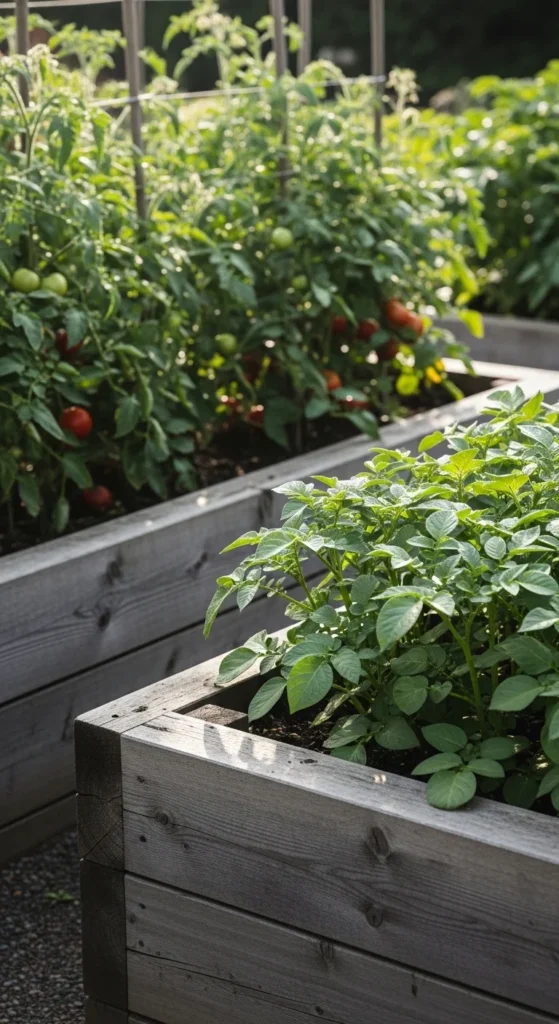
Some companions are “bad neighbors” because they share the same disease risks.
Tomatoes and potatoes are in the same plant family.
They can share blight problems, which can spread faster if they’re close together.
Keep them in separate beds when possible.
Budget tip: If you only have one bed, grow tomatoes in the bed and potatoes in grow bags.
Grow bags are cheap and easy to move.
Separation is a simple way to reduce the chance of losing both crops at once.
22. Keep Fennel Away From Most Vegetables
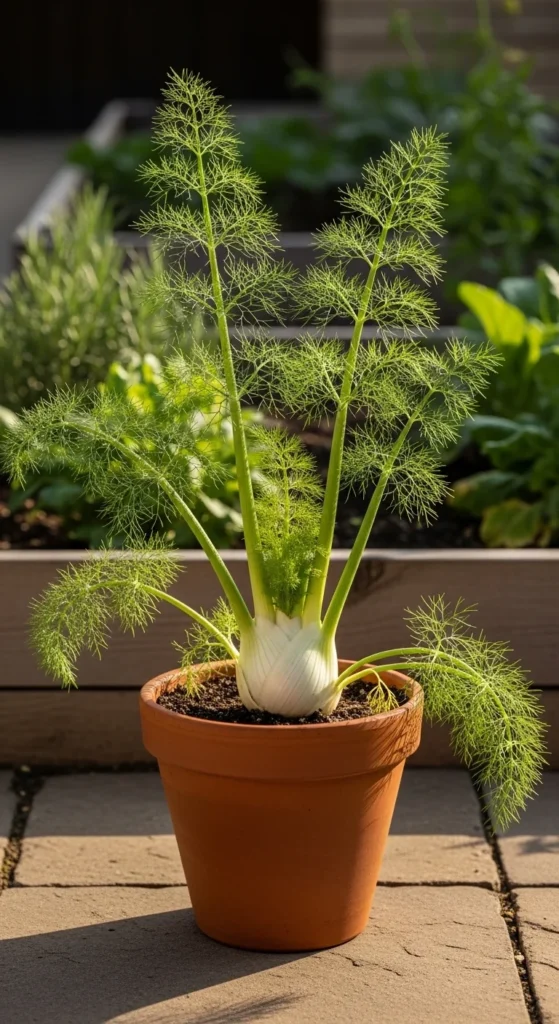
Fennel is famous for not playing well with many vegetables.
Many gardeners grow it on its own to avoid stunting neighbors.
If you love fennel, plant it in a pot or a separate corner.
Budget tip: A large bucket with drainage holes can be a fennel container.
You still get fennel fronds and bulbs without risking nearby crops.
This is one of those “easy wins” in companion planting: give fennel space and you avoid a lot of confusion later.
23. Make a Simple Companion Pairing Map for One Bed
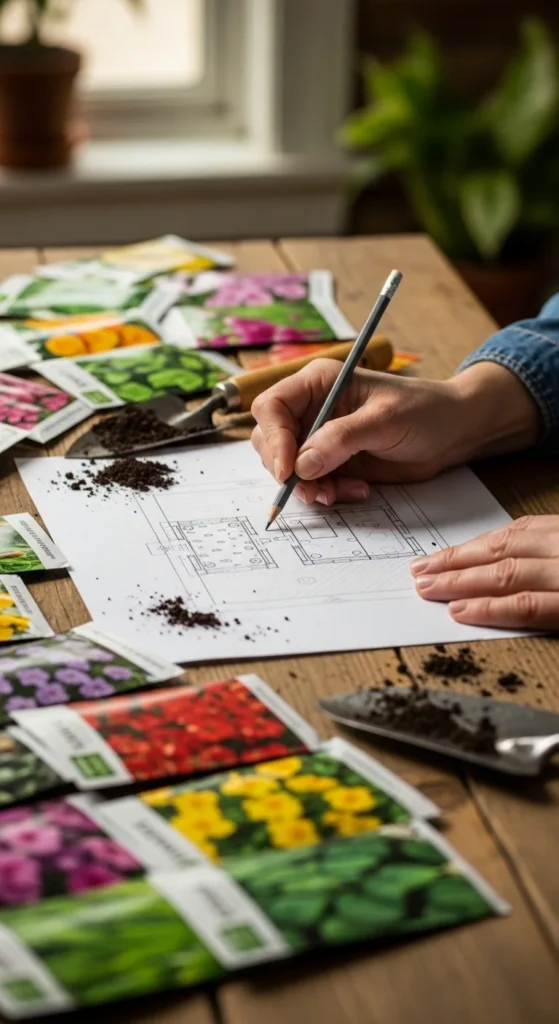
Conflicting advice makes companion planting feel messy.
Keep it simple by mapping one raised bed at a time.
Pick one main crop, then add two companions.
Example: tomatoes in the back, basil around them, marigolds along the edge.
Write the plan on paper and keep it for next year.
Budget tip: Use a free printable grid or draw a grid by hand.
When the season ends, jot down what worked and what didn’t.
This turns companion planting into a repeatable routine instead of random guessing.
Over a couple of seasons, your map becomes your personal “what works here” guide.
Conclusion
Companion planting works best when you keep it practical: pair crops that share watering and sun, add a few flowers to invite helpful insects, and avoid neighbors that share diseases. Start with one bed plan and a few simple combos like tomatoes with basil, carrots with onions, and a border of marigolds or nasturtiums. Small changes in layout can make your garden easier to manage and more rewarding to harvest.
Leave a Reply