

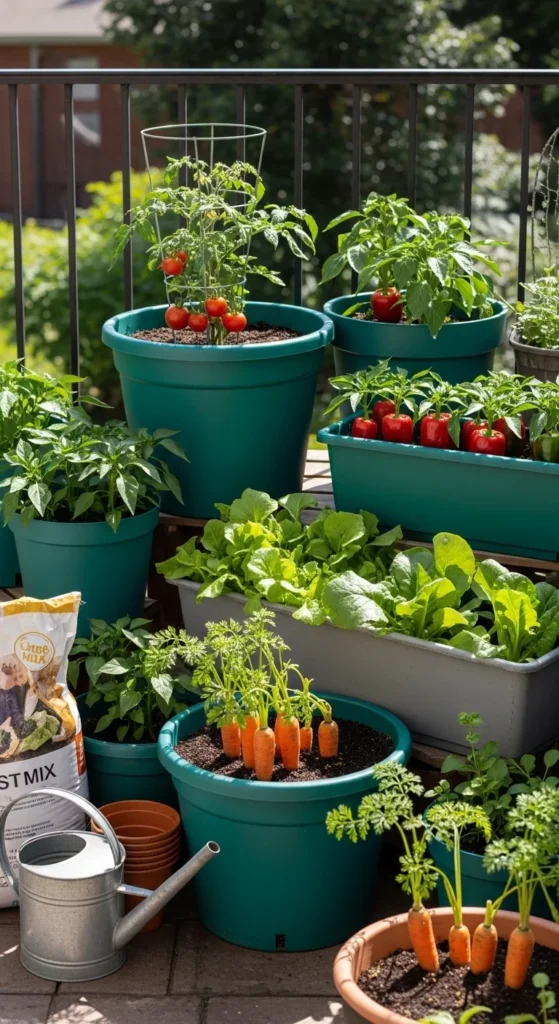
Container vegetables can be shockingly productive when you match the plant to the pot size, keep drainage fast, and use a light potting mix that stays airy. This style of gardening works on patios, balconies, and small yards because you can control soil quality, move pots to chase sun, and avoid weeds from the ground. Start with quick greens for fast wins, then add compact fruiting plants once you learn your watering rhythm. Below are 23 easy vegetables that do well in containers, plus simple, budget-friendly ways to get big harvests without crowding your space.
1. Lettuce for Non-Stop Cut-and-Come-Again Salads
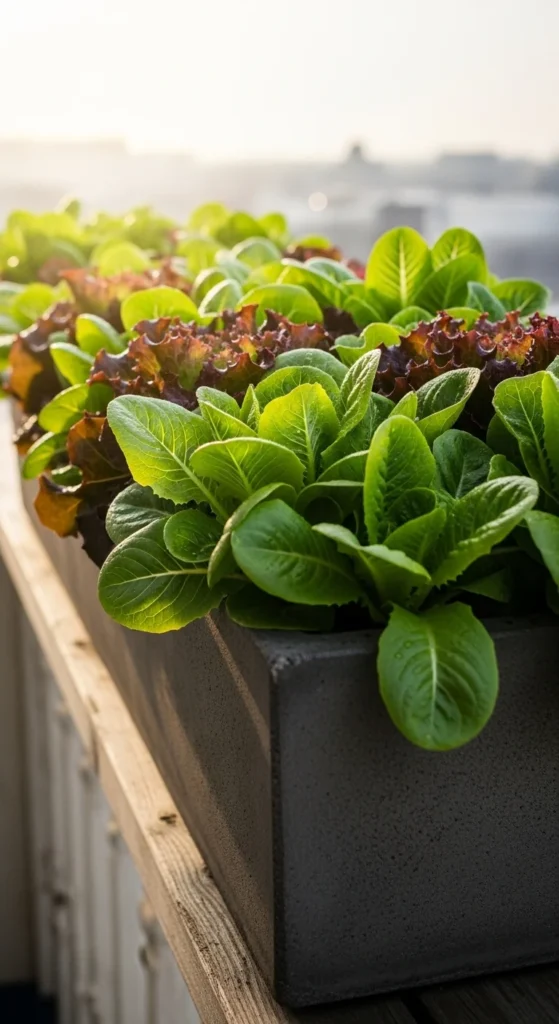
Lettuce is one of the easiest container vegetables. It grows fast, has shallow roots, and doesn’t demand huge pots. A 2-gallon container works, but a long trough is even better because you can sow a wide band of seed. Use potting mix and keep it evenly moist.
Plant thickly. Then harvest by cutting outer leaves or snipping the top third. Leave the base. You’ll get regrowth for weeks. If your space gets hot, place lettuce where it gets morning sun and afternoon shade. That slows bolting.
Budget tip: skip fancy planters. Use a storage tote with plenty of drainage holes and a catch tray underneath. Add a light mulch layer so the top doesn’t dry out too fast.
For steady harvests, reseed a small section every two weeks. This keeps salads coming even when one batch slows down. Lettuce is also a great “confidence crop” because you’ll see results quickly and you can harvest in small amounts whenever you cook.
2. Spinach for Quick Greens in Cool Weather
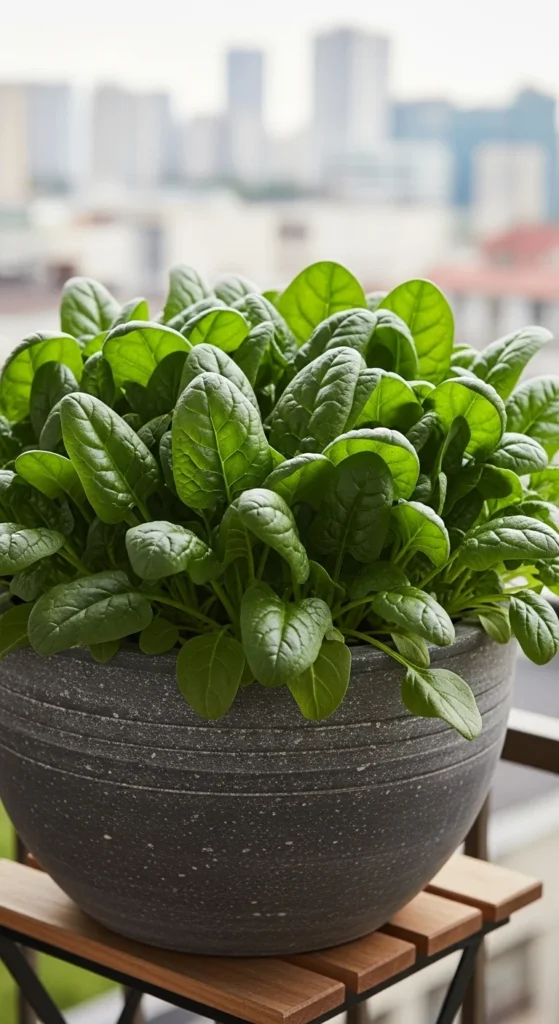
Spinach loves containers because you can control soil moisture and keep it out of muddy ground. Use a 2-gallon pot or wider container so you can plant a lot of seedlings. Spinach grows best in cooler temperatures, so it’s perfect for early spring or mild seasons.
Sow seeds thickly and thin lightly. Harvest outer leaves first and let the center keep growing. If heat arrives, move the pot into partial shade. That small move can extend the harvest.
Budget tip: reuse potting mix season to season by mixing in compost and a handful of perlite. Spinach doesn’t demand heavy feeding, but it likes consistent moisture and decent soil structure.
Water in the morning. Containers dry fast, but soggy soil can still happen if drainage is poor. Make sure your pot has holes and doesn’t sit in standing water. Spinach gives fast results, and it pairs well with lettuce in the same “greens zone” of your balcony or patio.
3. Kale for Long Harvests in Small Pots
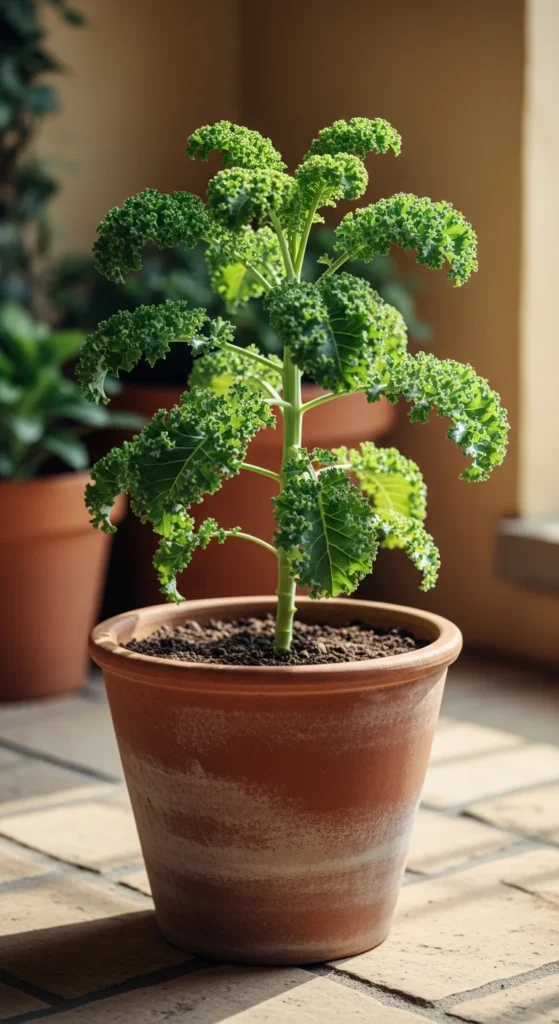
Kale is tough, forgiving, and productive. A 2–3 gallon pot can grow one strong plant that you harvest for months. Pick outer leaves first. Keep the center intact so it keeps pushing new growth.
Kale handles cool weather well. In mild climates, it can keep producing for a long season. If pests show up, rinse leaves and remove damaged ones. Containers make it easy to inspect and act fast.
Budget tip: grow kale from seed. One packet gives lots of plants. Start a few, keep the best one in a pot, and share extras.
Use potting mix with compost. Feed lightly every couple weeks if leaves look pale. Add mulch to stabilize moisture. Kale is also a great “space-saver” because one pot can produce repeated harvests without constant replanting.
4. Swiss Chard for Colorful, Repeat Harvests
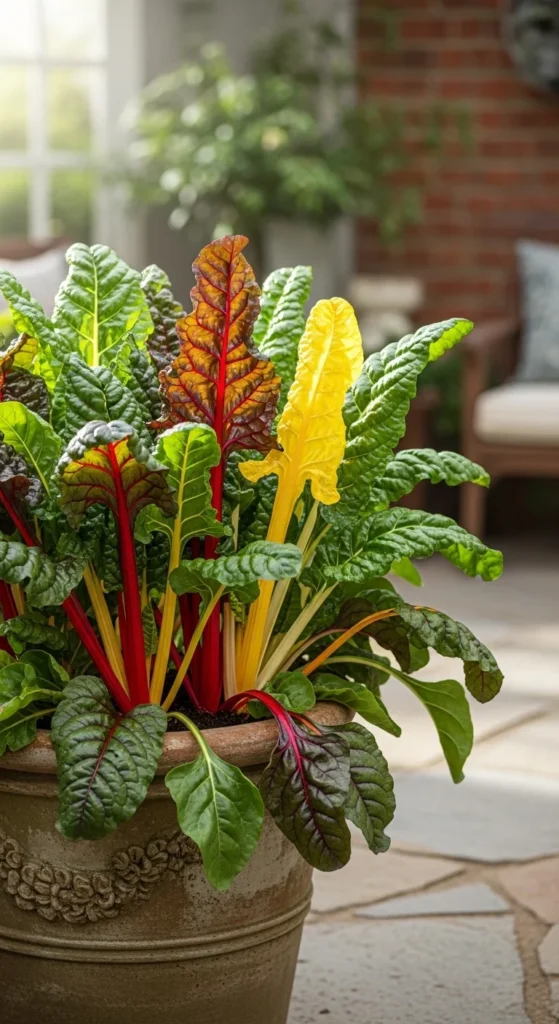
Swiss chard is a container superstar. It regrows after cutting and handles heat better than many greens. A 2–3 gallon pot is enough for one or two plants depending on variety.
Harvest outer stalks first. Leave the inner ones. You can keep cutting for months. Chard also looks great, which matters on balconies where your garden is part of your living space.
Budget tip: pair chard with a simple pebble top mulch. It keeps soil from splashing on stems and makes watering less messy.
Chard likes steady moisture. If your balcony is windy, cluster pots to reduce drying. Feed every couple weeks with a mild liquid fertilizer to keep growth steady. If you want one plant that keeps giving without constant reseeding, chard is a strong pick.
5. Cherry Tomatoes in 5-Gallon Pots for Heavy Yields
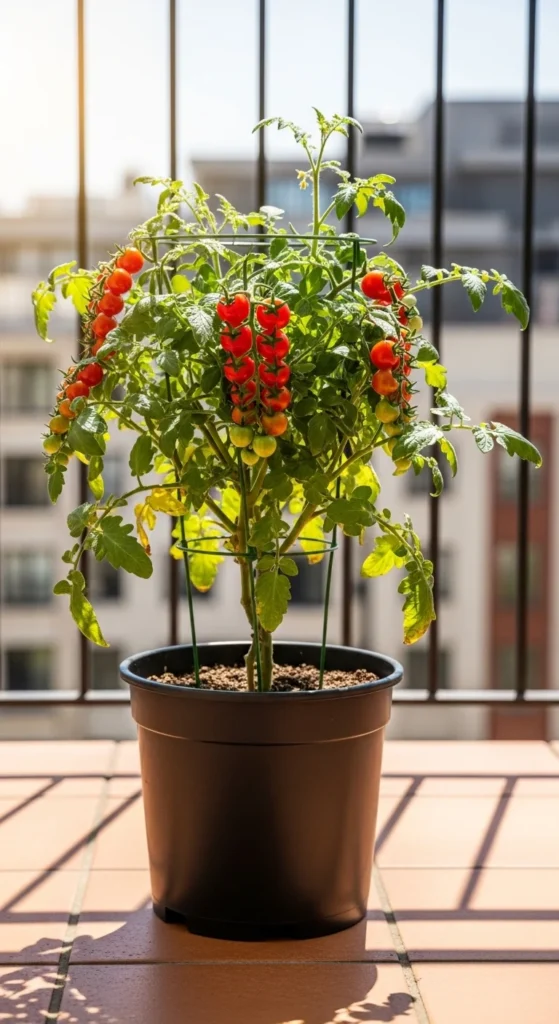
Tomatoes can produce a lot in containers if the pot is big enough. Aim for 5 gallons or more for one plant. Choose dwarf, patio, or compact varieties so the plant fits your space.
Use potting mix, not garden soil. Add compost. Set a cage or stake early. Water deeply and consistently. Containers dry quickly, and uneven watering leads to stressed plants.
Budget tip: use a 5-gallon bucket with many drainage holes. Place it on a saucer and empty excess water after heavy rain. Add mulch to slow drying.
Feed every two weeks once the plant starts flowering. A simple schedule matters more than fancy products. If you have 6–8 hours of sun, a single cherry tomato pot can supply salads and snacks for weeks.
6. Peppers in Warm Containers for Steady Picking
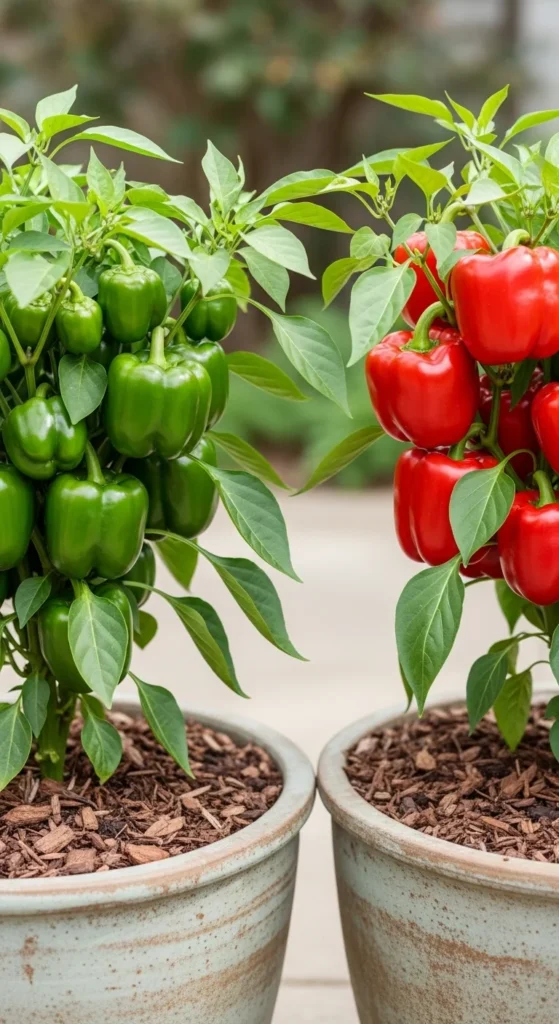
Peppers like warmth, and containers warm up faster than ground soil. Use a 3–5 gallon pot per plant. Compact varieties fit best for small patios and balconies.
Water when the top inch is dry. Add mulch. Feed lightly every two weeks during heavy growth. If plants get top-heavy, use a small stake.
Budget tip: grow two pepper plants instead of one huge tomato if your space is windy. Peppers stay shorter and are easier to manage.
Place peppers where they get maximum sun. If afternoons are extremely hot, give them a bit of shade late in the day to prevent leaf scorch. With good sun, peppers can produce for a long stretch.
7. Radishes for 30-Day Fast Wins
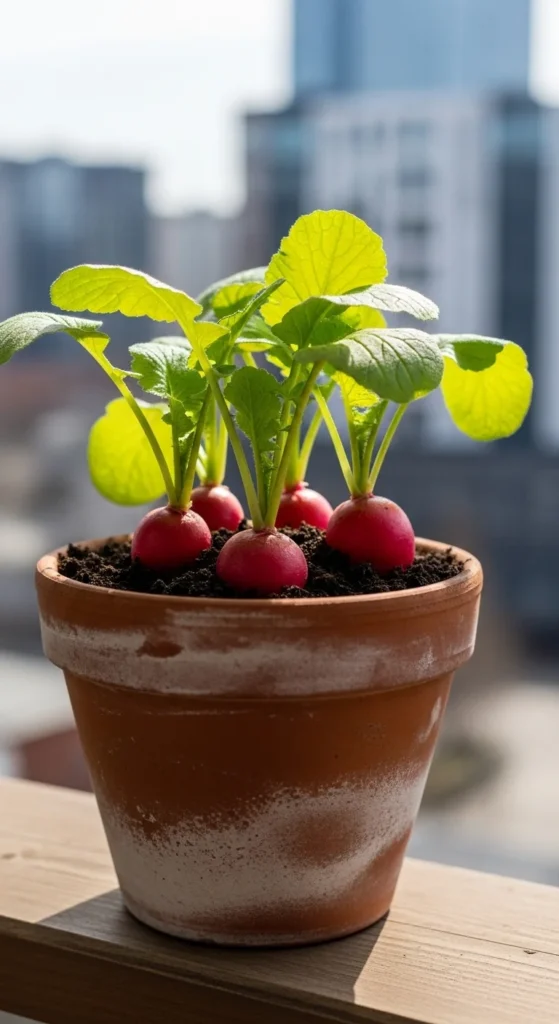
Radishes are quick and fun. Many types mature in about a month. A 1-gallon pot works. Use potting mix and keep it evenly moist. Dry spells can make radishes hot and woody.
Plant a small batch every two weeks. That gives steady harvests. Radishes also work as a “gap crop” between slower plants, but they’re easy enough to grow as their own pot.
Budget tip: use a recycled food container with holes drilled in the bottom. Add a saucer and you’re set.
Radishes are great for beginners because the timeline is short. You’ll learn watering and soil management quickly, and you’ll get a harvest fast.
8. Carrots in Deep Pots for Straight Roots
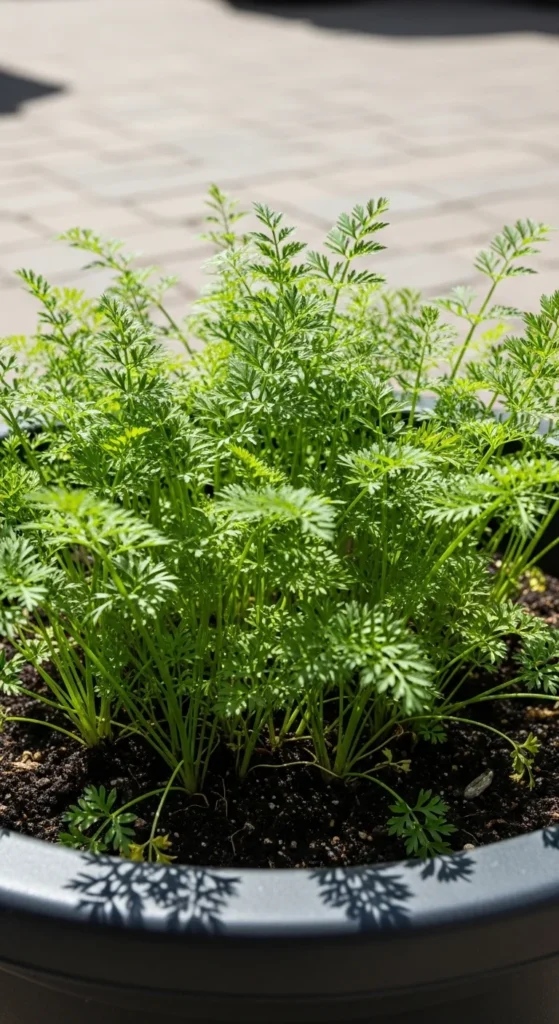
Carrots can grow well in containers if the pot is deep enough. Aim for 12 inches of soil depth. Use a tall pot, a grow bag, or a deep bucket with drainage holes.
Use light potting mix. Avoid rocks and clumps. Sow seeds thinly and keep soil moist until germination. Thin seedlings so roots have room.
Budget tip: choose short carrot varieties if you don’t have extra-deep containers. You’ll still get great flavor and good harvests.
Carrots hate drying out during germination, so mist lightly or cover the surface with a thin fabric until sprouts appear. With the right pot depth, container carrots can be surprisingly straight and clean.
9. Bush Beans for Compact, Prolific Pods
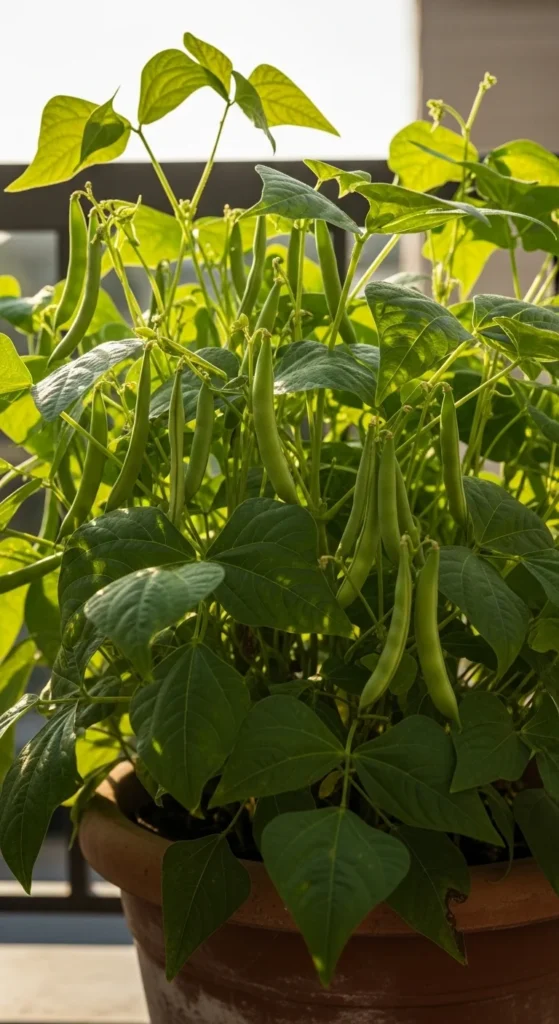
Bush beans work well in containers because they don’t require a tall trellis. A 5-gallon pot can grow a small cluster. Beans also help soil by adding nitrogen over time.
Plant seeds a few inches apart. Keep soil moist during germination. Once established, water deeply when the top layer dries. Harvest often to keep production going.
Budget tip: beans are cheap from seed and grow quickly. They’re one of the best “value crops” for small spaces.
If you want more yield without adding more floor pots, place bean containers near the balcony edge and let foliage face outward. That keeps your walkway clear.
10. Peas With a Simple Pot Trellis
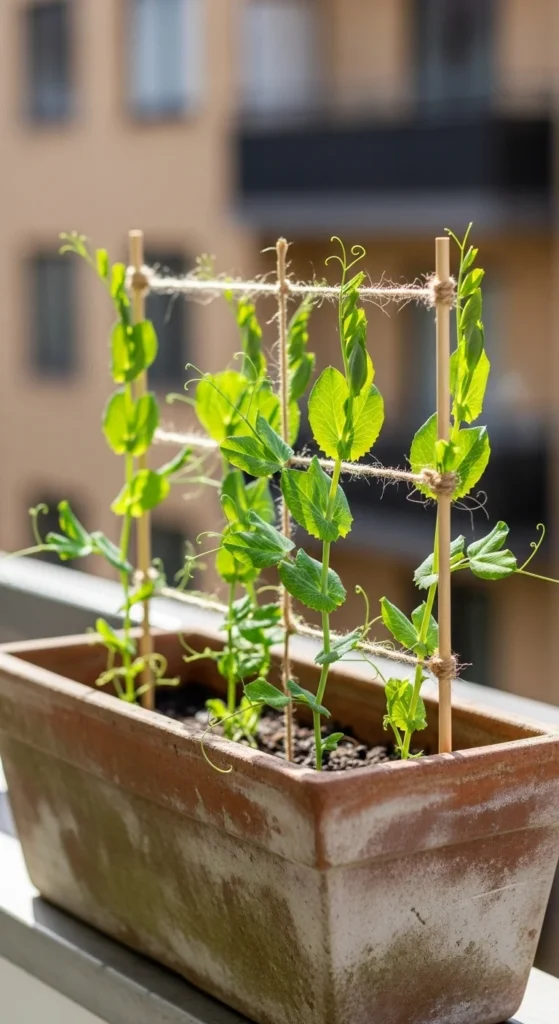
Peas are great for containers because they grow upward. A 2–3 gallon pot works with a trellis. Use twine, netting, or a small bamboo frame tied to the railing.
Peas prefer cooler seasons. Plant early or in mild weather. Keep soil evenly moist. Harvest often so plants keep producing.
Budget tip: make a trellis with bamboo sticks and kitchen twine. It’s cheap and removable.
Peas give you a “vertical harvest” which is perfect for balconies. Even a small pot can produce a good amount when vines climb instead of sprawl.
11. Green Onions for Endless Snips
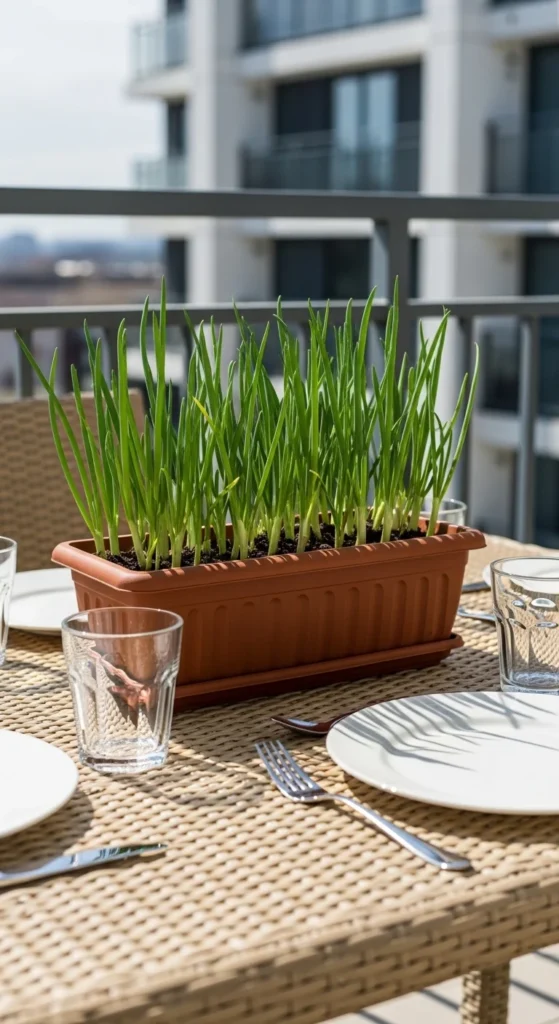
Green onions are easy and space-efficient. You can grow from sets, seedlings, or even regrow from kitchen scraps. A shallow container works because roots aren’t deep.
Plant close together. Water lightly but consistently. Harvest by pulling whole onions or snipping tops as you cook.
Budget tip: regrow store-bought green onion bases in water, then plant them. It’s a simple beginner win.
Green onions are ideal for small kitchens because you’ll use them often, and they keep producing with minimal care.
12. Onions From Sets in Medium Pots
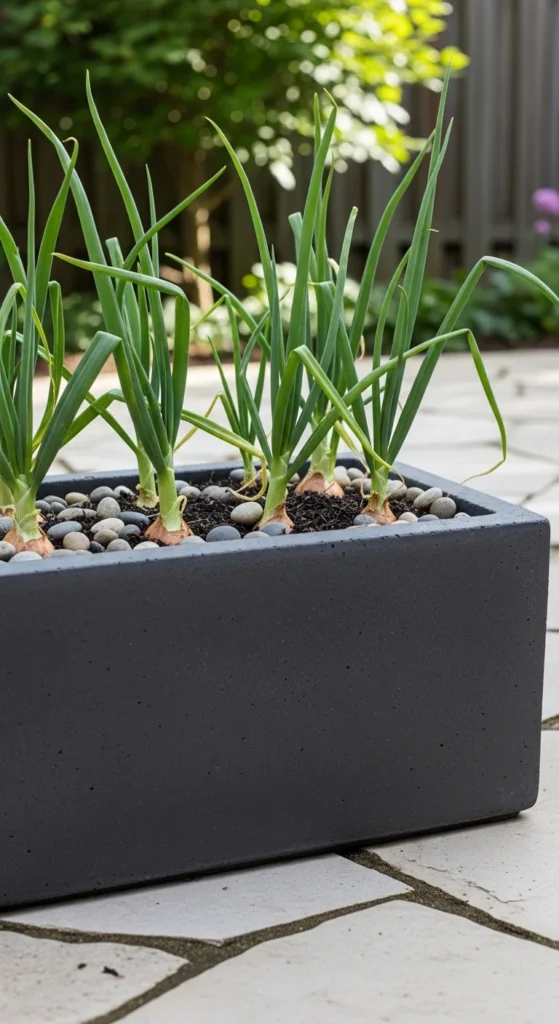
Onions grow well in containers because you can keep soil loose and well-drained. Use a wider pot so you can plant several sets. Shallow depth is fine, but a stable container helps prevent tipping.
Keep soil moist but not soggy. Feed lightly every couple weeks. Harvest when tops start to fall over, depending on type.
Budget tip: buy sets instead of seeds for faster results. Sets make onions beginner-friendly.
Onions are also a good choice if your area has heavy rain. With containers, drainage is easier to manage than in-ground beds.
13. Eggplant for Patio “Nightshade” Success
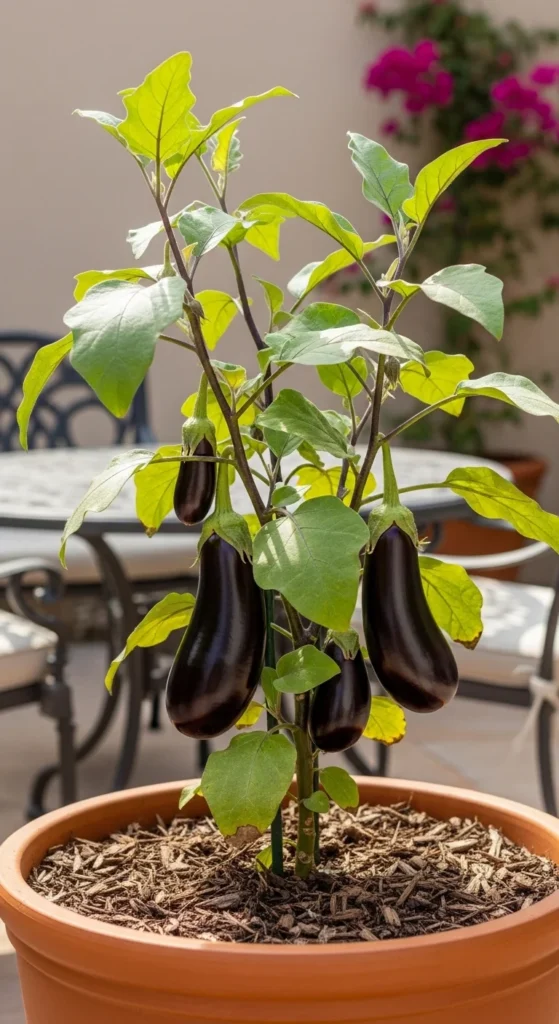
Eggplant can be productive in containers if it has warmth, sun, and enough soil volume. Use a 5-gallon pot for one plant. Choose compact varieties when possible.
Keep soil evenly moist. Add mulch. Feed lightly every two weeks once flowering begins. Stake the plant because fruit can make stems bend.
Budget tip: if you can only grow one “big” plant, eggplant is a good alternative to tomatoes. It often stays tidier and still produces well.
Eggplant loves heat, so a sunny balcony can be a great match.
14. Compact Cucumbers With Vertical Support
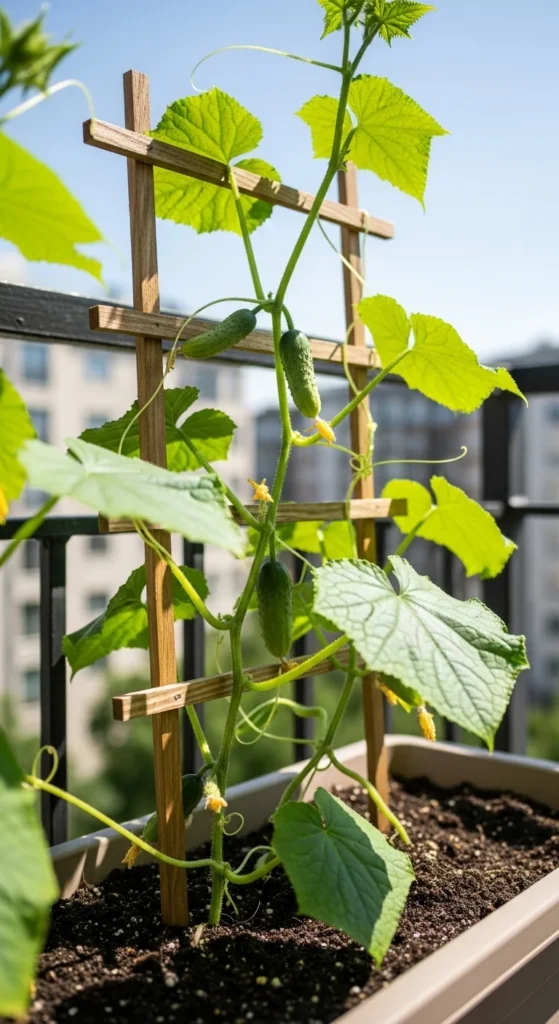
Cucumbers in containers work best when they climb. Use a 5-gallon pot and a trellis. Choose compact or “patio” cucumber varieties if possible.
Water consistently. Cucumbers drink a lot in warm weather. Add mulch to reduce dry swings. Harvest frequently to keep vines producing.
Budget tip: a simple net trellis tied to a railing is enough. No drilling required.
Vertical cucumbers save floor space and keep fruit cleaner. They’re a great fit if you want a high-yield plant in a small footprint.
15. Zucchini Bush Types in Large Pots
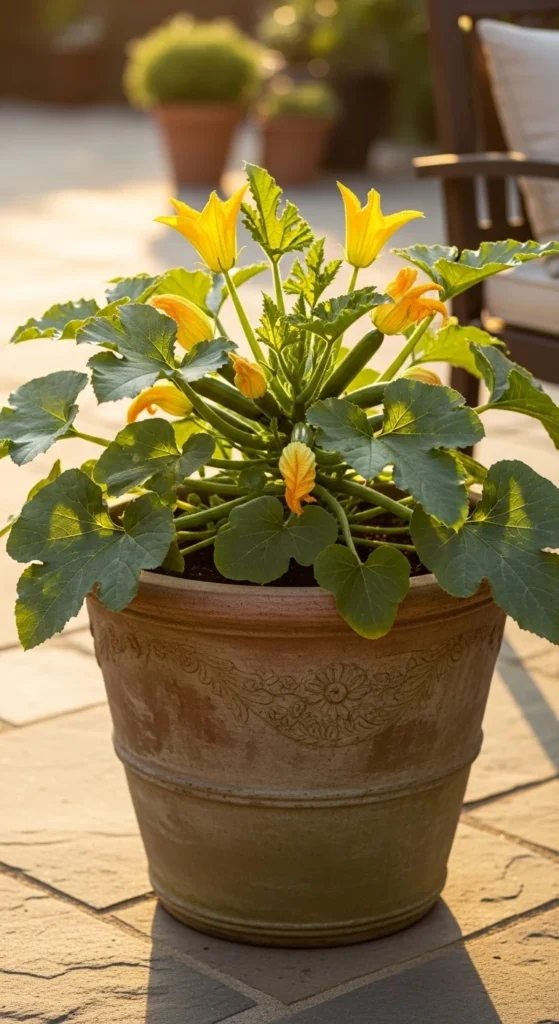
Zucchini can be grown in containers, but it needs room. Use a large pot, often 10 gallons or more. Choose bush varieties so the plant stays more compact.
Water deeply. Add mulch. Zucchini grows fast and can dry out quickly in a pot. Harvest young for best texture.
Budget tip: grow one zucchini plant only if you have space. One healthy plant can produce plenty. It’s better than squeezing it into a small pot and getting weak growth.
If your balcony is small, consider zucchini only if you can place the pot in a corner and keep your walkway clear.
16. Potatoes in Fabric Sacks for Easy Hilling
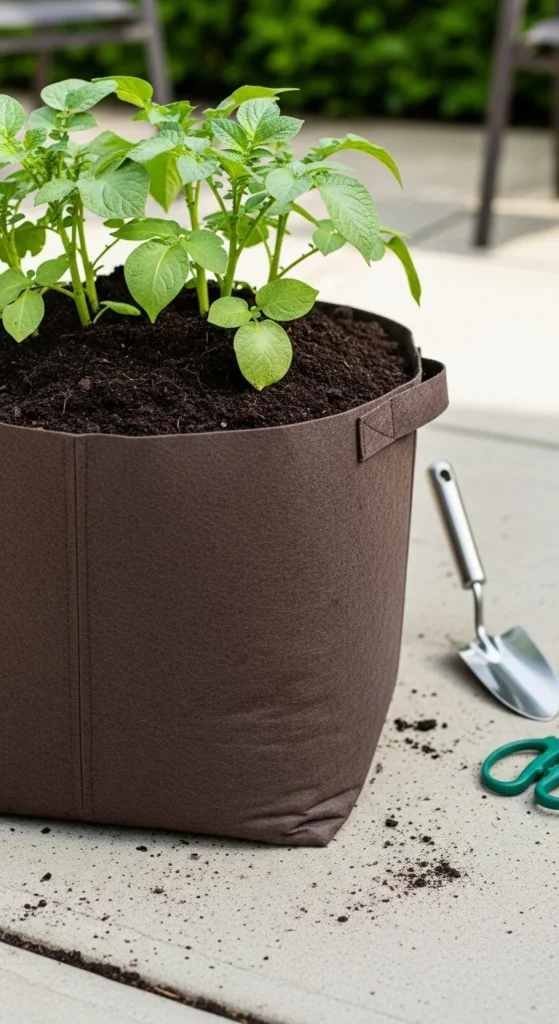
Potatoes are fun in containers because harvest is simple. Use a fabric sack or deep pot. Add soil as stems grow to “hill” them. This encourages more tubers.
Water consistently. Potatoes don’t like drying out. Ensure drainage is strong so tubers don’t rot.
Budget tip: use a reusable fabric grow bag. At harvest, dump the bag and collect potatoes without digging.
Potato sacks work well in patios because they’re flexible and easy to move if sun patterns change.
17. Beets for Roots and Greens in One Pot
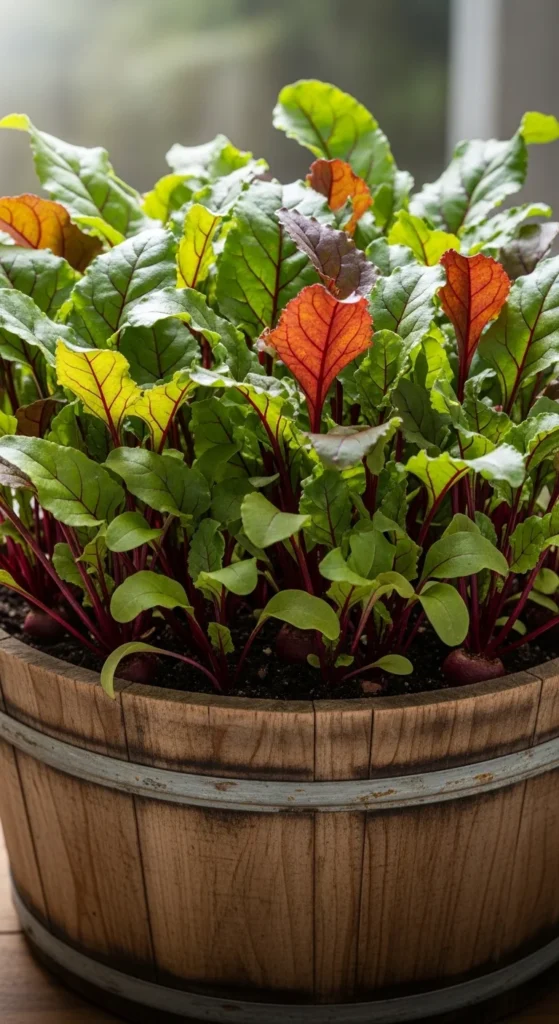
Beets give you two harvests: greens and roots. A 2–3 gallon pot works. Use potting mix and keep moisture steady.
Thin seedlings so roots form well. Harvest greens lightly early, then let roots size up. Beets also fit nicely into succession planting because they grow on a reliable timeline.
Budget tip: plant beets in a wide pot so you can grow a small cluster without crowding.
Beets are also less fussy than carrots, making them a good “root crop starter.”
18. Turnips for Fast Cool-Season Roots
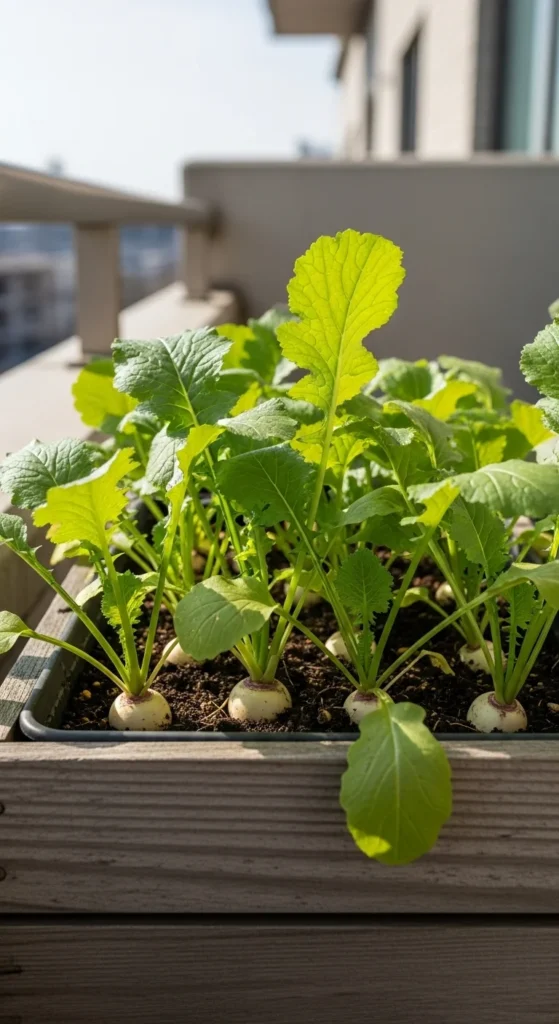
Turnips grow quickly and handle cooler seasons. A medium pot works. Keep soil moist and harvest before roots get too woody.
Budget tip: sow a small batch every couple weeks in cool weather for steady harvests.
Turnips are a good choice when summer crops slow down. They keep your containers productive in mild seasons.
19. Arugula for Spicy Salad Pots
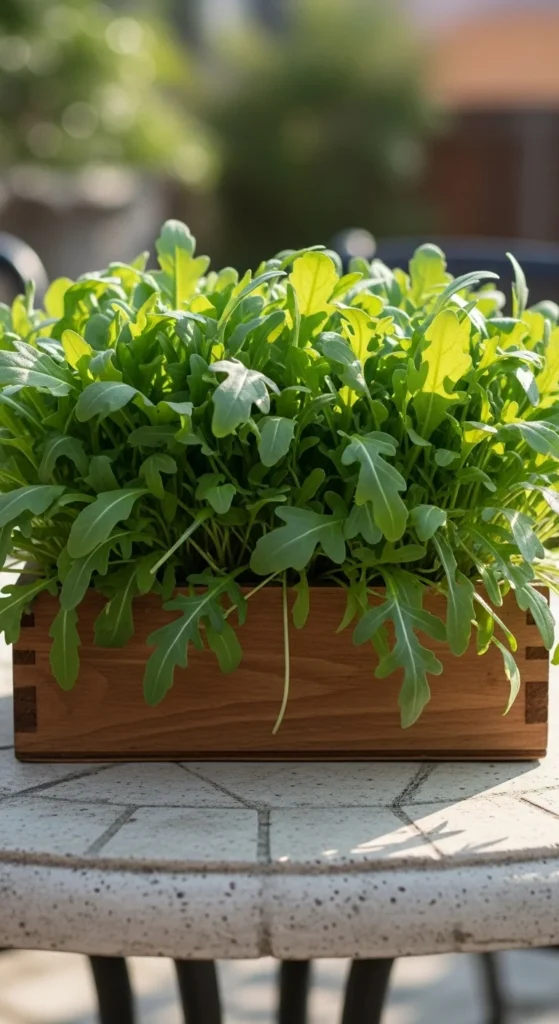
Arugula grows quickly and doesn’t require a large pot. A shallow container works. Harvest often to keep leaves tender.
If the weather is hot, move it to partial shade. Arugula can bolt fast in heat, but containers make it easy to relocate.
Budget tip: grow from seed. It’s cheap and quick, and you can sow small patches repeatedly.
Arugula is perfect for small-space gardeners who want frequent salad harvests.
20. Okra for Hot Balconies and Tall Pots
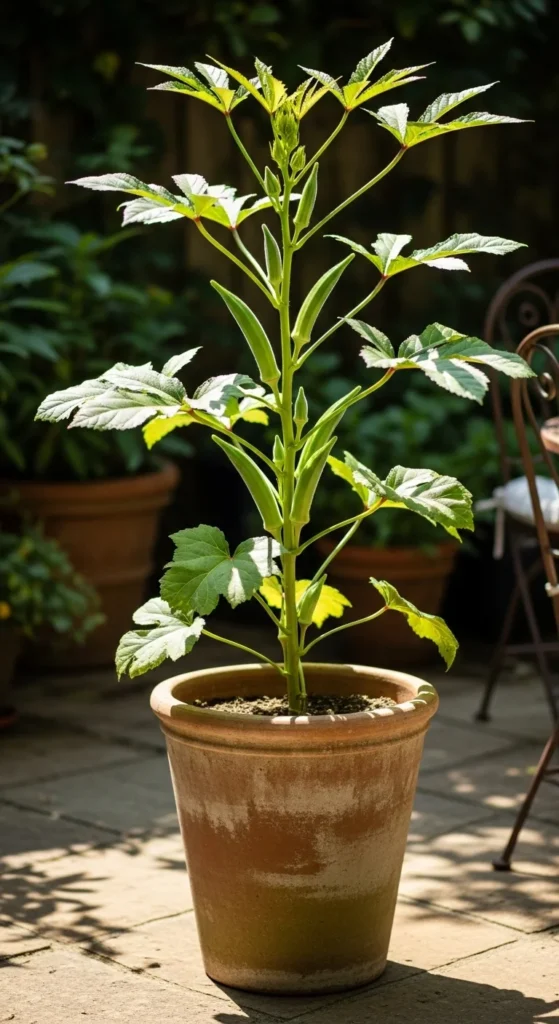
Okra loves heat. If your balcony gets hot sun, okra can do well. Use a larger pot with good depth because the plant can grow tall. Stake if needed.
Water deeply. Feed lightly every couple weeks during growth. Harvest pods young so they stay tender.
Budget tip: grow one okra plant as a “feature edible.” It’s tall, productive in heat, and adds a garden look to small spaces.
Okra is a smart pick if your summer sun is intense and other greens struggle.
21. Garlic Greens in Containers for Easy Flavor
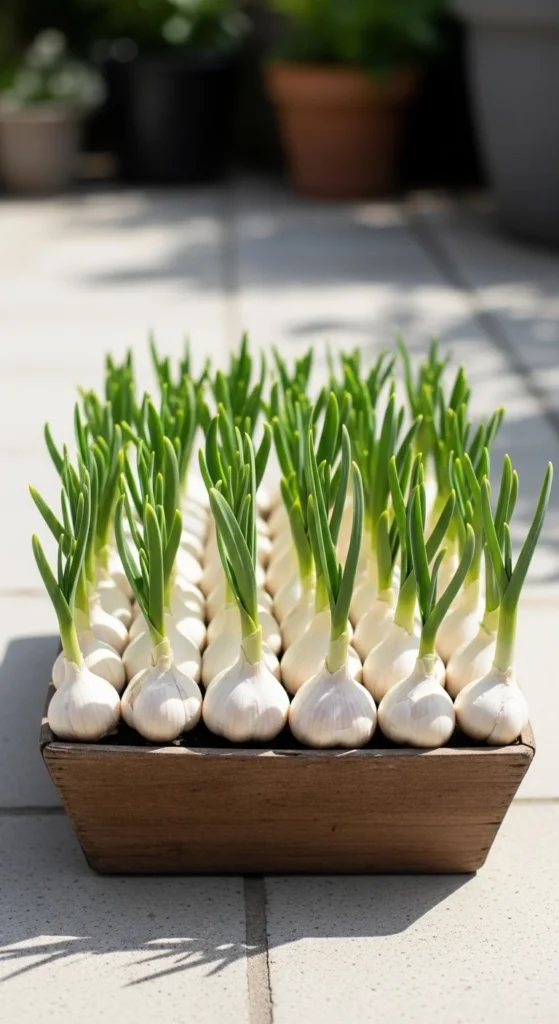
You can grow garlic for greens in containers even if you don’t wait for full bulbs. Plant cloves a few inches apart in a medium pot. Harvest green shoots as a mild garlic flavor for cooking.
Budget tip: use leftover garlic cloves from the kitchen. Plant them and snip greens as they grow.
This is a simple, low-effort container crop that adds a lot of flavor to meals.
22. Celery “Stalk Starter” Pot Project
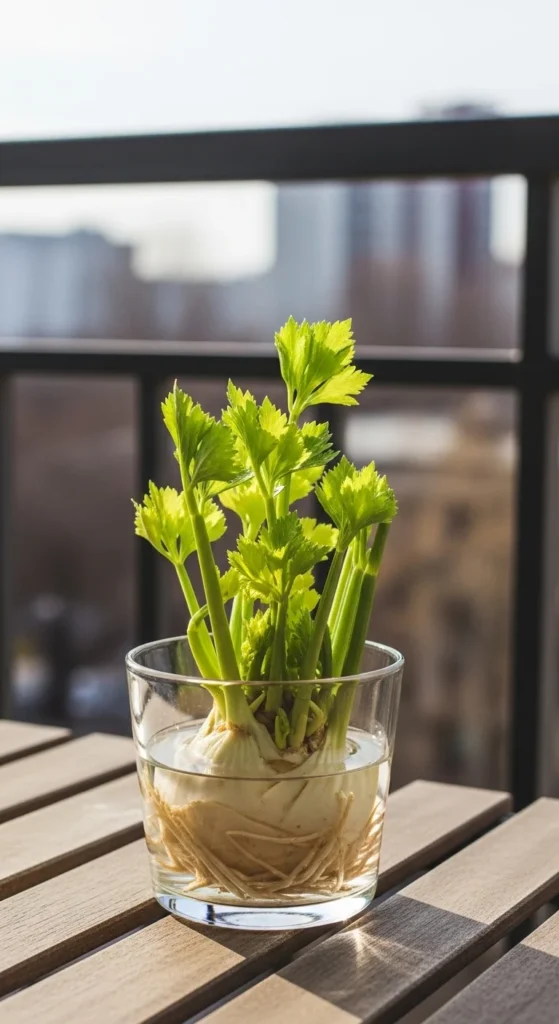
Celery can be started from a kitchen base. Root it in water, then plant into a container with potting mix. It won’t always form huge grocery-store stalks, but you can harvest tender young stems and leaves.
Keep soil moist. Celery likes consistent water. Place it in moderate sun rather than blazing heat.
Budget tip: this project costs almost nothing and is a fun way to grow a crop from scraps.
Even if you harvest mainly leaves, celery foliage is great in soups and salads.
23. Mixed Herb Companion Pots Around Veggies
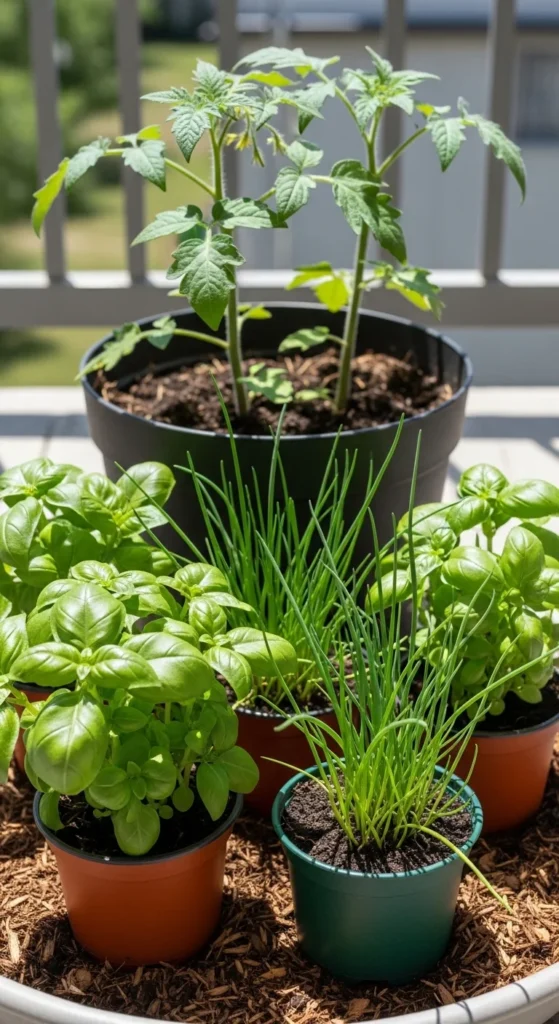
Herbs are container-friendly and pair well with vegetables. Keep basil near tomatoes, chives near greens, and parsley near peppers. You don’t have to cram them into the same pot. Just cluster pots together.
This setup also helps with care. You can water the “thirsty veggie zone” and then quickly check herb pots nearby.
Budget tip: start herbs from seed or propagate from cuttings. Herbs can fill pots quickly without big spending.
Herb companion pots increase harvest variety in small spaces. Even a tiny balcony garden feels more useful when you can pick greens, a few veggies, and fresh herbs for one meal.
Conclusion
Container vegetable gardening works when you match plants to pot size, keep drainage fast, and use potting mix that stays airy. Start with quick greens like lettuce, spinach, and arugula for early wins. Add compact fruiting plants like dwarf tomatoes and peppers once you learn your watering rhythm. Use vertical support for peas and cucumbers to save floor space. With a few well-chosen pots and steady care, small patios and balconies can produce big, steady harvests.
Leave a Reply