

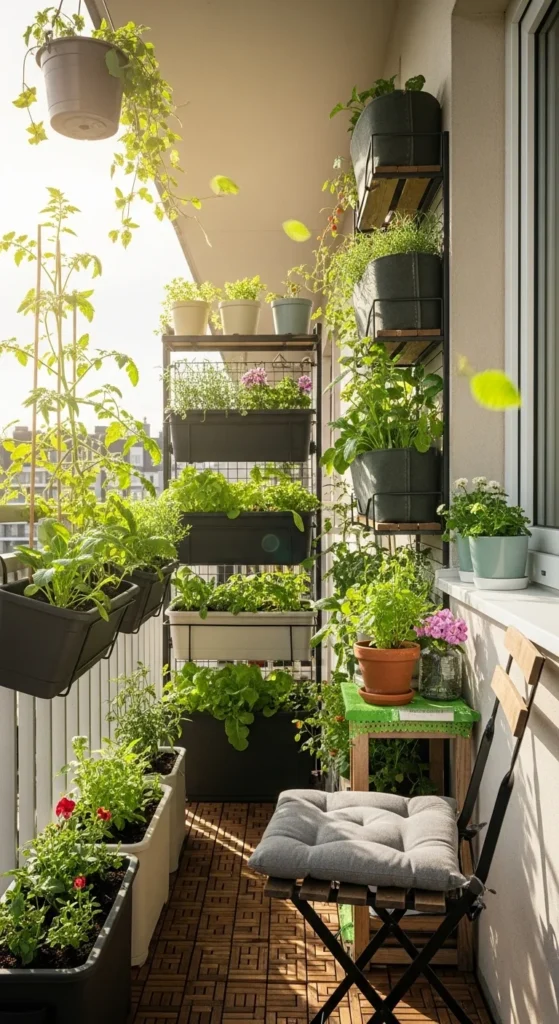
Balcony container gardening turns a small apartment outdoor space into a productive mini-garden. The trick is using vertical space, choosing lightweight containers, and matching plants to your sun exposure. With the right layout, you can grow herbs for daily cooking, salad greens for quick harvests, and even compact vegetables without crowding your walkway. These ideas focus on simple setups you can build with common items, easy watering routines, and smart plant choices that fit small balconies without feeling cramped.
1. Railing Planters for an Instant Edge Garden
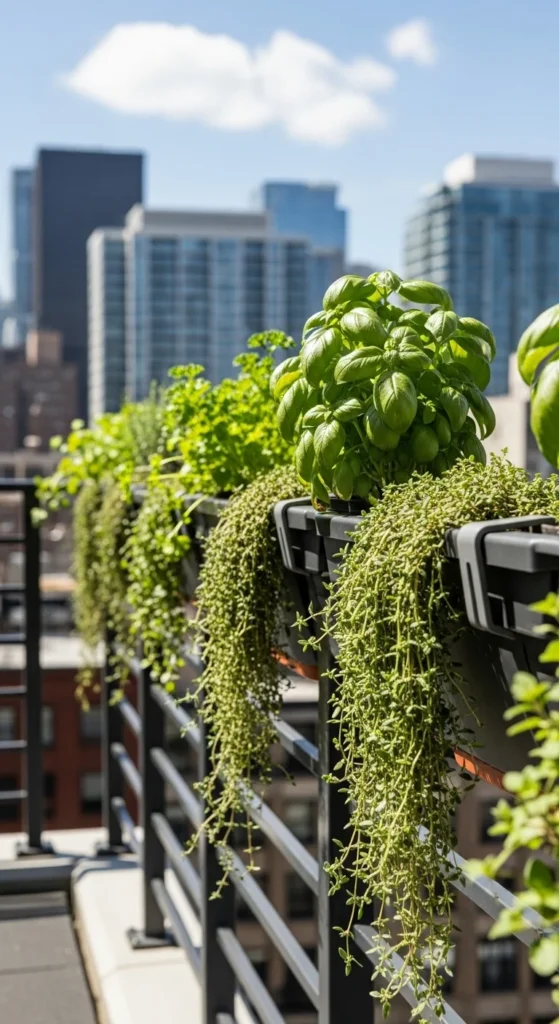
Railing planters turn the balcony edge into usable growing space. They also keep the floor clear, which matters in small apartments. Start with lightweight rail boxes or clip-on planters that fit your railing width. If drilling isn’t allowed, choose models that hook over the rail and tighten with hand screws.
Plant herbs first. Basil, parsley, chives, and mint handle containers well. Keep mint in its own pot so it doesn’t take over. Add trailing plants like oregano to soften the rail line.
Line planters with coconut coir or a thin mesh if soil falls through drainage holes. Water in the morning so leaves dry faster. In windy areas, group planters close together and add simple zip ties for extra security.
Budget tip: reuse sturdy plastic food tubs as inner liners, then place them inside nicer rail boxes. It saves money and makes cleanup easier. With rail planters, your balcony garden starts producing without taking up walking space.
2. Fabric Grow Bags for Lightweight Veggie Pots
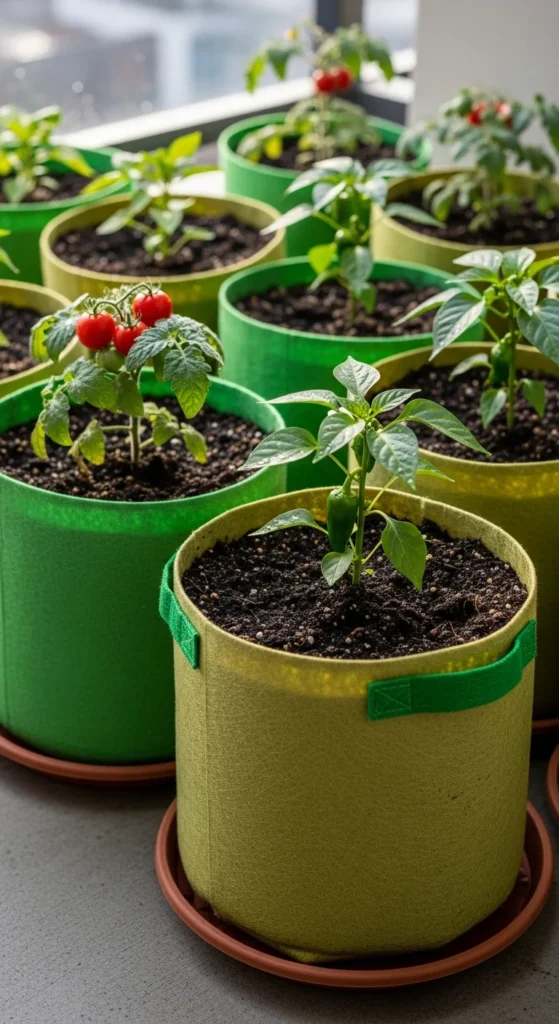
Fabric grow bags are a balcony favorite because they’re lighter than ceramic and drain quickly. The sides allow air to reach roots, which keeps plants from sitting in soggy soil after rain. For fruiting plants like tomatoes and peppers, choose 5-gallon or larger bags. For greens and herbs, smaller bags work fine.
Place bags on plant saucers to protect the balcony surface. If your balcony gets very hot, slide a piece of cardboard under the saucer to reduce heat transfer from concrete.
Use potting mix, not garden soil. Potting mix stays airy and avoids compaction. Add a handful of compost on top every few weeks to keep plants feeding steadily.
Budget tip: buy a multi-pack of grow bags and reuse them for several seasons. At the end of the season, empty the soil into a storage tote, wash the bags, and you’re ready for the next crop. Grow bags make vegetable gardening possible even when weight is a concern.
3. Vertical Shelf Rack to Triple Plant Count
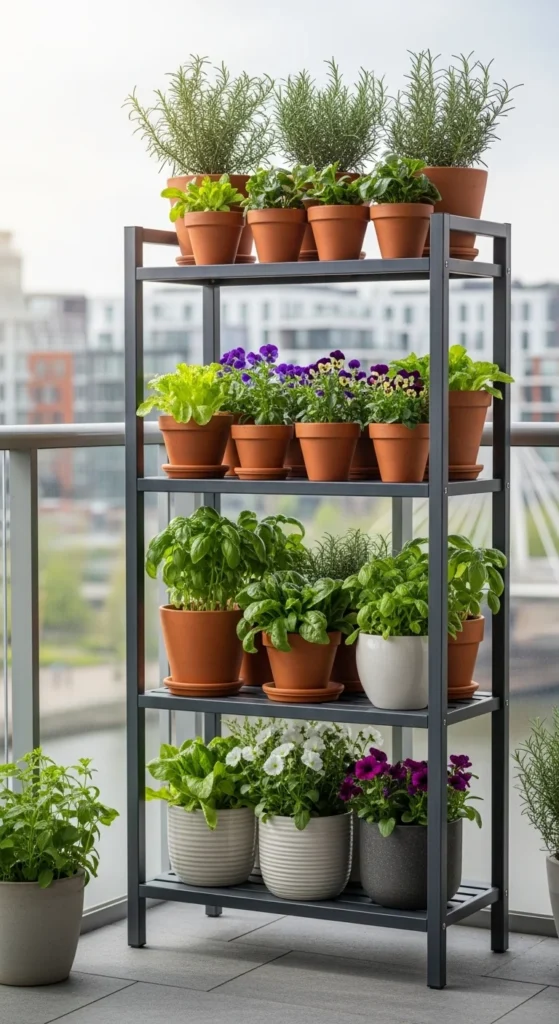
A vertical shelf rack multiplies your growing space without expanding your floor footprint. Pick a narrow shelf that fits your balcony width and leaves a clear walkway. Put heavier pots on the lowest shelf to keep it stable, and lighter pots on top.
Group plants by sun exposure. Put sun lovers like basil and cherry tomatoes on the brightest shelf. Put shade-tolerant greens like lettuce and spinach slightly lower.
To prevent water from dripping onto lower plants, use saucers or plastic trays under each pot. If you want a cleaner look, use one long tray per shelf. Water slowly so it doesn’t overflow.
Budget tip: thrift stores often have sturdy shelving units. You can also repurpose an old shoe rack. Add zip ties to secure it to the railing if wind is strong. A shelf rack turns a “few pots” balcony into a real mini-garden with room for herbs, greens, and compact vegetables.
4. Wall Pocket Planters for Herbs and Greens
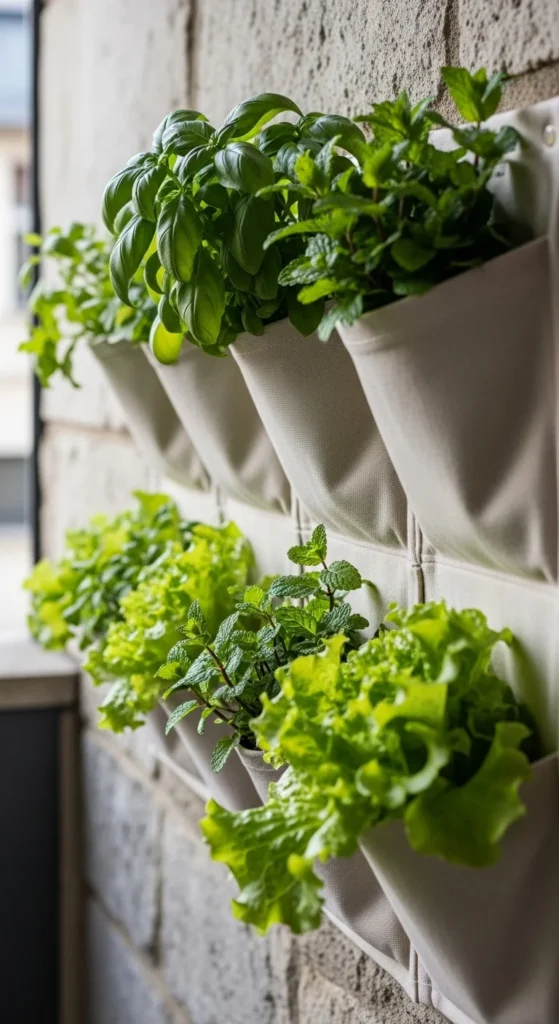
Wall pocket planters use vertical space and keep the floor open. They’re best for shallow-root plants like herbs, lettuce, and strawberries. Choose pockets with built-in liners or add a thin plastic liner to prevent water stains on the wall.
Plant one herb per pocket so roots don’t fight for space. Basil, cilantro, and parsley are easy starters. Add a small trailing herb like thyme to the bottom pockets.
Watering wall pockets takes practice. Use a small watering can with a narrow spout and water slowly. Place a tray or mat below to catch drips.
Budget tip: you can DIY wall pockets using hanging organizer fabric, but make sure it’s strong enough when wet. Wall planters are great for renters because they often hang from hooks rather than needing permanent fasteners. This setup works especially well when your balcony is narrow but your walls are open and sunny.
5. Self-Watering Containers for Busy Weeks
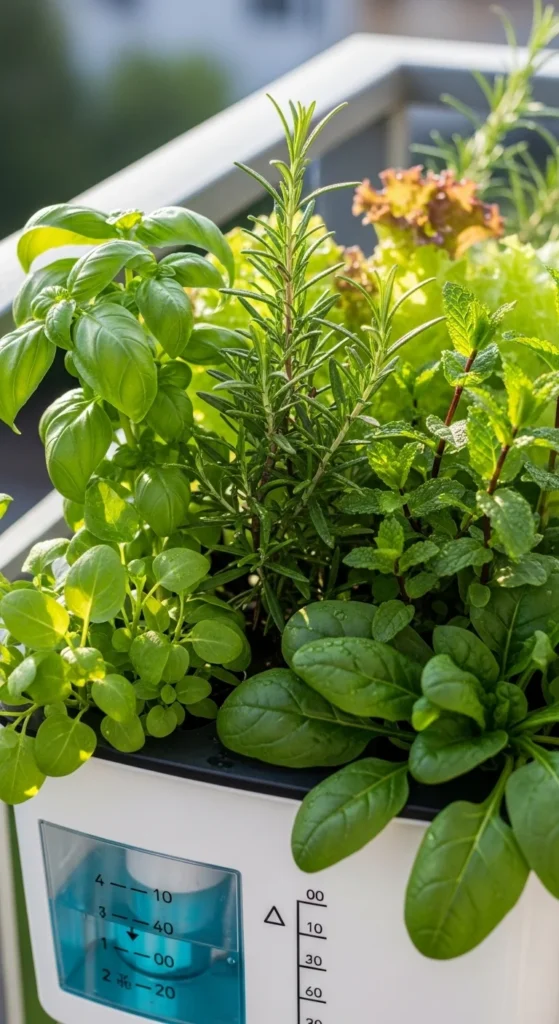
Self-watering pots reduce the daily stress of container gardening. Balconies dry out fast because wind and sun hit pots from all sides. A reservoir system gives roots steady moisture and keeps plants from wilting during hot afternoons.
Use self-watering pots for thirsty plants like basil, leafy greens, and cherry tomatoes. Fill the reservoir, then top-water once to settle the soil and start the wick action. After that, you mostly refill the reservoir.
Budget tip: DIY a self-watering pot with two stacked buckets. Drill holes in the inner bucket, add a cotton rope wick, and fill the bottom bucket with water. It’s simple and cheap.
Keep an eye on algae in clear reservoirs. Wrap them with fabric or tape to block light. If you travel, this is one of the easiest ways to keep plants alive without asking someone to water daily.
6. Sun-Mapping Corner to Pick the Right Plants
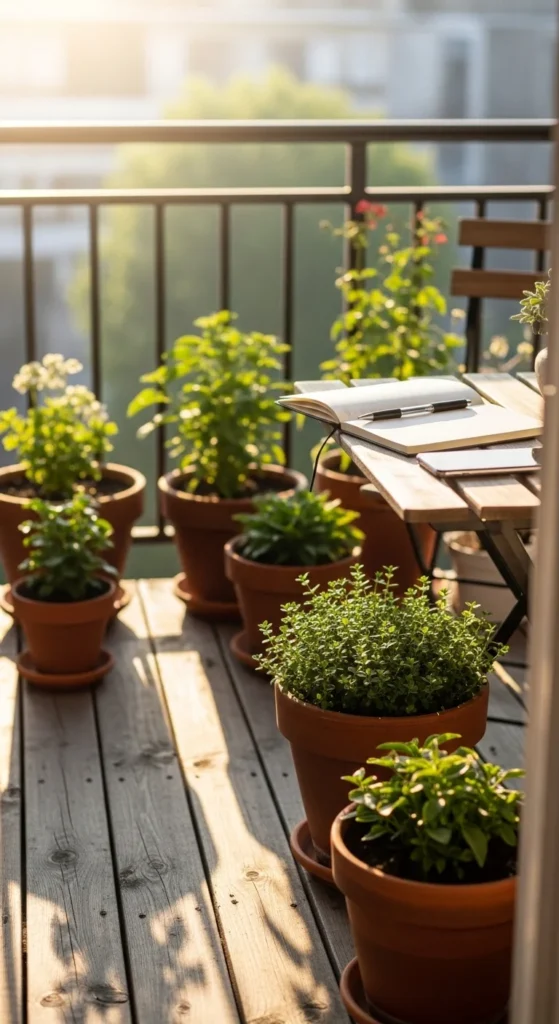
Before buying plants, map your sun. Spend one day checking where sunlight lands in the morning, midday, and afternoon. Even a sunny balcony can have shadow lines from сосед buildings or railings.
If you get 6–8 hours of direct sun, you can grow fruiting plants like tomatoes and peppers. If you get 3–5 hours, focus on herbs and leafy greens. If you get less, grow microgreens and shade-friendly greens.
Budget tip: use masking tape on the floor to mark sunny zones. Then place pots where they’ll perform best. This prevents wasted money on plants that struggle.
Once you know your sun, group plants by light. Put sun lovers together and shade-tolerant plants together. This also helps with watering because plants in the same light zone often dry at similar rates.
7. Dwarf Tomato Pot for Big Flavor in Small Space
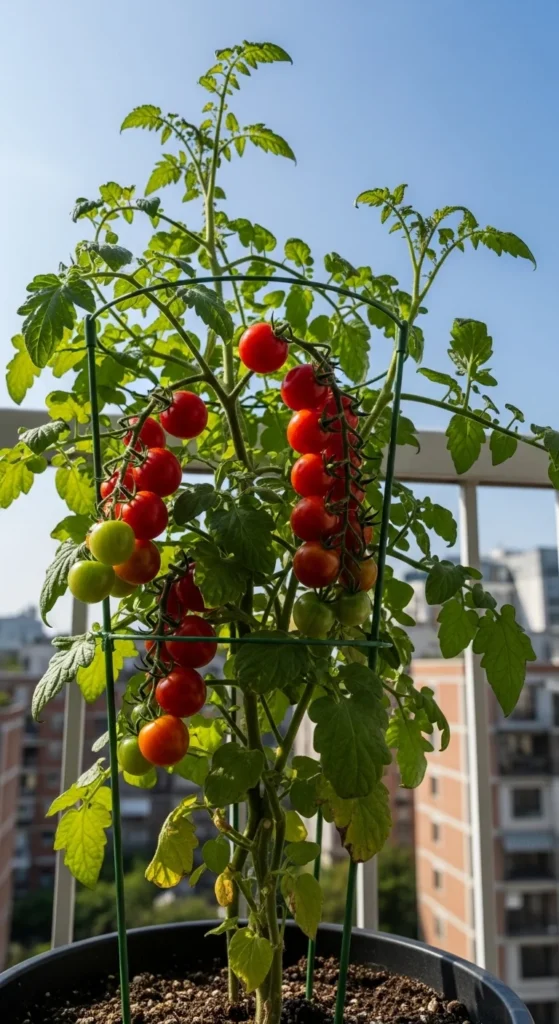
Dwarf tomatoes are made for balconies. They stay compact but still produce heavily when given enough sun. Use at least a 5-gallon pot or grow bag. Add a small cage early so you don’t disturb roots later.
Use potting mix with compost mixed in. Add a slow-release fertilizer or feed every two weeks with a liquid vegetable fertilizer. Water deeply and consistently. Containers dry fast, so irregular watering can cause cracking or blossom issues.
Budget tip: grow one tomato well instead of cramming three into small pots. One healthy plant can outproduce several struggling ones.
Place the pot where it gets the most direct sun. If wind is strong, anchor the pot near the wall and tie the cage to the railing with soft plant ties. Dwarf tomatoes give you a real “homegrown harvest” feeling on a small balcony.
8. Pepper Pairing in Matching Pots
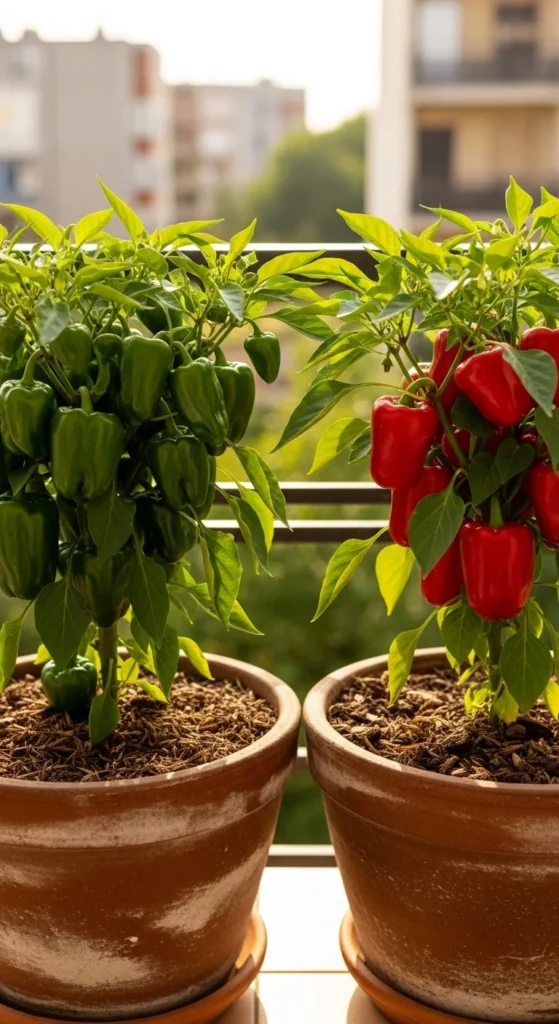
Peppers thrive in containers when they get warmth and sun. Plant one pepper per 5-gallon pot. Use a mulch layer to slow drying. Cluster pepper pots together so they protect each other from wind.
Budget tip: start peppers from nursery seedlings for faster results. Seeds take longer and can be tricky indoors.
Water in the morning. Peppers prefer steady moisture, but not soggy soil. Make sure pots have drainage holes, and empty saucers after heavy rain.
Choose compact varieties labeled “patio” or “dwarf.” These stay manageable. If your balcony gets blazing afternoon sun, move peppers slightly behind a taller plant so leaves don’t scorch.
A simple two-pot pepper setup gives you fresh peppers for cooking without needing a large garden bed.
9. Salad Greens Trough for Quick Harvests
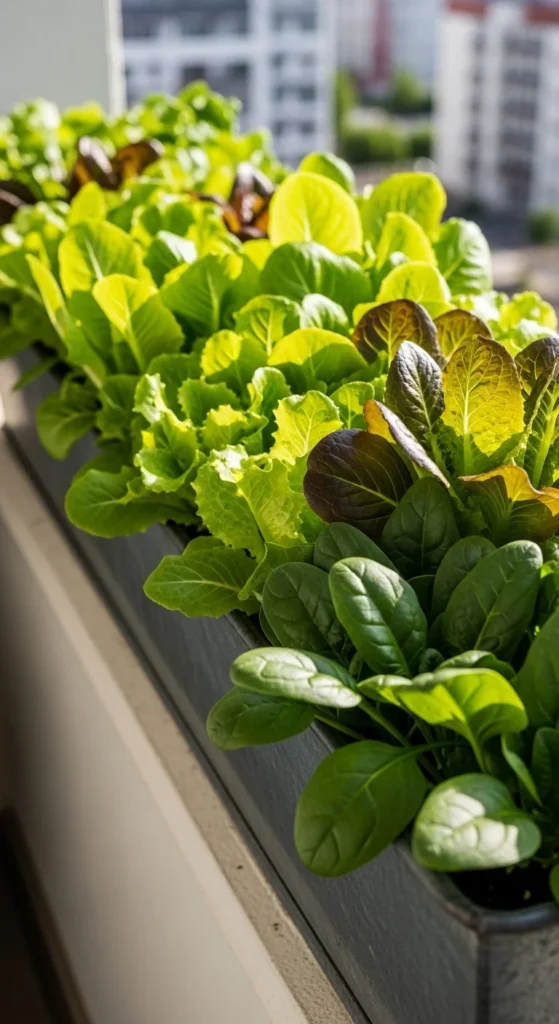
Leafy greens are some of the easiest balcony crops. They don’t require huge pots and they grow quickly. Use a long trough planter for a “cut-and-come-again” setup. Sow seeds thickly, then trim leaves when they reach hand length.
Place the trough where it gets morning sun and some afternoon shade if possible. Greens can bolt in heat. If your balcony is hot, add a shade cloth during peak summer weeks.
Budget tip: buy one packet of mixed greens seed and sow every two weeks. That gives you steady harvests without buying new seedlings constantly.
Use potting mix, not garden soil. Add compost on top each month. Water gently so seeds don’t wash away. Salad troughs are perfect for small balconies because you get frequent harvests from a single compact container.
10. Hanging Baskets for Strawberries and Trailing Herbs
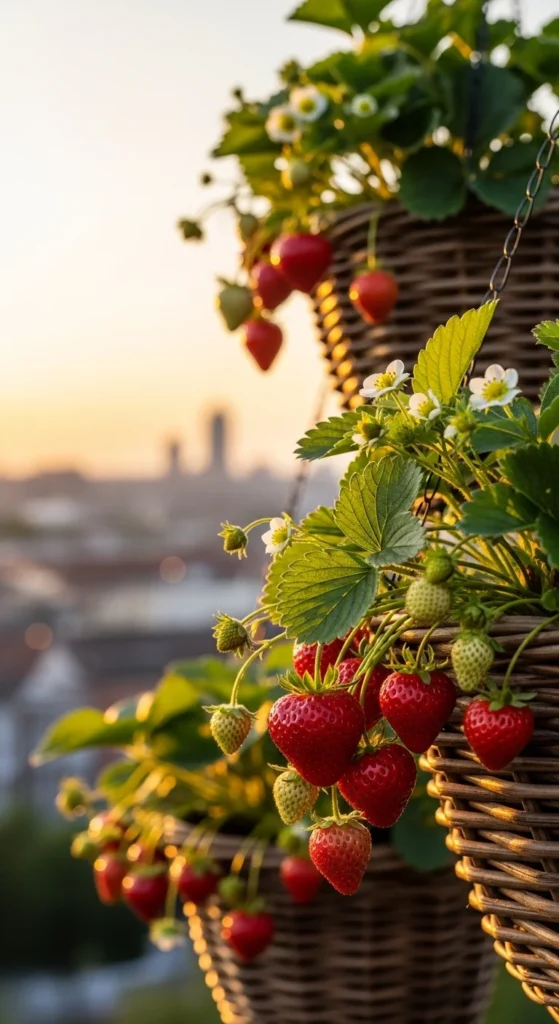
Hanging baskets add growing space without using floor area. Strawberries work well because they trail naturally and fruit stays cleaner off the ground. Trailing herbs like oregano also do well.
Use a lightweight basket and secure the hook properly. Wind can swing baskets, so use a second tie point to keep them steady.
Water baskets more often because they dry quickly. Morning watering works best. Add a bit of compost to the top every few weeks.
Budget tip: use a simple plastic hanging basket inside a decorative outer basket. It’s cheaper and easier to replace.
Hanging baskets make a balcony feel greener fast, and they’re perfect when floor space is limited.
11. Upcycled Bucket Planters with Drilled Drainage
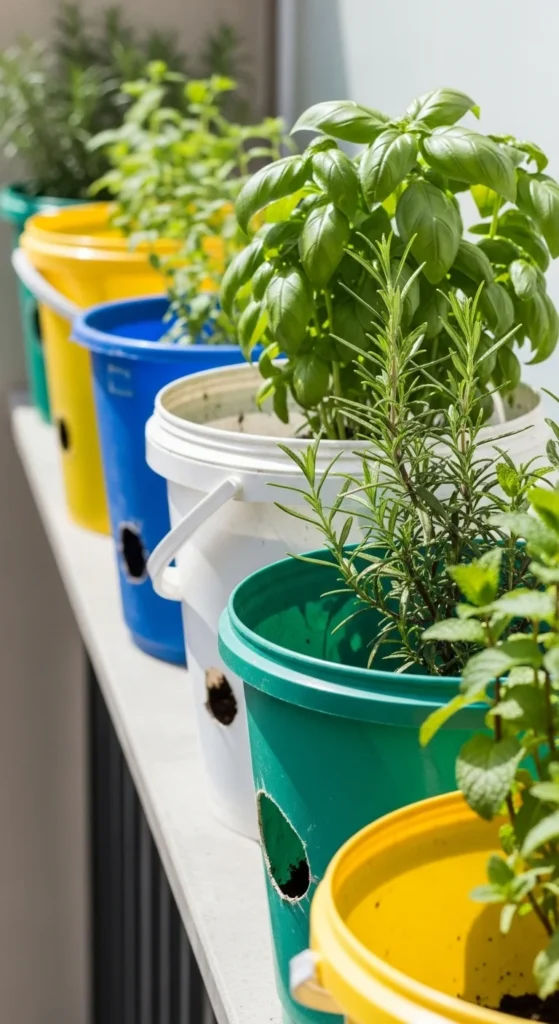
Upcycling containers saves money and lets you scale quickly. Food-grade buckets, storage bins, and large tubs can become planters with a few drainage holes.
Drill several holes in the bottom. Add a thin layer of coarse material like small stones only if holes are large, then fill with potting mix. Place the bucket on a saucer.
Budget tip: check local bakeries or restaurants for free buckets. Clean them well. Avoid containers that held chemicals.
Buckets are great for potatoes, tomatoes, and peppers because they hold more soil volume. If wind is strong, heavier buckets also resist tipping better than lightweight pots.
Label buckets with plant tags if you grow multiple crops. This keeps you organized and helps with feeding schedules. Upcycled planters are an easy way to start balcony gardening without spending much.
12. Microgreens Tray for Fast Indoor-Outdoor Harvests
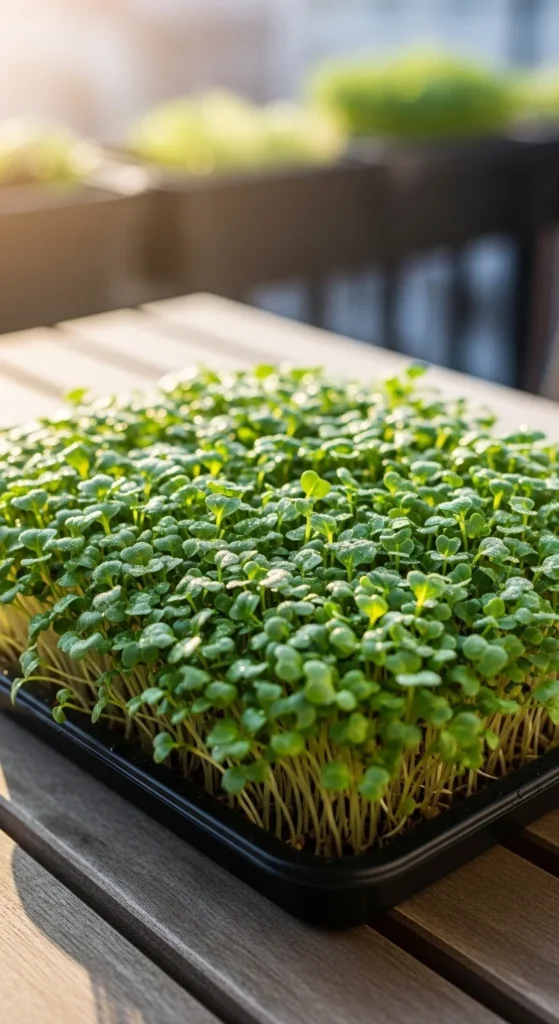
Microgreens are one of the fastest balcony harvests. You can grow them in shallow trays on a table or shelf. They’re ready in 1–3 weeks depending on the seed.
Use a shallow tray with drainage holes and a catch tray underneath. Fill with a light potting mix, scatter seeds thickly, mist daily, and keep them in bright light.
Budget tip: reuse takeaway containers as trays. Just poke drainage holes with a hot nail or screwdriver (carefully).
Microgreens are perfect for balconies with limited sun because they can grow in bright indirect light. They also help beginners build confidence fast. Once you master microgreens, you’ll feel more comfortable trying tomatoes and peppers in larger containers.
13. Wind-Proof Pot Clustering Layout
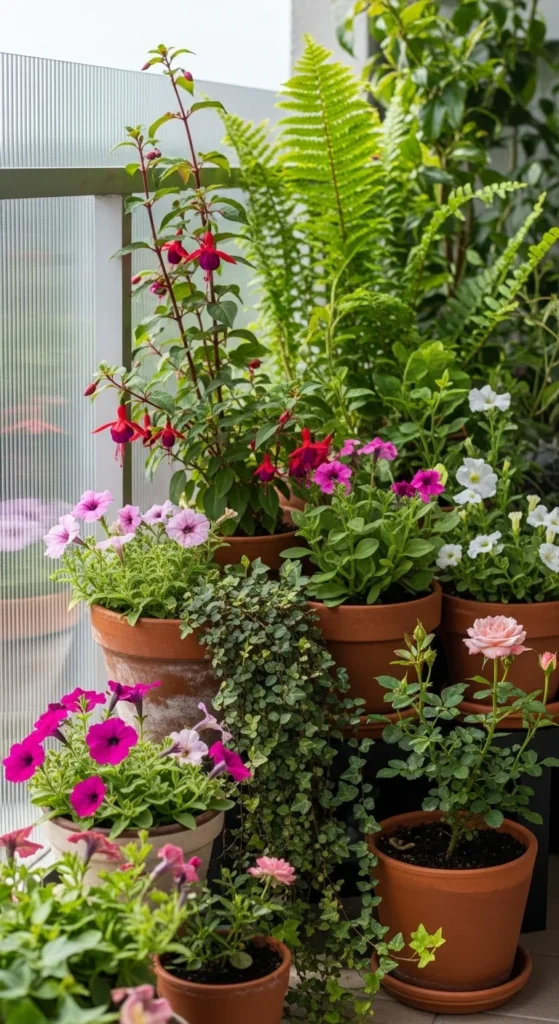
Wind is the silent problem on balconies. It dries pots quickly and can knock over tall plants. A simple fix is clustering containers in groups rather than spacing them out.
Put heavier pots on the outside edges. Place lighter pots inside the cluster. Use a simple windscreen like bamboo fencing, shade cloth, or a clear panel if your building allows it.
Budget tip: use zip ties to attach bamboo fencing to the railing. It’s cheap and removable.
A clustered layout also makes watering easier because you can water one zone at a time. It creates a small microclimate, keeping leaves from drying out too fast. This is one of the best changes you can make if your balcony is high up or exposed.
14. Watering Zone System by Plant Type
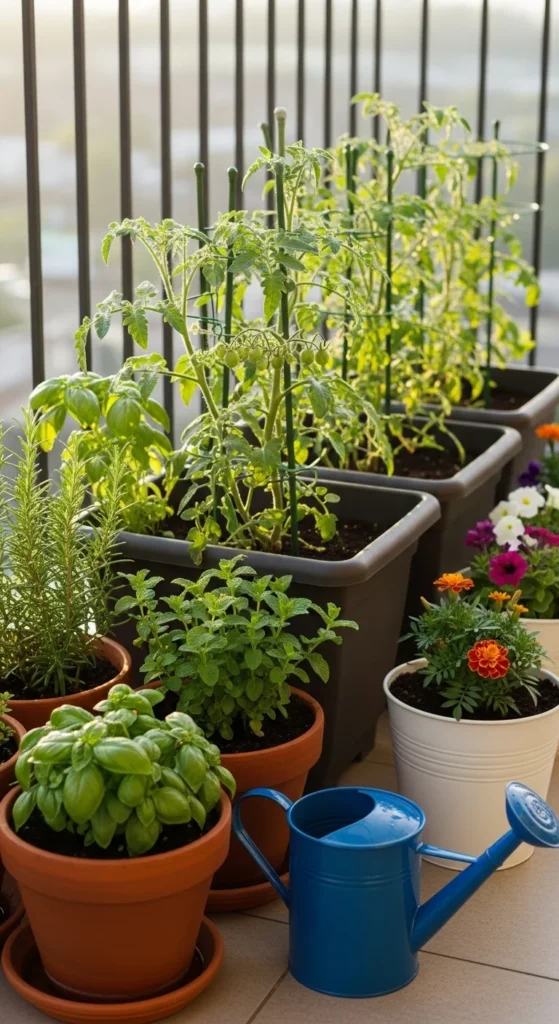
Containers fail when watering is random. Group pots by water habits. Put thirsty plants together. Put drought-tolerant herbs together.
For example: tomatoes, peppers, and cucumbers in one zone. Herbs like rosemary and thyme in another. Greens in a third.
Budget tip: use the same pot size within each zone. Similar pots dry out at similar rates, which makes watering easier.
Label zones with small tags or a simple sketch in your phone. This prevents overwatering herbs while trying to keep tomatoes happy.
Once zoning is set, you can create a routine. Water greens lightly but often. Water fruiting plants deeply. Herbs get less water but still consistent checks. This simple system makes balcony gardening feel easy, not stressful.
15. Lightweight Potting Mix Recipe for Containers
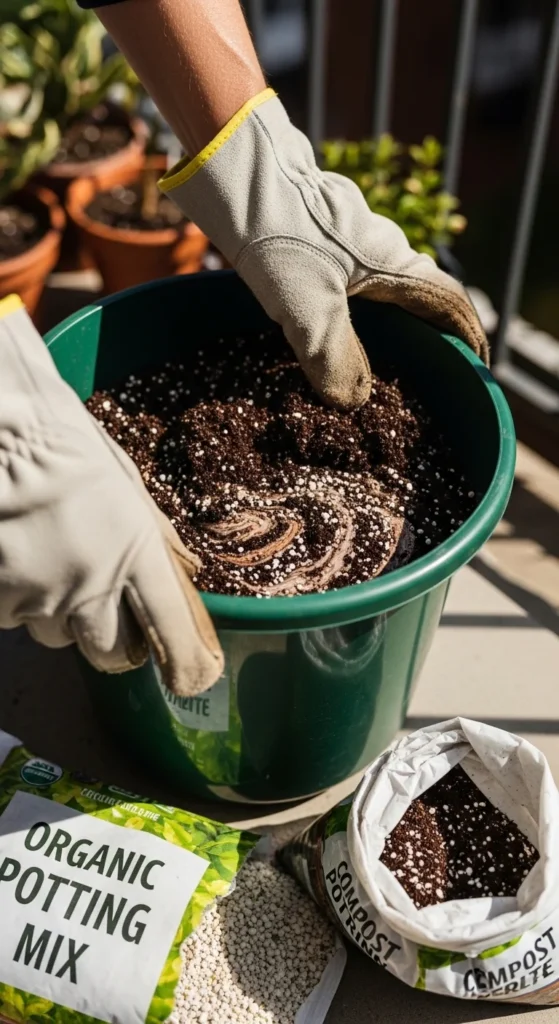
Container gardens do best with potting mix, not yard soil. Potting mix stays airy and drains well. Yard soil compacts in pots and can suffocate roots.
A simple budget mix: 2 parts potting mix, 1 part compost, 1 part perlite or coco coir. This keeps containers lighter and improves drainage.
If perlite is expensive, use rice hulls or coarse coco chips. Even a small amount helps.
Top-dress pots with compost every month instead of constantly replacing soil. For fruiting plants, feed every two weeks during active growth.
Budget tip: buy potting mix in larger bags. It’s usually cheaper per liter. Store extra in a sealed bin to keep it dry.
Good soil is the base of balcony success. With a decent mix, even small containers can produce well.
16. No-Drill Trellis for Vertical Vines
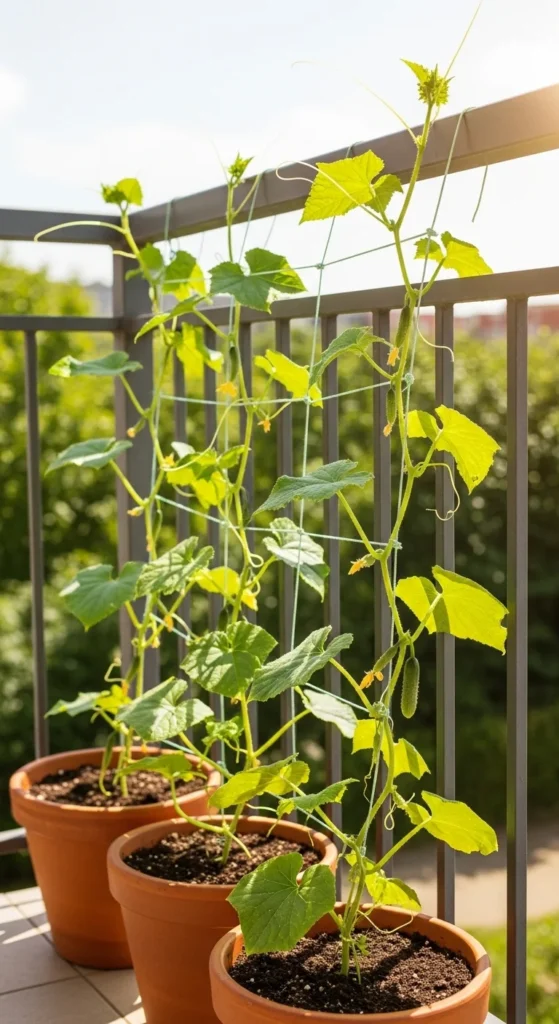
Vertical growing saves space. A no-drill trellis can be tied to the railing using strong cords or zip ties. Use lightweight netting or a thin trellis panel.
Cucumbers and peas love this setup. So do small climbing beans.
Place the pot at the base. Train vines upward early. Once vines grab the trellis, they climb quickly.
Budget tip: use jute twine in a grid pattern from railing to pot. It’s cheap and removable.
Vertical vines also improve airflow and keep leaves cleaner. That can reduce plant issues on balconies where space is tight and humidity can build up.
17. Tabletop Herb Station by the Door
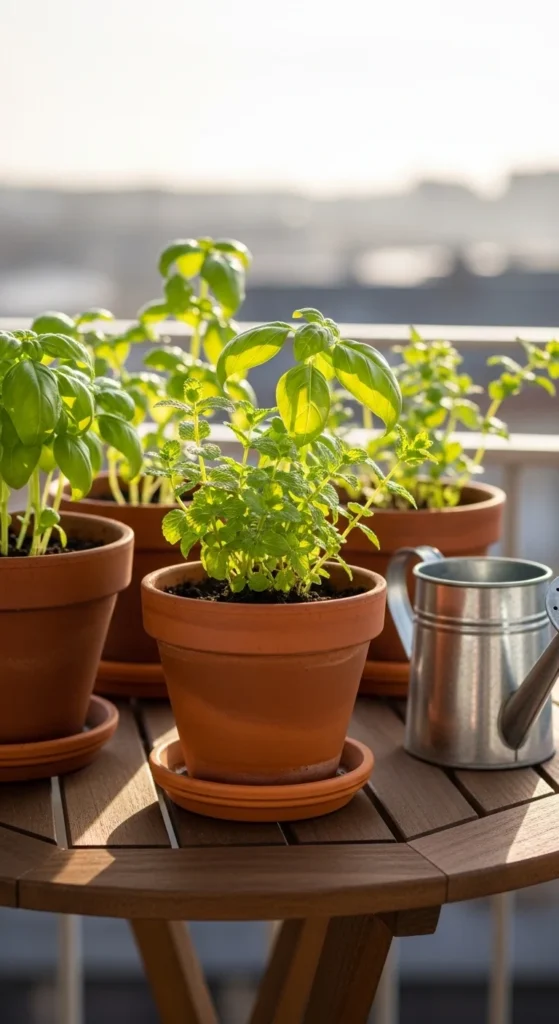
A tabletop herb station keeps herbs within easy reach and keeps your floor clear. Use a small table or plant stand. Put herbs in matching small pots with saucers.
Herbs are ideal beginner plants. Basil, mint, parsley, cilantro, and chives grow well in containers. Harvest often so plants stay bushy.
Budget tip: propagate mint from cuttings in water, then plant it. It grows quickly.
Place the table close to the door so you remember to water and harvest. When herbs are convenient, you use them daily, and the garden becomes part of your routine instead of a chore.
18. Elevated Planter Boxes for No-Bend Gardening
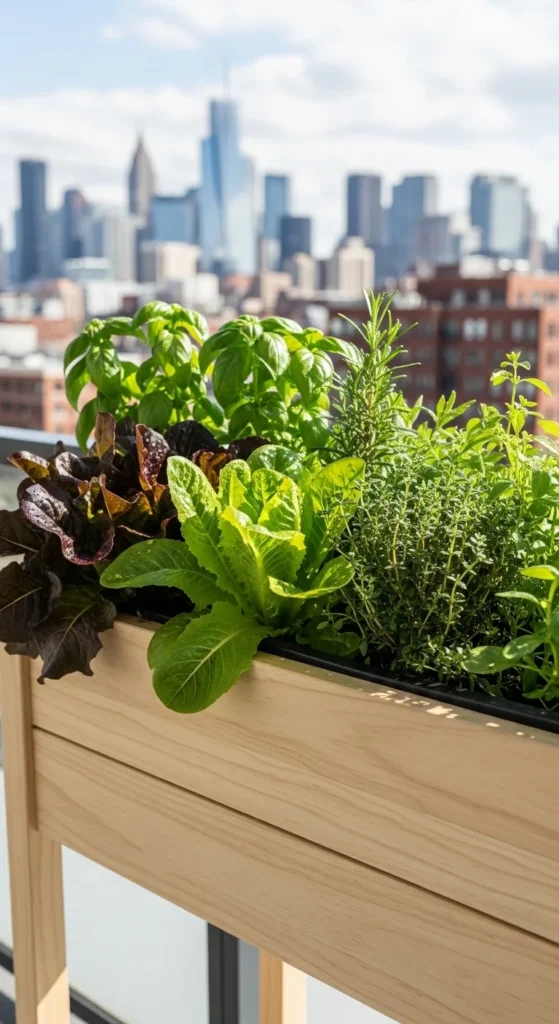
Elevated planters reduce bending and keep plants away from hot balcony floors. They also help with drainage and airflow.
Choose a narrow raised planter that still leaves walkway space. Fill with lightweight potting mix. Grow greens and herbs for easy harvests.
Budget tip: DIY an elevated planter from a sturdy storage tote on a simple wood stand. Add drainage holes and a catch tray.
This setup is also helpful for older gardeners or anyone who wants gardening to feel comfortable in a small space.
19. Companion Herb Rail for Natural Pest Control
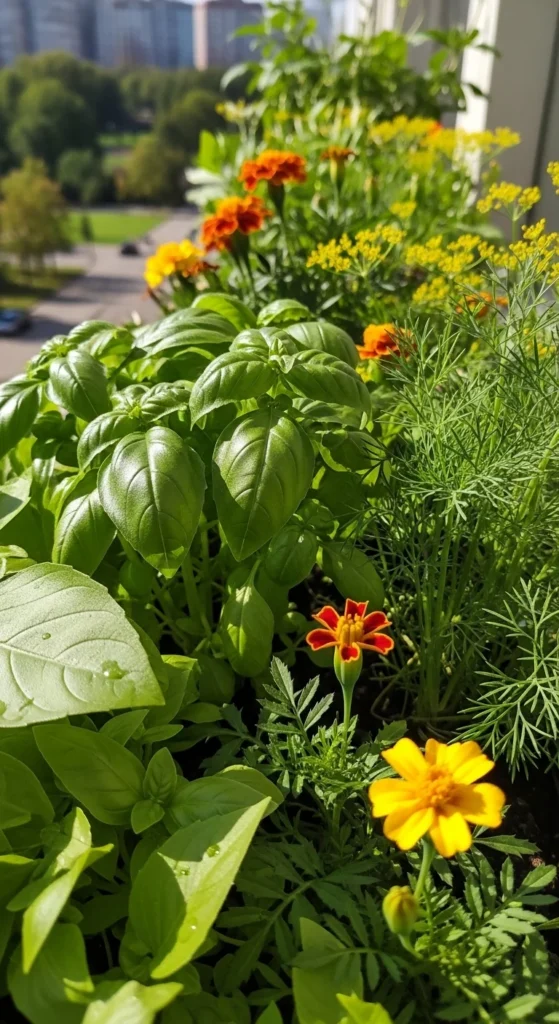
Herbs on the rail can help reduce pest problems on nearby veggies. Basil, dill, and chives pair well with tomatoes and peppers.
Place companion herbs in rail planters above or beside veggie pots. The idea is to keep scent plants close to fruiting plants.
Budget tip: grow dill and basil from seed. They sprout quickly and fill pots fast.
Even if pests show up, herbs make it easier to spray gently because plants are close and easy to reach. Plus you get herbs for cooking, which is always a win in a small apartment garden.
20. Simple Natural Spray Routine for Containers
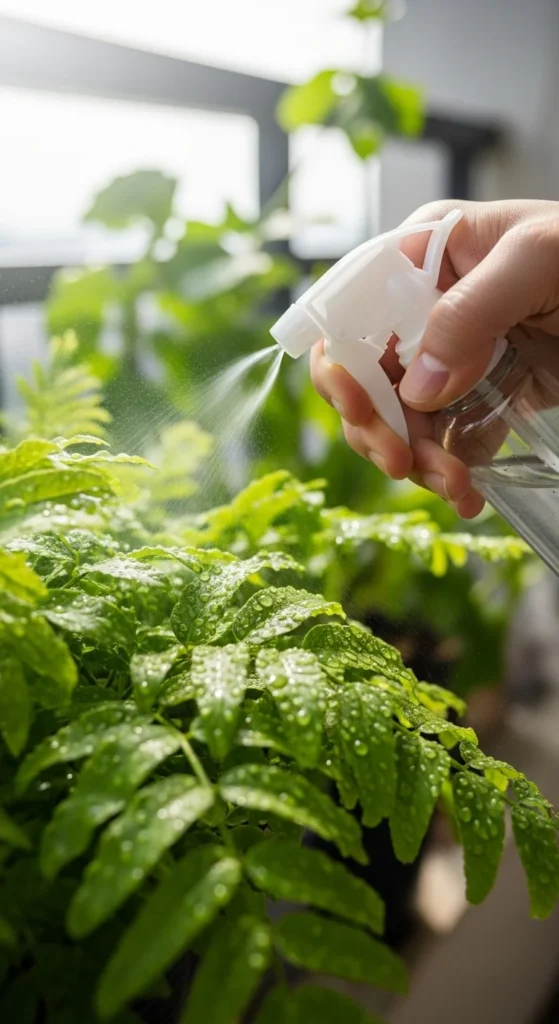
Balcony gardens can still get pests. A simple routine helps. Inspect leaves twice a week. Look under leaves for small insects.
If you see problems, wash leaves with a gentle water spray. For persistent pests, use neem oil spray in the evening so sun doesn’t burn leaves.
Budget tip: buy a small concentrate and mix only what you need. Store it in a dark bottle.
Keep air moving by spacing pots slightly and pruning dense growth. Healthy plants handle pests better.
A little checking saves you from losing plants later in the season.
21. Seasonal Crop Swap Plan for Year-Round Harvest
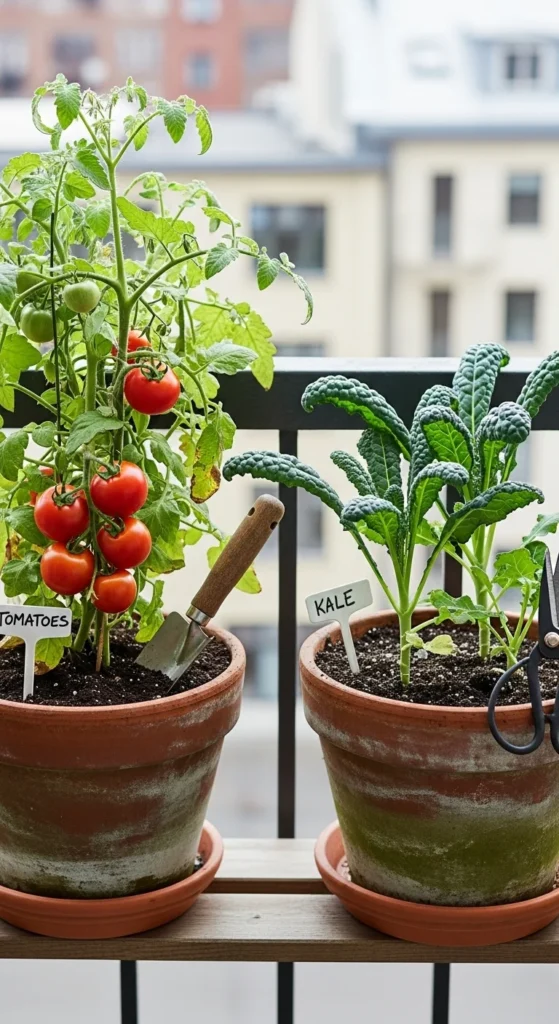
Balcony gardening becomes easier when you plan seasonal swaps. In warm months, grow tomatoes, peppers, cucumbers, and basil. When temperatures drop, switch to greens like spinach, lettuce, kale, and arugula.
Clear one pot at a time. Add compost. Replant quickly. This keeps your balcony productive without buying all new soil each season.
Budget tip: keep one storage bin for used potting mix. Refresh it with compost and a handful of perlite before reuse.
If your winter sun is lower, move pots closer to the rail where light is strongest. If wind increases, cluster pots again and use a screen.
A simple seasonal routine keeps your balcony green all year and keeps your container garden from becoming a “one-season hobby.”
Conclusion
A small balcony can grow a surprising amount of food and greenery when you plan vertically, keep containers lightweight, and match plants to sunlight. Start with herbs and greens for quick results. Add one or two dwarf veggie pots when you’re ready. Use a shelf rack, rail planters, and a simple watering system to keep the setup easy. With smart spacing and steady routines, your balcony can become a productive garden spot you’ll enjoy every day.
Leave a Reply