

What if you could harvest crisp, tender lettuce every single week—without a garden bed?
Vertical lettuce growing makes that possible. Using towers, gutters, or stackable planters, you can grow dozens of heads in the space of one pot, right on a balcony, patio, or sunny kitchen corner.
It’s fast.
It’s clean.
And it’s perfect for fresh, homegrown salads on demand.
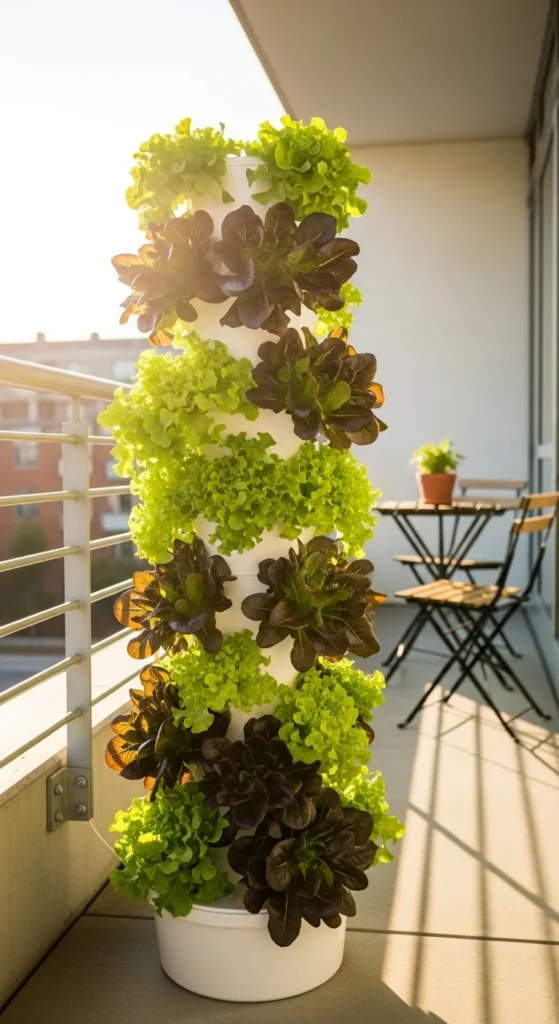
Let’s break down exactly how to do it—step by step.
Why Lettuce Thrives in Vertical Gardens
Lettuce is one of the best crops for vertical growing, especially in small spaces.
Here’s why it works so well:
- Shallow roots (perfect for pockets, towers, and gutters)
- Fast growth (baby greens in 3–4 weeks)
- Lightweight plants (no heavy support needed)
- Grows well in cool temps and partial sun
- Ideal for high-density planting
Vertical systems also keep leaves off the soil, which means:
- Fewer pests
- No muddy leaves
- Cleaner harvests
If you’re new to vertical gardening, lettuce is the easiest place to start.
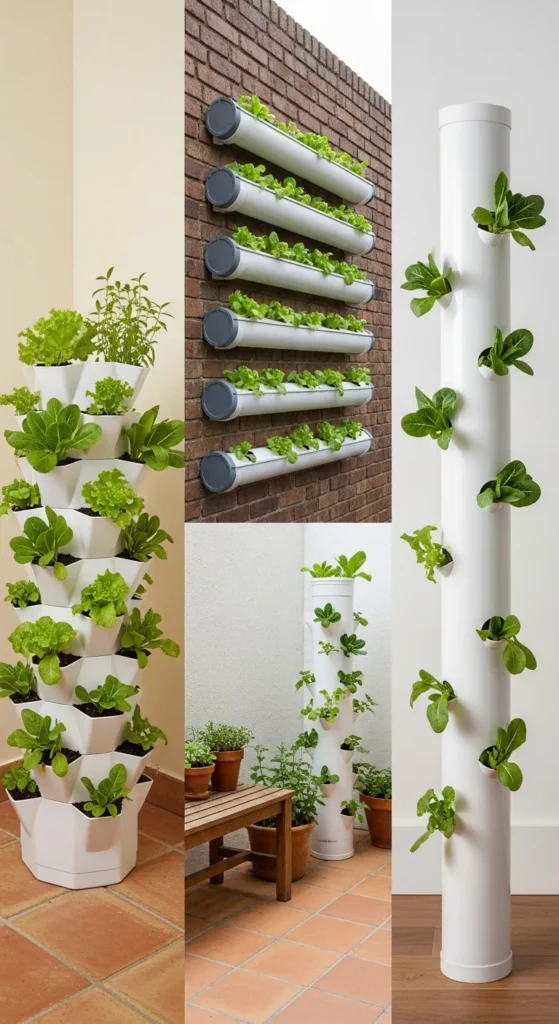
Choose the Best Vertical System for Lettuce
You’ve got several great options. Choose based on space, budget, and whether you want soil or hydroponics.
🌿 Stackable towers (beginner favorite)
Systems like GreenStalk hold 30+ lettuce plants and use top-down watering for even moisture.
🌿 PVC pipe towers
- Drill planting holes in large PVC pipes
- Fit 16+ plants per column
- Extremely space-efficient
🌿 NFT rain gutters (hydroponic)
- No soil, no weeds
- Continuous nutrient flow
- Excellent for baby greens
🌿 Fabric pocket walls
- Lightweight and flexible
- Best for loose-leaf varieties
- Great indoors with grow lights
Step 1: Pick the Right Lettuce Varieties
Not all lettuce grows equally well vertically.
Choose loose-leaf or baby greens, not dense iceberg types.
Best-performing types:
- Green Oak
- Red Oak
- Butterhead
- Batavia (especially Batavia-Caipira)
- Mixed baby leaf blends
Why these work:
- They regrow after cutting
- They tolerate crowding
- They mature quickly
Skip romaine if space is tight—it needs more root room.
Step 2: Start Seeds the Smart Way
Healthy seedlings = fast harvests.
Two easy methods:
🌱 Soil method
- Start seeds in seed trays
- Transplant when 2–3 inches tall
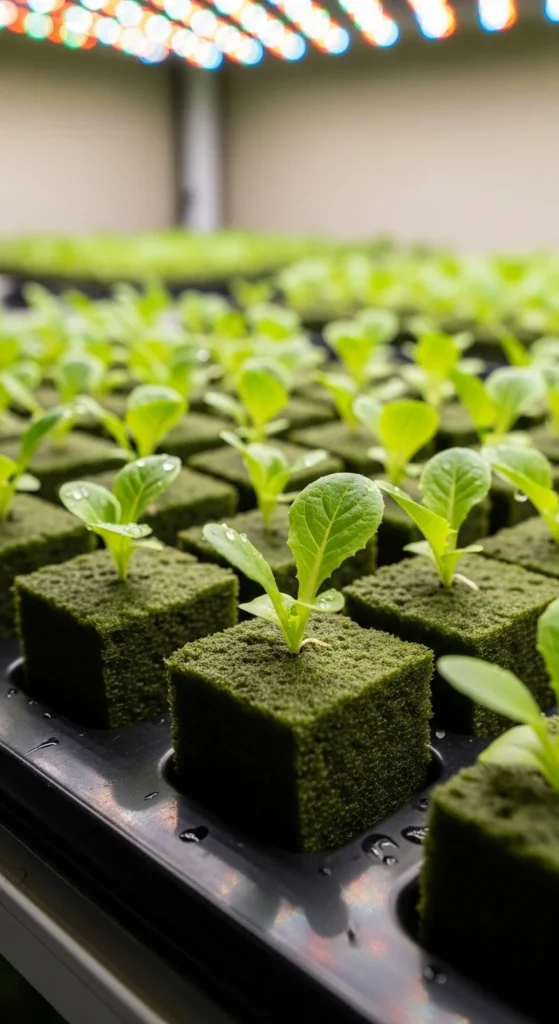
🌱 Hydroponic method
- Use Rockwool cubes
- Germinate in a warm, dark spot
- Transfer once roots appear
Hydro growers love rockwool because it holds moisture while staying airy.
Step 3: Plant at the Right Spacing
Overcrowding leads to:
- Small leaves
- Poor airflow
- Tip-burn
Spacing guidelines:
- 1 plant per pocket or hole
- 6–8 inches between plants
- Start from the bottom when planting towers
For baby greens, you can plant closer—just harvest early.
Plant gently and keep the crown (center) above the soil or medium.
Step 4: Light Matters More Than You Think
Lettuce loves light—but not extreme heat.
Outdoor setup:
- 4–6 hours of sun
- Morning sun is best
- Shade in hot afternoons
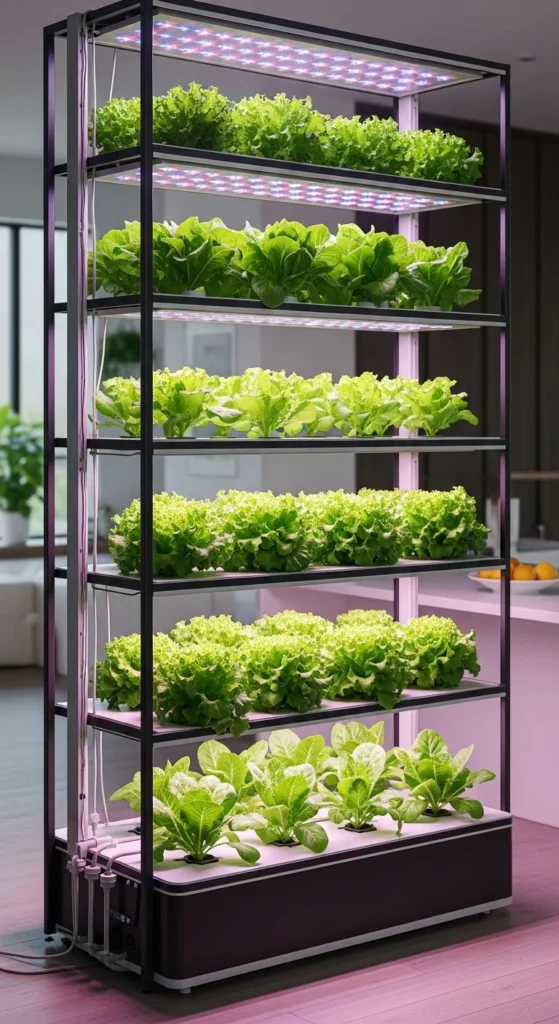
Indoor setup:
- LED grow lights
- 12–16 hours per day
- Moderate intensity (not blazing hot)
Rotate towers weekly to prevent one-sided growth.
Step 5: Water and Nutrients (The Make-or-Break Step)
Vertical systems dry faster than garden beds.
Soil-based systems:
- Water from the top
- Check moisture daily
- Don’t let roots dry out
Hydroponic systems:
- Use balanced lettuce nutrients
- Keep EC levels moderate
- Avoid excess nitrogen (prevents leaf burn)
Top-down watering systems are ideal—they feed every level evenly.
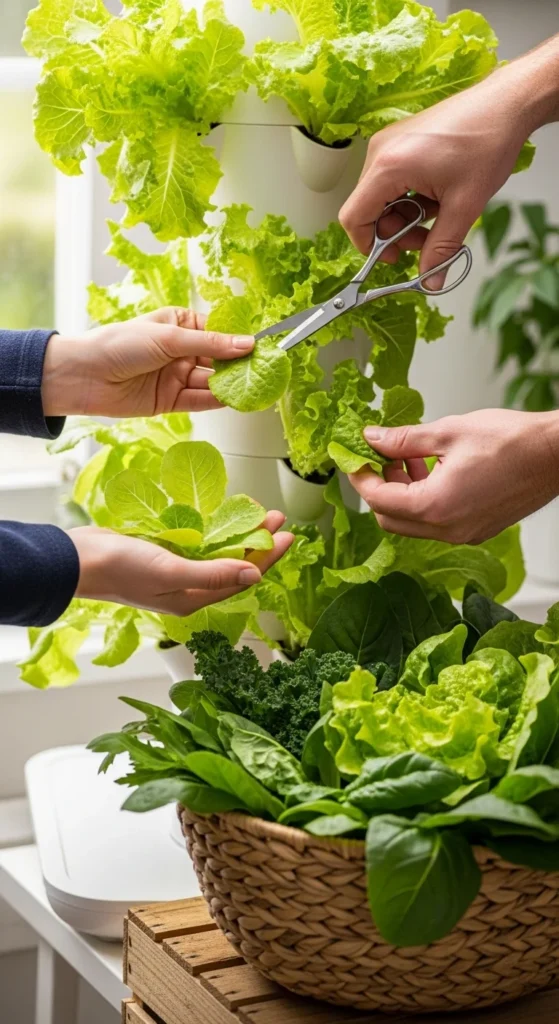
Step 6: Harvest Often for Continuous Salads
This is where lettuce shines.
Two harvesting styles:
🥗 Cut-and-come-again
- Snip outer leaves
- Leave center intact
- Harvest weekly
🥗 Whole-head harvest
- Pull entire plant
- Replant new seedling
Baby greens can be ready in 21–28 days.
The more you harvest, the more it grows.
Prevent Common Problems
Tip-burn?
- Reduce fertilizer strength
- Improve airflow
- Avoid heat stress
Uneven growth?
- Rotate towers
- Adjust lighting angle
Pests?
- Vertical setups reduce slugs naturally
- Rinse leaves weekly
- Inspect undersides
Vertical growing keeps lettuce cleaner and healthier overall.
Make It Look (and Taste) Amazing
Lettuce walls aren’t just productive—they’re beautiful.
Try:
- Mixing green and red varieties
- Pairing lettuce with basil or arugula
- Using white or wood-toned planters
- Adding labels or herb markers
Final Thoughts
Growing lettuce vertically is one of the fastest, easiest wins in small-space gardening.
You get:
- Fresh salads on demand
- Minimal mess
- Rapid harvest cycles
- Big yields from tiny spaces
Whether you use towers, gutters, or hydroponics, vertical lettuce growing turns a small wall into a salad factory.
Save this guide and start your vertical lettuce garden today—your future salads will thank you. 🥬🌱

Leave a Reply