

No backyard? No problem.
If you’ve got a small balcony, a sunny wall, or even just a tight patio corner, a PVC pipe vertical garden can turn that unused space into a thriving tower of herbs and veggies.
Lightweight. Modular. Budget-friendly. And surprisingly productive.
With a few tools and some simple cuts, you can build a sleek garden tower that grows lettuce, basil, strawberries, and more — all in less space than a single planter box.
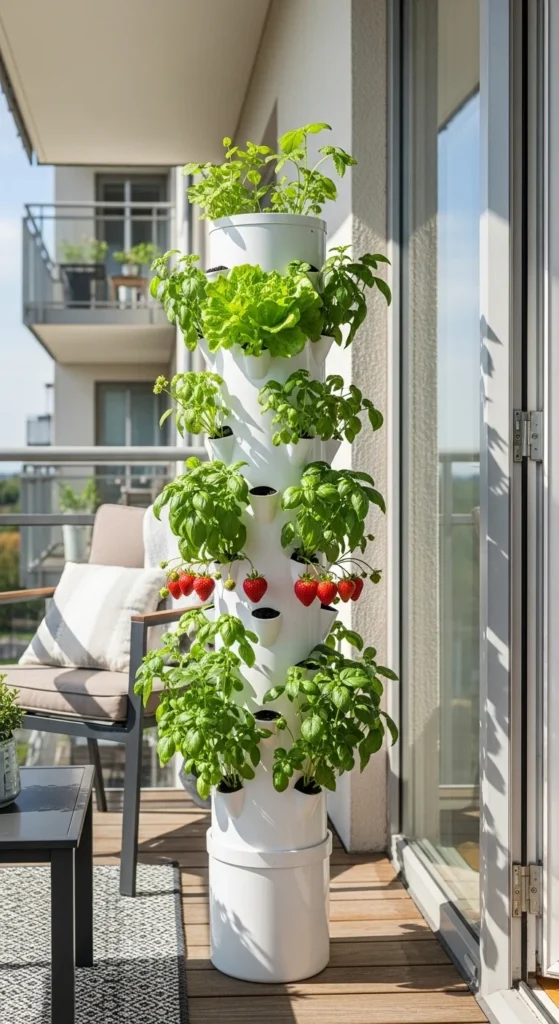
Let’s break it down step by step.
Why PVC Vertical Gardens Work So Well
PVC towers are trending for a reason:
- Perfect for small spaces
- Lightweight and easy to move
- Modular design (add more towers anytime)
- Great airflow for healthier plants
- Ideal for herbs and shallow-root veggies
Unlike traditional raised beds, these towers grow upward instead of outward — making them perfect for city living.
And bonus: you can even turn them into self-watering drip systems.
What You’ll Need
Here’s a simple starter setup:
- 150mm (6-inch) PVC pipe (main tower)
- 40mm (1.5-inch) PVC pipe (inner irrigation tube)
- Drill
- Saw
- Hot air blower (for shaping slots)
- Sandpaper
- Potting mix
- Expanded clay or small bricks (for base drainage)
- Steel wire or sturdy base support
Optional:
- Acrylic paint (for aesthetic finish)
- Plastic bottle reservoir for bottom
Step 1: Cut Plant Slots in the PVC Pipe
This is where the magic happens.
Mark slots:
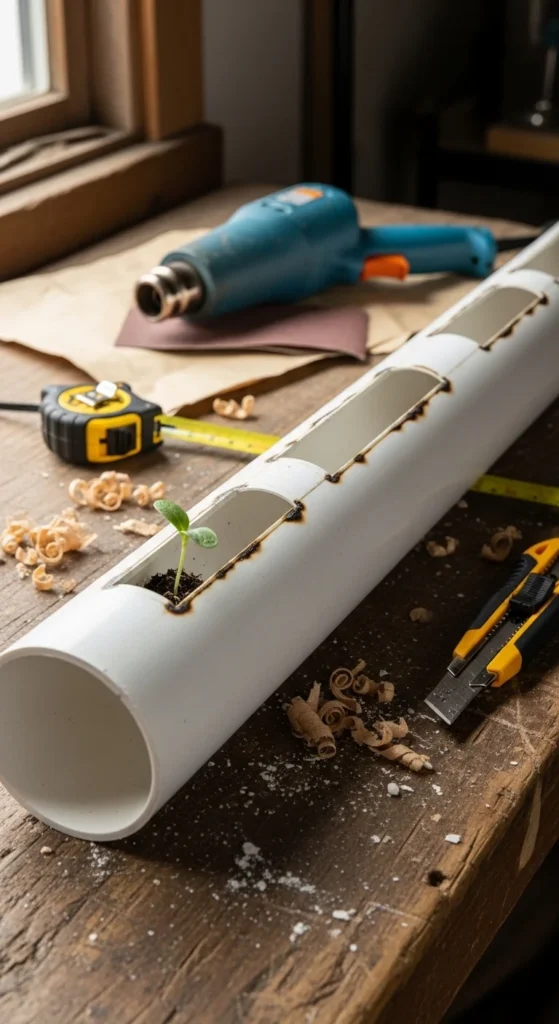
- Cut 100mm (4-inch) wide openings
- Space them about 30cm (12 inches) apart vertically
- Stagger them around the pipe for balance
Use a saw to cut the slots.
Then:
- Heat the cut area gently with a hot air blower
- Carefully push the softened PVC inward to create a small planting pocket
- Let it cool and harden
This creates natural “cups” that hold soil and plants securely.
⚠️ Don’t overheat — PVC can burn or warp if too hot.
After shaping, sand all edges smooth to protect your hands and plant stems.
Step 2: Create a Simple Drip Irrigation Core
Uneven watering is the biggest complaint with vertical towers.
The fix? A central irrigation pipe.
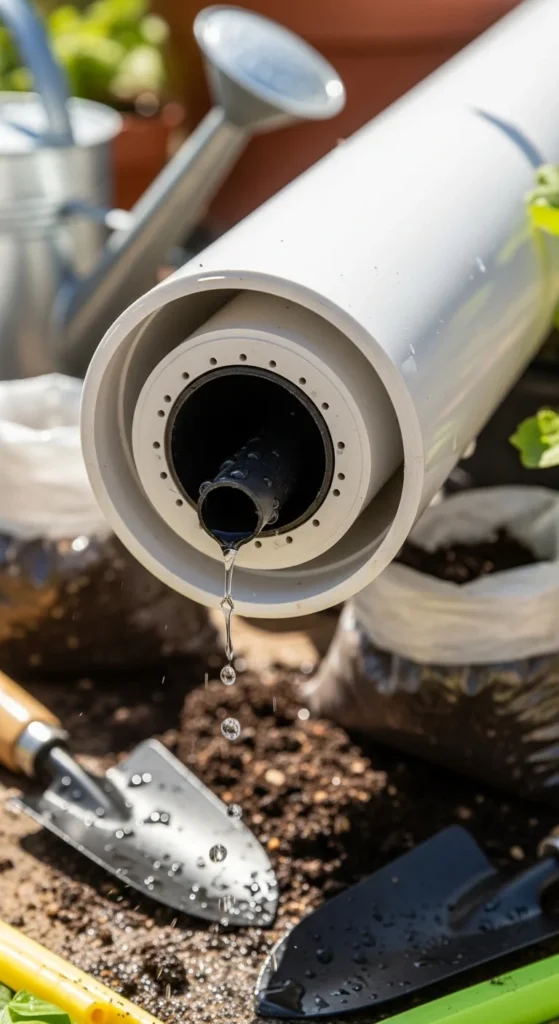
Take your 40mm PVC pipe and:
- Drill tiny 1mm holes evenly along its length
- Space holes about every few inches
- Cap the bottom
Place this narrow pipe inside the main tower before adding soil.
When you water from the top, moisture distributes evenly through the small holes.
This prevents:
- Dry top plants
- Overwatered bottom plants
- Root rot
If you want a budget hack, attach a plastic bottle at the top as a slow-release reservoir.
Step 3: Add Drainage at the Bottom
Drainage is everything.
Without it, roots suffocate.
Add:
- A layer of expanded clay pebbles
- Or small bricks
- Or gravel
This prevents standing water and keeps roots healthy.
If you’re placing the tower outdoors, ensure the bottom has drainage holes too.
Step 4: Fill with Potting Mix
Now the satisfying part.
Keep the pipe upright while filling.
- Add soil gradually
- Gently press around each pocket
- Ensure soil reaches each slot
Use lightweight potting substrate — not heavy garden soil.
Shallow-root plants perform best in PVC towers.
Step 5: Choose the Best Plants
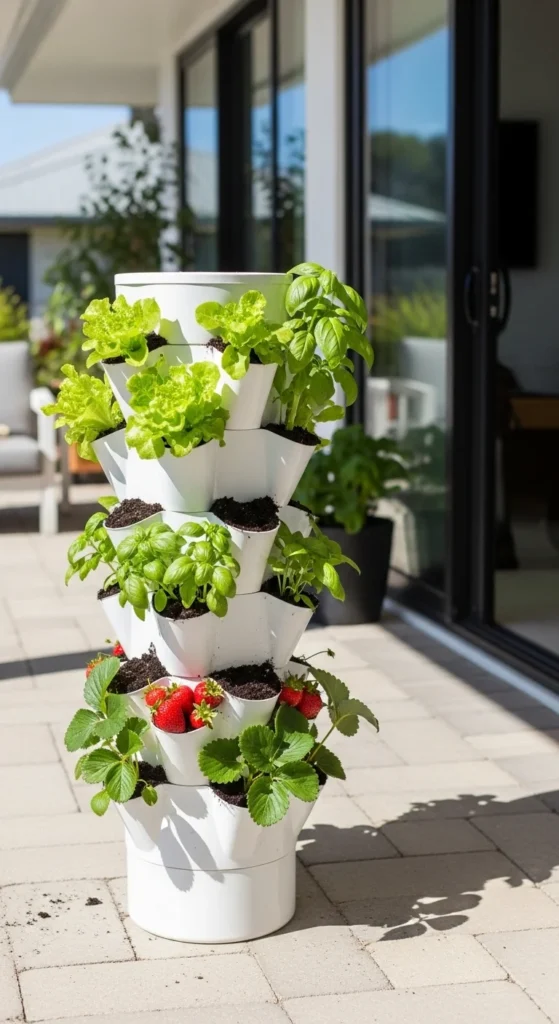
PVC vertical gardens shine with compact crops.
Top choices:
🌿 Herbs
- Basil
- Mint
- Thyme
- Parsley
🥬 Leafy greens
- Lettuce
- Spinach
- Arugula
🍓 Fruit & flowers
- Strawberries
- Rainbow portulaca
- Small trailing flowers
Avoid large root vegetables or heavy crops.
Spacing tip: 12-inch vertical gaps help prevent shading.
Step 6: Stabilize the Tower
Tall towers can tip in wind.
Secure it by:
- Anchoring into a heavy pot base
- Attaching steel wire to a wall
- Using brackets for balcony mounting
For indoor units, place in a sturdy planter base filled with sand or stones.
Safety matters — especially in high-rise balconies.
Easy Care Tips
PVC gardens are low-effort — but not no-effort.
Watering
- Water from the top slowly
- Check bottom drainage
- Install drip line for convenience
Feeding
- Liquid fertilizer every 2–3 weeks
- Nutrients drain faster in vertical systems
Sunlight
- 4–6 hours for herbs
- 6–8 hours for leafy greens
Root Space
Keep plants trimmed so they don’t overcrowd each other.
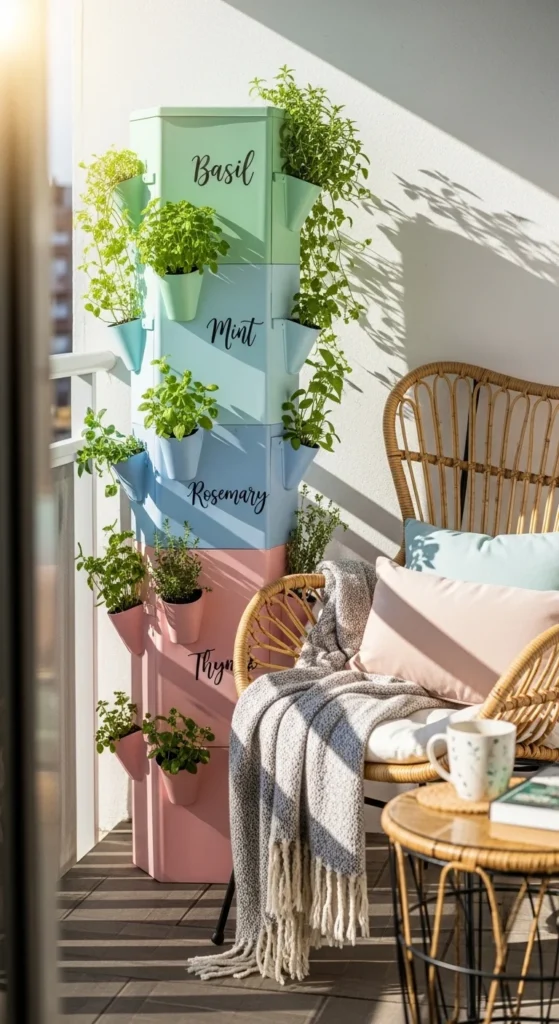
Creative Upgrades (Make It Pinterest-Worthy)
Want it extra stylish?
Try:
- Painting the PVC with low-pressure acrylic
- Color-coding sections
- Building elbow-joint geometric wall designs
- Hanging smaller pipe versions with eyelets
- Creating a hydroponic version using small inserted pots
Upcycling old pipes? Even better. Sustainable and budget-friendly.
Final Thoughts
A PVC pipe vertical garden proves that you don’t need land to grow food — just creativity and vertical space.
Lightweight. Customizable. Expandable.
Whether you’re growing basil for dinner or lettuce for salads, this tower system makes small-space gardening simple and satisfying.
Ready to build yours?
Save this guide and start your DIY vertical garden this weekend. 🌿
Leave a Reply