

If you’ve ever looked at a blank wall, tiny balcony, or boring fence and thought, “This could be gorgeous,” you’re already halfway to a vertical flower garden. Vertical growing is basically the cheat code for small spaces: you get more color, more blooms, more drama—without giving up your walking room.
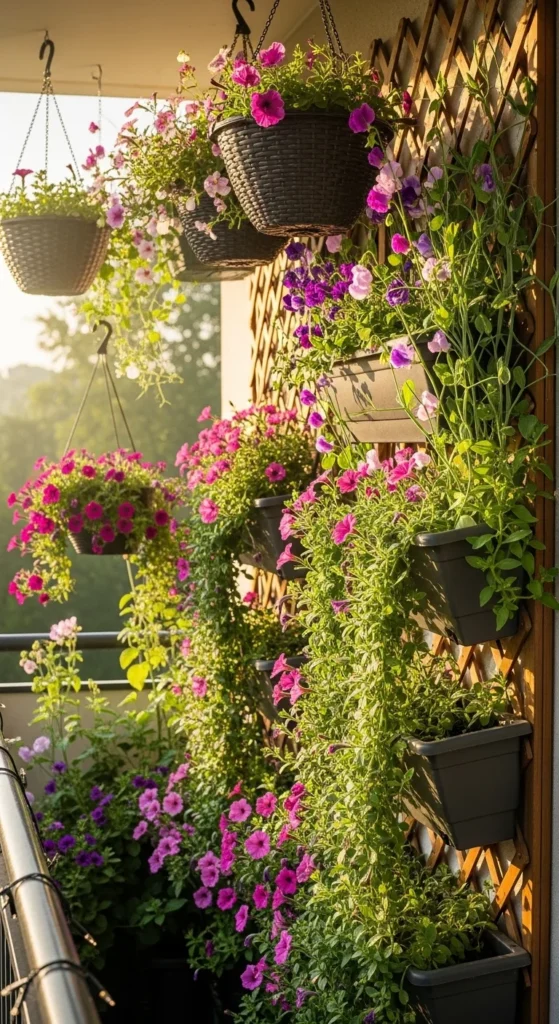
The secret is simple: pick the right flowers, give them support early, and keep watering consistent (vertical pots dry out fast). Let’s build your “flower wall” step by step.
Step 1: Choose the Best Spot (Sun First, Then Style)
Most flowering plants want 6+ hours of sun to bloom like crazy. Before you buy anything, stand in your space and notice the light.
Quick sunlight checklist
- Full sun (6–8 hours): petunias, marigolds, nasturtiums, morning glory, sweet peas
- Part sun (4–6 hours): lobelia, bacopa, some clematis varieties
- Shady corners: focus more on foliage + a few shade bloomers (but blooms will be lighter)
A smart placement trick
To avoid shading other pots, place your trellis or tall structure so it doesn’t block sunlight for the rest of your plants (for many small setups, that means keeping tall structures toward the “back” or edge of the space).
Step 2: Pick a Vertical Style That Matches Your Space
You don’t need one perfect “system.” Vertical flower gardens can be simple and still look like a magazine cover.
Easy vertical flower setups
- Trellis + climbing vines (instant wall coverage)
- Hanging baskets (best for cascades)
- Ladder shelves (tiered, mix-and-match pots)
- Wall grids (modular pots you can swap seasonally)
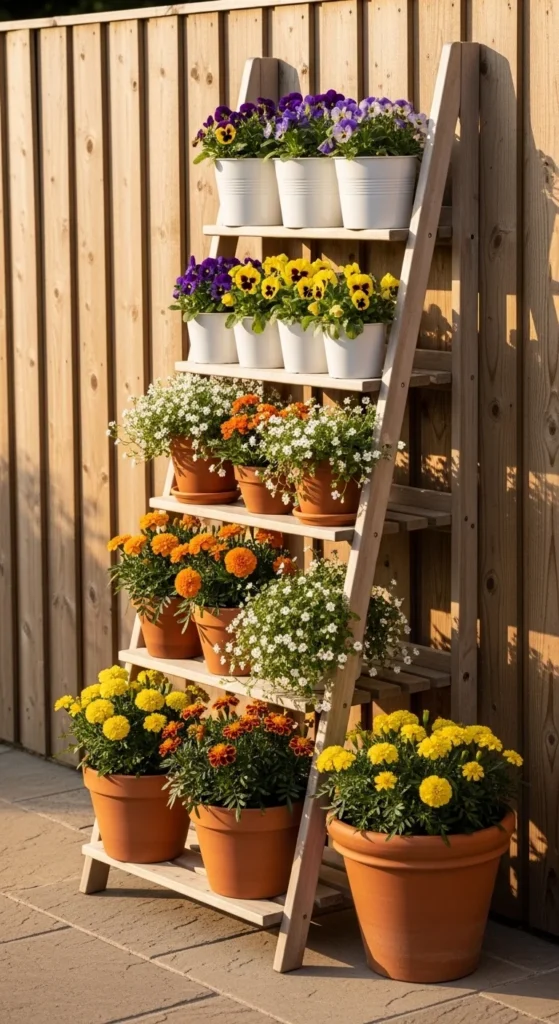
Choose the style that fits your lifestyle:
- Want low effort? Go for ladder shelves + baskets.
- Want wow-factor? Do trellis + vines + trailing blooms.
Step 3: Choose Flowers That Love Vertical Growing
The best vertical flower gardens use a mix of climbers, trailers, and compact fillers so it looks full from day one.
Go-to vertical flower mix
Climbers (the “wall makers”)
- morning glory
- sweet peas
- clematis
- hyacinth bean vine (fast coverage)
Trailers (the “waterfall”)
- trailing petunias
- bacopa
- lobelia
- nasturtiums (also climbs/trails)
Compact fillers (the “color pops”)
- marigolds
- alyssum
- dwarf zinnias
- pansies (cool seasons)
Pro tip: mix annuals + perennials
Perennial vines can take time to establish, so pair them with fast annual vines for instant impact.
Step 4: Use Lightweight Soil + Reliable Drainage (This Matters a LOT)
Vertical planters dry out faster, and they can also get waterlogged if drainage is poor. You want soil that holds moisture but never stays soggy.
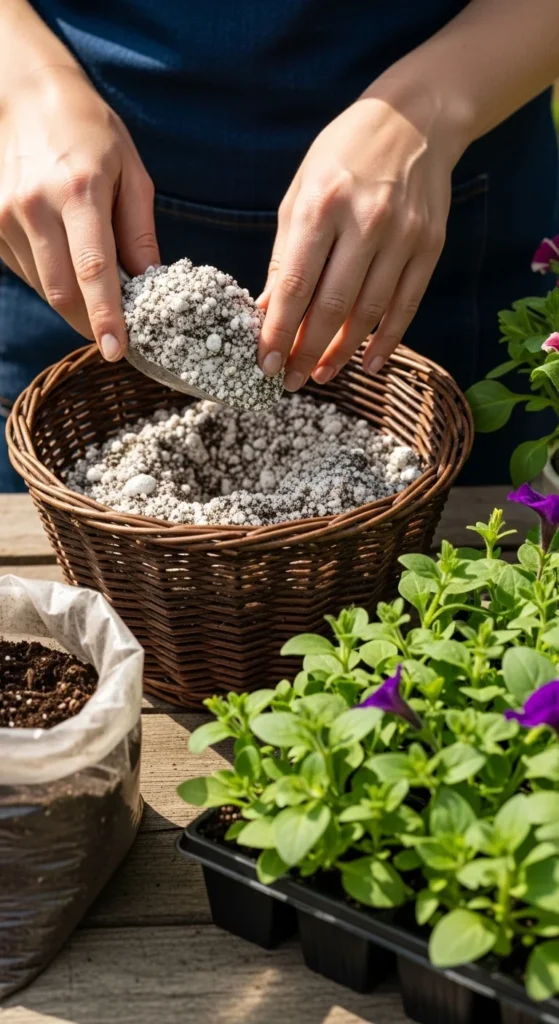
Best soil recipe for vertical flowers
- quality potting mix (lightweight)
- a handful of perlite for extra drainage
- compost (small amount) for bloom power
Avoid heavy garden soil—too dense for containers.
Step 5: Train Vines Early (So They Look “Designed,” Not Messy)
Vines can either look magical… or like a tangled hairball. The difference is training early.
Simple vine-training routine
- Add your trellis at planting time
- Gently guide young vines where you want them
- Use soft ties or twine (nothing that cuts stems)
- Check weekly and re-tie as they grow
Easy design ideas
- Fan shape (spreads like a bouquet)
- Crisscross (fills space fast)
- Espalier-inspired (flat patterns on a wall)
Step 6: Water + Feed Like a Vertical Gardener (Because Pots Leach Fast)
Vertical containers dry quickly and wash nutrients out faster than ground beds—especially in heat.
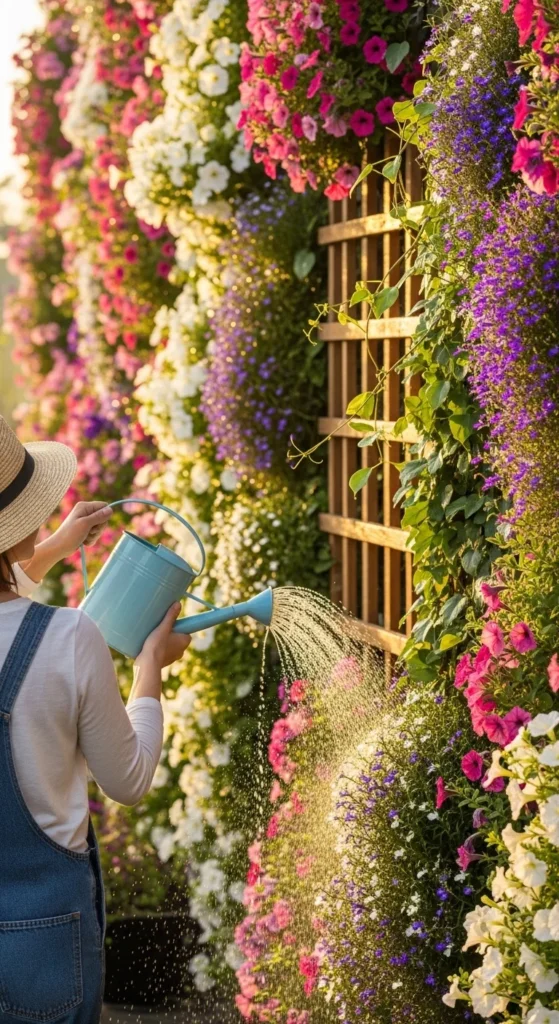
Watering tips that actually work
- Water in the morning
- Check top planters first (they dry out fastest)
- Add mulch or pebbles on top of soil to reduce evaporation
- If you can, use drip irrigation for consistency
Bloom-boost feeding
For heavy flowering, feed every 2 weeks with a balanced fertilizer (container-safe). Your petunias will thank you.
Step 7: Keep It Healthy and Full (Prune for More Blooms)
A vertical garden looks best when it’s lush—not crowded and stressed.
Quick weekly maintenance
- Deadhead (remove spent blooms)
- Trim vines for airflow
- Rotate baskets if one side is leaning toward light
- Watch for pests (especially aphids and spider mites)
Pruning isn’t just “cleanup”—it pushes more branching and more flowers.
A Simple “Perfect Combo” You Can Copy
If you want one foolproof plan, try this mix:
- Trellis: sweet peas or morning glory
- Middle pots: marigolds + alyssum
- Hanging baskets: trailing petunias + bacopa
- One pollinator pocket: lobelia (bees love it)
It blooms fast, looks full, and photographs beautifully.
Final Takeaway
Vertical flower gardens are all about layering:
- climbers for height
- trailers for waterfall drama
- fillers for color bursts
Start small, train early, water consistently, and you’ll have a living wall that makes your space feel like a garden getaway.
🌸 Save this guide for later—and when you build yours, take a photo before the first big bloom flush. That “before and after” is so satisfying.
Leave a Reply