

Dreaming of baskets of tomatoes, crunchy cucumbers, and fresh beans — but only have a tiny patio or balcony?
Good news: you don’t need a big backyard to grow a big harvest.
Vertical gardening lets you grow up instead of out, turning fences, trellises, and towers into food-producing walls. With the right setup, many climbers can yield up to 4× more per square foot than traditional beds.
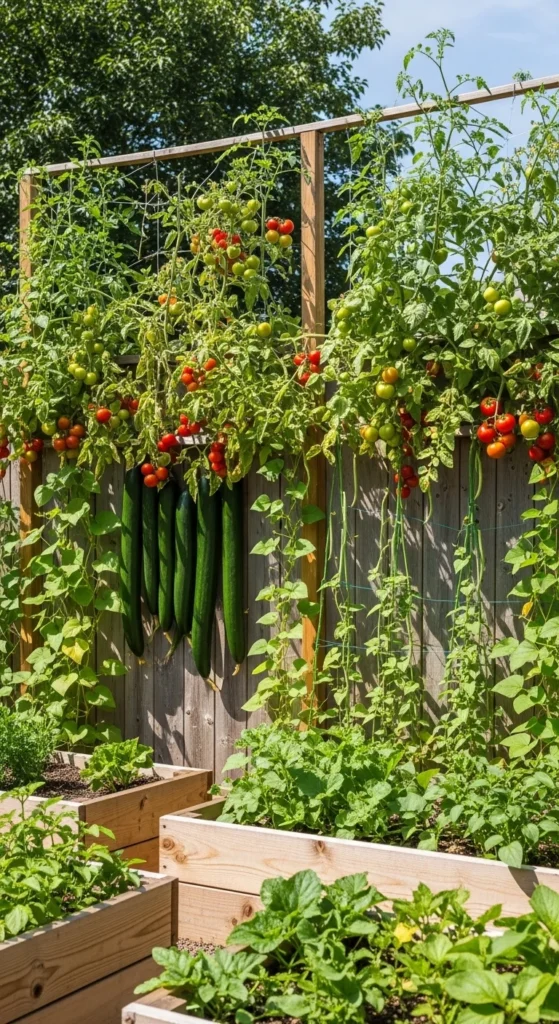
If you choose the right crops, sturdy supports, and smart watering, you’ll be harvesting fresh veggies from even the smallest space.
Let’s walk through it step by step.
Step 1: Choose the Right Vegetables (Climbers Win Every Time)
Not all vegetables love growing vertically. Focus on plants that naturally climb or trail.
Best veggies for vertical gardens
- pole beans
- cucumbers
- cherry or indeterminate tomatoes
- peas
- zucchini (trained upward)
- melons (with strong support)
- strawberries (in side pockets)
- leafy greens for lower levels
Skip these
- large pumpkins
- root veggies (carrots, potatoes)
- bush varieties that don’t climb
Rule of thumb: If it vines, it shines.
Step 2: Install Supports Before You Plant
This is one of the most common beginner mistakes.
Trying to add a trellis after planting can damage roots and stress young plants.
Always set up first
- trellises
- towers
- cattle panels
- netting
- arches
- ladders or mesh frames
Popular support ideas
- cattle panel tunnels
- wall-mounted grids
- ladder-style racks
- tiered towers
- stackable planters
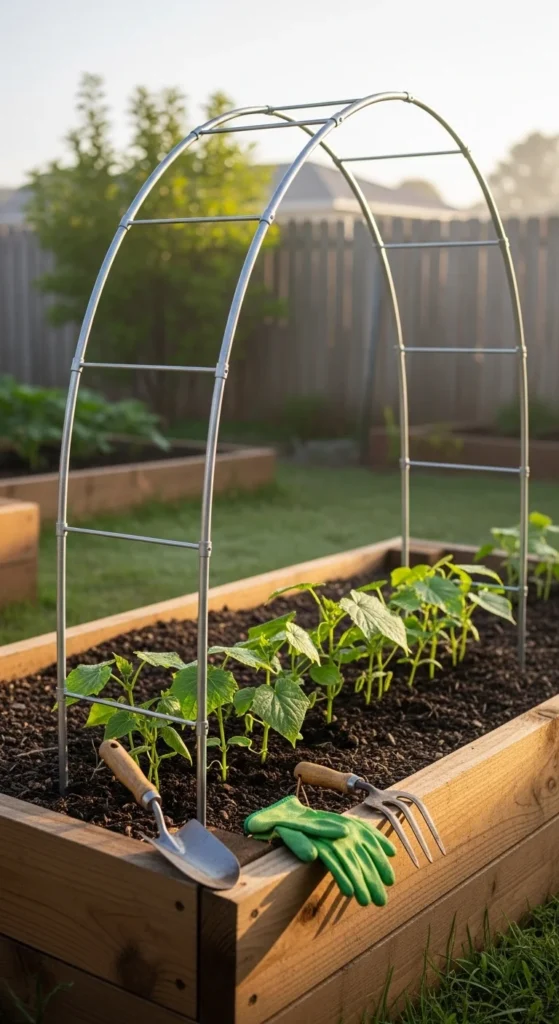
The stronger your support, the heavier your harvest can be.
Tomatoes loaded with fruit get surprisingly heavy!
Step 3: Pick a Vertical Structure That Fits Your Space
Your setup depends on how much room you have.
Small balcony or patio
- vertical towers
- stacked pocket planters
- hanging containers
- ladder gardens
Medium yard or fence
- panel trellises
- cattle panel arches
- mesh frames
- wood lattices
High-density option
Tiered towers (like stack systems) can grow 30–40+ plants in just 2 square feet.
Great for strawberries, beans, lettuce, and herbs.
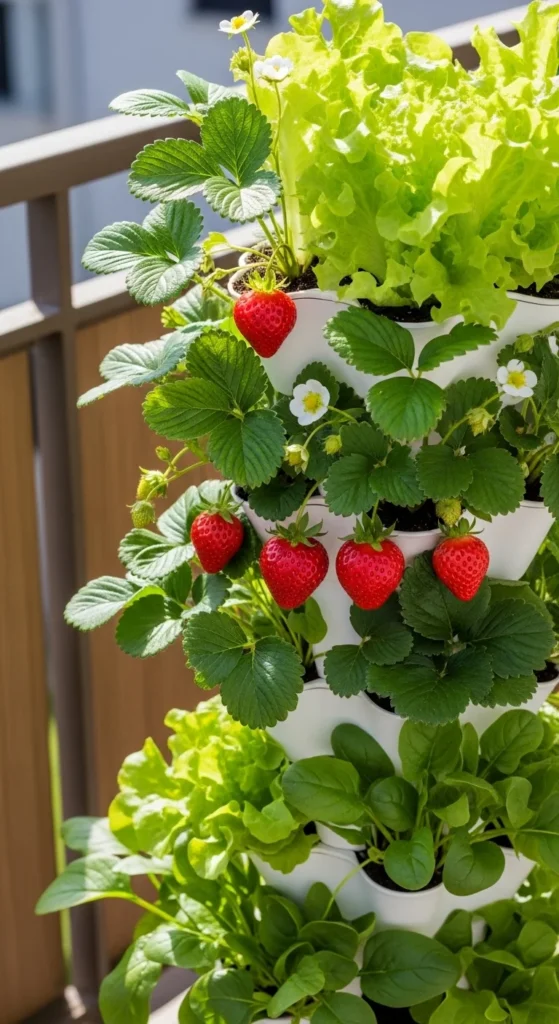
Choose what feels manageable. Simple setups often perform best.
Step 4: Use Nutrient-Rich, Lightweight Soil
Vertical gardens dry out faster than ground beds, so soil quality matters more.
Ideal mix
- potting soil
- compost or aged manure
- perlite for drainage
- optional biochar for moisture retention
Why this works
- drains well
- stays light
- holds nutrients
- prevents root rot
Heavy garden soil compacts and suffocates roots — avoid it.
Fill containers to about 2 inches below the rim to prevent overflow.
Step 5: Plant Smart by Height and Weight
Strategic placement keeps plants healthy and easy to harvest.
Layout guide
- Top: light climbers (beans, peas)
- Middle: tomatoes, cucumbers
- Bottom: leafy greens, spinach, onions
- Edges: strawberries or trailing plants
Why it helps
- better airflow
- more sunlight
- easier watering
- simpler harvesting
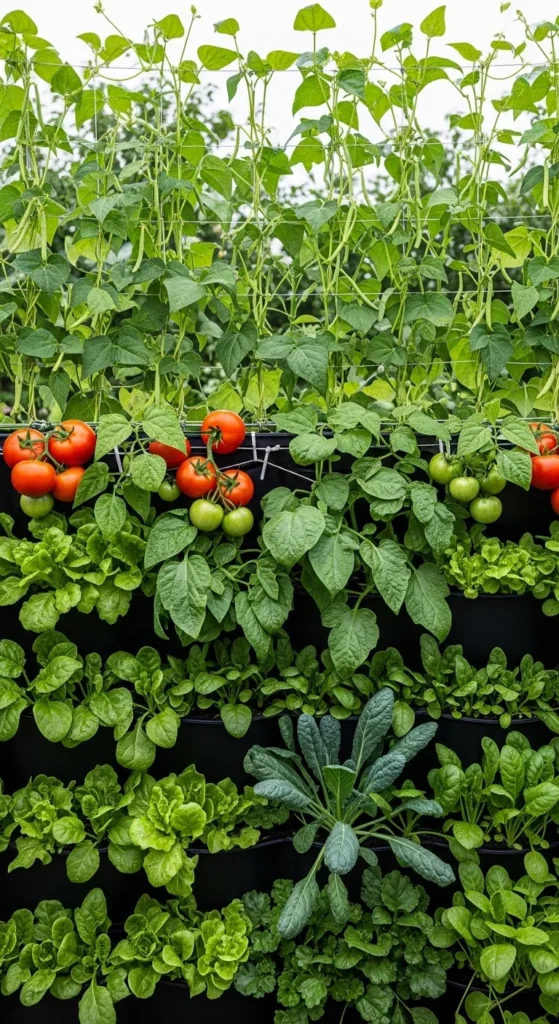
Think of it like shelves in your fridge — organize for convenience.
Step 6: Water Consistently (Gravity Dries the Top Fast)
Watering is the biggest challenge with vertical systems.
Top plants dry out first, bottoms stay wetter.
Easy watering tips
- install drip irrigation or soaker hoses
- water deeply once or twice weekly
- mulch soil surface
- check top tiers daily in hot weather
Optional upgrades
- self-watering reservoirs
- slow-drip bottles
- automated timers
Consistent moisture = better yields and fewer bitter vegetables.
Step 7: Train and Prune for Bigger Harvests
Vertical veggies need a little guidance.
Training methods
- tomato clips
- soft garden twine
- nylon loops
- netting
Tie loosely — tight ties damage stems.
Pruning tips
- remove lower tomato leaves
- thin crowded vines
- pinch growing tips for bushier plants
- harvest regularly
Better airflow = fewer diseases and stronger plants.
Step 8: Maintain Weekly (5 Minutes Is Enough)
Quick checkups prevent most problems.
Weekly routine
- inspect ties
- look for pests
- prune excess growth
- top up soil
- fertilize lightly
Vertical systems grow fast — small maintenance keeps them productive.
Final Thoughts
A vertical vegetable garden is one of the smartest ways to grow food in small spaces.
With:
- climbing crops
- strong supports
- good soil
- steady watering
- light pruning
You can turn a wall, fence, or balcony into a mini farm.
Fresh tomatoes, crisp cucumbers, sweet beans — all within arm’s reach.
🌱 Save this guide and start your vertical veggie garden this season! Your future meals will thank you.
Leave a Reply