

Want a garden that grows up instead of taking over your patio? Outdoor vertical gardens are perfect for fences, sunny walls, and small yards—especially when you build them with weather, wind, and watering in mind. The secret isn’t fancy tools… it’s choosing a simple structure that stays sturdy and doesn’t dry out every afternoon.
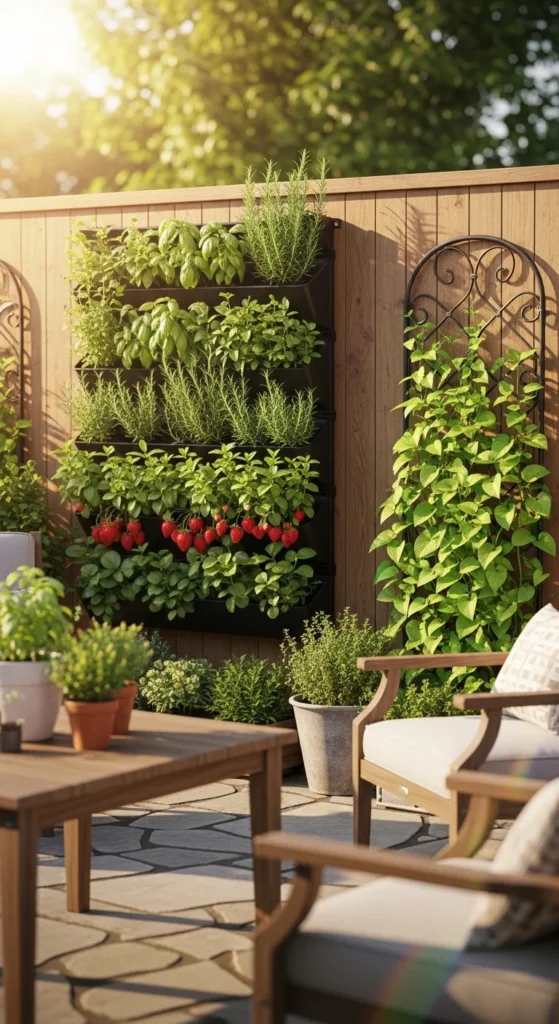
Let’s build an outdoor vertical garden the easy way—fast setup, strong materials, and plants that actually thrive outside.
Step 1: Pick the Sunniest Spot (Before You Build Anything)
Outdoor vertical gardens love light. If your wall gets weak sun, your plants will always look “meh,” no matter how pretty the setup is.
Quick “sun scout” checklist
- Aim for 6–8+ hours of sun for veggies and most herbs
- A south-facing wall (in many regions) is usually your best bet
- Watch the spot for shade from trees, roofs, or neighboring walls
If your space is partly shaded
Choose plants that tolerate it:
- leafy greens (some varieties)
- mint (contained—mint can spread)
- certain ornamentals and shade-tolerant vines
Step 2: Choose an Easy Structure That Can Handle Weather
Outdoors means wind, rain, weight, and sun heat—so your structure matters more than indoor builds. Pick one of these beginner-friendly options:
Easiest outdoor vertical garden styles
- Trellis + climbers (fast coverage, great for privacy)
- Gutter garden (perfect for herbs, greens, strawberries)
- Pallet planter wall (cheap, looks rustic, great for small pots)
- PVC/pipe tower (budget-friendly, space-saving)
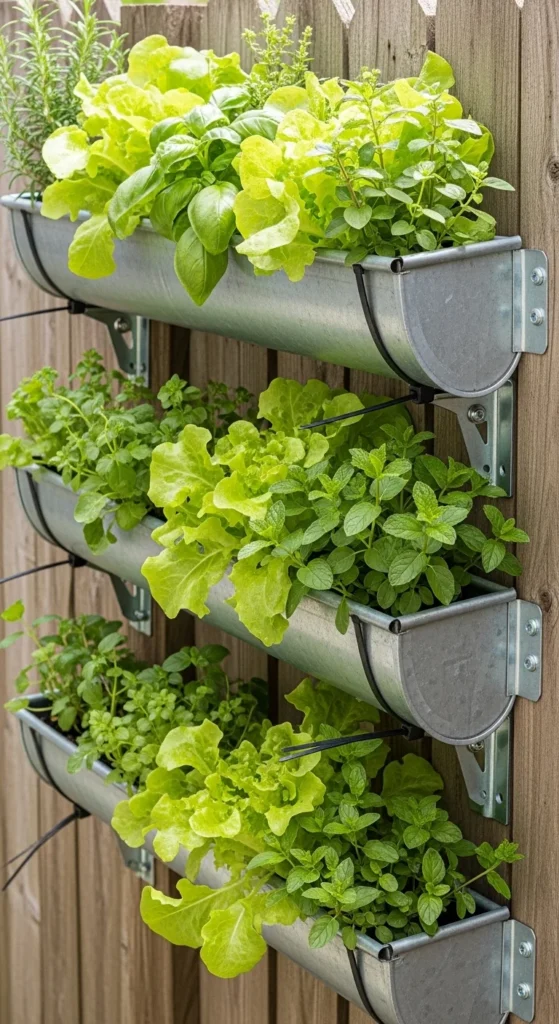
Rule of thumb: the heavier the soil and plants, the stronger your frame and anchors need to be.
Step 3: Build It Sturdy (So Wind Doesn’t Knock It Over)
This is where most outdoor vertical gardens fail: weak mounting.
For fence or wall-mounted systems
- Use strong brackets and lag screws into solid wood posts/studs
- If mounting to a fence, attach into the fence posts, not just thin slats
- For stacked gutters, level every horizontal row so water drains evenly
For freestanding frames (best for patios)
- Use pressure-treated wood for outdoor durability
- If you’re doing posts, set them in concrete footings for stability
- Add a diagonal brace if your area gets strong wind
Waterproofing (don’t skip this)
If your vertical garden sits against a wall:
- add a waterproof backing (plastic sheeting behind the structure)
- leave a small air gap so moisture doesn’t get trapped
Step 4: Set Up Watering That Reaches the Top
Outdoor vertical gardens dry out faster than ground beds—especially the top row. If the top dries, plants struggle and you’ll feel like you’re constantly watering.
Easy watering upgrades
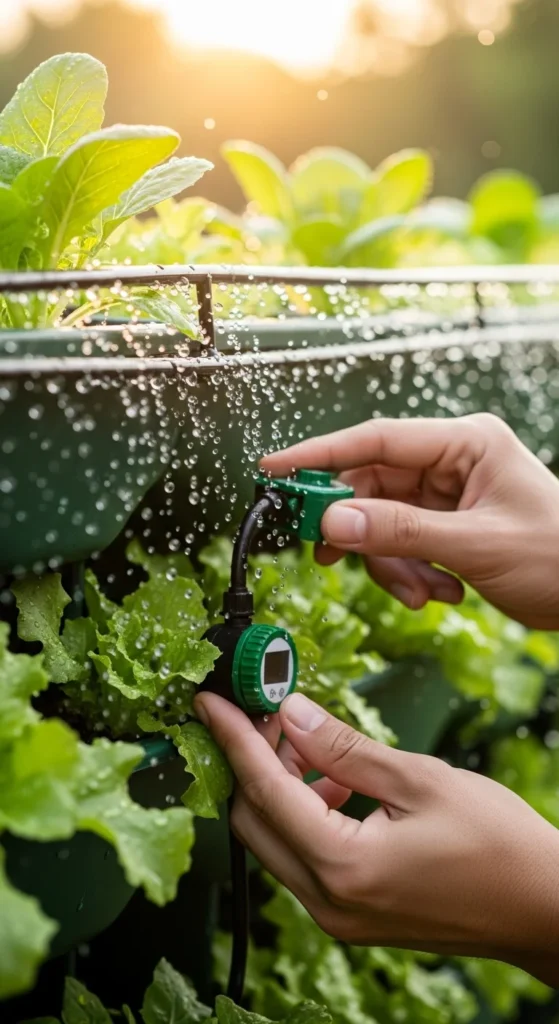
- Soaker hose or drip line across the top row
- Let water flow down through layers
- Add a timer if you want “hands-free” watering
Moisture hacks that help in hot weather
- Add a thin layer of mulch on top pockets/pots to reduce evaporation
- Water deeply early in the morning
- During the first month, focus on root establishment (consistent watering matters most)
Step 5: Choose Plants That Love Growing Up
Your plant choices should match your structure. Some plants are made for vertical success—and some just get heavy and flop.
Best climbers for outdoor vertical gardens
- beans and peas (lightweight, fast)
- tomatoes (needs strong support)
- cucumbers (trellis-friendly)
- grapes (for larger, sturdy setups)
- flowering climbers (for privacy + beauty)
Best pocket/gutter plants
- herbs: basil, chives, parsley, thyme
- greens: lettuce, spinach, arugula
- strawberries (great in pockets or top-heavy rows for easy picking)
Low-upkeep perennial options
- lavender (sun + good drainage)
- sedum (tough, drought-tolerant)
- hardy herbs depending on climate
Tip: Plant smaller starts at the bottom and let growth travel upward—your wall fills in more naturally.
Step 6: Keep It Easy With a Simple Maintenance Routine
Vertical gardens look magical when they’re tidy. Without quick upkeep, vines get heavy, pests multiply, and airflow disappears.
Weekly “5-minute outdoor check”
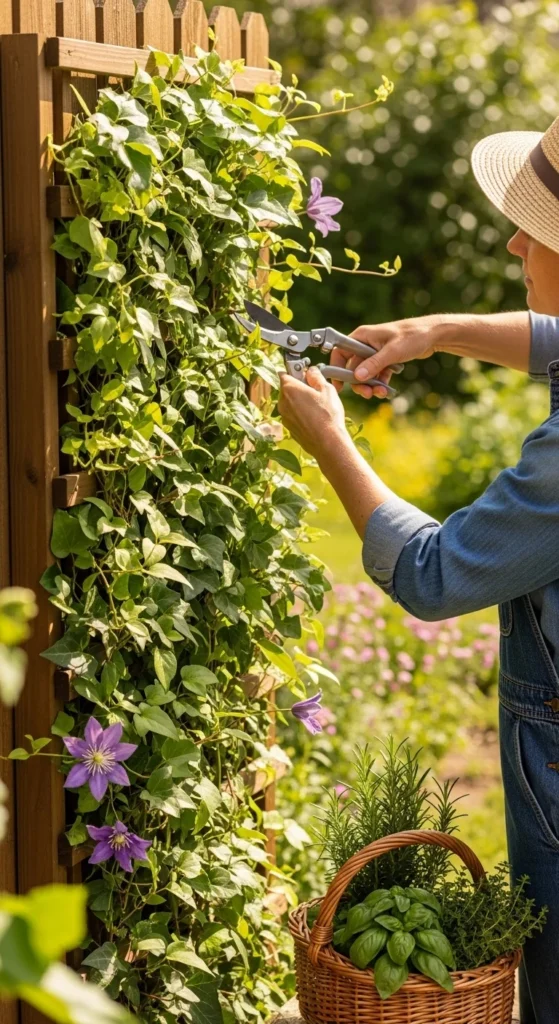
- Trim fast growers so they don’t shade everything
- Check ties, brackets, and anchors (wind loosens things)
- Look for pests under leaves
- Re-level gutters if anything sags
- Refill soil in pots that settle after watering
Seasonal bonus: winter protection
If you grow perennials in cold weather:
- wrap exposed sections with burlap
- move portable towers closer to shelter
- drain and store irrigation lines if freezing is common
Final Takeaway
An outdoor vertical garden is “easy” when you design it for real life outside:
- Start with full sun
- Build with weather-resistant materials
- Anchor it like wind is coming (because it is)
- Add drip or soaker watering so the top row doesn’t suffer
- Pick plants that love climbing or compact containers
Save this guide, choose one structure (gutter, trellis, pallet, or tower), and build your first vertical garden this weekend. 🌿 Save this idea for later—and grow up, not out!
Leave a Reply