


Evergreen plants provide clarity and structure all year. They hold their shape through frost, heat, and seasonal shifts, giving gardens a stable backbone when other plants fade. With the right selection—shrubs, grasses, small trees, and groundcovers—you can build borders and landscapes that stay defined through every season. The following ideas focus on evergreens that keep their form, require simple upkeep, and offer texture, rhythm, and calm visuals throughout the year.
1. Boxwood Mounds for Classic Structure

Boxwood is a long-standing favorite for structure. Its tight foliage makes it easy to shape into spheres, cubes, or natural mounds. Plant boxwood along borders, pathways, or entry points. Space mounds evenly for rhythm. They stay green through heat and cold, which keeps a garden looking tidy even during dormant months. If your climate is windy, choose varieties with dense branching. Trim lightly once or twice a year to maintain shape. Avoid overwatering during winter, but keep soil slightly moist during dry spells. Boxwood pairs beautifully with ornamental grasses, perennials, and hardscape features like stone steps or gravel beds. If your garden feels flat, adding a few boxwood mounds helps anchor the space.
2. Japanese Holly for Sharp Definition
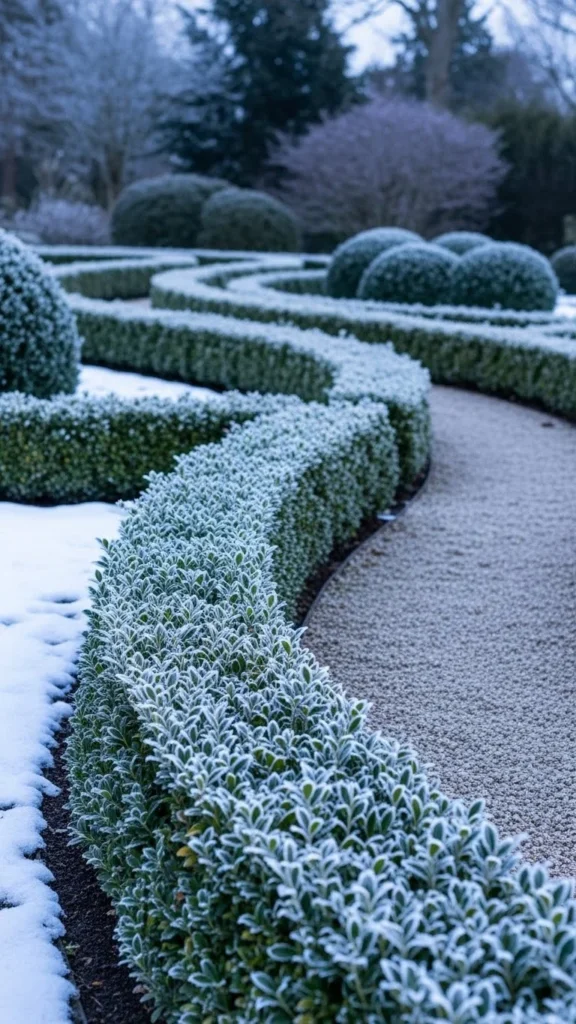
Japanese holly resembles boxwood but offers a glossier leaf and a sharper shape. Plant it as hedging, geometric blocks, or stand-alone shrubs. Its branches maintain form through all seasons, even in harsh winter winds. Japanese holly works well in modern or structured gardens because of its clean outline. Space shrubs tightly for hedges or place them individually in repeating intervals. Water regularly during establishment and trim lightly to encourage dense growth. Pair with gravel or stone borders for a striking winter frame.
3. Wintergreen Euonymus for Leafy Brightness

Wintergreen euonymus keeps its glossy leaves throughout the year. Variegated varieties brighten shady corners with white or gold accents. Plant them along edges, against fences, or as mid-height anchors. These shrubs hold their shape with minimal trimming. Use them to break up darker evergreens or to highlight transitions between plant groups. They also work well in small gardens due to their compact footprint. Mulch around the base to help retain moisture.
4. Dwarf Conifers for Sculptural Presence

Dwarf conifers create strong winter silhouettes. Their structured branches and rich green or blue tones stand out even in snow. Choose varieties like dwarf spruce, pine, or fir. Plant them in groups of three for a natural arrangement or place a single specimen as a focal point. They grow slowly and keep a neat outline year-round. Add gravel or stone mulch around the base for contrast and moisture control.
5. Lavender for Soft Evergreen Mounds

Lavender maintains its shape through winter, especially in mild climates. Its silvery foliage adds color when the rest of the garden fades. Plant lavender in rows, mounds, or clusters. Trim lightly after flowering to keep its rounded form. Lavender thrives in well-drained soil, so amend clay-heavy areas with gravel or sand. Its scent also lingers during cooler seasons, adding another layer to the garden experience.
6. Rosemary as Upright or Cascading Structure

Rosemary stays evergreen and forms tidy shapes depending on the variety. Upright forms create small shrubs, while trailing forms drape beautifully over walls or raised beds. Plant rosemary near paths or seating areas so you can enjoy its aroma. Keep the soil well-drained and prune lightly to control shape. Rosemary remains full and structured year-round, adding both beauty and function to your landscape.
7. Heuchera for Year-Round Color
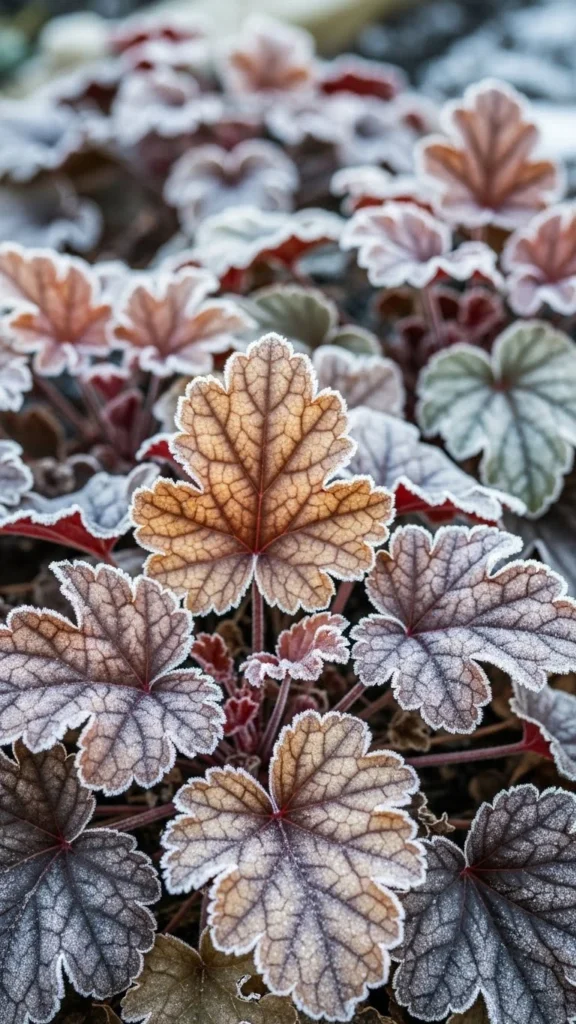
Heuchera foliage holds its color through every season. Varieties span shades of purple, bronze, green, and silver. Plant them at the front of borders or near pathways where their leaves remain visible even under snow. They hold a rounded form that does not collapse easily. Pair with grasses or boxwood for texture contrast. Water consistently in summer and mulch lightly for winter protection.
8. Evergreen Ferns for Textural Softness

Many ferns—including Christmas fern and autumn fern—stay green through winter. Their arching fronds soften the sharper silhouettes of shrubs and grasses. Place ferns in shaded or partially shaded areas. Add leaf litter or mulch around the base to keep soil cool and moist. Ferns maintain their shape well and complement structural evergreens beautifully.
9. Daphne for Glossy Leaves and Winter Interest

Daphne offers dense evergreen foliage and a rounded, polished form. Place it near paths or seating areas for its subtle scent during part of the year. It prefers partial shade and rich soil. Daphne holds its shape with minimal trimming and works well as a mid-level anchor in borders. Combine with heuchera or low conifers for a layered look.
10. Yew for Formal Hedges and Shapes

Yew is one of the best evergreens for precise shaping. It forms hedges, pillars, curves, or cubes depending on your design. Plant yew along pathways, as border dividers, or to frame garden entrances. Its dark green needles add contrast to lighter plants. Yew grows slowly and responds well to trimming, holding crisp shapes year-round.
11. Mugo Pine for Rounded Evergreen Masses

Mugo pine forms low rounded shapes that stay consistent through every season. Use it in rock gardens, sloped beds, or as a structural accent. It grows slowly and rarely requires trimming. Mugo pine handles harsh winters well, making it a reliable evergreen anchor. Add gravel around the base for a mountain-garden feel.
12. Hellebores for Winter Green Texture

Hellebores stay green through winter, offering shape when most perennials fade. Their leaves arch outward in a tidy pattern, creating a natural dome. Plant hellebores near paths or under shrubs. They pair well with ferns, heuchera, and dwarf conifers. Their structure creates soft yet defined moments in a winter garden.
13. Osmanthus for Dense Evergreen Form

Osmanthus creates dense, tidy shrubs with glossy leaves. It works well in hedges or as stand-alone structural plants. Plant it along foundations or mixed borders. Osmanthus grows steadily and holds its form during winter weather. Its foliage complements grasses, ferns, and stonework.
14. Skimmia for Low, Rounded Evergreen Masses

Skimmia forms low rounded shrubs that stay green all year. Plant it in shaded or partially shaded spots. Skimmia adds winter berries when both male and female plants are present. Its compact habit keeps borders tidy. Combine with ferns or heuchera for a layered look.
15. Juniper for Strong Silhouette

Juniper offers strong structure with upright, spreading, or ground-hugging forms. It handles wind, frost, and dry soil well. Use upright varieties as focal points and spreading forms as groundcover. Juniper’s needle texture adds rugged contrast in winter gardens. Its shape rarely collapses, even after heavy frost.
16. Hebe for Compact Evergreen Form
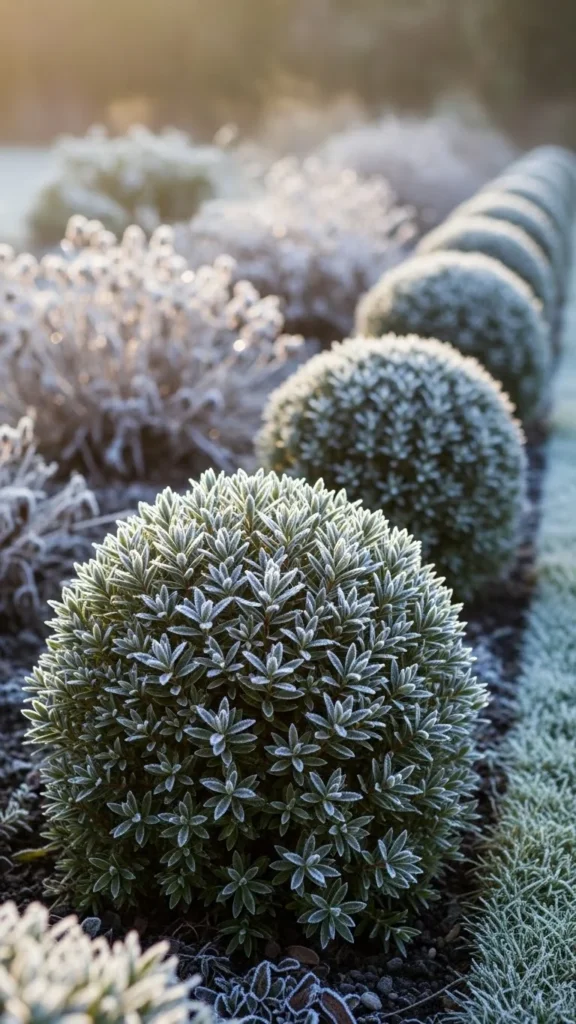
Hebe stays compact and tidy all year. Its small leaves create smooth mounds that contrast well with taller plants. Choose hardy varieties that withstand winter temperatures in your area. Plant hebe near pathways or at border edges. Trim lightly after flowering to maintain shape. Their evergreen foliage pairs nicely with conifers and grasses.
17. Dwarf Spruce for Architectural Interest

Dwarf spruce offers structured shapes—globes, cones, or pyramids. Plant them as accents in mixed borders or rock gardens. Their dense needles stay intact through snow and frost. Dwarf spruce works well in formal or informal garden styles. Water young plants regularly, then reduce watering as they mature.
18. Mahonia for Bold Evergreen Foliage

Mahonia’s bold leaves and layered form make it a standout evergreen. Plant it in partial shade for best growth. Its upright posture holds through winter, adding height and drama. Mahonia pairs well with ferns and heuchera because of its contrasting leaf texture. Mulch around its base to support moisture retention.
19. Evergreen Sedges for Continuous Shape

Evergreen sedges such as carex maintain their form year-round. They create small mounds that soften edges and fill gaps between shrubs. Plant sedges along walkways, under larger shrubs, or in rock gardens. They require little trimming and adapt well to both sun and shade, depending on the variety.
20. Littleleaf Cotoneaster for Low Evergreen Structure

Cotoneaster forms tidy low mats or mounds. It keeps small glossy leaves throughout the year and sometimes retains red berries into winter. Use cotoneaster on slopes, edges, or as a ground-hugging accent. Its structure stays neat even in cold months. Trim lightly in spring to maintain shape.
21. Pieris for Layered Evergreen Form

Pieris creates beautiful tiered foliage that stays green year-round. Plant pieris in partial shade. Its layered look adds depth to borders and complements darker evergreens. Use it as a mid-height plant to connect shrubs and groundcovers. Water regularly during dry periods.
22. Dwarf Arborvitae for Clean, Upright Form
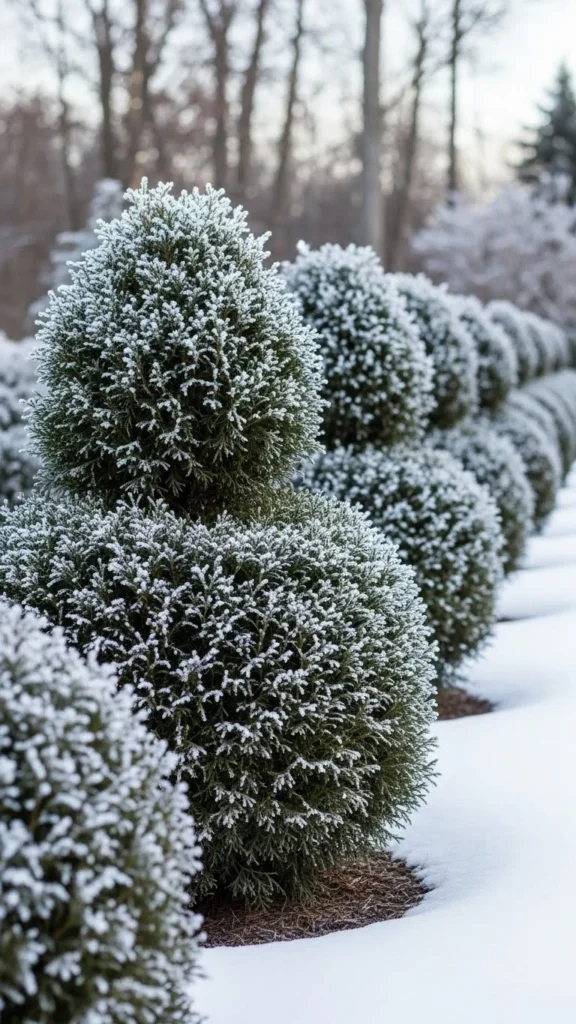
Dwarf arborvitae stays upright and compact. Its tight form makes it perfect for pathways, small gardens, or foundation beds. Choose varieties with slow growth for long-term structure. Pair arborvitae with perennials or grasses to soften the overall look. Water consistently during the first year to support strong roots.
23. Evergreen Groundcovers for Winter Coverage
Groundcovers such as creeping juniper, vinca, or thyme maintain green coverage through winter. Use them to fill gaps between shrubs or to stabilize slopes. They create a unified base that makes taller evergreens look intentional. Groundcovers also help control weeds. Water them lightly during dry spells.
24. Blue Star Juniper for Year-Round Color
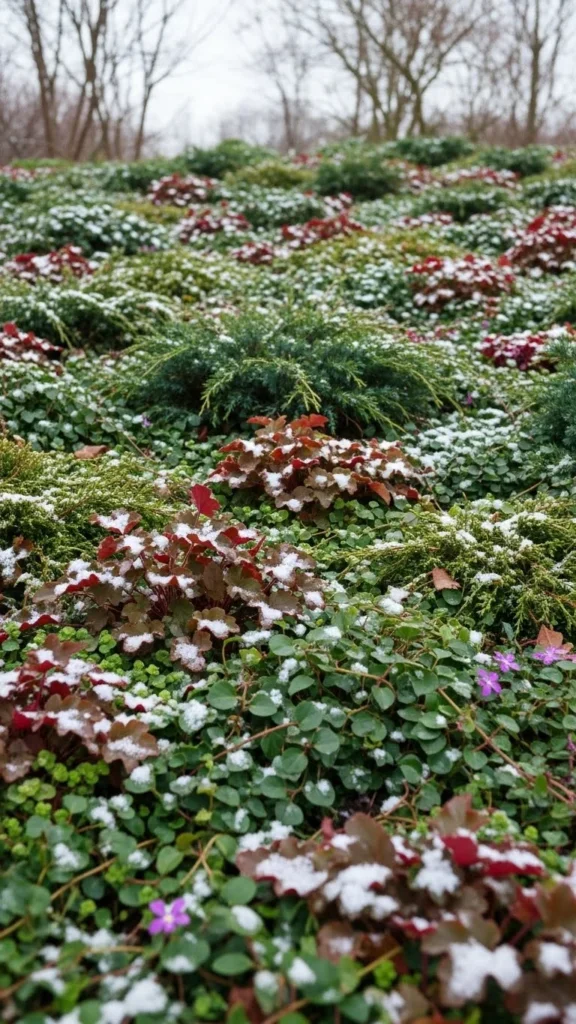
Blue star juniper offers striking blue tones, which add contrast to green-heavy winter gardens. Its low mounded form stays neat and compact. Plant it in sunny areas with well-drained soil. The color stands out beautifully against stone, gravel, or snow. Blue star juniper works well as edging, grouping, or in rock gardens.
Conclusion
Evergreen plants create stability, rhythm, and definition in any garden. By combining shrubs, groundcovers, conifers, and bold foliage plants, you can build a landscape that holds its shape through every season. These evergreens offer reliable form, simple care, and long-lasting structure that keeps gardens visually strong even in winter months. Try mixing several ideas to create year-round planting that feels balanced, calm, and beautifully composed.

Leave a Reply