


Winter balconies offer more potential than most gardeners expect. With clever container choices, vertical structures, compact vegetable varieties, and simple cold protection, even small spaces can produce steady harvests. Many winter vegetables adapt well to balcony microclimates, especially when grouped tightly or grown in stackable systems. These ideas help you use limited space effectively while keeping your balcony tidy, organized, and productive through the cold season.
1. Vertical Wall Planters for Leafy Greens

Vertical wall planters turn unused wall space into a productive growing area. Choose pockets or stackable frames that attach securely to balcony railings or walls. Fill them with hardy greens like spinach, lettuce, or mustard. These vegetables stay compact and thrive in cool temperatures. Use shallow soil depth because leafy greens rarely require deep root space. Water gently from the top and let excess drain down the lower pockets. This system keeps the balcony floor open while offering multiple planting spots. If sunlight is limited, place the vertical frame near the brightest section of your balcony or add a small clip-on grow light. This setup works well for renters since it doesn’t require drilling into walls. Rotate pockets occasionally so all plants receive even light.
2. Stackable Planter Towers for Herbs and Veggies

Stackable planter towers allow you to grow multiple vegetables upward instead of outward. They work well for herbs, kale, dwarf lettuce, and bok choy. Each tier holds separate soil pockets, making watering simple. Add a small tray at the bottom to catch excess water. Place the tower near a corner where the wind is minimal. For extra warmth, wrap the lower tiers with burlap during cold nights. Replant upper sections with fast-growing greens every few weeks for a steady supply. Towers fit even the smallest balconies and keep the floor clutter-free.
3. Rail-Hanging Planters for Winter Greens

Rail planters are perfect when floor space is limited. Choose long containers that securely hook onto balcony rails. Plant compact varieties like arugula, spinach, or lettuces. Rail planters receive great airflow and sunlight, which winter greens enjoy. Because they sit higher, they avoid cold pockets that form near the balcony floor. Use lightweight soil and water slowly so runoff doesn’t spill over edges. If frost is expected, lay a temporary fabric cover over the rail planters at night.
4. Compact Cold Frames for Small Balconies

Mini cold frames shield vegetables from cold winds, making them ideal for balconies. Place them in corners where natural protection exists. Grow hardy vegetables such as kale, chard, or winter lettuce. Lift the lid during mild days for airflow, then close it at night. Cold frames help maintain warmer soil and speed up growth. You can build a simple frame using recycled windows and a wooden box. This idea works well when your balcony receives strong winter winds.
5. Window Box Planters for Micro-Root Crops

Window boxes offer enough depth for compact root vegetables. Plant small carrot varieties, radishes, or turnips. These crops grow well in cooler temperatures and don’t require deep soil. Place window boxes along walls or railings where the soil warms slightly during the day. Water lightly to avoid waterlogging. Plant seeds in intervals every two weeks for steady harvests. Window boxes also keep your balcony looking orderly.
6. Grow Bags for Portable Winter Veggies

Grow bags offer flexibility and great drainage. Fill them with lightweight soil and plant hardy vegetables like chard, kale, or cabbage. Move them around to catch more sunlight as the season shifts. Because grow bags are breathable, roots stay healthy even in cold conditions. They fold away easily when not in use. Use saucers under bags to keep your balcony floor clean.
7. Shelf Units for Multi-Level Vegetable Growing
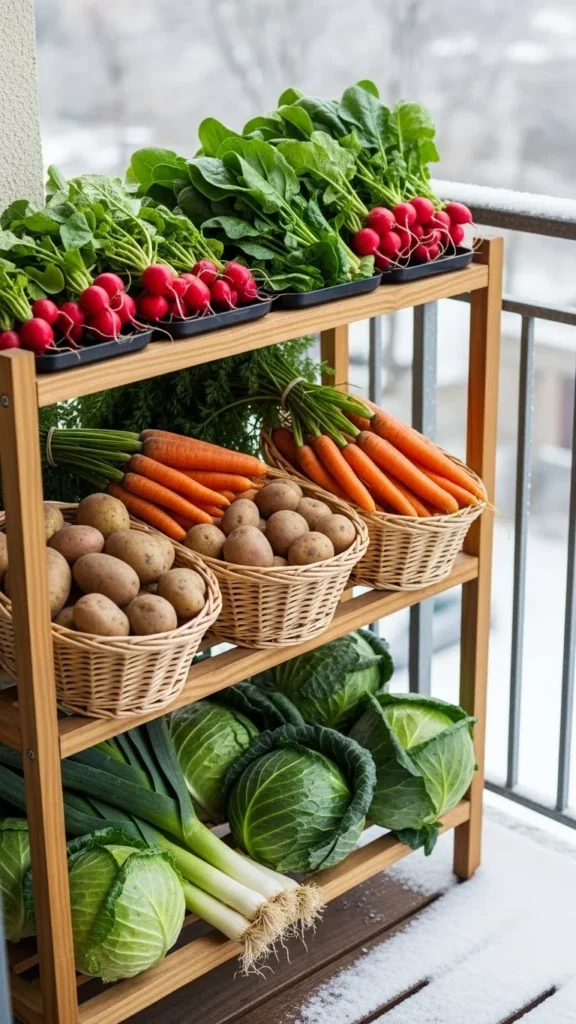
Shelving creates multiple growing levels without occupying extra floor space. Use sturdy metal shelves that handle outdoor conditions. Place fast-growing greens on the top shelf for maximum light exposure. Root crops and herbs fit well on lower shelves. Line each shelf with trays to prevent mess. Add a small grow light to the top tier if sunlight is limited. This vertical setup keeps plants organized and accessible.
8. Mason Jar Hydroponic Greens

Hydroponic mason jars help you grow winter greens without soil. Fill jars with nutrient water and place net cups on top. Add lettuce or basil seedlings. Hydroponic growth is quick and tidy, making it perfect for balconies with limited space. Place jars where they receive bright indirect light. Replace nutrient water weekly. This low-maintenance method fits well on small ledges or window sills.
9. Hanging Basket Vegetables for Airy Layouts

Hanging baskets keep vegetables off the floor and create an airy look. Use them for winter-friendly greens such as spinach, mizuna, or baby chard. Choose deep baskets so roots have enough space. Add coconut coir for moisture retention. Hang baskets near walls to protect them from strong winds. Water gently to avoid dripping. This setup helps maximize vertical space while keeping the balcony uncluttered.
10. PVC Vertical Pipes for Leafy Greens

PVC pipe planters make excellent vertical gardens. Drill holes along the pipe length and fill with lightweight soil. Insert leafy greens like lettuce or mustard in each opening. Place a drip tray at the bottom for clean watering. Pipes fit well in tight corners. Add a simple support rope to keep the pipe steady during windy days. This DIY method saves space and creates a clean vertical look.
11. Indoor-Adjacent Balcony Growing with Heat Spill

Balconies near sliding doors receive a bit of indoor warmth. Place containers for winter vegetables right beside the glass. This microclimate keeps plants slightly warmer, helping growth. Choose crops like spinach, kale, chard, or parsley. Use trays underneath pots to catch drips. If your balcony is shaded, add reflective surfaces like light-colored walls or mirrors to bounce sunlight onto plants.
12. Plastic Storage Tubs Repurposed as Deep Beds
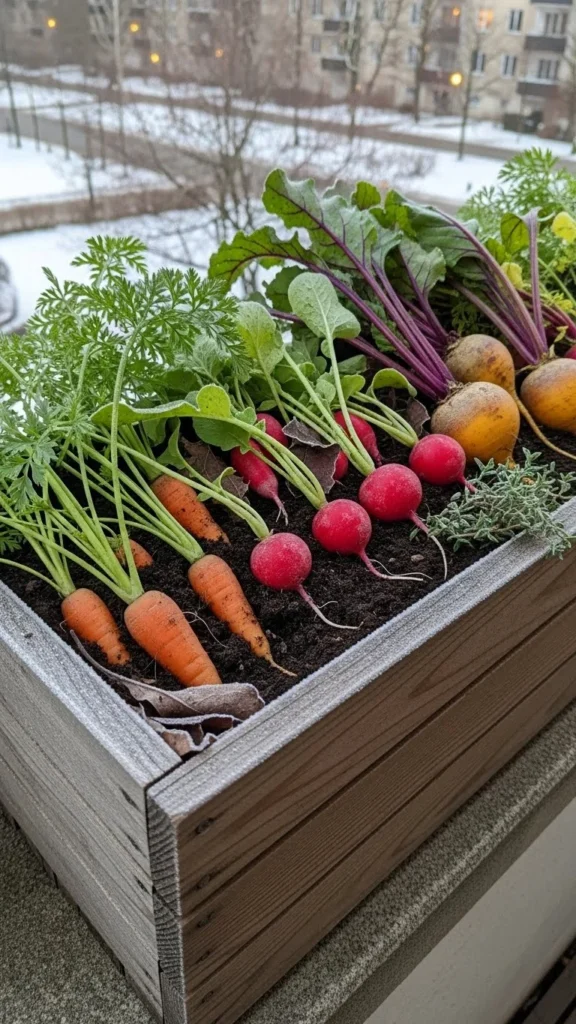
Storage tubs can serve as deep growing beds. Drill drainage holes at the bottom and fill with soil. Plant root vegetables or leafy greens. Tubs offer more depth than typical balcony containers, which works well for crops like mini carrots or beets. Their rectangular shape fits neatly against walls or under shelves. Add mulch to help retain warmth.
13. Balcony Lean-To Greenhouse

A lean-to greenhouse protects winter vegetables from cold winds. Place it against the sunniest balcony wall. Grow hardy crops such as kale, chard, herbs, and lettuce. Open panels slightly during warm afternoons for airflow. A mini greenhouse also helps seedlings start early. This idea maximizes vertical height while keeping plants protected.
14. Wide Shallow Trays for Cut-and-Come-Again Greens

Shallow trays allow you to grow spinach, lettuce mixes, and mustard greens in dense patches. These crops regrow after cutting, giving you repeated harvests. Place trays on shelves, ledges, or railings. They require minimal soil and grow well in cooler temperatures. Water lightly from the bottom to prevent soil disturbance. This method produces quick greens without using much space.
15. Rolling Plant Caddies for Sun Tracking
Rolling caddies let you move heavy containers easily. This helps you track winter sun, which shifts throughout the day. Use them for larger containers holding kale, cabbage, or herbs. Position plants where they receive the most light during short winter days. Caddies also help you pull plants closer to walls during frosty nights for added warmth.
16. Compact Dwarf Vegetables in Small Pots

Dwarf vegetable varieties thrive in small containers. Choose mini kale, dwarf cabbage, baby carrots, or dwarf peas. Their smaller root systems fit well in compact pots. Place these pots on stools, steps, or shelves to save floor space. Grouping dwarf varieties creates a productive yet tidy balcony garden. Water lightly and rotate pots weekly for even sun exposure.
17. Reflective Surfaces to Extend Light

Reflective surfaces help maximize limited winter light. Use reflective boards, light-colored walls, or mirrors behind vegetable containers. The light bounces onto plants, supporting growth during short days. Position reflectors behind greens like lettuce or herbs. This method works especially well on shaded balconies. Keep reflectors clean for best effect.
18. Insulated Containers for Cold Protection

Insulated containers help vegetables survive cold snaps. Wrap pots in burlap, bubble wrap, or fabric layers. Add mulch to cover soil and protect roots. Choose hardy crops like kale, mustard, or chard for insulated setups. Place containers near walls where temperatures stay slightly warmer. Insulation helps maintain root warmth and prevents soil from freezing quickly.
19. DIY Pallet Vertical Garden

A pallet garden creates vertical planting pockets. Line the pallet with landscape fabric to hold soil. Add greens like lettuce, spinach, parsley, or chard. Mount the pallet vertically on a balcony wall or lean it securely. This setup offers many planting spaces without occupying floor area. Water slowly so each pocket receives moisture. Pallets work well for renters due to their portability.
20. Balcony Seed-Starting Station for Winter Crops

Use a corner of your balcony as a seed-starting station. Place trays on a shelf or table and add a small grow light. Start crops like kale, cabbage, or herbs for later transplanting. Seed trays take very little space. Cover them lightly with plastic lids to hold warmth. This idea keeps your winter balcony productive even during the coldest weeks.
21. Indoor–Outdoor Rotation System

Rotate pots between indoor warmth and balcony sunlight. Bring delicate crops inside at night and place them outside during mild days. Use lightweight containers to make rotation easier. This system works well for greens, herbs, and small root crops. Keep a tray handy to avoid water drips indoors. Rotation supports steady growth without investing in expensive structures.
22. Narrow Planter Benches for Multi-Use Space

A narrow planter bench combines seating with growing space. Place long containers under or behind the bench. Plant winter greens or herbs. This lets your balcony function as a garden and relaxation area. Choose lightweight containers so the bench remains stable. This setup is ideal for slim balconies that need multi-purpose solutions.
23. Indoor Window-Ledge Extension for Overflow
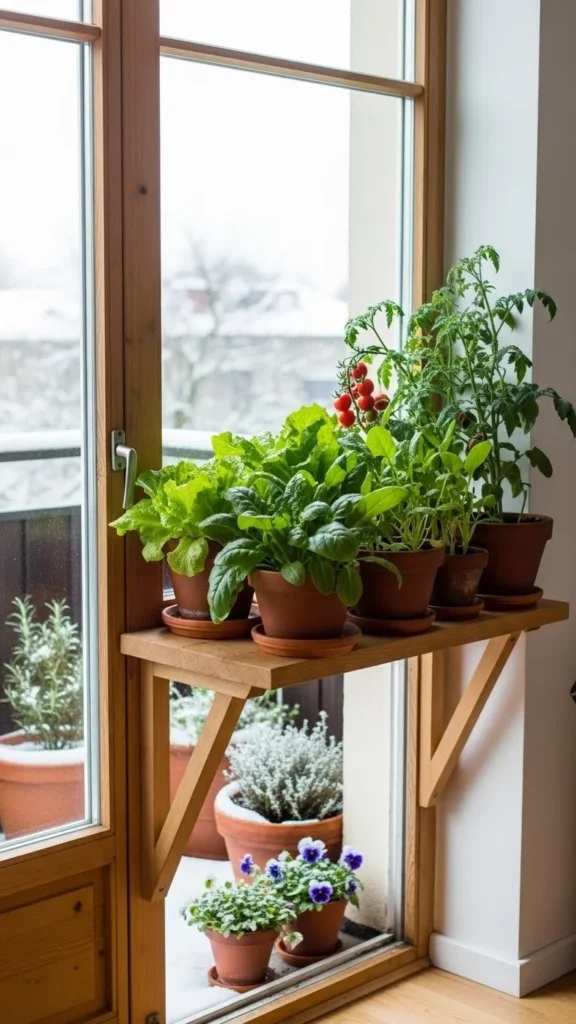
If your balcony gets crowded, extend growing space inside near the window. Use a window ledge extender or small shelf to hold extra pots. Grow herbs, greens, or seedlings here. The indoor warmth speeds growth, while natural light supports healthy leaves. This extension blends indoor and outdoor gardening, keeping everything reachable and orderly.
Conclusion
Winter balcony vegetable gardening works beautifully when space is used wisely. With vertical setups, compact crops, creative containers, and simple protection, even small balconies can stay productive during cold months. Try several of these ideas together to build a tidy, efficient garden that fits your balcony layout while providing steady winter harvests.
Leave a Reply