


Winter exposes a garden’s true framework. When flowers fade, shape, height, texture, and silhouette become the stars of perennial borders. The most elegant winter borders rely on plants with strong outlines, sturdy seed heads, evergreen presence, and thoughtful layering. With the right mix, these borders stay structured, appealing, and calm even in cold weather. The ideas below help you design winter-ready borders that feel balanced, graceful, and visually steady all season.
1. Tall Ornamental Grasses for Winter Movement

Tall grasses bring height and soft motion to winter borders. Their seed heads catch frost beautifully, adding sparkle during cold mornings. Choose grasses like miscanthus, feather reed, or switchgrass. Plant them toward the back of the border so they anchor the layout. Even when snow settles, their upright habit holds. Pair them with evergreen shrubs or dried perennial stems for contrast. Trim them only in late winter to maintain structure. If your border feels flat, adding two or three clumps of tall grasses immediately brings depth and elegance.
2. Evergreen Shrubs as Backbone Plants

Evergreen shrubs keep borders steady during colder months. Boxwood, yew, and holly maintain their form year-round, making them perfect anchor points. Plant them in repeating intervals along the border to create rhythm. Evergreens pair well with dried stems and seed heads, giving borders a polished look even when most plants go dormant. If you want a softer feel, choose shrubs with loose growth like chamaecyparis. Evergreen shapes also guide the eye through the entire border.
3. Seed Heads Left Standing for Texture

Leaving seed heads intact gives your border structure and texture through winter. Plants like coneflower, black-eyed Susan, and sedum hold their form well. Frost clings to them, creating delicate details. These dried structures also support birds searching for winter food. Instead of cutting everything back in fall, leave at least one-third of your perennials standing. Position sturdier plants near paths and edges so their shapes stay visible after snow.
4. Layered Heights for Structured Borders
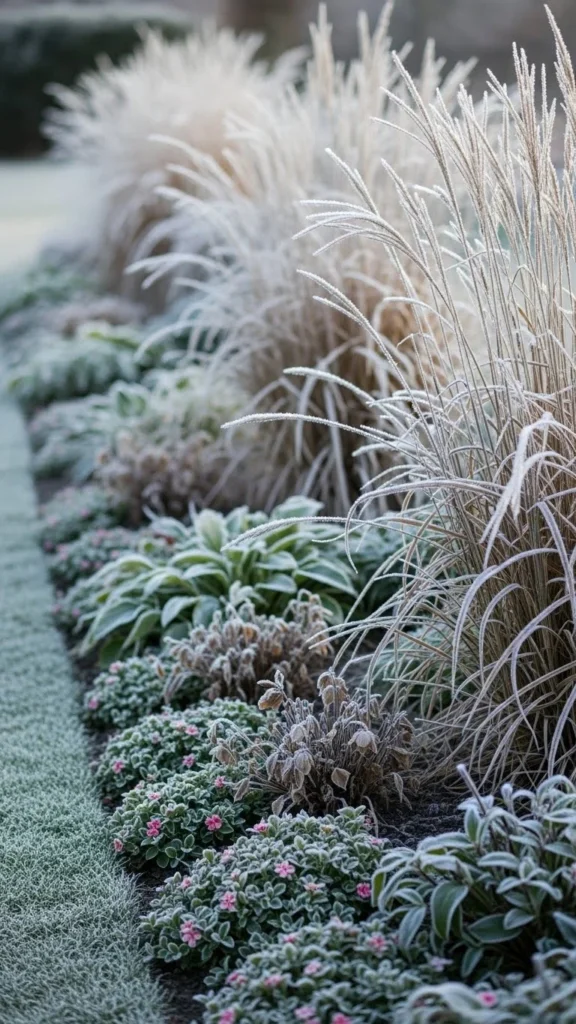
Height layering keeps borders visually stable. Place tall plants in the back, mid-height perennials in the center, and low growers near the front. This layout works even when flowers fade. Think of plants like hydrangea, ornamental grasses, hellebores, and evergreen groundcovers. Plan layers in curved lines for a natural flow. This structure holds through winter and helps borders look intentional. Adding a few repeat plants ties the design together.
5. Hellebores for Winter Greenery

Hellebores stay green through winter and often flower early. Their leathery leaves add fullness to borders when other plants fade. Plant them toward the front or middle where their leafy clumps can soften edges. Hellebores pair well with evergreens and dried stems. They also handle snow gracefully, bouncing back without damage. Use dark-leafed varieties for contrast or pale varieties for a softer tone.
6. Sedum Skeletons for Architectural Interest

Sedum seed heads remain upright all winter and add architectural presence. Their round, structured tops look striking when frosted. Place sedum along the midline of the border for a sturdy anchor. They hold their shape even under snow, acting almost like natural sculptures. When spring arrives, they’re easy to cut back. Sedum pairs beautifully with grasses and low evergreens.
7. Evergreen Groundcovers for Border Definition

Groundcovers such as creeping thyme, ajuga, or pachysandra help define border edges. They stay green throughout winter, giving the border a finished look. These plants connect taller elements and fill bare soil. Place them along pathways or at the front of borders for a tidy line. Their low-growing habit contrasts nicely with dried stems behind them.
8. Dried Hydrangea Heads for Winter Sculptures

Hydrangea heads dry naturally in fall and hold their shape through winter. Their large, papery clusters add strong visual presence. Leave them standing for the season instead of cutting them back. Position hydrangeas toward the mid-to-back of borders where their height adds balance. Snow settles gently on their blooms, turning them into seasonal sculptures.
9. Repeated Shapes for Elegant Rhythm

Repeating shapes brings harmony to perennial borders. Use several clumps of the same grass, shrub, or dried perennial to form a pattern. This creates a calm, grown-up effect, especially in winter when color fades. Repetition also makes smaller borders feel intentional. Choose plants with strong winter form such as sedum, boxwood, and tall grasses. Repeat them every few feet for steady rhythm.
10. Bark-Interest Shrubs for Winter Accent

Some shrubs offer color through bark instead of leaves. Redtwig dogwood, yellowtwig dogwood, and birch varieties bring bright accents to winter borders. Their stems stand out against snow and dried foliage. Position these shrubs where they catch winter light. Pair them with grasses or evergreens to provide balance. Bark-interest plants also add height without overwhelming the border.
11. Winter-Friendly Ferns for Soft Foliage

Certain ferns stay evergreen through winter, adding soft texture to borders. Christmas fern and autumn fern are reliable choices. Their arching fronds contrast well with stiff grasses and upright stems. Use ferns in shady sections or beneath shrubs. They keep borders from looking too rigid. Add leaf mulch to protect their crowns during harsh cold.
12. Ornamental Seed Pods as Natural Sculptures

Plants like poppies, allium, and baptisia produce seed pods that remain striking in winter. Their spherical or capsule-like shapes add artistic flair. Leave pods standing through winter for structure. Group them in threes or fives for visual balance. These pods also attract winter birds, adding movement to the border. Keep them near the midline so they’re visible but not dominating.
13. Evergreen Ornamental Grasses for Soft Winter Volume

Evergreen grasses such as carex, mondo grass, or sedge offer volume even in winter. They keep their shape, resisting cold and snow. Use them along the front or midline of the border. Their soft mounds contrast nicely with more rigid perennials. Evergreen grasses help fill gaps when herbaceous plants die back. Combine with hellebores or heuchera for a varied texture.
14. Frost-Friendly Heuchera for Winter Color

Heuchera offers winter interest through foliage rather than flowers. Color varieties like silver, plum, and caramel hold well through cold months. Plant them near the front or midline where their leaves stay visible above low snow. They pair well with grasses, sedum, and evergreen shrubs. Heuchera creates a polished, grown-up effect that lasts year-round.
15. Strong Winter Silhouettes from Dried Perennials

Some perennials develop strong silhouettes when dried. Plants like phlox, monarda, and rudbeckia keep their upright stems. These add structure when everything else dies back. Leave stems standing in fall instead of clearing them. Position them toward the middle of the border where their outlines can shine. Light snow enhances their lines and brings dimension to the border.
16. Boulders and Stone Accents for Permanent Structure

Stone accents bring permanence to winter borders. Use large rocks, small boulders, or stacked stones to anchor plant groups. Stones add depth and contrast against dried stems and evergreens. Place them in clusters or use a single large stone as a focal point. Their texture becomes especially noticeable when frost settles. Stones also help define pathways and sections of borders.
17. Evergreen Sub-Shrubs for Winter Fill

Sub-shrubs like lavender, santolina, and rosemary hold their shape during winter. Their compact forms fill empty spaces left by herbaceous perennials. Use them along the front of the border or near pathways. Their structure offers a simple yet elegant touch. Avoid overplanting—too many sub-shrubs can make borders feel dense. Pair them with taller dried stems for contrast.
18. Clumping Perennials That Keep Shape
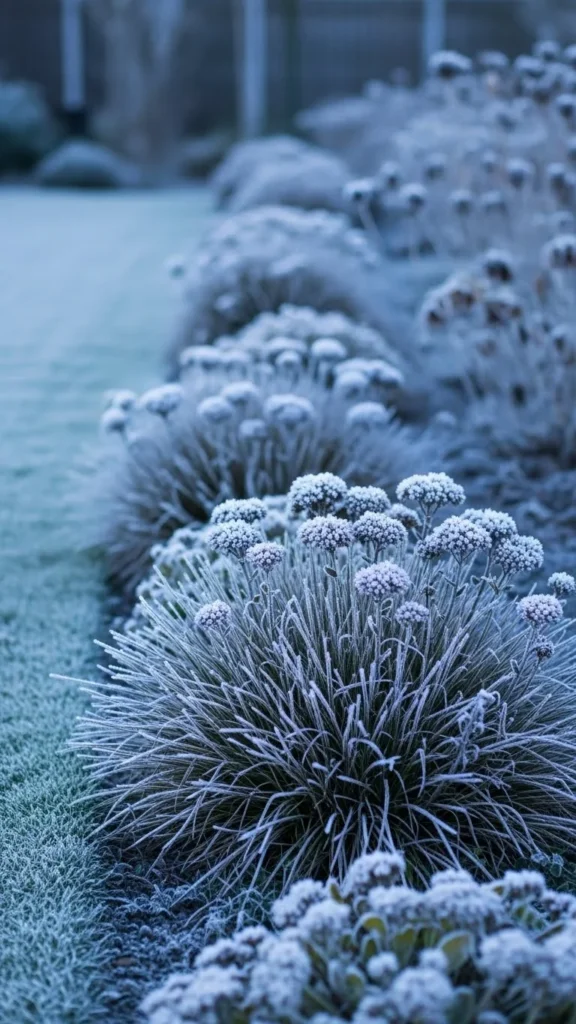
Certain perennials maintain neat mounds even after frost. Plants like nepeta, geranium, and salvia keep low rounded shapes. Their dried foliage adds texture and volume. Place them along the midline for a subtle anchor. Trim them only after winter to preserve structure. These plants work especially well in borders with many vertical elements, balancing out taller shapes.
19. Winter-Friendly Ornamental Grasses with Feathered Tops

Grasses with feathery seed heads—such as pennisetum or fountain grass—add softness. Their airy tops contrast beautifully with crisp winter light. Even though some varieties may lean after snow, their overall effect remains graceful. Place them where wind can move through them gently. Combine with sturdier grasses for balance.
20. Repetition of Color Tones for Border Harmony

Repeating tones across a border creates unity. Use greens from evergreens, browns from dried stems, and silvers from heuchera or grasses. These tones work well in winter when flowers are absent. Aim for soft transitions between colors. Plant in groups rather than singles for a cohesive feel. This technique makes even small borders appear balanced and elegant.
21. Mixed Evergreen and Deciduous Layers for Depth

Blending evergreen plants with dried deciduous perennials creates layered depth. The evergreen portion offers consistency, while dried stems add seasonal character. Plant taller evergreens in the back and dried perennials in front. This mix looks structured and grounded. It also provides interest from different angles and lighting conditions.
22. Border Edging with Low Structural Plants
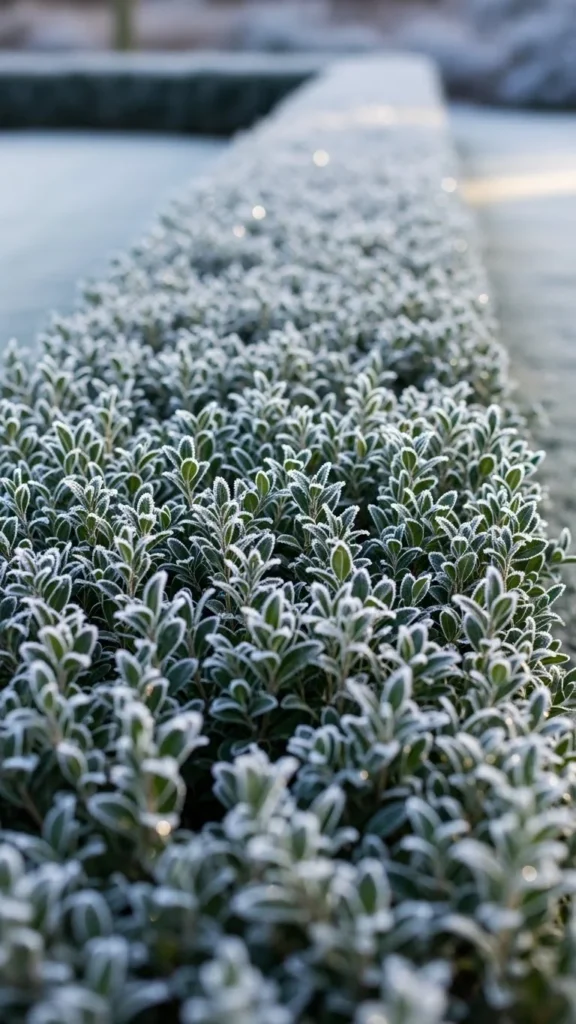
Low structural plants such as dwarf conifers, sedge, or low-growing junipers create clean edges that guide the eye. They help define the border and keep it tidy. These plants work well along pathways or the front of beds. Their tidy outlines remain visible even when snow falls. Pair them with taller dried stems behind to create a strong layered effect.
Conclusion
Winter perennial borders can stay elegant, steady, and visually rich with the right mix of structure, height, texture, and evergreen presence. By choosing plants that hold shape through cold months and arranging them in balanced layers, your garden keeps its character long after blooms fade. Try combining several ideas from this list to build borders that remain graceful and grounded throughout winter.
Leave a Reply