

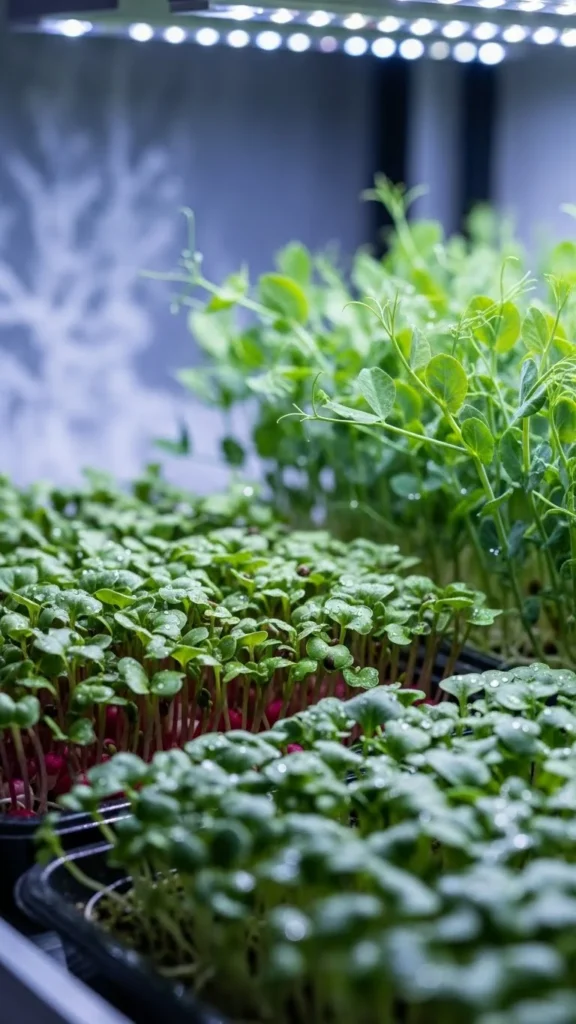
Winter doesn’t stop microgreens from thriving. These small seedlings grow quickly indoors and offer fast harvests even when outdoor gardens rest. With simple trays, basic lighting, and a few seeds, you can grow nutrient-rich greens all season. Microgreens add flavor, texture, and color to meals while keeping winter gardening practical and enjoyable. Whether you use shelves, windowsills, or countertop spaces, these ideas help you create steady winter harvests without complicated tools.
1. Radish Microgreens for Quick Wins

Radish microgreens grow fast, making them a great starting option for winter. They germinate in just a couple of days and reach harvest stage in under a week. Spread seeds evenly across a shallow tray lined with soil or a grow mat. Mist lightly and cover the tray for the first two days to help germination. Once sprouted, uncover and place under a grow light or bright window. Radish greens develop vibrant stems and a crisp bite that works well on sandwiches, soups, and egg dishes. They handle cooler indoor temperatures gracefully, which helps maintain steady growth. To save money, buy radish seeds in bulk packets rather than small microgreen packs. Keep the soil lightly moist but never soggy. You can stagger your planting by starting a new tray every three days for a continuous supply.
2. Broccoli Microgreens for Mild Flavor

Broccoli microgreens offer a gentle flavor and grow well indoors. They sprout quickly and reach harvest height within 10 days. Use a shallow tray and sprinkle seeds thickly across the surface. Press them gently into the soil. Cover the tray for two days to help germination, then remove and place under light. Broccoli greens grow evenly and require very little maintenance. Keep the soil slightly damp and rotate the tray occasionally for balanced light exposure. These greens add a mild crunch to salads, wraps, and bowls. If your indoor air is dry during winter, mist lightly once per day. Harvest using scissors and refrigerate in a sealed container to keep them crisp.
3. Pea Shoots for Tender Winter Greens

Pea shoots are popular because of their sweet, soft flavor. They grow taller than most microgreens, reaching harvest stage in about 10–14 days. Soak the seeds for a few hours before planting to speed germination. Spread the soaked seeds densely in a tray of moist soil. Pea shoots grow best with bright light, so place them near a window or under LEDs. Trim the shoots once they reach 4–6 inches tall. You can often get a second flush after the first harvest if roots stay healthy. Pea shoots taste great in stir-fries, salads, and sandwiches. They also stay crunchy even after refrigeration.
4. Sunflower Microgreens for Nutty Flavor

Sunflower microgreens grow sturdy and flavorful. Their nutty taste and thick texture make them popular for winter dishes. Soak seeds overnight, then spread them across soil in a shallow tray. Cover with another empty tray for the first three days. This encourages strong stems. Once they push upward, remove the cover and expose them to light. Water from the bottom to avoid mold. Sunflower microgreens take around 10–12 days to reach harvest height. Use them in salads, wraps, or as a garnish. Buy seeds in larger bags to cut costs, as sunflower seeds are easy to grow in bulk.
5. Mustard Microgreens for Winter Spice

Mustard microgreens add a spicy kick to winter meals. They germinate fast and grow quickly, often ready within 7–10 days. Spread seeds evenly across soil and mist lightly. Keep the tray covered for the first two days, then uncover once sprouting begins. Mustard grows best with steady light, so place it under LEDs if your winter daylight is low. These greens work well on sandwiches or mixed with other microgreens. If the flavor feels strong, harvest earlier for a milder taste. Start small trays weekly to maintain a steady supply.
6. Arugula Microgreens for Peppery Winter Flavor

Arugula microgreens have a peppery taste that pairs nicely with soups and eggs. They grow quickly indoors and reach harvest size in about 7 days. Spread seeds generously across damp soil. Cover lightly for two days, then place under bright light. Arugula grows best with steady moisture, so mist lightly when leaves look dry. Because arugula seeds are small, you can plant them densely without issues. Use scissors to trim them just above soil level. They store well in airtight containers lined with paper towels.
7. Kale Microgreens for Winter Nutrition

Kale microgreens offer a rich texture and grow comfortably indoors during colder months. They sprout in a few days and reach harvest height within 10 days. Sprinkle seeds densely across the tray, mist lightly, and cover for two days. Once uncovered, place under bright light. Kale greens grow evenly and stay upright with proper airflow. They match well with avocado toast, pasta dishes, or winter bowls. If you want larger yields, use wide trays and plant multiple layers across your growing shelf.
8. Beet Microgreens for Colorful Winter Plates

Beet microgreens add striking color to winter meals. They take slightly longer to sprout—around 3–5 days—but grow well indoors. Pre-soak the seeds for a few hours to help germination. Spread them across moist soil and press gently. Once sprouted, place under strong light to enhance stem color. Beet greens need consistent moisture, so mist regularly. They take about 12–14 days to reach harvest size. Their earthy flavor pairs nicely with roasted vegetables, grain bowls, and sandwiches.
9. Cabbage Microgreens for Mild Winter Crunch

Cabbage microgreens grow quickly and offer a mild taste. Plant seeds densely across soil and mist lightly. Cover for two days to support sprouting. These greens develop smooth leaves and pale stems. They grow well with minimal care and reach harvest height within 8–10 days. Cabbage microgreens hold their shape well when mixed into salads or tacos. Since seeds are inexpensive, they’re ideal for weekly tray rotations.
10. Chia Microgreens for Unique Texture

Chia microgreens grow quickly and form a delicate mat of tiny leaves. Sprinkle seeds evenly across soil or a grow mat. They sprout fast and require gentle misting. Avoid overwatering since chia seeds become gelatinous. Once the greens reach 1–2 inches, trim them with scissors. They add texture to smoothies, yogurt bowls, and salads. Because chia seeds are affordable, this is a cost-effective winter growing option.
11. Basil Microgreens for Aromatic Winter Dishes

Basil microgreens bring a sweet aroma to winter kitchens. They take about 12–15 days to reach harvest size. Use warm indoor locations or place under strong grow lights. Cover the tray lightly for one day to support germination. Basil likes steady warmth, so avoid placing near drafts. Mist gently when soil feels dry. Use harvested greens on pasta, pizza, or soups. Start small trays weekly if you enjoy regular harvests.
12. Cilantro Microgreens for Winter Garnishing

Cilantro microgreens grow slower than some varieties but offer great flavor. They take around 14–18 days. Pre-soak seeds for a few hours to speed sprouting. Spread them across moist soil and press lightly. Keep the tray warm and under bright light. Mist gently when leaves appear. Cilantro microgreens add flavor to tacos, rice bowls, and soups. Use shallow trays for even growth.
13. Wheatgrass for Winter Juicing

Wheatgrass grows tall and vigorous indoors. Soak seeds, spread them across moist soil, and cover lightly. Once sprouted, place under strong light. Wheatgrass reaches harvest height quickly—often within 7–9 days. Trim with scissors and use in smoothies or juices. It continues growing for multiple cuttings if kept watered. This makes it a reliable winter option.
14. Lettuce Microgreens for Tender Winter Mixes

Lettuce microgreens produce tender leaves and grow well in cool indoor environments. Spread seeds across soil, mist lightly, and cover for one or two days. Once sprouted, expose to light. Lettuce microgreens reach harvest height within 8–10 days. They work well as toppings for sandwiches or salad bowls. Keep the soil lightly moist for steady growth.
15. Fenugreek Microgreens for Earthy Aroma

Fenugreek microgreens grow fast and add a pleasant aroma to winter meals. Soak seeds overnight, then spread them across moist soil. Cover lightly and allow sprouting for two days. Once they grow taller, place under bright light. Fenugreek greens typically reach harvest height in about 8–10 days. Use them with flatbreads, soups, or stir-fries. They grow reliably during winter and require very little care.
16. Turnip Microgreens for Crisp Textures

Turnip microgreens add a crisp texture to dishes. Spread seeds across damp soil and mist lightly. Cover for two days, then expose to light. Turnip greens reach harvest size within 7–10 days. They offer a mild flavor similar to cabbage. Add them to salads or sandwiches for crunch. They grow evenly even in cooler indoor rooms.
17. Kohlrabi Microgreens for Subtle Sweetness

Kohlrabi microgreens have a mellow flavor and grow quickly indoors. Plant seeds densely across soil and keep them slightly moist. Cover for two days to support germination. Once sprouted, place under bright light. They develop colorful stems and smooth leaves. Kohlrabi greens pair well with roasted vegetables or grain bowls. They reach harvest height in about 8–10 days.
18. Dill Microgreens for Winter Aromatics

Dill microgreens add a bright herbal element to winter meals. They grow slower than radish or mustard but still perform well indoors. Plant seeds across soil and mist gently. They take around 12–15 days to reach harvest height. Dill pairs nicely with fish, potatoes, and soups. Keep the tray warm for best growth. Trim fronds carefully to avoid disturbing young stems.
19. Onion Microgreens for Sharp Flavor

Onion microgreens grow tall and thin, offering a sharp flavor that enhances winter dishes. Spread seeds evenly across soil and mist lightly. They sprout quickly but grow slowly at first. Once established, they reach harvest size in about 12–14 days. Use scissors to trim them above the soil. Their strong scent makes them ideal for salads, sandwiches, and soups. Keep them in bright light for best color.
20. Parsley Microgreens for Winter Garnish

Parsley microgreens grow slower but stay flavorful and bright. Spread seeds across moist soil and gently press them down. Cover lightly for a day or two. Parsley may take up to 14–18 days to reach harvest height. Keep it under strong light and mist sparingly. These greens work well as toppings for roasted dishes, stews, and pasta. Their fine texture adds a finishing touch to winter meals.
21. Mixed Microgreen Trays for Ongoing Harvests

Mixed trays give you variety without extra effort. Combine seeds like radish, kale, mustard, and arugula in one tray. Choose varieties with similar growth speeds so harvesting stays easy. Plant densely and mist lightly. Cover for two days, then expose to bright light. As the tray grows, you can trim sections at different times for continuous harvests. Mixed trays add flavor diversity to winter dishes and keep indoor gardening fun. They also help beginners learn which greens they enjoy most.
Conclusion
Winter microgreens offer fast, satisfying harvests even when outdoor gardens rest. With simple trays, steady lighting, and a few minutes of daily care, anyone can grow flavorful greens at home. These ideas help you create a reliable indoor setup that fits your space, schedule, and cooking style. Try a few varieties this season and enjoy steady, vibrant harvests throughout winter.

Leave a Reply