

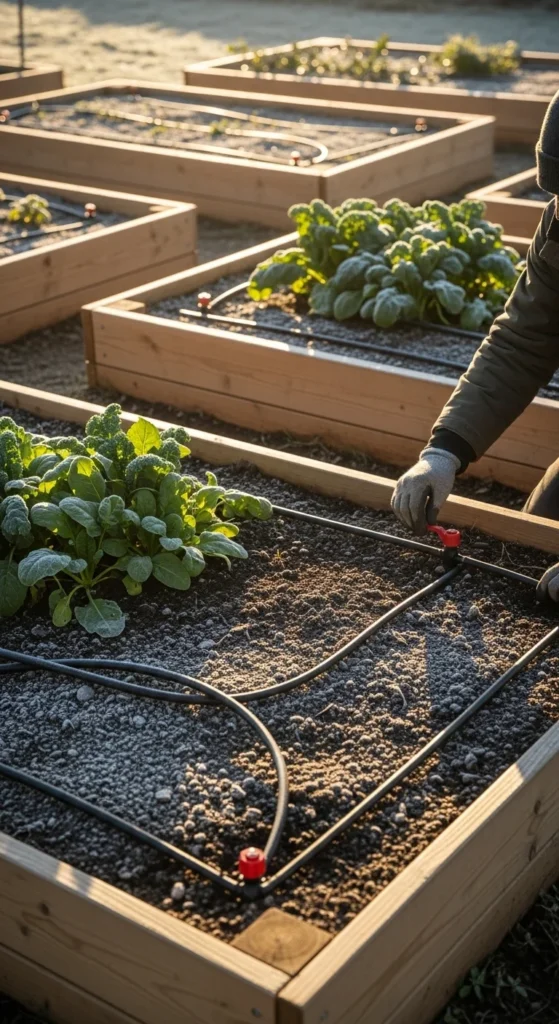
Winter gardening often feels slow, but raised-bed irrigation still matters. Cold-season soil dries out more than expected because winter winds pull moisture quickly, especially in exposed areas. Simple adjustments can keep plants hydrated without constant checking. With a few practical techniques, you can save time, reduce waste, and keep winter crops growing steadily. These ideas help you upgrade your setup and work smarter through cold days.
1. Drip Lines Anchored Along Bed Edges
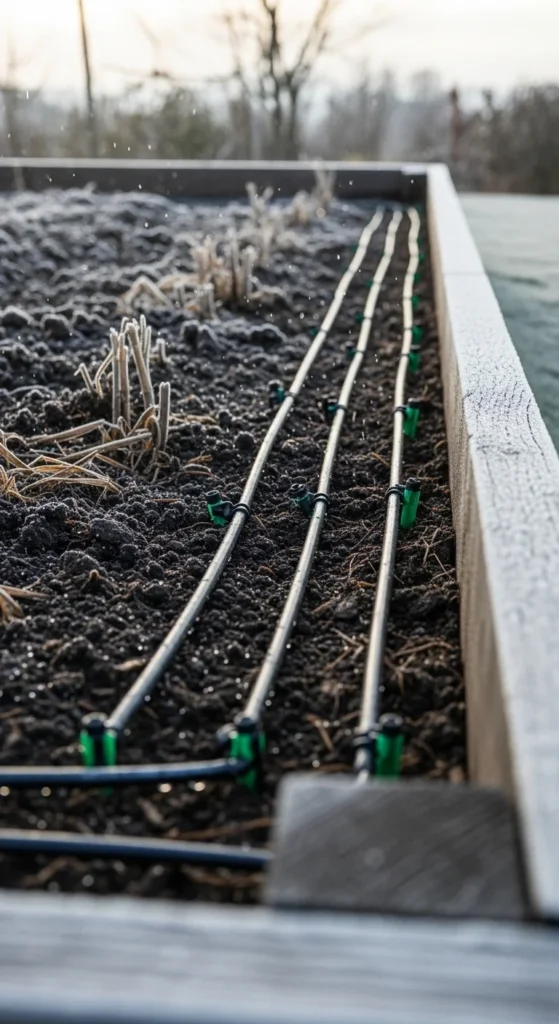
Drip lines placed along bed edges deliver water slowly and evenly. This setup reduces runoff since water enters directly near the roots. Keep the lines pinned in place using simple garden anchors. If the climate is windy, adding a few extra pins helps keep the tubes stable. This layout is quick to check because everything stays visible.
Budget tip: Use inexpensive metal U-pins to secure tubing.
DIY idea: Mark each line with a small colored zip tie so you can spot blockages quickly.
2. Mulch Over Irrigation Tubes
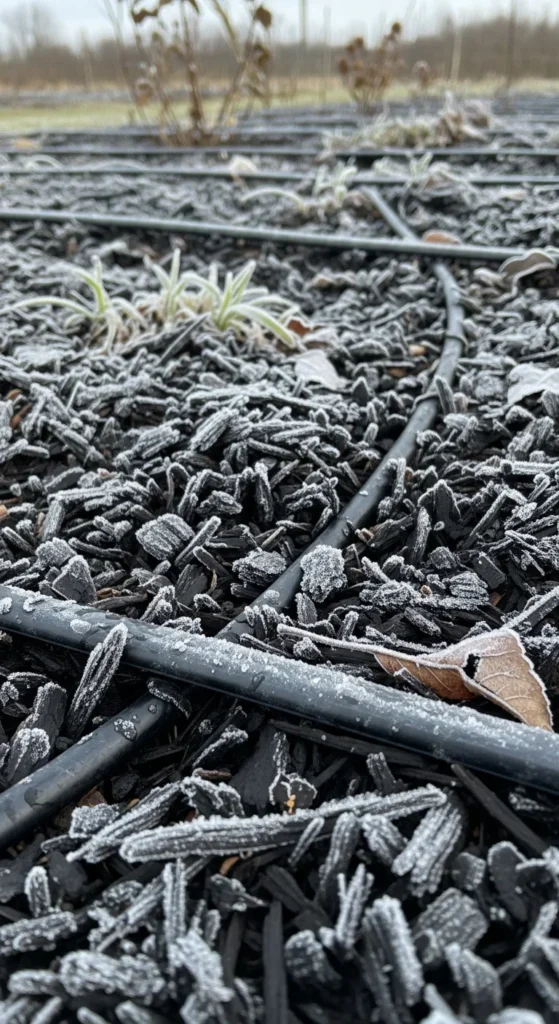
A thin layer of mulch over irrigation tubes protects them from winter exposure. Mulch helps water stay in the soil longer and prevents freezing winds from drying out the surface too quickly. Keep the layer light so you can still locate the tubing when needed.
Budget tip: Use shredded leaves gathered from your yard.
DIY idea: Add a few flat stones as markers so you remember where the main line runs.
3. Slow-Soak Watering Bags
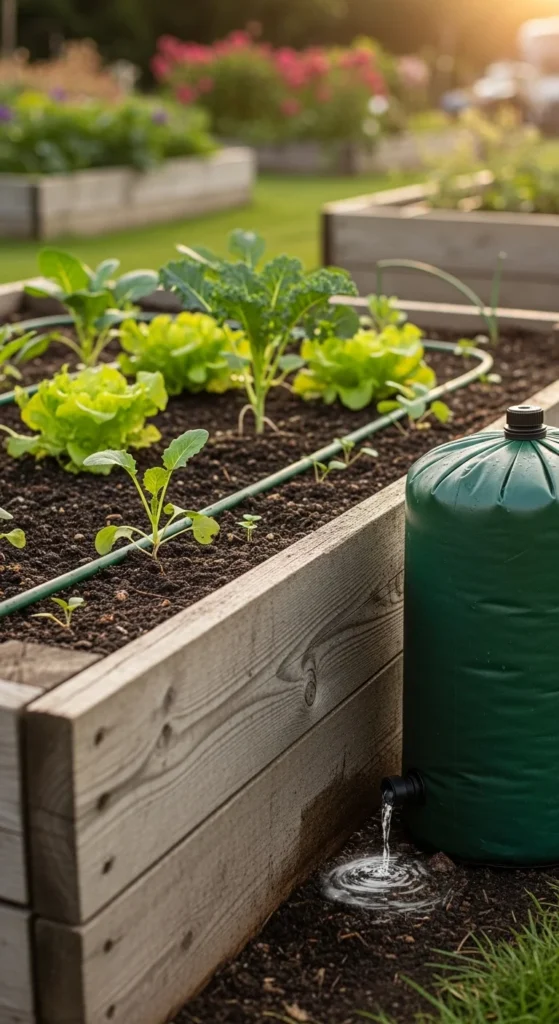
Watering bags release moisture slowly, making them great for winter beds. Place them on the sunny side so they don’t freeze quickly. These bags help avoid overwatering because they distribute water gently. They’re handy when you’re busy or away for a few days.
Budget tip: Choose reusable bags rather than disposable ones.
DIY idea: Fill them with warm water on extremely cold mornings for slightly better soil penetration.
4. Raised-Bed Soaker Hoses
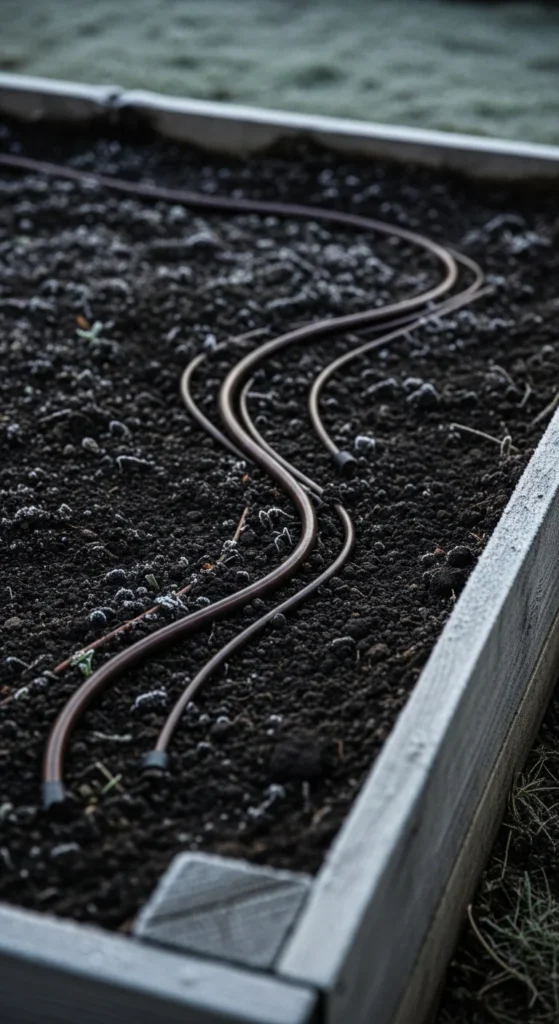
Soaker hoses release water evenly along their length. They’re easy to uncoil and place. Keep them slightly buried to reduce evaporation. Water moves gently, helping plants stay hydrated without soggy soil. This works particularly well for winter greens.
Budget tip: Buy soaker hoses in bulk rolls and cut them to size.
DIY idea: Add connectors so you can detach sections quickly.
5. Elevated Water Reservoir
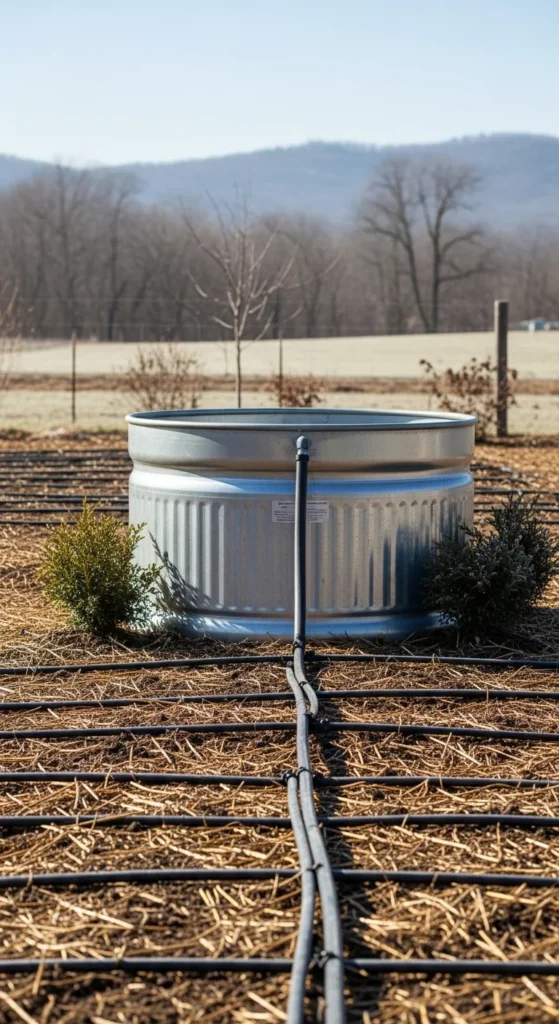
An elevated reservoir uses gravity to move water through tubing. This gives a slow, steady flow and requires no electricity. Keep the container slightly warm during colder days by placing it where sunlight hits.
Budget tip: Use old food-safe barrels or buckets.
DIY idea: Place the reservoir on stacked bricks for quick height.
6. Morning-Only Water Cycles
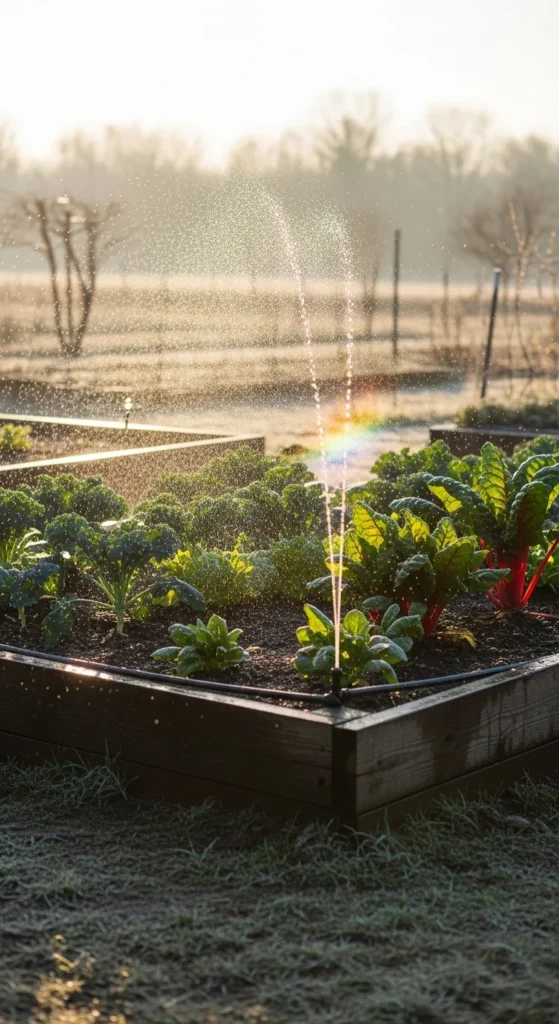
Watering in the morning helps soil absorb moisture before temperatures drop at night. This reduces icy buildup around roots. If you use timers, set them for early morning so the cycle finishes quickly.
Budget tip: Use battery-powered timers instead of expensive smart systems.
DIY idea: Keep a small notebook to track which days you water.
7. Bed-Level Moisture Check Zones
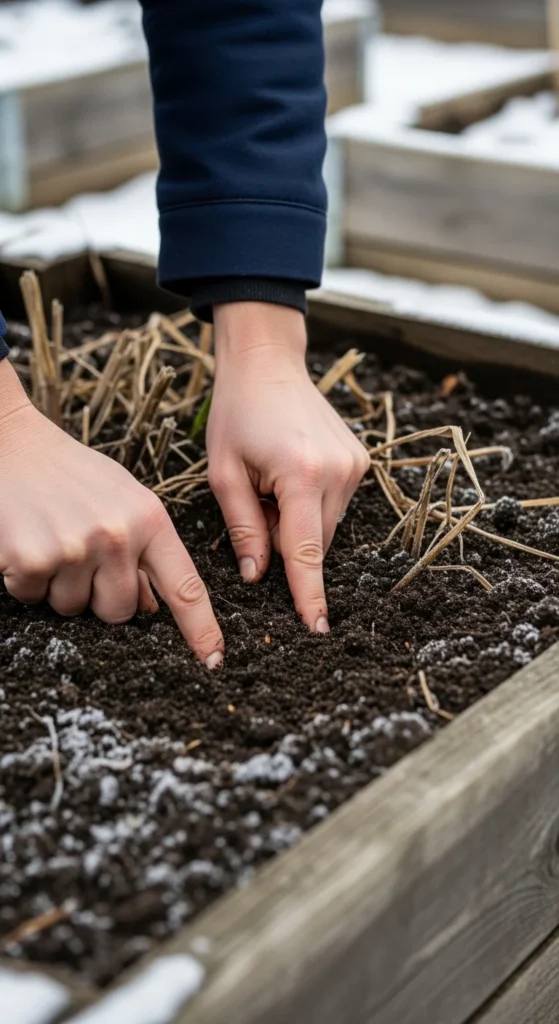
Divide your bed mentally into small zones. Check moisture in only one or two zones each day. This saves time while still giving you an accurate feel for the whole bed. Soil dries unevenly during winter, so spot checks help determine real hydration levels.
Budget tip: No tools required—just your hand.
DIY idea: Mark your zones using small wooden sticks.
8. Funnel-Style Direct Watering Holes
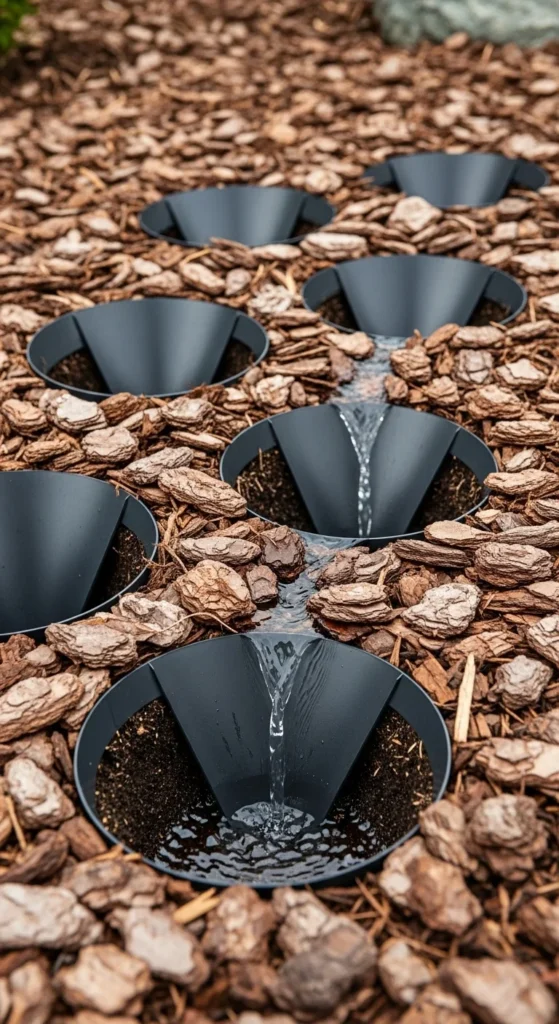
Create small “funnels” in mulch by clearing a shallow circle around each plant. This lets water reach the soil quickly. Funnels stop water from rolling off frozen mulch. They’re useful when hand-watering during very cold periods.
Budget tip: Use simple plastic cups to shape funnels.
DIY idea: Add gravel around the funnel to keep soil from splashing.
9. Insulated Hose Wraps
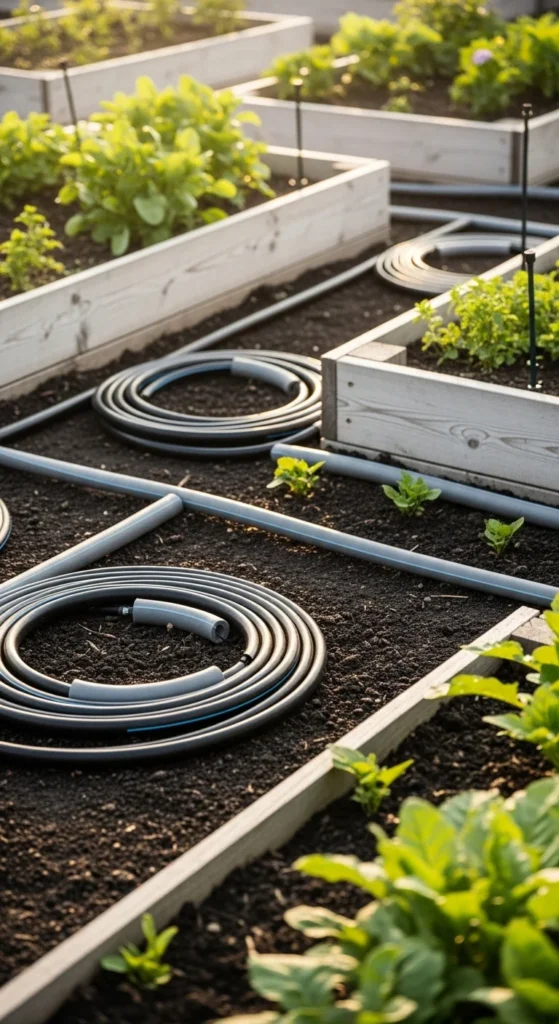
Wrap hoses with basic insulation to reduce freezing. Foam pipe covers work well and slip on quickly. Insulated hoses keep water flowing even in frosty weather. This helps prevent damage and saves time since you won’t need to thaw anything.
Budget tip: Use inexpensive foam sleeves.
DIY idea: Wrap them with leftover fabric strips to secure the sleeves.
10. Compact Rainwater Scoops
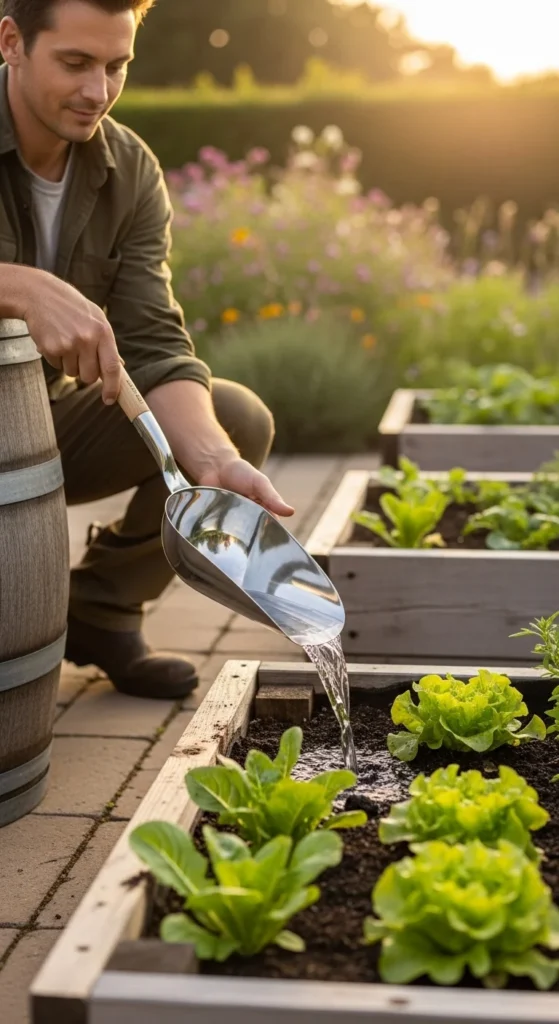
Keep a small scoop or dipping jug near your beds. This makes it easy to use stored rainwater on dry winter days. The scoop gives you quick control over how much water each area receives.
Budget tip: Repurpose old kitchen ladles.
DIY idea: Hang the scoop on a nail near the bed.
11. Winterized Water Spigot Shield
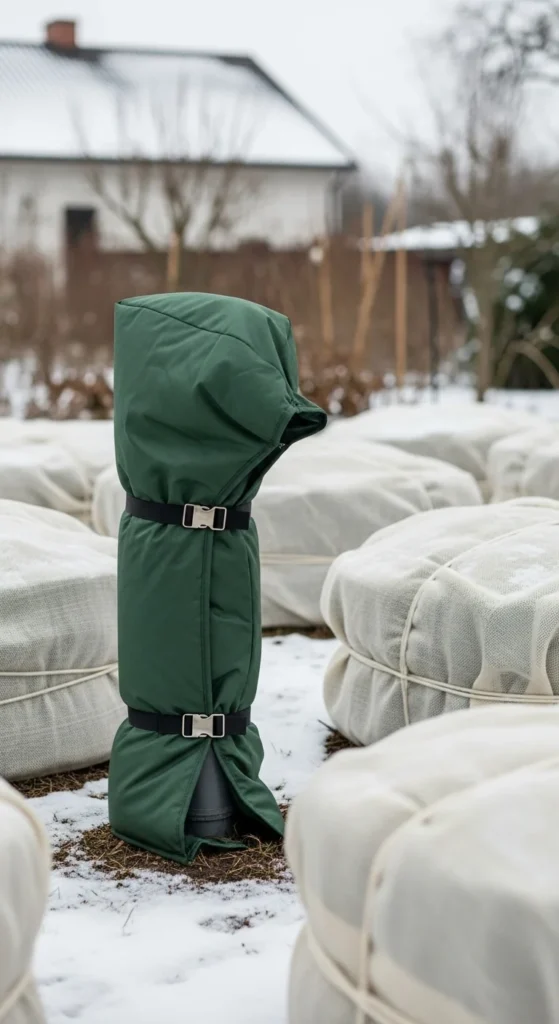
Covering your water spigot with a simple shield prevents freezing and makes watering quicker. Use foam covers or thick cloth wraps. A protected spigot means you won’t waste time thawing, repairing, or replacing parts.
Budget tip: Use old towels and rubber bands.
DIY idea: Add a plastic container over the wrap for extra protection.
12. Lightweight Watering Can Rotation
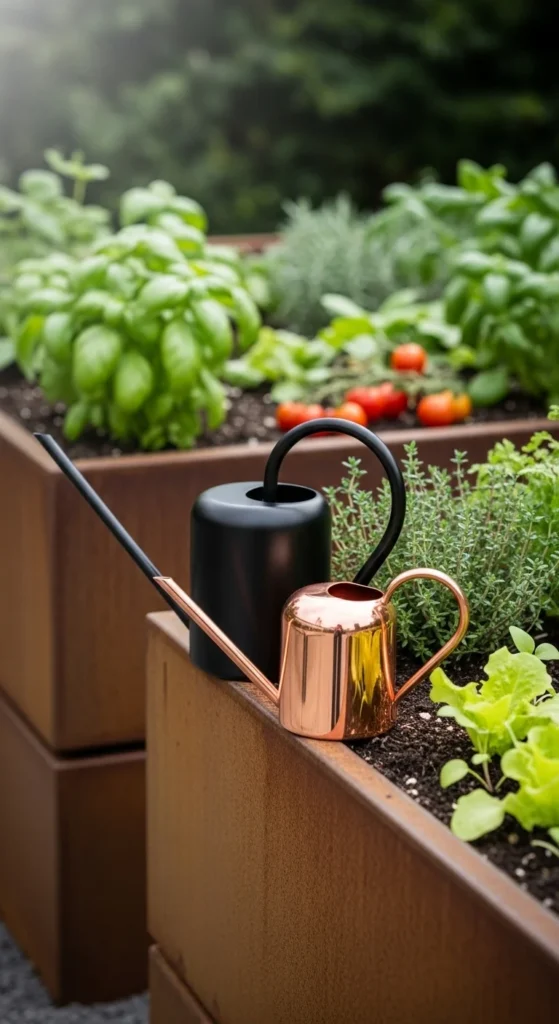
Use multiple small watering cans instead of one large one. This reduces fatigue and helps you water more often with less effort. Keep one filled indoors to prevent freezing.
Budget tip: Use inexpensive plastic cans.
DIY idea: Label each can for different tasks—plain water, compost tea, or winter tonic mix.
13. Drip Emitters for Individual Plants
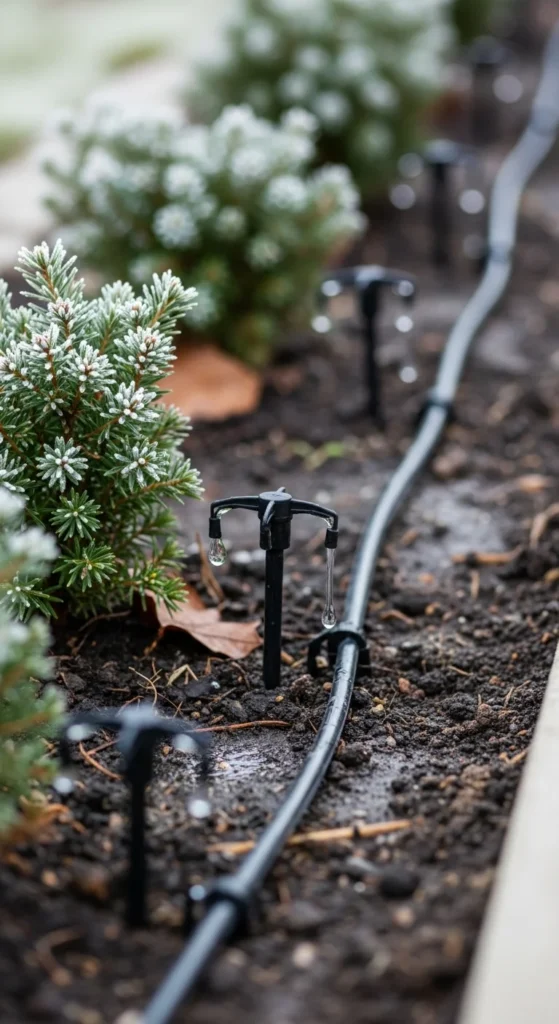
Emitters help give each plant its own water supply. This is useful for winter crops that grow at different rates. Install adjustable emitters so you can open or close them based on size.
Budget tip: Buy a multi-pack set to save money.
DIY idea: Use bamboo stakes to guide emitters directly to the root zone.
14. Rain Barrels With Easy-Flow Valves
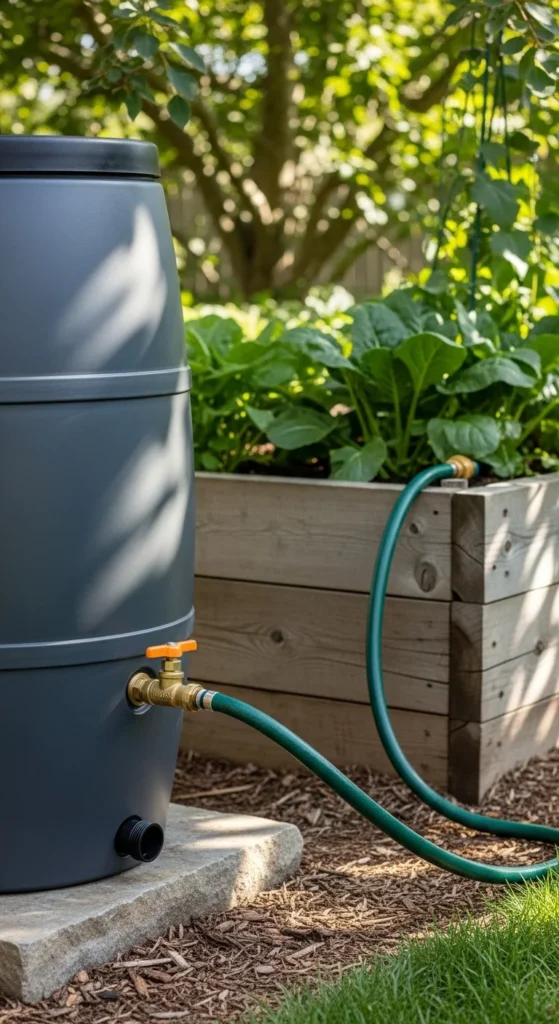
Rain barrels store plenty of winter precipitation. Attach a simple flow valve to control output. This works well when you don’t want to rely on outside taps during freeze-prone weeks.
Budget tip: Repurpose food-grade barrels.
DIY idea: Add a small brick under the barrel for height.
15. Warm-Water Spot Watering
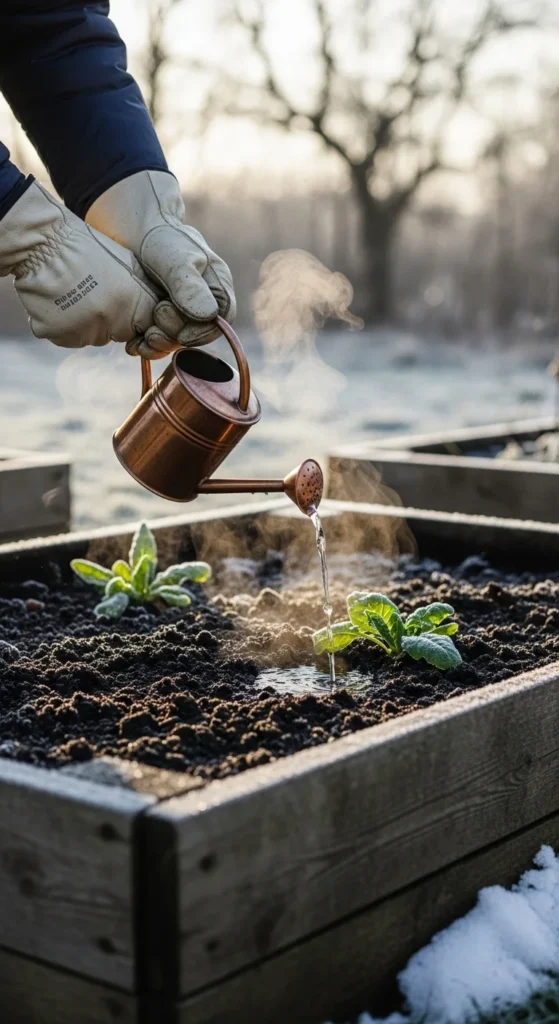
Using slightly warm—not hot—water helps soil absorb moisture more effectively during cold spells. This works well when irrigation lines freeze. Warm water loosens the top layer of soil without harming roots.
Budget tip: Use leftover warm water from cooking (once cooled to safe levels).
DIY idea: Fill a thermos to keep water warm while you work.
16. Quick-Release Hose Connectors
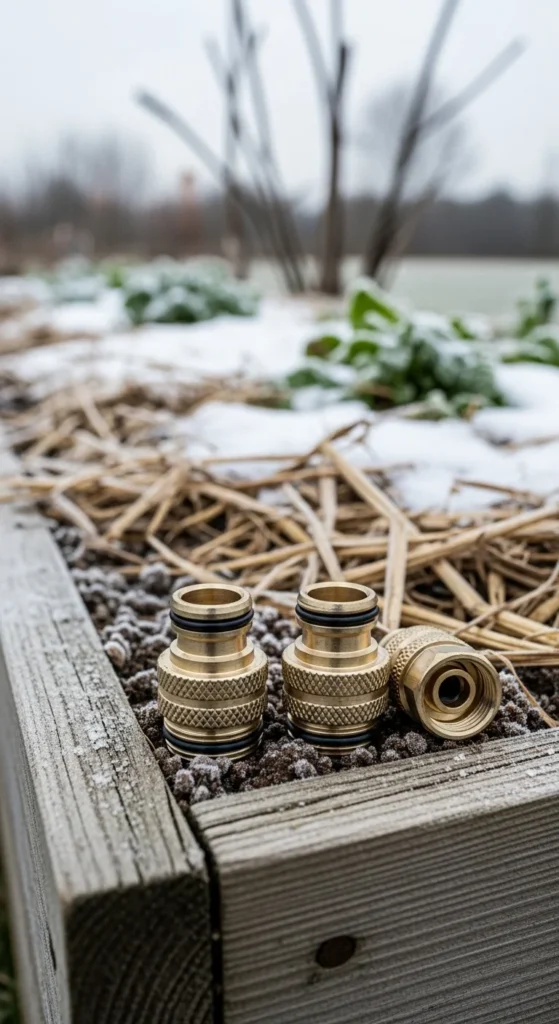
Quick-connect fittings save time during winter watering. They click on and off fast even when hands are cold. This keeps water sessions short. Keep an extra set in case one freezes.
Budget tip: Buy bulk multipacks.
DIY idea: Store connectors inside a small weatherproof box near the bed.
17. Narrow-Flow Nozzles
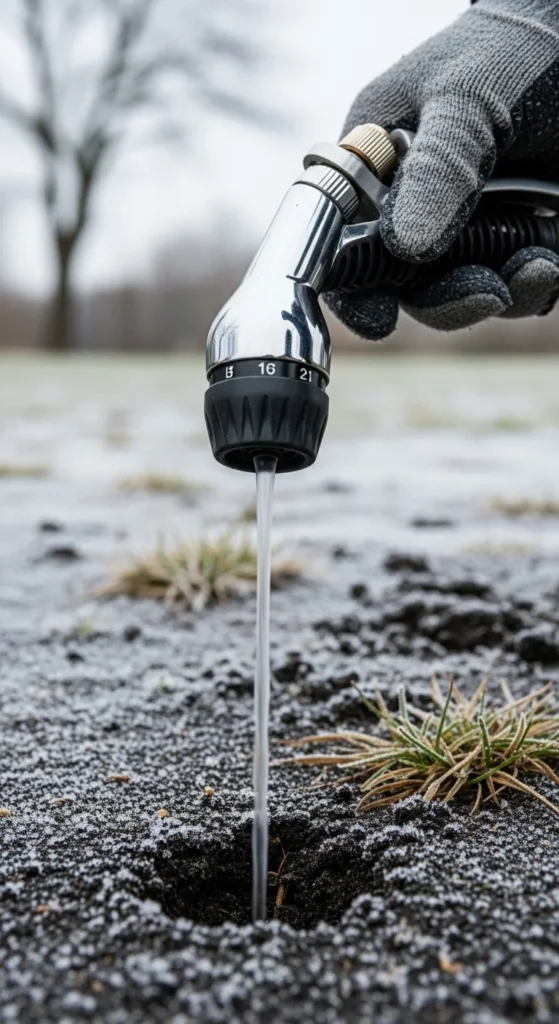
A narrow-flow nozzle helps direct water exactly where it’s needed. This prevents runoff and keeps soil from washing away. Use a low-pressure setting to avoid disturbing delicate winter roots.
Budget tip: Choose plastic nozzles with adjustable heads.
DIY idea: Mark your favorite setting with a small dot of paint.
18. Water-Holding Soil Mix Adjustments
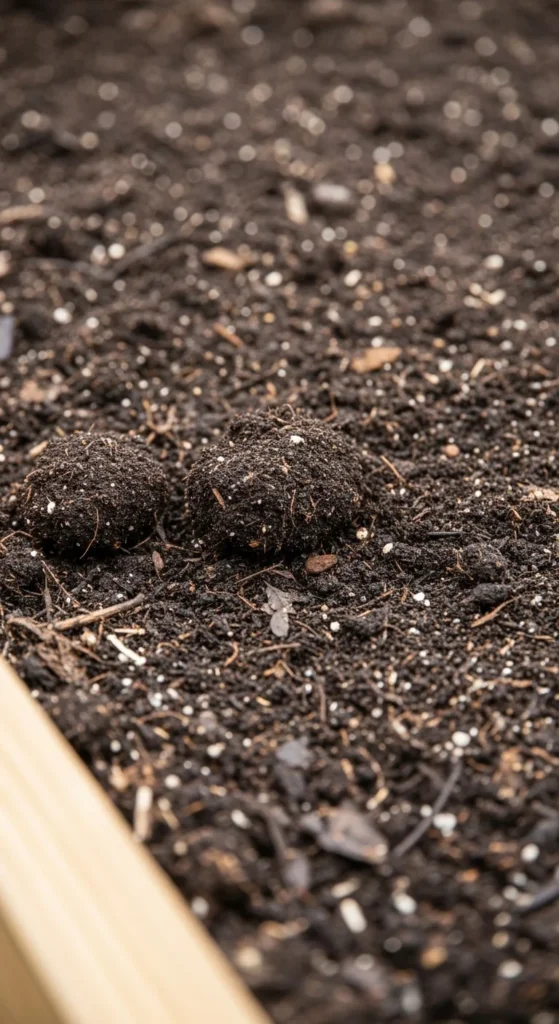
Add a bit of compost or coconut coir to help soil retain winter moisture. This reduces how often you water. Mix lightly into the top layer. Plants will respond well to the improved texture without extra work.
Budget tip: Use homemade compost.
DIY idea: Add small amounts of coarse sand to keep soil airy.
19. Overflow Channels Between Beds
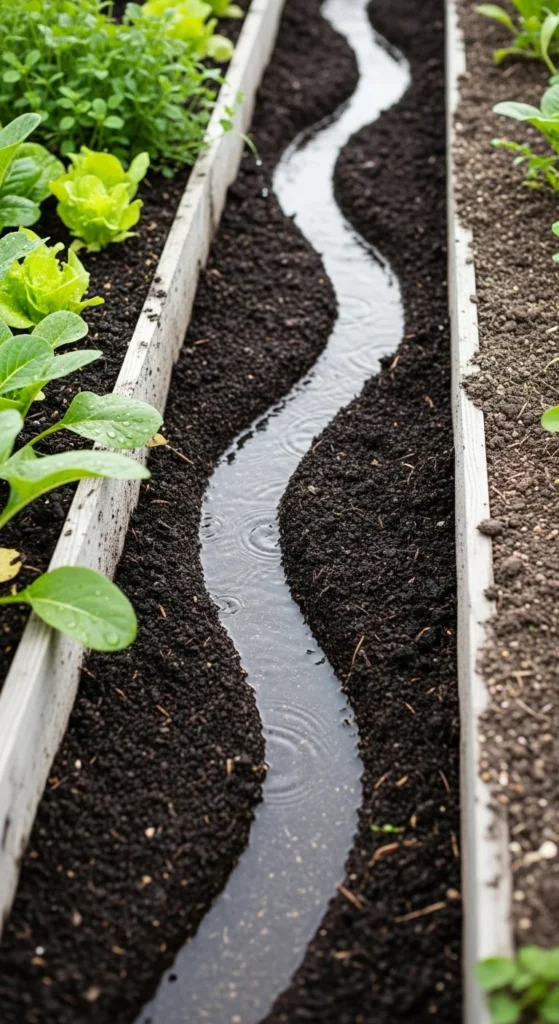
Build shallow channels between beds so extra water can move from one area to another. This prevents pooling and helps distribute moisture evenly. Channels also keep walkways dry.
Budget tip: Shape channels using leftover wood or simple hand tools.
DIY idea: Add small stones to line the channels.
20. Winter Drip Timer Settings
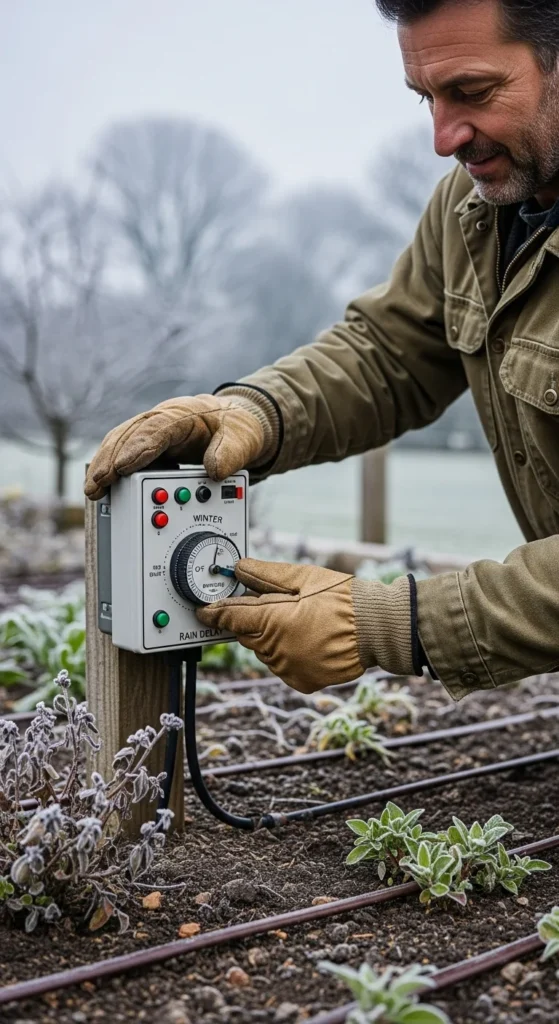
Set your timers to shorter, less frequent cycles during winter. Plants need moisture, but not as often as in warm months. Adjusting the timer once at the beginning of winter saves time and prevents overwatering.
Budget tip: Choose a basic timer with simple buttons.
DIY idea: Take a photo of your settings for easy reference later.
21. Covering Soil After Watering
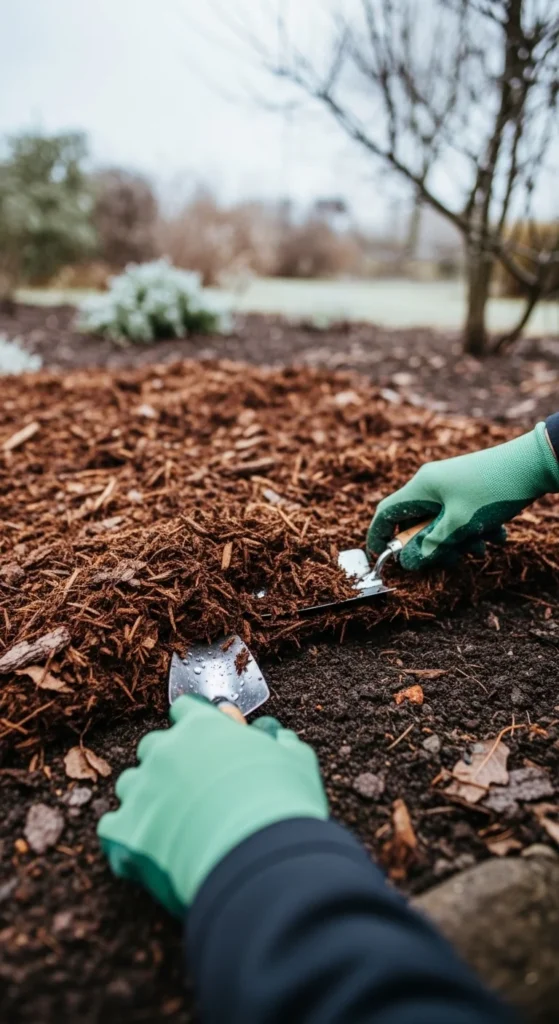
Place fabric or mulch over damp soil right after watering. This locks in moisture and prevents rapid drying from winter winds. It only takes a moment but helps water stay in the root zone longer.
Budget tip: Use old burlap sacks.
DIY idea: Cut fabric into small squares sized perfectly for your beds.
Conclusion
Winter raised-bed irrigation doesn’t need complex tools or constant attention. With simple adjustments—like drip lines, mulch layers, early watering cycles, and insulated hoses—you can keep soil hydrated while saving time. Pick a few ideas, match them to your climate, and set up a routine that fits your schedule. Your winter garden will stay steady, and you’ll spend less time dealing with frozen equipment or dry soil.

Leave a Reply