

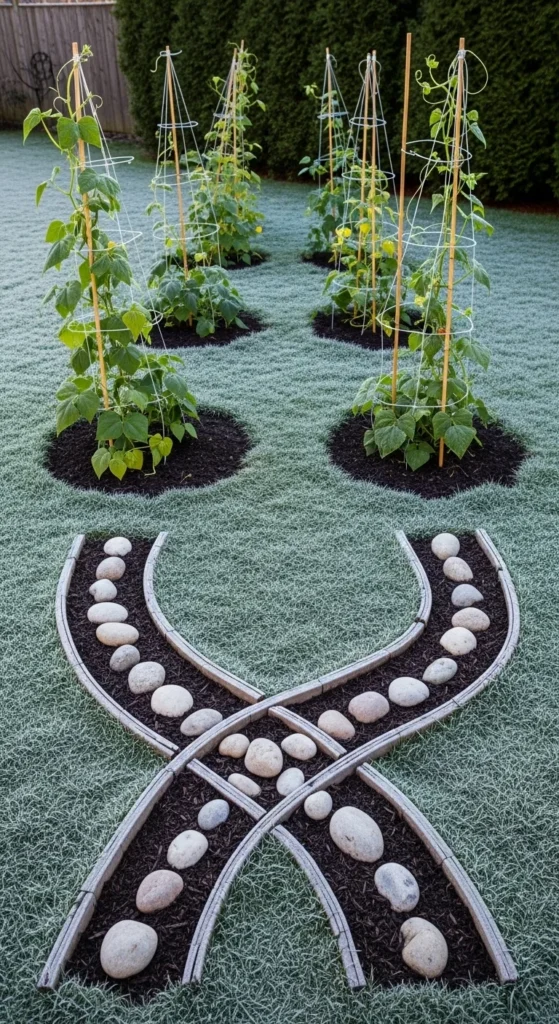
Vertical veggie gardens help you grow more food in tight footprints. Trellises lift plants upward, free ground space, and keep vines tidy during cooler New Year months when growth often feels slow. Containers, walls, lean-to frames, and simple stakes all support climbing crops without large beds. Many gardeners enjoy how vertical setups create structure, shade pockets, and smooth harvesting. These ideas help you build practical trellises with easy materials and everyday tools.
1. A-Frame Trellis for Compact Beds
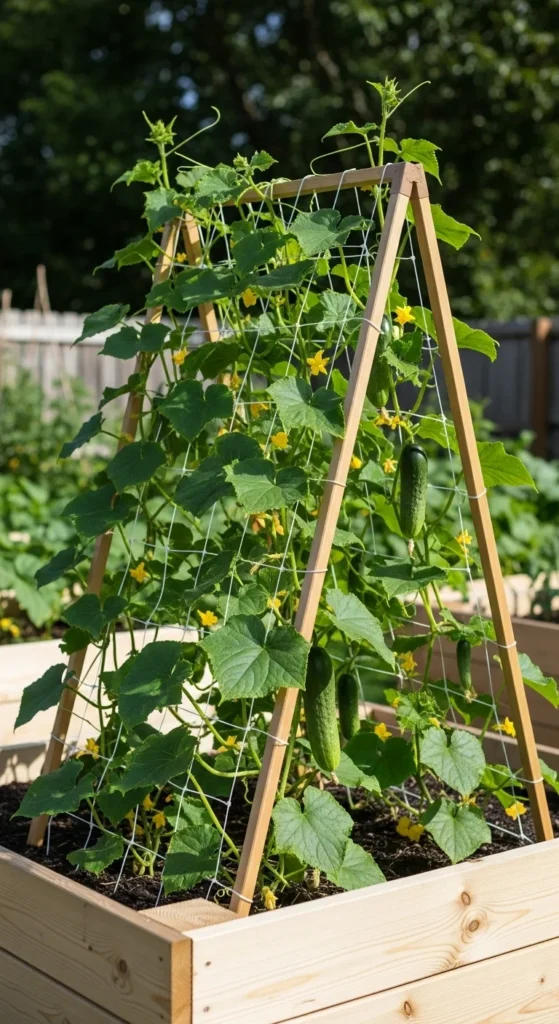
An A-frame trellis is one of the most compact ways to grow climbing veggies. Set two frames facing each other and connect them at the top. Use wooden slats or bamboo for the sides, then tie mesh or string between the edges. This creates a sturdy tunnel shape that suits cucumbers, beans, and climbing squash. The angled form allows plants to cling naturally without constant tying. Place the frame over a narrow bed or container row so vines climb up both sides. Soil under the center stays cooler as leaves form shade above. You can lift the frame slightly at the base to tuck drip lines or simple watering hoses underneath. During winter or early spring planting, lean one side closer to the sunniest direction so seedlings start well. The design folds easily, making storage simple during the off-season.
2. Wall-Mounted Wire Grid for Tomatoes
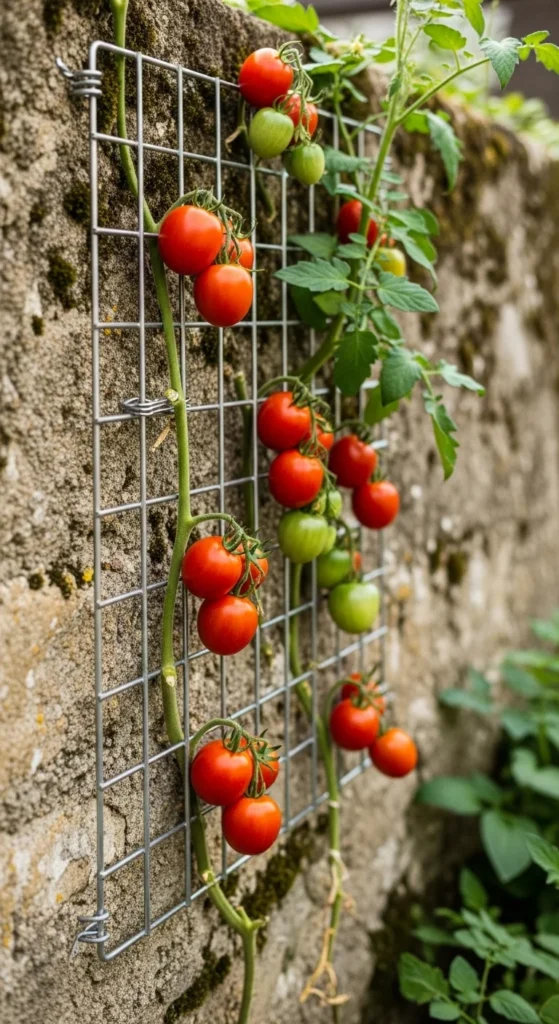
A wall-mounted wire grid gives tomatoes a clean vertical surface to climb. Choose a grid with strong horizontal bars so you can clip stems as they grow. Install it a few centimeters away from the wall to promote airflow. Plant tomatoes in containers directly below the grid and guide early stems upward using soft ties. As the plant grows, prune side shoots lightly so the main stem climbs without crowding. This method works well for patios or narrow pathways. The wall acts as a heat bank on sunny days, giving tomatoes added warmth during cooler seasons. Add a small tray under each pot to catch drips after watering, but empty it quickly so moisture doesn’t linger. A wall grid keeps fruit clean and prevents heavy stems from sprawling across the ground.
3. Bamboo Teepee for Pole Beans
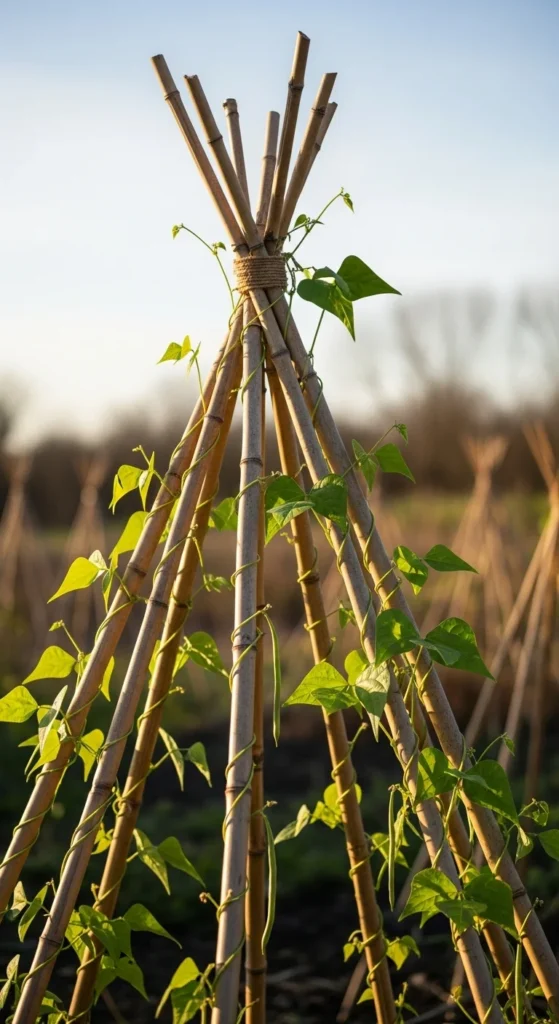
A bamboo teepee is a classic structure for climbing beans. Push three to five poles into the ground or container edges, then tie the tops securely. Space the poles widely enough for easy access to the center. Plant beans at the base of each pole and let them wrap upward on their own. The teepee shape encourages good airflow and helps vines dry quickly after watering. Add a small layer of mulch at the base to hold moisture. During early growth, you can wrap a light string spiral from bottom to top, giving seedlings an easy grip. Teepees look tidy and offer a sculptural focal point in winter gardens where shapes stand out more. When the season ends, untie the poles, shake off soil, and store them for next year’s use.
4. Lean-To Trellis Against a Fence
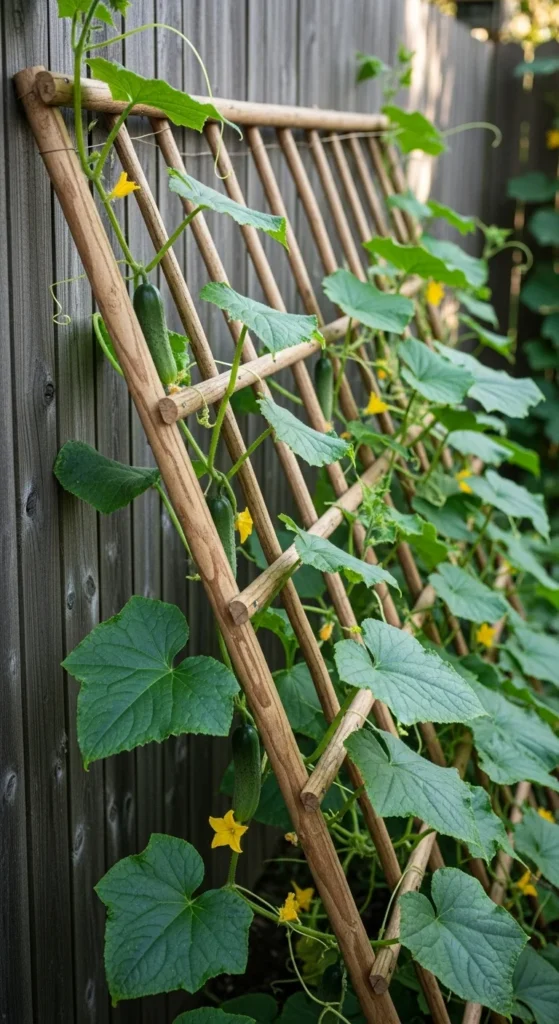
A lean-to trellis uses a simple angle to maximize space. Build a slanted panel using wood strips and mesh. Prop it against a fence or shed wall, leaving space behind for airflow. Plant vining veggies along the bottom edge and train them upward as they grow. The angle makes harvesting easier since fruit hangs toward you rather than hiding in deep foliage. This setup also shields tender seedlings from strong afternoon light. Add a thin mulch layer underneath the trellis to reduce splash-back on lower leaves. If your fence area gets low winter sun, choose crops like snow peas that handle cooler seasons well. The structure stays stable with only two or three anchor points.
5. Double-Sided Archway for Cucumbers
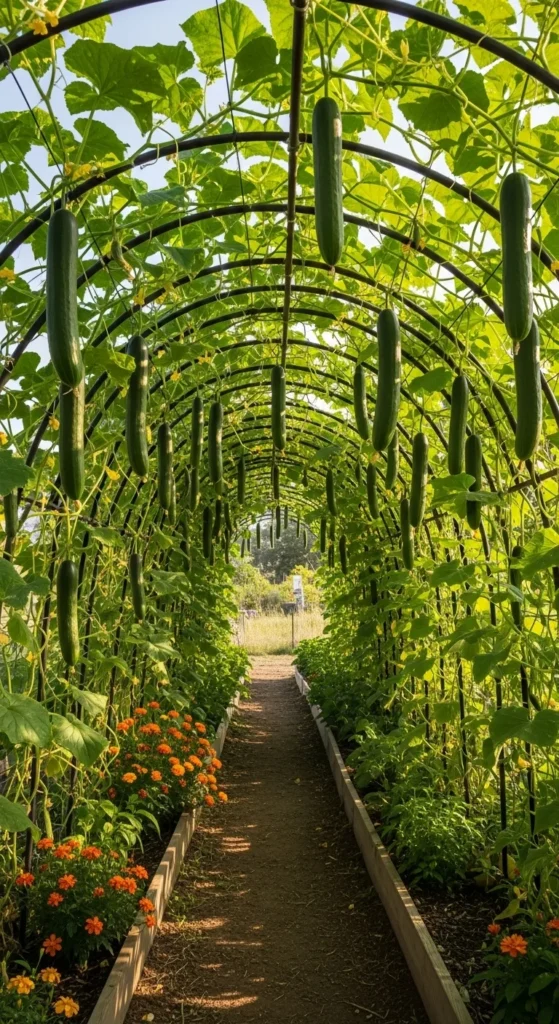
A cattle-panel archway creates dramatic vertical space for cucumbers and other climbers. Curve the panel into an arch and secure it with metal stakes or wooden posts. Plant veggies on both sides so vines grow toward the center. As they mature, fruit hangs inside the tunnel for easy picking. This design is perfect for narrow yards where you want height without wide beds. Add a path of stones or mulch underneath so the area stays tidy. The arch provides gentle shade for ground crops planted inside the tunnel. During early New Year cool weeks, the curved panel warms slightly in sunlight, helping young vines adjust.
6. Compact Ladder Trellis for Peas
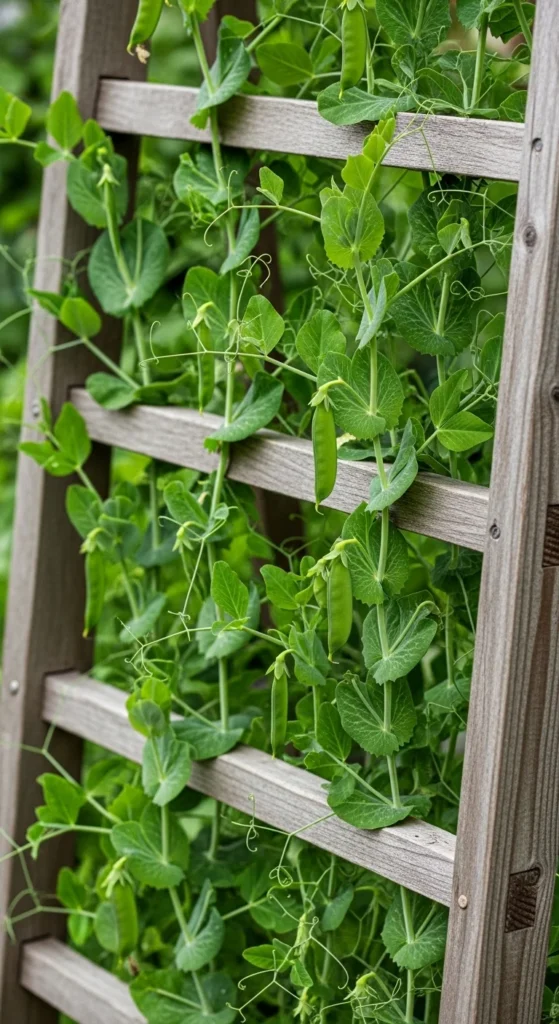
A ladder trellis works beautifully for peas. Build a simple frame with horizontal rungs spaced evenly. Lean it back slightly for stability. Plant peas at the base and let their tendrils grab onto the rungs naturally. The structure is light, easy to move, and fits well in containers. You can paint the frame in outdoor-safe colors to brighten winter corners. Because peas grow gently upward, the ladder shape keeps them organized without complex tying. Add straw or leaf mulch below the frame to keep soil from drying too fast. When the season ends, just lift the trellis out and store it flat.
7. Hanging Rope Grid for Balcony Veggies
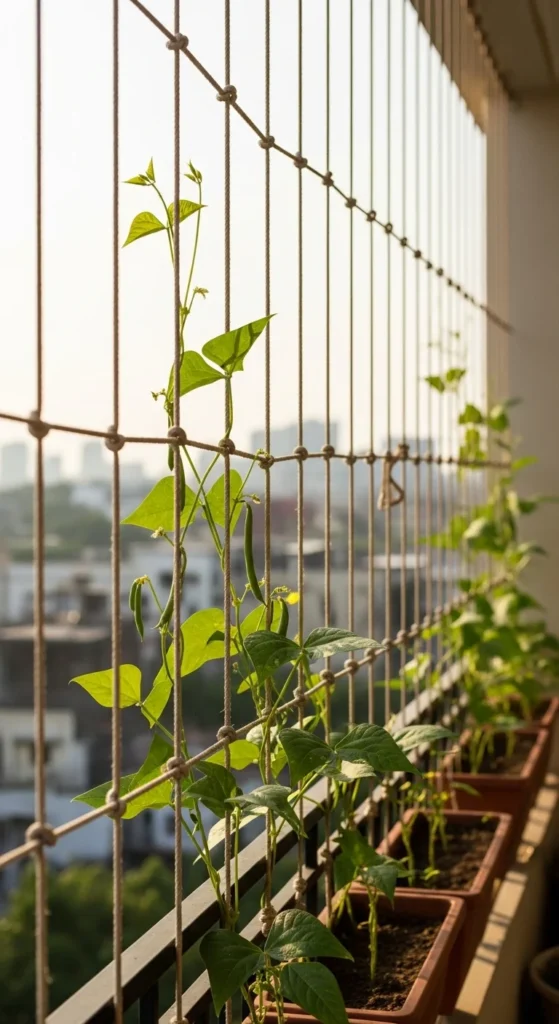
A rope grid offers flexible vertical space for balcony veggies. Tie ropes horizontally and vertically between hooks to form climbing squares. Place planters directly under the grid. Beans, peas, or small cucumbers grip the ropes easily. This design keeps the balcony airy since ropes don’t block light. Knotting the rope tighter at the bottom helps anchor early seedlings. You can shift the grid higher or lower during growth by re-tying a few knots. Use moisture-resistant rope so it lasts through winter dampness.
8. Pallet Trellis for Compact Squash
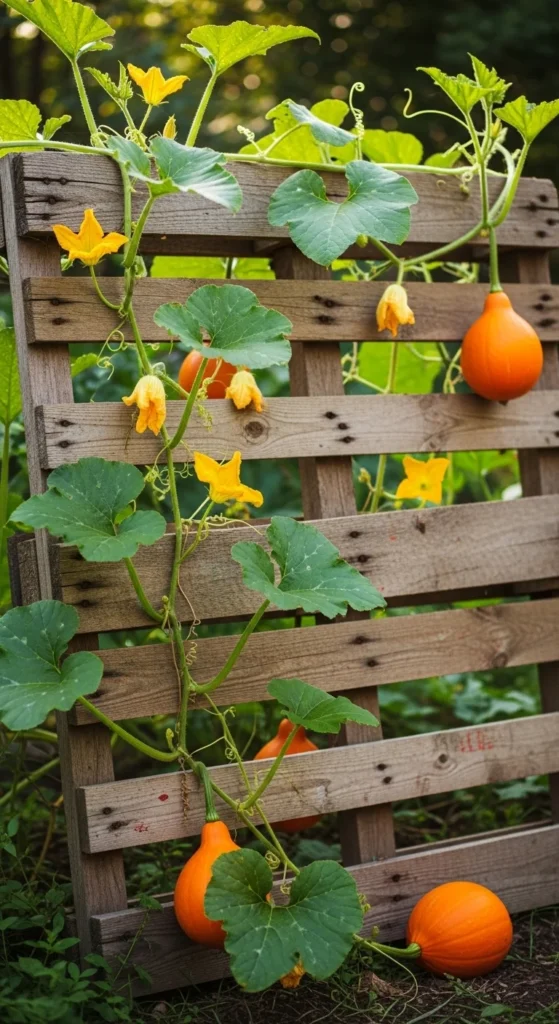
A repurposed pallet gives squash an easy pathway upward. Stand the pallet upright and secure it with stakes. Plant compact squash varieties at the base and guide early stems through the slats. The pallet protects fruit from mud and helps leaves receive better airflow. Add a drip line at the top to water evenly across the soil surface. Shade-loving herbs like mint or chives can sit behind the pallet, using the filtered light that passes through.
9. Obelisk Trellis for Tomatoes
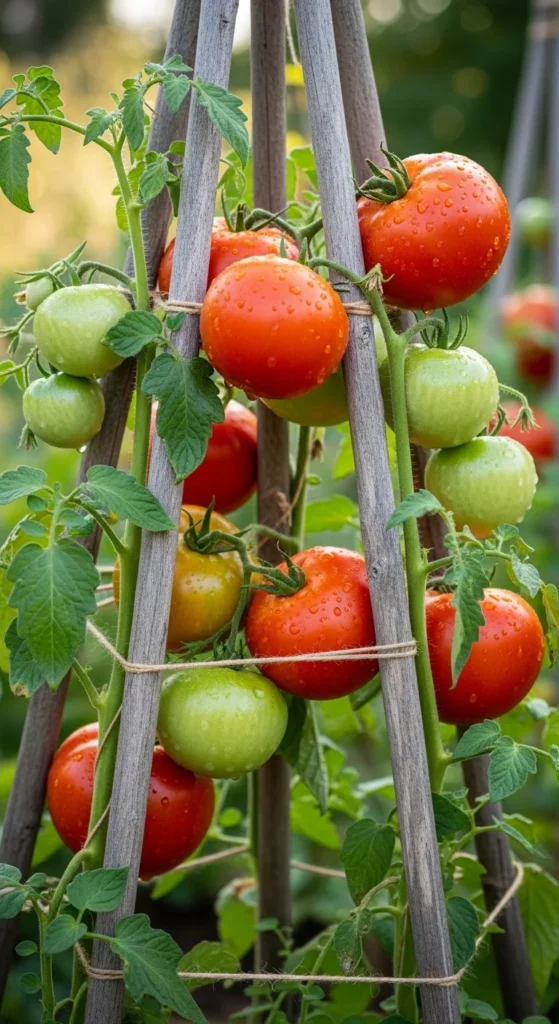
A wooden obelisk adds structure while keeping tomatoes upright. Place it in a wide pot or bed. Tie stems loosely at intervals using soft garden tape. The four-sided design supports tomatoes evenly from all angles. As tomatoes grow tall, the top of the obelisk prevents bending or collapse. Add a thin mulch layer around the base to hold moisture. This form works well with cherry tomatoes that spread quickly upward.
10. Crisscross String Web for Beans
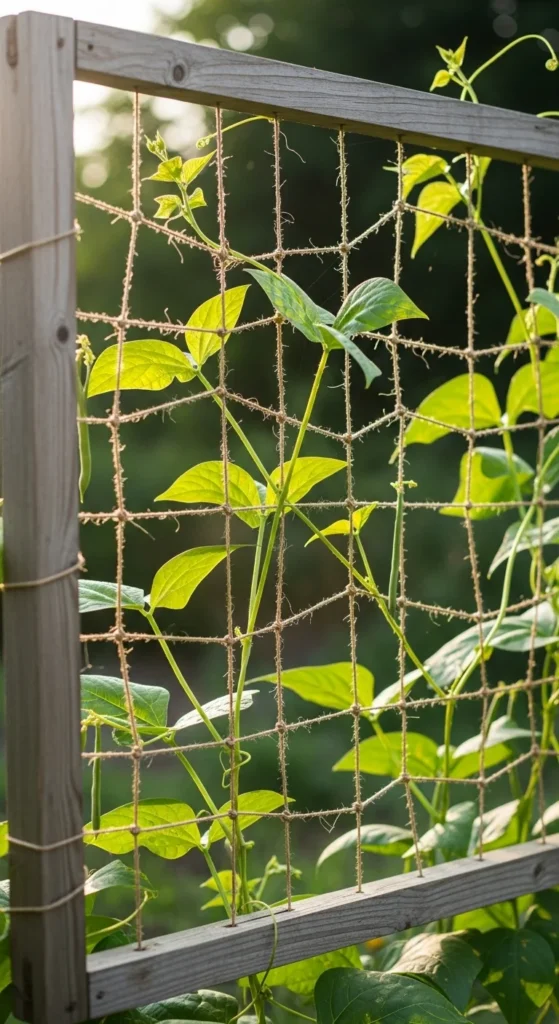
A string web gives beans multiple pathways to climb. Attach strings diagonally across a rectangular frame, then add vertical lines between. Plant beans beneath the frame and let them choose their own climbing route. The pattern looks artistic and provides lots of grip points. Replace any sagging strings during mid-season. This design keeps vines organized but not overly tight, helping airflow remain steady.
11. Fence-Mounted Folding Trellis
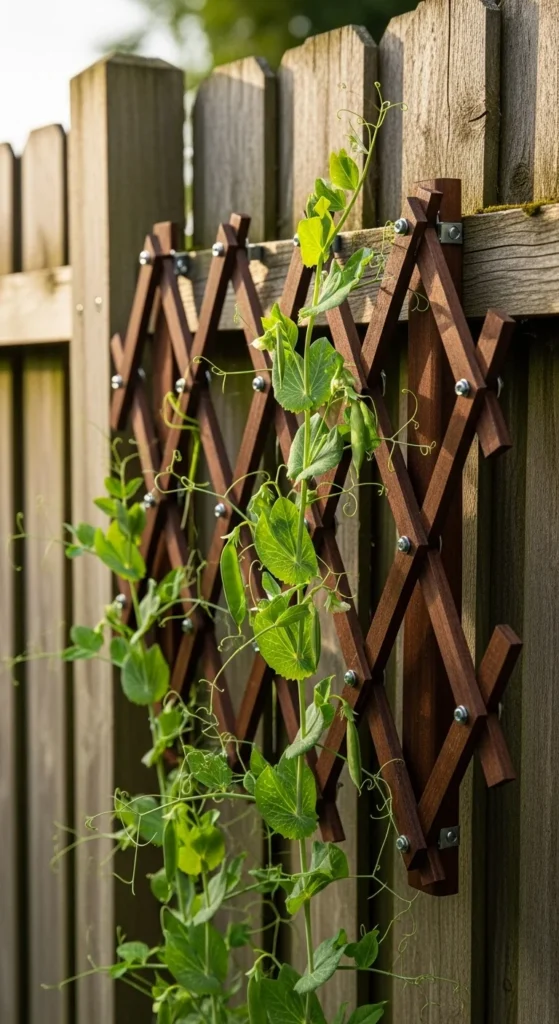
A folding trellis is perfect for fences. Mount the hinge side to the fence so the trellis opens like a fan. Pull it out at a slight angle for climbing space. Plant peas or beans beneath it. Close the trellis flat during off-season to save room. This feature gives you expansion flexibility without permanent fixtures sticking out year-round.
12. Tomato Spiral Pole Trio
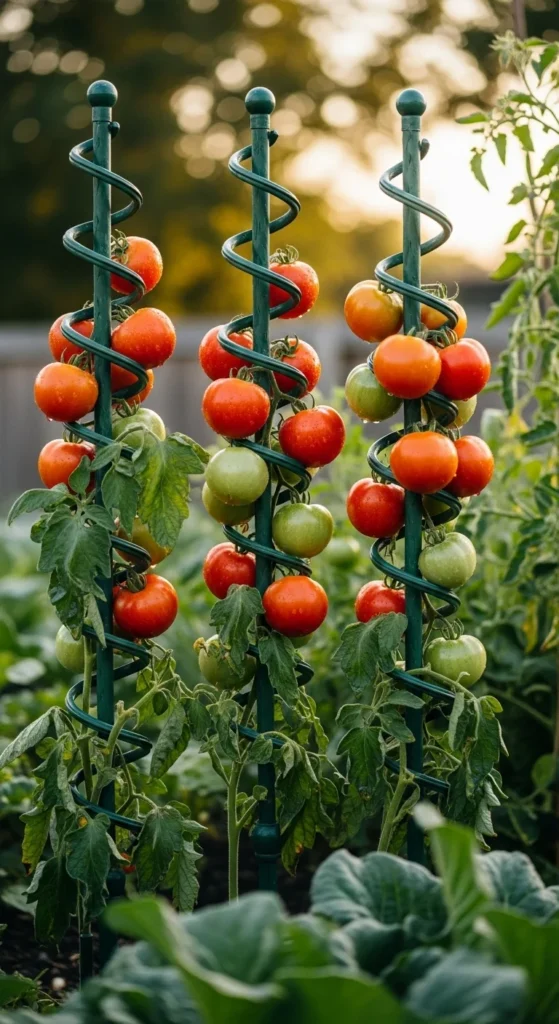
Spiral poles support tomatoes without cages. Twist stems gently around the pole as they grow. Use three poles in a tight triangle for compact spaces. This style suits balconies or small patios. Mulch beneath the cluster to keep soil from drying quickly. The open pole design keeps tomatoes visible for easy harvesting.
13. Mesh Panel for Climbing Greens
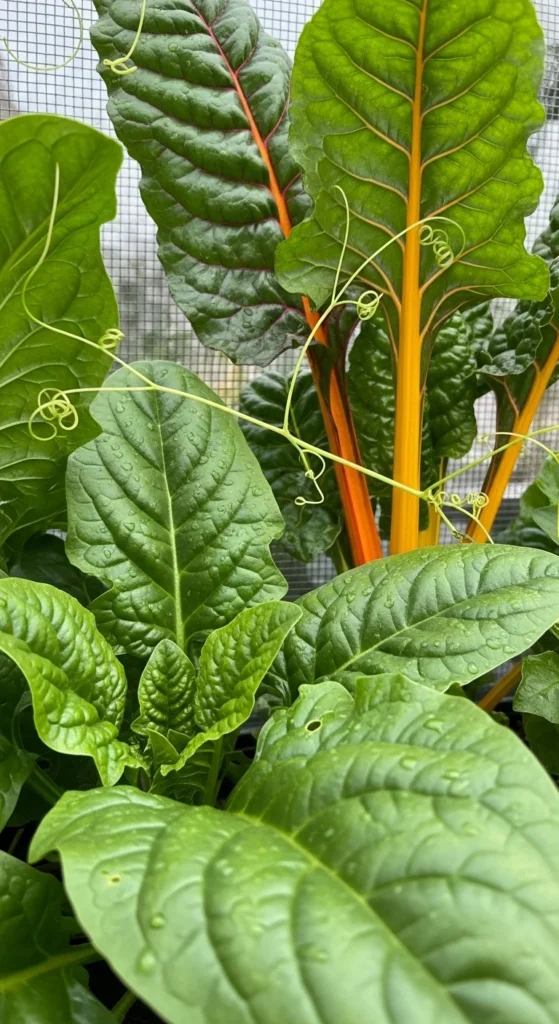
A mesh panel helps climbing greens stay tidy. Install a vertical mesh against a raised bed. Plant greens like Malabar spinach or climbing chard at the base. Guide early stems through the mesh. The panel keeps leaves clean and off the soil. It also improves light access, helping winter greens thrive during short daylight hours.
14. Crate-Top Trellis for Container Veggies
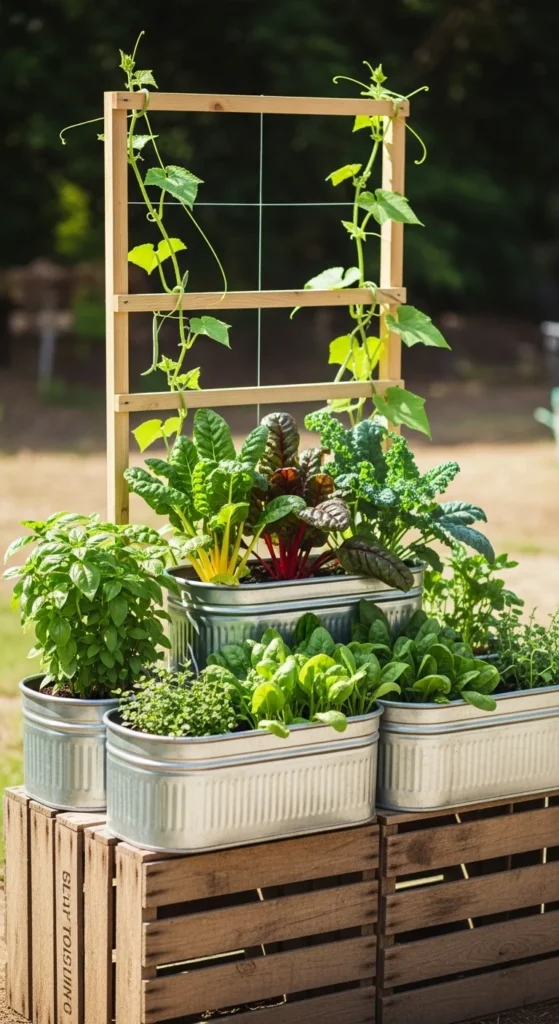
Stack crates to lift containers slightly off the ground, then attach a trellis behind them. This creates a mini vertical garden on patios or decks. Plant vining crops like cucumbers, beans, or peas. The raised height helps drainage and makes harvesting easier. Add a thin layer of gravel under crates to keep them stable.
15. Triangle Trellis for Cucamelons
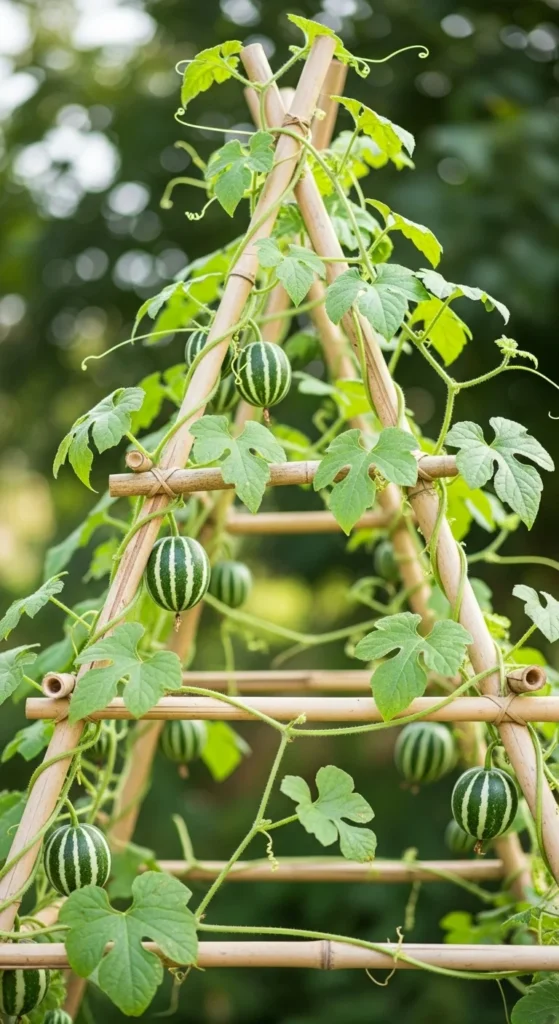
A triangle trellis pairs well with light climbers like cucamelons. Build three slanted panels and join them at the top. The small footprint fits tight gardens. Cucamelons grip the sides quickly and hang tiny fruit toward the center. Use a drip tray below if you grow inside containers. Add mulch to reduce soil splash during watering.
16. Plastic Coated Wire Panel for Snow Peas
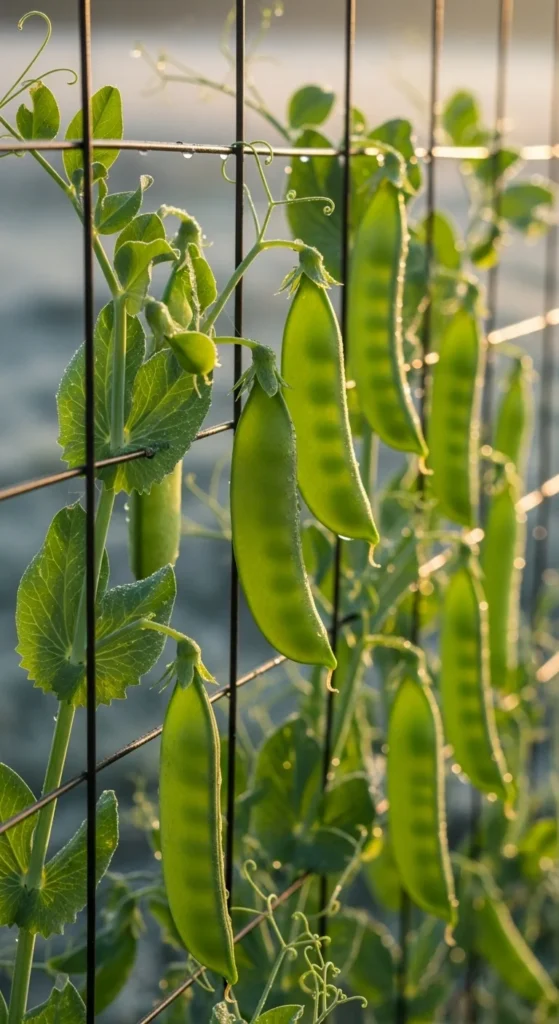
A plastic-coated panel stays durable through winter moisture. Attach it to two sturdy posts and plant snow peas at the base. The coating prevents rust. Clip stems loosely if wind is strong. This design suits cooler months because snow peas love the lower temperatures. Keep the area weed-free so early shoots can climb smoothly.
17. Tall PVC Arch for Long Vines
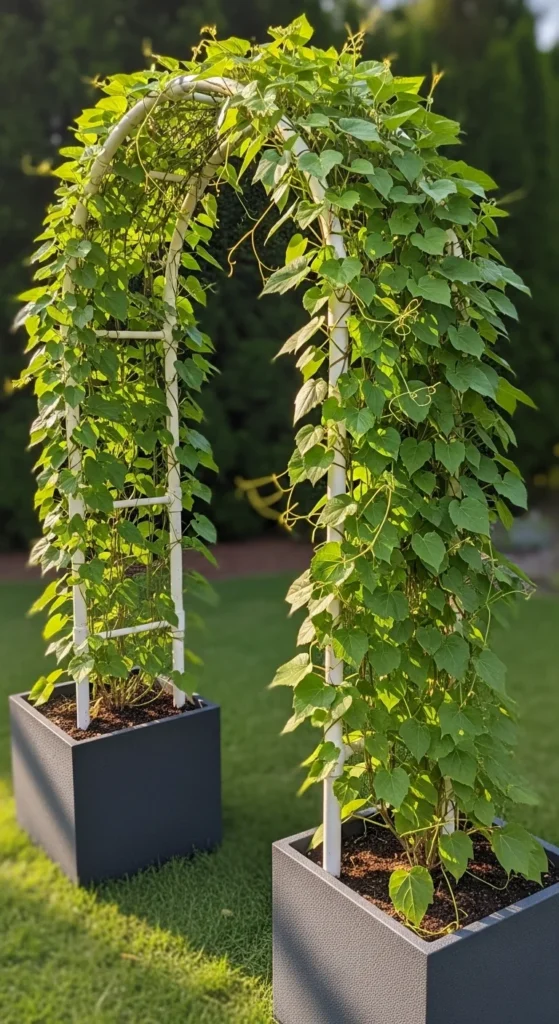
A PVC arch is affordable and easy to assemble. Fit curved PVC pipes into rebar stakes. Add mesh or string between the curves. Plant long vines like climbing squash or beans at each end. The arch creates a tunnel effect and adds height in small gardens. Use sandbags to stabilize if your soil is loose.
18. Compact Trellis Box for Mixed Veggies
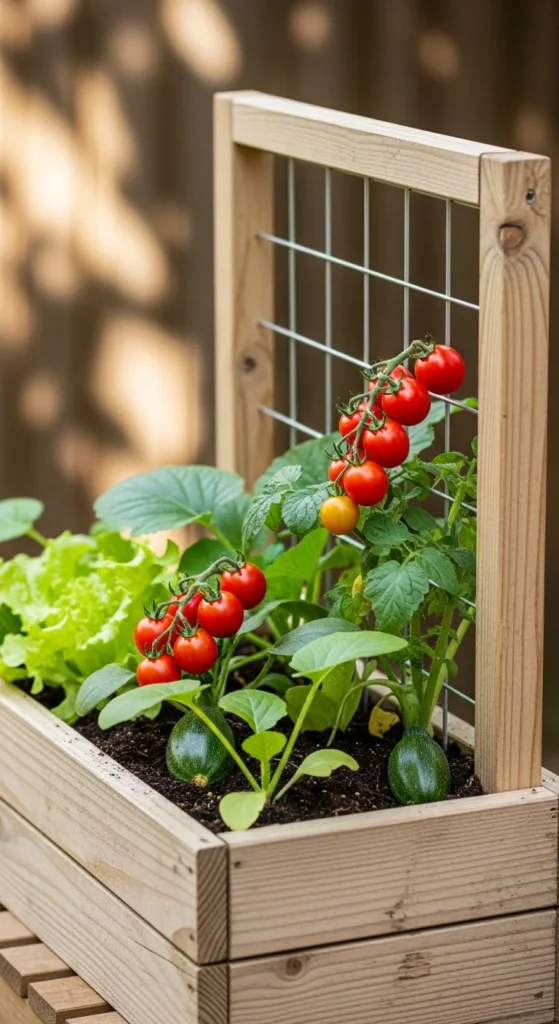
A trellis box pairs a small planter with a vertical panel. Fill the box with soil and plant mixed veggies—beans, peas, chard—toward the back side. The trellis gives climbers a path upward while leafy crops grow in front. This arrangement suits balconies and window-side patios. Add a bit of mulch to steady moisture.
19. Stair-Step Trellis for Container Rows
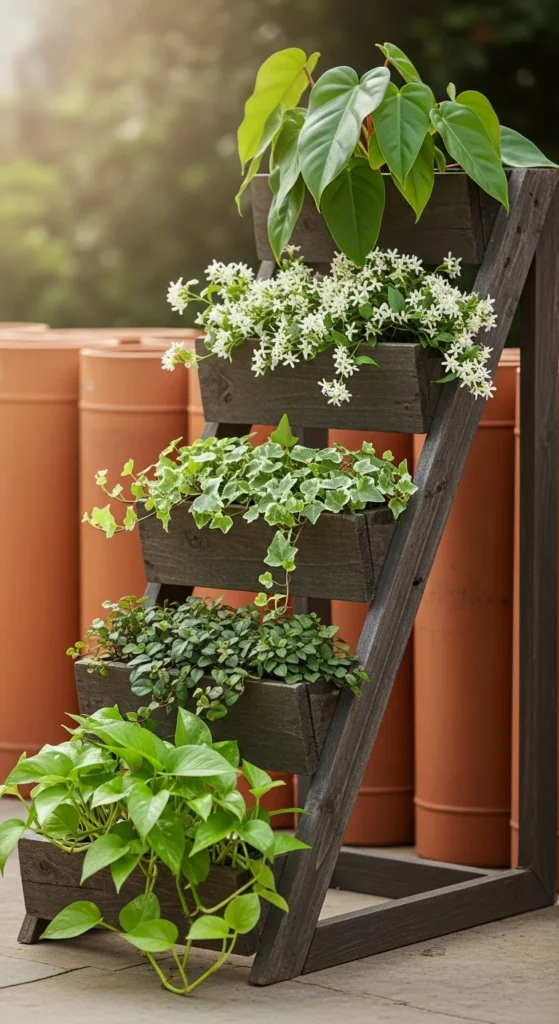
A stair-step trellis lifts containers at different heights. Build a wooden step frame and place a trellis behind it. Each pot can hold a different climbing crop. This vertical tiering saves space and gives vines sunlight without crowding. Add a drip line along the back edge for even moisture.
20. Tall Wire Cylinder for Pole Beans
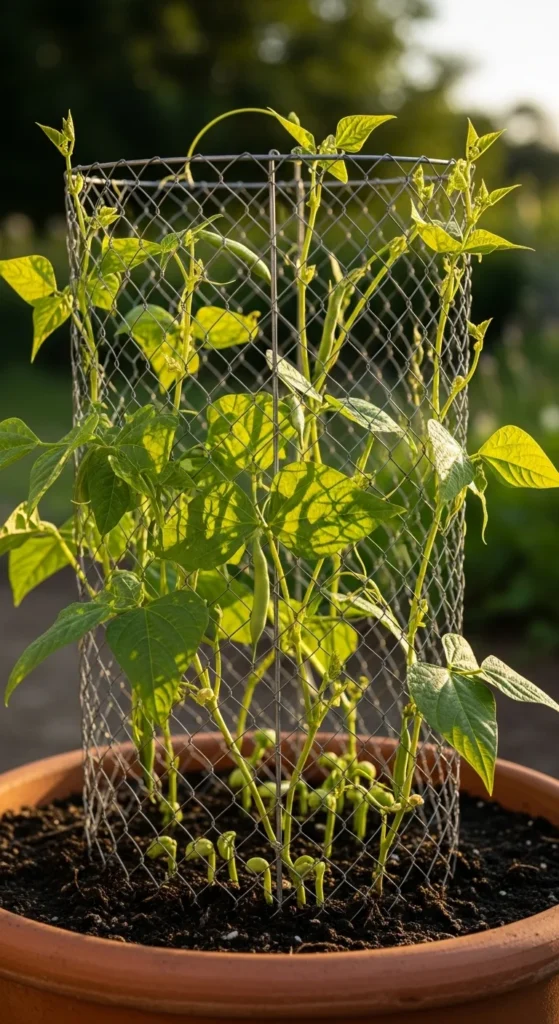
A wire cylinder offers 360° climbing room. Place the cylinder inside a large pot and plant beans evenly around the rim. As they grow, the vines wrap upward and fill the cylinder. This helps maximize production in a single container. Add gravel at the bottom for drainage.
21. Bamboo Grid Trellis Behind Raised Bed
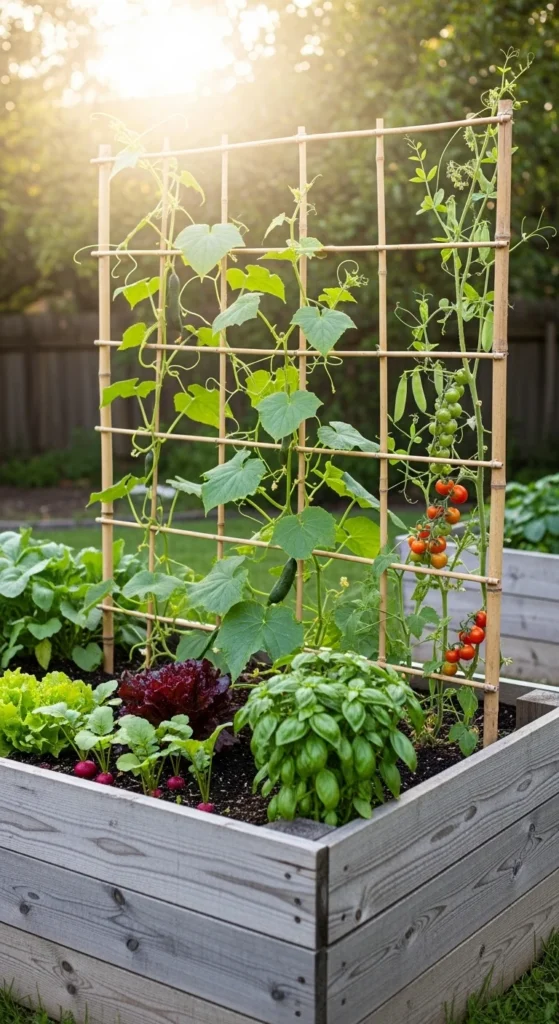
A bamboo grid fits neatly behind raised beds. Tie bamboo canes horizontally and vertically to make a grid. Plant taller veggies toward the back of the bed. They climb the grid without shading shorter crops in front. The natural bamboo look blends well with winter garden textures.
22. Hanging Pot + Mini Trellis Combo
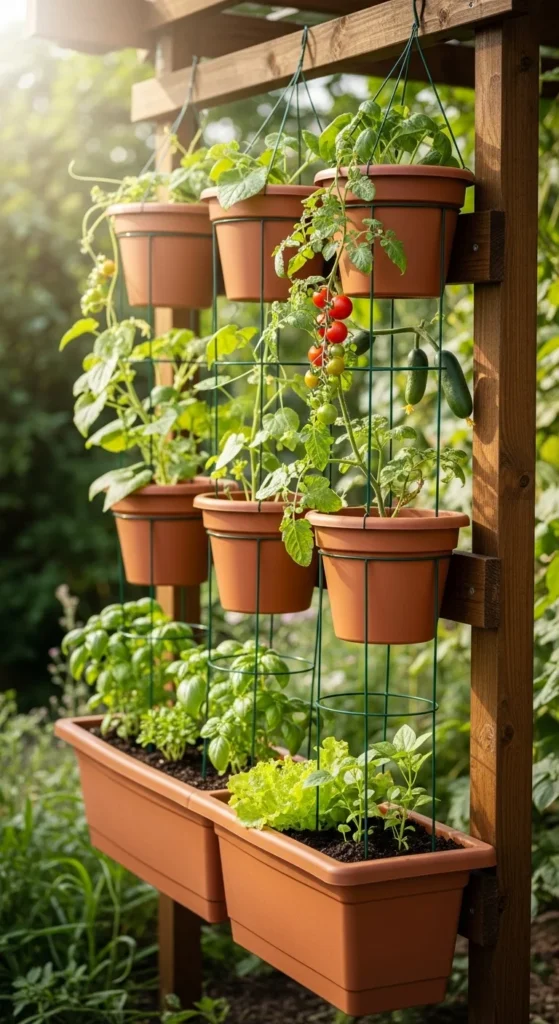
A hanging pot system doubles the vertical space. Hang one pot overhead and place another directly below it. Add a small trellis connecting the two. Vines climb downward or upward depending on the crop. This works great for small balconies. Choose light materials to avoid heavy weight on brackets.
23. Fence-Top Cable Lines for Climbing Veggies
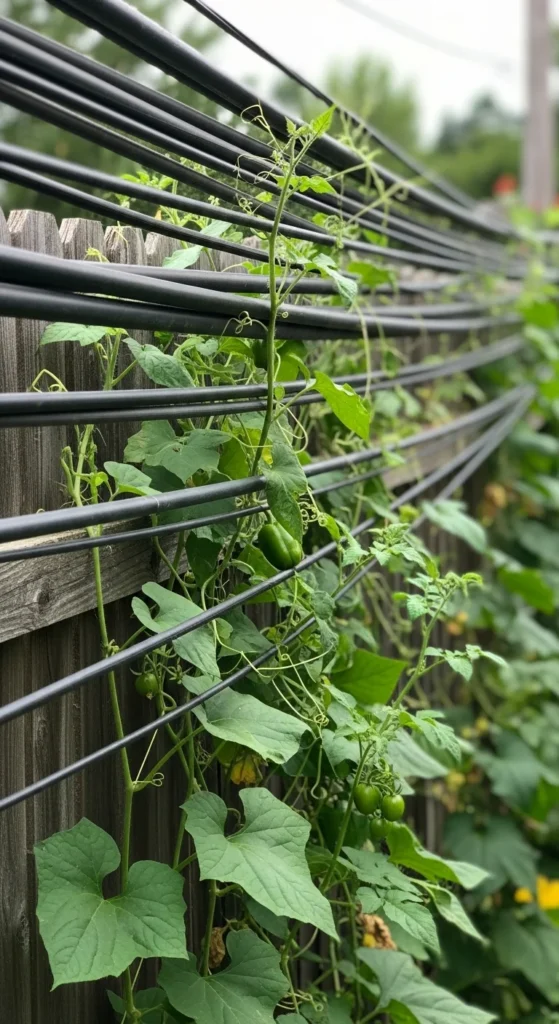
Cable lines along fence tops create a clean climbing route. Install metal eyelets along the fence and thread strong cable or rope through them. Plant climbing veggies at the base and guide stems up. This setup keeps vines off the ground and uses space already available. It’s simple, tidy, and ideal for long narrow yards.
Conclusion
Vertical trellises transform small gardens into productive climbing spaces. From rope grids to archways and compact frames, these ideas help your veggies stretch upward without taking over the yard. Choose one or two designs that suit your space, gather simple materials, and start training vines early in the season. As plants climb, your garden becomes more efficient, organized, and easy to harvest through the New Year.
Leave a Reply