


Cold months don’t have to mean a quiet or dull garden. Many plants hold strong fragrance even when temperatures drop, and their scent can add warmth to shorter days. Winter gardens feel more inviting when herbs, shrubs, and small blooms release aroma as you walk past them. The plants below thrive in cooler conditions and offer steady scent from walkways, pots, entry corners, or balcony trays. Each idea focuses on simple tasks you can start right now, even with a tight budget or limited space.
1. Sweet Rosemary Spikes

Rosemary holds onto fragrance through cold months, making it reliable for winter herb corners. Grow it near an entry path so the aroma releases when brushed lightly. Keep the soil on the dry side to maintain stronger leaf scent. If your winter is very cold, place the pot near a south-facing wall for added warmth. Trim tips gently to encourage branching without forcing heavy growth. Small cuttings root easily in a simple jar of water, so you can expand your rosemary supply for free. Use terracotta pots because they dry faster and help keep roots stable in winter. Set a shallow tray of gravel beneath the pot to avoid sitting water. You can even tuck rosemary into raised beds alongside other scented plants like thyme or lavender for a fuller aroma zone. This plant handles winter light well and continues releasing fragrance during both morning and late afternoon walks.
2. Winter Jasmine Trails
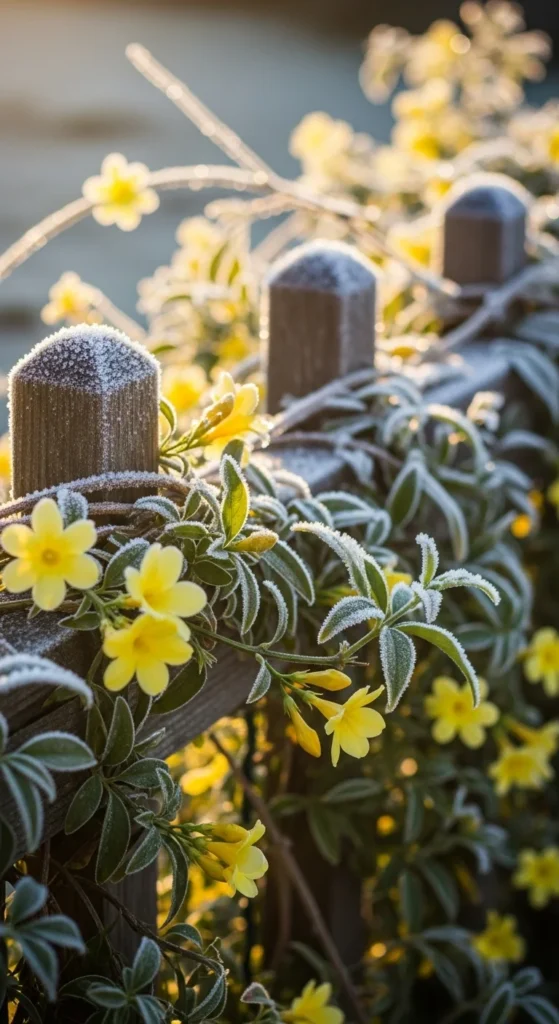
Winter jasmine brightens cold seasons with light fragrance and cheerful blooms. Plant it along a trellis, low fence, or simple wire frame. The vines tolerate chilly weather and continue to flower even in low light. Keep soil lightly moist but never soggy. Use a mulch ring around the base to help maintain steady root conditions. If planting in a pot, choose a tall support so the stems can trail gracefully. You can shape the vines gently to guide them where you want more scent concentration, especially near windows or walkway edges. Trim long stems once the flowering stage slows so the plant stays contained. Even a small jasmine plant near a patio wall can add a soothing aroma when the cold air moves through the garden.
3. Lemon Thyme Mounds

Lemon thyme keeps its sharp citrus aroma during winter and works well in borders and pots. It forms low, dense mats that stay compact even in cold weather. Place it near stepping stones so the scent lifts gently when touched. Keep trimming minimal in winter; only shape lightly to maintain the mound. Use well-draining soil to avoid root issues. If temperatures drop sharply, slide a small frost cloth over the plant during night hours. Save stem cuttings by placing them in a small cup of water—many root quickly. Combine lemon thyme with rosemary or sage to create a multi-scent patch that stays active all season. Its fragrance brings a lively touch during cold mornings.
4. Scented Hellebores

Hellebores offer delicate fragrance and bloom early when most plants are still resting. They handle cold weather well and prefer partially shaded corners. Plant them near paths where subtle scent can be enjoyed up close. Keep soil enriched with a thin compost layer during fall so they have steady support through winter. Avoid moving them too often; they stay happiest when left in one spot. Add a light mulch layer around the base, leaving space around the stems for airflow. Pair them with low herbs like thyme or creeping rosemary for a rich aroma blend across the bed. Hellebores are long-lasting plants that continue to expand slowly each year.
5. Garden Sage Clumps

Sage retains its earthy scent even through cold spells. Plant it in well-draining soil and give it a sunny position for steadier winter performance. Avoid heavy watering; sage prefers a drier environment. Trim only woody stems and leave new growth untouched during cold months. Small clumps can be divided during early spring, giving you extra plants for free scented corners. Keep sage close to pathways or near seating spots so the aroma rises when leaves are touched. If growing in containers, choose wide pots for better airflow around the roots. Sage pairs nicely with rosemary and thyme for a multi-layered winter scent zone.
6. Winter Daphne Glow

Daphne blooms release a strong perfume during late winter. The shrub stays compact and fits well in small gardens. Plant it near an entryway or beneath a window for easy enjoyment. Keep soil lightly acidic and use mulch to maintain even conditions. Avoid moving the plant once placed; daphne prefers stability. Water only when the top layer becomes dry. Apply a thin compost layer each fall to feed the roots without overwhelming them. When blooming starts, the strong aroma fills nearby spaces even with light wind.
7. Scented Violas in Pots

Violas give off a soft fragrance and continue blooming well into winter. Plant several in one container for stronger scent concentration. Keep them in a sunny spot or near a window that receives daily light. Deadhead spent flowers to maintain steady blooming. Use a light potting mix that drains quickly. If frost becomes heavy, slide the pot closer to a wall for warmth. You can mix colors for a cheerful winter display that also adds gentle aroma along patios or doorways.
8. Scented Bay Laurel

Bay laurel holds its aroma through cold seasons and works well in pots. Keep the plant near a sheltered wall to protect it from sharp winds. Water sparingly and avoid letting the pot sit in water. Trim lightly to shape the canopy. You can dry a few leaves indoors to use in cooking while the plant rests outside. Bay pairs well with rosemary and sage for a flavorful winter herb cluster. If frost becomes extreme, bring the pot indoors for the night.
9. Sweet Box (Sarcococca)

Sweet box is known for its strong winter scent. Plant it along paths where visitors walk by slowly. The glossy leaves stay attractive year-round. Use a shaded or partially shaded location. Water lightly and let the soil dry between sessions. When blooming, the shrub fills the air with sweet aroma even on cold mornings. Keep it trimmed only after flowering. It works well in small gardens because it stays compact.
10. Lavender ‘Hidcote’ Winter Patch

Some lavender varieties handle cold weather well, especially ‘Hidcote.’ Plant them in sunny spots with very well-drained soil. Avoid heavy watering in winter. Trim only in early fall or spring, not during cold months. The scent remains strong when stems are brushed. Add a thin gravel mulch around the plant to prevent soggy soil. Lavender works beautifully along driveways, walkways, and raised beds where you can enjoy the aroma daily.
11. Mint Overwinter Pot
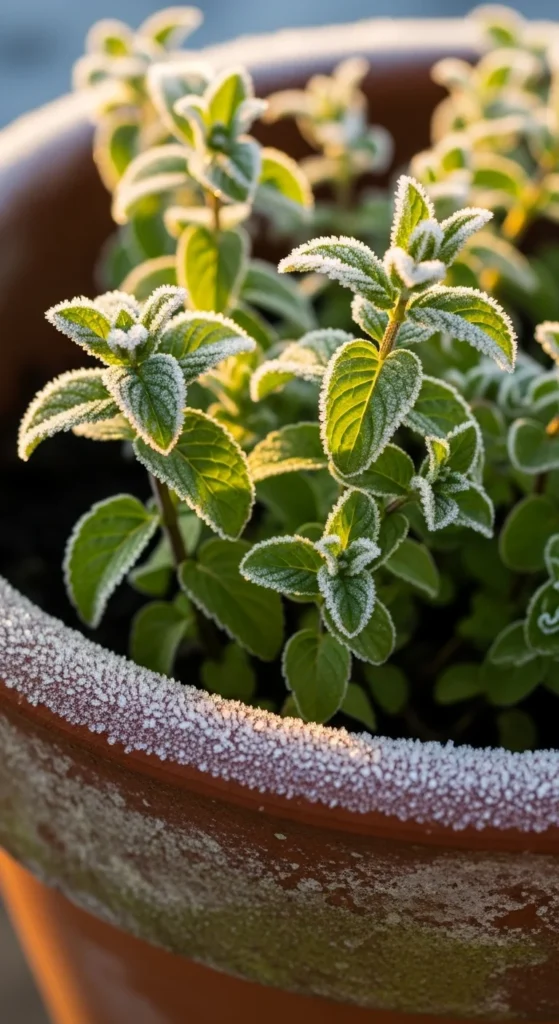
Mint keeps some of its aroma during winter, especially in sheltered spots. Grow it in a pot to keep it contained. Place the container near a sunny wall so it receives reflected warmth. Water lightly; mint doesn’t need constant moisture in cold seasons. Trim dead stems to make space for new growth. You can harvest stems anytime for tea or indoor drying. Mint’s scent rises quickly when touched, making it perfect for sensory corners.
12. Hyacinth Bulb Trays

Hyacinths are known for strong fragrance and bloom early indoors or outdoors. Plant bulbs in shallow trays or pots. Keep soil lightly moist. Place them somewhere cool until sprouts appear. As buds form, bring the tray closer to daily light. Their aroma spreads across indoor and outdoor spaces once blooms open. Rotate the tray occasionally to keep stems upright. This project works well for gardeners who want scent near windows without needing large garden space.
13. Winter Scented Geranium
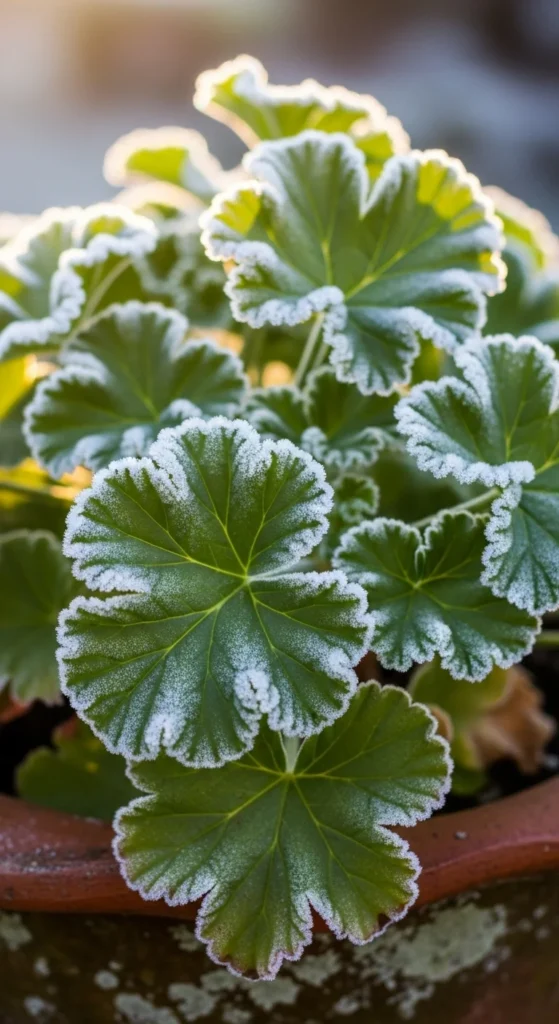
Scented geraniums release fragrance when leaves are touched. Grow them in pots to make winter care simple. Keep soil on the dry side and place the pot near a sunny location. Trim lightly to keep the plant compact. Bring the pot indoors during extremely cold nights. The leaves give off aroma ranging from lemon to rose, depending on the variety. You can mix geraniums with thyme or lavender for a multi-scent display.
14. Winter Honeysuckle

Winter honeysuckle blooms earlier than many shrubs and carries strong fragrance across the garden. Plant it near fences or pergolas. Keep soil moderately moist but avoid sogginess. Use light pruning after the bloom cycle to keep stems tidy. This shrub attracts early pollinators and fills the garden with aroma during late winter. Consider planting near seating areas so you can enjoy the scent on calm afternoons.
15. Scented Witch Hazel

Witch hazel produces ribbon-like blooms that smell sweet during colder months. Place it in full sun or partial shade. Water only when the top soil layer dries. Mulch lightly for root stability. This shrub adds a vibrant color plus reliable fragrance. Its branches look striking against winter backdrops, especially when grown near evergreen plants.
16. Wintergreen Shrub

Wintergreen offers minty aroma from both leaves and berries. Grow it in partial shade. Keep soil lightly acidic with a thin layer of pine mulch. Water only when needed. The scent lifts easily when leaves are touched. The shrub stays low and spreads slowly, which makes it great for borders or small woodland corners.
17. Fragrant Paperwhites
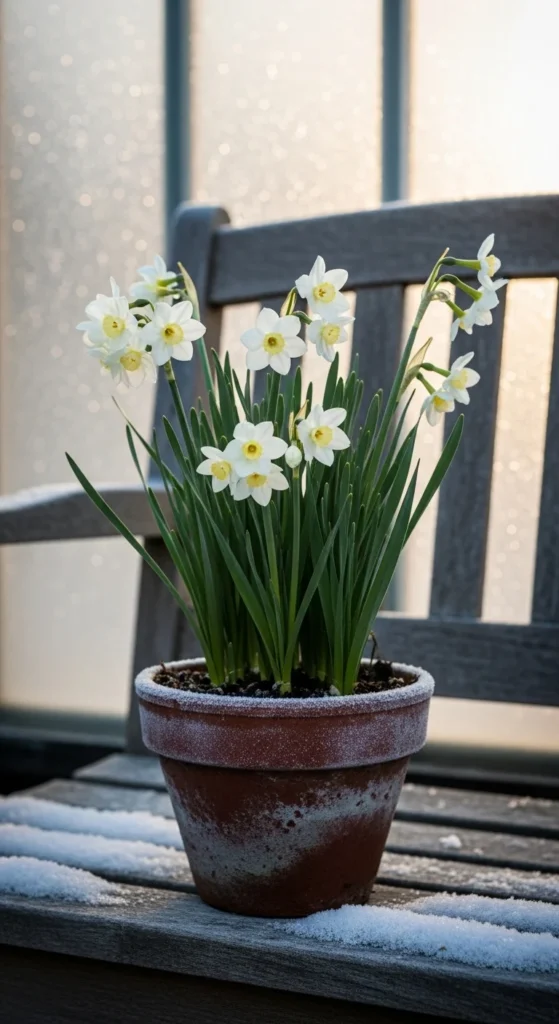
Paperwhites bloom indoors or on sheltered patios. Their scent is strong and travels well across a room or balcony. Plant bulbs in shallow bowls with gravel or potting mix. Keep the container cool until shoots appear. Add water sparingly. Once blooming starts, place the pot near seating areas. These bulbs work well as winter gifts and as quick projects for adding aroma to your garden or home.
18. Pine-Scented Dwarf Conifer

Dwarf conifers release a subtle pine scent during winter. They work nicely in containers or along garden edges. Keep soil well-drained. Water lightly during cold periods. Trim only damaged branches. Use them as centerpieces in winter planters with violas or thyme for added scent layers. Their evergreen structure keeps the garden visually steady all season.
19. Scented Chamomile Mat
Chamomile maintains fragrance when leaves are brushed. Grow it in small mats near step stones. Keep soil sandy and well-drained. Water lightly. During winter, chamomile stays compact and keeps its scent even with light frost. You can collect dried flowers in fall for tea, leaving the plant to settle for winter. Pair chamomile near rosemary for a pleasant scent zone.
20. Sweet Marjoram Pot

Marjoram carries a gentle fragrance and grows well in cool seasons. Keep it in a pot for easy winter care. Water sparingly. Trim just enough to shape. Place the pot where it receives good sunlight. Marjoram mixes nicely with thyme and sage for a fuller scent corner. If frost becomes heavy, bring it indoors for a night or two.
21. Winter Scented Oregano

Oregano holds its aroma through cold weather and stays compact in winter. Grow it in sunny locations with good drainage. Water lightly. Trim woody stems to keep the plant tidy. Use a gravel mulch ring for root support. You can harvest sprigs anytime to scent soups and stews. Plant oregano alongside rosemary for a strong aromatic pairing.
22. Evergreen Sagebrush

Sagebrush stays aromatic through winter and carries a warm herbal scent. Plant it in sunny spots with sandy soil. Water sparingly. Trim lightly when branches grow uneven. The plant is low-effort and fits well in dry garden sections. Pair sagebrush with lavender or thyme for a textured winter aroma zone.
23. Scented Winter Pinks
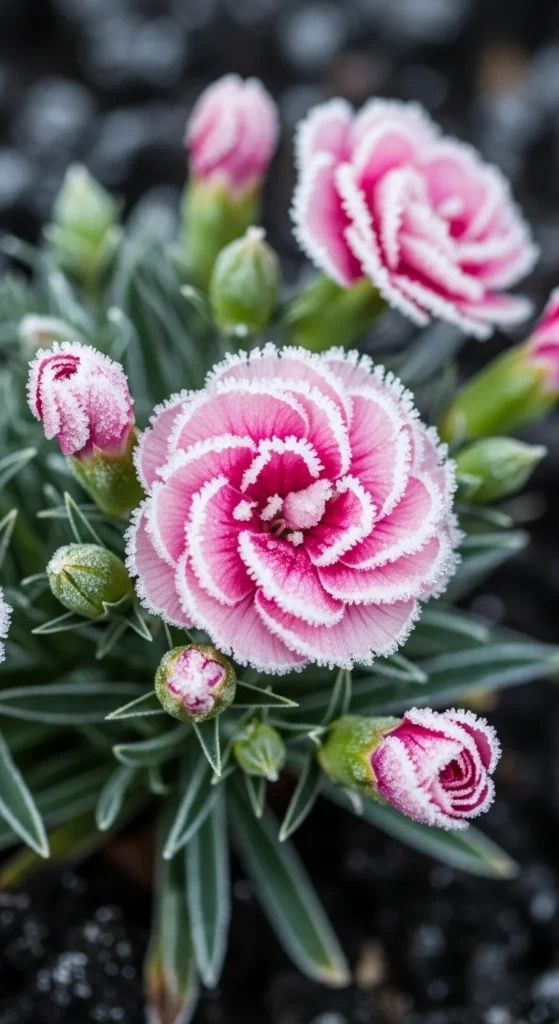
Winter-hardy pinks offer a soft clove-like fragrance. Plant them in well-drained soil. Keep them in sunny areas for stronger aroma. Deadhead lightly when blooms fade. They work beautifully in pots or raised beds. The scent rises easily during warmer parts of the day, even in mid-winter. Add gravel mulch to protect the crown and avoid rot after cold rain.
Conclusion
Winter gardens become far more inviting when scent fills the air, even in short daylight hours. By choosing plants that hold fragrance through colder months, you create an outdoor space that feels warm, steady, and enjoyable. Mix a few shrubs, herbs, and bulbs from this list, place them near paths or seating areas, and enjoy a sensory garden that stays active all season.
Leave a Reply