


Every garden deserves a walkway that feels as good underfoot as it looks to the eye. Texture-rich paths not only guide visitors but also shape the rhythm and mood of your outdoor space. From pebble mosaics to mossy brick trails, tactile materials turn every step into an experience. Here are 23 garden-path designs to explore this New Year—ideas that invite touch, sound, and balance between comfort and craft.
1. River-Stone Mosaic Path

River stones create a natural massage effect underfoot and add subtle shine when wet. Use smooth stones in varying colors to form patterns. Embed them in mortar or sand for a secure surface. This path suits courtyards or areas near water features. Add border lighting to emphasize its glossy look at night. It’s a calming, sensory experience every time you walk barefoot.
2. Brick and Moss Path
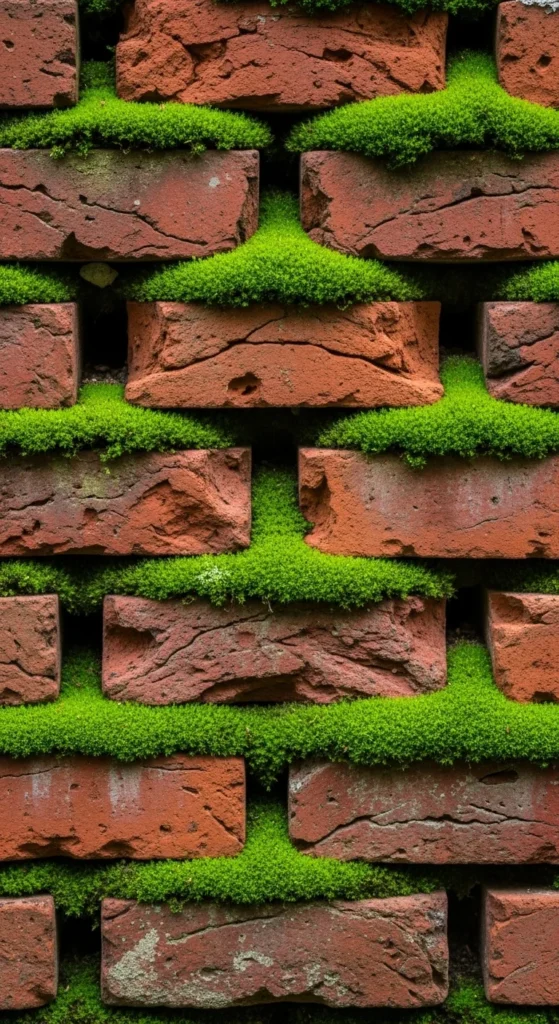
Pair brick warmth with moss softness for texture contrast. Over time, moss spreads naturally, softening edges and creating an aged charm. To encourage growth, keep the area shaded and moist. Use reclaimed bricks for a rustic finish. It’s low-cost, low-maintenance, and delightful underfoot during damp mornings.
3. Stepping Stones on Gravel Bed

Set flat stones slightly above gravel to define a floating effect. The crunch of gravel adds sound while the stones keep footing steady. This design is ideal for modern or minimalist gardens. Choose gravel in neutral shades to highlight plant colors around it.
4. Wood Slice Walkway

Cut old tree trunks into thick slices to form a path with personality. The grain patterns bring warmth and variety. Place slices on sand to level them, then fill gaps with soil or moss. Over time, they age beautifully and add organic texture. A great recycling project for backyard DIY enthusiasts.
5. Flagstone and Groundcover Path

Flagstones offer broad, stable steps while creeping groundcover fills space with color and scent. The slight unevenness adds tactile pleasure. Keep spacing natural, not perfect. Water weekly to encourage plant spread. This style looks stunning near patios or herb gardens.
6. Pebble-and-Timber Border Path

Create texture contrast by alternating pebbles and wood planks. The shift in feel keeps each step engaging. Timber frames prevent stone spillage. Add solar lights between strips for evening visibility. This design works well for narrow side gardens or along fences.
7. Reclaimed Tile Patchwork Path

Use leftover or cracked tiles to craft a path full of character. Mix shapes and colors for a patchwork design. Lay them in mortar to keep pieces stable. The glossy tile surface reflects sunlight and rainwater beautifully. It’s a cheerful, artistic way to recycle materials.
8. Crushed Shell Walkway
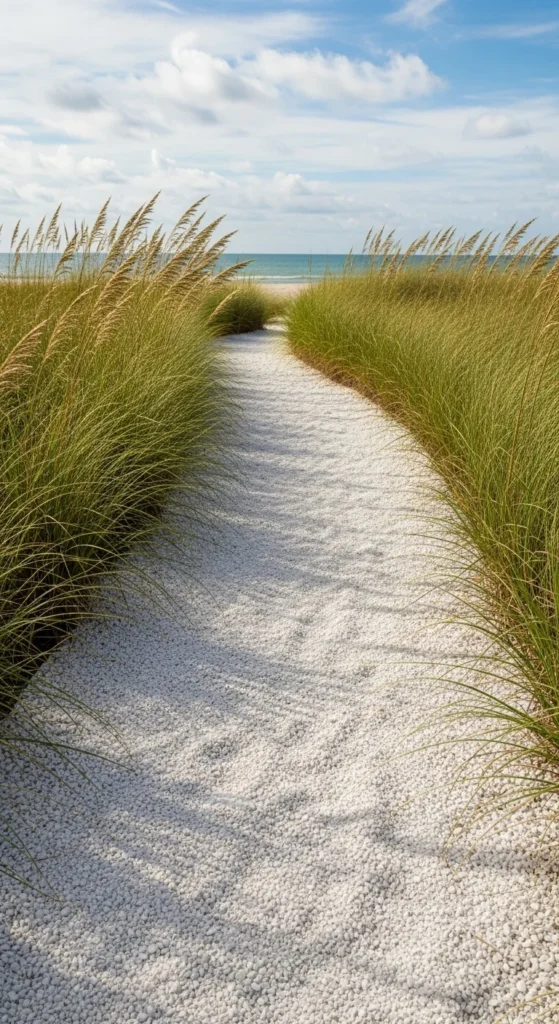
Crushed shells bring a seaside feel and soft crunch with every step. They brighten shaded areas and pair well with coastal-style planting. Rake occasionally to keep the surface even. Shells reflect sunlight, making the path gleam even on cloudy days.
9. Brick and Gravel Combo Path

Mix bricks with gravel panels for tactile variety. The brick adds structure; the gravel keeps drainage smooth. Use contrasting colors for visual rhythm. It’s practical for rain-prone gardens where water flow matters.
10. Slate Chip Path

Slate chips crunch softly and add sleek color contrast. They’re great for shaded or modern spaces. Use edging stones to contain chips neatly. This design feels natural yet polished, especially under wet conditions when slate deepens in tone.
11. Timber Boardwalk Over Gravel

Combine rustic timber planks with a gravel base for an elevated look. This design suits gardens that slope or hold moisture. Wood feels warm underfoot while gravel adds contrast. Treat boards with sealant for durability.
12. Concrete Slab Path with Grass Strips

Create a geometric path using evenly spaced slabs with grass or moss filling gaps. The result is modern yet soft. Mow or trim between pavers occasionally. This path fits courtyards or driveways needing a clean but natural look.
13. Cobblestone Curve

Cobblestones bring texture and old-world charm. Use rounded stones for comfort and slight unevenness for character. They handle foot traffic well. Line the path with lavender for fragrance that complements the tactile surface.
14. Recycled Concrete Chunk Path
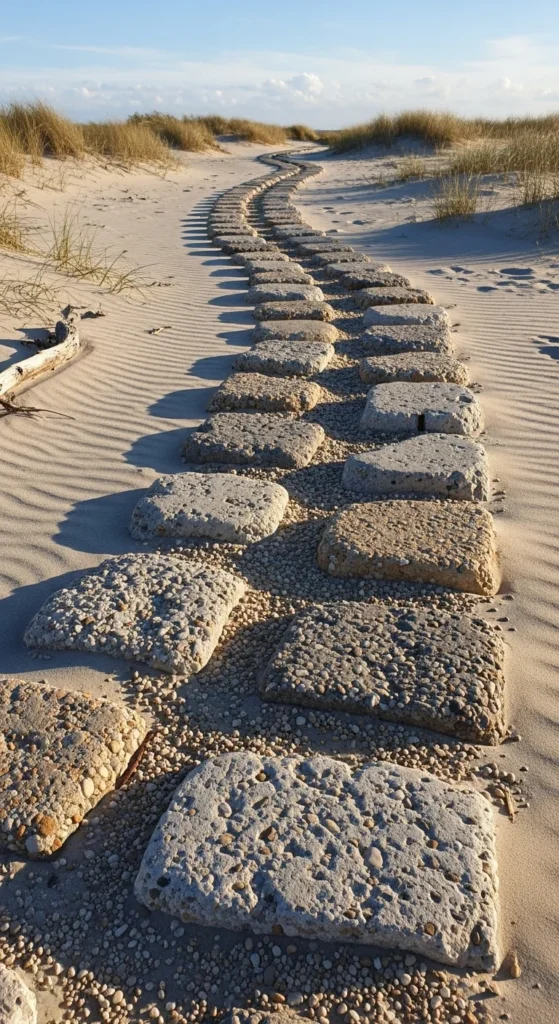
Break up leftover concrete into large, flat chunks. Use them like stepping stones across soil or gravel. The rough texture gives a rugged look and prevents slipping. Fill gaps with sand or creeping plants for softness.
15. Paver and Pebble Weave

Alternate square pavers and pebble strips for texture contrast. The mix looks balanced and feels good underfoot. Ideal for formal entrances or courtyard layouts. Add edging to maintain clean lines.
16. Terracotta Tile Walkway
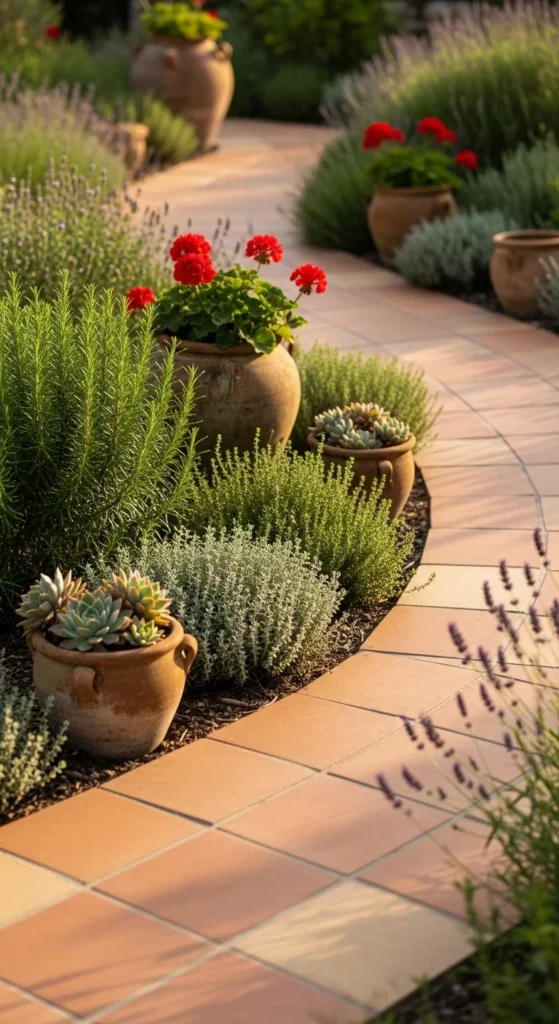
Terracotta offers earthy warmth and a tactile matte feel. Use tiles in simple rows or herringbone layouts. They warm quickly in sunlight, giving a Mediterranean vibe. Seal them lightly for longevity. Perfect for patios and sun-drenched gardens.
17. Stepping Logs Over Gravel

Use cut logs as stepping rounds set in gravel for drainage. The contrast of textures—wood against stone—adds depth. Logs dry quickly and provide grip even when damp. A great project for wooded gardens or nature-themed spaces.
18. Mosaic Pebble Medallion

Turn a simple path into artwork with pebble medallions. Use stones of varied shades to create designs. Press each piece into cement carefully for stability. These focal points make paths feel intentional and artistic.
19. Clay Brick Herringbone Path

The classic herringbone pattern adds texture and rhythm. Bricks hold firm and age beautifully. Lay them on compacted sand for flexibility. Sweep sand between gaps to lock them tight. This timeless path suits both cottage and urban gardens.
20. Gravel with Wooden Sleepers

Lay thick timber sleepers horizontally across gravel beds. The alternating materials create visual depth and stable footing. Great for transitional garden zones between patios and lawns. Use dark gravel for striking contrast.
21. Herb-Scented Path
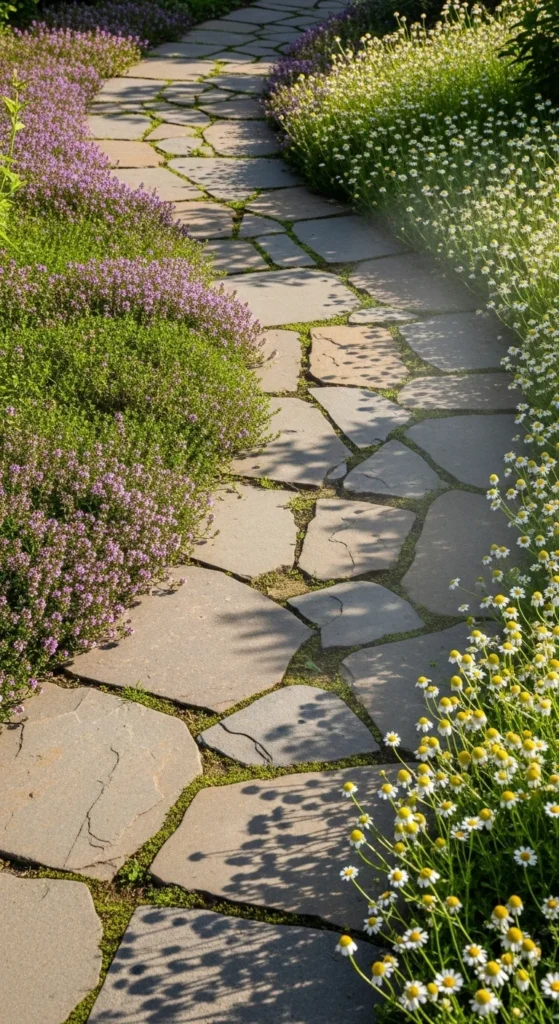
Add texture through scent by planting low-growing herbs alongside or between stones. When stepped on, they release fragrance. Use thyme, mint, or chamomile. Combine with rough-cut pavers for tactile balance. A sensory delight for barefoot walks in summer.
22. Mulch and Stone Natural Trail

Blend mulch with large stepping stones for a soft woodland trail. Mulch cushions steps and adds an earthy scent. Replace yearly for freshness. Ideal for shaded areas under trees.
23. Patterned Concrete Path

Stamped concrete offers durable texture and easy maintenance. Choose patterns that mimic brick, slate, or cobblestone. Add subtle coloring to enhance detail. It’s perfect for high-traffic zones that still need visual appeal.
Conclusion
A tactile path turns any garden walk into an experience—each surface inviting interaction between your feet and the ground. Whether you prefer smooth pebbles, soft moss, or rustic wood, textured paths add depth and personality to outdoor spaces. Start with one section, mix materials creatively, and let every step tell a story of design, comfort, and natural charm.

Leave a Reply