

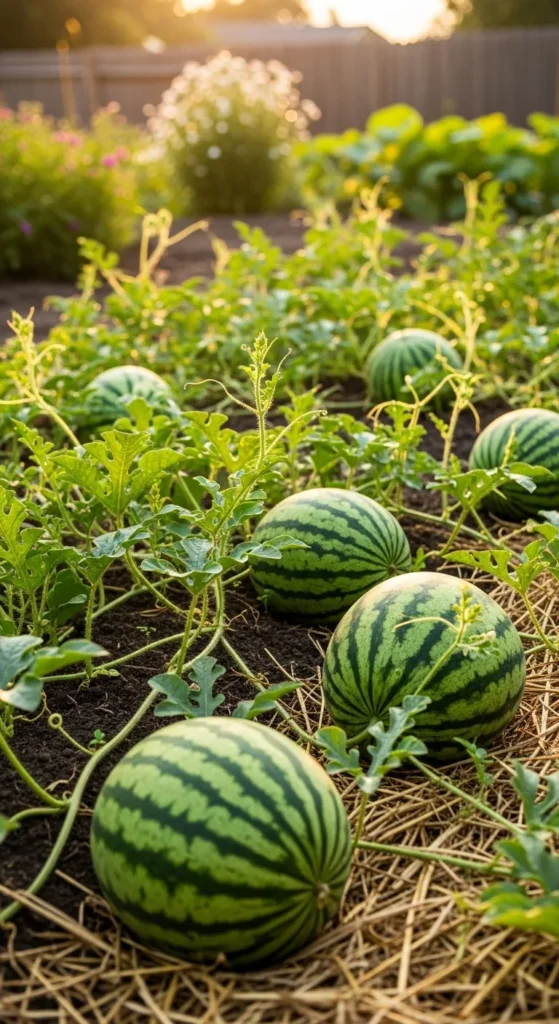
Few things say summer quite like biting into a slice of fresh, juicy watermelon straight from your own garden. The crisp sweetness, the cool refreshment—it’s pure sunshine in fruit form! Luckily, you don’t need acres of farmland to grow this summertime favorite. With a bit of space, warm weather, and care, you can grow plump, flavorful watermelons right in your backyard.
Let’s dig into the simple, satisfying steps to grow watermelons that are bursting with flavor and sweetness.
Choose the Right Variety
The first key to success is picking a watermelon that fits your space and climate. There are many types to choose from—some grow massive, while others are compact and perfect for small yards.
Popular backyard-friendly varieties:
- Sugar Baby: Small (8–10 pounds) and super sweet, great for tight spaces.
- Crimson Sweet: Classic large melon with bright red flesh and striped rind.
- Charleston Gray: Oblong, hardy, and resistant to disease.
- Golden Midget: Early-maturing and turns yellow when ripe—easy to spot!
If your growing season is short, look for “early” or “short-season” varieties that mature in 70–80 days.
Pick the Perfect Spot
Watermelons are sun-lovers and need warmth to thrive.
Ideal growing conditions:
- Full sun: At least 8 hours of direct sunlight daily.
- Warm soil: Wait until soil temperature reaches 70°F (21°C) before planting.
- Space to spread: Vines can stretch 6–10 feet, so give them room to roam or train them along a trellis if space is tight.
They grow best in well-drained, sandy loam soil rich in organic matter. Avoid areas where water pools after rain—it can cause root rot.
Pro Tip: If your soil is heavy clay, create raised mounds or rows for better drainage.

Planting Seeds or Transplants
You can start watermelons from seed or use young transplants for a head start.
For seeds:
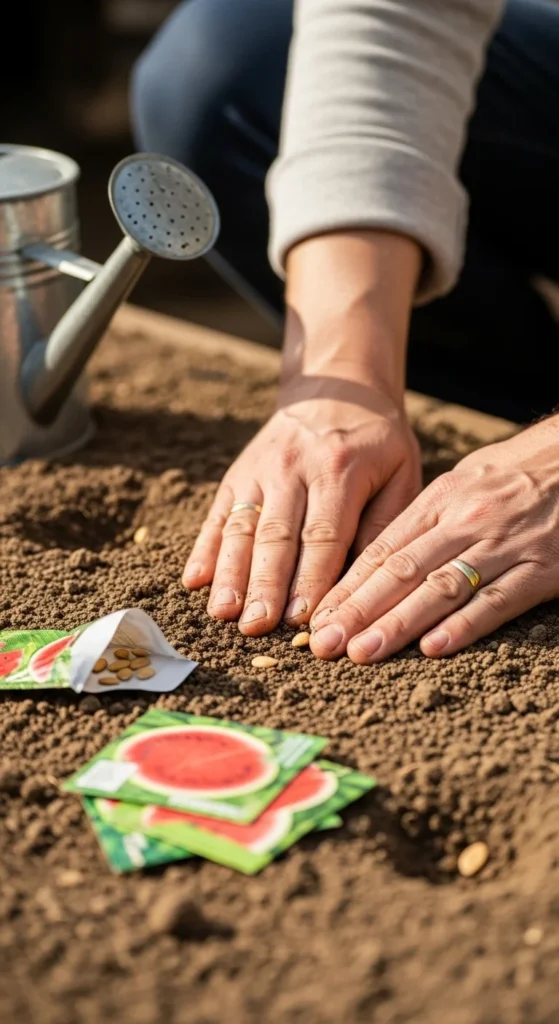
- Sow directly outdoors 2–3 weeks after the last frost.
- Plant 3–4 seeds per hill, about 1 inch deep.
- Space hills 3–4 feet apart (or closer if using compact varieties).
For transplants:
- Start seeds indoors 3–4 weeks early.
- Transplant carefully—watermelons dislike root disturbance.
When seedlings have 2–3 true leaves, thin to the strongest plant per hill.
Watering and Feeding
Watermelons love water (hence the name), but timing and consistency are key to keeping them sweet, not bland.
Watering tips:
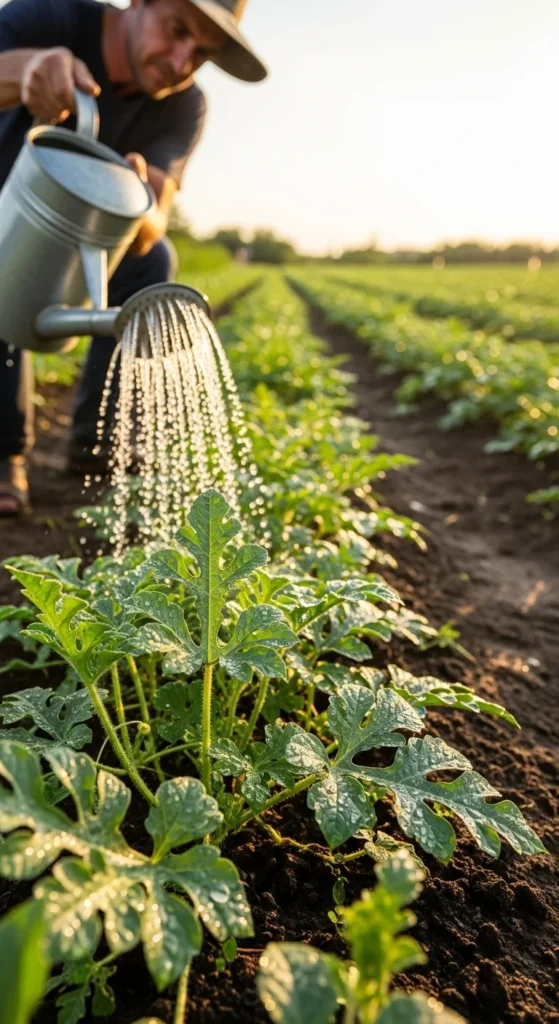
- Keep soil consistently moist while vines grow and flowers bloom.
- Water deeply 1–2 times per week rather than frequent shallow watering.
- Once fruits start forming, reduce watering slightly to concentrate sweetness.
- Avoid wetting leaves to prevent mildew and disease.
Fertilizing tips:
- Mix compost or organic fertilizer into the soil before planting.
- Once vines spread, side-dress with compost or a low-nitrogen fertilizer.
- Too much nitrogen = lush vines, but fewer fruits!
Support Pollination and Fruit Growth
Watermelons rely on bees and other pollinators to set fruit.
To encourage pollination:
- Avoid using pesticides that harm bees.
- Plant pollinator-friendly flowers nearby, like zinnias or marigolds.
- If bees are scarce, hand-pollinate by transferring pollen from male to female flowers with a small brush.
Once fruits appear, tuck a small piece of straw or cardboard under each melon to keep it clean and prevent rot.
Tip: For trellised vines, use slings (like old pantyhose or fabric) to support growing melons.
Know When to Harvest
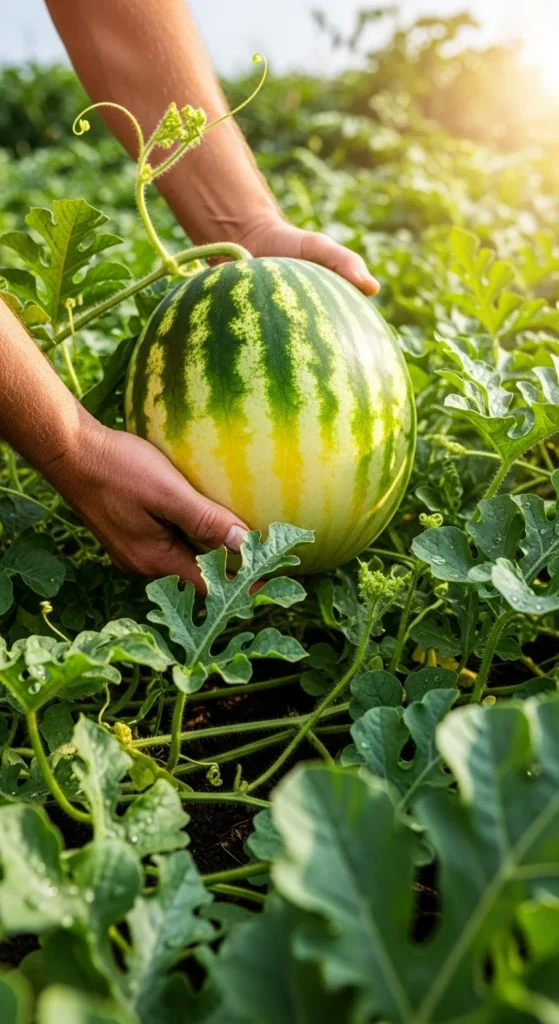
The most exciting part of growing watermelon is figuring out when it’s perfectly ripe—and it’s not as hard as it seems.
Signs your watermelon is ready:
- The underside (where it touches the ground) turns from white to creamy yellow.
- The vine’s tendril nearest the fruit turns brown and dry.
- The rind loses shine and becomes duller.
- A gentle thump produces a deep, hollow sound (music to a gardener’s ears!).
Cut the melon with sharp shears, leaving a few inches of stem attached for longer freshness.
Common Growing Mistakes to Avoid
Even experienced gardeners slip up sometimes. Here are the top pitfalls to dodge:
- Overwatering near harvest: Leads to bland, watery fruit.
- Poor pollination: Causes misshapen or undersized melons.
- Cold soil planting: Seeds won’t germinate and may rot.
- Crowding plants: Reduces airflow and encourages disease.
Stay consistent, be patient, and your vines will reward you with sweet, homegrown success.
Final Thoughts
Growing juicy watermelon in your yard is one of the most rewarding gardening experiences—especially when you slice into that first sun-warmed fruit. With the right variety, plenty of sun, and steady care, you’ll have a summer harvest that tastes like pure sunshine.

Leave a Reply