

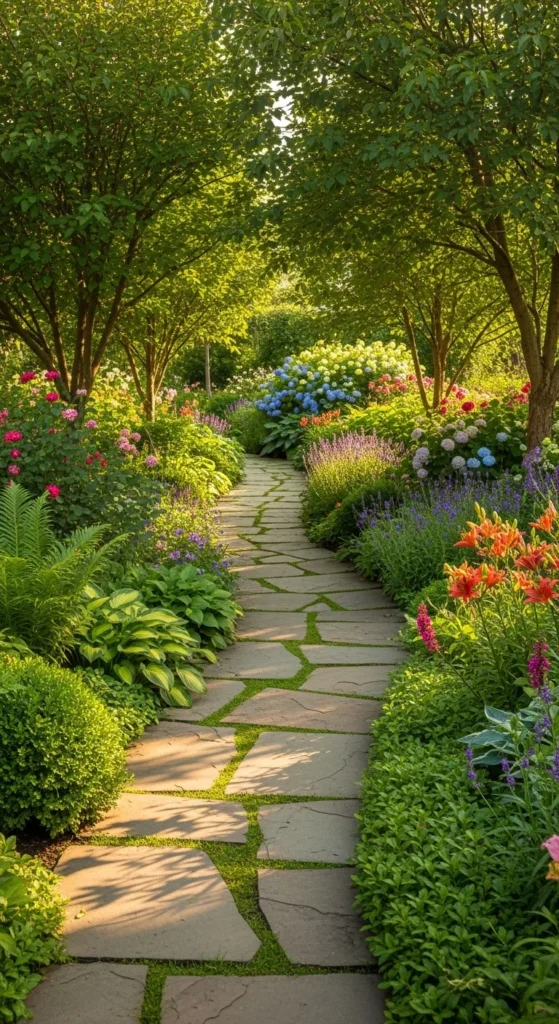
A beautiful garden path does more than lead the way—it creates atmosphere. The right walkway can make a yard feel larger, guide guests through hidden corners, or add structure to a wild space. From rustic stepping stones to modern concrete slabs, paths offer both beauty and function. These 24 garden path ideas will help you design walkways that inspire curiosity and turn your yard into an outdoor retreat.
1. Curved Stone Pathway
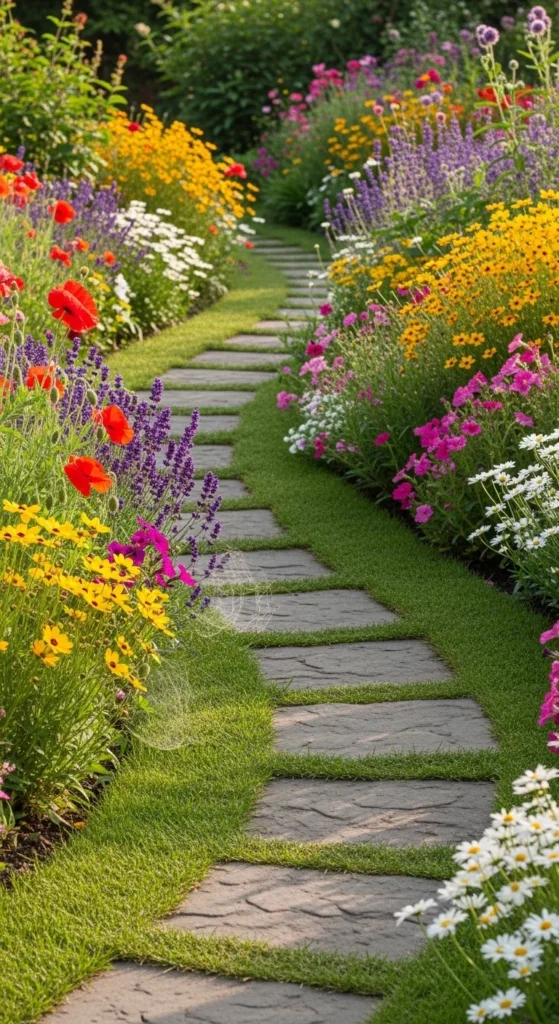
Curved paths draw the eye and make gardens feel deeper. Use irregular stone slabs or flagstone to create a natural flow. Leave small gaps between stones for moss or groundcover. The soft curves feel organic and work beautifully in cottage-style gardens. Add solar lights along the edge for evening strolls.
2. Gravel and Stepping Stones
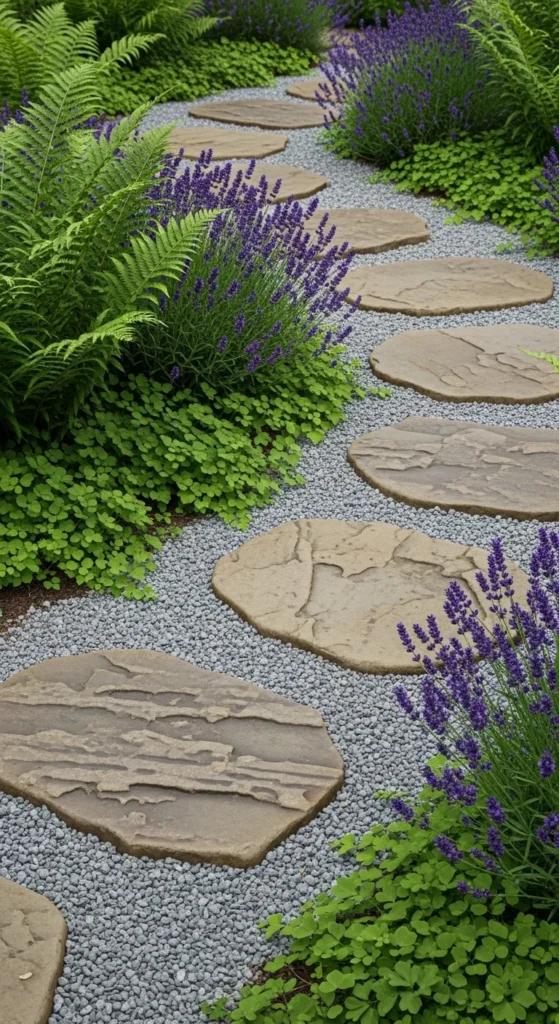
Gravel paths are budget-friendly and easy to install. Lay stepping stones evenly across the gravel for stability and style. Use pea gravel for a smoother feel underfoot. It’s perfect for informal spaces and pairs well with drought-tolerant plants. Add edging stones to keep gravel tidy.
3. Brick Walkway
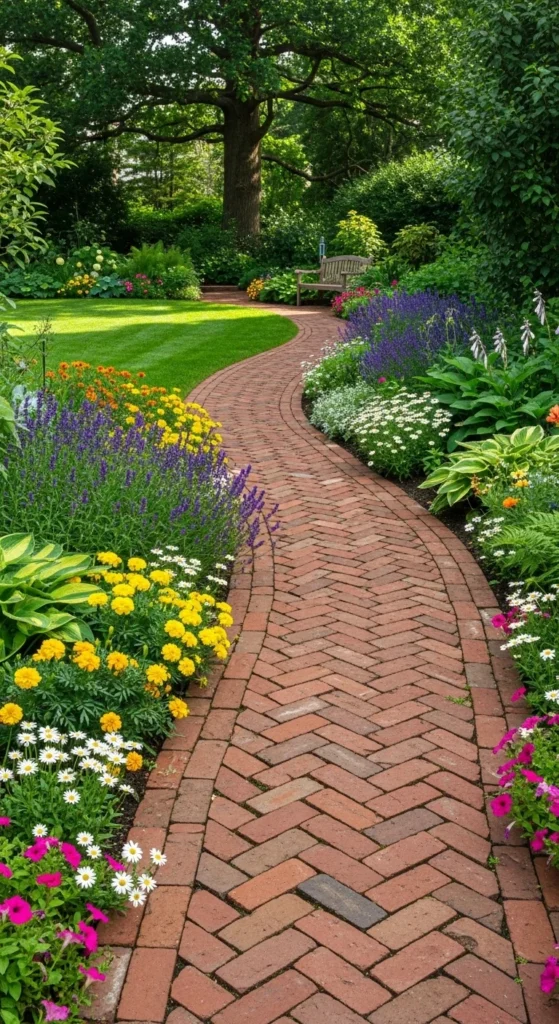
Brick brings warmth and timeless appeal. Arrange bricks in a herringbone or basket weave pattern for character. They’re durable and easy to maintain. For a classic look, use reclaimed bricks with natural wear. Plant thyme or moss between cracks for charm.
4. Wooden Boardwalk
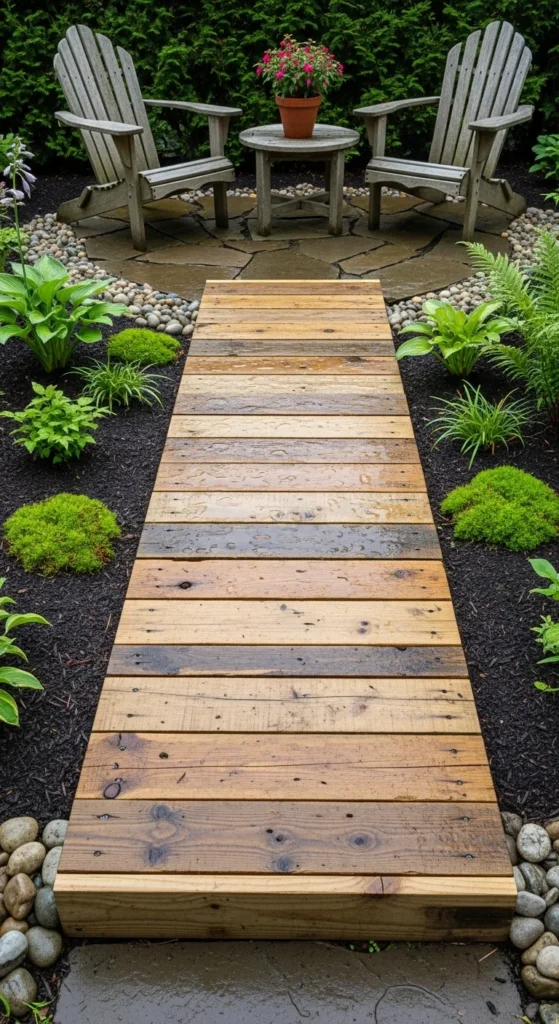
Wood paths fit beautifully in shaded or damp areas. Use treated wood or composite planks for longevity. A narrow boardwalk through ferns or hostas feels like a woodland escape. Keep the boards spaced slightly apart for drainage and airflow.
5. Pebble Mosaic Path
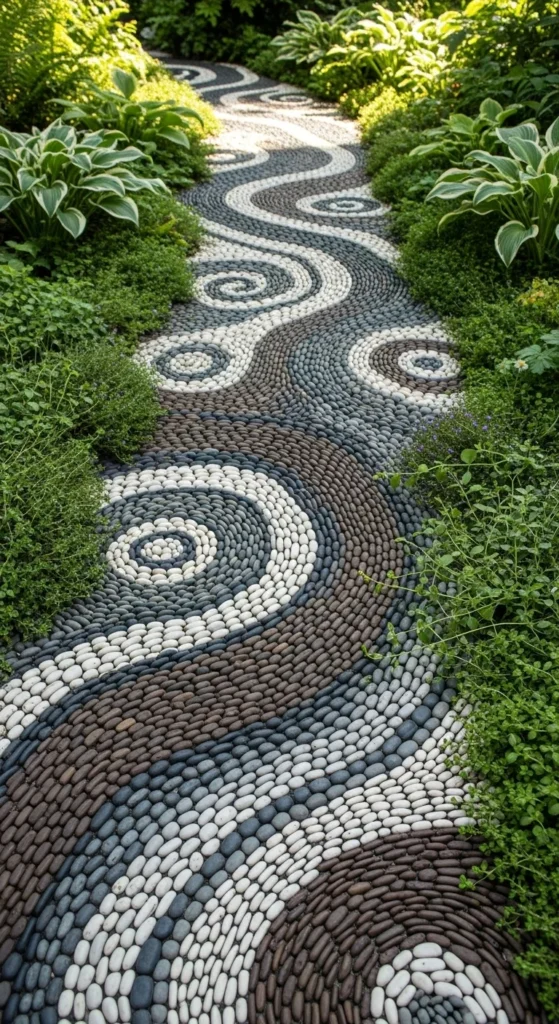
Pebble mosaics turn walkways into art. Arrange small stones by color or size into spirals or waves. It’s a creative DIY project that adds personal flair. Seal the design with mortar for stability. Great for entryways or patio paths that double as décor.
6. Concrete Paver Steppers
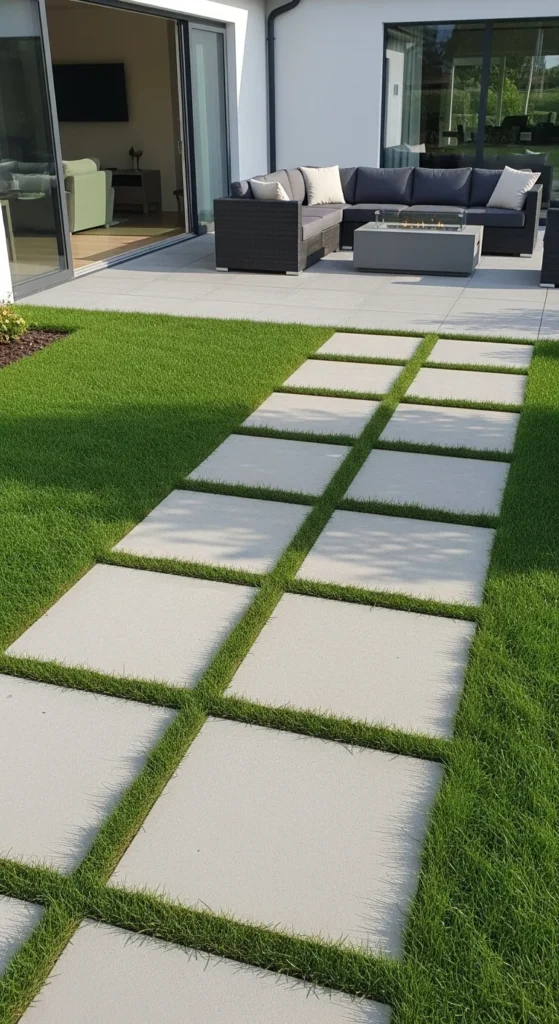
For modern yards, use large concrete slabs spaced apart on gravel or grass. The clean lines feel sleek and minimal. Keep gaps even and fill them with gravel, thyme, or moss. This low-maintenance path fits perfectly with contemporary architecture.
7. Cobblestone Path
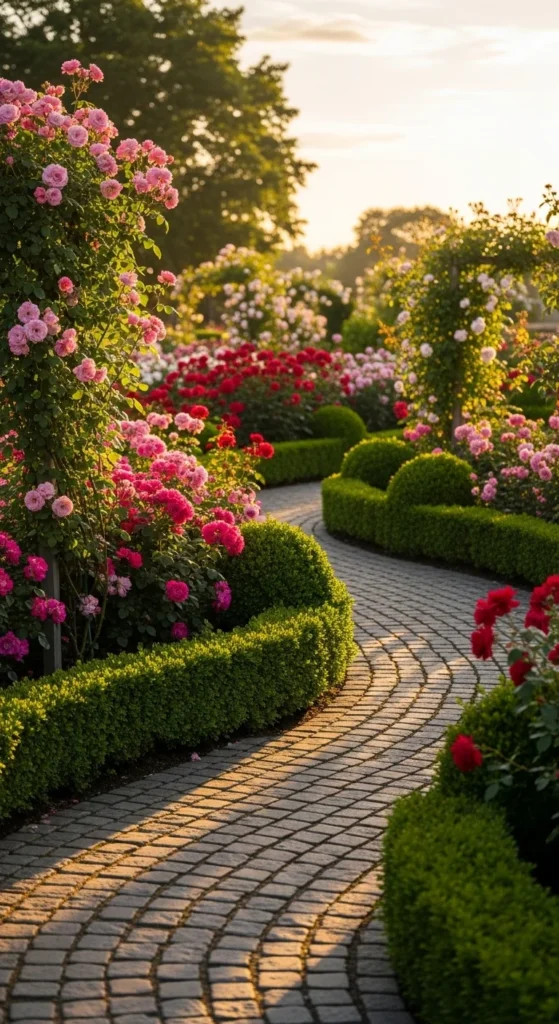
Cobblestones add old-world character. They handle weather well and look stunning in traditional gardens. Mix sizes for a handmade effect. Though labor-intensive, the result is durable and elegant. Pair with classic plants like roses or lavender for a European feel.
8. Mulch Garden Walkway
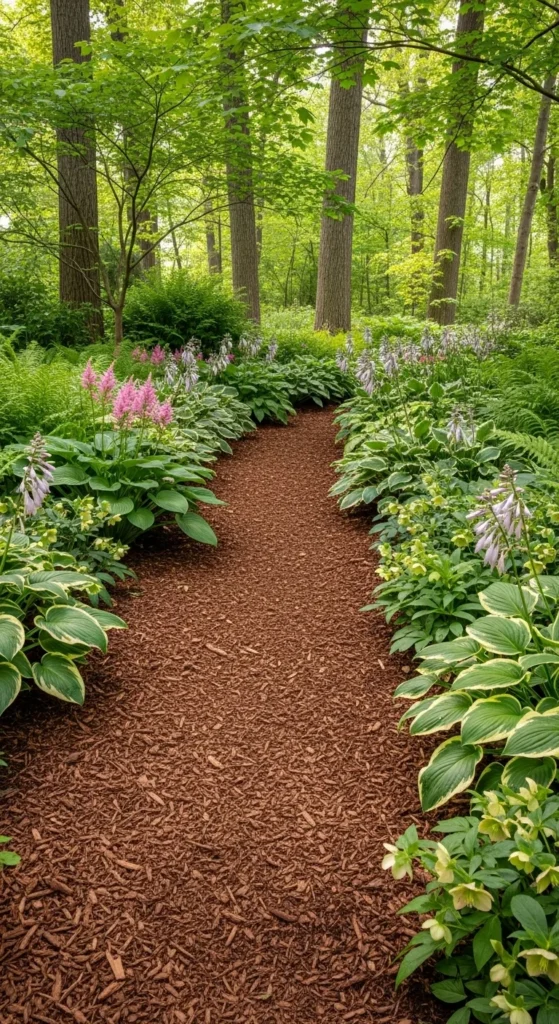
Mulch paths are affordable and natural. Spread bark mulch or wood chips over a compacted base. Add simple log borders to define the edges. It feels soft underfoot and works perfectly in forested or casual gardens. Refresh the mulch yearly for color and scent.
9. Flagstone Through Grass
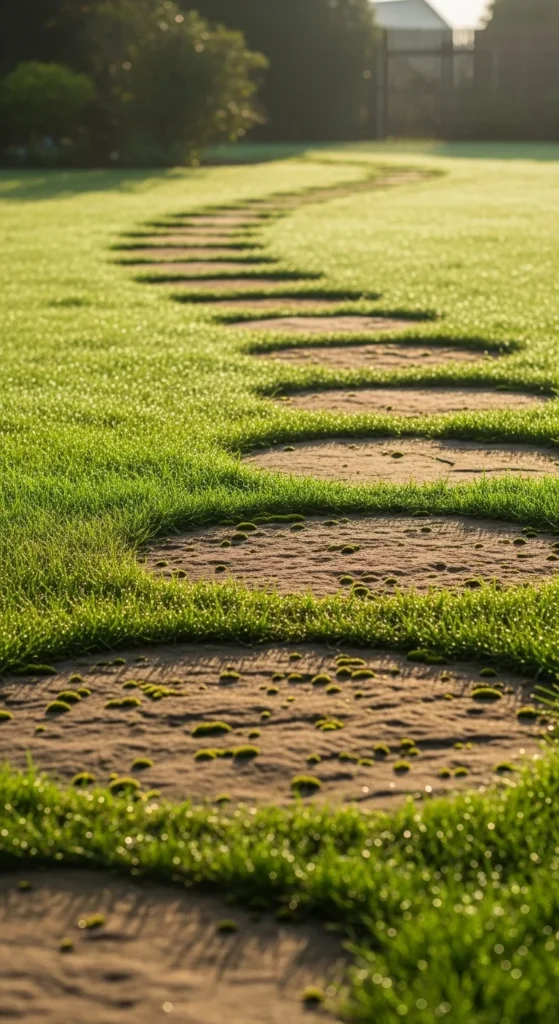
A path of flagstone set into grass blends structure with softness. Leave an inch or two of turf between stones. This style suits informal gardens and requires little installation effort. Choose natural stone colors that complement your landscape.
10. Moss-Lined Path
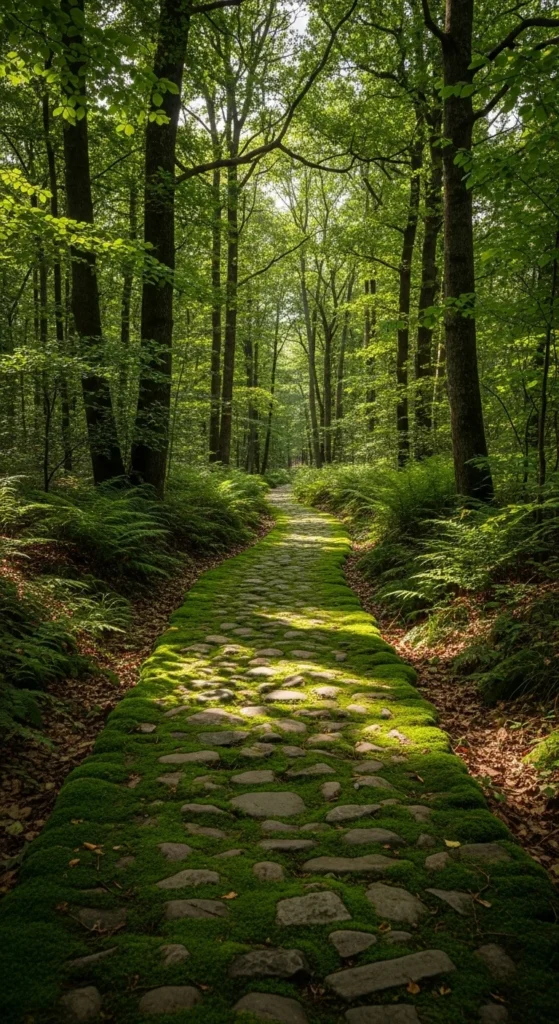
If your garden is shady and moist, encourage moss to grow between stones. It adds a lush, quiet charm. Mist regularly to help it spread. Moss softens hard edges and gives a fairytale look that’s peaceful and timeless.
11. Reclaimed Brick Edge
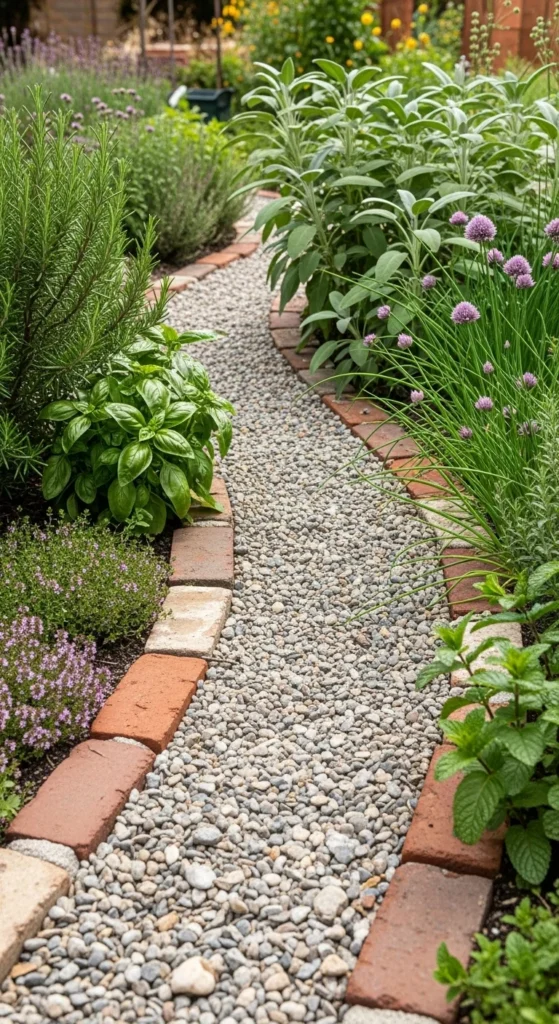
Use old bricks as edging along a gravel or mulch path. It defines the walkway and adds vintage style. Combine with low herbs like thyme or sage for scent and softness. It’s a simple upgrade that makes any path look finished.
12. Stepping Stones in Groundcover
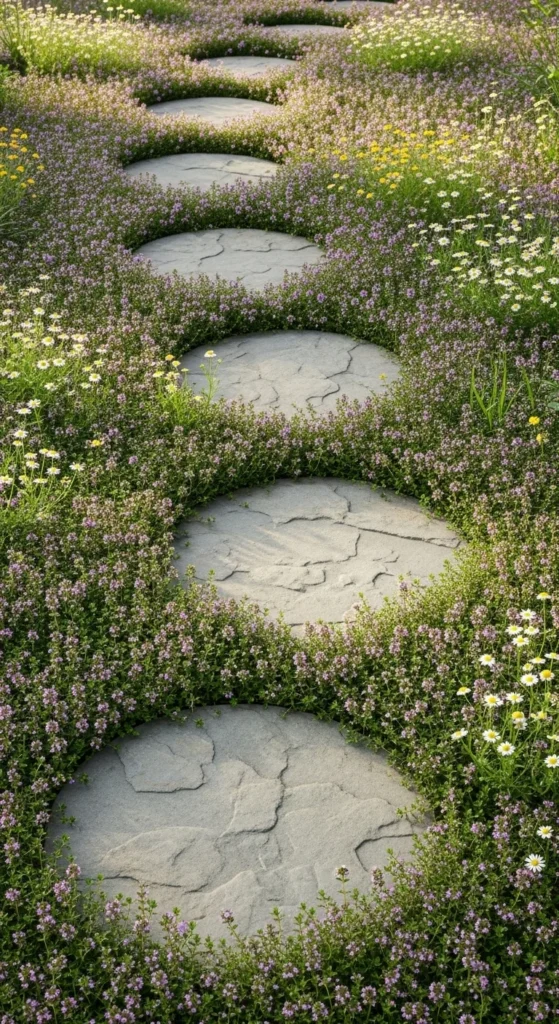
Plant creeping thyme or baby’s tears between stepping stones. The plants fill gaps and release fragrance when walked on. Use flat stones for easy walking. This design works well in small gardens and gives a carpet-like effect that’s both pretty and practical.
13. Terracotta Tile Path
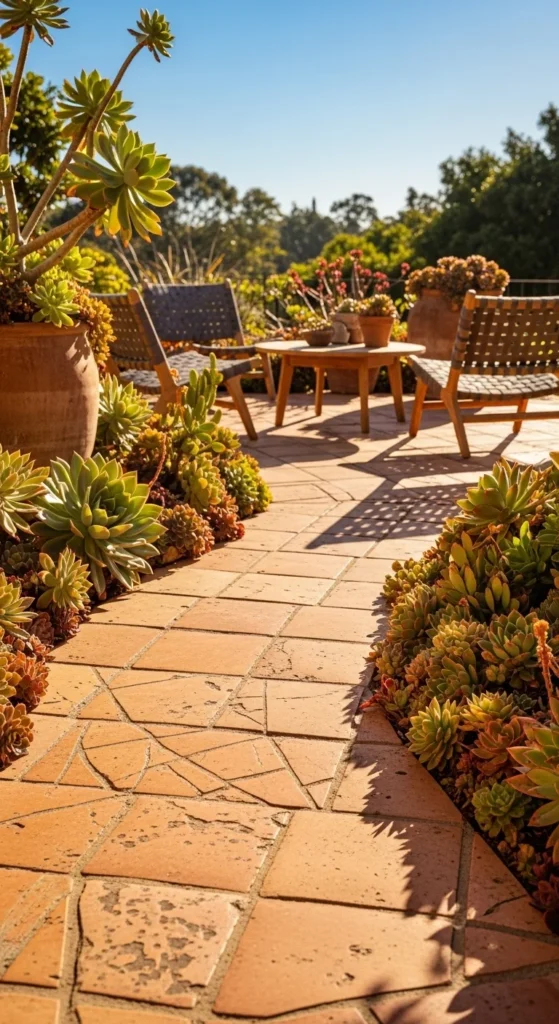
For a Mediterranean vibe, use terracotta or clay tiles. They bring warmth and color to arid gardens. Seal them to prevent cracking in cold climates. Pair with gravel borders and pots of herbs for a sun-drenched, rustic look.
14. Recycled Pallet Path
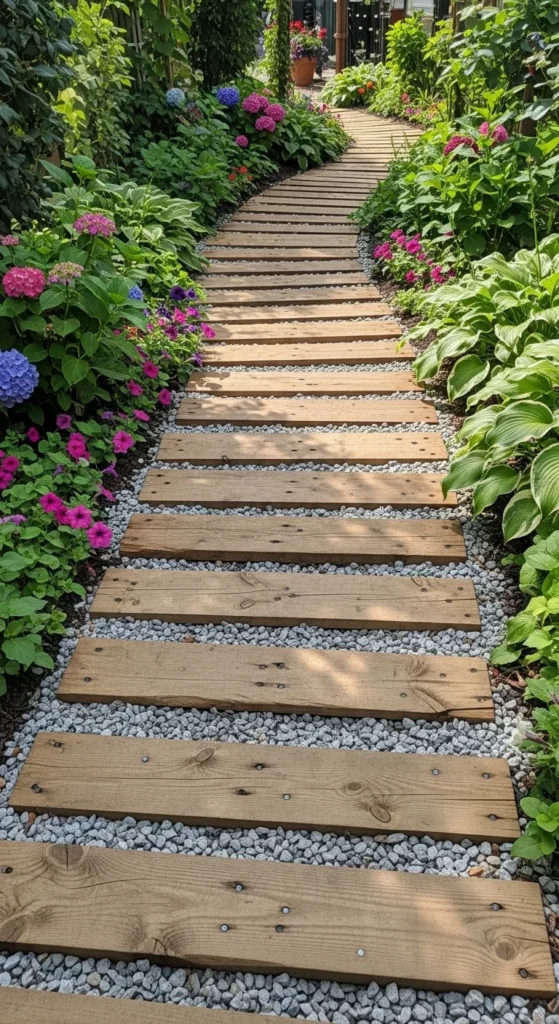
Repurpose pallet wood into a quick walkway. Cut planks to equal length, sand them, and lay them across gravel. It’s inexpensive and eco-friendly. Treat with outdoor sealant to prevent rot. This works best for informal vegetable or cottage gardens.
15. Japanese-Style Stone Path
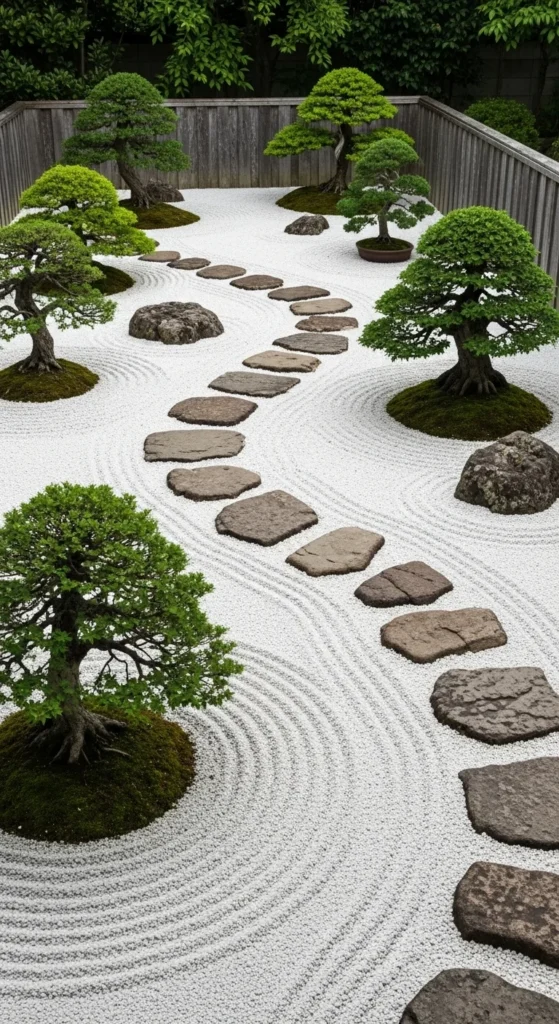
Inspired by Japanese design, this path focuses on simplicity. Use irregular stones set into raked gravel. Space them unevenly to encourage slower, mindful walking. Add bamboo edging or a small lantern for authenticity. It’s ideal for quiet, meditative corners.
16. Crushed Granite Trail
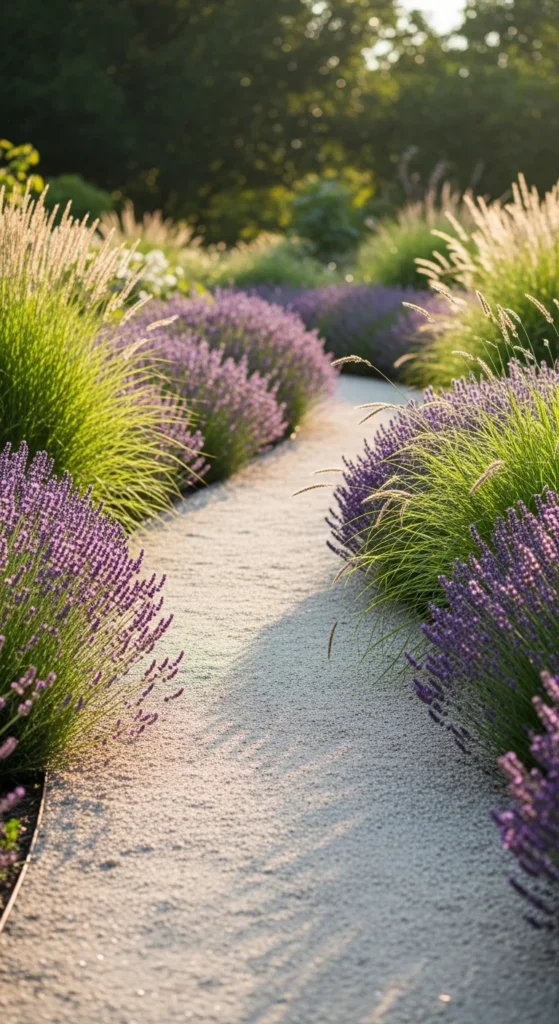
Crushed granite compacts into a firm surface that looks natural. It’s great for long paths and large gardens. Edge with metal strips to keep it neat. The earthy color pairs well with drought-tolerant plants like lavender and sage.
17. Stone and Grass Checkerboard
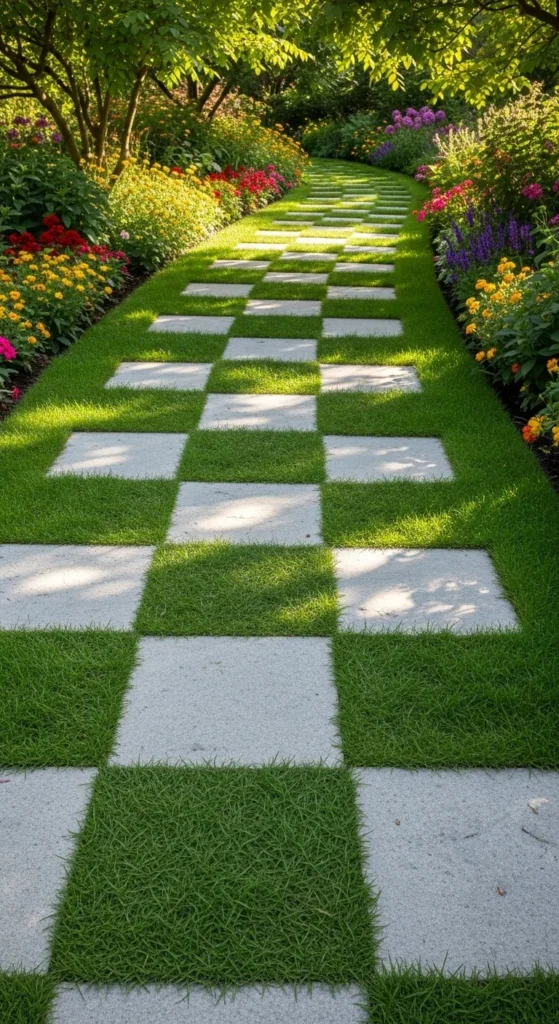
Create a playful checkerboard pattern using alternating grass and pavers. It’s visually striking and surprisingly simple to install. Keep the pattern small for balance. Works beautifully in courtyards or as a statement walkway near patios.
18. River Rock Ribbon Path
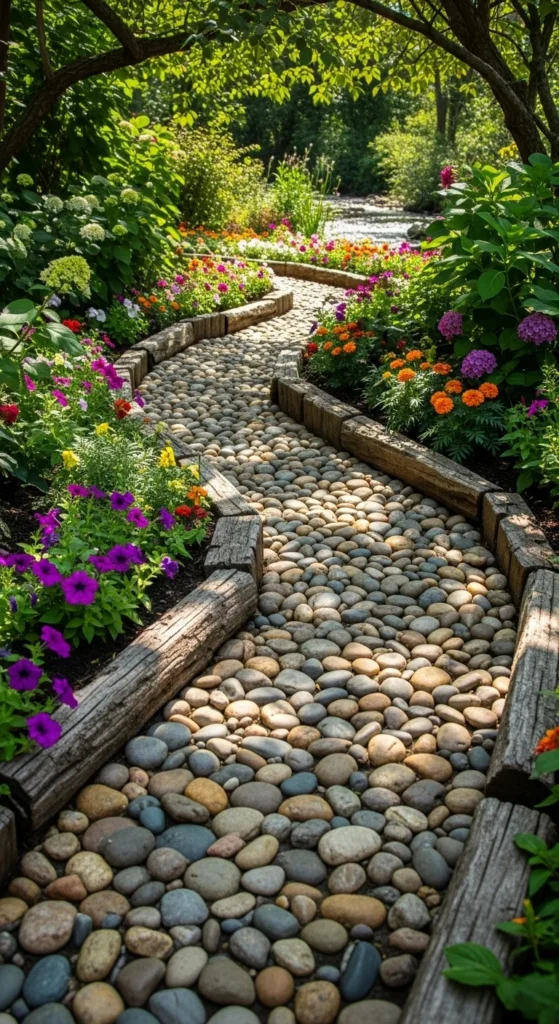
Smooth river rocks create a natural, water-inspired design. Choose different shades for depth. Fill gaps with sand or gravel for stability. This style complements water features or rain gardens perfectly.
19. Log Slice Walkway
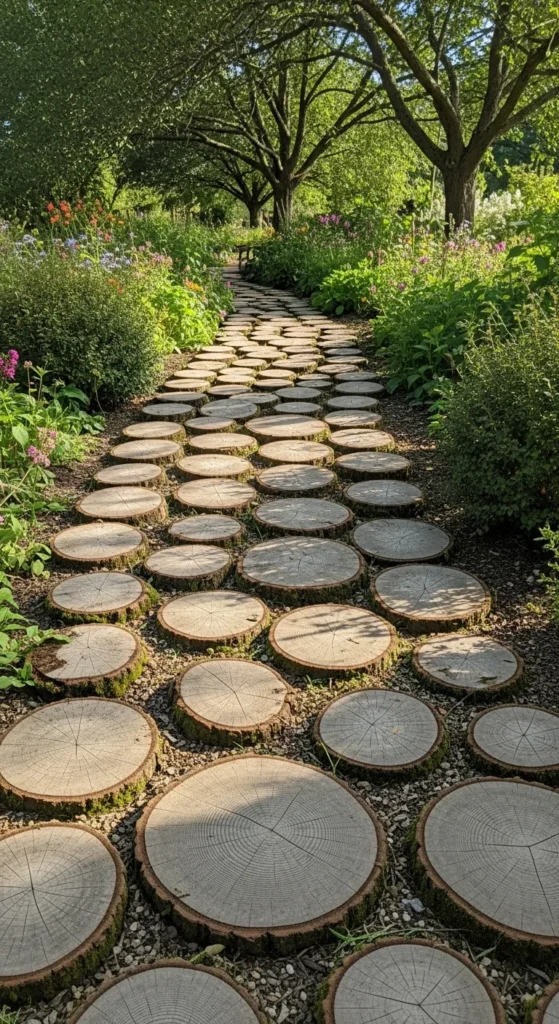
Use wood slices to form a charming woodland walkway. Seal each slice to prevent decay. Space them closely together for stability. It’s a great use for fallen trees and adds warmth to forest-style gardens.
20. Flower-Edged Path
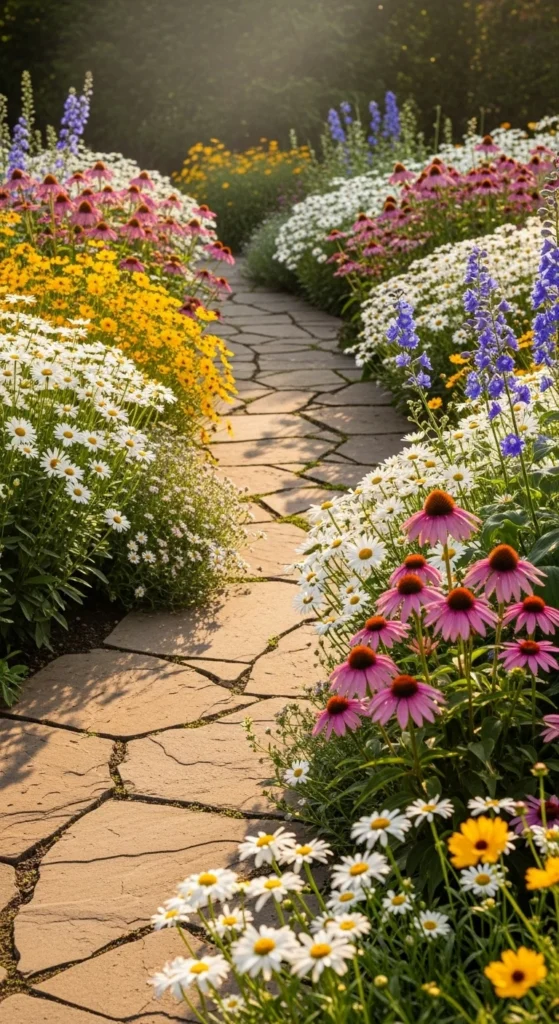
Line your path with blooming perennials for color and scent. Mix heights and colors for a cottage effect. Choose hardy plants that can handle foot traffic nearby. Regular trimming keeps the walkway neat and welcoming.
21. Zen Gravel Path
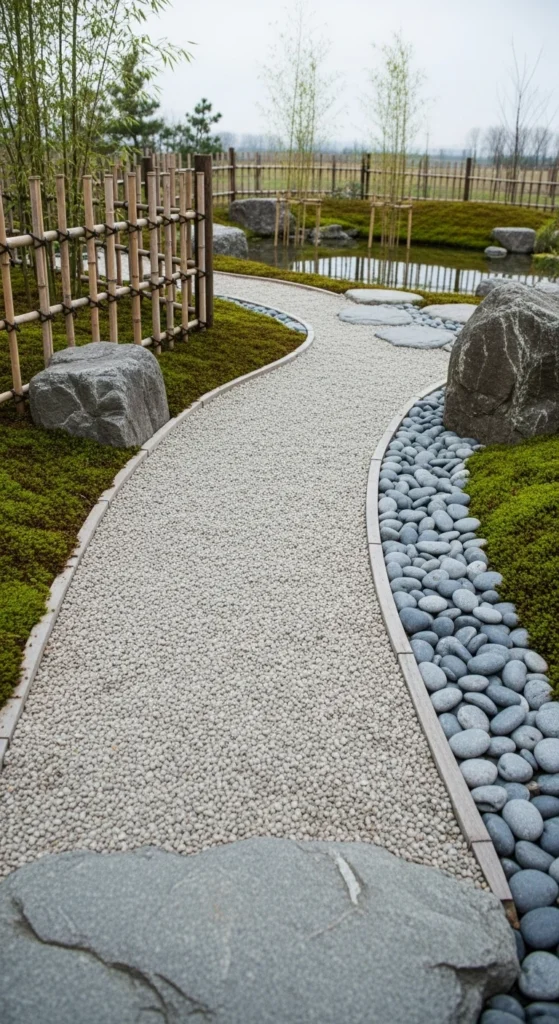
For calm, minimalist style, use plain gravel bordered by bamboo or stone. Rake the gravel into soft waves for texture. Add a single bench or lantern for focus. It’s peaceful and easy to maintain.
22. Seashell Garden Path
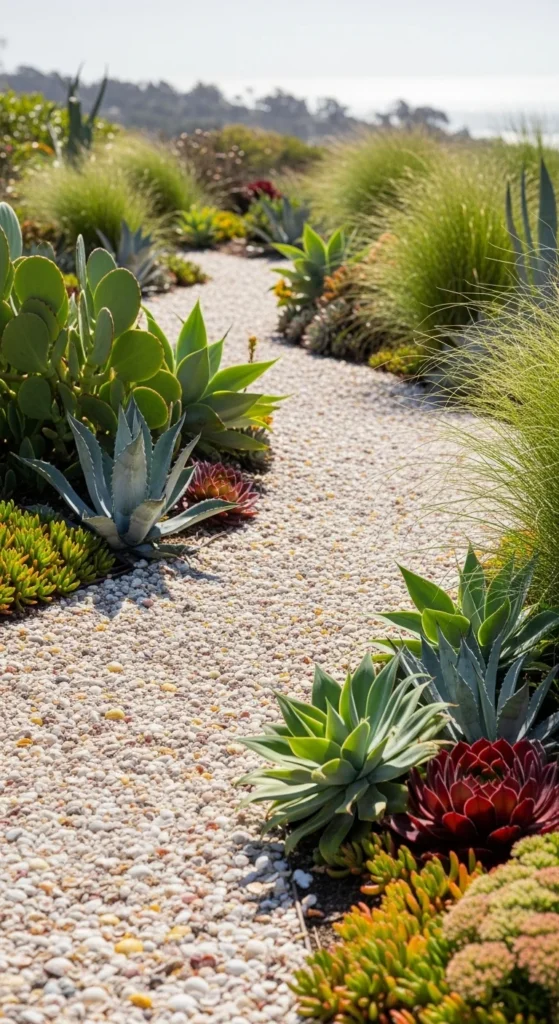
Perfect for coastal gardens, crushed seashells reflect light and crunch softly underfoot. They drain well and bring a beachy vibe. Mix with sand for a smoother finish. Pair with grasses and driftwood accents for coastal charm.
23. Hidden Garden Steps
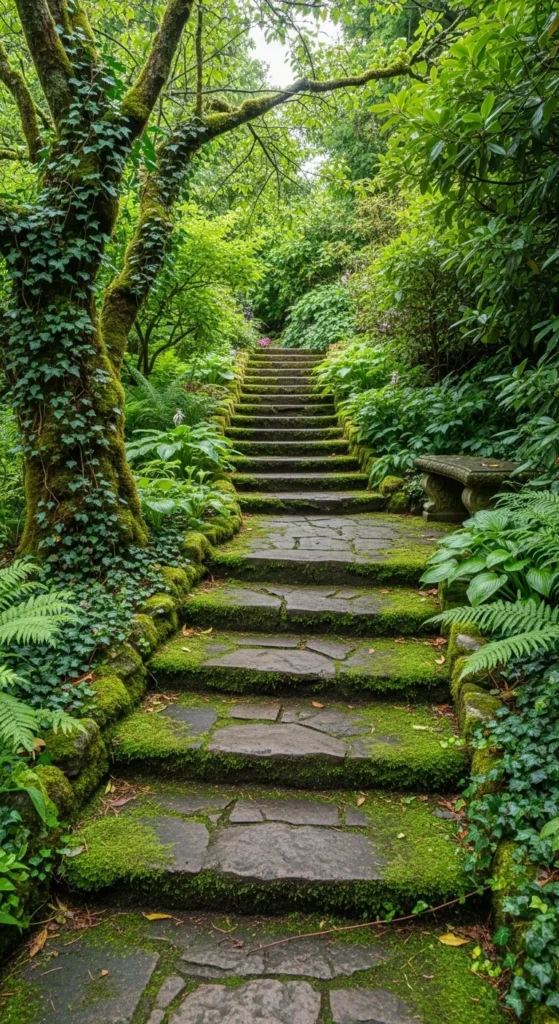
In sloped gardens, use natural stones to create stepping paths. Let moss grow between them for an aged look. Add low lighting or solar lanterns to guide the way. It creates mystery and encourages wandering deeper into the garden.
24. Fairy Light Pathway
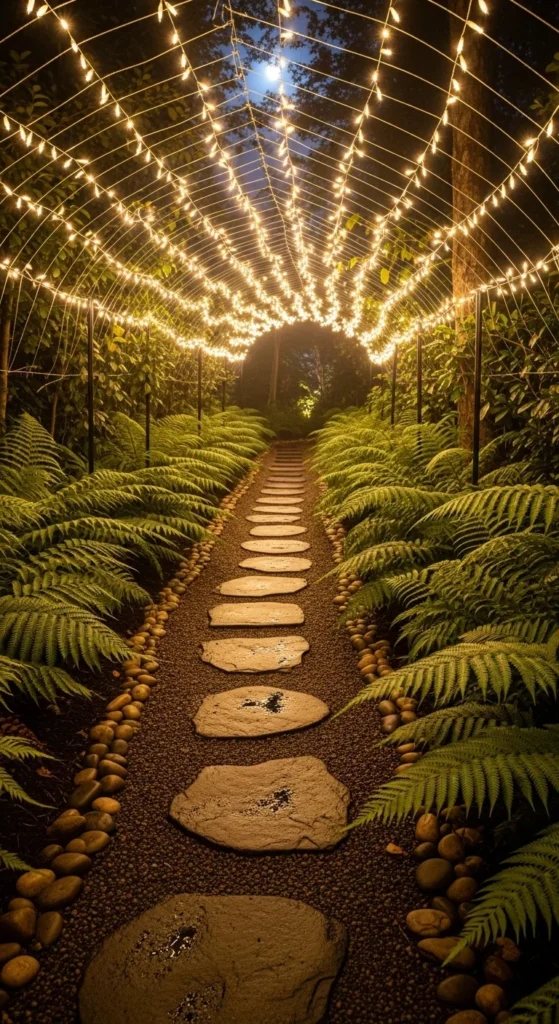
Add magic with gentle lighting. Place solar fairy lights or hidden LEDs along your walkway. They highlight textures and make evening strolls enchanting. Combine with reflective materials like pebbles for extra sparkle.
Conclusion
A well-designed garden path ties your landscape together and invites discovery. Whether made from stone, wood, gravel, or recycled materials, each walkway tells a story about your garden’s personality. Start small — even a few stepping stones can create a destination worth exploring. With thoughtful design and natural details, your path will guide every step through beauty and calm.

Leave a Reply