

One strong gust, and suddenly your beautiful bucket garden is sprawled across the patio like a gardening disaster scene. If you grow tomatoes, peppers, cucumbers, or other tall plants in 5-gallon buckets, you already know the struggle: lightweight containers and top-heavy plants do not always mix well.
The good news? You do not need to give up on bucket gardening. With a few smart changes, you can make your setup sturdier, safer, and way more wind-resistant without spending a fortune.
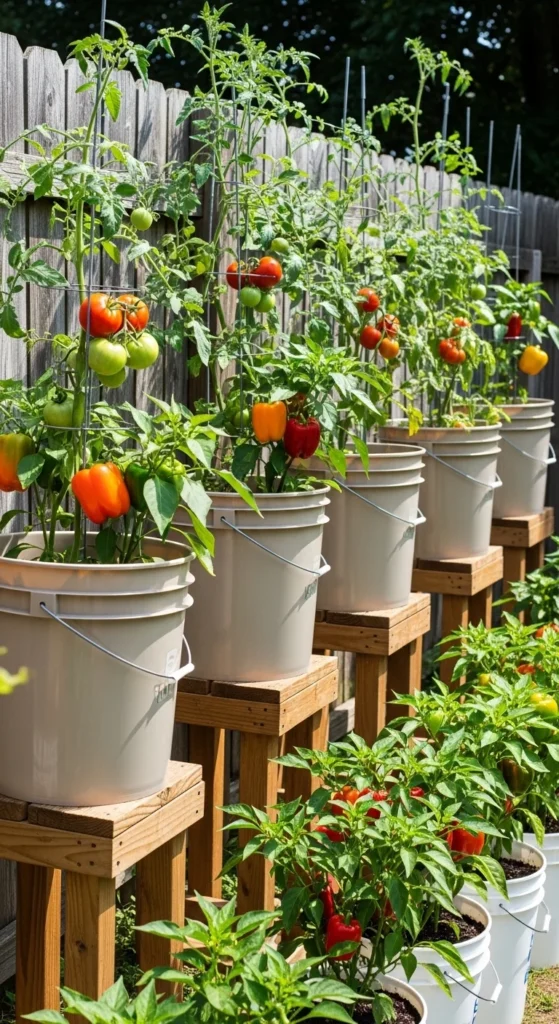
Why Bucket Gardens Tip So Easily
Bucket gardens are affordable, flexible, and perfect for small spaces. But they also have one big weakness: they can become top-heavy fast.
Here is why they tend to tip over:
- Tall plants act like sails in the wind
- Lightweight plastic buckets have very little natural ballast
- Dry soil makes containers even lighter
- Weak staking can shift around in loose potting mix
- Single buckets placed out in the open have no support from nearby structures
That is why the best fix is usually a combination of more weight, better support, and smarter layout.
Add Weight First for a Quick Win
If you want the fastest, easiest improvement, start at the bottom of the bucket.
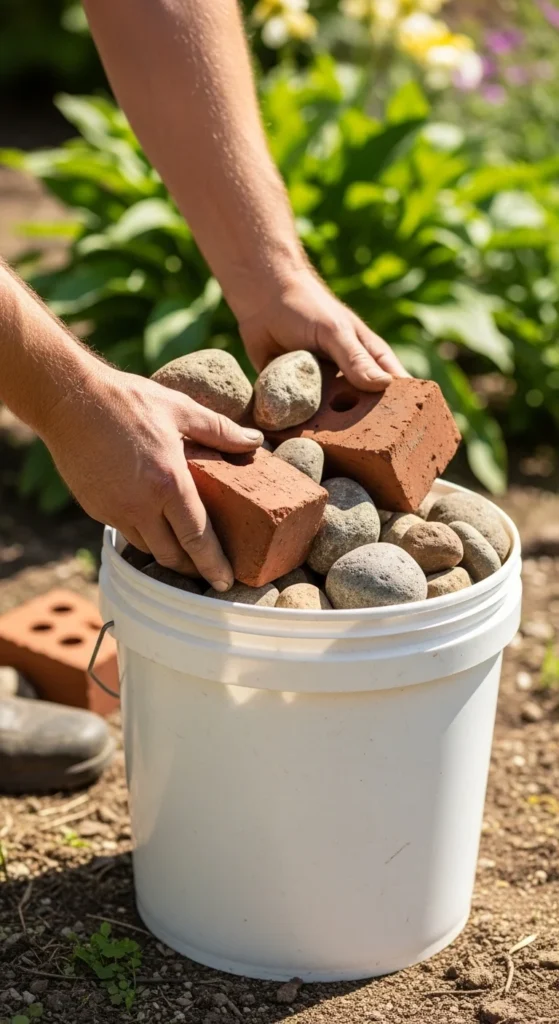
Adding heavy material before your soil goes in creates instant ballast and lowers the center of gravity. This one step alone can make a noticeable difference, especially for tall crops.
Try these no-cost or low-cost weight hacks:
- Add a layer of heavy rocks
- Place one or two bricks in the bottom
- Use broken pavers or chunks of concrete
- Add reservoir bricks in self-watering bucket setups
- Use coarse gravel if you already have some available
The goal is not to fill half the bucket with stone. You just want enough extra weight to make the base feel more grounded.
Build a DIY Stand to Stabilize Multiple Buckets
If you grow several buckets, a stand is one of the smartest upgrades you can make.
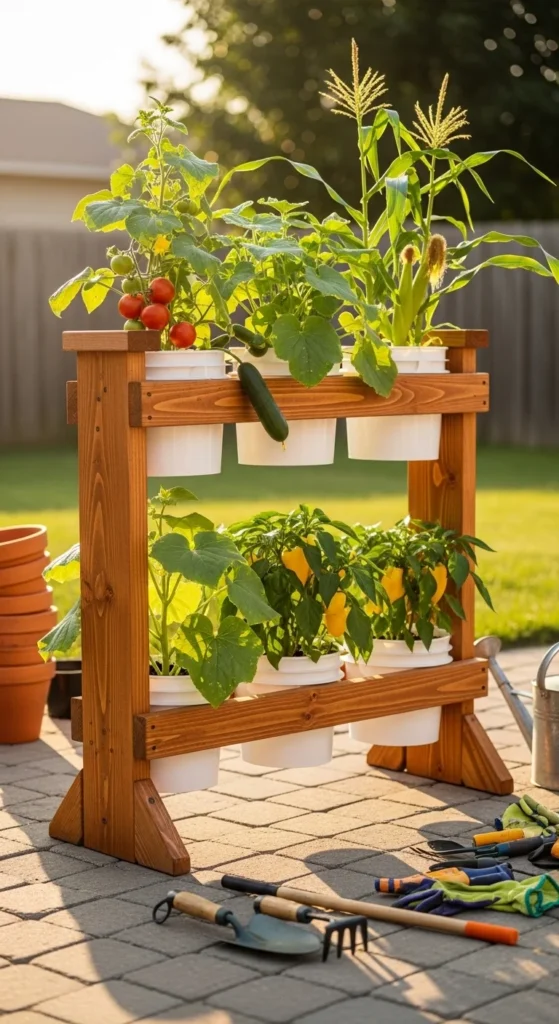
A simple wooden frame built from 2×4 lumber can hold multiple buckets in one stable structure. It instantly makes the garden look more organized, and it helps reduce wobbling, shifting, and blow-overs.
Think of it as your 10-Step Bucket Stand Blueprint idea. A beginner-friendly stand can include:
- A basic cut list using 2×4 lumber
- A rectangular frame wide enough for multiple buckets
- Cross supports for extra strength
- Bucket slots or rails to keep containers from sliding
- Horizontal bars for even better stability
This type of stand works especially well on patios, driveways, or along fences where you want a clean, tidy setup.
For small-space gardeners, weld-free frames made with Maker Pipe connectors and EMT conduit are another great option. They are modular, lightweight, and easier to customize if you want a more urban or compact garden design.
Use Smarter Staking for Tall Plants
Sometimes the bucket itself is not the only problem. The plant support system matters too.
If your stakes wobble inside loose soil, the whole container can become unstable. That is why pipe-based support hacks are so useful for bucket gardens.
One clever option is using CPVC pipes as DIY stakes. They are lightweight, strong, and easy to secure around staked plants. This can help keep the plant upright without putting all the stress on one flimsy stake.
You can also improve stability with:
- External stake anchors built outside the pot
- Brick-pile anchors for extra support
- A single-wire trellis behind a row of buckets
- Flexible tree ties attached to nearby structures
- Soft chain or ties for emergency wind protection
External support can be especially helpful for heavy tomato plants, climbing crops, or anything with a large cage.
Use Your Garden Layout to Fight the Wind
Sometimes the fix is not in the bucket. It is in the placement.
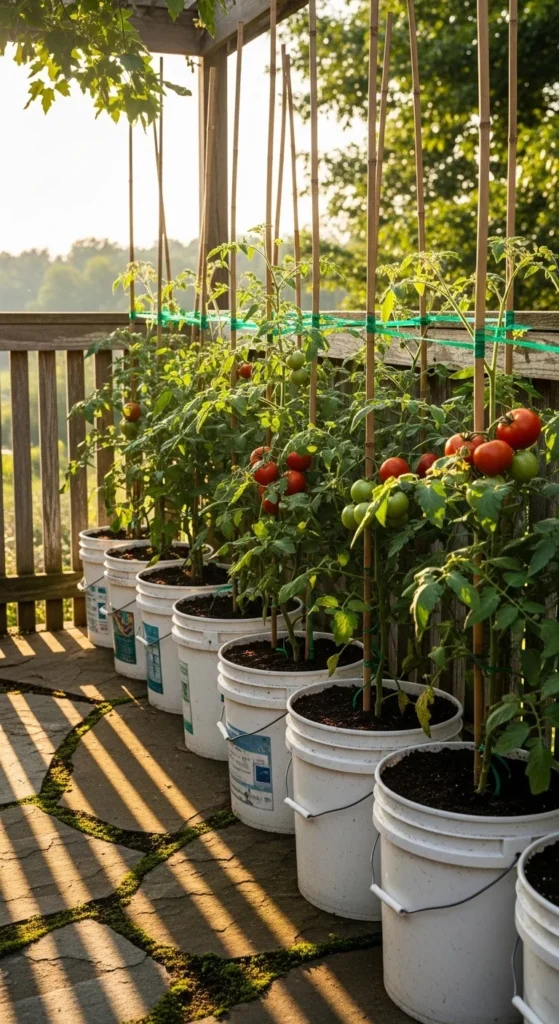
A single bucket sitting alone in an open yard is much more likely to tip than a cluster of buckets tucked beside a fence or wall. Grouping containers together creates mutual support and reduces wind exposure.
Try these layout tricks:
- Place buckets against a wall, fence, or railing
- Cluster several containers tightly together
- Put the tallest plants in the most sheltered spot
- Keep smaller buckets around larger ones for support
- Line buckets along a trellis or horizontal wire
This is one of the easiest ways to make a bucket garden more windproof without buying anything new.
Keep Soil Moist for Extra Stability
This tip is simple, but it gets overlooked all the time: water adds weight.
When your bucket soil dries out, the container becomes lighter and easier to blow over. Keeping the soil consistently watered helps plants stay healthy, and it also makes the bucket heavier and more stable.
A good daily routine looks like this:
- Check buckets every morning in warm weather
- Water before especially windy afternoons
- Mulch the top of the soil to slow moisture loss
- Watch closely during heat waves
- Do not let containers swing from soaking wet to bone dry
Bucket gardens dry out faster than garden beds, so regular watering is already important. The extra wind protection is a nice bonus.
Choose Containers and Shapes That Resist Tipping
Not all containers behave the same in windy conditions.
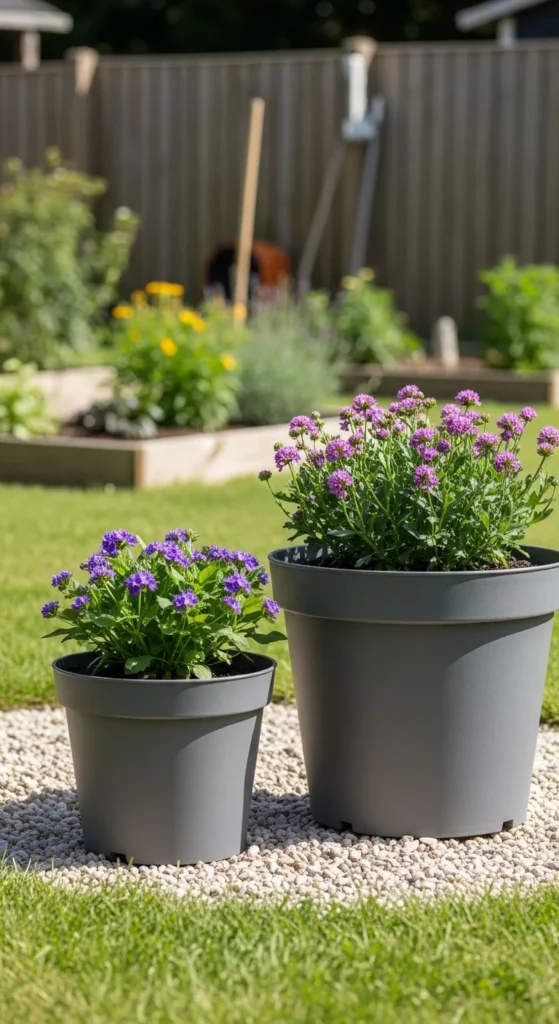
If you are still planning your setup, choose pots or bucket systems with a lower center of gravity whenever possible. Shorter, wider containers are naturally harder to tip than tall, narrow ones.
A few smart choices:
- Use wider bases when possible
- Pick heavier containers for very tall plants
- Save light plastic buckets for shorter crops
- Use terracotta-style pots for naturally weighty support
- Match plant size to container stability
Even if you love the low cost of 5-gallon buckets, you can still apply this idea by focusing on heavier bases and broader support systems.
Your Windproof Bucket Garden Checklist
Before the next storm or windy afternoon, run through this quick checklist:
- Add rocks, bricks, or other ballast to the bottom
- Build a wooden or conduit stand for multiple buckets
- Upgrade weak stakes with CPVC or external anchors
- Cluster buckets near fences or walls
- Keep soil consistently watered
- Use horizontal bars or supports to prevent sliding
- Choose lower, wider setups for top-heavy crops
Small changes can add up to a much stronger garden.
Final Takeaway
Bucket gardening does not have to mean chasing fallen tomato plants across the yard. With a few easy upgrades like added ballast, better staking, simple stands, and smarter placement, you can create a setup that stays upright even when the weather gets unpredictable.
Start with one fix, then build from there. Your plants, your back, and your patio will thank you.
Save this guide for later and try one wind-proof bucket garden tip this week!
Leave a Reply