

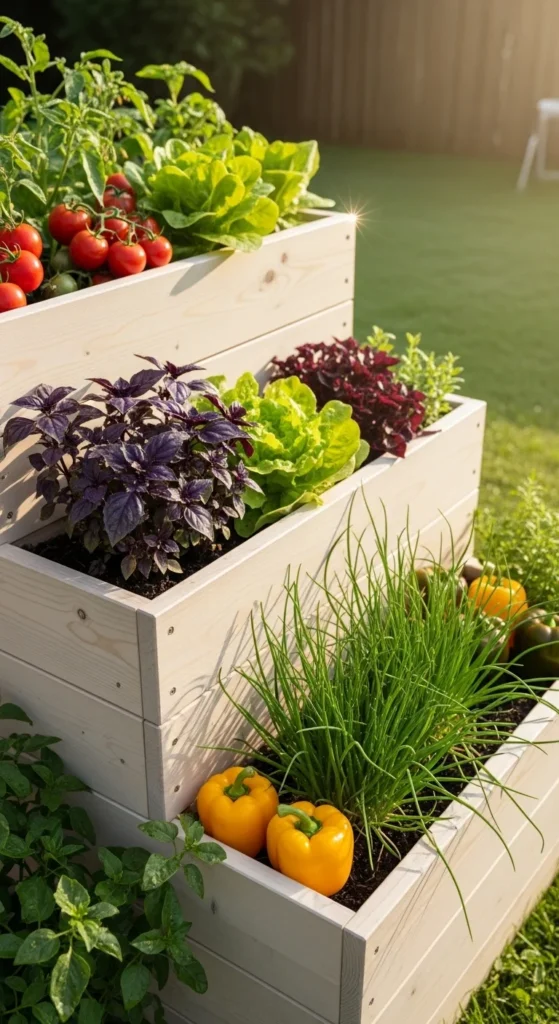
Gardening in small spaces doesn’t mean you have to compromise on variety or yield. Tiered raised garden beds make it easy to grow more plants in a limited footprint. These multi-level beds organize herbs, flowers, and veggies efficiently, giving each plant the sunlight and drainage it needs. Whether you build your own or buy a prefab kit, there’s a tiered solution for every space and skill level. Explore these 29 creative ideas to expand your garden and make planting simple, practical, and visually appealing.
1. Stair-Step Herb & Veggie Bed
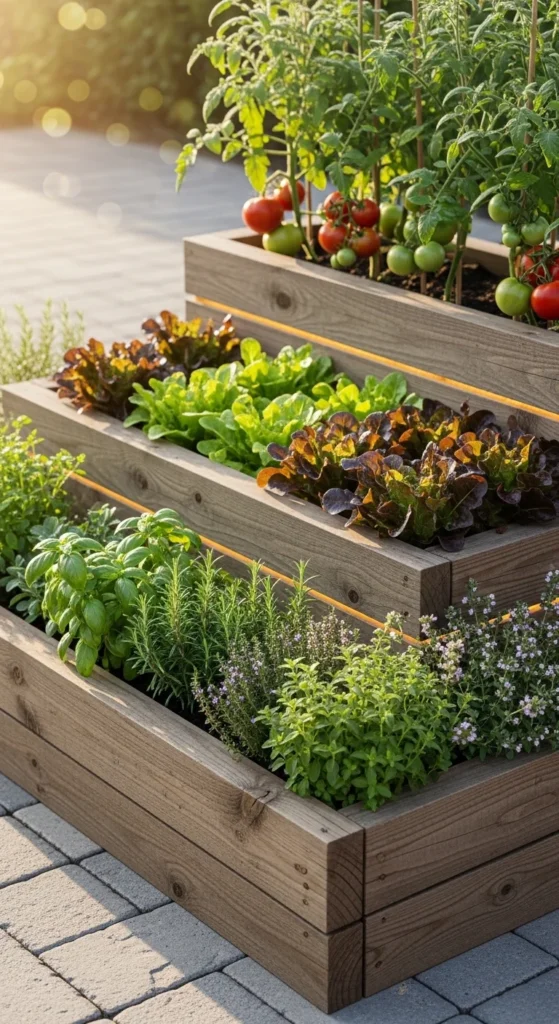
A stair-step bed is ideal for small patios. Place quick-growing herbs in the front for easy access. Use the middle tier for leafy greens and the tallest back tier for taller veggies like tomatoes or peppers. Build with 2×6 lumber, add landscape fabric for drainage, and fill with nutrient-rich soil. Even a single weekend project can give you a tidy, productive multi-level garden. Budget tip: check for reclaimed wood at local hardware stores.
2. Balcony-Friendly Mini Tiered Bed
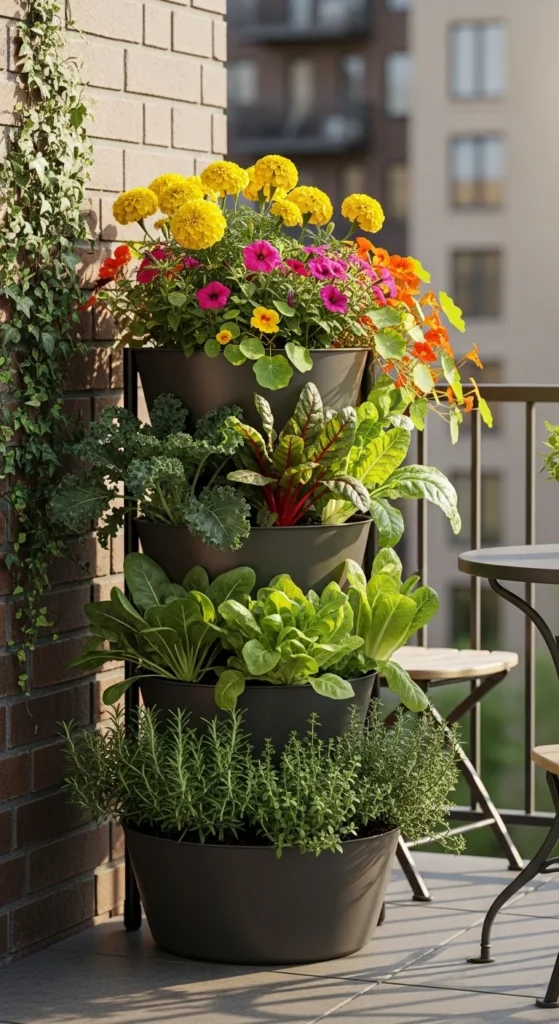
Balconies can feel cramped, but a mini tiered bed fits perfectly. Keep tiers shallow (8–10 inches) and use lightweight soil mixes. Position top tiers for sun-loving plants, and lower ones for shade-tolerant herbs. This setup maximizes vertical space while keeping watering manageable. Affordable DIY: repurpose stacked crates or wooden boxes, securing them with simple screws for stability.
3. Reclaimed Wood Tiered Garden
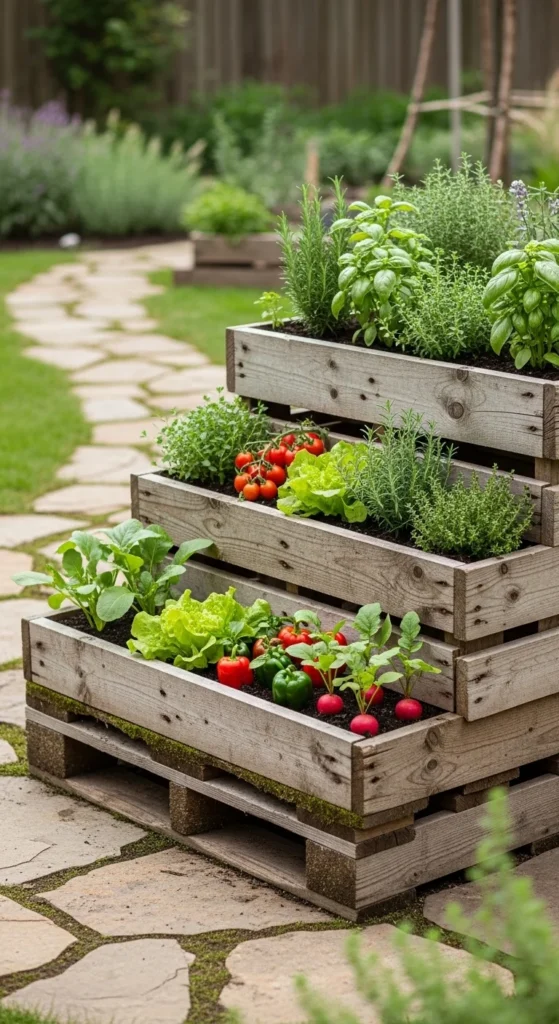
Use upcycled wood to build a sturdy, eco-friendly tiered bed. Pallets, old fence boards, or salvaged planks make a low-cost frame. Arrange tiers in ascending order, ensuring bottom layers have proper drainage with gravel. A coat of non-toxic wood stain protects the wood without chemicals. Plant front herbs, middle greens, and back root crops to maximize yield in a small footprint.
4. Stackable Prefab Tiered System
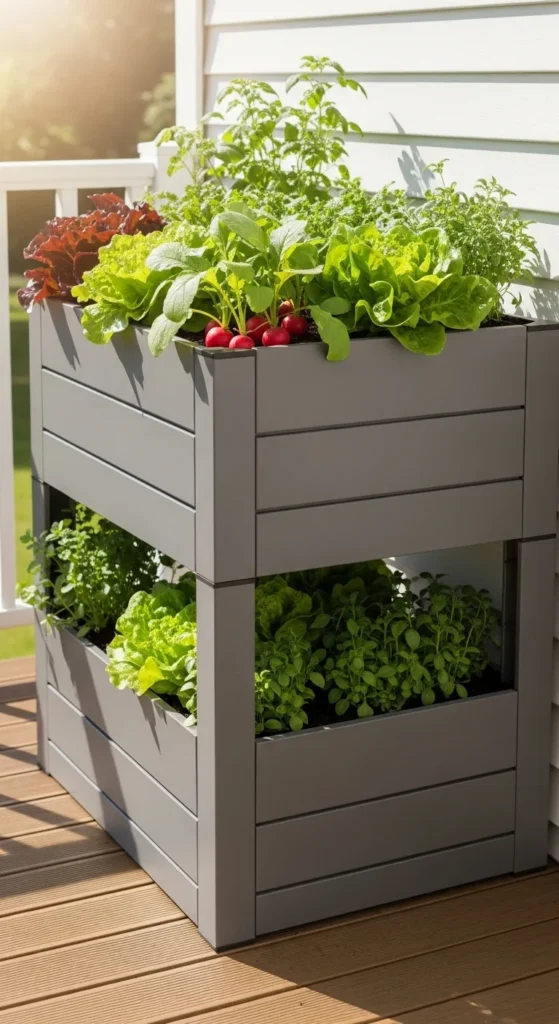
Prefab beds like Frame It All offer modular stacking for convenience. No complex tools are needed—just snap tiers together. Great for beginners or those short on time, they are lightweight yet durable. Each tier holds 8–12 inches of soil, perfect for shallow-rooted veggies. Bonus: you can move them seasonally, making them ideal for renters or patios.
5. Elevated Waist-High Tiered Bed
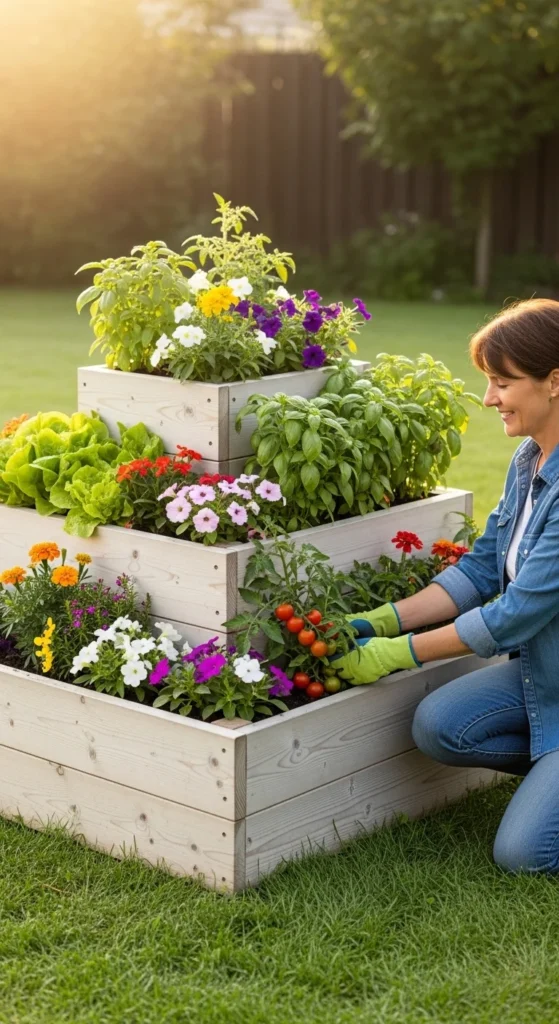
An elevated tiered bed protects your back while gardening. Front tiers at waist height reduce bending, and rear tiers remain accessible. Perfect for seniors or those with mobility limits. Use sturdy 2×12 boards for deep soil, add gravel for drainage, and layer soil by plant needs. Budget DIY: reinforce old shipping pallets for frame stability.
6. Front-Accessible Salad Tier
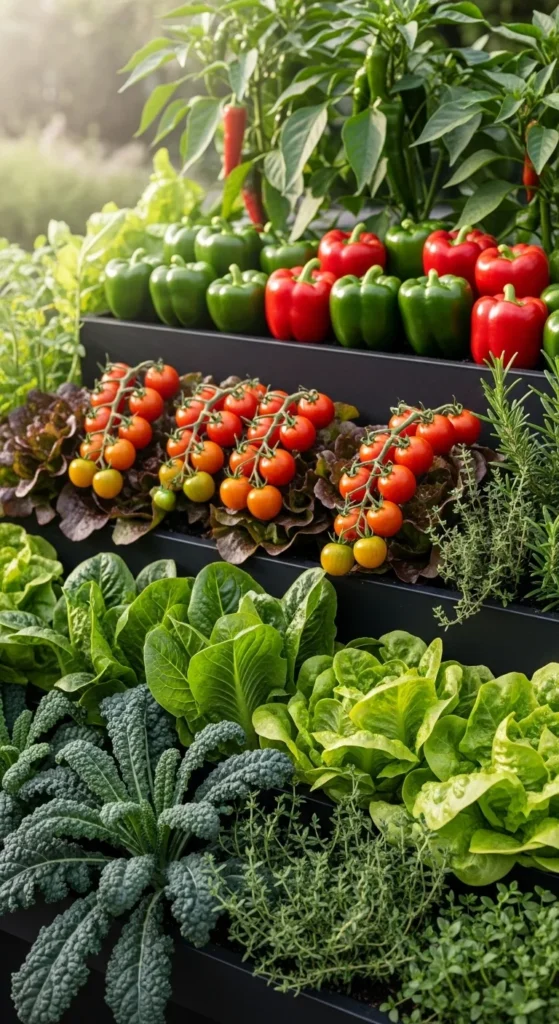
Keep the front tier for quick-harvest salad greens. Middle tiers can hold slower-growing veggies like tomatoes or cucumbers. Back tiers support taller crops. This arrangement allows easy picking without reaching over plants. Build with lightweight pine, add a mulch layer to retain moisture, and rotate crops seasonally for continuous harvest.
7. Patio Corner Tiered Bed
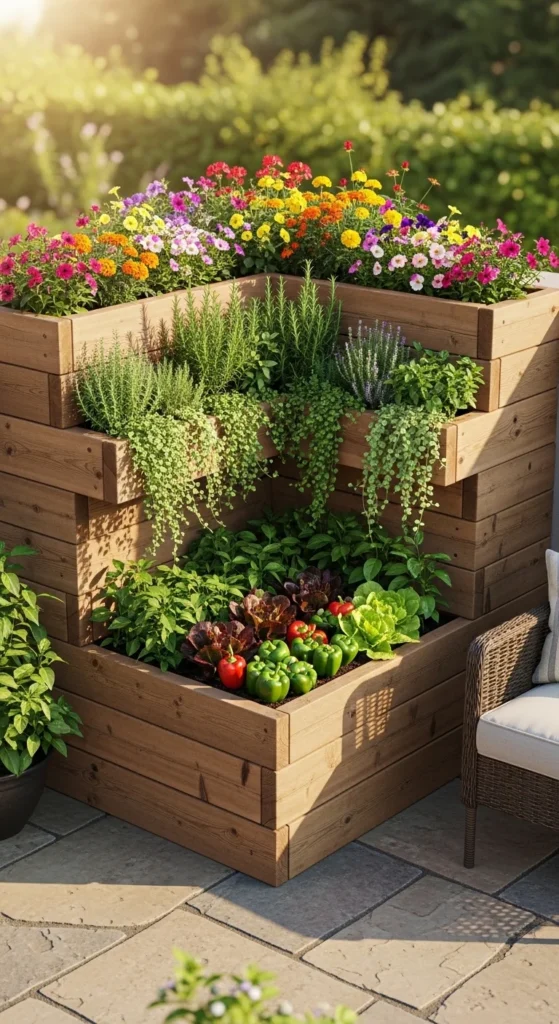
Corners are often unused, making them perfect for a tiered bed. Shape it L-style, front tier for herbs, inner corner for dense greens, and rear tier for vertical crops. Affordable DIY: use 2×4 lumber with screws, line with landscape fabric, and fill with a mix of compost and topsoil. Plants thrive with sunlight exposure on upper tiers.
8. Tiered Flower-Centerpiece Bed
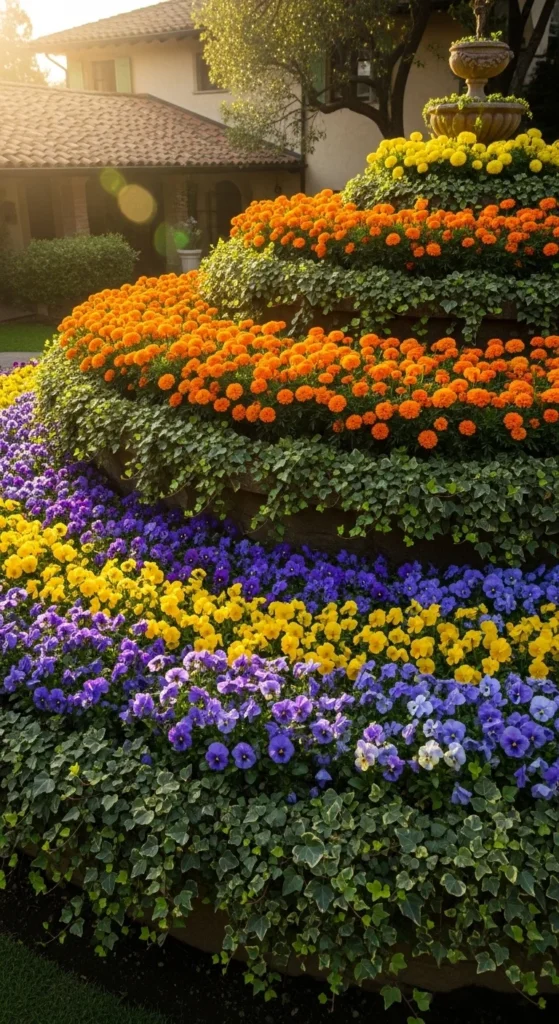
Create a curbside or backyard centerpiece with colorful blooms. Arrange flowers by height: short at front, medium in middle, tallest at back. Multi-level beds add depth and style while keeping blooms healthy. DIY: inexpensive wood or stone blocks can create natural tiers. Budget tip: plant perennials for long-term color and rotate annuals for seasonal changes.
9. Square-Foot Tiered Herb Bed
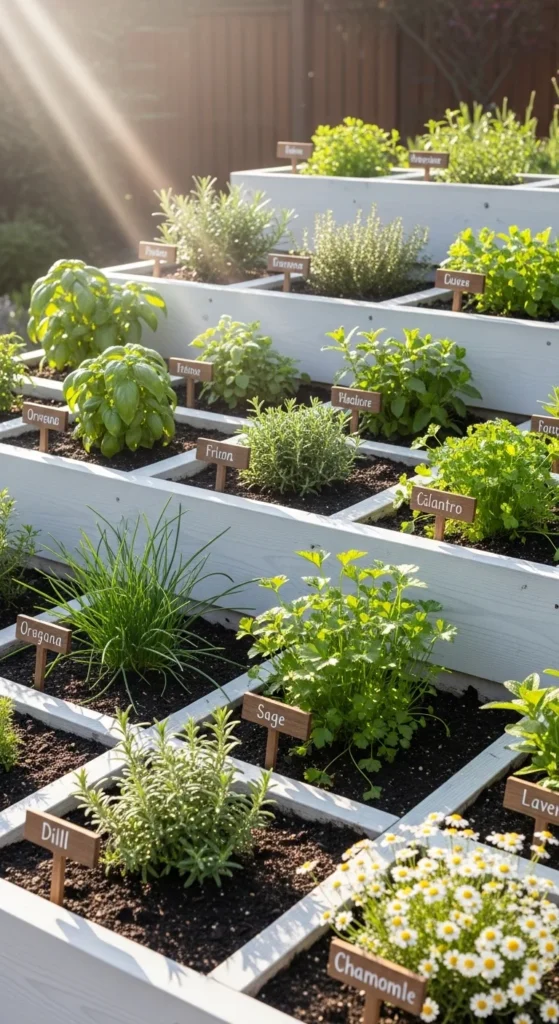
Apply square-foot gardening principles in tiers. Each section gets one plant type, maximizing yield in small spaces. Front: basil and parsley, middle: lettuce varieties, back: bushy tomatoes. Use 8–12 inch tier depths for most herbs. DIY tip: mark squares with thin wooden dividers, easy to remove or adjust each season.
10. Tiered Trellis Combo Bed
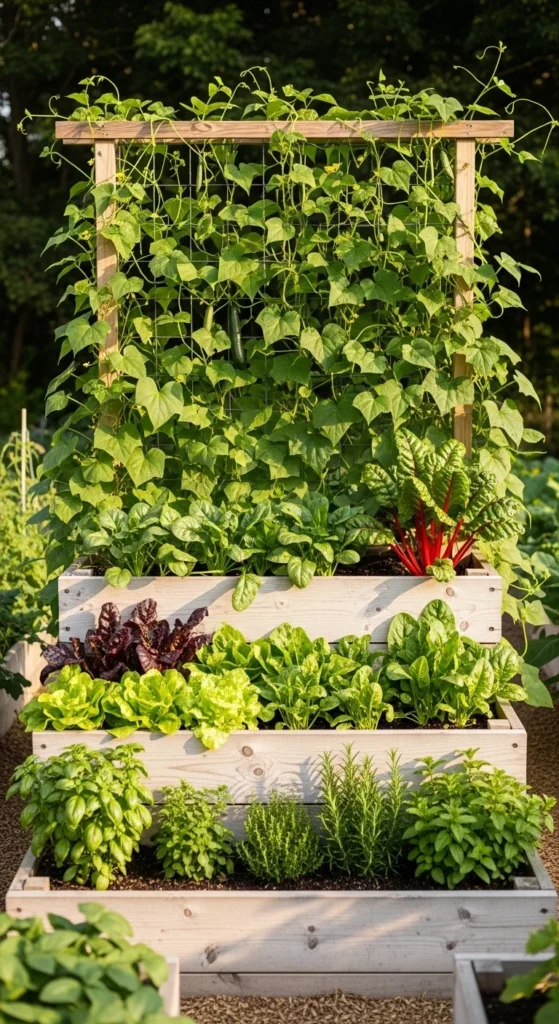
Combine tiered beds with vertical supports. Rear tier holds climbing plants on trellises. Middle and front tiers host shorter crops. DIY: attach a wire or bamboo trellis to rear tier, secure base, and train plants upward. Maximizes vertical space while keeping tiers productive. Easy to construct with 2×4 lumber and screws.
11. DIY Two-Tier Starter Bed
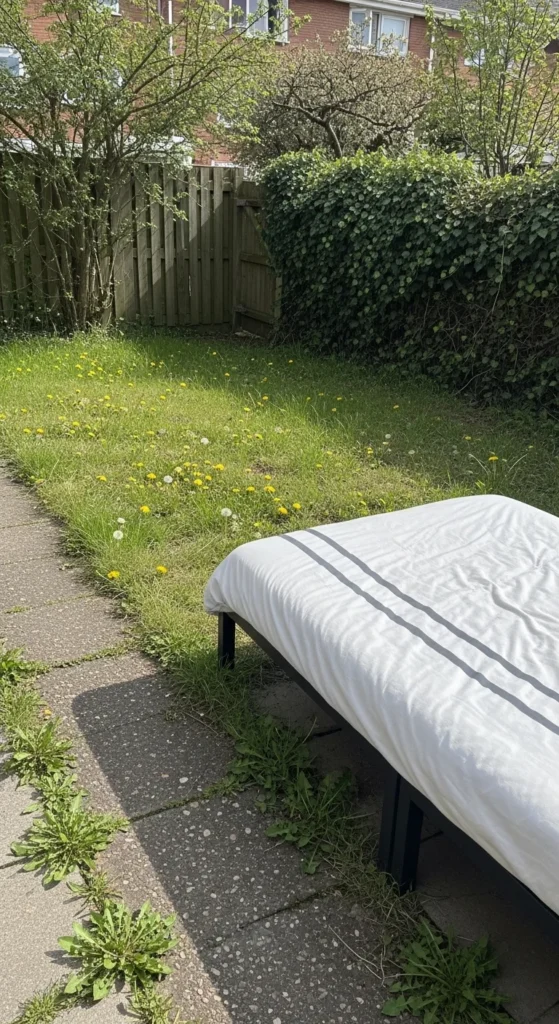
Start small with a 2-tier bed, easy for beginners. Front tier for herbs, back tier for leafy greens. Simple cut-and-screw design makes building easy. Use untreated pine or cedar for durability. Layer gravel and landscape fabric for drainage. Perfect for narrow patios or rental balconies.
12. Recycled Crate Tiered Garden
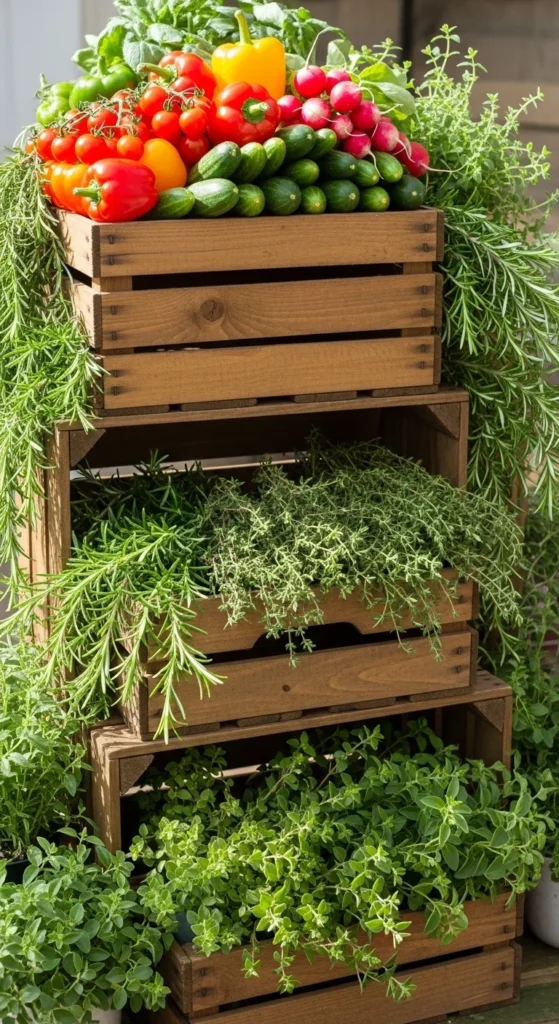
Repurpose wooden crates to create tiers. Stack them securely, screw corners for stability. Top crates for sun-loving plants, bottom for shade-tolerant herbs. Fill with lightweight soil mix for portability. Budget-friendly and renter-friendly: crates can be moved or rearranged easily.
13. Tiered Pollinator Bed
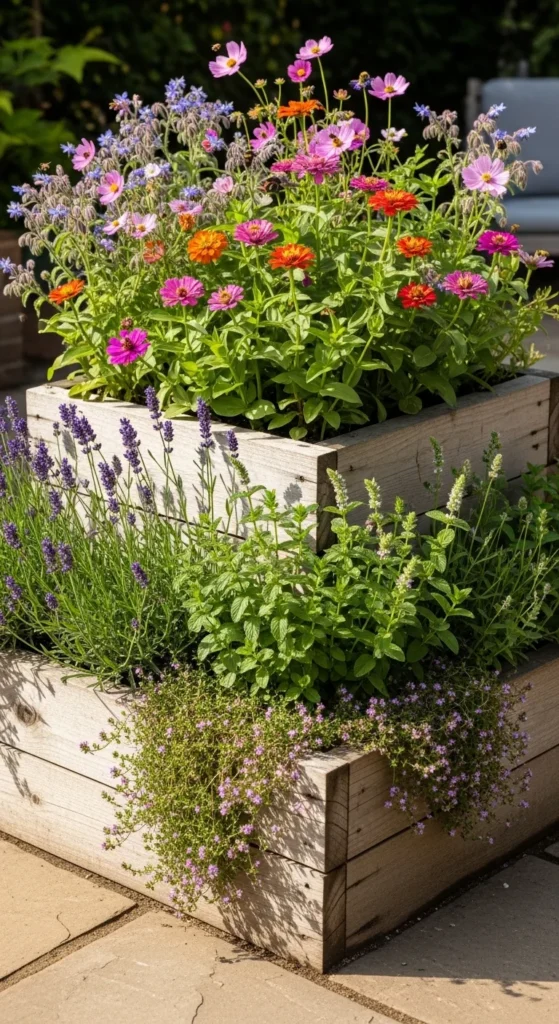
Support pollinators by planting nectar flowers on upper tiers. Middle tier can host herbs like mint, lower tier thyme or oregano. Helps attract bees and butterflies while producing food. DIY: wood or pallet frames, layered soil, mulch top tiers to retain moisture. Adds beauty and utility to any yard.
14. Balcony Rail Tiered Planter
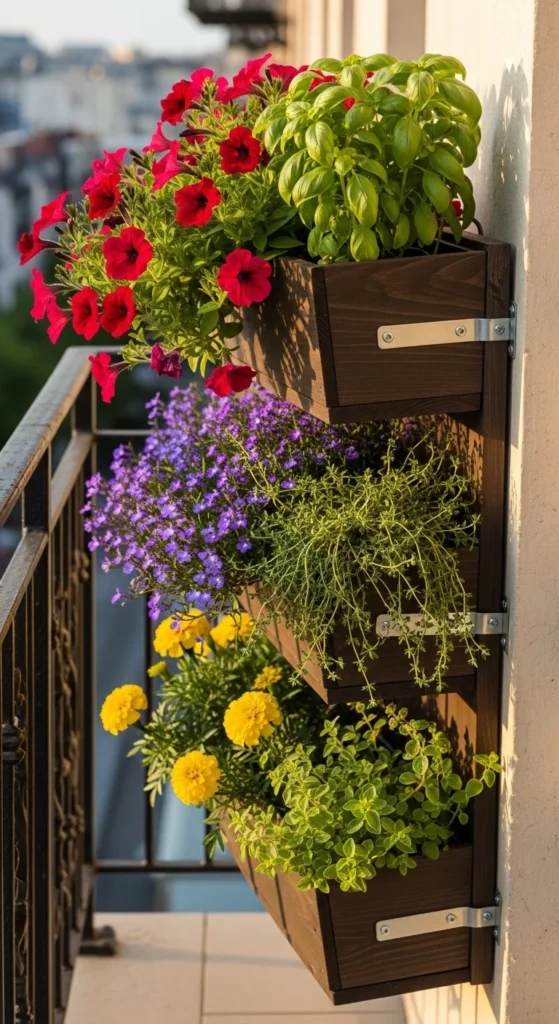
Attach tiers to railing for maximum vertical planting. Upper tiers for sun-loving flowers, lower for herbs or small veggies. Lightweight materials like plastic or thin wood keep the bed manageable. Use zip-ties or brackets for secure installation. Perfect for small apartments or condos.
15. Renters-Friendly Stackable Kit
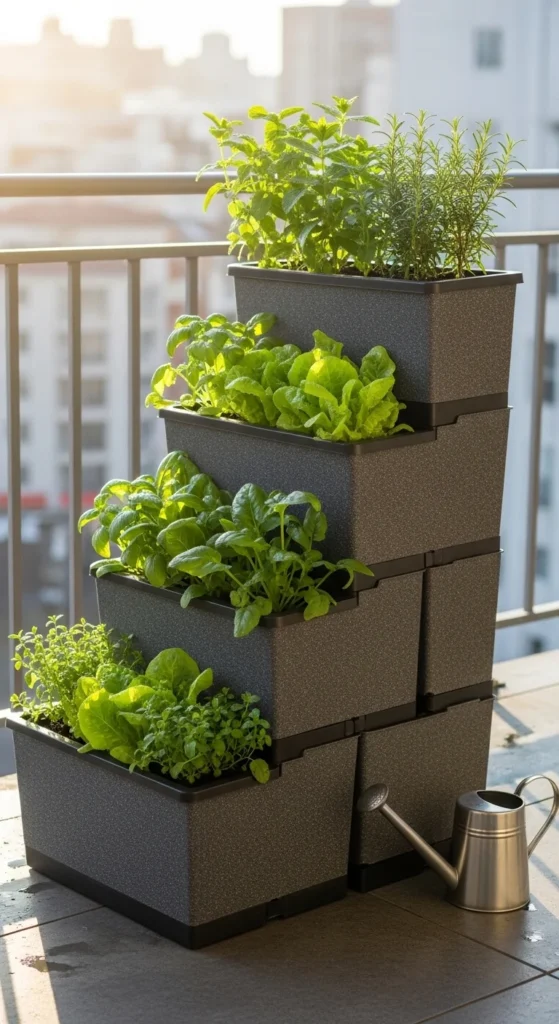
Choose a prefab stackable kit for portability. No tools required, and tiers can be disassembled or moved easily. Each tier holds 8–12 inches of soil, enough for shallow crops. Great for temporary gardens or renters who want greenery without permanent construction.
16. Tiered Privacy Screen Bed
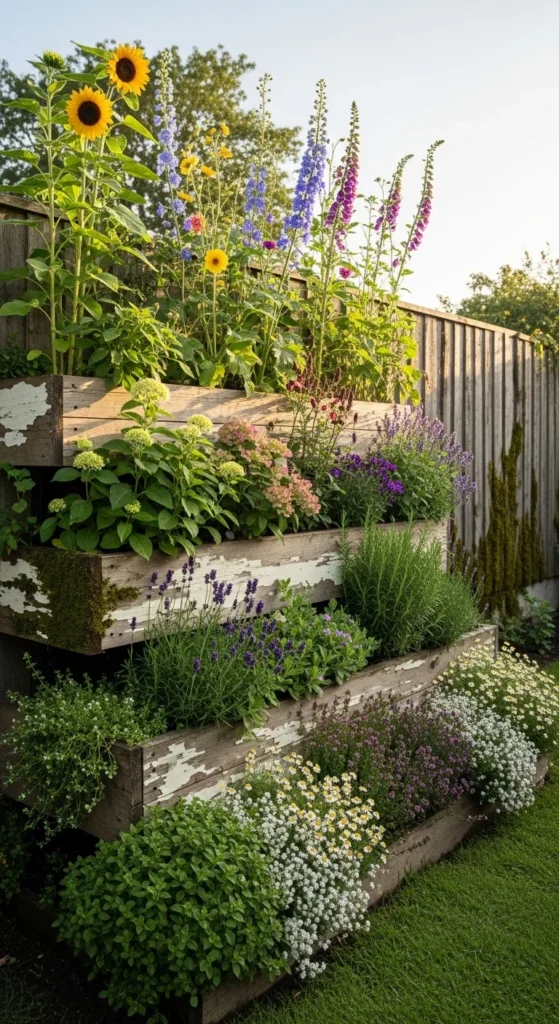
Use tiers to create privacy on a balcony or yard edge. Tall plants on top block view, middle tiers support medium shrubs, and bottom tiers host herbs. DIY tip: sturdy lumber and cross braces keep structure stable. Adds greenery while doubling as a functional barrier.
17. Tiered Salad Tower
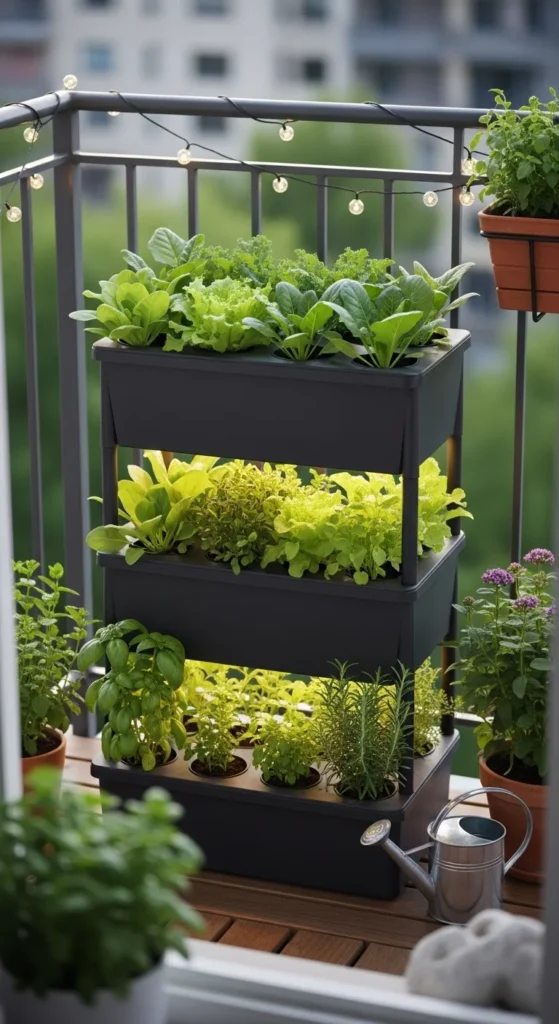
A salad tower focuses on greens and herbs. Shallow soil per tier (8–10 inches) is enough. Easy to rotate crops, harvest often, and keep fresh greens at hand. Build with lightweight frames, ideal for patios or small decks. Budget: repurpose small crates or boxes.
18. Back-Friendly Elevated Vegetable Tier
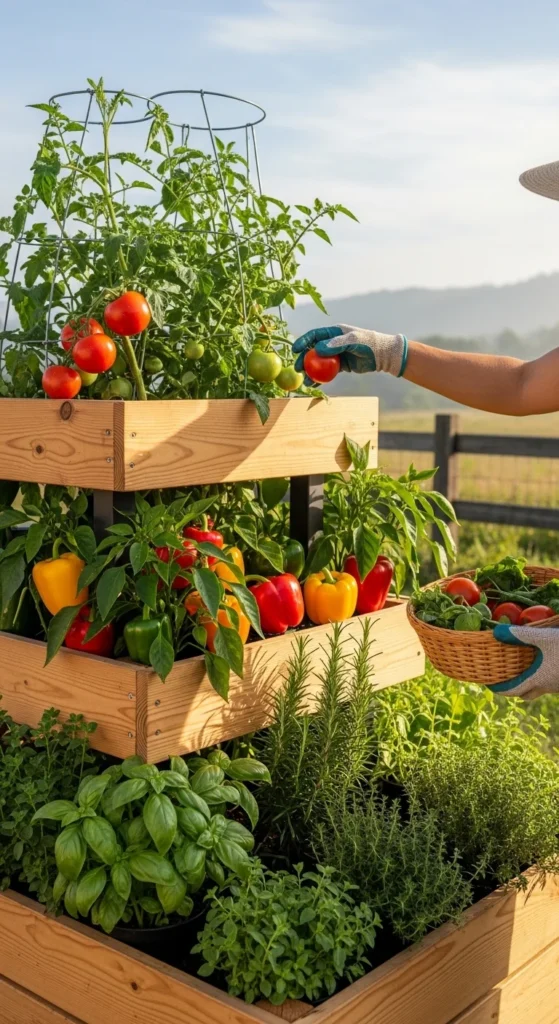
Keep your back safe with waist-high tiers. Front herbs, middle lettuces, back tomatoes or peppers. Deep boards (10–12 inches) for root veggies. DIY tip: reinforced corners prevent tipping when soil is heavy. Great for seniors or mobility-limited gardeners.
19. Tiered Compost-Integrated Bed
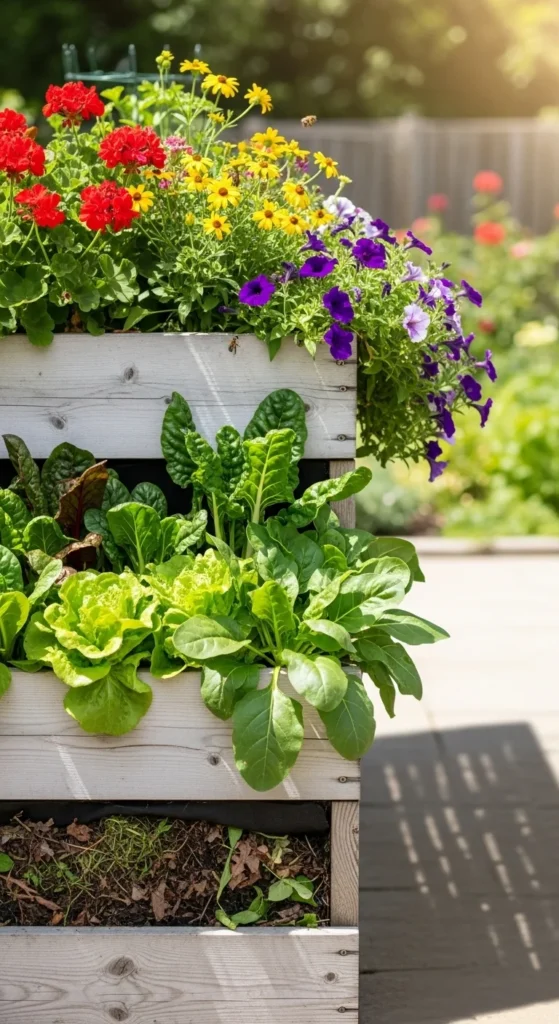
Integrate composting into a tiered bed. Use bottom tier for finished compost, middle for leafy greens, top for flowers or herbs. Saves space and enriches soil naturally. DIY: add removable panels for compost access. Budget: use reclaimed wood and inexpensive soil amendments.
20. Tiered Flower & Veggie Mix
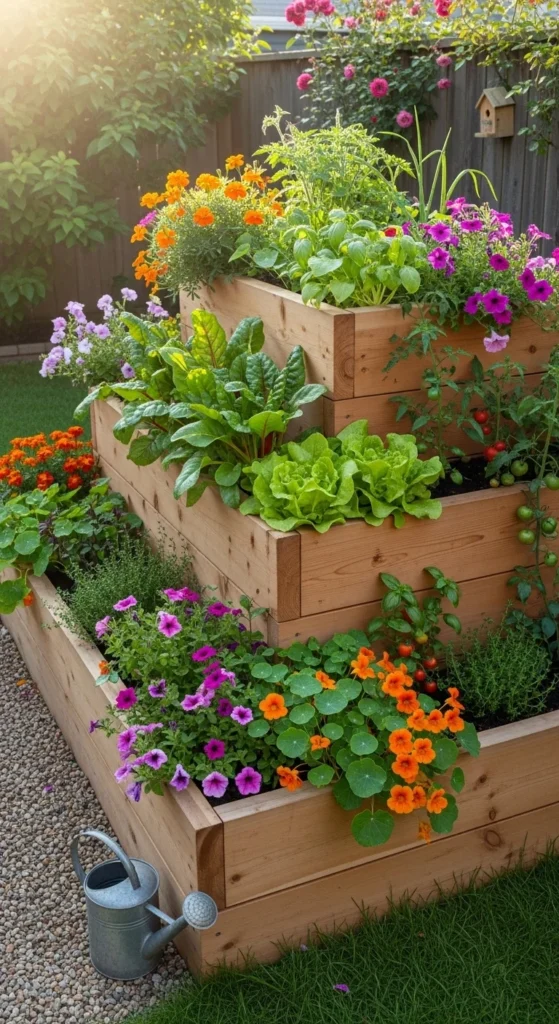
Mix flowers and veggies in tiers for aesthetics and pest control. Front herbs and flowers, middle vegetables, back trellised beans or cucumbers. Affordable DIY: use 2×6 boards and garden screws. Mulch top tiers to retain moisture. Provides both food and beauty.
21. Shallow-Tier Quick Harvest Bed
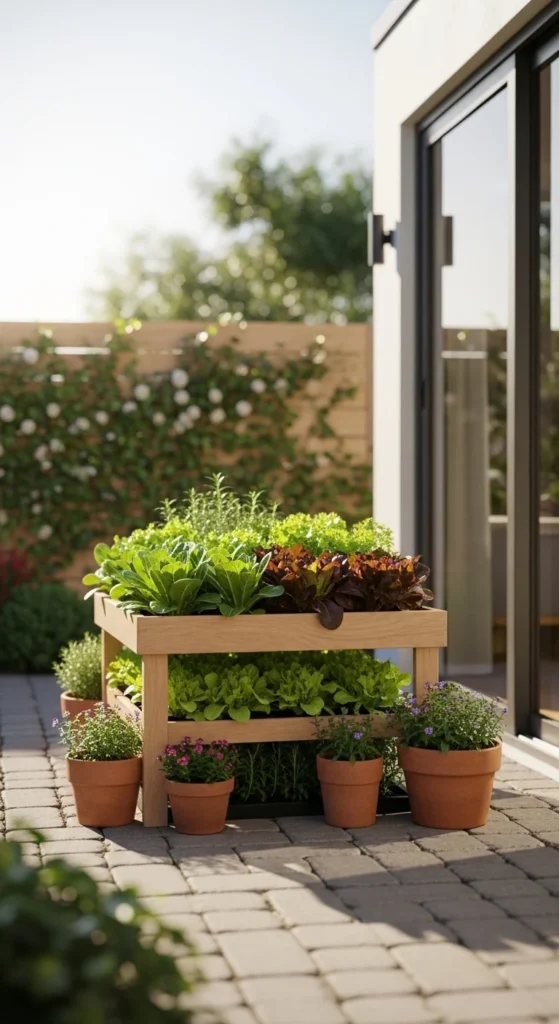
Shallow tiers (6–8 inches) are perfect for fast-growing crops. Front: herbs, middle: lettuces, back: radishes. Quick to harvest, rotate crops frequently. DIY tip: inexpensive pine boards and landscape fabric for drainage. Great for small patios and renters.
22. Centerpiece Herb Spiral Tier
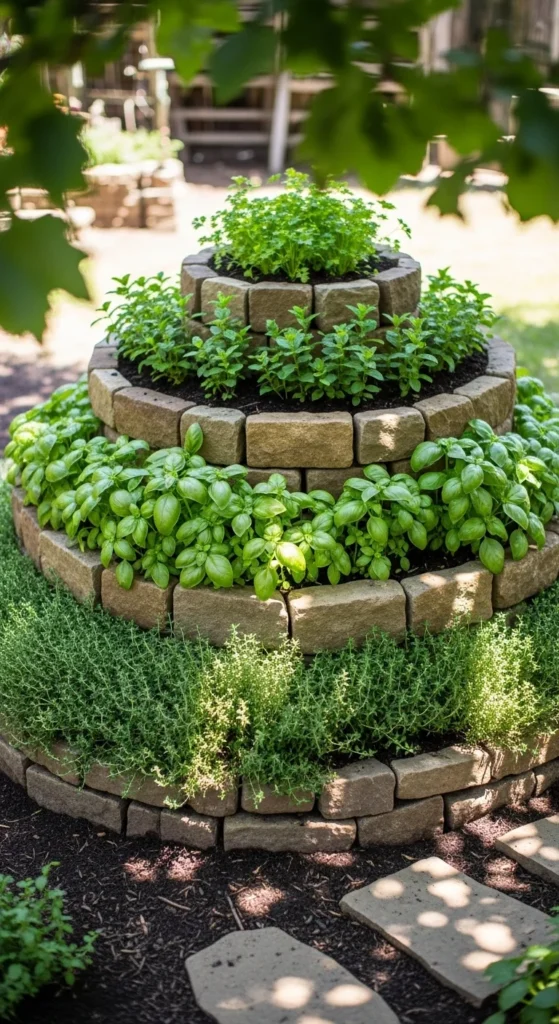
Spiral or curved tiered beds save space and create visual interest. Top: sun-loving herbs, bottom: shade-tolerant ones. DIY: use bricks, stones, or curved wood planks. Watering is easier as upper tiers drain into lower ones. Budget: repurpose garden stones or scrap wood.
23. Corner Stack Tiered Bed
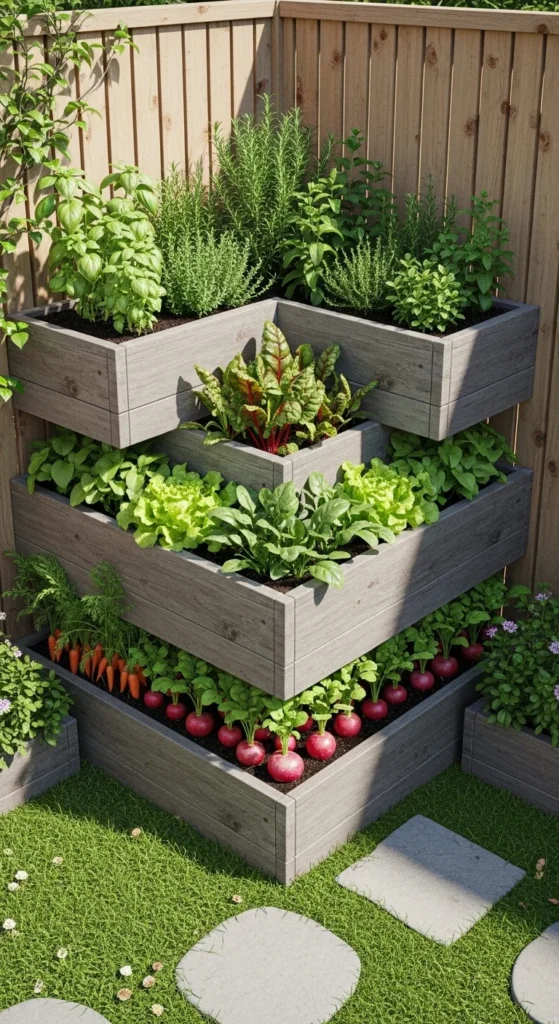
Stack tiers in a corner to maximize otherwise unused space. Top tier for sunlight-loving crops, middle for mid-height vegetables, bottom for shade-tolerant root veggies. DIY: 2×6 boards, simple screws, landscape fabric for soil retention. Small footprint, high productivity.
24. Tiered Flower Wall Bed
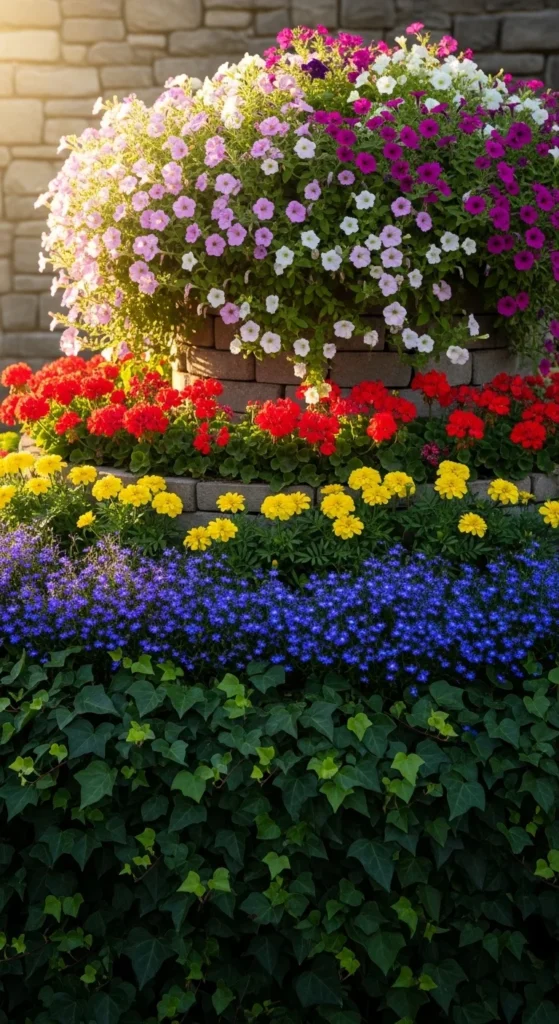
Plant tiers against a wall for extra sun reflection and visual impact. Top: trailing flowers, middle: color-rich annuals, bottom: ground-cover plants. DIY: secure wooden frames to wall for stability. Great for urban gardens or patios needing color without wide space.
25. Budget DIY Stack Tier
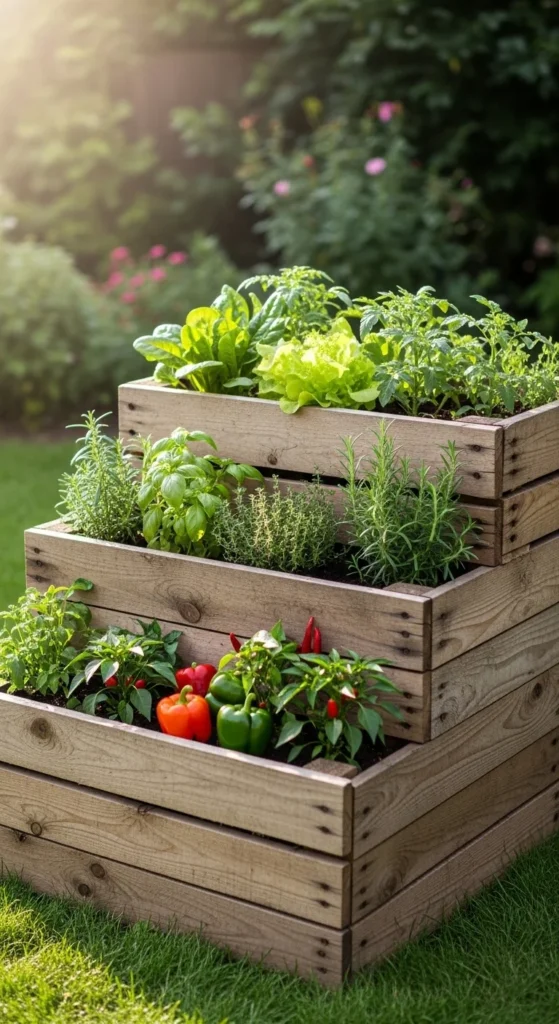
Stack tiers cheaply using scrap wood or pallets. Front herbs, middle greens, back taller crops. Secure with basic screws, add gravel for drainage. Budget-friendly, renter-friendly, and easy to disassemble. Perfect for first-time tiered gardeners.
26. Modular Balcony Bed
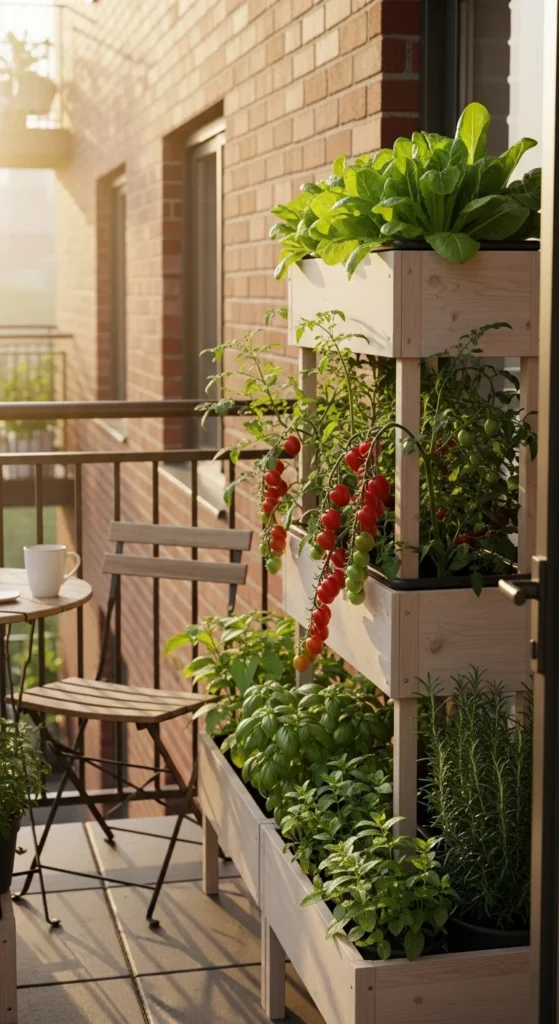
Use modular kits that snap together. Rearrange tiers as needed, move for sun exposure. Each tier holds 8–12 inches soil. Affordable prefab options avoid construction hassle. Ideal for apartment gardening.
27. Multi-Level Veggie Tower
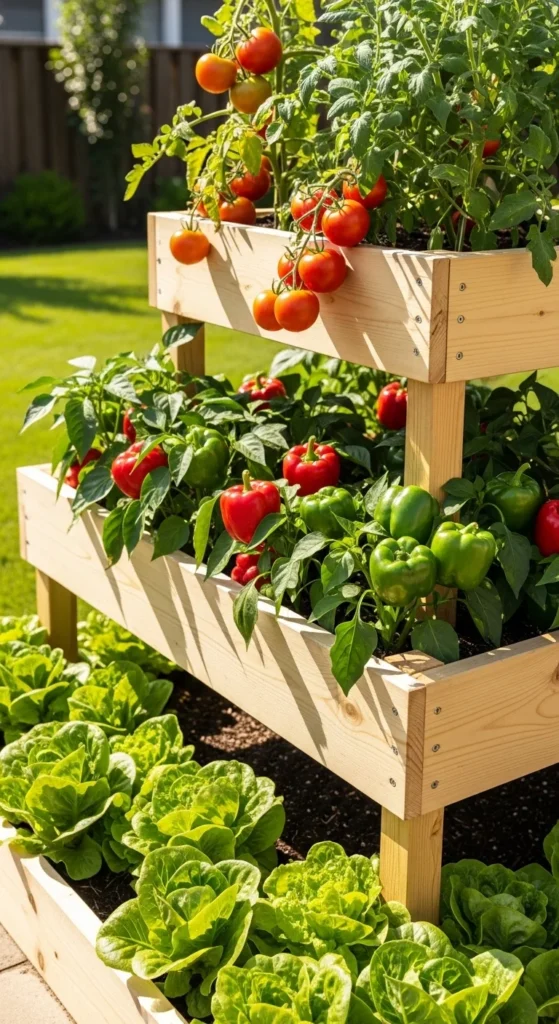
Maximize vegetable yield in small space with tiered tower. Front lettuces, middle peppers, back tomatoes. Deep boards (10–12 inches) for roots. DIY: 2×6 lumber, screws, and gravel for bottom drainage. Harvest front crops without disturbing others.
28. Tiered Patio Herb Garden
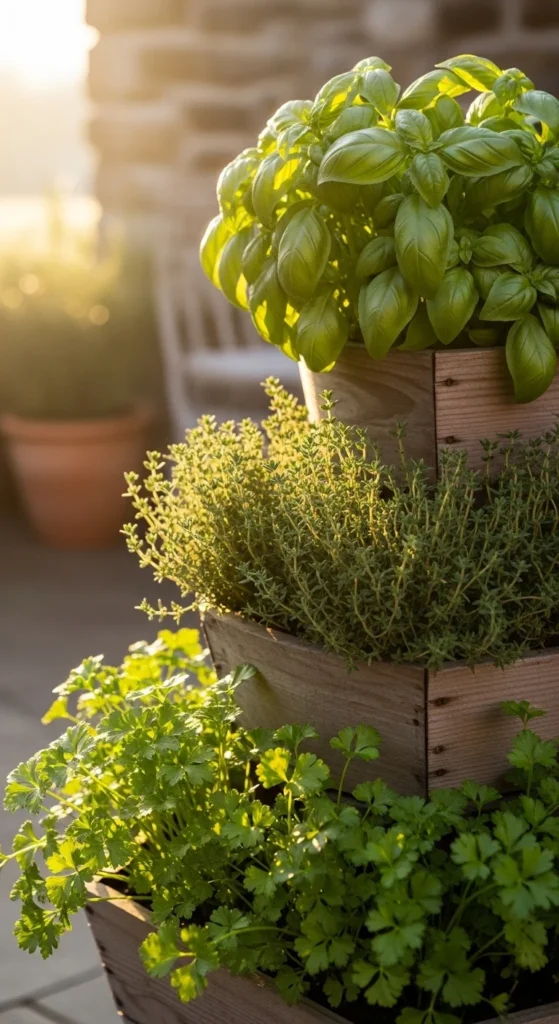
Compact patio herbs thrive in tiered beds. Front: small herbs, middle: medium-height, back: tall herbs. DIY tip: lightweight soil mix for mobility. Affordable, quick to build, and easy to water. Perfect for small patios or decks.
29. Rustic Three-Tier Garden
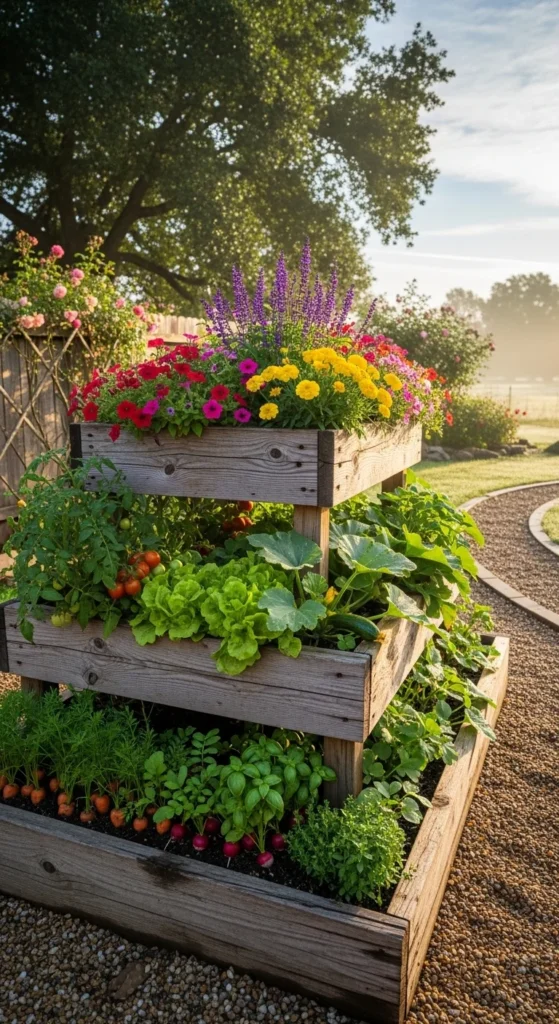
Use rustic wood for charm and durability. Front herbs, middle greens, back tall vegetables. DIY: salvage lumber, add gravel and landscape fabric. Multi-tiered structure fits small yards and adds visual interest. Simple, low-cost, productive solution.
Conclusion
Tiered raised garden beds make small spaces productive and visually appealing. From DIY wooden builds to prefab stackable systems, there’s a tiered solution for every skill level and budget. Arrange plants by height and sunlight, add drainage and mulch, and rotate crops for continuous harvest. Whether you want herbs, vegetables, flowers, or a mix, tiered beds maximize space and simplify gardening, turning even the tiniest patio into a thriving garden.
Leave a Reply