

Herb container gardening makes it possible to grow kitchen staples in places that would never fit a full garden bed. A balcony rail, sunny windowsill, patio corner, stair landing, or small porch can all become a productive herb-growing spot with the right pot, soil, and light. The biggest wins come from simple choices. Pick containers with drainage holes, match herbs with similar water habits, and place pots where they get plenty of sun. From terracotta classics to self-watering planters and vertical towers, these herb container gardening ideas focus on easy setups, low-cost tricks, and practical ways to keep basil, rosemary, thyme, mint, parsley, chives, and more within arm’s reach through much of the year.
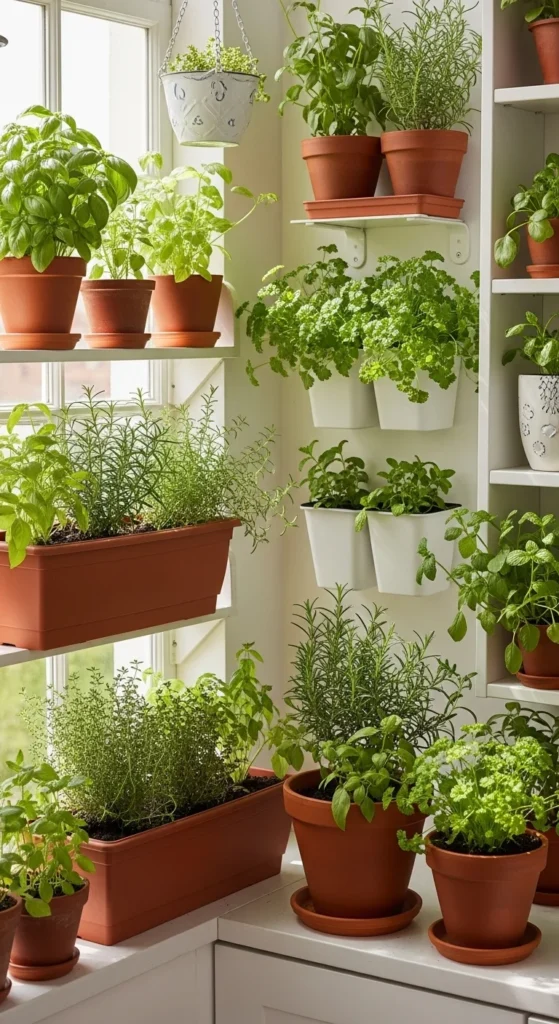
1. Terracotta Pots for Dry-Loving Mediterranean Herbs
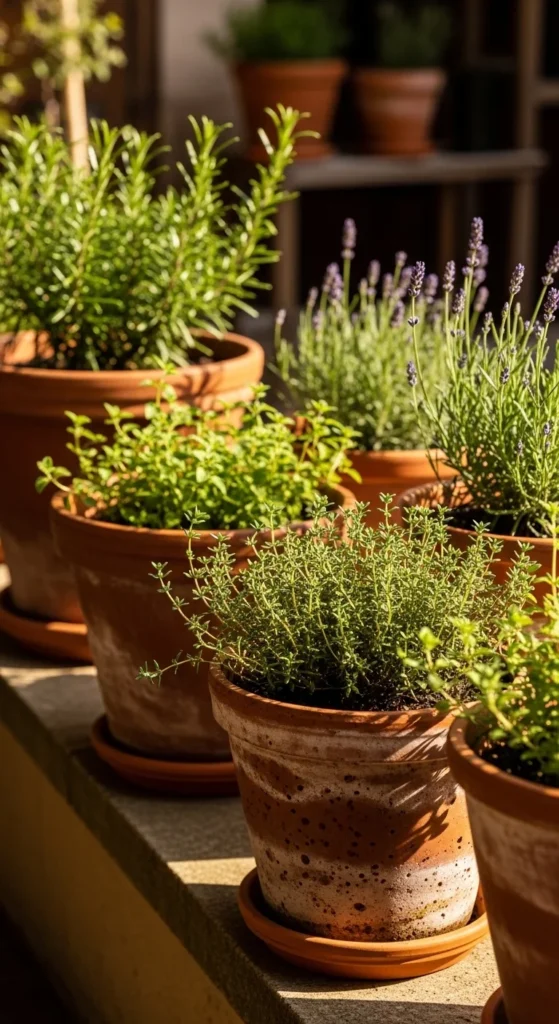
Terracotta pots are a smart match for rosemary, thyme, oregano, sage, and lavender because the clay dries faster than plastic. That helps when growing herbs that dislike wet roots. The pots also look great on patios, steps, and balcony corners, so they work as décor and growing space at the same time.
Start with containers that have wide drainage holes. Put a saucer under each one if the pots sit on tile, wood, or a windowsill. Use a loose potting mix rather than heavy garden soil. That keeps air moving around the roots and helps the herbs stay healthier.
A budget-friendly setup can come from a few basic clay pots in mixed sizes instead of one large expensive planter. Group three or four together for a fuller look. Place the tallest herb in the back and trailing thyme or oregano in front. That makes the cluster easier to harvest and nicer to look at.
Water only when the top layer feels dry. These herbs usually like a lighter watering schedule than basil or parsley. If the patio gets strong sun, rotate the pots now and then so growth stays more even. This simple setup works well for beginners and looks better with time.
2. Balcony Rail Window Boxes for Easy Picking
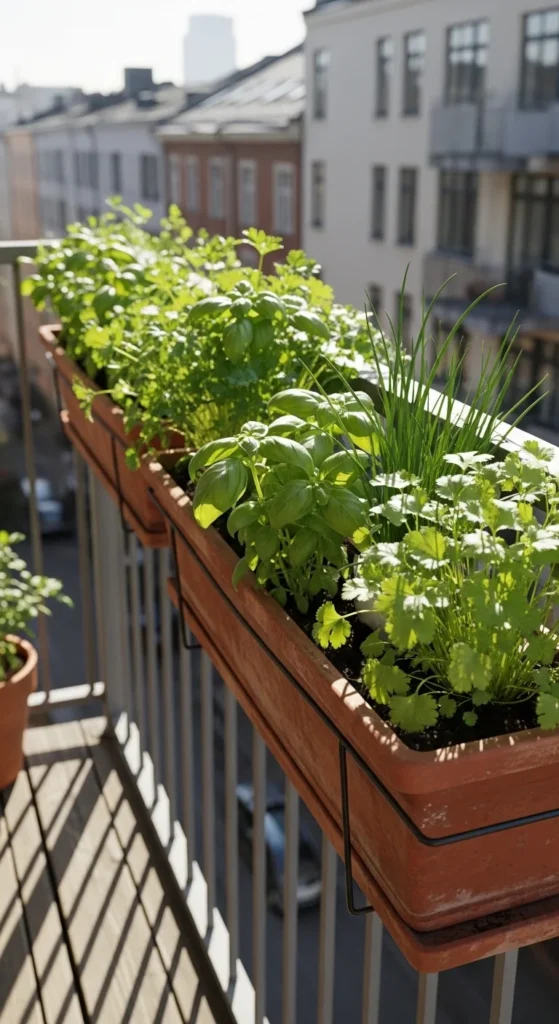
A window box on a balcony rail makes use of space that often goes unused. Instead of giving up floor room, the herbs sit right at the edge where light is often strongest. This idea works very well for apartment dwellers who want herbs close by without crowding the balcony.
Choose a box with drainage holes and a secure mounting system. Lightweight plastic or resin planters are often easier than heavy ceramic on upper floors. Basil, parsley, chives, cilantro, and trailing thyme all work well in this type of container. Keep mint in its own pot unless you want it spreading through the whole box.
A lower-cost option is using one long planter instead of several small pots. That usually looks tidier and costs less to fill with soil. Group herbs with similar watering habits together. Basil and parsley can share. Rosemary and sage are better kept elsewhere in drier soil.
Check sun patterns before fixing the box in place. Most herbs do best with several hours of direct light. If the balcony gets fierce afternoon heat, basil may like a little break from the hottest stretch. A rail box turns a plain balcony edge into a useful herb strip that feels neat, practical, and easy to harvest.
3. Sunny Windowsill Herb Rows for Indoor Growing
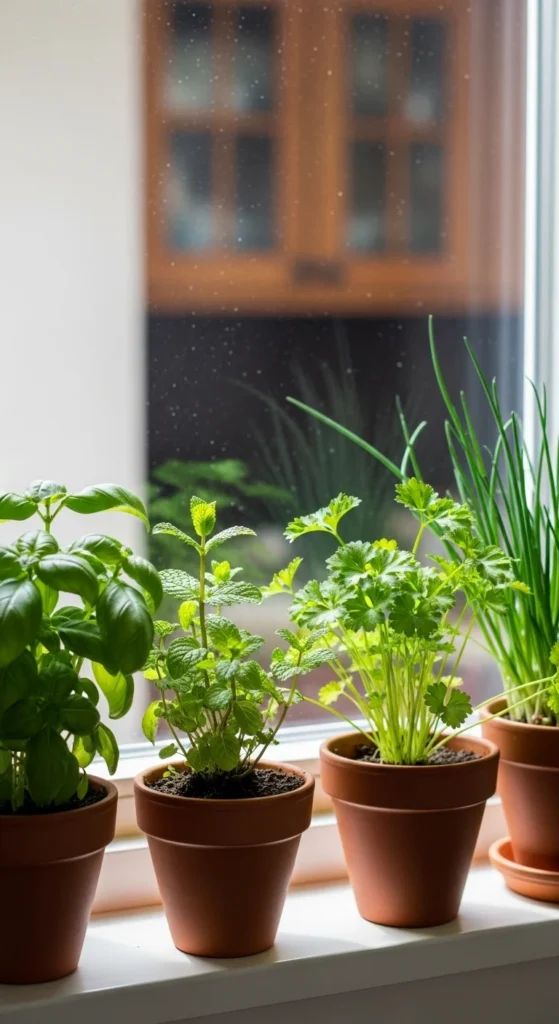
A sunny windowsill can become a very productive herb garden when the light is strong enough. This setup works well for people who want herbs close to the kitchen and easy to snip while cooking. It also fits renters and small apartments where outdoor space is limited or not available at all.
The best herbs for this style are basil, parsley, chives, mint, cilantro, and oregano. Use separate pots with drainage holes instead of packing too many herbs into one shared container. That makes watering easier and helps avoid root crowding. Plastic pots are useful indoors because they hold moisture longer and weigh less.
A cheap setup can start with plain nursery pots placed inside thrifted bowls or trays. That keeps the look tidy without spending much. Make sure the pots are not sitting in standing water for long periods. Empty saucers after watering if a lot of water collects.
Turn the pots every few days so they do not lean too hard toward the light. If growth becomes thin and stretched, the window may not be bright enough for certain herbs. In that case, move the strongest sun lovers to a better spot and keep lower-light herbs like parsley or mint in the indoor row instead.
4. Self-Watering Pots for Busy Beginners
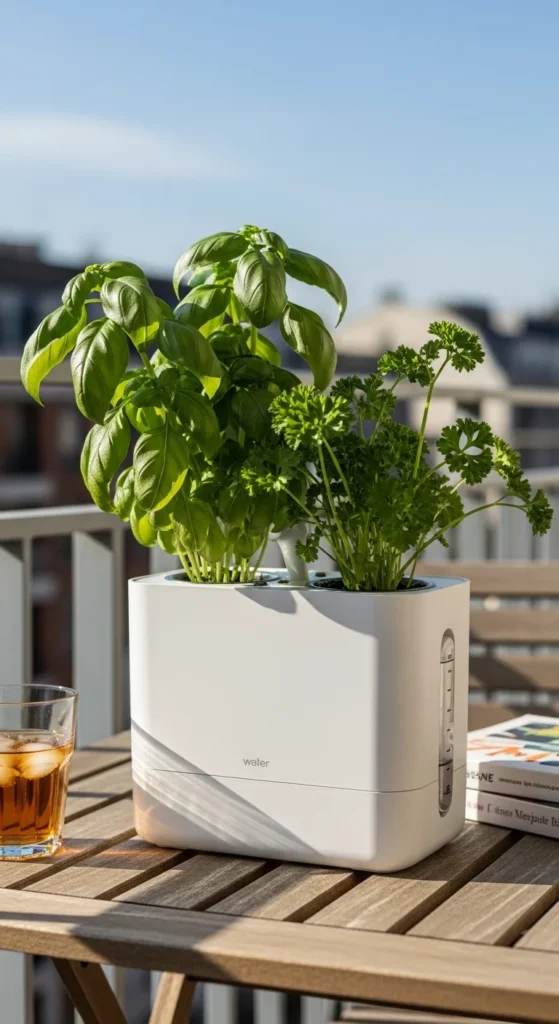
Self-watering pots are helpful for gardeners who forget a day or two of watering or who live in hot places where containers dry out fast. The lower reservoir holds water and lets the soil pull it up over time. This can keep herbs more even in moisture and cut down on the daily rush to check every pot.
Basil, parsley, cilantro, and chives often do well in this kind of setup because they like steadier moisture than rosemary or lavender. Self-watering pots are especially useful on balconies, patios, and indoor corners where regular watering can get messy or inconvenient. A reservoir also helps during warm weeks when smaller pots dry quickly.
To keep the cost lower, buy one self-watering pot for thirstier herbs and use regular containers for dry-loving types. Another low-cost route is making a DIY version from two nested plastic containers with a simple wick. That gives similar function without paying for a branded planter.
Even with a reservoir, drainage still matters. Water should not sit too high against the root zone for long periods. Check the soil now and then rather than trusting the pot alone. This setup works best when matched to the right herbs. For beginners, it can make container gardening feel far more forgiving and easier to maintain.
5. Vertical Herb Towers for Tight Balconies
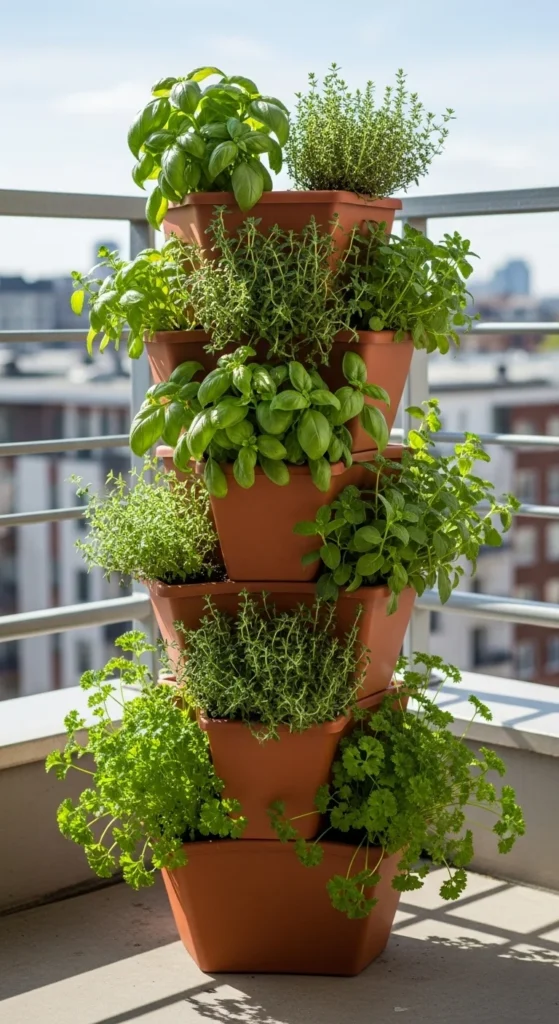
Vertical herb towers are great when floor space is the main problem. They stack several planting pockets upward, which means one small corner can hold many herbs at once. For apartment balconies and tiny patios, this is one of the easiest ways to grow more without adding clutter everywhere.
Use the top pockets for herbs that enjoy stronger light and quicker drying. Lower pockets often stay a bit shadier and slightly damper, so herbs can be grouped by how they handle those conditions. Thyme and oregano often do well higher up. Parsley and chives can be placed lower if the tower design creates some shade.
A low-cost version can be made from stacked pots, shelving with narrow planters, or reused containers fixed to a strong frame. Keep stability in mind. Towers catch wind more easily than low pots, especially on balconies. Put the heaviest base at the bottom and place the whole setup near a wall if possible.
Watering can take a little practice because top pockets may dry faster. Check all levels rather than assuming they behave the same. A vertical tower gives a small-space garden real impact and can turn one plain corner into a dense, useful herb-growing zone.
6. Mixed Pot Clusters for a Full Patio Display
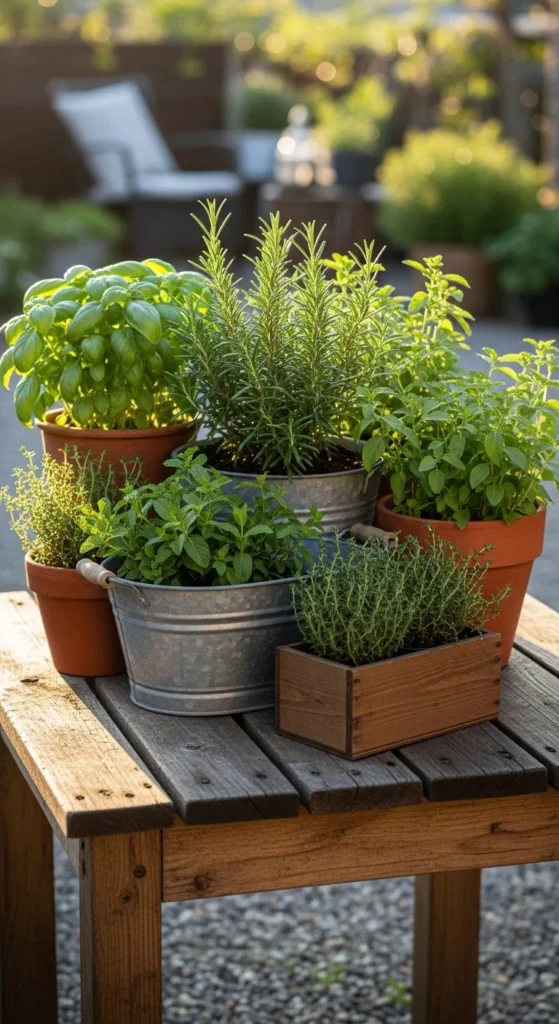
Grouping herb pots together creates a fuller, richer look than scattering them one by one around a patio. A cluster also makes care easier because watering, pruning, and harvesting all happen in one area. This idea suits patios, porches, and sunny corners that need a little life without a major garden project.
Use different pot sizes to create height and shape. A tall rosemary or bay plant can sit toward the back. Medium basil and parsley pots can fill the middle. Lower thyme or trailing oregano can soften the edges. This layered look feels more natural and also helps each herb stay visible and reachable.
A budget-friendly cluster can be built from plain nursery pots slipped into secondhand baskets, bowls, or clay covers. That saves money while keeping the layout attractive. Just make sure inner pots still have drainage. If the area is exposed to heavy rain, lift a few pots slightly on pot feet or stones so they drain better.
Grouping herbs by water habit makes the display easier to maintain. Wet-loving herbs in one cluster and dry-loving herbs in another usually works better than mixing all types together. A well-planned cluster can turn a small patio into a kitchen garden that feels both useful and decorative.
7. Strawberry Planters Packed with Small Herbs
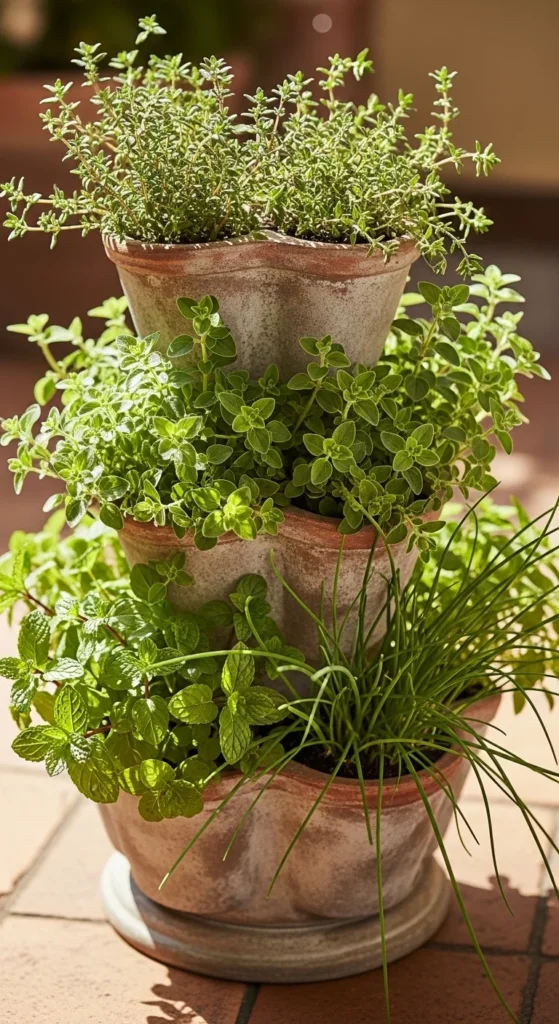
A strawberry planter is not just for strawberries. The side pockets make it very useful for small herbs that do not need much root room. Thyme, oregano, chives, mint, and small parsley starts can all fit well in the pockets, while a larger herb can sit in the top opening.
This setup is handy for small patios and balconies because one planter can hold several herbs at once. It also keeps the collection looking neat instead of spreading across the whole floor. Pocket planters often dry unevenly, though, so check the top and lower pockets separately. The upper section may dry sooner.
To save money, look for basic clay or resin versions rather than decorative designer pieces. A used planter can work well too if it is clean and still has good drainage. Choose herbs that stay on the smaller side or can handle regular trimming. Mint can work here, but keep an eye on it because it grows fast and may crowd nearby herbs.
This type of planter is especially nice for people who want variety in one container. It makes a small herb garden feel more abundant and gives each herb its own little space without needing a row of separate pots.
8. Mason Jar Root-View Herb Gardens
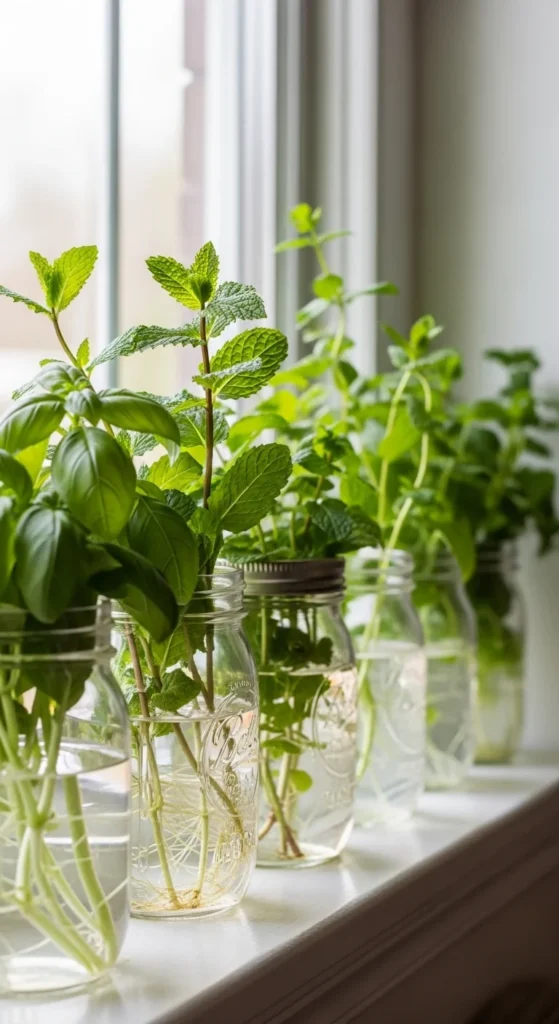
Mason jars are a fun way to grow certain herbs indoors, especially for people who enjoy seeing roots develop. Basil, mint, lemon balm, and some other soft-stem herbs can grow from cuttings in water for a while, making this a simple project for kitchens, classrooms, or bright window ledges.
Clear jars let you watch the roots grow, which is part of the appeal. The setup is very cheap if you already have jars at home. Cut a healthy herb stem, remove the lower leaves, and place it in clean water. Keep the jar where it gets bright light but not harsh scorching sun through glass all day. Change the water often so it stays clear.
This style works better for short-term growth or small indoor harvesting than for large long-lasting plants. Some herbs will eventually do better in soil, especially if you want fuller growth. Still, jars are a good way to multiply basil or mint from existing plants without spending more.
For a tidier look, group three or four jars on a tray near the kitchen window. It feels simple, useful, and a little playful. This is one of the easiest herb gardening ideas for beginners who want a tiny indoor project without buying special gear.
9. Recycled Can Herb Gardens on a Budget
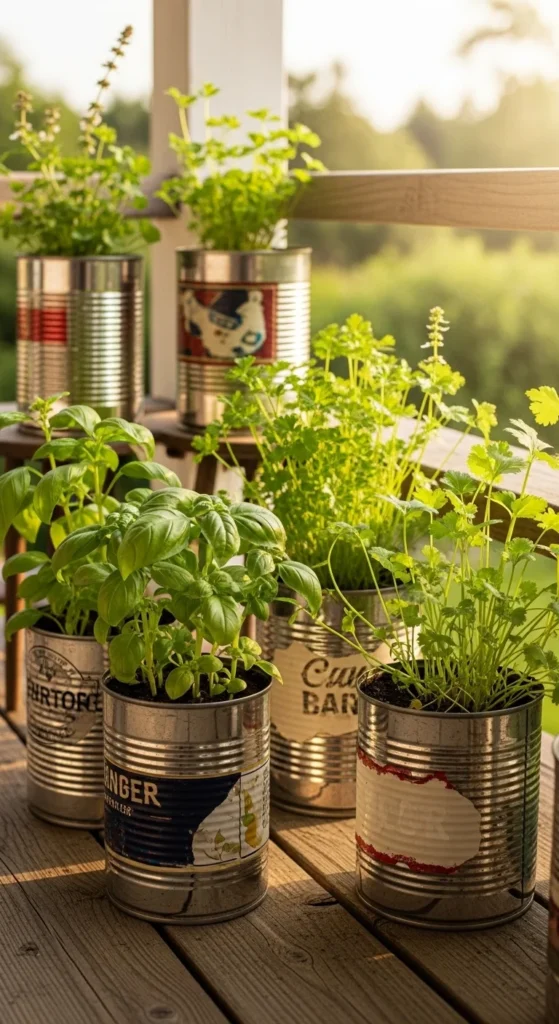
Recycled cans can become useful herb planters with almost no cost. They work well for small herbs or young starter plants and are especially handy for beginners testing a sunny windowsill, porch, or balcony without buying a full container set. This is a practical project when the goal is to start small and spend very little.
The most important step is adding drainage holes. Without them, root rot becomes likely very quickly. After that, the cans can be painted, wrapped in twine, or left plain for a simple look. Basil, cilantro, chives, and parsley can all start well in cans if the size is decent. Mint can work too, though it may outgrow smaller cans fast.
Line a tray underneath if the cans are indoors or on a balcony ledge. That helps catch excess water and keeps the area cleaner. Because metal can heat up in strong sun, check the soil more often during hot weather. If the cans are small, they may dry fast.
This setup is good for experimenting. Start seeds, root cuttings, or test which window gets the best light. Once the herbs grow larger, move them into bigger pots if needed. Recycled can planters keep herb gardening easy to try without a big shopping list.
10. Countertop Herb Stations with Grow Lights
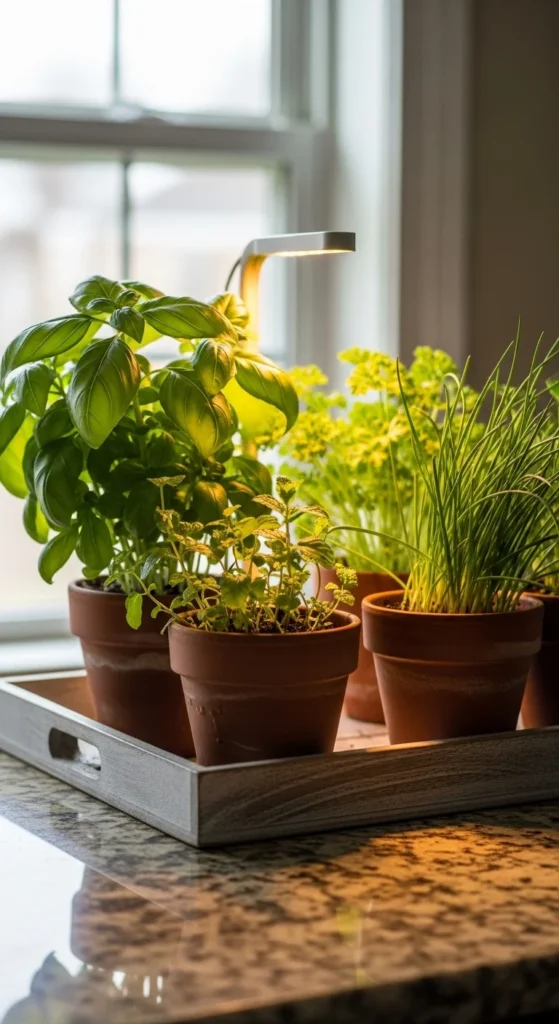
A countertop herb station can keep herbs going when window light is weak or the indoor layout blocks the sun. A small grow light above compact pots gives more control and makes indoor herb gardening possible in kitchens, offices, and apartments that do not have ideal windows.
This setup is especially helpful for basil, parsley, chives, mint, and cilantro. Use pots with drainage holes and place them in trays so the counter stays protected. Small plastic or resin pots are useful here because they are lightweight and hold moisture a bit longer indoors. Keep the light close enough to the herbs that they do not stretch upward too much.
A lower-cost version can use a simple clamp light with a basic plant bulb and a narrow shelf or tray. There is no need to buy a large system just to grow a few kitchen herbs. Start with the herbs you use most, then add more only if the setup fits your routine.
Indoor herb stations do need regular trimming. Pinching the tops helps basil and mint stay bushier instead of getting thin and tall. This idea is practical for people who want herbs close to where they cook and do not want to depend on the weather or the window alone.
11. Hanging Herb Baskets for Unused Air Space
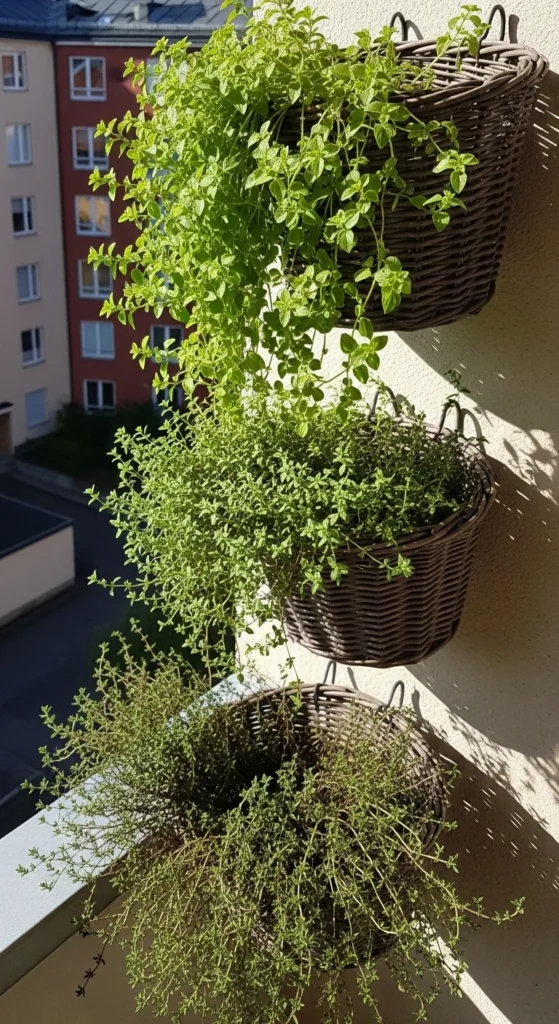
Hanging baskets are a clever way to use empty air space on balconies, porches, and patios. Instead of crowding the floor with more pots, the herbs hang above head height or at railing level. This is useful in places where walking room is limited but hooks or beams are available.
Trailing herbs like oregano and thyme look especially good in hanging baskets. Mint can work too, but it may grow fast and need regular trimming. Lightweight basket materials are usually better than heavy ceramic because they are easier to hang safely. Always make sure the hook and support point can handle the full weight after watering.
A budget-friendly version can come from basic wire baskets lined with coco fiber or reused hanging pots from old flower displays. Just check that water can drain properly. Hanging baskets dry quickly, so they need more frequent checking than larger pots on the ground. A basket in strong wind and sun may dry faster than expected.
This idea works best when the herbs are easy to reach. If the basket hangs too high, harvesting becomes annoying. Keep it close enough to snip comfortably. Hanging baskets can make a small herb garden feel layered, lively, and much more space-smart.
12. Moisture-Matched Herb Groupings That Work Better
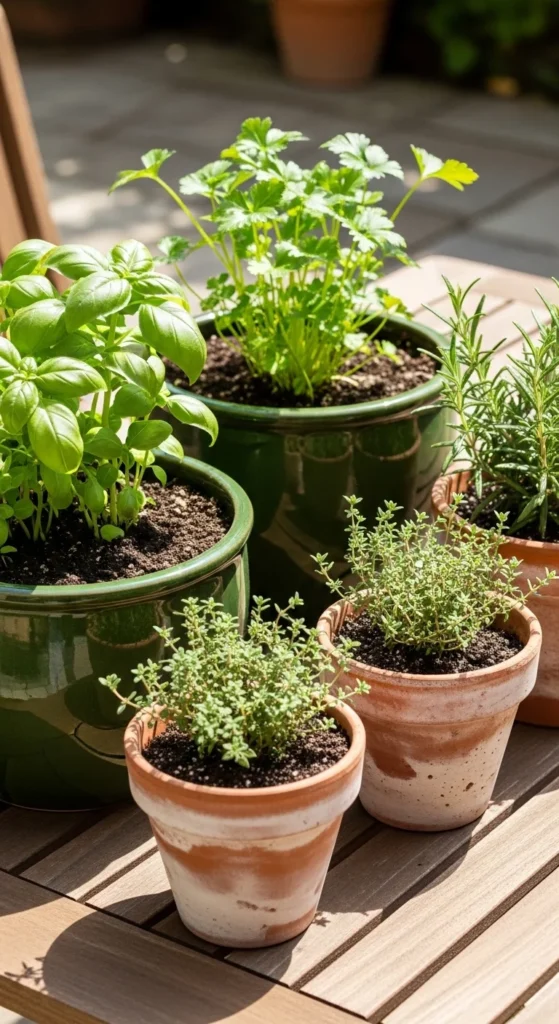
One of the best container herb gardening habits is grouping herbs by how much water they like. Basil and parsley usually prefer more even moisture. Rosemary and thyme prefer drier soil. When these herbs are shoved into one big pot together, one side often suffers. Matching similar herbs makes care much easier.
Create one group for wetter herbs and another for dry-loving ones. Use plastic or self-watering containers for basil, parsley, and cilantro if the weather is hot or if watering gets forgotten. Use terracotta for rosemary, thyme, oregano, and sage if the area gets good sun and airflow. This simple split can prevent many beginner mistakes.
A low-cost way to organize this is using two trays or two zones on the balcony. One tray holds thirsty herbs. The other holds dry herbs. Labeling the pots can help if several types are growing together. Even a piece of masking tape under the pot works.
This method saves time because you are not guessing every time you water. Each group follows a more similar routine. For anyone growing several herbs at once, moisture matching is one of the easiest ways to make container gardening less frustrating and more reliable.
13. Tiered Shelves for a Mini Herb Wall
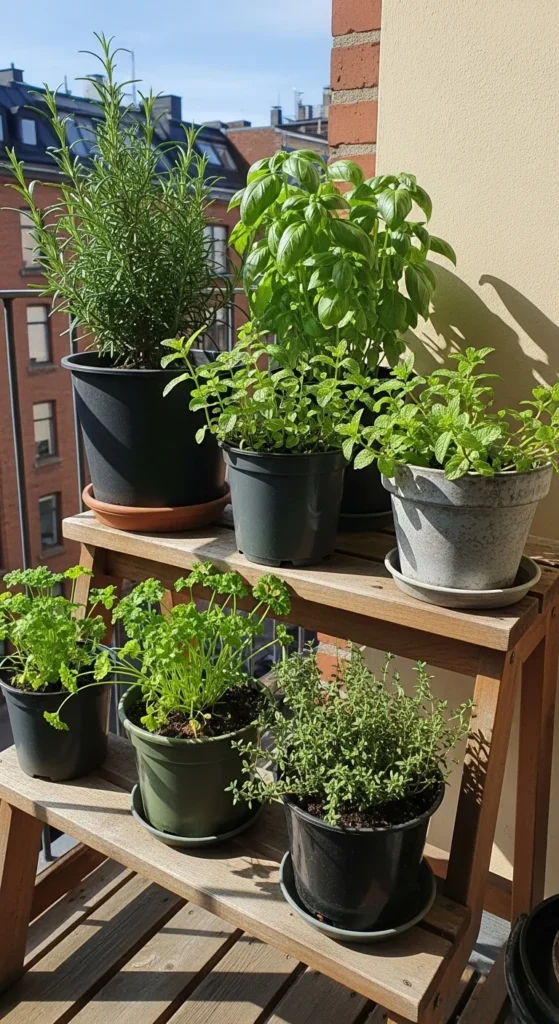
A tiered shelf turns one sunny wall or corner into a compact herb garden with several levels. This works very well on balconies and patios because the setup goes upward instead of spreading out. It also helps shorter herbs stay visible rather than getting hidden behind larger pots.
Put taller herbs on the back or top shelf and smaller herbs lower down. Basil, parsley, and chives often do well where the light is strong but not too scorching. Rosemary and thyme can handle the sunnier upper positions if the shelf placement gets full light. Mint may prefer a lower level if the top dries too fast.
A budget-friendly shelf can come from a simple step ladder, a reused plant stand, or plain wooden boards fixed into a basic frame. There is no need for a custom-built piece unless you want one. The main goal is safe support and enough room for drainage trays.
Tiered shelves also make the herb garden feel more intentional and tidy. They are especially useful near outdoor seating because they look organized while keeping herbs close at hand. For renters and apartment gardeners, a shelf-based setup is one of the easiest ways to grow many herbs in a very small footprint.
14. Large Basil Pots for Bigger, Bushier Harvests
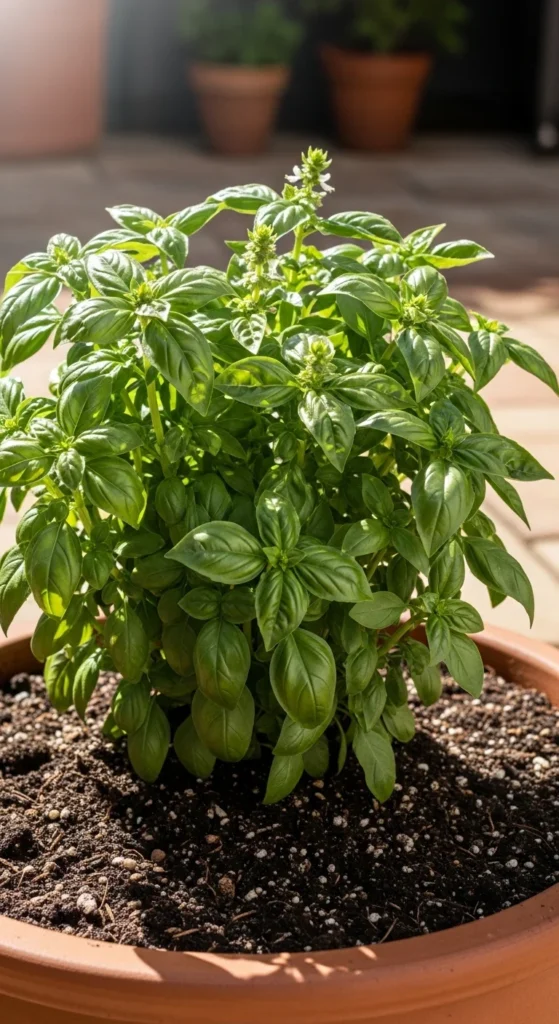
Basil grows far better in a roomy container than in a cramped little pot. A larger pot holds more soil, stays moist longer, and gives the roots space to spread. That often leads to stronger growth and a longer harvest season, especially in warm weather.
Use a pot with drainage holes and enough room for one strong plant or a small group spaced well apart. Basil usually likes sun and regular moisture, so plastic or glazed containers can be useful if your climate is hot and dry. If the plant gets enough light, pinch the top often. This helps it branch out instead of stretching upward with one thin stem.
A lower-cost approach is buying one healthy basil starter and giving it a good-sized pot from the start. That often works better than buying many tiny basil plants and keeping them crowded. Use a saucer to catch extra water, but do not let the pot sit in it for too long. Feed lightly now and then if the plant is producing for months.
For cooks, one full basil pot near the kitchen or patio table can be more useful than several scattered weak plants. It is simple, productive, and easy to maintain with regular snipping.
15. Separate Mint Pots to Stop Takeover
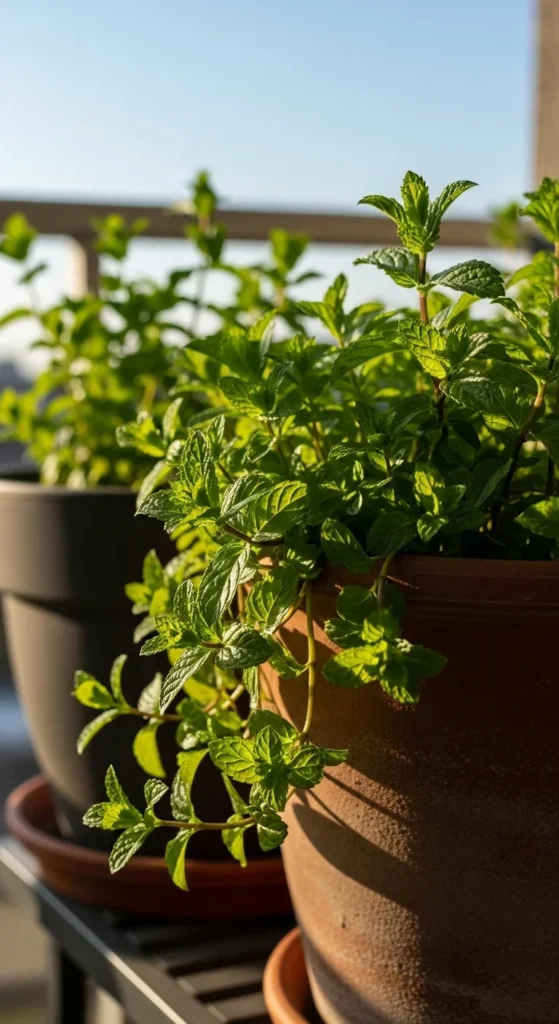
Mint is one of the easiest herbs to grow in containers, but it spreads fast and can crowd everything around it if planted with other herbs. That is why mint almost always does better in its own pot. A separate container keeps it easier to manage and easier to harvest too.
Use a medium pot with drainage holes and decent soil depth. Mint likes more moisture than rosemary or thyme, so plastic, glazed, or self-watering containers often work well. Place the pot where it gets good light, though mint can handle a little less direct sun than many Mediterranean herbs. Regular trimming helps it stay fuller and less wild-looking.
A cheap setup can use one simple plastic nursery pot slipped into a decorative outer pot if appearance matters. This keeps the root zone contained while still looking neat on a balcony or patio. If the mint becomes crowded, divide it and start a second pot rather than letting one planter become a tangled mass.
Keeping mint separate is one of the easiest ways to avoid container herb problems later. It stays manageable, the other herbs stay safer, and the mint still grows with plenty of energy for tea, sauces, and everyday cooking.
16. Kitchen-Door Trays for Fast Daily Snipping
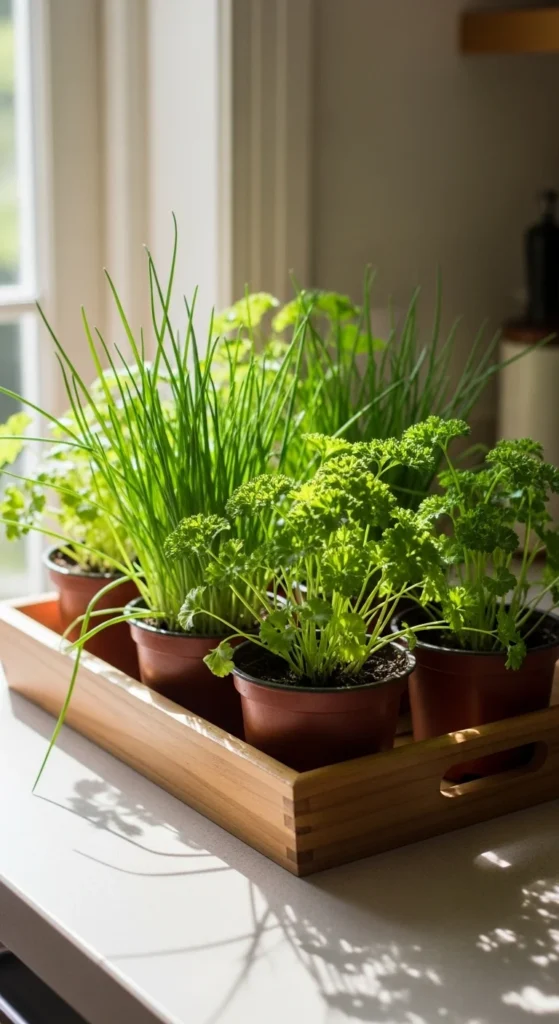
A herb tray near the kitchen door is one of the most useful container setups because it cuts down the distance between cooking and harvesting. If the herbs are easy to reach, they get used more. A simple tray of parsley, chives, basil, and cilantro can make a big difference in daily meals without needing a large garden at all.
Use individual small pots set inside one tray rather than one giant shared container. This keeps drainage under control and makes it easier to swap plants in or out as the season changes. A tray also protects the surface below and keeps the setup looking tidy. Plastic pots are practical here because they are light and easy to move.
To save money, use standard nursery pots and place them in a single secondhand tray or shallow crate. Choose the herbs you use most often instead of planting every herb at once. That keeps the setup simpler and more useful. Rotate the tray every few days if one side gets more sun than the other.
This type of arrangement suits patios, porches, and bright doorstep areas. It feels easy, practical, and tied closely to real kitchen use, which is exactly why so many people stick with it.
17. Wooden Crate Herb Boxes with Rustic Charm
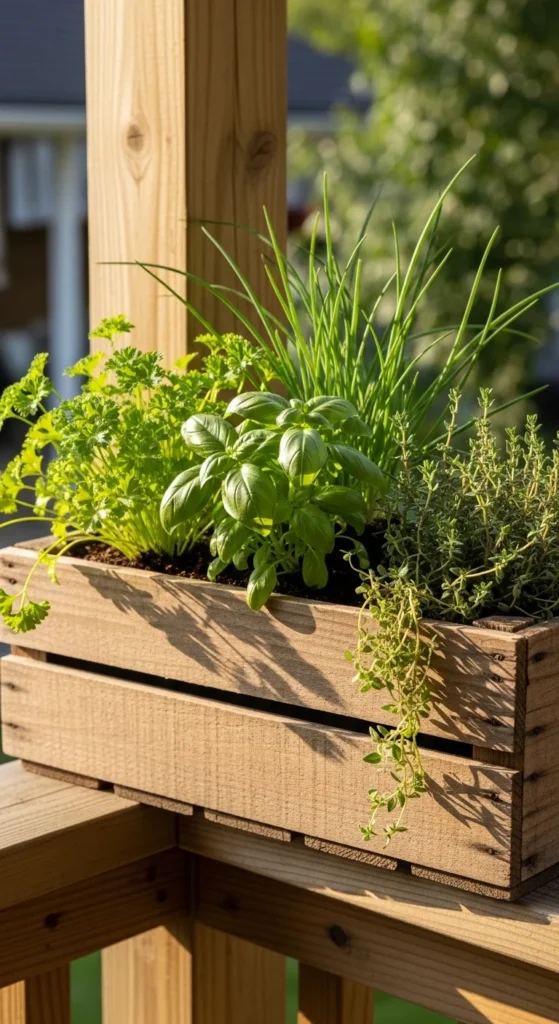
A wooden crate can become a very useful herb box with just a little prep. This idea works well for porches, patios, and balcony corners where a rustic look suits the space. It also gives more planting room than a handful of tiny pots while still feeling manageable for a beginner.
Line the crate with plastic or landscape fabric and add several drainage holes so water can move out. Then fill it with loose potting mix. A crate works best with herbs that like similar moisture, such as basil and parsley together or thyme and oregano together. Avoid mixing all herb types in one box unless their water habits match well.
A repurposed crate is often cheaper than buying a decorative planter. Even an old produce box can work if it is still sturdy. Raise the crate slightly on small feet, bricks, or scrap wood so the base is not sitting in trapped water. That helps the wood last longer and lets the drainage holes do their job.
For people who want a more grounded, farmhouse-style herb container garden, this setup feels warm and useful. It is simple to build, easy to place, and roomy enough for regular harvesting through the season.
18. Biodegradable Starter Pots for Seed Beginnings
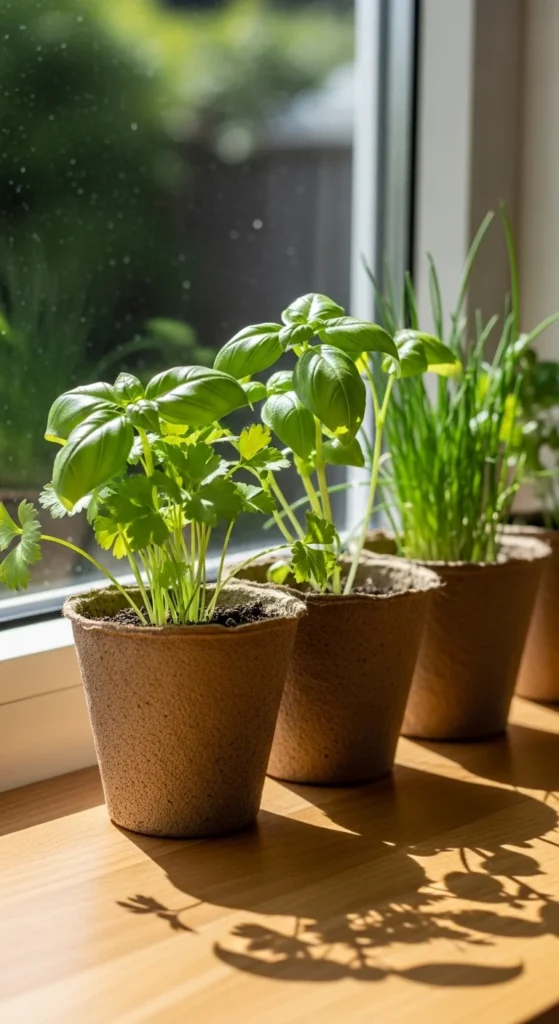
Biodegradable starter pots are helpful when growing herbs from seed because they make transplanting easier later. Instead of disturbing the roots too much, the whole starter pot can go into a bigger container once the seedling is ready. This is useful for basil, parsley, cilantro, and chives, especially when starting on a windowsill.
Keep the starter pots in a tray so watering stays tidy. Use a light seed-starting mix and keep the surface just moist, not soaked. Place the tray in bright light. If the window is weak, a small grow light can help seedlings stay shorter and sturdier. Once roots fill the starter pots, move them into their final herb containers.
A low-cost approach is buying a small pack of biodegradable pots rather than a large seed-starting kit. Start with only the herbs you truly plan to use. That keeps the process simple and avoids a windowsill full of seedlings that later have nowhere to go. Labeling also helps, especially when basil and parsley look similar early on.
For gardeners who like starting from seed but want fewer transplant problems, this method is easy to understand and easy to scale. It works well for indoor beginnings before the herbs move outdoors.
19. Herb and Flower Pairings for Pots with Purpose
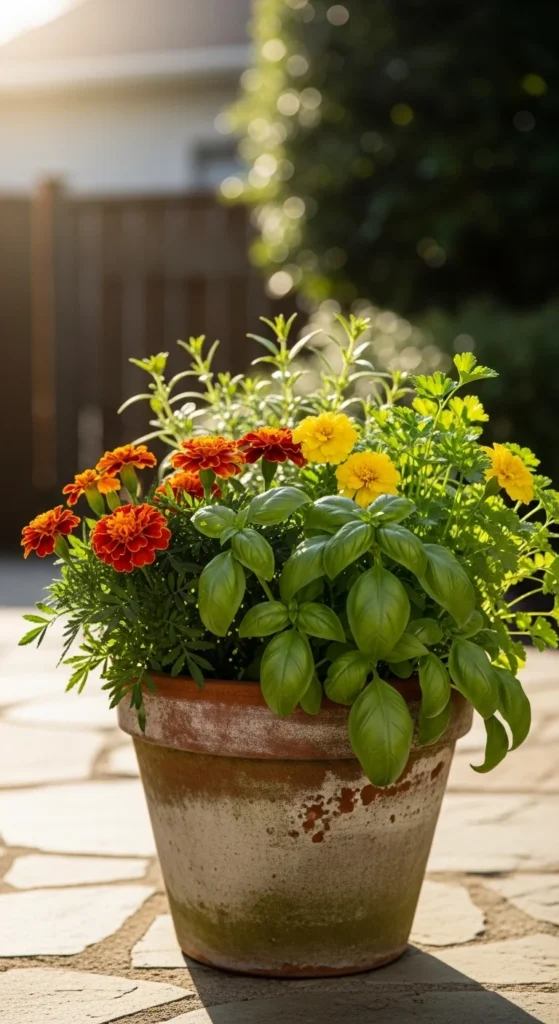
Adding flowers to herb containers can make the setup look brighter and sometimes help bring pollinators closer to the area. Marigolds are a common choice because they stay cheerful and compact in pots. This kind of pairing works well on patios and balconies where a container garden has to be both useful and attractive.
A basil and marigold combo can look great in one broad pot if the plants have enough room. Parsley can also pair nicely with smaller flowers that do not crowd it too much. Keep the root space in mind. If the container is too tight, both plants may struggle. One larger shared pot is better than squeezing two plants into a tiny one.
A cheap version of this idea is using a basic herb pot and tucking in one flower transplant from a garden center multipack. That changes the look of the whole container without much added cost. Keep watering habits matched as much as possible. If one plant likes much drier soil than the other, it is better to separate them.
This setup is especially helpful near seating areas where the containers are part of the visual space. A flower-herb pairing can make a simple herb pot feel more complete and inviting.
20. Lightweight Plastic Pots for Easy Rearranging
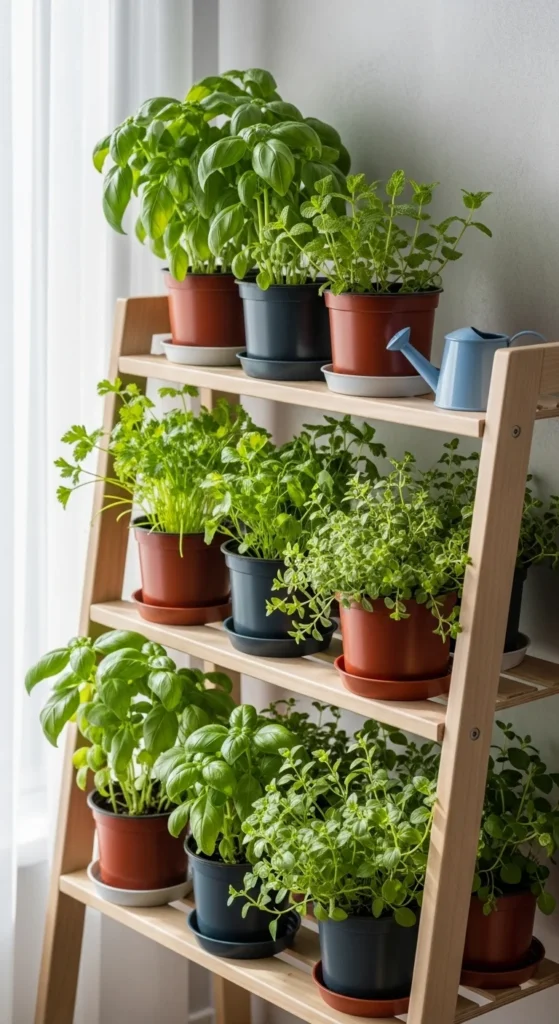
Plastic pots are often the most practical option for indoor herb gardening because they are light, cheap, and easy to move. That matters when pots need to be shifted toward the best light, turned for even growth, or taken to the sink for watering. They also hold moisture longer than terracotta, which can be useful indoors.
Basil, parsley, chives, cilantro, and mint often do well in plastic containers, especially in homes where air can be dry. Use pots with drainage holes and place them in trays or decorative outer covers if you want a cleaner look. White or pale plastic can stay cooler near sunny windows than very dark containers.
A budget-friendly indoor setup can come from plain nursery pots grouped on one tray. This usually works just as well as expensive designer pots. If appearance matters, slip the nursery pots into thrifted cachepots or baskets. That gives a more polished look without giving up the practicality of plastic.
For apartment growers, the biggest win is flexibility. Plastic pots can be moved around as seasons change, which helps you follow the light instead of being stuck in one weak spot. That simple advantage makes them a very useful choice for herb container gardening.
21. Matching Pots for Dry Herb Collections
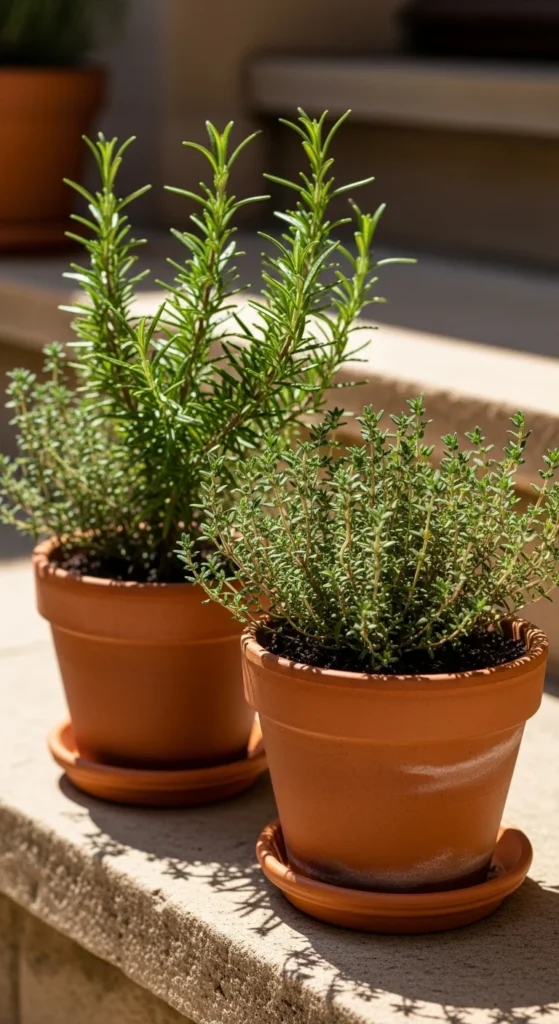
Using matching pots for dry-loving herbs creates a clean look and also makes care simpler. Rosemary, thyme, oregano, sage, and lavender often want similar treatment, so placing them in similar containers in the same sunny area helps the routine stay consistent. Matching terracotta pots are especially useful here because they suit the watering style these herbs prefer.
Arrange the pots in a row on steps, along a patio edge, or on a sunny shelf. Keep each herb in its own pot so roots have their own space and watering can be adjusted slightly if needed. Terracotta helps the soil dry down more between waterings, which many Mediterranean herbs appreciate.
A low-cost setup can come from a multipack of plain clay pots rather than several unrelated decorative ones. The uniform look makes even a simple herb garden feel planned. Add saucers only where they are truly needed, especially if the pots sit in a place where water runoff is not a problem. Too much trapped water can work against the point of clay pots.
This style is easy on the eyes and easy to manage. For gardeners who like order and want a tidy herb zone in strong sun, a matching dry-herb set is a very practical choice.
22. Water-Rooted Herb Cuttings for Free New Plants
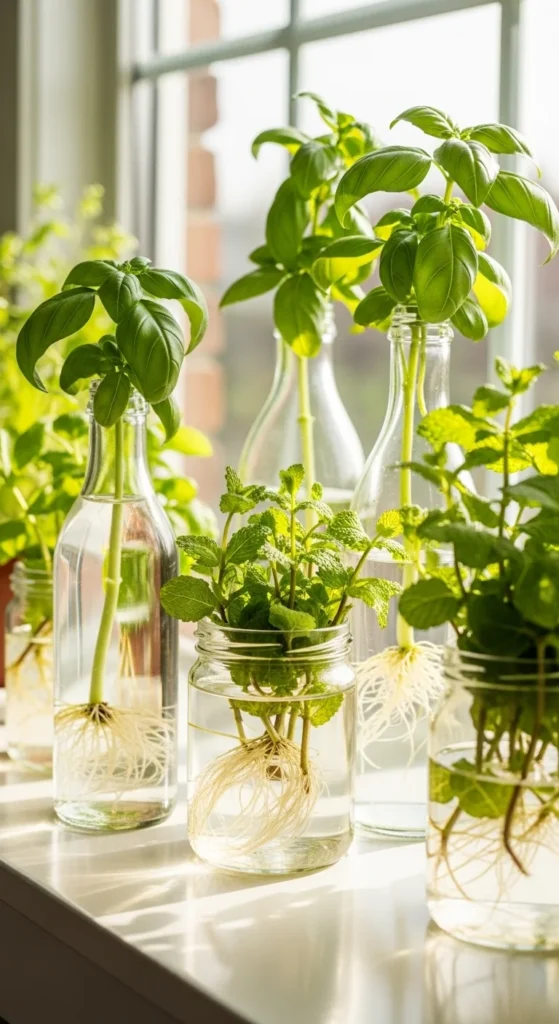
Many herbs can be multiplied from cuttings, which makes this one of the cheapest herb gardening ideas on the list. Basil and mint are especially easy. Snip a healthy stem, remove lower leaves, and place it in water near a bright window. In time, roots begin to form, and you get a new plant for almost no cost.
This works well for indoor gardeners who already have one healthy herb plant and want more without buying more pots right away. Use clean jars, bottles, or cups and change the water often. Once the roots are long enough, the cutting can stay in water for a while or be transplanted into soil for fuller growth.
A practical trick is keeping a small row of cuttings going as backup plants. If one basil plant gets tired or leggy, a rooted cutting is ready to take its place. This is especially helpful for herbs that are used often in cooking.
The setup stays very simple and takes little space. It also makes a nice teaching project for kids or anyone curious about plant growth. For container herb gardeners, rooted cuttings can keep the collection going longer with far less spending.
23. Stair-Landing Herb Gardens in Overlooked Spots
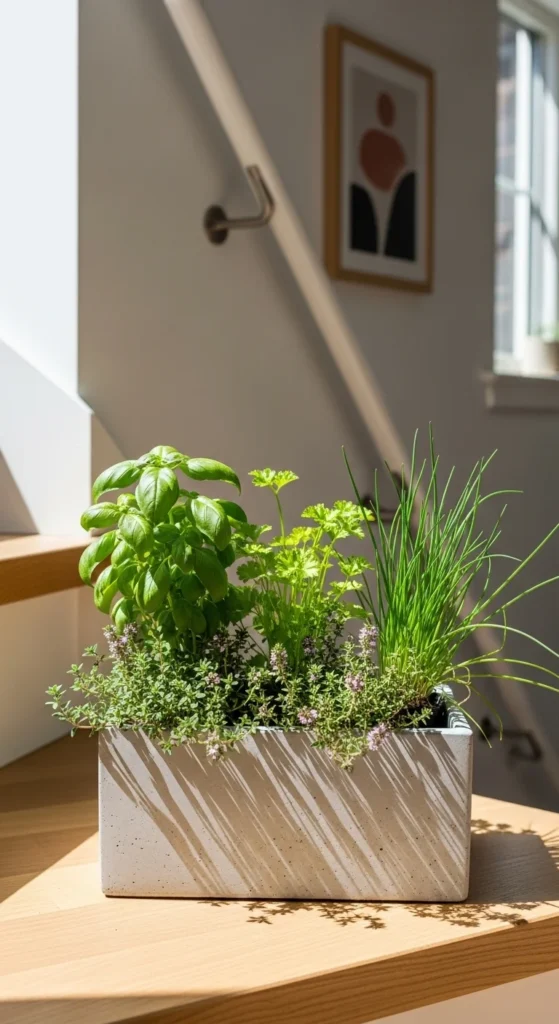
A stair landing often gets enough light for a few herb pots but is easy to ignore when planning a garden. This makes it a great place for a compact container setup. One or two well-chosen planters can turn a plain landing into a useful growing zone without blocking movement.
Keep the containers narrow or grouped tightly against one side. Basil, parsley, thyme, and chives are good choices if the landing gets several hours of sun. Always keep safety in mind. No pot should make the space hard to walk through. Use saucers or trays if water could drip onto steps and make them slippery.
A budget version can be as simple as two medium containers and a small shelf tucked against the wall. Since stair landings are often near the entrance, this also makes harvesting convenient. You pass the herbs anyway, so watering and snipping are easier to remember.
This idea is especially useful in townhouses, apartment blocks, and homes with very little ground space. Instead of leaving the landing bare, it becomes part of the herb-growing area. For small-space gardeners, that kind of overlooked spot can be surprisingly productive.
24. Moveable Herb Pots for Cooler Seasons
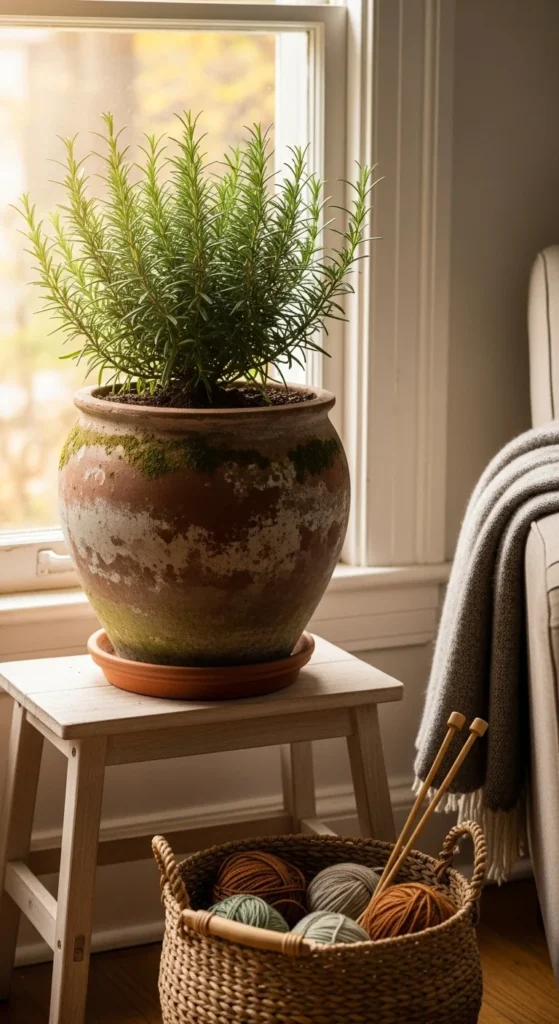
One of the best things about container gardening is mobility. Pots can be moved when weather changes, which helps herbs last longer through cooler months. Hardy herbs like chives, parsley, thyme, and rosemary may keep going when shifted to a better-protected place. Tender herbs like basil can be brought indoors before cold weather damages them.
Use containers that are sturdy but still manageable to lift. Plastic and resin are often easier to move than large ceramic pots. If a pot is too heavy once watered, place it on a rolling tray or plant caddy. That makes seasonal movement much easier.
A practical method is grouping the most movable pots together so they can be shifted as a set. Bring tender herbs closer to the house, under cover, or indoors near bright windows. Dry-loving herbs often need less winter watering than they did in summer, so adjust the routine instead of watering on autopilot.
This setup helps stretch the life of the herb garden and makes year-round growing more realistic. Even if the collection changes with the season, moveable pots give more control and make it easier to protect the herbs you want to keep going.
25. Matching Self-Watering Sets for Thirsty Herbs
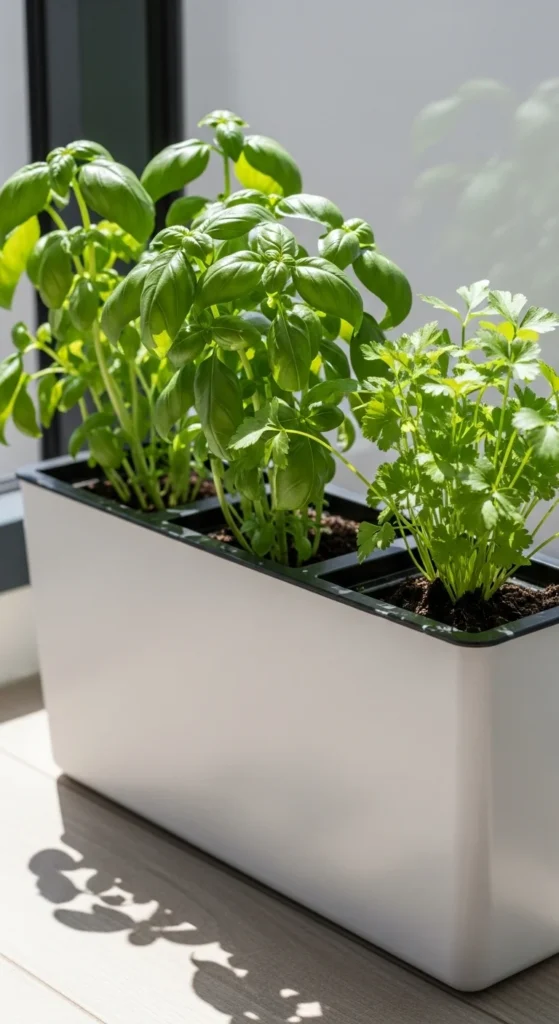
Using a matching set of self-watering pots can make a balcony or patio herb garden feel neat while also helping with moisture control. This works especially well for herbs like basil, parsley, and cilantro that prefer soil that does not swing too hard between soaking and drying.
A set of similar pots keeps the layout tidy and simplifies watering habits. You know which group holds more moisture and which herbs live there. This is especially useful for beginners who get overwhelmed by too many different container types. One system is easier to learn than five different ones.
To keep the price lower, start with two or three pots instead of a full collection. Place them in the sunniest area that still gives a little protection during the hottest part of the day. Check the reservoir but do not ignore the topsoil completely. Even self-watering setups still benefit from regular observation.
This idea works well for renters and apartment gardeners because the whole collection can be moved if needed. It also looks more put together than a random mix of containers. For people who want a cleaner herb garden with less watering stress, matching self-watering pots are a very practical solution.
26. Labeled Herb Pots for Easier Care
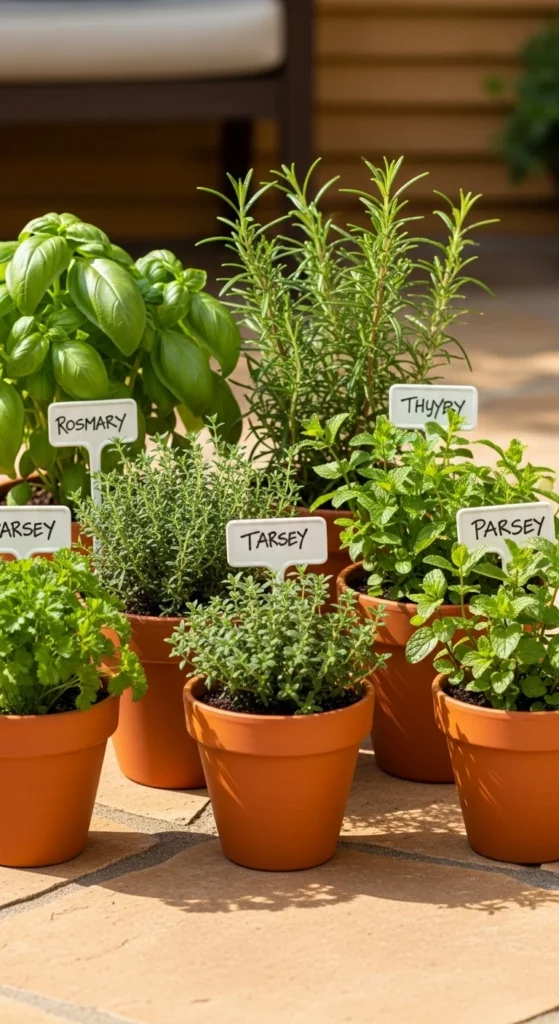
Labeling herb pots may sound simple, but it makes a big difference once several herbs are growing at once. It helps track watering habits, growth patterns, and which plants are doing well in each spot. This is especially useful when seedlings are young or when several herbs look alike at first glance.
A label can be as basic as a wooden stick, stone marker, or reused plastic tag. There is no need to buy a decorative set unless you want one. The main value is practical. A labeled pot reminds you that rosemary wants drier treatment while parsley may want more regular moisture. It also helps family members or housemates water the right way.
For a low-cost setup, make labels from popsicle sticks, scrap wood, or cut plastic strips. Write the herb name and maybe a quick note like “dry side” or “keep moist.” This tiny detail can prevent a lot of mix-ups. It also makes the whole herb collection feel more organized.
Labeled pots are particularly helpful in mixed patio displays and indoor windowsill rows. When the herb garden is easy to read, it becomes easier to care for. That leads to better habits and fewer avoidable mistakes.
27. Wide Bowl Planters for Low, Lush Herb Displays
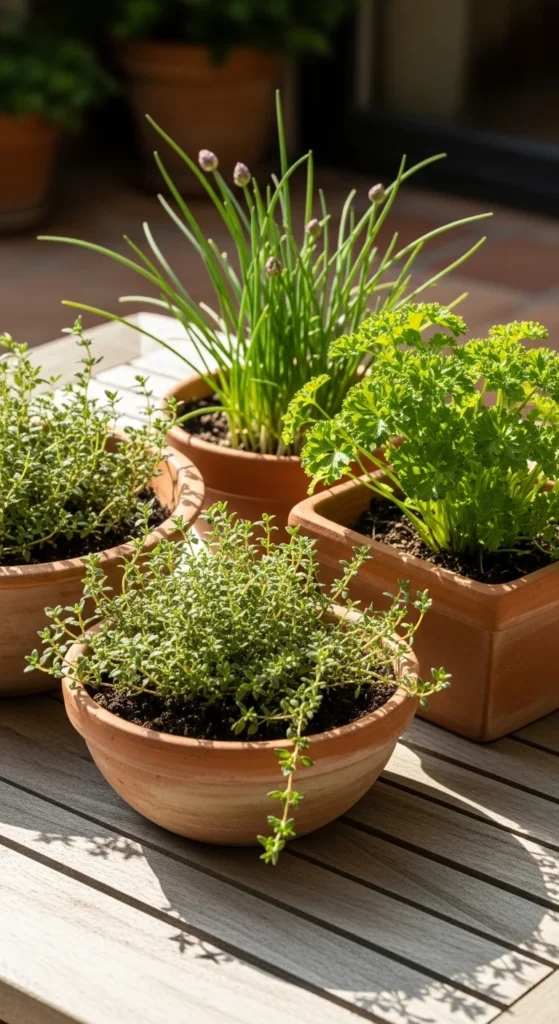
Wide shallow bowls can make an herb planting look full and soft, especially for herbs that do not need a very deep root zone. Chives, thyme, parsley, and low-growing oregano can work well in this shape if the bowl has proper drainage and enough room for each plant.
This kind of container is great for patio tables, porch ledges, and decorative corners. The lower shape feels more like a centerpiece than a standard pot, which makes it a nice choice where appearance matters. It also gives a broad planting surface, so the herbs look full faster than they might in a narrow pot.
A budget-friendly version can come from a plain bowl planter rather than a designer one. Even a basic wide container from a garden center can look excellent once the herbs fill in. Keep the bowl in a sunny place and do not let it stay soggy, because shallow containers can sometimes trap water if the drainage is poor.
This style is best for herbs that enjoy regular trimming. Frequent snipping helps keep the bowl dense and tidy. For gardeners who want a lush tabletop or patio display, a wide herb bowl is both useful and attractive.
28. Ladder Stands for a Compact Herb Corner
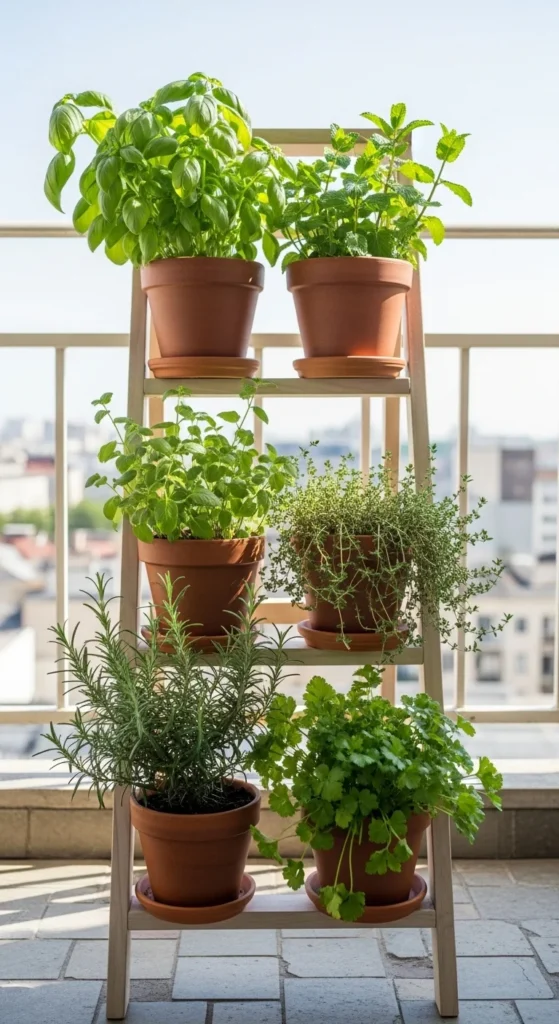
A narrow ladder stand is one of the easiest ways to turn a plain balcony corner into a multi-level herb garden. It takes up very little floor area and holds several pots in a way that feels organized instead of cluttered. For apartment gardeners, this is often a very workable compromise between a few pots and a full vertical tower.
Place sun-loving herbs on the top shelves if those levels get the best light. Keep heavier pots lower for safety and balance. Small pots of basil, thyme, parsley, mint, and chives can all fit depending on the stand size. Always check that water can drain without soaking the lower shelves too heavily.
A lower-cost version can come from a basic folding ladder shelf, a reused step stool, or a plain plant stand. Add trays under pots if the balcony floor or shelf surface needs protection. Because the stand is open, herbs are easy to inspect, trim, and rearrange as the season changes.
This kind of setup is especially good for people who like the look of a little herb display but do not want containers spread across every edge. One ladder stand can hold a surprising number of useful herbs in a very small footprint.
29. Mixed Indoor-Outdoor Herb Rotations for Year-Round Use
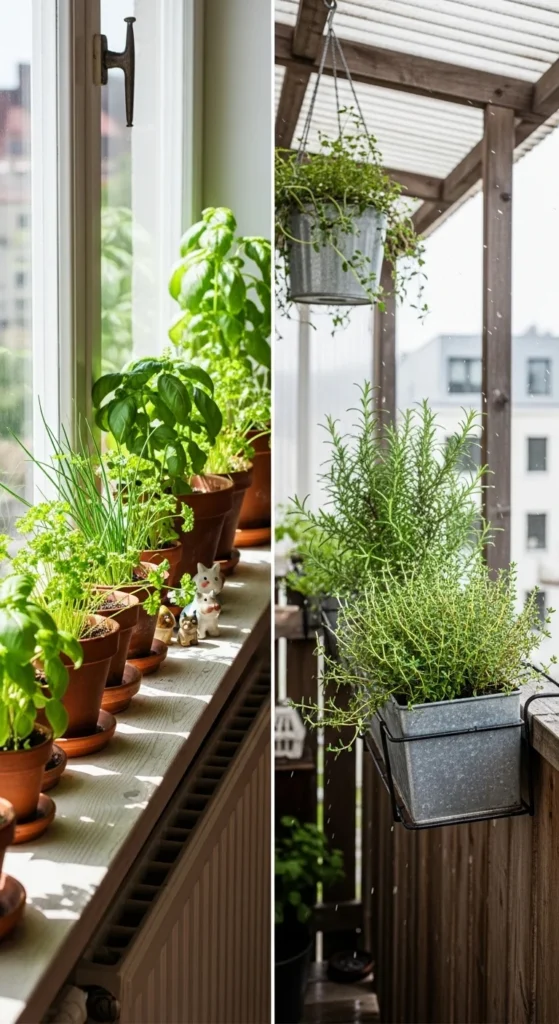
A mixed indoor-outdoor rotation is one of the best ways to keep herbs going through more of the year. Instead of treating the herb garden as one fixed setup, some pots stay outdoors in warm months and move inside or closer to shelter when conditions change. This gives more flexibility and keeps favorite herbs around longer.
Basil may spend warm months on the balcony and come indoors before cool weather arrives. Thyme, rosemary, and parsley may stay outside longer if the climate allows, then shift to protected spots when needed. Smaller pots are usually easier for this method because they are simpler to move and adjust.
A practical approach is keeping a few indoor-friendly herbs ready on a bright windowsill while the main collection enjoys the balcony or patio. Then, when weather changes, the strongest outdoor pots rotate inward and weaker indoor pots can be refreshed or replaced. This creates a steady flow instead of one big seasonal stop.
This setup works well for cooks who want a more reliable herb supply year-round without a greenhouse or large garden. It uses the best parts of both indoor and outdoor growing and keeps the herb collection flexible, useful, and easier to maintain over time.
Conclusion
Herb container gardening works so well because it fits real homes and real routines. A sunny balcony, kitchen window, porch step, patio table, or small shelf can all hold useful herbs when the containers match the space and the plants match the light and watering style. The biggest wins usually come from simple choices: good drainage, enough sun, the right pot size, and smart herb grouping. Start with a few herbs you actually use, keep mint in its own pot, trim often, and expand only when the first containers are working well. A small herb setup that gets daily attention will almost always do more than a large one that feels hard to manage.
Leave a Reply