

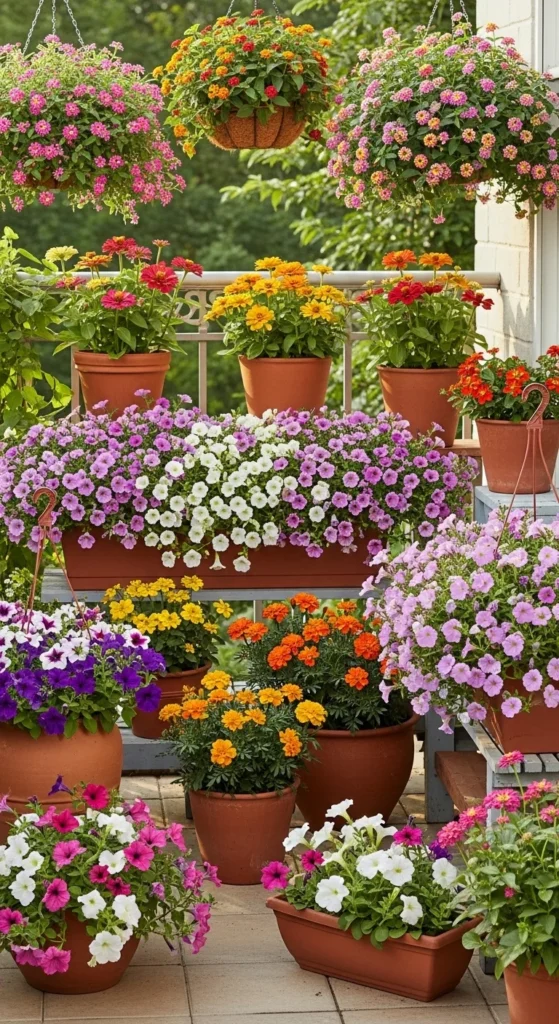
Flower container gardening is one of the easiest ways for beginners to add color to a patio, porch, balcony, front step, or sunny indoor spot. A good flower pot does not ask for a big yard or complicated tools. It just asks for a few smart basics: drainage holes, a pot that fits the plant, light that matches the flower, and a simple planting plan that looks full from day one. Many easy annuals bloom for months, handle heat well, and recover quickly when care is simple and steady. From bright marigolds and wave petunias to zinnias, calibrachoa, and peace lilies indoors, these flower container ideas are built for beginners who want attractive pots without a stressful learning curve.
1. Thriller, Filler, Spiller Pots That Always Look Put Together
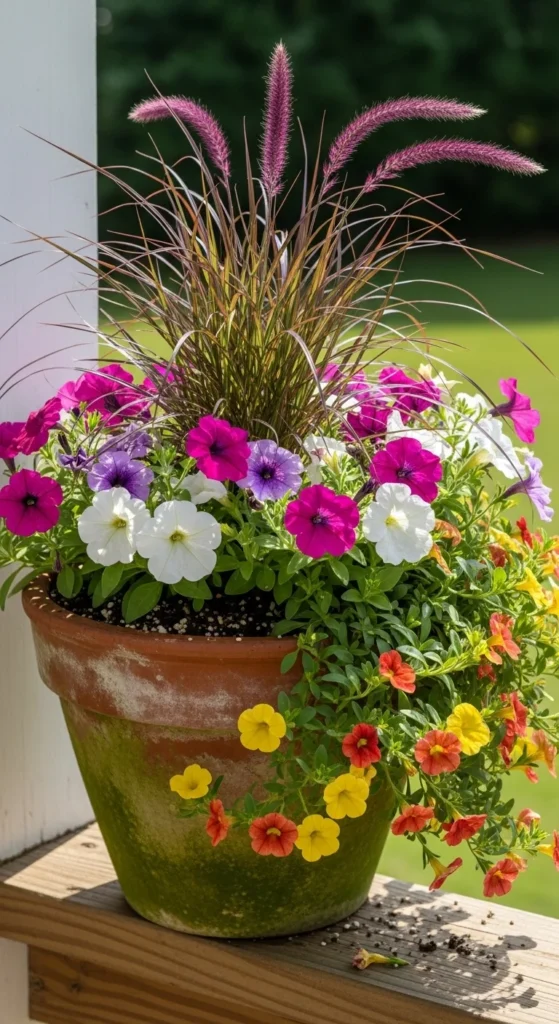
The thriller, filler, spiller method is one of the easiest ways to make a flower container look balanced. The thriller is the tall plant that gives height. The filler fills the middle with soft shape and color. The spiller trails over the edge and makes the pot look full. This simple formula helps beginners avoid flat, empty-looking containers.
A good starter mix is one upright plant in the center, two rounded bloomers around it, and one trailing flower at the edge. A small ornamental grass, marigold, and calibrachoa combo works well. So does salvia with petunias and ivy-like trailing flowers.
Use a pot large enough to hold all three roles without crowding roots too hard. If budget matters, buy one stronger center plant and use smaller nursery-pack fillers around it. That keeps the pot attractive without making it too expensive.
This layout works because it gives the eye something tall, something full, and something soft at the edge. For beginners, it is one of the safest ways to build a flower pot that looks finished right after planting.
2. Marigold Pots for Heat, Color, and Easy Success
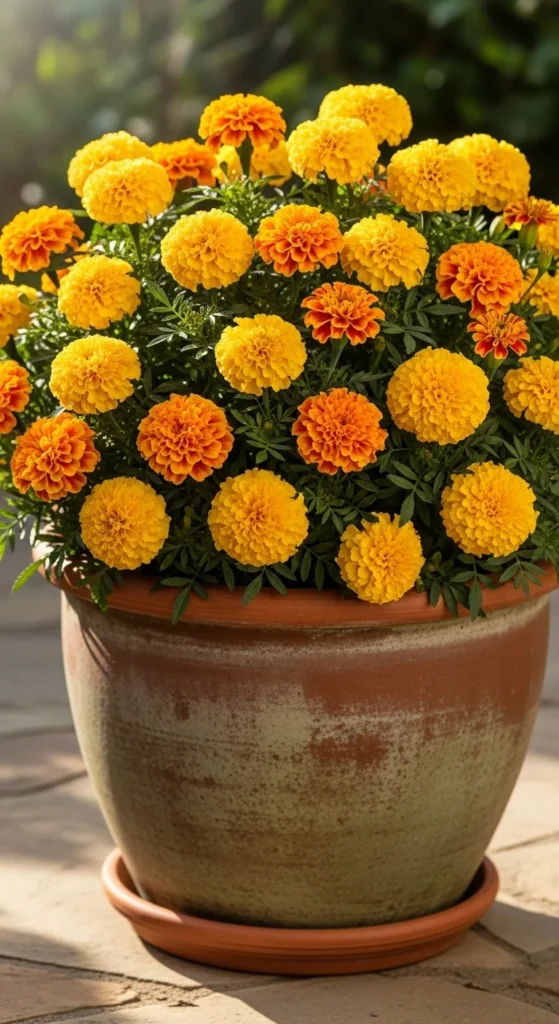
Marigolds are one of the best flower choices for beginners because they bloom fast, handle heat well, and do not ask for fancy care. They also work in many pot sizes, from a small porch container to a large mixed patio planter. Their gold, orange, and deep yellow tones bring strong color with very little fuss.
These flowers like sun and can handle hot conditions better than many softer annuals. That makes them a smart pick for front steps, balcony rails, and sunny patios. Use potting mix, not garden soil, and make sure the pot has drainage holes. A terracotta pot can work especially well if overwatering is a habit, since clay helps the soil dry more evenly.
A cheap setup can use a nursery six-pack of marigolds in one medium container. Plant them fairly close for a full look. Pinch or trim lightly if they stretch. Remove old blooms once a week to keep the show going longer.
For beginners who want bold color without constant worry, marigolds are hard to beat. They stay cheerful, easy to understand, and useful in both simple and mixed containers.
3. Wave Petunia Baskets That Spill with Color
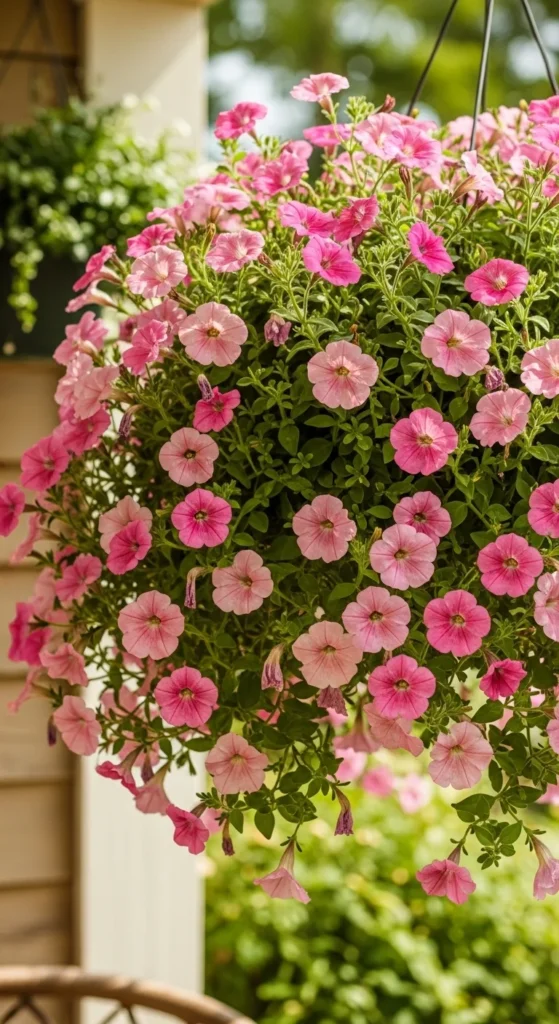
Wave petunias are loved by beginners because they spread fast, bloom heavily, and often clean themselves better than older petunia types. That means less time spent removing spent flowers. In hanging baskets and wide containers, they create a full cascade that looks much more advanced than the effort involved.
They do best in full sun and good drainage. A hanging basket, window box, or wide pot is a good match because it gives them room to spread. Pink, purple, white, and mixed-color forms all work well. One basket with several plants can quickly fill into a big cloud of color.
To save money, buy small starter plants instead of large blooming pots. Give them a little time and they usually catch up well. Use a light potting mix and water when the top layer dries. A bit of regular feeding during the blooming season can help keep them active.
If one section gets thin, trim the long stems back lightly. That often helps the plant fill again. For renters and porch gardeners, wave petunias offer a lot of reward from one simple basket.
[Image Prompt: A colorful zinnia container garden in a sunny backyard, bright pink, orange, and yellow blooms in a simple planter, butterflies nearby, realistic petals and green foliage, photographed with a high-end camera, no text or words.]
4. Zinnia Containers Grown from Seed for Cheap Color
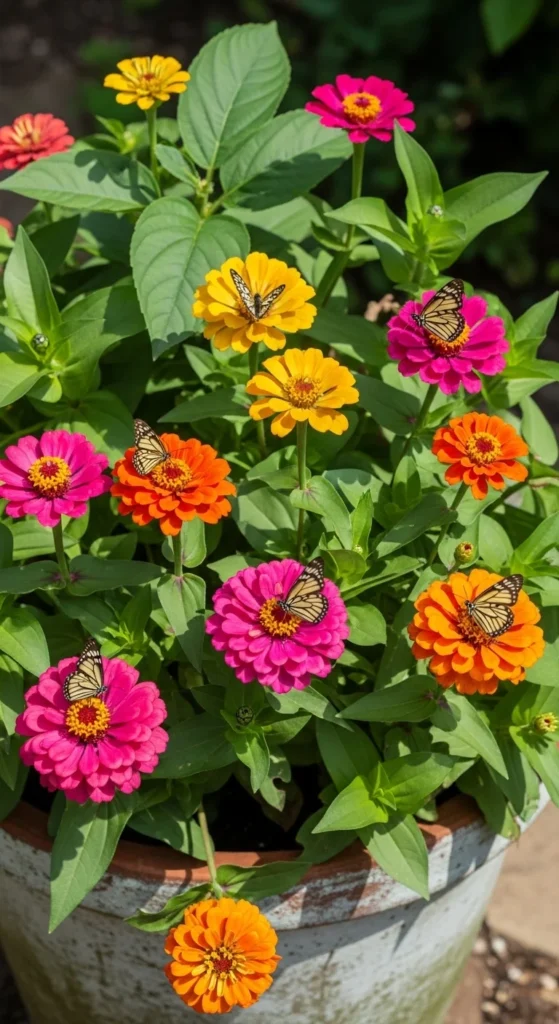
Zinnias are a great flower for beginners who want lots of color without spending much. They sprout quickly, grow fast in warm weather, and bring bright shades that stand out from across a patio or yard. They also attract butterflies, which makes the container feel more alive.
A wide pot or window box can hold several zinnias if the soil drains well and the plants get enough sun. They usually do best in strong light and warm conditions. Since they can be started from seed, they are one of the cheapest ways to fill containers with flowers. A single seed packet can plant many pots.
For a fuller result, pinch the young plants once they have grown a little. That helps them branch out and carry more blooms later. Water when the top inch feels dry and remove faded flowers often. That keeps the blooming period going longer.
Zinnias are also fun for people who like saving seeds. Once the flowers dry, the seeds can be collected for another season. For beginners who want bright, cheerful flowers at a low cost, zinnias are one of the smartest container choices around.
5. Calibrachoa Pots for Soft Cascading Edges
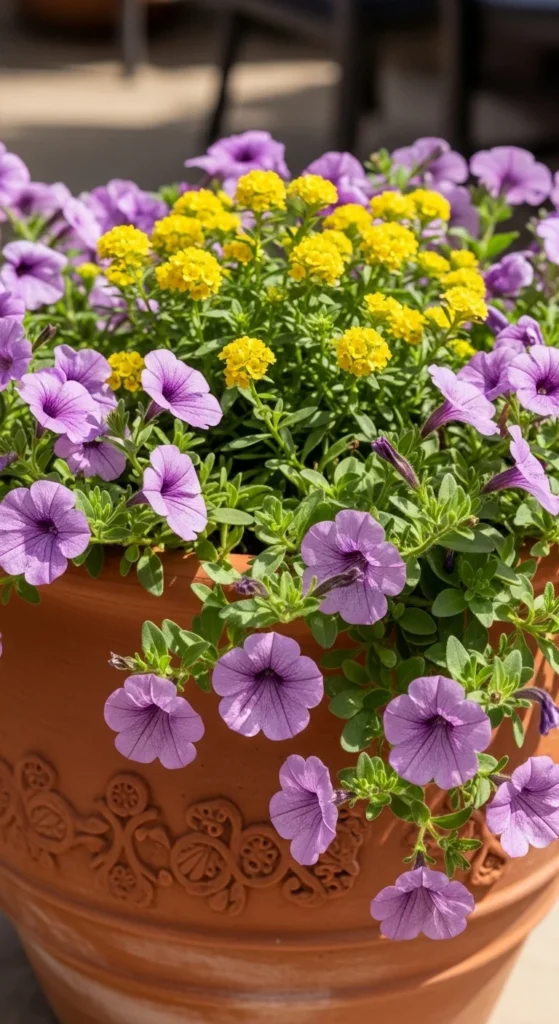
Calibrachoa, often called million bells, is perfect for spilling over the edge of a pot. The small petunia-like blooms come in many colors and create a soft waterfall effect that makes containers feel fuller and more relaxed. For beginners, this plant is a great way to get that “overflowing pot” look.
It works best in hanging baskets, window boxes, and mixed containers where the stems can trail down. Pair it with an upright center plant and one rounded filler if you want a full design. In smaller pots, calibrachoa can also work alone and still look rich once it fills out.
A budget-friendly route is buying a small plant and giving it time to spread rather than paying for a fully finished basket. Put it in a sunny spot, use potting mix that drains well, and do not let the pot stay soggy. Light trimming helps if the stems get too long or thin.
For beginners who want a graceful edge around their flower containers, this plant gives a lot of beauty without much complexity. It softens the whole arrangement and pairs easily with many sun-loving flowers.
6. Lantana Pots for Hot, Sunny Patios
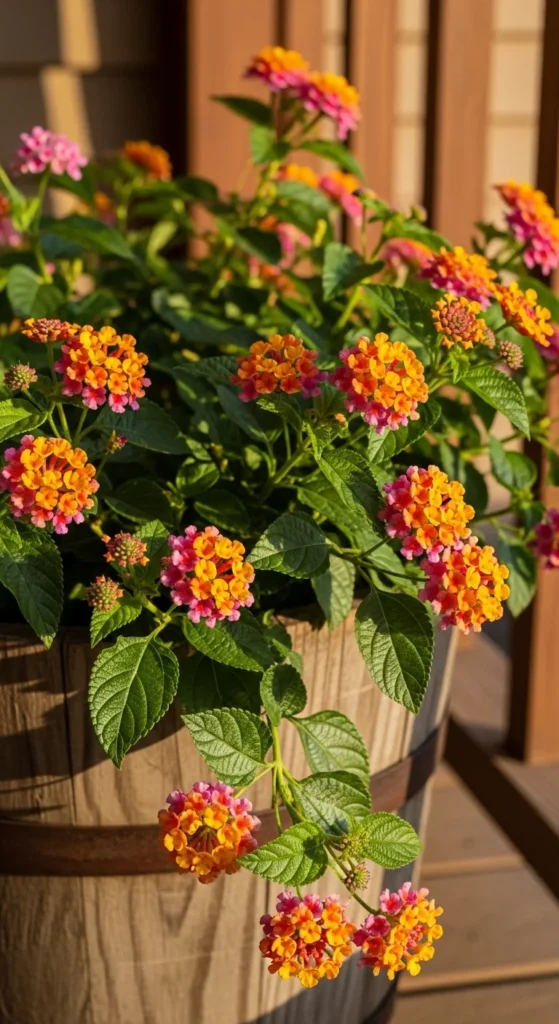
Lantana is a strong choice for beginners who garden in heat. It keeps blooming through warm weather, handles sun well, and brings clusters of small flowers in bright mixed colors. On a patio that gets blasted by afternoon light, lantana often keeps going when fussier flowers start to fade.
This plant suits medium and large pots, either on its own or as part of a sunny mixed arrangement. It pairs nicely with trailing flowers and silver-toned foliage. Use potting mix with good drainage and let the top layer dry a bit between watering. Lantana does not enjoy sitting in heavy wet soil.
A money-saving setup can use one lantana as the main plant in a simple pot. It grows enough to stand on its own without a complex mix. If you want more fullness, tuck in one trailing flower at the edge. That is enough to create a very attractive container without buying many plants.
For people who want bright color and a lower-maintenance routine in strong sun, lantana is a reliable container bloomer. It gives summer color without asking for constant rescue.
7. Cosmos Bowls for a Light, Airy Look
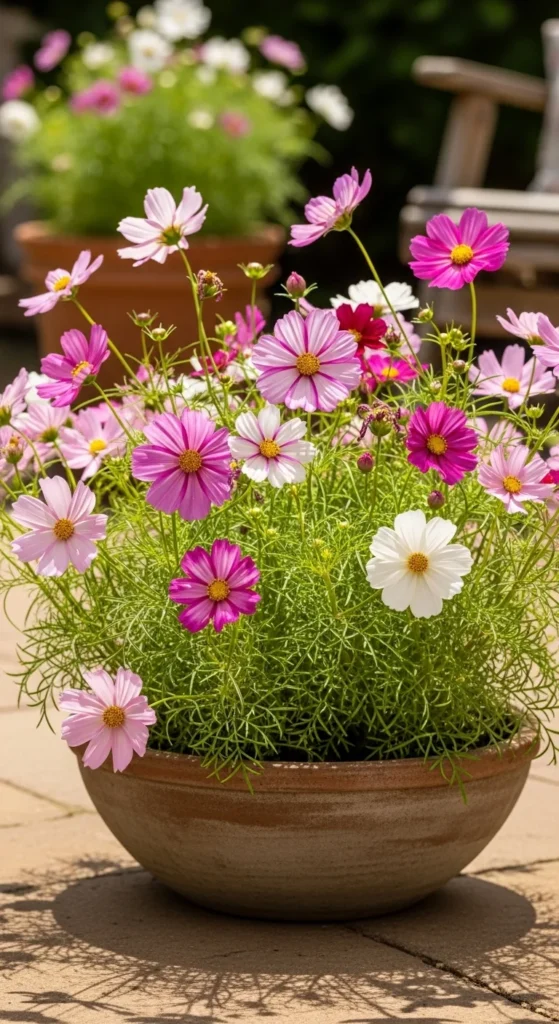
Cosmos bring a softer, lighter look than denser flowers like marigolds. Their stems rise above the pot with a looser, more natural shape, and the blooms seem to float in the air. For beginners, cosmos are helpful because they are forgiving, easy from seed, and attractive in simple containers.
A wider pot or bowl works better than a tiny tight planter. The stems need room and good light. Place the container where it gets strong sun and do not crowd the roots too much. Pink, white, and mixed shades all look good in casual porch and patio spaces.
A low-cost option is sowing cosmos directly into the final pot. Once the seedlings grow, thin them a little so they have space. Pinching the young stems can help the plants branch more. This creates a fuller pot with more flowers later. Because cosmos are airy, they combine well with one denser filler flower nearby.
For people who want a softer cottage-style feel in containers, cosmos are a beautiful answer. They do not look stiff or formal, and they bring a relaxed charm that is easy to enjoy.
8. Single-Color Geranium Pots for a Clean Classic Style
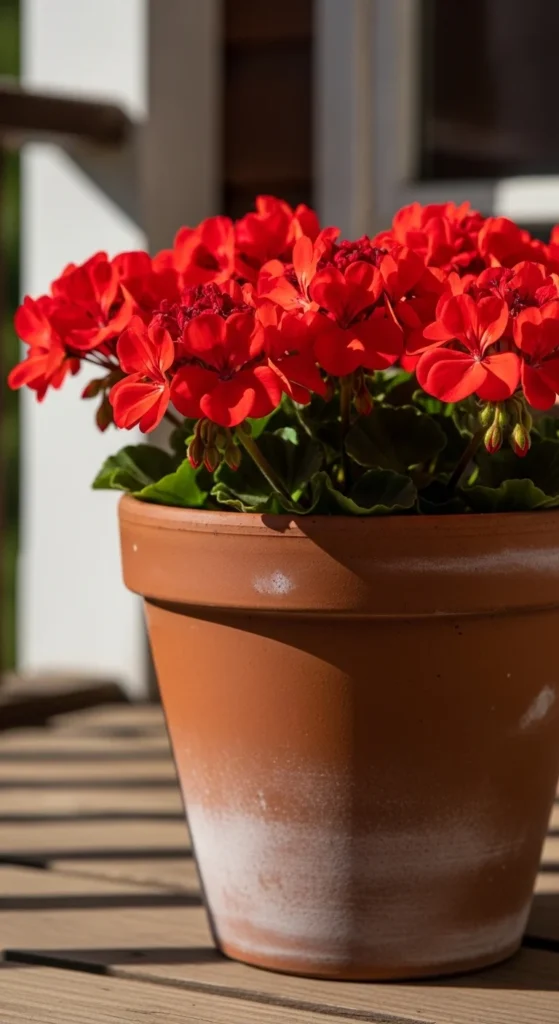
Sometimes one flower is enough. A pot filled only with geraniums can look strong, clean, and traditional without needing a mixed design. For beginners, this is useful because it removes the guesswork of matching several plant types together. One flower, one color, one clear look.
Geraniums work well in sunny spots and medium pots. Red is classic, but pink, salmon, and white all work beautifully too. Terracotta, black, or simple resin containers all suit them. A group of matching geranium pots on steps or along a porch edge can look more expensive than it really is.
A budget-friendly method is buying smaller geranium starts and planting three to five in one container depending on size. Give them good drainage and do not let the pot sit soaked for long stretches. Remove spent flower stalks when they fade and pinch weak stems if growth becomes uneven.
For beginners who want flower containers that look tidy and familiar, geraniums are a safe and attractive choice. A single-color pot keeps things simple and still delivers a lot of charm.
9. Nursery Pack Flower Pots for Instant Fullness
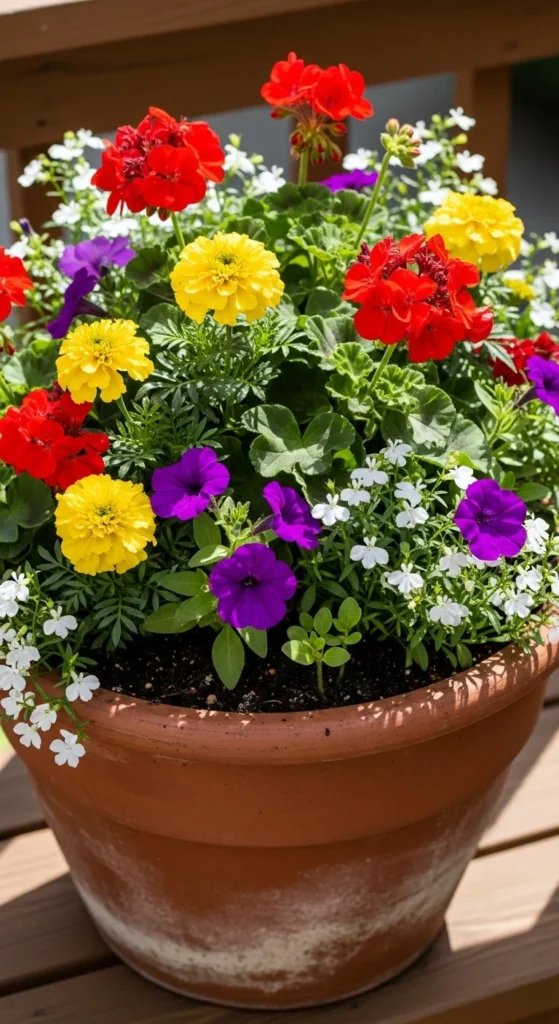
Small nursery-pack flowers are one of the easiest ways to fill a pot quickly without buying large expensive plants. These packs usually include several compact annuals that can be planted closely for that “finished” container look. This is ideal for beginners who want quick results.
Marigolds, alyssum, petunias, impatiens, and dusty miller are often sold in small packs that mix well in simple designs. Use one tall plant or just group several similar flowers together. For a bold easy pot, plant one whole color family together, such as all warm tones or all pinks and purples.
This method is budget-friendly because small pack plants cost less than premium ready-made pots. Once planted in a larger container with potting mix, they catch up quickly. Water well after planting and keep the pot where the flowers match the sun level they prefer. Trim or deadhead as needed once the blooms begin to fade.
For beginners, nursery packs take away some of the cost pressure. You can fill a pot generously, learn what grows well, and still stay within budget.
10. Repurposed Colander Flower Pots with Easy Drainage
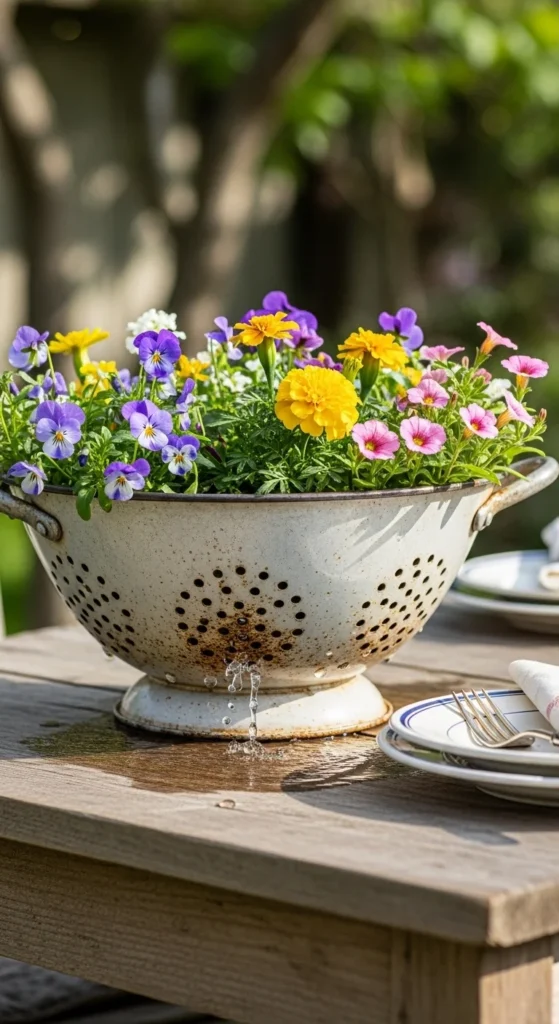
A metal colander makes a charming flower container because it already has holes for drainage. That means one of the most important beginner problems is partly solved from the start. It also gives the planter a fun vintage look that feels creative without requiring much DIY skill.
Small annuals are best here. Petunias, alyssum, mini marigolds, and calibrachoa all work well in a colander because the container is usually shallow. Line the inside with moss, coco material, or landscape fabric if the holes are very wide. Then fill it with good potting mix and plant it fairly full for a lush look.
A thrift store colander can turn into a very cheap custom planter. Place it on a small table, hang it if the handles allow, or set it on a porch step. Because metal can heat up fast in strong sun, watch the watering more closely during hot weeks.
For beginners who want a container that feels a little different from the standard pot, a repurposed colander is an easy project. It adds character, handles drainage well, and works especially nicely with smaller flowering annuals.
11. Peace Lily Pots for Easy Indoor Flowers
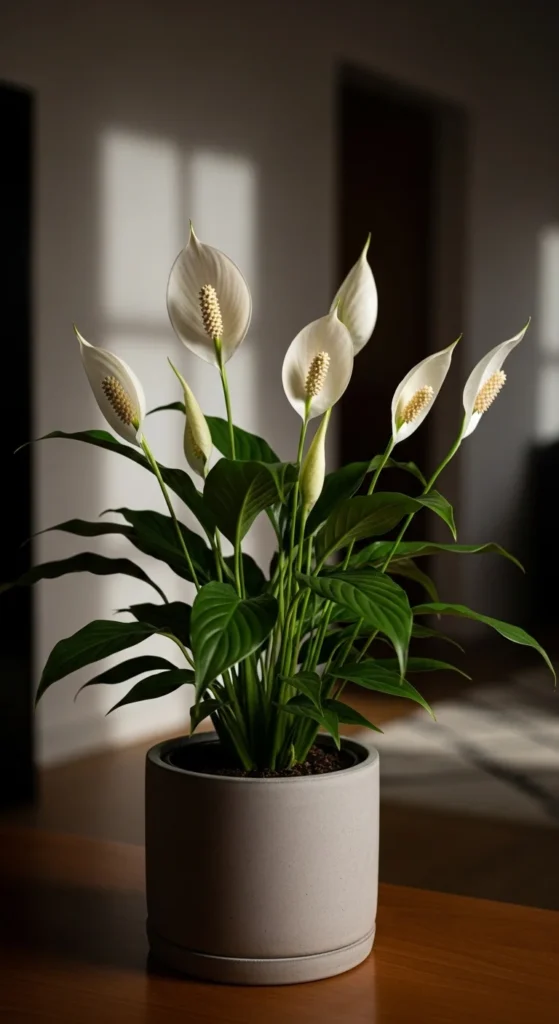
Peace lilies are one of the easiest indoor flowering plants for beginners. They bring dark green leaves and white blooms in low-light spaces where many other flowers struggle. That makes them useful for apartments, offices, and rooms that do not get strong direct sun.
Use a pot with drainage holes and a tray or outer cover to protect indoor surfaces. Peace lilies like indoor potting mix that stays lightly moist but not soggy. If the leaves droop, the plant often tells you it is thirsty. That built-in signal makes it easier for beginners to learn the rhythm.
A budget-friendly peace lily setup can start with one medium plant in a plain nursery pot slipped into a nicer outer container. This saves money while still looking attractive. Wipe the leaves now and then to keep them glossy and healthy-looking. If old blooms fade, cut them off near the base.
For beginners who want indoor flowers without dealing with harsh sun or constant trimming, peace lilies are a very good starting point. They look calm, clean, and easy to live with.
12. Balcony Window Boxes Packed Tight for Big Color
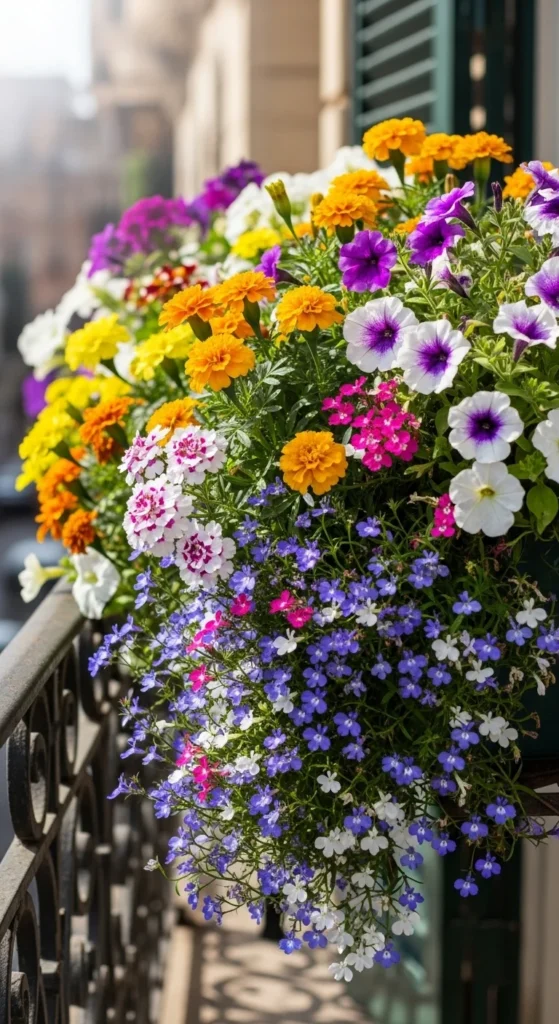
Window boxes are a favorite beginner container because they make a strong color impact in a narrow space. On a balcony or porch rail, they turn one plain edge into a ribbon of flowers. For a fuller look, annuals can be planted a bit closer than they might be in the ground.
Marigolds, petunias, calibrachoa, sweet alyssum, and compact foliage plants all work well here. Pick flowers with similar light preferences and watering habits. A full-sun rail box can hold a bright mix of heat-loving annuals, while a more sheltered box may suit softer bloomers.
A practical budget move is using one long planter instead of several separate small pots. That usually costs less overall and looks more unified. You can also use a simple repeated pattern rather than buying many different flowers. For example, marigold, petunia, marigold, petunia creates a strong look with fewer plant types.
For renters, window boxes are one of the easiest ways to create real flower impact in a small outdoor space. They are neat, simple, and highly visible.
13. Nasturtium Pots for Trailing Color and a Cottage Feel
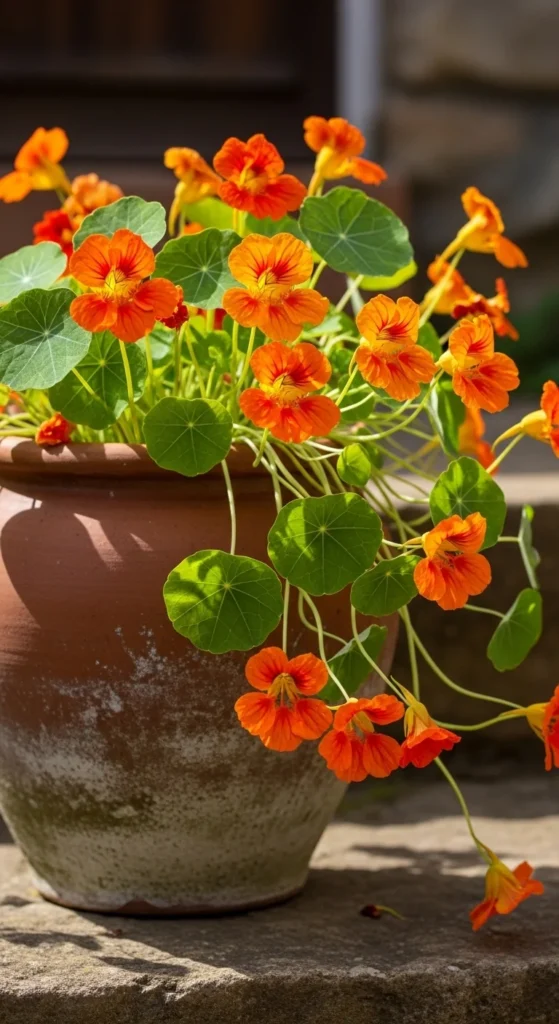
Nasturtiums bring round leaves and bright flowers that spill and wander in a relaxed way. For beginners, they are a fun option because they grow quickly and do not need a formal design. They make a pot feel cheerful and slightly wild in the best way.
These flowers work especially well in terracotta pots, window boxes, and hanging baskets. The stems trail nicely over the rim, so they can act as a spiller in mixed containers or stand alone in a smaller pot. They like good drainage and a sunny spot. Too rich a mix can sometimes give lots of leaves and fewer flowers, so a basic container mix usually works fine.
A low-cost setup is sowing nasturtium seeds directly into the pot. They germinate fast in warm conditions and can fill out surprisingly well. Keep watering steady at the start, then let the top layer dry a bit between waterings. Remove tired flowers if you want a cleaner look, though they often keep going without much fuss.
For beginners who want a charming, cottage-style flower pot without complicated care, nasturtiums are a great place to start.
14. Shade Porch Pots with White Impatiens
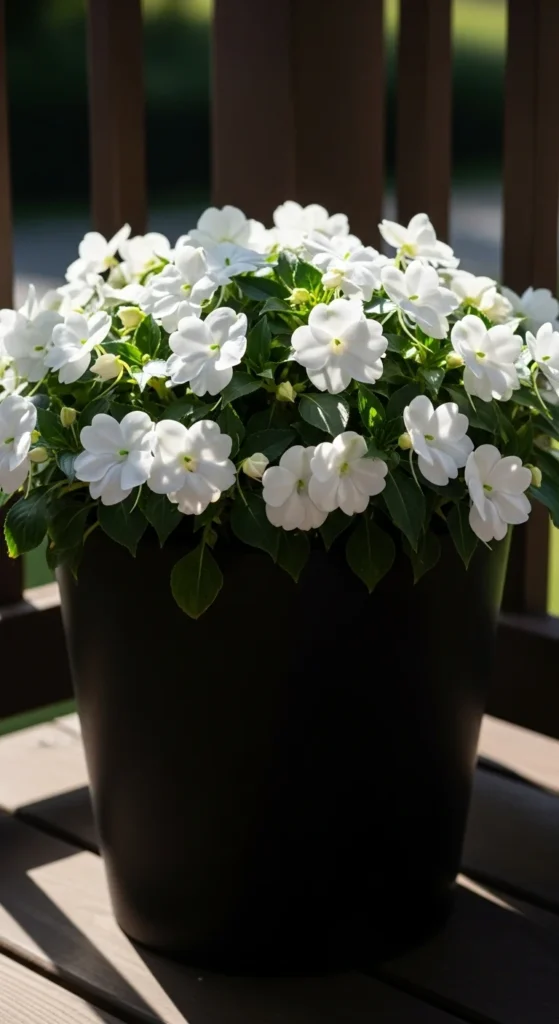
Not every beginner has a sunny patio. White impatiens are a helpful answer for shaded porches and softer light conditions where sun-loving annuals would struggle. Their rounded growth and clean flower color brighten dim corners without asking for a lot of design skill.
A medium pot with good drainage is enough for a very pretty container. White blooms stand out especially well in black, gray, terracotta, or wooden planters. Impatiens like regular moisture more than dry conditions, so do not let them sit bone dry for long. At the same time, soggy soil is not the goal either.
A budget-friendly porch pot can use several white impatiens planted fairly close together for instant fullness. Add a little trailing greenery only if you want extra softness at the edge. This is a good place to keep things simple instead of over-designing the container.
For beginners working with shade, white impatiens make flower gardening feel possible. They brighten the area, stay soft and full, and do not ask for the strong sun that many common annuals require.
15. Salvia Mixed Pots for Strong Vertical Color
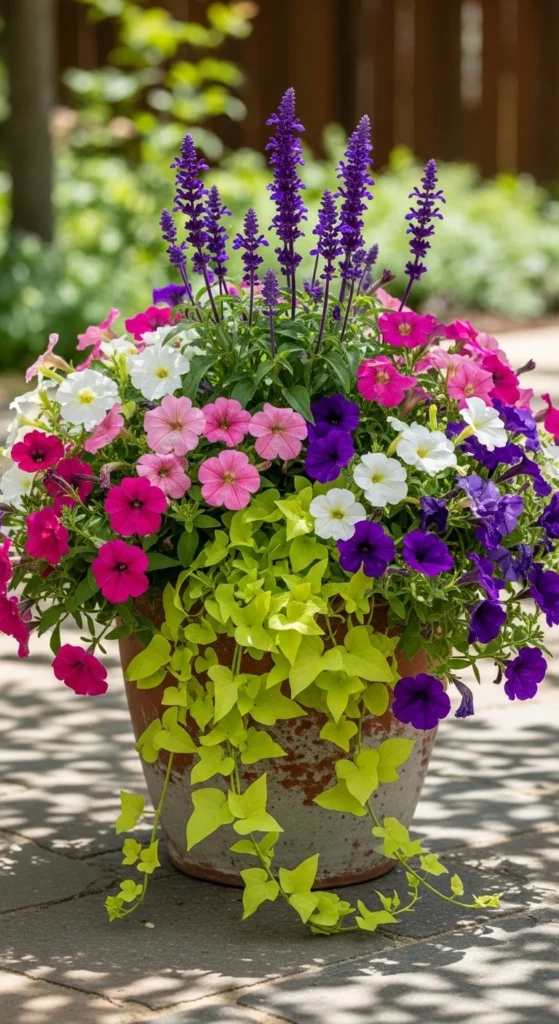
Salvia adds upright flower spikes that bring instant height to a container. That makes it a strong thriller plant in a mixed design. Blue, purple, red, and pink forms all work well, and the tall blooms help the pot stand out even when the rest of the flowers stay low and rounded.
Use salvia in a sunny container with one or two mounding flowers around it and a trailing edge plant if desired. Petunias, calibrachoa, and compact foliage plants work well nearby. This creates a classic tall-middle-soft-edge balance without making the design too hard for a beginner.
A budget-friendly salvia pot does not need many plants. One salvia, two medium fillers, and one spiller is often enough. Keep the pot watered when the top layer dries and remove spent spikes to help new ones appear. Because salvia tends to stay fairly upright, it also keeps the container from looking too messy.
For beginners who want a flower pot with a bit more height and structure, salvia is a practical and attractive option. It brings strong color and makes mixed containers look more complete.
16. Sweet Alyssum Bowls for Soft Edges and Fast Fill
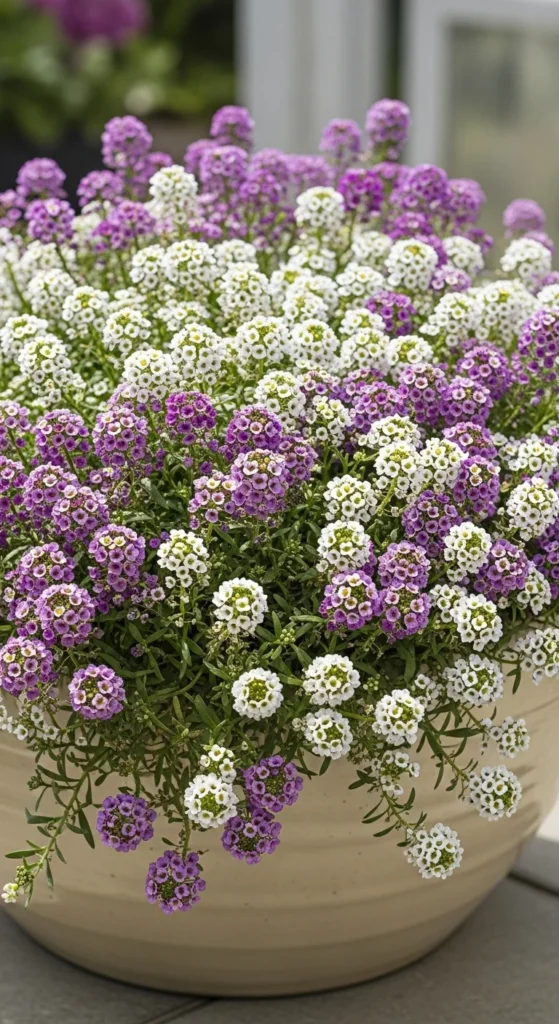
Sweet alyssum is useful for beginners because it fills in low spaces quickly and softens the edge of a pot without taking over too much room. The tiny flowers create a cloud-like effect that works beautifully in bowls, mixed containers, and window boxes.
White alyssum is the easiest classic choice, but purple and pink tones can also work nicely. The plant stays low, so it is better as a filler or edge plant than a main focus. Pair it with marigolds, petunias, or a single upright flower if you want more height in the same pot.
A cheap setup can use alyssum in a shallow bowl all by itself. Several small plants close together create a surprisingly full result. Since the flowers are fine-textured, the whole pot feels gentle and neat rather than loud. Use potting mix with good drainage and trim lightly if it gets tired in the heat.
For beginners who want a soft, pretty flower container that comes together fast, alyssum is an easy win. It helps other flowers look better too, which makes it very useful in mixed designs.
17. Boot Planters That Make Flower Gardening Feel Fun
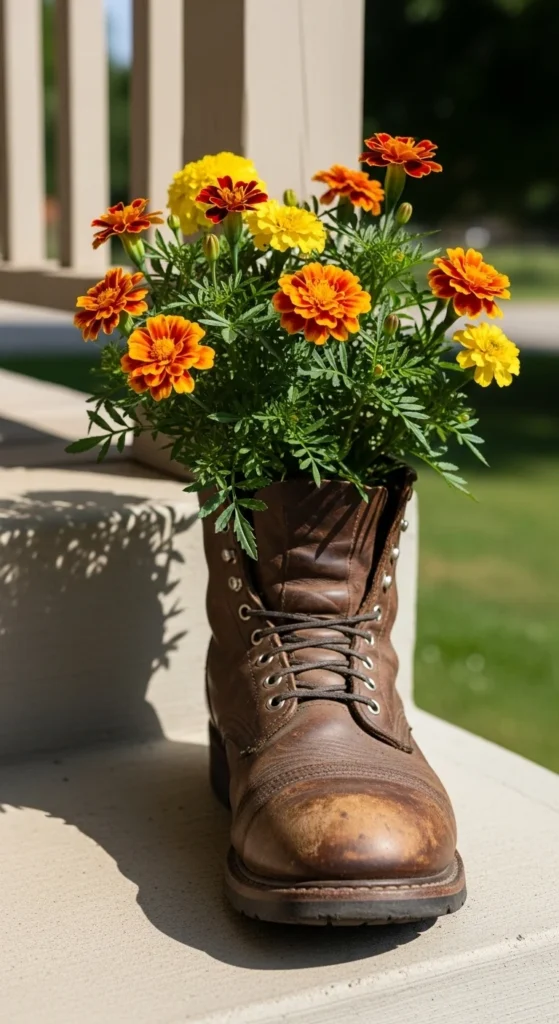
A boot planter is playful, inexpensive, and beginner-friendly. It turns an old rubber or leather boot into a conversation piece while still working as a real flower container. The only real task is making enough drainage holes so the roots do not sit in trapped water.
Small annuals like marigolds, pansies, alyssum, or calibrachoa work best because the planting space is narrow. One or two flowers are usually enough. Place the boot on a porch, step, or garden table where it can be seen easily. It does not have to replace your standard pots. It just adds a little personality to the collection.
This is a great budget idea because it uses something you may already have at home. Add a little potting mix and a few inexpensive starter flowers, and the project is done. Because the container is small, check moisture more often in hot weather.
For beginners, a boot planter keeps things light and enjoyable. It proves that flower container gardening does not have to be formal or expensive to look charming.
18. Hosta and Annual Mixes for Shade Height
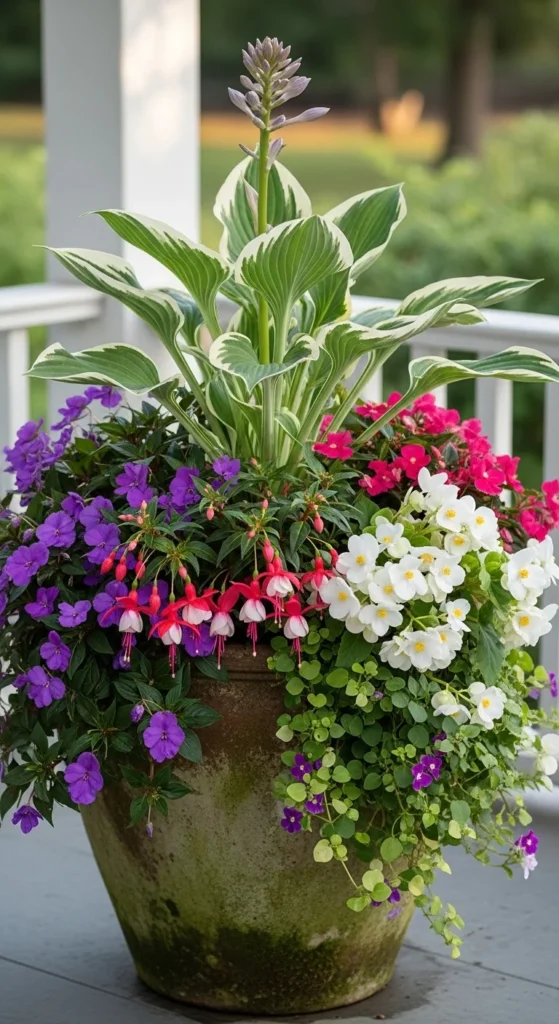
Hostas can add beautiful height and leaf texture to shaded containers. Their large leaves make a strong center or back plant, especially when paired with flowering annuals around the base. For beginners with shaded porches, this is a practical way to get both structure and color in one pot.
Use a larger container because hostas take up room. Around the hosta, plant shade-friendly annuals such as impatiens or trailing flowers that enjoy softer light. The leaves give the pot a steady backbone even when the flowers come and go. This helps the whole design stay attractive longer.
A budget-friendly option is dividing a hosta from the yard or buying one smaller plant and surrounding it with inexpensive pack flowers. That keeps the total cost reasonable while still giving the container a layered look. Water regularly, especially if the pot sits where rainfall does not reach it well.
For beginners who want a shaded flower pot that looks rich and full, a hosta-centered design is a smart and forgiving approach. The leaves carry much of the beauty, which takes pressure off the flowers.
19. Compact Sunflower Pots for a Cheerful Focal Point
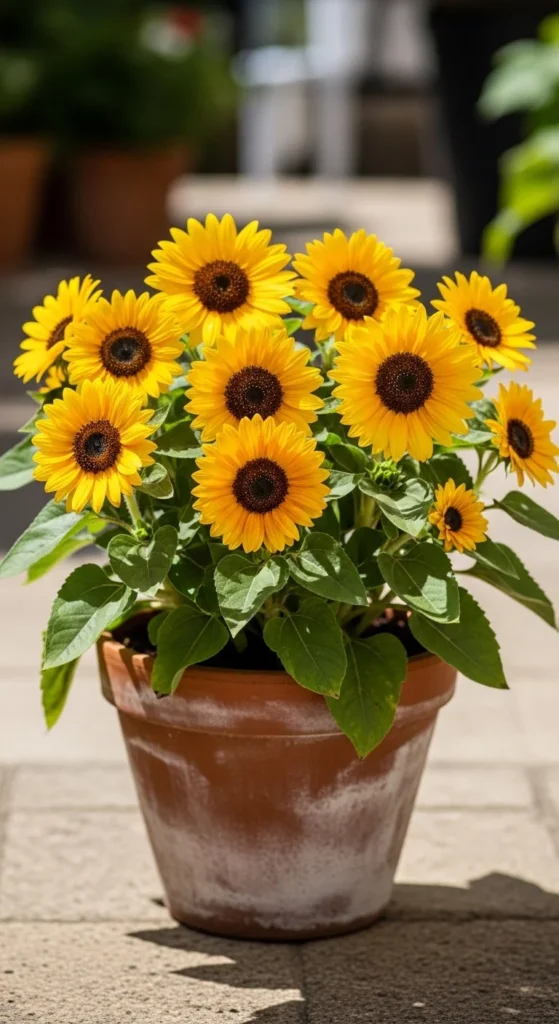
Compact sunflower varieties bring instant happiness to a pot. They rise quickly, look dramatic without being difficult, and create a strong focal point in a beginner flower garden. Unlike giant field sunflowers, container-friendly types stay short enough for patios, balconies, and porch corners.
Use a pot with good depth and place it in strong sun. Sunflowers usually like warmth and regular watering once they are established. A single compact plant in the center of a pot can look great by itself, or you can ring the edge with low flowers for extra color. Marigolds or alyssum often work well at the base.
A money-saving method is growing these from seed directly in the container. Seed packets are inexpensive, and watching the plant rise from seed to bloom is satisfying for beginners. Thin the seedlings if too many sprout in one place. Support may be helpful if the pot sits in a windy area.
For anyone who wants a bold cheerful flower pot with very simple structure, compact sunflowers are a strong choice. They feel joyful and easy to understand.
20. Celosia Pots for Bold Texture and Heat Tolerance
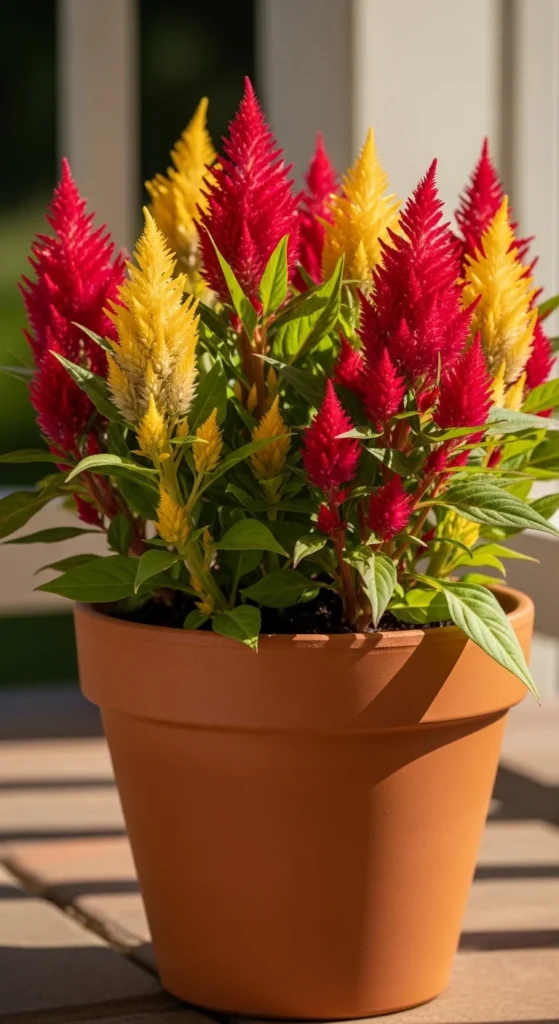
Celosia brings strong texture to flower containers. The blooms can be feathery, crested, or upright, which gives the pot a completely different feel from round petunias or daisy-like flowers. For beginners, this is a good way to make a container look interesting without a complicated mix.
Celosia likes warmth and sun, so it works well on hot patios and front steps. A terracotta or resin pot with drainage holes suits it nicely. Use one plant in a small pot or group several together in a larger one. Bright red, orange, yellow, and pink shades all stand out well against green leaves.
A lower-cost design can be as simple as one celosia in the center with a ring of smaller annuals below. Because the flowers already carry strong texture, the rest of the pot does not need much else. Keep watering steady but do not leave the soil heavy and soaked.
For beginners who want a flower container that feels bold and slightly different, celosia offers that without making care much harder. It holds color well in summer and gives the pot a strong shape.
21. Galvanized Bucket Flower Pots with Rustic Style
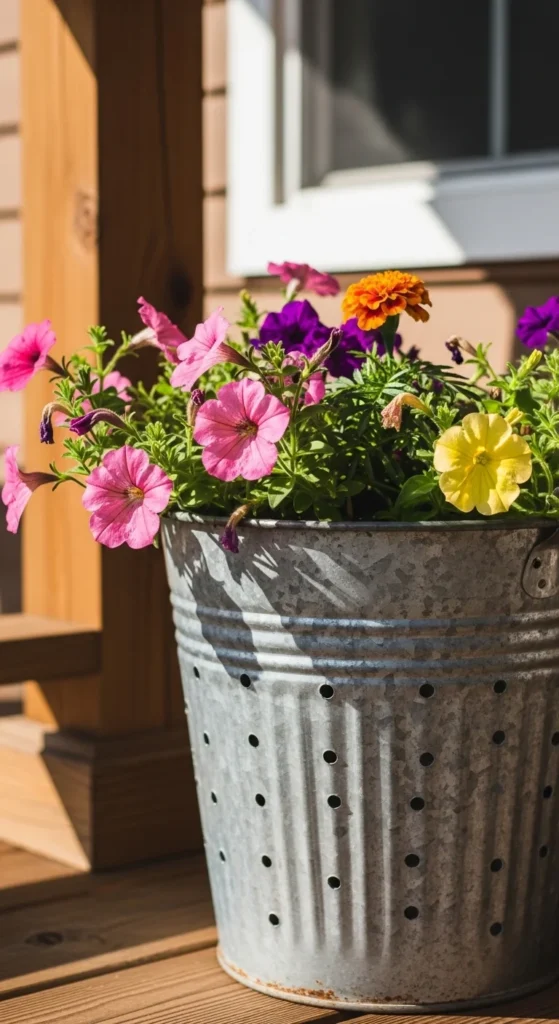
Galvanized buckets give flower containers a clean rustic look that works well on porches, patios, and farmhouse-style spaces. They are sturdy, easy to find, and simple to repurpose. For beginners, they also feel less fragile than ceramic pots, which can be nice if the containers need to move around.
The most important step is adding drainage holes if the bucket does not already have them. After that, fill it with potting mix and choose flowers that like the light in that location. Petunias, marigolds, alyssum, and dwarf zinnias all work well in sunny galvanized planters.
A low-cost setup can come from one hardware-store bucket rather than buying a decorative planter. Drill the base, add a tray if needed, and plant it up fairly full. Since metal can heat up quickly, watch moisture on very hot days. Grouping several buckets of different sizes can make a porch look very polished without a big budget.
For beginners who like a slightly rustic and durable container, galvanized buckets are a very approachable option. They look stylish but stay practical.
22. Anthurium Pots for Bright Indoor Color
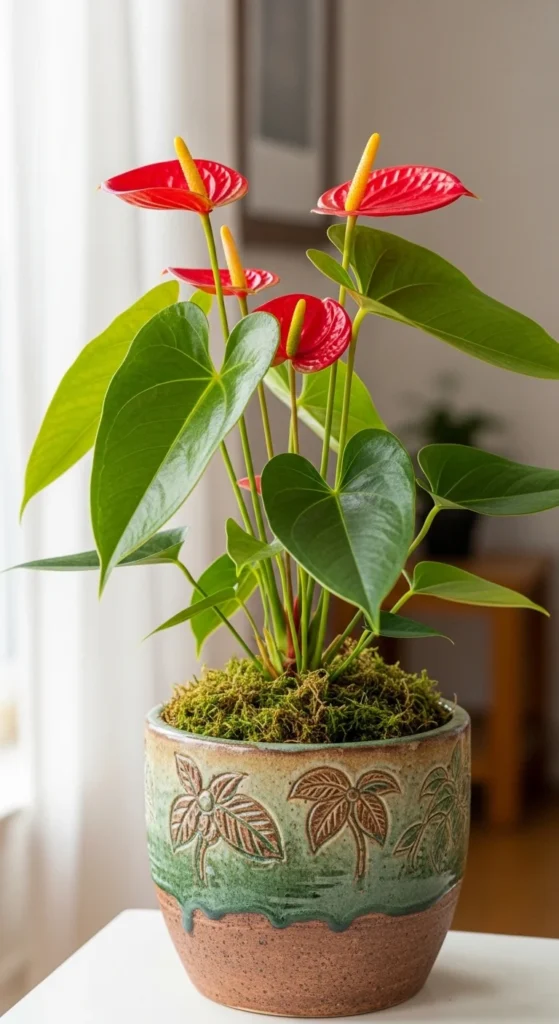
Anthuriums give indoor spaces a longer-lasting flower look than many outdoor annuals can manage. Their glossy leaves and waxy red, pink, or white blooms bring a polished houseplant feel, but they can still work for beginners if the basics are simple.
They prefer bright indirect light rather than hot direct sun through glass. Use a container with drainage holes and a loose indoor mix. Because anthuriums are not heavy outdoor bloomers, they work better as one indoor accent plant than as part of a mixed flower pot. A plain ceramic or resin cover pot helps the display look finished.
A budget-friendly route is buying one smaller healthy plant rather than a large showroom specimen. Anthuriums usually hold their look well, so one plant can go a long way visually. Water when the top layer begins to dry and do not let the roots sit soaked.
For beginners who want indoor blooms with a cleaner, more polished look, anthuriums can be a good step up from basic green houseplants without becoming too difficult to manage.
23. Crowded Annual Pots That Look Finished Right Away
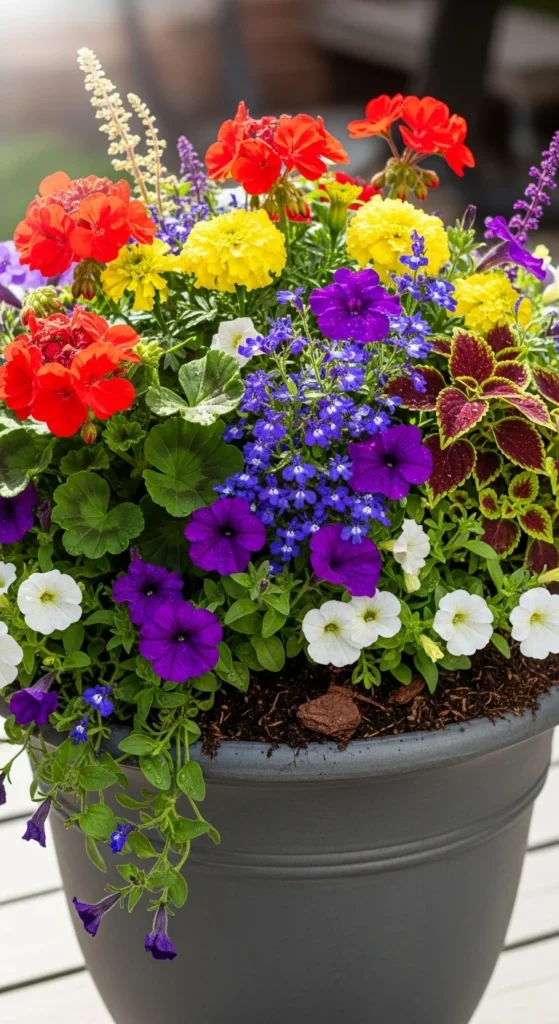
Annual containers often look best when planted more tightly than beginners expect. Since annuals are usually meant to perform for one season, they can be set close enough to create that lush “already full” effect. This is especially useful for porches and entryways where people want quick color.
Use good potting mix and a container large enough to hold the group. Then plant the annuals close but not crushed. Petunias, marigolds, calibrachoa, alyssum, and impatiens all work well in this style. The pot will look fuller from day one and even better once the plants settle in.
A smart budget trick is using inexpensive nursery-pack flowers tightly in one large pot instead of buying several separate finished containers. That gives a stronger overall result at a lower cost. Water carefully after planting and check often during the first week while the roots adjust.
For beginners, this is one of the fastest ways to make a flower pot look like a professional display. The key is choosing annuals and understanding that the goal is full-season color, not long-term spacing.
24. Decorative Top Layers That Make Pots Look Cleaner
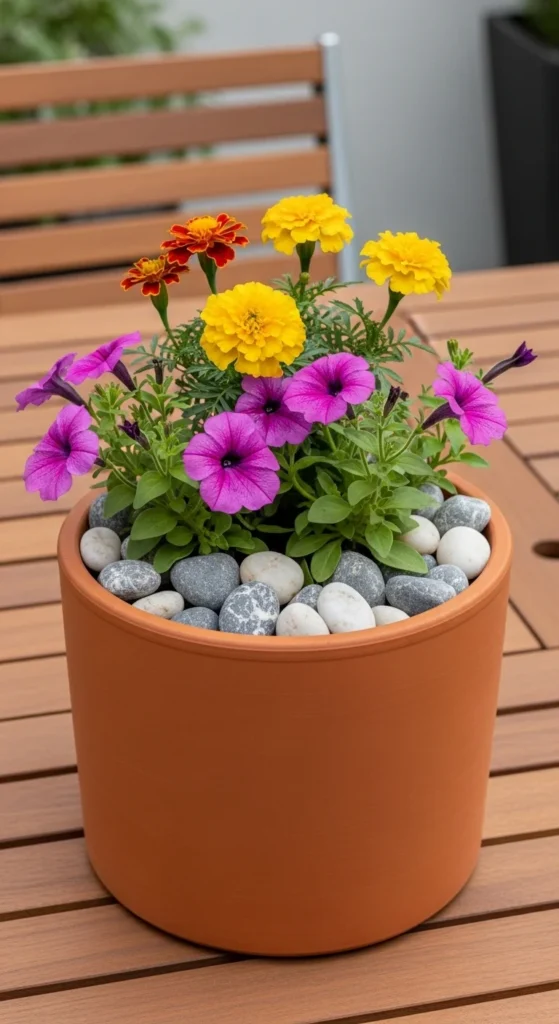
A flower container can look much more polished with a finished top layer over the soil. Small bark pieces, decorative stones, moss, or clean mulch can all help the pot feel tidier. This is a useful beginner trick because exposed potting mix can look rough after watering.
Use only a thin layer so water can still move through easily. Decorative topping works well in porch pots, indoor containers, and entry planters where appearance matters most. It can also help keep the soil from splashing out during heavy watering or rain.
A budget-friendly approach is using a leftover bag of small bark or pebbles across several pots. There is no need for anything expensive. Keep the material a little away from plant stems so moisture does not stay trapped against them. For indoor flower pots, a neat top layer can make even a plain nursery plant feel more decorative.
This hack will not fix poor planting, but it does make a container feel more finished. For beginners trying to make their pots look a little more polished, it is a very easy improvement.
25. Begonia Pots for Soft Shade Color
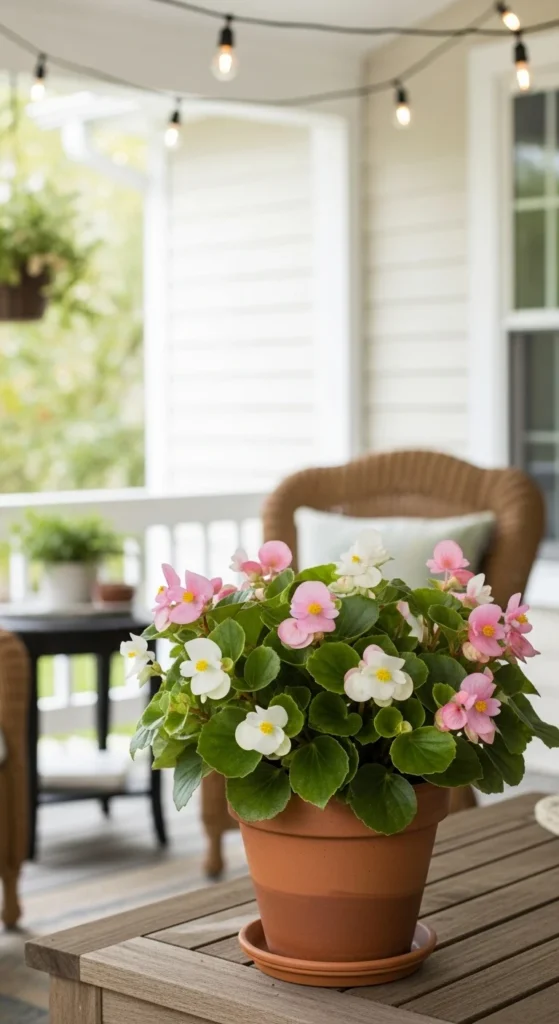
Begonias are very beginner-friendly for shaded and partly shaded spaces. They offer soft blooms, attractive leaves, and a steady rounded shape that works well in containers. They are especially useful on porches and covered patios where harsh sun does not reach for long hours.
Use a pot with drainage and a good container mix. Keep the soil evenly moist but not soaked. Begonias often look best in medium containers where their leaf texture can be seen up close. Pink, red, white, and mixed shades all work, and some types bring more leaf beauty than flower drama, which can still be very attractive.
A budget-friendly shade pot can use several begonias planted together in one container rather than mixing many plant types. This keeps care simpler and creates a soft full look. Add a little trailing greenery only if you want a more layered effect. Otherwise, begonias often carry the pot well on their own.
For beginners with shade, begonias are a comfortable choice. They bring real flower color without demanding the blazing sun that many other annuals prefer.
26. Matching Pot Sets That Make Simple Flowers Look Better
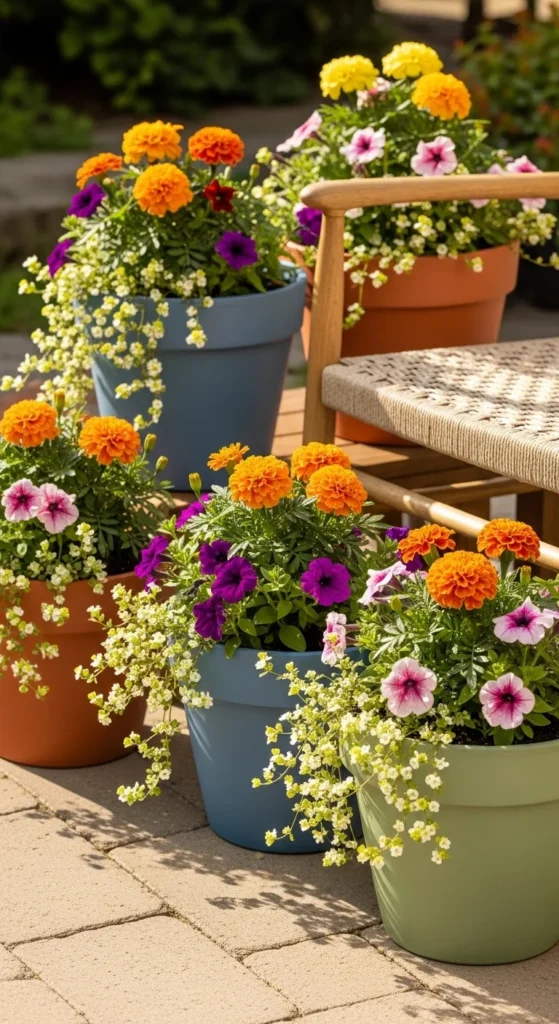
Sometimes the easiest way to improve flower containers is not to add more plant types. It is to repeat the same pot style across the space. Matching or coordinated planters make even simple flowers look more intentional. For beginners, this is helpful because it creates a more polished result without extra planting skill.
Use the same shape in different sizes, or the same color in a few forms. Then fill them with easy annuals like marigolds, petunias, zinnias, or alyssum. Even if each pot holds only one or two plant types, the repeated container style ties the whole area together.
A budget-friendly version can use plain terracotta or black plastic pots dressed up with matching saucers or grouped in a neat row. There is no need to buy a premium set. The visual repetition does much of the work. Place taller pots at the back and smaller ones forward if you are building a porch or patio display.
For beginners, matching pots reduce the feeling of chaos. The flowers can stay simple, and the layout still looks thoughtful and well arranged.
27. Front Step Flower Pots That Welcome Without Fuss
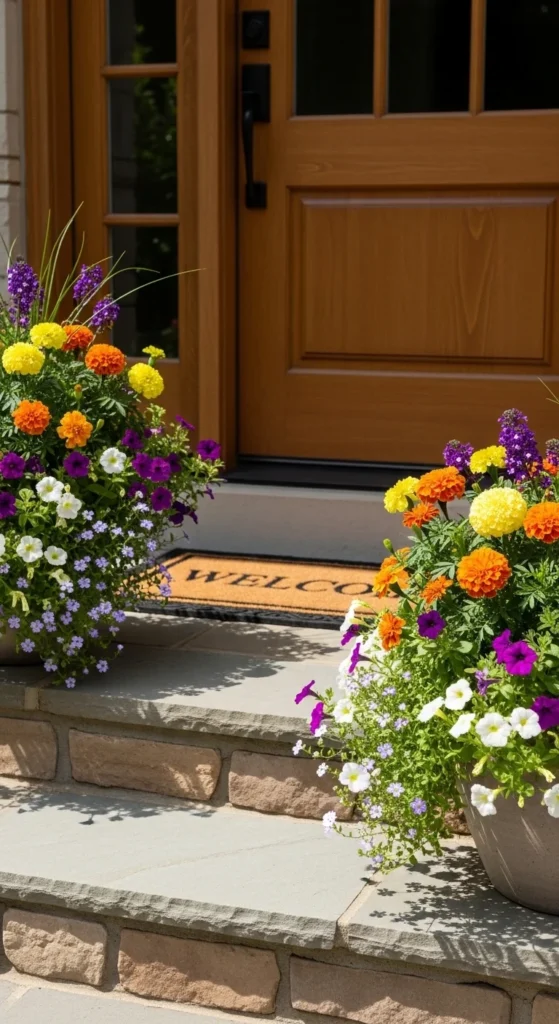
Front step flower pots are one of the most satisfying beginner projects because they are seen every day. A simple pair of containers can make the entry feel warmer and more welcoming without needing a large garden. Since the space is usually limited, easy flowers and clean design matter more than complexity.
Choose flowers that suit the light. Sunny steps do well with marigolds, petunias, lantana, zinnias, and calibrachoa. Shadier entries may suit begonias or impatiens. Use containers with drainage holes and potting mix only. Keep the design simple. A matching pair of pots with one repeated flower theme often looks better than several unrelated mixes.
To save money, plant smaller annuals fairly close together so the pots look full quickly. One thriller-filler-spiller mix on each side of the door can work beautifully. Or use single-color masses if you like a cleaner look. Water when the top layer dries and remove spent blooms each week.
For beginners, front step containers are a strong starting point because the reward is immediate. The flowers brighten the home and build confidence every time you walk past them.
Conclusion
Beautiful flower containers do not require expert-level knowledge or expensive materials. They work best when the basics stay simple: drainage holes, potting mix, the right light, and flowers that match the space. Beginners often do better with easy annuals, clear color choices, and simple layouts like thriller-filler-spiller or one-flower mass plantings. Start with one or two pots, place them where they can be seen and enjoyed, and learn how those flowers respond. A small success on a porch, balcony, or front step often leads to many more.
Leave a Reply