

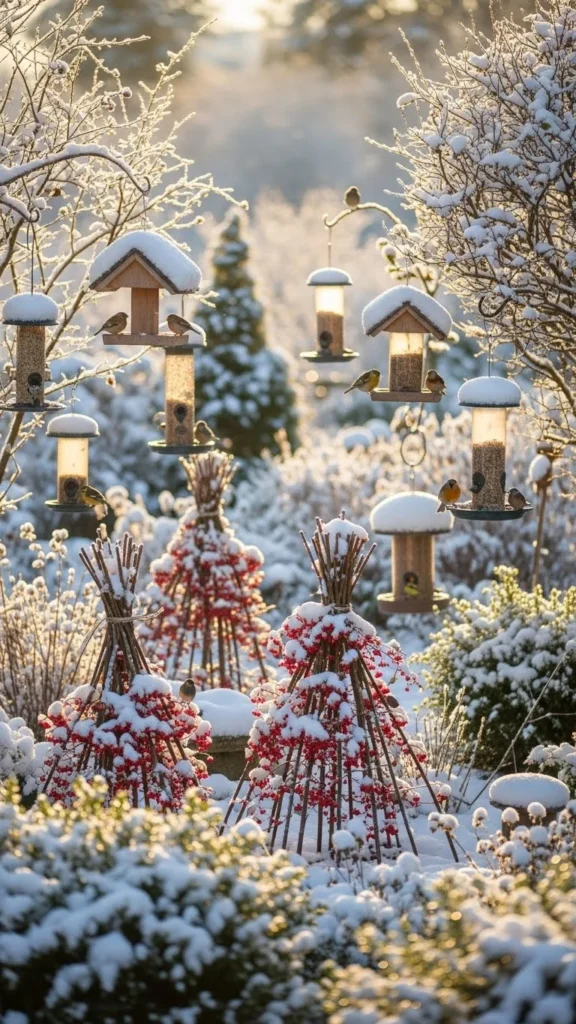
Winter gardens often fall quiet, but thoughtful features can turn them into lively habitats where birds find shelter, water, and steady food. Cold months limit natural resources, so small additions—like evergreen cover, warm perches, or nutrient-rich seed stations—make your garden a welcoming stop for visiting wildlife. These ideas help attract songbirds, sustain them through winter, and bring movement back into your outdoor space.
1. Evergreen Shrub Shelter
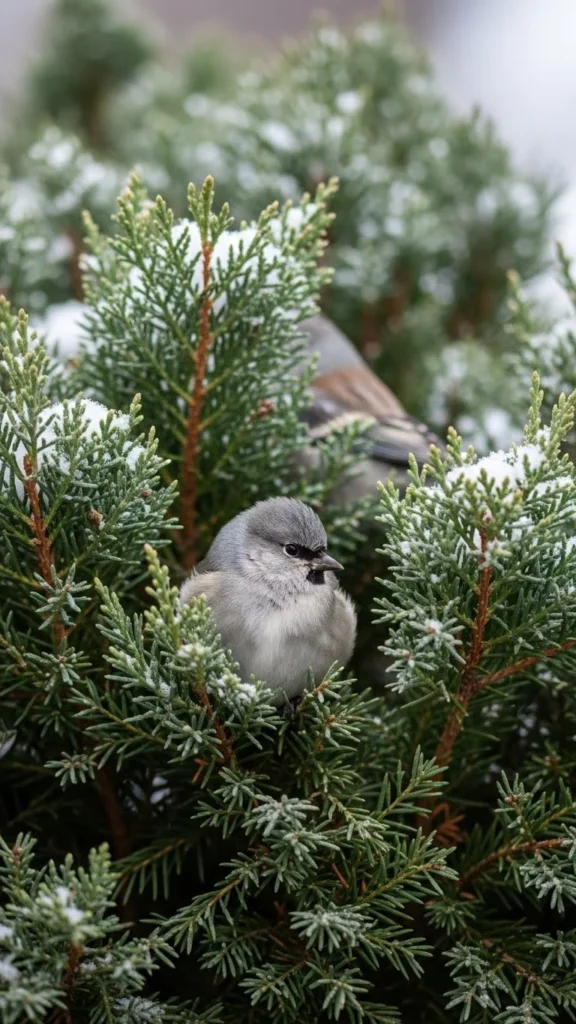
Evergreens offer year-round coverage, making them perfect winter shelters. Their thick branches block wind and create a warm pocket birds can slip into during long cold nights. Plant varieties like juniper, pine, or holly to create layers of natural refuge.
Cluster shrubs together so birds have multiple hiding spots. If space is tight, plant just one large shrub near a fence to create an instant safe zone. Mulch around the base to help roots stay warm.
A budget-friendly tip is to buy smaller evergreen starters. They grow slowly but become long-lasting anchors for wildlife. Birds return year after year when they know a safe shelter exists.
2. Berries That Ripen in Winter
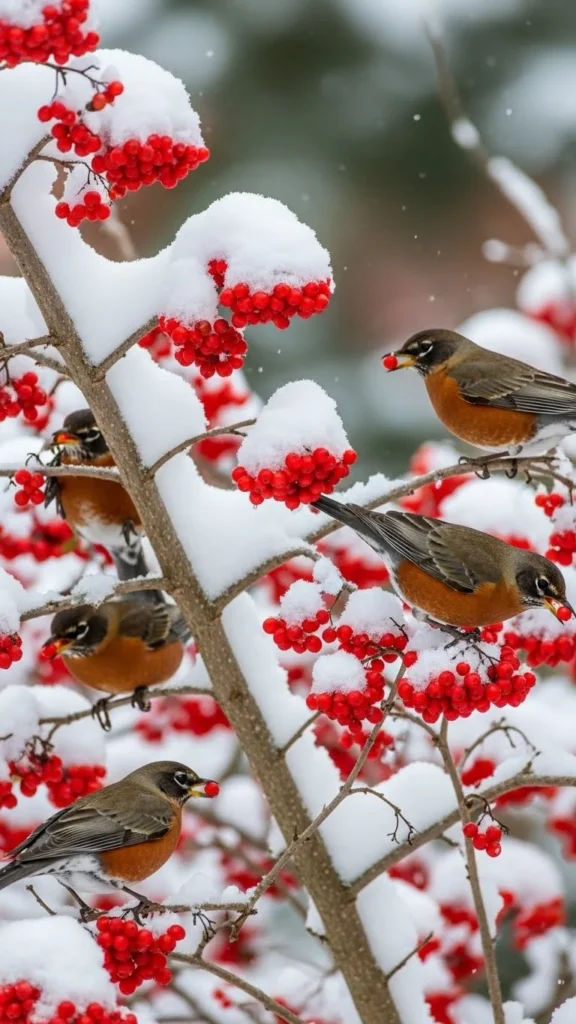
Winter berries supply natural food when insects vanish. Plants like winterberry, pyracantha, and holly hold fruit well into the season. Birds love the rich calories, especially during frost-heavy weeks.
Plant berry shrubs in sunny spots for better fruit production. Mix early- and late-ripening varieties so the food source lasts. Add mulch to maintain steady soil warmth.
For an affordable start, buy bare-root shrubs during winter sales. They’re easy to plant and establish quickly.
3. Heated Bird Bath
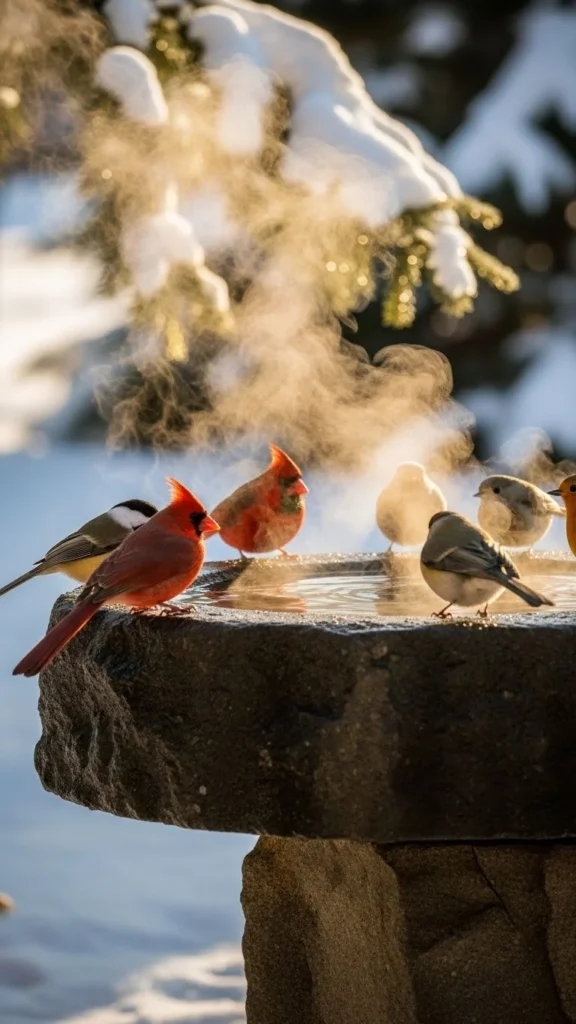
Water freezes fast in winter, leaving birds desperate for drinkable sources. A heated bird bath keeps water open and accessible.
Place the bath near shrubs to give birds quick cover. Set it on a flat stone to keep it stable. Change water regularly to keep it clean.
If you’re on a budget, use a simple immersion heater in an existing bath. Birds will flock to the warm surface even during freezing mornings.
4. Natural Brush Piles
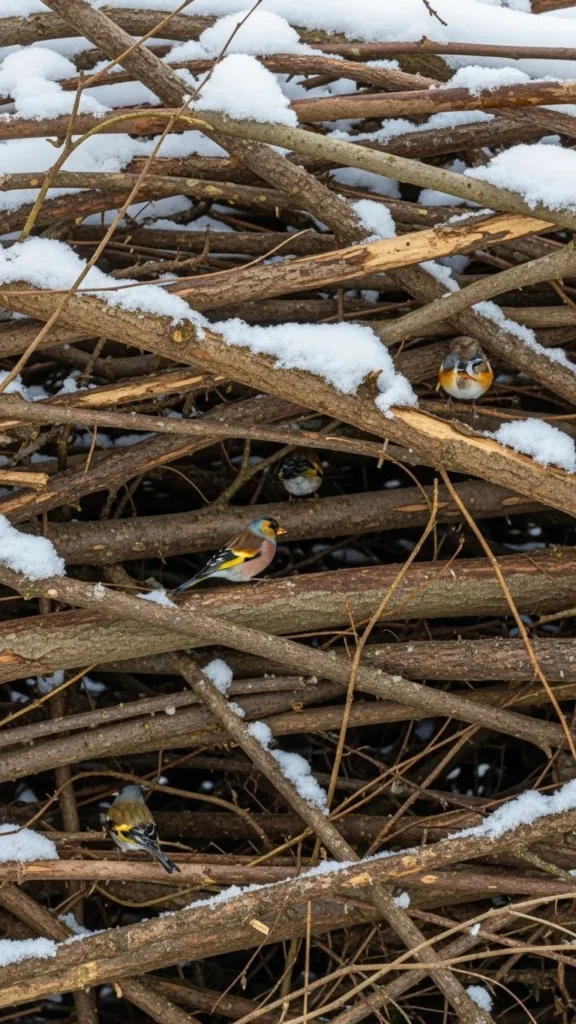
Brush piles create instant hiding places. They mimic natural forest debris and give birds a warm, protected spot. Use trimmed branches, twigs, and logs.
Stack them loosely so air can circulate. Place the pile near a fence line or behind shrubs for extra coverage. As snow settles, the pile becomes even more insulating.
This is completely free and uses garden waste effectively.
5. Suet Feeders for High-Energy Food
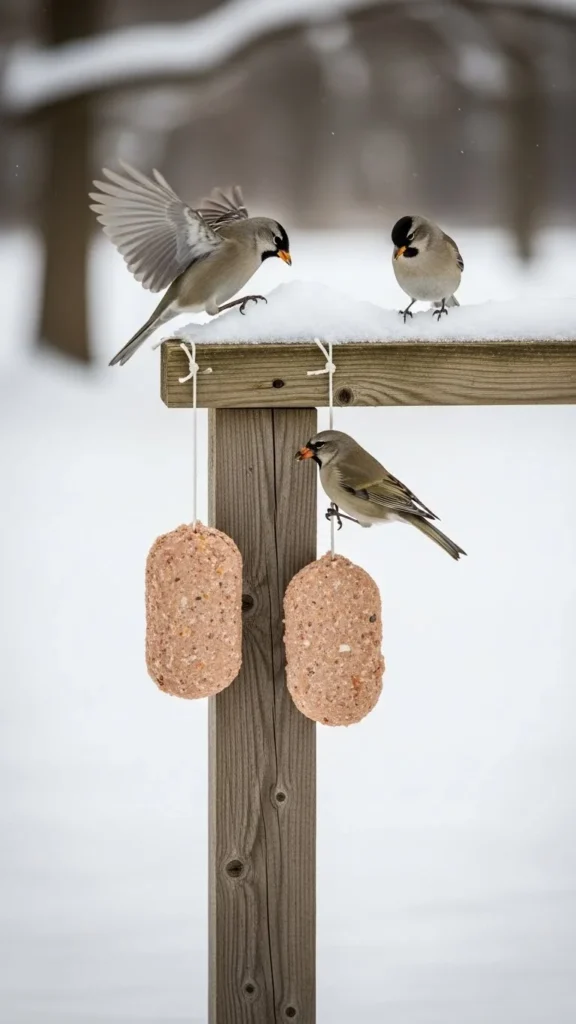
Suet is packed with calories birds need during winter. Woodpeckers, chickadees, and nuthatches especially love it.
Hang suet cages high enough to stay safe from pets. Choose simple wire cages for easy refilling. Use unsalted, plain suet cakes or make homemade ones with seeds.
During storms, suet becomes a lifesaver for hungry birds.
6. Bird-Friendly Seed Mix Stations
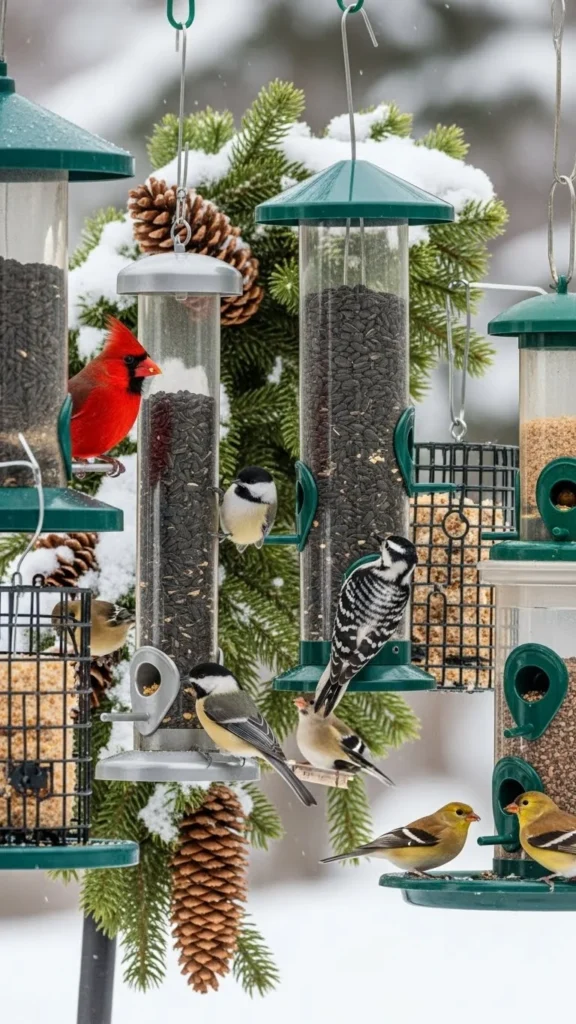
Diverse seeds attract diverse birds. Mix sunflower seeds, safflower, and millet. Use multiple feeders to reduce competition.
Hang feeders at different heights. Add a tray feeder for ground-feeding species. Clean feeders regularly to prevent moisture buildup.
Seed stations bring color and movement even during the quietest winter days.
7. Windbreak Fencing for Bird Comfort
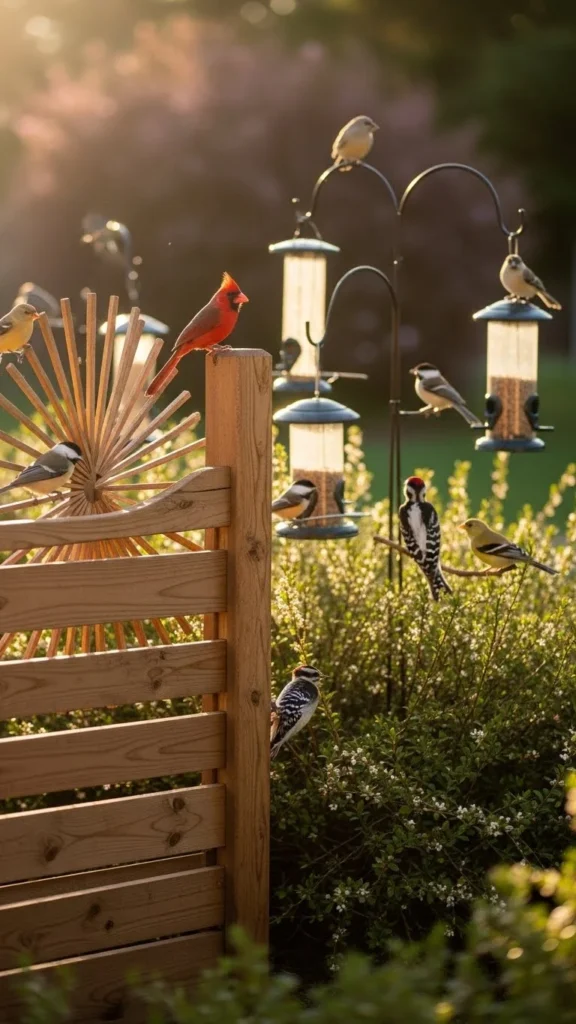
Strong winter winds drain birds’ energy. A simple windbreak makes feeding and resting safer.
Use fencing, reclaimed wood, or dense shrubs. Position it on the wind-facing side of your garden. Tie feeders behind the barrier so birds can eat calmly.
This setup helps birds stay longer and feel secure.
8. Native Grasses Left Standing
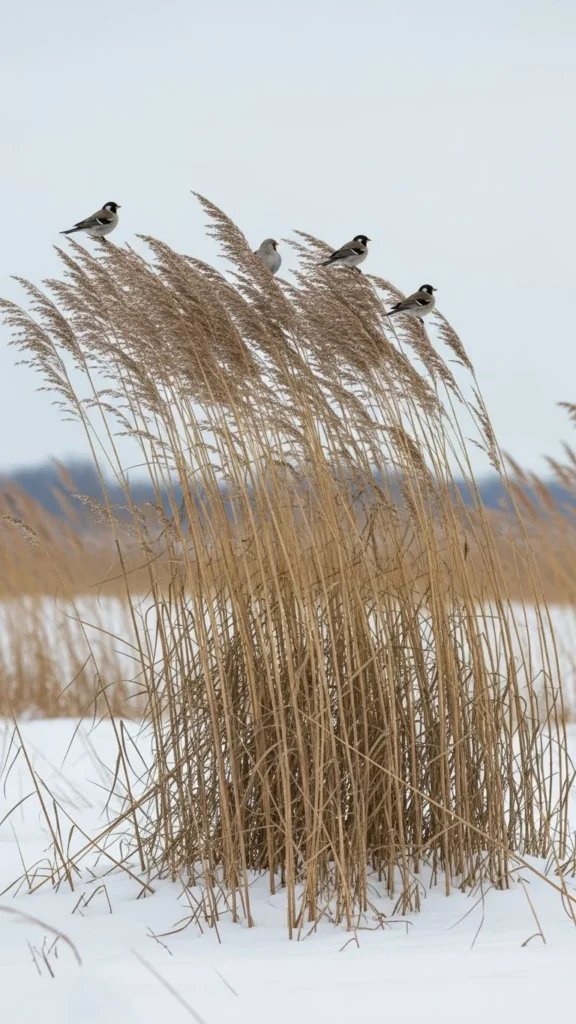
Native grasses offer seeds and shelter. Leave them standing through winter instead of cutting them back.
Grasses like switchgrass and bluestem create warm pockets and hold seed heads birds depend on. They also sway gently, attracting birds with movement.
This is a zero-cost feature that supports wildlife naturally.
9. Warm Perching Spots With Rocks
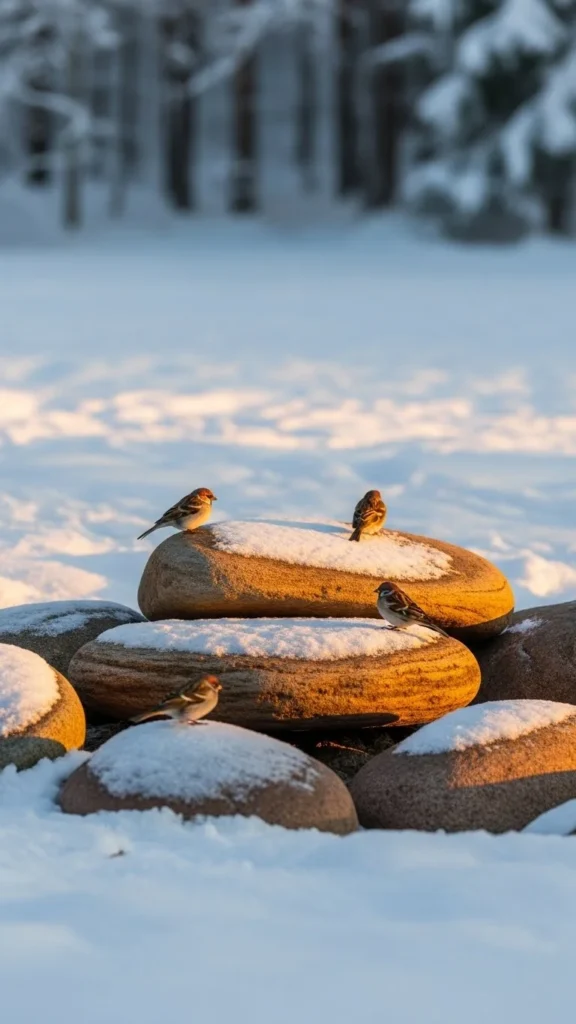
Rocks absorb sunlight and offer warm perches. Birds use them to warm their feet and rest between feeding.
Place large, flat stones near feeders or baths. Even on freezing days, stones hold a small amount of warmth.
This trick is simple, affordable, and adds beauty to the garden.
10. Roosting Boxes for Night Shelter
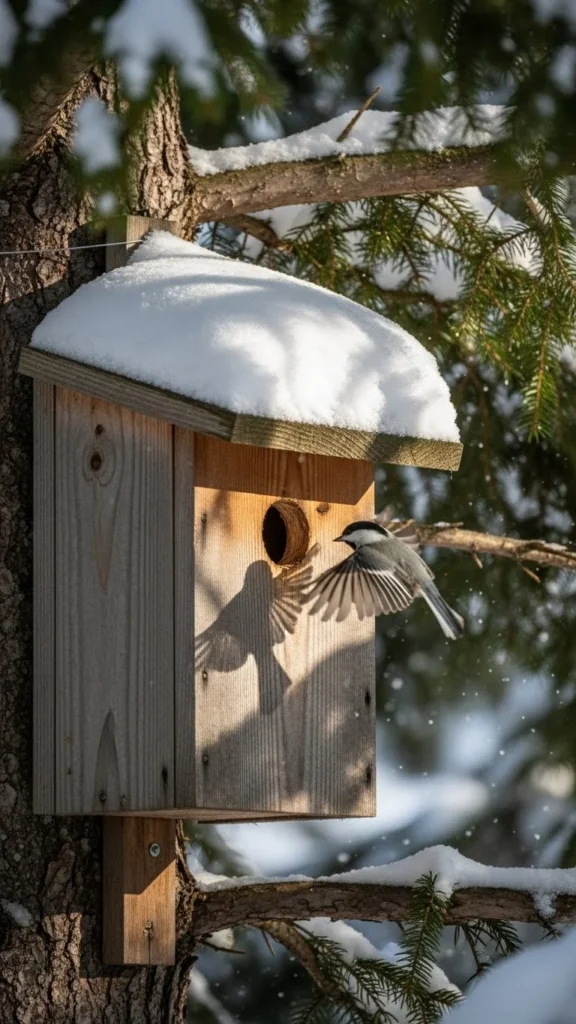
Roosting boxes protect birds from icy nights. Unlike nesting boxes, these are designed for group shelter.
Install them on the east side of a tree to block wind. Add wood shavings inside for insulation. Clean them only once a year.
Small birds huddle inside together, sharing warmth.
11. Dead Tree Snags for Natural Habitat
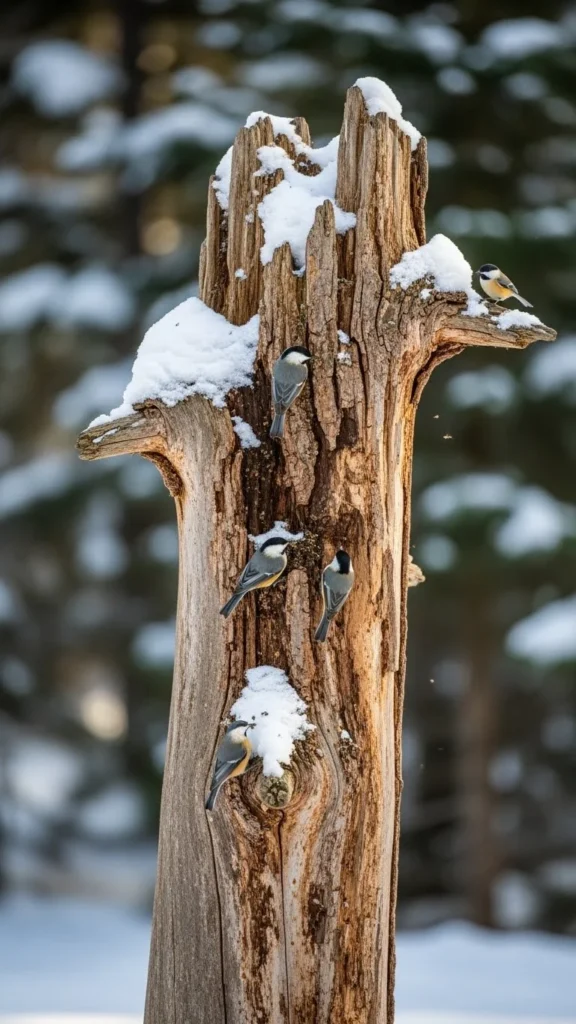
Dead tree snags house insects that remain active during winter, giving birds a food source. Birds also use cavities as shelter.
If a snag isn’t hazardous, leave it standing. Trim only dangerous limbs. Snags attract woodpeckers, wrens, and chickadees.
This is one of the most wildlife-friendly features you can keep.
12. Ground-Feeding Zones
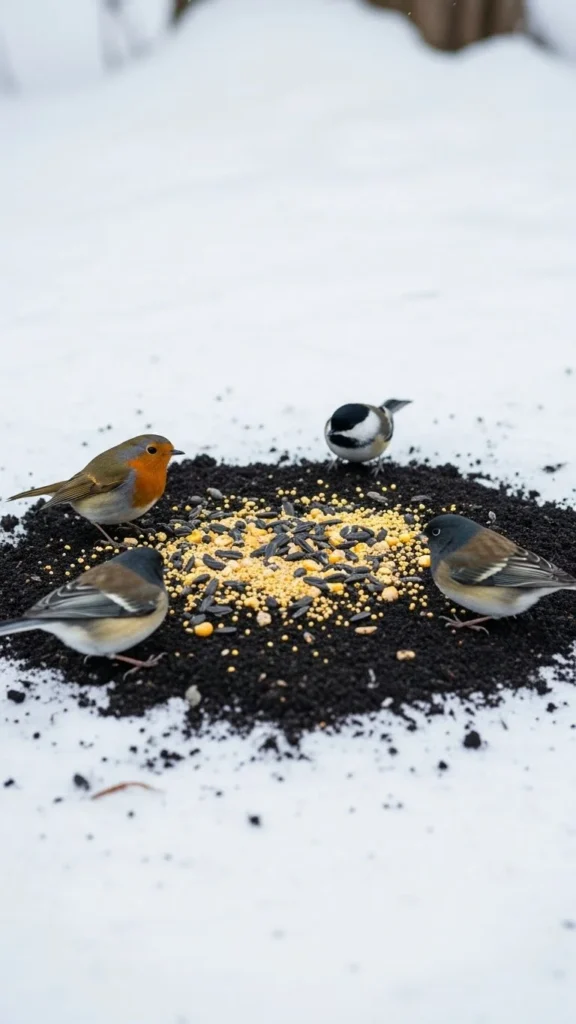
Some birds prefer feeding at ground level. Create a clear, snow-free patch and sprinkle seeds.
Choose areas near shrubs for quick escape routes. Add a small tray to keep seeds dry. Refresh the area daily to avoid spoilage.
Ground-feeding zones bring species you may not normally see at hanging feeders.
13. Warm Water Drip Feature
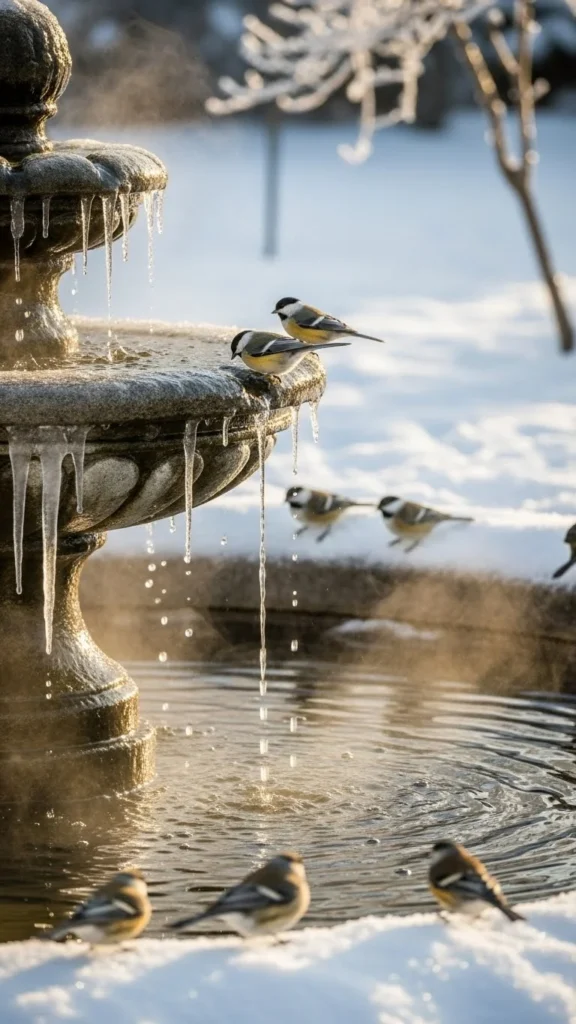
Moving water freezes slower. A drip feature helps birds access clean, liquid water even during cold spells.
Use a small pump or gravity-fed drip pipe. Place it inside a shallow basin. Keep it near evergreen cover.
This feature draws birds quickly since flowing water is rare in winter.
14. Pinecone Seed Feeders
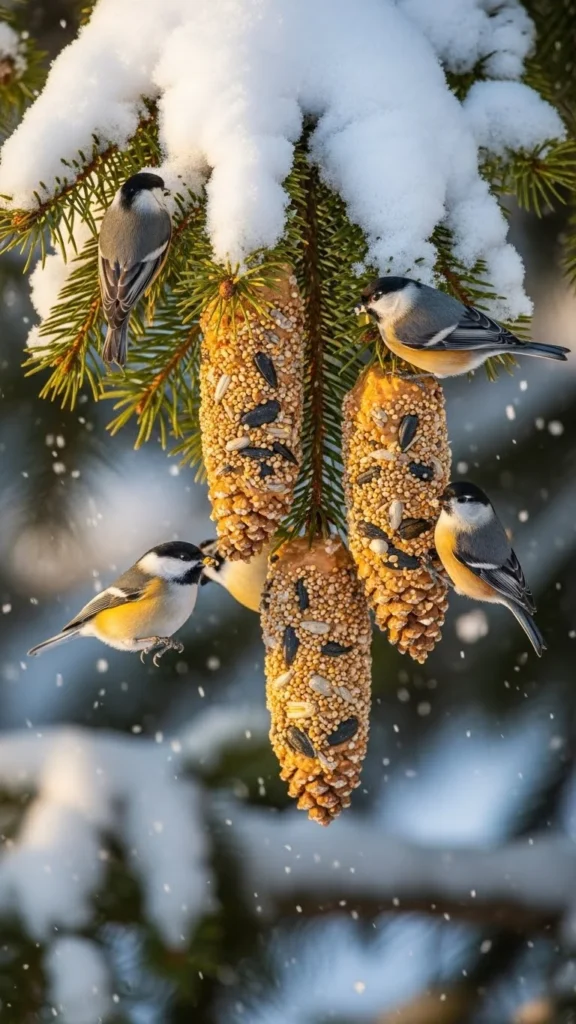
Pinecone feeders are a fun DIY project. They’re highly attractive to small birds.
Spread unsalted peanut butter on pinecones. Roll them in seeds. Hang them from low branches near shrubs.
This craft costs very little and can be made with kids for winter activities.
15. Low Shrub Tunnels for Safe Movement
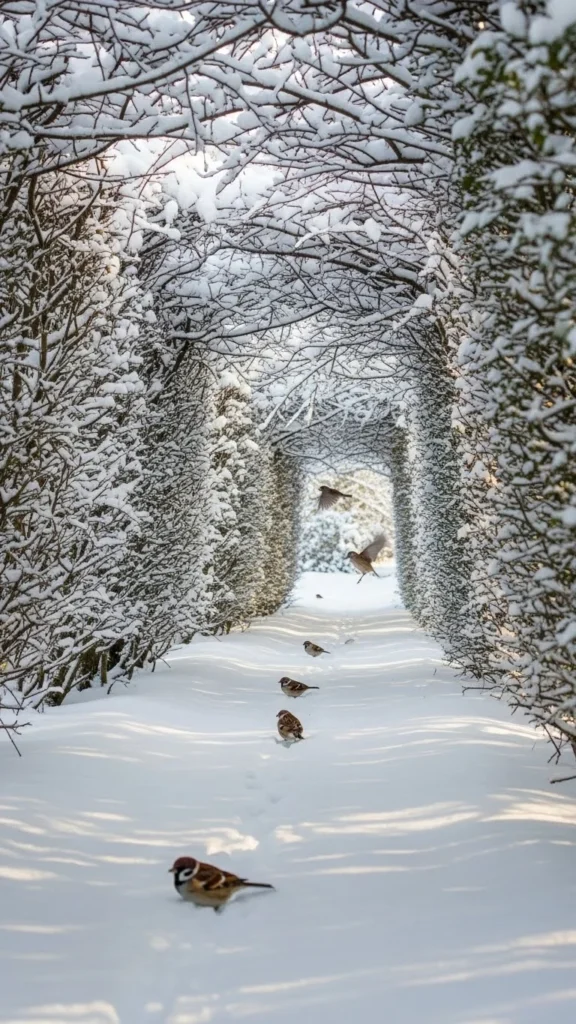
Shrub tunnels help birds move through the garden quietly and safely. They protect from predators and harsh wind.
Plant low-growing shrubs in curving lines. Let branches touch lightly to form an arch. Birds use these tunnels to travel between feeders and roosting spots.
This setup is especially helpful in open yards.
16. Seed-Rich Perennial Beds
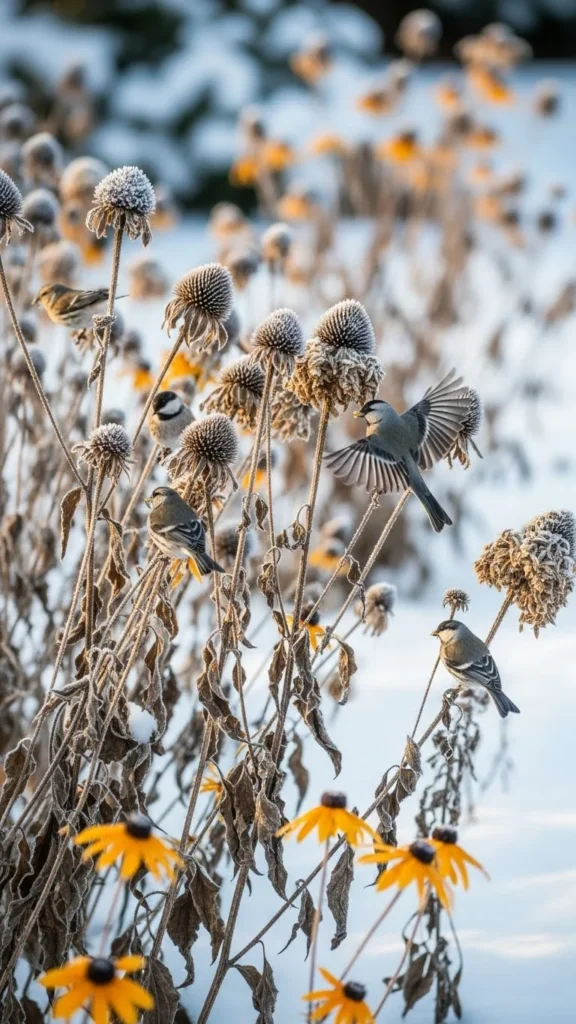
Many perennials hold seeds through winter. Leaving them uncut provides natural bird food.
Plants like coneflowers, black-eyed susans, and asters are great options. Their heads stay upright and easy for birds to cling to.
This habit reduces garden work while feeding wildlife.
17. Hedge Rows for Corridor Movement
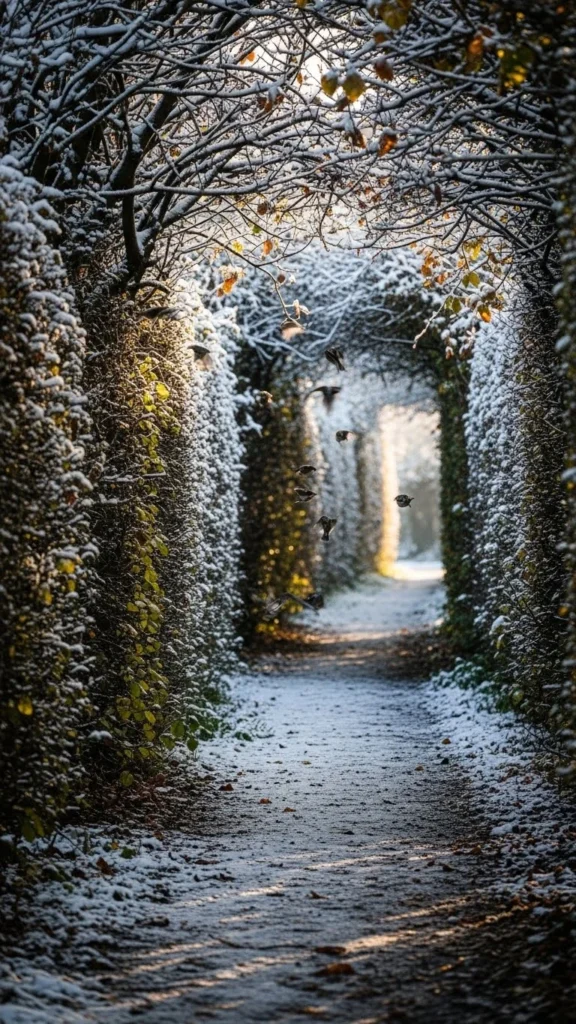
Hedges act like wildlife highways. Birds move safely along the corridor, staying hidden from predators.
Plant evergreen hedges for year-long coverage. Trim lightly in fall to keep the structure open. Add berry shrubs nearby for extra food.
Hedge rows make even small gardens more wildlife-friendly.
18. Nesting Material Stations
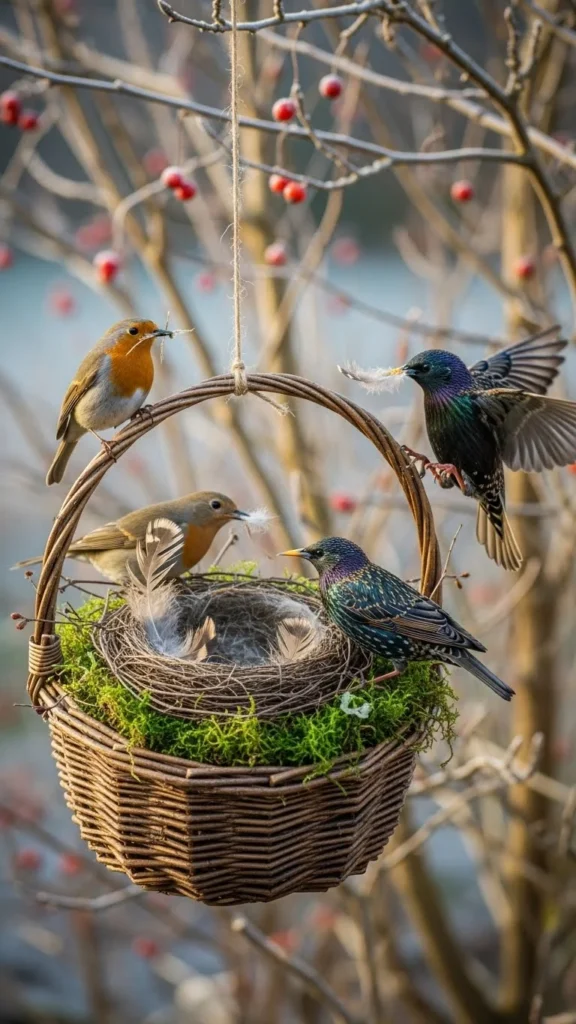
Even in winter, birds gather material for repair or early nesting. Provide a small basket with safe items.
Use dried grasses, small twigs, dog fur, or clean natural fibers. Hang the basket near shrubs. Keep it sheltered from rain.
This feature draws birds closer while helping them prepare for spring.
19. Log Piles With Cavities
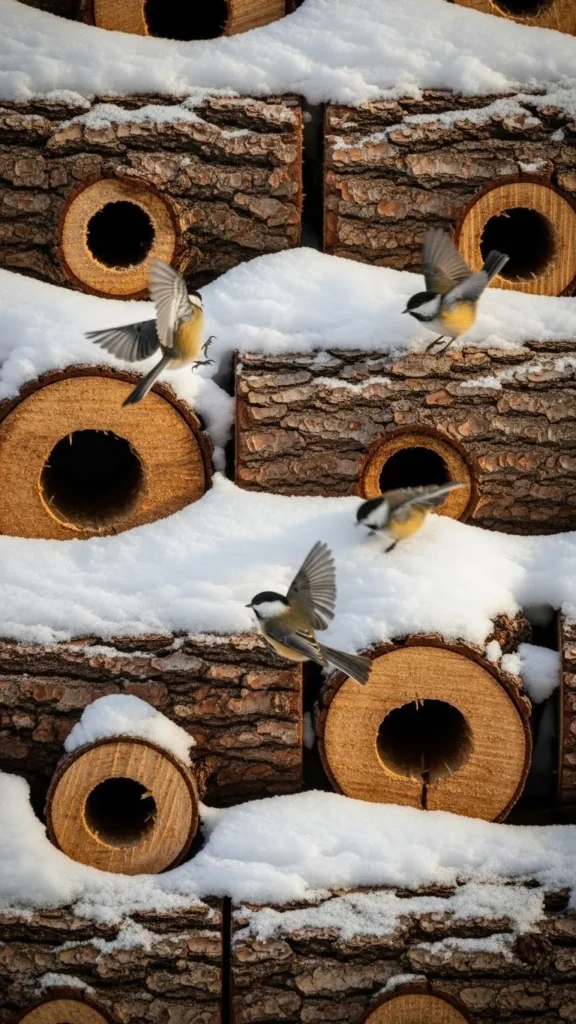
Log piles offer insects, warmth, and shelter. Birds explore gaps to find food or to hide from wind.
Stack logs loosely, leaving spaces between them. Choose hardwood logs if possible. Add leaves in the gaps for insulation.
This setup supports both birds and beneficial insects.
20. Bird-Friendly Fountain With Slow Movement
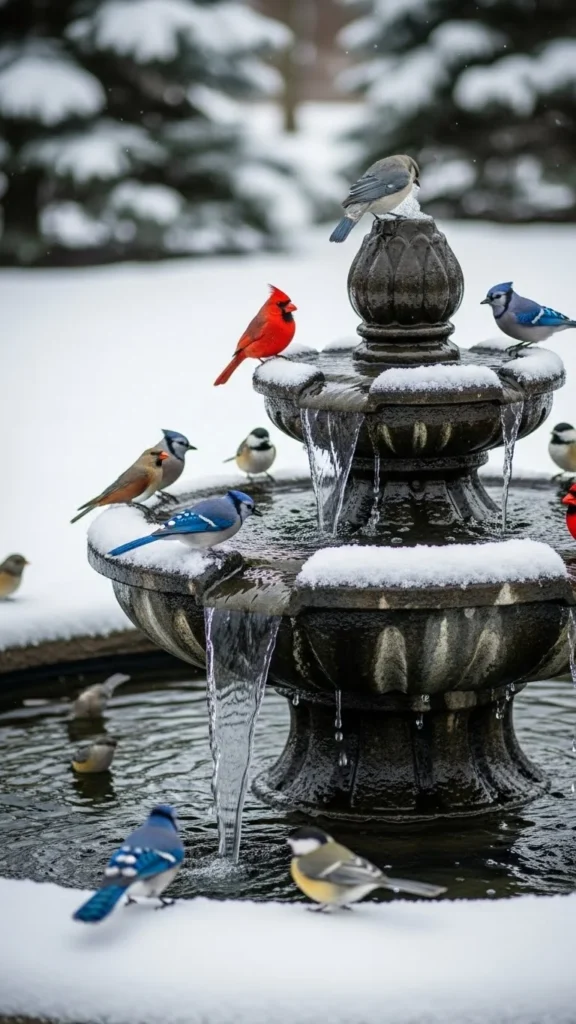
A slow-moving fountain stays open longer than still water. Birds prefer gentle drips and ripples.
Use a winter-safe pump. Keep the fountain shallow. Place it near cover so birds can drink and retreat quickly.
Clean it weekly to prevent algae, even in cold months.
21. Sunflower Patch Left Standing
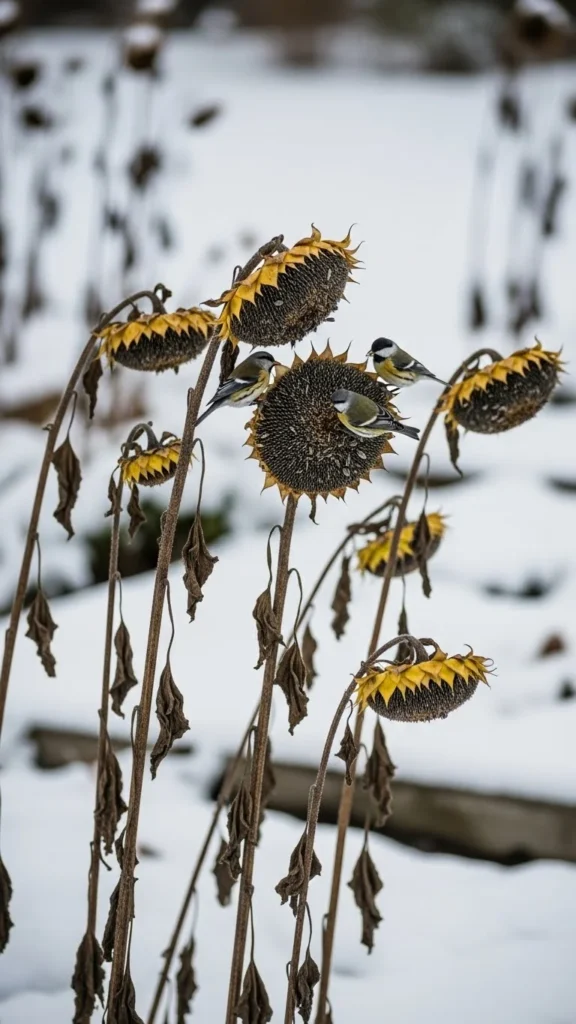
Sunflowers are rich in calories. Leaving them standing after summer offers a winter buffet.
Choose tall varieties for sturdy stalks. Let seed heads dry naturally. Birds cling easily to the large heads and feed comfortably.
This is a simple, zero-cost habit that supports many species.
22. Under-Deck Sheltering Spaces
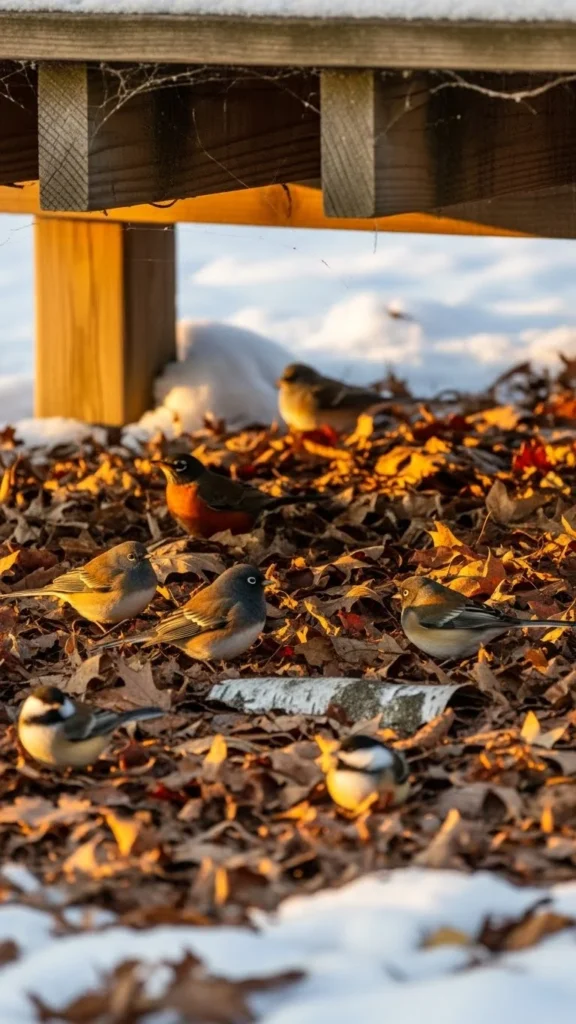
Decks create natural wind protection. Birds use the space underneath as a winter retreat.
Add a little leaf litter to make the area more welcoming. Avoid disturbing the space often. Keep pets away to maintain safety.
This hidden shelter becomes valuable during storms.
23. Hanging Gourd Houses
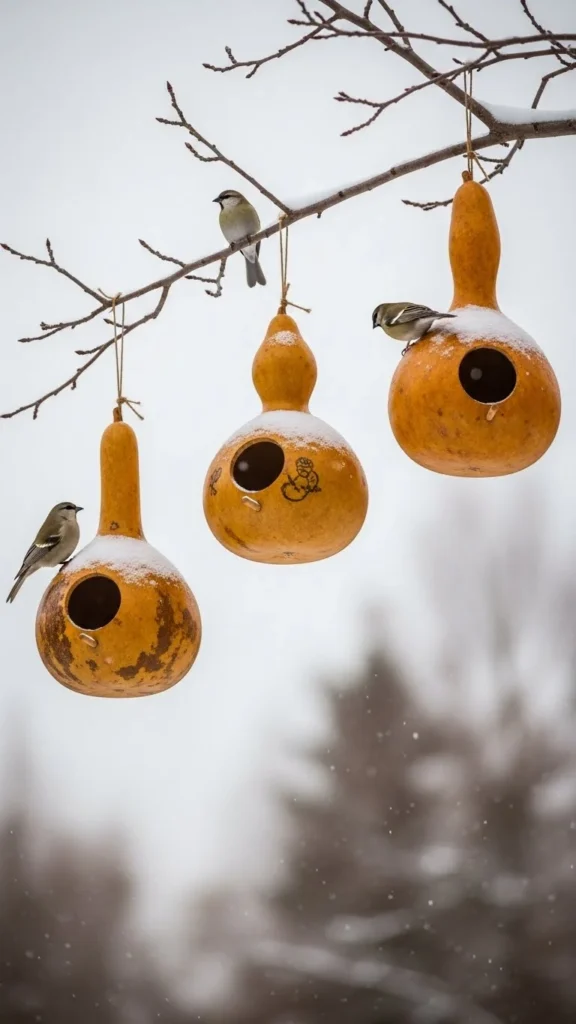
Dried gourds make lightweight, natural shelters. Birds use them for daytime rest or emergency warmth.
Clean out the interior and drill a small entrance hole. Hang them from branches near shrubs. Add a thin layer of straw inside.
They’re inexpensive and look beautiful in winter landscapes.
24. Mixed-Height Perch Zones
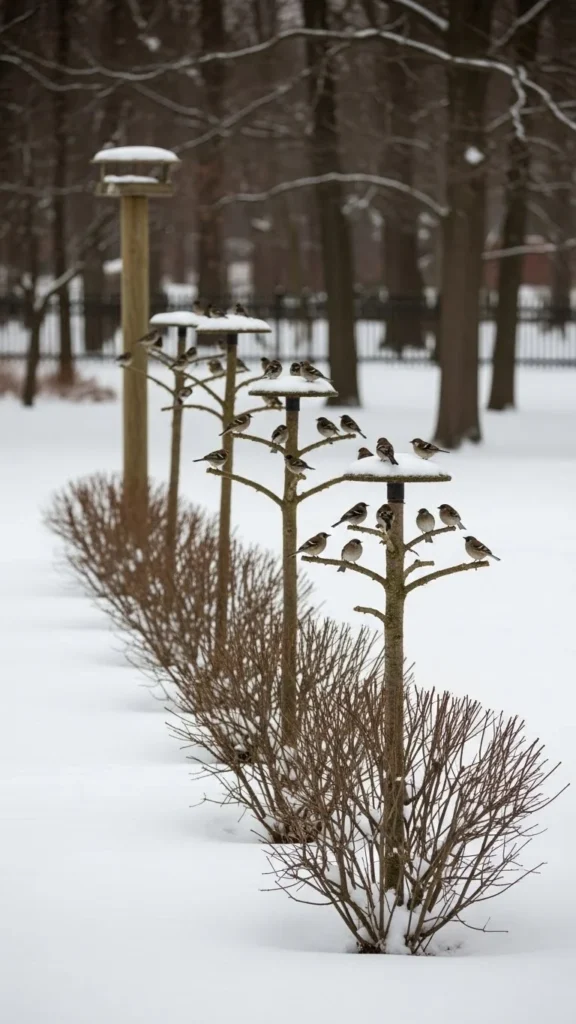
Birds prefer different perch heights depending on species. Offering a range creates a comfortable feeding zone.
Add tall posts, medium branches, and low shrubs. Keep them near food and water sources. Birds shift between levels as they rest, preen, or wait for their turn at feeders.
This layout keeps bird traffic steady and adds structure to winter gardens.
Conclusion
Winter doesn’t need to empty your garden of life. With simple features—like berry shrubs, moving water, sheltered roosts, and seed-rich plants—you can turn cold months into a season filled with activity and song. These 24 inviting garden ideas create a safe, warm, and resource-rich space that attracts birds even during the harshest weeks. Start with one or two features and watch wildlife return to your garden throughout winter.

Leave a Reply