

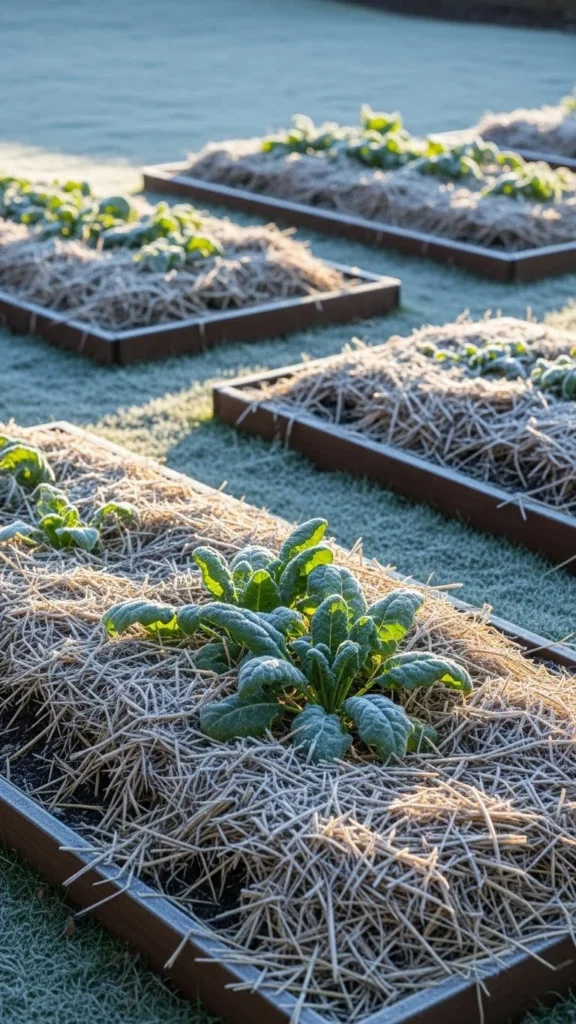
Winter raised-bed gardening can feel simple when you follow techniques that cut extra effort. Cold months often limit growth, but smart bed setups help soil stay steady, protect roots, and keep small crops active. The ideas below help you maintain structure, control moisture, and keep everything organized. Each method keeps things practical, budget-friendly, and easy to repeat in small or large spaces.
1. Keep Soil Warm With Straw Mulch
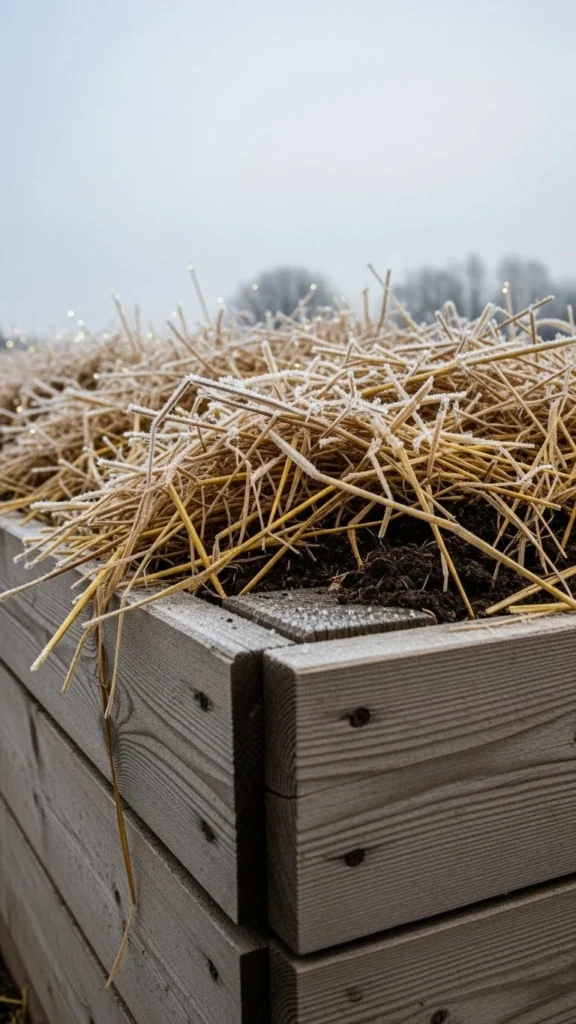
A thick straw layer helps soil stay calmer during freezing nights. Spread it loosely so air can move through it. Add more after heavy rain if it looks flattened. This approach helps roots sit in a steadier environment.
You can use inexpensive straw from local farms or even dried leaves if straw isn’t nearby.
If your bed dries quickly, place a simple board at one end to block strong winds.
Keep an eye on the color of the straw. When it turns pale, fluff it with your hands.
This simple action helps prevent cold pockets and creates softer soil for early greens.
2. Add Simple Plastic Row Covers
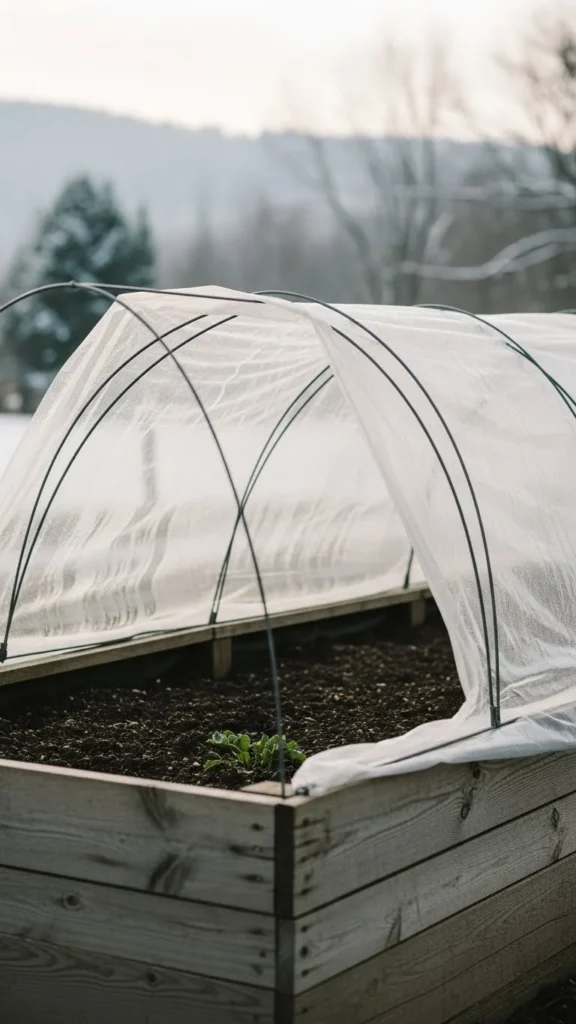
Plastic row covers help capture warmth. Bend flexible wires over your bed, then drape clear plastic on top. Clip the edges so they don’t fly off.
Open the ends on bright afternoons to let air move.
It’s cheap to build and works surprisingly well for hardy greens.
If plastic fogs up, lift one corner for a moment.
You can reuse the cover for several seasons.
Keep the height low so strong winds won’t lift it.
3. Use Recycled Bricks to Trap Heat

Bricks hold daytime warmth and release it slowly. Place them around the edge of your raised bed.
They help stabilize the soil temperature and keep the top layer calmer.
Use leftover bricks from home projects to save cost.
Spread them tightly so cold air doesn’t slip underneath.
If snow piles up, leave the bricks in place; they work even better under light snow.
This approach is simple but makes winter upkeep feel lighter.
4. Try Low-Cost Frost Blankets
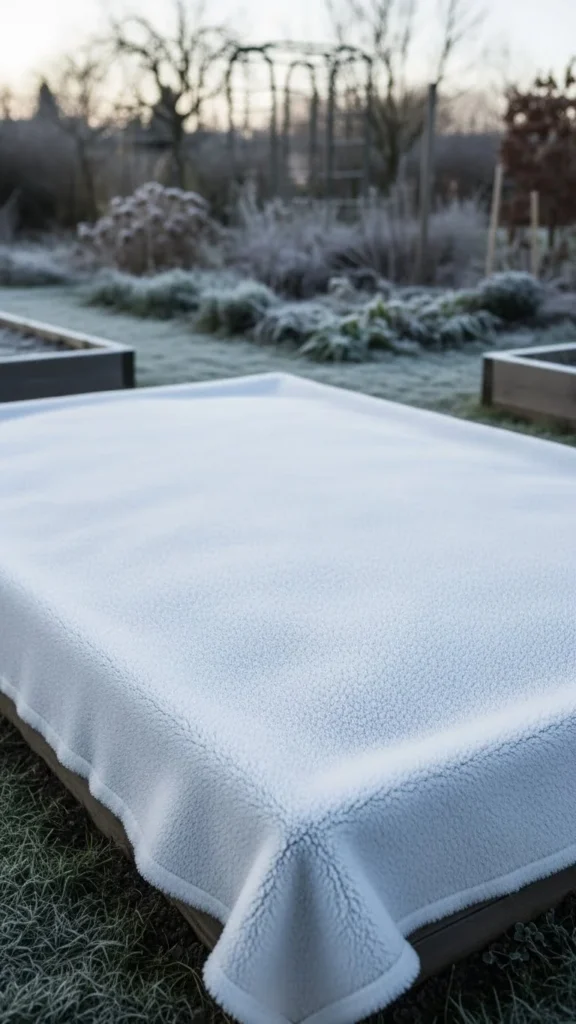
Frost blankets are lightweight and easy to pull over your beds. They protect leaves during cold snaps and help soil stay slightly warmer.
Fold them neatly when not in use so they last longer.
You can buy affordable rolls and cut them to fit your beds.
Keep a few bricks nearby to hold the edges during wind gusts.
Lift the blanket every few days to check your plants quickly.
This keeps their growth moving without much daily effort.
5. Build Mini Tunnels With Scrap PVC
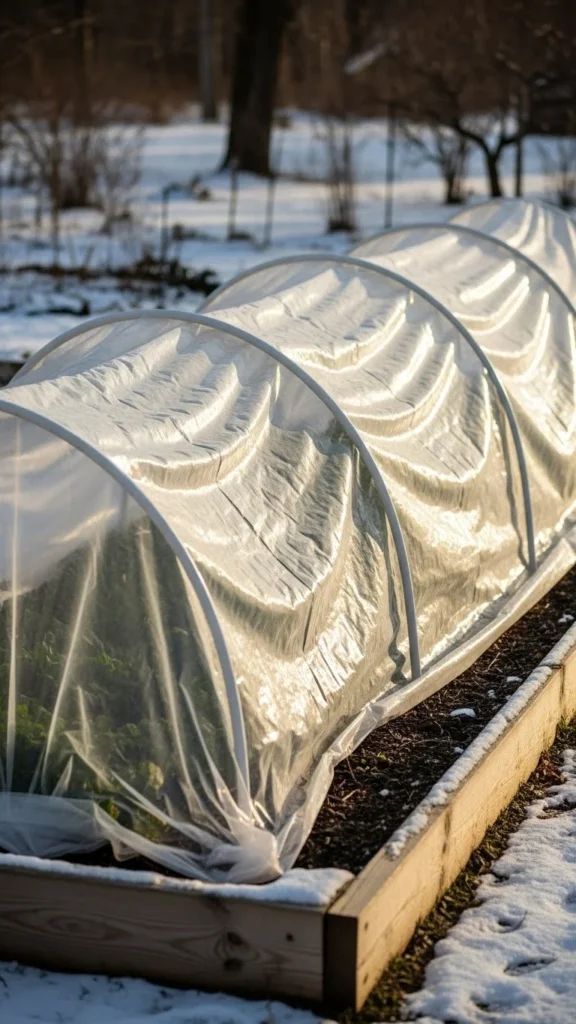
PVC tunnels are quick to assemble and don’t cost much.
Cut small PVC pieces and anchor them in the soil to form arches.
Drape plastic or frost cloth across them.
The tunnel protects young leaves and keeps soil slightly warmer.
If condensation forms, open one side for airflow.
Once winter ends, stack the PVC pieces for the next season.
6. Keep Soil Moist With Light Watering
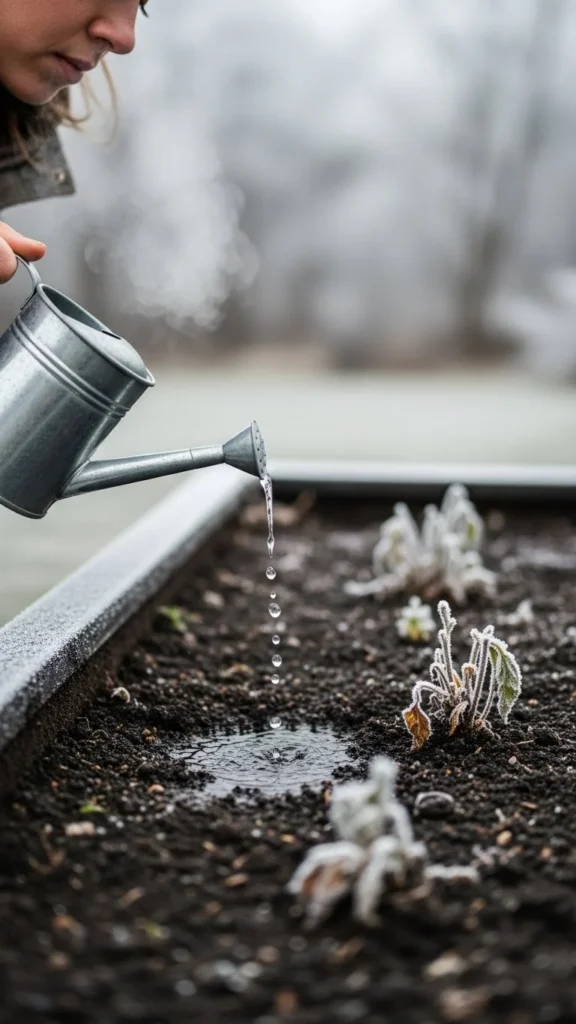
Winter soil dries slower, but dry roots struggle.
Give your raised bed light, controlled watering.
Avoid soaking it, as heavy moisture turns the soil dense.
Use a small can instead of a hose to avoid splashing cold water everywhere.
If your soil feels crumbly, water a bit more often.
This gentle practice helps greens stay steady through cold spells.
7. Add Leaf Mold for Softer Texture
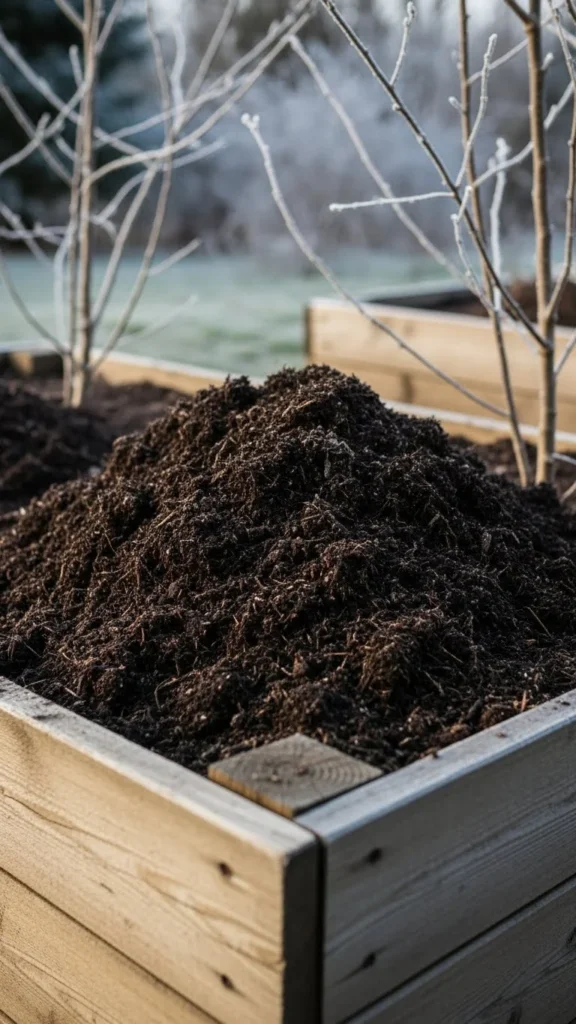
Leaf mold breaks down slowly and creates a soft soil base.
Mix a thin layer into the top few inches.
It helps the bed hold structure during cold weather.
Collect fallen leaves in a corner bin and let them rest for months.
Sift them before adding to the bed.
It’s cheap, simple, and feels natural for winter setups.
8. Use Wood Chips for Pathway Warmth

Wood chips around your beds create warmer paths.
They help hold ground heat and reduce cold air flow into the beds.
Spread a thick layer so the path stays dry.
If chips sink over time, add a thin fresh layer.
This small detail helps winter gardening feel calmer and cleaner.
It also cuts mud buildup around your workspace.
9. Add Simple Windbreak Panels
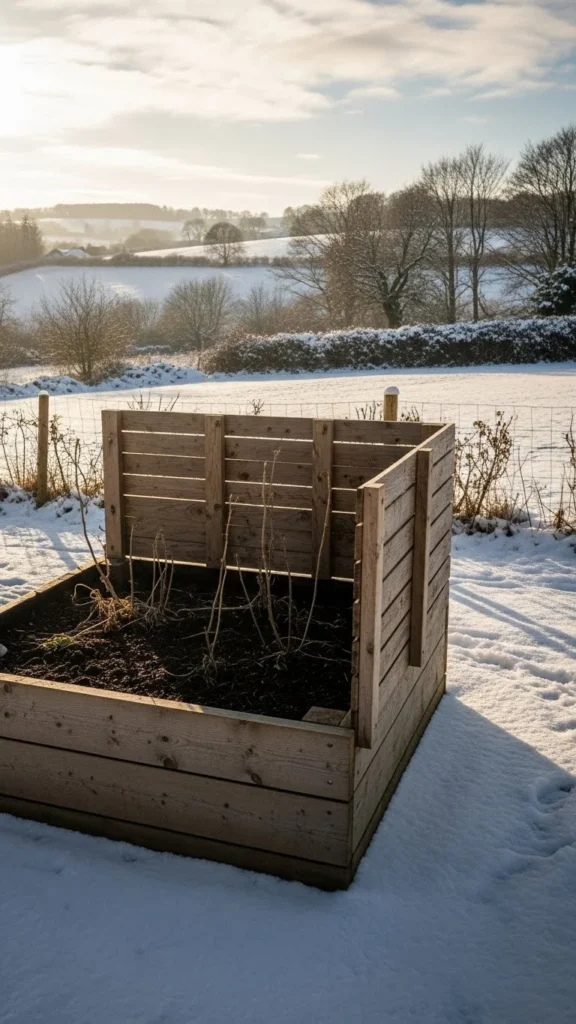
Harsh winds steal warmth from soil.
Place small wooden or plastic panels at the windy end of your garden.
Keep them short so light still reaches the plants.
You can repurpose old fence pieces or pallet boards.
Angle the panel slightly to push wind upward.
This tiny adjustment keeps your winter beds steadier.
10. Try Cold-Hardy Herbs
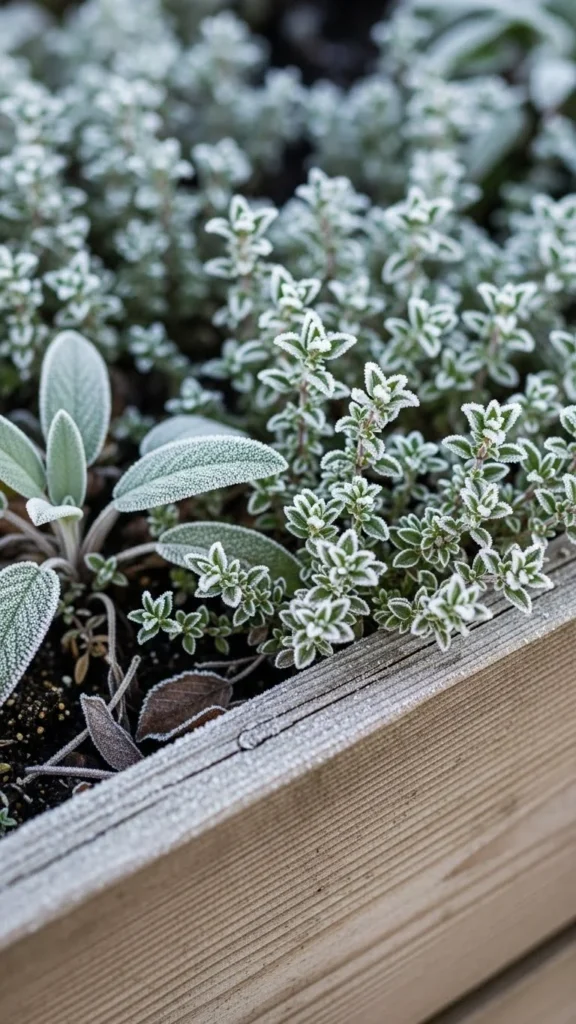
Thyme, sage, and chives handle winter well.
Plant a few in one corner of your raised bed.
They keep growing slowly even during cold nights.
Trim small amounts for cooking without stressing the plants.
Place straw around their bases for comfort.
This gives your bed some life while other crops rest.
11. Cover Soil With Cardboard Sheets
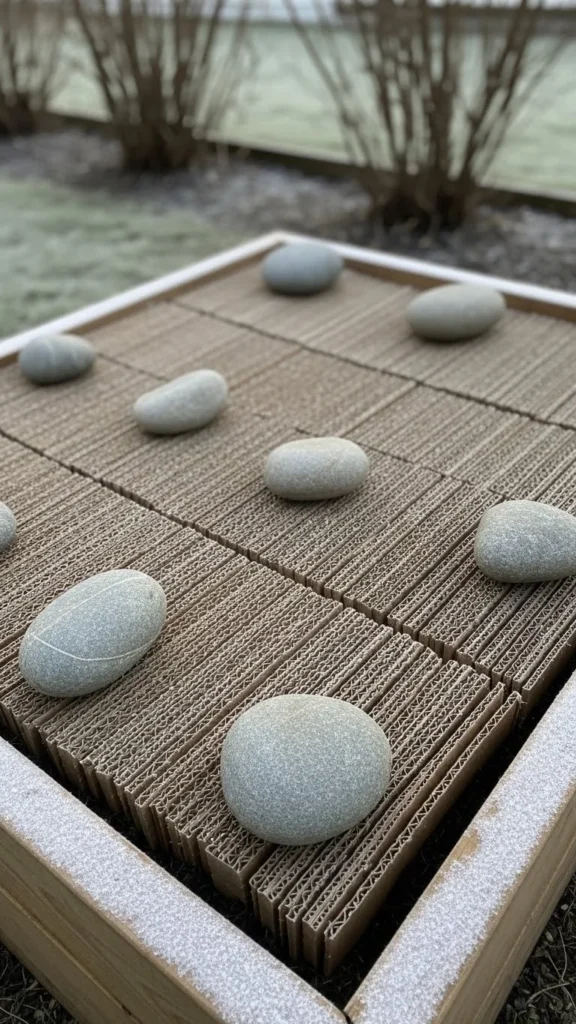
Cardboard blocks weeds that try to sprout in winter.
Cut pieces to match your bed shape.
Add small stones on top so they stay in place.
The cardboard also helps soil stay calmer under frost.
Use clean packaging without tape.
Remove pieces when you’re ready for planting.
12. Mix in Compost Before Freezing Nights
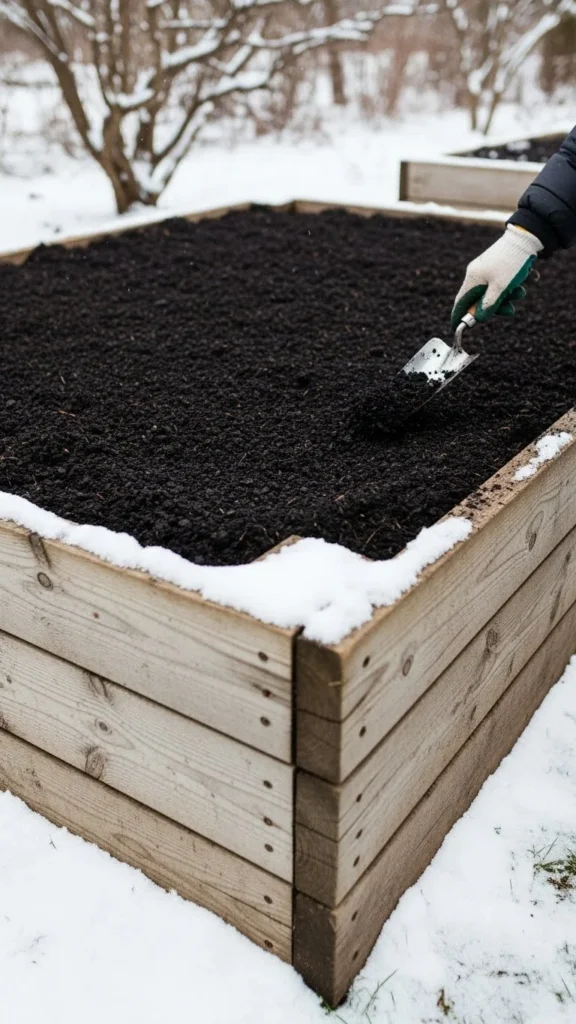
A light compost layer helps soil stay active.
Spread it across the top before cold nights settle in.
This keeps microbes working slowly through winter.
You don’t need much—just enough to coat the surface.
If the compost clumps, break it apart with your fingers.
This simple action gets your spring soil ready early.
13. Try Deep Bed Edges for Warmth
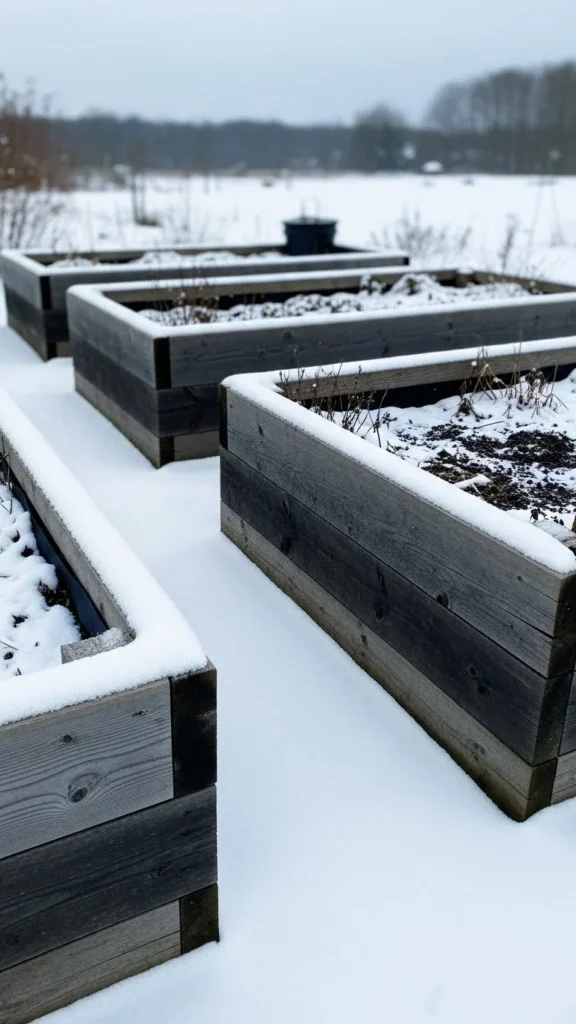
Tall edges help protect soil from wind and frost.
Build deeper frames using extra wood.
This creates a more sheltered space inside.
Fill the extra height with layered soil and leaves.
If you can’t raise the entire bed, raise just one side.
It helps roots stay calmer through winter chills.
14. Keep Tools Close in a Small Storage Box
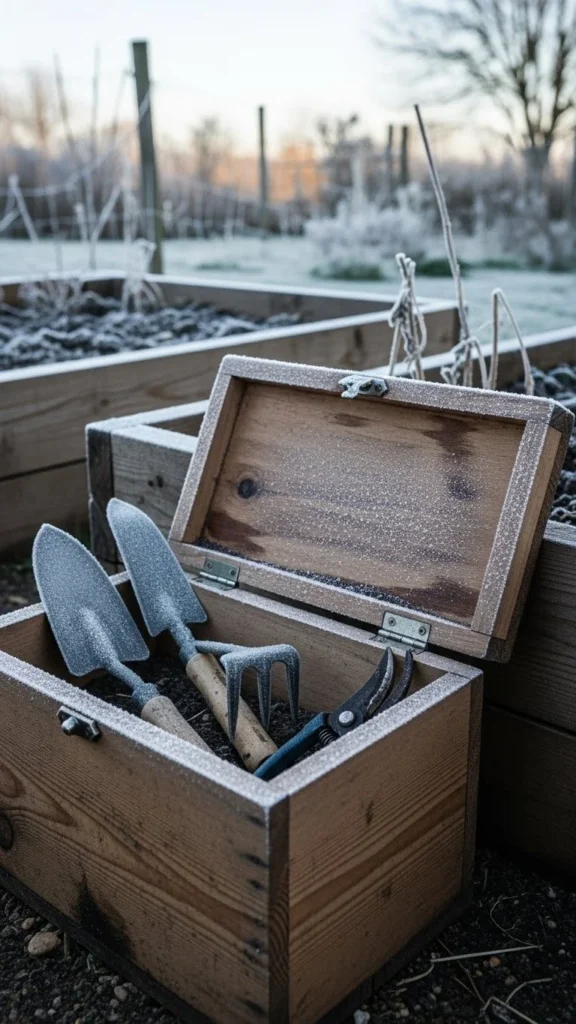
Winter mornings feel easier when tools sit nearby.
Use a small box or crate next to your beds.
Store gloves, shears, and row-cover clips.
This avoids long walks back and forth in the cold.
A dry place helps tools last longer.
This tiny habit saves time and keeps winter sessions short.
15. Try Simple Thermal Rocks

Dark rocks collect warmth during daylight.
Place them along one side of the bed.
They release gentle heat as the air cools.
Choose stones that are round so they don’t damage roots.
If snow covers them, leave them in place—they still help.
This trick costs almost nothing and adds steady comfort to the bed.
16. Plant Garlic for a No-Fuss Winter Crop
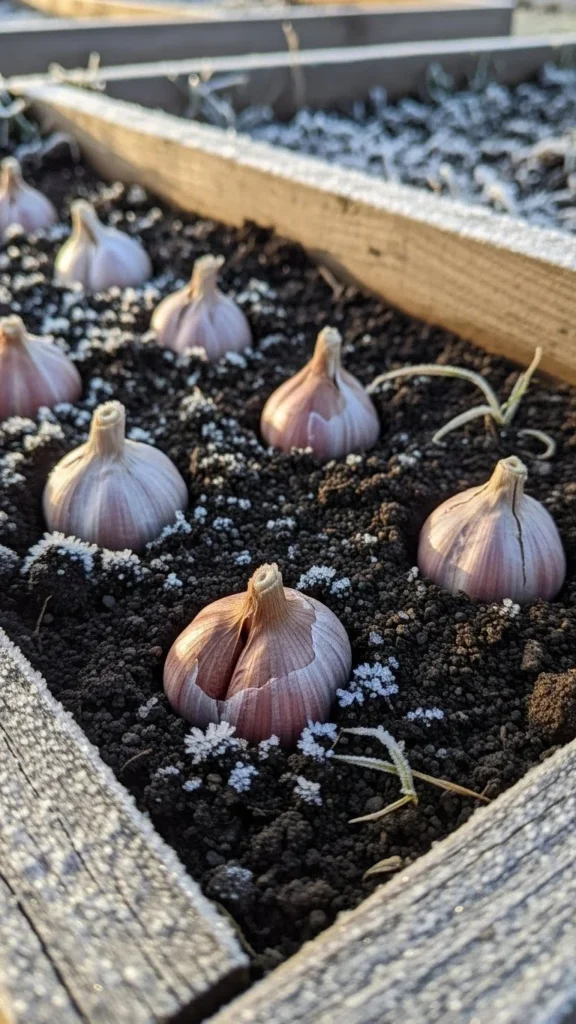
Garlic thrives in cold months.
Space the cloves a few inches apart and press them gently into the soil.
Cover with straw or leaves.
You only check them occasionally through winter.
They grow slowly without much attention.
By spring, shoots appear and the bed feels active again.
17. Keep a Clear Water Drainage Channel
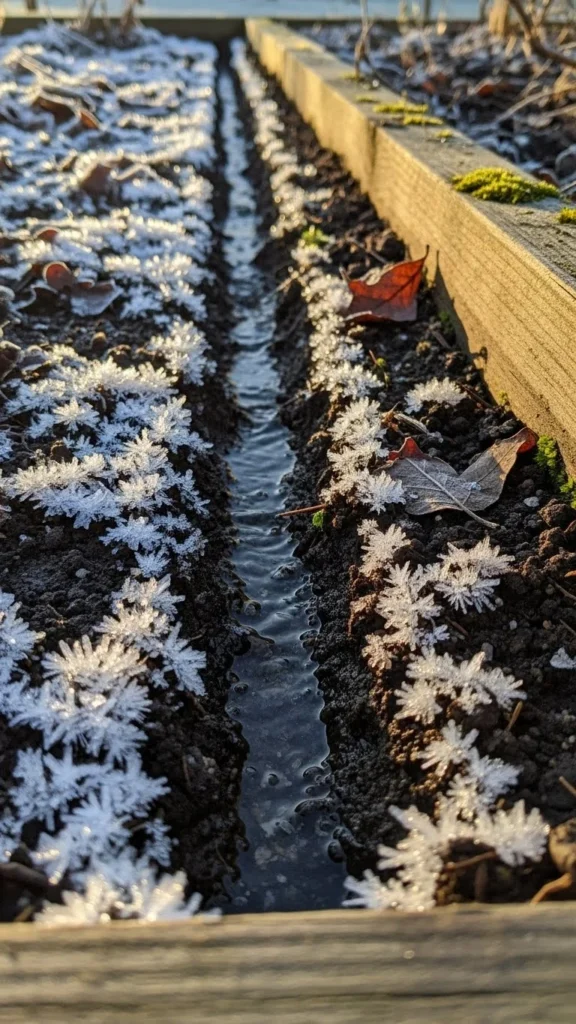
Water buildup harms winter beds.
Dig a shallow groove around the outer edge.
This simple channel helps pull water away from your soil.
If the trench fills with debris, clear it with a small stick.
It also reduces mold buildup in the corners of your bed.
This helps your soil stay loose and lighter.
18. Use Bubble Wrap for Extra Warmth
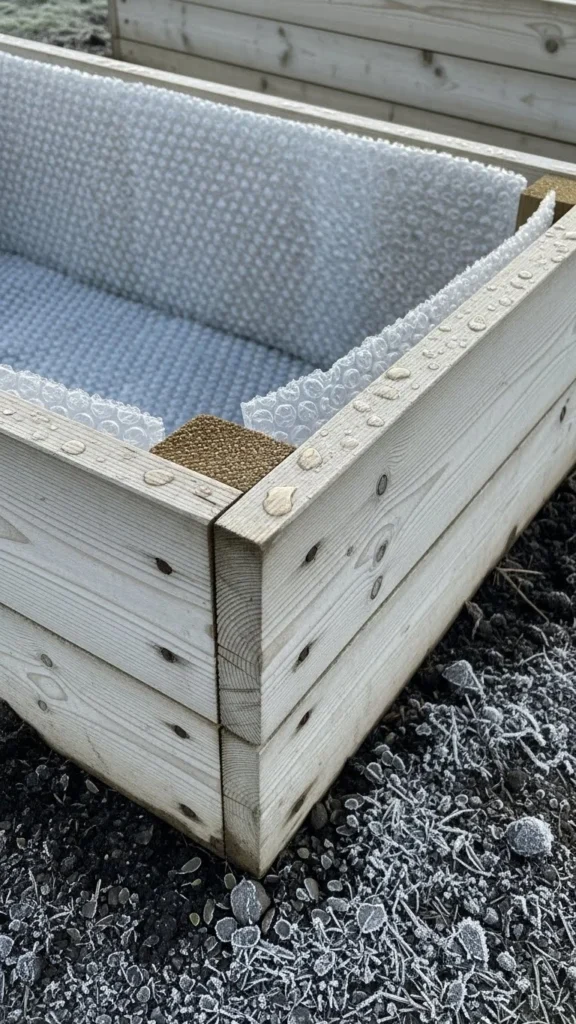
Bubble wrap adds a soft thermal layer.
Attach it to the inner sides of the bed.
It keeps the soil area calmer and helps tender greens.
Use clips instead of nails so you can remove it later.
If condensation builds, unclip one corner for airflow.
It’s an easy step that adds seasonal comfort.
19. Add a Simple Soil Thermometer
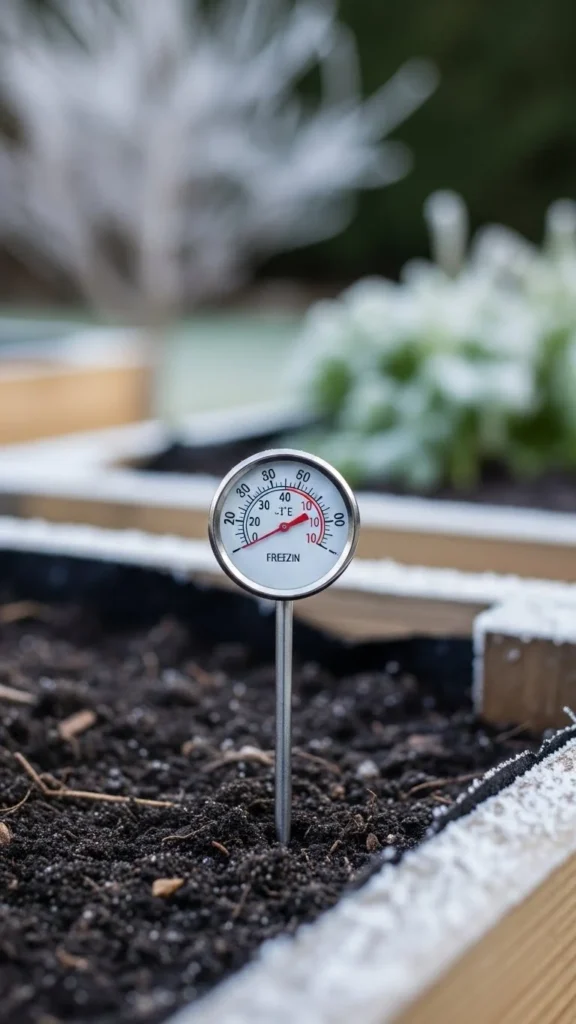
A small thermometer helps you check conditions quickly.
Push it into the top layer each morning.
This tells you when to open covers or add mulch.
Keep the thermometer in your nearby storage box.
Choose one with clear markings.
This small tool helps you stay consistent without guessing.
20. Fill Empty Bed Sections With Cover Crops
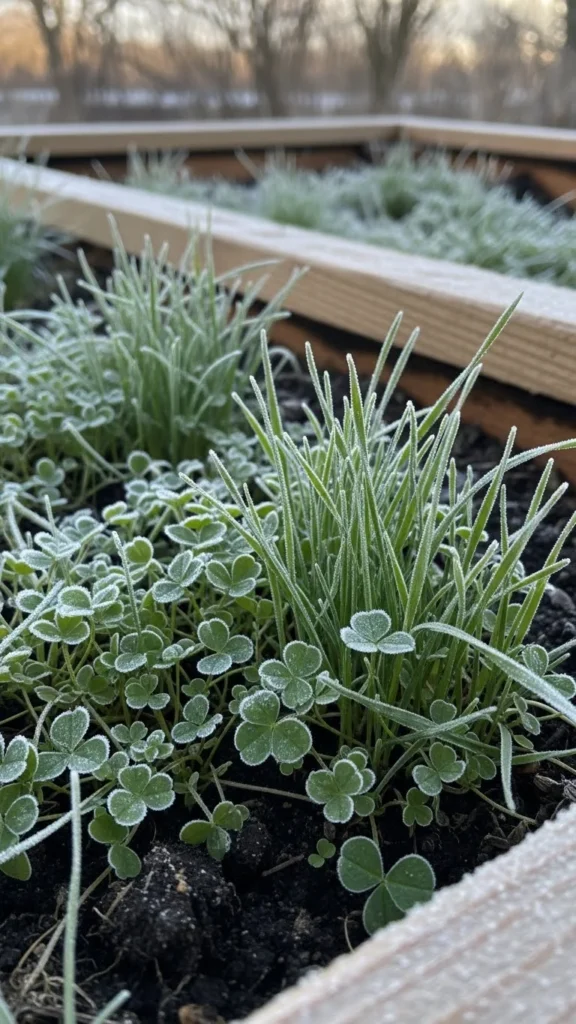
If part of your bed sits unused, plant cover crops.
They hold the soil together and stop erosion.
Scatter seeds evenly, then rake lightly.
Once they sprout, they handle winter well.
In spring, you can trim them and mix them into the bed.
This action keeps your soil healthier over the long season.
21. Add a Simple Reflective Panel for Light
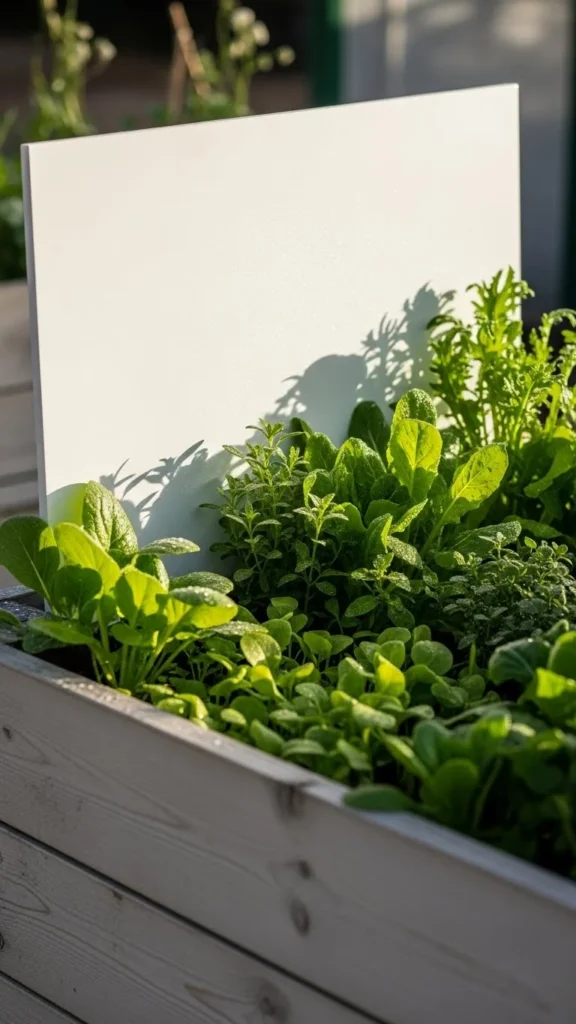
Winter sunlight feels weak, but a reflective panel helps brighten your beds.
Place a white board or sheet of metal behind the bed.
Angle it toward your plants.
This helps them catch more light during short days.
Keep the panel clean by wiping off frost each morning.
It’s a quick, low-cost touch that brings more life into your winter garden.
Conclusion
Winter raised-bed gardening feels far easier when you follow small, steady habits. Simple covers, warm layers, light watering, and structural touches help your beds stay active even in low temperatures. Try a few of these methods this season and mix them based on your space. With each step, your raised beds become calmer, cleaner, and ready for early spring growth.

Leave a Reply