

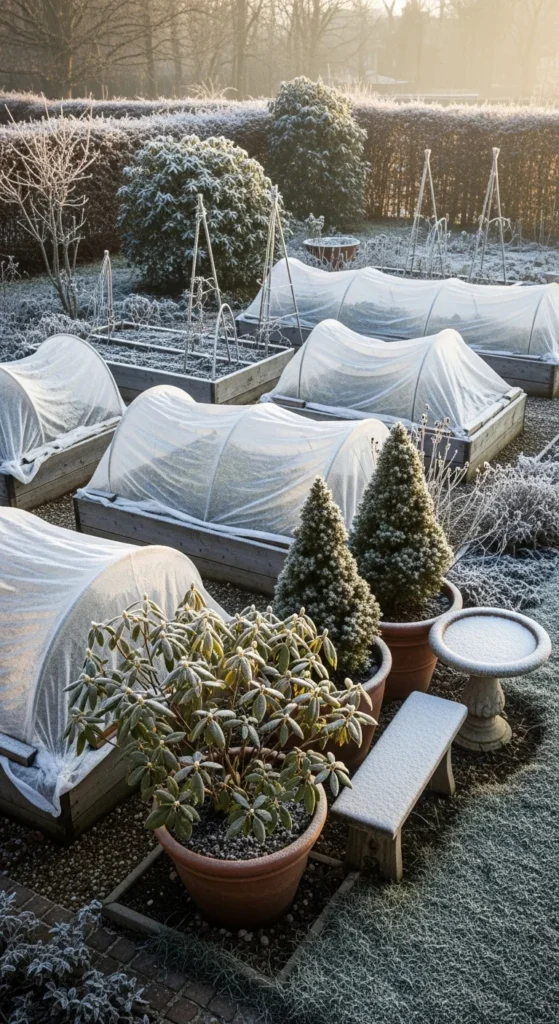
Winter doesn’t have to mean the end of your garden. With a few smart adjustments, you can keep plants thriving even when temperatures drop. From insulating soil to choosing hardy varieties, every small step makes a big difference. These 25 winter gardening tricks will help you protect your greens, stretch your growing season, and keep your backyard full of life until spring returns.
1. Use Mulch as Natural Insulation
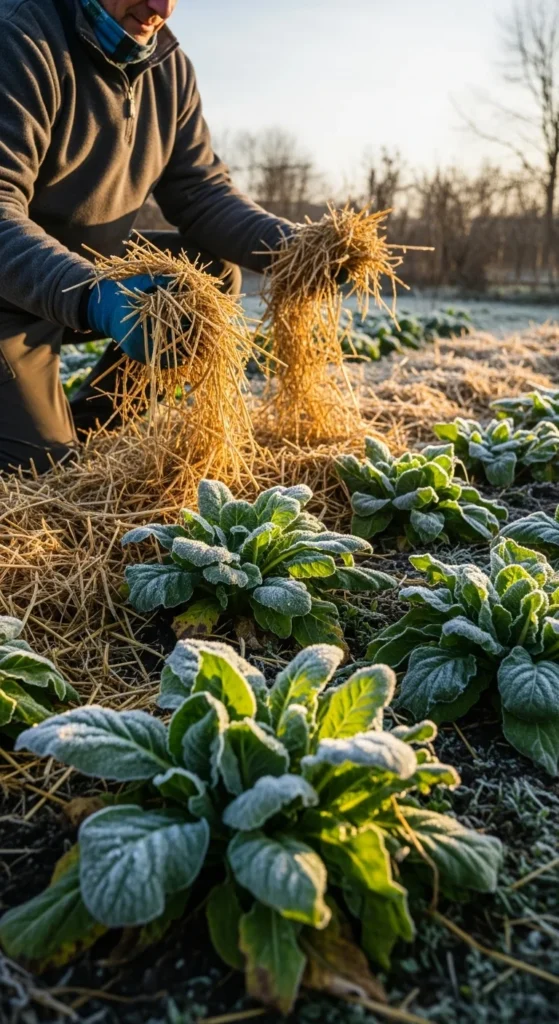
Mulch acts like a warm blanket for your soil. Spread a 2–3-inch layer of straw, leaves, or wood chips around your plants. This keeps roots warm and prevents soil from freezing and thawing too quickly. You can even use shredded newspaper or pine needles in a pinch. Reapply if it compresses under snow. Mulching is one of the simplest ways to help perennials survive winter.
2. Build a Cold Frame
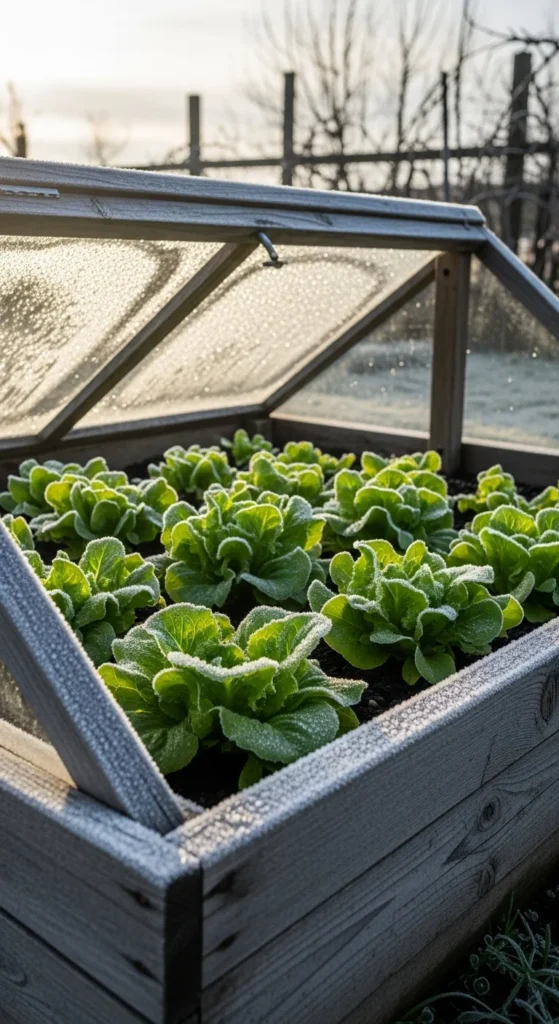
Cold frames trap sunlight and warmth, creating a mini greenhouse effect. Build one from scrap wood and an old windowpane. Place it over cold-tolerant crops like spinach, kale, or lettuce. During sunny days, open the lid for airflow. Close it before nightfall to retain heat. Cold frames extend your harvest and protect delicate plants from frost.
3. Cover Plants with Frost Cloths
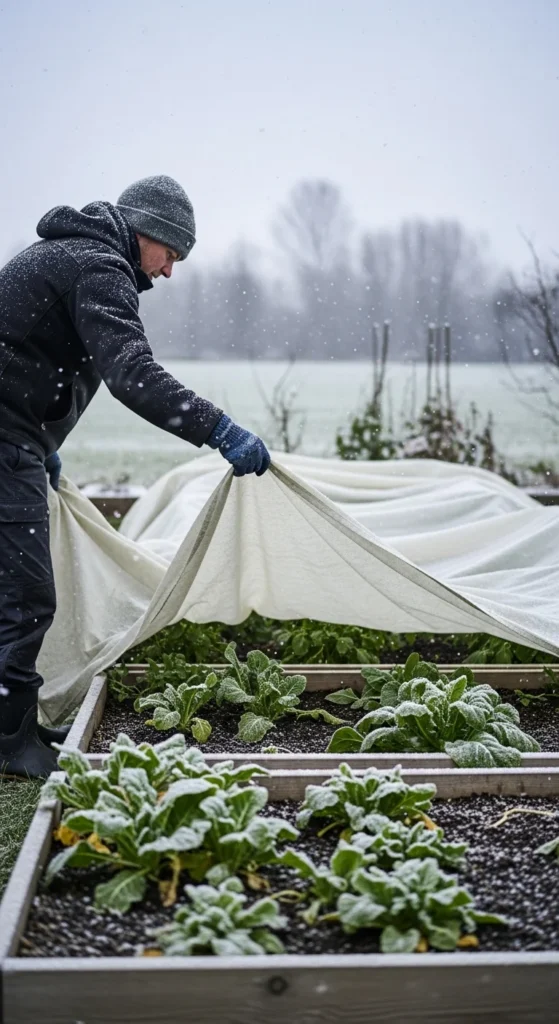
Frost cloths shield plants from harsh wind and icy nights. Use breathable fabric that allows light and moisture to pass through. Drape it loosely and secure with stones or clips. Avoid plastic—it traps moisture and can freeze plants. Keep covers handy to throw over tender plants during sudden temperature drops.
4. Water Before Freezes

Moist soil retains heat better than dry soil. Water your plants thoroughly a day before a freeze. The added moisture helps stabilize root temperatures. Just avoid watering when the soil is already frozen. This simple habit can make the difference between a live plant and frost damage.
5. Move Potted Plants Indoors

Portable plants should move indoors before hard frost. Place them near sunny windows where they’ll get at least six hours of light daily. Trim dead leaves and check for pests before bringing them inside. For large containers, slide them on dollies or trays to avoid heavy lifting.
6. Group Pots Together for Warmth
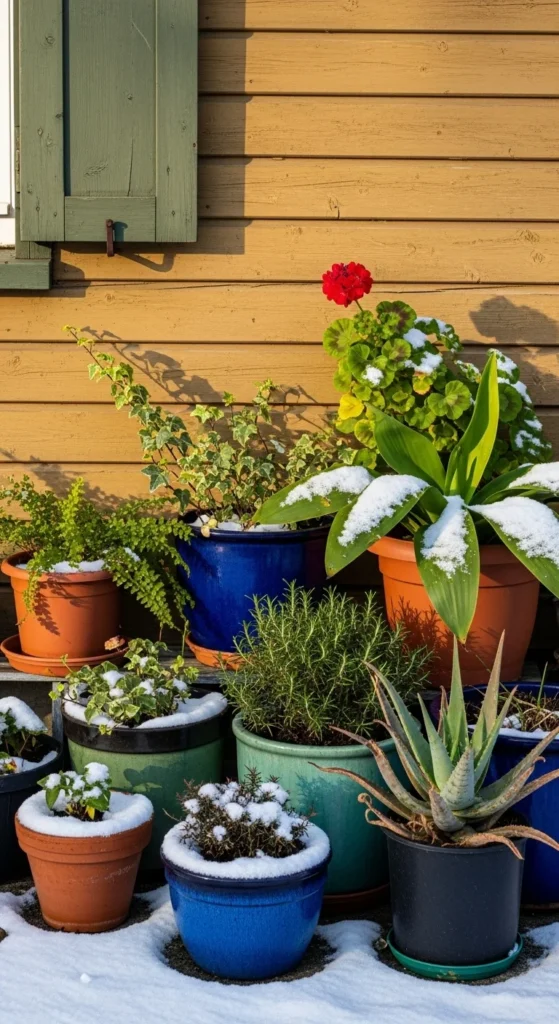
Group containers closely to share warmth. Place them near walls or fences that absorb daytime heat. Add straw or blankets around the base for extra insulation. This small arrangement can raise the temperature just enough to keep roots from freezing solid.
7. Try a Hoop House
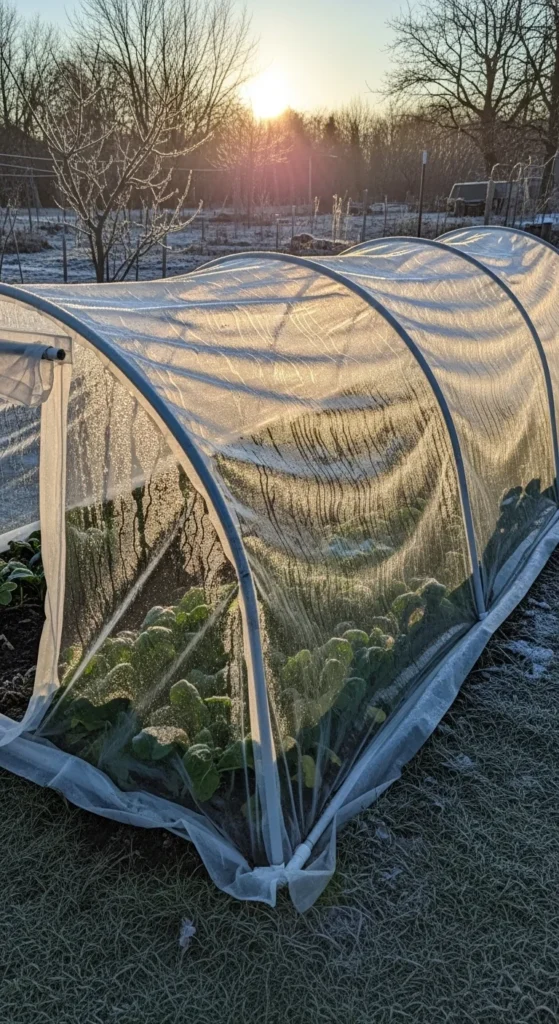
A hoop house works like a low-cost greenhouse. Use PVC pipes to form arches over your garden bed and cover them with clear plastic or row fabric. This traps heat and blocks cold wind. Great for growing cold-tolerant crops or starting seeds early. It’s simple to build and reuse each year.
8. Wrap Trees with Burlap
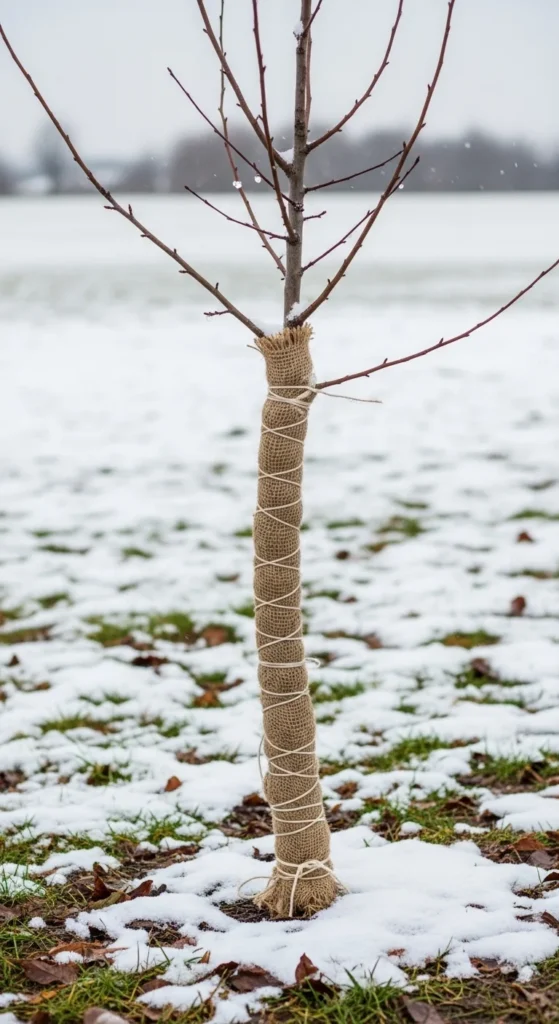
Burlap wraps protect trunks and branches from cold windburn. Start at the base and work upward, overlapping each layer. This is especially useful for young or newly planted trees. Remove the wrap in early spring to prevent moisture buildup. Burlap allows air circulation while shielding from icy gusts.
9. Use Windbreaks to Block Chill
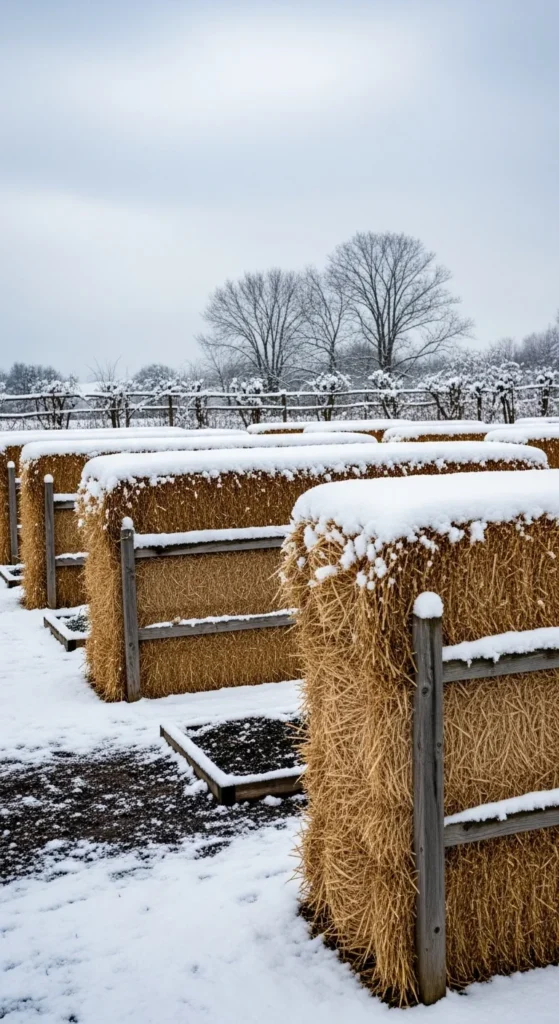
Wind can dry out and damage plants faster than frost itself. Create windbreaks using hay bales, fencing, or even stacked pots. Place them on the side facing the strongest winter winds. This simple structure cuts wind speed and helps your garden retain warmth.
10. Add a Layer of Compost
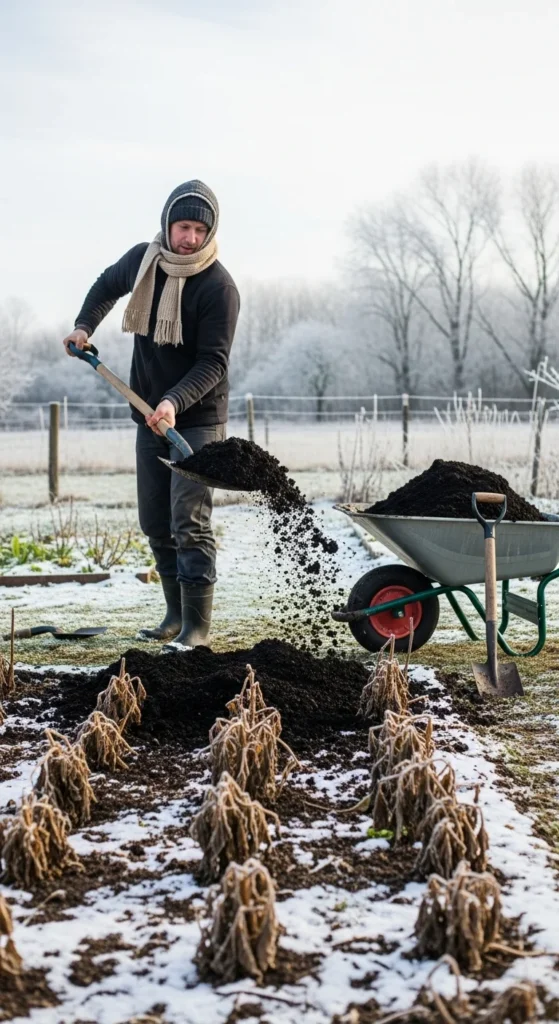
Compost acts like a warm, nutrient-rich blanket. Spread a thin layer over your soil before the ground freezes. It insulates roots while slowly releasing nutrients all winter. By spring, your soil will be rich and ready for planting again.
11. Use Mini Greenhouses
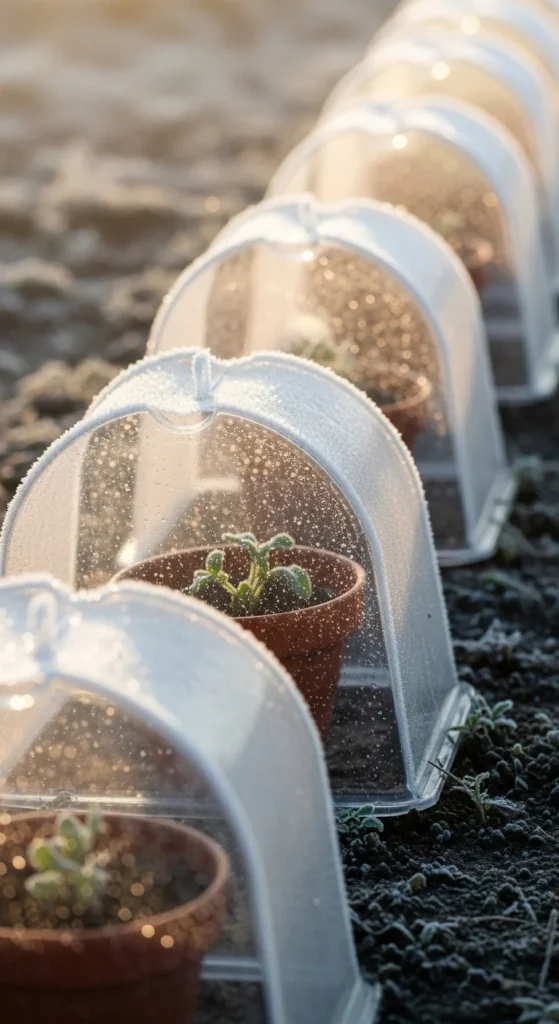
Mini greenhouses are perfect for patios or small gardens. They protect plants from frost while letting in sunlight. Many are foldable or easy to assemble. Use them for herbs, greens, or starter seedlings. They’re a convenient way to keep growth steady during cold months.
12. Choose Cold-Hardy Varieties
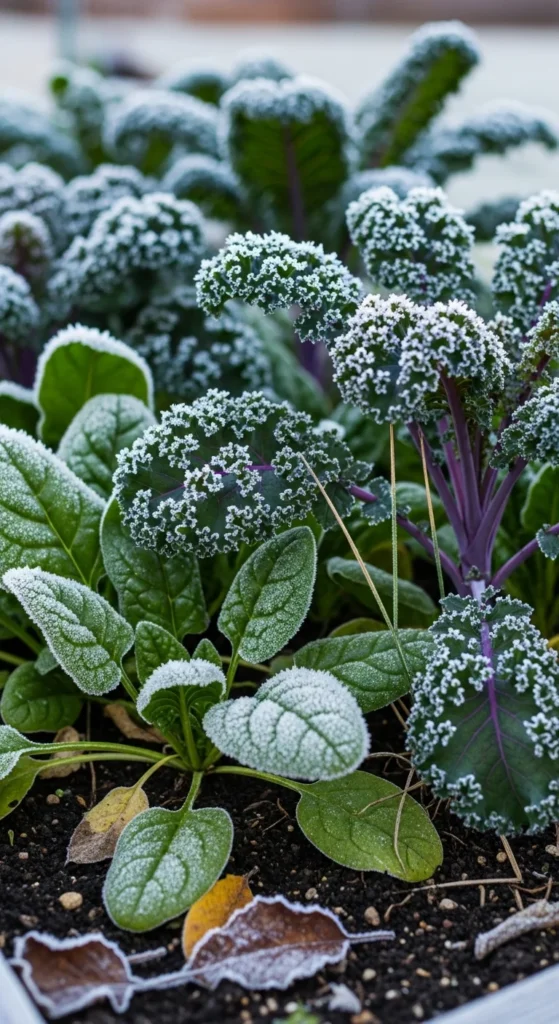
Some plants handle cold weather better than others. Grow varieties like kale, collards, carrots, or winter lettuce. These can survive short freezes with minimal protection. Check seed packets for frost tolerance before planting. Cold-hardy crops make winter gardening much easier.
13. Mulch Around Trees and Shrubs
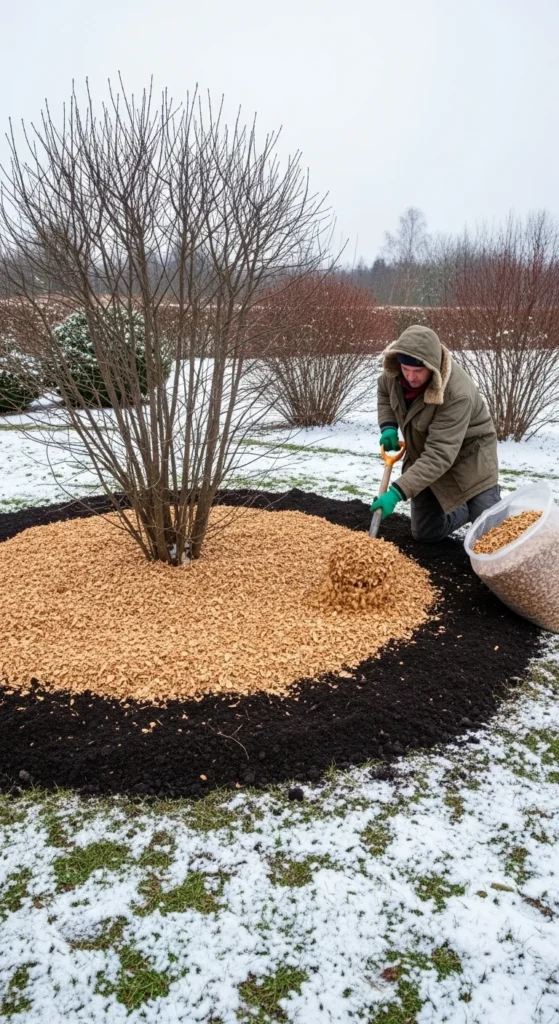
Trees and shrubs lose a lot of heat through their roots. Mulch around the base helps trap warmth and moisture. Keep mulch a few inches from the trunk to prevent rot. It’s an easy way to protect long-term plants from temperature swings.
14. Bring Herbs Indoors
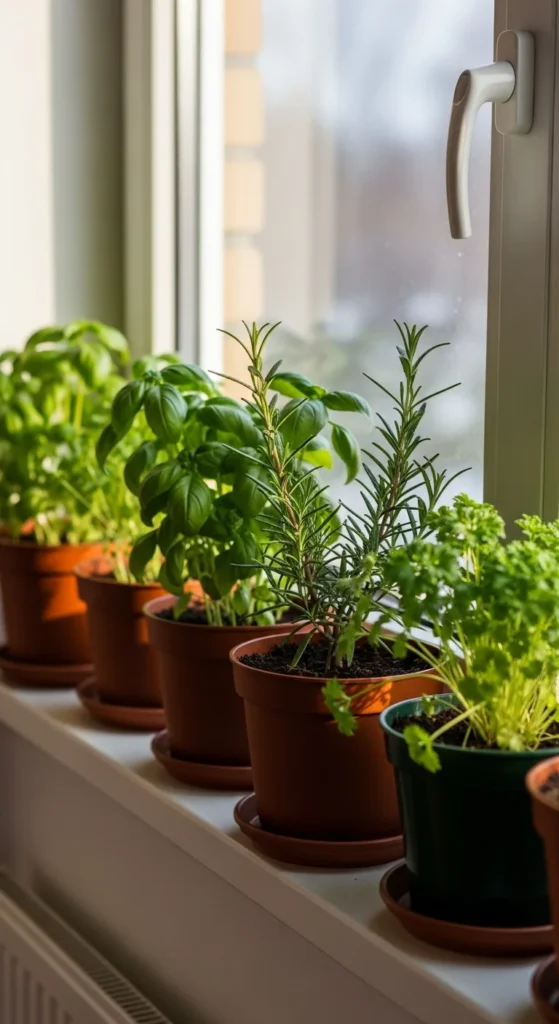
Herbs like basil and rosemary don’t handle frost well. Move them indoors near a sunny window. Use containers with good drainage and mist them lightly if air is dry. A kitchen windowsill is perfect—you’ll have fresh herbs even in the coldest months.
15. Protect Raised Beds with Covers
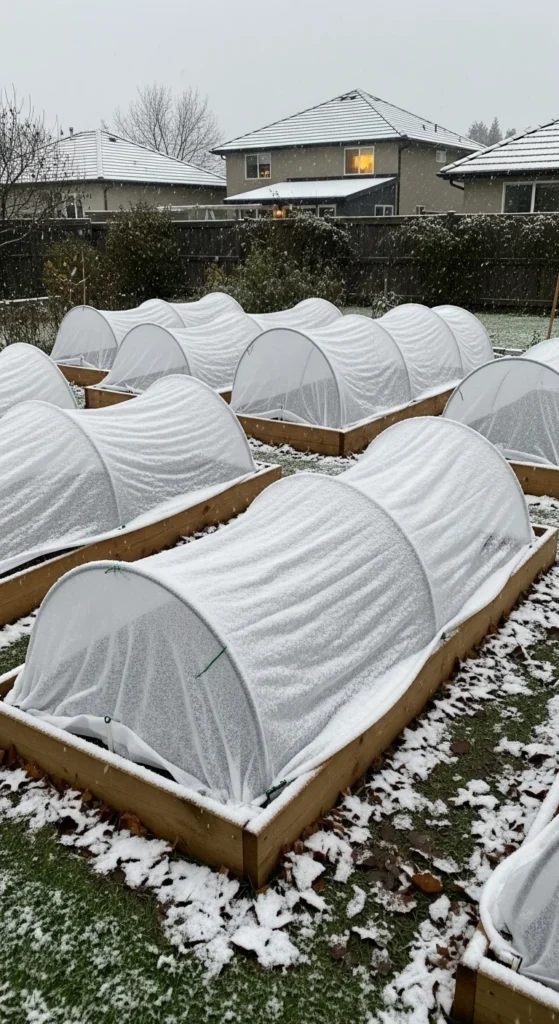
Raised beds freeze faster than in-ground gardens because air circulates around them. Protect them with frost blankets or temporary lids. You can even cover beds with cardboard during cold nights. Combine this with mulch for double protection against freezing.
16. Keep the Soil Moist
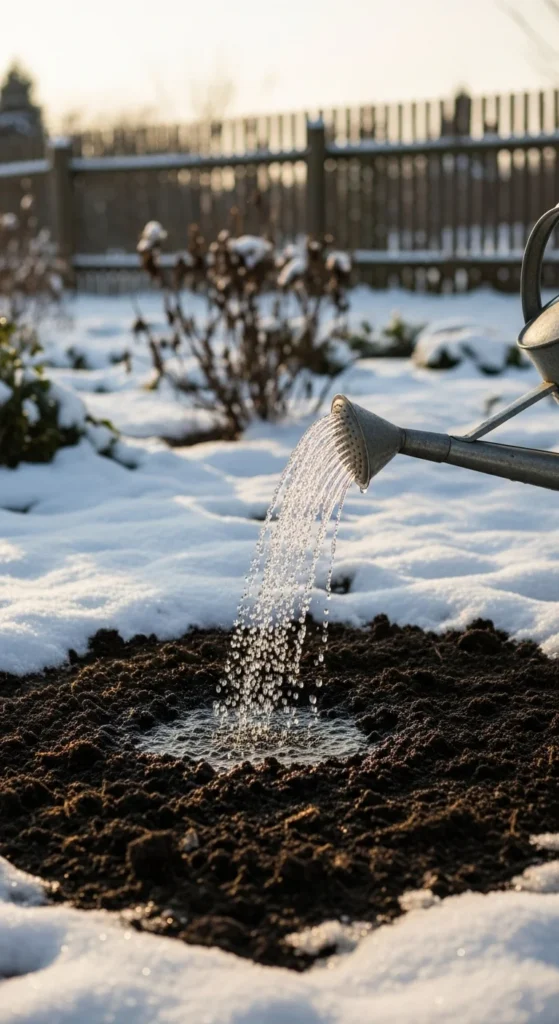
Dry soil cools faster and damages roots. Keep soil slightly moist—not soggy—throughout winter. Water during midday when temperatures are warmer to avoid ice formation. Moist soil helps roots breathe and prevents dehydration caused by winter winds.
17. Use Bubble Wrap on Greenhouse Windows

Bubble wrap isn’t just for packaging—it’s a great insulator. Line greenhouse panels or cold frames with it to trap heat. The air pockets retain warmth without blocking sunlight. It’s inexpensive and reusable year after year.
18. Keep Snow as a Natural Blanket

A light layer of snow actually protects plants by acting as insulation. Don’t rush to remove it unless it’s too heavy. Snow traps warmth and prevents temperature swings. Just gently brush off branches that may bend under weight.
19. Store Garden Hoses Indoors
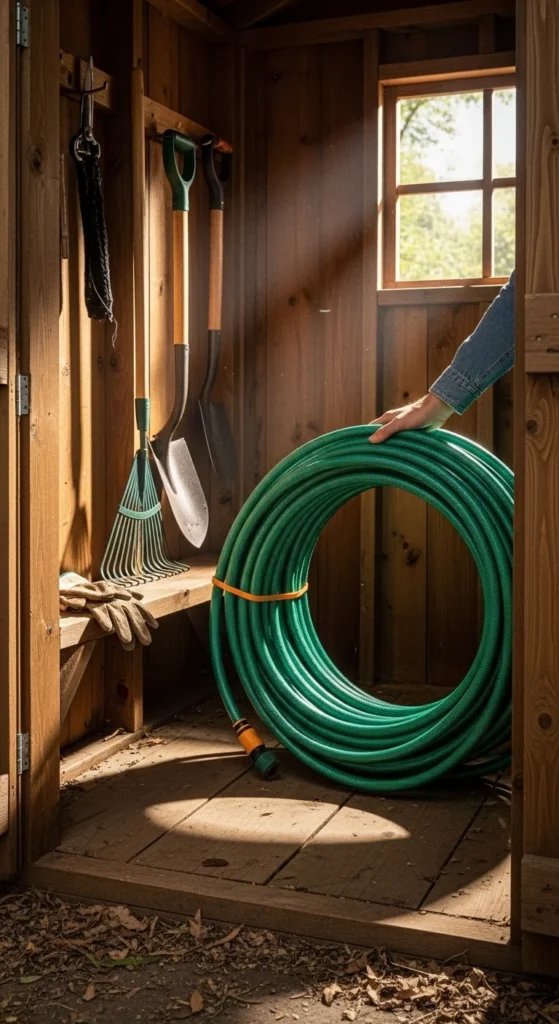
Freezing water can crack hoses. Drain them completely and store inside your garage or shed. This simple step prevents damage and extends hose life. Keep one short hose handy indoors for occasional watering on warmer days.
20. Add Row Covers for Extra Protection
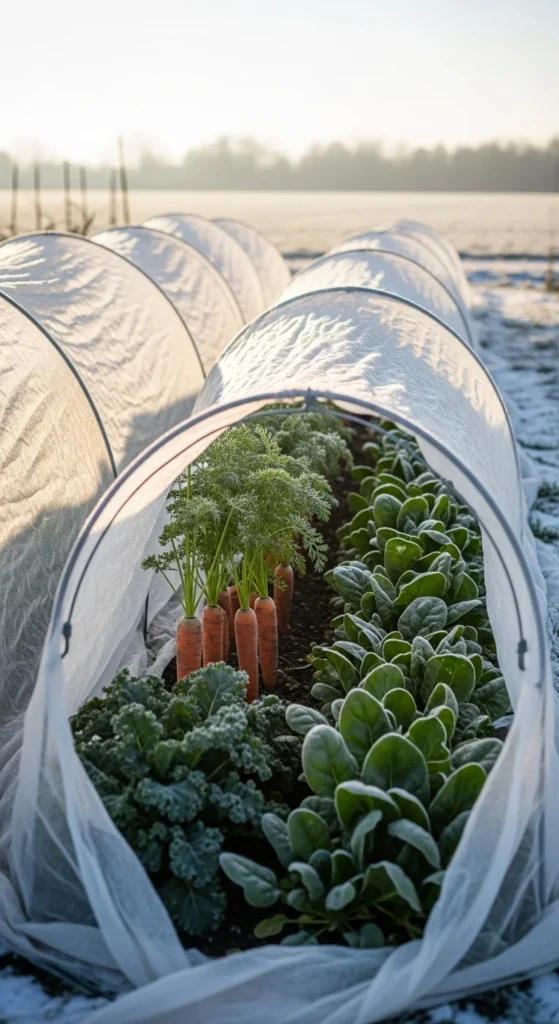
Row covers protect plants from frost and pests. Use lightweight fabric that lets air and moisture through. Secure the edges with soil or stones. Leave enough space for plants to grow underneath. Row covers are reusable and perfect for winter greens.
21. Use Thermal Water Jugs
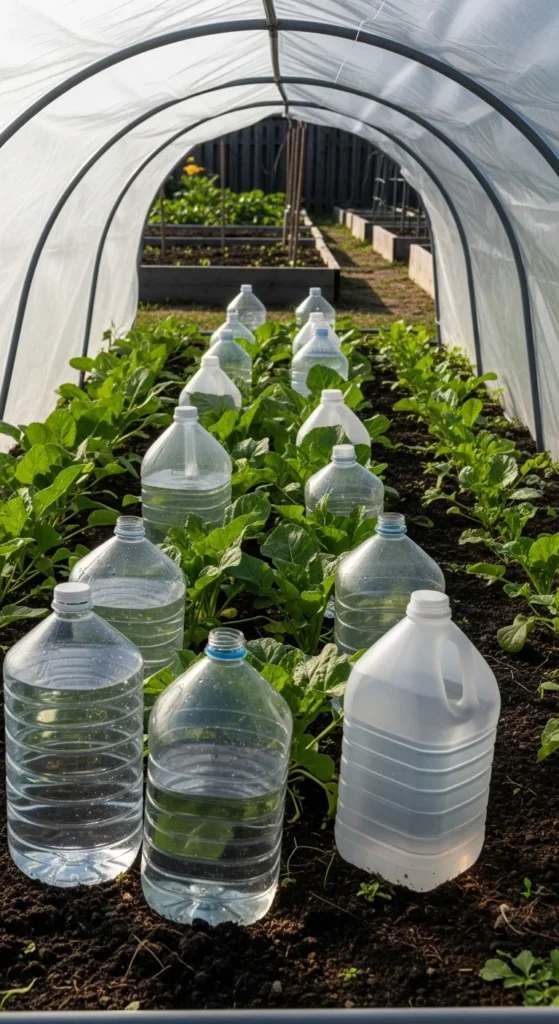
Fill dark-colored jugs with water and place them around your plants. During the day, they absorb sunlight; at night, they release stored heat. This small thermal trick can raise nighttime temperatures around your plants by a few degrees.
22. Prune Dormant Plants

Winter is the best time to prune trees and shrubs. Without leaves, you can see the structure clearly. Trim dead or crossing branches to promote healthy growth next spring. Always use clean, sharp shears to avoid disease.
23. Compost Indoors with a Worm Bin
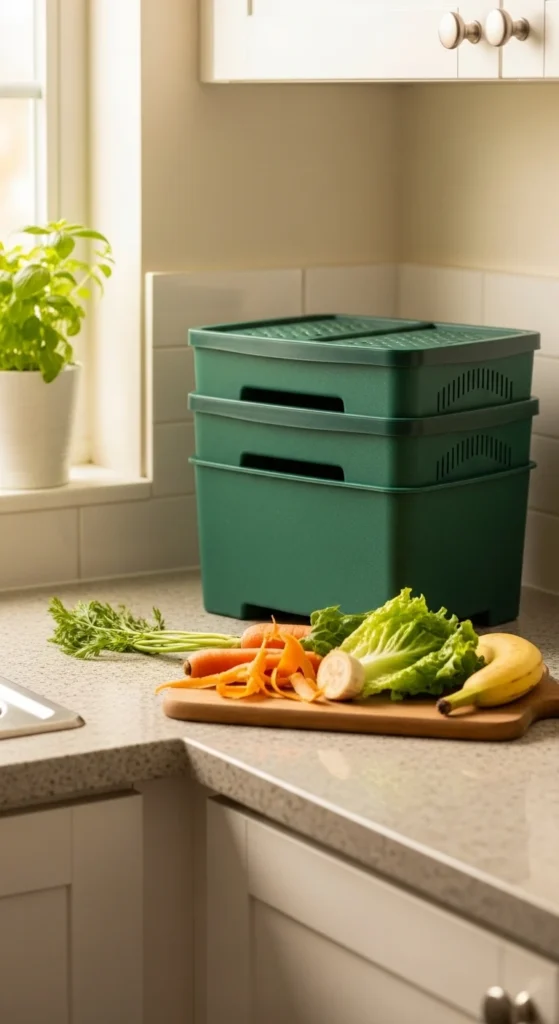
Keep composting going year-round with an indoor worm bin. Red wigglers break down scraps into nutrient-rich castings. The bin stays odor-free when balanced correctly. Use the compost later to feed your spring garden. It’s a great indoor project during winter.
24. Use Grow Lights for Indoor Gardening
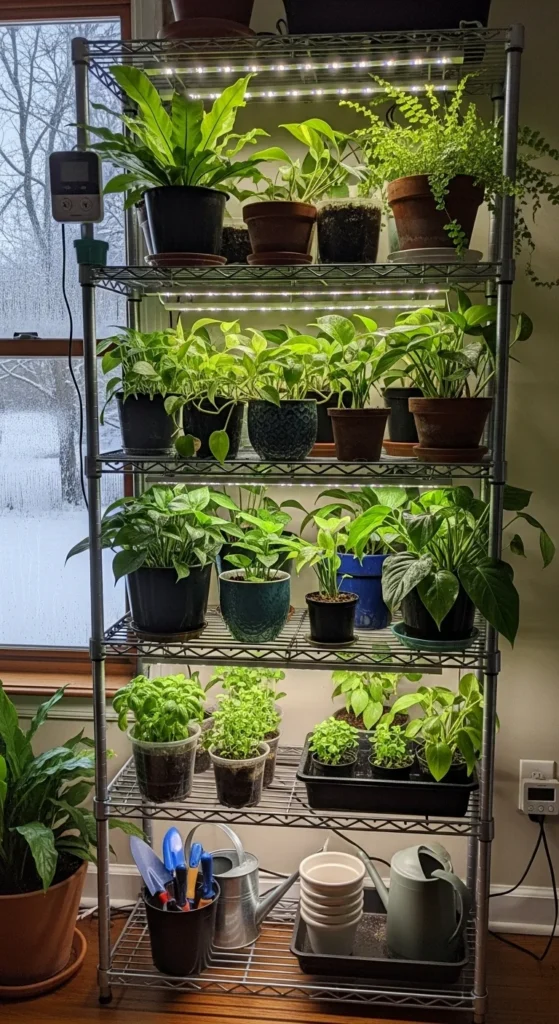
Grow lights make indoor gardening easy during short daylight hours. Place them about six inches above your plants and keep them on 12–14 hours daily. LEDs are efficient and gentle on leaves. Perfect for herbs, greens, or seedlings that crave extra light.
25. Keep Tools Clean and Oiled
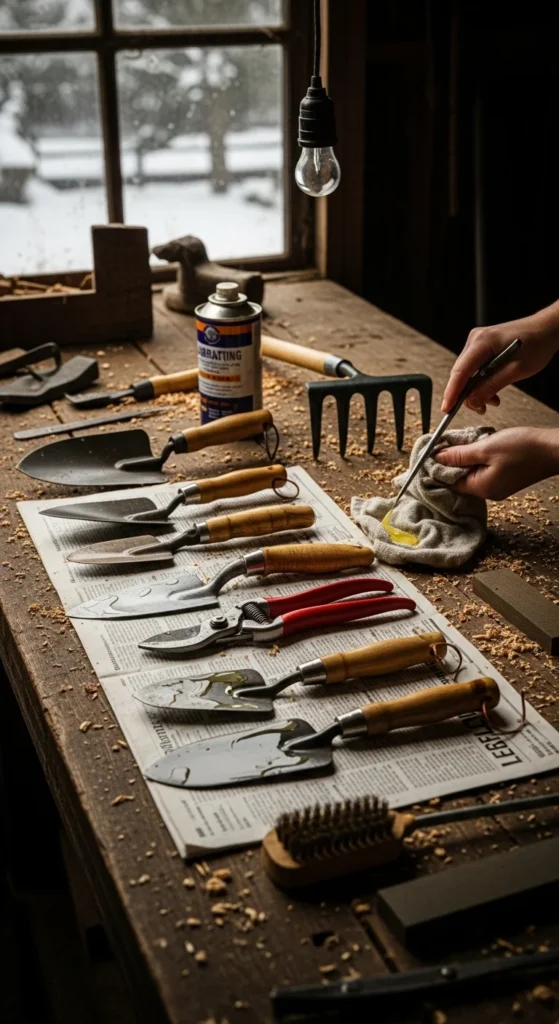
Winter downtime is great for maintenance. Clean dirt off your tools, sharpen blades, and apply a thin coat of oil to prevent rust. Store them indoors until spring. Caring for your tools now means smoother gardening when warm weather returns.
Conclusion
Winter gardening isn’t just about survival—it’s about smart preparation. By using mulch, cold frames, and clever protection methods, you can keep plants thriving all season long. Whether indoors or outdoors, every trick here helps your garden stay alive, healthy, and ready for spring’s first bloom. Start small, stay consistent, and watch your garden outlast the frost with ease.

Leave a Reply