

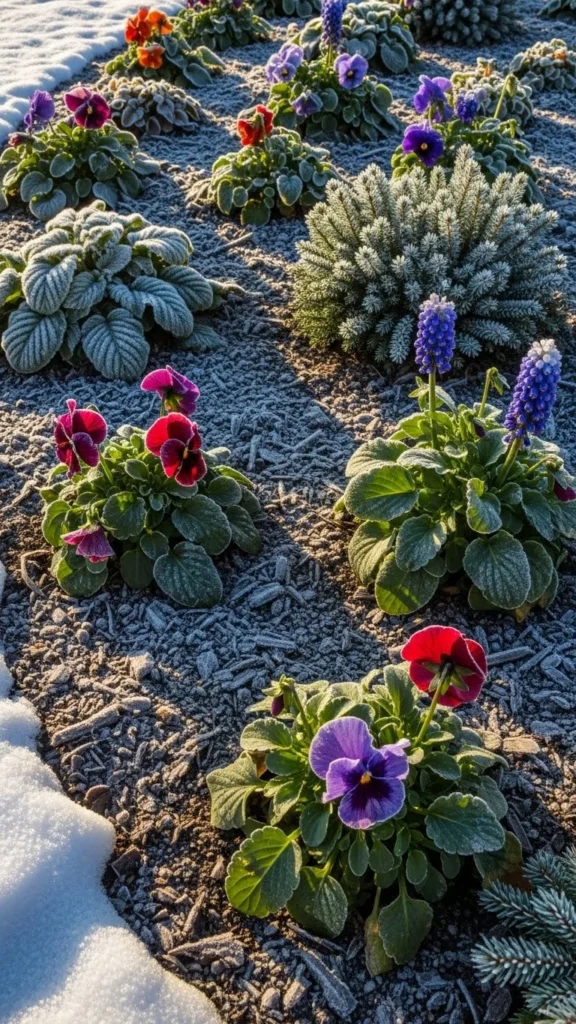
Cold months don’t have to leave your garden looking dull. Winter flower-beds can stay bright with the right layout, low-maintenance plants, and clever texture combinations. Many hardy flowers stay cheerful even under frost, and thoughtful arrangement helps each bed look full even on the darkest days. Below are practical ideas that turn outdoor spaces into colorful winter corners you can enjoy all season.
1. Frost-Friendly Pansy Borders
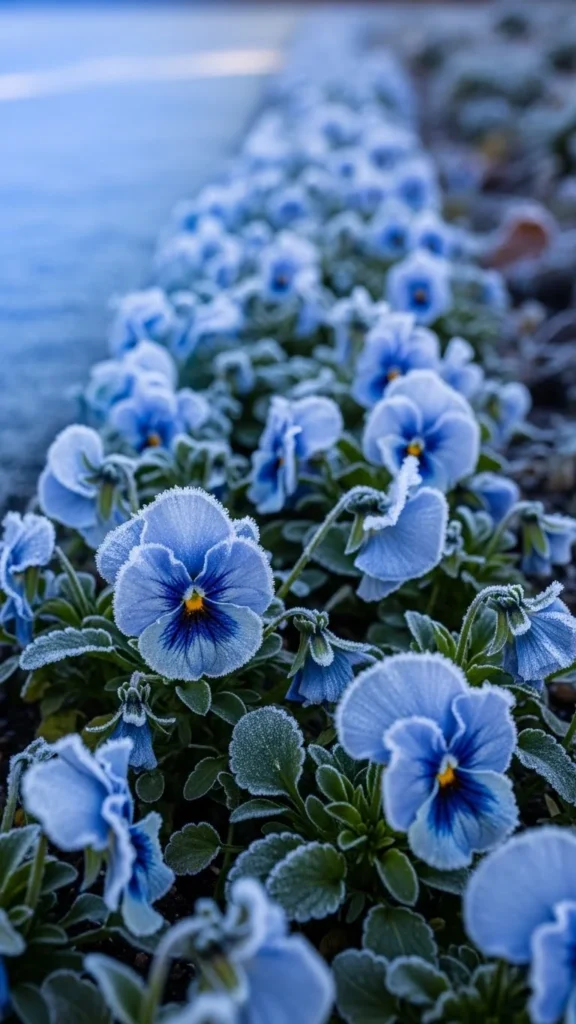
Pansies handle cold weather well and stay colorful even after frosty nights. A border of pansies helps frame any flower-bed and gives structure when leaves elsewhere drop. Choose colors that pop against winter backgrounds such as deep purple, yellow, or blue.
Plant them close together so the bed looks full. Add mulch around the stems to help them stay steady through cold spells. If the soil freezes often, mix in compost before planting. It helps roots settle in.
You can add a small strip of decorative stones behind the pansies. It gives a clean separation between lawn and bed. Try mixing in violas for more color variety. They hold up well and fill gaps nicely.
If you’re on a budget, buy small trays instead of mature plants. They spread quickly and look full within weeks. Rotate the colors in patterns for a simple visual effect.
2. Evergreen-Edged Flower Beds
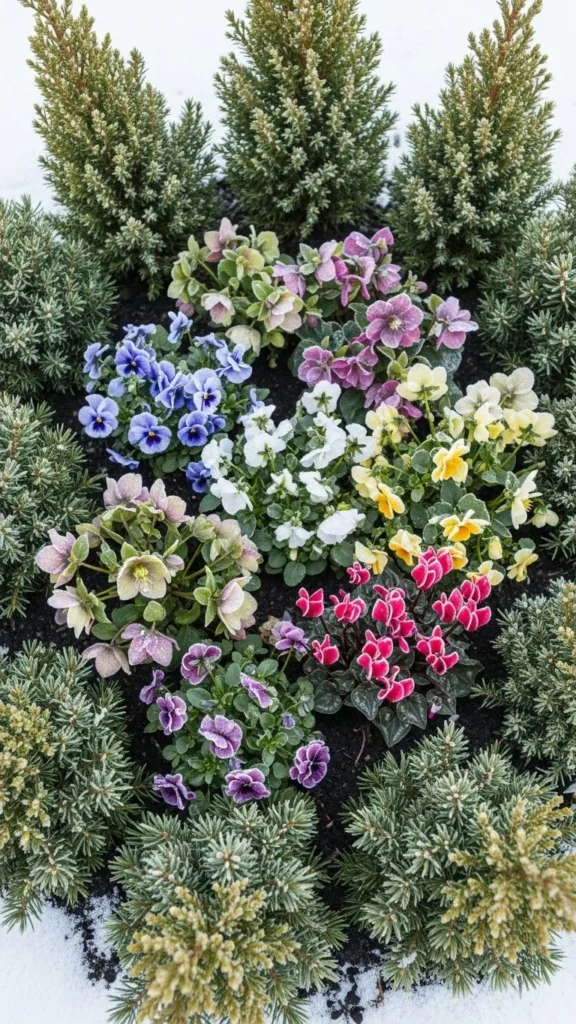
Evergreens act as natural anchors in winter beds. Their color stays steady all season, creating a strong backdrop for bright flowers. You don’t need large shrubs; dwarf varieties work well and fit almost any bed size.
Place them at the edge for framing. If the space is larger, add a second row behind them. Mix shapes—round, upright, and compact—for better contrast.
Plant hardy flowers such as primroses or hellebores in the center. Their colors stand out against the dark green foliage. You can also add white stones or bark mulch to brighten the look.
Evergreens are long-term plants, so space them well. Give them some room to grow. A budget-friendly idea is to start with smaller pots. They fill in over time and cost less.
3. Winter Primrose Color Blocks
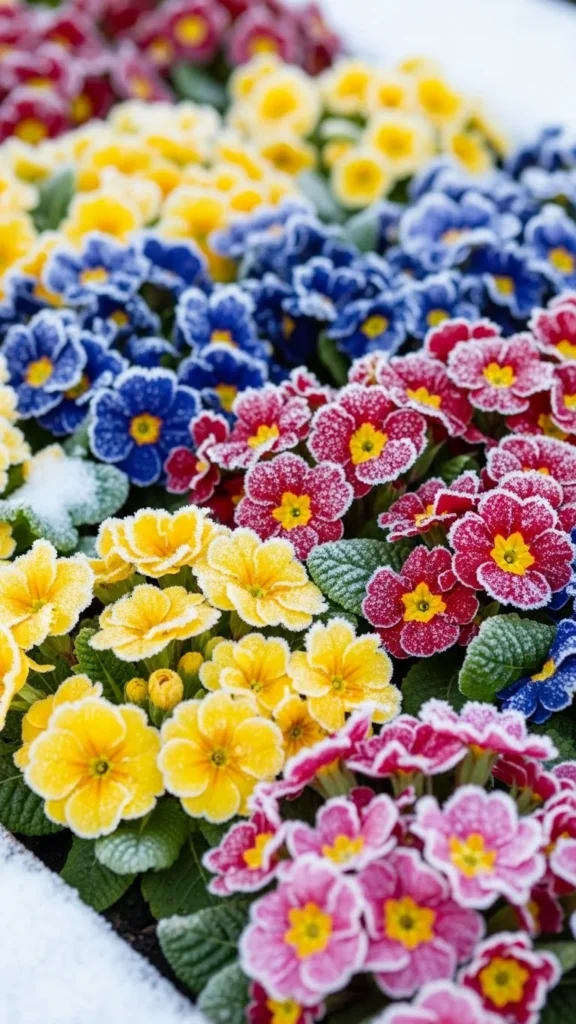
Primroses stay vivid even in cold weather. Their bright petals hold their shape through early frost. A color-block layout—large groups of a single color—creates a strong effect in winter beds.
Choose three or four shades and plant them in wide patches. This keeps the bed from looking scattered. Add darker mulch beneath them to help the colors stand out.
Water lightly in cold weather. Overwatering makes soil soggy. Primroses like moisture, but not too much in winter. If your bed feels dull, mix in a few white or pale-yellow blocks to brighten the space.
To save money, buy primroses late in the season. Garden centers often mark them down. They bounce back quickly once planted.
4. Hellebore Centerpiece Bed
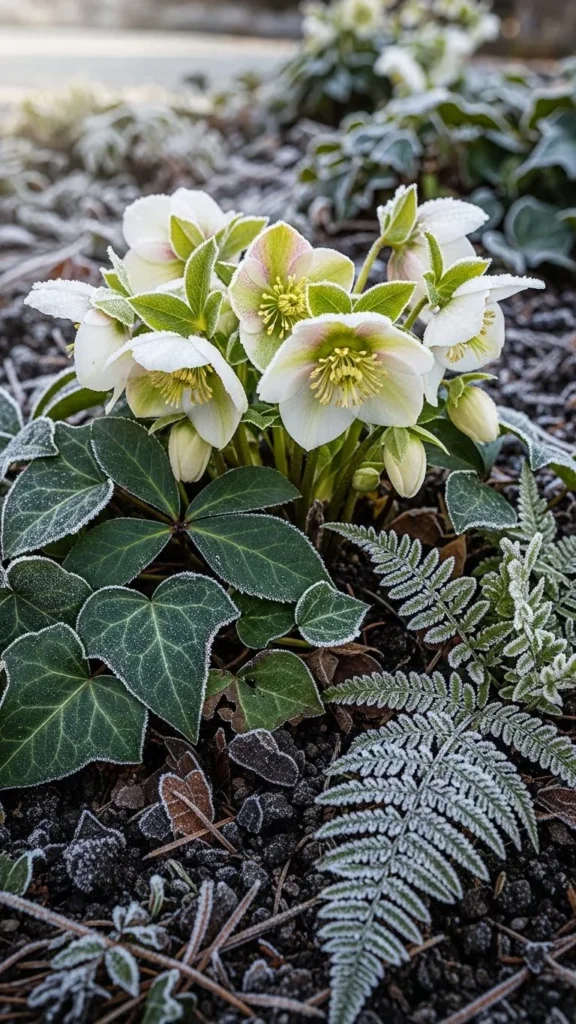
Hellebores shine in winter when most flowers fade. Their downward-facing blooms add charm and texture. Use them as a centerpiece in the bed to draw the eye inward.
Choose varieties with deep pink, green, or white petals. Plant them slightly higher than surrounding flowers. This gives them better visibility in low-angle winter light.
Add a ring of small plants around them. Cyclamen or primroses work well. Keep the soil slightly mulched to protect the roots. Hellebores like shaded beds, so plant them next to a fence or evergreen shrub.
If you want variety, mix different heights in the same bed. Taller hellebores give a layered look. They last for years, so they’re a smart long-term addition.
5. Dusty Miller Silver Frames
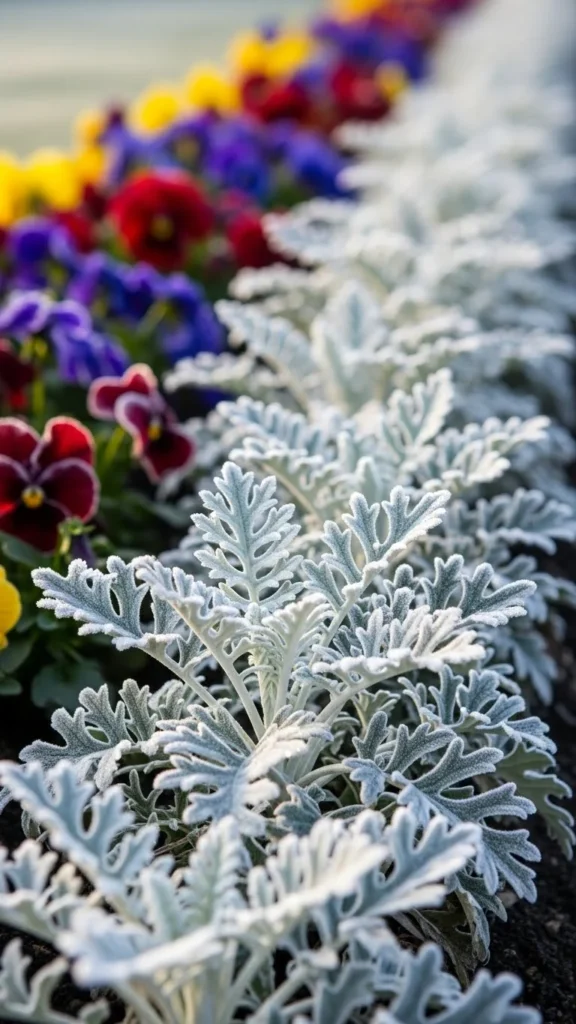
Dusty Miller stays silver even in cold months, giving your bed a clean, polished frame. The texture helps highlight flowers planted nearby.
Line the outer edge with Dusty Miller in a single neat row. Their pale leaves pair well with purple, red, or blue flowers. If your garden feels too dark in winter, this silver border helps brighten it.
Plant them close for a fuller effect. Dusty Miller grows slowly in winter, so spacing them tight helps the bed stay dense. Mix them with white stones for a striking look.
This plant is affordable and easy to maintain. You can propagate new ones from cuttings in warmer months.
6. Cyclamen Accent Pockets
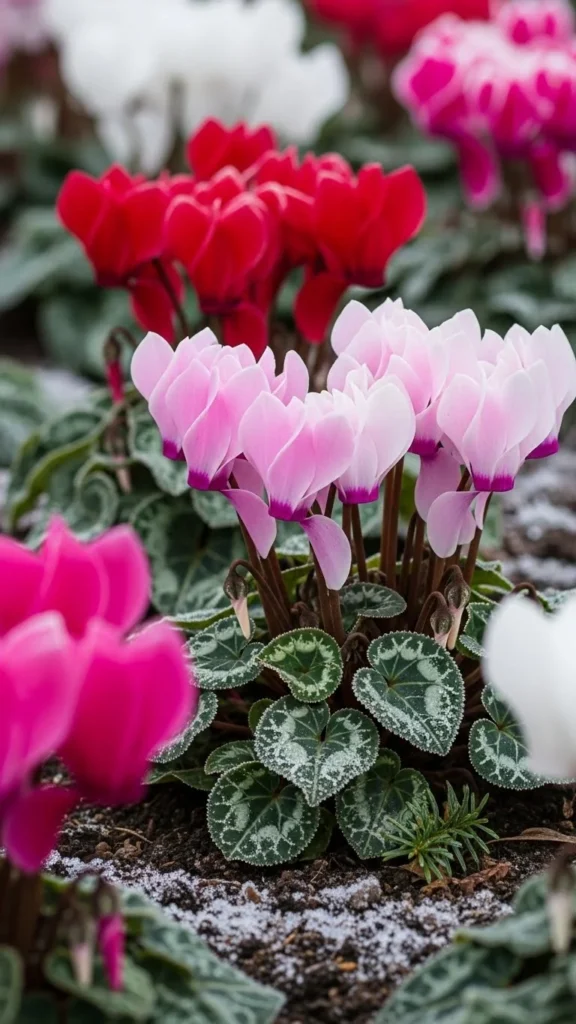
Cyclamen flowers rise above winter soil with graceful petals. Their bright pink and white shades stand out during cold days.
Plant small pockets of cyclamen in corners of the bed. They work well as accents next to evergreens or silver plants. Add a light layer of mulch to keep roots insulated.
Cyclamen are great for shady beds. If your garden doesn’t get much sunlight during winter, they still perform well. Water lightly to avoid root rot.
Mix different shades for interest. If you’re on a budget, buy smaller pots and transplant them in groups instead of singles.
7. Ornamental Cabbage Rows
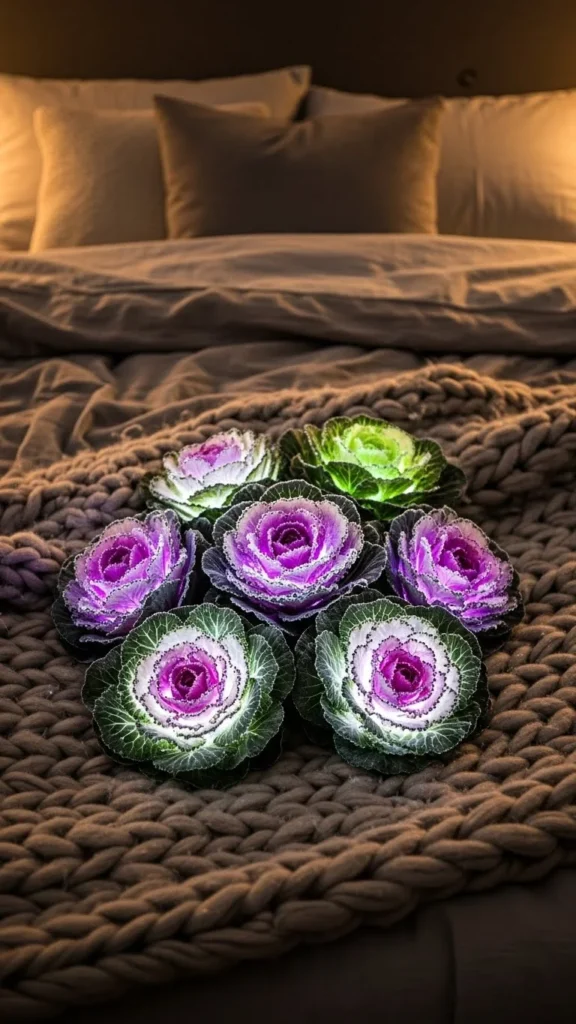
Ornamental cabbages give winter beds bold texture. Their layered leaves look like flowers from a distance and stay colorful through winter frost.
Arrange them in a row along the center or sides of the bed. Their shape naturally draws attention. Add contrasting colors around them—purple cabbage next to white flowers looks striking.
They grow wide, so give them space. Use mulch to help define the row. You can mix large and small heads for depth.
These plants are cheap and easy to find in winter. Replace any cabbage that fades to keep the row looking strong.
8. Winter Heathers for Soft Texture
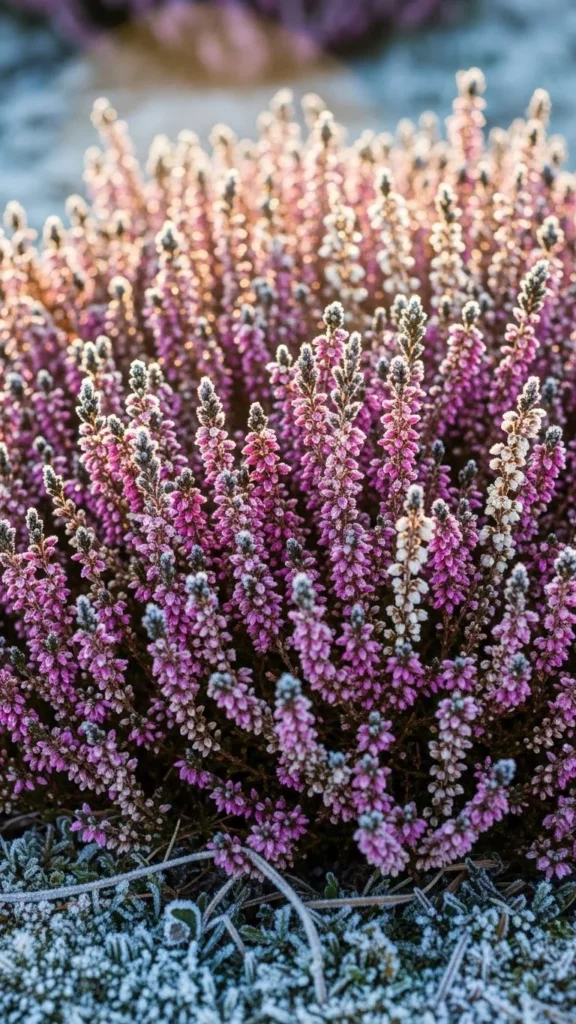
Winter heathers bloom in shades of pink, purple, and cream. They create soft, low-growing textures that fill empty spaces nicely.
Plant them in curved lines for movement. They look better in drifts rather than straight rows. Add stones or bark around the edges for contrast.
Heathers prefer slightly acidic soil. If your soil is neutral, mix in pine needles or composted leaves. These small adjustments keep them happy all season.
Choose multiple varieties for richer color. Start with a few small pots; they spread with time.
9. Mixed Evergreen and Flower Layers
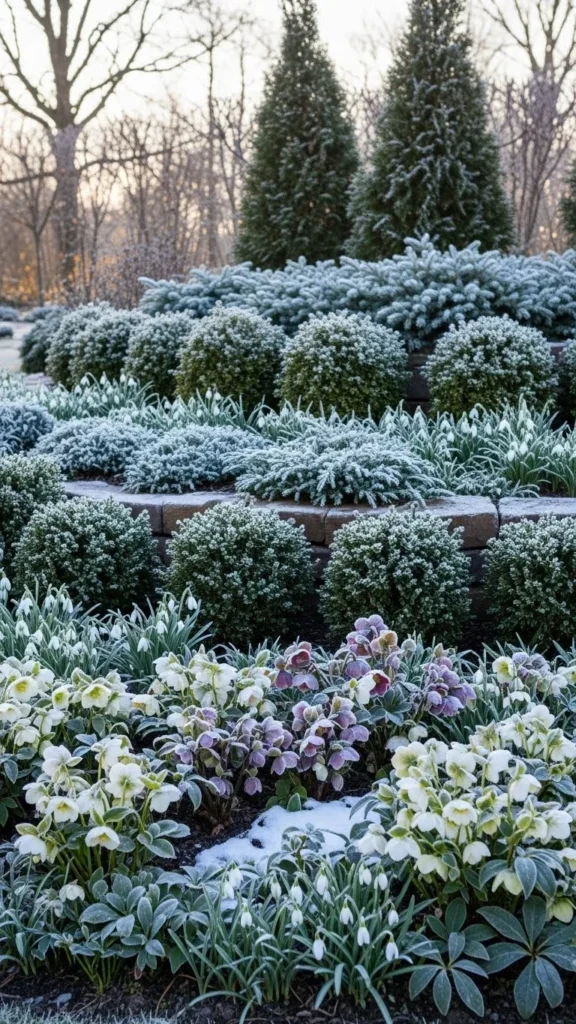
A layered layout gives your winter bed depth. Start with tall evergreens at the back. Add mid-level flowers like hellebores in the center. Finish with low-growing blooms at the front.
This setup works well in rectangular beds. It helps each plant stay visible. Add mulch or dark stones for clean separation.
Layering reduces empty spots. Even when some flowers fade, the structure stays visually strong. Choose hardy varieties so you don’t need to replant often.
10. Snowdrop Drifts Along Edges
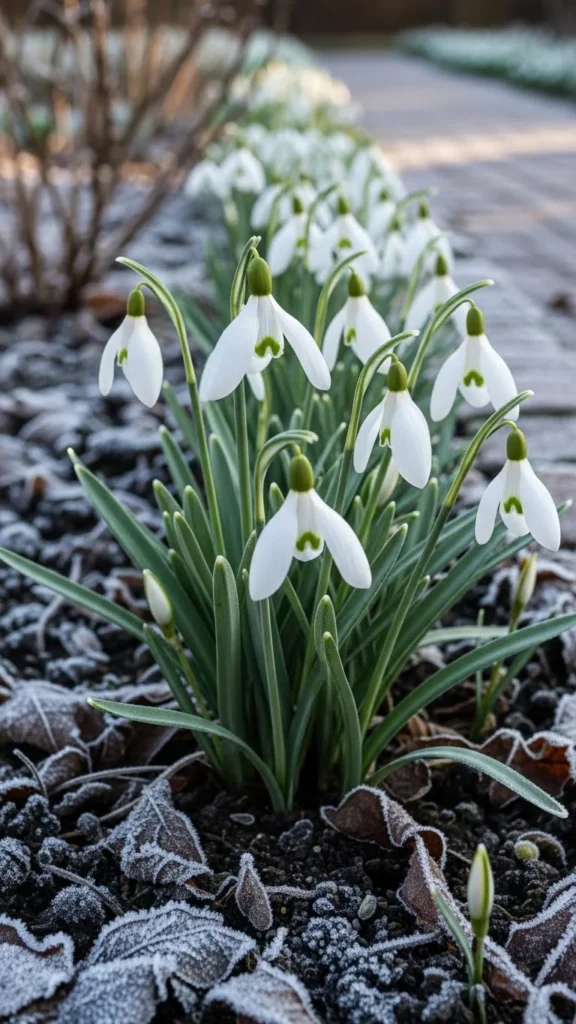
Snowdrops appear early and handle cold easily. Their white blooms brighten any winter bed.
Plant them in drifts instead of straight lines. This creates a natural feel. They multiply over time, making the bed fuller each year.
Add them along the edges where they’re easy to see. If planting bulbs, add a little compost to the hole. Water lightly after planting.
Snowdrops pair nicely with heather or hellebores. Their simple shape balances more textured plants.
11. Mulched Winter Bed with Pops of Color
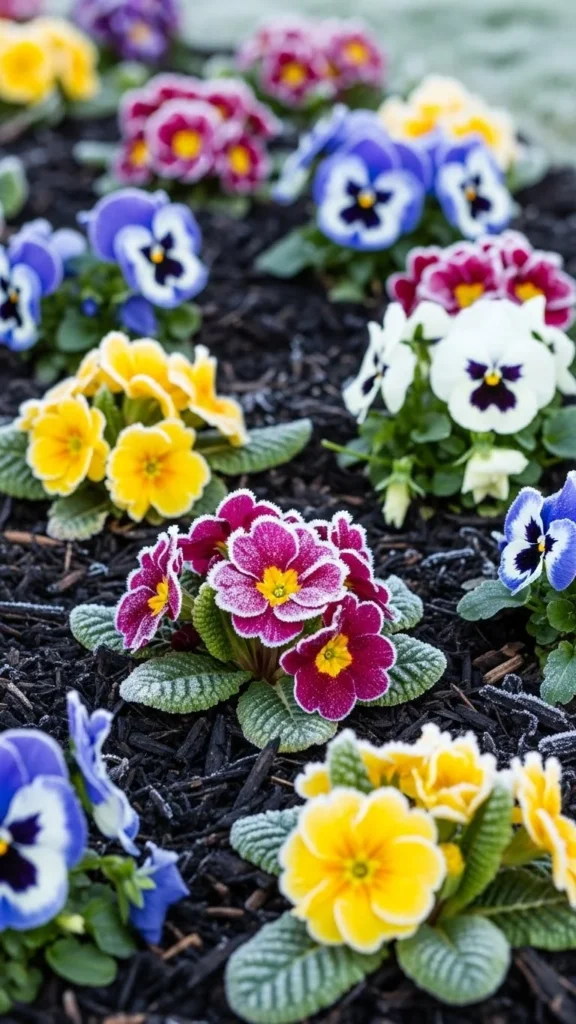
Mulch helps flower-beds stay tidy during winter. A darker mulch highlights colorful flowers planted throughout the bed.
Choose a few bold winter plants—primroses, pansies, or heathers. Plant them in clusters. Spread mulch around them for a clean look.
Mulch also helps keep soil moisture balanced. Use bark, shredded wood, or pine needles. Refresh thin spots every few weeks.
Start with a small section if you’re unsure. It’s affordable and easy to maintain.
12. Raised Stone Bed for Winter Flowers
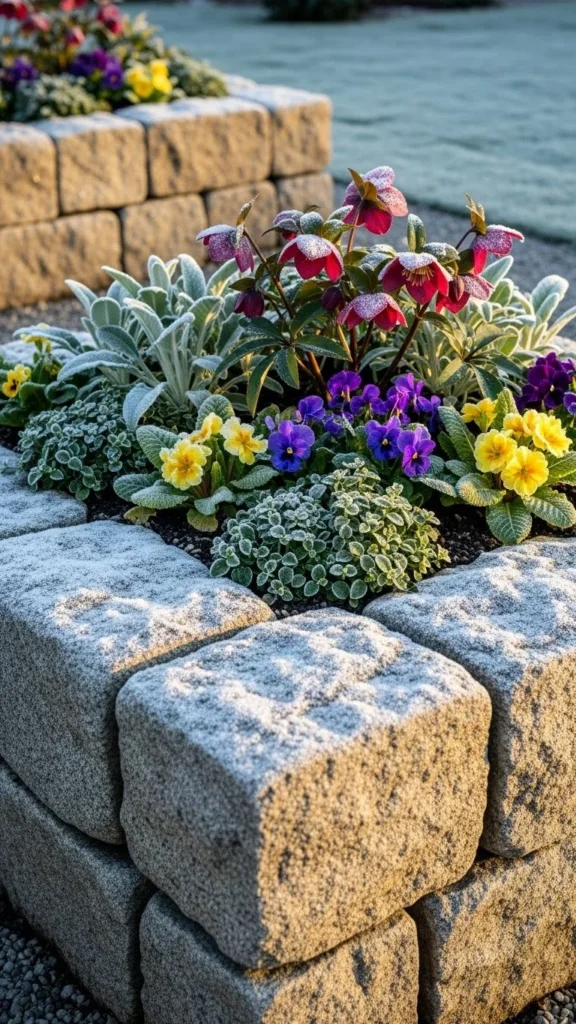
A raised stone bed adds both height and warmth. Stones absorb daytime light and release warmth slowly at night.
Build a low wall using local stones. Fill it with rich soil and plant hardy flowers like hellebores, violas, or winter jasmine. The warmth from the stones helps roots stay steady.
Use gravel as a top layer for drainage. This keeps the bed clean during wet winter days. This setup works well near patios or walkways.
If you’re on a budget, mix recycled bricks with stones for the wall.
13. Winter Jasmine Accent Bed
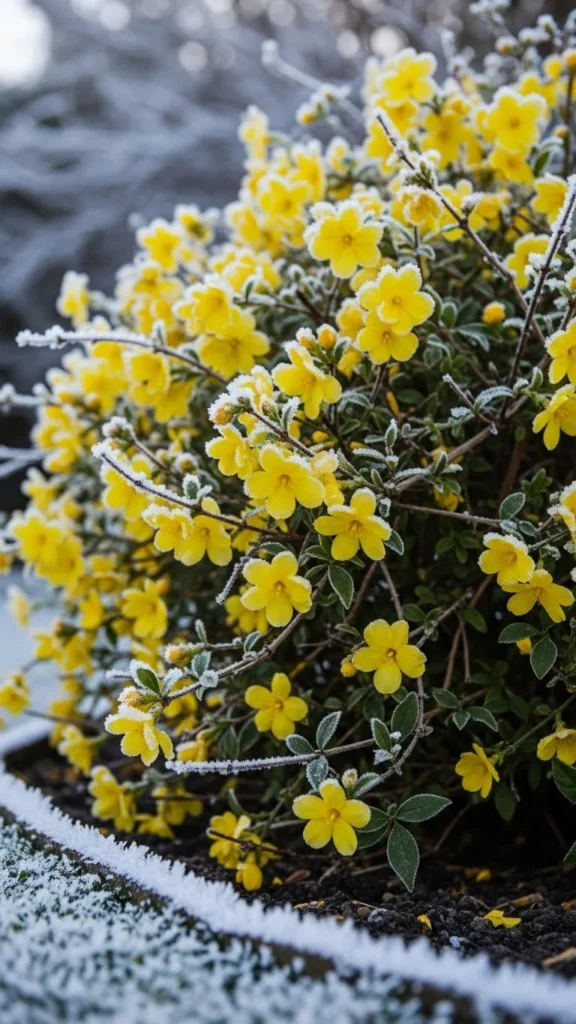
Winter jasmine brings bright yellow flowers at a time when most colors disappear. It adds instant cheer to any bed.
Use it along fences or as a low shrub near the center. Pair it with silver or dark-green plants for a strong contrast. Trim lightly to keep the shape neat.
Add mulch around the base for insulation. Winter jasmine spreads slowly, so buy a few plants and space them apart.
They bloom early, making them perfect for late-winter displays.
14. Textured Bed Using Mixed Foliage
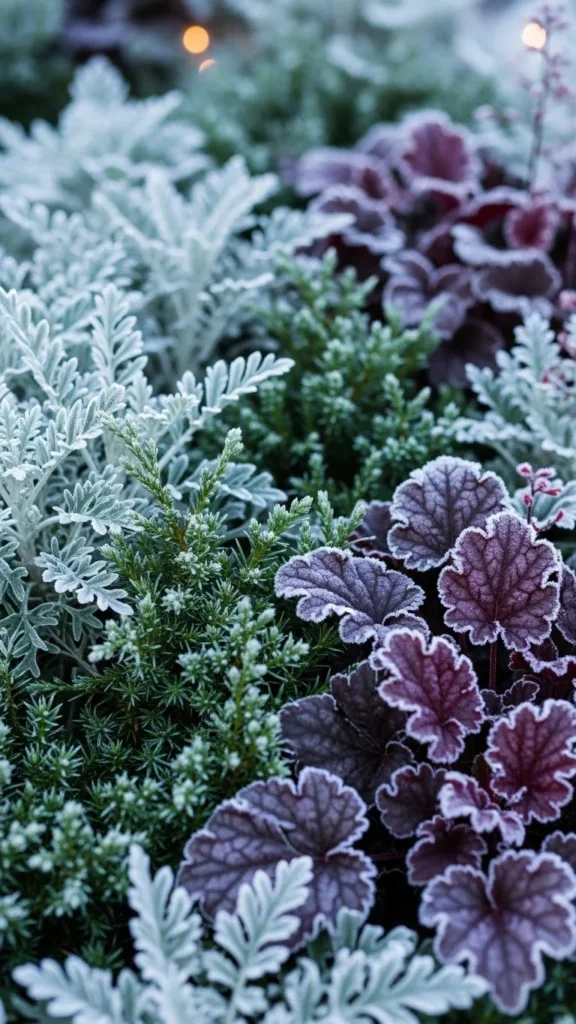
Winter beds don’t need only flowers. Foliage adds depth and interest. Mix colors like silver Dusty Miller, dark-green evergreens, and purple cabbage.
Create sections with each plant type. This helps the texture stand out. Add a few winter flowers between them for small color pops.
Foliage plants are long-lasting and cheap to maintain. Many survive year after year with little care.
Start with small pots and let them fill in naturally.
15. Curved Bed Design for Winter Color Flow
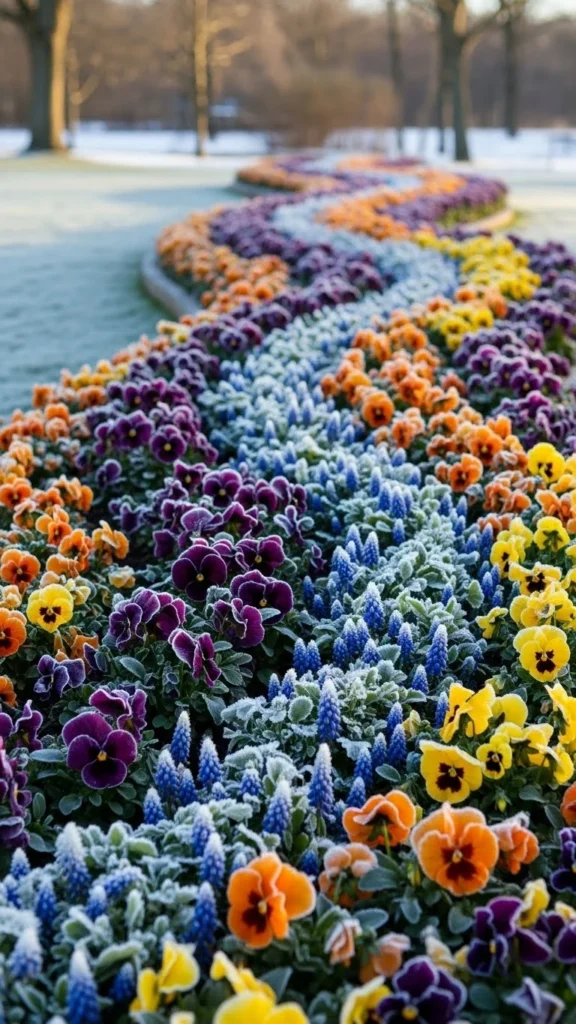
Curved beds look more natural in winter gardens. They soften sharp edges and help flowers stand out.
Create a gentle curve using stones or mulch. Fill the inside with strong winter performers like cyclamen, primroses, and pansies. Use color waves for impact.
A curved layout works well in small yards. It adds motion even when plants are still. Start with one curve and expand if you like the look.
16. Gravel-Lined Flower Bed
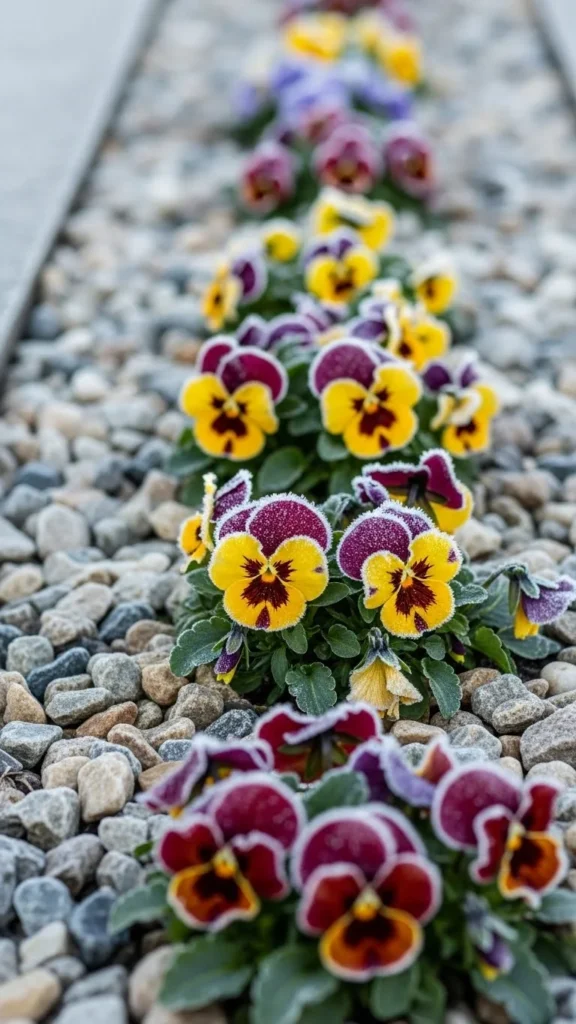
Gravel helps beds drain well in cold months. Wet soil can harm roots, so gravel keeps plants stable.
Line the bed with light-colored gravel for a clean finish. Add small clusters of flowers in between. Gravel reflects light, helping brighten the bed on cloudy days.
Use small pockets of compost in planting holes so flowers have nutrients. Gravel is affordable and lasts for years.
17. Evergreen Cone Accents
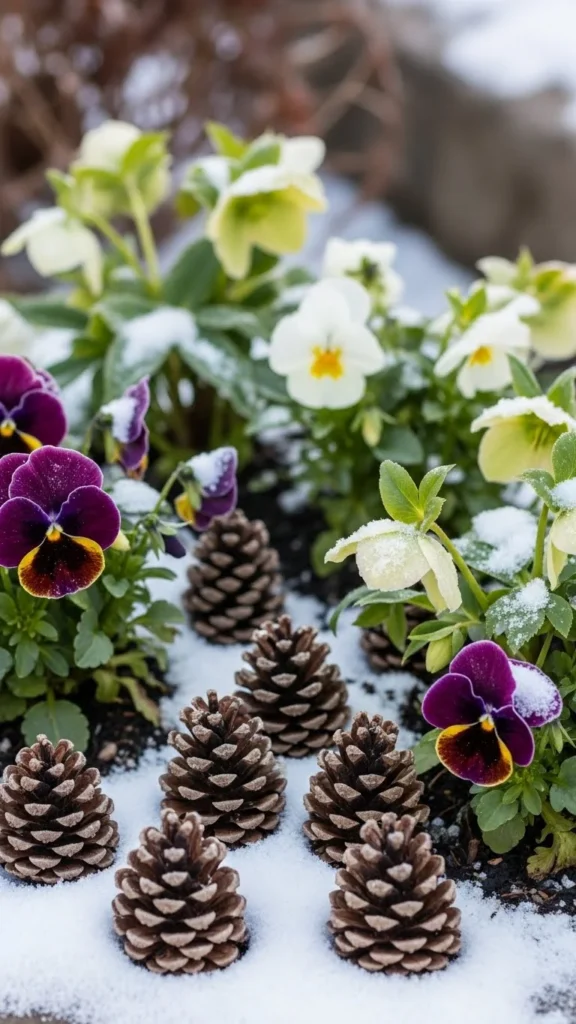
Small evergreen cones add shape and height. They keep the bed lively even when flowers fade.
Arrange them in pairs or triangles for balance. Add winter flowers at the base for contrast. This setup works well in rectangular or corner beds.
Cones last through the season with little care. They also help block cold winds near delicate flowers.
18. Mixed Height Winter Bed
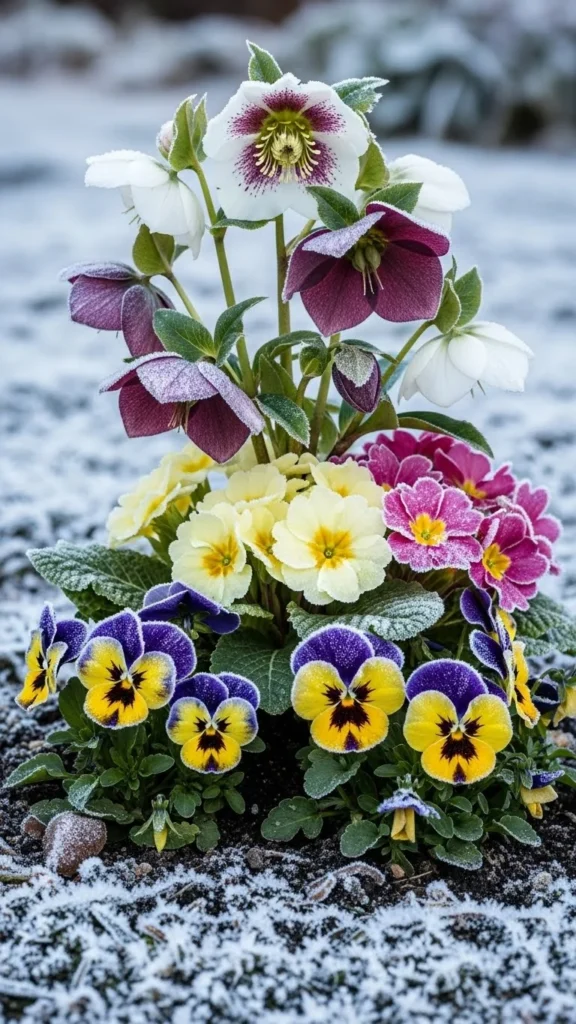
Mixing plant heights adds interest and helps the bed look fuller. Start with tall plants at the back, mid-height in the center, and low growers at the front.
Fill gaps with foliage plants. Add mulch to tie everything together. This layout works for small and large beds.
Height differences also help highlight color and texture. Use repeating patterns for balance.
19. Stone Path Through Winter Bed
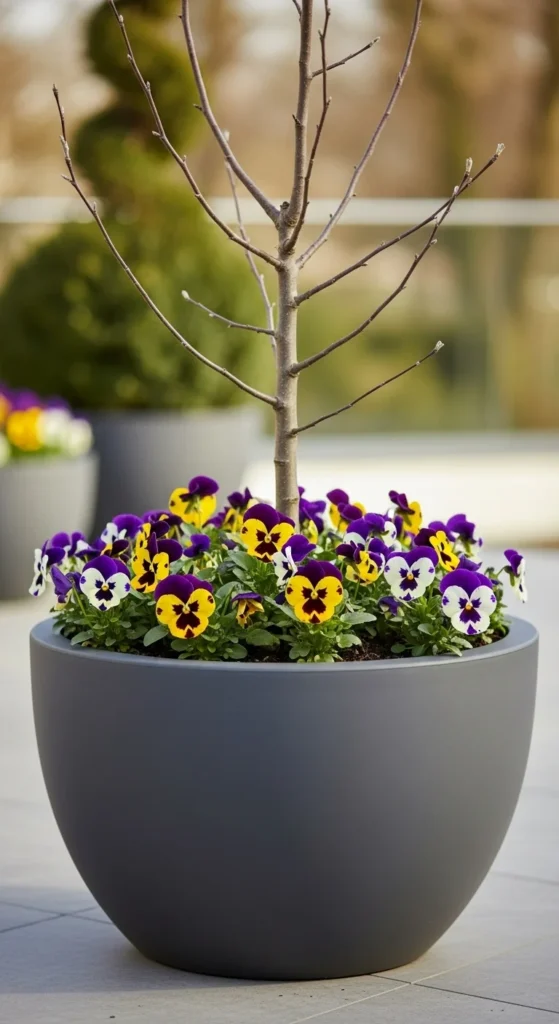
A path through the bed makes the space feel more inviting. Stones stay visible even in frost, adding structure to the layout.
Use flat stones spaced close together. Plant winter flowers along both sides. Choose strong colors so they stand out against the stone.
This setup works well for narrow yards. It also helps with maintenance during wet months.
20. Low-Maintenance Winter Border Bed
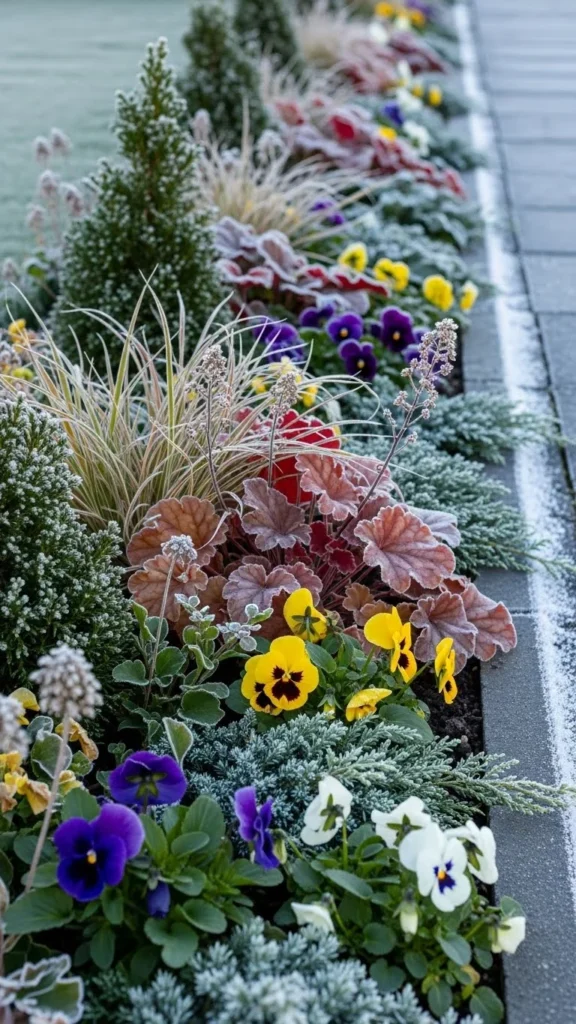
Border beds frame walkways or fences nicely. They hold color through winter and require little upkeep.
Plant evergreens at intervals along the border. Fill the space between them with pansies or primroses. Add mulch for a clean look.
Borders are simple to maintain. A quick trim and occasional watering keep them looking good all season.
21. White-Theme Frost Garden
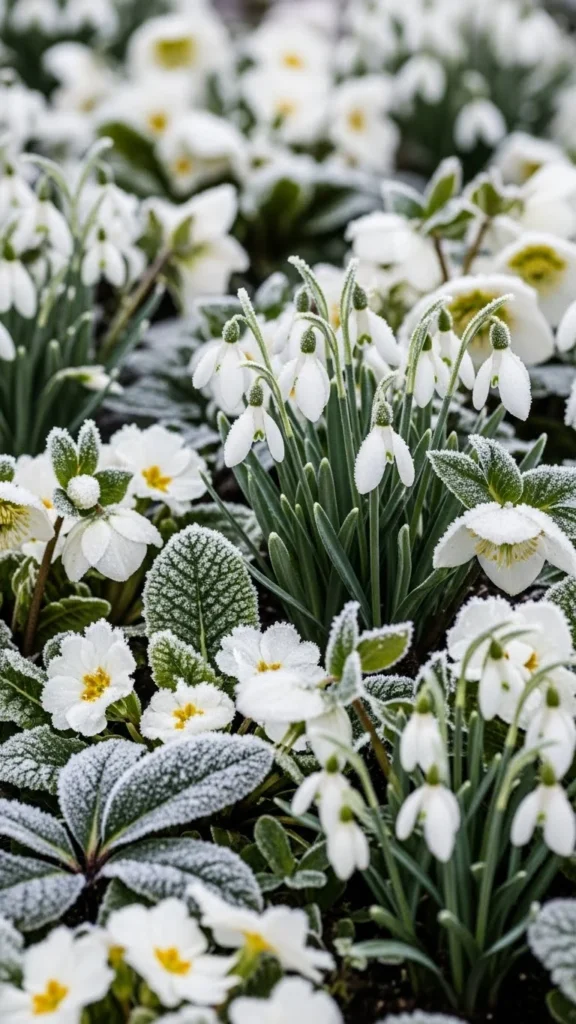
White flowers glow during winter. Their calm tones pair perfectly with frost.
Choose snowdrops, white primroses, and pale hellebores. Plant them in grouped sections. Add silver foliage around them for extra brightness.
A white theme gives the bed a quiet winter feel. Use dark mulch to help the flowers stand out.
Conclusion
Winter flower-beds can stay colorful and lively with small, thoughtful choices. Hardy blooms, smart layout, and simple textures help your garden stay bright even on the coldest mornings. Try one idea today and build a winter space you can enjoy long after the first frost arrives.

Leave a Reply