

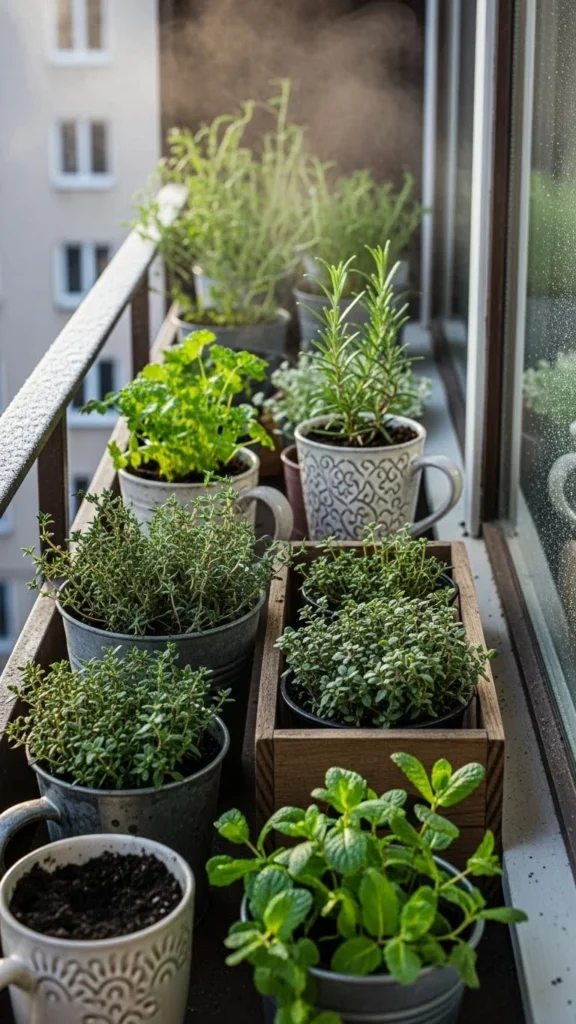
Winter doesn’t have to shut down your herb habits, even in a tight home.
With the right containers, a slim ledge or balcony can hold clusters of hardy herbs that keep flavor within arm’s reach.
Simple pots, recycled tins, and compact racks turn overlooked corners into productive mini gardens.
The ideas below focus on small-space layouts, easy care, and wallet-friendly setups.
You’ll see ways to reuse household items, layer containers vertically, and make the most of weak winter light with reflective surfaces or low-cost grow lights.
Pick a few that match your space and start building a winter herb corner that feels cozy, green, and practical.
1. Slim Windowsill Rail of Hardy Herbs
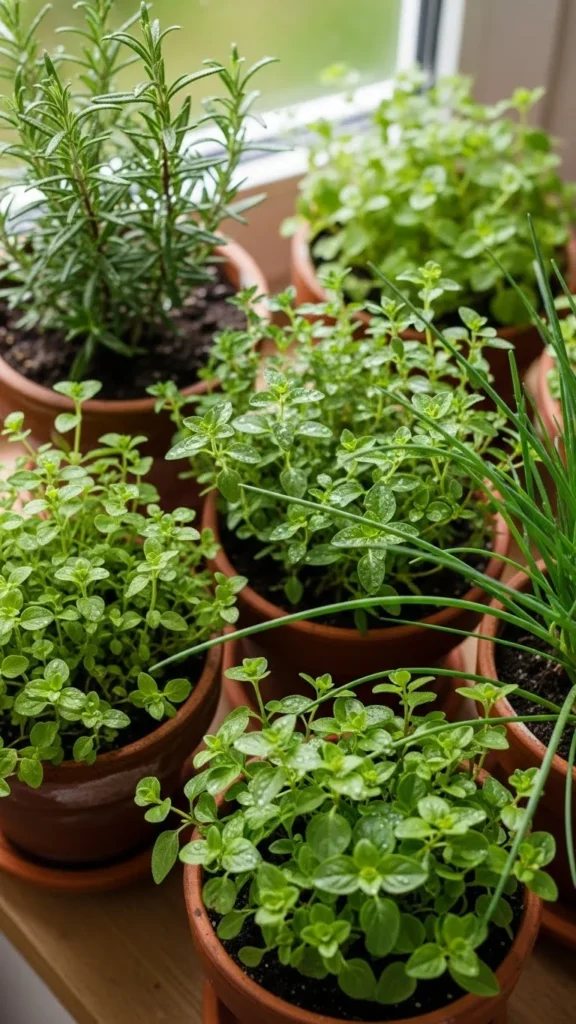
A narrow windowsill can quietly host a full lineup of winter herbs.
Install a slim metal rail or low tray along the sill, then line it with small pots of thyme, chives, and parsley.
Choose lightweight containers with drainage holes and place a shallow tray underneath to catch drips.
If your window feels cold, push the pots a little back from the glass during freezing nights.
Rotate containers every few days so each plant gets equal light.
Use a simple spray bottle for watering instead of a heavy can; this keeps the soil lightly moist without turning it soggy.
For a budget setup, repurpose clean yogurt cups or tin cans and punch drainage holes in the base.
Set them inside a long thrifted loaf pan for a tidy look.
Label each pot with a wooden stick so you can snip the right herb quickly while cooking.
2. Tiered Ladder Shelf by a Bright Window
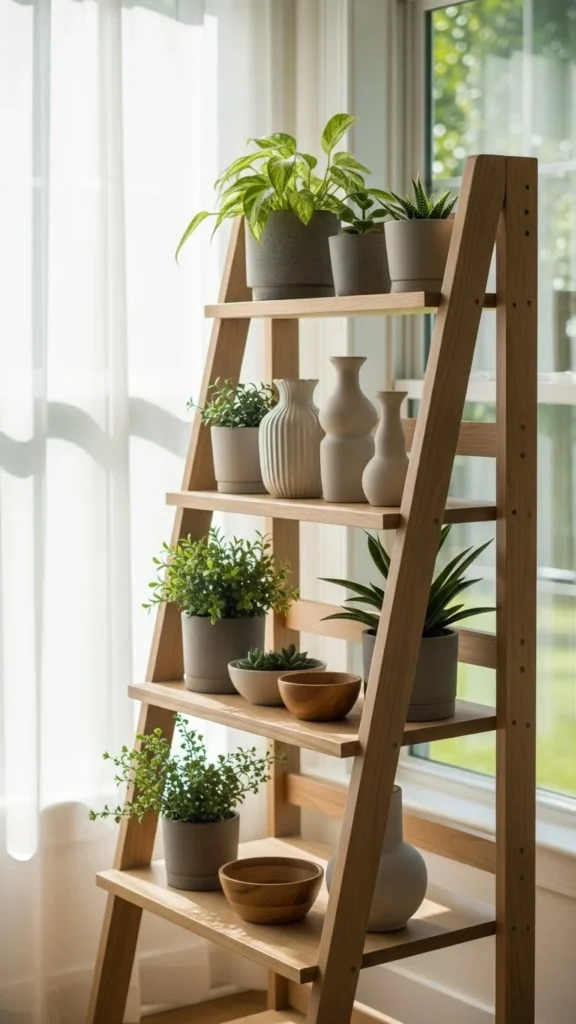
A skinny ladder shelf leans easily against a wall and turns vertical space into a winter herb station.
Place it beside your sunniest window and dedicate each rung to a different herb set.
Top rungs can hold light-loving plants like rosemary and oregano, while lower rungs host parsley and mint.
Choose shallow, wide containers so roots spread but don’t crowd the shelves.
Line each shelf with a plastic mat or old tray to catch spills.
This helps keep the wall and floor clean.
You can find inexpensive ladder shelves secondhand or build one from scrap wood.
Sand and seal it with a water-resistant finish to handle drips.
Add warm-toned string lights around the frame for gentle evening brightness without heating the plants.
This kind of setup looks neat in a living room corner and doubles as decor and pantry helper.
3. Hanging Mason Jars Above the Kitchen Sink
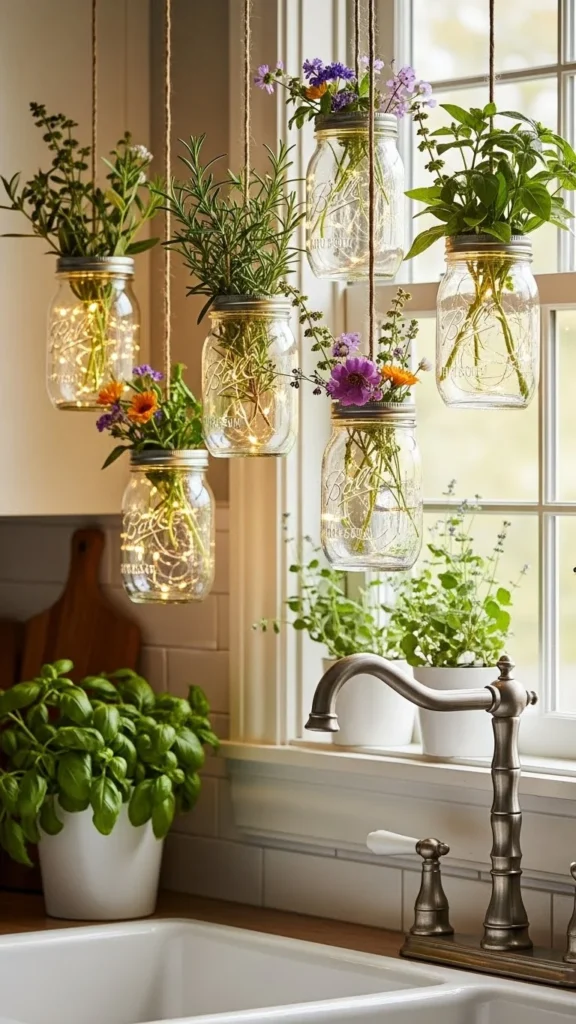
The space above your kitchen sink often gets ignored, yet winter light hits it daily.
Mount a simple rod or sturdy shelf brackets and hang mason jars filled with potting mix and herbs.
Drill tiny drainage holes in jar lids and use them as saucers, or add a layer of pebbles at the bottom to manage extra water.
Plant low-growing herbs like basil minis, chives, or coriander in each jar.
Because they sit at eye level, you’ll spot dry soil quickly and can water with a cup from the sink.
Use S-hooks for hanging so you can slide jars aside while cleaning windows.
To keep costs low, reuse old pasta jars and wrap them with twine for grip and style.
Add small labels so everyone in the house knows which herb they’re snipping.
This arrangement brings herbs within reach where you cook most and makes the kitchen feel alive even on gray winter days.
4. Magnetic Herb Tins on the Fridge Side
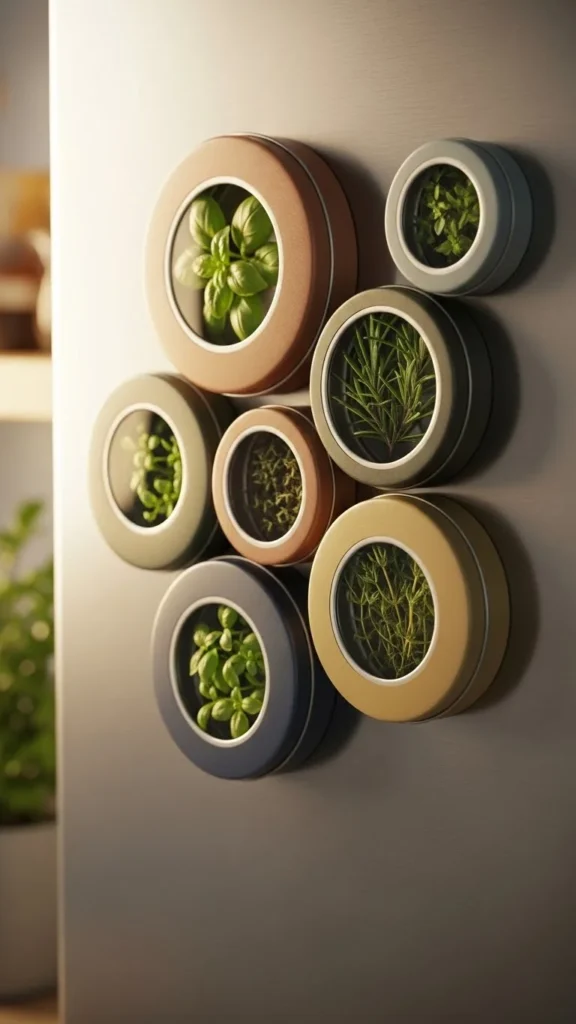
The side of a fridge often stands bare, yet it’s perfect for a magnetic herb garden.
Use shallow metal spice tins or small metal-backed pots fitted with strong magnets.
Fill each with light potting mix and plant compact herbs like thyme, chervil, or dwarf basil.
Stick them on the fridge side that faces a window so they catch indirect light.
Water very lightly, since shallow containers dry faster and can drip if overdone.
A tiny syringe or dropper bottle works well here.
You can find inexpensive magnetic tins online or glue hardware-store magnets to the backs of narrow plastic pots.
Arrange them in a grid and group herbs by use: pizza herbs, tea herbs, garnish herbs.
This idea suits rental kitchens because everything comes down without marks.
It turns a plain appliance into a vertical winter herb wall that takes zero floor space.
5. Compact Rolling Herb Cart
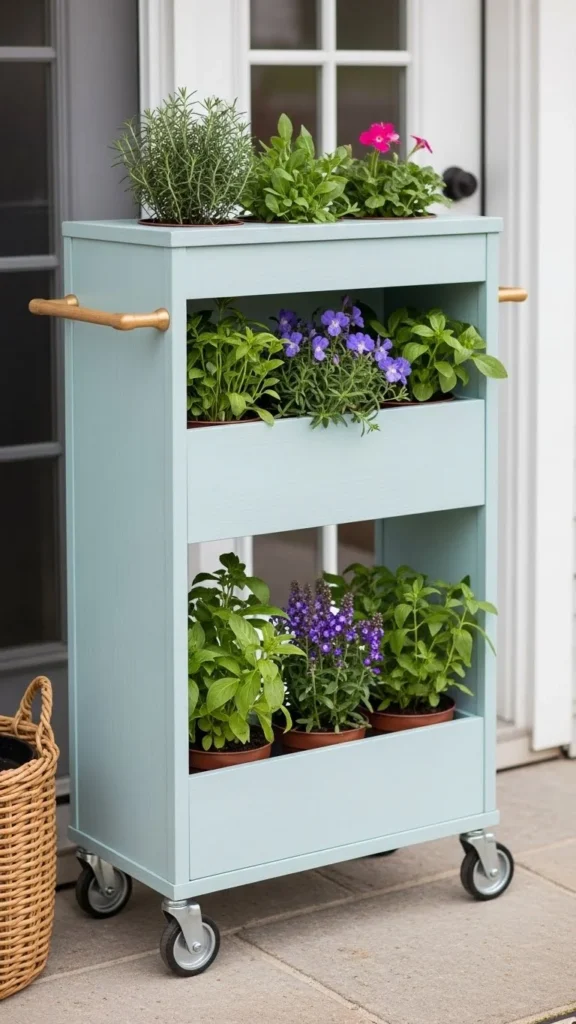
A narrow rolling cart can carry a full winter herb collection while staying mobile.
Choose a slim cart with two or three shelves.
Fill it with small terracotta pots of rosemary, thyme, sage, and mint.
Roll it toward a window during the day and tuck it into a corner at night.
Use shallow trays on each shelf to stop water from dripping onto lower layers.
Group herbs according to their watering habits so you don’t overwater one while helping another.
You can pick up a metal kitchen cart from a discount store or a secondhand shop.
If the shelves are mesh, line them with plastic placemats.
Add a small clamp light with a grow bulb to the top shelf for darker rooms.
A rolling herb cart works well in studio apartments because it moves wherever light appears.
6. Corner Crate Stack of Winter Herbs
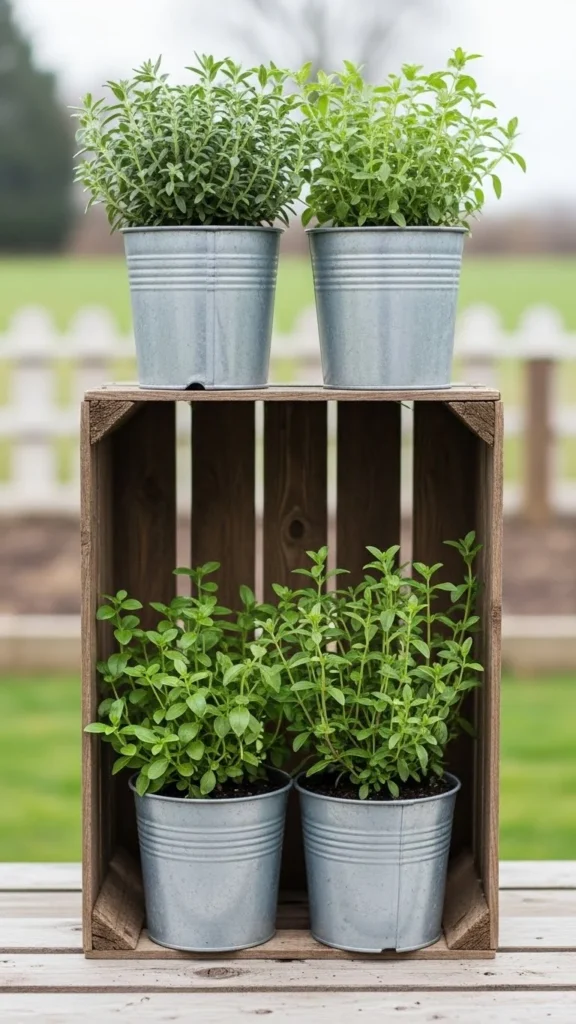
Wooden crates stacked in a corner create a rustic vertical herb station.
Place one crate flat on the floor, another on its side, and a third at an angle to form little pockets.
Set herb pots inside each pocket, mixing heights so all leaves catch some winter light.
You can often find old crates at markets or repurpose fruit crates.
Sand rough edges and seal them with a clear coat to handle moisture.
Slip plastic liners or trays inside the crates to catch soil and water.
Plant hardy herbs like oregano, thyme, and chives in each pot.
Tuck small pebbles around the containers for a clean look and extra stability.
This kind of corner garden works nicely near balcony doors or beside a glass patio panel.
It uses vertical space rather than floor area, which suits tiny homes or narrow rooms.
7. Single Large Bowl Herb Mix on a Coffee Table
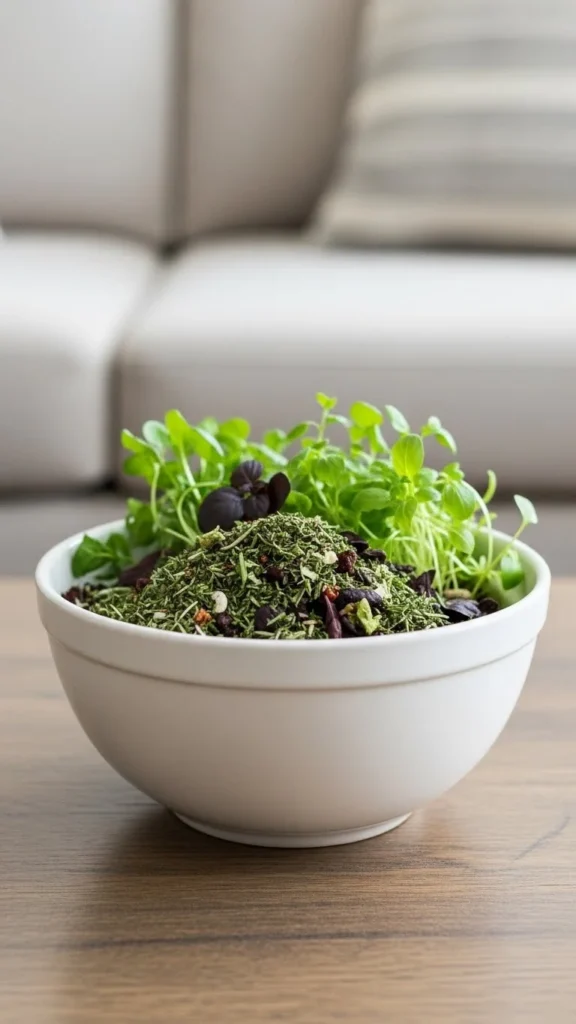
One wide, shallow bowl can hold a full mini herb landscape.
Choose a ceramic or wooden bowl with drainage holes or place nursery pots inside and hide them with decorative stones.
Plant low-growing herbs such as thyme, tiny basil, and creeping rosemary in small clusters.
Place this bowl on a coffee table near a window or on a low stool in a bright corner.
Rotate the bowl every few days to keep growth even.
Water gently around each cluster instead of soaking the entire surface.
This setup feels tidy and suits people who want herbs close without crowding counters.
You can thrift a large salad bowl or use a wide serving dish you already own.
Add small driftwood pieces or stones between herb groups for structure.
The bowl becomes both a living centerpiece and a practical source of garnish all winter.
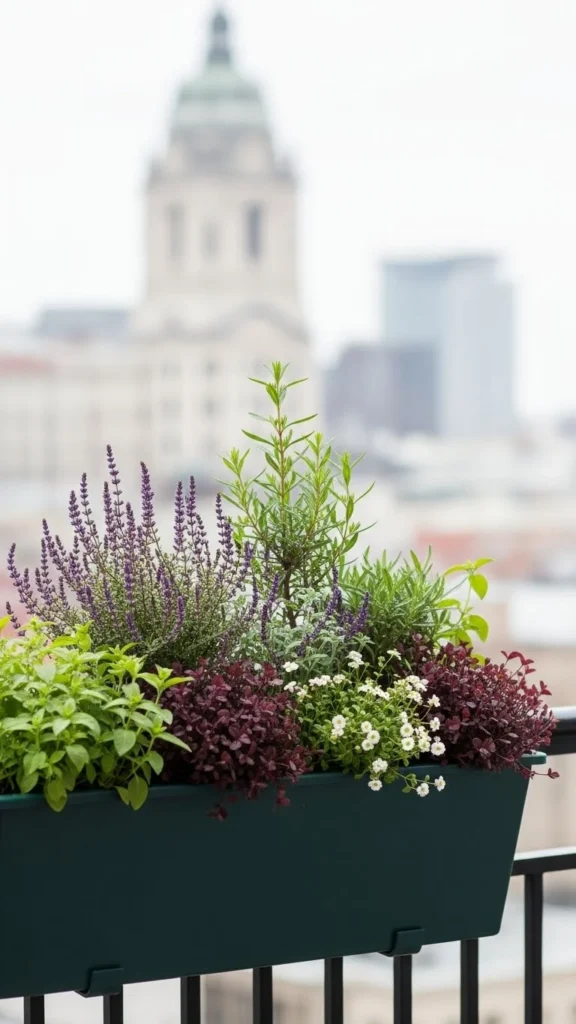
8. Railing Planter on a Tiny Balcony
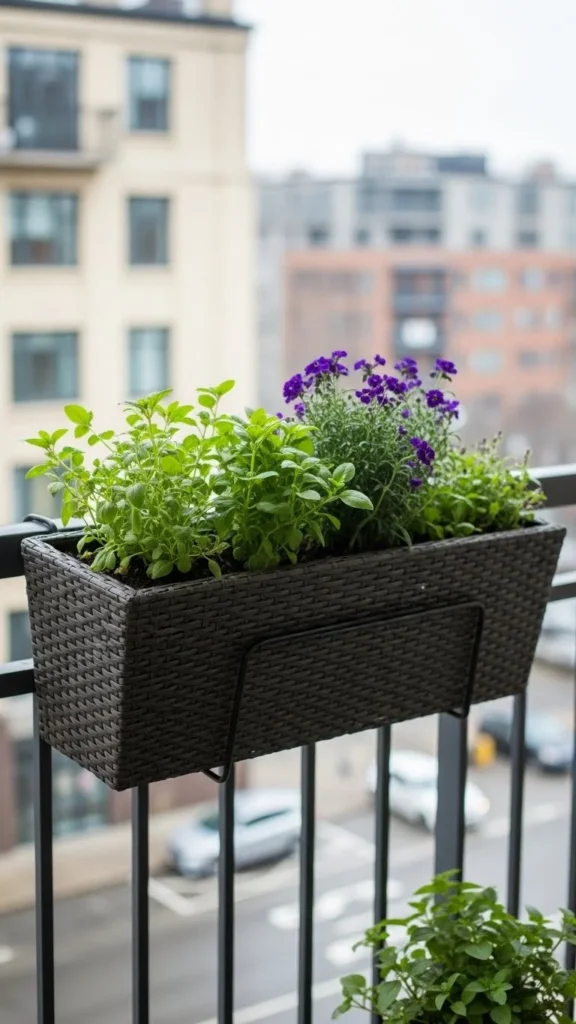
Even the narrowest balcony can support herbs in a railing planter.
Choose a sturdy box that hooks securely over the rail.
Fill it with well-draining potting mix and plant hardy winter herbs like rosemary, thyme, and parsley.
If your climate gets hard frost, line the inside of the box with cardboard or bubble wrap before adding soil.
This gives a bit of insulation without special equipment.
Water in the morning so leaves dry before night temperatures drop.
For a low-cost version, repurpose metal window boxes from thrift shops and secure them with cable ties.
Place small stones under the box to prevent scratching the rail.
Railing planters keep herbs outside yet close enough to snip from your doorway, which works well in very small apartments.
9. Reused Tea Tin Mini Herb Row
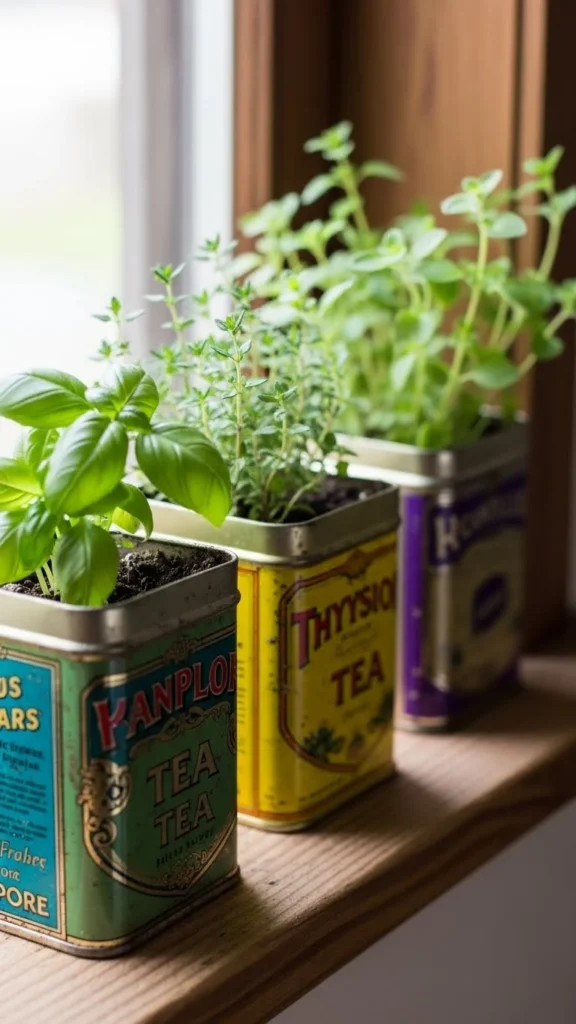
Old tea tins make charming containers for winter herbs.
Rinse them, drill or punch small holes near the base, and add a thin pebble layer for drainage.
Fill each tin with potting mix and plant single herb starts like mint, lemon balm, or parsley.
Line the tins along a radiator shelf or a narrow console table near a window.
Use matching tins for a clean look or mix different designs for a playful style.
Slide a tray under them if you worry about drips.
Tea tins cost nothing if you already drink loose-leaf tea or small bagged blends.
Their square shape fits tightly in tight spaces.
The metal warms slightly during the day, which herbs enjoy in winter.
This setup works especially well for renters who want something small and portable.
10. Vertical Pocket Herb Organizer on the Wall
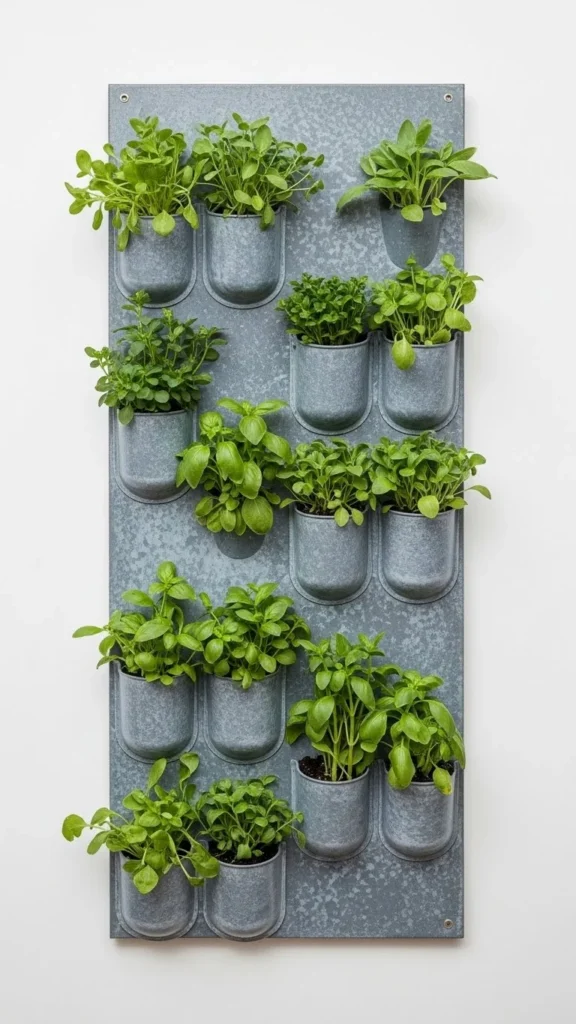
Fabric shoe organizers transform into vertical herb pockets with almost no effort.
Choose one made from sturdy cloth, then hang it on a wall near a window or glass door.
Fill each pocket with a bit of potting mix inside a plastic liner, and plant small herb seedlings.
Use upper pockets for light-loving herbs and lower pockets for shade-tolerant ones.
Water carefully with a small spout bottle so you don’t flood lower rows.
Place a mat under the organizer in case of drips.
Shoe organizers are cheap and widely available.
You can cut them into smaller sections if your space is extremely tight.
Add small tags to each pocket for quick ID.
This idea turns vertical space into a practical winter herb wall without needing carpentry skills.
11. Under-Cabinet Grow-Light Herb Strip
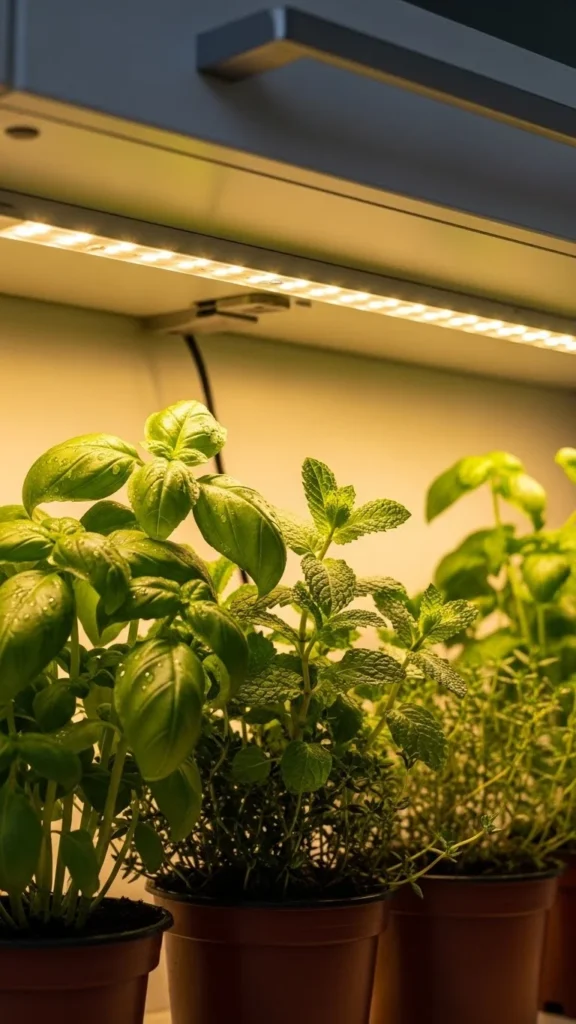
If winter daylight feels weak, tuck herbs under kitchen cabinets with a slim grow light.
Mount an LED strip under a wall cabinet and place a narrow tray of herb pots on the counter below.
Grow herbs like basil, parsley, and dill in short containers that fit easily.
Run the light for several hours each day, using a timer if possible.
Water when the top of the soil feels dry to the touch.
Because the space is sheltered, humid air from cooking often benefits the plants.
You can find affordable grow strips online or repurpose a plant-friendly LED bar.
Keep the light close to the herbs without touching leaves.
This setup works in apartments with limited windows and turns underused countertop strips into productive herb zones.
12. Mini Greenhouse Crate for Balcony Herbs
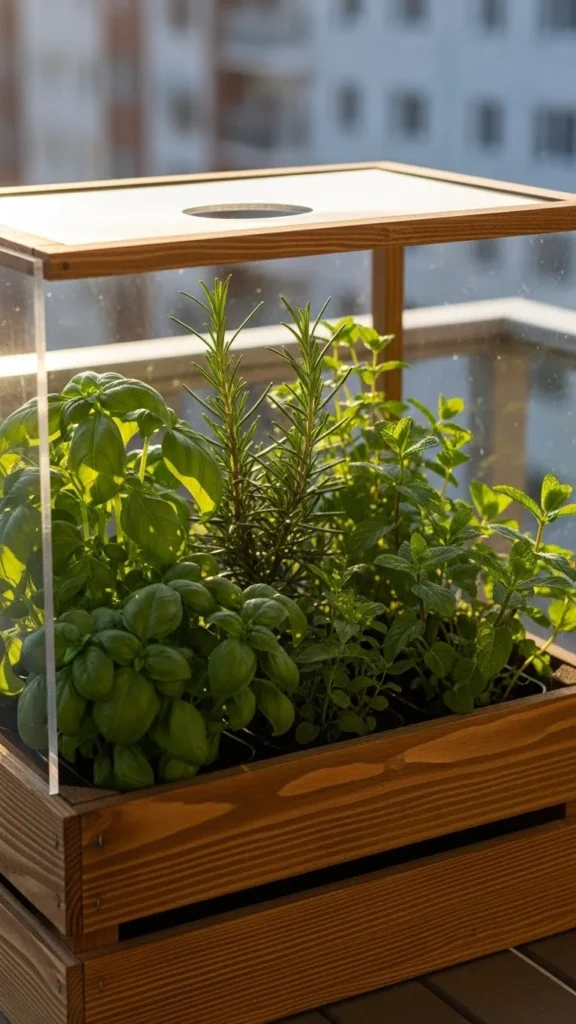
A wooden crate covered with a clear lid turns into a simple mini greenhouse.
Place small herb pots inside—think thyme, rosemary, and oregano—and set the crate on a balcony or near a sliding door.
Add a clear plastic sheet or repurposed picture frame with glass as the lid.
During the day, prop the lid slightly open for air.
At night, close it to shield herbs from cold wind.
This small greenhouse effect helps herbs stay active through winter.
Crates are easy to thrift, and the lid can be built from scrap materials.
Add handles so you can carry the whole unit indoors on very cold nights.
This container works well for people who only have an outdoor step or tiny balcony but still want a cluster of herbs in one portable unit.
13. Narrow Console Herb Garden Behind the Sofa
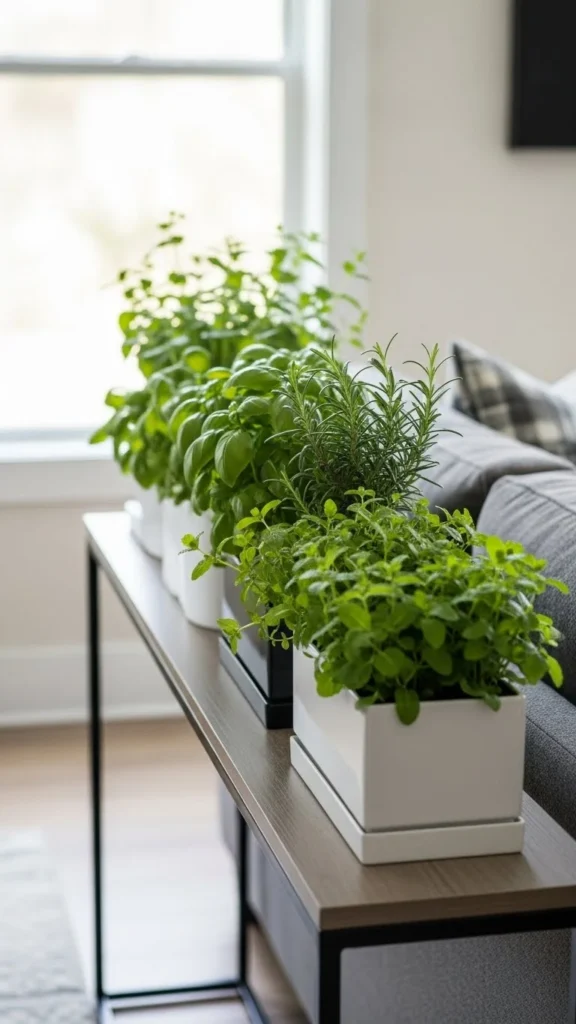
A slim console table behind a sofa often sits near a bright window.
Turn that strip into a winter herb row by lining up matching containers.
Use long trough-style planters or a series of small pots on trays.
Choose herbs with pleasant scent like rosemary, thyme, and mint.
When you sit, you’ll catch subtle aroma from the foliage.
Water with a lightweight bottle and dry spills with a cloth immediately since this is living-space furniture.
You can build a low-cost console from two crates and a board.
Paint it in a light color to reflect light back onto the herbs.
This layout suits living rooms where kitchen space feels cramped but windows give good southern or western light.
It keeps herbs close to daily life instead of hidden in a corner.
14. Wall-Mounted Gutter Herb Planter
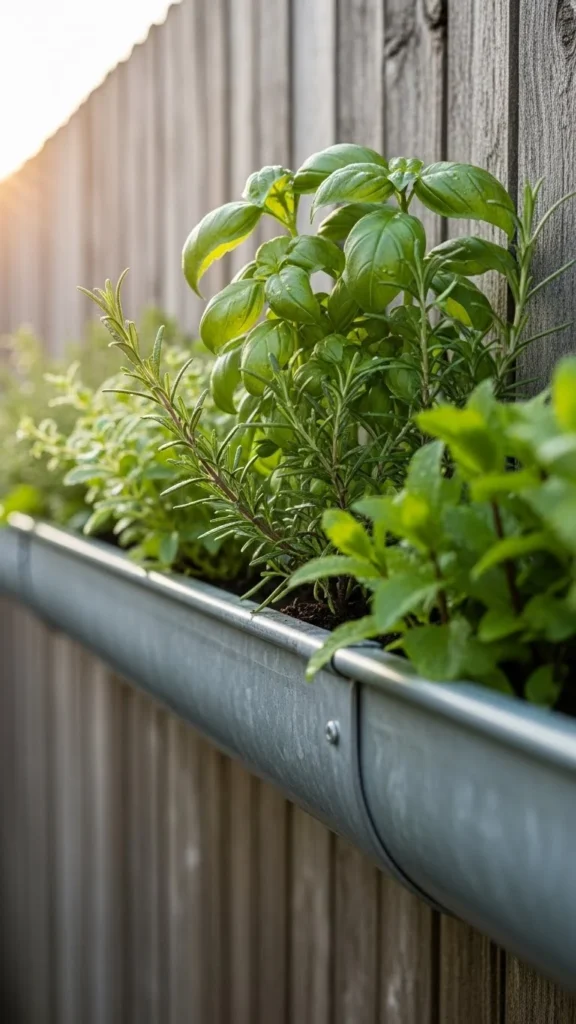
Clean sections of rain gutter can turn into slim wall planters for herbs.
Mount short lengths on brackets along a sunny wall, leaving space between rows.
Drill tiny drainage holes and line the base with pebbles before adding potting mix.
Plant herbs in staggered groups so each has room to spread.
Keep shorter varieties in upper gutters and taller ones below.
Water with a small spouted can, starting from the top row.
Gutter sections are inexpensive and lightweight.
You can even use offcuts from home repairs.
Paint them to match your wall or leave them metallic.
This approach uses almost no floor space, making it ideal for narrow balconies or small indoor sunrooms.
15. Herb Jars on a Bathroom Ledge
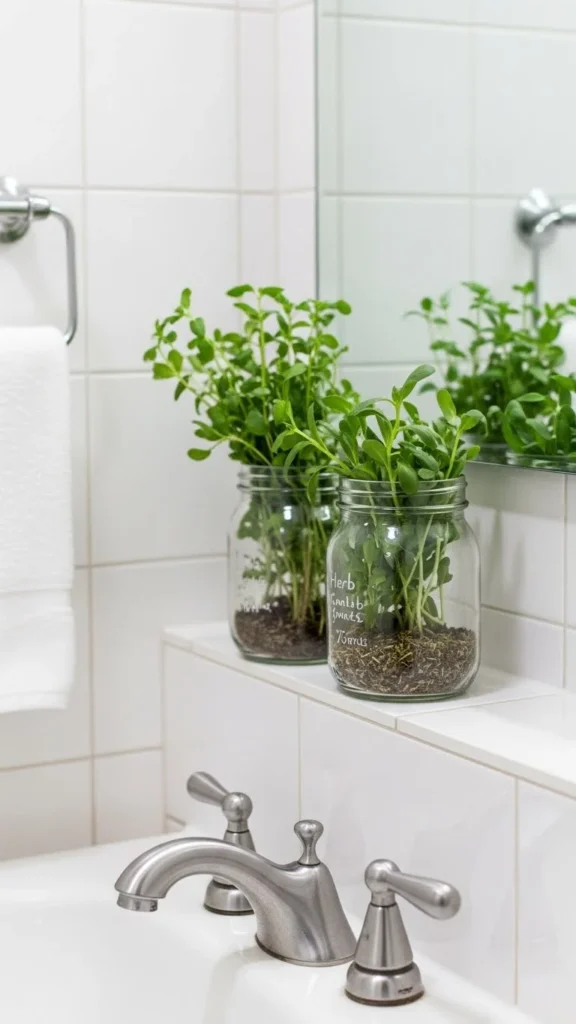
Bathrooms with frosted windows often receive gentle indirect light, which many herbs enjoy.
Place small jars or cups with herbs on the window ledge or a narrow shelf above the tub.
Choose moisture-loving herbs like mint and lemon balm that tolerate steam.
Add a layer of stones at the base of each jar for drainage.
Water lightly and let extra moisture collect around the stones instead of clogging the soil.
The bathroom’s humidity keeps leaves from drying out quickly in winter.
Repurpose candle jars or old glass cups for this setup.
Attach small non-slip pads to the base so they don’t slide on wet surfaces.
You’ll get a spa-like look and easy access to herbs for tea baths or simple decoration.
Just check weekly for any mold on the soil and scrape it off if it appears.
16. Compact Desk-Side Herb Planter for Workspaces
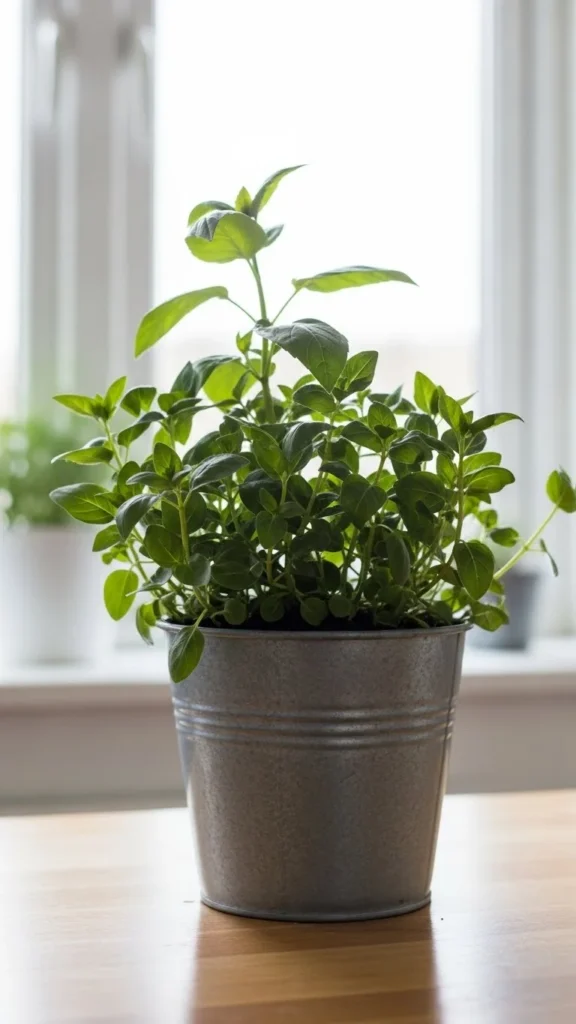
A small planter beside your desk brings greenery into work hours.
Choose a rectangular container that fits along the edge of your desk or on a nearby shelf.
Plant low, tidy herbs like chives, small basil, and thyme.
Place the planter where it receives window light without blocking your screen.
Water when the top soil looks slightly dry, using a cup rather than a large watering can.
Keep a pair of scissors in a drawer so you can snip herbs for mid-day snacks or tea.
You can create a budget version by lining a simple baking tray with small nursery pots.
Wrap the tray in fabric or kraft paper for a cleaner look.
This arrangement helps break up long winter workdays with a bit of life and scent, without consuming much desk space.
17. Pallet Herb Wall by the Back Door
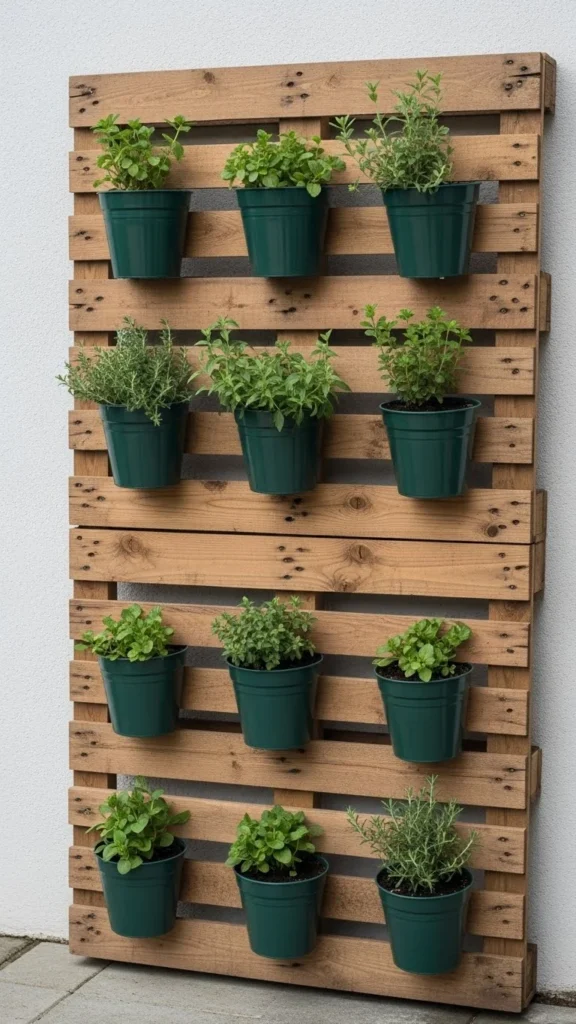
A recycled wooden pallet can become a vertical herb wall near your back door.
Stand the pallet upright, secure it to the wall, and tuck herb-filled fabric pockets or small pots between the slats.
This spot usually gets good light each time the door opens.
Line the back with landscape fabric to hold soil if you plant directly into the pallet.
Water gently from the top so moisture trickles downward.
On very cold nights, drape a light frost cloth over the pallet.
Pallets are often free from hardware stores or building sites; just check they’re safe for home use.
Sand rough edges and seal with an outdoor-safe finish.
This idea works for narrow porches or alley patios where floor space is limited but wall space is available.
18. Tiny Terracotta Trio on a Radiator Shelf
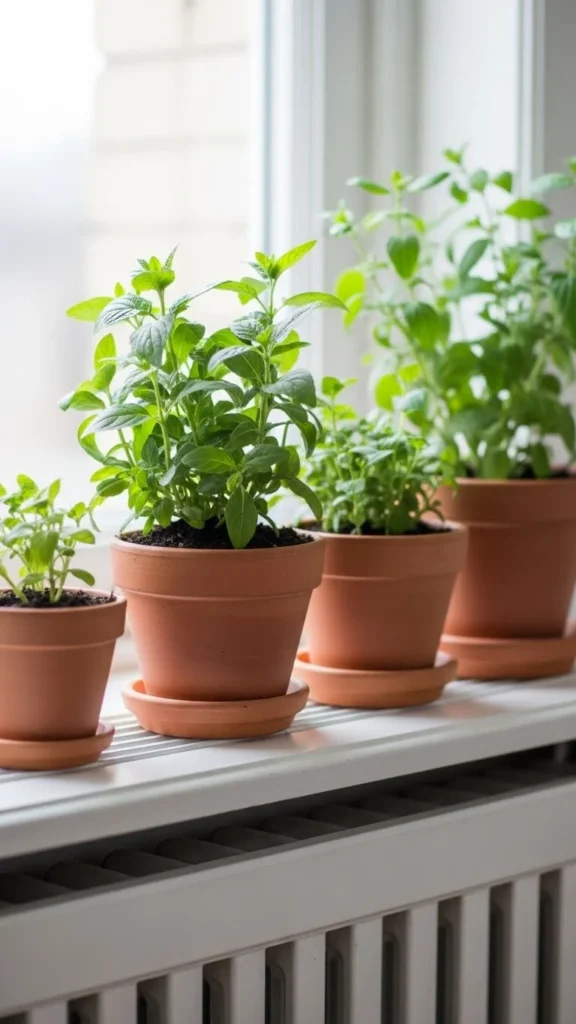
Radiator shelves stay warm and can support small herb pots if you pay attention to moisture.
Place three tiny terracotta pots on a narrow shelf above the radiator, filled with thyme, oregano, and chives.
Terracotta breathes well, which helps avoid soggy roots.
Put a cork mat or thin wooden board between the pots and the shelf to soften the heat.
Water small amounts, more often, rather than giving one heavy soak.
Check leaves often; if they look limp, move the pots a bit farther from the heat source.
Terracotta pots are cheap and easy to find.
You can decorate them with paint or simple twine wraps for visual warmth.
This trio setup suits tiny apartments where radiators run along the best light walls and floor spots stay limited.
19. Window Box of Evergreen Herbs Indoors
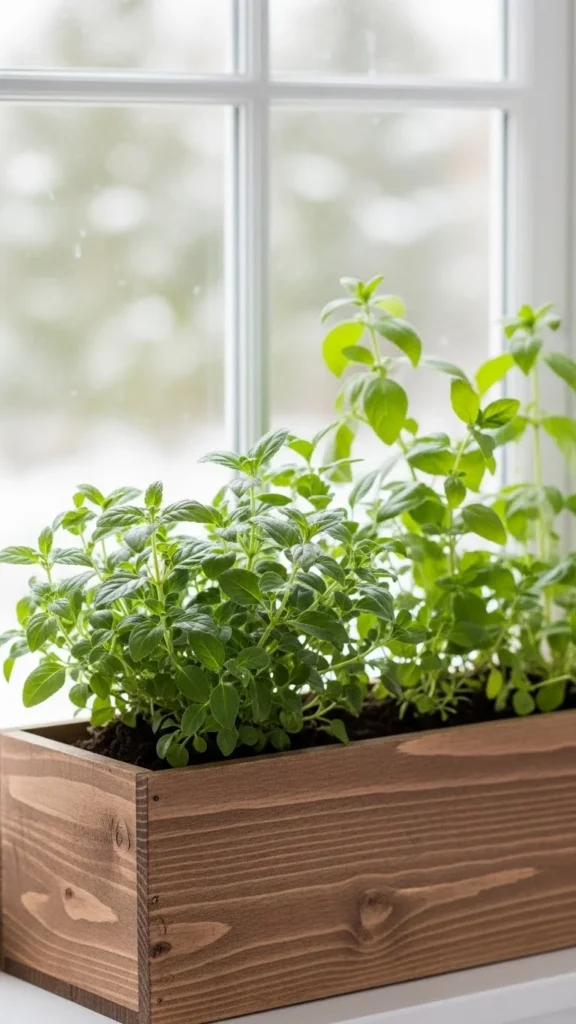
An indoor window box can hold evergreen herbs that handle winter well.
Install a box on sturdy brackets just below a sun-catching window.
Fill it with rosemary, sage, and thyme for steady greenery.
Use a lightweight potting mix and add perlite for drainage.
Place a tray under the box if it sits directly above radiators or furniture.
Water slowly so moisture spreads across the full length.
Window boxes are easy to source or build from scrap boards.
Paint them in light tones to reflect light back onto leaves.
Because the box is fixed, choose herbs that like staying put; you won’t be moving this setup often.
This idea gives the look of a garden bed while only using a strip of wall space.
20. Hanging Basket Cluster in a Sunny Corner
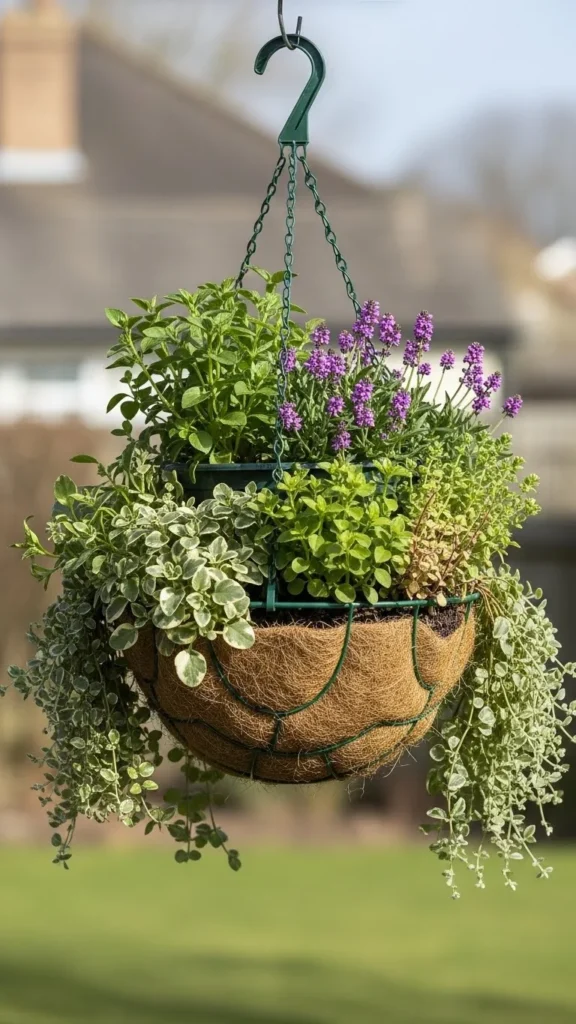
A sunny corner near a window or glass door can host three small hanging baskets filled with herbs.
Hang them at staggered heights using ceiling hooks and strong cord.
Plant trailing herbs like thyme and oregano in the lower basket, and upright ones like rosemary above.
Use lightweight plastic or woven baskets lined with coco fiber to keep soil contained.
Water carefully, starting with the highest basket so any extra drips down.
Place a mat beneath if the corner sits over valuable flooring.
Baskets are inexpensive and easy to swap if you change herbs.
This cluster effect adds a sense of height without stealing floor area.
It works well in living rooms or kitchens where corners usually stay empty but light angles nicely in winter.
21. Stackable Modular Pots for a Balcony Corner
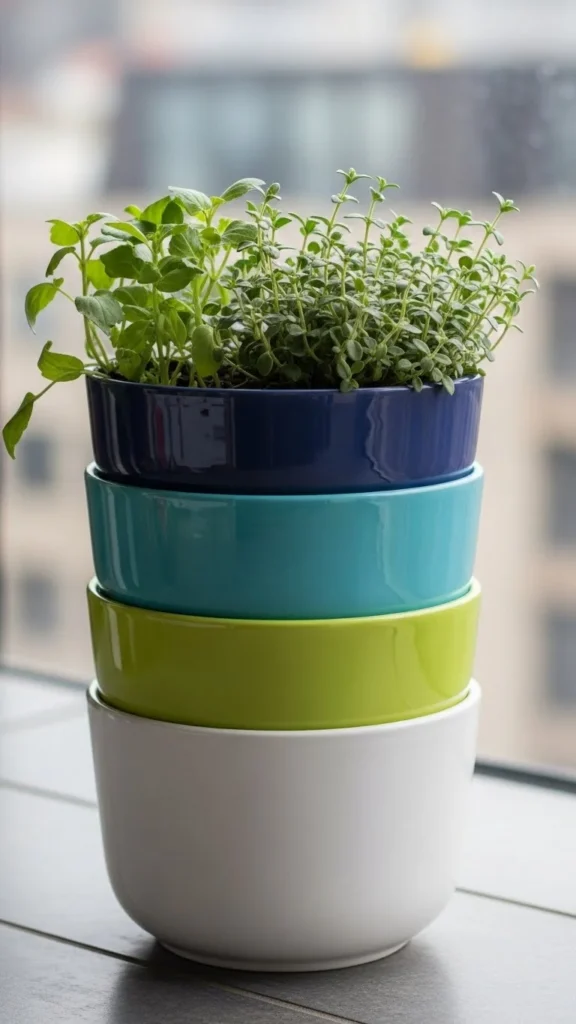
Stackable tower pots are designed for tight spaces and can hold many herbs in one footprint.
Set a tower in a balcony corner and plant different herbs in each pocket.
Keep hardy winter herbs in the lower tiers and more delicate ones higher where air flows better.
Rotate the tower slightly each week so all sides catch some light.
Water from the top; most tower systems let moisture trickle through.
On very windy days, wedge a brick at the base for stability.
You can buy purpose-made towers or stack regular pots in a staggered way, using saucers between levels.
This vertical style suits people who want quantity without losing floor room.
It turns one balcony corner into a compact herb column that remains active all winter.
22. Repurposed Drawer Herb Box Under a Window
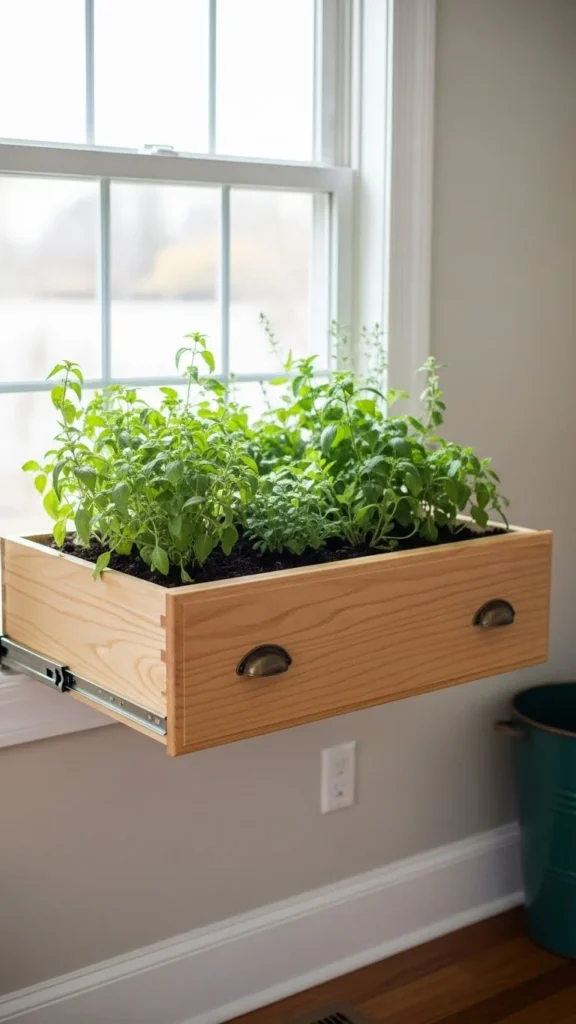
An old wooden drawer easily transforms into a charming herb planter.
Drill drainage holes in the base, paint or seal the wood, and fill it with potting mix.
Plant short herbs like parsley, chives, and cilantro in neat rows.
Set the drawer on low legs or bricks under a bright window.
Slide a tray underneath to catch runoff.
Because the drawer is shallow, avoid overcrowding roots; leave space between plants.
Drawers are often free from discarded furniture.
You can add handles or label holders for a vintage look.
This low, wide container suits bay windows or beneath sill setups where height is limited but horizontal space exists.
It doubles as both a decorative piece and a practical winter herb bed.
23. Shoe Rack Herb Steps Beside a Patio Door
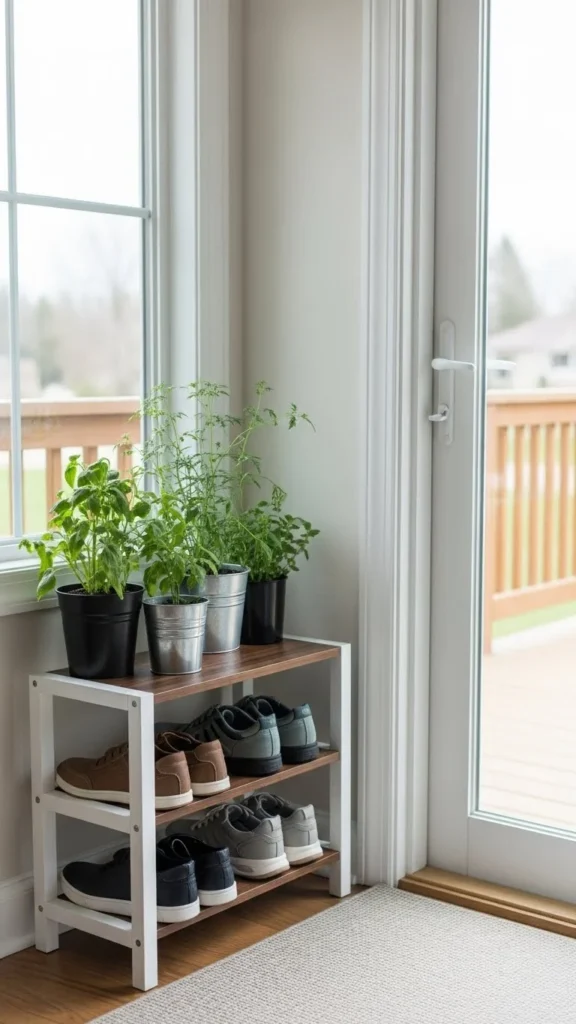
A simple shoe rack acts as a mini stepped stand for herb pots.
Place it beside a patio door where light spills in.
Fill each tier with small containers of herbs, grouping those with similar water habits together.
Use narrow pots so you can fit several on each level.
Line shelves with plastic mats or old baking trays to avoid water stains.
When you open the door, cooler air refreshes the herbs without over-chilling them.
Budget-friendly metal or wooden shoe racks are easy to find.
You can spray-paint a metal rack in soft colors to match your decor.
This layout works well in entryways, sunrooms, or any spot where people pass through often and can enjoy the scent and sight of winter herbs.
24. Low-Footprint Herb Rail on a Loft or Stair Landing
Loft edges and stair landings often receive good light but stay ignored.
Attach a narrow herb rail or slim shelf along the inside of the railing.
Set lightweight pots of thyme, oregano, and small basil in a single row.
Make sure pots sit securely by using rail clamps or brackets with lips.
Water with a small jug and wipe spills right away for safety.
Because this area is elevated, choose herbs that stay short so they don’t block views.
You can build the rail from a single board and two brackets.
Paint it to match the railing for a seamless look.
This idea uses an area that rarely holds furniture, turning air space into a productive herb strip while keeping floors clear.
Conclusion
Compact winter container-herb gardens thrive when you match the right layout to the spaces you already pass every day.
Windowsills, fridge sides, balcony rails, and narrow shelves can all carry useful herbs with simple containers and light potting habits.
Start with one or two ideas that suit your home—maybe a slim windowsill rail or a rolling cart—and add more as you gain confidence.
With small, steady care, your winter herbs will keep flavor close, brighten tight rooms, and prove that even the tiniest corners can support a productive garden.
Leave a Reply