

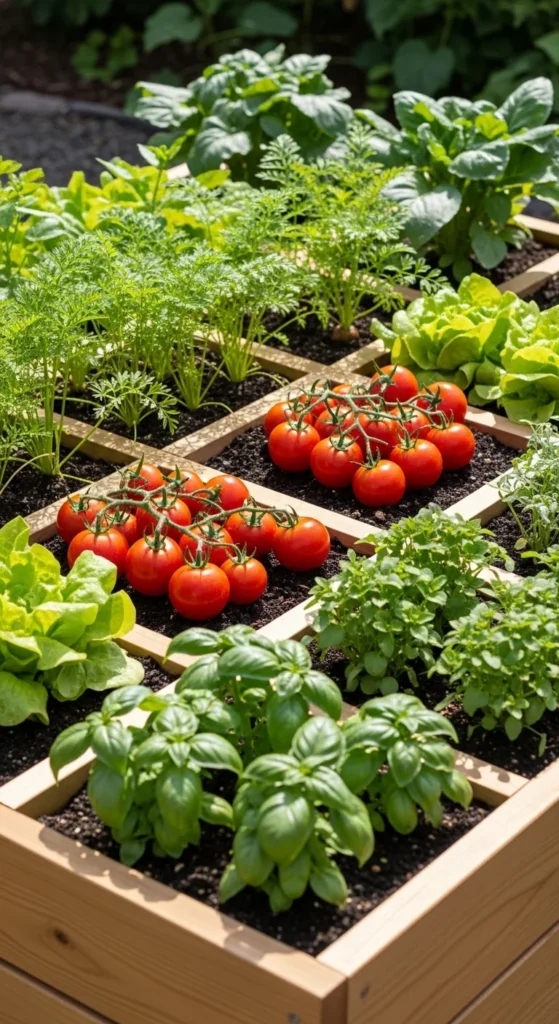
If you’ve ever wanted a garden that’s easy to manage, space-efficient, and surprisingly productive, square foot gardening might be your new favorite method. This smart approach helps you grow more in less space — without the back-breaking work of traditional gardening.
Whether you’re planting on a balcony, patio, or backyard, you can start a square foot garden that thrives with minimal effort. Here’s your step-by-step guide to get growing.
What Is Square Foot Gardening?
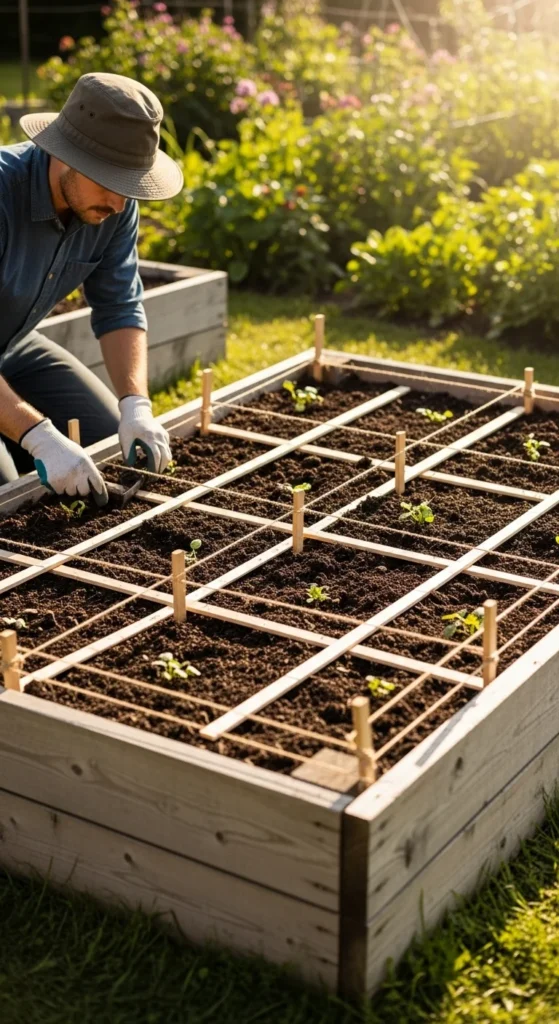
Square foot gardening is a method developed by Mel Bartholomew, designed to maximize yield in small spaces. Instead of long rows, your garden is divided into 1×1-foot squares, each planted with a specific crop.
This layout gives you:
- Efficient use of soil and water
- Less weeding and maintenance
- Easier access for planting and harvesting
- No wasted space
It’s a system that works for beginners and seasoned gardeners alike — perfect for anyone who wants results without chaos.
Step 1: Choose the Right Spot
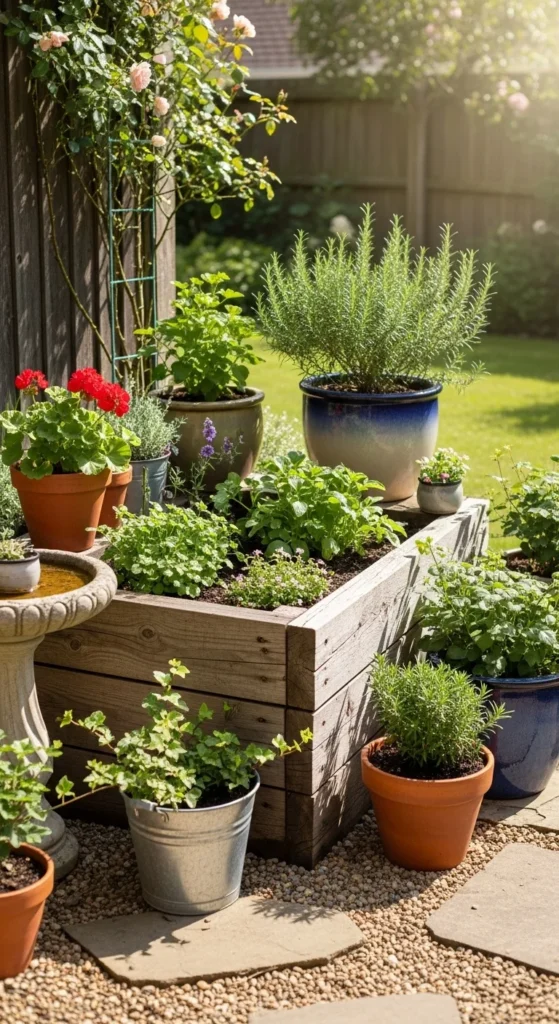
Your garden’s success starts with location. Pick a spot that gets at least 6–8 hours of sunlight daily. Zucchini, tomatoes, and peppers thrive in full sun, while lettuce or spinach tolerate a bit of shade.
Tips for choosing your garden spot:
- Keep it close to a water source.
- Avoid areas with large tree roots or too much wind.
- Choose level ground for even watering and plant growth.
If space is tight, don’t worry — you can do square foot gardening in raised beds, containers, or even wooden crates.
Step 2: Build or Buy Your Raised Bed
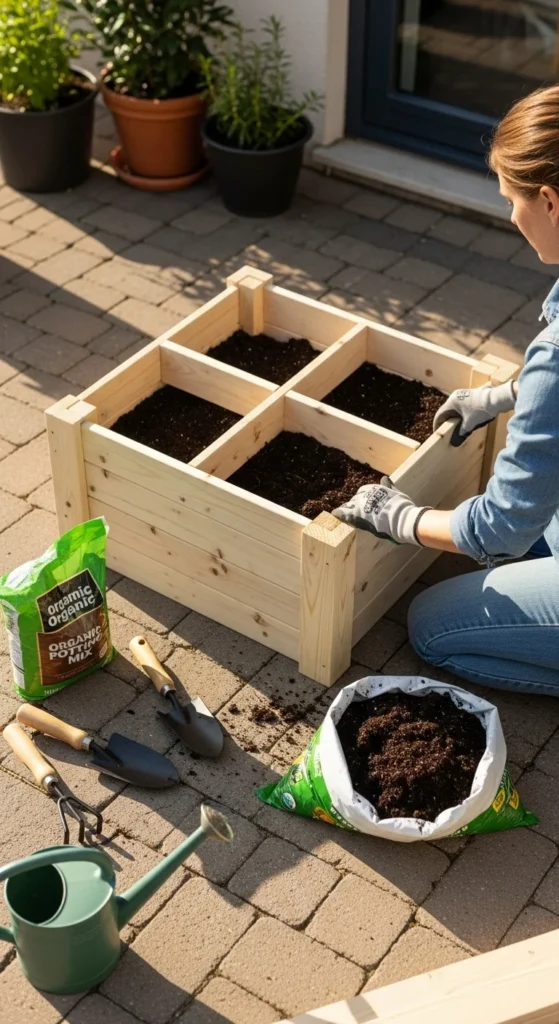
You’ll need a sturdy frame to hold your soil and define your growing space. A 4×4-foot bed is the classic size — big enough for 16 planting squares but still easy to reach from all sides.
Building your own:
- Use untreated wood (like cedar or pine) that won’t leach chemicals.
- Height: 6–12 inches deep works for most vegetables.
- Secure the corners tightly to hold soil and water evenly.
If DIY isn’t your thing, pre-made garden kits are widely available and quick to assemble.
Step 3: Fill It with the Right Soil Mix
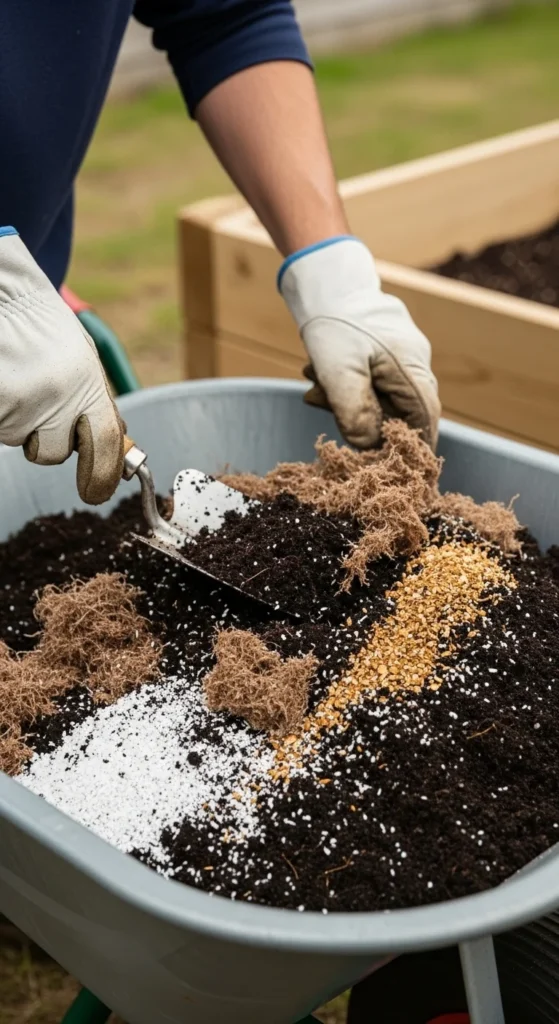
Traditional garden soil can be too heavy or compacted for square foot gardening. Instead, use the famous “Mel’s Mix” for a perfect growing base:
The ideal mix (equal parts):
- 1/3 compost (adds nutrients)
- 1/3 peat moss or coco coir (retains moisture)
- 1/3 vermiculite (improves aeration and drainage)
This blend stays fluffy, drains well, and gives roots room to breathe — meaning healthier plants and bigger harvests.
Pro tip: Mix your soil thoroughly before filling the bed and smooth it out evenly when done.
Step 4: Divide and Plan Your Squares
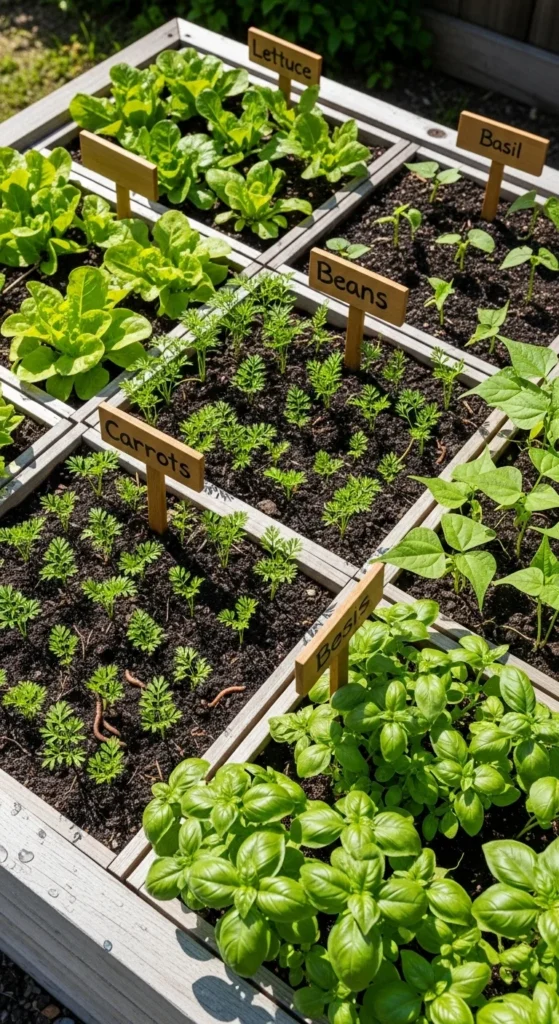
Now comes the fun part — creating your grid. Use wooden slats, string, or bamboo strips to divide your bed into 16 equal 1-foot squares.
Plant spacing guide:
- 1 per square: Broccoli, cabbage, peppers, basil
- 4 per square: Lettuce, marigolds, Swiss chard
- 9 per square: Beets, spinach, bush beans
- 16 per square: Radishes, green onions, baby carrots
Mix it up with colorful vegetables and flowers for both beauty and function — marigolds, for example, deter pests naturally.
Step 5: Plant, Water, and Watch It Grow
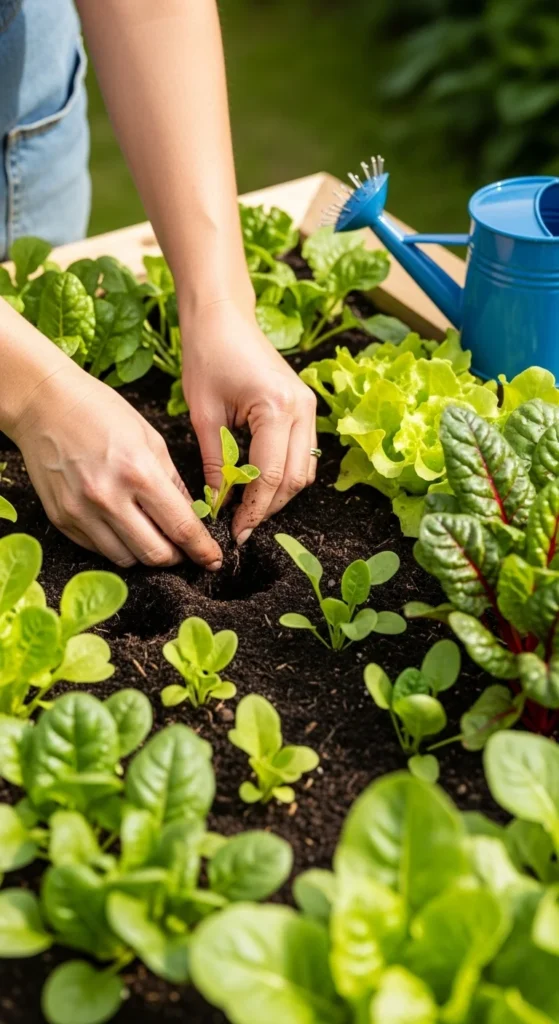
Plant each square according to its spacing requirements, and label what’s growing where. For variety, stagger planting times — this keeps your harvest coming all season.
Watering tips:
- Water deeply but gently, focusing on the roots.
- Morning watering is best to reduce evaporation.
- Use a drip system or watering can for control.
Zucchini, tomatoes, lettuce, herbs, and strawberries all thrive in square foot setups — just remember to harvest regularly to encourage new growth.
Step 6: Keep It Low-Maintenance
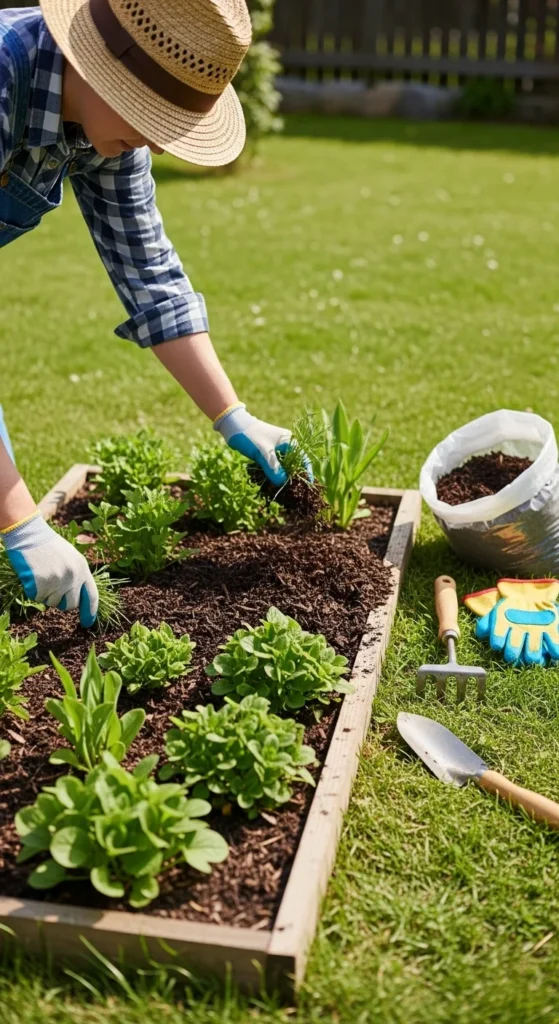
Square foot gardening is naturally easy to maintain, but a few habits will keep it thriving:
- Add compost every few weeks to replenish nutrients.
- Mulch with straw or bark to retain moisture and suppress weeds.
- Rotate crops each season to keep the soil healthy.
- Keep an eye out for pests — neem oil or companion planting helps deter them naturally.
Because everything grows close together, weeds rarely take over — making this method nearly effortless once established.
Conclusion
Square foot gardening proves that you don’t need acres of land to grow your own food. With a little planning and a few square feet, you can harvest vegetables, herbs, and flowers in abundance — all season long.
Leave a Reply