

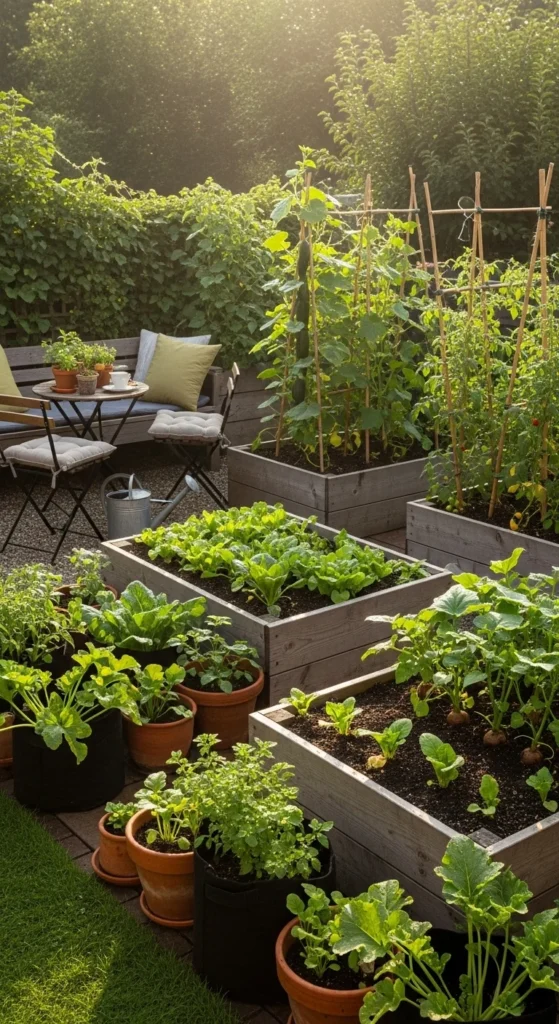
Small backyard garden plans are all about smart design. When space is tight, every square foot matters. The most successful layouts combine raised beds, vertical growing, compact crop spacing, and clearly defined zones so you can grow more food without crowding your yard. Even plots under 50 m² can produce impressive harvests with the right structure. Use these practical, budget-friendly garden plans to turn a modest backyard into a highly productive food space.
1. Compact 4×4 Raised Bed Starter
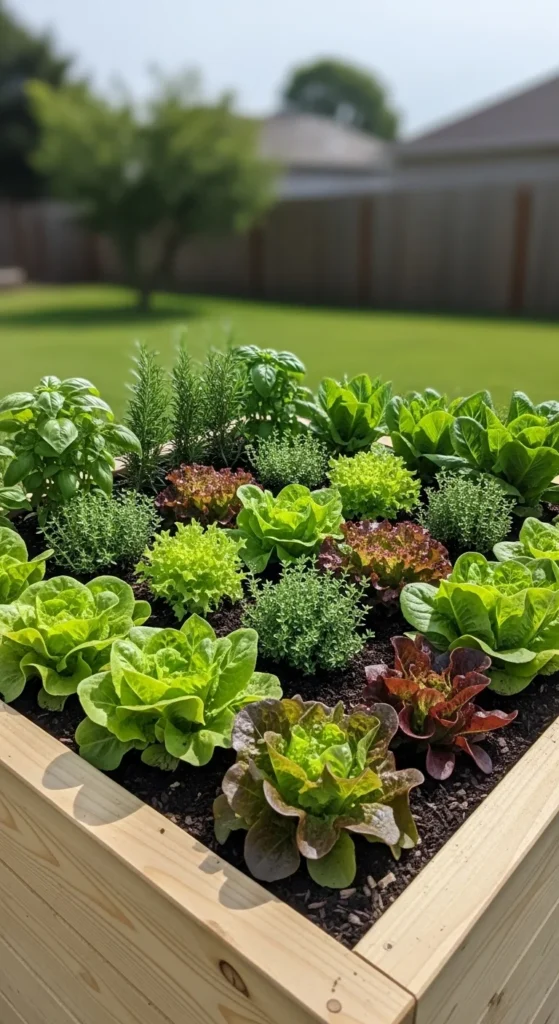
A single 4×4 raised bed is one of the best starting points for small yards. It fits tight spaces while keeping all plants within arm’s reach.
Divide the bed into square foot sections using string or thin wood strips. This keeps spacing organized and prevents overcrowding.
Place the bed in your sunniest location. Most vegetables perform best with at least six hours of direct light.
Use rich compost-heavy soil to support dense planting. Smaller beds dry faster, so check moisture regularly.
This simple layout gives beginners quick wins and clear structure.
2. Square Foot Intensive Grid
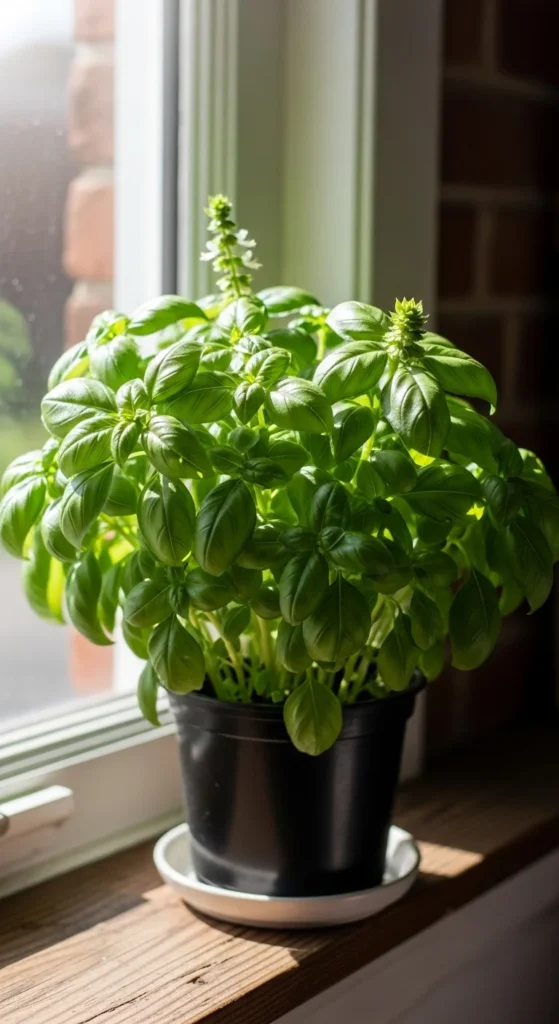
Square foot gardening packs many crops into a small footprint. Each square holds a specific number of plants based on size.
Leafy greens may share a square. Larger plants like tomatoes take one full section.
This intensive spacing method reduces wasted soil and keeps beds productive.
Mark the grid clearly at planting time. It helps maintain order through the season.
This layout works especially well in yards under 50 m².
3. Vertical Fence Planter Wall
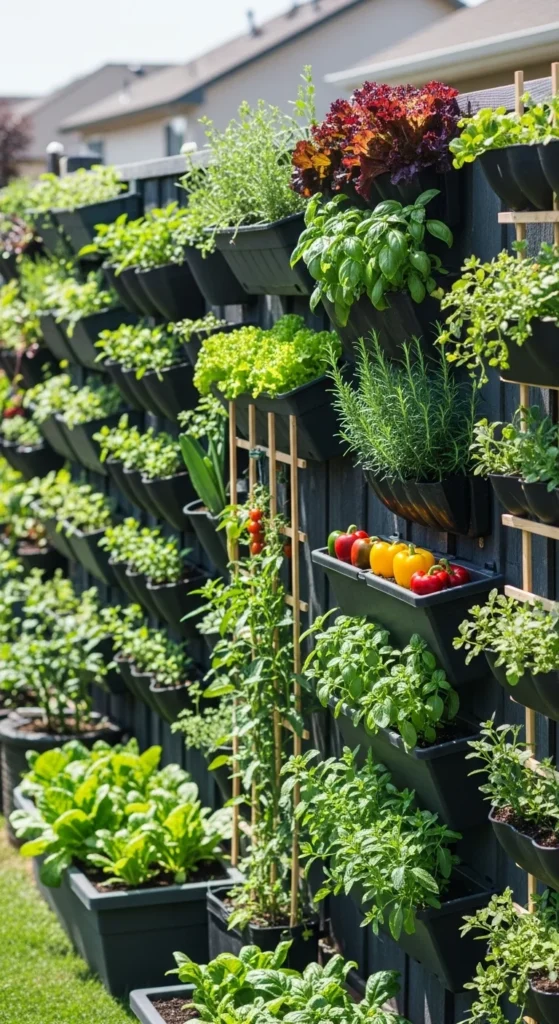
Fence space is often underused.
Attach vertical planters, gutters, or pocket systems to your fence. Grow herbs, lettuce, and compact greens upward instead of outward.
Place sun-loving plants on the brightest section of the fence.
Vertical gardening can multiply your growing area dramatically without expanding the footprint.
This is one of the most effective small-yard upgrades.
4. Diagonal Path Layout Trick
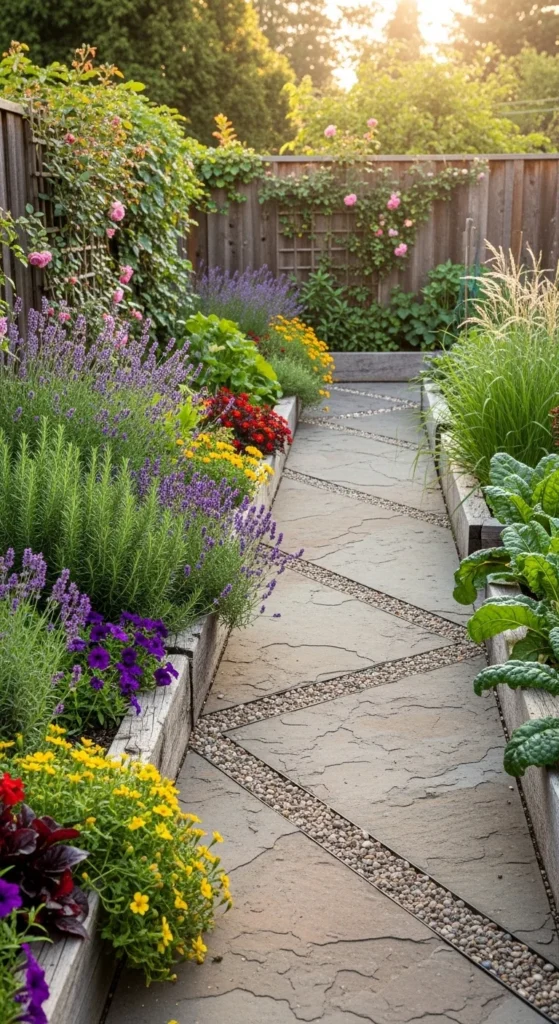
Straight paths can make small yards feel boxy. A 45-degree diagonal path visually stretches the space.
Lay stepping stones or gravel at an angle across the garden.
Arrange beds along the path edges.
This simple geometry change improves movement and makes the yard appear larger.
It works especially well in long narrow plots.
5. Tiered Container Cluster
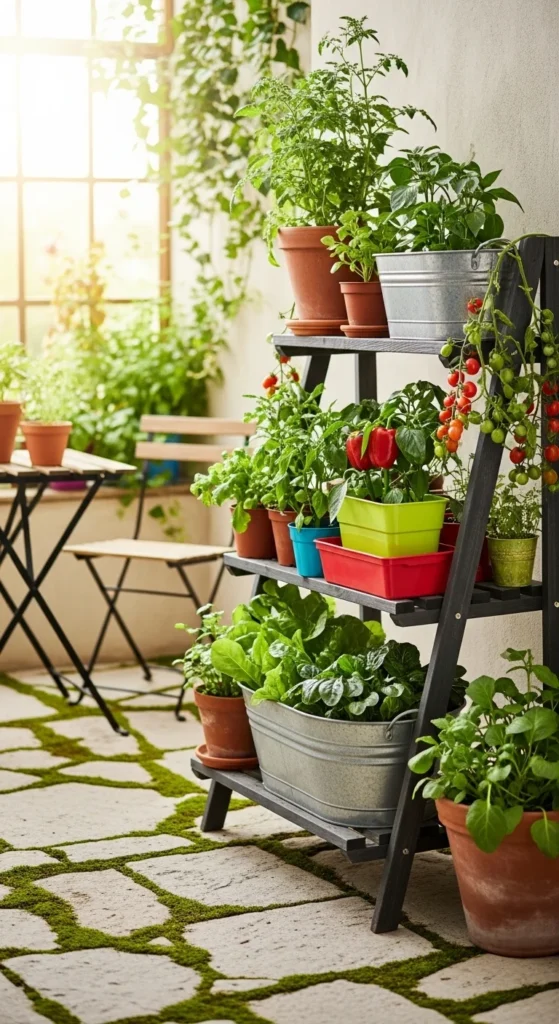
Layering containers adds growing room without taking more ground space.
Use tiered plant stands, crates, or sturdy shelves.
Place trailing herbs on lower levels and sun lovers on top tiers.
Group pots tightly to create a lush look while staying organized.
This layout suits renters and very small backyards.
6. Potager Kitchen Garden Mix
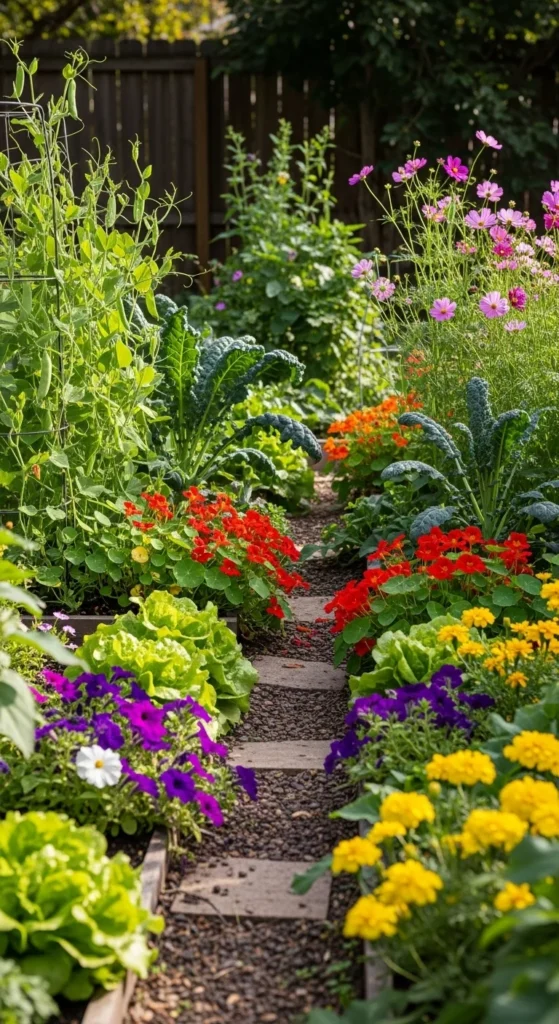
A potager blends vegetables with flowers in the same beds.
This makes the garden both productive and visually appealing.
Plant lettuce, tomatoes, and herbs alongside marigolds or calendula.
Flowers attract pollinators and beneficial insects.
Use symmetrical bed shapes for a tidy appearance.
This layout fits beautifully into compact yards.
7. L-Shaped Zoning Plan
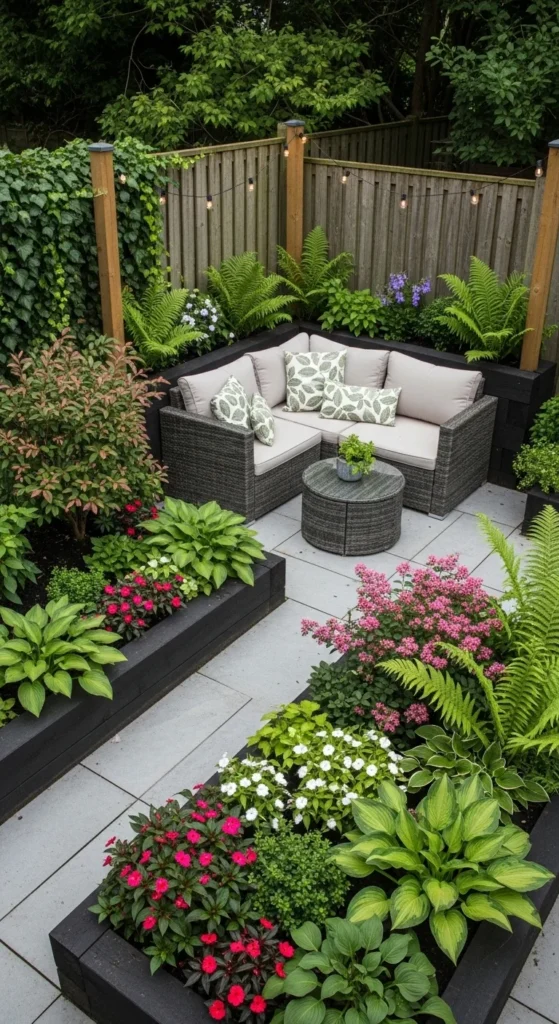
An L-shaped layout separates growing space from relaxation areas.
Place raised beds along two connecting sides of the yard.
Leave the open corner for seating or a small table.
This creates clear flow without crowding the space.
It works especially well in square backyards.
8. Botanical Bento Micro-Zones
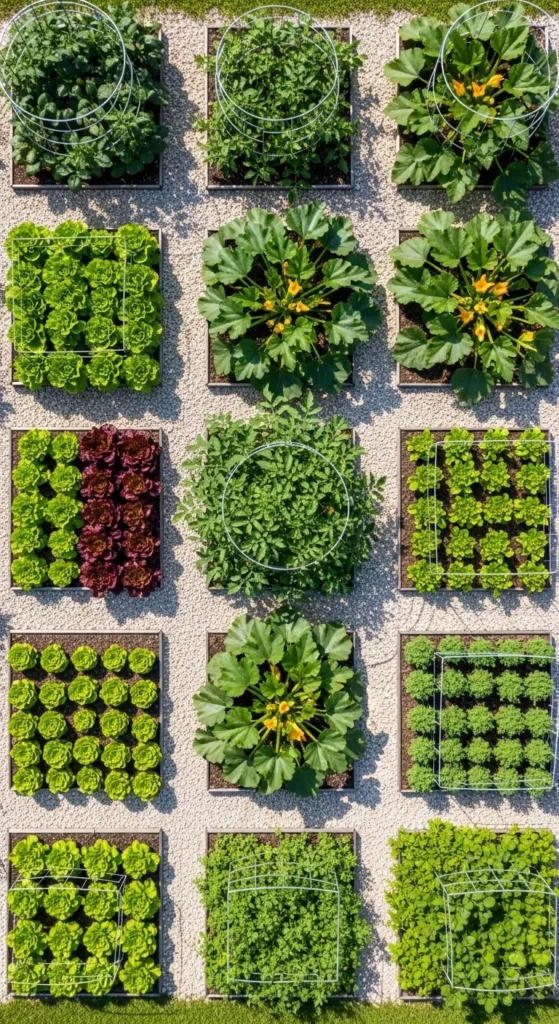
Micro-zoning divides the garden into functional blocks.
One section for herbs. One for greens. One for climbing crops.
Use small edging materials to separate areas.
This keeps maintenance simple and visually organized.
It also helps with crop rotation planning later.
9. Center Trellis Pyramid
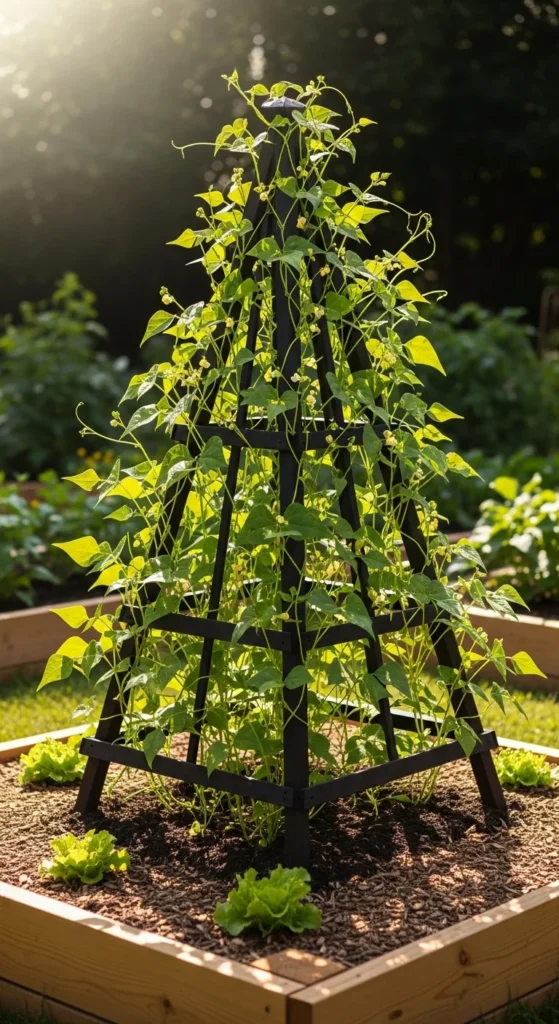
A central trellis uses vertical space efficiently.
Build a simple pyramid from wood or bamboo.
Plant cucumbers or pole beans at the base.
Vines grow upward while ground space remains open for other crops.
This design is excellent for tight garden beds.
10. Rounded Bed Edge Design
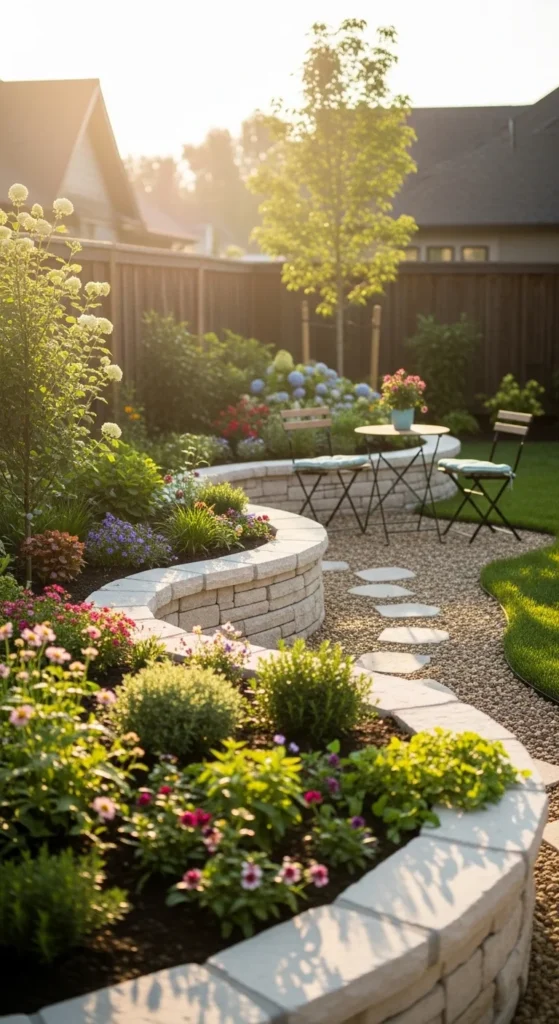
Curved edges make small yards feel less rigid.
Instead of sharp rectangles, create gentle rounded bed corners.
Use flexible edging materials like metal or bent wood.
Curves improve movement flow and soften the overall look.
This works well in decorative edible gardens.
11. Mobile Grow Bag Garden
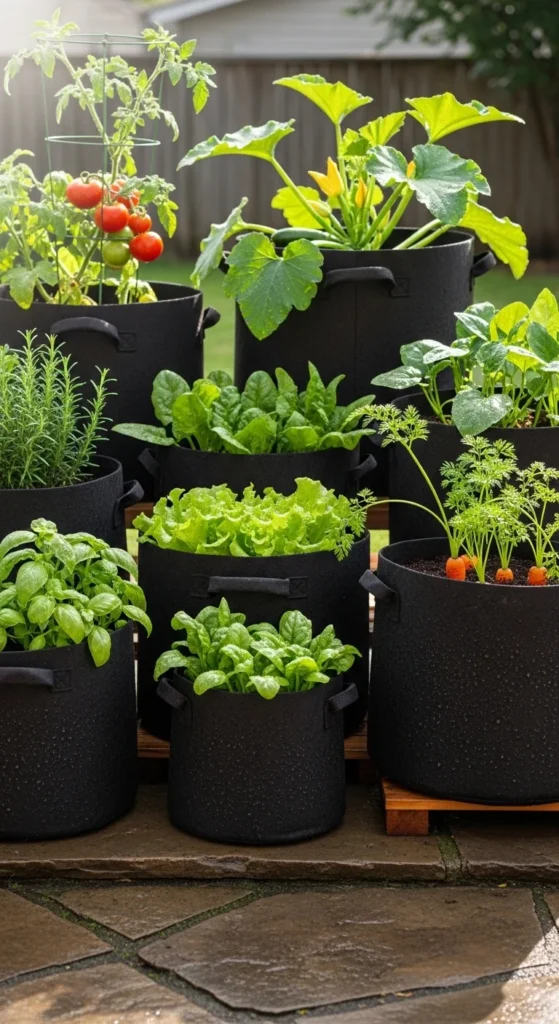
Grow bags are perfect for flexible layouts.
Place them where sunlight is strongest during the season.
They are lightweight and easy to rearrange.
This is especially useful for renters or changing light conditions.
Choose 5–10 gallon bags for most vegetables.
12. Pollinator Border Strip
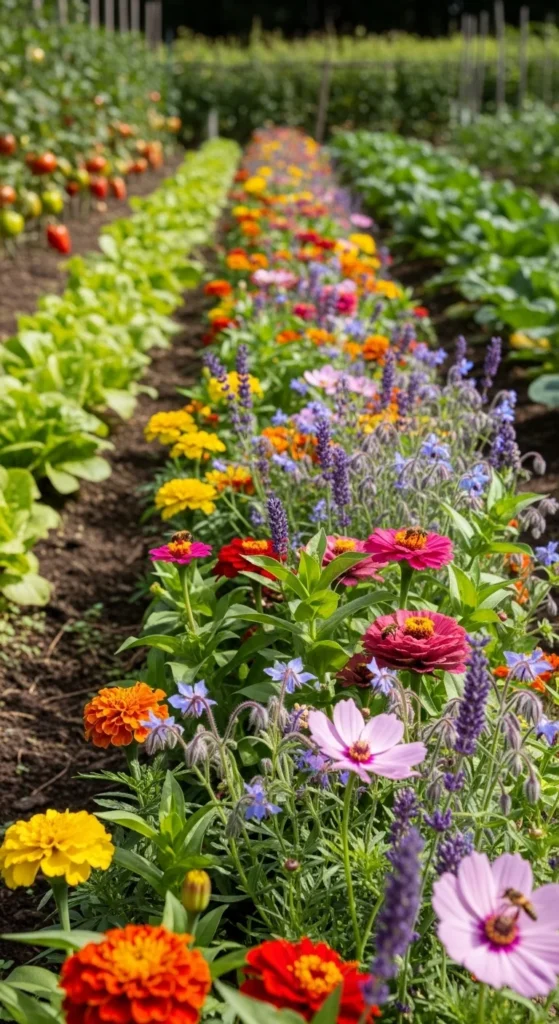
A thin flower strip along bed edges brings helpful insects.
Plant compact flowers that do not shade crops.
This supports pollination and adds color.
Keep the strip narrow to preserve growing space.
It’s a small addition with big benefits.
13. Hydroponic Tower Corner
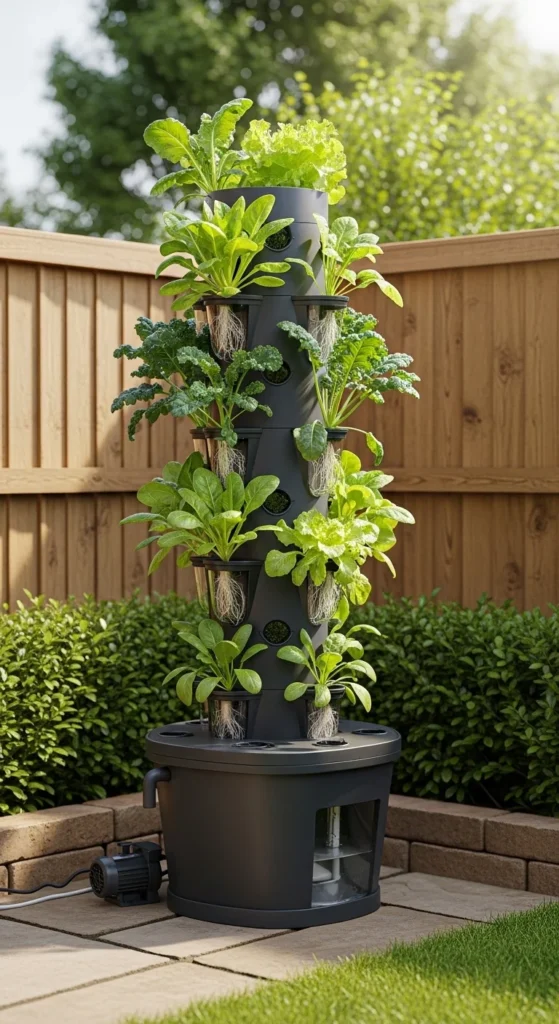
Hydro towers grow many plants in a tiny footprint.
Place one in a sunny corner or near a power source for lights.
Leafy greens perform especially well.
This soil-free method keeps the area clean and compact.
Great for very tight spaces.
14. Privacy Screen Trellis Combo
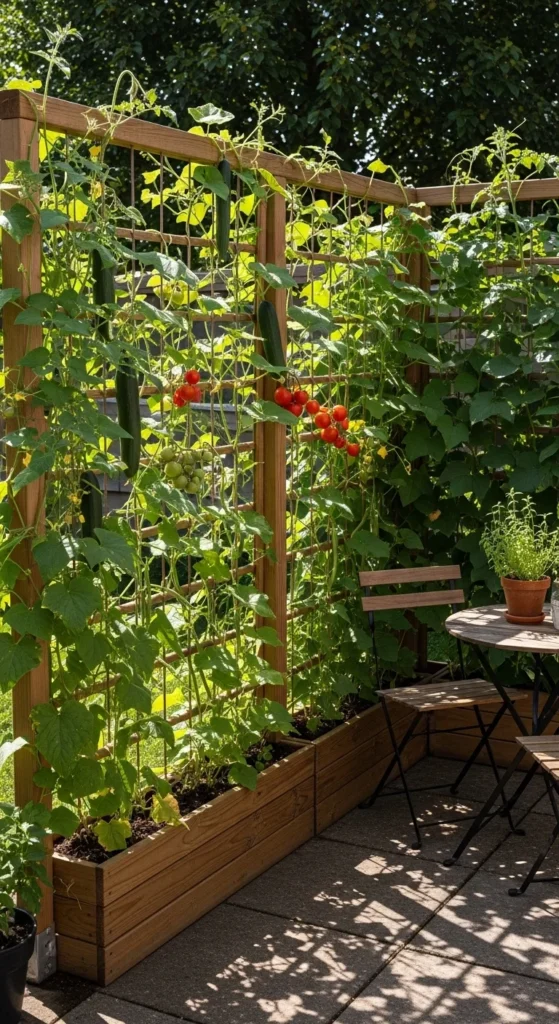
Privacy screens can double as growing space.
Install a trellis panel along the screen.
Plant climbing crops at the base.
This adds greenery while serving two purposes.
Perfect for close neighbors.
15. Succession Planting Grid
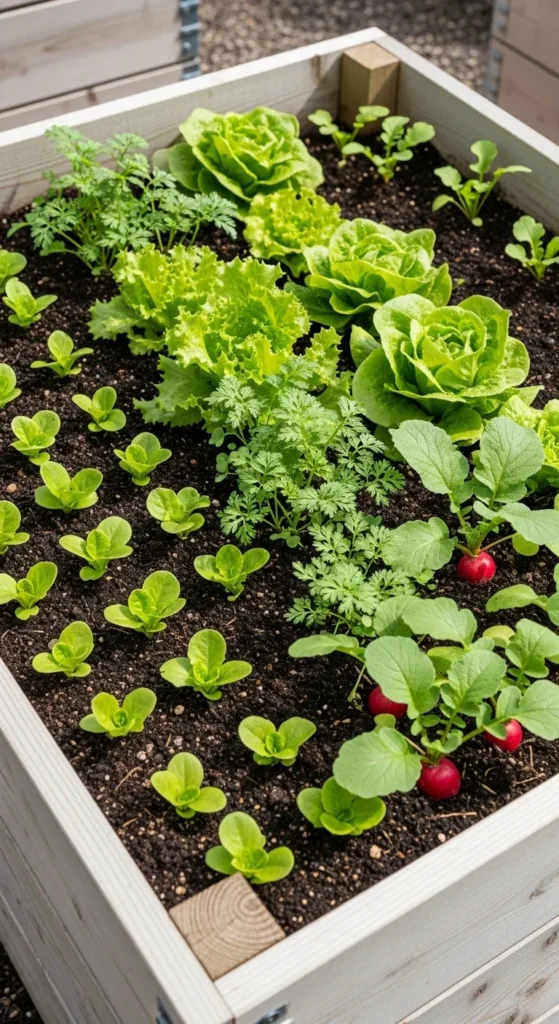
Succession planting keeps small beds productive.
After harvesting one crop, replant quickly with another.
Fast growers like radishes and lettuce work well.
Plan your planting calendar ahead of time.
This keeps harvests steady all season.
16. Edible Pathway Borders
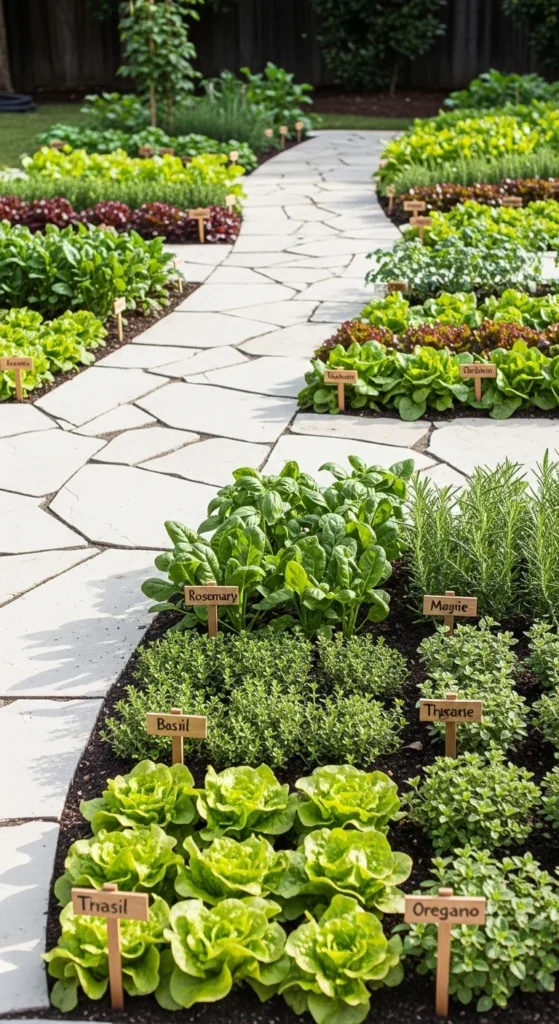
Path edges can grow food too.
Plant low herbs like thyme or compact lettuce along walkways.
This makes every inch productive.
Keep plants trimmed so paths stay clear.
It’s a smart way to stretch small spaces.
17. Archway Depth Illusion
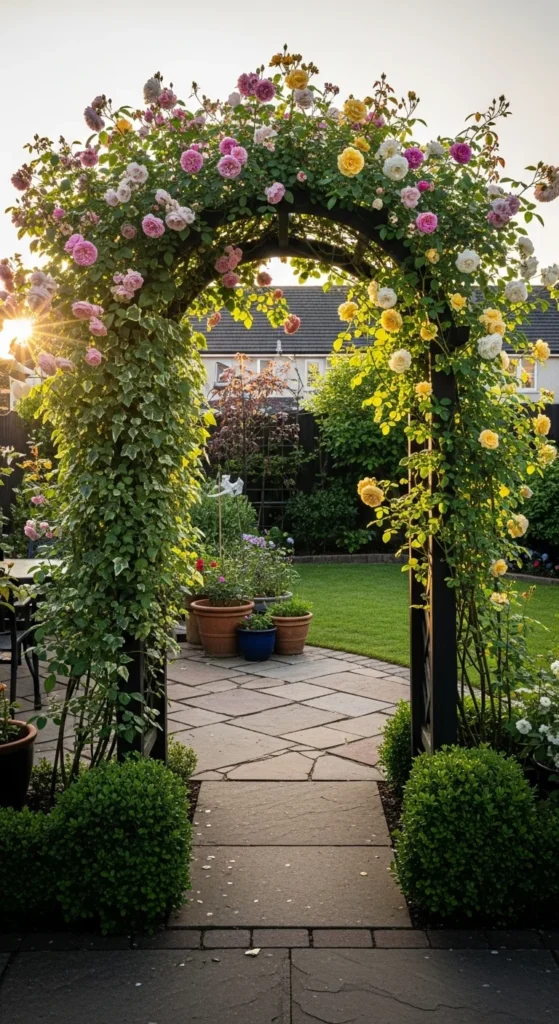
Garden arches create visual depth.
Place an arch over a path or bed entrance.
Grow peas or beans over the top.
The vertical height draws the eye upward, making the yard feel larger.
It’s both functional and decorative.
18. Stepped Container No-Lawn Plan
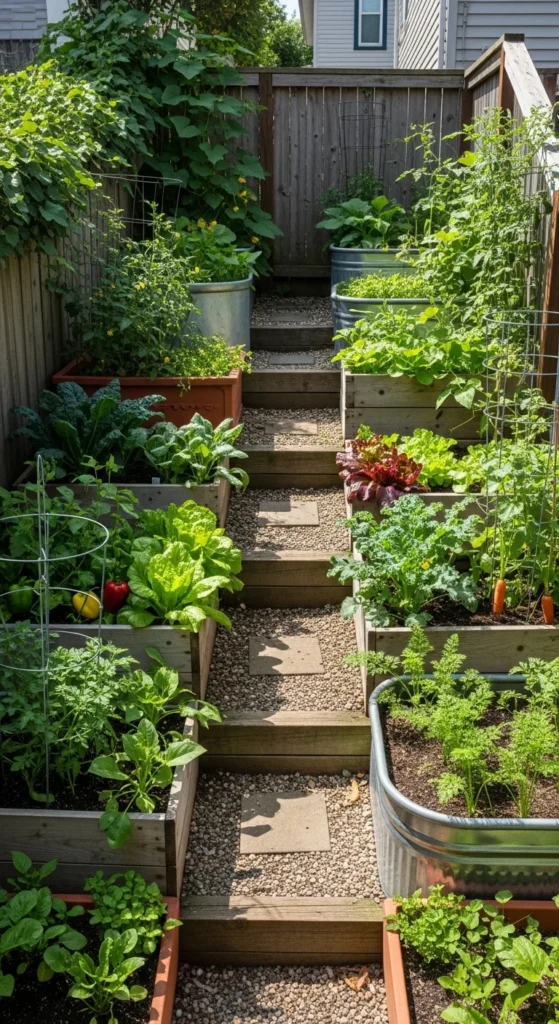
Removing lawn opens valuable growing space.
Replace grass with stepped container levels.
Use uniform pots for a clean look.
This works well in very small urban yards.
Maintenance becomes easier too.
19. Pleached Tree Screen Garden
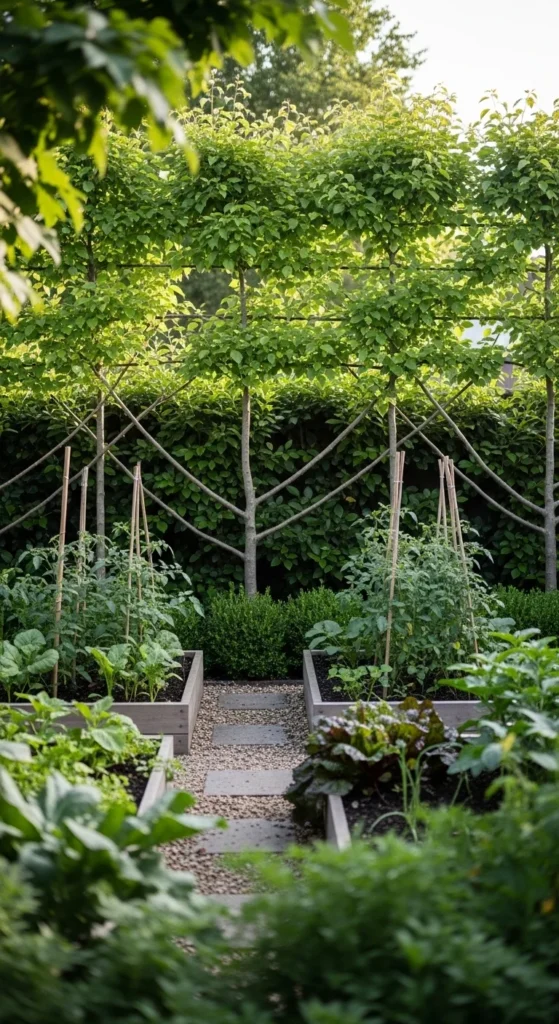
Pleached trees form a living wall.
Plant them along the back boundary.
Vegetable beds sit in front.
This creates privacy without heavy fencing.
It also adds vertical greenery.
20. Layered Vertical Green Wall
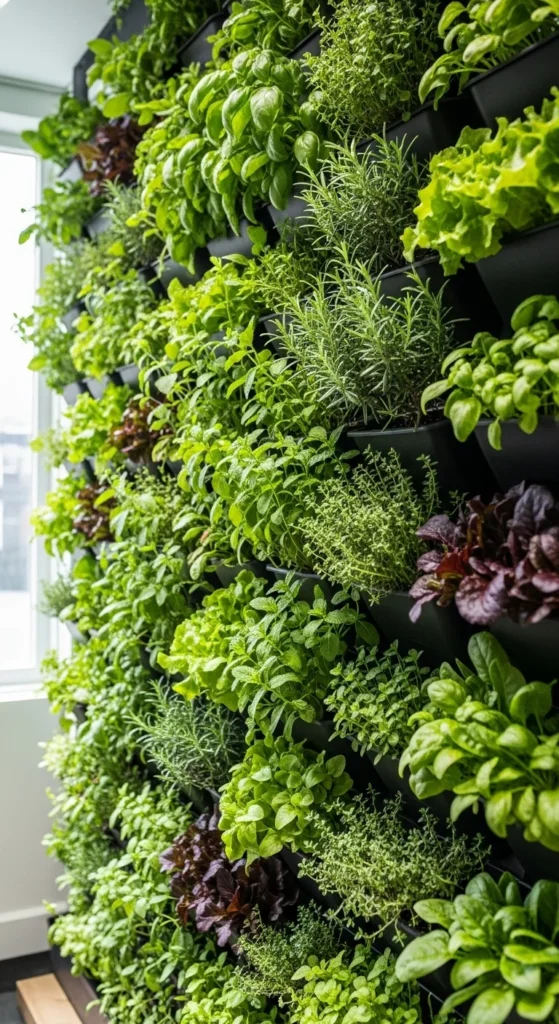
Layered walls stack multiple planter rows.
Use sturdy wall mounts or pallet frames.
Place sun lovers higher and shade-tolerant herbs below.
This maximizes vertical growing potential.
Ideal for very tight yards.
21. String Light Cozy Garden Zone
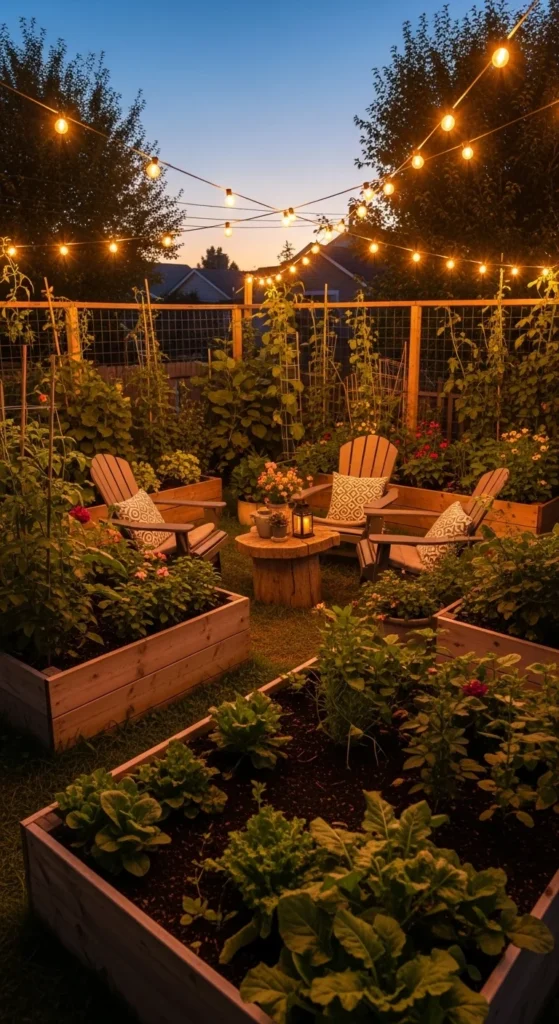
Lighting turns productive gardens into relaxing spaces.
Hang warm string lights above seating areas.
Keep lights clear of tall crops.
This creates a cozy evening harvest zone.
Small gardens benefit greatly from layered lighting.
22. App-Planned Precision Layout
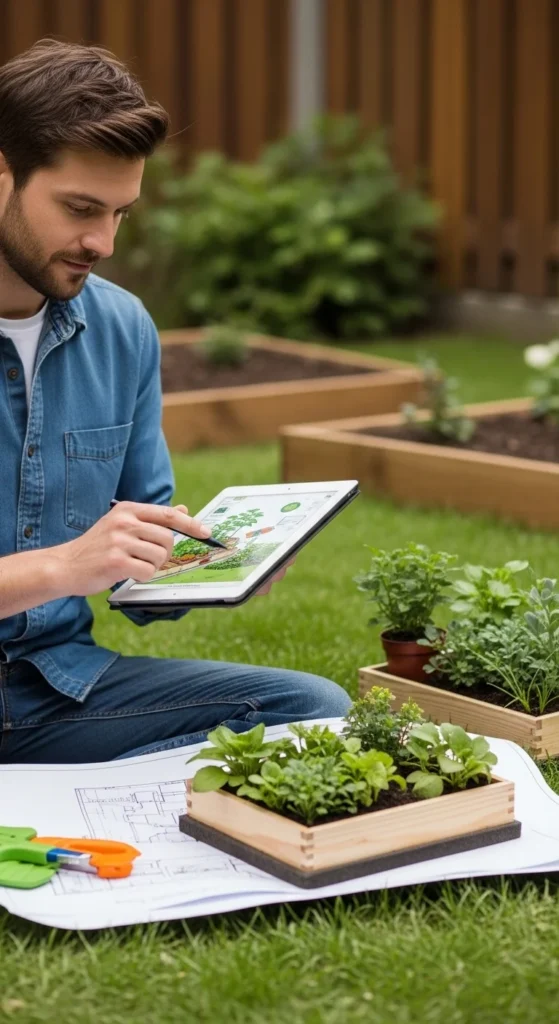
Digital planners help visualize spacing before building.
Map beds, paths, and vertical features.
Adjust layout virtually before committing.
This prevents costly mistakes in small spaces.
Even basic planning improves efficiency.
23. Radial Wheelbarrow Access Design

Radial layouts use spoke-like paths.
Each bed stays within easy reach.
This design reduces walking distance.
It works well in square lawns converted to gardens.
Access becomes smooth and efficient.
24. Compact Multi-Zone Family Garden
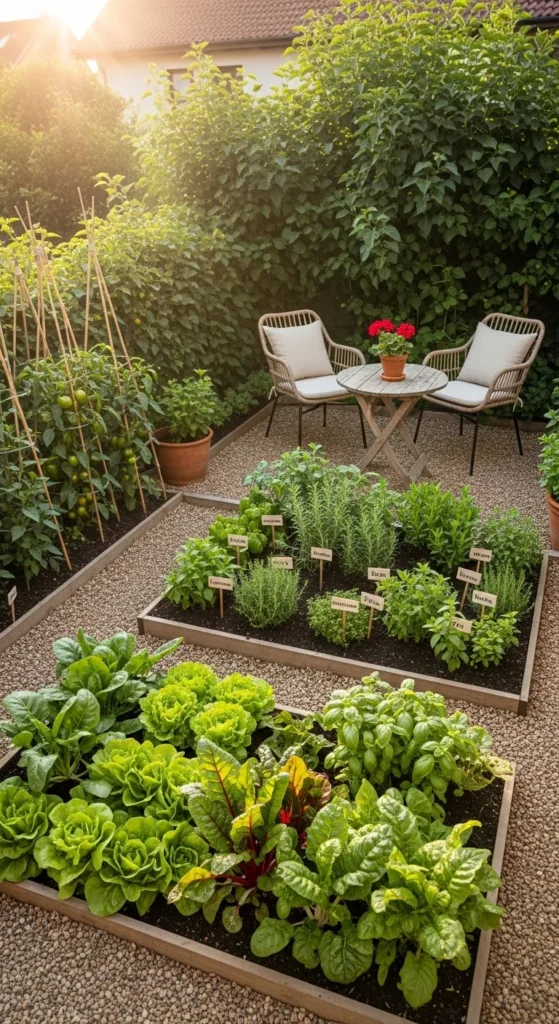
The most practical small-yard plan combines zones.
One area for vegetables. One for herbs. One for seating.
Keep paths clear and beds within reach.
Use vertical features wherever possible.
This balanced layout produces food while keeping the yard enjoyable.
Conclusion
Small backyard gardens can produce impressive harvests when every inch is planned wisely. Focus on raised beds, vertical structures, smart spacing, and clearly defined zones. Start with one or two space-saving ideas, watch how your yard responds, and refine your layout over time. With thoughtful design, even the smallest backyard can become a productive food garden.

Leave a Reply