

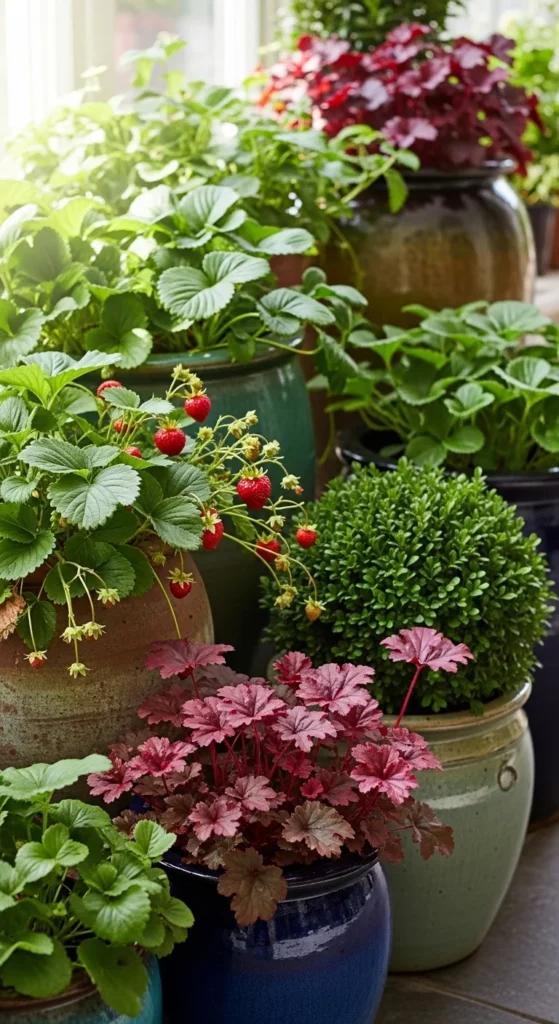
Choosing plants for containers gets much easier when you focus on three things: the right pot size, the right light, and plants that don’t panic when conditions change. Many top-performing container picks are compact edibles (fast harvests), hardy perennials (reliable foliage), and small evergreens (year-round structure). This list mixes all three so you can build pots that look good, taste good, and stay steady across seasons—without turning watering and feeding into a full-time job.
1. Lettuce Mix for Fast Harvests
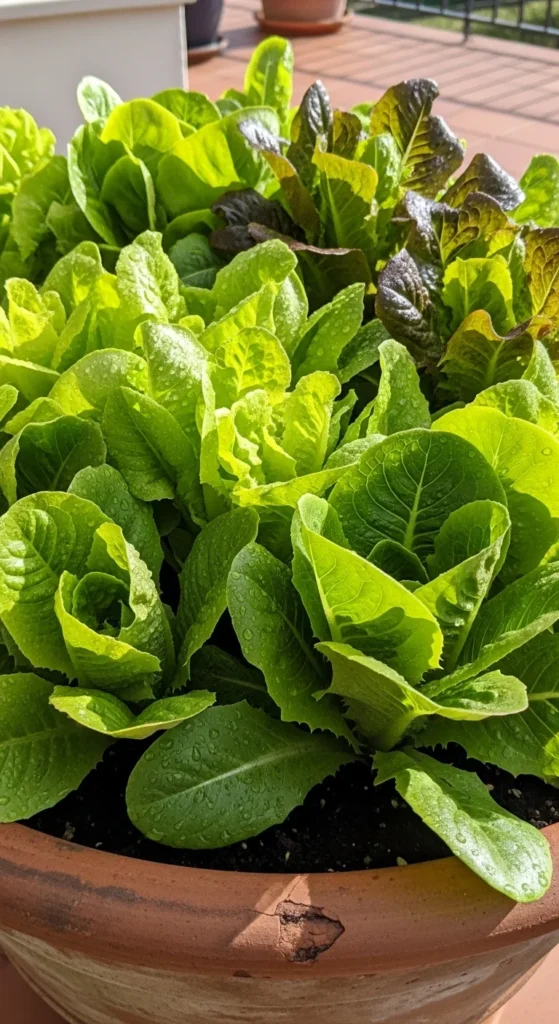
Lettuce is one of the quickest container wins. It grows fast, forgives small mistakes, and doesn’t require a deep pot. A wide container gives you more harvest than a tall one.
- Pot size: 2+ gallons, wide and shallow
- Light: morning sun is great, afternoon shade helps in heat
- Harvest: cut outer leaves and let the center keep growing
Budget-friendly tip:
- Grow lettuce from seed. A small packet fills multiple pots.
Planting trick:
- Sow a little every 2 weeks in the same pot for ongoing harvest.
Water when the top inch feels dry. Add a thin mulch layer to slow drying. Lettuce also pairs well with herbs in the same container if you keep spacing loose so air can move.
2. Spinach That Handles Small Pots
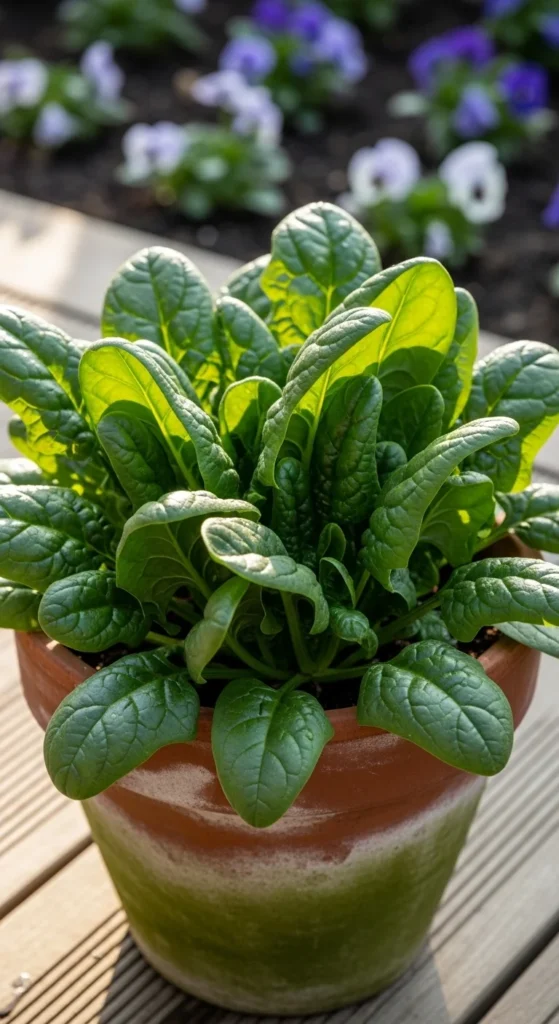
Spinach stays compact and produces a lot in a short time. It’s ideal for beginner pots because it shows quickly if watering is off.
- Pot size: 2+ gallons
- Soil: potting mix with compost
- Best season: cooler months or mild spring
Budget-friendly tip:
- Start from seed. Thin seedlings and eat the thinnings.
Care routine:
- Keep soil evenly moist, not soaked
- Harvest outer leaves first
If your weather turns hot, spinach may bolt. When it does, swap the pot to basil or peppers for a warm-season reset.
3. Kale for Repeat Pickings
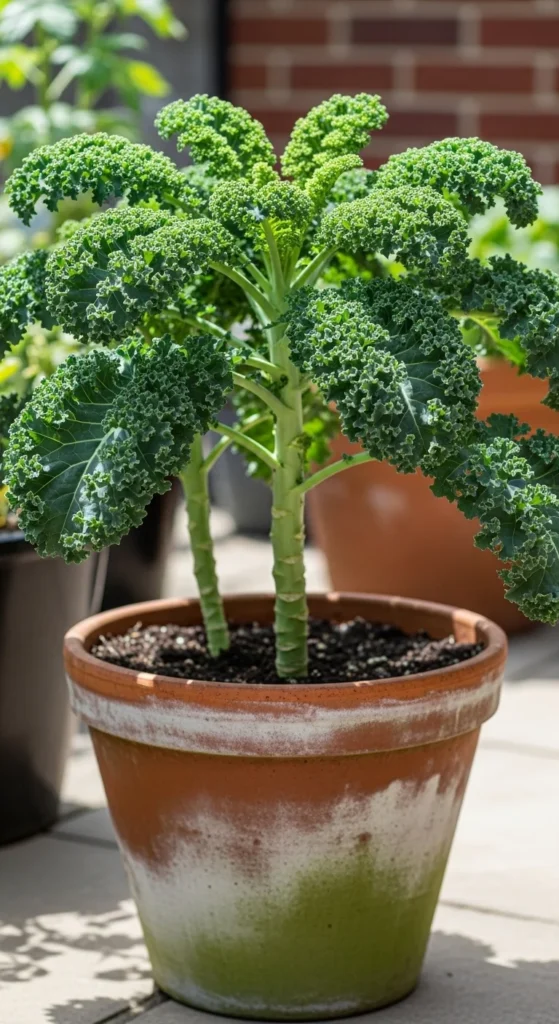
Kale is a reliable container edible that keeps producing. It tolerates cool nights and still looks good in decorative pots.
- Pot size: 2–5 gallons depending on variety
- Light: 6+ hours sun is best
- Harvest: outer leaves first
Budget-friendly tip:
- Choose one kale plant per pot and let it grow large.
Flavor note:
- Cooler weather often makes kale taste sweeter.
Add slow-release fertilizer at planting, then top-dress with compost mid-season. If pests show up, rinse leaves with water and check the undersides weekly.
4. Swiss Chard as an Edible Ornament
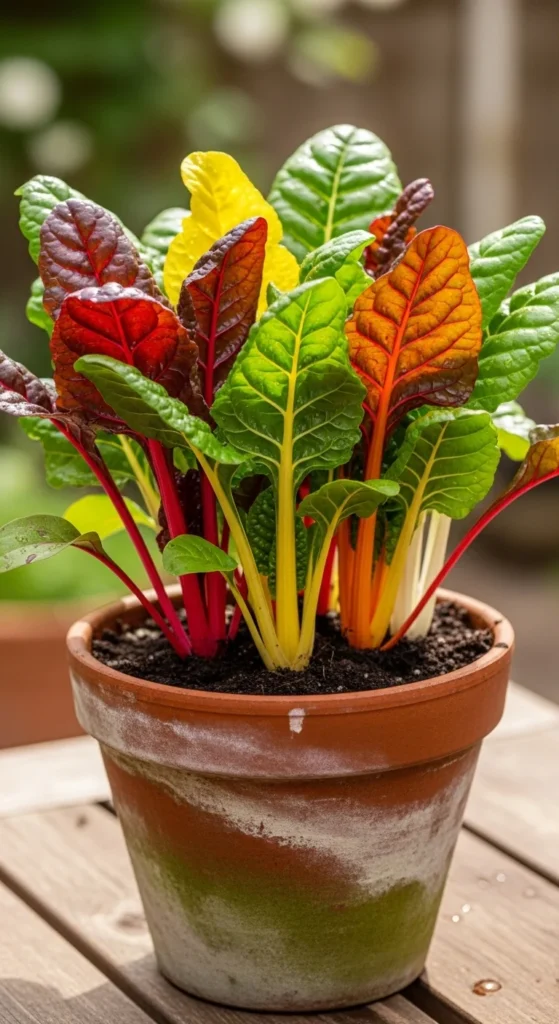
Chard brings strong color to containers and keeps producing. It’s also easier than many fruiting crops.
- Pot size: 3–5 gallons
- Light: full sun to partial shade
- Harvest: outer leaves, leave the center
Budget-friendly tip:
- Grow from seed and thin for baby greens.
Chard works well in mixed containers because it has upright structure. Pair it with trailing nasturtium or creeping Jenny for a fuller look.
5. Strawberries for Sweet Container Snacks
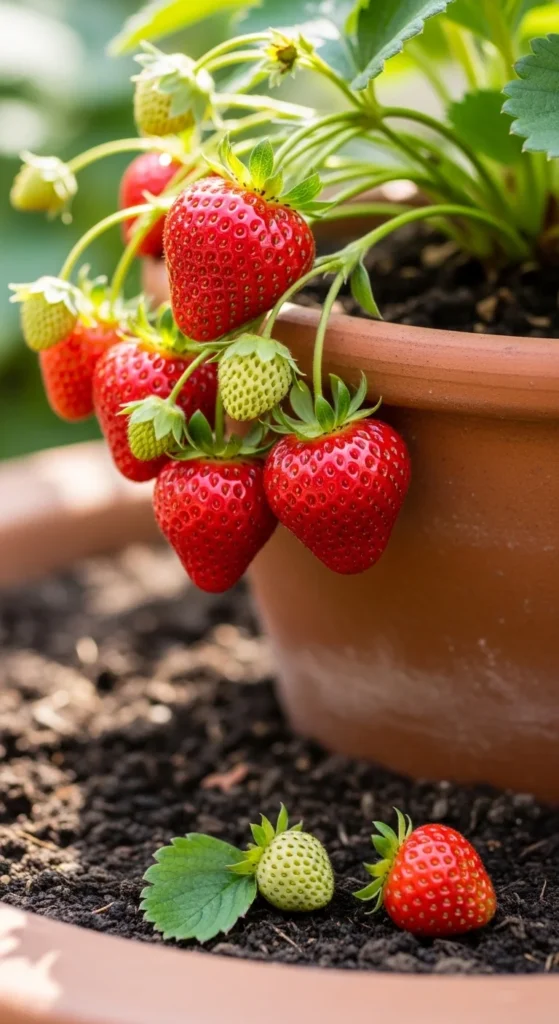
Strawberries do well in pots and avoid many ground pests. They also look great spilling over the edge.
- Pot size: 3+ gallons, at least 8 inches deep
- Light: 6–8 hours sun
- Tip: pick everbearing or day-neutral types for longer harvest
Budget-friendly tip:
- Start with a few plants and let runners fill space over time.
Keep soil consistently moist. Mulch lightly with straw to keep berries clean. If heat is intense, give afternoon shade to prevent stress.
6. Compact Peppers That Love Heat
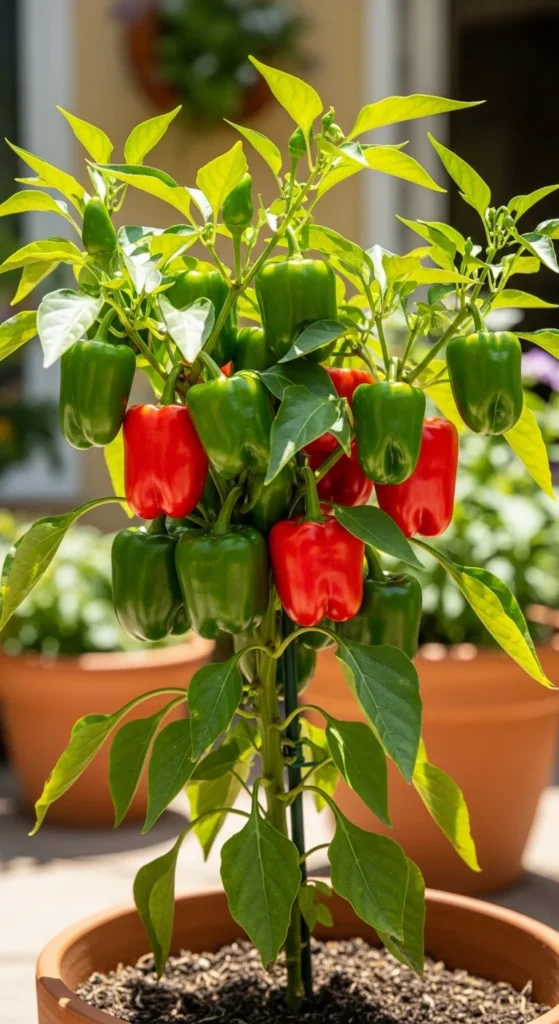
Peppers thrive in containers because you can control soil quality and drainage. Compact types suit patios well.
- Pot size: 5+ gallons
- Light: strong sun
- Support: a small stake helps in wind
Budget-friendly tip:
- One plant per pot gives better production than crowding.
Feed lightly once flowers appear. Water deeply, then let the top inch dry. If leaves curl, check for heat stress and water timing.
7. Cherry Tomatoes That Forgive Mistakes
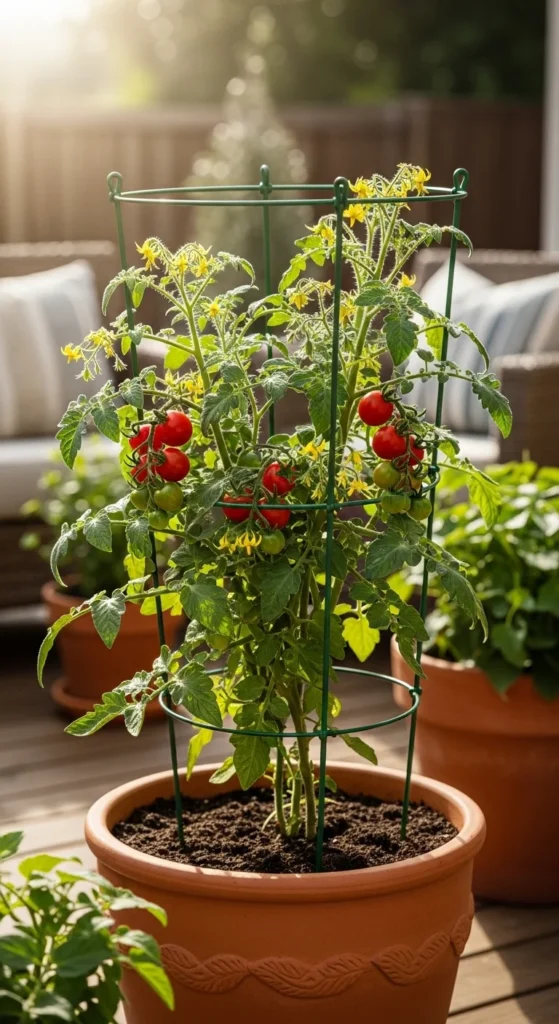
Cherry tomatoes are easier than big slicing tomatoes in containers. They still need space, but they reward you fast.
- Pot size: 10+ gallons is a good target
- Support: cage or trellis
- Soil: potting mix + compost
Budget-friendly tip:
- Use a drilled food-grade bucket as a large tomato pot.
Water steadily. Uneven watering can cause fruit cracking. Add mulch on top and feed regularly once fruit sets.
8. Basil That Stays Busy All Summer
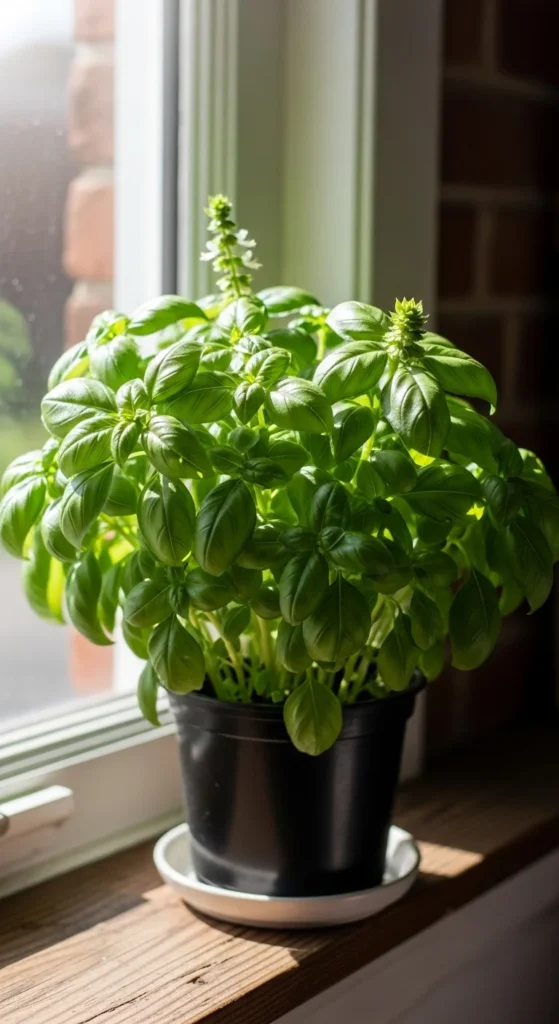
Basil grows quickly and turns small pots into a daily harvest station.
- Pot size: 2–3 gallons
- Light: full sun to partial shade
- Harvest: pinch tops often for bushy growth
Budget-friendly tip:
- Root basil cuttings in water to make free extra plants.
Keep basil evenly watered. If it flowers, pinch the flowers off to extend leaf production.
9. Rosemary for Structure and Scent
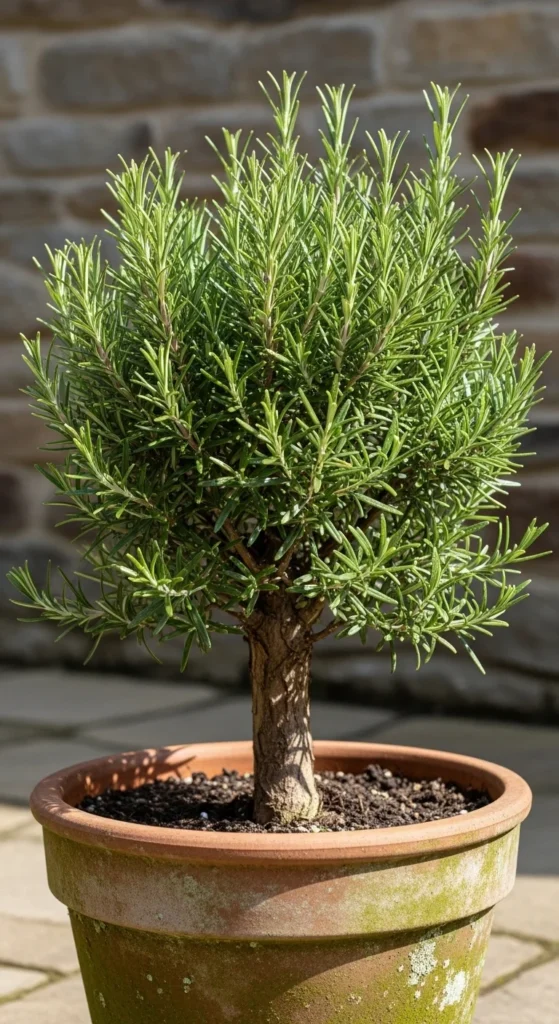
Rosemary gives year-round structure in many climates and doubles as a cooking herb.
- Pot size: 5+ gallons
- Soil: well-draining mix
- Water: let it dry slightly between waterings
Budget-friendly tip:
- Buy a small rosemary and let it size up. It’s often cheaper than a large plant.
Rosemary looks great as a “thriller” in mixed containers. Pair with thyme and trailing oregano for a full herb pot.
10. Thyme as a Tough Trailer
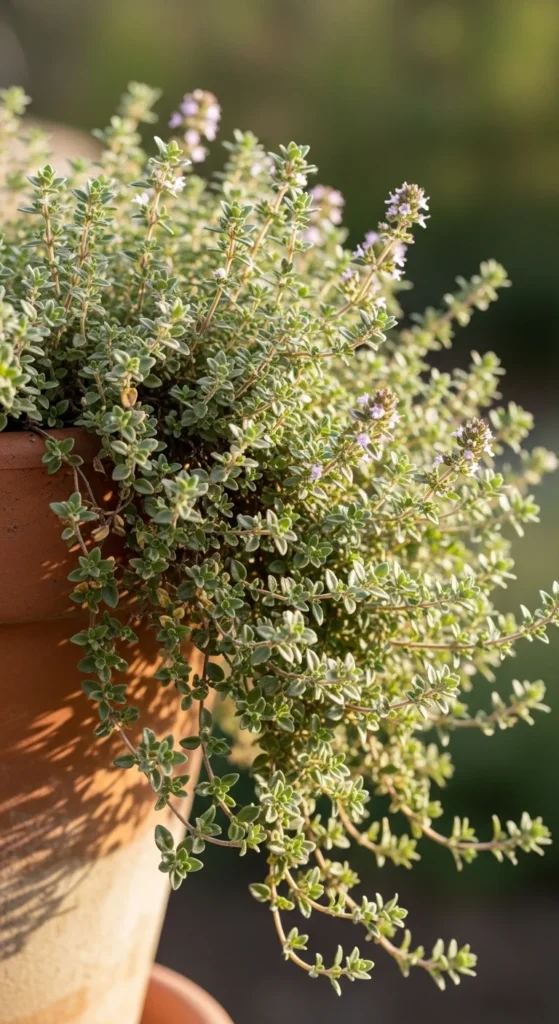
Thyme handles containers well and doesn’t demand constant watering.
- Pot size: 2+ gallons
- Light: sun is best
- Habit: trailing or mounding depending on variety
Budget-friendly tip:
- Start thyme from small plugs. It fills in quickly.
Use thyme at the edge of a pot to soften the rim. It pairs well with rosemary and sage in a “Mediterranean” container.
11. Coral Bells as Foliage Stars
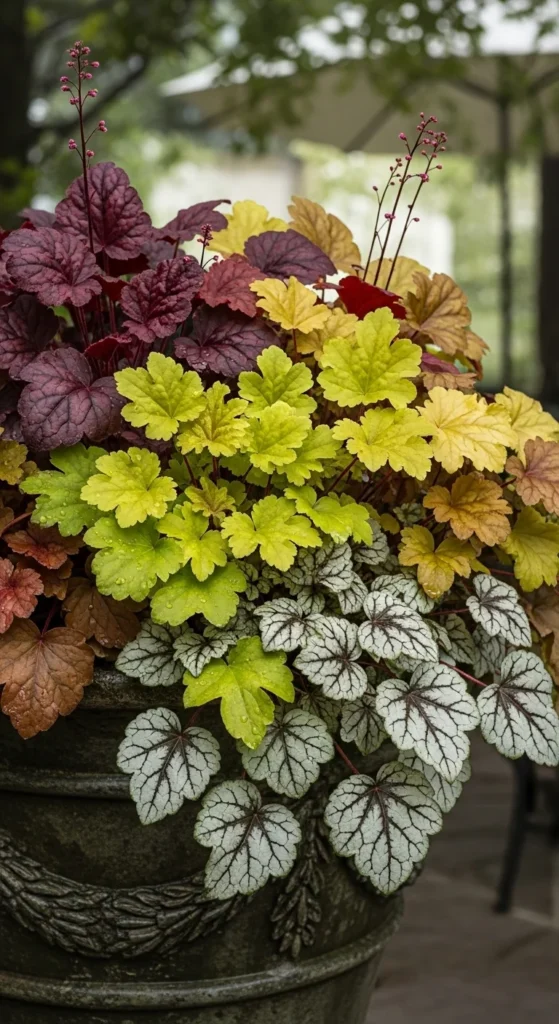
Heuchera (coral bells) adds long-lasting leaf color. Many varieties handle both sun and shade, depending on the color type.
- Pot size: 2–3 gallons
- Light: partial shade is often easiest
- Role: perfect “filler” plant
Budget-friendly tip:
- One strong coral bell can carry a whole pot with just one trailing plant added.
Keep the crown slightly above soil level. Water when the top inch dries. Coral bells also pair well with grasses or small shrubs for contrast.
12. Hellebores for Cold-Season Blooms
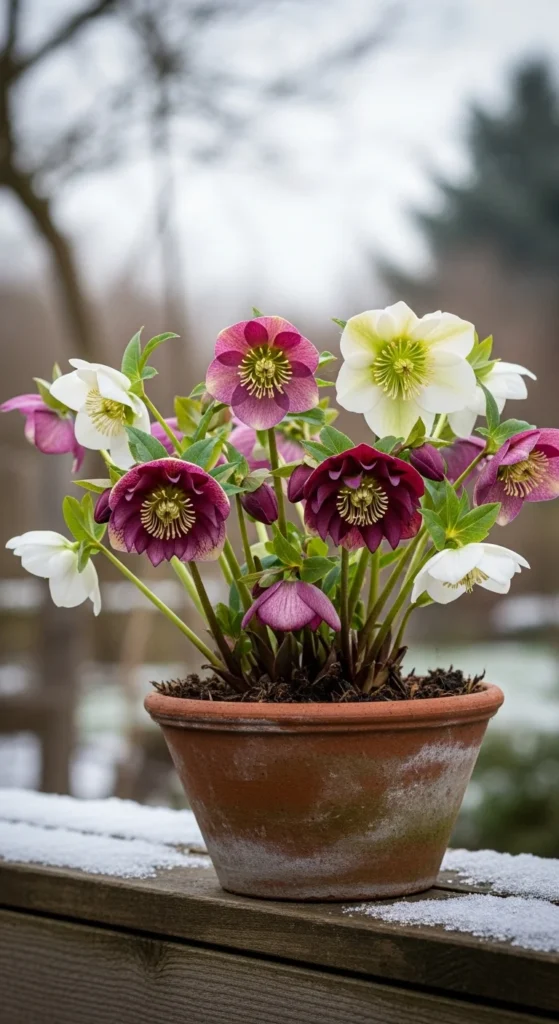
Hellebores bring flowers when many pots look empty. They also have handsome evergreen leaves.
- Pot size: 3–5 gallons
- Light: partial shade
- Season: late winter to spring interest
Budget-friendly tip:
- Buy one hellebore and keep it long-term, swapping seasonal companions around it.
Protect the pot from extreme freeze in cold regions by moving it close to a wall. Keep soil lightly moist, not wet.
13. Golden Creeping Jenny for Edge Drama
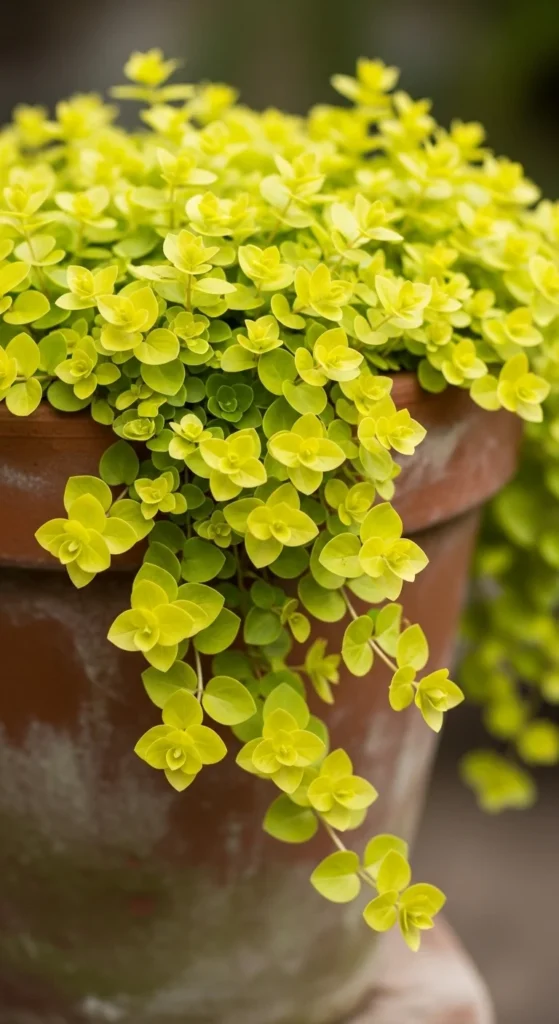
This trailing plant is a classic spiller. It brightens containers and fills gaps fast.
- Pot size: any mixed container
- Light: sun to partial shade
- Role: spiller
Budget-friendly tip:
- Use small starts. It spreads quickly.
Trim it if it gets too long. It’s a simple way to make a pot look fuller without buying more plants.
14. Caladiums for Bold Shade Color
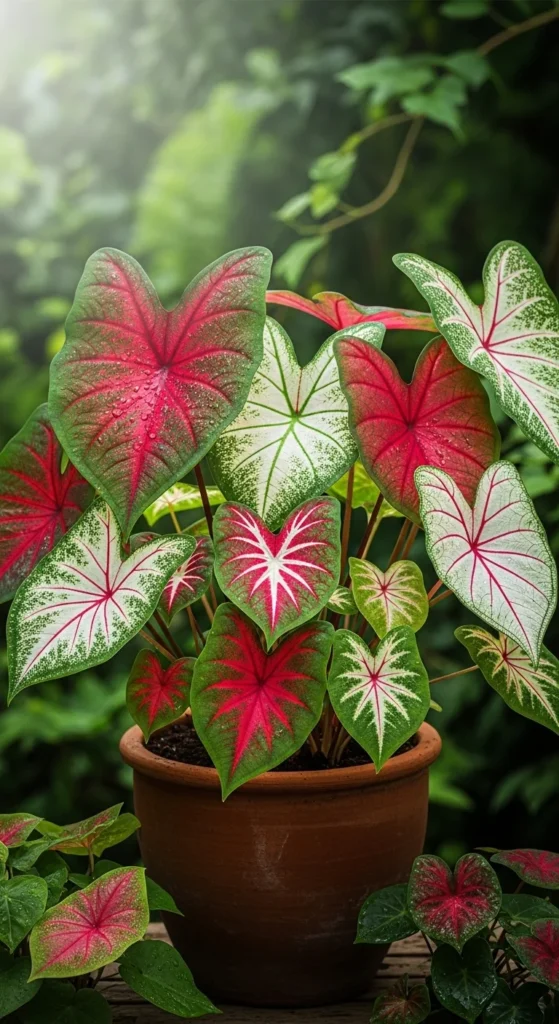
Caladiums bring big leaf color in shade or filtered light. They look like you planned the pot carefully, even when you didn’t.
- Pot size: 3+ gallons
- Light: shade to part sun
- Season: warm months
Budget-friendly tip:
- Start from bulbs. Bulbs are often cheaper than large plants.
Keep soil evenly moist. Pair caladium with a trailing plant like ivy for a clean, full look.
15. Bergenia for Fall and Winter Color
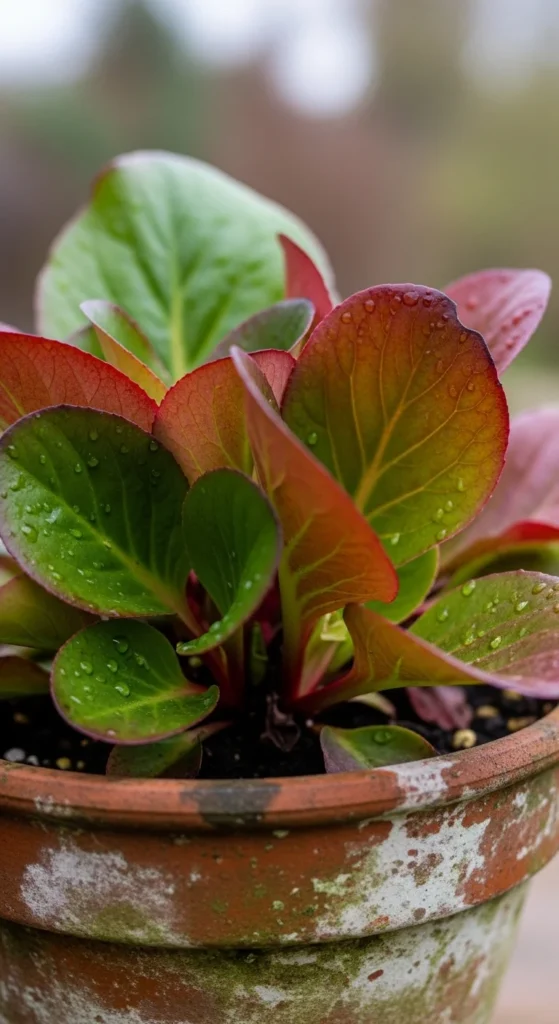
Bergenia has thick leaves and can turn burgundy in cool weather. It handles containers well because drainage is easier to control.
- Pot size: 3–5 gallons
- Light: sun to partial shade
- Role: sturdy filler
Budget-friendly tip:
- Use bergenia as a long-term plant, then add seasonal flowers around it.
Water when the top inch dries. Remove old leaves as needed to keep the pot neat.
16. Cranesbill Geranium for Long Bloom
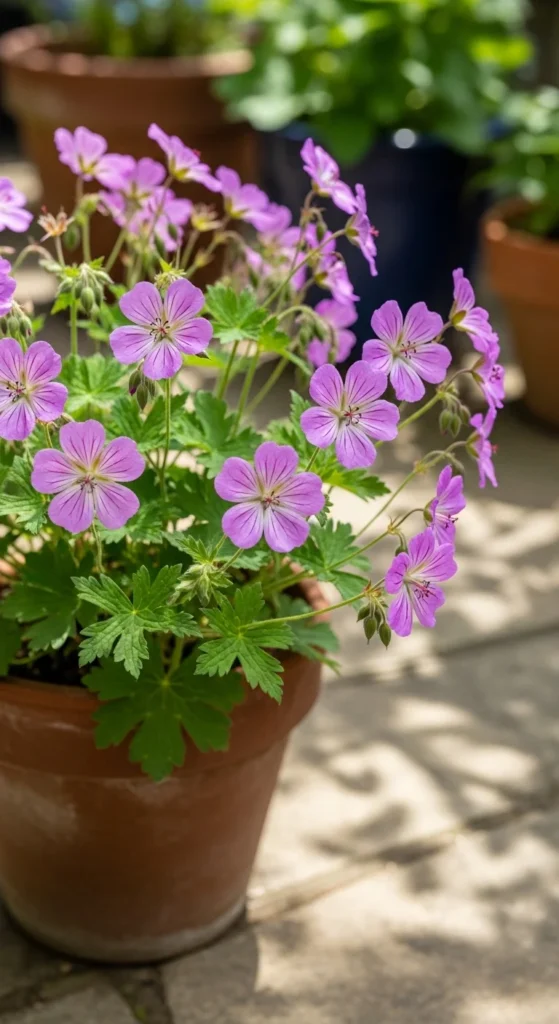
Hardy geraniums fill containers with steady flowers and tidy foliage.
- Pot size: 3+ gallons
- Light: sun to partial shade
- Habit: mounding filler
Budget-friendly tip:
- Divide a mature plant every few years to make more pots.
Deadhead lightly to keep flowers coming. This is a strong choice for beginners who want blooms without constant work.
17. Dwarf Roses for Small-Space Flowers
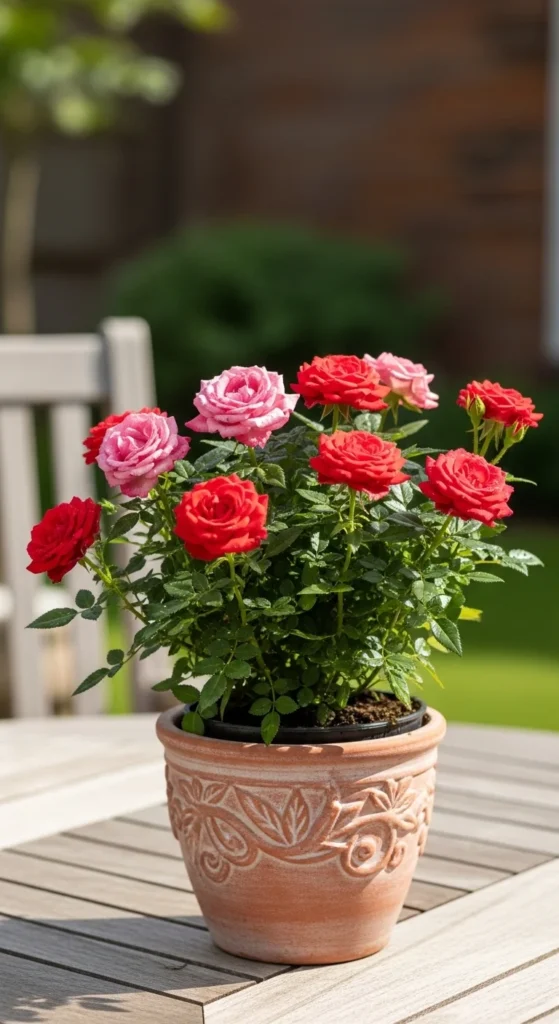
Compact roses can thrive in containers with enough sun and regular feeding.
- Pot size: 5+ gallons
- Light: 6+ hours sun
- Care: consistent watering
Budget-friendly tip:
- Choose a hardy compact variety and keep it for years instead of buying annual flowers each season.
Prune lightly after a flush of blooms. Mulch the surface to slow drying.
18. Boxwood as a Reliable Anchor
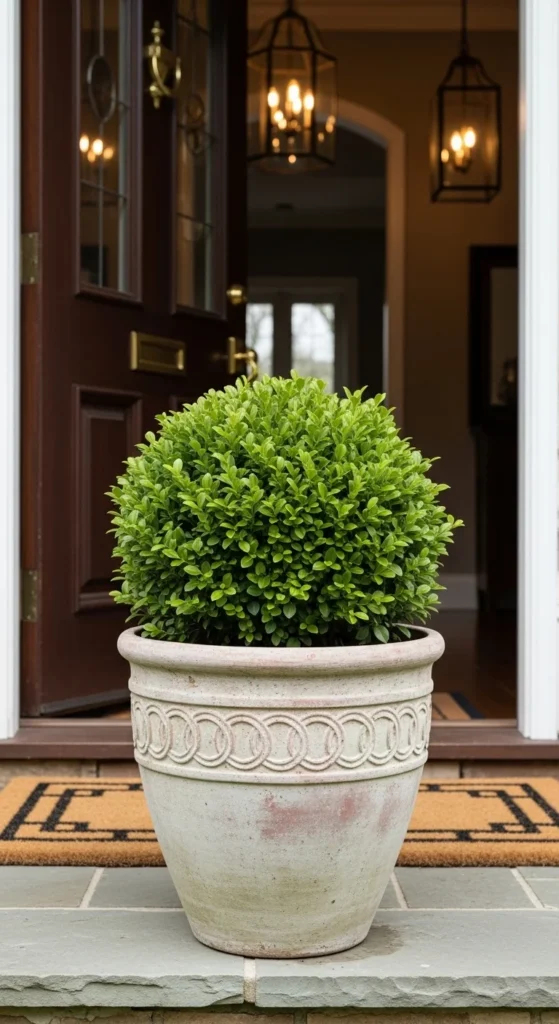
Boxwood gives containers structure and a clean look. It’s a classic choice for doors, patios, and formal corners.
- Pot size: 10+ gallons for stability
- Light: sun to partial shade
- Role: evergreen anchor
Budget-friendly tip:
- Use one boxwood and swap the underplanting each season.
Water deeply, then wait until the top inch dries. Keep the pot from drying out completely in hot weather.
19. ‘Emerald’ Arborvitae for Vertical Height
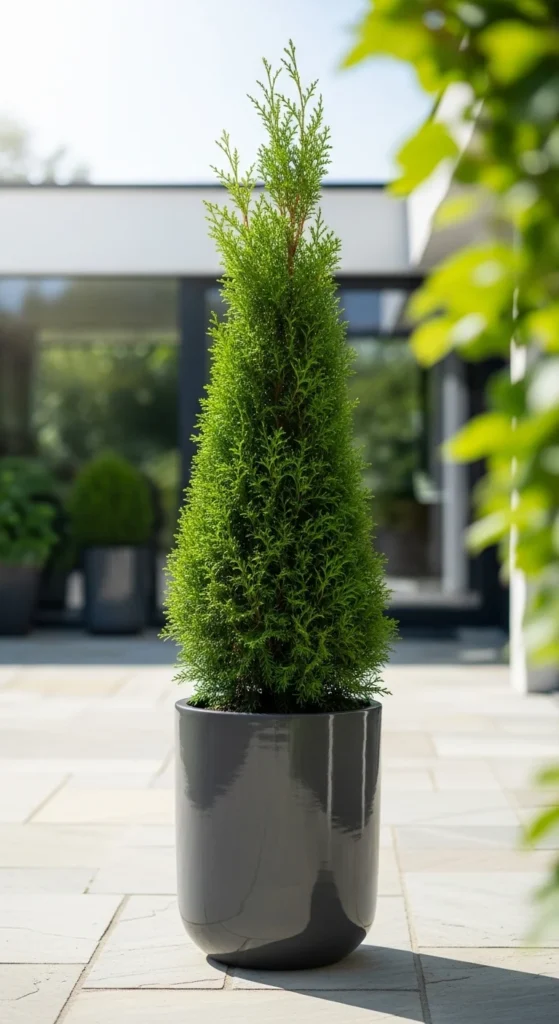
Arborvitae provides a tall, narrow form that works like a living column in a pot.
- Pot size: 15+ gallons is better for stability
- Light: full sun to partial shade
- Role: vertical thriller
Budget-friendly tip:
- Buy smaller plants and let them grow into the pot over time.
Water well during hot spells. In cold areas, protect the container from harsh freeze to reduce root damage.
20. Japanese Pieris for Colorful New Growth
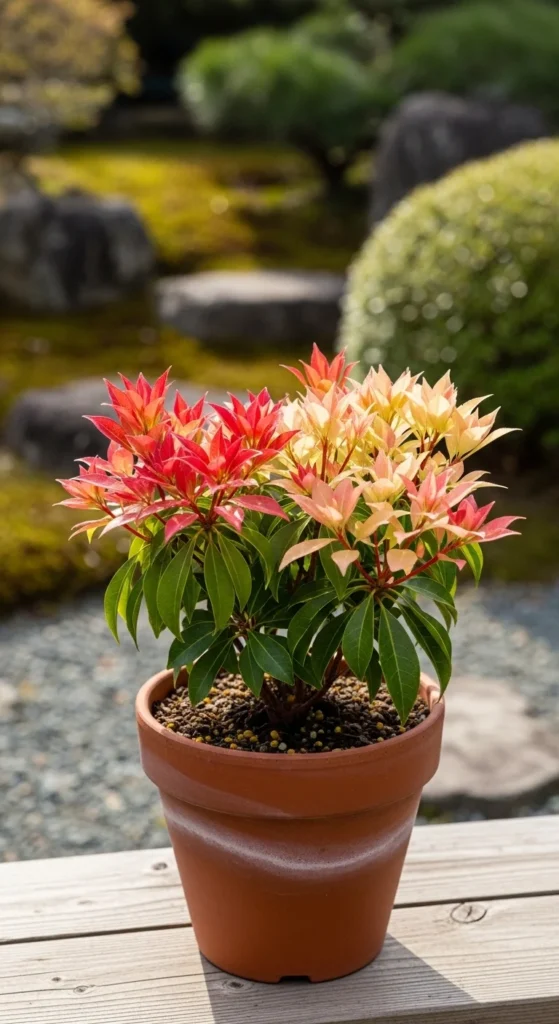
Pieris adds seasonal color through new growth and stays shrub-like for structure.
- Pot size: 10+ gallons
- Light: partial shade is often easiest
- Soil: potting mix that drains well
Budget-friendly tip:
- Keep pieris as a long-term shrub and only refresh companion plants seasonally.
Water steadily and avoid letting it dry out fully. This plant can look strong even when flowers fade.
21. Cauliflower for Deep-Root Container Growing
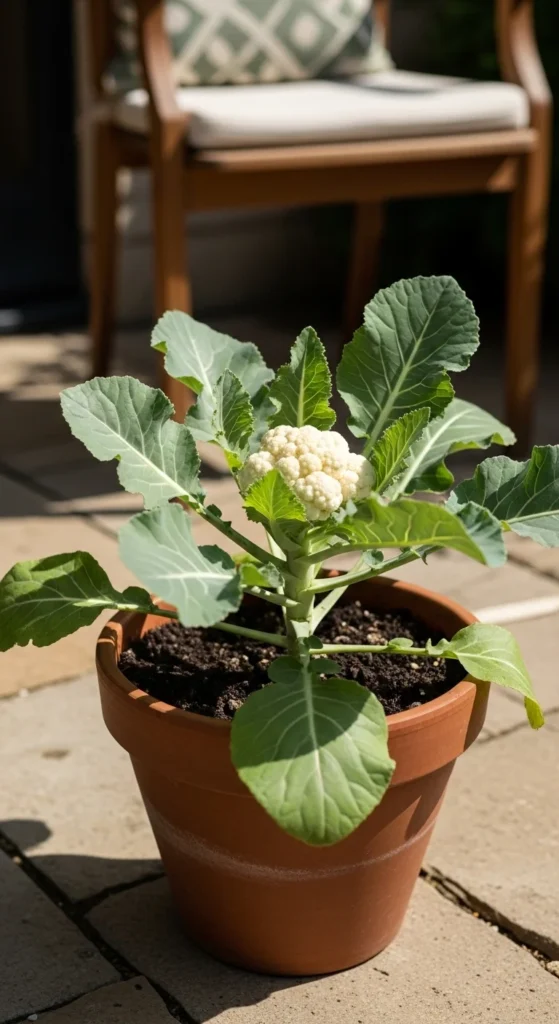
Cauliflower is more demanding but doable when pot size and depth are right.
- Pot depth: 10–12 inches
- Pot size: 5+ gallons
- Light: full sun
Budget-friendly tip:
- Grow one cauliflower per pot. Crowding reduces results.
Keep watering consistent. Feed lightly during growth. This is a good “challenge plant” once you’ve mastered greens.
22. Easy Annual Mix for Instant Color
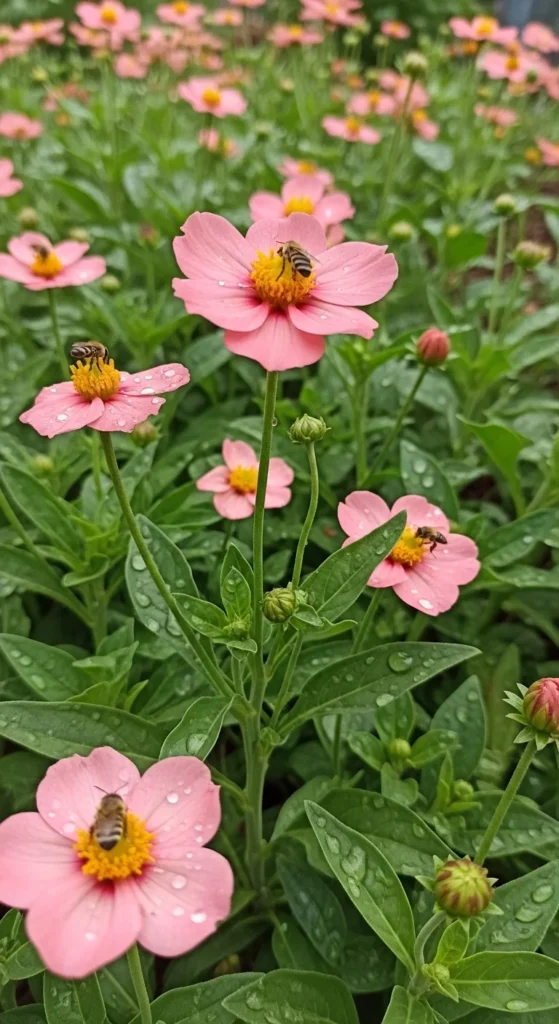
Annuals fill pots quickly and create strong color with little planning.
- Choose one taller center plant
- Add 2–3 filler plants
- Add 1 trailing plant at the edge
Budget-friendly tip:
- Buy smaller annuals and space them well. They grow into the pot fast.
Keep water consistent and pinch back early growth to encourage fullness. Annual mixes are ideal when you want big impact without long-term commitment.
Conclusion
The easiest container success comes from mixing plant “jobs”: fast edibles for quick wins, perennials for steady foliage, and evergreens for year-round structure. Start with one reliable pot—lettuce, basil, and a coral bell combo works well—then add an evergreen anchor like boxwood once you’re ready for a long-term container centerpiece. Keep potting mix light, choose a pot size that matches the plant, and water deeply when the top inch dries. With those habits, most of these plants will perform well in many spaces and seasons.

Leave a Reply