

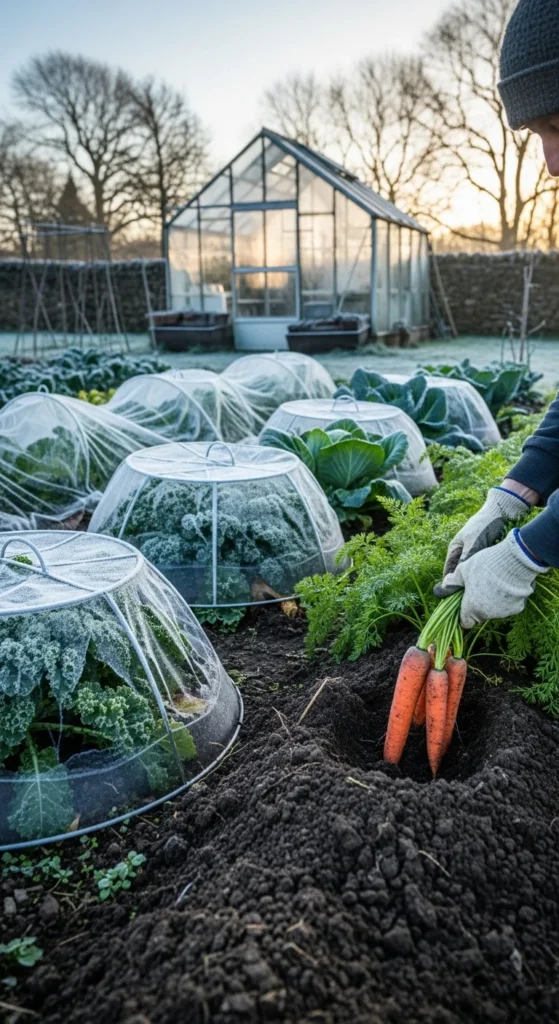
Winter doesn’t have to mean an empty garden. With smart planning and a few protective tricks, you can harvest fresh vegetables straight through the cold months. From insulated raised beds to cold frames and succession planting, winter gardening can feed your household while saving grocery costs.
These 24 winter-veg harvest strategies make it easier to grow, protect, and enjoy your crops even when temperatures drop. Each tip focuses on practical, low-cost, and high-yield approaches that turn cold-season gardening into a profitable routine.
1. Extend Growing Season with Cold Frames
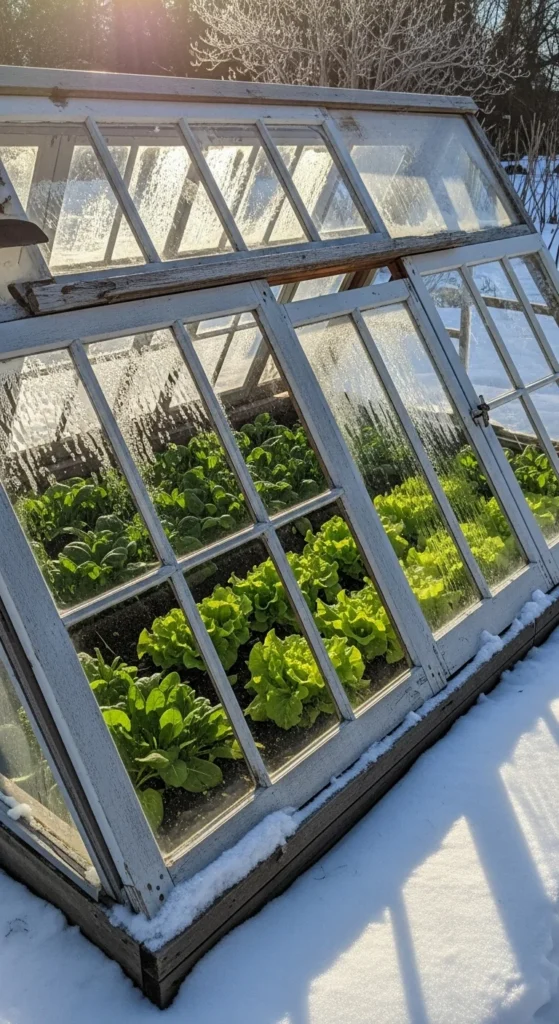
Cold frames act like mini-greenhouses. They trap heat from the sun and protect plants from frost. Use old windows or clear acrylic sheets over a simple wooden base. Ideal crops include lettuce, spinach, and radishes. Keep the lid slightly open during sunny afternoons to prevent overheating.
2. Grow Hardy Greens Like Kale and Collards
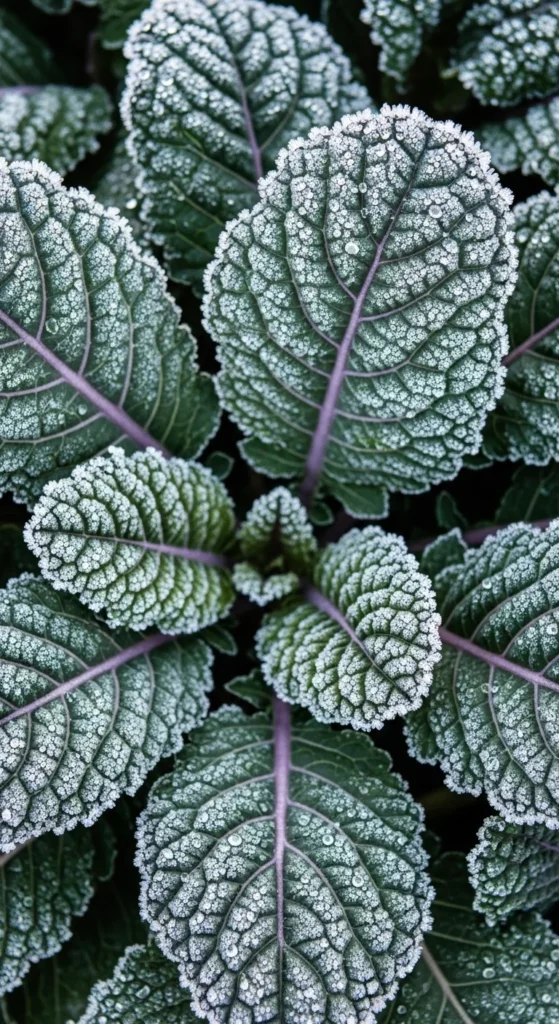
These greens thrive in cold soil and become sweeter after a frost. Plant them in raised beds for better drainage. Harvest the outer leaves often to encourage new growth. Mulch heavily with straw to protect roots from freezing.
3. Use Row Covers for Warmth
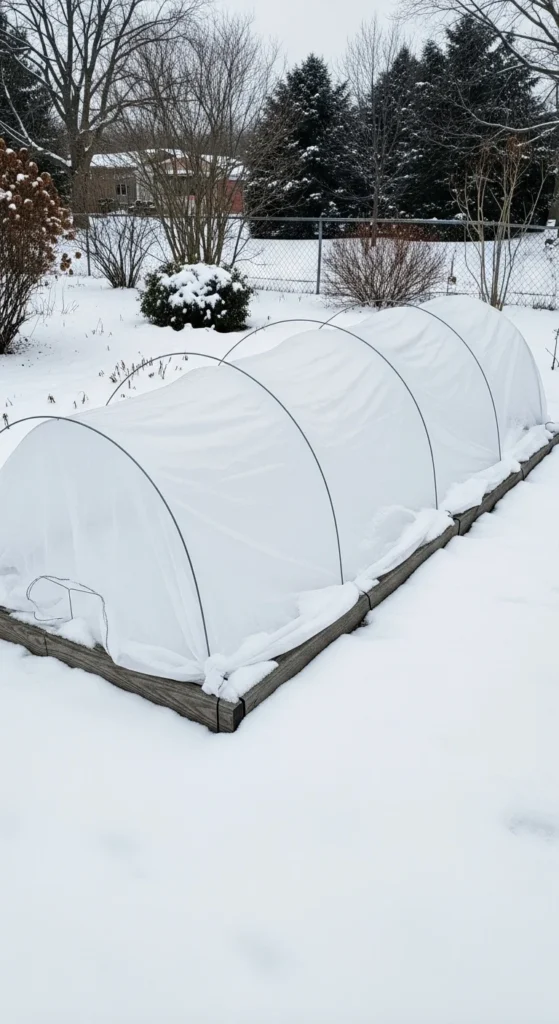
Row covers trap warmth and protect crops from harsh wind. Lightweight fabrics work best for greens, carrots, and beets. Anchor edges with soil or rocks to prevent them from blowing away. Remove covers occasionally to allow pollination and air circulation.
4. Mulch Deep for Soil Insulation
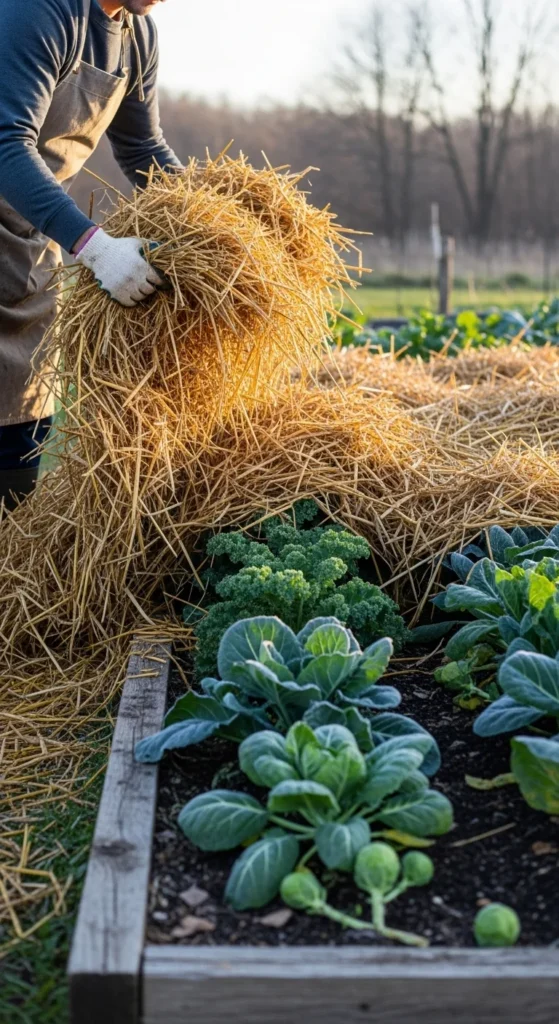
Mulch is your best natural insulator. Use straw, shredded leaves, or compost to keep the soil from freezing. It maintains moisture and keeps root crops like carrots and parsnips soft for easy pulling.
5. Grow Under a Hoop House
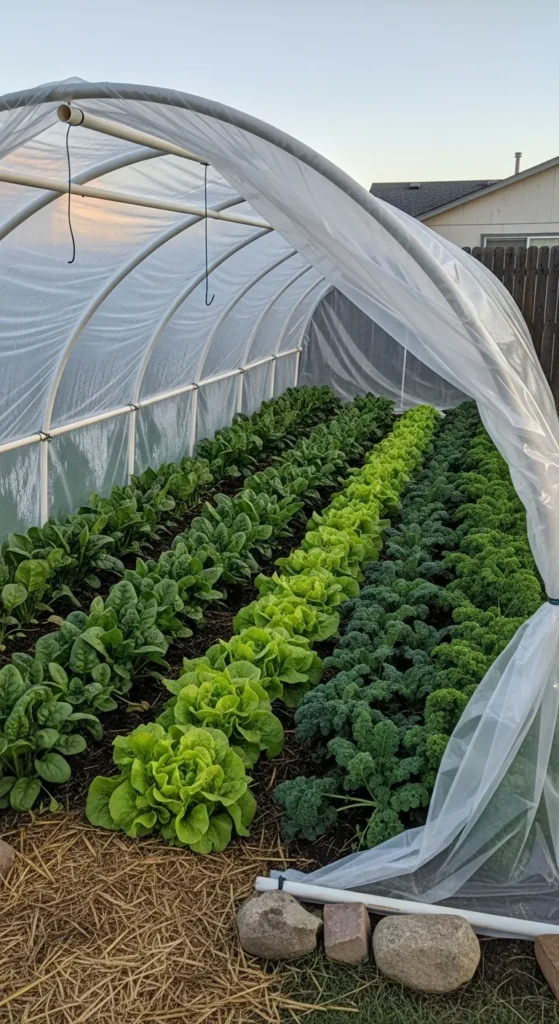
A hoop house offers consistent protection during winter. Build one from PVC and clear plastic. Inside, grow kale, lettuce, or spinach in containers. The temperature stays 10–15°F warmer, keeping growth steady even on cold nights.
6. Choose Fast-Growing Winter Crops
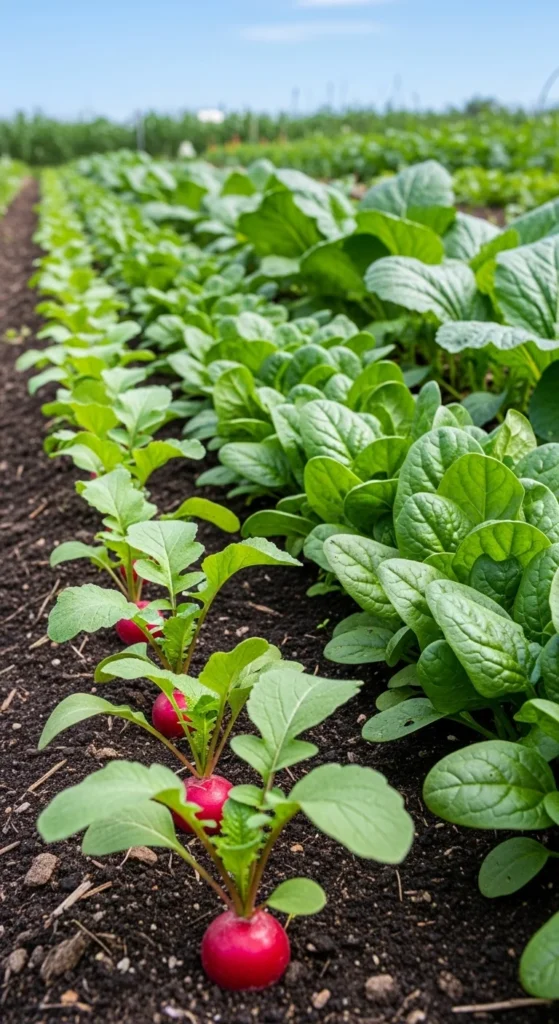
Quick crops help you harvest multiple rounds before deep frost. Radishes and spinach mature in less than 40 days. Stagger plantings every two weeks to keep the harvest continuous through early winter.
7. Store Root Vegetables in the Ground
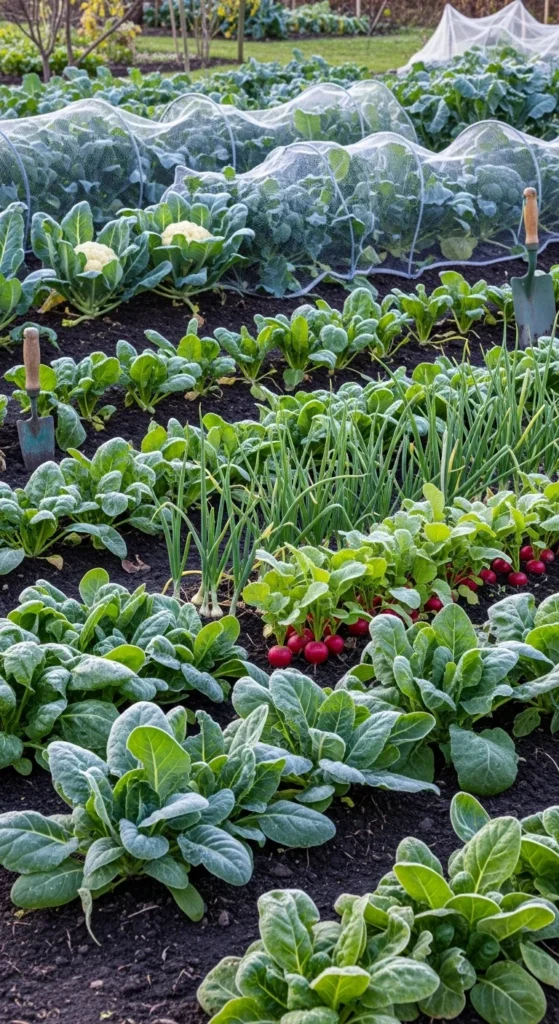
Roots like carrots, turnips, and beets can stay underground all winter. Just cover the beds with 6–8 inches of straw. Harvest as needed—nature’s cold acts like a refrigerator.
8. Build a Small Greenhouse from Pallets
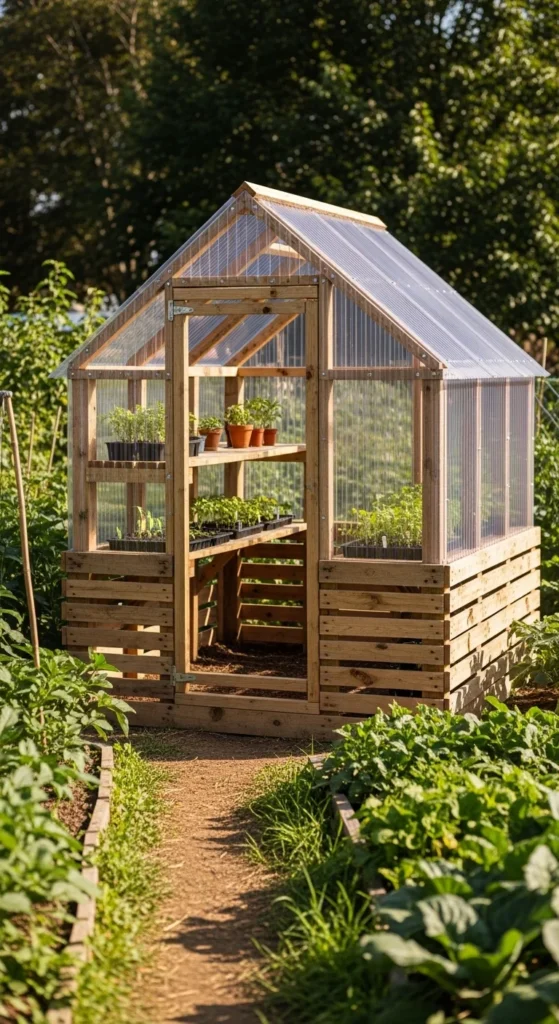
Pallets make strong, inexpensive greenhouse walls. Cover with plastic or polycarbonate sheets for insulation. Inside, keep trays of greens and herbs. Add a bucket of water for thermal mass—it releases heat overnight.
9. Grow Indoors with LED Grow Lights
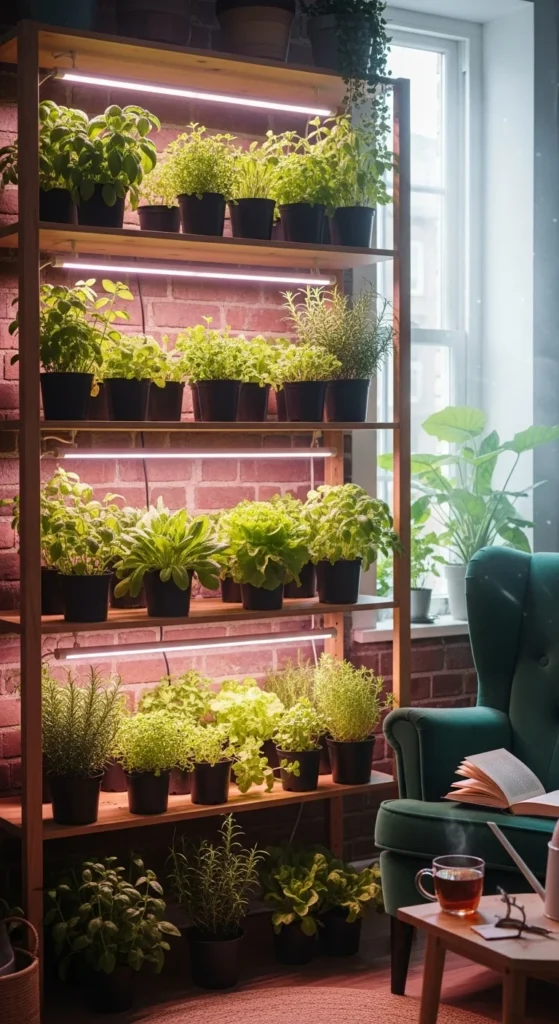
Indoor growing keeps you harvesting even when it’s snowing outside. Use grow lights near a sunny window. Herbs like parsley and basil adapt well. Keep lights on for 12–14 hours daily for strong growth.
10. Start a Winter Hydroponic Setup
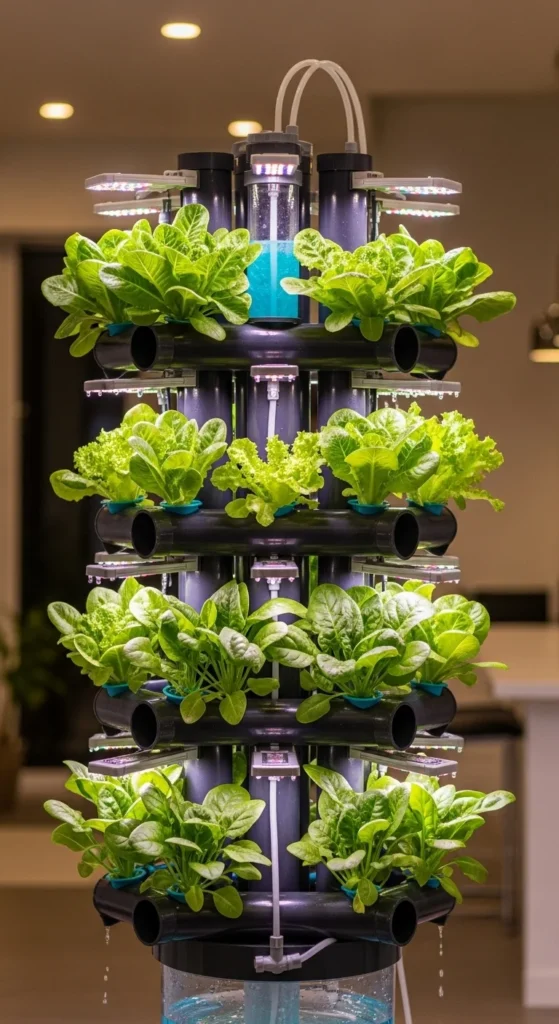
Hydroponics means soil-free gardening. Systems can be built from plastic bins or buckets. Use nutrient-rich water to grow lettuce, bok choy, or basil indoors year-round.
11. Rotate Beds to Maintain Soil Health
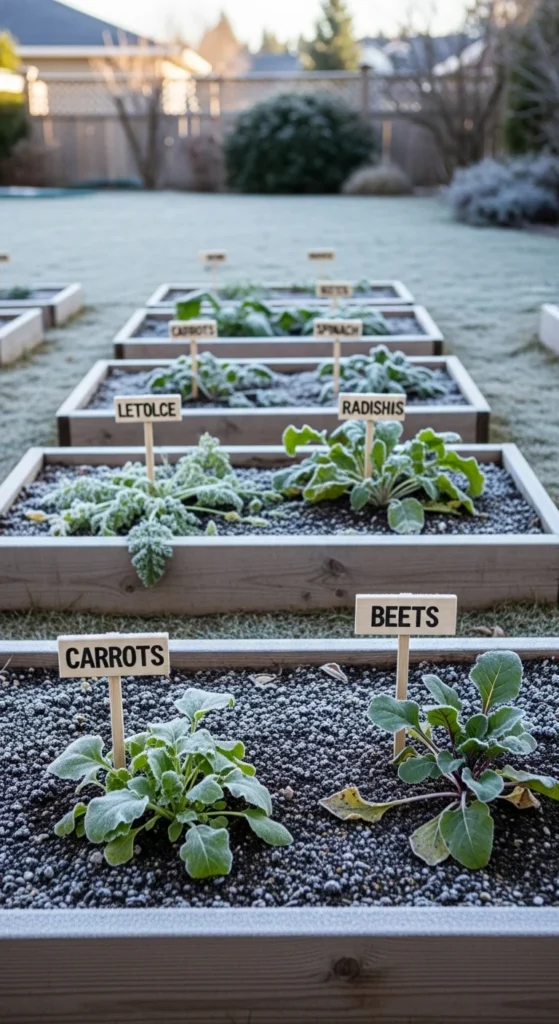
Even in winter, rotation matters. Avoid planting the same crop family in the same bed twice. This reduces disease and keeps the soil balanced.
12. Harvest Microgreens Inside
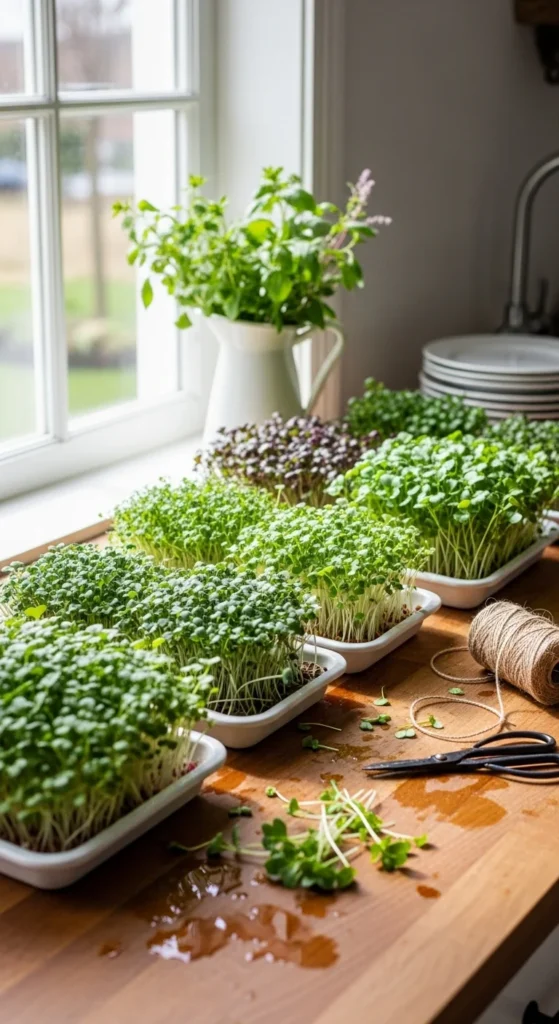
Microgreens grow fast indoors and require little space. Use shallow trays with potting mix and mist daily. In 10–14 days, you’ll have a nutrient-packed harvest for sandwiches and salads.
13. Grow Garlic for Spring Yield
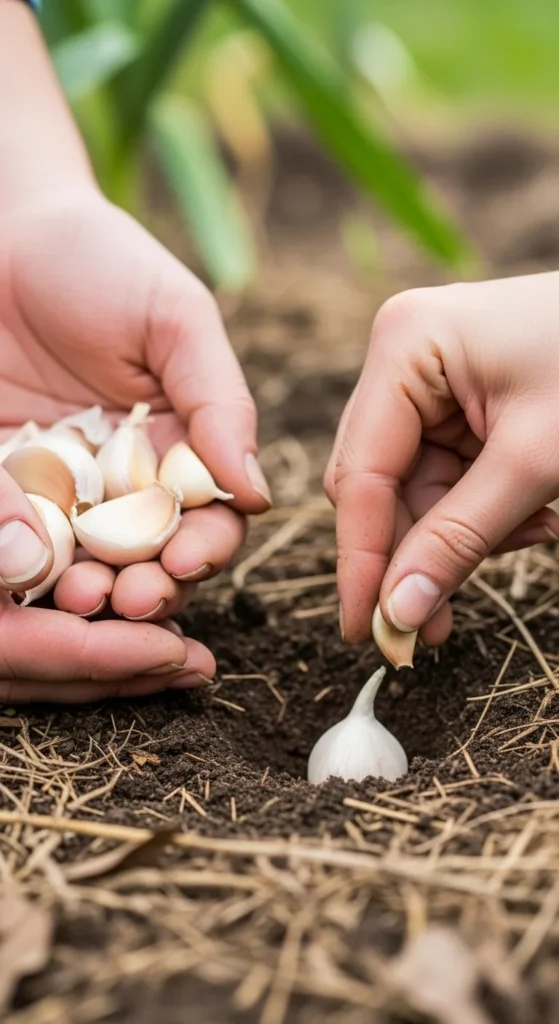
Plant garlic in late fall. It roots before freezing, then grows in early spring. Cover with mulch and forget it until harvest time in summer.
14. Use South-Facing Walls for Warmth
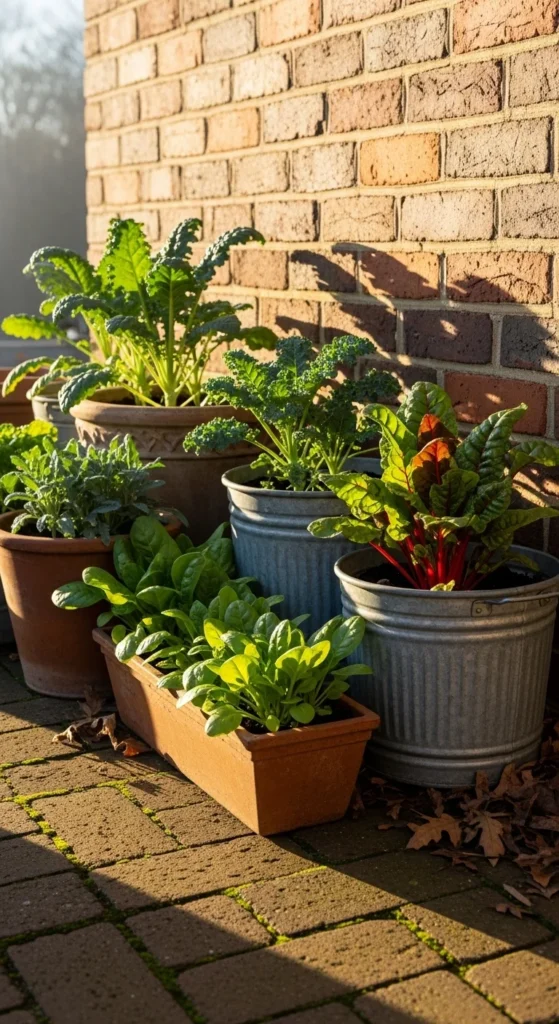
Walls absorb and reflect heat, creating a microclimate. Place planters of lettuce or parsley near south-facing walls for better growth.
15. Keep Compost Active in Cold Weather
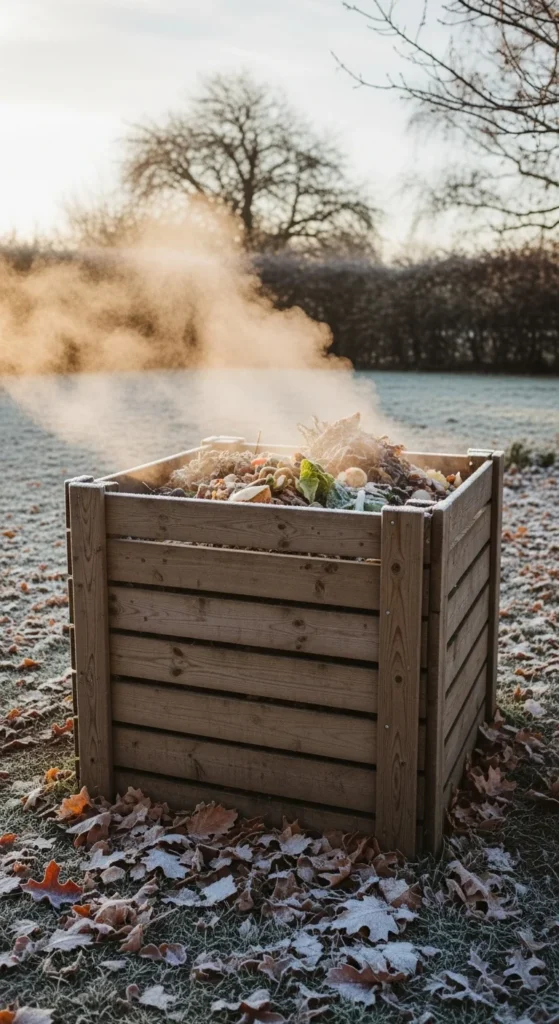
Composting still works in winter with proper layering. Add kitchen scraps, dry leaves, and a bit of soil. Cover the bin to retain heat. Warm compost breaks down slowly but feeds your spring garden naturally.
16. Harvest Parsnips After Frost
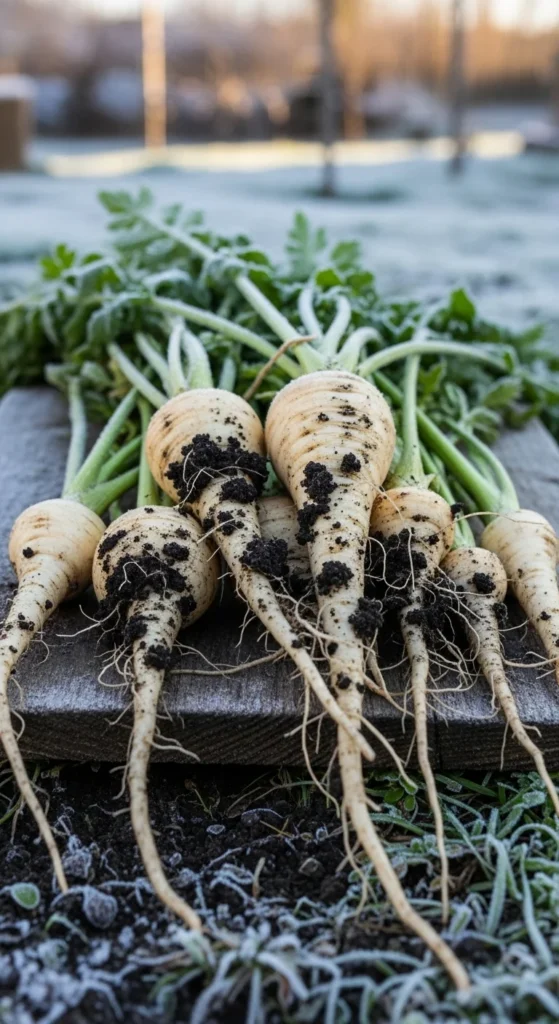
Parsnips taste sweeter after cold weather. Leave them in the ground until a few frosts hit. Cover with mulch for easy digging.
17. Try Succession Planting Indoors
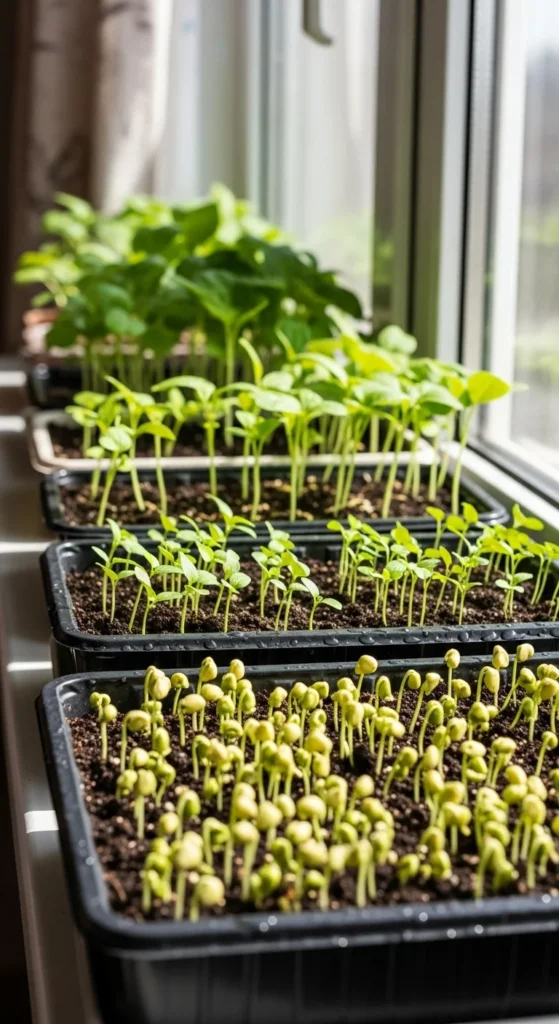
Start new seedlings every few weeks. When one batch finishes, the next is ready. This keeps your salad greens consistent throughout winter.
18. Use Insulated Planter Boxes
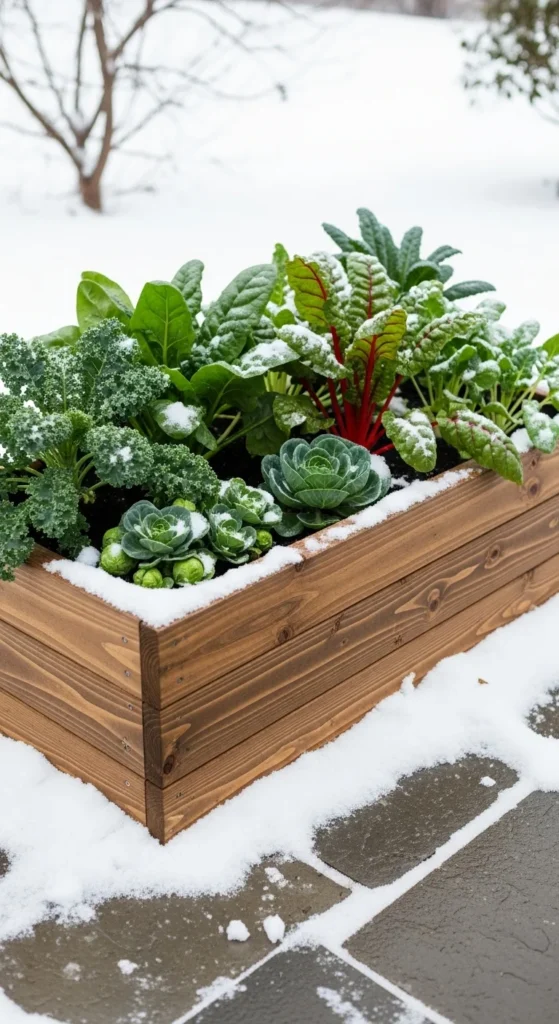
Line containers with bubble wrap or foam boards to keep roots warm. Great for lettuce, spinach, or herbs grown outdoors. Move boxes close to the house to protect from wind.
19. Grow Mushrooms in Dark Corners
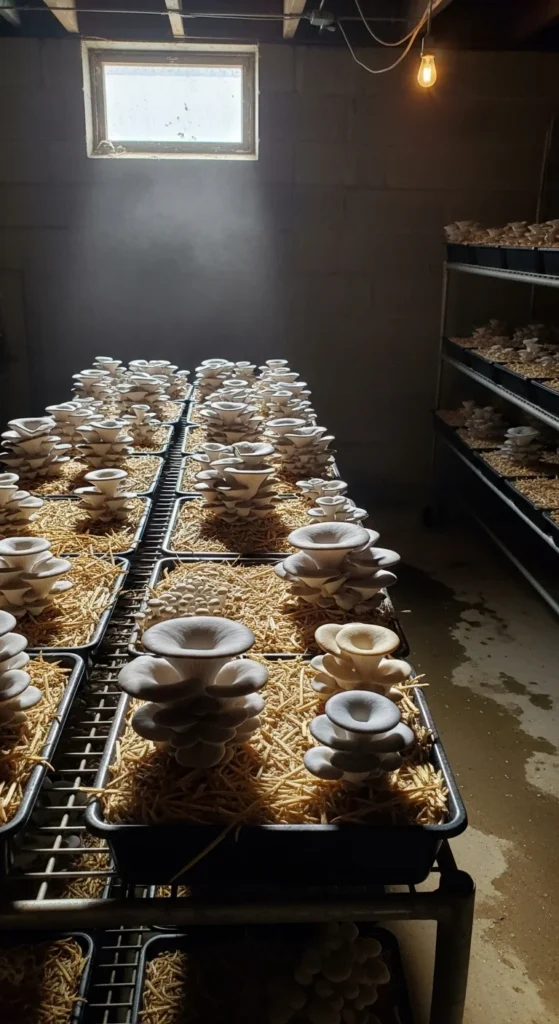
Mushrooms don’t need light—just moisture and shade. Use grow kits or straw bags. Oyster and lion’s mane varieties thrive in cool indoor temperatures.
20. Plant Spinach in Late Fall
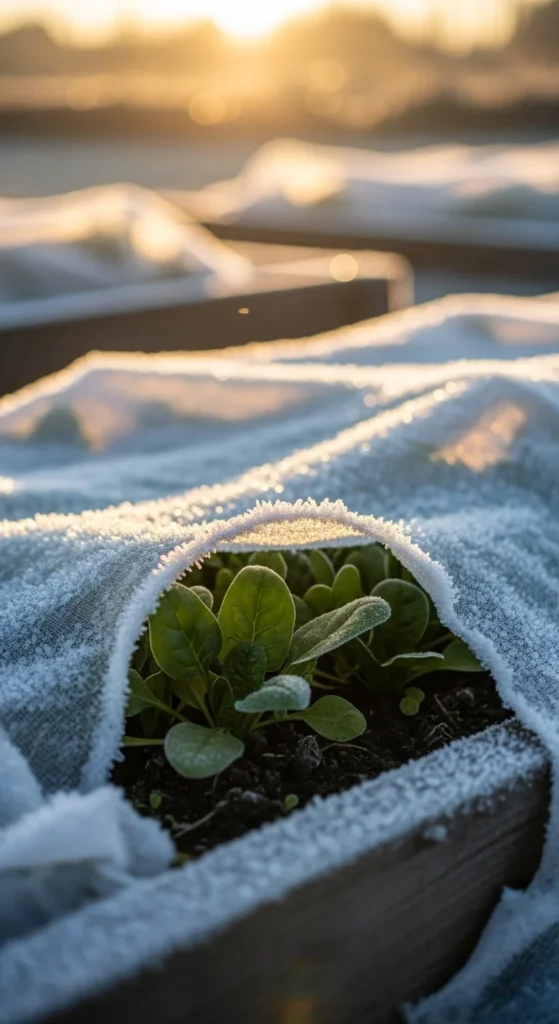
Spinach handles cold well. Sow in October or November. It stays dormant during freezing weather, then resumes growth as days lengthen.
21. Keep Rainwater Barrels Ready
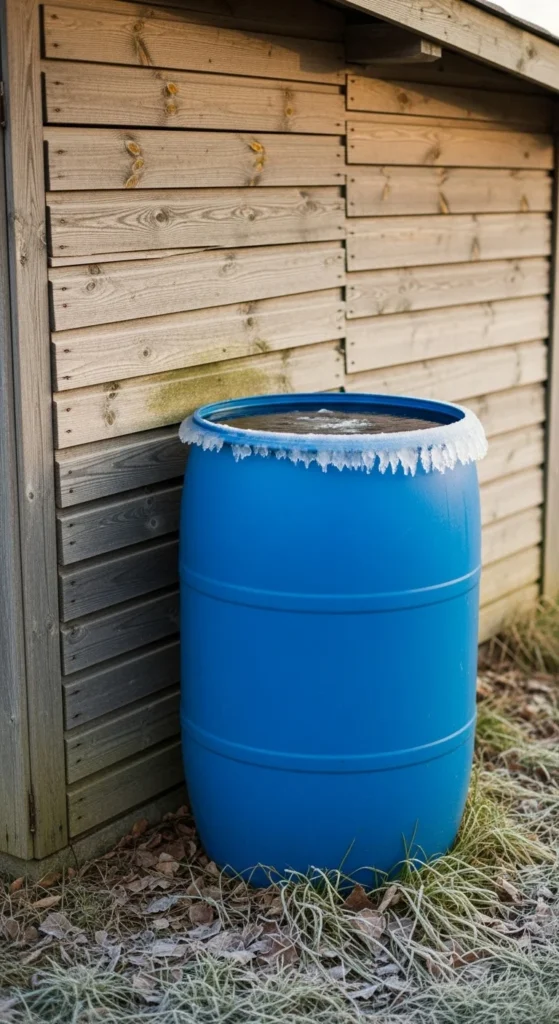
Collecting water saves effort during dry winter spells. Use insulated barrels or store indoors to prevent freezing. Rainwater is perfect for watering container plants.
22. Build Windbreaks Around Beds
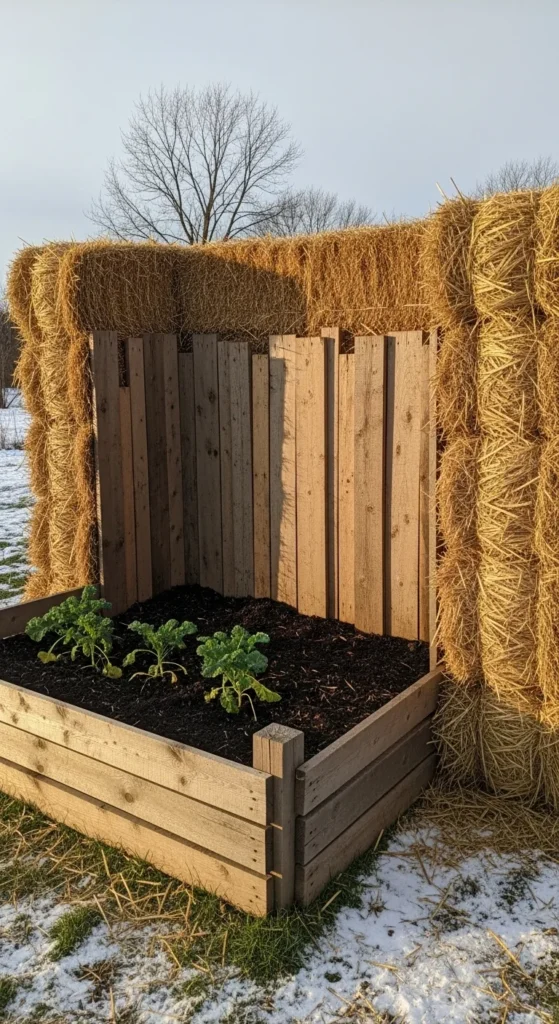
Cold winds dry out soil and damage plants. Stack straw bales or wooden panels to reduce exposure. It helps maintain humidity and warmth in garden zones.
23. Use Thermal Mass for Passive Heating
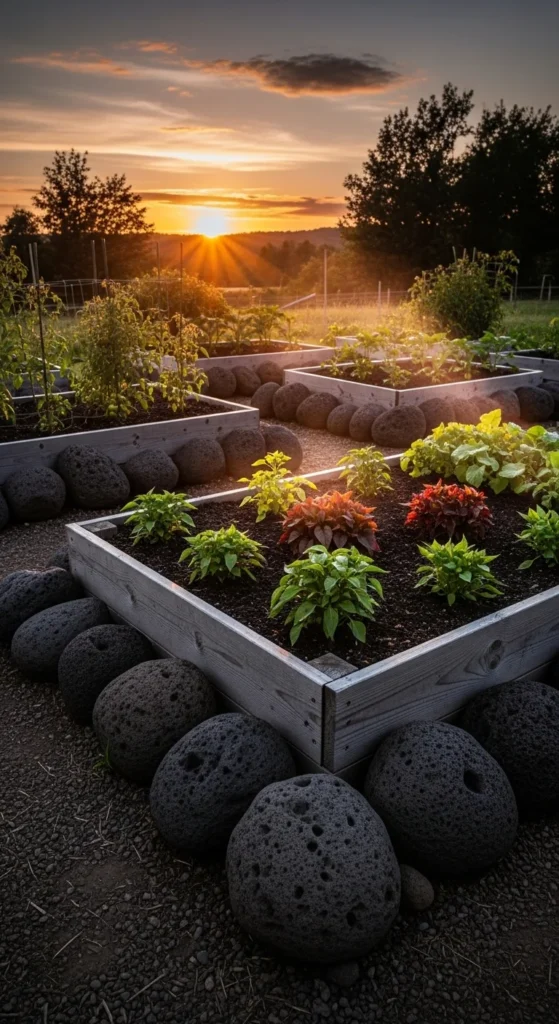
Rocks and water barrels absorb sunlight and release warmth after sunset. Place them strategically inside hoop houses or near cold frames.
24. Keep Harvest Logs for Next Year
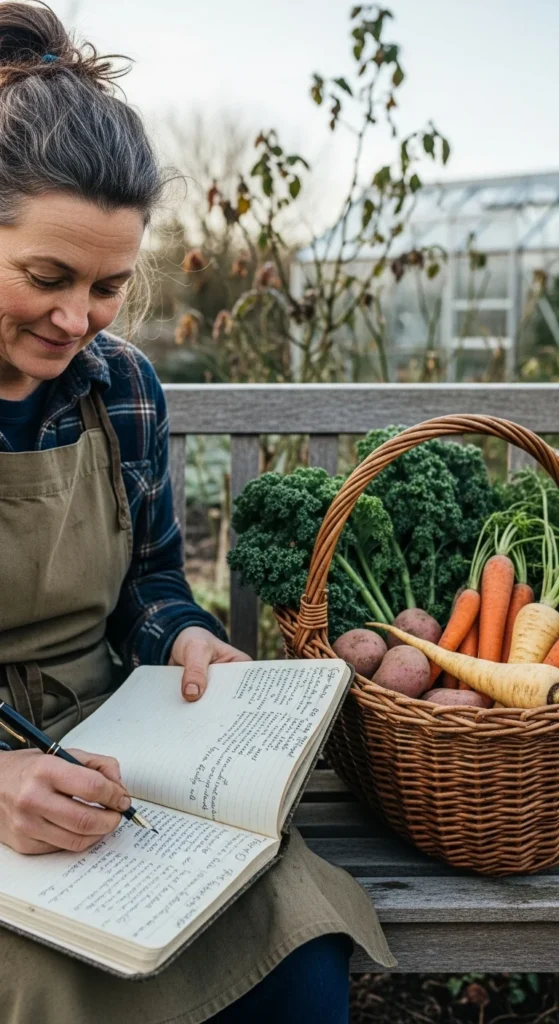
Track what worked and what didn’t. Record planting dates, frost events, and yields. These notes help you refine your winter strategy each season.
Conclusion
A thriving winter garden is about using protection, timing, and creativity. With these 24 strategies, your soil keeps producing even when the air turns cold. Whether you’re growing under glass, indoors with lights, or right in the ground, small efforts now can feed you through winter and prepare your garden for a stronger spring ahead.
Leave a Reply