

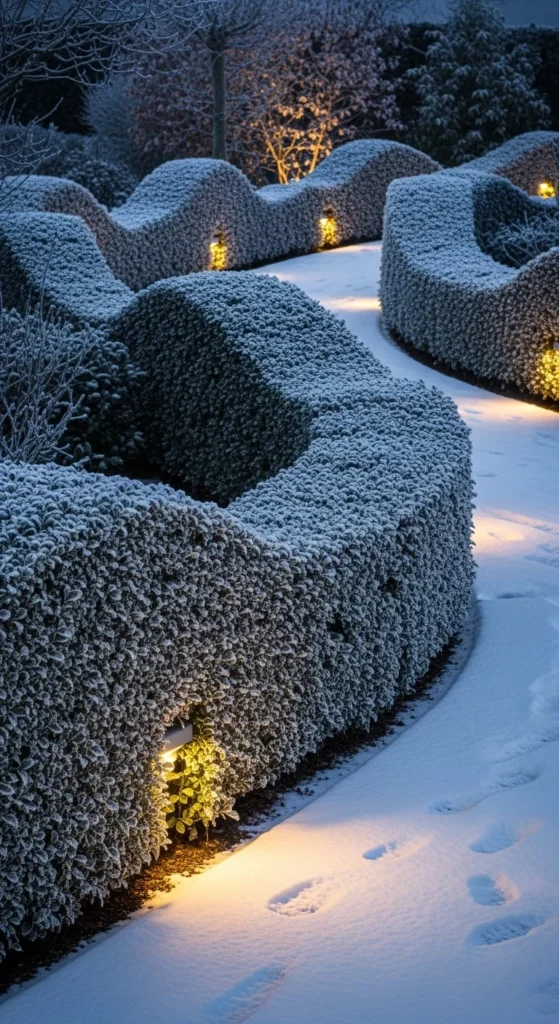
Winter hedges gain new life when paired with the right lighting. Short days mean more hours of darkness, offering the perfect stage to highlight shapes, texture, and structure. Good lighting draws the eye along pathways, frames evergreen silhouettes, and brings drama to an otherwise quiet landscape. These ideas focus on practical placement, simple setups, and clear positioning so your hedges stand out during the New Year season with minimal effort.
1. Soft Uplights at the Hedge Base
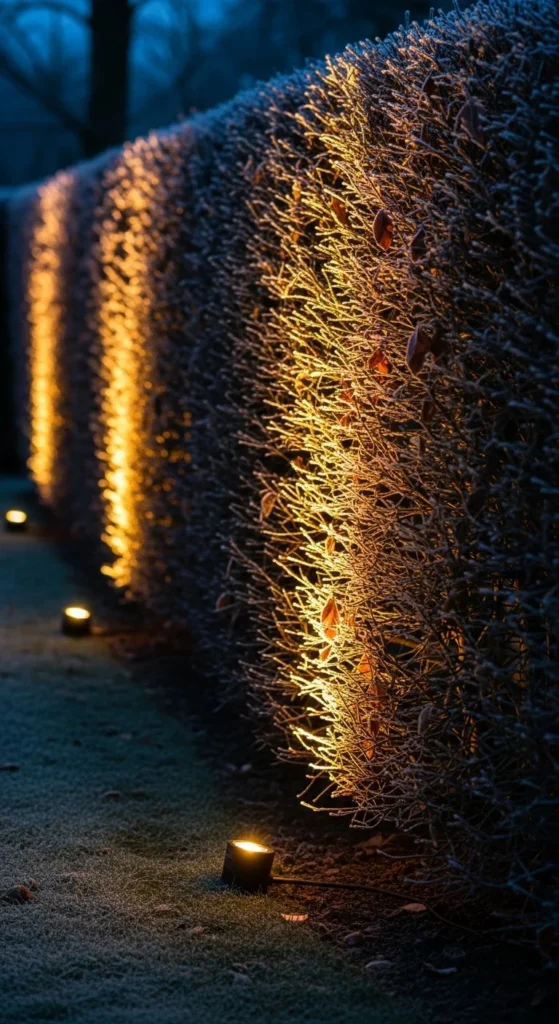
Uplights add height and clarity to winter hedges. Place low-voltage fixtures a few inches from the base. Aim them upward so the beam follows the hedge’s shape. This works especially well for evergreens with dense texture. Use warm-white light to soften the winter atmosphere. Keep fixtures on small stakes so they don’t sink into cold soil. Add a thin gravel strip under them to maintain stability. This layout gives hedges a bold but simple nighttime presence.
2. Evenly Spaced Path Lights Along Hedge Lines
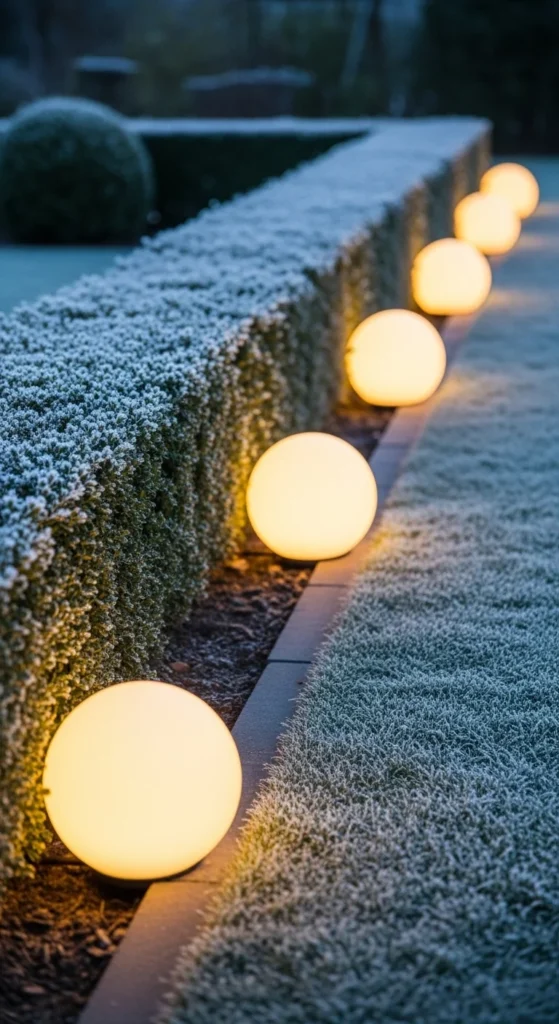
Path lights make hedges easier to appreciate from ground level. Place lights a foot or two from the hedge line so the beam grazes the leaves. Keep spacing event to maintain rhythm. Choose downward-facing fixtures to avoid glare. This also helps with navigation after dark. Path lighting works best near walkways or driveways where practical visibility matters. A few well-placed lights turn long hedges into calm winter borders.
3. Double-Sided Lighting for Tall Hedges
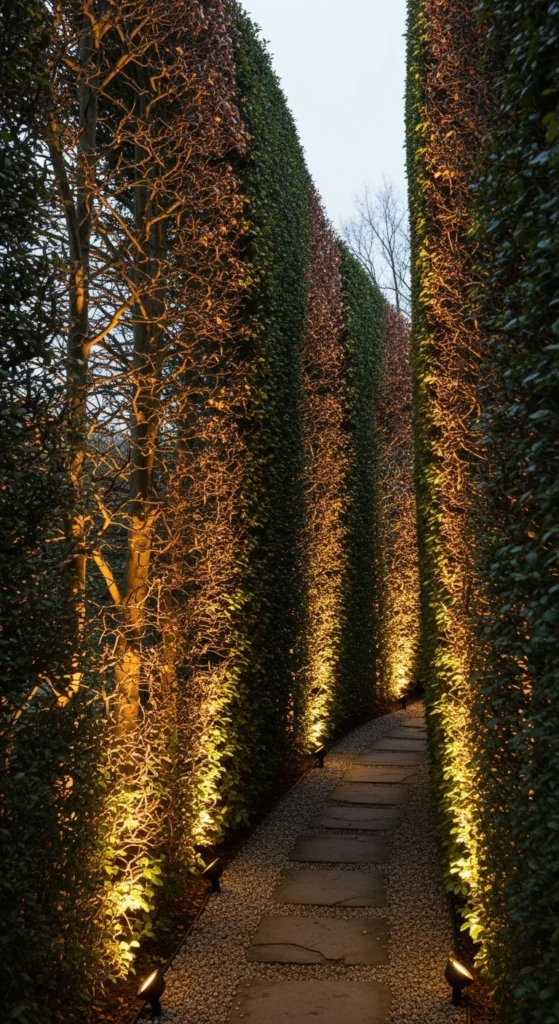
Tall hedges often cast heavy shadows. Light them from both sides to give them depth. Place one row of lights on the front and another on the back, keeping beams soft. This avoids harsh outlines and highlights the hedge’s height. Use low-power fixtures to keep the light gentle. This technique works well for hedges that divide two garden zones or frame patios.
4. Ground-Level Spotlights for Dramatic Shadows
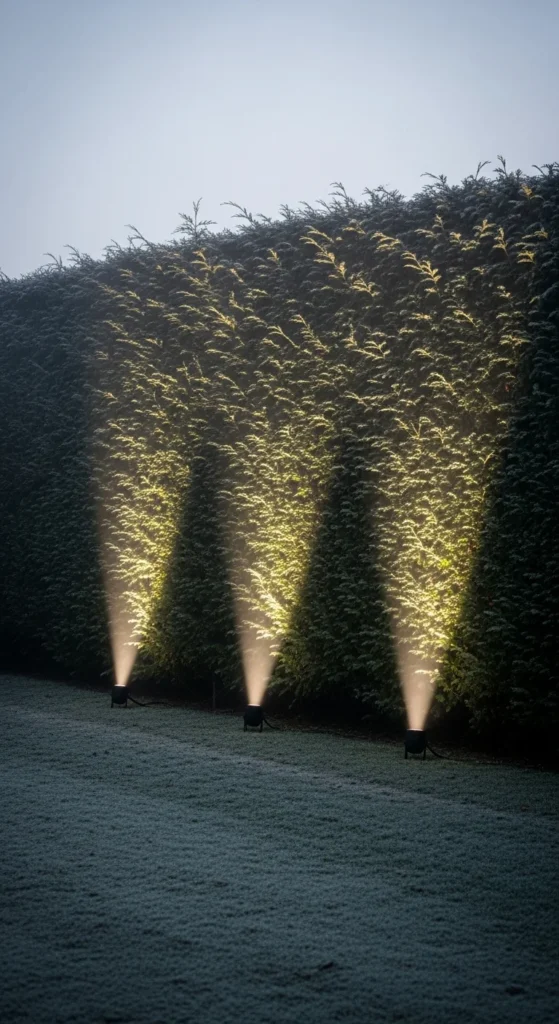
Ground spotlights create bold hedge silhouettes. Angle fixtures carefully so the beam hits only the intended area. Winter branches and foliage cast crisp shadows across nearby walls or garden surfaces. Use this setup where you want a strong visual effect without adding clutter. Keep fixtures protected from snow buildup with small covers or raised platforms.
5. Backlighting Against a Fence or Wall
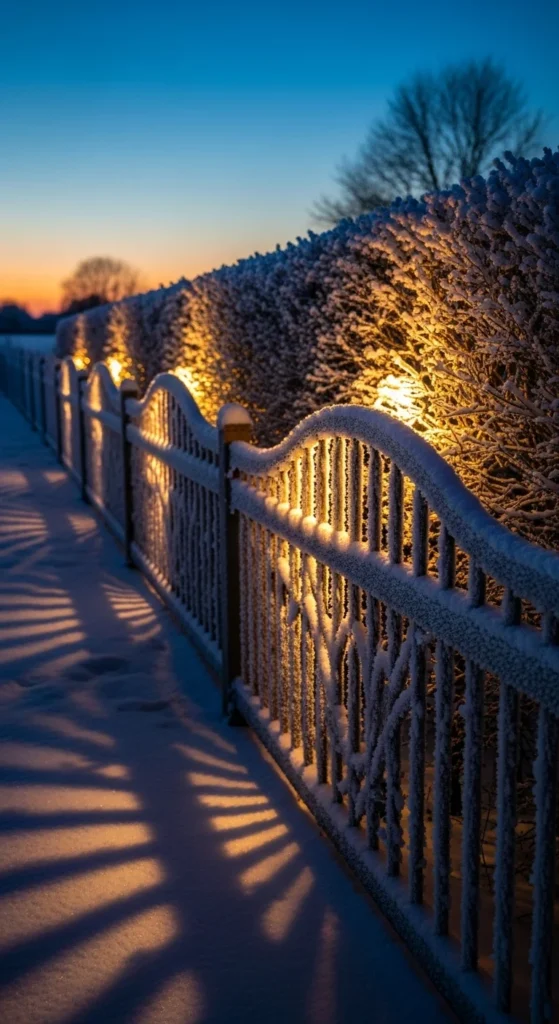
Backlighting makes hedge outlines glow. Place lights behind the hedge, facing a fence or wall. The reflection highlights the leaves from behind, forming a glowing outline. This works best with structured hedges that hold shape during winter. Keep lights far enough to avoid overheating plant bases. Backlighting brings a soft halo-like effect that pairs well with minimalist garden layouts.
6. Solar Globe Lights Tucked Into the Hedge
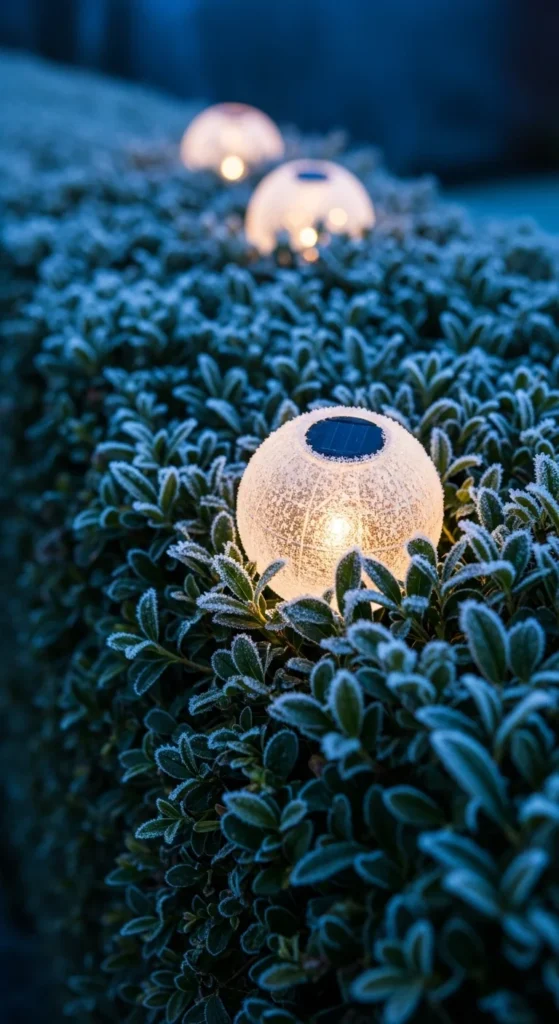
Solar globe lights create dotted highlights across hedge surfaces. Nestle small globes a few inches inside the branches so they shine through the foliage. Winter sun still charges them enough to glow softly at night. This approach works well for hedges near seating areas or narrow paths. Use warm-toned globes to keep the look natural and gentle. Position them sparsely for a balanced effect.
7. Moonlight-Style Overhead Lighting
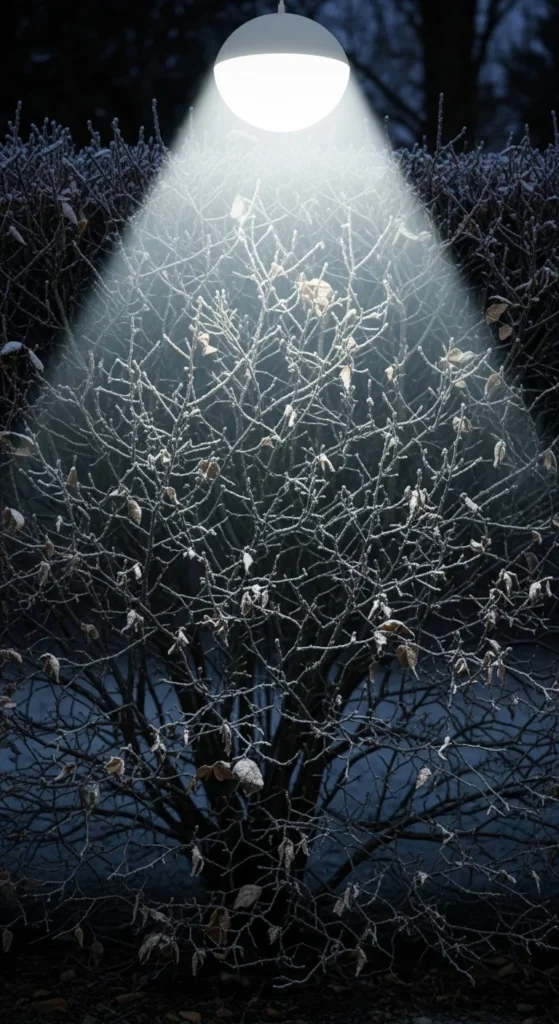
Hang a soft overhead fixture—mounted to a tree or pergola—to mimic moonlight. The light falls downward in a wide circle, illuminating the hedge naturally. This technique emphasizes texture without harsh beams. Use a diffused bulb for smooth coverage. This works especially well for boxwood, privet, or other dense hedges that respond well to broad light patterns.
8. Snow-Reflecting Light Placement
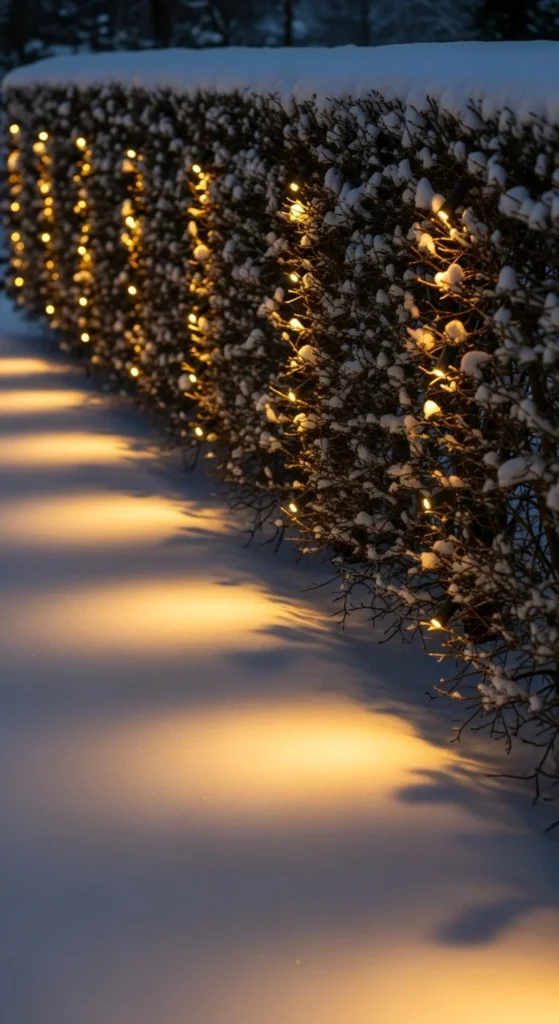
Snow can act as a natural reflector. Aim lights so they bounce off snowy ground and shine into the hedge. This creates a cool, soft atmosphere without direct glare. It also highlights lower branches that might otherwise stay dark. Use this method when snowfall is common. Even small fixtures can brighten a large hedge this way.
9. Warm Accent Lights on Hedge Corners
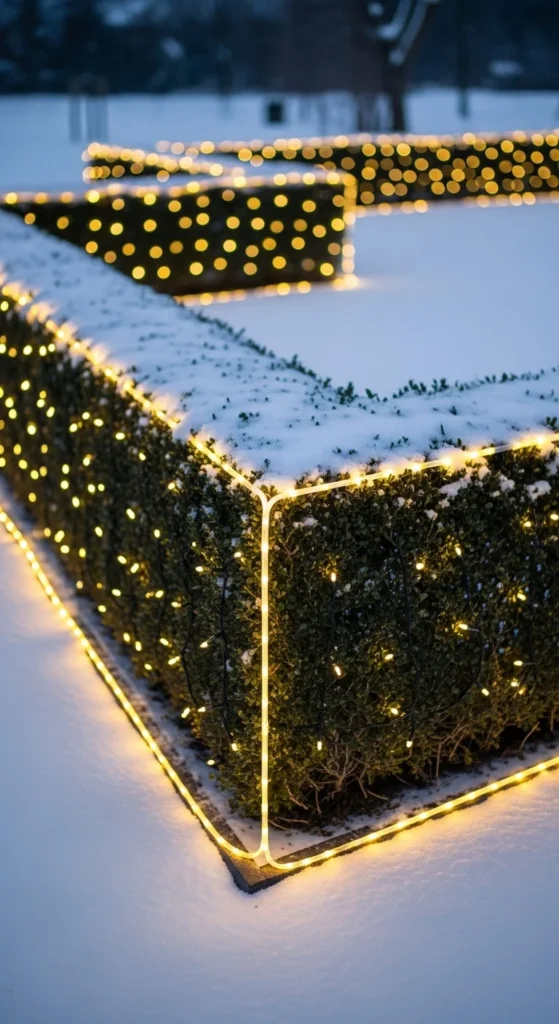
Corners offer natural focal points. Place small accent lights at each hedge corner to outline the shape. Keep beams narrow so they don’t oversaturate. This gives hedges a clean geometric definition during winter evenings. It works well along formal gardens or areas with strong architectural lines.
10. Lantern-Style Fixtures for a Soft Glow
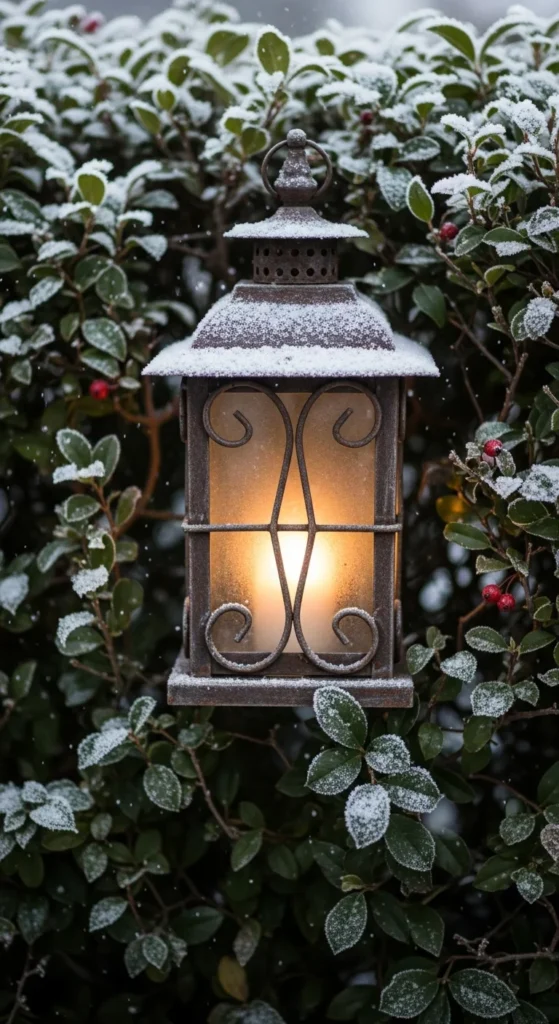
Lantern fixtures bring a soft winter calm. Place a few lanterns evenly spaced along the hedge line. Use LED candles or battery lights for safety. The diffused glow highlights hedge surfaces gently. Choose lanterns with frosted sides for smoother lighting. This approach works well near patios or entryways where ambiance matters.
11. Low-Tilt Floodlights for Wide Hedges
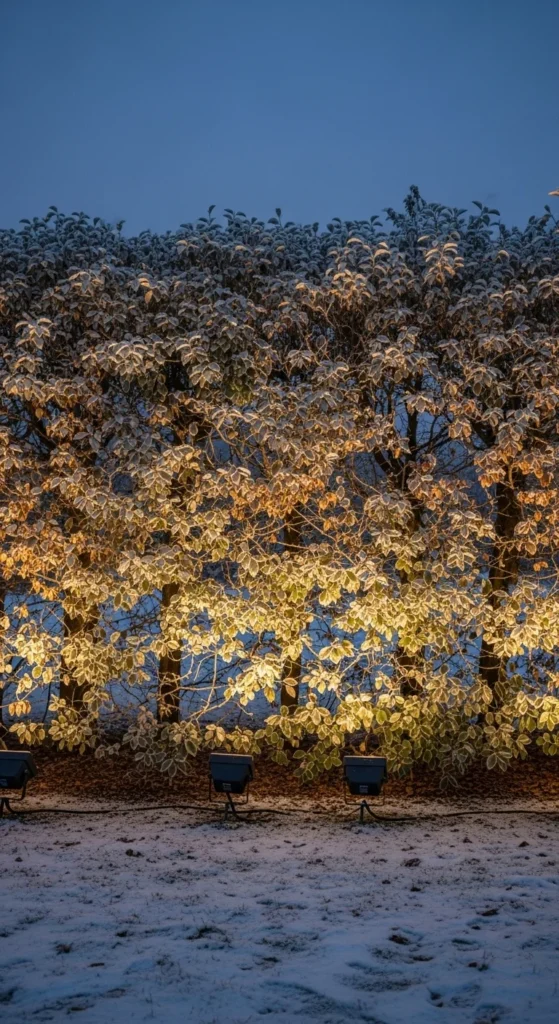
Floodlights can illuminate wide hedge sections if positioned carefully. Tilt them at a low angle so they wash the hedge instead of blasting it. Use warm-white bulbs to soften winter tones. This setup helps long hedge lines stay evenly lit without needing many fixtures. It suits large gardens where simplicity is important.
12. Lights Hidden Behind Small Rocks
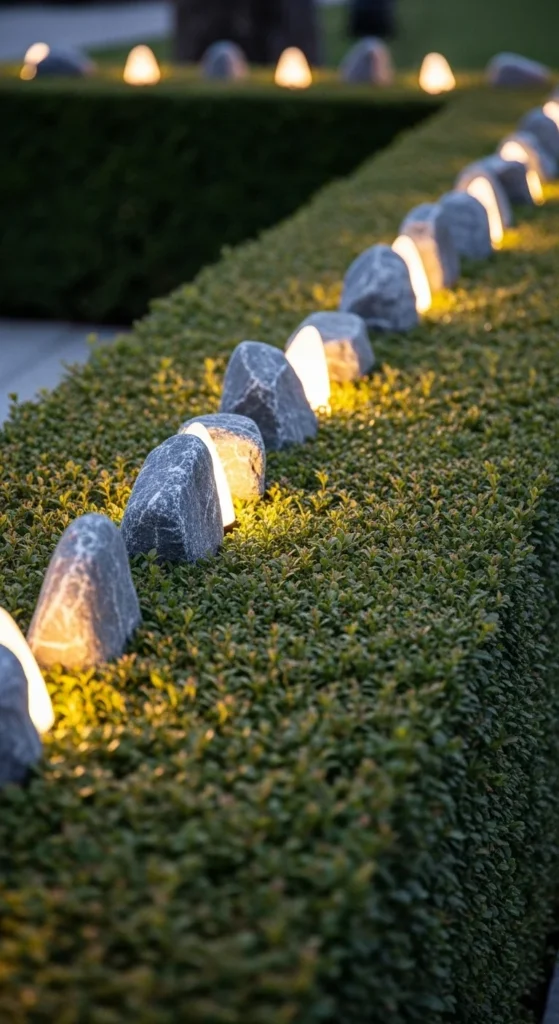
Hide small fixtures behind decorative rocks placed at the hedge base. The rocks disguise the source, creating natural-looking illumination. Choose stones that match your garden’s winter palette. Position the fixtures so they shine just above the rock tops. This looks clean and blends well with rustic or natural gardens.
13. Winter-Berry Hedge Spotlighting
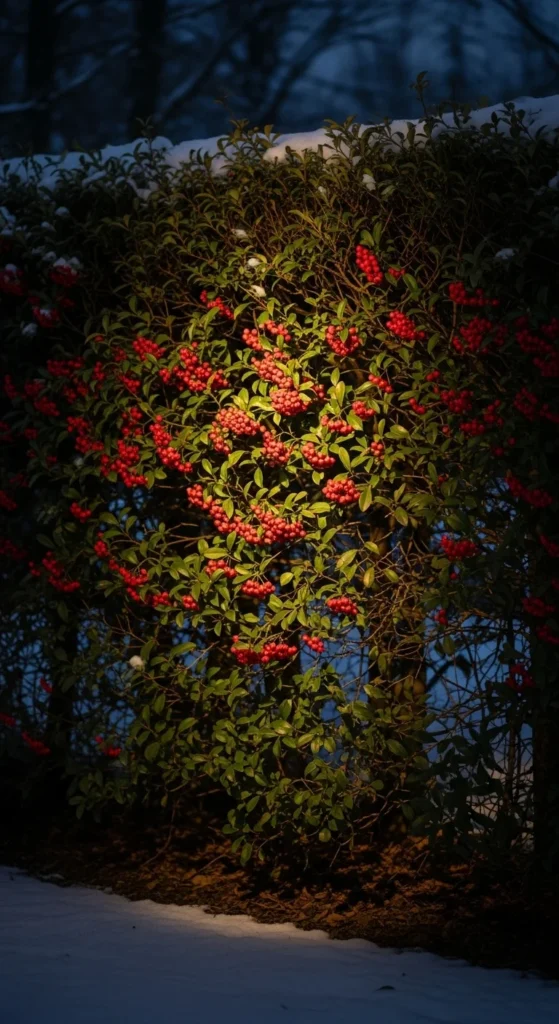
If your hedge has berries, spotlight them as focal points. Position a narrow-beam fixture a few feet away, angled slightly upward. The berries glow warmly against the winter background. This technique draws attention to seasonal color. It works particularly well with holly or firethorn hedges.
14. Shadow-Casting Branch Highlights
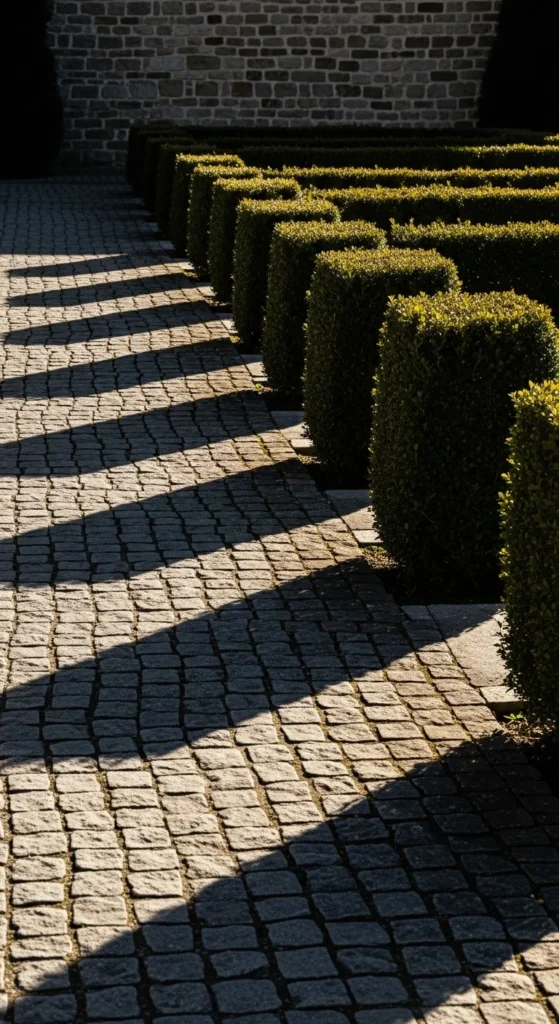
Use angled lighting to cast interesting shadows from the hedge onto surrounding surfaces. Experiment with distance until you get defined silhouettes. Keep beams soft enough to avoid harsh outlines. This technique adds subtle artistry during winter evenings, especially when the hedge has distinct branching.
15. Step-Light Pairings Along Hedge Walkways
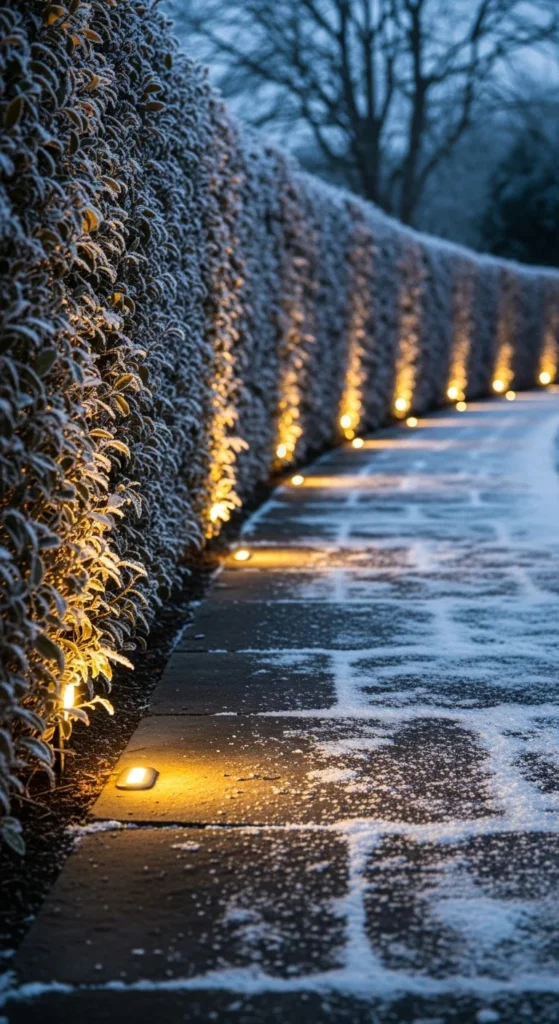
If a hedge borders stairs or a multi-level path, step lights add both safety and charm. Install low-profile fixtures along risers. The light spills sideways onto the hedge, giving it gentle highlights. This is useful in gardens with level transitions. Use warm tones for a calmer winter look.
16. Minimalist Ground Bars for Slim Hedges
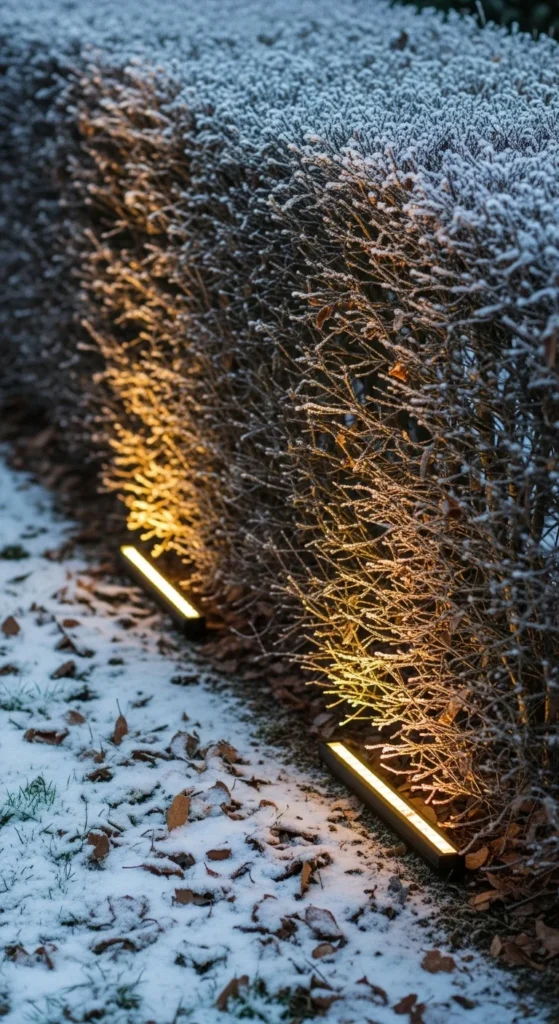
Slim LED bars work well for narrow hedges. Place the bar along the base so light spills upward in a clean sheet. This creates a modern aesthetic. Keep cables hidden under mulch. This setup works well along driveways or modern patios where clean lines matter.
17. Frost-Glow Spike Lights
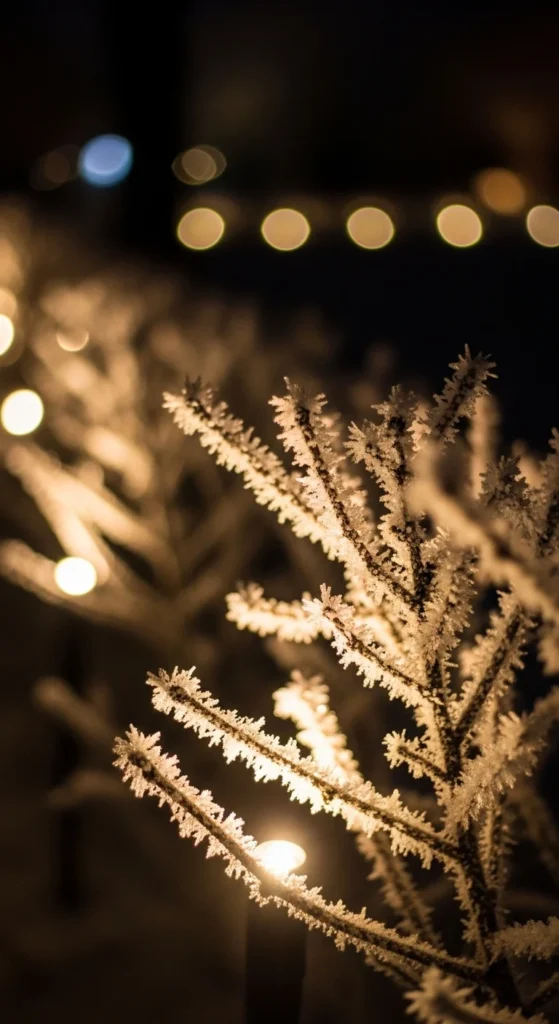
Spike lights are easy to install during winter. Push them into soil just far enough from the hedge to cast a gentle glow across frost-covered leaves. Their low height keeps the beam controlled. This is a good option for renters or gardeners seeking simple installation.
18. Alternating Cool-Warm Light Rhythm
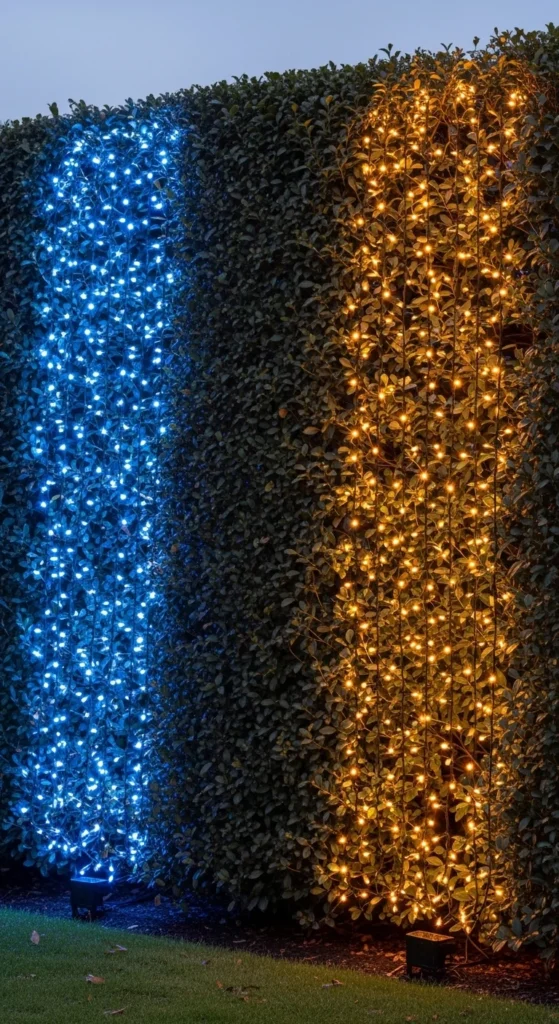
Create a pattern by alternating cool and warm tones along the hedge. This gives a rhythmic effect that feels artistic but simple. Keep fixtures the same size for consistency. This technique works well for long hedges where variety adds interest.
19. Lights Focused on Hedge Arches
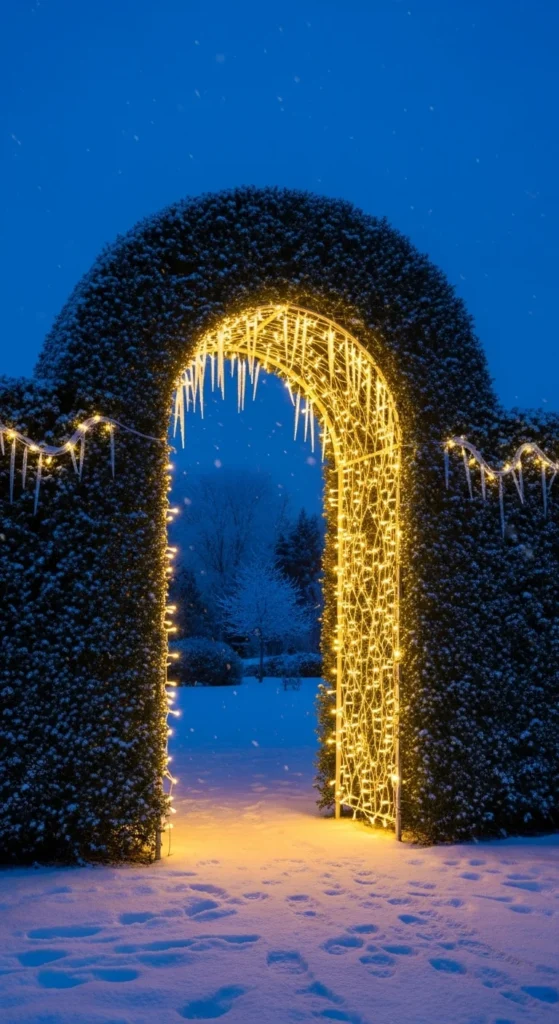
If your hedge includes an arch or opening, make it a focal point. Place two small lights at the base of the arch, angled upward. This frames the shape clearly in winter darkness. It’s perfect for pathways or garden entrances where structure matters more than foliage.
20. Subtle Side-Wash Lighting

Side-wash lighting reveals the fine texture of hedge leaves. Position lights a few feet to the side and aim them across the hedge surface. This creates layered depth. It works especially well on hedges with rough or crinkled foliage. Adjust the angle until shadows fall gently across the surface.
21. Yellow-Tone Accent Lights for Warmth
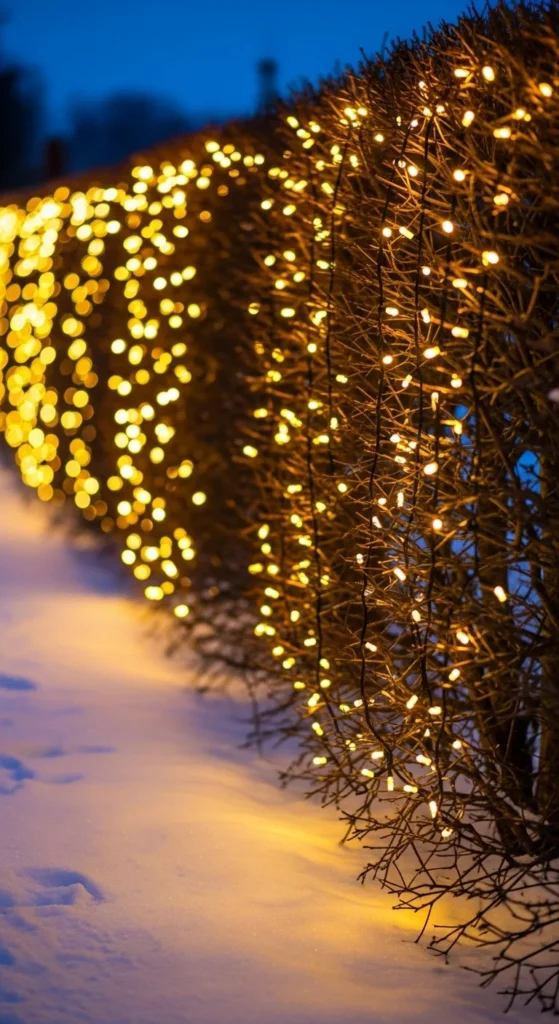
Yellow-tone lighting adds warmth to cold winter scenes. Aim fixtures upward or across the hedge to bring out deeper greens. This tone helps soften icy evenings, especially in patios or seating areas. Keep brightness low for a calm effect. This works well when paired with evergreen hedges.
22. Hidden Strip Lighting Along the Back Edge
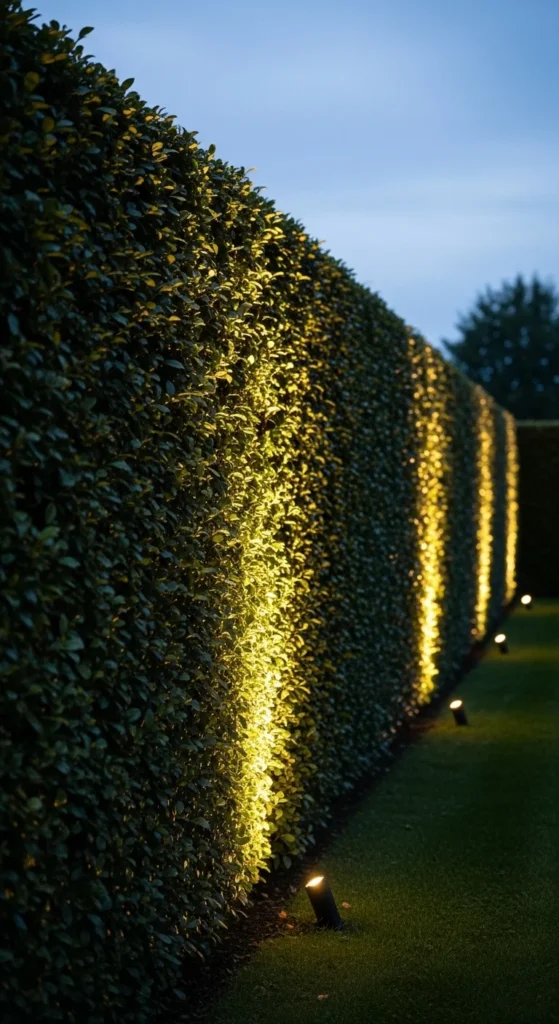
Hide LED strip lights behind the hedge along the back or top edge. The glow outlines the hedge without showing the fixture. Choose waterproof strips for winter durability. This method works especially well when the hedge borders a deck, path, or seating area where gentle backlighting adds depth.
Conclusion
Thoughtful lighting can transform hedges into winter showpieces. By experimenting with angles, colors, shadows, and placements, you can highlight structure and texture even in darker months. Choose the approaches that match your garden style, try small adjustments throughout the season, and enjoy a winter landscape with hedges that stand confidently under New Year lights.

Leave a Reply