

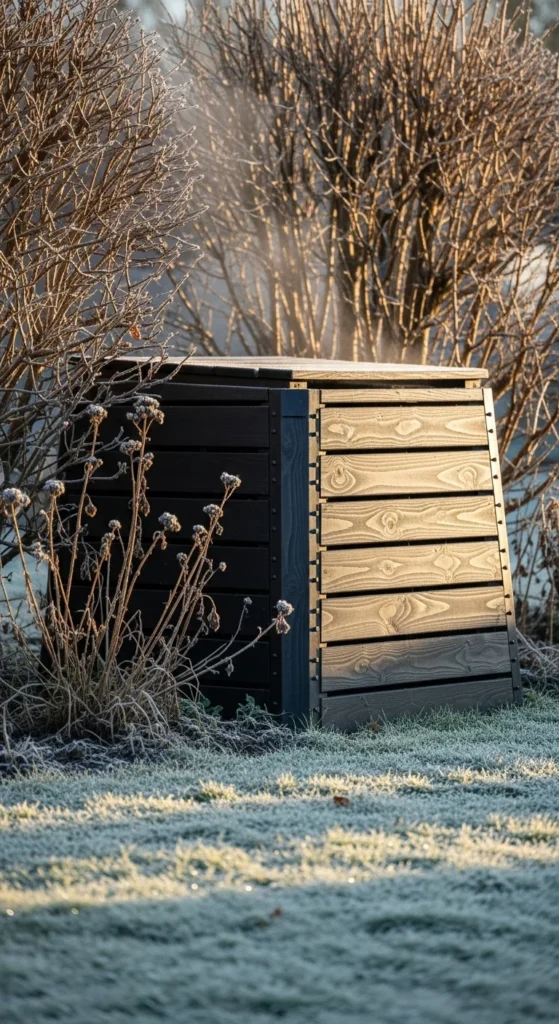
A well-placed compost bin makes winter gardening far smoother. Shorter paths, protected spots, and smart access points save time during cold months. Choosing the right location can help compost break down with less effort while keeping your garden clean, organized, and easy to manage. These ideas focus on simple placements, quick DIY setups, and practical positioning so your New Year compost routine stays steady even when temperatures drop.
1. Near the Back Door for Quick Trips
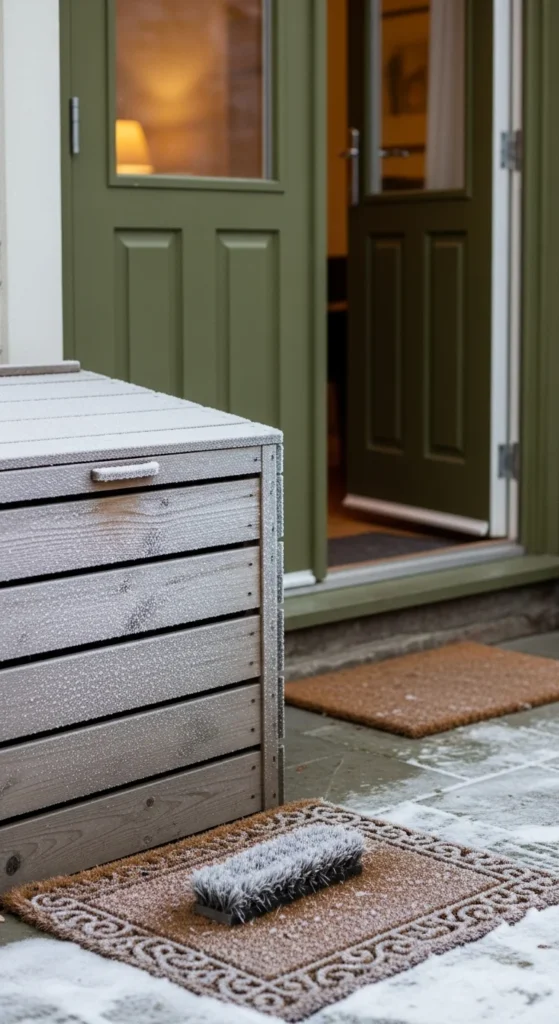
Placing your compost bin near the back door cuts down on long walks during cold mornings. Keep it close enough for quick access but far enough that odors and steam don’t bother your entryway. Add a small gravel pad beneath it to prevent muddy build-up from winter rain. Keep a lidded countertop bucket inside the house so you can carry scraps easily. This setup works especially well for homes with small yards or tight patios.
2. Against a South-Facing Fence
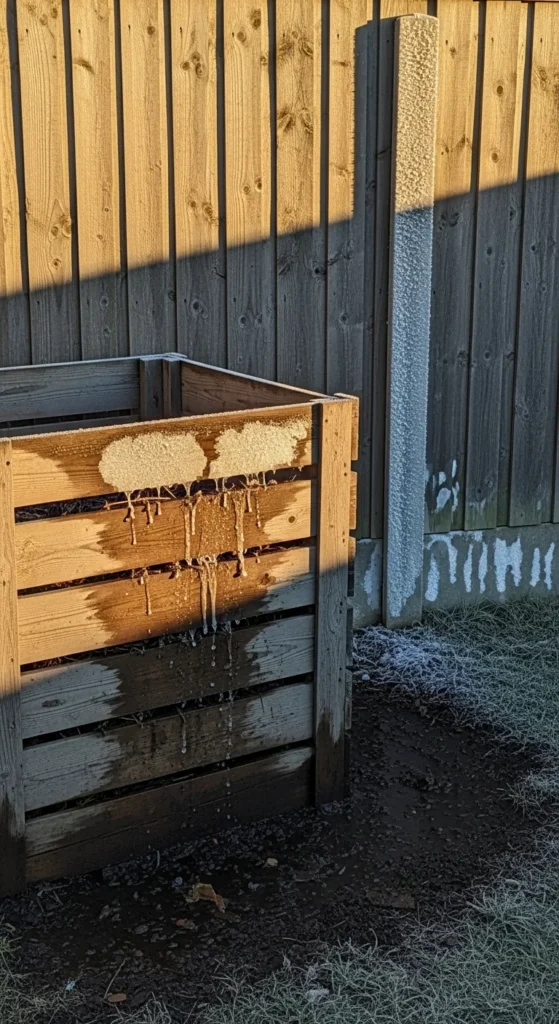
A south-facing fence catches more sunlight, which helps maintain warmer compost in winter. Place the bin a few inches away from the fence to allow airflow. Add a paver base so the bin stays level even when the soil becomes soft. The extra warmth can speed decomposition. Keep a small rake nearby to mix layers quickly. This location works well in narrow side yards where warmth is limited.
3. Behind a Tool Shed
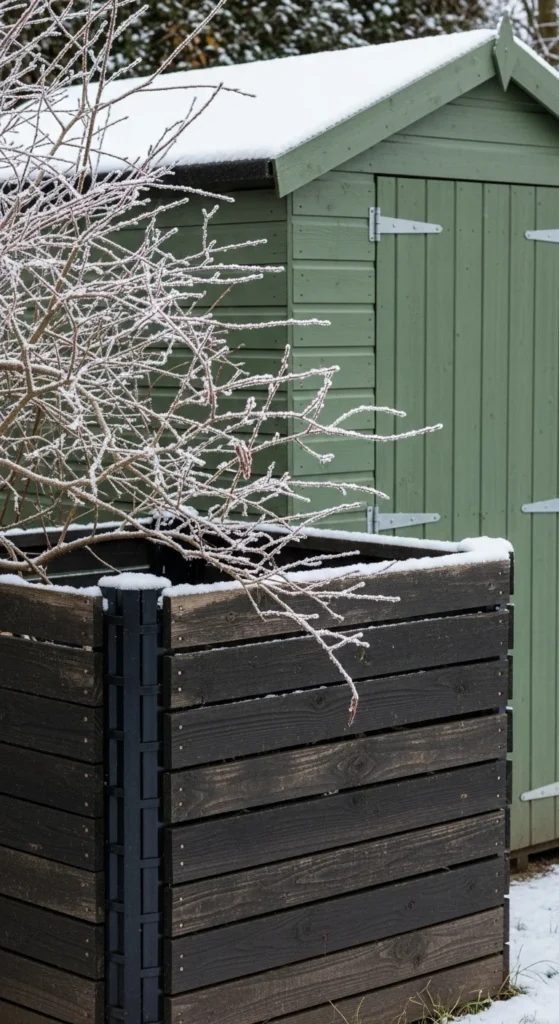
The area behind a shed often goes unused. It’s also protected from wind, making it a practical compost location. Place the bin on a slight rise so water drains easily. Keep the path clear with mulch so you can reach it without slipping. This tucked-away spot keeps the compost out of sight while staying close enough for regular use. It also makes winter yard waste easy to manage since tools are nearby.
4. Close to Raised Beds
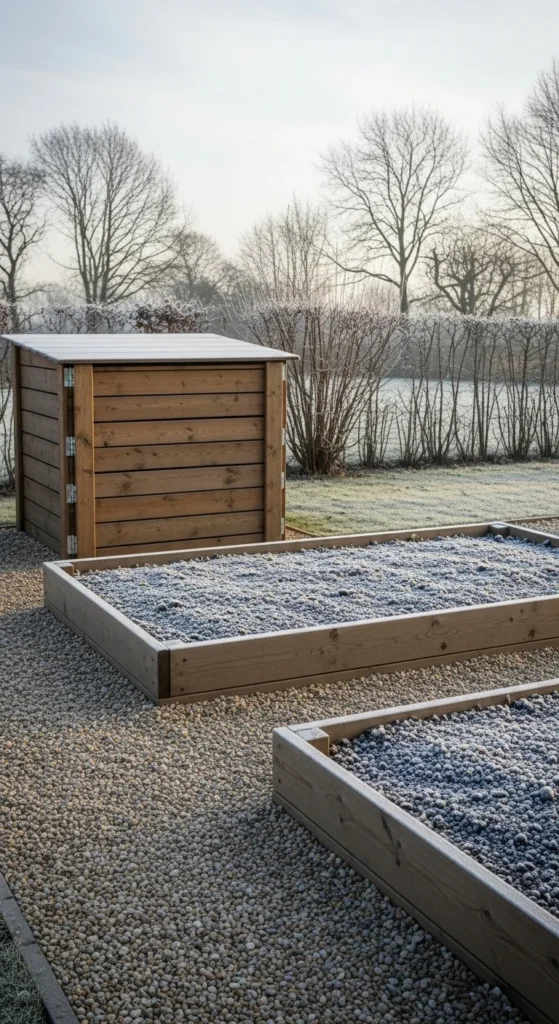
Keeping your compost bin near raised beds reduces hauling time when spreading compost in early spring. Position the bin just off the main path so access stays simple year-round. Use gravel or stepping stones so winter mud doesn’t slow you down. This placement helps you add compost gradually as beds become available. It’s ideal for gardeners who enjoy steady upkeep throughout the season.
5. Under a Simple Lean-To Roof
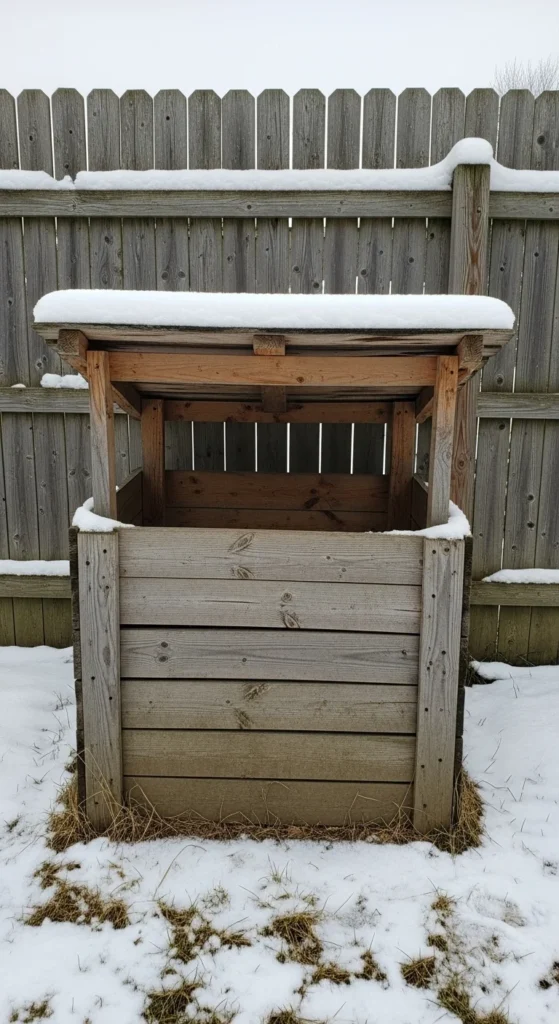
A lean-to roof shields compost from excess winter rain. Build a small roof with scrap wood or metal panels. Leave the sides open for airflow. Position the bin underneath so moisture control becomes easier. Add a small bucket of dry carbon material—leaves or shredded paper—so you can balance wet kitchen scraps. This location suits gardens that receive heavy winter precipitation.
6. Beside the Firewood Stack
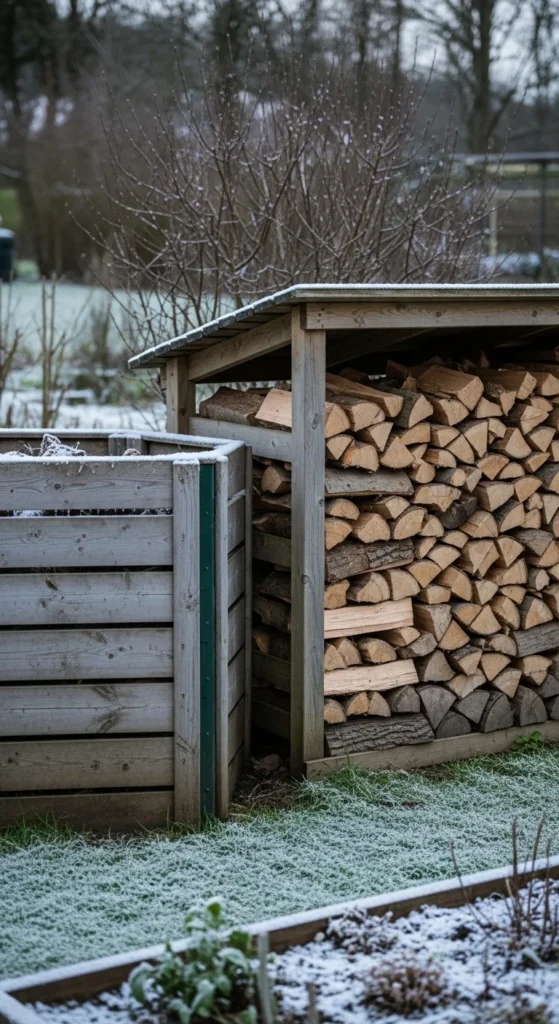
The area near your firewood stack stays structured and tidy, making it a good compost location. The dry environment helps keep scraps from getting overly wet. Place the bin a couple of feet away so airflow stays healthy. Keep a small scoop near the stack so you can add wood shavings when needed. This pairing works well for homeowners who run outdoor fire pits during winter.
7. Near the Greenhouse Door
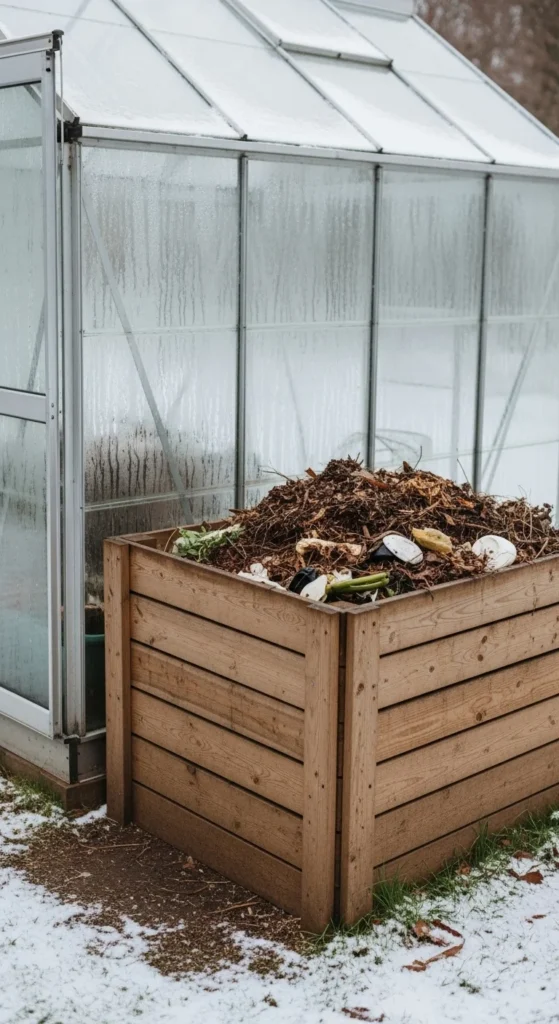
A compost bin near the greenhouse keeps plant trimmings and spent soil close by. The warmth from the greenhouse may raise the temperature slightly in that corner, helping the compost break down faster. Lay a walkway of pavers between the greenhouse and the bin so trips stay easy. Keeping everything close by reduces the time spent moving materials through cold air.
8. Inside a Wind-Sheltered Nook
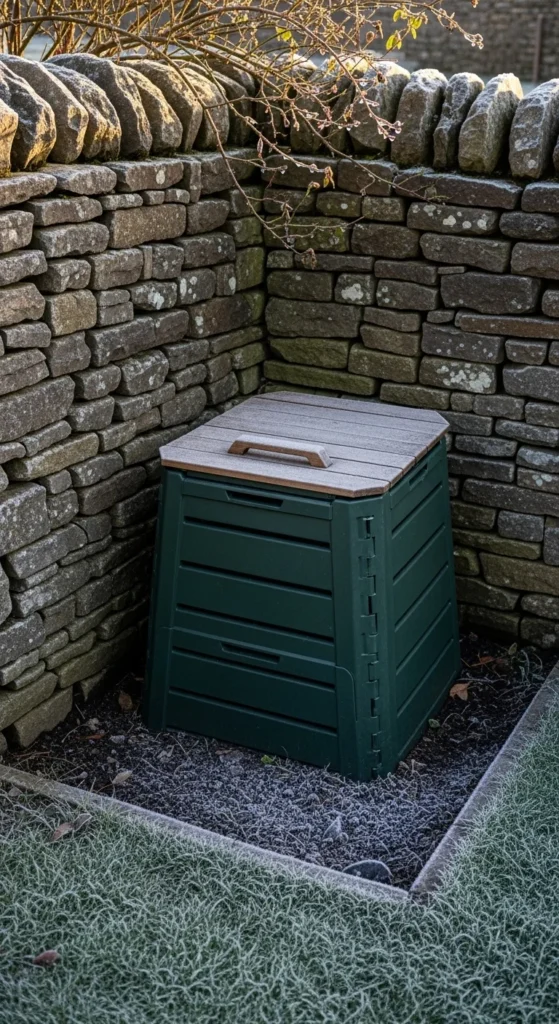
Wind slows composting during winter, so sheltered corners are valuable. Place the bin where two walls or fences meet. This area stays warmer and reduces moisture loss. Add mulch to the ground to keep footing steady. A sheltered nook also hides the bin from view, giving the garden a cleaner overall appearance.
9. At the Edge of the Vegetable Plot
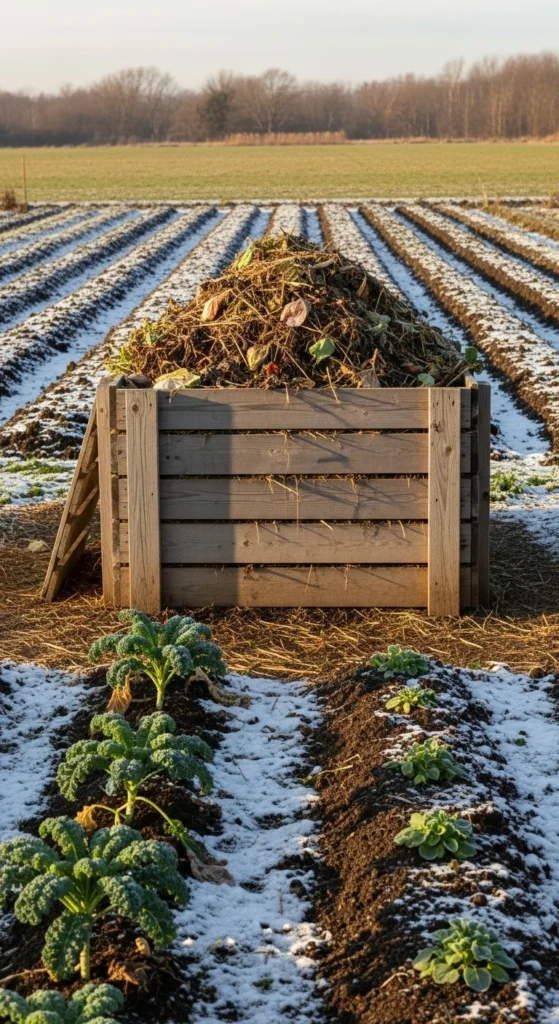
The edge of your vegetable garden is a natural compost location. It shortens the distance when clearing out spent crops. Keep the bin on a raised pad to maintain drainage. In winter, you can toss in leftover stalks and roots quickly. Add a small cover to block cold wind from entering the bin. This makes the whole gardening cycle easier.
10. Beside the Water Collection Barrel
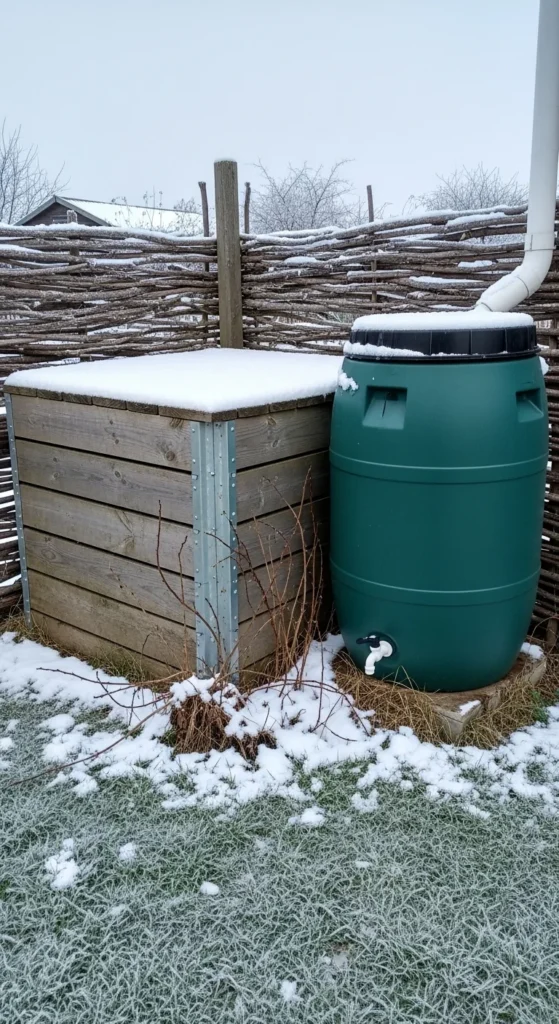
Placing your compost bin beside the rain barrel helps with moisture control. If your compost gets too dry, you can dip into the barrel for a small splash of water. Position the bin on the opposite side of the barrel from the main walkway to keep movement simple. This pairing helps you maintain a balanced compost mixture during cold spells.
11. Along a Gravel Pathway
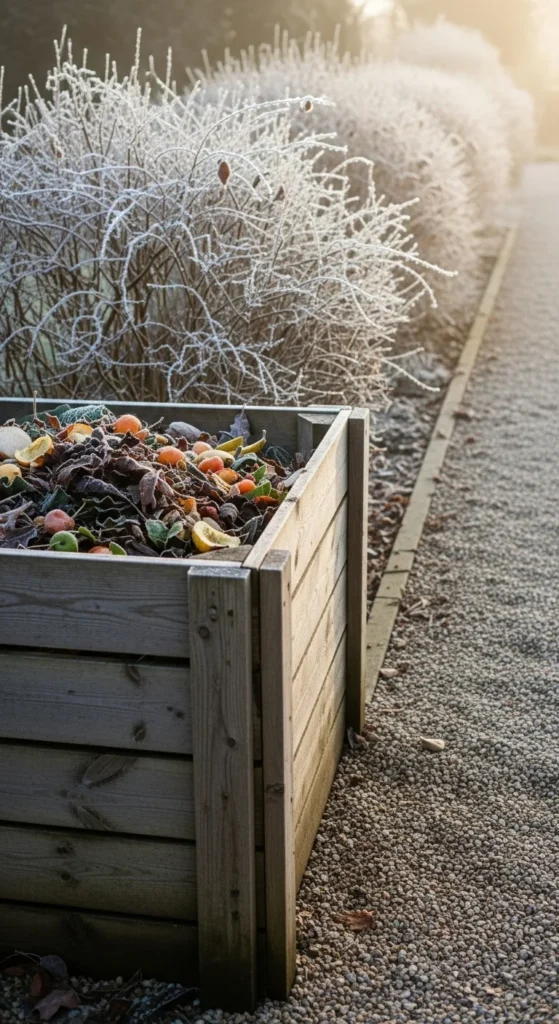
Gravel paths stay firmer than soil paths in winter. Place the compost bin along a gravel walkway so you don’t slip during wet or icy days. Add stone pavers directly in front of the bin for steady footing. Keep a handheld fork there for quick turning. This setup works well for gardens with multiple access routes.
12. Behind a Screen of Winter Shrubs
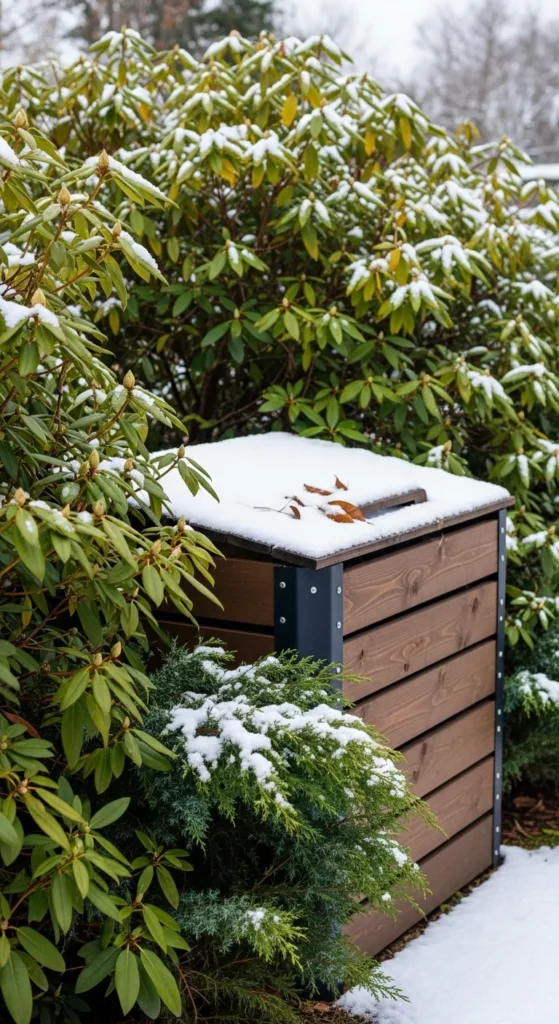
Winter shrubs offer natural screening. Place your bin behind a row of evergreens or dense foliage. This hides the bin while still keeping it reachable. Leave a small access path so you can move comfortably during cold weather. Add mulch in this path to stabilize traction. This approach keeps the compost site visually calm.
13. Beside the Outdoor Kitchen or Grill Area
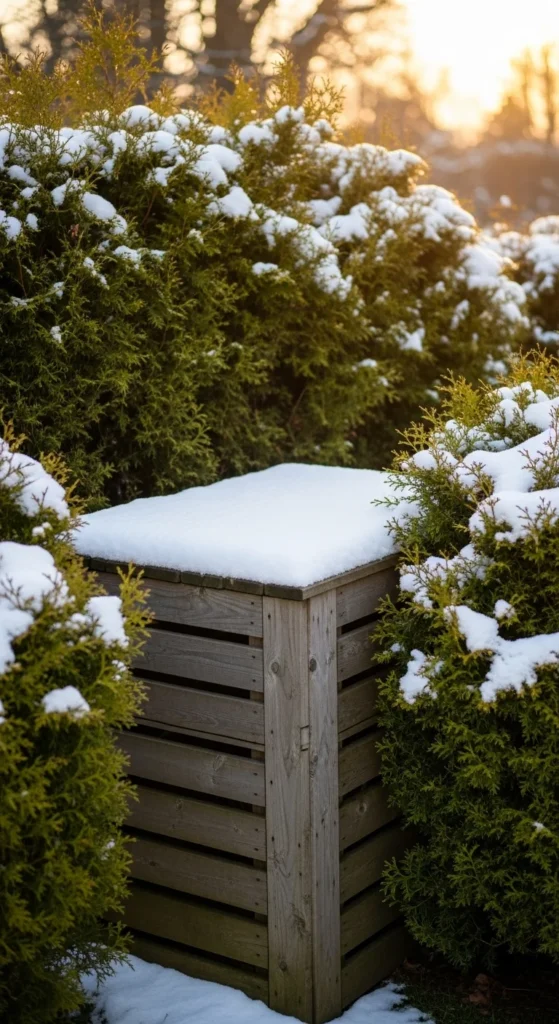
Outdoor kitchens produce food scraps that can go straight to the compost. Placing the bin nearby saves time. Keep it a few feet from the grill for safety and comfort. Add a small shelf or hook for holding compost-friendly scraps before moving them in. This setup works well for winter gatherings where hot meals are cooked outdoors.
14. On the Shadiest Side of the Yard
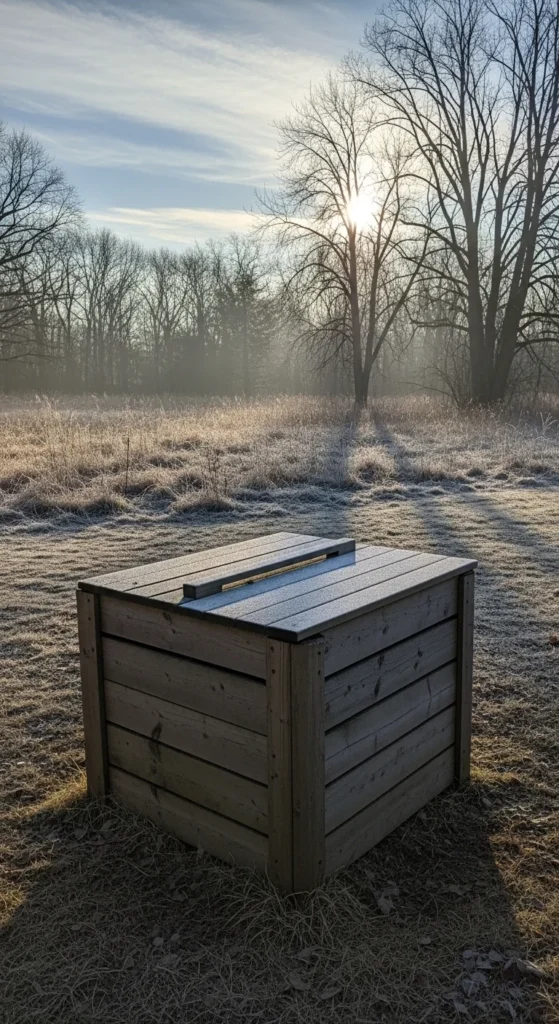
The shadiest part of your yard may not be ideal for plants, but it’s perfect for compost bins. Composting doesn’t rely on direct sunlight. Place the bin where little else thrives. Add a drainage tray below if the soil stays very wet. This repurposes unused space efficiently.
15. In a Corner Near the Leaf Pile
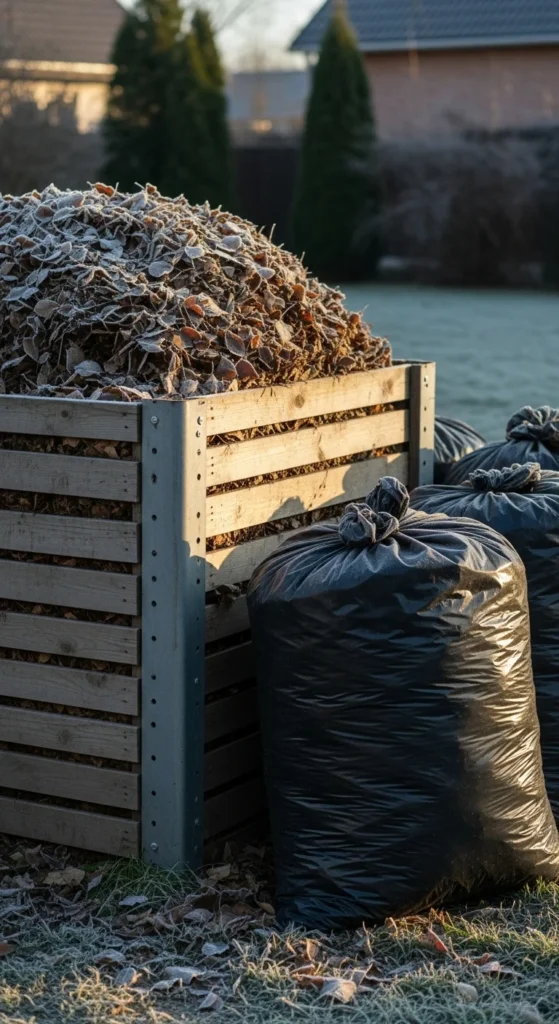
Leaves serve as valuable carbon material for composting. Position your bin next to your winter leaf pile so you can grab handfuls anytime. Keep your leaves in breathable bags so they stay dry. Create a simple rotation by adding leaves after each food scrap dump. This speeds decay and prevents soggy compost.
16. Beside the Gravel Driveway
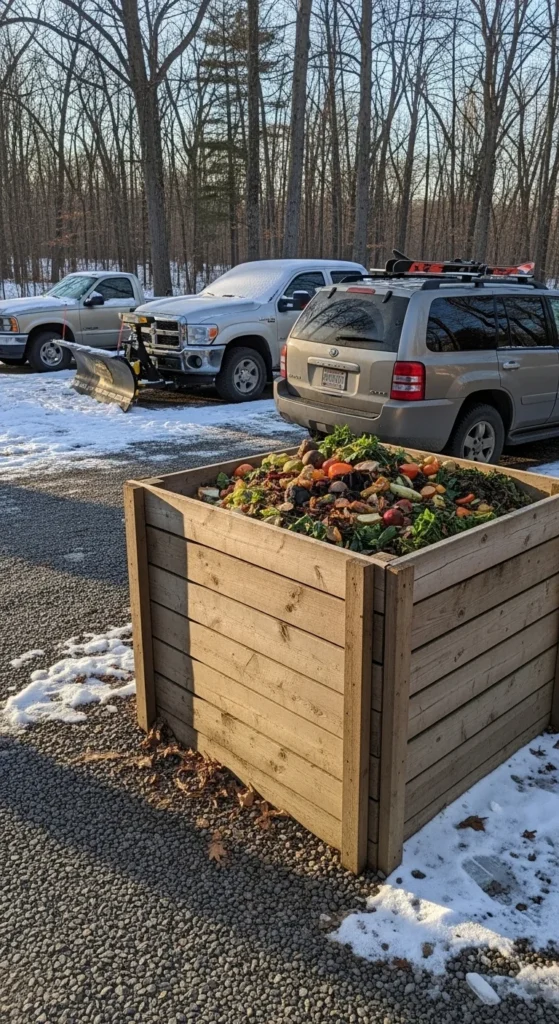
A gravel driveway provides stable ground in winter. Place your bin along the edge, away from snow piles. This keeps the area easy to access no matter the weather. Use a compact bin style that doesn’t crowd the driveway. Add stepping stones to guide you from the driveway to the bin during icy days.
17. Near the Wooded Edge of the Property
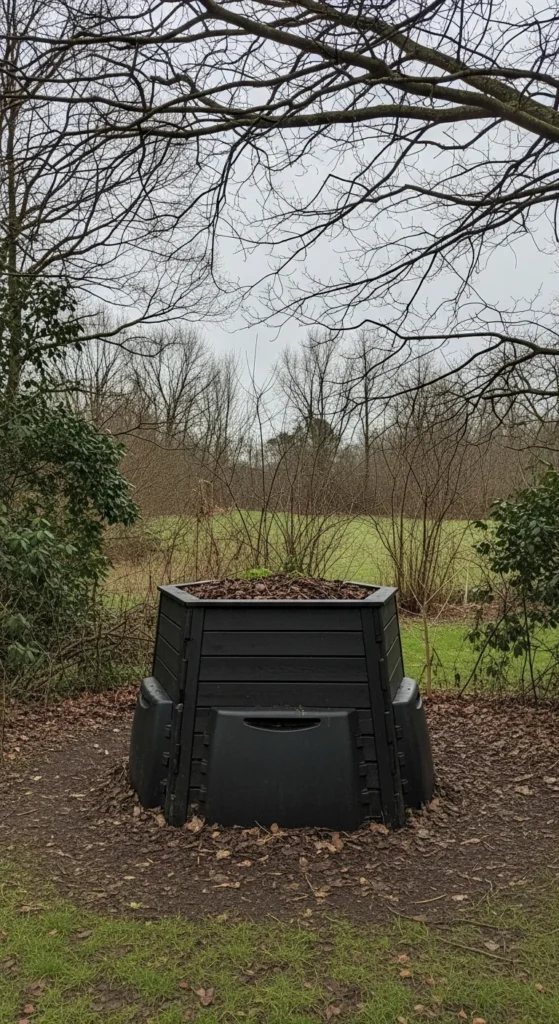
Wooded edges stay naturally protected. Place your bin just outside the tree line. The soil drains well there, and fallen branches add extra carbon when needed. Keep the bin far enough from trees so roots don’t interfere. This location blends the compost with the natural environment.
18. Adjacent to the Tool Rack or Storage Area
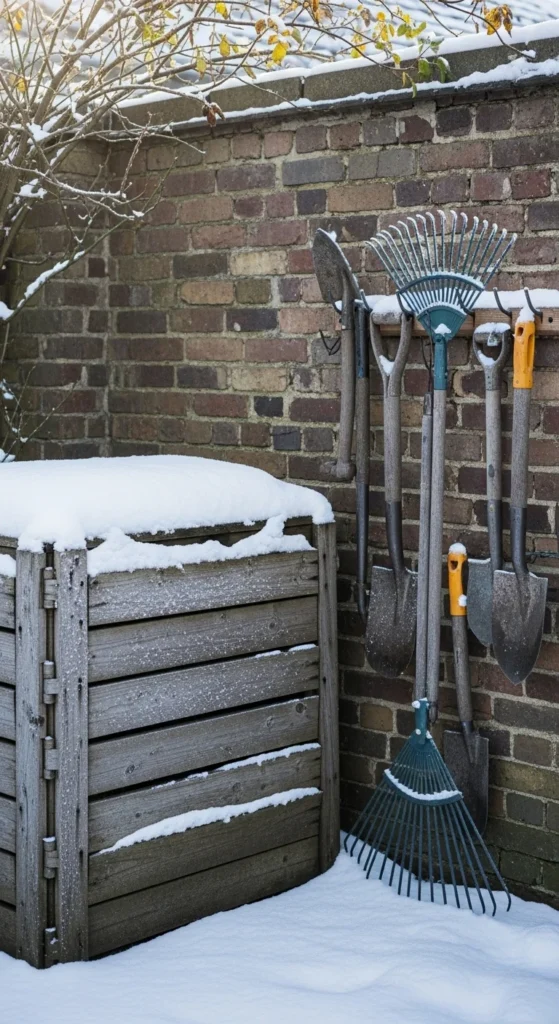
Keeping your compost bin near the tool rack saves trips. You’ll have a fork, rake, and bucket right at hand. This makes winter maintenance smoother. Place the bin on pavers or bricks so snowmelt doesn’t cause sinking. The tool zone already stays tidy, so the bin fits naturally into the space.
19. On a Small Concrete Pad
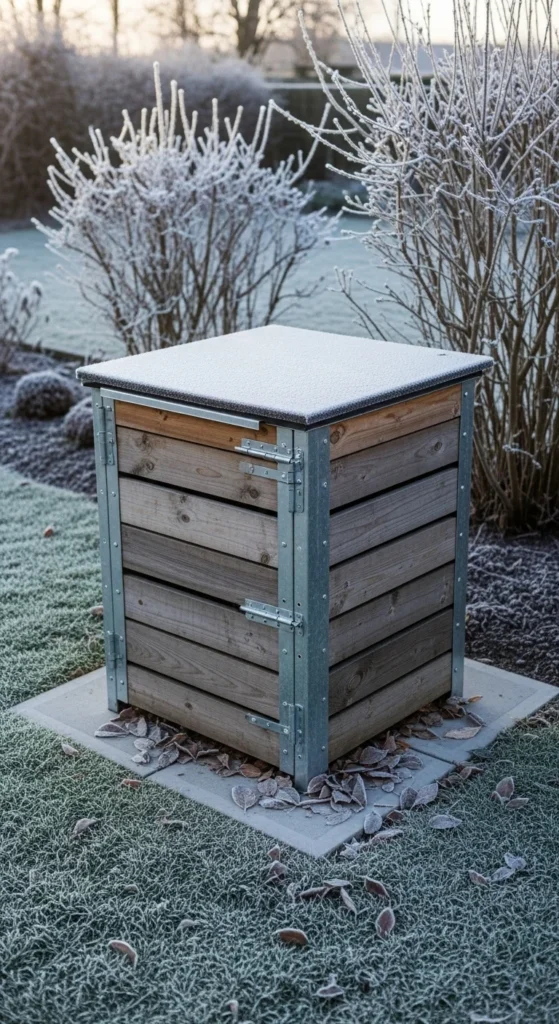
A concrete pad offers stability. Place your bin on a small poured or precast concrete section. This prevents sinking and keeps rodents from burrowing underneath. Add a thin mat to reduce noise when you open the lid. This setup works especially well for plastic compost bins that need firm footing during winter.
20. Near the Garage Side Door
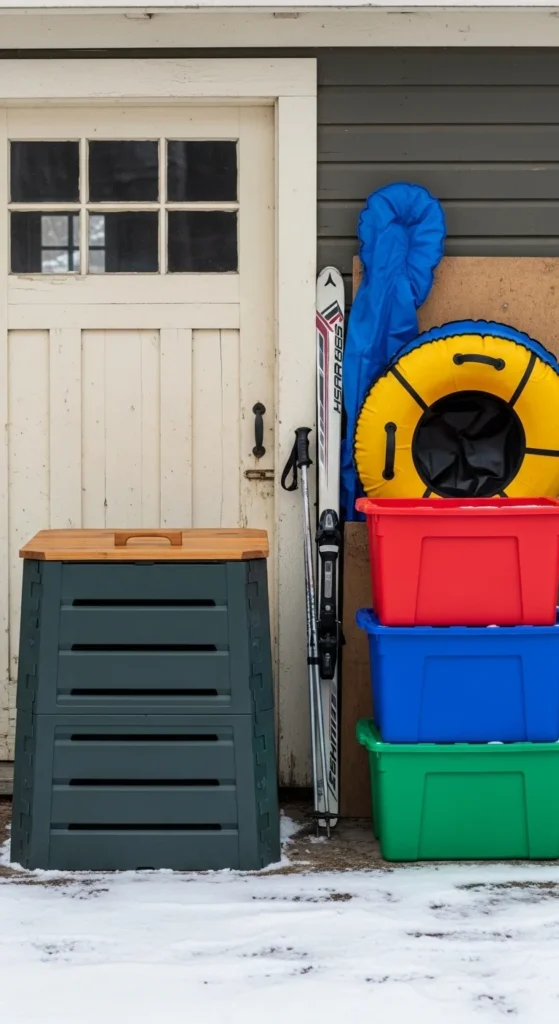
A side door provides quick garden access. Place your compost bin near this entry so you can reach it even during snowy days. Keep a small container inside the garage for temporary scrap storage. This arrangement is helpful for gardeners who maintain beds year-round.
21. Paired With a Small Mulch Station
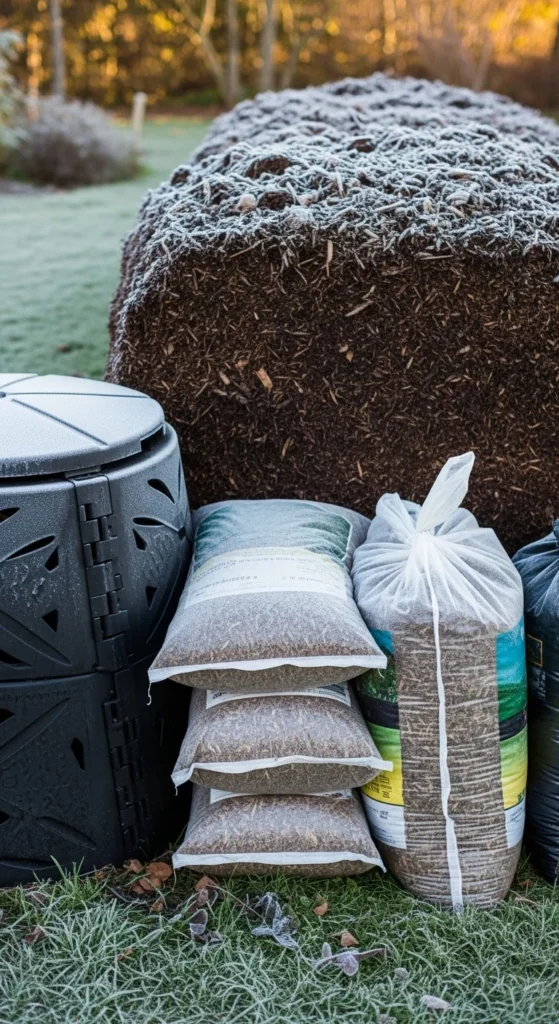
Set up a mulch station beside your compost. This creates a supply of dry material you can mix in during winter. Use bags or a small frame to hold shredded bark or leaves. Mix a small scoop each time you add kitchen scraps. The proximity saves time and keeps the compost healthier.
22. Against a Stone Wall for Extra Warmth
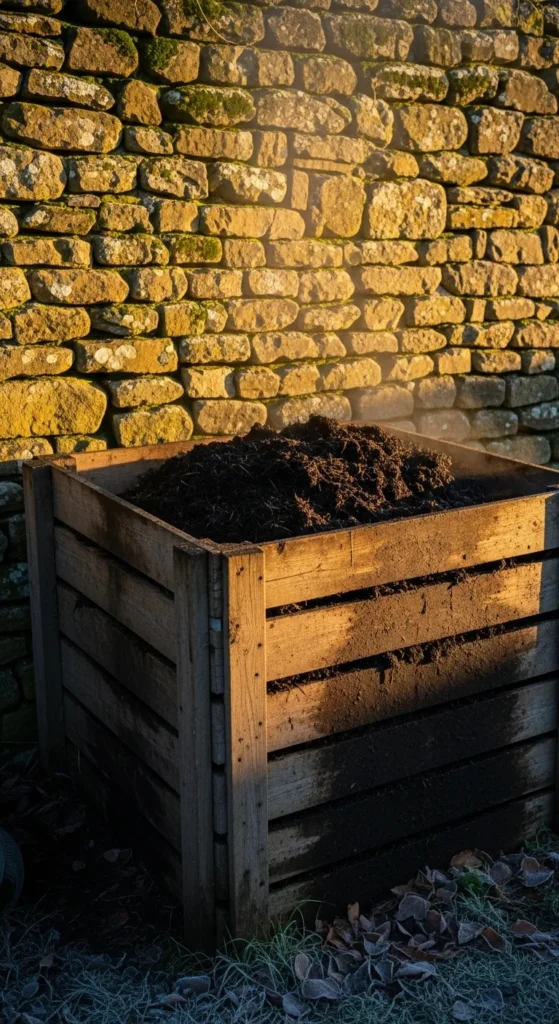
Stone walls absorb and release warmth slowly. Place your compost bin against the sunniest section. The wall helps maintain a slightly warmer pocket, supporting decomposition through winter. Keep the bin a few inches off the wall for airflow. Add straw around the base if you want extra insulation.
23. In a Hidden Pocket Behind Tall Planters
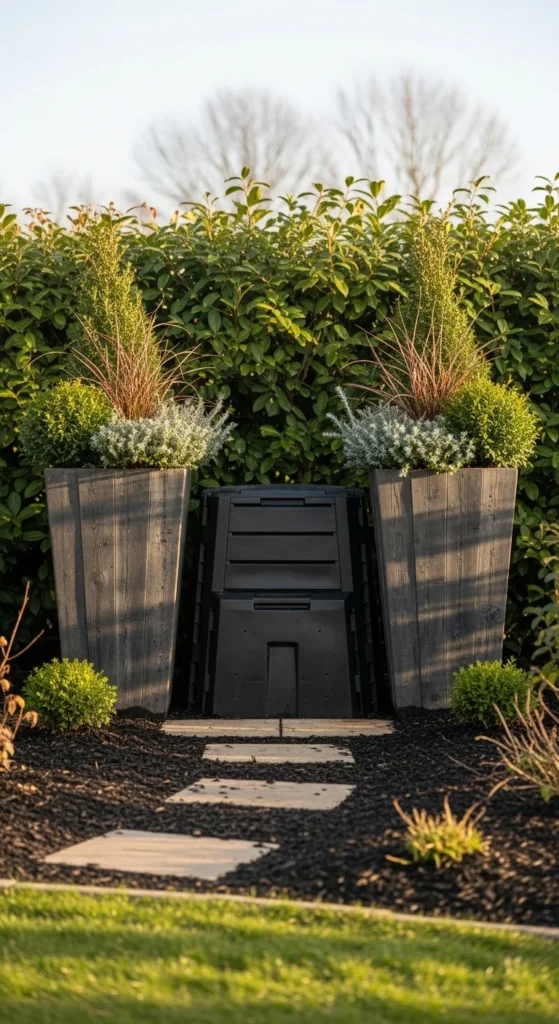
Tall planters can shield your compost bin without adding permanent structures. Place two planters in front of the bin, leaving space to walk behind them. This keeps the bin accessible but visually hidden. Use hardy winter plants like dwarf conifers so the screen stays intact.
24. Along the Perimeter Fence for Easy Drop-Off
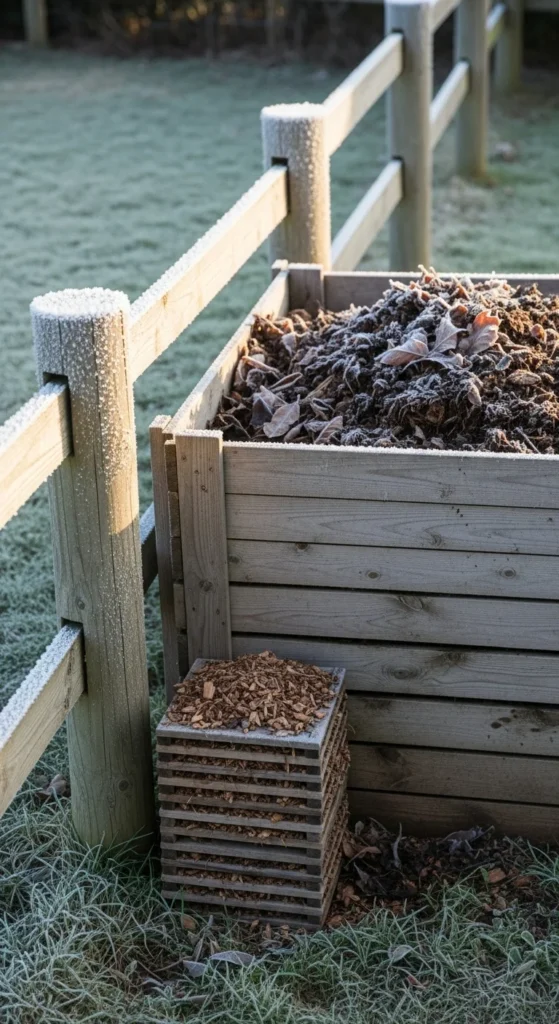
The fence line usually offers long, uninterrupted access. Place your bin there so you can approach it from multiple angles. It also keeps the center of the garden open. Add a small sign or marker to keep family members aware of its location. This simple placement works well for medium to large yards.
Conclusion
A well-placed compost bin saves time, simplifies upkeep, and keeps winter gardening manageable. Whether you tuck it behind shrubs, pair it with tools, or position it near walkways, thoughtful placement can make cold-season composting smooth and efficient. Choose the ideas that match your yard layout, make small adjustments, and enjoy a more organized compost routine throughout the New Year season.

Leave a Reply