

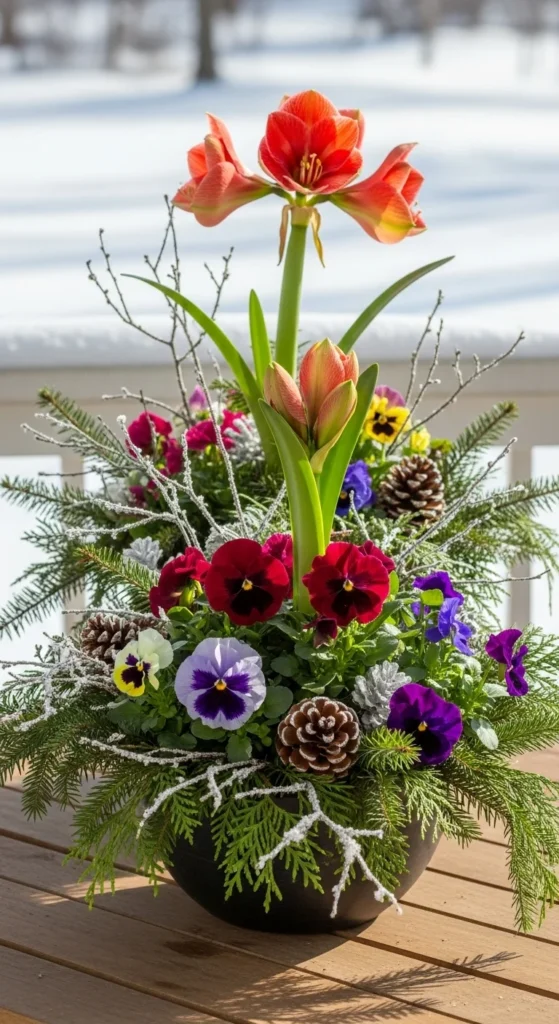
Winter containers add instant color during colder months, especially when the New Year begins and outdoor spaces feel quiet. Many people want simple ideas that deliver strong visual contrast without complicated care. This list gives you easy container combinations, bright winter blooms, and smart color pairings that stay lively through cold weather. Each arrangement works for porches, patios, balconies, and entry areas, helping you create displays that stay bold even in lower light and chilly air.
1. Red Cyclamen With Frosted Ivy
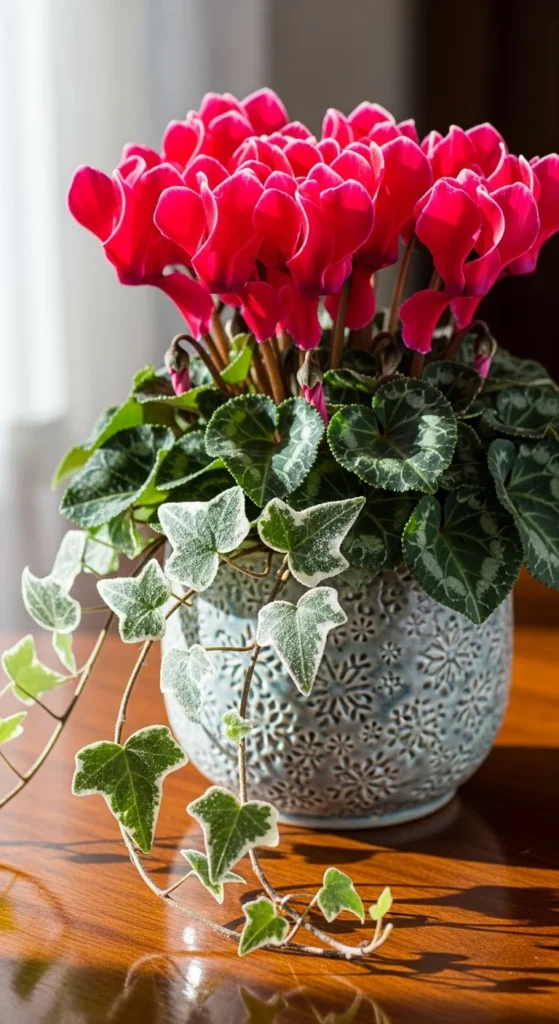
Red cyclamen brings bright petals that stand out instantly. Pair it with frosted ivy for trailing movement and a soft winter look. Use a wide, shallow pot to let the leaves spill over the edge. Keep the soil lightly moist and place the pot near a doorway or patio corner. Add small stones on top for a clean finish. If you want more contrast, add a single white cyclamen in the center. This simple setup works well in cold weather.
2. White Pansies With Blue Spruce Tips
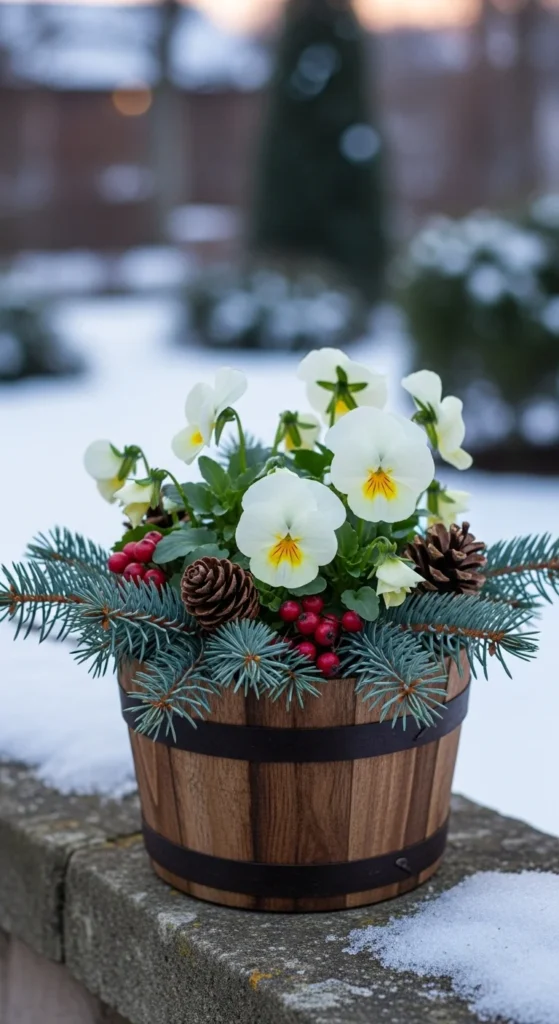
White pansies stay colorful even during colder months. Mix them with short blue spruce pieces tucked into the soil to give a winter forest feel. Choose a round pot to keep the arrangement tight. Keep the soil barely damp and remove any wilted blooms once a week. If your porch has dark décor, this arrangement stands out clearly. Add a light layer of bark chips for texture and to help the planter look finished.
3. Ornamental Kale and Deep Purple Violas
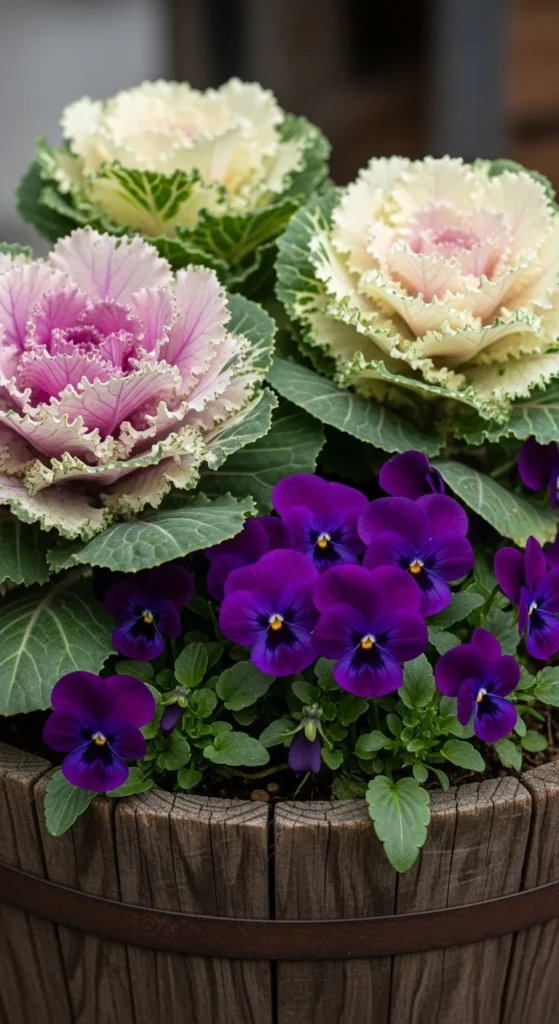
Ornamental kale brings full, leafy texture to winter pots. Place one large kale plant at the center and surround it with deep purple violas. This pairing gives rich color without heavy maintenance. Use a medium-tall planter so the kale stands higher. Water regularly but avoid overfilling. If you want an extra touch, sprinkle a small amount of white gravel on the surface. This mix stays colorful in cold temperatures and works great by the main entrance.
4. Winter Heathers in a Stone Pot
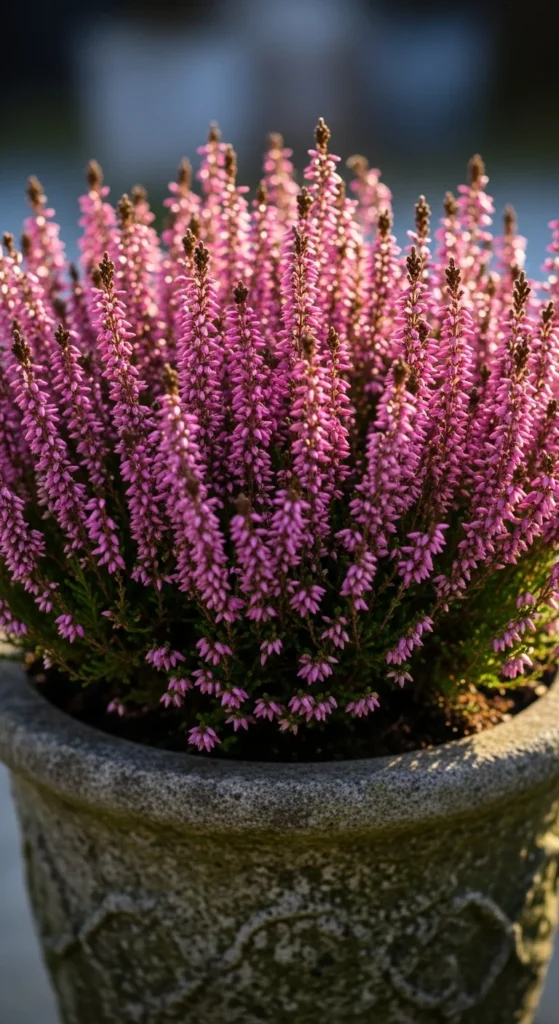
Winter heathers create soft spikes of color that work nicely in clusters. Choose a stone-textured pot to match their natural feel. Plant three heathers of similar height for a balanced look. Keep soil lightly damp and place the pot where it receives bright filtered light. Add small pine cones on the surface if you want seasonal detail. This arrangement works well on patios or stairs, especially when paired with lanterns or wooden décor pieces.
5. Red Primroses With Moss Base
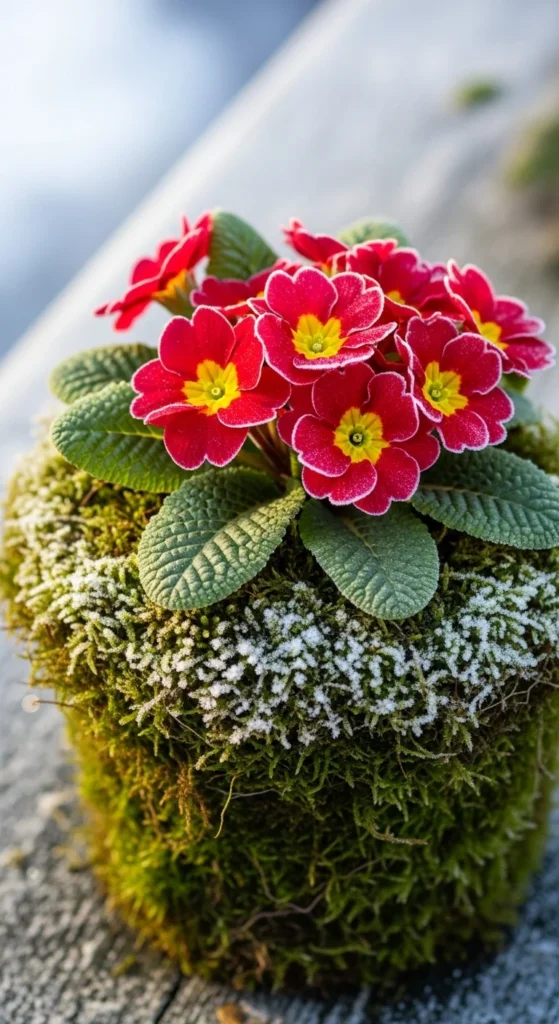
Primroses bring bold color early in the year. Plant them in a wide pot and cover the soil with soft green moss. The moss helps the pot look natural and hides bare soil. Keep the primroses in a shaded area if sunlight feels strong. Water gently to avoid splashing the blooms. This setup works nicely for tabletops or porch steps. If you want more color, mix red and pink primroses in the same pot.
6. Hellebores With Mini Conifers
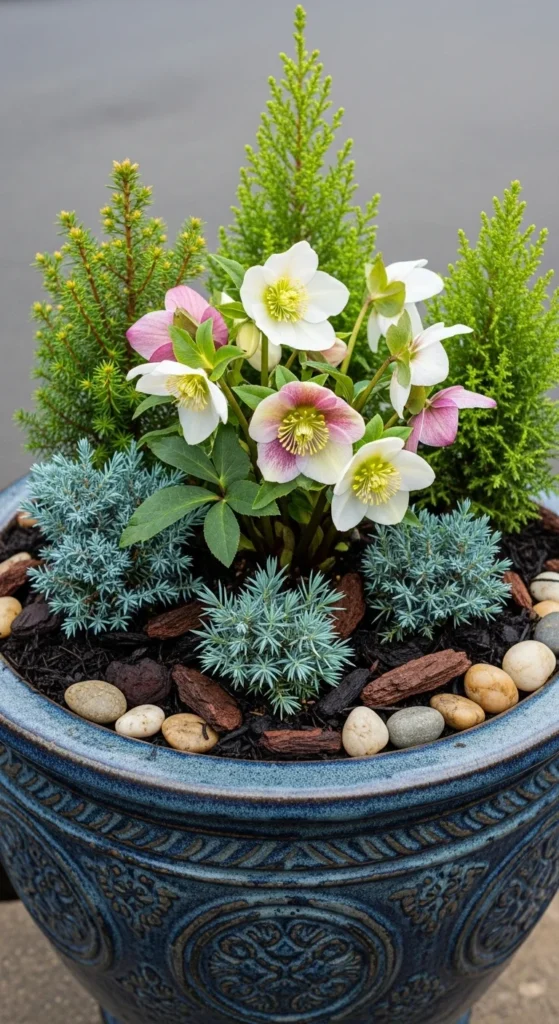
Hellebores add soft winter blooms in shades of white, pink, or green. Combine them with small conifers for height contrast. Place the hellebores in front and the conifer toward the back of the pot. Keep the soil evenly moist. Add bark mulch on the surface for a tidy finish. This arrangement looks great beside entry doors or windows. If the conifer starts growing tall, trim lightly to keep the shape controlled.
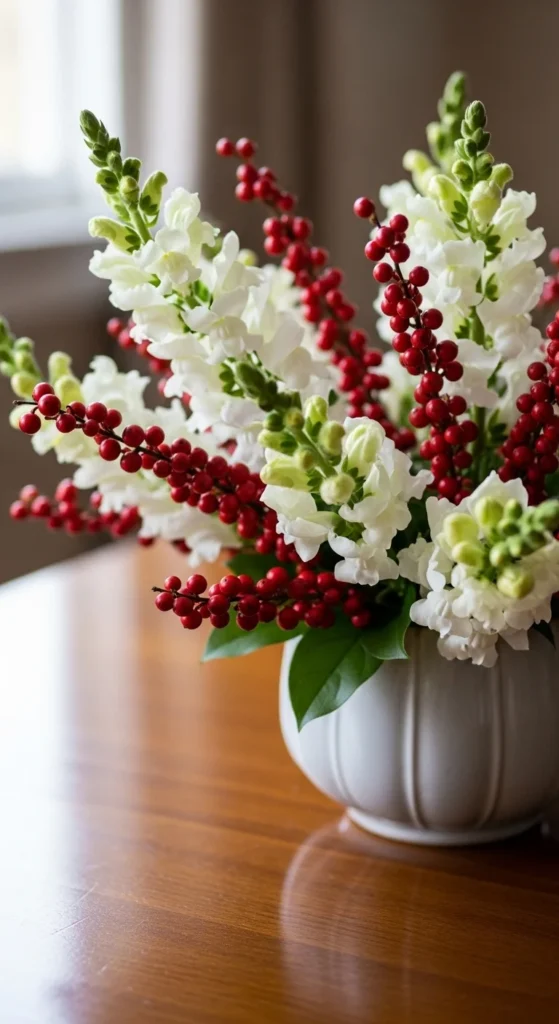
7. White Snapdragons With Berry Stems
]
Snapdragons add tall lines to a winter pot. Choose white ones for a clean New Year vibe. Insert artificial or real berry stems into the soil for contrast. Keep the pot in a bright spot and water mildly. If temperature drops sharply, place the pot near a wall for extra warmth. Add small wood slices or stones at the base for style. This pairing works beautifully on balconies with neutral décor.
8. Winter Camellias in a Deep Ceramic Bowl
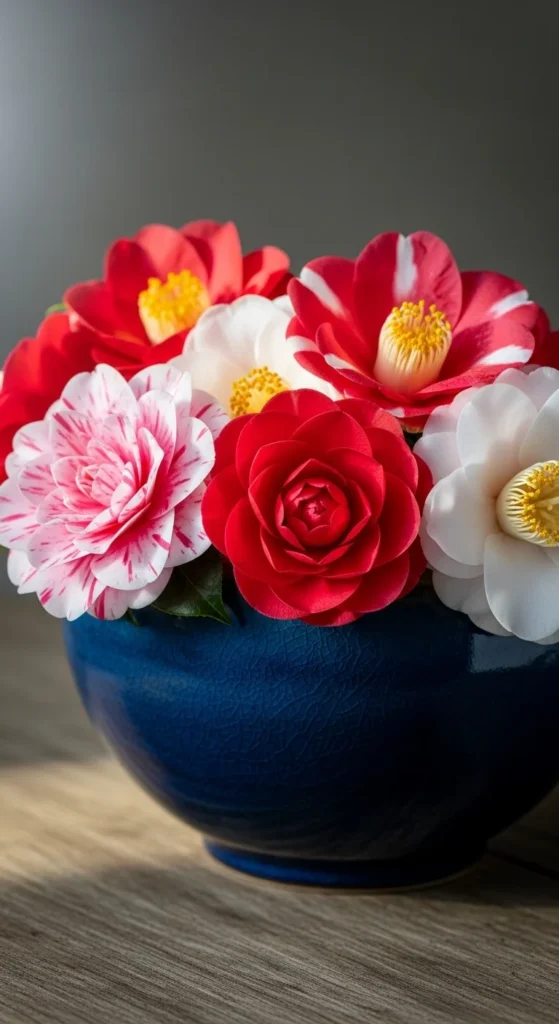
Winter camellias create a charming container display with their large blooms. Use a deep ceramic bowl and plant one camellia slightly off-center. Add trailing ivy or creeping jenny to soften the edges. Keep the soil consistently moist and place the pot in a sheltered area. Camellias pair well with natural materials like wood or stone. If you want a bold color contrast, choose a dark-colored bowl to highlight the blooms.
9. Dwarf Roses With Evergreen Sprigs
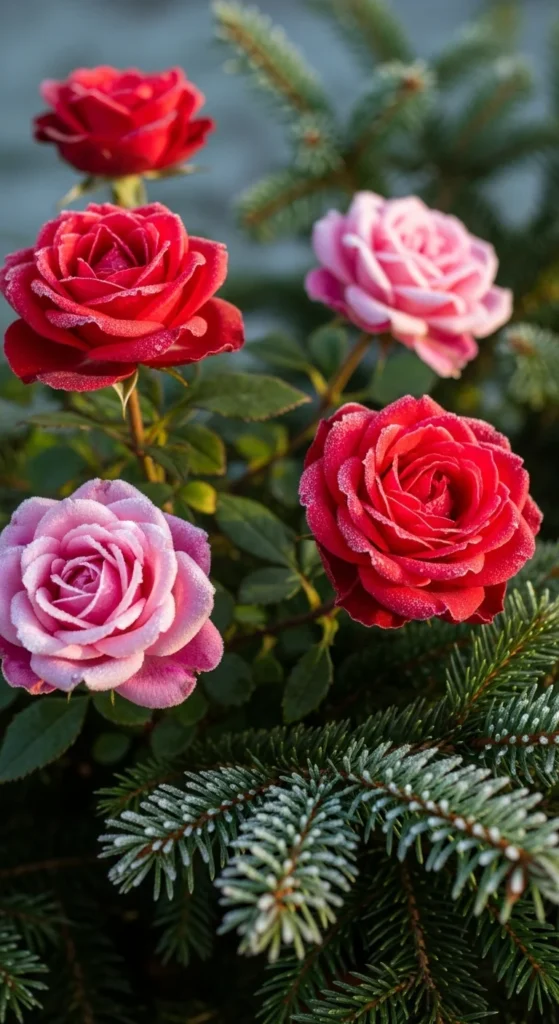
Dwarf roses bring color even during colder periods if placed in a protected space. Use evergreen sprigs between the roses to create volume. Keep the soil damp but not soaked. Place the pot in a bright but covered area such as a porch corner. If petals appear stressed by cold, move the pot closer to the house wall. Add a light layer of sand on the surface for drainage and a neat finish.
10. Viburnum Blooms With Pine Branches
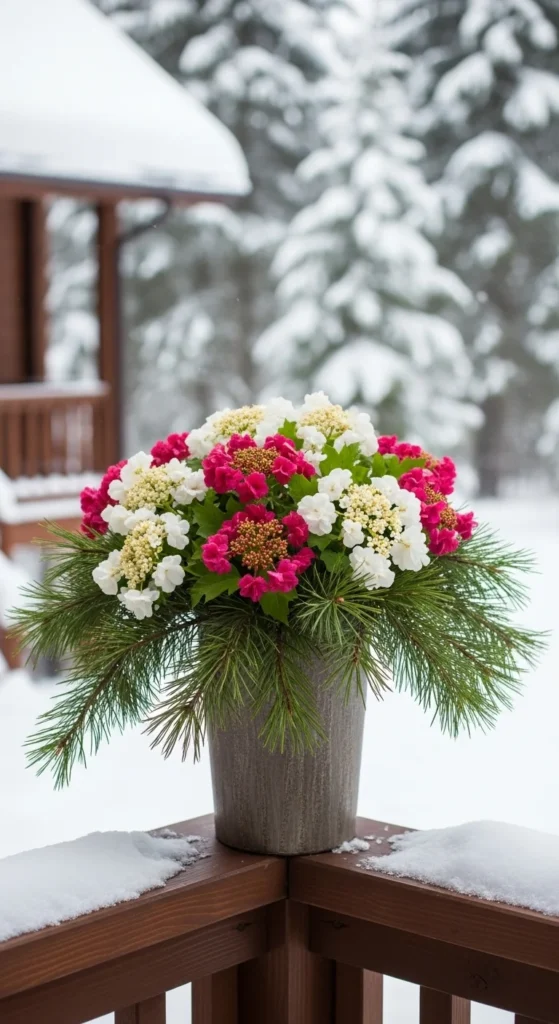
Some viburnum varieties flower in winter, creating soft clusters of pink or white. Pair them with pine branches for height and fragrance. Use a tall container to show off the shape. Keep the soil evenly moist and trim any wilted blooms. This arrangement looks striking beside stair railings or porch posts. For simple styling, wrap the pot with jute rope or place it inside a woven basket.
11. Winter Jasmine With Snow-Drop Flowers
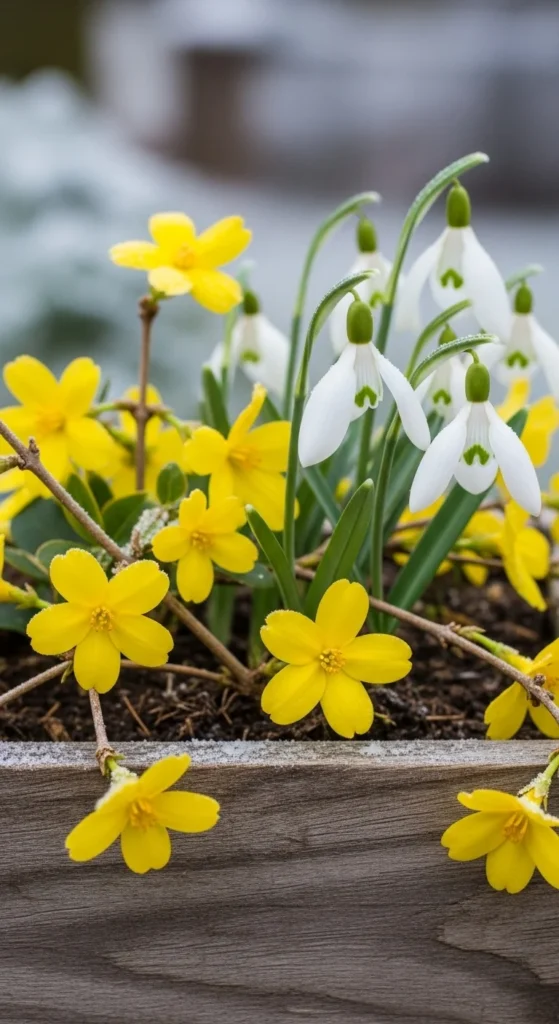
Winter jasmine offers bright yellow blooms that stand out in colder months. Combine it with snow-drop flowers for a soft accent. Let the jasmine drape slightly over the pot edges. Keep the soil damp and place the pot where it receives moderate light. If you want more color depth, add dark stones on the soil surface. This arrangement works nicely for garden entrances or outdoor tables.
12. Calendulas With Silver Dusty Miller
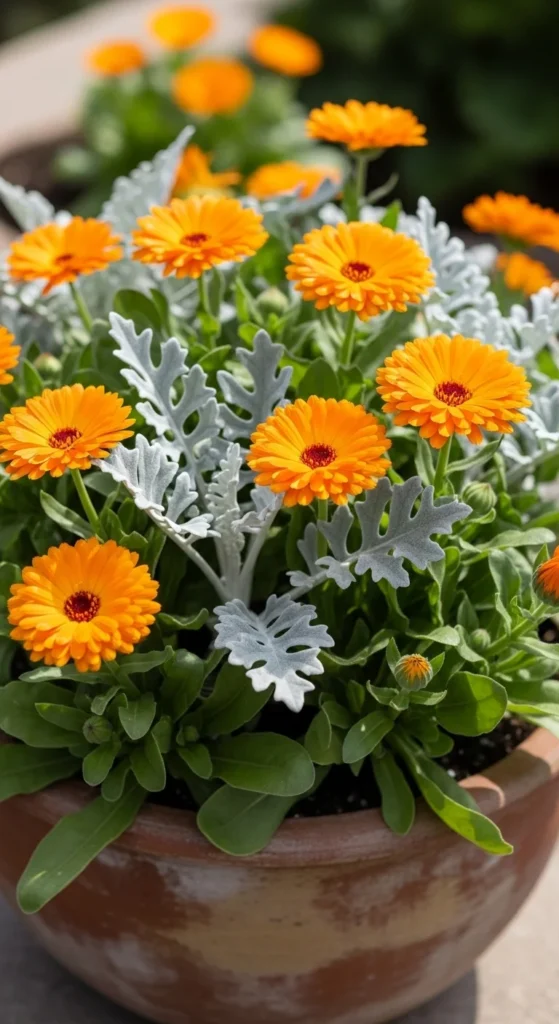
Calendulas give warm orange tones that shine in winter light. Pair them with dusty miller for soft silver leaves. This mix creates strong contrast without requiring complex care. Use a medium pot and plant calendulas toward the center. Keep the soil lightly moist. If the pot feels plain, add a small ring of white gravel for brightness. This setup works well for balconies or window ledges.
13. Purple Stock With White Alyssum
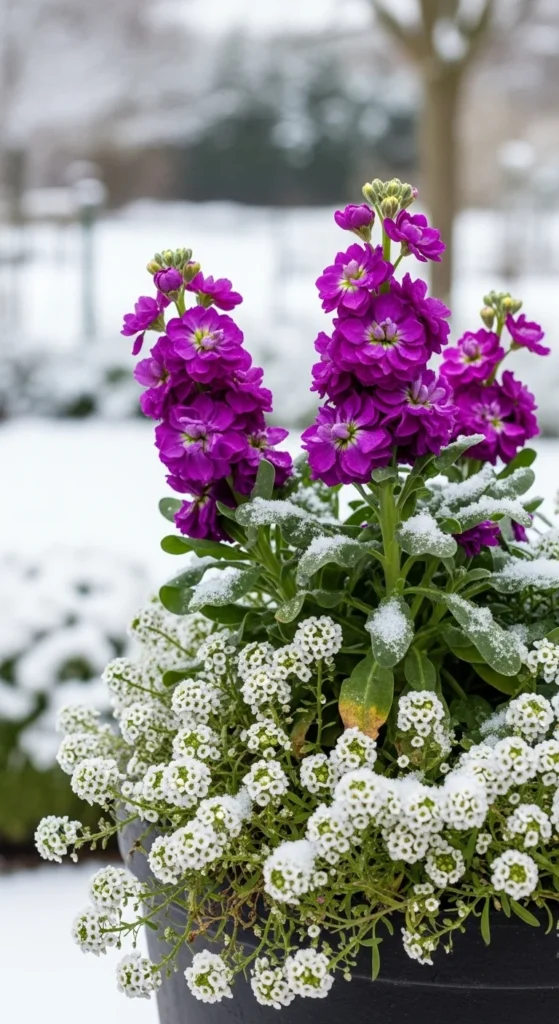
Purple stock brings height while white alyssum fills the base with color and fragrance. Use a tall planter to give the stock space to stand upright. Plant alyssum around the edges for a soft cascade. Keep soil evenly damp. This mix works great near entryways where guests can enjoy the scent. Add a small border of wood chips on the soil surface to keep the pot looking orderly.
14. Winter Dianthus in a Wooden Crate
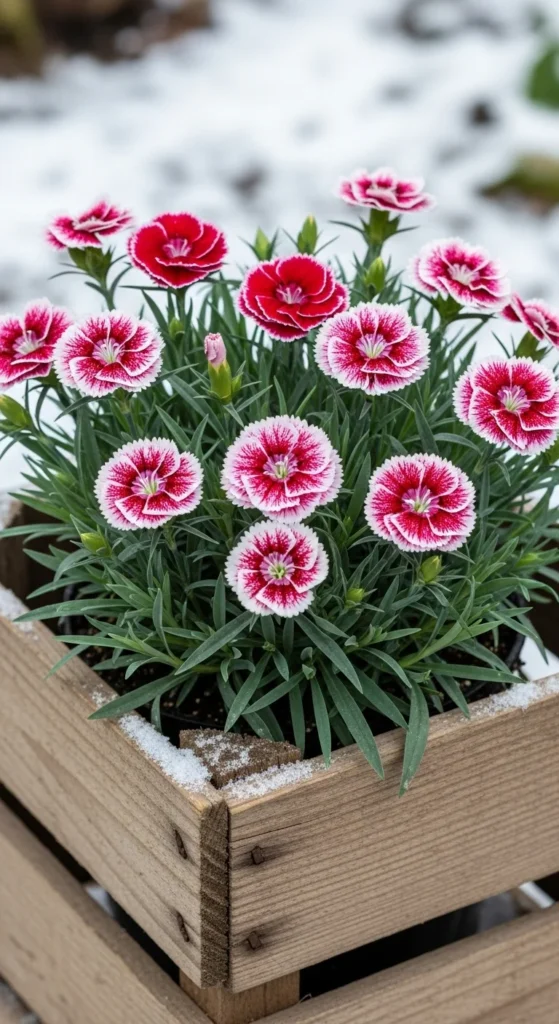
Winter dianthus adds long-lasting color even through cooler months. Use a wooden crate as a container for a rustic winter look. Add a plastic liner inside the crate to protect the wood. Keep the soil slightly damp and remove faded blooms regularly. If you want added detail, place small pine cones or twigs around the surface. This container works well on porches or balconies with natural décor themes.
15. Bergenia With Winter Grass
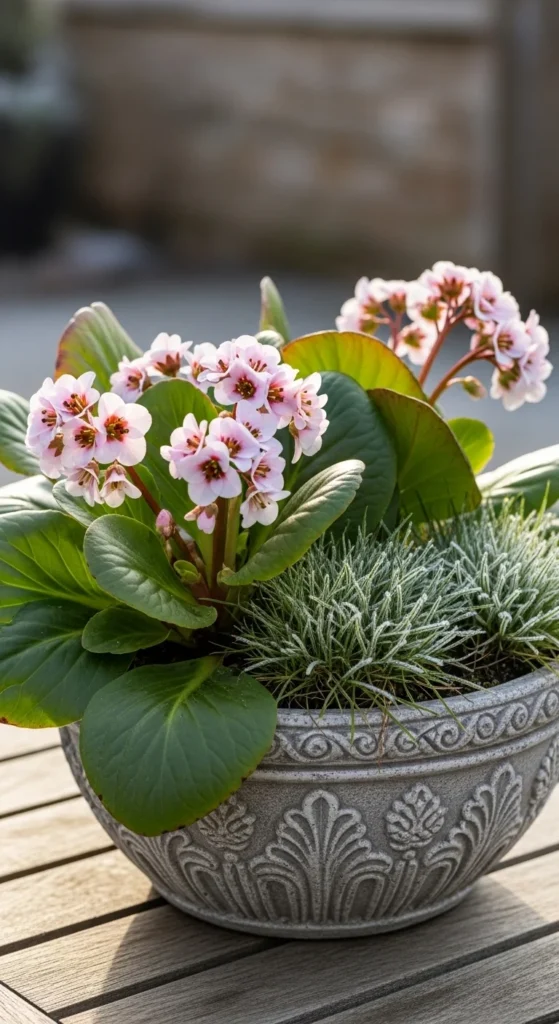
Bergenia offers large leaves and winter blooms that stand out. Combine it with small clumps of winter grass for movement. Use a wide, shallow pot to show off the foliage. Keep the soil evenly moist and place the pot where it gets morning light. Add a thin layer of bark chips on the surface for a clean look. This arrangement suits patios, doorsteps, and shaded porches.
16. Snowdrops With Mini Boxwood
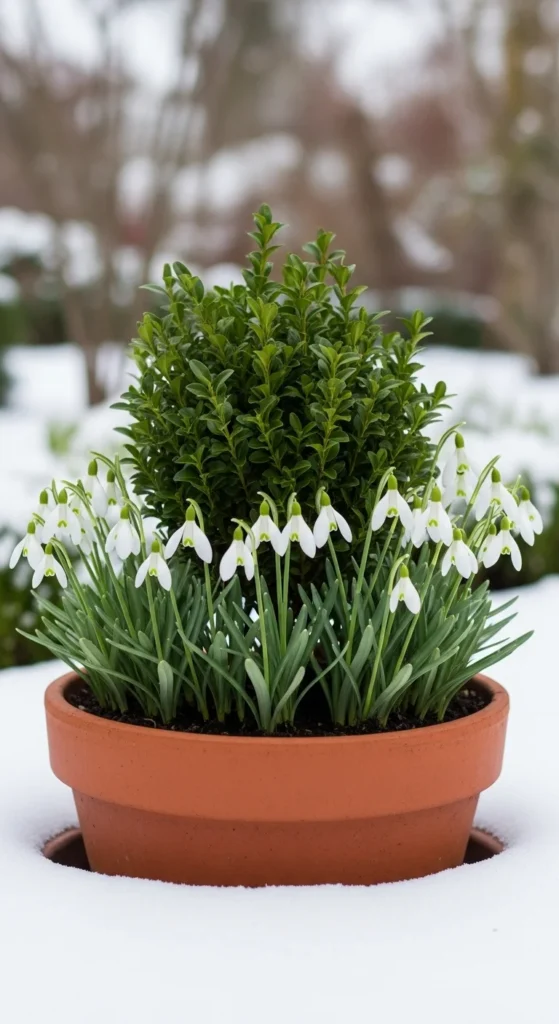
Snowdrops bring delicate winter blooms, while mini boxwood adds structure. Place the boxwood in the center and surround it with snowdrops. Use a round pot to keep the arrangement balanced. Water lightly. Add a moss layer on the soil to hide gaps. This combination looks great near stairways or outdoor seating areas. If you want extra height, place the pot on a pedestal.
17. Winter Geraniums With Trailing Thyme
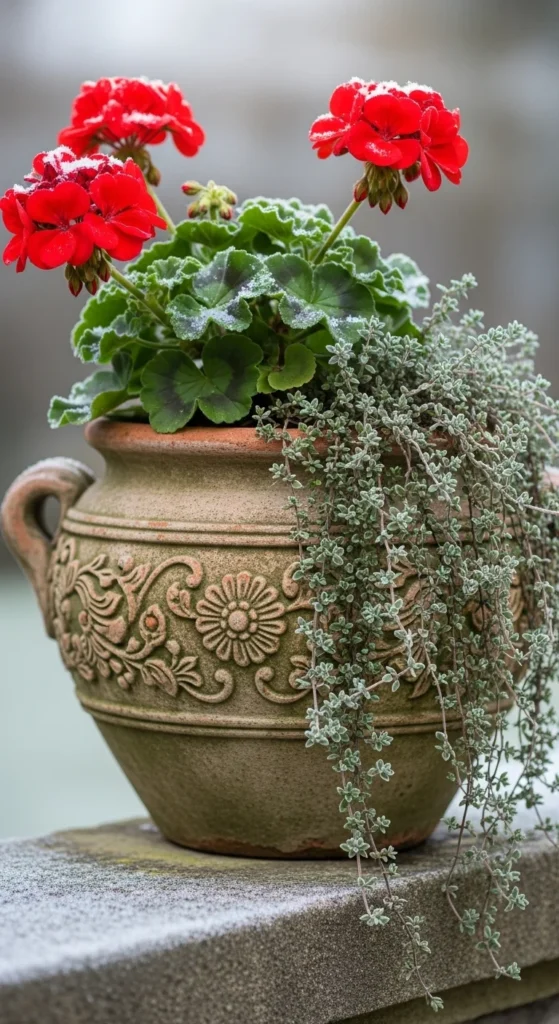
Some geranium varieties stay colorful in protected winter spaces. Mix them with trailing thyme for texture. Choose a medium pot so the thyme can spill naturally. Water gently and place the pot where it receives steady light. Add small decorative stones if you want to brighten the soil surface. This arrangement works well for covered balconies or enclosed patios.
18. Potted Hyacinths With Evergreen Spears
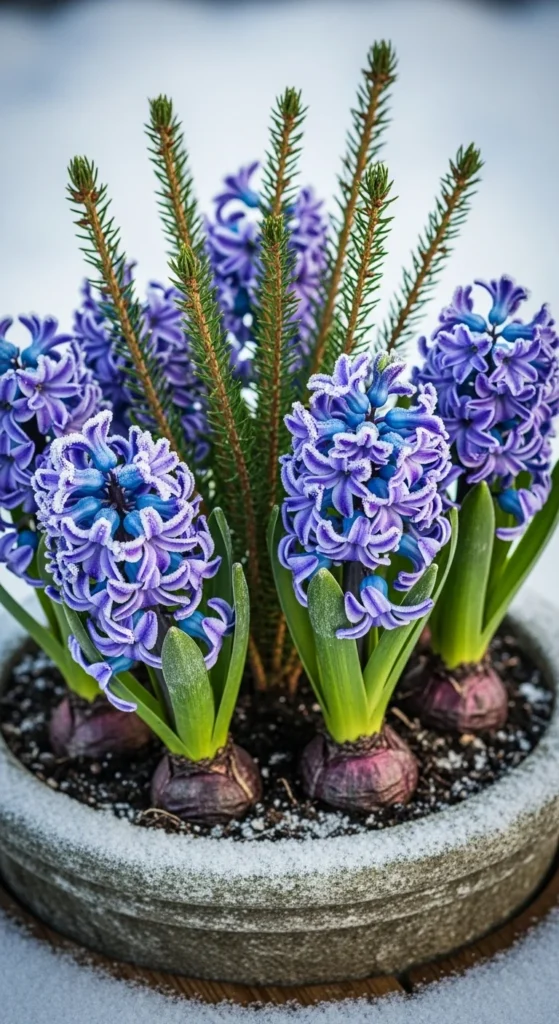
Hyacinths bring strong color during colder months. Combine them with evergreen spears or cuttings to add height. Keep the pot in a cool, bright area. Water regularly but avoid soaking the bulbs. Add small pebbles around the surface for a tidy appearance. The scent and color make this a good choice for entry tables or balcony shelves.
19. Red Begonias With Frosty Sedum
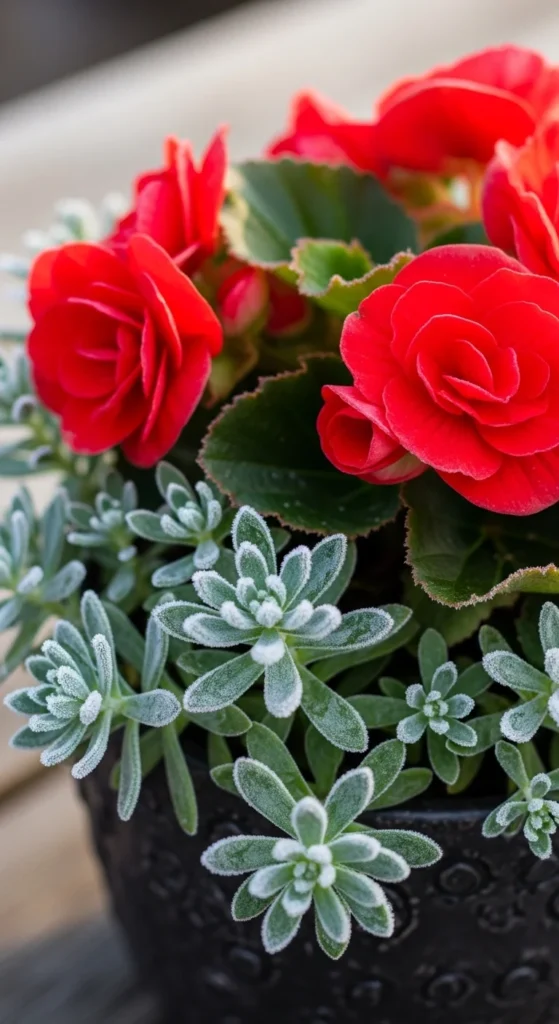
Winter begonias can thrive in sheltered areas. Pair them with sedum varieties that have frosty tones. Use a medium pot and plant begonias toward the center. Keep soil lightly moist. Add coarse sand around the edges to support drainage. This setup stands out against dark outdoor furniture. Place it where it gets soft light during the day.
20. Winter Viburnum With White Hyacinthoides
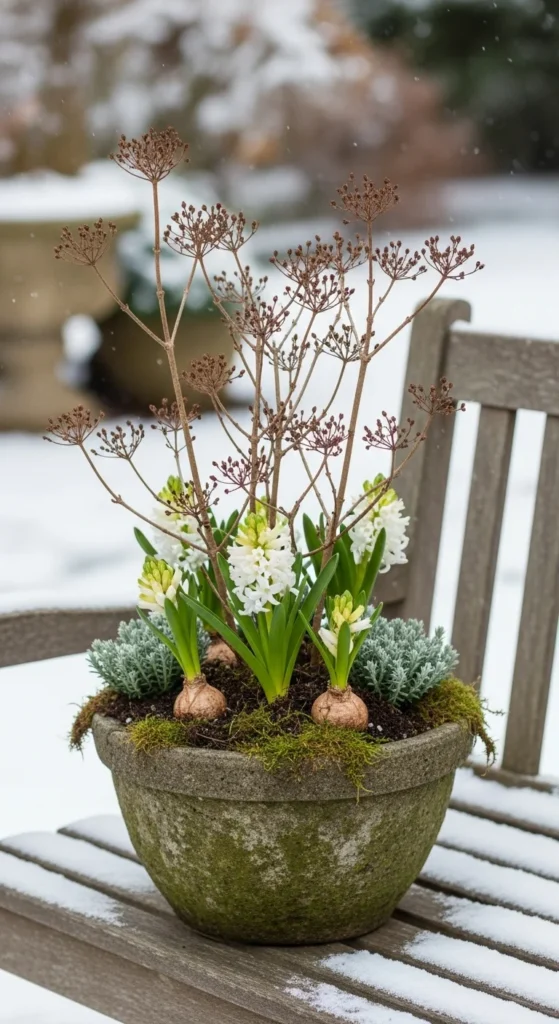
Viburnum stems bring height and structure. Hyacinthoides add soft white blooms at the base. Use a tall planter with rich soil. Keep the pot in a protected corner. Water when the topsoil feels dry. Add a small moss layer on top if you want a natural finish. This pairing works nicely near porches or pathways.
21. Winter Azaleas With Grass Tufts
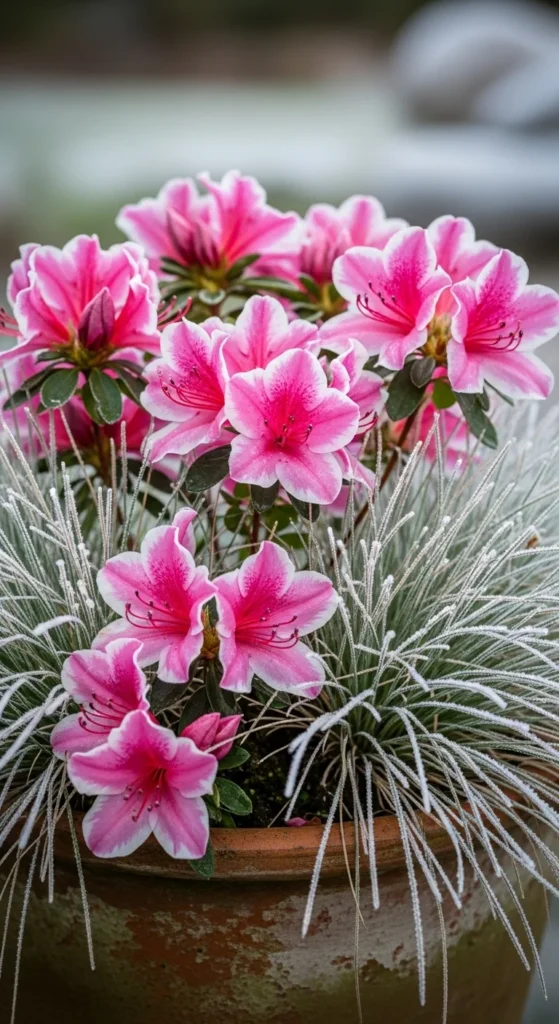
Winter azaleas bring color that lasts through colder days. Pair them with small grass tufts for movement and contrast. Place the azaleas in the center and the grass around the edges. Keep the soil evenly moist. If the pot feels plain, choose a glossy container to add shine. This arrangement looks great near doors, patios, or window edges. Trim lightly if blooms begin to fade.
Conclusion
Winter container arrangements add life during colder months, giving patios and entryways a strong visual presence when other plants fade. By mixing structure, color, and texture, you can create displays that stay bright through the New Year. Each idea above works in small or large spaces and uses easy-care flowers that handle cold conditions. Pick your favorite combinations, place them where the light feels right, and enjoy bold color even on the chilliest days.
Leave a Reply