

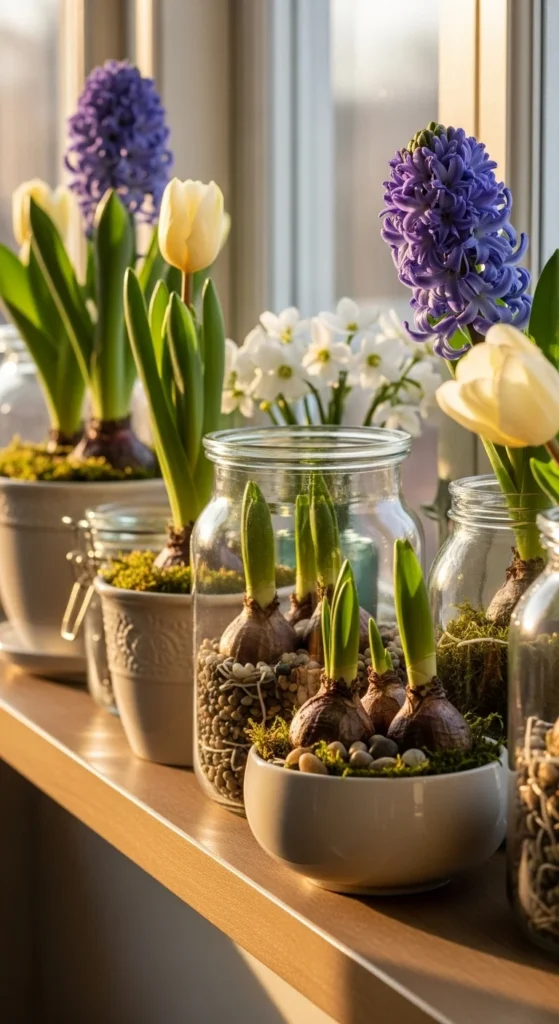
Winter doesn’t have to be dull when your home can burst into bloom before spring even arrives. Forcing bulbs indoors is a simple, charming way to bring color, fragrance, and life into the coldest months. Whether you love the scent of hyacinths or the elegance of tulips, these ideas show how to turn ordinary bulbs into extraordinary winter displays. Try one or two setups and surprise guests with living flowers glowing through January light.
1. Force Paperwhites in Pebbles
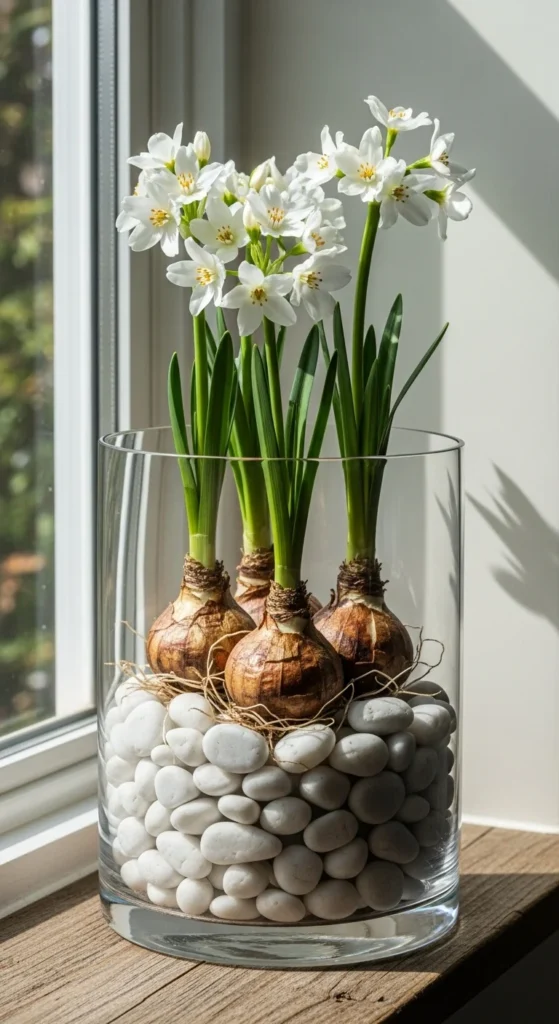
Paperwhites are among the easiest bulbs to start indoors. Place bulbs in a glass vase filled halfway with pebbles. Add water until it just touches the bulb base. Keep them in bright indirect light, and within two weeks, green shoots appear. No soil needed—just regular topping up of water. For fragrance lovers, these tiny blossoms create a gentle, natural scent that fills the room.
2. Chill Tulip Bulbs in the Fridge
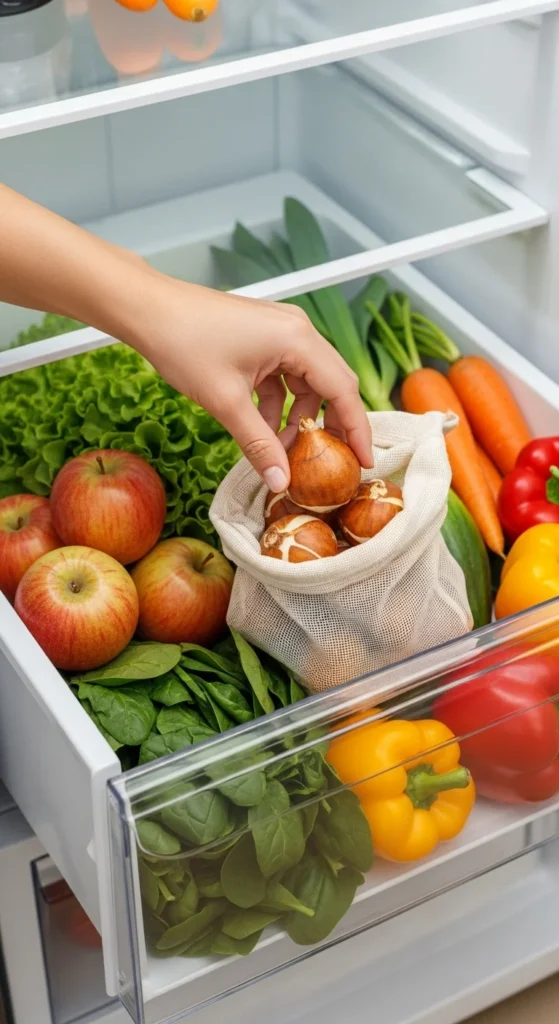
Tulips need a “cold nap” before blooming indoors. Wrap bulbs in a paper bag and refrigerate for 10–12 weeks. Avoid placing them near fruit—it releases gas that can stop growth. Once chilled, plant bulbs in pots of moist soil, water lightly, and set near sunlight. Within a few weeks, you’ll have full blooms that look like early spring arrived inside.
3. Try Hyacinths in Water Jars
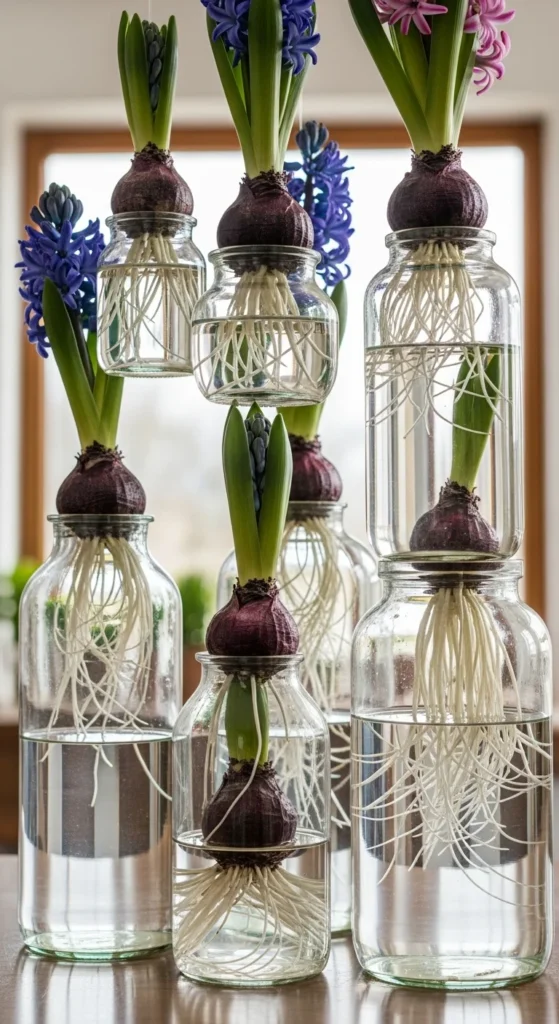
Hyacinths are showstoppers when grown in glass bulb vases. Fill with water just below the bulb’s base. Keep them in a cool, dark area for two weeks, then move to light. As the roots reach down, stalks shoot up quickly. The rich scent fills a room effortlessly. Choose purple or pink varieties for deeper winter color contrast.
4. Grow Amaryllis on the Windowsill
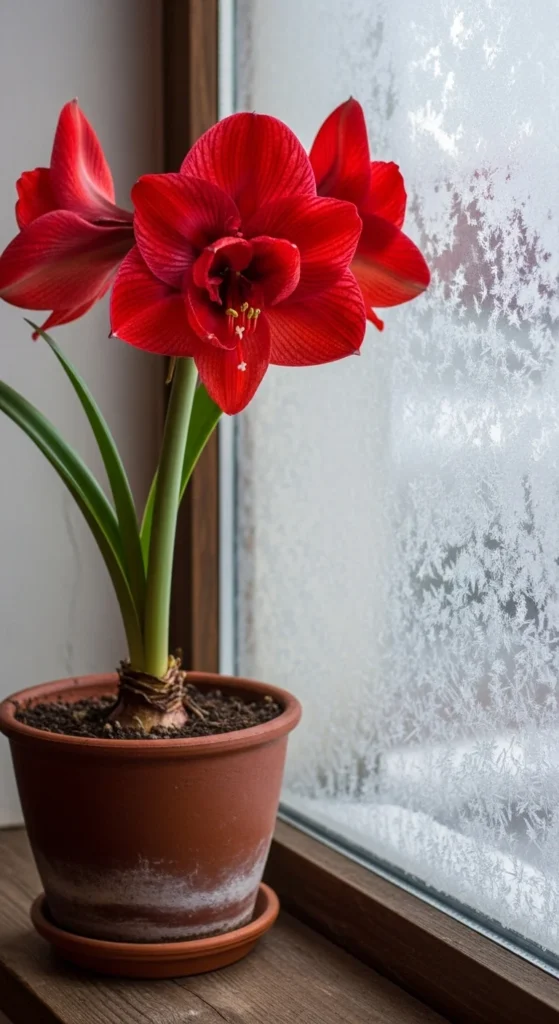
Amaryllis bulbs bring bold color to winter decor. Plant each bulb halfway into moist potting soil. Water lightly until growth appears. They prefer warmth and sunlight, so a south-facing window is perfect. Within four to six weeks, you’ll have grand red or white trumpet blooms that impress any visitor.
5. Use Mason Jars for Mini Daffodils
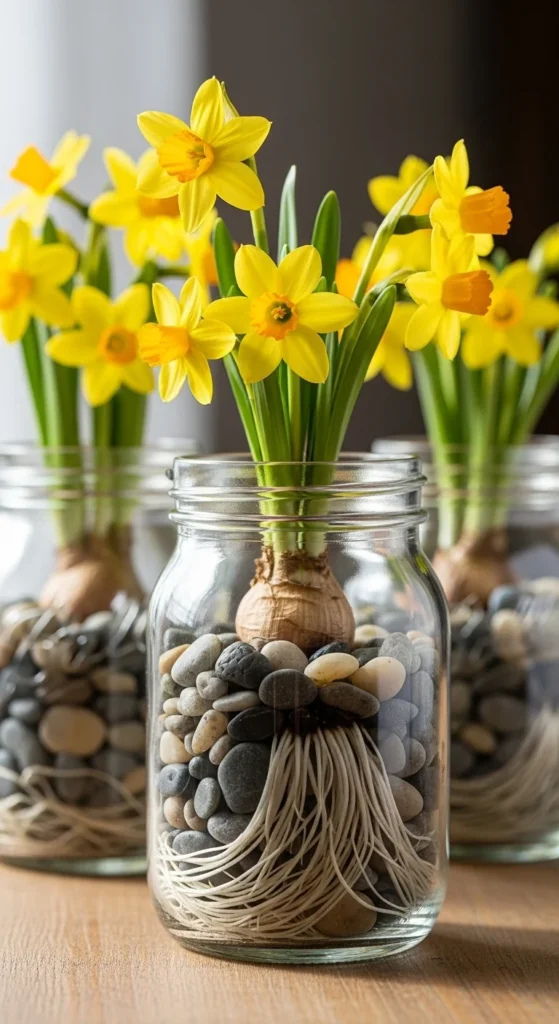
Mini daffodils like ‘Tête-à-Tête’ are compact and ideal for glass containers. Line the jar with gravel, add bulbs, and pour in water to touch the bottom. The transparency shows off root growth beautifully. Their cheerful yellow petals light up gray mornings with almost no effort.
6. Force Crocuses in Shallow Bowls
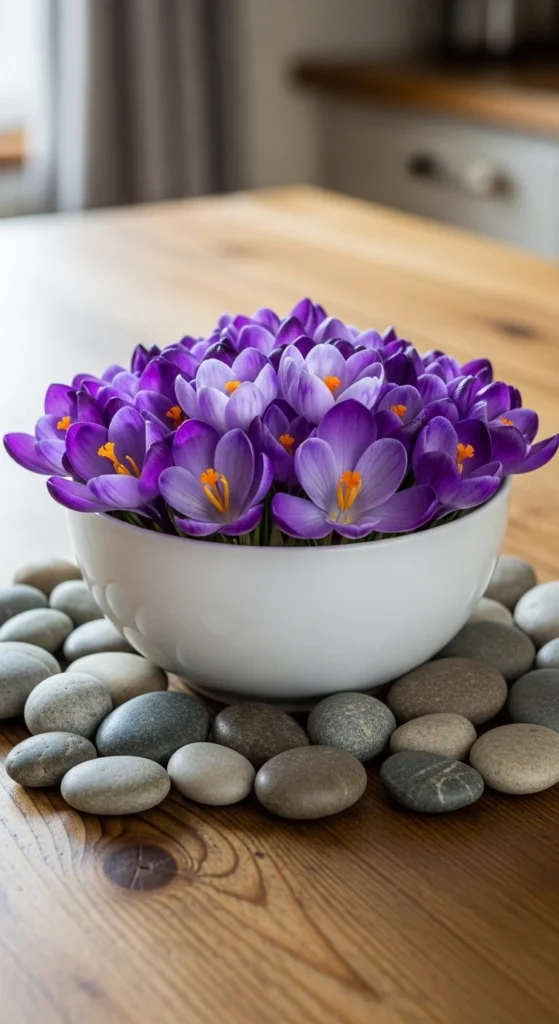
Crocuses need only a shallow layer of pebbles and a little water. Pre-chill them for six weeks in a dark, cool area, then bring indoors. They’ll reward you with delicate blooms that feel like spring snowdrops. Place them in bright light and enjoy the color transition from pure white to vivid violet.
7. Layer Mixed Bulbs for a “Bloom Wave”
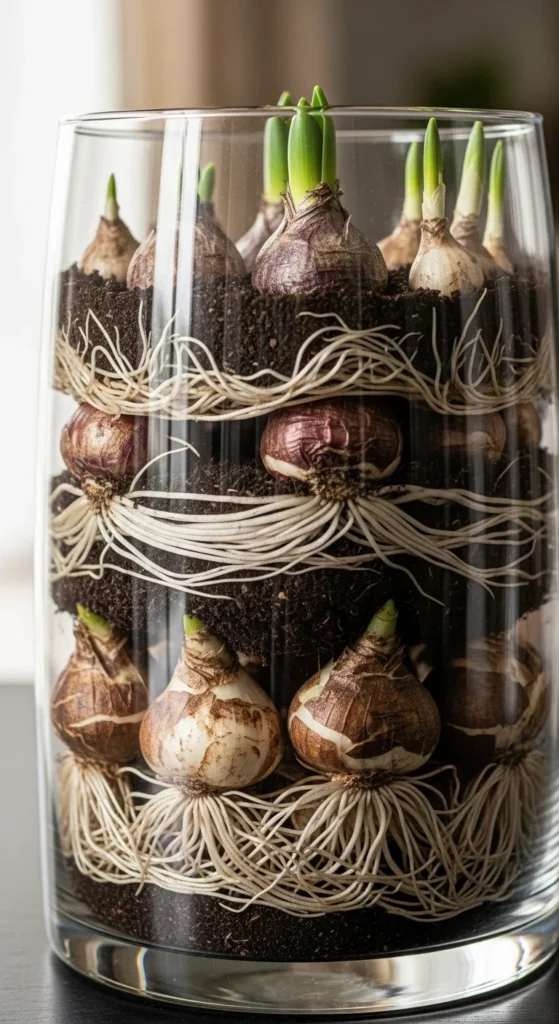
Combine different bulbs in one container for staggered blooming. Layer larger bulbs like tulips deeper, followed by hyacinths and crocuses near the surface. Each will sprout at different times, giving you continuous indoor flowers for weeks. Use wide pots with good drainage and keep soil just damp.
8. Force Grape Hyacinths (Muscari) in Teacups
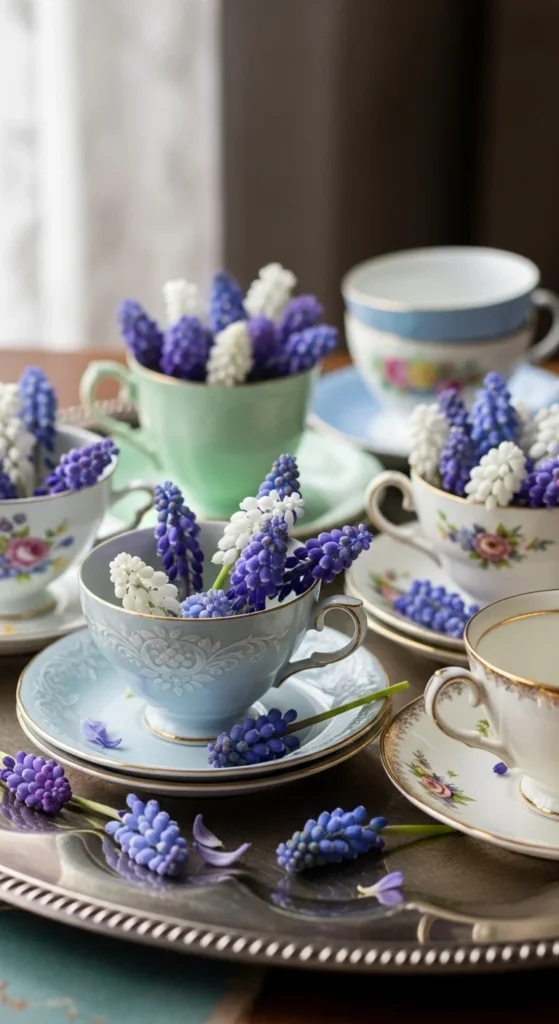
Tiny but striking, grape hyacinths look beautiful in small teacups or shallow bowls. Add pebbles for support and pour in just enough water to touch the roots. Their short stalks and soft scent make them perfect for table displays. Arrange several together for a charming breakfast nook decoration.
9. Try Fridge-Start Iris Reticulata
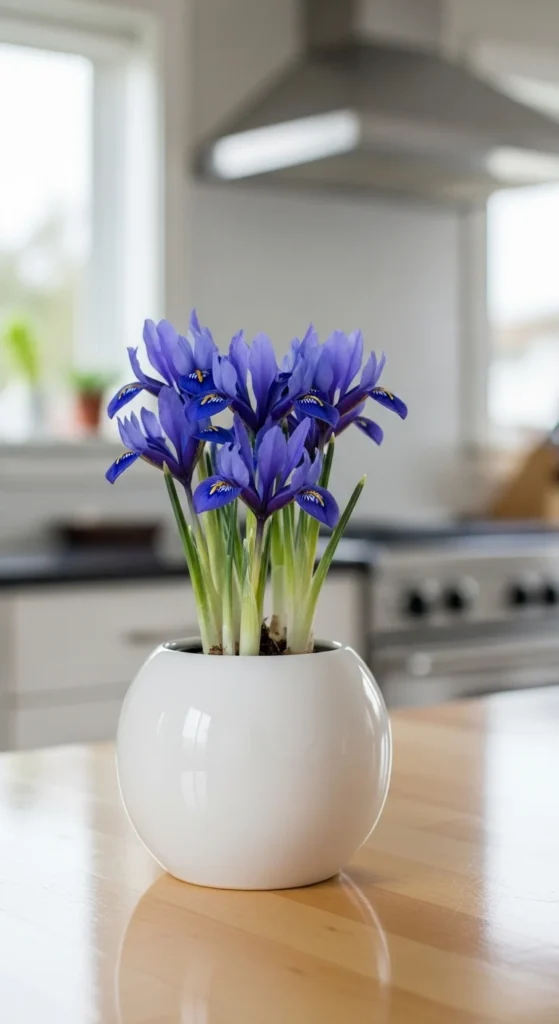
These petite irises require a cooling period of about 8 weeks. After chilling, place in a sunny spot indoors and watch them unfold into intricate blue or violet petals. The compact size makes them ideal for narrow window ledges or office shelves needing a touch of life.
10. Grow Scilla for Soft Blue Blooms
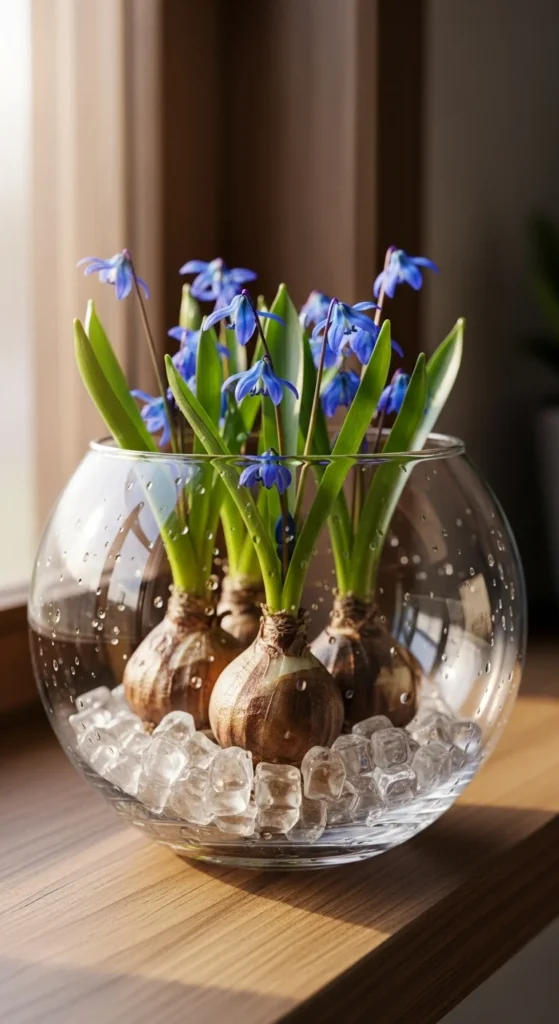
Scilla, or “squill,” offers understated beauty. Chill bulbs, then plant three or four in a pot filled with moist soil. Keep lightly watered and under bright light. They produce clusters of soft blue blooms that work well with minimalist winter decor.
11. Force Dutch Iris in Deep Pots
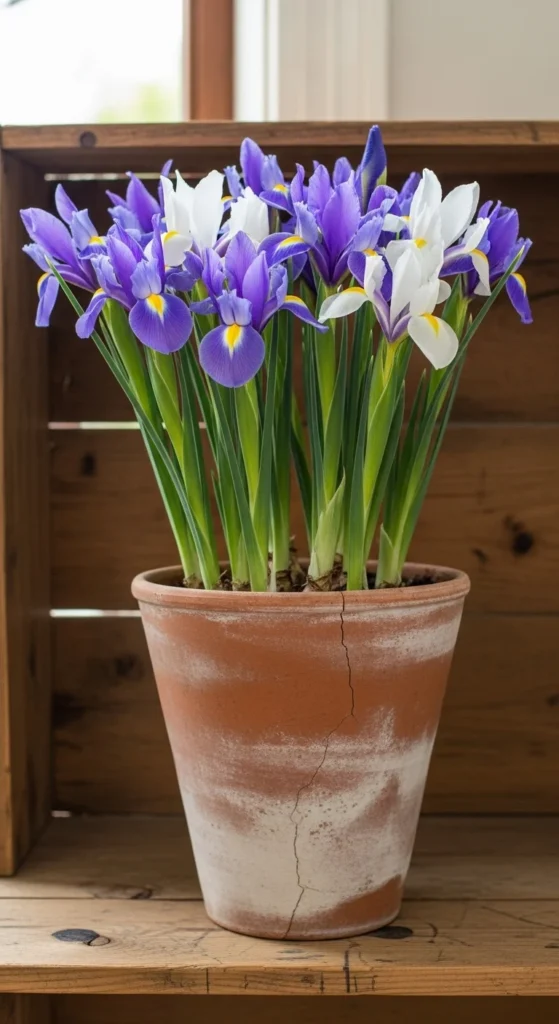
Use deeper pots for Dutch iris to allow root growth. After cooling them for 10 weeks, move indoors and water moderately. Their tall stalks make them dramatic centerpiece plants. Add small pebbles on the surface to stabilize stems and create a polished display.
12. Start Freesia Bulbs Indoors
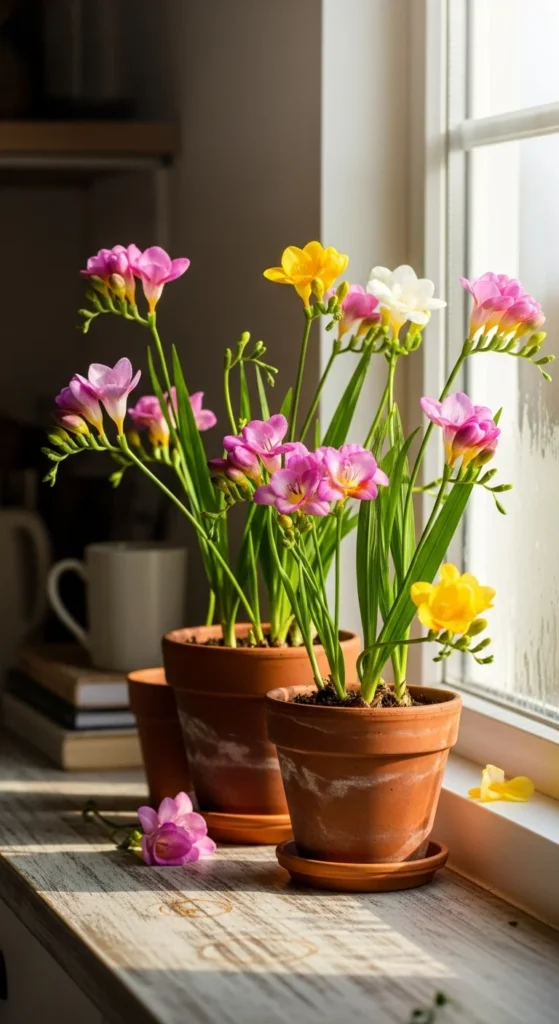
Freesia bulbs bring a sweet citrus fragrance. They grow best in bright indirect light and slightly cool air. Plant bulbs 2 inches deep in well-drained soil, water sparingly, and keep near a bright window. Their elegant, arching stems and scent make them lovely for winter tables.
13. Try Forcing Lily of the Valley
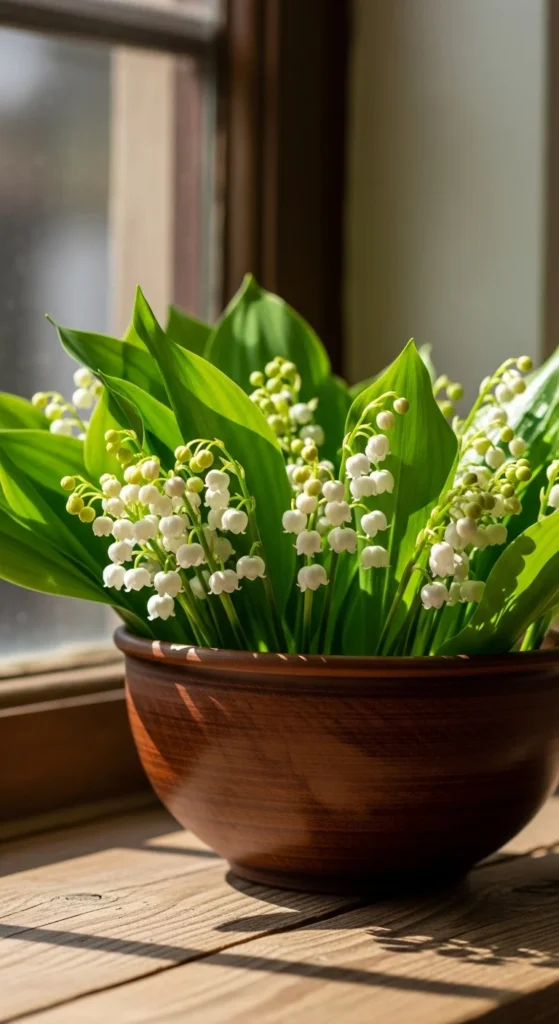
Although small, lily of the valley bulbs (pips) can bloom indoors by late winter. Keep them in moist soil at room temperature. They send out green leaves first, followed by clusters of tiny white bells. Their soft perfume creates a classic cottage charm even when snow still covers the ground.
14. Use Hyacinth Vases for Color Displays
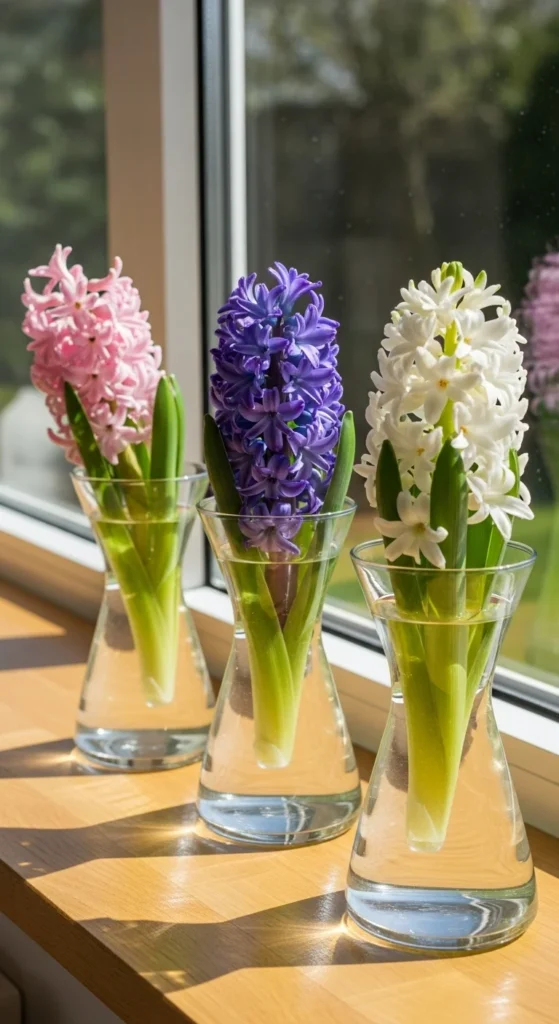
If you love color variety, line up several hyacinth vases in different shades. The translucent roots and bright flowers together look artistic. Replace the water weekly and rotate positions for even growth. They make excellent decorative pieces for dining or coffee tables.
15. Force Narcissus ‘Grand Soleil d’Or’
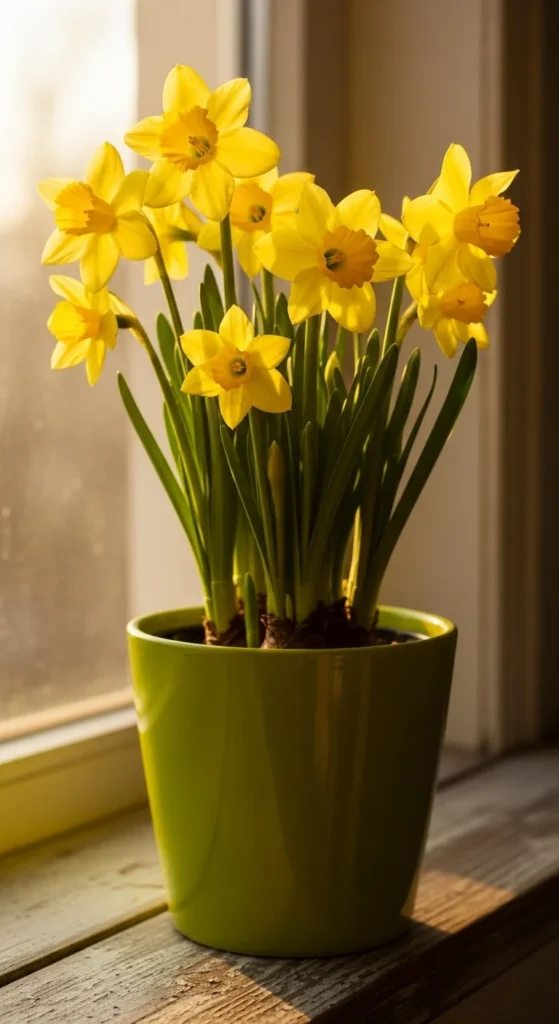
This variety thrives indoors and flowers quickly. Plant several bulbs close together in moist soil, leaving tops exposed. Keep in a cool area for two weeks before bringing into warmth. The result is a full cluster of blooms that outlasts typical paperwhites and brings more color.
16. Use Colored Glass Containers
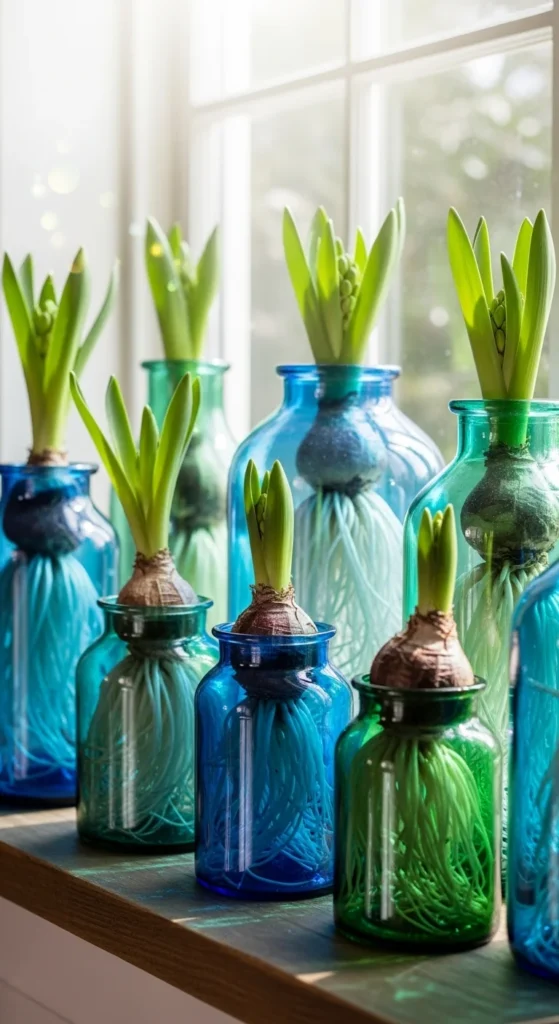
Reusing colored glass jars adds artistic appeal. The light shining through colored glass enhances your indoor garden display. Group jars by hue—blue jars for white blooms, amber jars for yellow. The combination looks intentional and stylish while staying affordable.
17. Create a “Mini Meadow” Pot
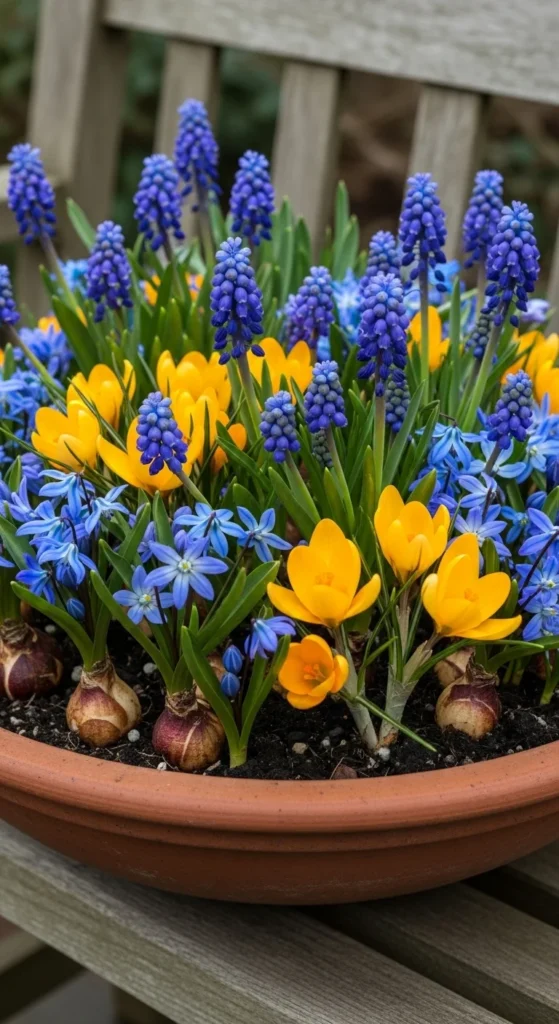
Plant several small bulbs close together for a dense bloom effect. Cover the top with moss for a natural meadow look. When flowers open, the pot resembles a spring patch pulled straight from the garden. It’s perfect for sideboards or kitchen corners that need a bit of life.
18. Try Scented Jonquils
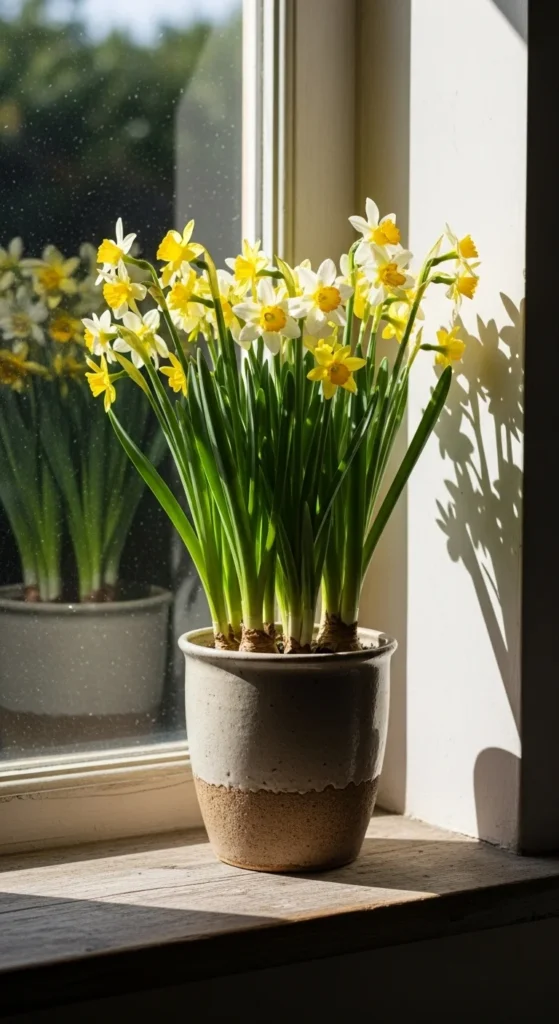
Jonquils are fragrant relatives of daffodils that perform well indoors. Chill bulbs briefly, then plant in moist soil with drainage holes. They bloom fast and offer a subtle citrus aroma. Group several together for visual impact and a clean, sweet scent that carries through rooms.
19. Add Decorative Pebbles or Shells
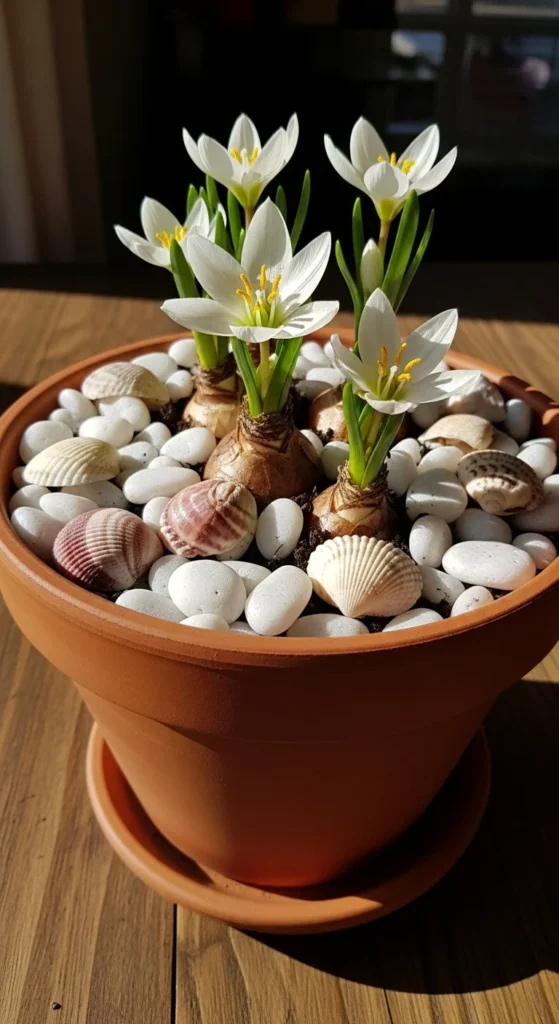
Dress up your containers with surface details. Small white stones or crushed seashells create texture contrast against green shoots. These details make your indoor displays feel intentional and polished without buying new pots or decor. It’s a quick way to make old containers look styled.
20. Force Snowdrops in Ceramic Pots
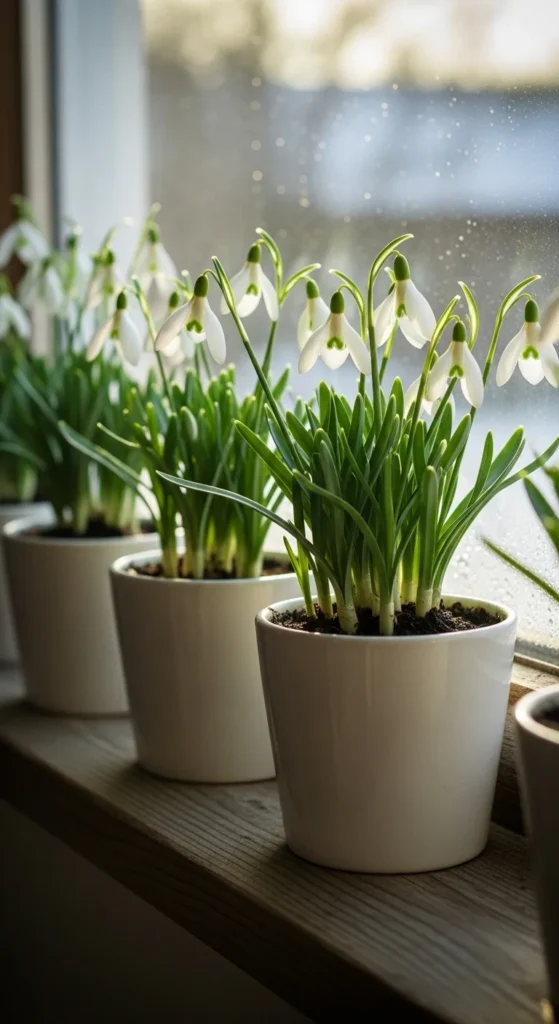
Snowdrops offer delicate beauty that pairs perfectly with minimalist interiors. Chill bulbs, then pot them tightly together. Their graceful drooping blooms look elegant and understated. Keep the soil barely damp, and once the flowers fade, replant bulbs outdoors for next year’s show.
21. Reuse Candle Jars as Bulb Pots
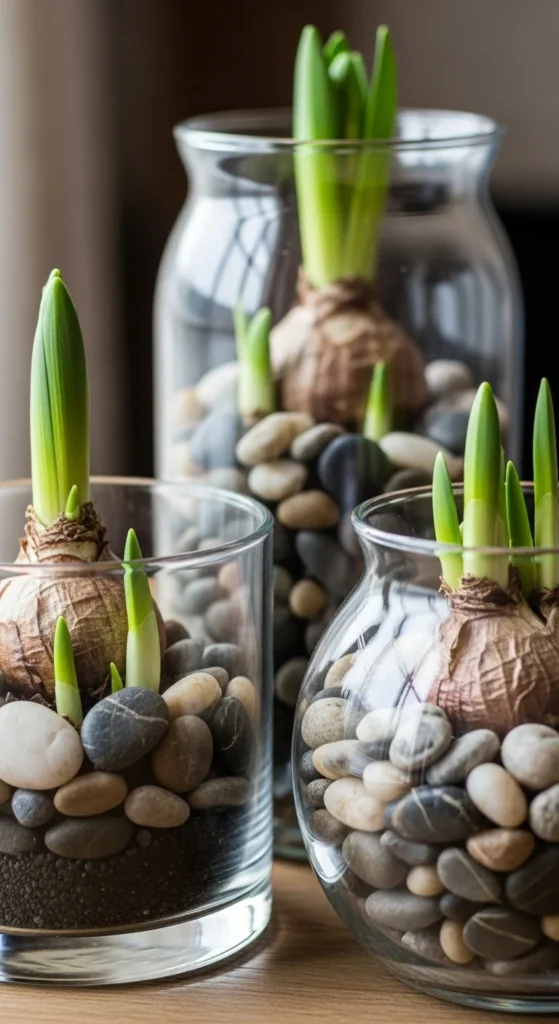
Old candle jars make perfect bulb containers. Clean out wax, add a few stones for drainage, and drop in bulbs. Their compact size fits well on desks or shelves. You can decorate the jar rims with twine for a rustic finish. It’s creative recycling with floral reward.
22. Build a Tiered Shelf Display
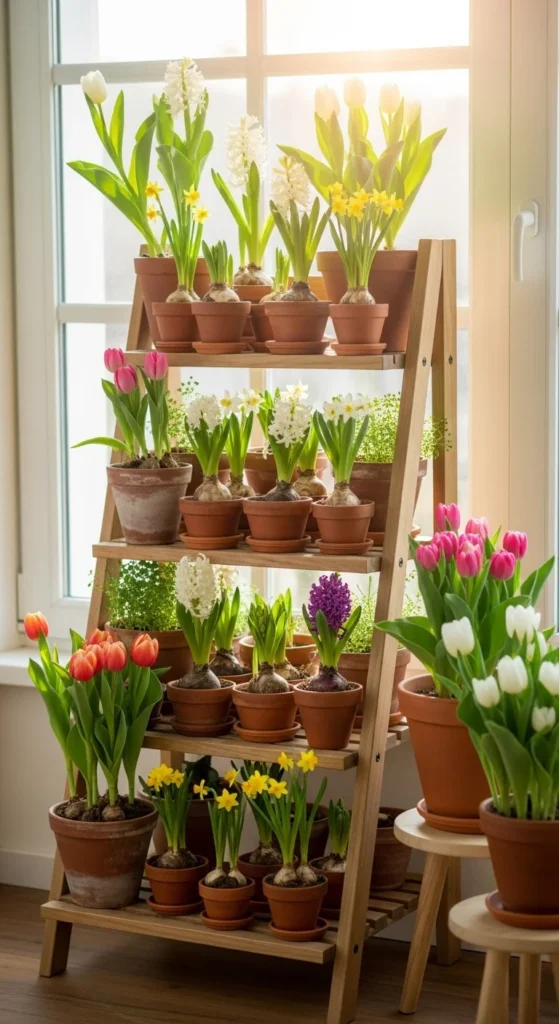
Show off multiple forced bulbs on a tiered shelf for a greenhouse-like feel. Mix heights, colors, and textures to catch light beautifully. A small metal rack or wooden crate stack works fine. The display becomes an ever-changing natural centerpiece as each flower opens.
23. Add Fairy Lights for Evening Glow
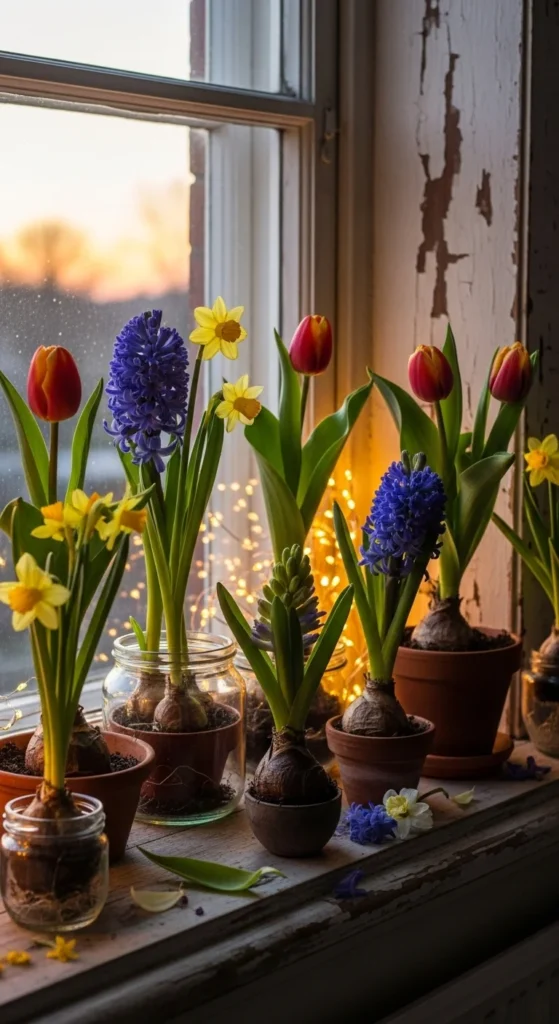
At night, tiny fairy lights around your bulb pots turn your indoor garden into a soft glowing accent. Use battery-operated strings to avoid outlets. The gentle shimmer highlights the shapes and adds warmth to dark winter evenings. It’s simple ambiance using what you already have.
24. Create a Gift Arrangement
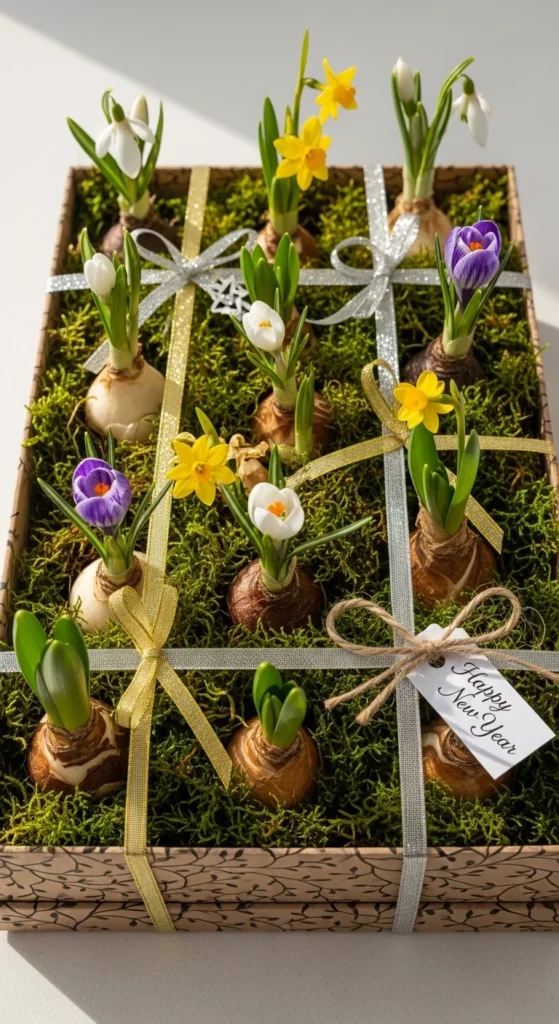
For a thoughtful New Year gift, assemble a small box with blooming bulbs, moss, and a handwritten tag. Forced bulbs make beautiful presents that keep growing long after the celebration ends. Wrap the pot in craft paper or cloth for a natural, elegant look.
Conclusion
Forcing bulbs indoors brings life and color into the quietest season. With simple containers, patience, and light, you can fill your home with flowers weeks before spring. These quick-bloom ideas prove that even in winter, nature’s energy can thrive indoors. Start a few pots this New Year, and let every bloom remind you that warmth and beauty can flourish anywhere—even beside a frosty window.
Leave a Reply