

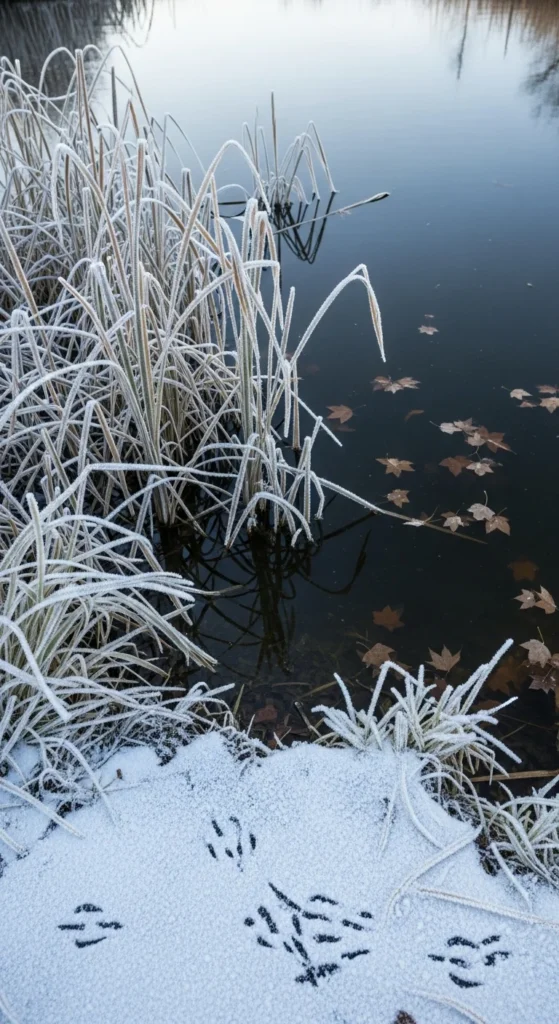
A wildlife pond changes during winter, and small actions can help protect the plants and animals that rely on it. Many pond owners want simple steps that support frogs, insects, birds, and aquatic life during colder months. This list offers practical ideas that steady water quality, prevent full freezing, create safe shelter, and support visiting wildlife. Each idea focuses on easy, low-interference methods that help your pond stay healthy through winter.
1. Keep a Small Area Ice-Free
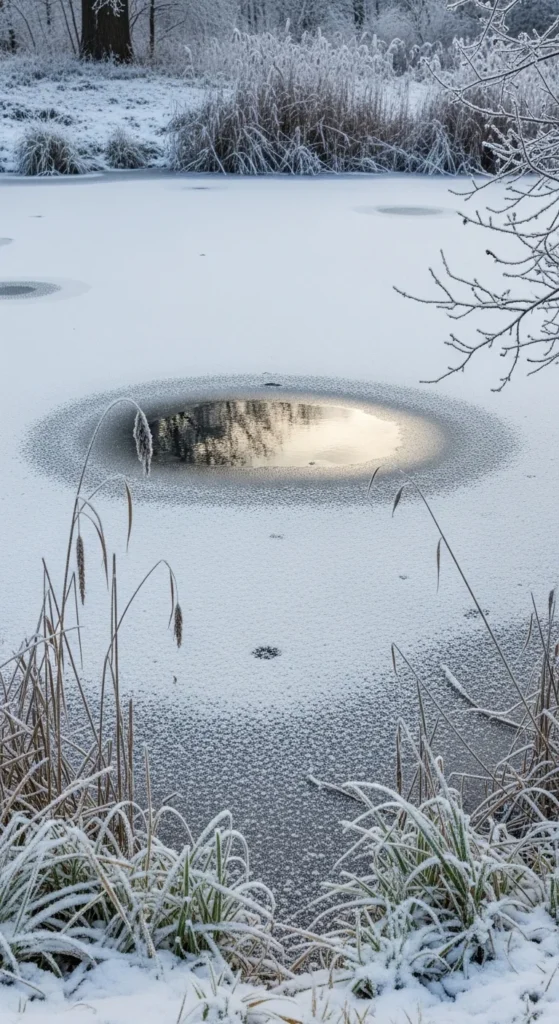
Keeping a small hole open in the ice helps gases escape and keeps your pond life safe. Use a warm kettle (never boiling) to melt a hole gently instead of breaking ice, which can shock fish or frogs. A floating ball can also help prevent full freezing. This simple step supports healthy oxygen levels. Check the opening daily during cold spells. Avoid chemical ice melt, as it can harm pond life. This easy routine helps the pond breathe naturally.
2. Add a Floating Ball Before Freezing Starts
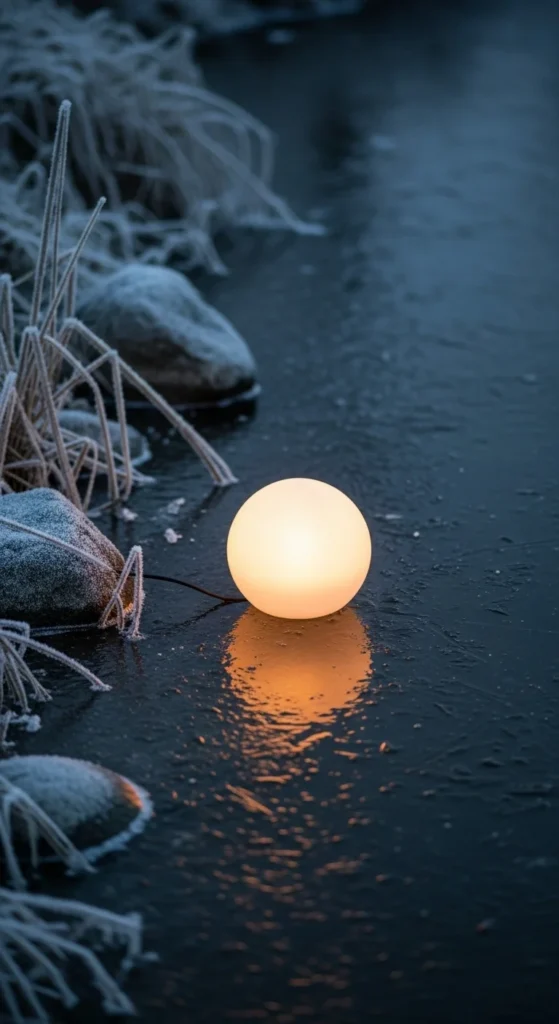
A floating ball helps disrupt ice formation in a small area. Place it in the pond before temperatures drop. When wind moves the ball, it keeps water slightly active. Remove it if ice does form and place it back once the hole is melted. This method helps maintain a small open space for oxygen exchange. It’s simple, inexpensive, and helpful for ponds with fish or frogs that overwinter underwater.
3. Leave Pond Plants Standing for Cover
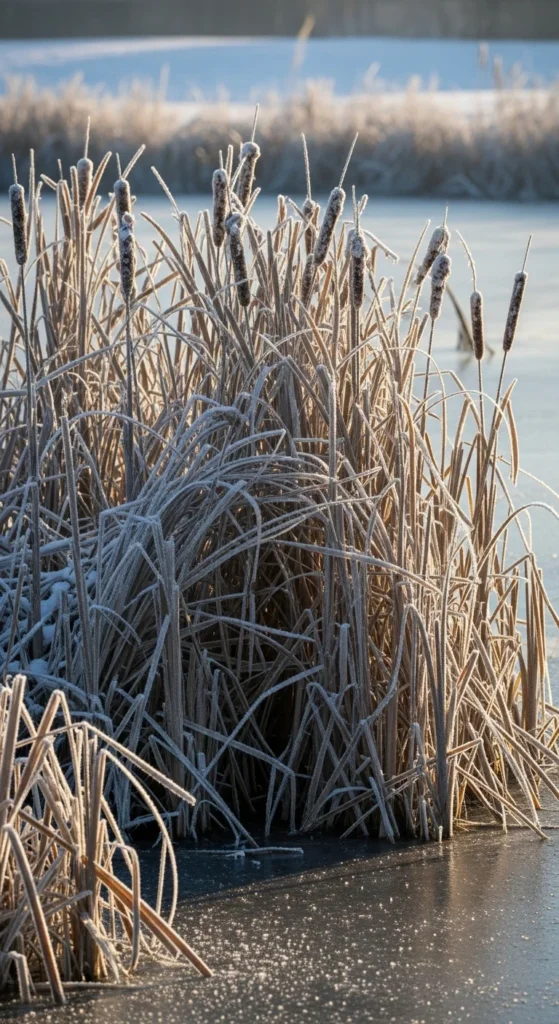
Leaving tall plants such as reeds and grasses standing helps wildlife hide from predators and stay warmer. These plants also trap snow, which creates gentle insulation. Avoid trimming everything flat in late fall. Allow stems to remain until spring. This gives insects, frogs, and small birds shelter. Once spring arrives, trim dead growth to promote new shoots. This natural approach supports wildlife during cold months with almost no effort.
4. Add a Bundle of Sticks for Amphibian Shelter
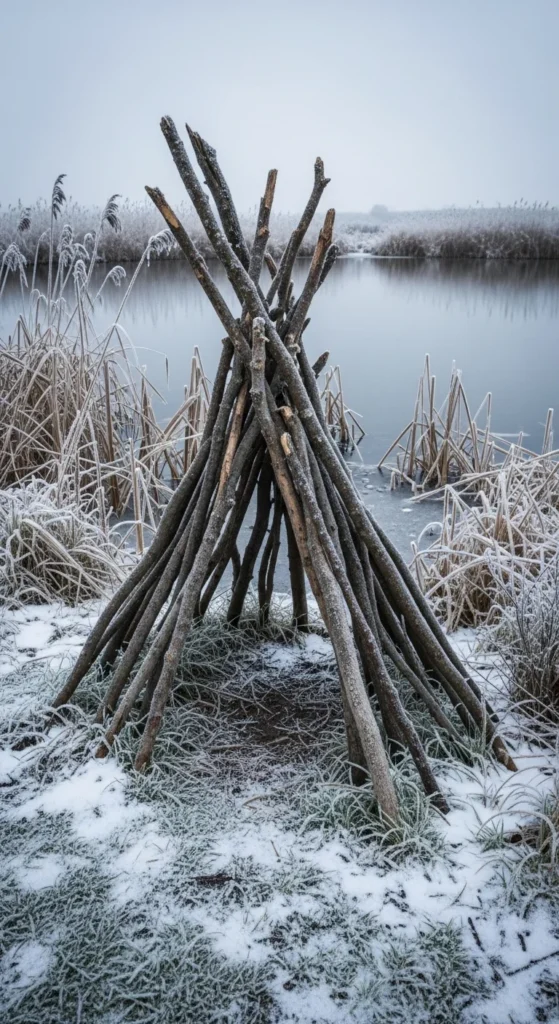
A loose bundle of sticks gives frogs and insects a safe place to hide. Place it near the water’s edge but not submerged. Choose dry sticks with hollow gaps for warmth. Add a few leaves between them for insulation. Place the bundle under a shrub if possible. This setup helps amphibians avoid freezing temperatures and predators. It’s an easy winter shelter you can build from garden materials.
5. Add a Log Partially in the Water
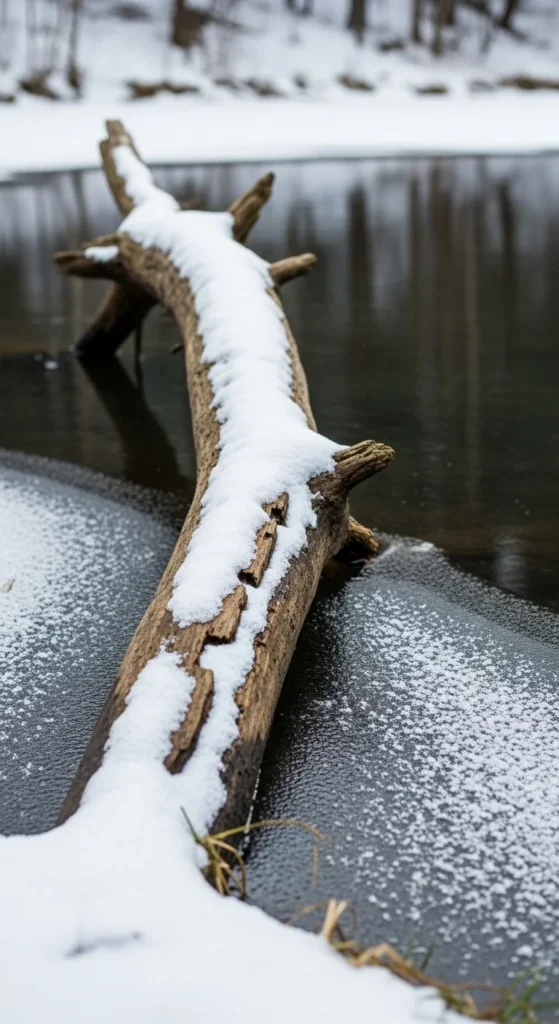
A partially submerged log creates a safe resting point for birds and small mammals. Place it so one end is on land and one end dips into the pond. This allows wildlife to drink safely without slipping on ice. The log also provides insects with small hiding spaces. Keep it stable so it doesn’t shift in storms. This simple feature supports many species during winter.
6. Reduce Leaf Build-Up Gently
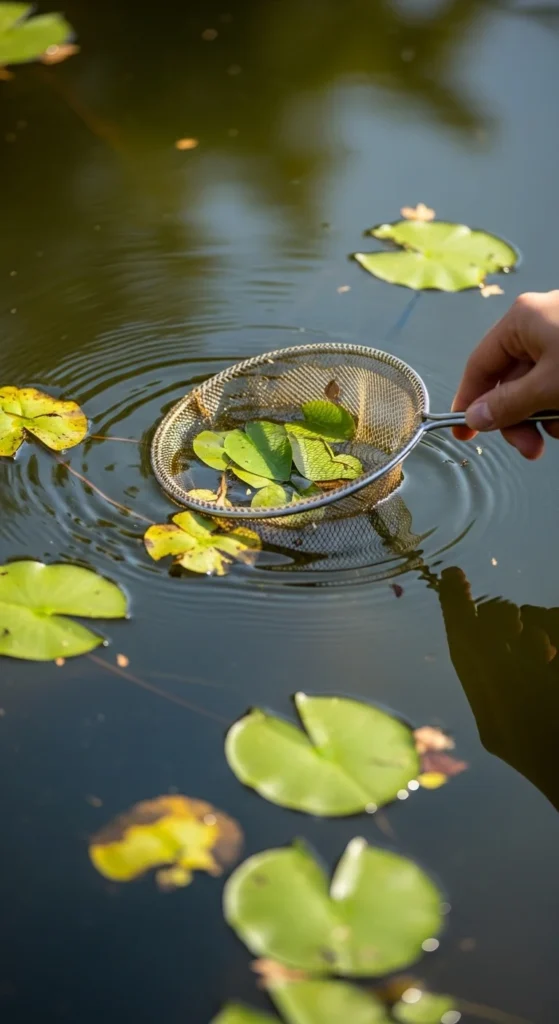
Too many leaves can lower water quality as they break down. Use a net to remove the majority of them, but leave a few for insects that rely on leaf cover. Don’t disturb the bottom of the pond, as amphibians may already be resting there. A light, gentle cleanup supports water clarity and creates balance without disrupting the natural habitat. This helps your pond stay stable through winter.
7. Add a Small Aerator on Low Setting
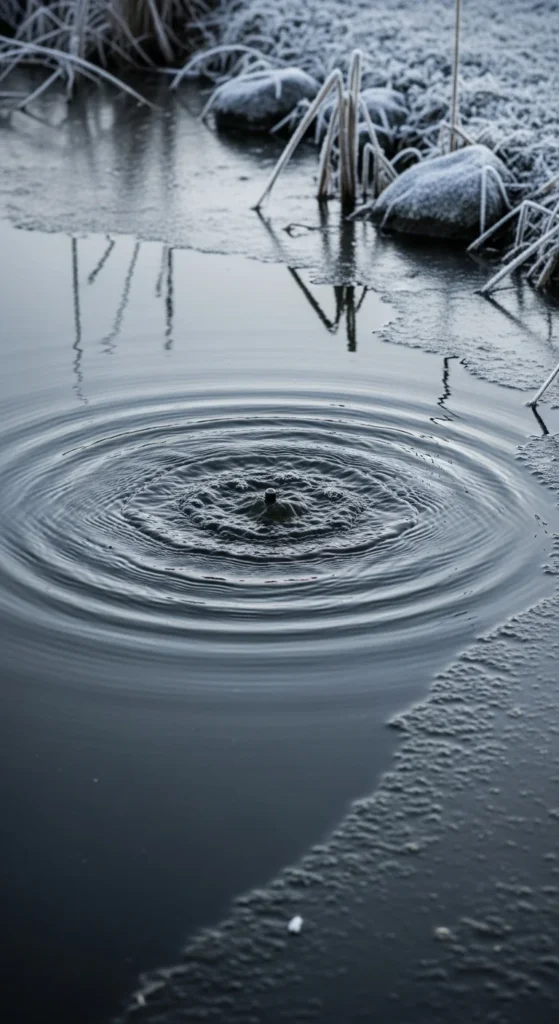
A low-setting aerator helps maintain oxygen levels without chilling the water too fast. Place it near the surface, not at the bottom, to avoid pulling up cold water. Soft ripples keep a small patch ice-free. Keep the power low so the water stays calm. This supports fish and frogs that rest in deeper, warmer water. It’s a simple tool that helps maintain balance in wintertime.
8. Leave Some Algae for Winter Food
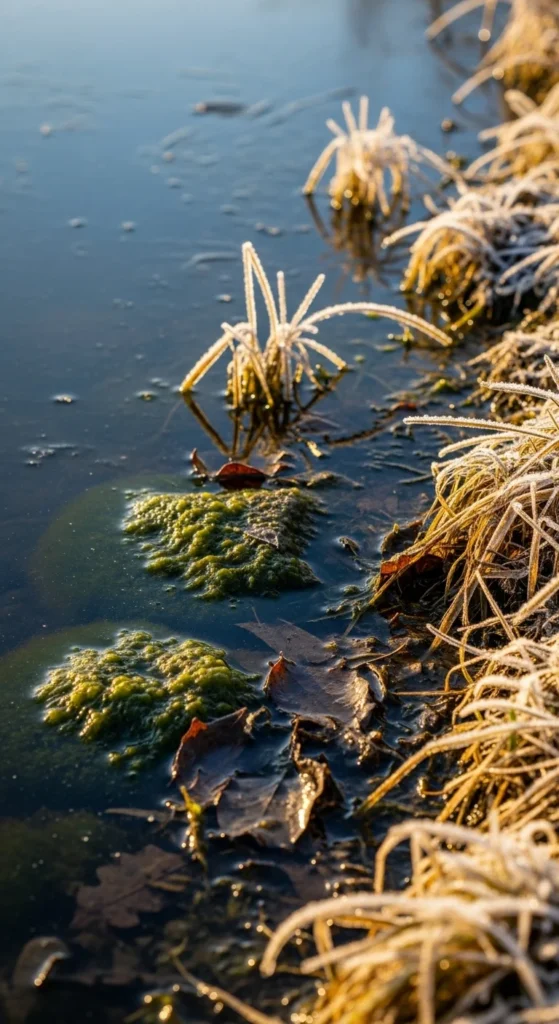
A light amount of algae provides winter food for aquatic insects. Avoid cleaning the pond too thoroughly. Leave small patches along the edges where sunlight reaches. Algae offer energy for tiny creatures and help maintain a healthy food chain. Only remove algae if it becomes dense. A little green growth supports your pond’s winter ecosystem naturally.
9. Add Rock Shelters for Overwintering Fish
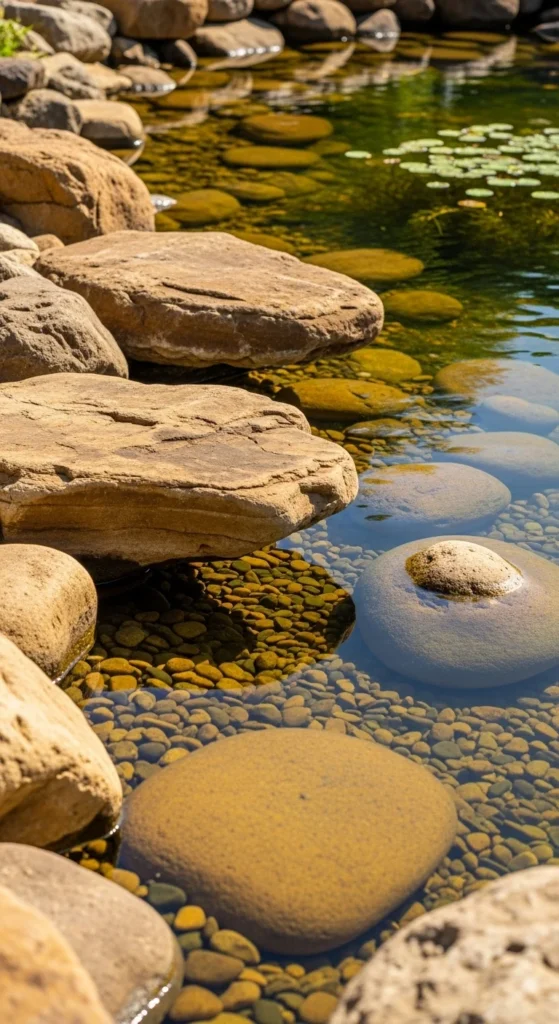
Fish benefit from natural hiding spots during winter. Stack a few smooth rocks to create small arches or caves. Place these structures in deeper sections where water stays warmer. Avoid disturbing pond life while arranging them. These small shelters protect fish from predators and give them calm spaces to rest. Rocks also add visual interest and help stabilize pond temperatures.
10. Create a Small Leaf Pile Near the Edge
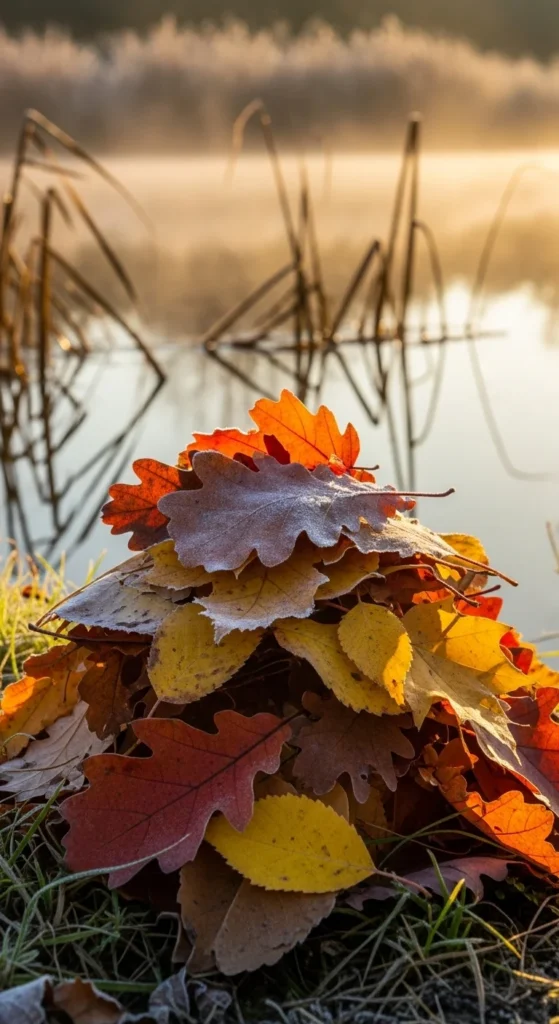
A leaf pile supports insects, frogs, and newts seeking insulation. Create a small heap near the pond but not directly in the water. Use dry leaves and tuck them under a shrub or bench. The pile traps warmth and offers safe burrowing zones. Avoid moving the pile once winter starts, as creatures may already be using it. This simple pile helps many species survive colder nights.
11. Leave Stones Partially Exposed for Sunbathing
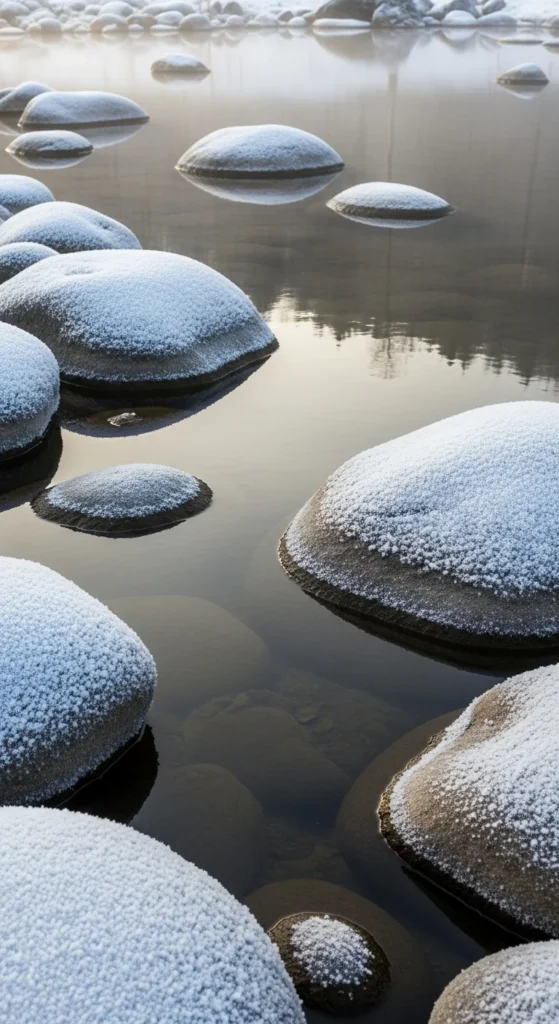
Stones that remain exposed above the water warm quickly in winter sun. Frogs, insects, and small birds often sit on them to warm up. Avoid covering all stones with snow or mulch. Place a few large flat rocks on the pond edge. These surfaces help animals recover heat during short sunny breaks. Stones also help stabilize the shoreline.
12. Avoid Draining or Deep Cleaning in Winter
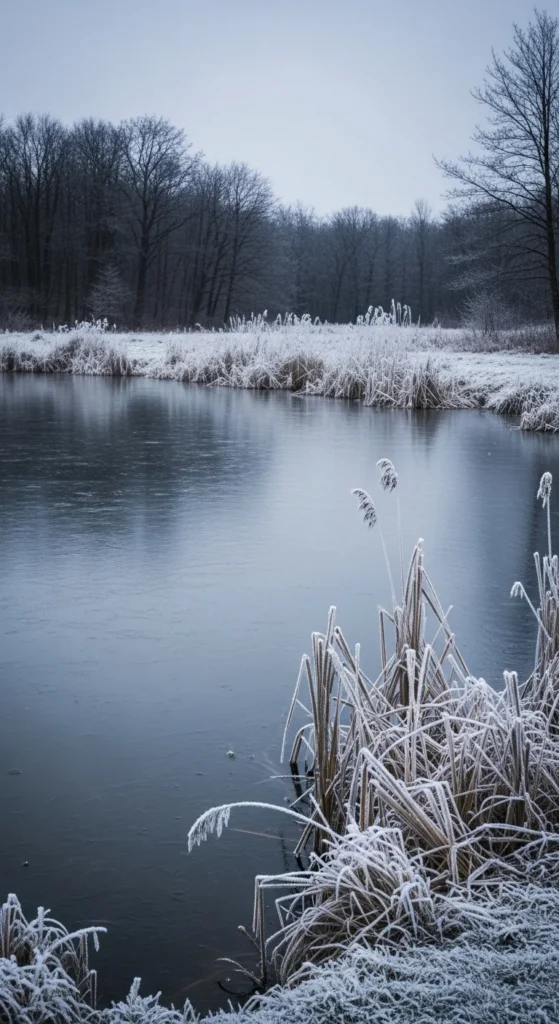
Winter is not the right time for major pond cleanup. Fish, frogs, and insects may be resting at the bottom. Draining or heavy cleaning can stress or expose them to sudden temperature drops. Leave sediment and natural materials untouched until spring. Your pond ecosystem stabilizes better when winter conditions are allowed to settle naturally.
13. Place an Upturned Clay Pot Underwater
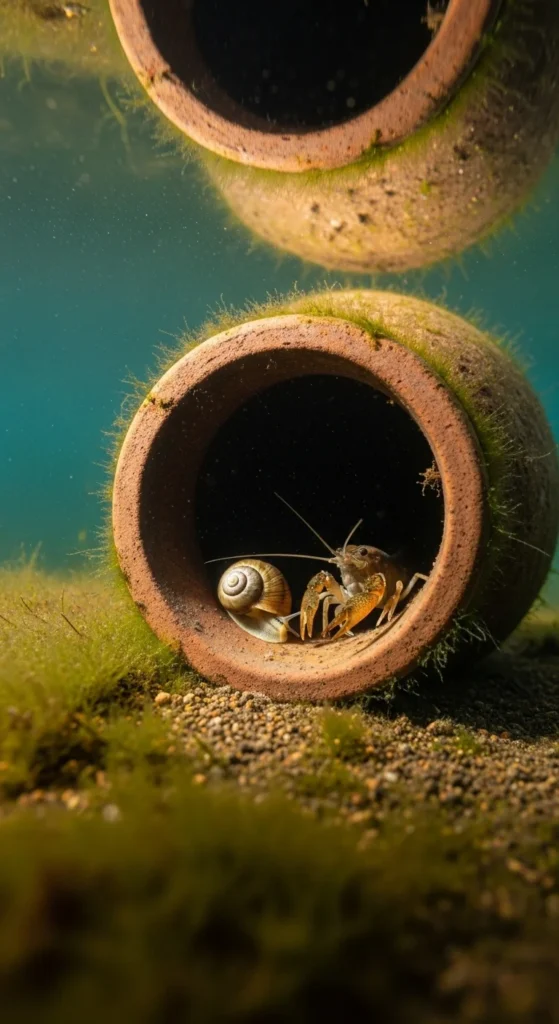
An upturned clay pot creates a safe underwater shelter. Place it gently in shallow water, leaving one side slightly tilted so animals can enter easily. Clay retains warmth better than plastic. Frogs and newts use it to rest away from predators. Keep the pot stable on a flat surface so it doesn’t tip. This simple addition gives wildlife a reliable winter refuge.
14. Add Straw Around the Pond Edge
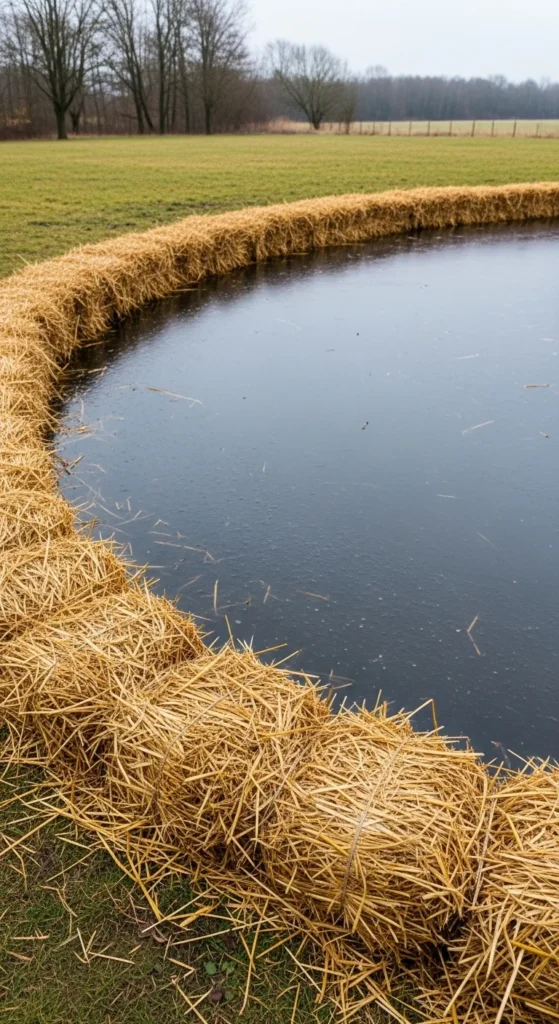
Straw helps insulate pond edges and provides hiding pockets for insects. Spread a thin layer around the perimeter. Keep it dry by covering it slightly with branches. Straw adds warmth and also helps reduce erosion during wet winter weather. Remove it in spring, when pond life becomes active again. This idea is affordable and easy to apply.
15. Install a Small Wildlife Ramp
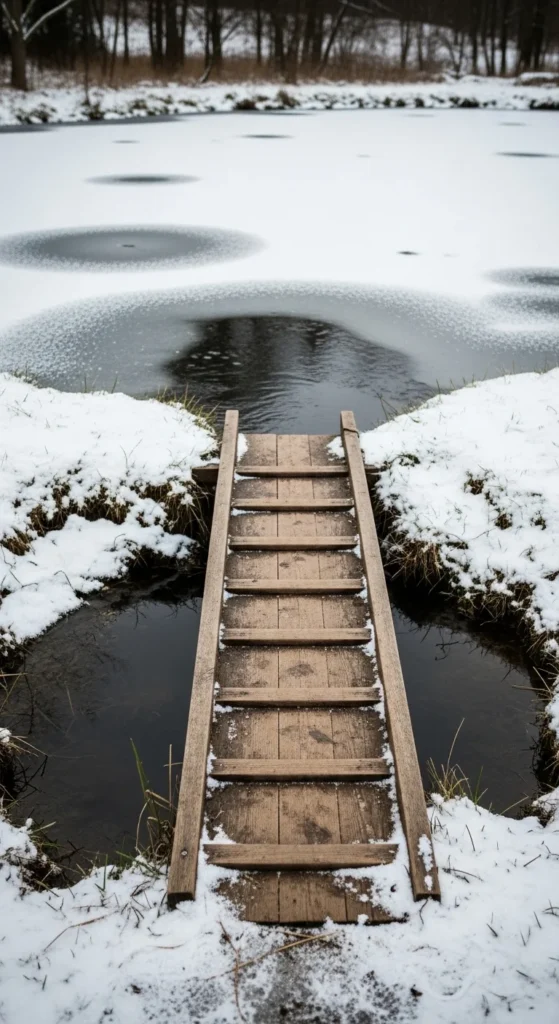
Animals can slip into ponds when edges freeze. A simple ramp offers them a safe way out. Use a piece of wood with rough grooves or a stone slab leading from the water to the bank. Secure it so it doesn’t shift. Frogs, hedgehogs, and small mammals rely on these ramps. It’s a small addition that supports local wildlife during challenging winter conditions.
16. Protect Pond Margins With Evergreen Planting
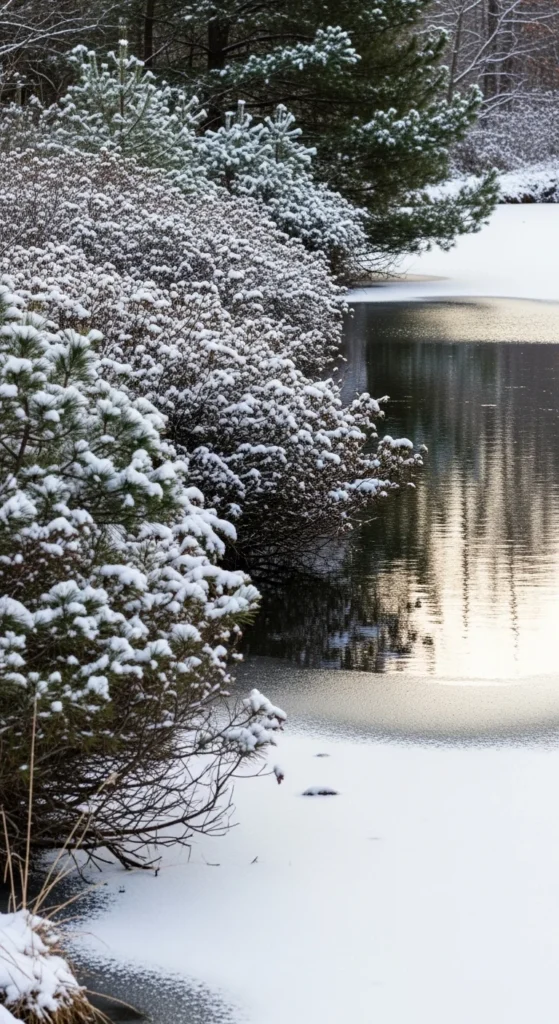
Evergreen shrubs and grasses protect the pond from strong winter winds. Plant varieties such as sedges, rushes, or dwarf conifers around the perimeter. These plants give wildlife cover and help moderate temperature swings. Evergreens stay upright in snow and create calm spaces around the pond. They also keep the landscape visually appealing during winter.
17. Add a Solar-Powered Water Circulator
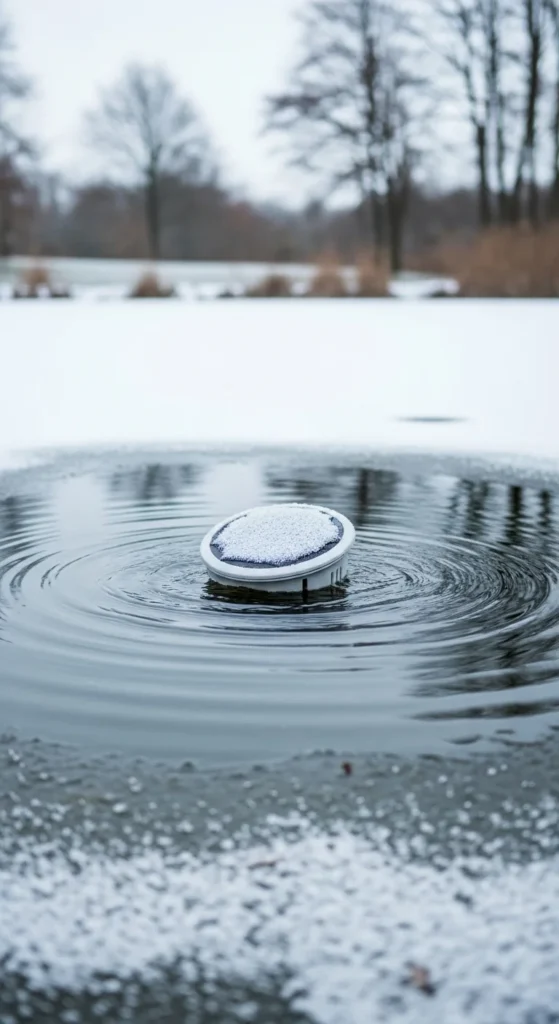
A solar circulator creates gentle movement that keeps a small section of water from freezing. Choose low-flow models that don’t disturb resting wildlife. Place the panel where it receives winter sunlight. This small movement helps oxygen exchange without relying on electricity. It’s helpful during long cold periods when ice forms quickly.
18. Collect Snow Carefully Instead of Chipping Ice
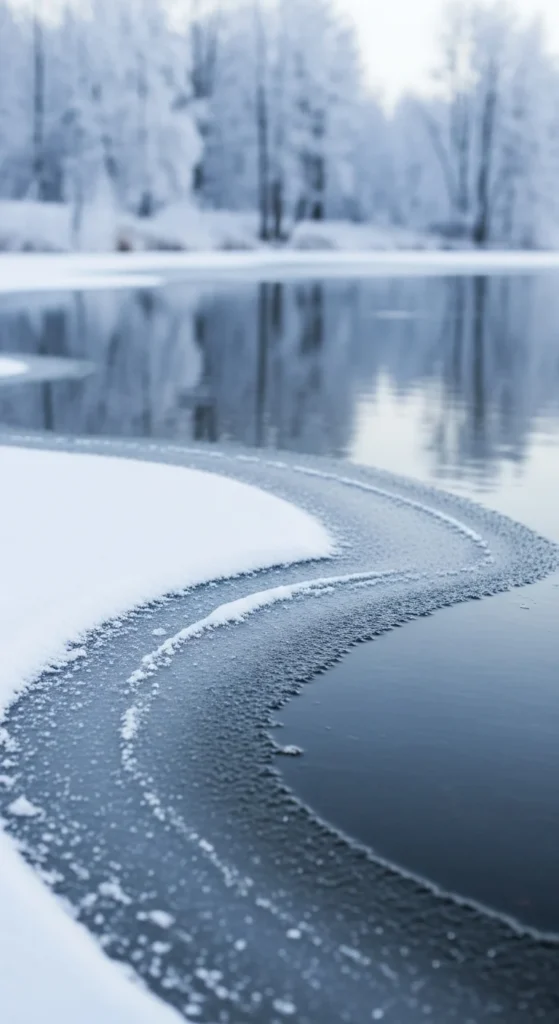
Heavy snow blocks light and reduces oxygen exchange. Brush it off gently using a soft broom. Avoid chipping or hitting ice, as vibrations can stress fish and amphibians. Clearing snow helps plants under the ice continue photosynthesis, supporting oxygen levels. This small action improves pond health during long snowy periods.
19. Add a Simple Windbreak Nearby
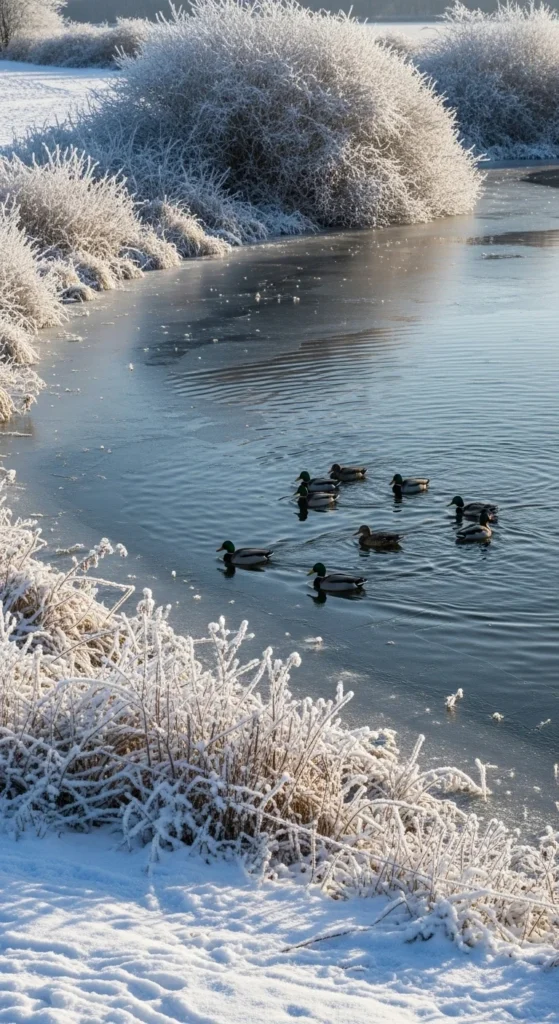
Wind increases heat loss in ponds. Add a natural windbreak using shrubs, fencing, or bundled branches. Position it on the side that receives the strongest winter winds. This reduces ice thickness and helps wildlife stay warmer. Windbreaks also protect birds drinking at the pond edge. They can be temporary or permanent depending on your garden layout.
20. Keep Bird Access Open
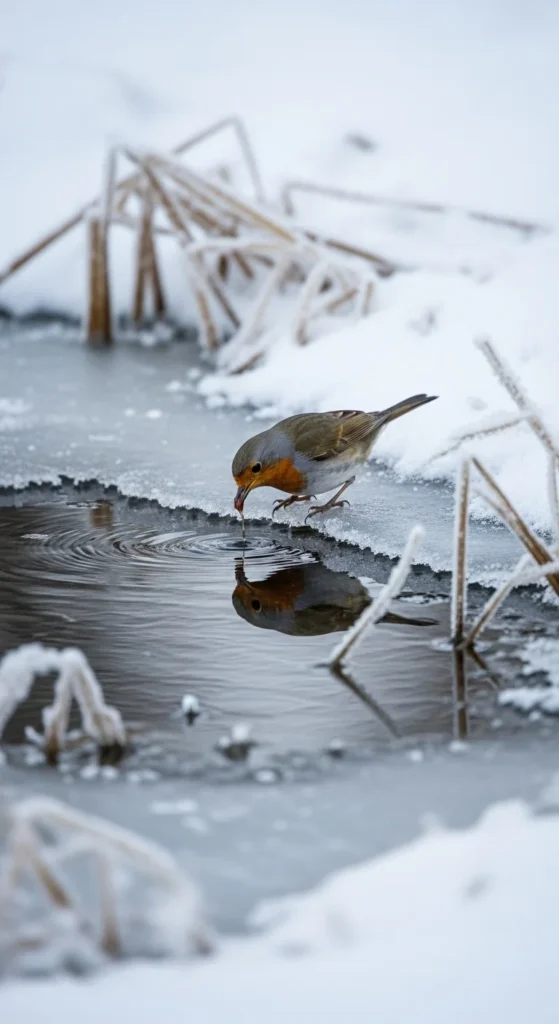
Birds need open water during winter. Keep a small area accessible by maintaining an ice-free patch or placing a shallow dish nearby. Make sure the dish is weighted so it doesn’t tip. Birds rely on dependable water sources, especially during cold, dry days. Keeping access open supports many species without requiring large effort.
21. Add Pebble Shallows for Safe Winter Visits
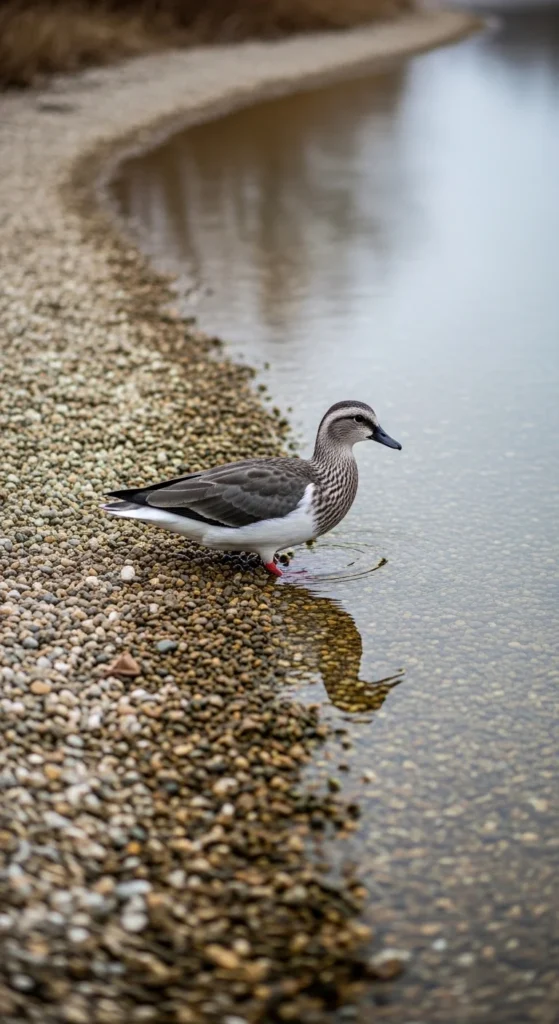
Shallow edges let birds and small mammals drink safely without slipping on ice. Add small pebbles to form a gentle slope into the water. Keep this area clear of snow when possible. Pebbles provide grip for animals and create warm pockets during daytime sun. This simple adjustment helps wildlife access the pond without risk.
22. Avoid Feeding Pond Fish Too Late
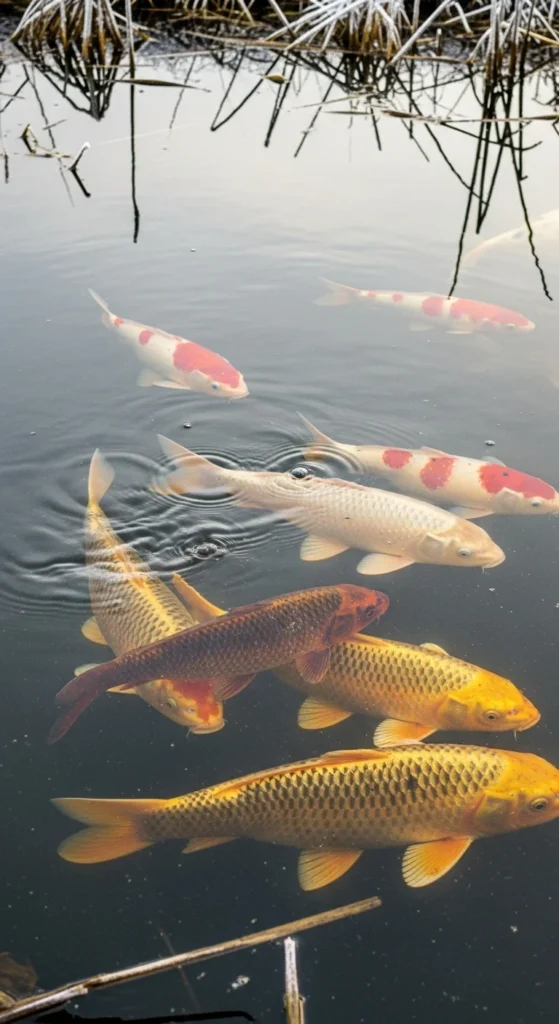
Fish slow down in cold temperatures and digest food less effectively. Stop feeding once water temperatures consistently drop. Uneaten food can pollute the pond. Excess waste also reduces water quality during winter. Let fish rest naturally. This supports healthier conditions for the entire pond ecosystem.
23. Leave Some Natural Debris for Shelter
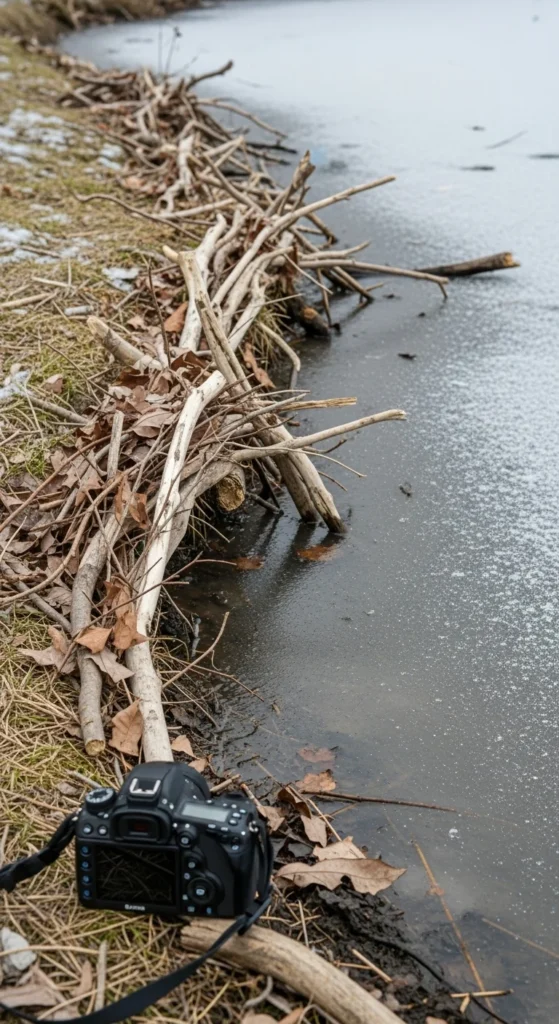
A small amount of natural debris offers cover and insulation for insects and amphibians. Leave twigs and light leaf layers along one side of the pond. Avoid piling too much, as it may fall into the water. Natural debris creates warm hiding spaces that support biodiversity through winter. This approach keeps your pond close to its natural rhythm.
Conclusion
Winter preparation helps wildlife ponds stay safe and functional during cold months. By adding gentle shelter, reducing sudden disturbances, and creating small openings in ice, you give animals a better chance to survive harsh conditions. These practical steps support birds, insects, amphibians, and aquatic life with minimal effort. Choose a few ideas that match your pond’s layout and let your winter habitat remain active and supportive all season.
ChatGPT can make mistakes. Check important info.
Leave a Reply