

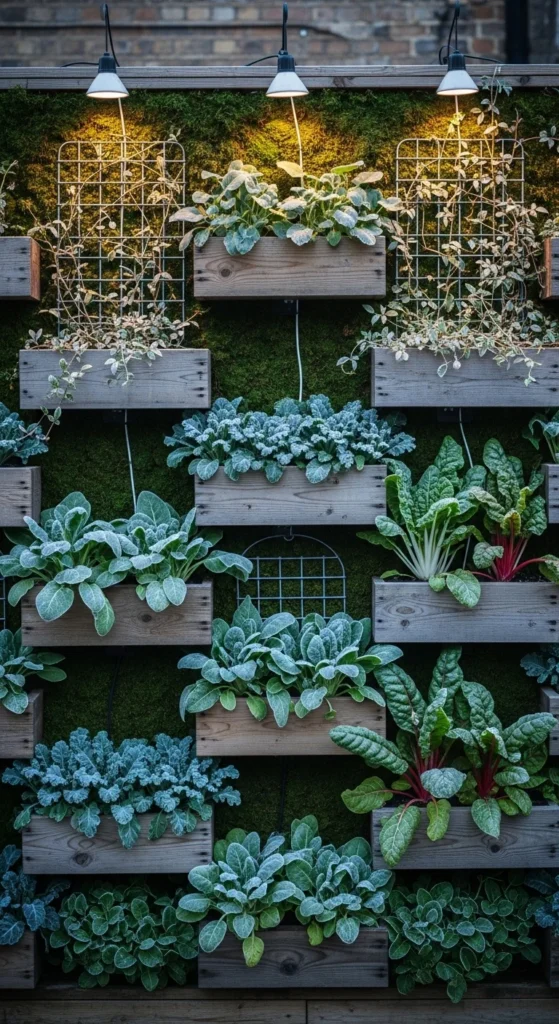
Winter makes many homes feel tight on space, and that’s exactly why wall-mounted gardening setups become so helpful. They add greenery without using valuable floor area. These ideas focus on cold-ready plants, insulated structures, simple DIY frames, and layouts that turn blank walls into productive growing zones. Whether you want herbs for cooking, evergreens for texture, or compact veggie clusters, these setups help you fit more into limited space while keeping everything easy to manage.
1. Modular Felt Pocket Wall for Cold-Tolerant Herbs
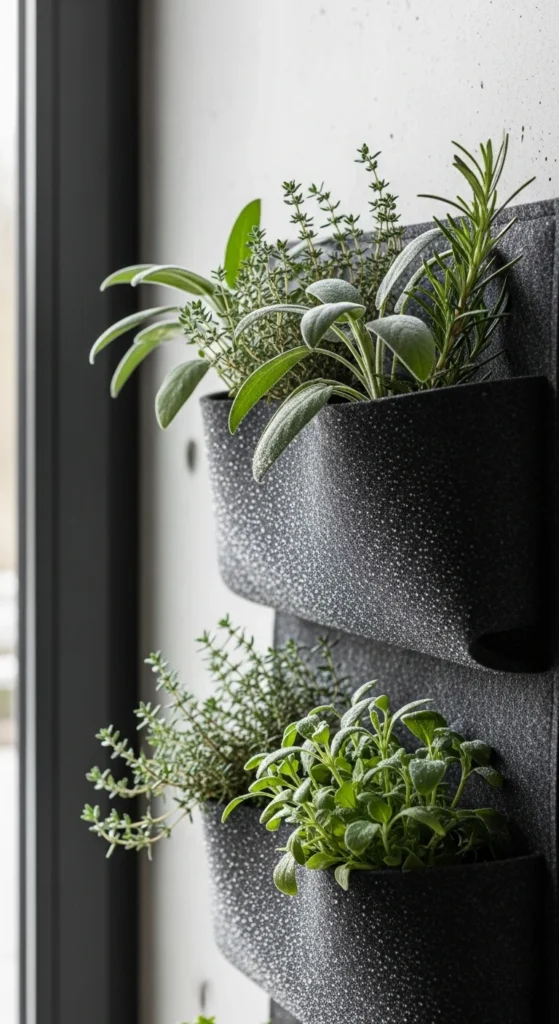
This setup works well when you want something light and simple. Felt pockets hold moisture without becoming soggy, so herbs stay comfortable during cold months. You can mount them on a balcony wall, indoor entryway, or kitchen corner. Add hardy picks like thyme, sage, and chives. Keep each pocket loosely filled so roots don’t feel cramped. Use a spray bottle for watering to avoid runoff.
A budget-friendly trick is to repurpose felt shoe organizers as planters. Cut them into sections, reinforce the edges with fabric glue, and attach them to a wooden board for easy removal later. Add a waterproof layer behind the fabric to protect walls. Use small solar lights or LED strips for warmth on darker days.
2. Wooden Ladder-Style Vertical Garden with Evergreen Pots
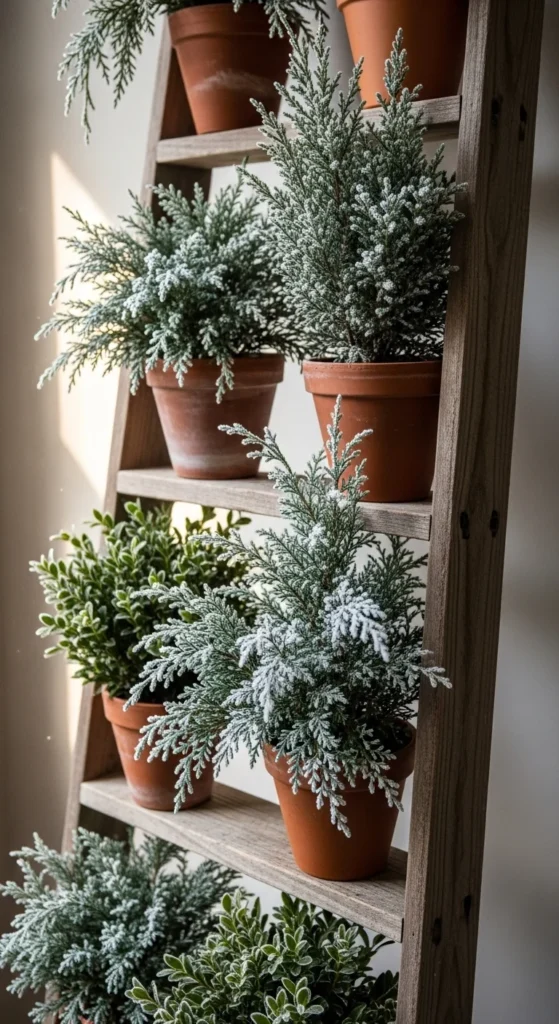
This ladder layout fits small patios and indoor corners. Choose evergreens like dwarf juniper, rosemary, or wintergreen. The ladder gives you multiple rows of usable space without blocking walkways. Keep heavier pots on the bottom for balance.
A DIY option is to reuse an old wooden ladder, sand it, and seal it with a weather-resistant finish. Screw small brackets under each rung to hold pots safely. If the area feels cold, wrap burlap around the pots for insulation. For extra charm, weave battery string lights around the frame.
3. Cedar Box Grid for Wall-Mounted Winter Greens
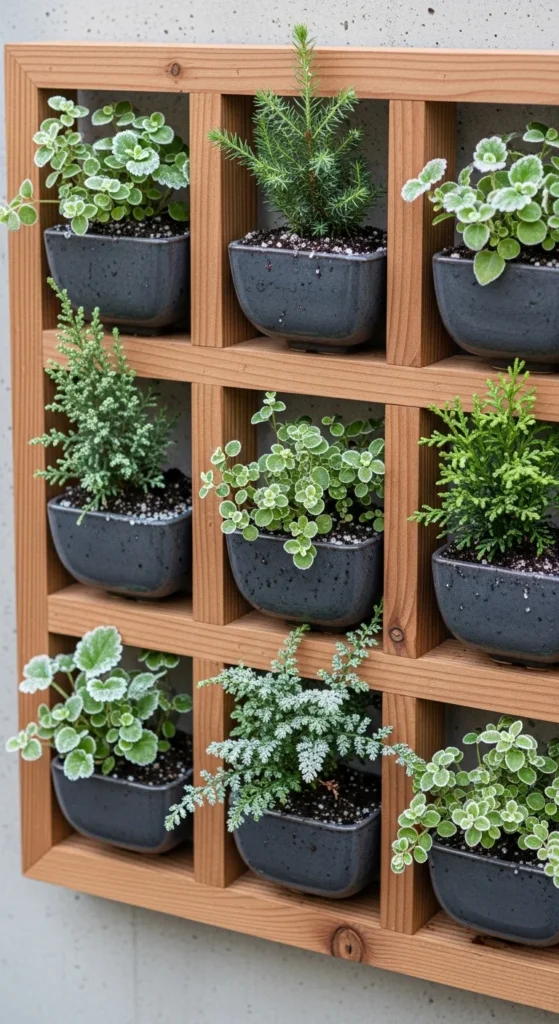
This grid layout creates a clean and organized look. Cedar handles moisture well and lasts through chilly seasons. Fill the boxes with spinach, cilantro, or compact lettuces. Space them evenly to allow airflow.
You can make this affordably using scrap wood or old crate slats. Cut equal-sized boxes, attach hooks on the back, and mount them on a larger frame. Add a narrow drip tray at the bottom to catch any excess water. Use lightweight plastic liners inside the boxes so soil doesn’t fall through.
4. Metal Trellis Wall with Climbing Winter Vines
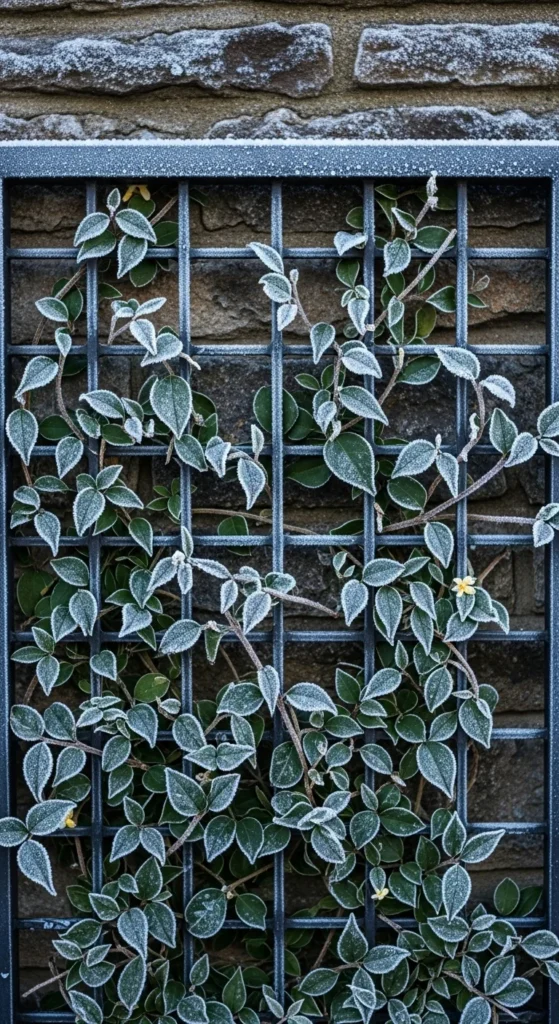
Metal trellises help vines stay upright during colder months. Choose winter-tolerant varieties like ivy or evergreen honeysuckle. Secure the base of the plants in insulated pots to protect the roots.
For a simple DIY, buy an inexpensive wire panel and spray it with rust-proof paint. Attach using wall anchors or hang it on hooks. Add small LED grow lights if you’re keeping it indoors. If you prefer privacy, let the vines thicken along the grid.
5. Recycled Bottle Vertical Garden for Hardy Lettuce Mixes
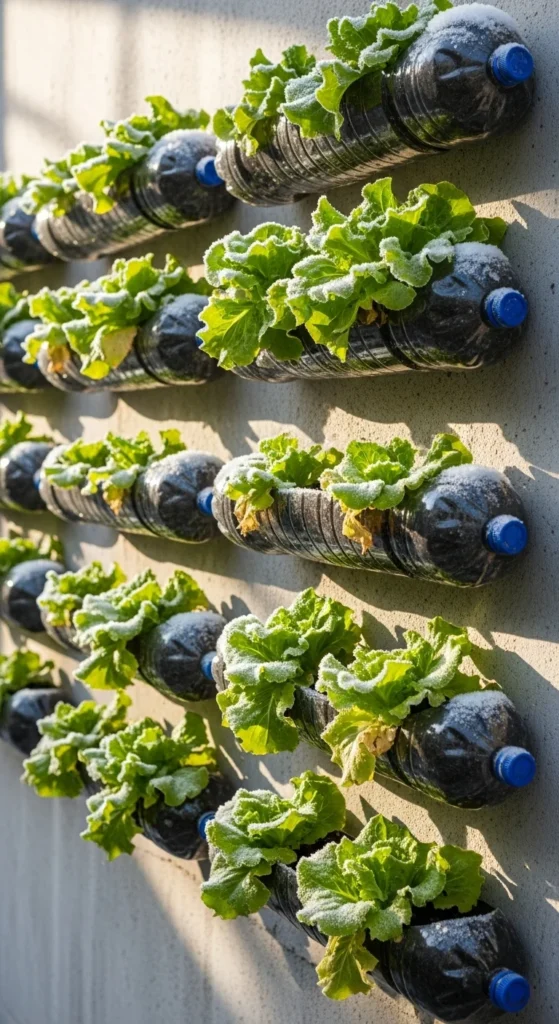
This is one of the easiest setups. Cut plastic bottles, add drainage holes, and mount them using zip ties or metal hooks. Hardy lettuces survive well in shallow containers during winter.
Keep the spacing wide so the leaves don’t overlap too much. Add compost at the start of the season and mulch lightly to protect the soil. For a low-cost alternative, use old juice bottles or milk containers. Hang them at staggered heights to give each plant proper airflow.
6. Pegboard Wall Garden with Interchangeable Pots
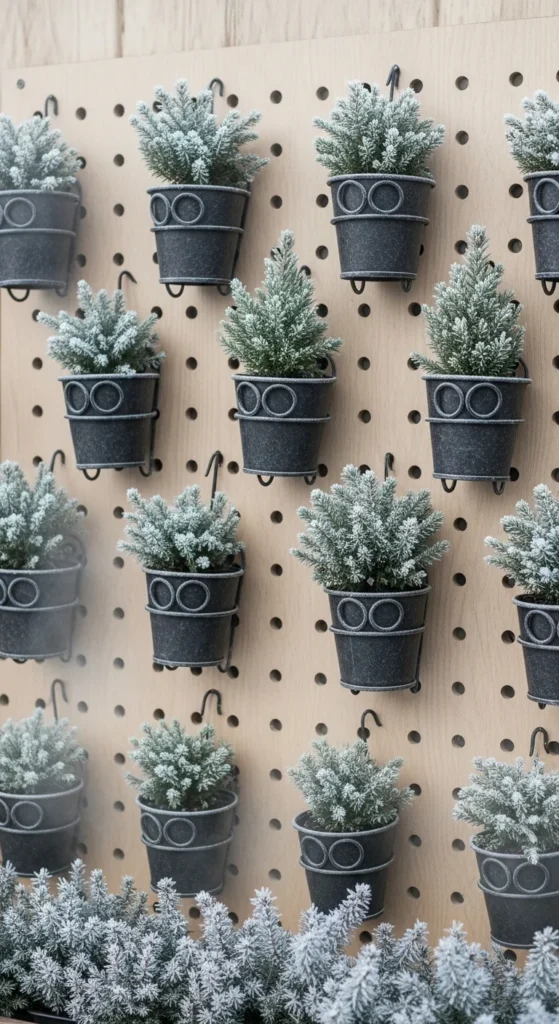
Pegboards let you rearrange your plants anytime. Choose metal or coated wood versions so they last during cold spells. Small pots fit into hooks or wire baskets easily.
Use winter plants like oregano, dwarf kale, or fern species. This system works indoors or on covered balconies. For a budget version, paint an MDF pegboard with waterproof sealant. Add a heat-retaining grow mat on the floor below for a little warmth. Rearrange rows whenever certain plants need more light.
7. Hanging Mason Jar Herb Wall with Insulated Holders
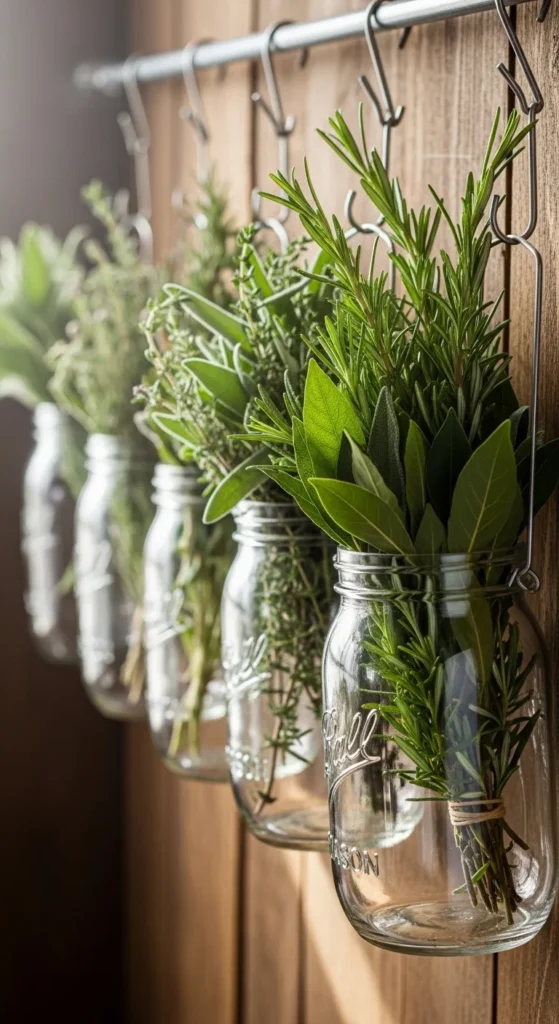
Mason jars work well for herbs in winter because the glass lets you see moisture levels. Use insulated holders or wrap twine around each jar for warmth.
Try planting mint, parsley, or dill. Keep drainage in check by placing gravel at the bottom of each jar. Attach them to a reclaimed wood board to make moving the whole system simple. For low-cost holders, use hose clamps screwed into the board. Add a small LED panel above the jars for light.
8. Multi-Tier Wall Shelf Filled with Winter Microgreens
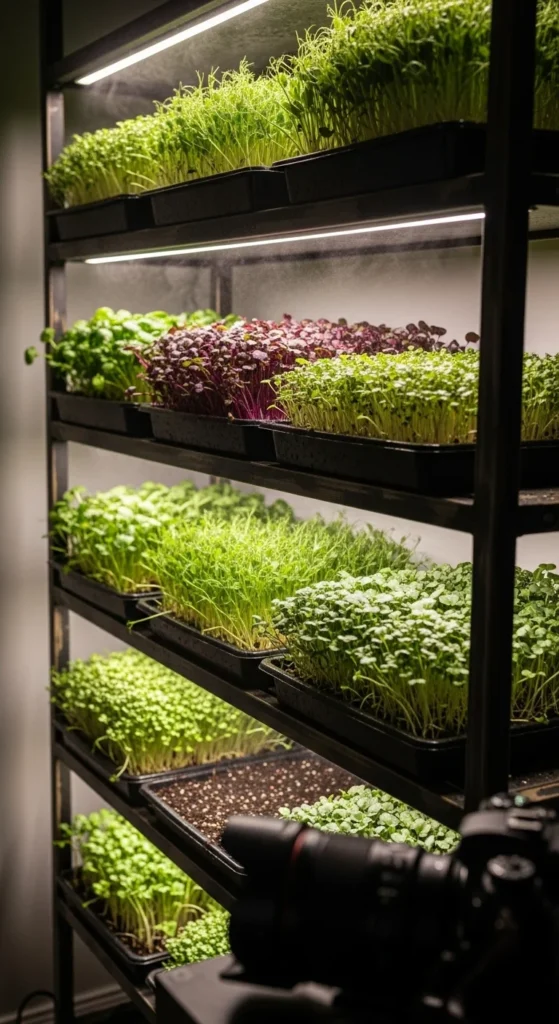
Microgreens grow quickly even when temperatures drop. Mount a simple shelf system on the wall and place shallow trays on each level.
Choose radish, broccoli, or mustard microgreens. They germinate fast and stay compact. Budget tip: use plastic food containers as trays and poke tiny holes for drainage. Add a reflective sheet on the back of the wall to distribute light. Mist the trays lightly every day for best growth.
9. PVC Tube Wall Garden for Leafy Winter Greens
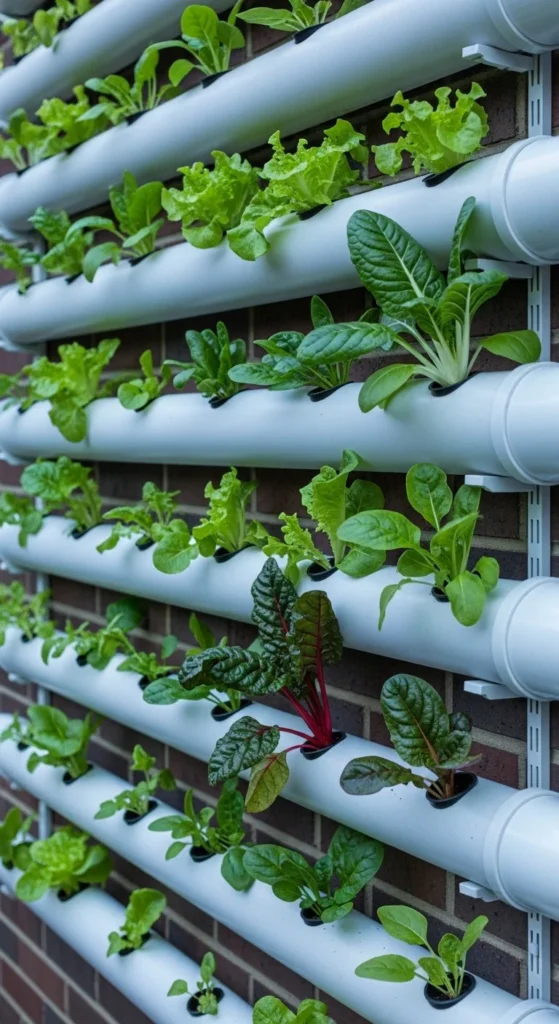
PVC tubes create a clean, modern look. They’re lightweight and easy to mount. Cut holes along the length for plants, fill with soil, and place cold-friendly greens like arugula or mizuna.
Use brackets to hold each tube securely. A low-cost method is to reuse leftover pipes from home projects. Add mesh near the ends to keep soil inside. If the area gets frosty, wrap the pipes with insulating foam.
10. Wool-Lined Crate Wall for Winter Root Herbs
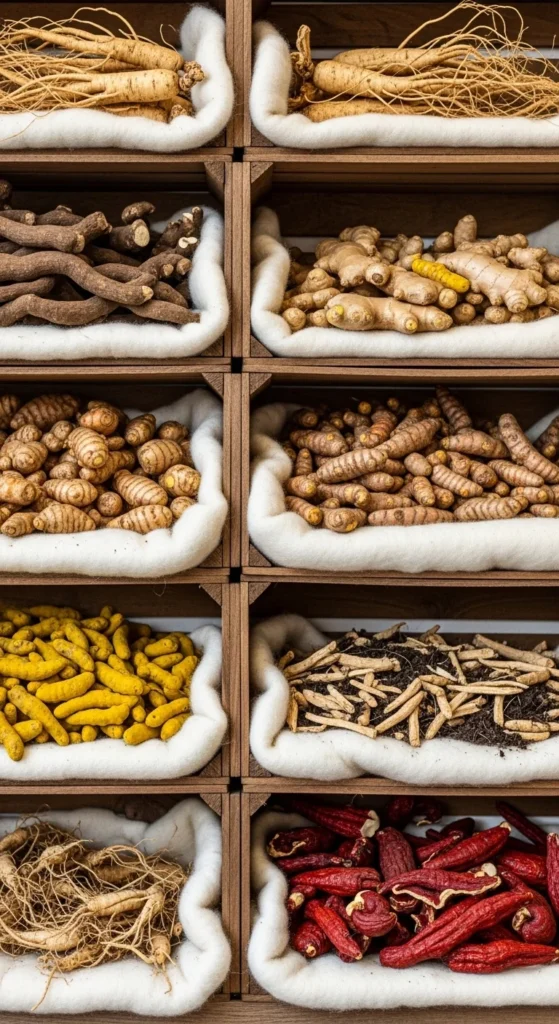
Wool insulates roots during winter. Line wooden crates with wool scraps, then hang them securely. Root herbs like horseradish, garlic chives, and lovage grow well in this setup.
For an affordable version, recycle old crates from fruit markets. Reinforce corners with metal brackets. Add hooks to mount them on the wall. Place gravel at the bottom for drainage and fill with rich compost. Keep the plants lightly watered to avoid soil freezing.
11. Vertical Pallet Garden with Winter-Friendly Containers
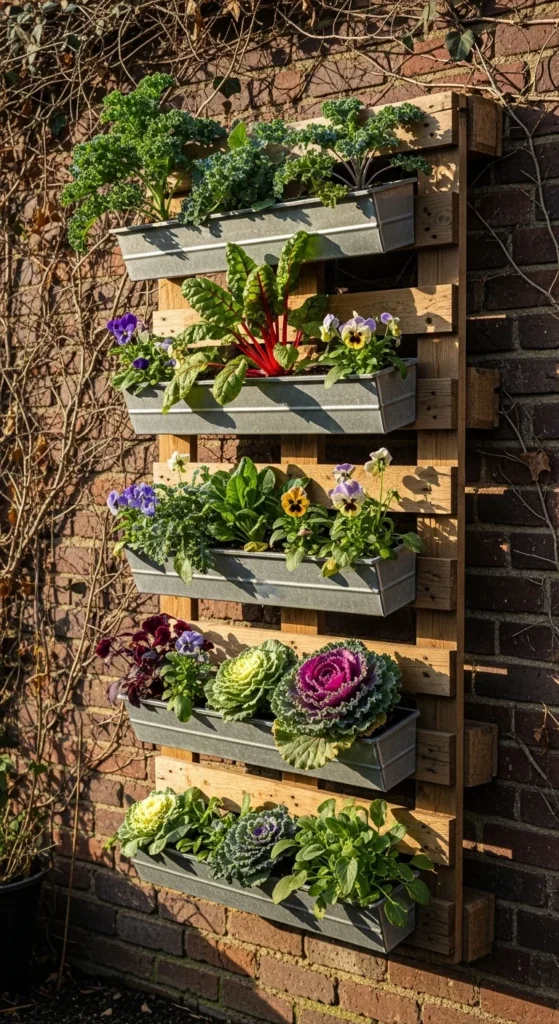
A pallet garden is fast to assemble. Clean the pallet, sand it, and stand it upright. Add containers to each slot and fill with hardy greens or dwarf shrubs.
To save money, use tin cans or yogurt cups as planters. Drill holes for drainage and spray-paint them in rustic tones. Wrap the back of the pallet with burlap to hold soil warmth. Keep the heaviest containers near the bottom for stability.
12. Terracotta Pocket Wall for Winter Succulents
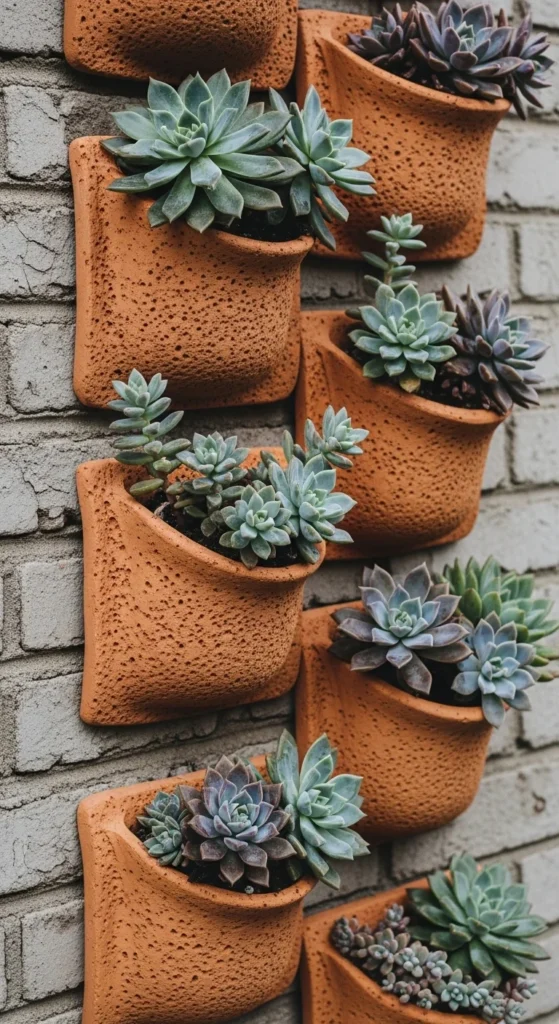
Terracotta retains warmth, which helps succulents through chilly days. Attach pocket planters directly to the wall or onto a wood board.
Pick varieties such as hens-and-chicks or sedum. Add gritty soil to avoid moisture issues. For a low-budget version, buy small terracotta pots in bulk and glue them onto a thick board before mounting. Dust the pots occasionally to keep them looking clean and textured.
13. Hanging Rope Shelf Wall for Small Winter Crops
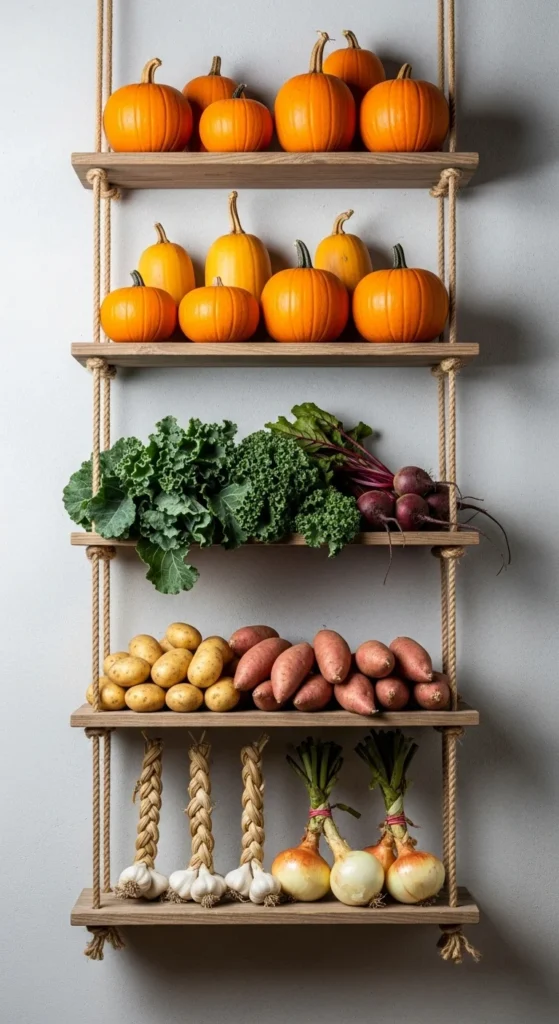
This system adds charm and saves floor space. Rope shelves sway slightly but stay stable with good knots. Use lightweight pots so the shelves don’t sag.
Grow small crops like spinach, mustard leaves, or basil. For a DIY approach, reuse old wooden planks and sturdy rope. Drill holes in the corners and knot the ropes tightly. Hang the whole structure from a strong hook. Add a heat-reflective mat behind the wall for extra warmth.
14. Insulated Vertical Planter Tower Mounted to a Wall
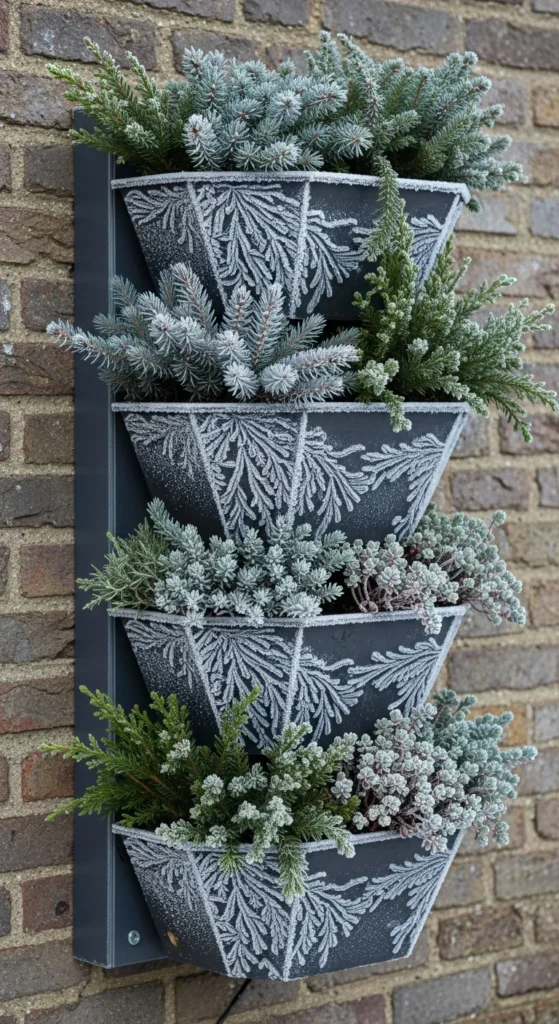
Planter towers save massive amounts of space. Choose one with insulation or wrap it with foam sheets.
Plant kale, Swiss chard, or hardy herbs. This layout works well on balconies exposed to cold winds. For a low-cost tower, stack plastic planters with drainage holes, secure them together, and attach them to a wall bracket. Rotate the tower slightly each week so all sides get balanced light.
15. Glass-Fronted Vertical Greenhouse Cabinet
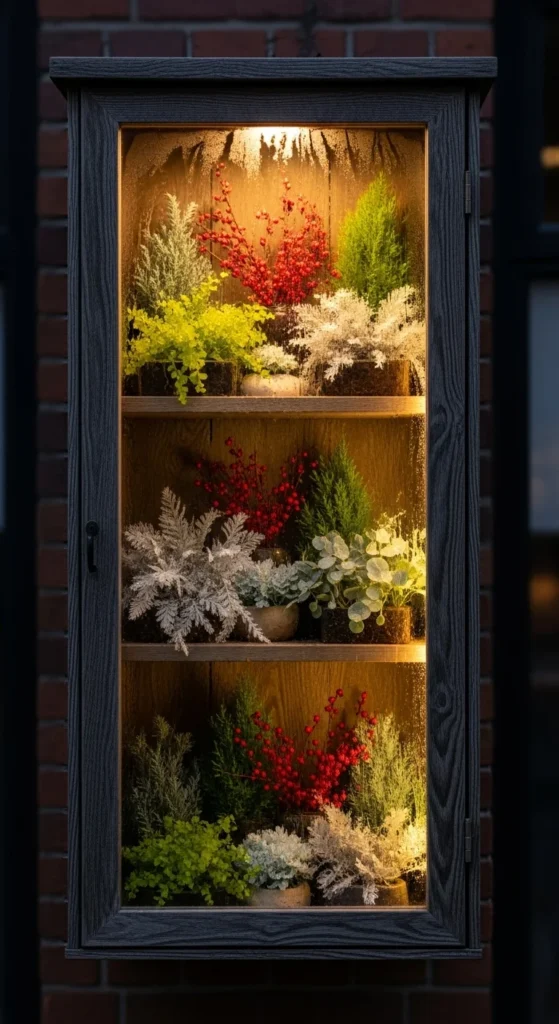
A greenhouse cabinet protects delicate plants from cold air. Mount it to the wall and add grow lights inside.
Use it for rosemary, mint, or baby greens. Add small trays of water at the bottom to maintain humidity. For a low-cost option, repurpose an old display cabinet, add weather sealing, and attach clear acrylic panels. Keep the door slightly open during the day for airflow.
16. Wire Basket Wall Herb Garden
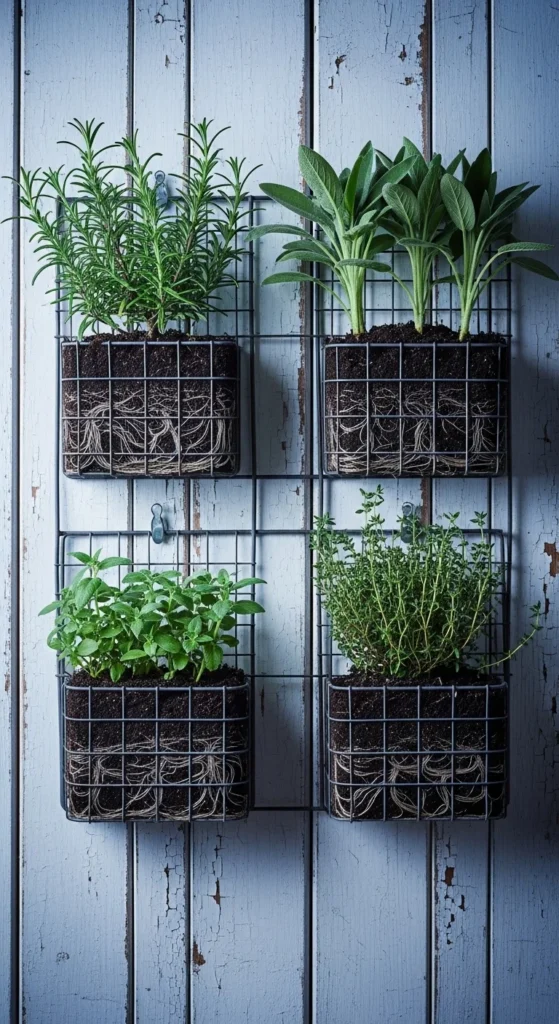
Wire baskets provide great airflow. Fill them with fabric-lined pots of winter herbs like thyme, oregano, or savory.
Mount a metal grid first, then hook baskets onto it. This makes rearranging simple. To save money, use produce baskets or thrift-store finds. Add a waterproof layer behind the grid for indoor use. Keep watering light to prevent dripping.
17. Stacked Hexagon Wall Planters Filled with Winter Greens
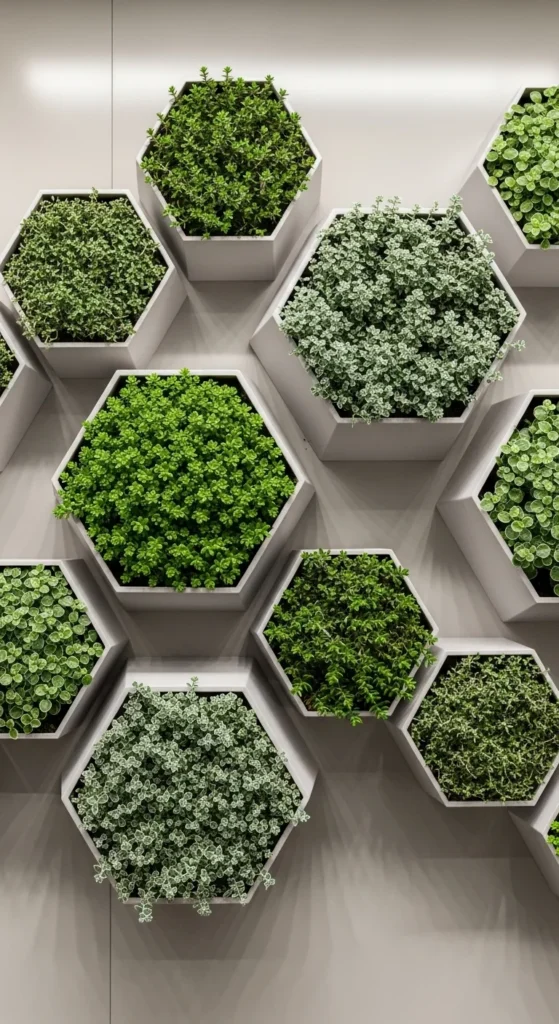
Hexagon planters add style while giving each plant its own pocket. Fill them with hardy greens like bok choy or tatsoi.
You can make the hexagons with cardboard templates and wood scraps. Paint them with outdoor-resistant paint, then attach them using heavy-duty tape or screws. Mix soil with compost for better winter growth. Place a small water tray at the bottom to catch any drips.
18. Hanging Cone Wall Planters with Winter Flowers
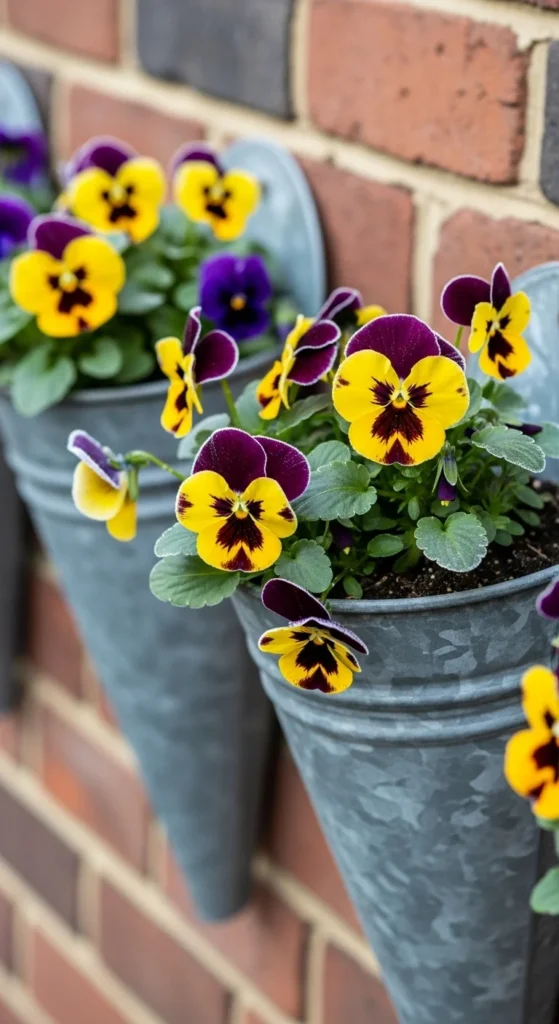
Cone planters look neat and fit well in narrow spaces. They drain well and hold small flowering plants.
For winter, use pansies or violas. Add pine mulch to protect roots from cold. For a frugal option, roll plastic sheets into cone shapes, secure with tape, and paint them. Attach them to hooks or a board. Replace wilted flowers easily since each cone is independent.
19. Magnetic Metal Wall Board for Compact Herb Containers
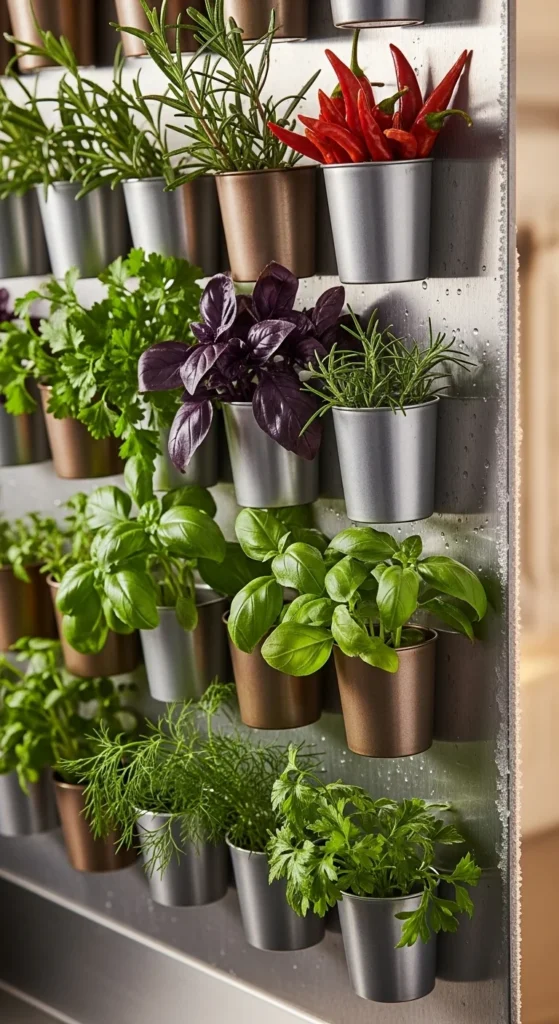
Magnetic containers are fun and flexible. Stick them to a metal board mounted on the wall.
Use tiny herbs like thyme, basil, or mini mint. Keep soil light and well-draining. For an affordable version, reuse mint tins or small jars and glue strong magnets on the back. Wipe condensation from the metal during cold mornings to keep moisture from pooling.
20. Tiered Hanging Pipe Wall with Layered Greens
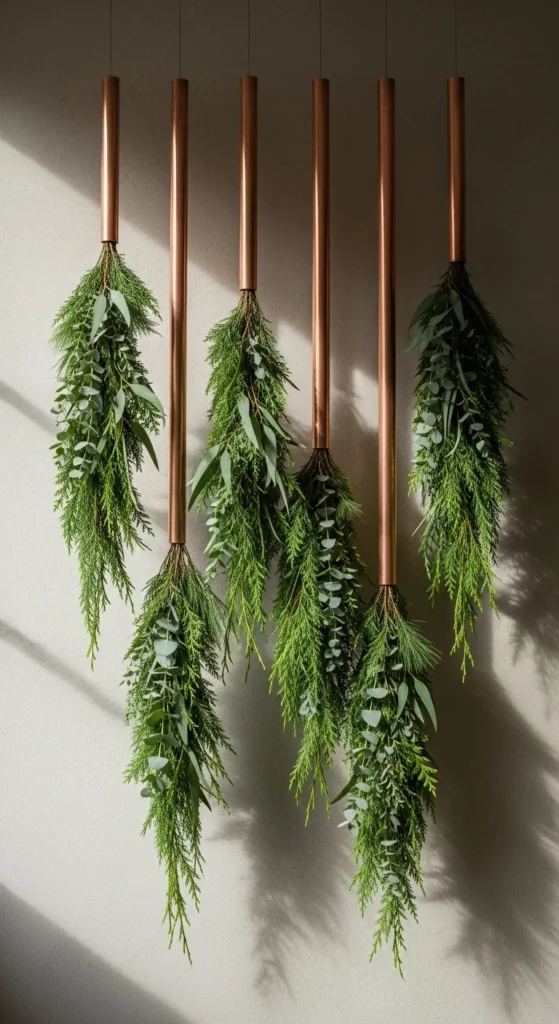
Hanging pipes work well when you want a cascading look. Use pipes with large openings or half-cut PVC pieces.
Plant winter lettuces, kale, or compact herbs. Wrap the pipes with burlap for warmth. For a budget approach, cut old gutter pieces and spray them in neutral colors. Attach them with brackets. Add slow-release fertilizer at the start of the season.
21. Wall-Mounted Winter Strawberry Tower
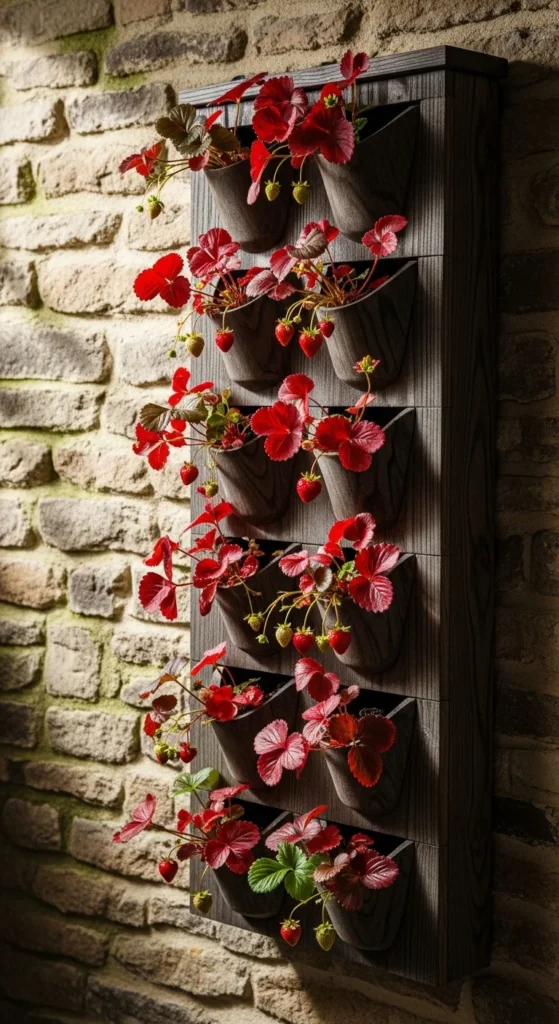
Strawberries handle cold weather with some protection. A tower helps you grow many plants in a compact space.
Wrap the tower with frost cloth at night. Add straw mulch around each pocket. To save money, convert a vertical shoe rack into a strawberry tower by lining each pocket with plastic. Mist the leaves gently rather than overwatering.
22. Hanging Crate Stack for Winter Veg Clusters
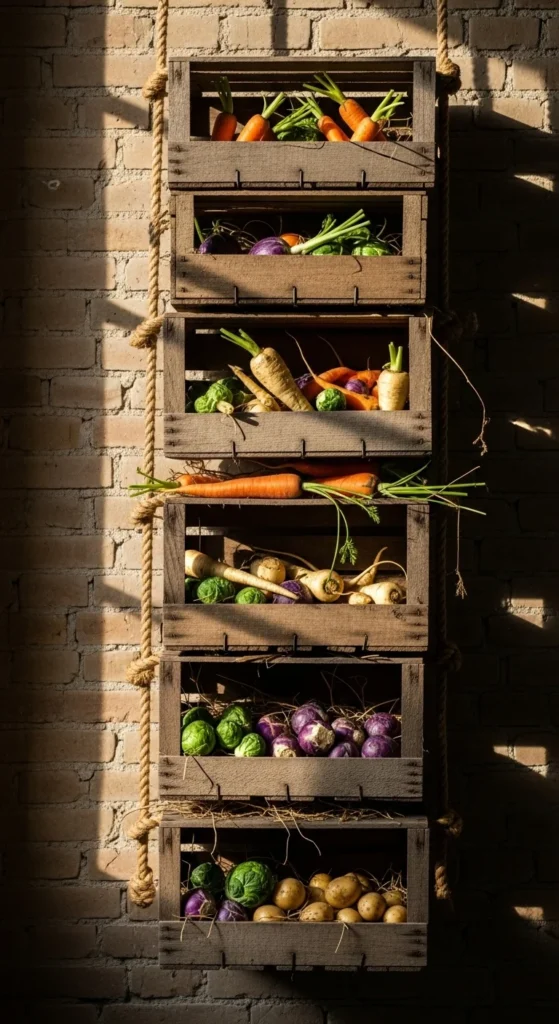
Stacked crates give you depth without taking floor room. Grow winter veggies like radishes, baby carrots, or scallions.
Attach the crates with thick rope or metal brackets. For a budget version, use fruit crates from local shops. Line them with fabric scraps for insulation. Keep roots protected with a layer of composted leaves.
23. Vertical Shelf Green Wall with Insulated Backboard
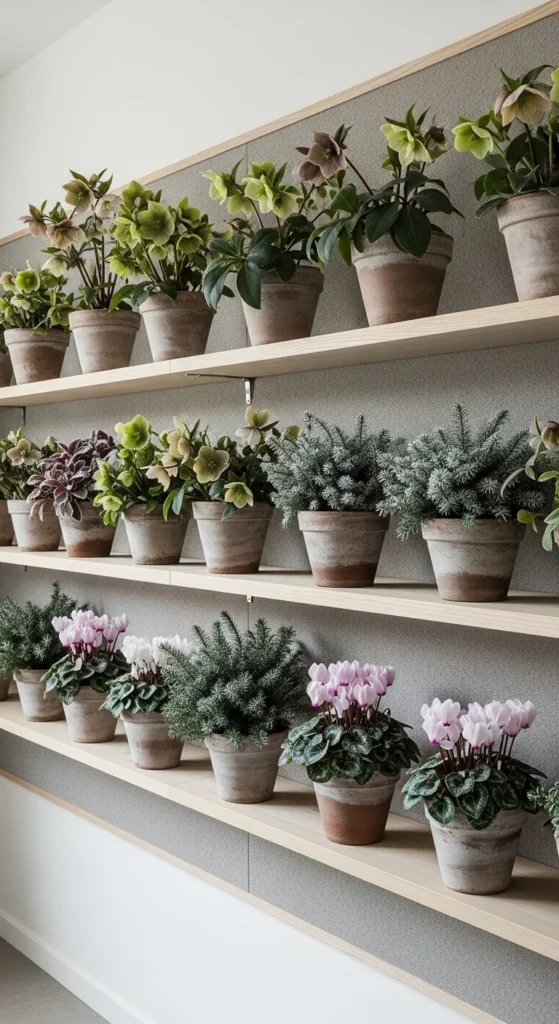
An insulated backboard helps plants stay warmer during cold spells. Attach shelves of equal width and place herbs, greens, or micro crops.
For low-cost insulation, use foam sheets behind the shelves. Arrange plants by height so taller ones don’t shade smaller ones. Add clip-on lights if the area lacks natural light. Keep it neat by grouping plants in similar pots.
Conclusion
These vertical-garden setups help you turn empty walls into productive winter spaces without complicated steps or high costs. Each idea keeps plants protected, organized, and easy to maintain during colder months. Choose a layout that fits your space, start with hardy varieties, and make small upgrades over time. Your walls can stay green even when temperatures drop, giving your home both color and practical growing space.
Leave a Reply