

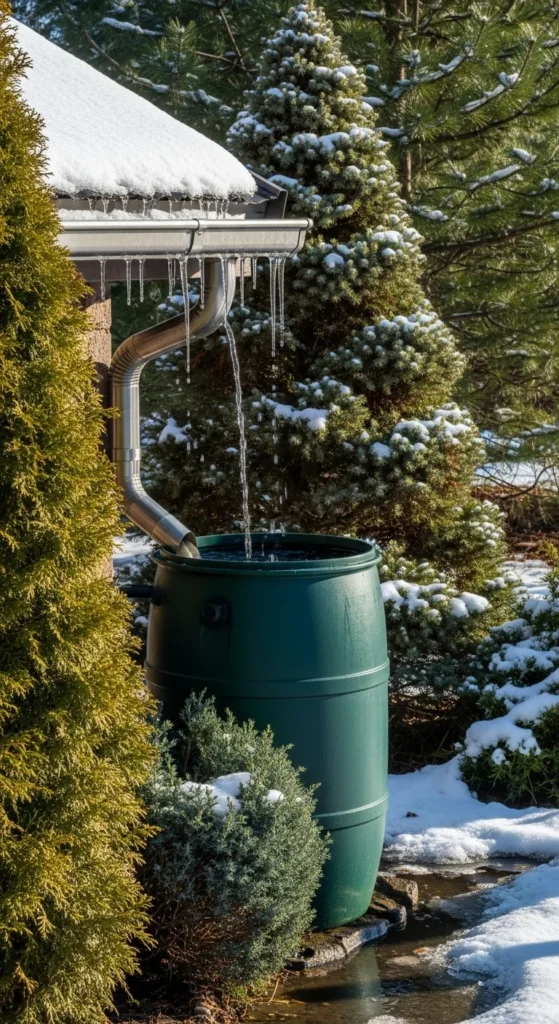
Snow isn’t just a silent blanket—it’s a valuable source of clean water waiting to be captured. When winter melts into spring, most of that water disappears down drains or seeps away unused. But with simple setups, you can collect and reuse snowmelt to water gardens, wash tools, or replenish ponds. These ideas make sustainability both practical and rewarding. Here are 22 smart ways to turn melting snow into a free resource that supports your home and garden all year long.
1. Install a Simple Roof Gutter Collector
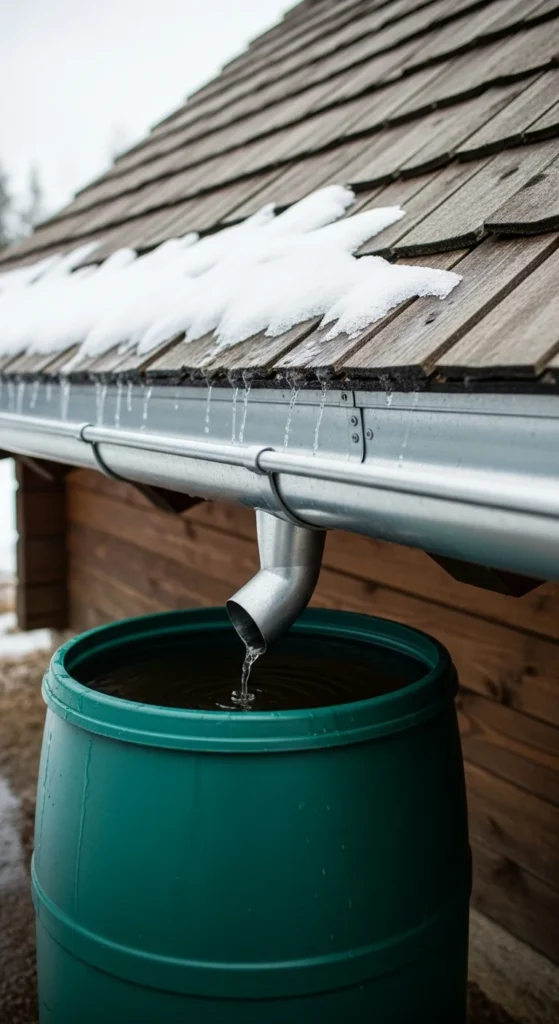
Start by collecting meltwater straight from your roof. Attach leaf guards to prevent debris from clogging the line. Position the gutter at a slight angle to guide flow efficiently into a barrel or tank. If your roof is metal, the snow slides off faster—perfect for faster collection. Use a first-flush diverter to discard the initial runoff so you capture cleaner water for reuse.
2. Repurpose Rain Barrels for Snowmelt
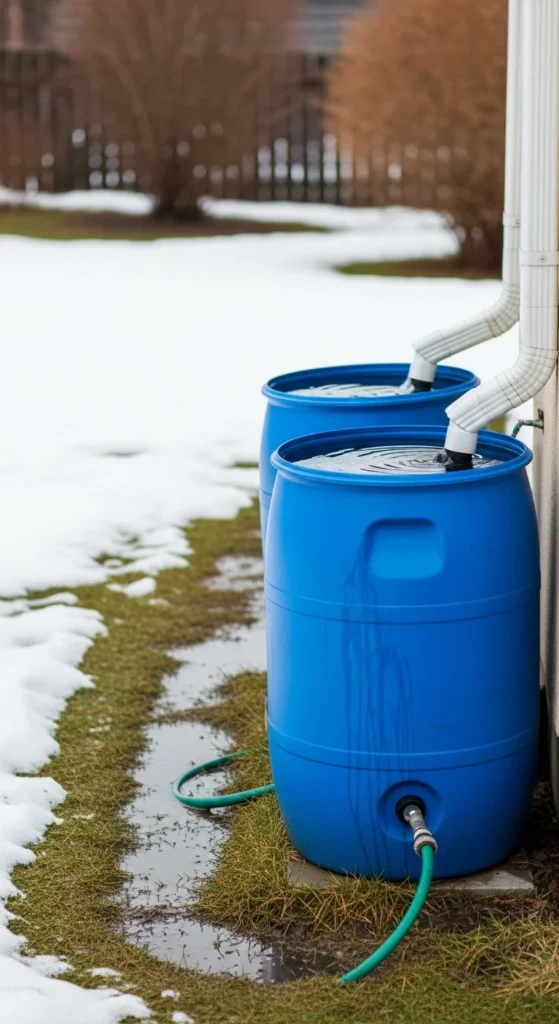
Rain barrels aren’t just for summer storms. Place them under downspouts before the thaw begins. As snow melts, it fills naturally. Choose food-grade barrels with secure lids to prevent algae growth or freezing cracks. Keep a small overflow hose to direct excess into nearby flower beds. This setup saves gallons you’d otherwise pay for.
3. Create a Ground-Level Snow Basin
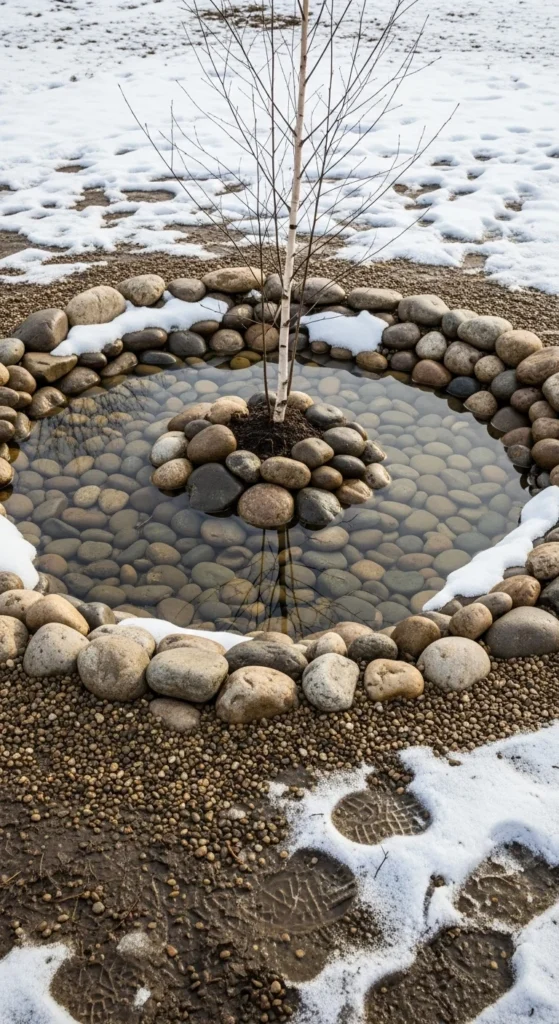
A snow basin is a simple pit designed to absorb meltwater directly into soil. Dig a shallow circle near trees or shrubs, then line it with gravel and mulch. Snow naturally drifts there and melts slowly, letting the soil drink deeply instead of running off. It’s free irrigation without hoses or pumps.
4. Use a Sloped Tarp Collection Setup
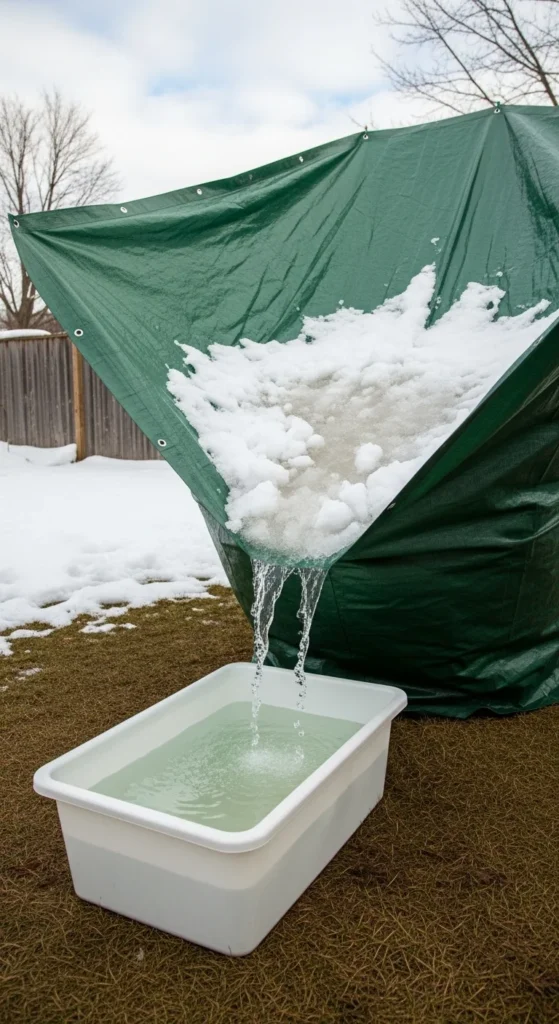
Stretch a sturdy tarp across poles or between fences to guide melting snow into a bin. It’s an easy DIY funnel system for those without gutters. Secure the corners and use a stone weight in the middle to direct flow. When temperatures rise, water trickles neatly into your container—perfect for garden storage.
5. Store Meltwater in Old IBC Totes
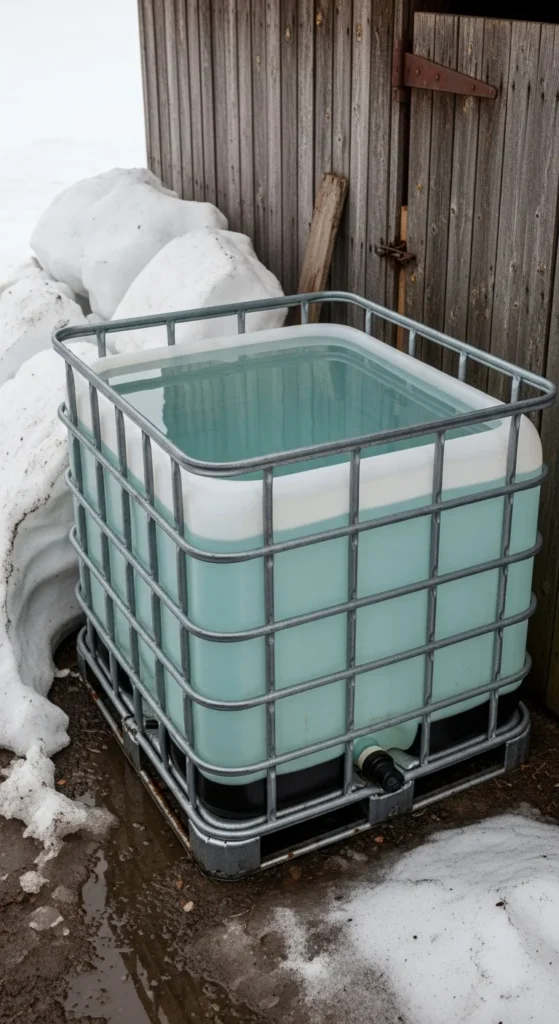
Industrial-grade IBC totes (often used for food storage) make excellent snowmelt tanks. They hold hundreds of liters, come with spouts, and last for years. Clean them thoroughly before use, then connect a downspout or funnel. Even one full tote can handle your early-spring watering needs easily.
6. Build a Stone French Drain
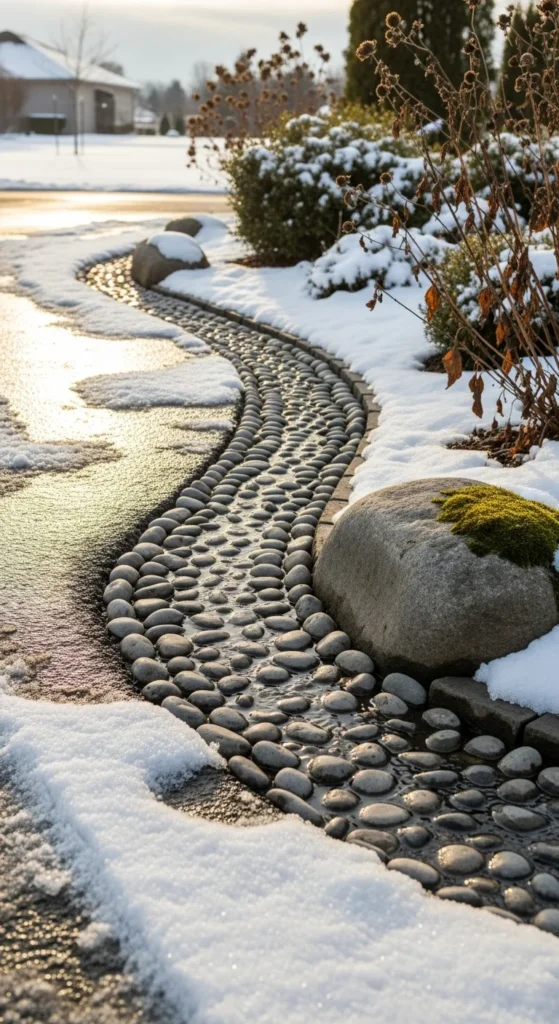
A French drain channels meltwater from driveways or paths into usable areas. Dig a trench, fill it with gravel, and lay perforated piping beneath. The snowmelt filters through, reaching your garden instead of pooling or icing over. It’s both decorative and functional—a small landscape improvement with lasting payoff.
7. Harvest from Greenhouse Roofs
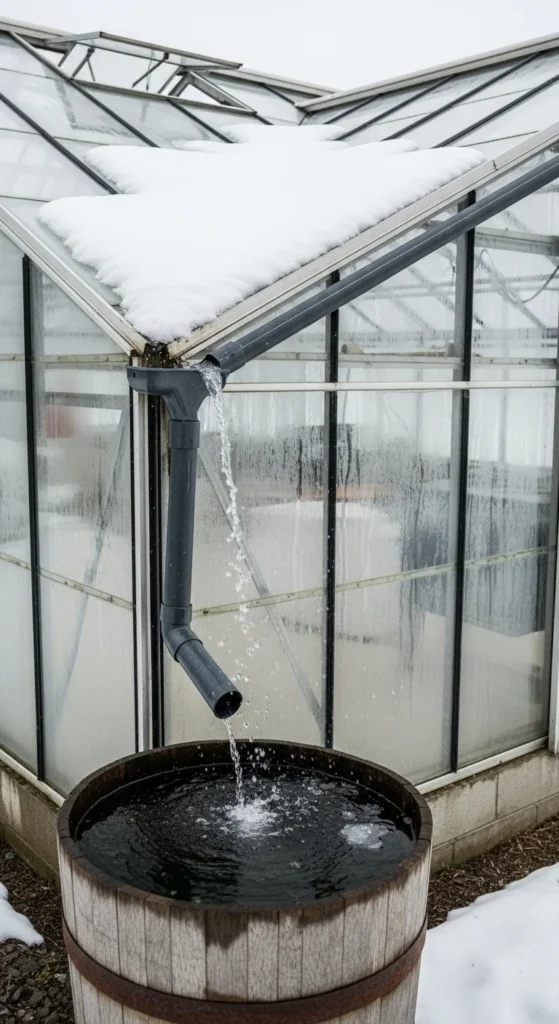
Greenhouses gather lots of snow in winter. Install gutters along the roof edges to redirect meltwater into barrels. Because greenhouse roofs are smooth and slanted, the flow is clean and steady. Use this collected water for early spring seedlings—it’s naturally soft and safe for plants.
8. Collect Melt from Driveway Runoff
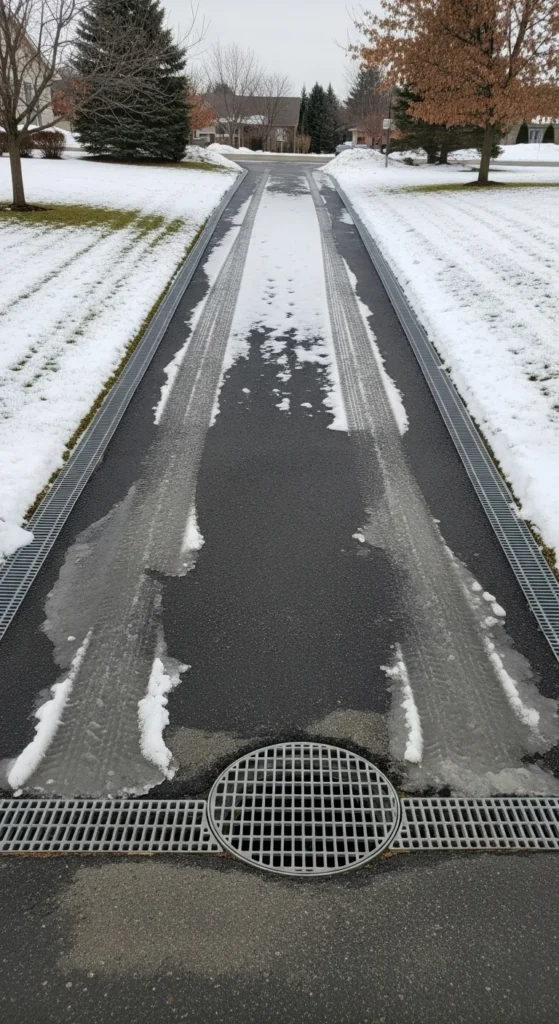
Don’t let driveway meltwater flood the street. Add channel drains along the edges that lead to underground tanks or gravel pits. Filter with mesh screens to keep out sand and leaves. Reuse this water later for washing cars or irrigation. It’s a great way to stop wasting gallons that already flow through your property.
9. Set Up Gutter Diverters
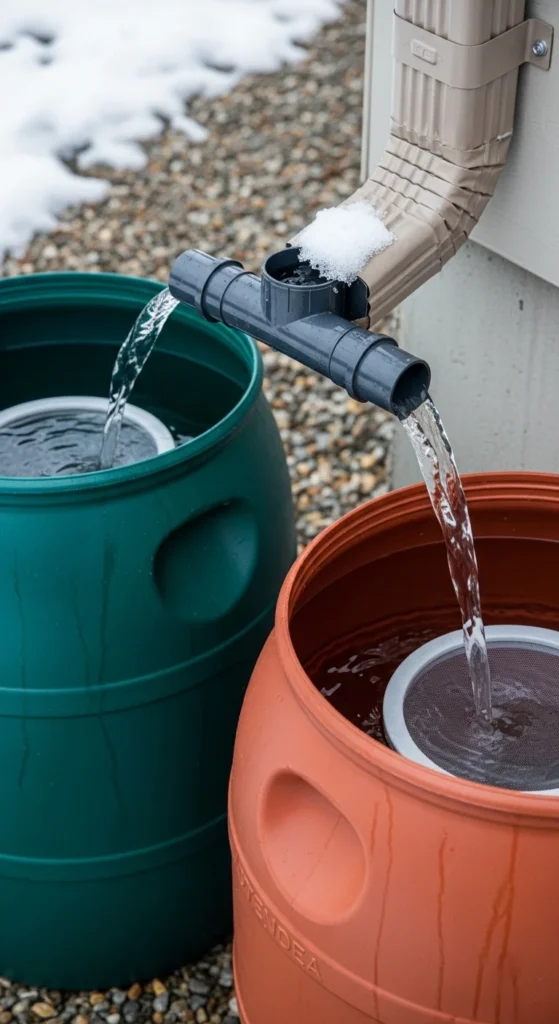
Install splitter diverters on downspouts so you can redirect meltwater where needed. One side can feed a storage tank, the other can send overflow to your garden. The best part? You can adjust them manually. It’s a small gadget that gives big control during melting season.
10. Use a DIY Ice Melt Pathway
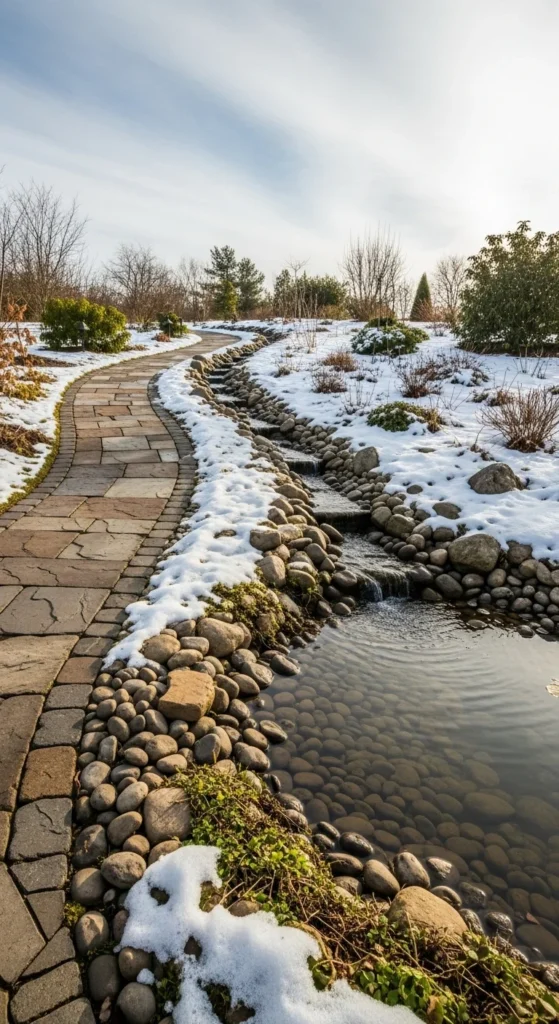
Create natural runoff routes by shaping your garden paths with gentle slopes. Lay pavers or bricks slightly tilted to direct water toward collection barrels or planted areas. This prevents icy puddles and helps reclaim water naturally. No pipes required—just a little planning and gravity.
11. Reuse Plastic Bins and Tubs
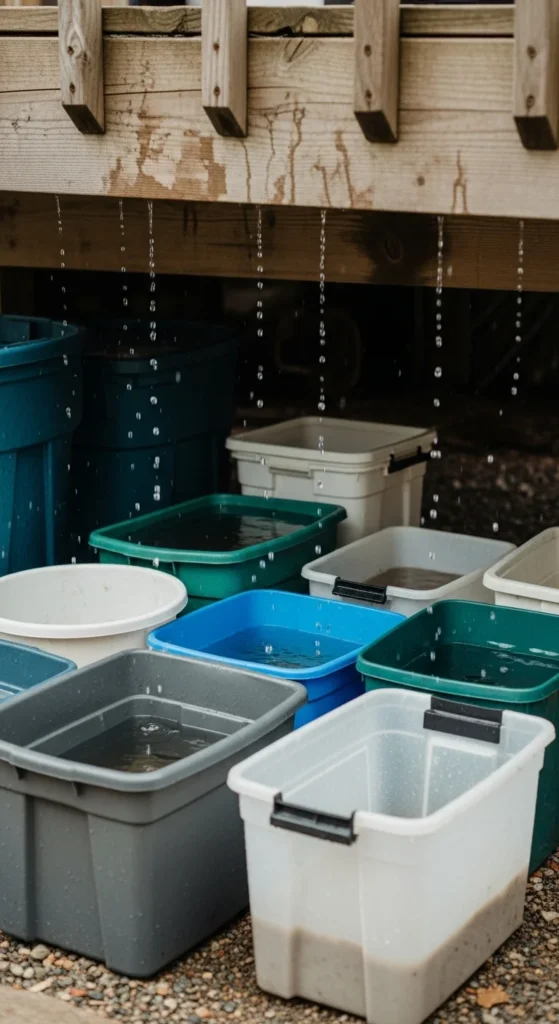
Before tossing old storage bins, use them as temporary meltwater collectors. Place them under dripping eaves or spots where snow piles melt fastest. Once full, cover them to prevent debris. It’s a simple zero-cost way to gather water for compost or cleaning tools.
12. Add a Garden Swale
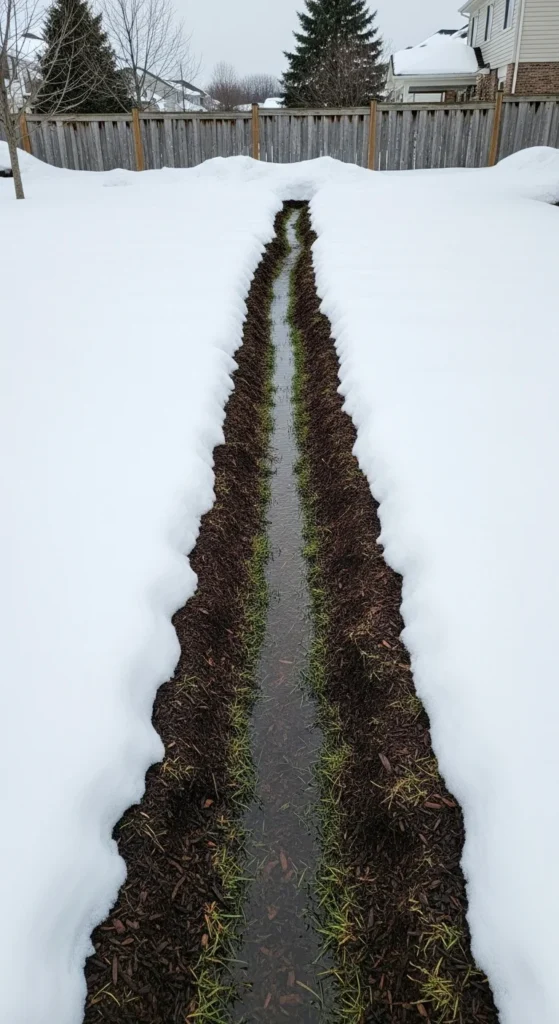
A swale helps channel meltwater gently through your garden. It’s just a shallow trench lined with mulch or gravel that slows water flow, allowing it to seep into soil evenly. You can even plant along it—grasses and herbs thrive where moisture gathers naturally.
13. Install a Gravity Feed System
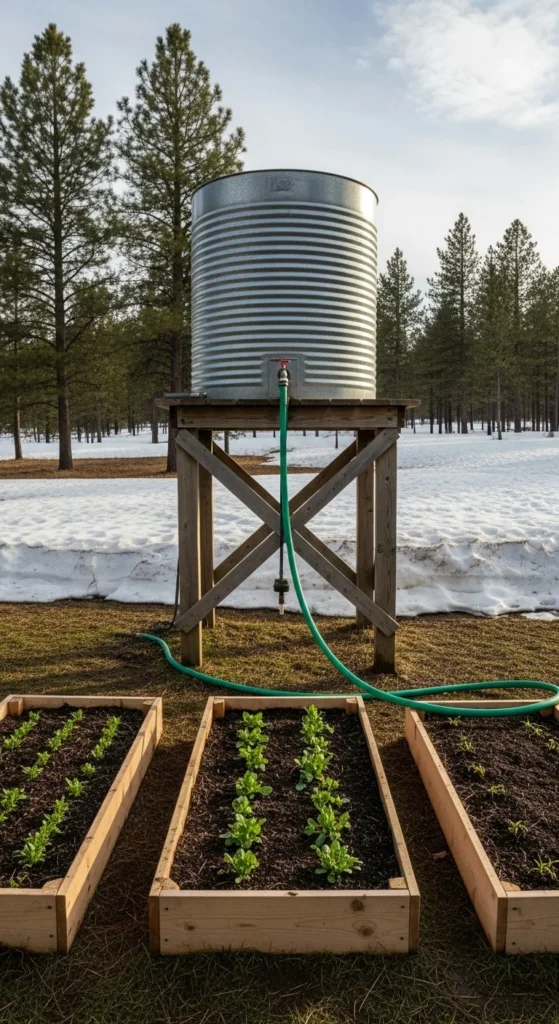
Elevate your meltwater tank slightly using bricks or a stand. Attach a hose with a simple tap at the bottom. Gravity will handle the rest, feeding water gently into your beds. It’s a power-free solution for winter-to-spring watering.
14. Filter Meltwater with Sand Layers
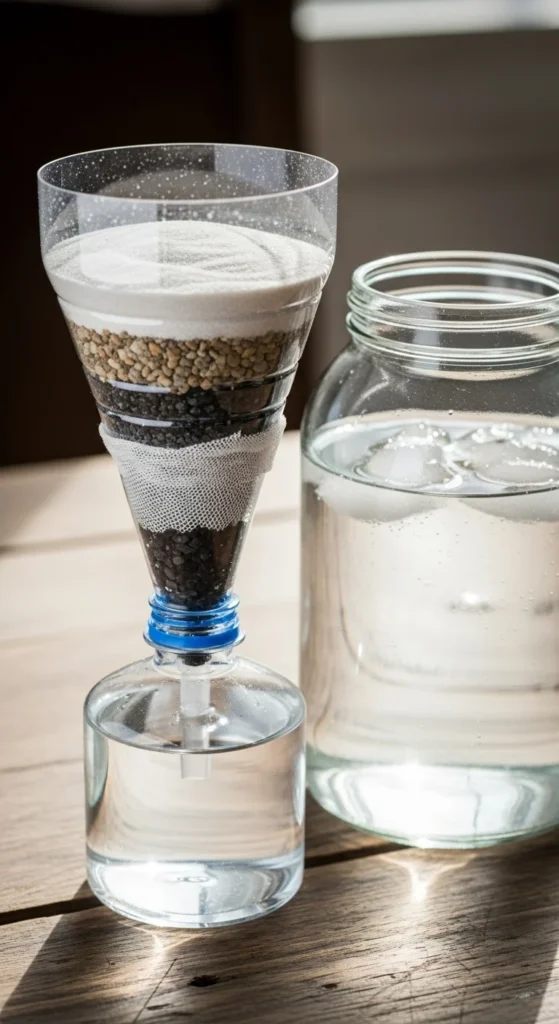
If your snow comes from roof runoff, filter it before using. A basic sand-and-charcoal filter cleans particles naturally. You can make one using a large bottle or bucket. Clean water flows out from the bottom, perfect for outdoor chores or garden use.
15. Line Garden Beds with Channels
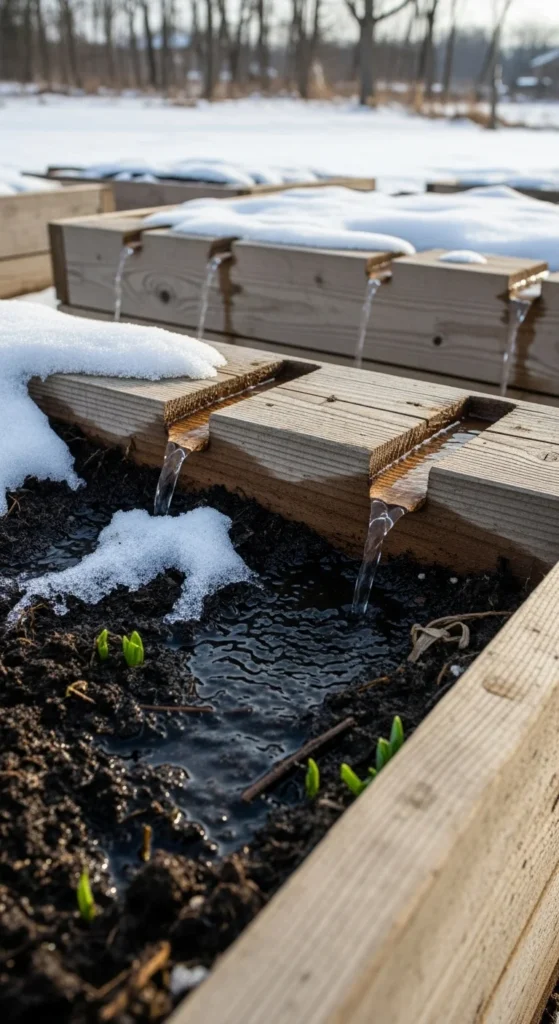
Shape small channels or ridges along raised beds to guide meltwater directly to roots. It keeps soil evenly moist while preventing runoff. Use simple hand tools to carve these paths. When snow melts, it waters your garden slowly, giving roots time to absorb moisture fully.
16. Build a Mini Ice Reservoir
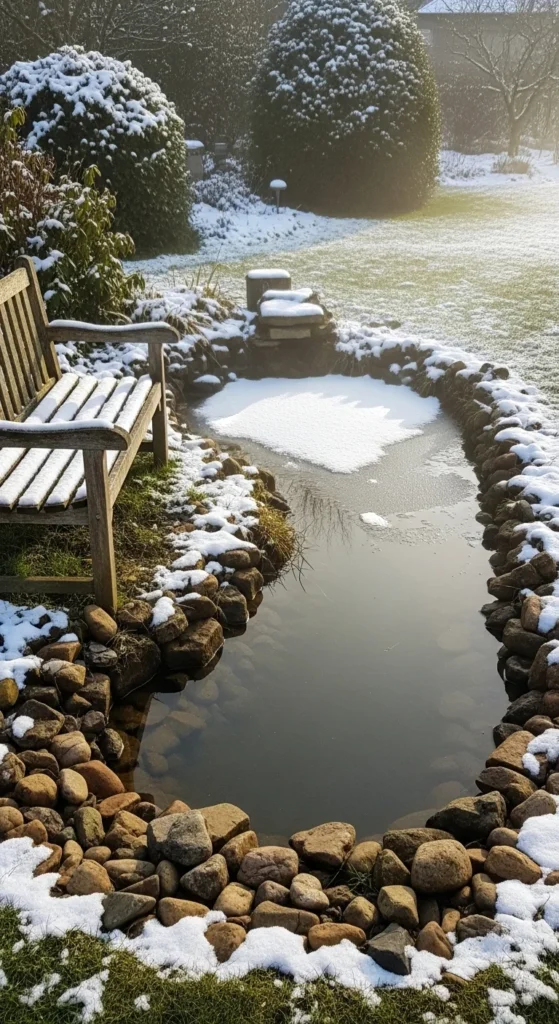
Pile snow into a shallow pond area during winter. As it melts, it forms a temporary reservoir. You can pump or scoop that water later for use. Line the pit with plastic sheeting or clay soil to hold moisture longer. It’s a low-effort system that uses what nature already gives.
17. Collect from Patio Drips
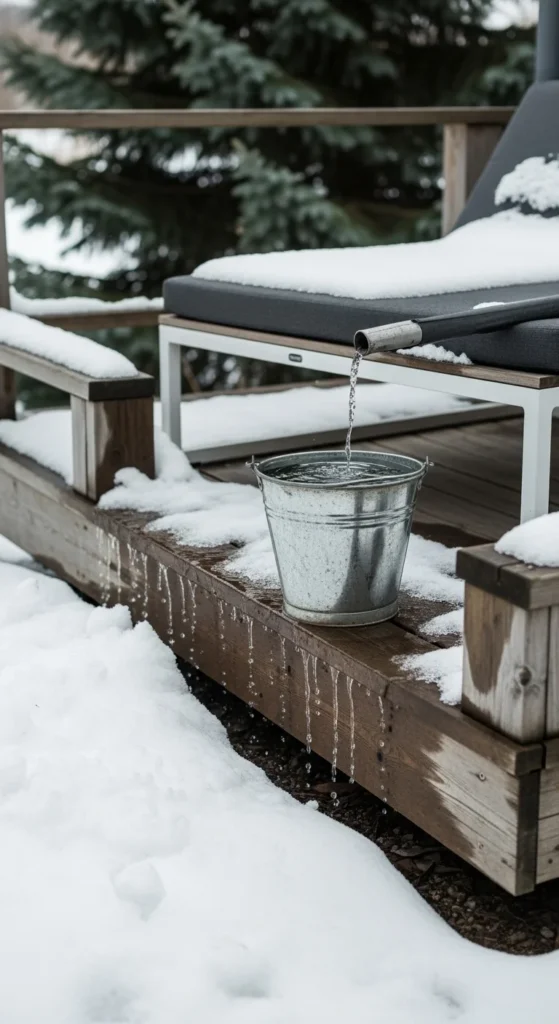
Patios often shed snow quickly. Place buckets or tubs under drip points to catch runoff. The water is surprisingly clean and perfect for rinsing tools. A few well-placed containers can make use of melt that usually goes straight into drains.
18. Redirect Gutter Overflow to Trees
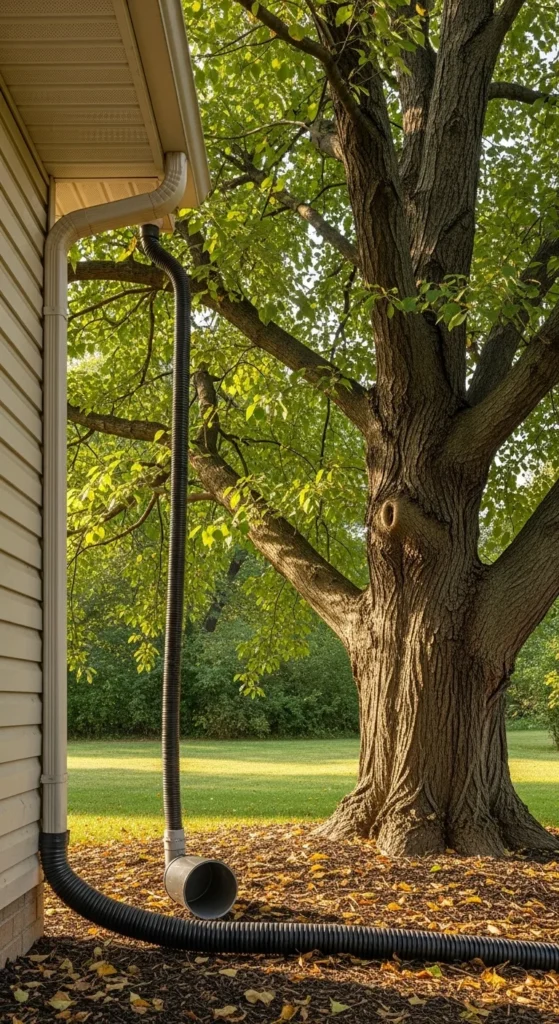
Attach a short extension pipe to your downspout to direct overflow straight to your tree bases. Trees love slow, deep watering, and this gives them exactly that without extra effort. Add gravel around the base to prevent erosion or puddling.
19. Collect Snow in Buckets Before Melt
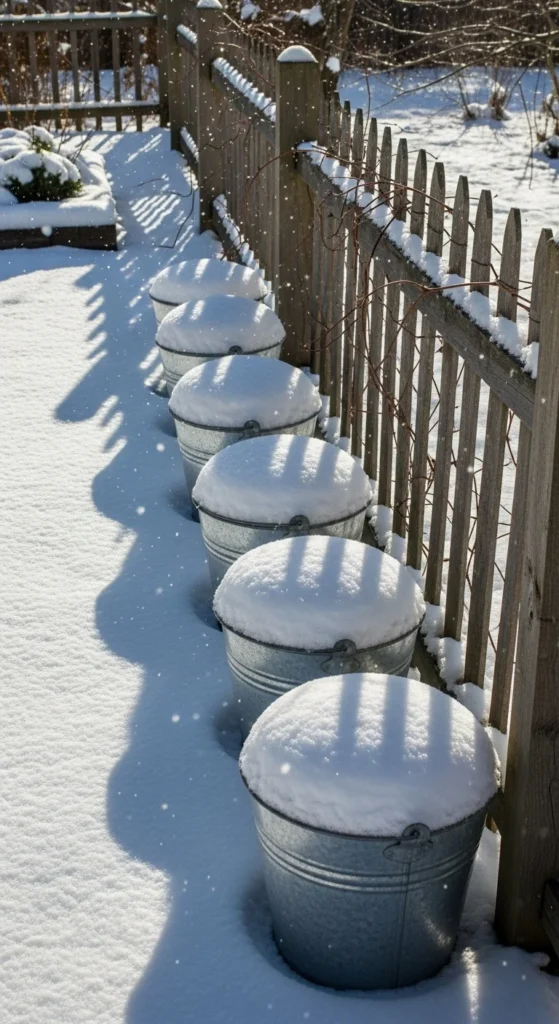
On clear days, scoop clean snow into large buckets. Leave them in sunlight to melt naturally. It’s an easy way to gather water without tools or structures. Keep lids handy to cover them once melted—preventing debris from falling in.
20. Build a Simple Ice-Trough System
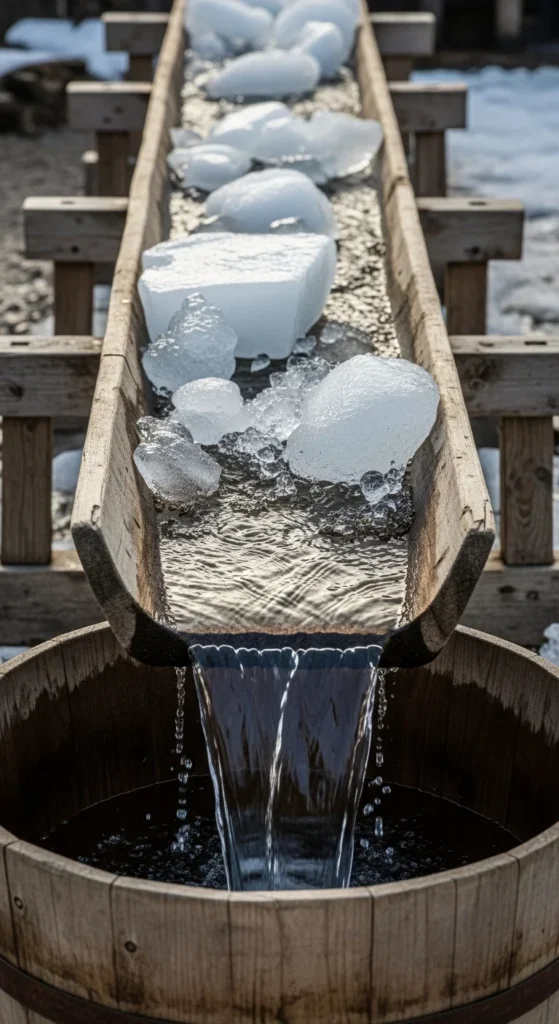
If you get steady meltwater from a roof or hill, channel it through a wooden trough. Even a repurposed gutter section can work. The trough guides water to barrels cleanly and avoids muddy paths. It’s old-fashioned, functional, and can be built in an hour.
21. Use an Underground Storage Pit
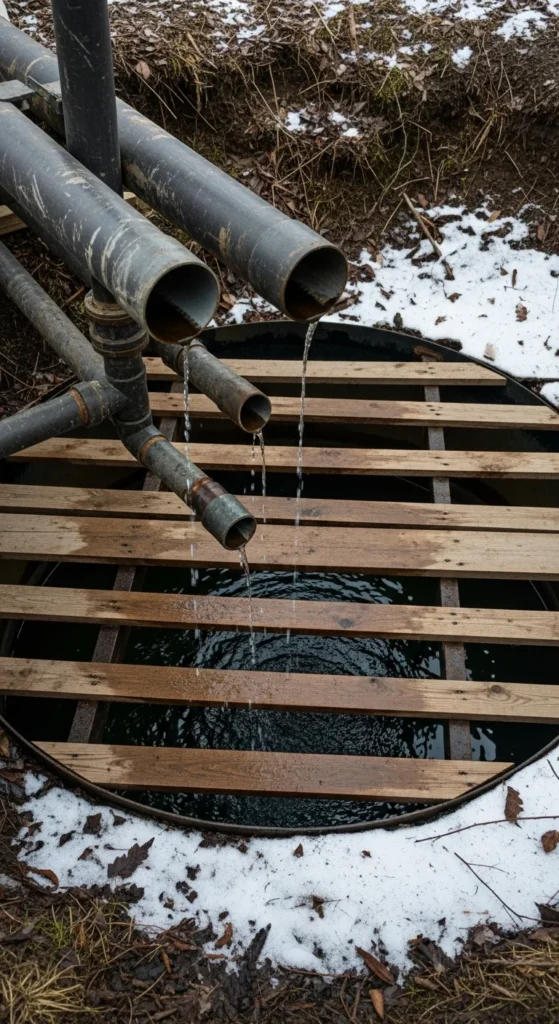
For larger properties, an underground tank is worth the effort. Install one under a shed or patio and connect it to downspouts. The earth’s insulation keeps the water cool and stable. You can pump it out later for garden or lawn use when needed.
22. Combine Meltwater with Rainwater Systems
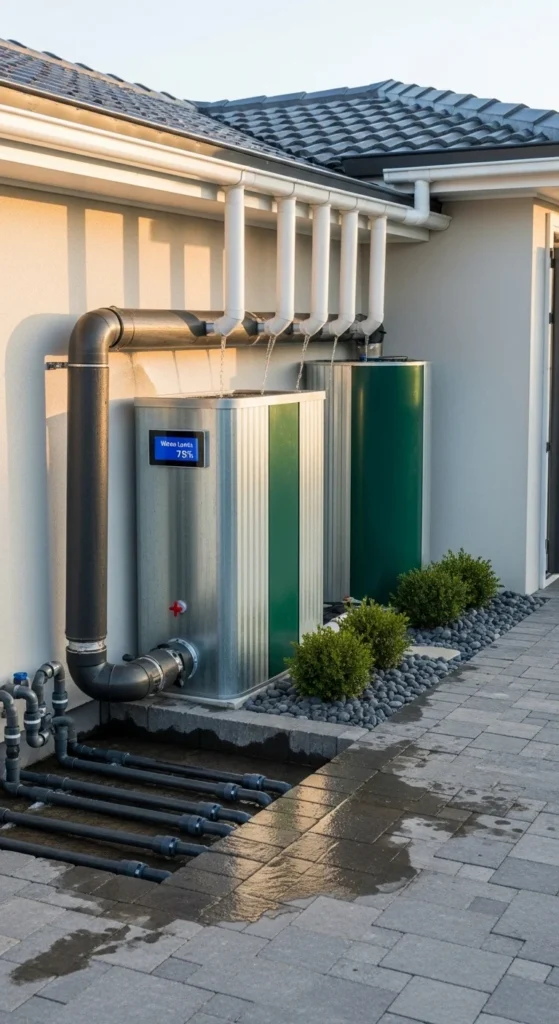
Connect your snowmelt collection lines with your rainwater tanks. Use valves to control flow between the two systems. This way, you maximize every drop through the year—snow in winter, rain in spring. A single setup, double the use, all sustainable.
Conclusion
Snowmelt water harvesting is an underused winter treasure. With simple DIY systems and everyday materials, you can reclaim hundreds of gallons that would otherwise disappear. Whether you use barrels, basins, or clever slopes, every small effort adds up to meaningful savings. As the New Year begins, these ideas help your garden and home stay resourceful—and remind you that sustainability often starts with a single melted drop.

Leave a Reply