

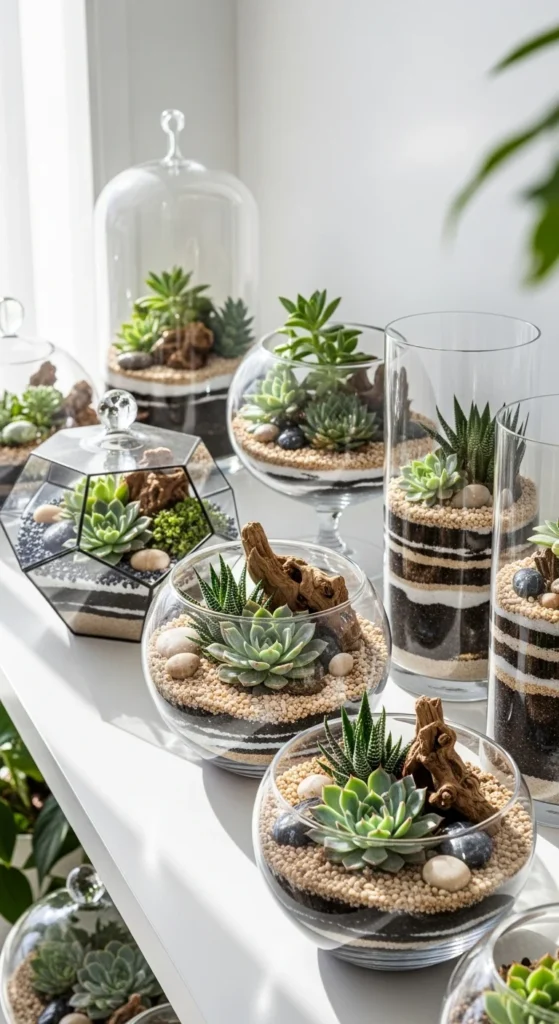
Indoor succulent terrariums bring calm energy into a room while helping the air feel lighter and more grounded. Their compact layouts, clean layers, and low-maintenance nature make them perfect for desks, shelves, or bedside corners. These ideas focus on simple designs, accessible materials, and thoughtful arrangements that help your space feel balanced. Whether you prefer minimalist bowls or layered glass jars, each concept supports slow, relaxed indoor moments.
1. Minimal Sand-Layer Bowl
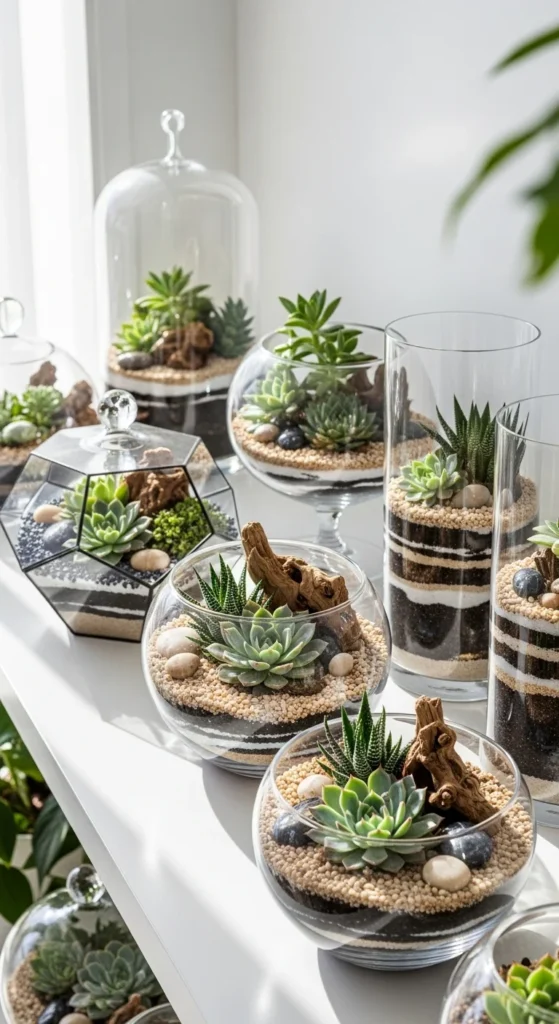
A sand-layer bowl adds calm structure to any room. Its low profile fits well on narrow shelves or work desks. Keep the design simple so the succulents stand out. Use contrasting sand colors to create soft stripes.
Place coarse sand at the bottom, then finer layers on top. Add small succulents with sturdy roots. A budget-friendly trick is to use craft-store sand and inexpensive glass bowls. Keep watering light to protect the layers. Add a few polished stones for texture. Wipe the bowl weekly so dust doesn’t dim the clarity. This design works well in bright indoor spots where sunlight stays gentle.
2. Mason Jar Desert Scene
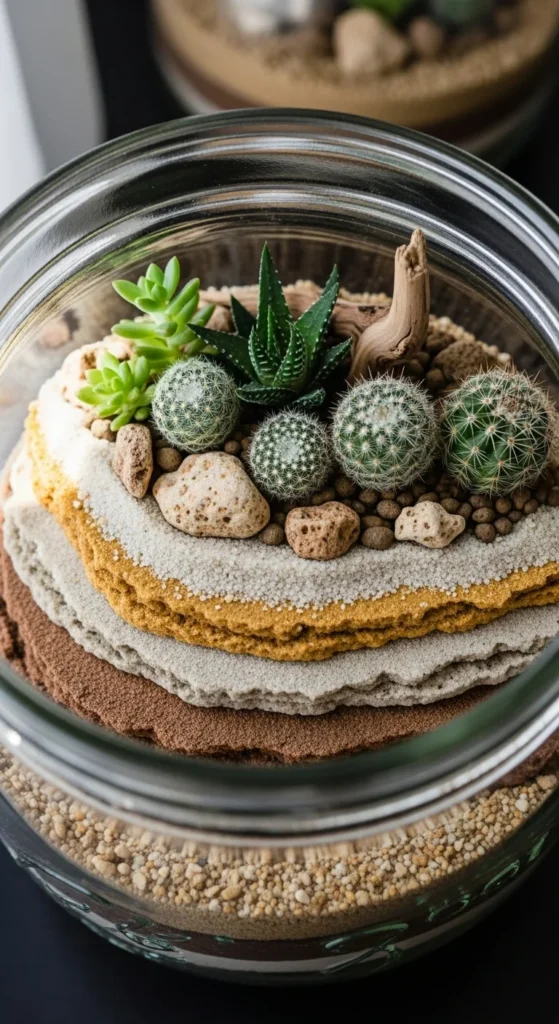
Mason jars turn simple succulents into tidy desert scenes. Their narrow opening makes the layout look intentional and contained.
Fill the bottom with small pebbles and charcoal for drainage. Add a blend of sand and potting mix. Use small succulents like haworthia or tiny echeverias. For a budget approach, reuse old jars instead of buying new ones. Tuck a few miniature stones inside. Keep watering minimal since jars hold moisture. Place the jar near a window that gives indirect light.
3. Hanging Globe Terrarium
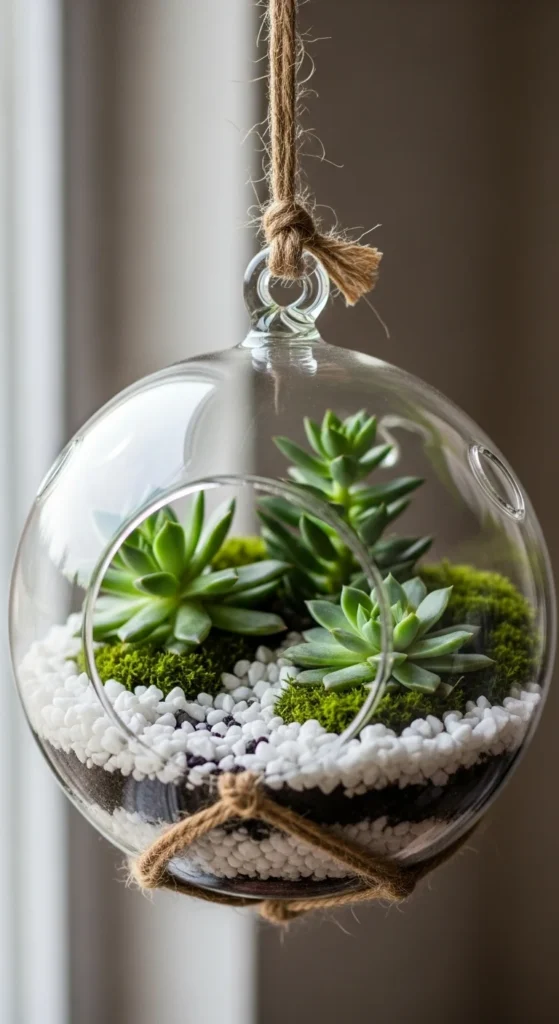
Hanging globes add visual height to a room and keep surfaces uncluttered. They bring gentle movement when air shifts.
Use lightweight succulents that handle limited soil—such as small haworthias or string-of-buttons. Add a thin layer of pebbles and a light soil mix. Hang the globe from a sturdy hook. For a low-cost version, use fishing line instead of decorative twine. Water using a syringe to avoid spills. Keep the globe in a bright spot but away from intense heat.
4. Layered Cylinder Terrarium
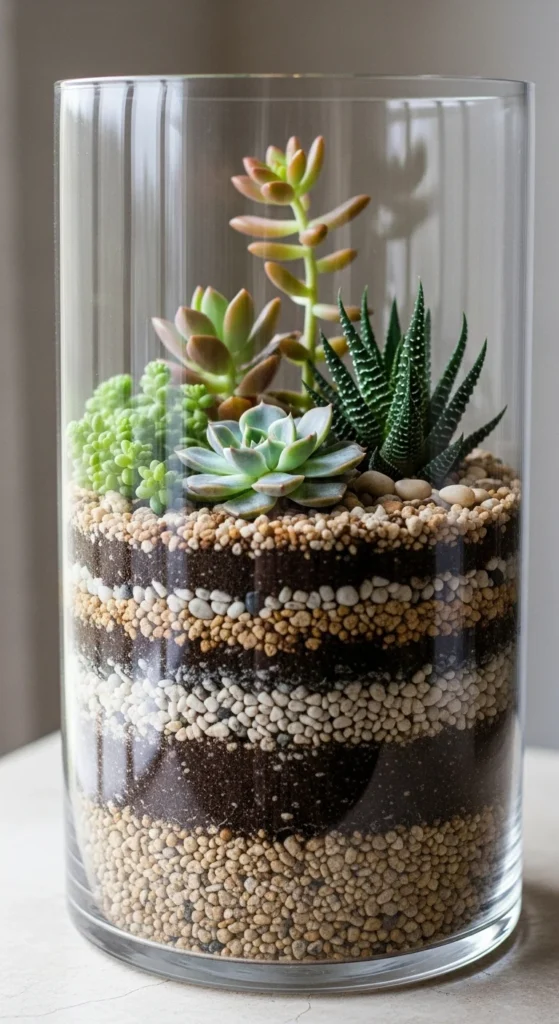
Cylinders give your terrarium a clean, vertical look. They suit taller succulents that grow upward.
Fill the bottom with gravel for drainage. Add soil in a compact layer above. Choose upright varieties like jade or aloe juveniles. A budget trick is to reuse old vase cylinders. Add white stones near the top for a polished look. Water lightly so soil doesn’t settle unevenly. Place the cylinder near corners to lift the room visually.
5. Driftwood Base Terrarium
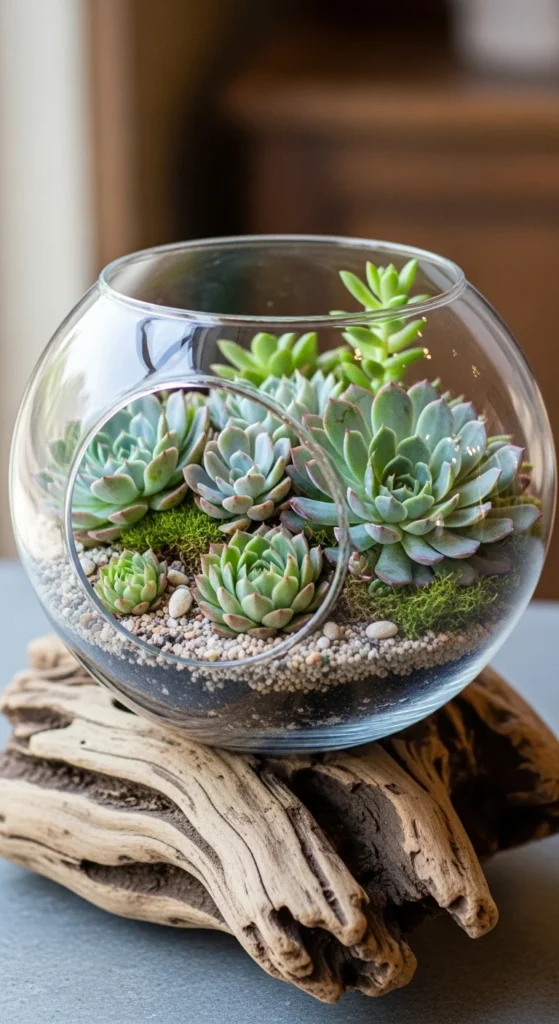
A driftwood base introduces warm, natural contrast. It anchors the terrarium visually while adding rustic charm.
Use shallow bowls for this style. Choose succulents with similar color tones so the driftwood stays the star. For a budget version, collect driftwood from beaches or riversides after drying it thoroughly. Keep watering gentle to avoid moisture buildup near the wood. This setup works well on coffee tables and bedside corners.
6. Mini Rock Garden Jar
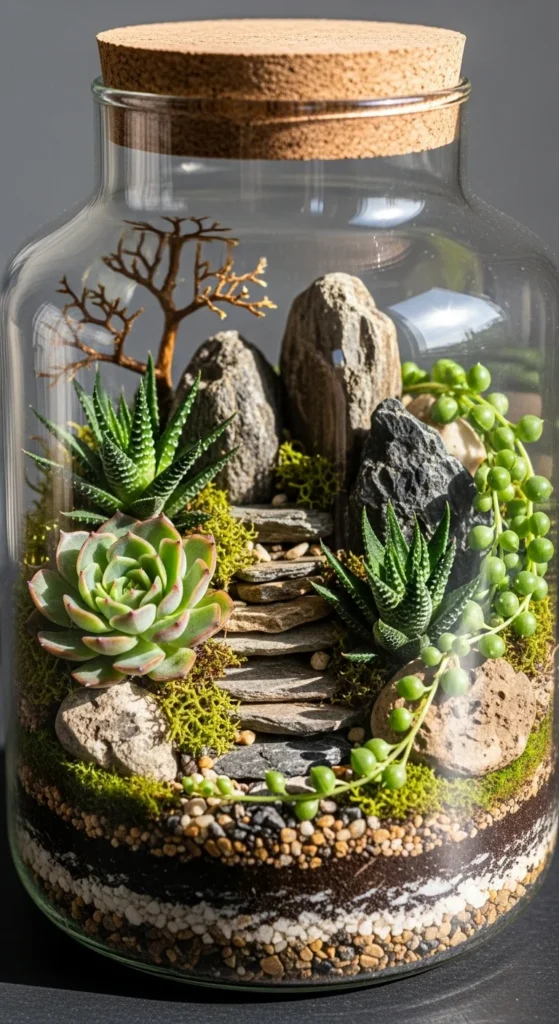
Mini rock gardens bring subtle outdoor energy indoors. The stones create a grounding effect.
Use a jar with a wide opening. Arrange large stones first, then tuck in small succulents. Add a thin sand layer to complete the look. Reuse old jars or candle containers to save money. Water only when leaves wrinkle slightly. Place this terrarium near natural light but avoid direct sun that might overheat the stones.
7. Low-Profile Zen Dish
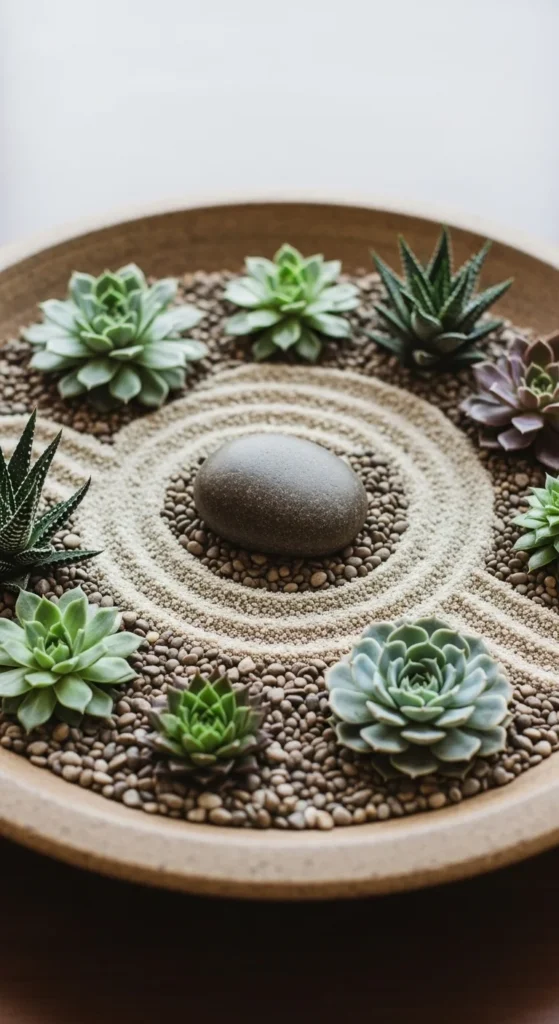
A zen dish brings calming flow into your space. Its wide layout works well as a centerpiece.
Fill the dish with a thin layer of soil and fine gravel. Place succulents in simple, balanced clusters. Add a miniature rake pattern for a serene look. You can use ceramic plates you already have to keep costs low. Mist lightly when soil looks dry. This layout works nicely on dining tables or quiet reading corners.
8. Glass Box Terrarium
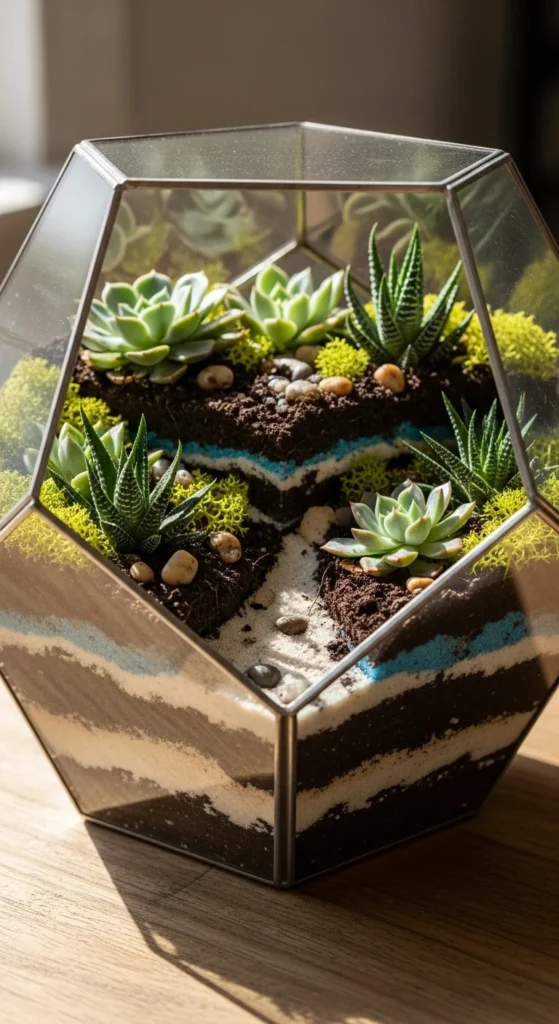
Glass boxes create clean lines and show off terrarium textures. They complement modern interiors.
Layer gravel, soil, and sand carefully. Use succulents with strong shapes like zebra haworthia. A budget approach is to buy geometric boxes from craft stores. Keep watering minimal so the glass sides stay clear. Add small crystals or stones if you like subtle accents.
9. Pebble-Heavy Open Bowl
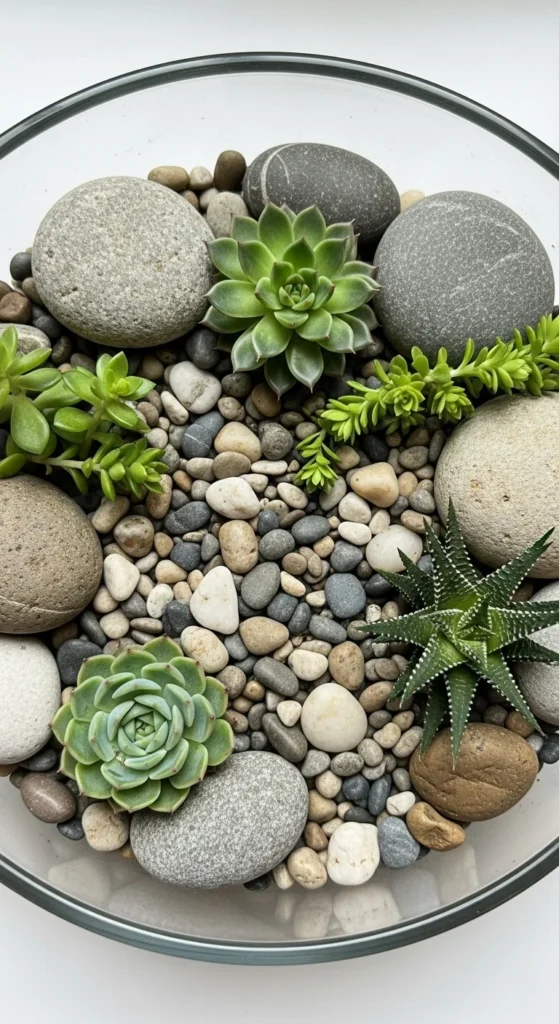
Pebble-heavy bowls offer structured minimalism. They keep attention on the succulents’ shapes.
Use pebbles as the main visual layer. Add soil only in pockets where plants sit. Choose sturdy varieties that handle minimal soil. For a budget idea, collect smooth stones from nature trails. Water slowly so moisture reaches root pockets. Place this bowl in bright indoor spots for best results.
10. Terrarium with Colored Sand Art
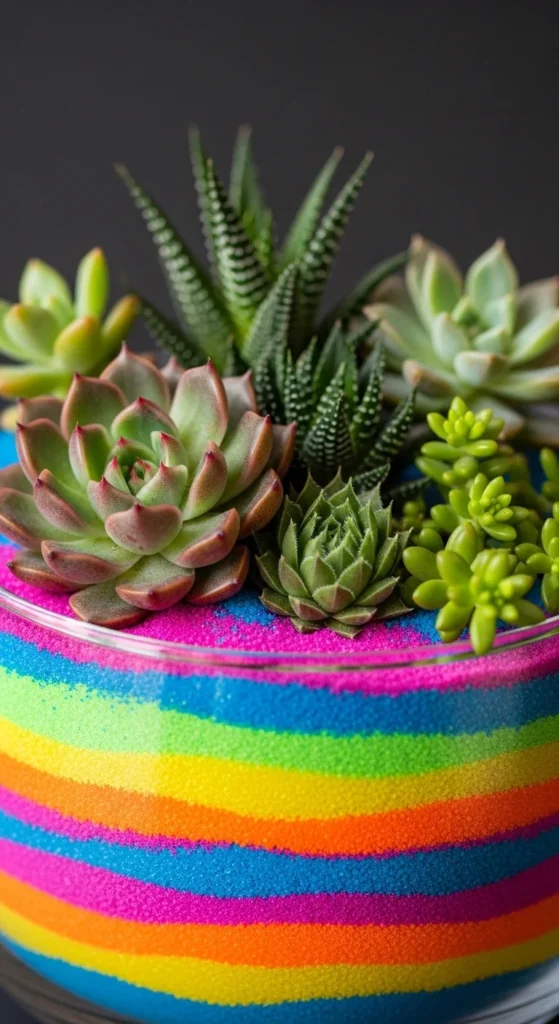
Colored sand adds artistic flair to your terrarium. The vibrant layers brighten small spaces.
Layer different sand colors one at a time using a funnel. Add a thin soil layer above before planting. Use compact succulents so layers stay visible. For a cheaper option, mix food coloring with white sand. Avoid overwatering so layers don’t mix. Place this terrarium on shelves that catch eye-level attention.
11. Apothecary Jar Succulent Mix
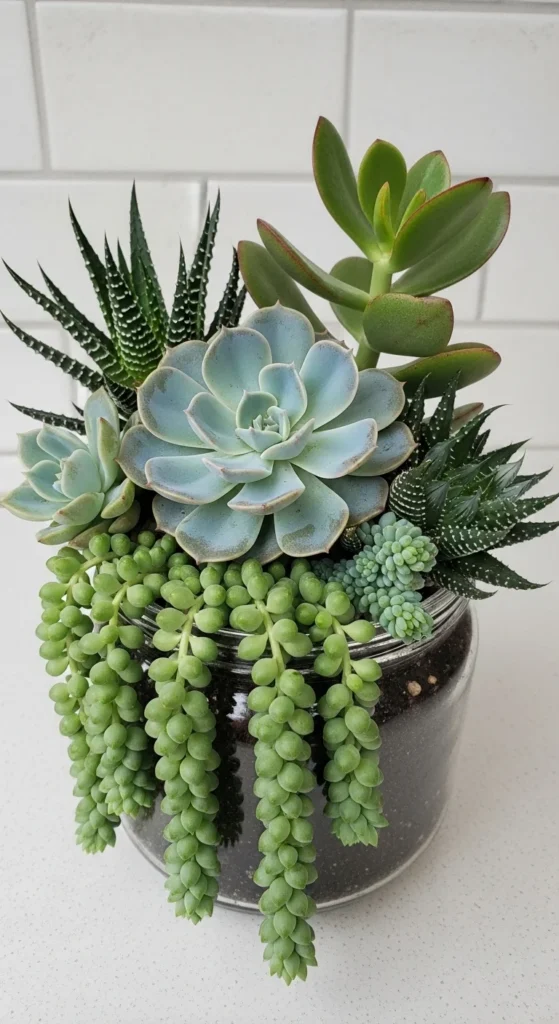
Apothecary jars bring classic elegance to indoor spaces. Their tall shape suits multiple succulents.
Add pebbles, charcoal, soil, and gravel in clear layers. Place larger succulents at the back and smaller ones near the front. A budget idea is to buy jars from thrift stores. Keep the lid off so air circulates. Water sparingly to avoid trapped humidity.
12. Open Terrarium with Crystal Accents
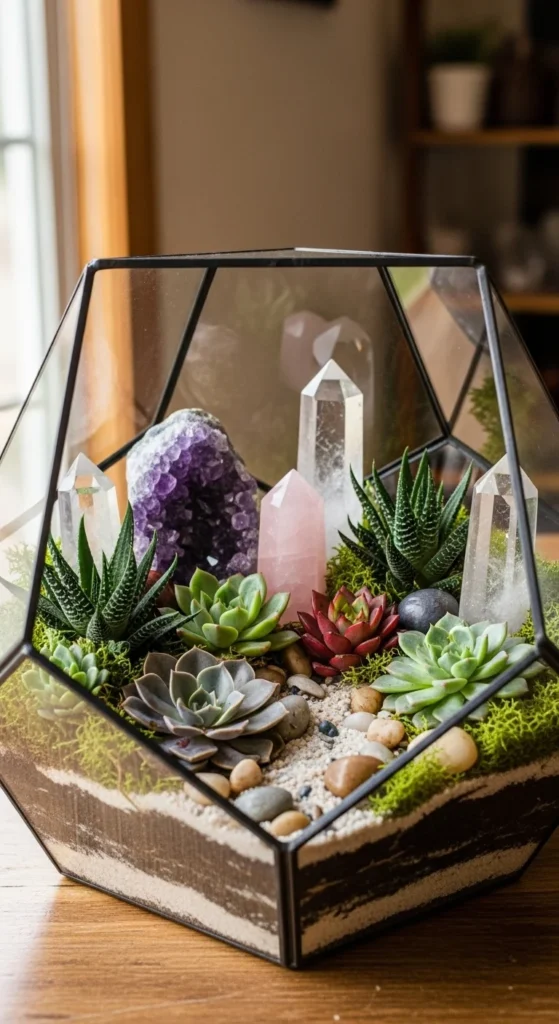
Crystal accents add gentle sparkle without overwhelming the design.
Use a bowl or glass dome with an open front. Place crystals toward the edges so succulents stay the focus. For a cost-saving option, use tumbled stones from craft stores. Water lightly and avoid crowding plants.
13. Wooden Frame Terrarium
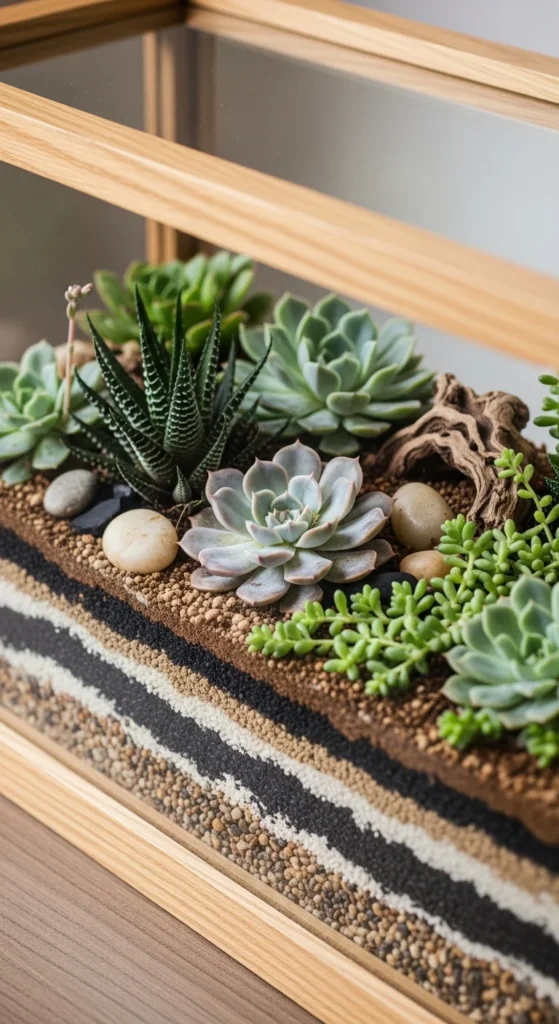
Wood-framed terrariums bring earthiness indoors. They fit rustic or minimalist rooms.
Use a shallow frame with a glass top or open face. Fill with soil, gravel, and small succulents. For a budget approach, reuse wooden photo frames and attach acrylic panels. Keep the design simple to highlight the wood grain.
14. Wine Glass Mini Garden
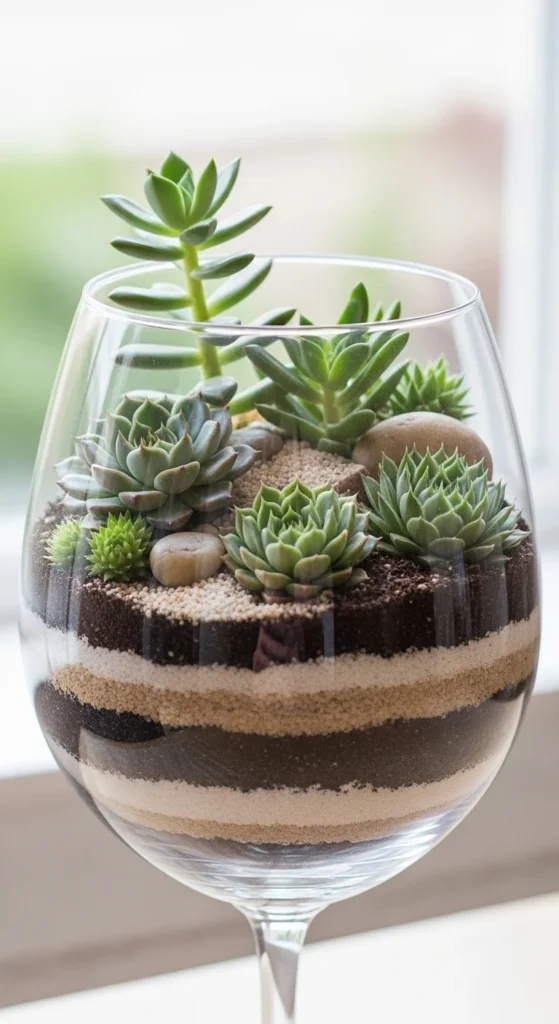
Wine glasses create elegant, compact terrariums perfect for small spaces.
Add pebbles, soil, and fine sand to the glass. Use tiny succulents with slow growth. You can repurpose old glasses instead of buying new ones. Water using a dropper. Keep it in bright but indirect light.
15. Tall Dome Terrarium
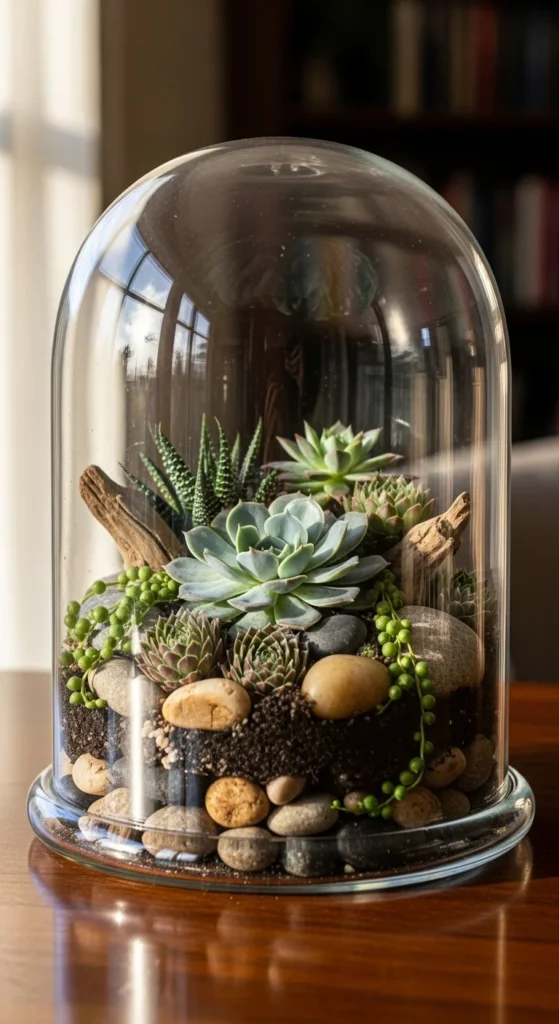
Glass domes create a greenhouse-like feel while keeping dust away.
Use drought-tolerant succulents since domes hold moisture. Add gravel at the base and keep soil thin. Lift the dome occasionally for airflow. A budget dome can be made from upside-down jars.
16. Metal-Frame Prism Terrarium
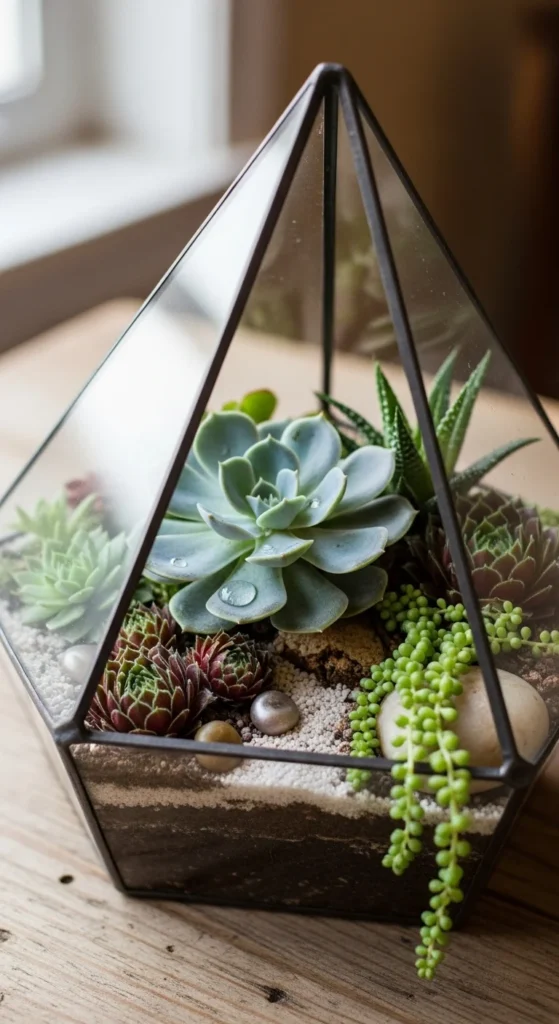
Prism terrariums add geometric charm to modern spaces.
Fill the base with soil and gravel. Place succulents with strong symmetry. For a cheaper option, choose craft-store glass prisms. Water gently along one corner so soil stays put.
17. Multi-Level Shelf Terrarium Garden
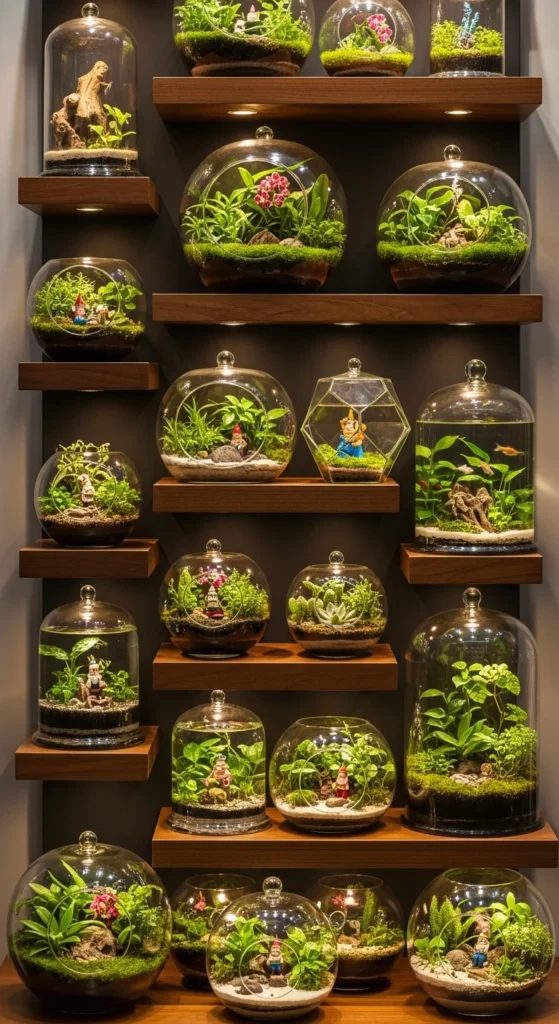
A multi-level shelf displays several terrariums at once.
Use shelves of different heights to create visual rhythm. Mix terrarium sizes while keeping color tones similar. A budget option is to reuse old bookcases. Add small LED lights for extra glow.
18. Succulent Terrarium with Moss Patches
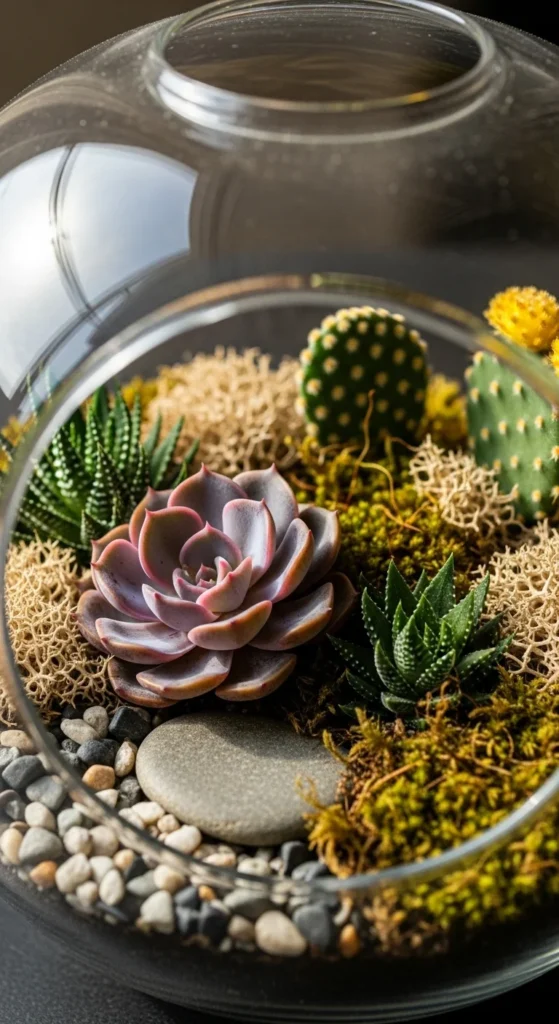
Moss patches soften the look of the terrarium.
Use dried moss to avoid moisture problems. Place moss around succulents without covering stems. Collect natural moss and dry it at home to save money. Keep the terrarium in low-humidity rooms.
19. Stone-Edge Bowl Terrarium
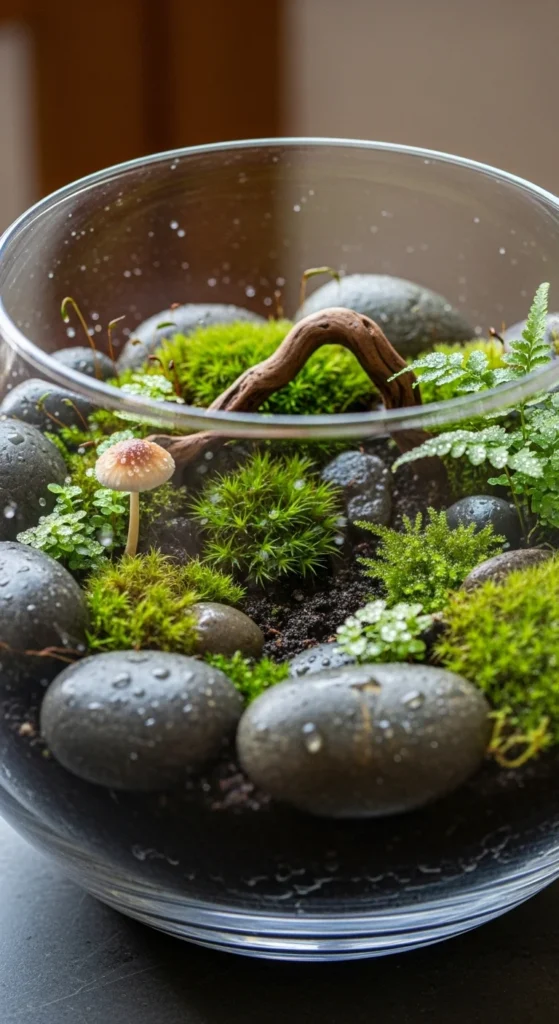
Stone edging adds structure and draws attention inward.
Place large stones around the bowl rim. Add soil and succulents inside the circle. Use recycled stones from outdoor areas. Keep watering light.
20. Mini Desert Scene with Cacti & Succulents
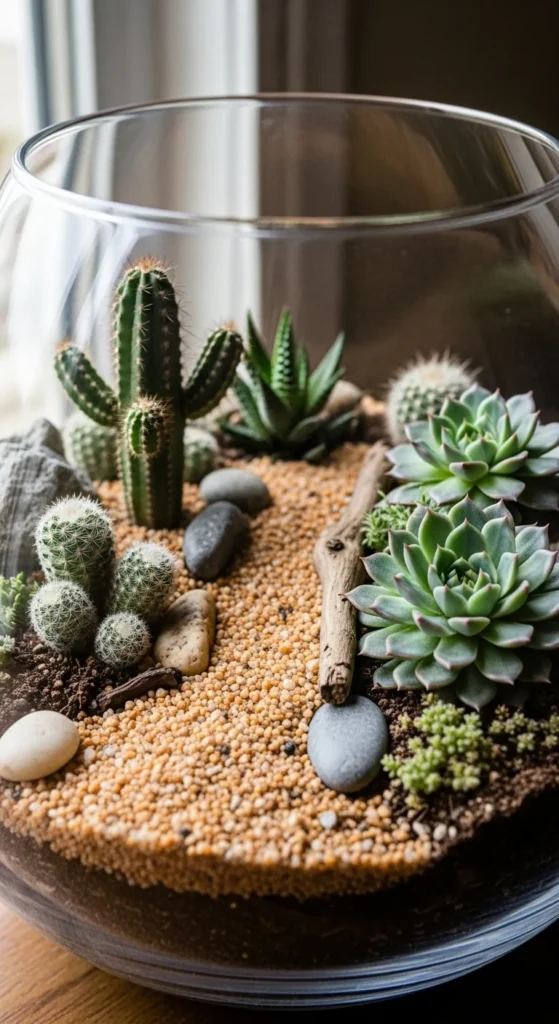
A desert scene terrarium brings warm energy indoors.
Use sand, stones, and sparse planting. Choose small cacti and hardy succulents. Wear gloves when arranging. Water sparingly.
21. Terrarium with LED Glow Base
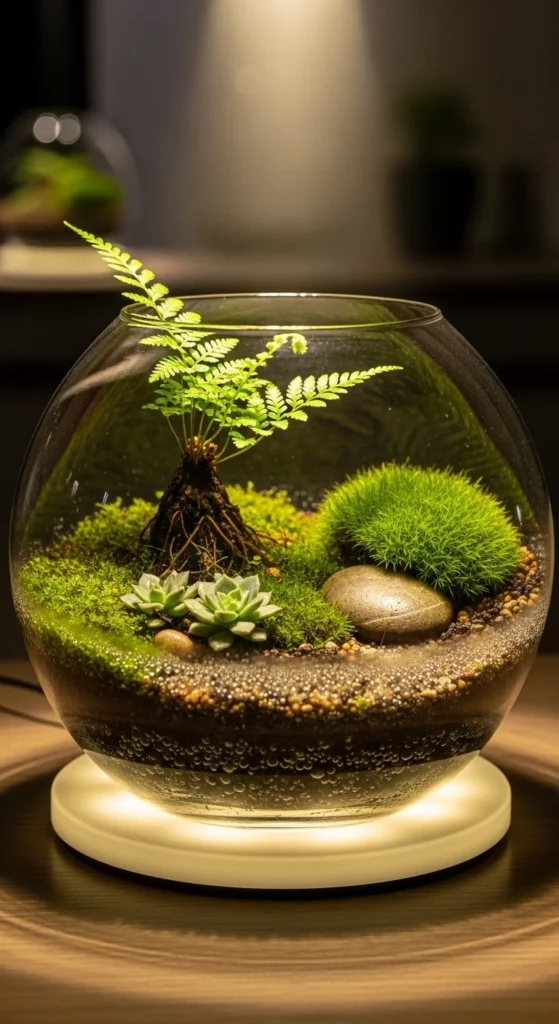
LED glow bases add soft ambiance.
Place your terrarium on a flat LED pad. Choose warm tones for calm lighting. A budget option is a USB-powered base. Keep wiring hidden.
22. Upcycled Candle Holder Terrarium
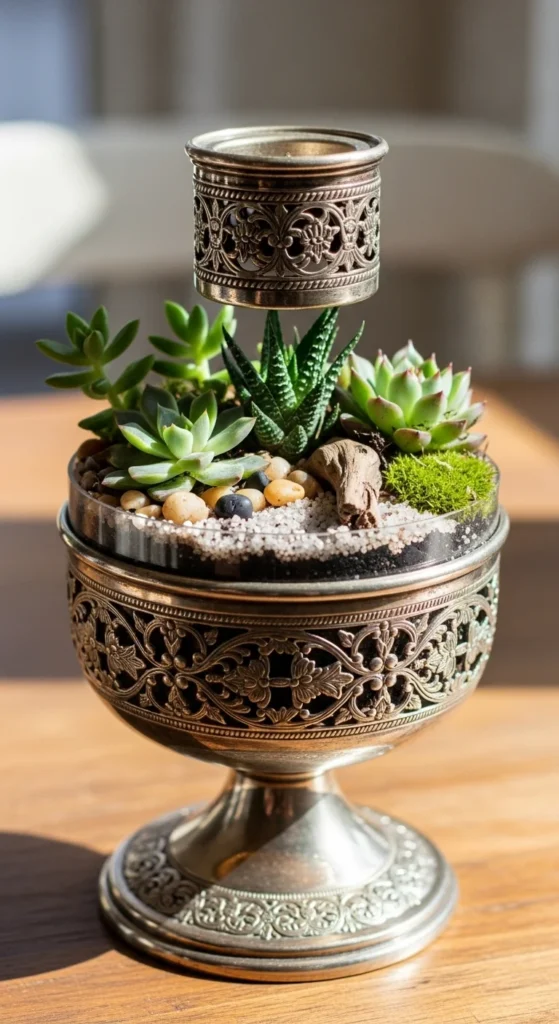
Candle holders make charming mini terrariums.
Fill the holder with gravel and soil. Choose tiny succulents that won’t outgrow the space. Reuse old holders to save money. Water using a dropper.
23. Open Geode-Themed Terrarium
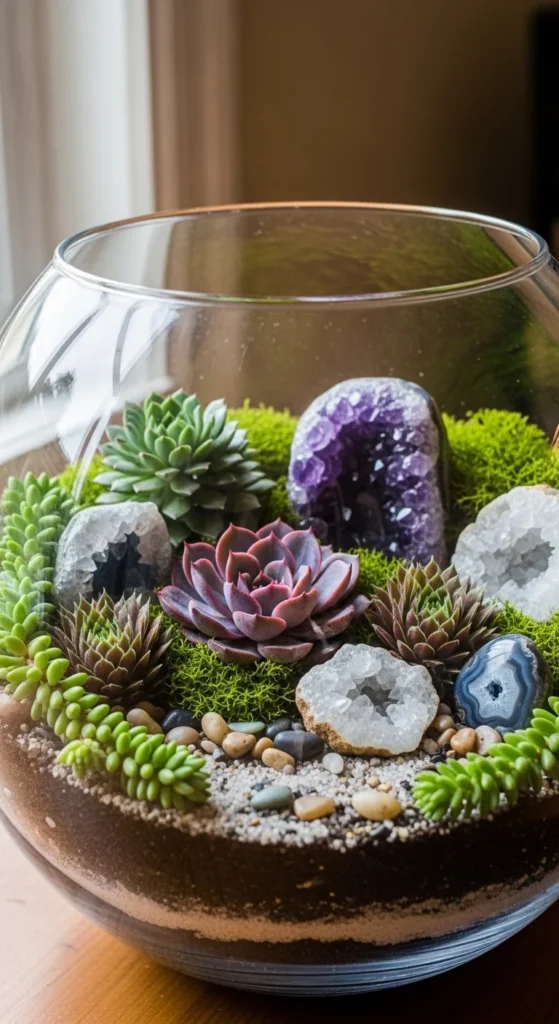
Geode accents offer bright reflections that pair well with succulents.
Use a shallow bowl or glass box. Place small geode fragments at one side. Add succulents in a simple cluster. Buy inexpensive geode chips to keep costs low.
Conclusion
Indoor succulent terrariums lift the mood of any room without demanding constant care. Their simple layouts, natural textures, and quiet presence help create calming indoor zones. Start with one small terrarium, experiment with layers and shapes, and slowly build a collection that matches your style. With gentle light and occasional watering, these terrariums stay vibrant while giving your space steady, relaxed energy all year.
Leave a Reply