

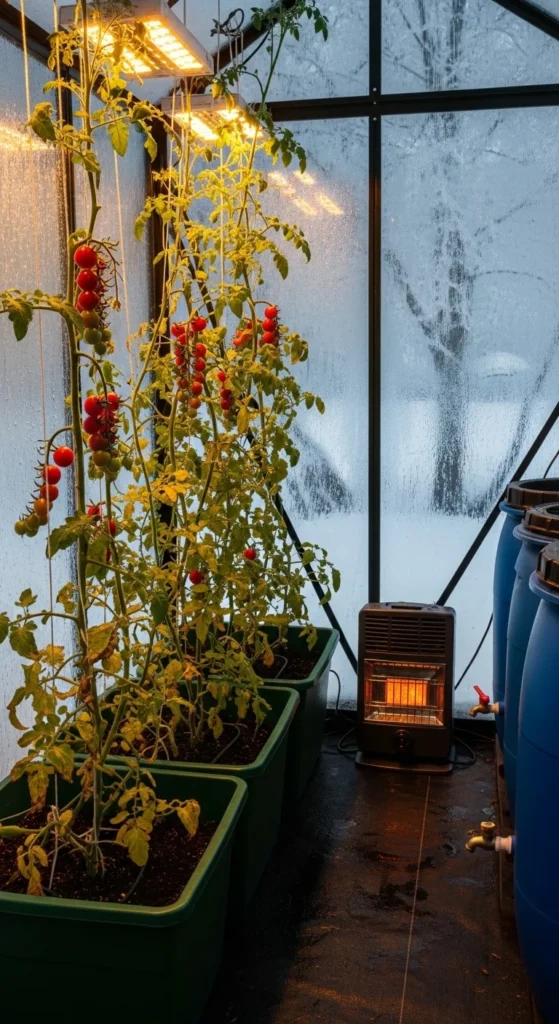
Tomatoes indoors during winter can feel impossible, yet the right greenhouse tricks help them thrive even in cold months. This guide brings practical, realistic ideas anyone can try—whether you’re gardening in a compact balcony greenhouse or a larger backyard tunnel. You’ll find simple setups, smart warmth-saving techniques, and low-cost adjustments that help tomatoes stay productive when frost tries to slow them down. Each idea keeps the process straightforward, helping you enjoy winter harvests without stress.
1. Warm-Soil Bed Setup
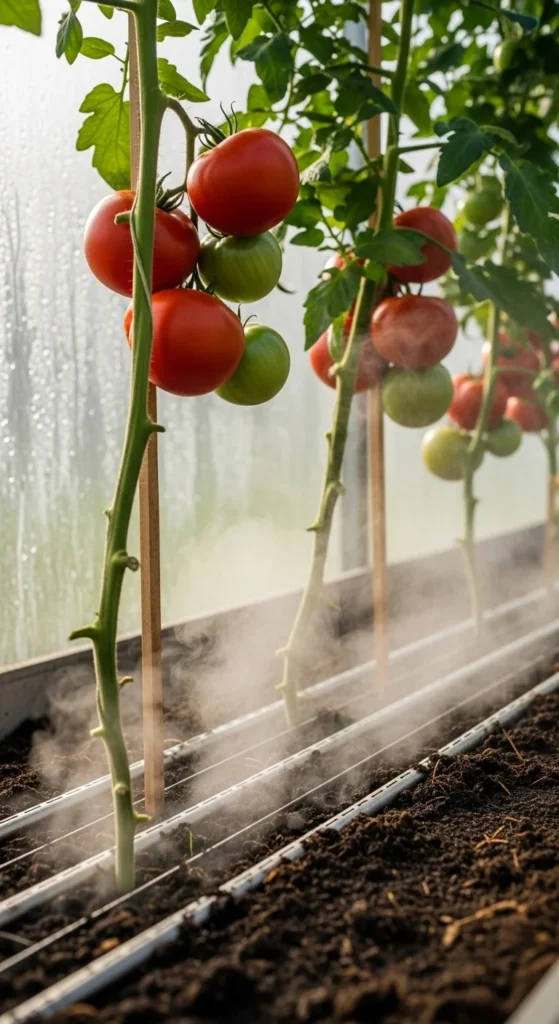
Cold roots slow tomato growth fast, so warming the soil makes a surprisingly big difference indoors. Start with a small raised bed or large tubs inside your greenhouse. Add inexpensive heating cables under the soil. They’re low energy and keep the root zone steady during cold nights. Use a simple timer to run them for a few hours after sunset. Add a layer of compost on top because it naturally releases warmth. Keep watering light so soil stays moist but not soggy. If you’re on a tight budget, place black grow bags directly on tiles warmed by daytime sun. They hold heat and release it slowly overnight. Pair this with basic mulch like straw or shredded leaves. The key idea is simple: keep roots warm, and the plant continues producing even when your greenhouse air feels chilly.
2. Compact Sun-Trap Corner
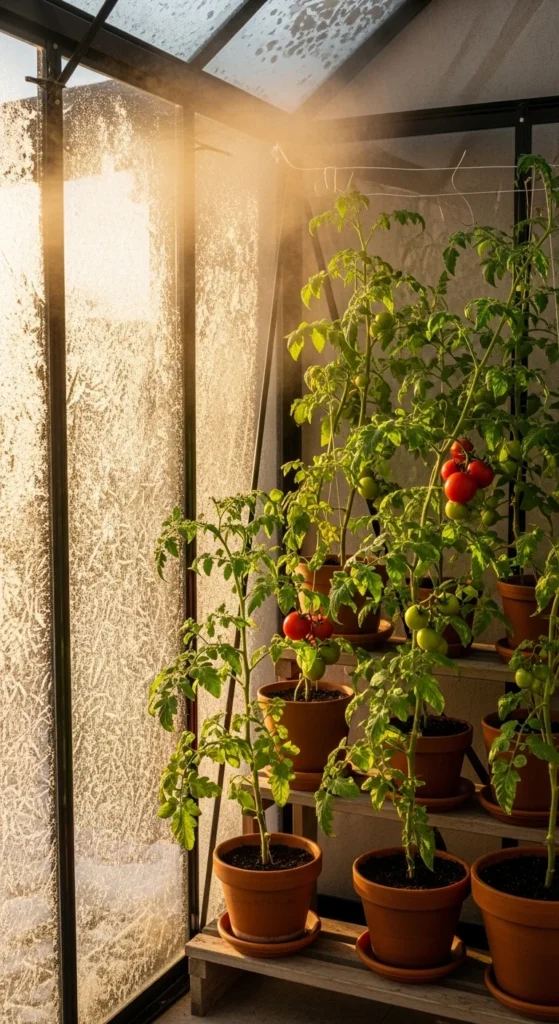
Turning one corner of your greenhouse into a “sun trap” offers steady warmth for tomato plants. Choose the area that naturally gets the most winter sunlight—often the south-facing side. Place your pots or tubs there and use reflective panels behind them. Cheap options include foil-covered cardboard or old mirrors. This helps bounce extra light onto the plants without extra cost. Keep spacing tight enough to maintain warmth, but don’t crowd airflow. If temperatures drop sharply, drape a light greenhouse-safe cloth over the plants overnight. It creates a bubble of warmth without smothering them. This small adjustment keeps growth steady even on overcast days. You can even stack a few flat stones nearby so they soak up daytime heat and slowly release it at night. It’s a practical trick that works well in smaller spaces.
3. Double-Layer Plastic Protection
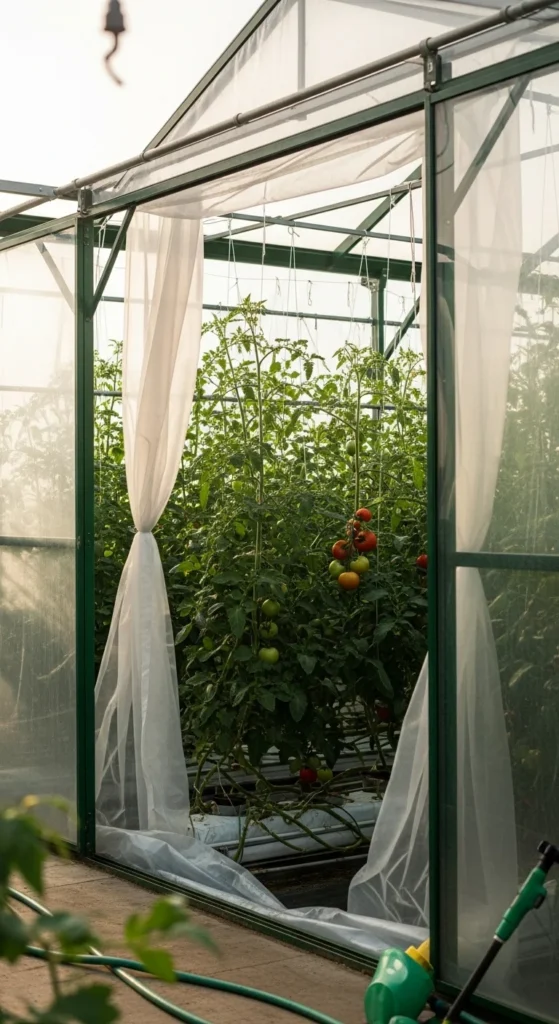
A simple double-layer plastic setup traps warm air around tomatoes without needing expensive equipment. Hang a clear plastic sheet inside your greenhouse frame, creating a small air gap between the outer wall and inner shield. This trapped air acts like insulation, keeping nighttime temperatures more stable. Grow tomatoes in the middle strip where warmth gathers best. Use clips so the inner sheet can be moved easily when you need to tend plants. If condensation builds up, wipe it with a soft cloth to keep light levels high. Adding a second sheet costs very little, especially if you reuse material from past seasons. You can pair this with a small battery-powered fan running on low to keep air from becoming stale. This simple approach holds heat surprisingly well and helps tomatoes stay productive through cold spells.
4. DIY Mason Jar Heat Holders
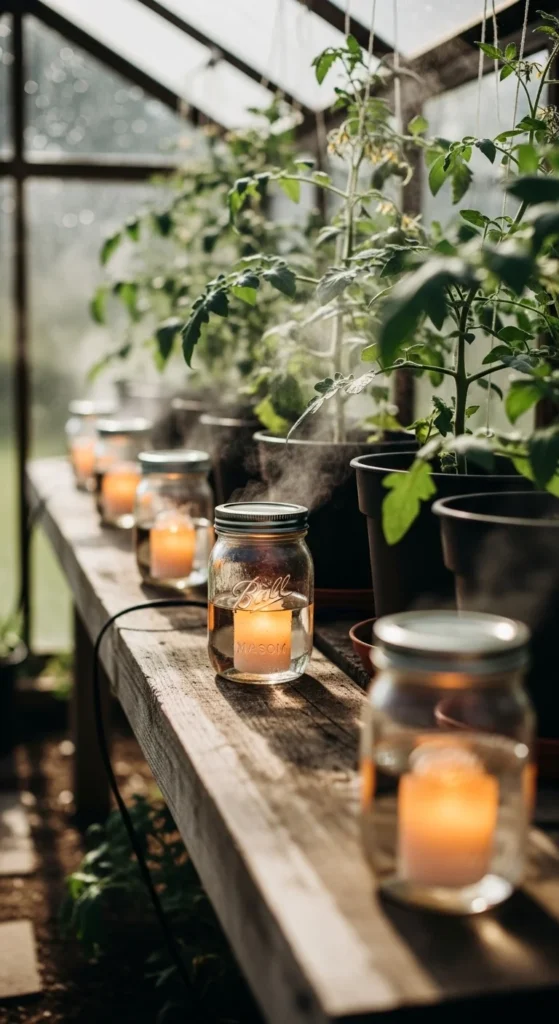
Mason jars filled with hot water act like tiny radiators during cold nights. They’re inexpensive and easy to set up. Fill jars with hot water in the evening and place them close to tomato containers. The jars slowly release warmth for several hours, helping stabilize temperatures around the plants. This trick works best in small greenhouses or indoor grow tents. To save time, heat water in an electric kettle and refill jars quickly. If you have darker-colored jars, use them—they hold heat slightly longer. You can also wrap the jars with aluminum foil to reflect warmth back toward the plants. Make sure the jars sit safely on a flat surface away from leaves. It’s a simple, budget-friendly method that surprisingly keeps tomatoes comfortable when temperatures dip.
5. Warm-Water Irrigation Timing
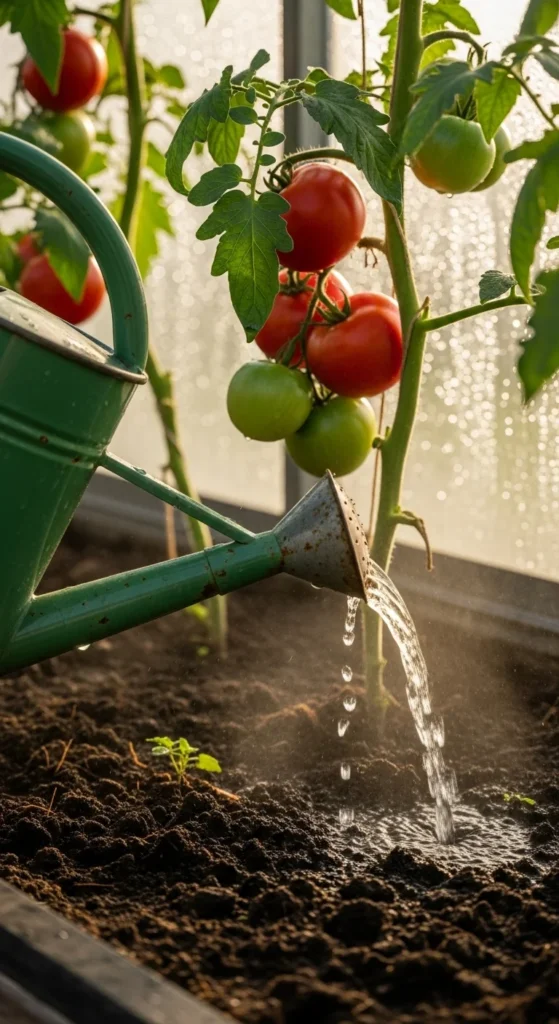
Switching to warm water for irrigation helps tomatoes stay active indoors during cold months. Cold water shocks roots, slowing growth. Fill your watering can and leave it near a heater or sunny spot so it reaches room temperature. Water early in the day so soil warms gradually. In really cold climates, use slightly warmer water—just above lukewarm. This helps roots absorb nutrients better. Keep watering gentle since winter evaporation is lower. If you grow tomatoes in buckets, warm the containers by placing them on old rugs or foam boards. This prevents cold floors from pulling heat out of the soil. Pair the technique with light mulching to hold warmth longer. It’s a small habit that encourages consistent growth even on chilly days.
6. Reflective Ground Sheets
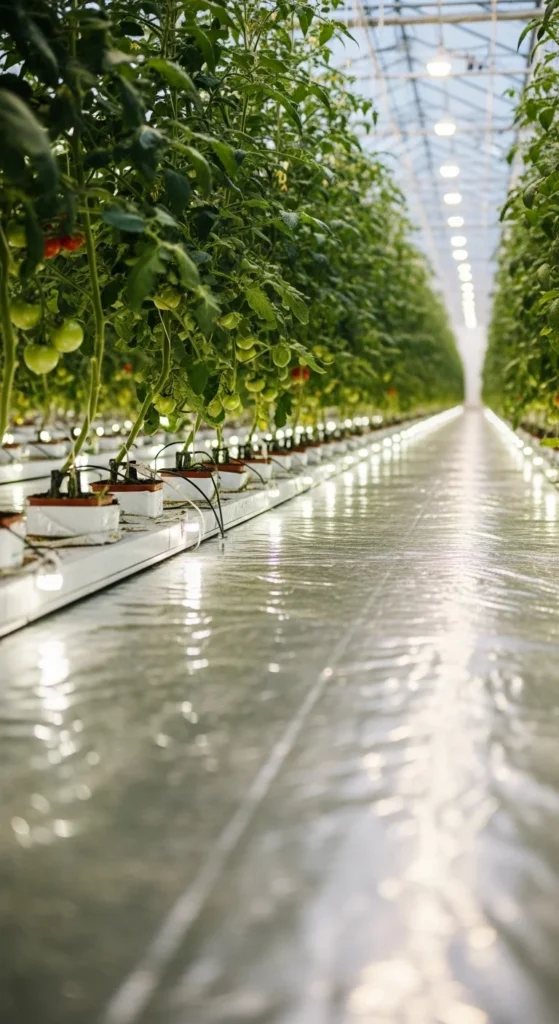
Reflective ground sheets brighten the lower parts of tomato plants and help maintain warmth. Lay inexpensive reflective film or emergency blankets around the base of containers. This directs stray light upward, helping leaves lower on the plant stay active during short winter days. It also reflects some warmth, keeping the area around pots slightly warmer. If you’re working with a small budget, use foil or shiny gift wrap taped to cardboard. Replace pieces if they become wet. Keep the sheets flat so they don’t direct too much heat to one spot. This trick pairs well with LED grow lights because it amplifies their effect without extra wattage.
7. Compact Heated Grow Tent Inside the Greenhouse
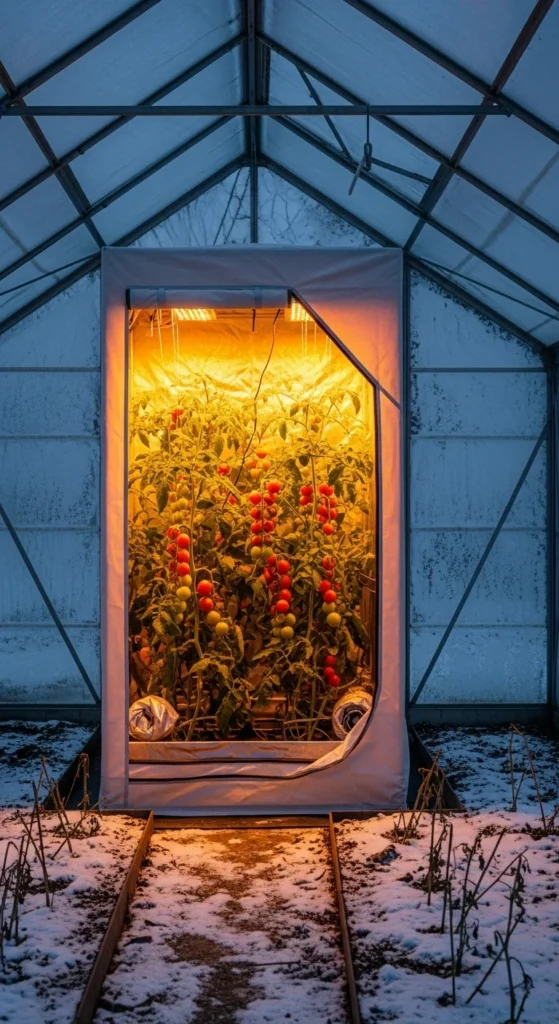
If outdoor cold becomes harsh, placing a small grow tent inside your greenhouse creates a warm bubble for tomatoes. A simple zipper tent traps heat efficiently, especially if you add a tiny space heater on a low setting. Choose a heater with a thermostat so temperatures stay steady. You don’t need high intensity—just enough to keep nighttime chills under control. Keep ventilation light but consistent so humidity doesn’t climb too high. This setup works well for early fruiting varieties that struggle in cold. For an inexpensive alternative, build a frame with PVC pipes and drape clear plastic around it. Smaller enclosed areas warm faster, helping your tomatoes stay active through difficult nights.
8. Bubble-Wrap Insulation
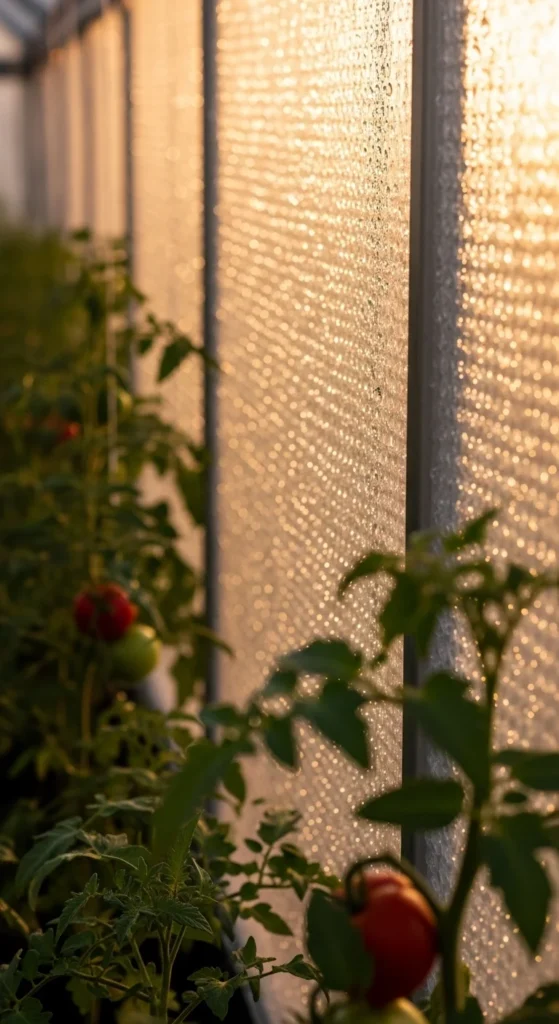
Bubble wrap insulation is one of the cheapest ways to keep your greenhouse warm during winter. Attach sheets of bubble wrap to the inside walls using clips or tape. It softens cold drafts while letting light through. Place tomato plants near these insulated walls so they benefit from trapped warmth. Use larger-bubble material if possible because it holds more air. This method reduces temperature swings, helping your plants stay productive when the weather changes quickly. For added effect, place insulated boards under containers so cold floors don’t steal heat. Bubble wrap lasts for several seasons if handled gently, making it great for long-term winter planting projects.
9. Clay Pot Heaters
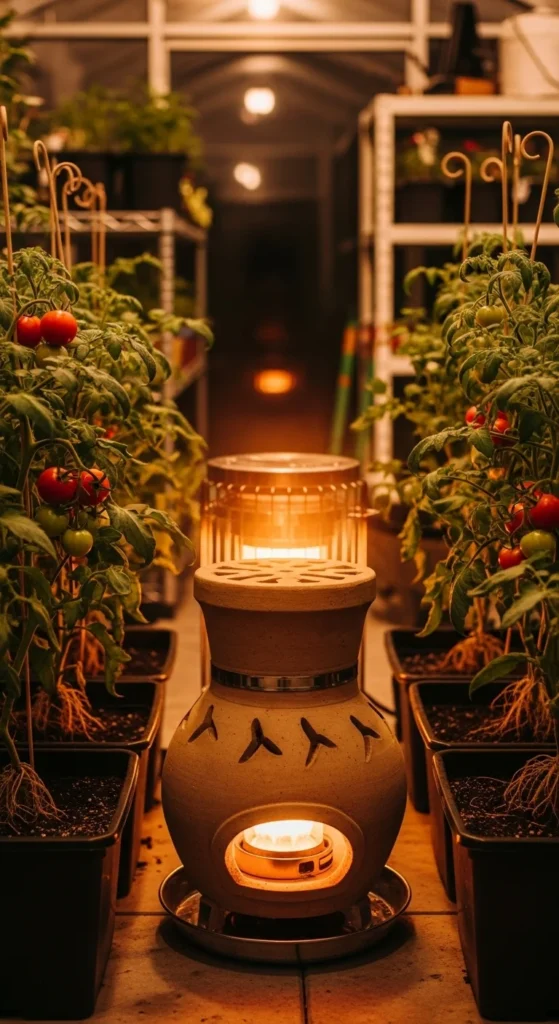
Clay pot heaters give off gentle warmth and are easy to assemble. Place a few tea lights on a safe tray and cover them with an upside-down clay pot. The pot traps and radiates heat slowly, creating a warm pocket around nearby tomato plants. Always keep this setup away from leaves and ensure ventilation. Use unscented candles only. This method is best for small greenhouses or cold corners where temperatures drop sharply at night. You can place stones under the pot to raise it slightly, allowing heat to flow outward smoothly. For extra warmth, place several small heaters spaced evenly instead of one large one. This keeps temperatures balanced without creating hot spots.
10. LED Supplemental Lighting Row
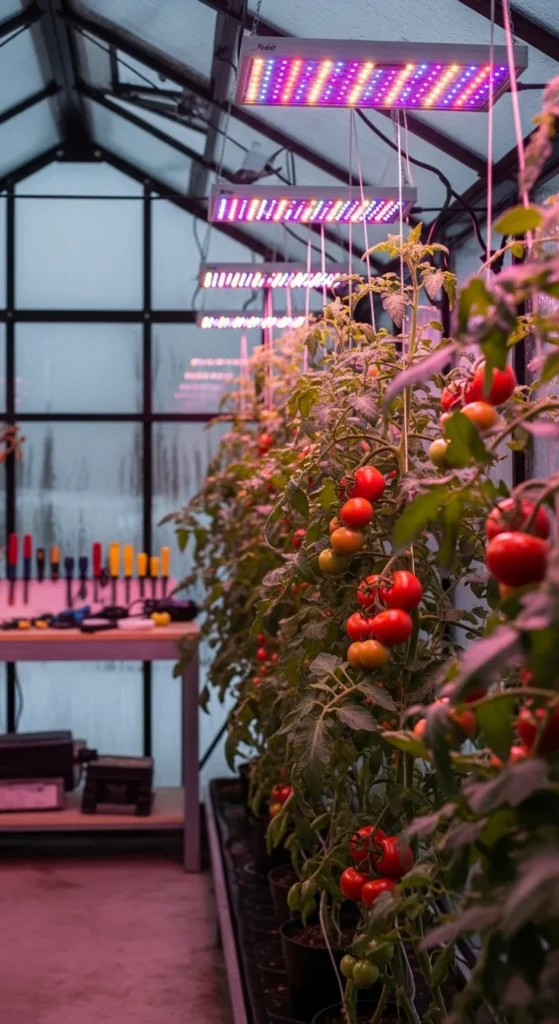
Winter days are short, and tomatoes appreciate longer light cycles. Adding a row of LED grow lights helps keep fruiting steady. Position lights about 12–18 inches above your plants. Use timers so lights stay on for 12–14 hours daily. LEDs run cool, so they won’t overheat your greenhouse. If you’re on a budget, choose compact light bars or clip-on lamps. Reflective surfaces nearby make them more effective. Keep bulbs clean for maximum brightness. Combine this approach with warm soil techniques for strong winter growth. Even older tomato plants stay productive when they get steady lighting through the colder months.
11. Thermal Curtains for Nighttime Warmth
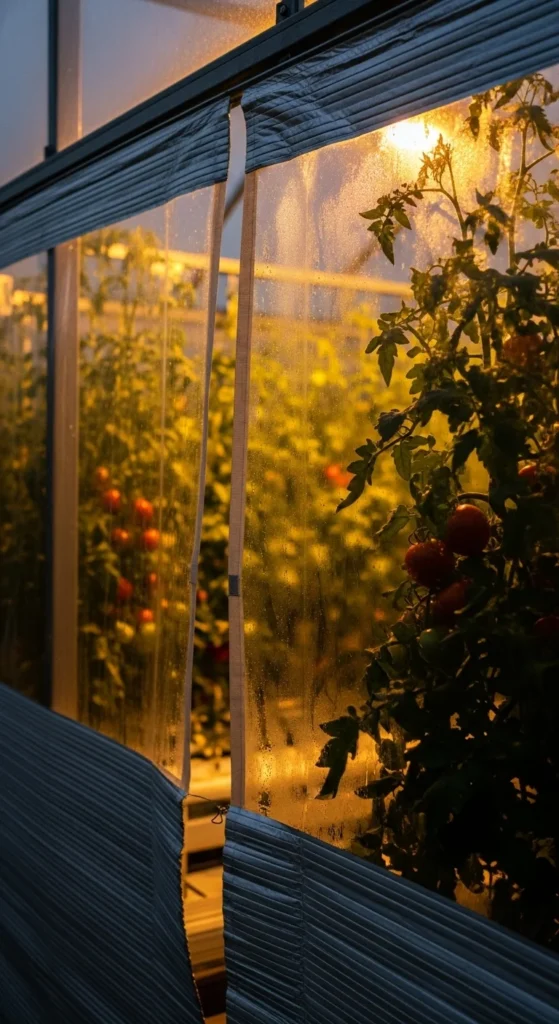
Thermal curtains help hold warm air inside your greenhouse once the sun sets. Hang them on the interior frame and pull them closed before nighttime temperatures drop. Choose insulated fabric or heavy-duty plastic. Curtains create a warm blanket effect around your tomato plants. Open them again in the morning so sunlight reaches the leaves. If you want a low-cost version, sew together old blankets and attach them with clips. This small step reduces nightly heat loss and supports steady growth. Combine the curtains with warm-water irrigation for even better results during colder stretches.
12. Simple Heat-Reflecting Wall Panels
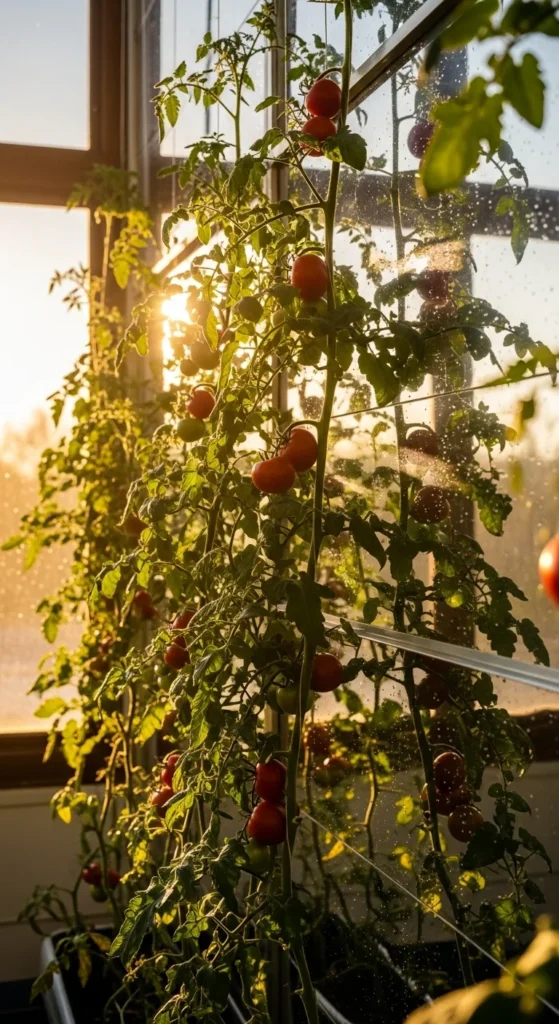
Heat-reflecting wall panels help maintain brightness and warmth inside a greenhouse. Place panels made from Mylar, reflective insulation, or even silver gift wrap on the back wall. This helps bounce sunlight onto tomato plants during winter, reducing shadows. The panels also reflect heat from any nearby heater or warm surface. Keep them clean for the best effect. This method is inexpensive and works well for long, narrow greenhouses where some areas receive less light. If your greenhouse gets very cold, pair these panels with bubble wrap insulation for stronger temperature control.
13. Under-Pot Insulating Pads
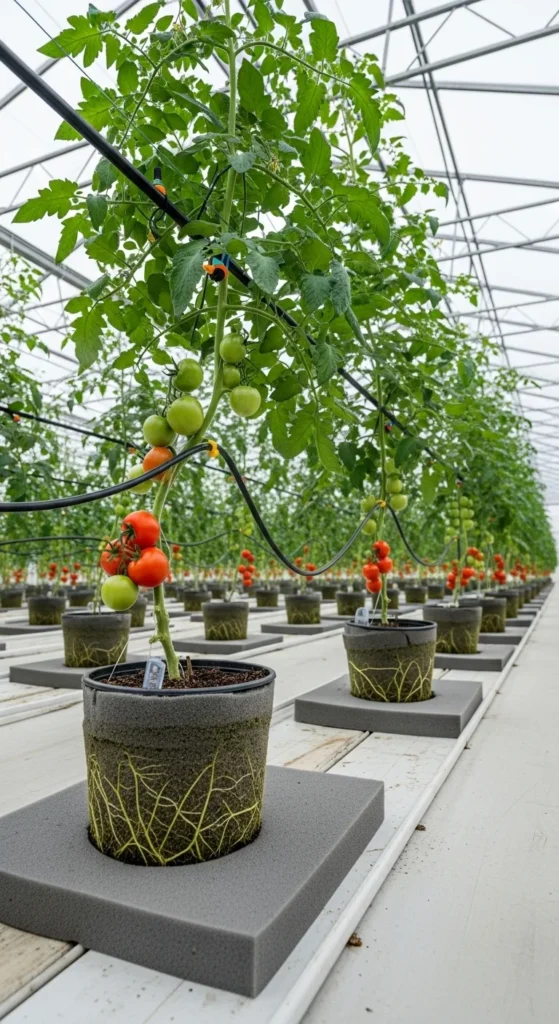
Cold floors drain warmth from pots, slowing root activity. Insulating pads under containers help keep heat where it matters. Use foam boards, old yoga mats, or thick cardboard. Cut pieces to match pot size for a clean setup. This trick is especially helpful in walk-in greenhouses with concrete or tile floors. When roots stay warmer, tomatoes continue flowering and fruiting through winter. Combine pads with warm-water irrigation and reflective sheets for strong growth during cold months.
14. Mini Hoop Tunnels Inside the Greenhouse
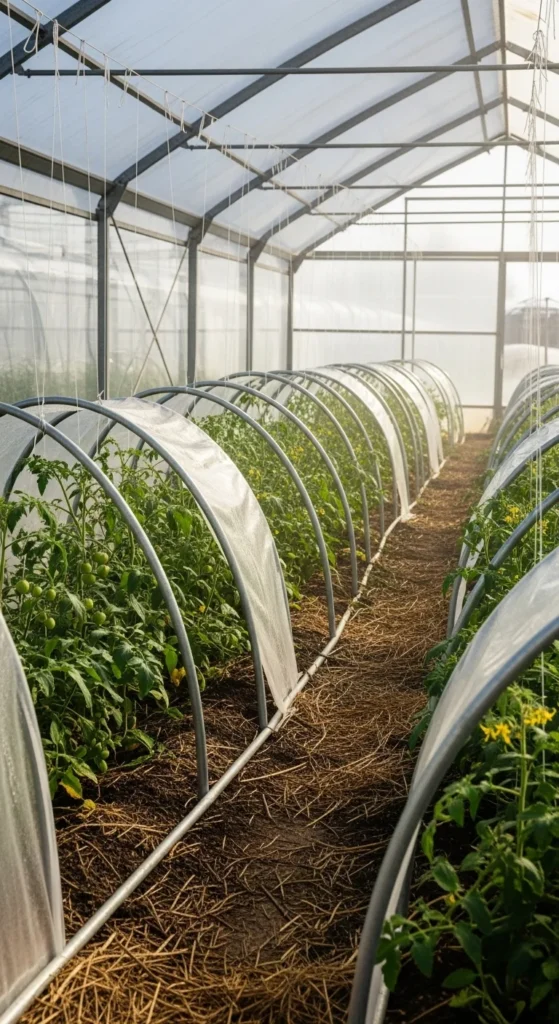
Mini hoop tunnels create a second layer of warmth inside your greenhouse. Build small arches with PVC or wire and drape plastic or frost cloth over them. This traps warm air around tomato plants while still allowing easy access for pruning or watering. Hoop tunnels work well for young plants or varieties sensitive to cold. During sunny days, lift the cover slightly so air circulates. At night, lower the cover again to hold warmth. This layered protection helps your plants stay active even in long cold spells.
15. Heat-Retaining Water Barrels
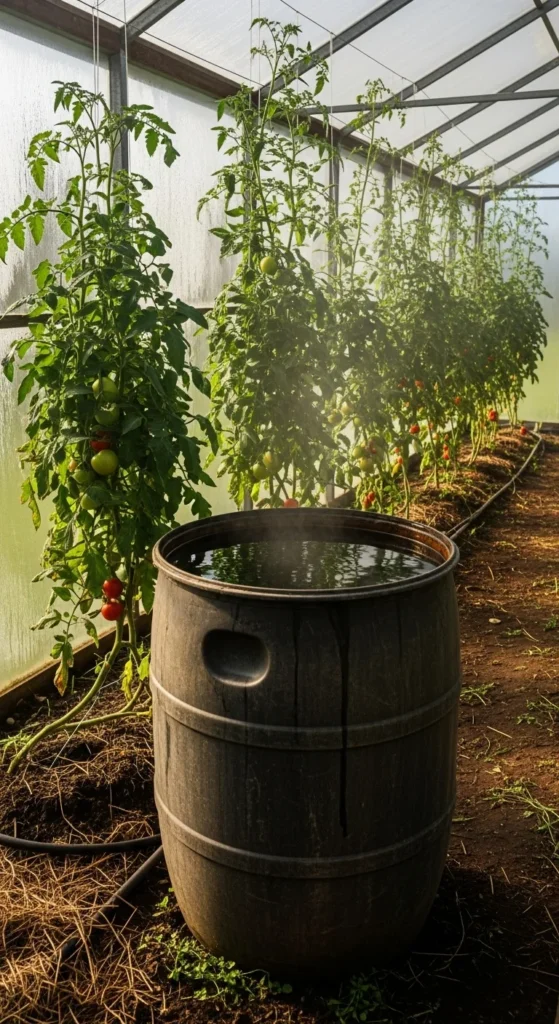
Dark water barrels absorb warmth during the day and release it at night. This natural heat bank supports tomato plants in cold weather. Place barrels on the sunny side of your greenhouse. Keep them filled so they hold maximum warmth. If space is tight, use smaller jugs or canisters. The water maintains stable temperatures, helping reduce nighttime stress. The barrels also add humidity, which tomatoes appreciate during dry winter air. This method is low-cost and works well in medium to large greenhouses.
16. Low-Cost Soil Blankets
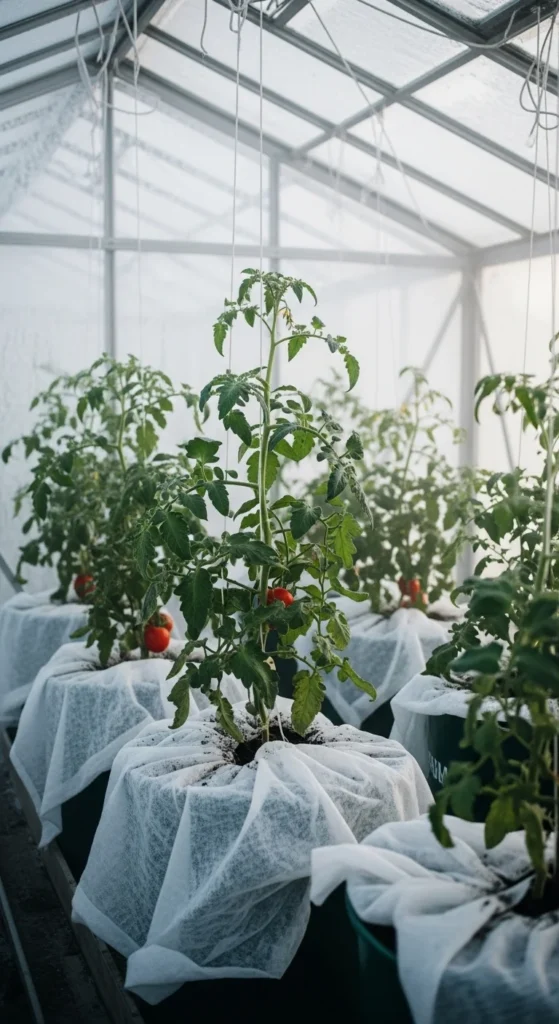
Soil blankets protect the base of your tomato plants during cold snaps. Use lightweight frost cloth or even old cotton sheets. Wrap the soil surface but leave stems free. The fabric traps warmth around the roots, helping them stay active. Remove blankets during warm daytime hours to avoid overheating. This method works well for container tomatoes that sit in colder corners. Pair soil blankets with under-pot insulation for stronger protection. It’s a practical way to keep winter tomato growth steady without expensive tools.
17. Small Ceramic Heater with Thermostat
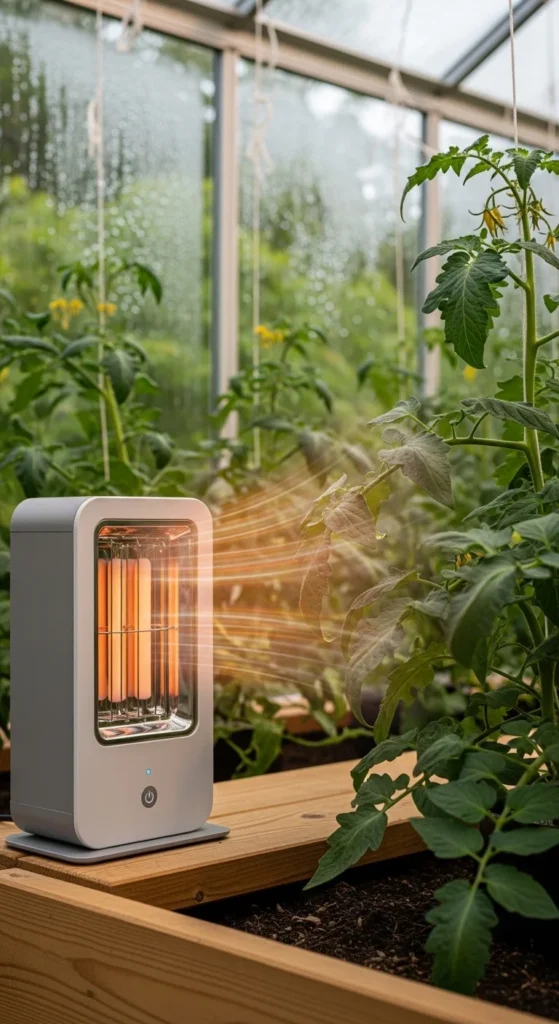
A small ceramic heater on a thermostat keeps conditions stable without wasting energy. Set the thermostat to maintain a mild nighttime temperature. Place the heater safely away from leaves. Ceramic heaters warm space evenly, which tomatoes appreciate in winter. To stretch your heating budget, run the heater only during the coldest hours. Pair this with thermal curtains so the warmth stays inside longer. Even one small heater can support a surprising number of plants.
18. Dense Companion Planting for Warmth
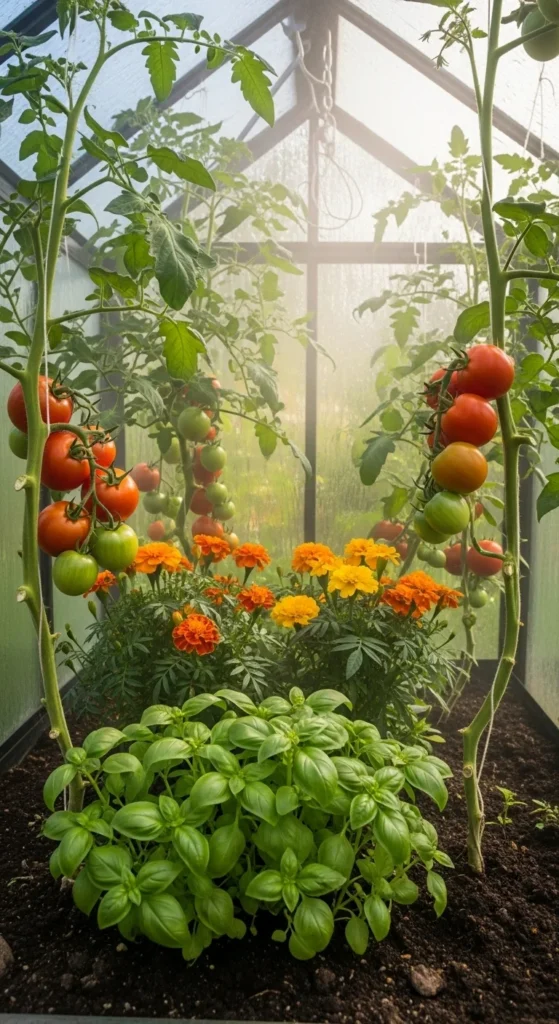
Plants create their own micro-climate when grouped tightly. Adding companion plants around your tomatoes helps retain humidity and warmth. Basil, marigold, and lettuce work well because they stay compact and tolerate winter greenhouse conditions. Arrange pots closely while keeping pathways open. The shared warmth benefits tomatoes and reduces temperature swings. Water lightly to avoid excess moisture. This method is ideal for growers working with small indoor greenhouses or balcony setups.
19. Stone Heat Banks
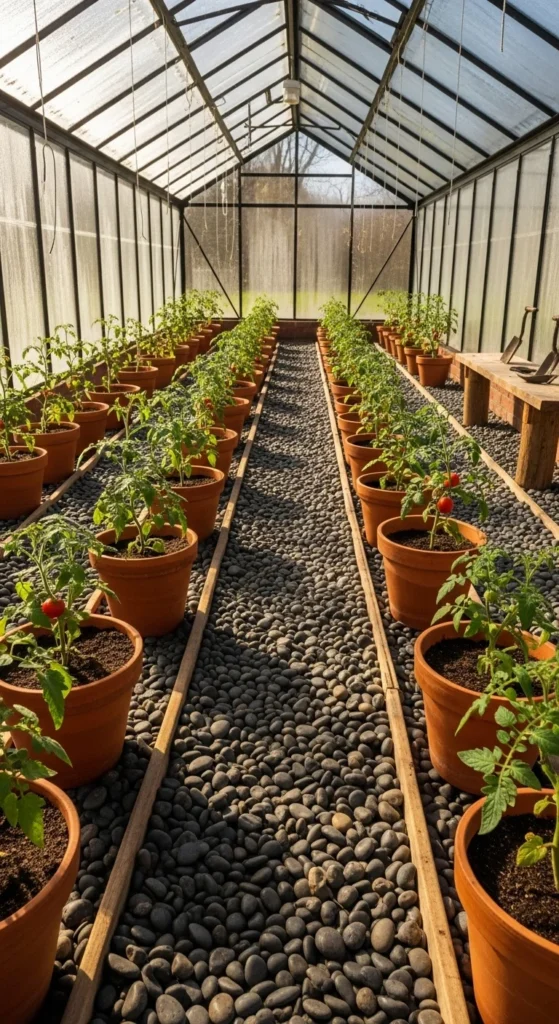
Stones store daytime warmth and release it slowly through the night. Place dark stones around your tomato containers. They heat up naturally when sunlight passes through the greenhouse. At night, they help raise the immediate temperature near the plants. This method is simple, free if you already have stones, and surprisingly effective during mild cold spells. Combine stones with reflective sheets for added warmth.
20. Plastic Bottle Cloche Covers
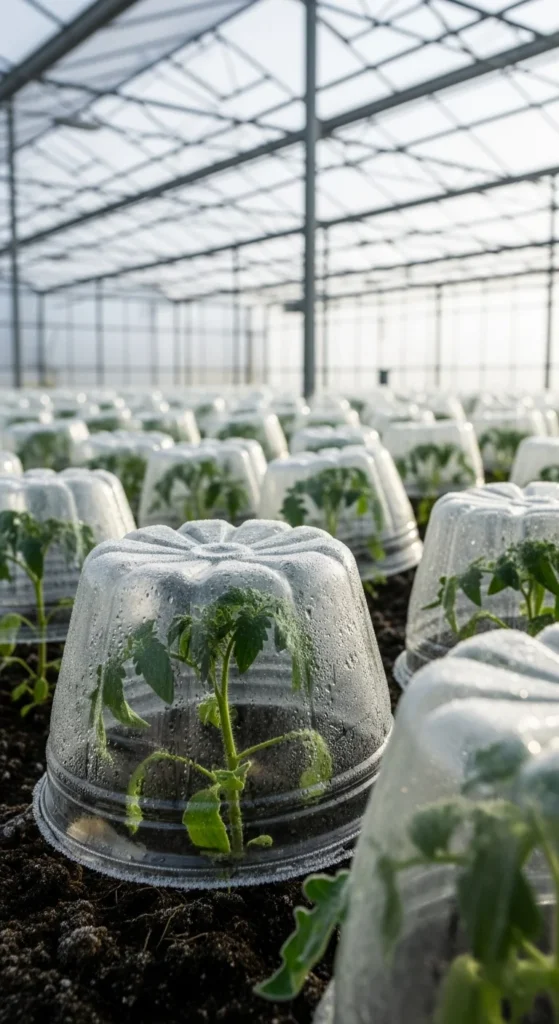
Plastic bottle cloches create tiny warm shelters for tomato seedlings or smaller varieties. Cut the bottom off large bottles and place them over your plants. Remove the cap during the day for ventilation. Replace the cap at night to hold warmth. This is a low-cost trick that works well when temperatures swing between day and night. It also protects delicate leaves from cold drafts. If your greenhouse gets very cold, combine cloches with soil insulation for stronger protection.
21. Shelf-Level Heat Zones
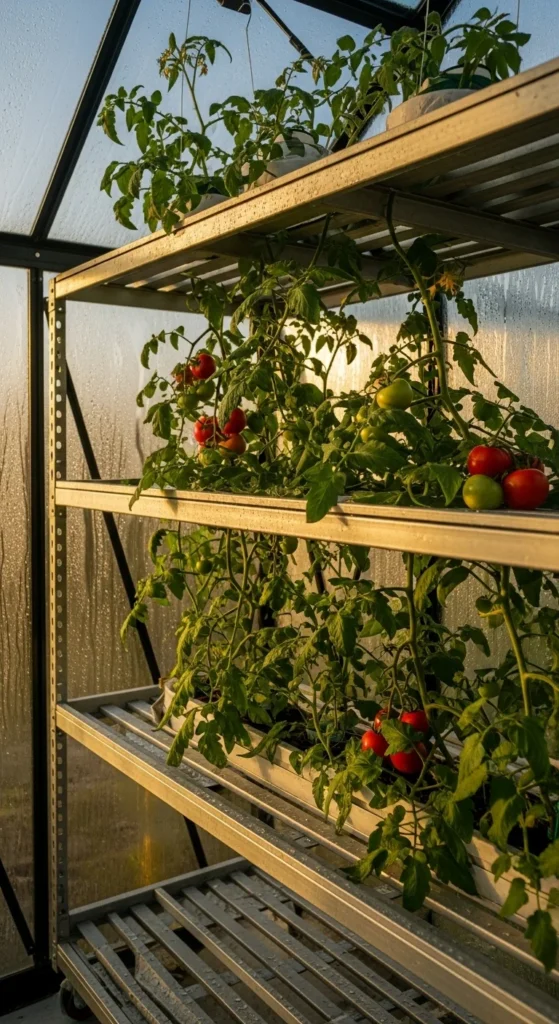
Heat rises, so placing tomatoes on shelves helps them stay warmer naturally. Use sturdy greenhouse shelving and position plants on higher tiers during cold months. Lower levels tend to stay colder, making them better for hardier greens or herbs. Keep your tomato pots on the warmest shelf that still gets good airflow. If possible, line the shelf with reflective material so warmth stays concentrated. This setup is simple, costs almost nothing, and helps maintain steady winter production.
Conclusion
Growing tomatoes indoors during winter becomes far more achievable when you combine small warmth-saving techniques, low-cost lighting ideas, and simple insulation tricks. These approaches help your greenhouse hold steady conditions even when outside temperatures fall sharply. Try a few methods that fit your space and budget, and enjoy reliable New Year tomato harvests without waiting for spring.

Leave a Reply