

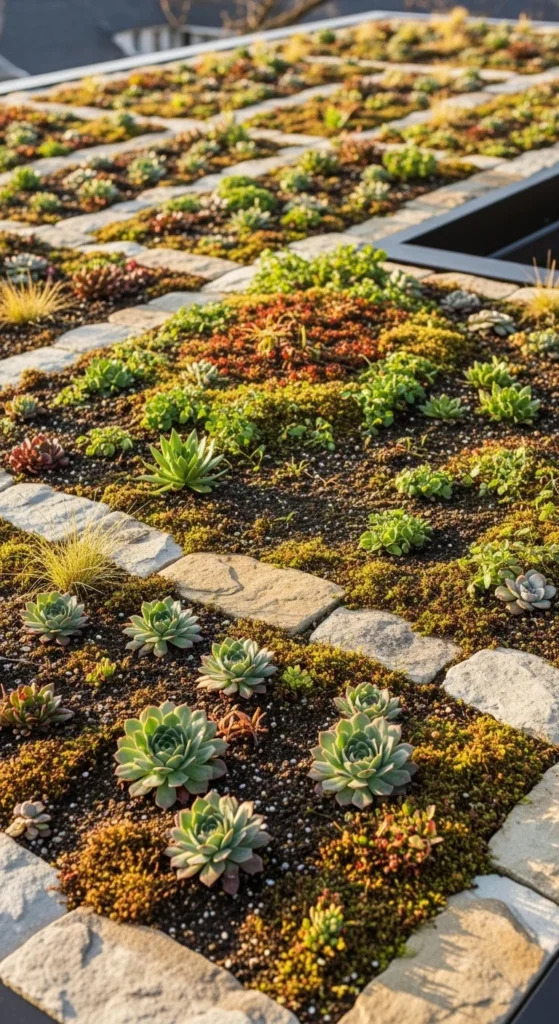
Living-roof gardens help you expand green space without relying on ground-level areas. Even in winter, a well-planned rooftop planting system can offer warmth, structure, and pockets of life that uplift the entire property. With shallow soil setups, hardy plant selections, drainage layers, and simple DIY frames, you can create a lightweight green system that feels intentional and practical. These ideas focus on affordable steps, simple maintenance, and easy upgrades anyone can apply during the New Year season.
1. Low-Profile Sedum Mats

Sedum mats are some of the easiest ways to cover a roof with greenery. They stay low, handle cold well, and require minimal soil depth. Place drainage fabric first, then lay mats across the surface. Water lightly at installation to help them settle. Sedum roots adapt quickly and spread slowly across the roof. You can trim sections to fill gaps in later months. This style creates a tidy base layer that supports extra plant accents without adding weight.
2. Pocket Planters Along Roof Edges
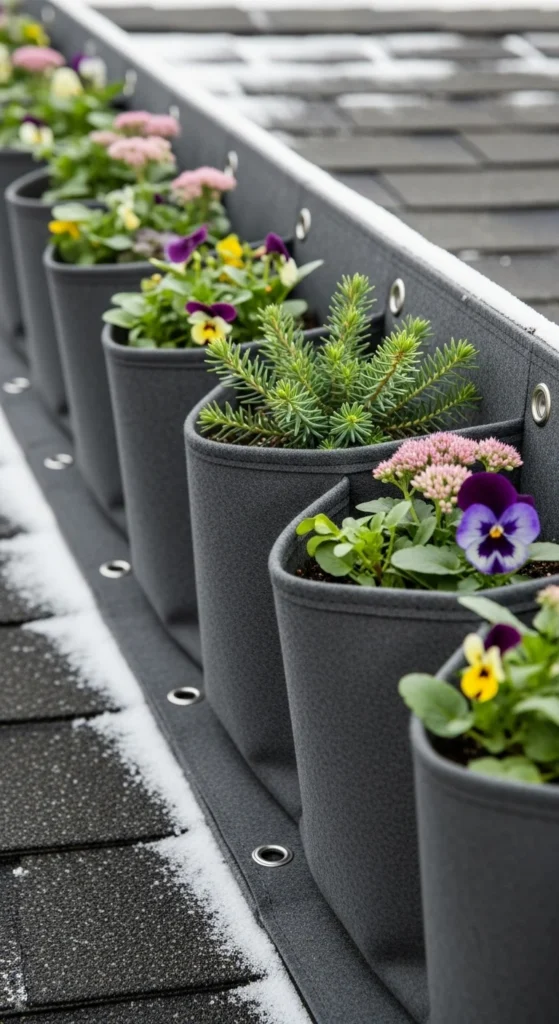
Pocket planters offer small planting zones without covering the entire roof. Attach them to the parapet or railing using strong hooks or brackets. Fill each pocket with lightweight soil and hardy plants like thyme, dwarf grasses, or alpine flowers. Keep watering light so soil stays firm. Rotate plant varieties throughout the year for seasonal color shifts. This method suits smaller roofs where full installations aren’t practical.
3. Mixed Succulent Trays
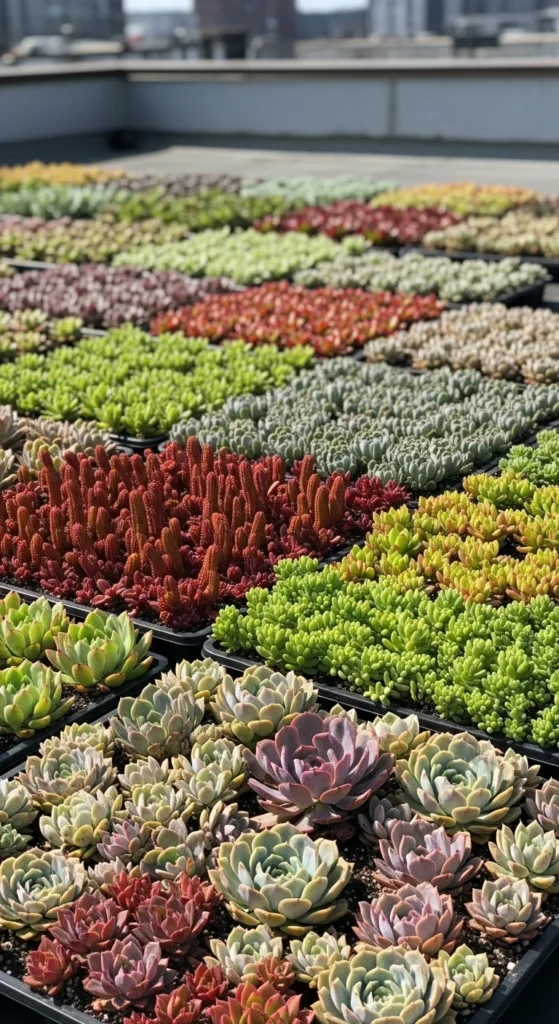
Succulent trays allow quick layout changes. Use shallow, well-draining trays and fill them with gritty soil. Plant small succulents spaced a few inches apart so they have room to spread. Place trays in areas that receive balanced light and mild wind. Because trays are movable, you can shift them around to adjust patterns or light exposure. This layout works well for renters or beginners who want flexible rooftop greenery.
4. Modular Moss Squares
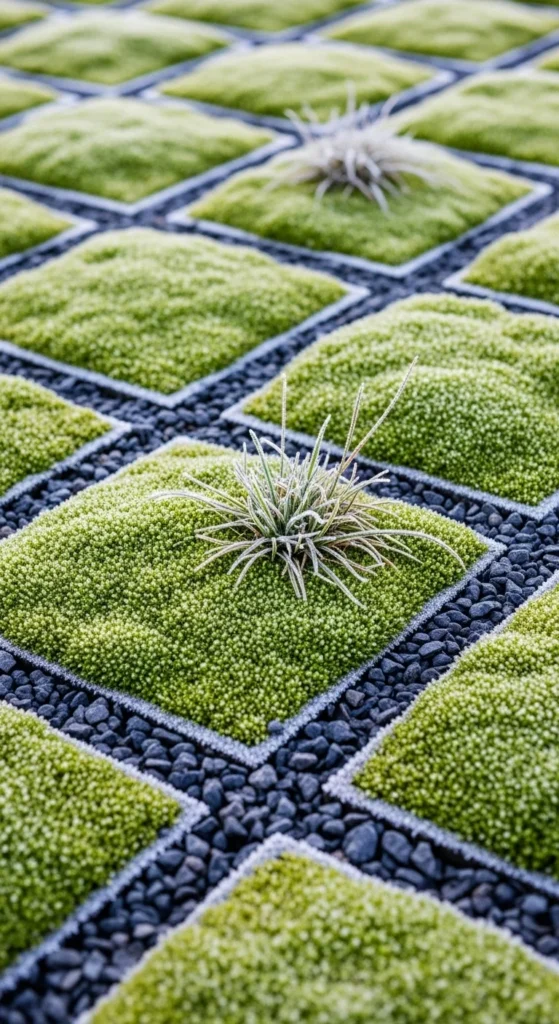
Moss squares thrive in cool, shaded rooftop zones. Create a moisture-retaining surface using fabric mats, then lay moss pieces in a tidy grid. Mist lightly to help them attach. Moss stays green even in low light, offering a soft texture that contrasts well with harder materials. Add small stones between squares for visual interest. This method is light, simple to install, and ideal for rooftops with partial shade.
5. Alpine Plant Frames

Build small wooden frames filled with lightweight soil to house alpine species. These plants stay compact, handle cold efficiently, and thrive in shallow root zones. Place frames around skylights or vent areas to soften hard edges. Water sparingly and add a thin gravel layer to prevent soil splash. Alpine frames are great for rooftops where low maintenance is important and weight limits exist.
6. Gravel Paths Between Green Sections

Gravel paths help define zones on a living roof. Use lightweight gravel to avoid extra weight load. Lay paths between plant beds to create movement flow and reduce soil spread during rain. Gravel warms quickly and releases heat slowly, supporting nearby plants. Paths also provide safe walking routes for maintenance without disturbing plant roots. This approach offers a clean structure to any rooftop layout.
7. Raised Shallow Beds for Herb Mixes
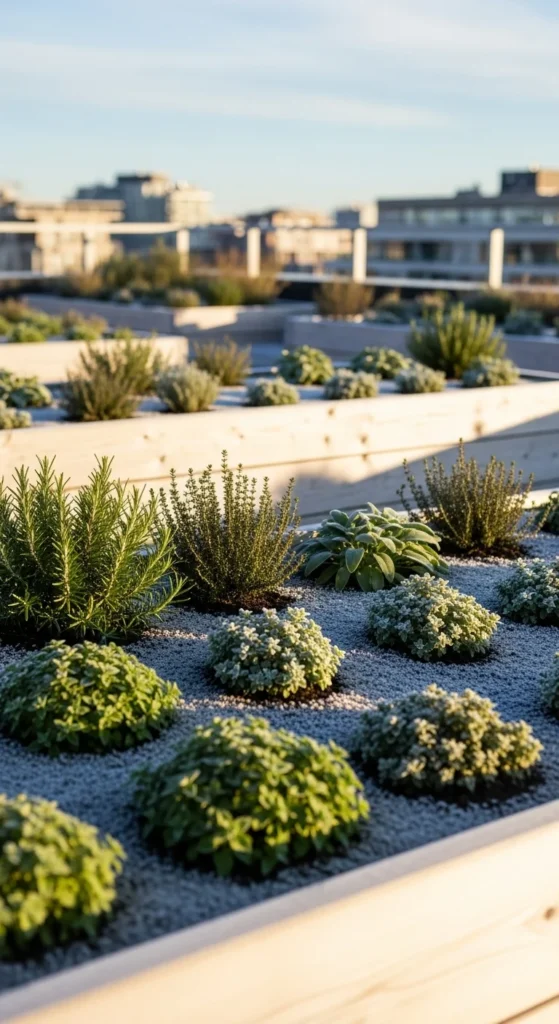
Shallow raised beds allow you to grow herbs even with limited soil depth. Build lightweight frames from plastic or thin wood. Add drainage holes and a cloth layer at the bottom. Herbs like thyme, oregano, and chives adapt well to shallow spaces. Keep plants trimmed to prevent overcrowding. Raised beds help create defined growing zones and give your rooftop a more organized layout.
8. Stone-Topped Soil Pockets
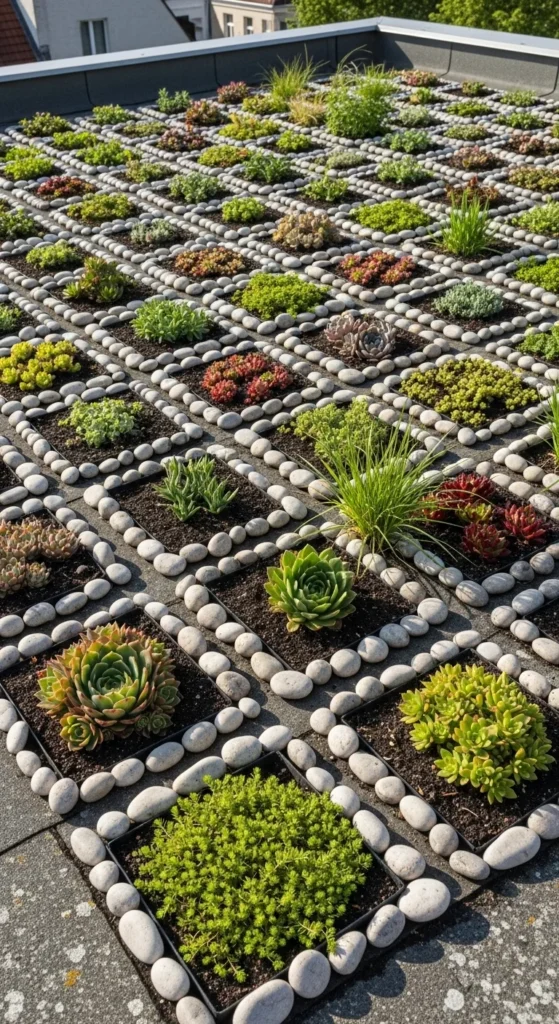
Create small soil pockets around the roof and top them with decorative stones to protect against wind. Plant hardy species that tolerate shallow roots, such as hens-and-chicks or dwarf iris. The stones help retain warmth and prevent soil movement. This method creates small bursts of greenery without committing to a full-coverage roof. It works well for rooftops exposed to strong winds.
9. Winter-Friendly Grass Clumps
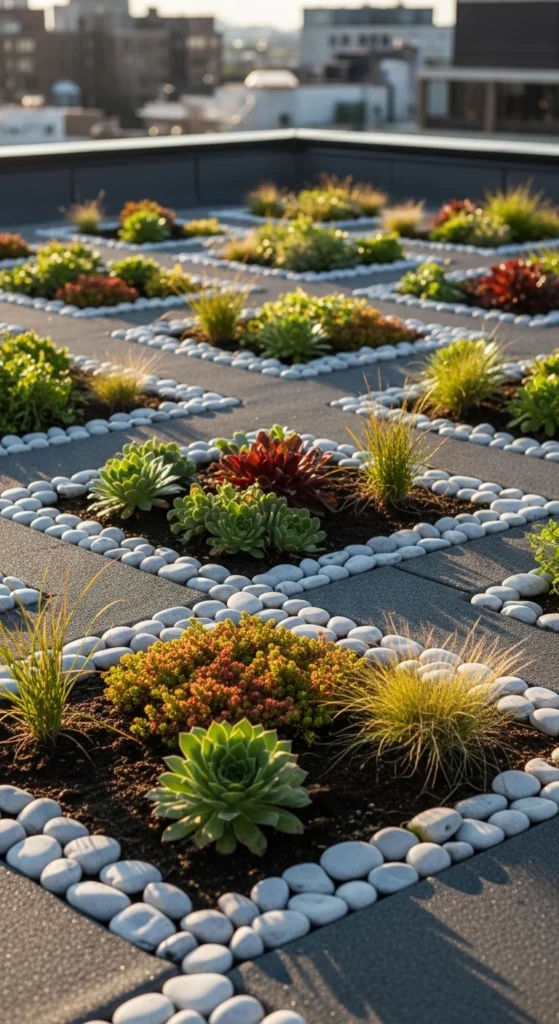
Dwarf grasses bring movement to a winter living roof. They sway gently in breeze and require minimal watering. Plant them in clusters spaced across the roof to form a natural pattern. Mix varieties with different leaf colors for contrast. A light gravel ring around each clump stabilizes soil and adds structure. This approach adds visual life even during colder months.
10. Planter Boxes Anchored to Railings

Attach planter boxes to rooftop railings using metal brackets for extra planting capacity. Choose lightweight materials like plastic or thin wood. Fill with shallow-rooted plants that handle wind well. Water sparingly to prevent runoff. These boxes extend your green space outward and add color to rooftop edges. Rotate plants seasonally to keep the display active.
11. Modular Foam Planting Panels
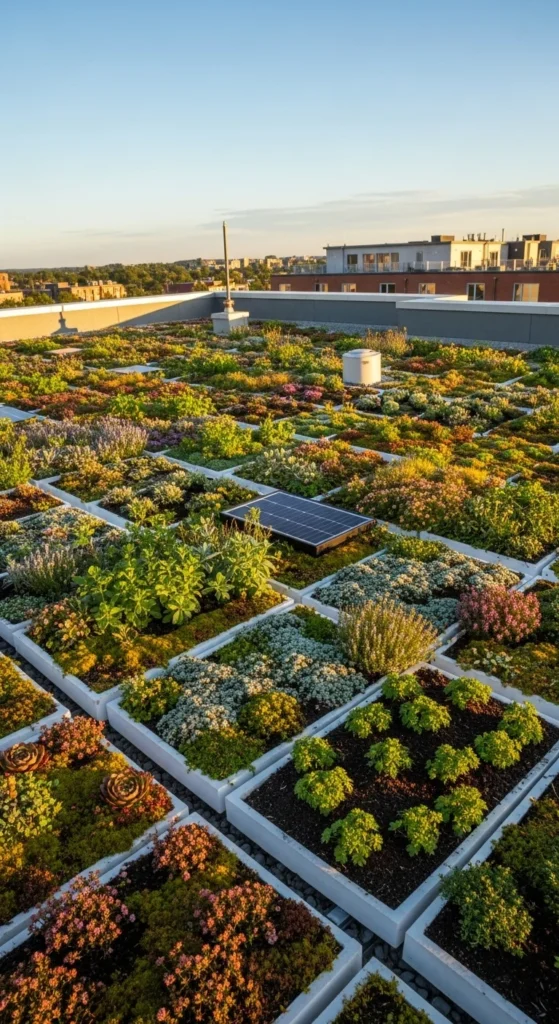
Foam planting panels reduce weight while supporting plant growth. Lay them across flat sections of the roof. Fill each cell with small drought-tolerant species. The foam helps retain moisture while keeping roots protected. This system is easy to rearrange and suits rooftops that require gentle loading. Panels also help insulate interior spaces slightly, adding practical value.
12. Drip-Lined Roof Beds
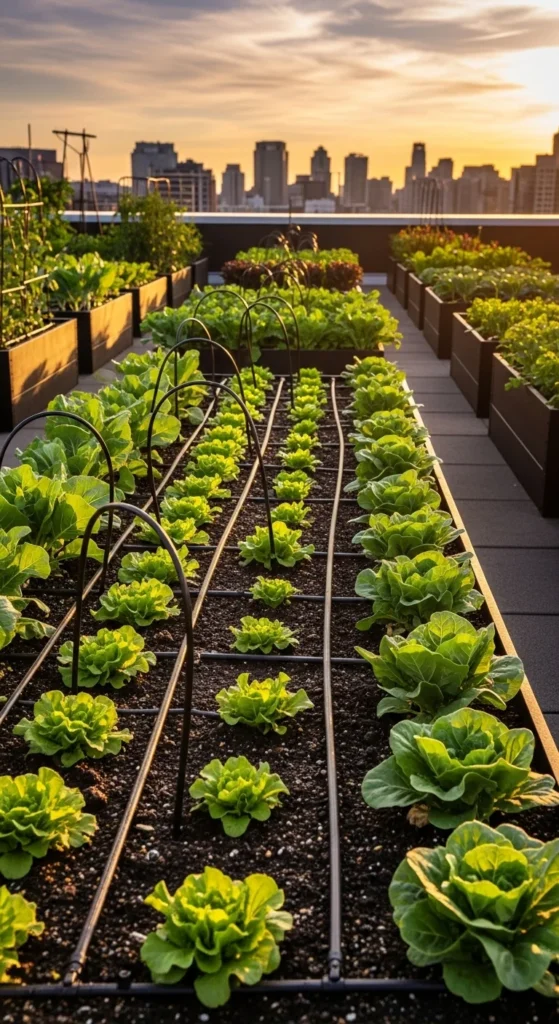
Use drip lines to water rooftop plantings efficiently. Thread lines through beds and secure them with small clips. Set low flow to avoid runoff. This helps soil stay evenly moist without requiring heavy watering sessions. Drip systems work well when paired with shallow-rooted species. Keep the reservoir small to manage weight. This approach allows consistent care regardless of weather.
13. Hardy Succulent Carpets

Succulent carpets offer a colorful, low-growing option. Plant varieties that tolerate winter well, such as stonecrop and hardy echeveria. Use alternating colors to form mosaic-style patterns. Keep soil shallow and gritty. Succulents spread slowly and form tight clusters that withstand cold temperatures. This method is visually strong and requires minimal care.
14. Recycled Crate Planting Modules
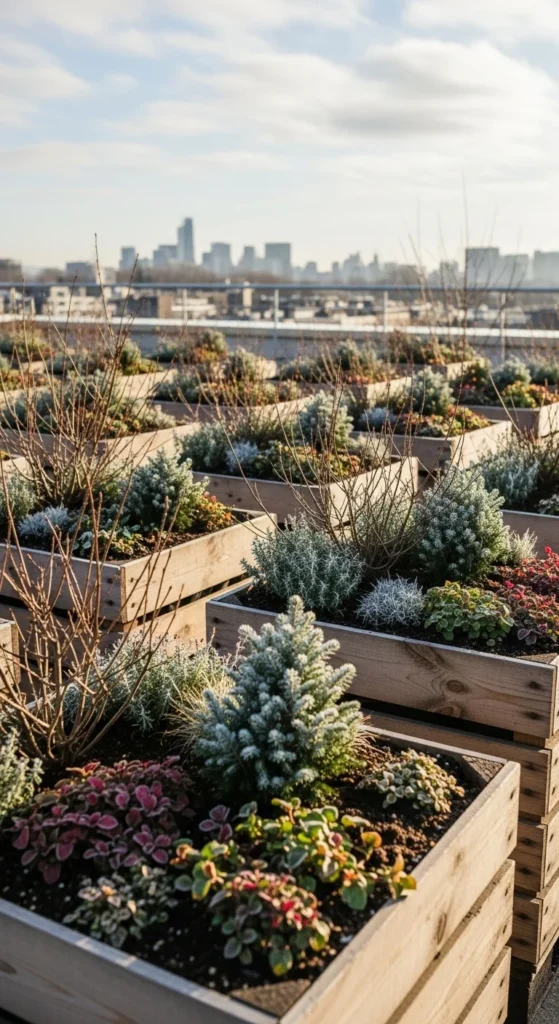
Recycled crates make simple planting modules. Line crates with landscape fabric, fill with lightweight soil, and plant hardy species. Arrange crates in rows or clusters for a patterned effect. Crates are easy to move and rearrange as you refine your design. This style suits renters or gardeners who like flexible layouts.
15. Mixed Moss-and-Grass Patches

A mix of moss and dwarf grass creates soft transitions across your living roof. Moss handles shade while grass performs well in light. Plant patches in staggered patterns. Mist moss lightly and water grass at soil level. These textures work together to build a natural, calming surface. It’s an easy way to add variety without extra weight.
16. Sloped Planter Rows for Drainage
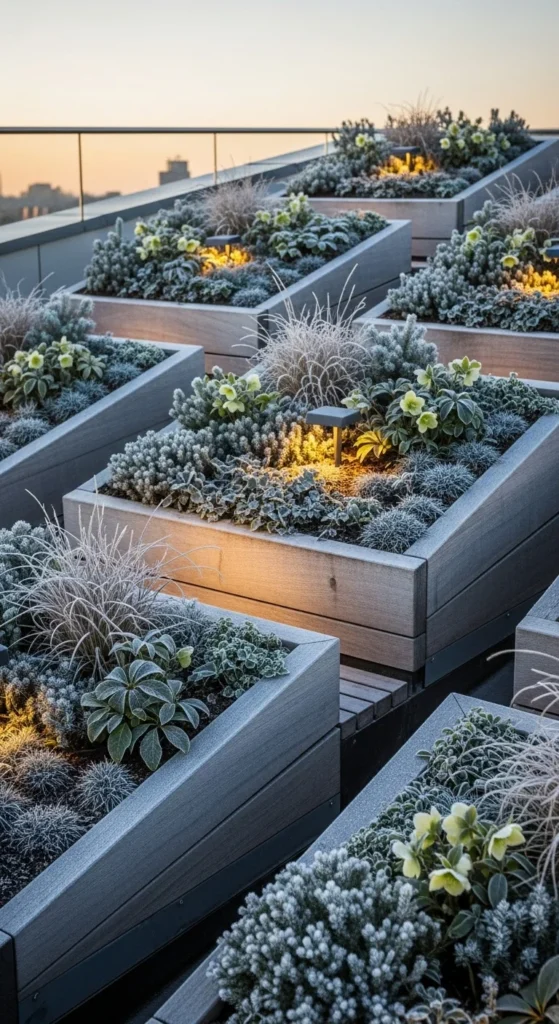
If your roof has natural slope, take advantage of it with sloped planter rows. Use lightweight planters and align them along the slope so excess water flows downward. Fill with plants that handle brief dry periods. This keeps water from pooling and reduces maintenance. The rows create clean lines and make harvesting or trimming simple.
17. Natural Stone Borders for Small Beds
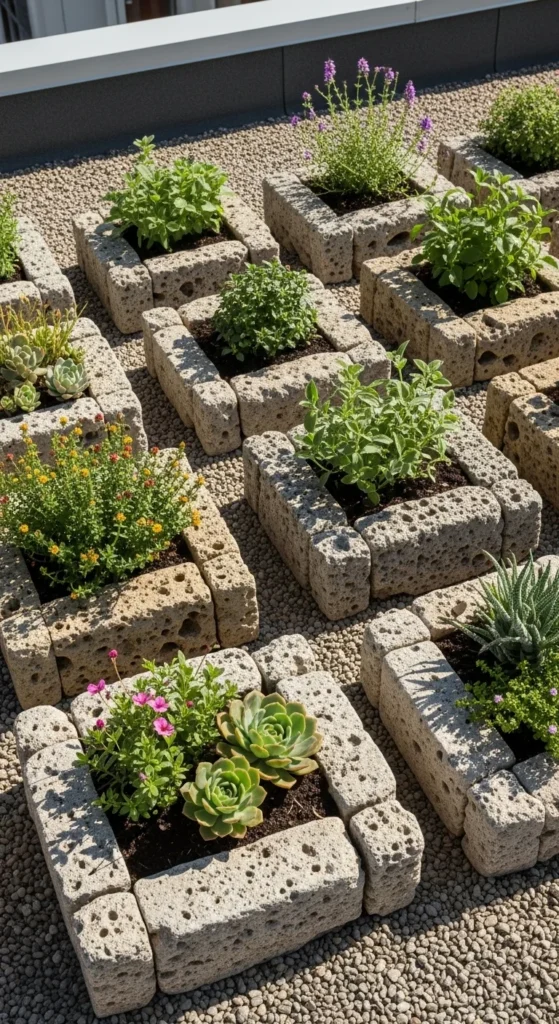
Create mini planting beds on your roof using lightweight stones as borders. Fill each bed with a thin soil layer and plant cold-tolerant species. The stones help frame the beds and reduce soil movement. Add a gravel layer around the edges to create clear separation between beds. This method lets you add structure without major installation work.
18. Low-Growth Perennial Pillows

Low-growth perennials create soft, inviting shapes. Choose varieties that stay compact and handle shallow soil. Plant them in small groups to form pillow-like clumps. Add a thin mulch layer to help regulate temperature. These plants often return after winter and hold their shape well through cold weather. This approach creates a calm, natural roof surface.
19. Rooftop Herb Rows
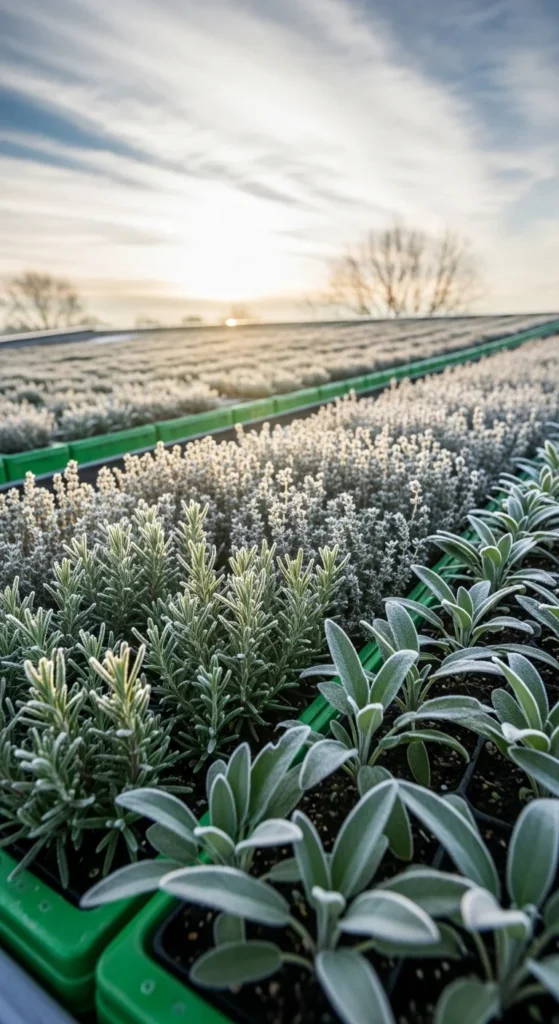
Herbs adapt well to shallow rooftop soils. Plant rows of thyme, sage, or winter savory along the roof to add scent and texture. Keep rows narrow so wind passes through easily. Water sparingly and trim lightly for kitchen use. This idea offers functional greenery and brings subtle fragrance to your rooftop space.
20. Eco-Mat Rolls for Quick Coverage
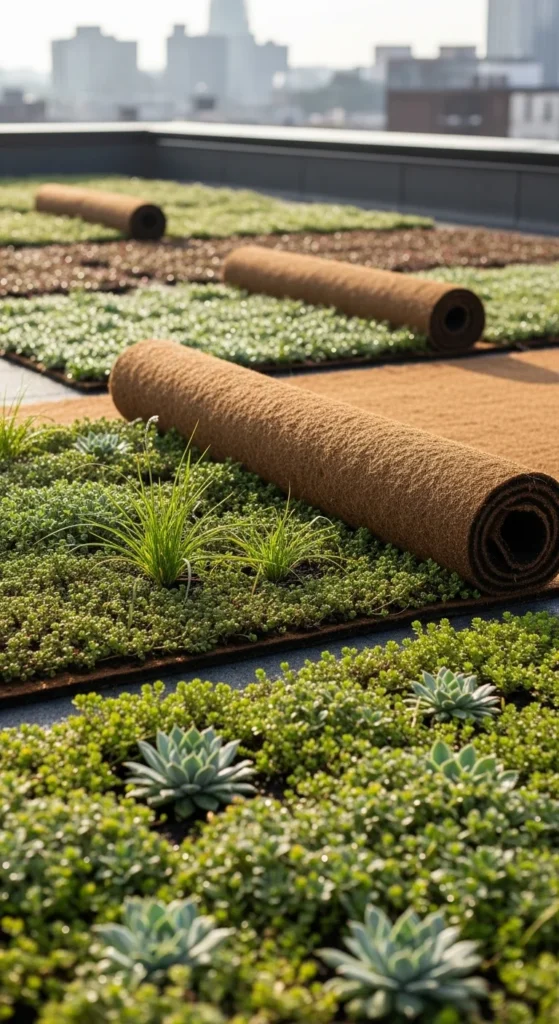
Eco-mats provide instant coverage. They arrive pre-planted with hardy species and unroll directly onto the surface. Add a moisture-retaining layer beneath them. Water lightly after installing. Eco-mats help fill empty areas quickly and add structure while you build long-term planting zones. They are simple to place and replace as needed.
21. Lightweight Planters on Skylight Frames

Place lightweight planters around skylights to soften hard edges. Use shallow containers to limit weight. Plant durable winter species that stay compact. Keep planters spaced to avoid shading the glass. This setup connects the structural elements to the living parts of the roof, bringing cohesion without heavy construction.
22. Mixed-Texture Quilt Design
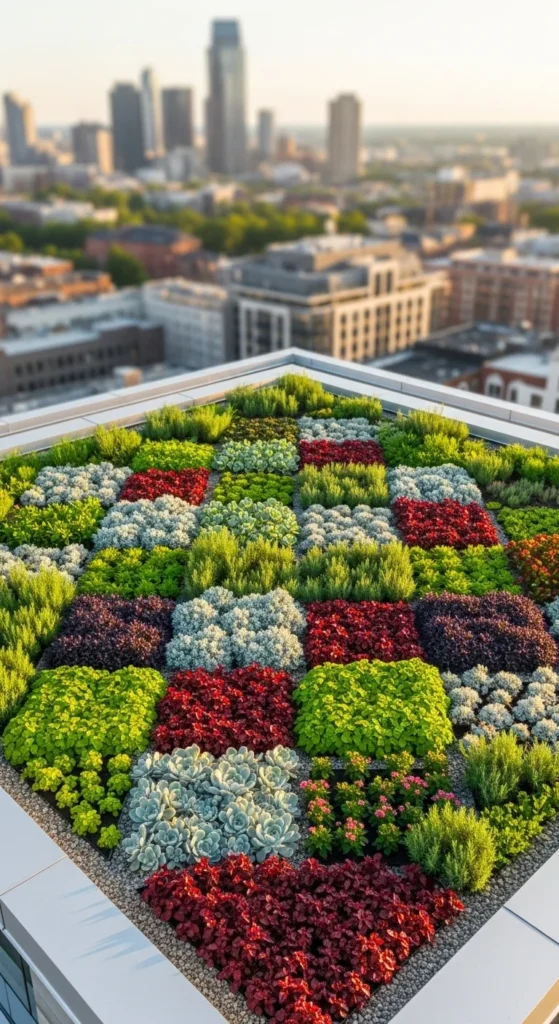
Create a quilt effect by arranging plants of differing textures in geometric zones. Use low sedums, dwarf grasses, small moss patches, and hardy succulents. Keep each section small so the pattern stays clear. Add thin gravel lines between zones for definition. This approach gives the roof a bright, organized look while keeping maintenance simple.
Conclusion
Living-roof planting adds depth, greenery, and year-round interest to spaces that usually go unused. With lightweight materials, hardy species, and easy-to-manage layouts, you can shape a rooftop garden that looks calm, organized, and visually rich. Pick a few ideas that suit your structure, experiment with small sections, and expand steadily as your New Year planting plan grows.

Leave a Reply