

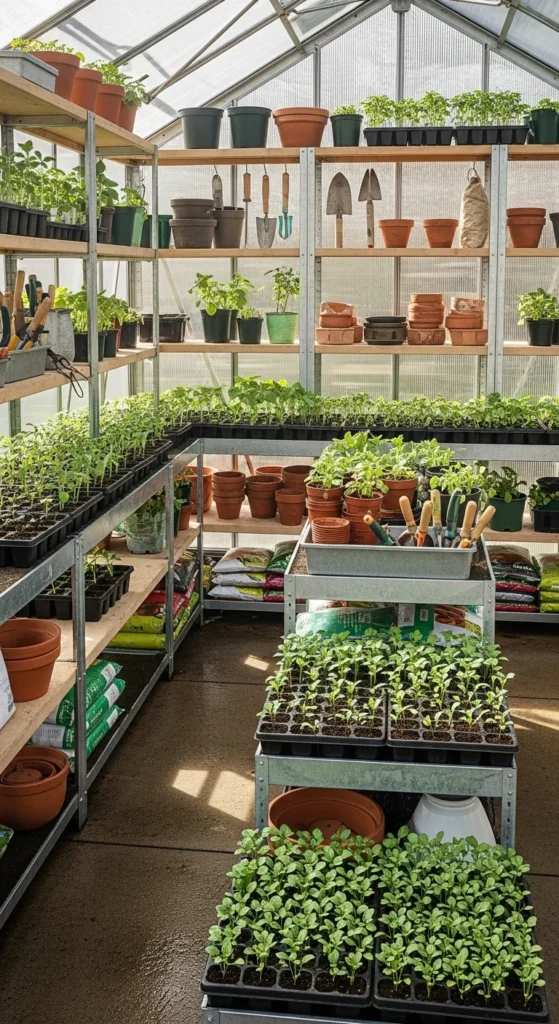
A well-organised greenhouse creates calm, clarity, and easier gardening. Shelving plays a huge part in making small or medium greenhouses feel spacious. With the right shelf styles, height choices, and practical layouts, you can store seedlings, tools, pots, and winter projects neatly. These ideas help you build steady systems that fit your space, budget, and workflow so your greenhouse stays tidy through winter days and into New Year planting.
1. Sturdy Metal Tier Shelving
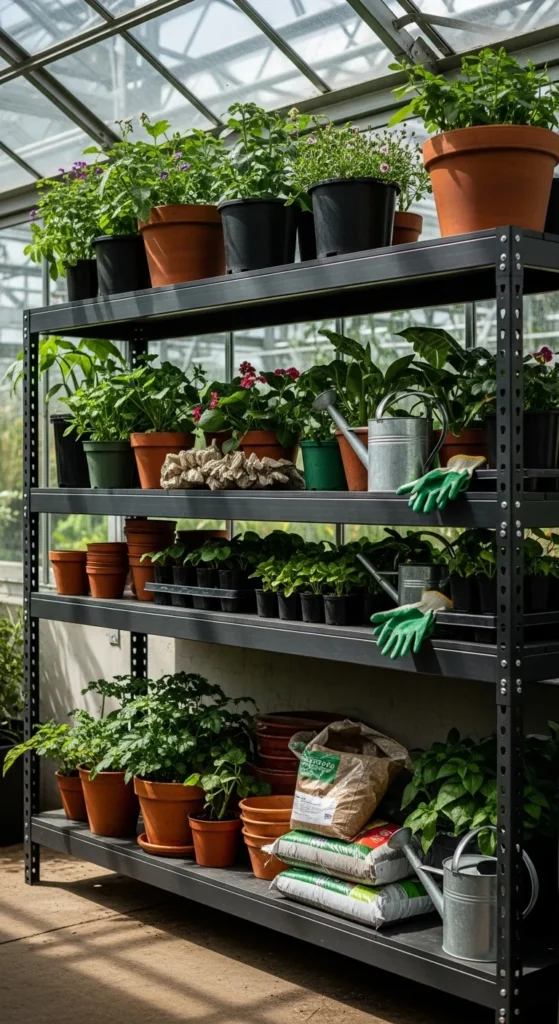
Metal tier shelves are durable and easy to clean. Their open design helps with airflow, which is helpful in winter when ventilation matters. Place heavier pots on the bottom tier and lighter trays above. Keep one shelf open for tools so they remain within reach.
Budget tip: Choose basic galvanized units—they last long and cost less.
DIY idea: Add zip-tie hooks along the sides for hanging gloves or hand tools.
2. Adjustable Wire Racks
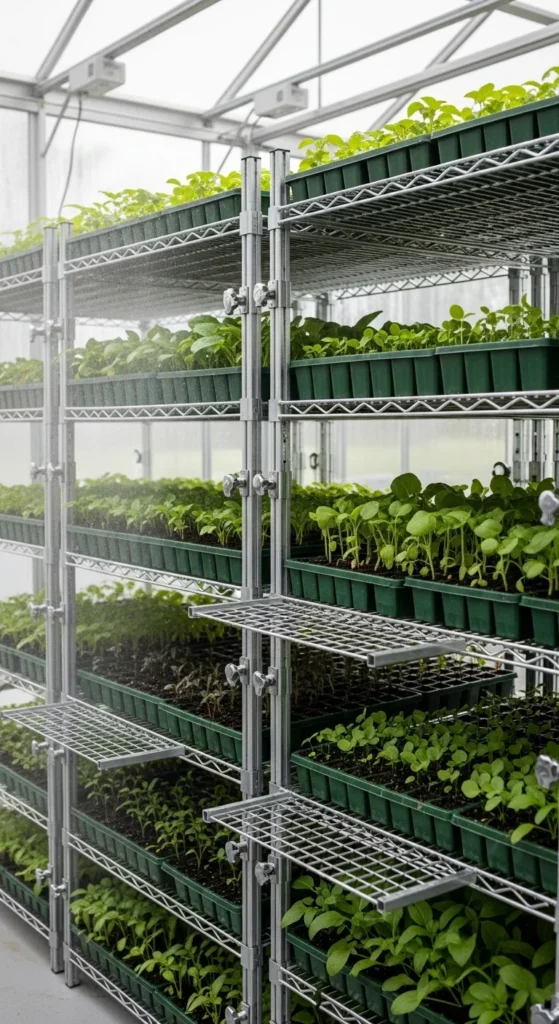
Wire racks let you shift shelf heights whenever your plant collection changes. This works well when starting seedlings or storing winter pots. Keep trays on the top level for maximum light. Use lower levels for soil bags or watering cans.
Budget tip: Buy multipacks of wire shelves from storage suppliers.
DIY idea: Add plastic liners to catch soil spills.
3. Wooden Slat Shelving
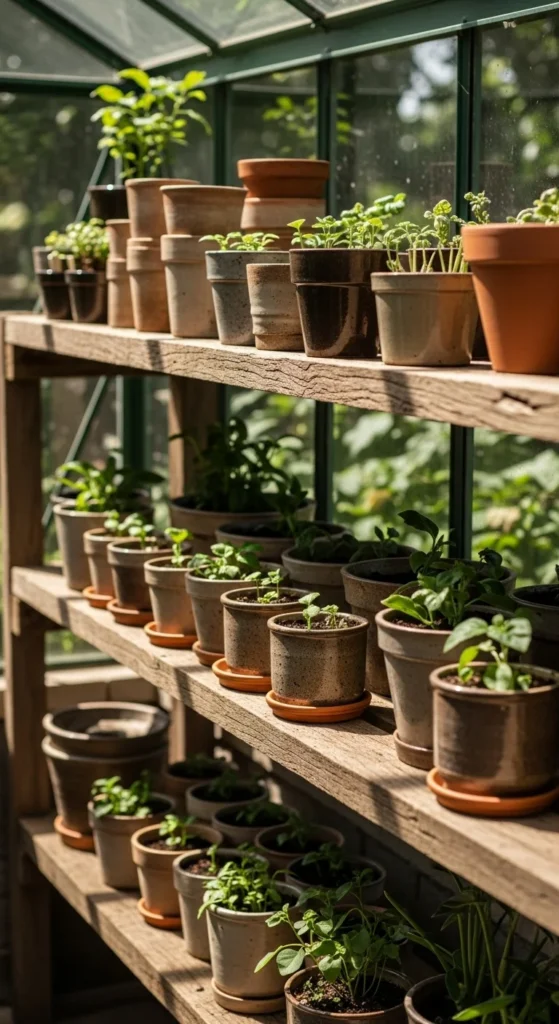
Wooden slat shelves bring warmth and absorb moisture less than solid boards. Their gaps help air circulate under pots. Pine or cedar works well. Seal the wood lightly to protect it from humidity. Arrange pots in rows and leave a bit of space between each item.
Budget tip: Use reclaimed pallets for DIY wooden slats.
DIY idea: Paint the edges in soft earth tones for a clean finish.
4. Folding Greenhouse Shelf Units
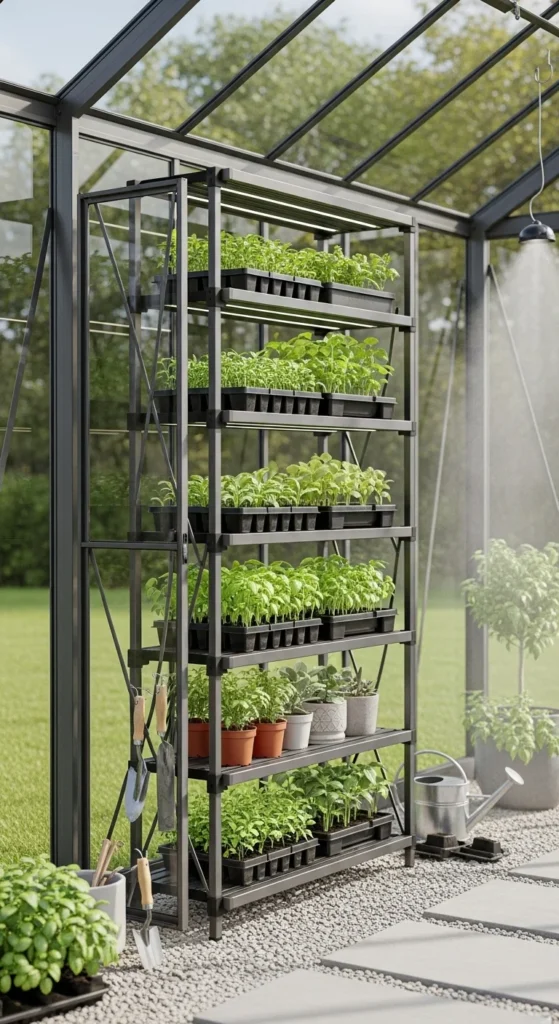
Folding shelves are helpful for seasonal gardening. Open them during busy planting months and fold them flat when extra space is needed. Lightweight models work well for small greenhouses or balcony greenhouses.
Budget tip: Choose fabric-and-metal folding racks—they’re cheaper than solid models.
DIY idea: Add Velcro straps to secure them when folded.
5. Corner Shelf Towers
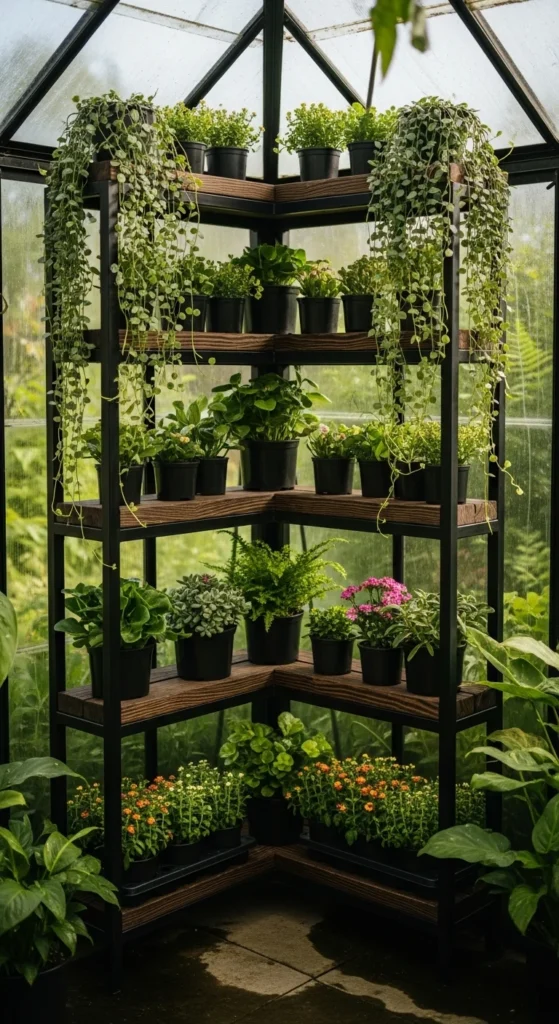
Corner towers use overlooked space effectively. Tall, narrow shelves allow you to stack many items while keeping walkways clear. Place herbs or small pots on upper levels where they get more light. Keep heavier items at the base.
Budget tip: Use plant stands instead of custom towers.
DIY idea: Add rubber feet to prevent slipping on greenhouse floors.
6. Hanging Wire Baskets
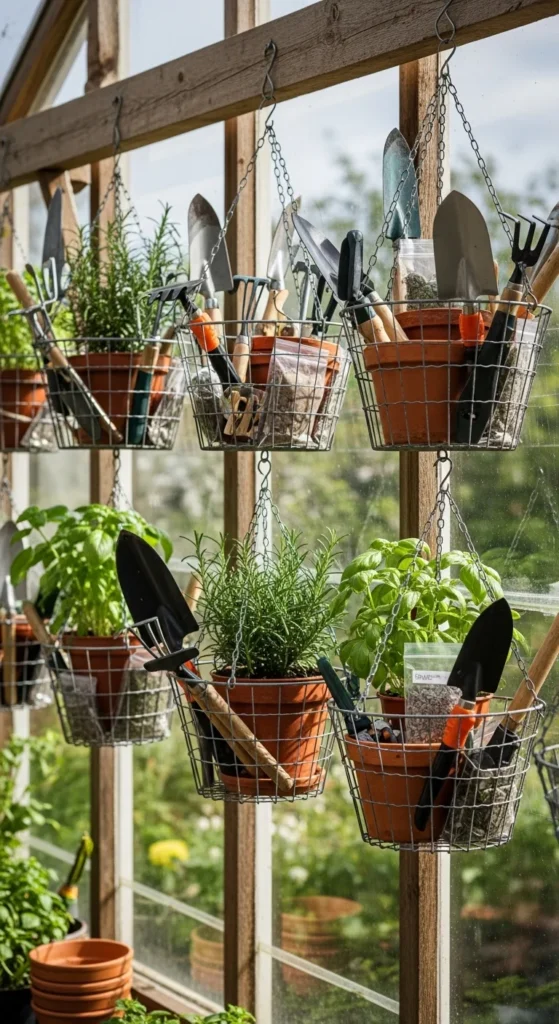
Wire baskets free up shelf and floor space. Hang them from rafters or beams to hold gloves, twine, seed packets, or tiny planters. Since wire allows light in, items stay visible and easy to grab.
Budget tip: Buy basic kitchen wire baskets and repurpose them.
DIY idea: Add labels using simple wooden tags.
7. Slim Wall-Mounted Shelves
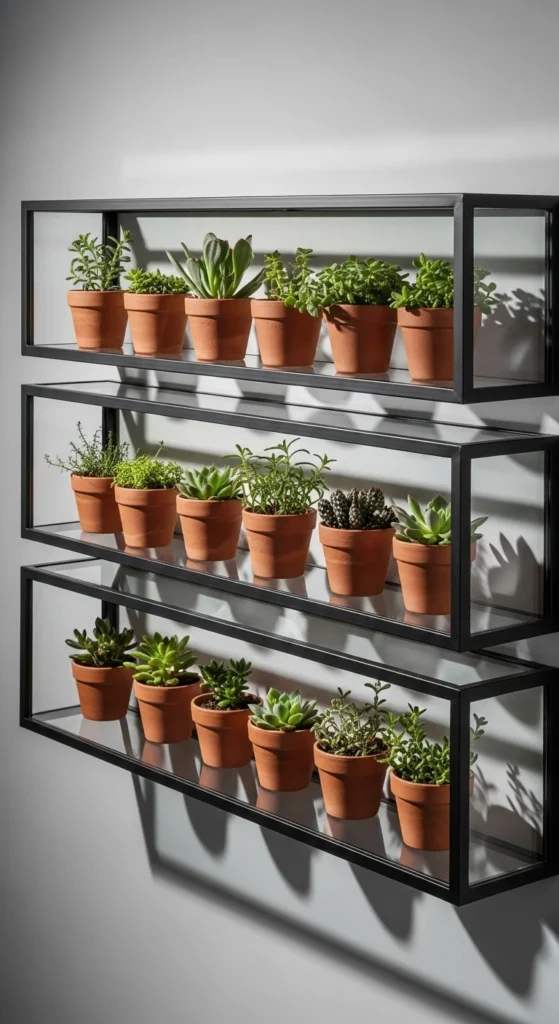
Slim wall shelves are perfect for storing smaller items without taking floor space. Keep them at eye level for easy access. Install several in a row to create a neat display of starter pots.
Budget tip: Use leftover wooden boards from old furniture.
DIY idea: Add metal brackets painted green for a natural greenhouse look.
8. Low Under-Bench Storage
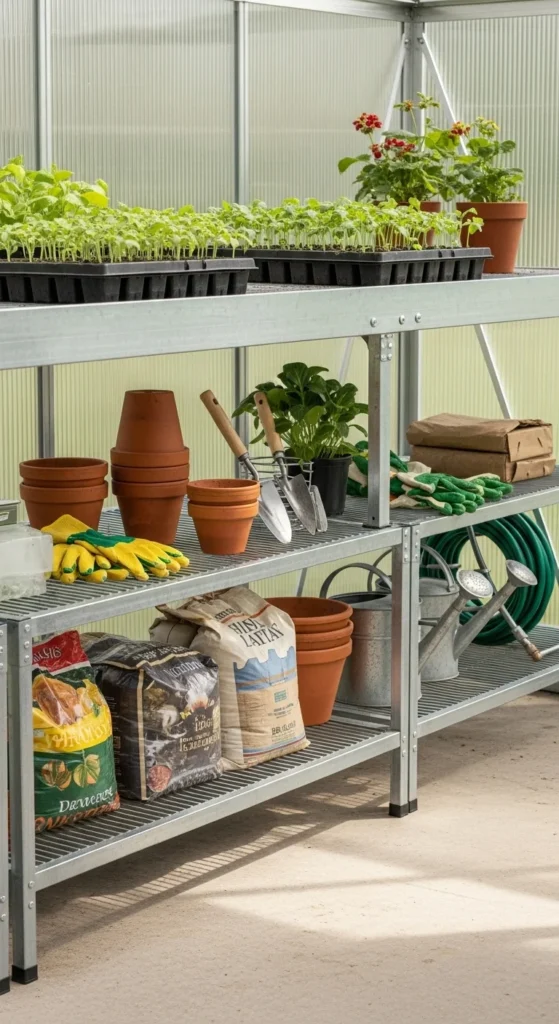
Under-bench shelves use hidden space effectively. Store soil bags, trays, or watering cans underneath your workspace. This keeps the main area clean. Use plastic crates or simple boards as the shelf base.
Budget tip: Use old wooden boards from garden sheds.
DIY idea: Add wheels to under-bench crates for easy pulling.
9. Multi-Level Seedling Stands
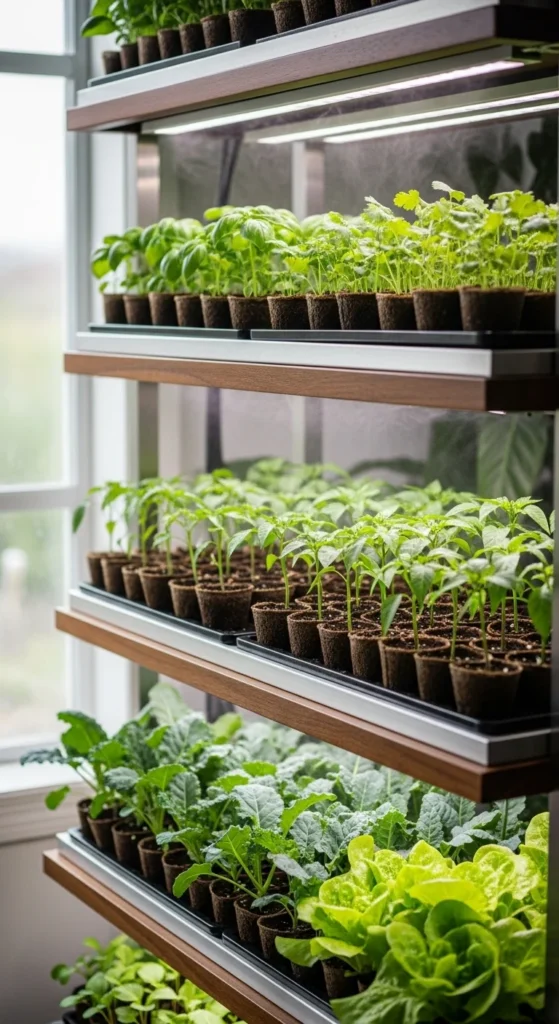
Seedling stands hold dozens of trays in tight spaces. Each level gets enough light if positioned correctly. Water from the top tray and let excess drip down to a catch tray. This saves watering time.
Budget tip: Choose basic plastic-tier stands.
DIY idea: Add reflective foil behind the shelves to brighten lower levels.
10. Heavy-Duty Potting Bench With Shelves
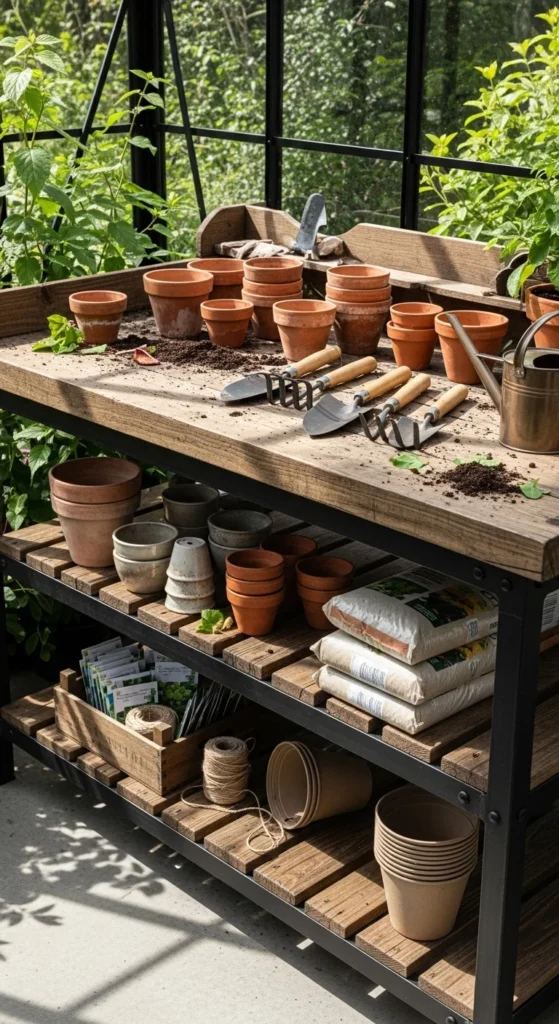
A potting bench with built-in shelving creates a workspace and storage station in one. Keep pots, soil, and tools underneath, and use the top for transplanting. This setup keeps everything in one location.
Budget tip: Build a bench from scrap wood.
DIY idea: Install hooks along the sides to hang tools.
11. Tall Ladder-Style Shelving
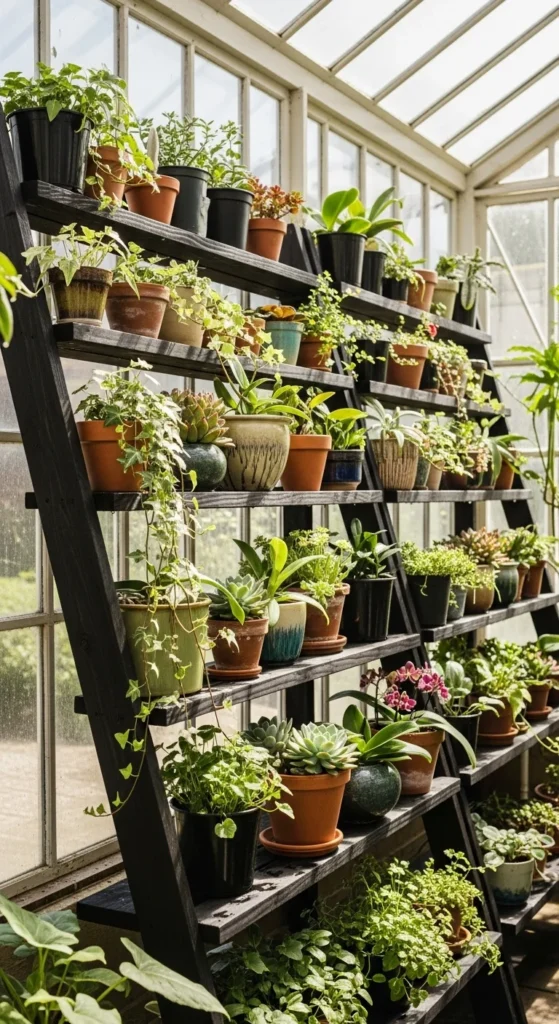
Ladder shelves lean against greenhouse walls and provide tiered space. They’re visually appealing and practical. Use the top levels for lightweight plants and the lower steps for heavier pots.
Budget tip: Build your own ladder shelf from pine boards.
DIY idea: Add anti-slip feet so it stays firmly in place.
12. Modular Plastic Shelving
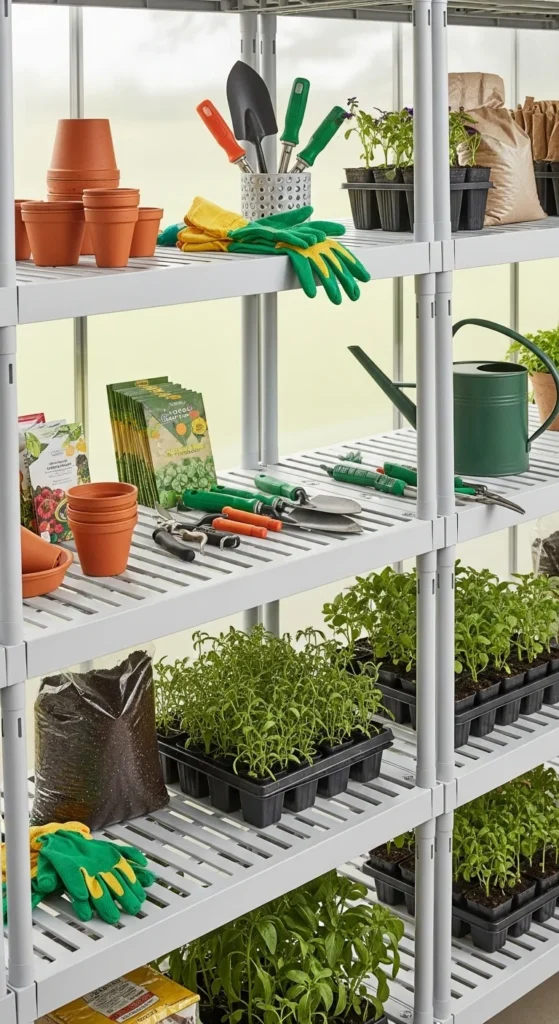
Modular plastic units snap together easily. They’re waterproof, lightweight, and simple to clean. This makes them helpful for winter greenhouse use. Stack or rearrange sections as your needs change.
Budget tip: Buy multi-piece sets that offer more shelves per purchase.
DIY idea: Drill small drainage holes to prevent water pooling.
13. Wooden Crate Shelf Wall
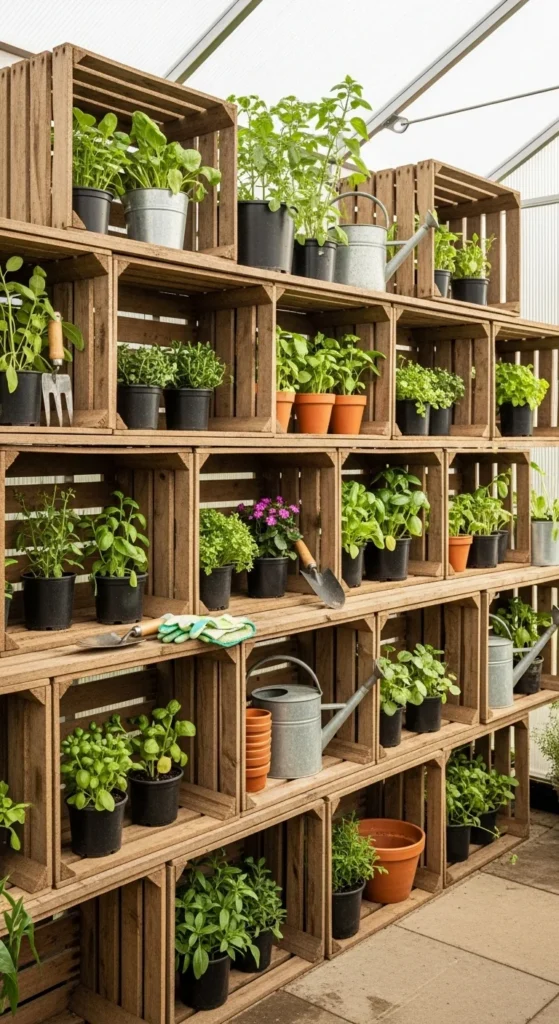
Stack crates on their sides to create a rustic shelf wall. Each crate becomes a mini storage cubby. This method is flexible because you can move crates around as needed.
Budget tip: Collect old crates from fruit markets.
DIY idea: Sand and coat crates with a simple protective finish.
14. Rolling Multi-Tier Cart
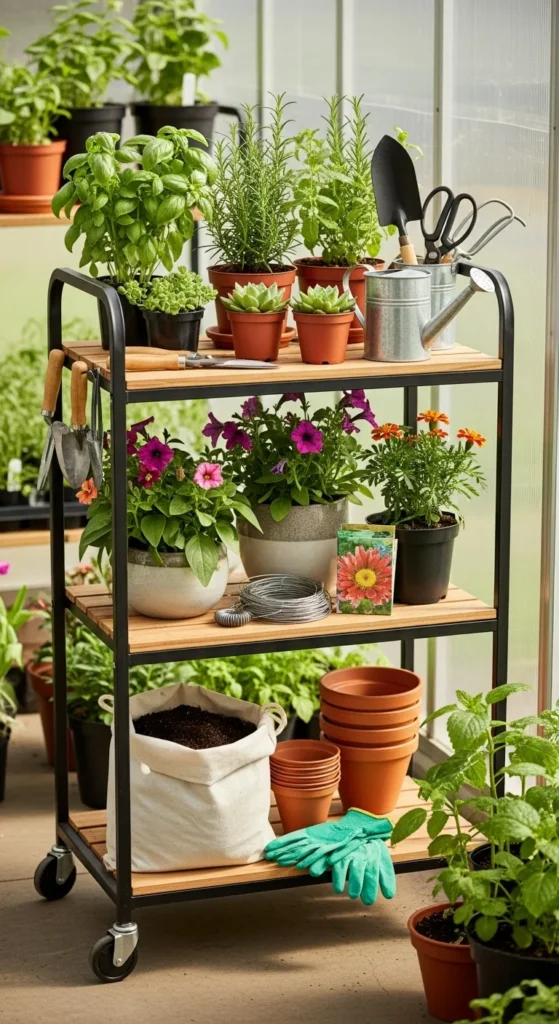
A rolling cart lets you shift plants to brighter spots or move tools during cleaning. Multi-tier carts hold many items without cluttering the greenhouse. Keep heavy pots on the bottom tier for stability.
Budget tip: Use metal kitchen carts.
DIY idea: Add a small brake wedge to stop movement on uneven floors.
15. Overhead Storage Bar
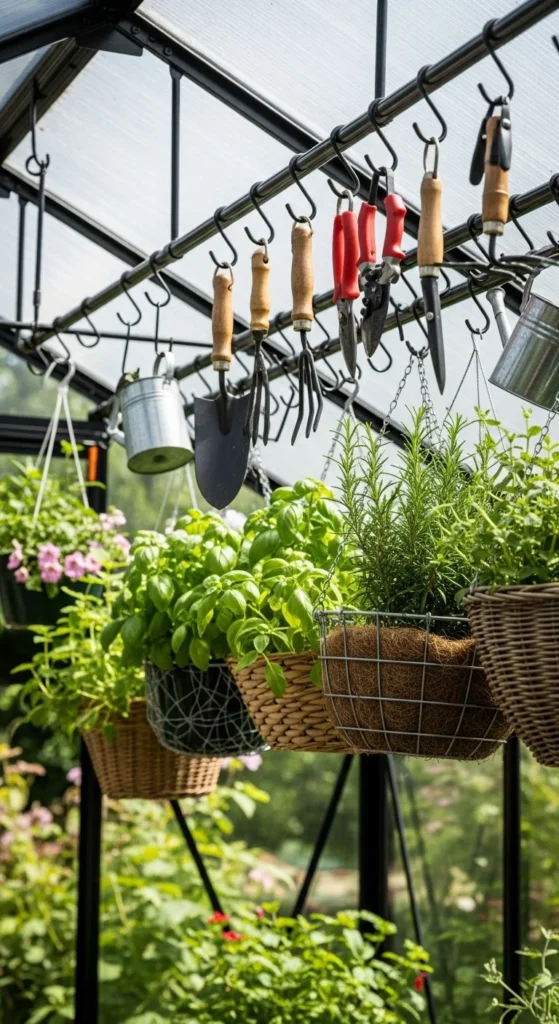
An overhead bar maximises vertical space. Hang tools, gloves, or small buckets from hooks. This keeps walkways open and makes use of unused upper space. Keep the bar sturdy so it holds weight safely.
Budget tip: Use a simple metal pipe.
DIY idea: Add S-hooks for easy tool removal.
16. Shelf With Integrated Grow Lights
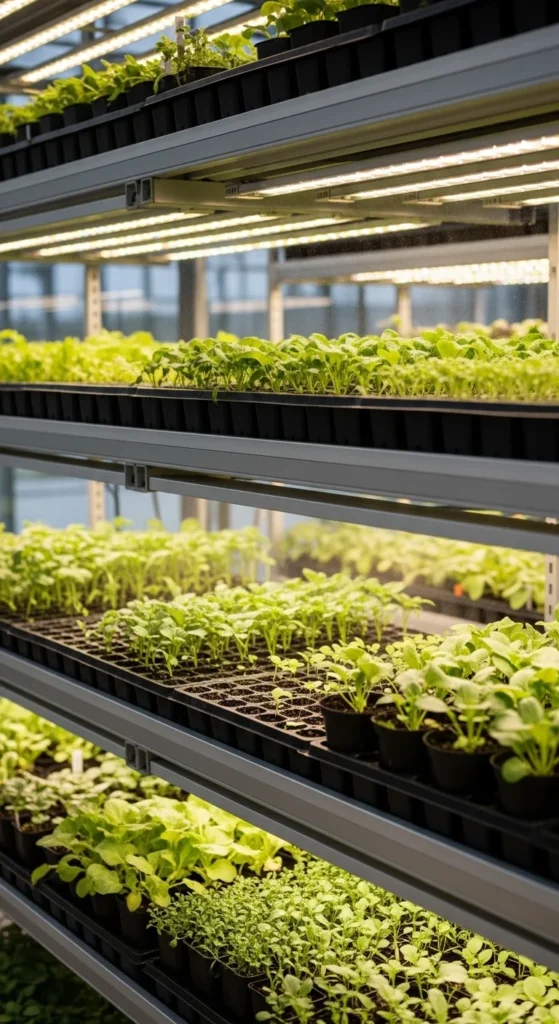
Grow lights help seedlings develop strong roots during winter. Attach lights under each shelf level to create a bright growing station. Keep cords tidy using clips or ties. This setup makes early seed-starting far easier.
Budget tip: Use energy-efficient LED strips.
DIY idea: Add a timer to keep lighting consistent.
17. Deep Shelving for Large Pots
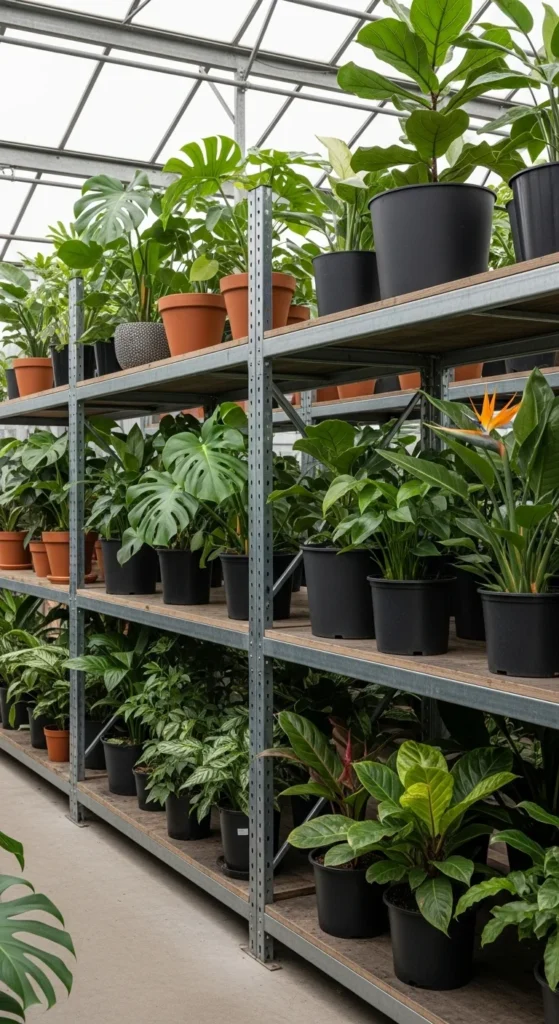
Deep shelves support larger pots that can’t fit on narrow racks. This helps you grow bigger plants in winter without cluttering the floor. Keep heavy pots on lower levels to avoid tipping.
Budget tip: Build simple deep shelves using plywood.
DIY idea: Add braces for extra strength.
18. Narrow Vertical Tier Rack
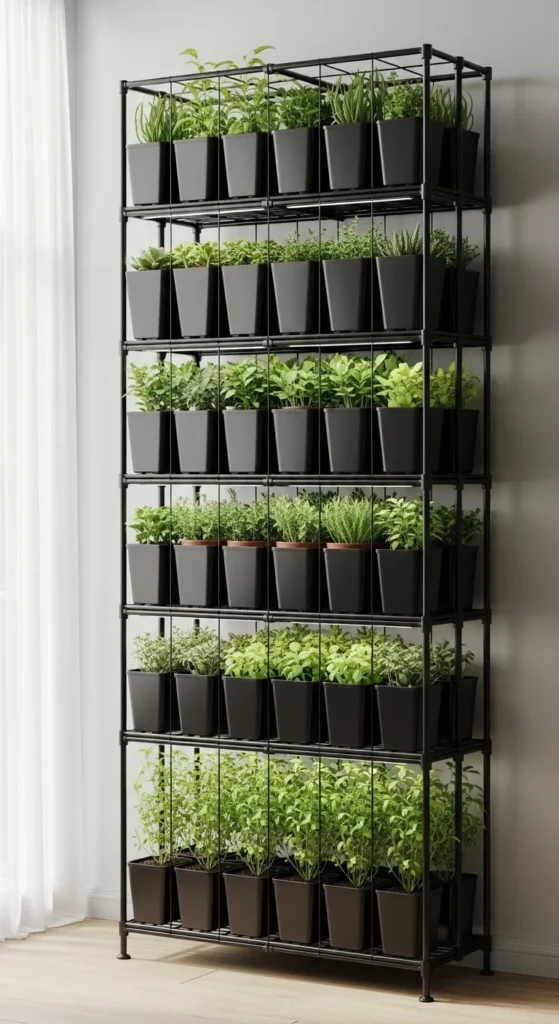
A narrow tier rack promises height without taking width. Use it for seedling trays or small pots. The vertical format works well in corners or beside doors.
Budget tip: Use metal office racks repurposed for plant use.
DIY idea: Add wheels for mobility.
19. Outdoor-Style Shelving Inside Greenhouse
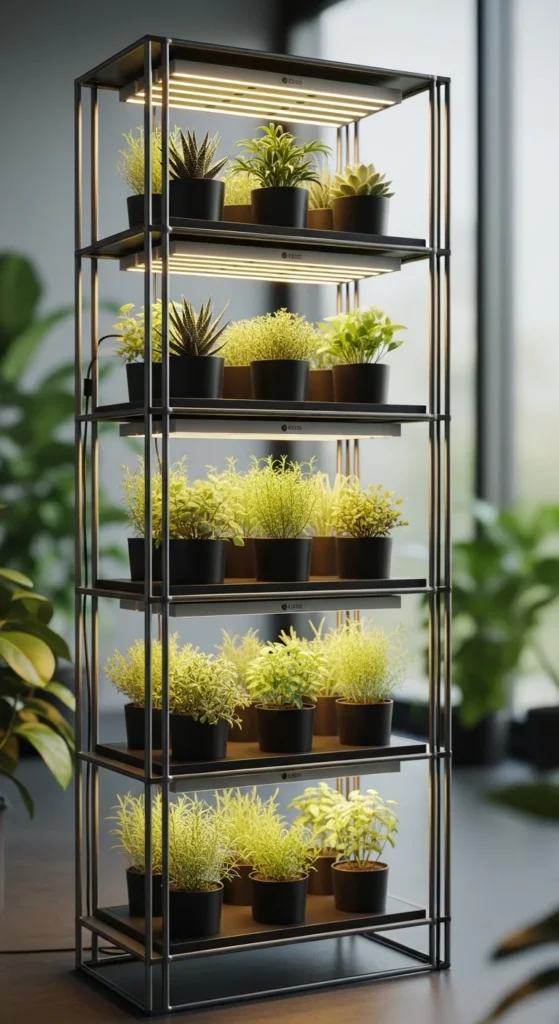
Outdoor-style slatted shelves resist moisture and stay sturdy in humid environments. They’re perfect for heavy pots or large trays. Place these shelves along the main wall to form a central storage zone.
Budget tip: Buy off-season outdoor shelving.
DIY idea: Coat with clear sealant for longevity.
20. Pegboard Shelf Combo
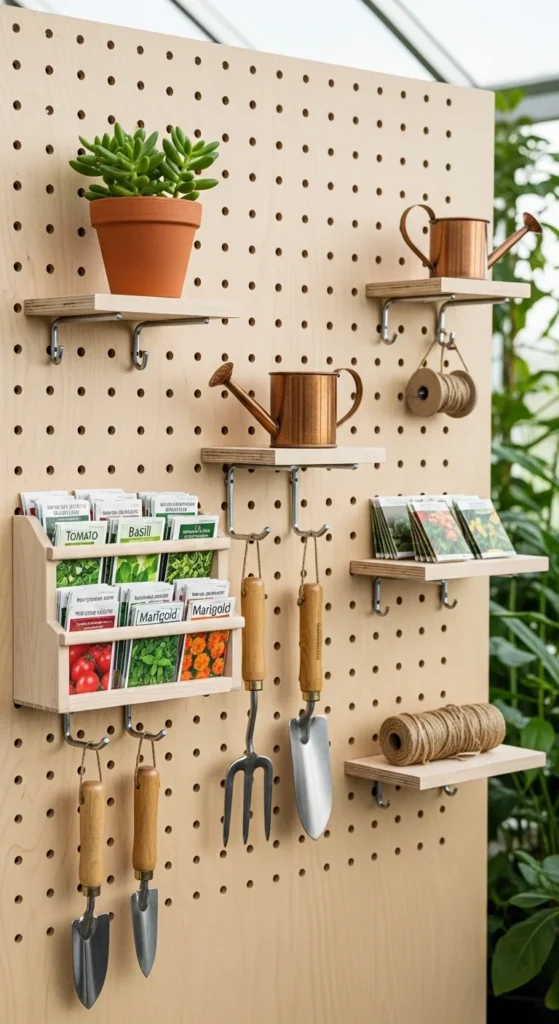
Pegboards offer flexible organising options. Add small shelves, hooks, and baskets wherever you need them. This system helps store tools neatly without using floor space. Keep commonly used tools at eye level for quick access.
Budget tip: Use lightweight fiber pegboards instead of heavy ones.
DIY idea: Add painted outlines for easy tool placement.
21. Over-Window Shelf for Extra Light
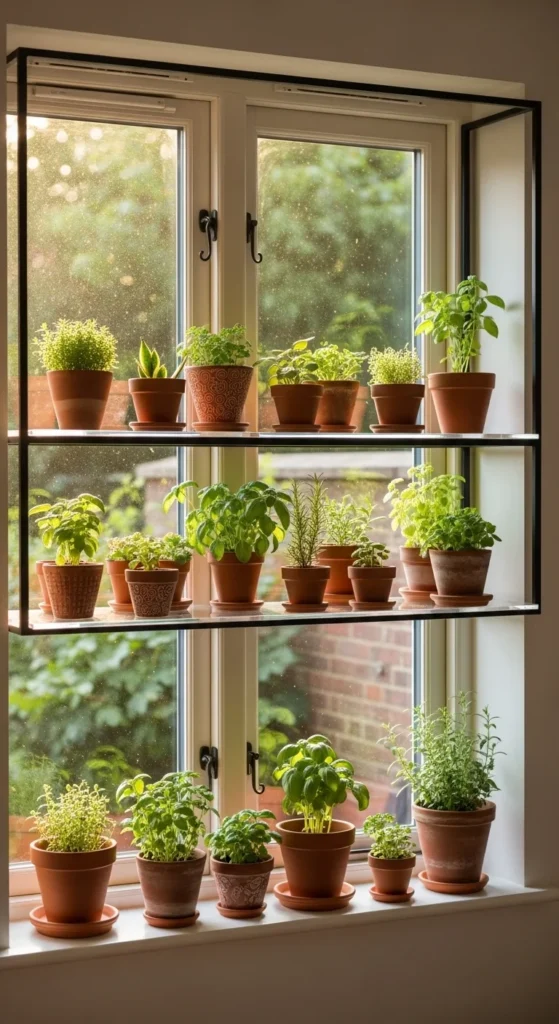
Place a slim shelf over a greenhouse window to catch bright light. Small pots and seedlings benefit from this spot. Since warm air rises, the shelf stays slightly warmer than lower areas. Keep the shelf narrow so it doesn’t block too much light entering the room.
Budget tip: Use leftover planks trimmed to size.
DIY idea: Add two small side braces for stability.
Conclusion
Greenhouse shelving shapes your entire workflow. With smart layouts—like corner towers, deep shelves, rolling carts, or over-window racks—you can store more plants, keep tools tidy, and create a smooth growing routine. Pick a few designs that match your greenhouse size and build them with low-cost materials. A well-organised greenhouse makes winter gardening calmer and New Year planting far easier.
Leave a Reply