

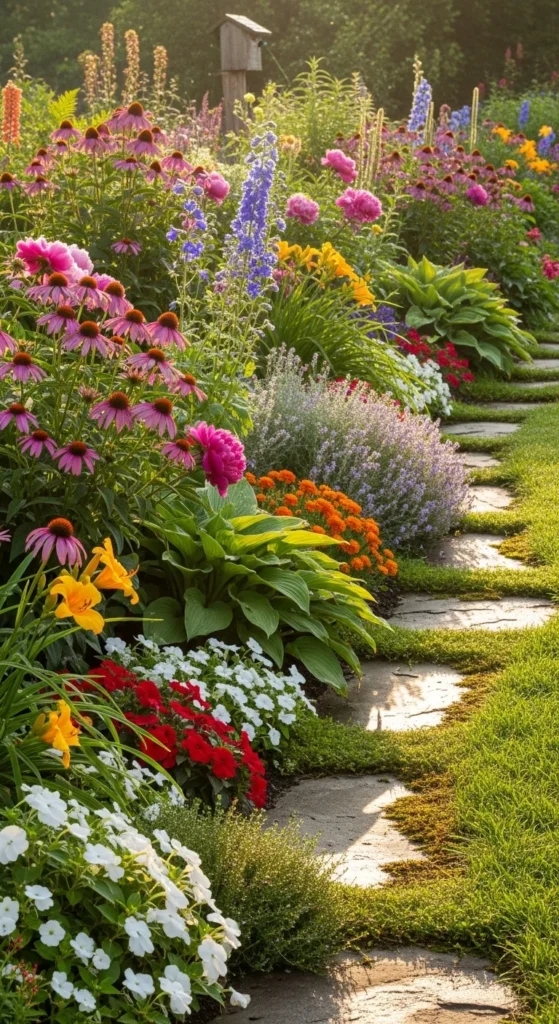
A redesigned flower border shapes the mood of your entire yard. Small adjustments like layering heights, pairing rich colors, or adding simple edging can change the way guests experience your outdoor space. These ideas help you refresh your border with practical upgrades, smart plant choices, and easy styling that works for any yard size. Each design focuses on simple steps that brighten your path and create a welcoming flow through your garden.
Soft Pastel Layered Border
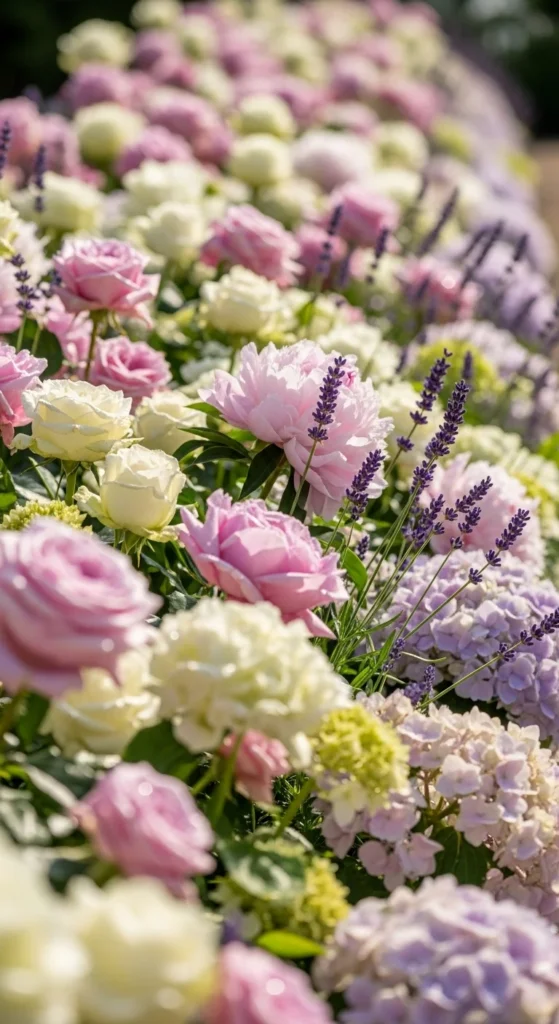
Pastel borders create a calming look that suits front yards, entry paths, and patio edges. Start by placing taller plants like delphinium or foxglove in the back. Add medium layers with pale phlox or dianthus. Use low growers like lamb’s ear at the front to soften the edge. Keep the color palette light so everything blends smoothly. You can reuse existing plants by moving them into better positions rather than buying new ones. Add a thin layer of compost around each plant to keep the soil loose. Water gently after rearranging. To keep things tidy, trim spent blooms often. A pastel border works best in areas that get gentle morning light. If a patch feels empty, tuck in small containers until your plants fill in. This design looks soft yet tidy, making it ideal for welcoming guests.
Bold Color Run Border
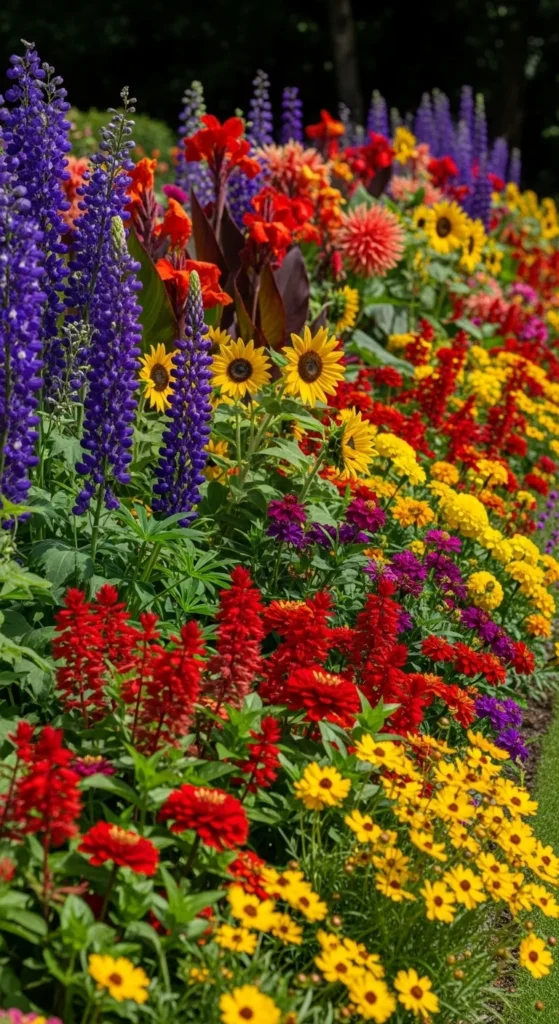
A bold border adds instant energy. Pick three to four rich colors that work side by side. Place taller blooms like rudbeckia or cosmos in the back, then add marigolds or zinnias in the center. Keep low plants like alyssum near the front. Group plants by color in small clusters for a strong effect. You can refresh the soil with a bit of added compost before planting. Keep a watering can nearby because brighter colors often come from high-performing annuals that drink more often. Add mulch between plants so the colors stand out. If you have leftover pots, slip them into gaps for more color. This border suits driveways, patios, or pathways that need a lively look.
Texture-Heavy Foliage Edge
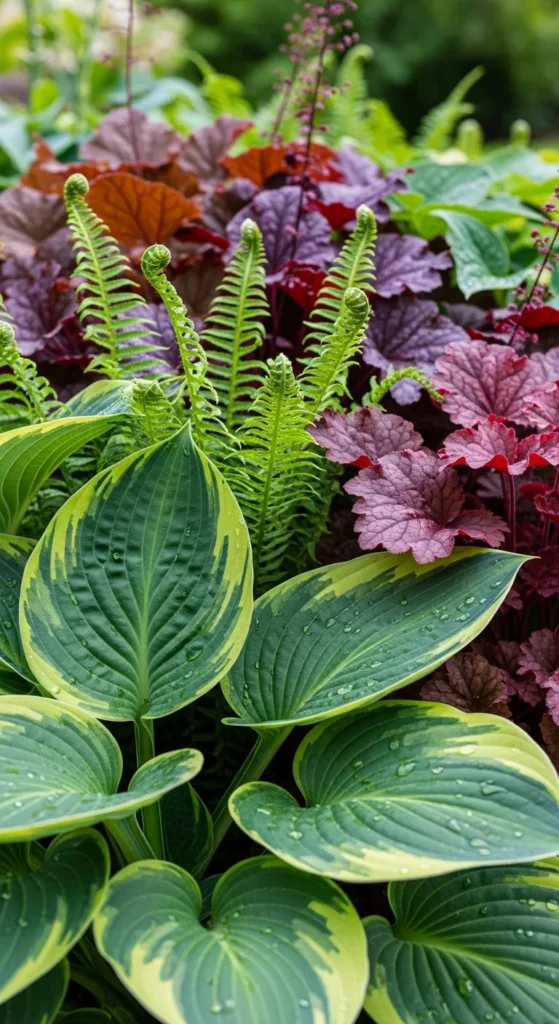
Sometimes the leaves do the talking. Use hostas, ferns, heucheras, and grasses to build a border filled with texture. Place larger hostas at the back and use curly ferns and patterned heucheras in the front. Add layered grasses to sway in the wind. Foliage-driven borders stay interesting even when blooms fade. You can pick plants that match your shade levels easily. Water early in the morning so the leaves stay clean. Add a few stepping stones along the border to make trimming simple. This border suits shady areas under trees or near porches. Add a small solar light to highlight leaf shapes at night.
White Glow Border
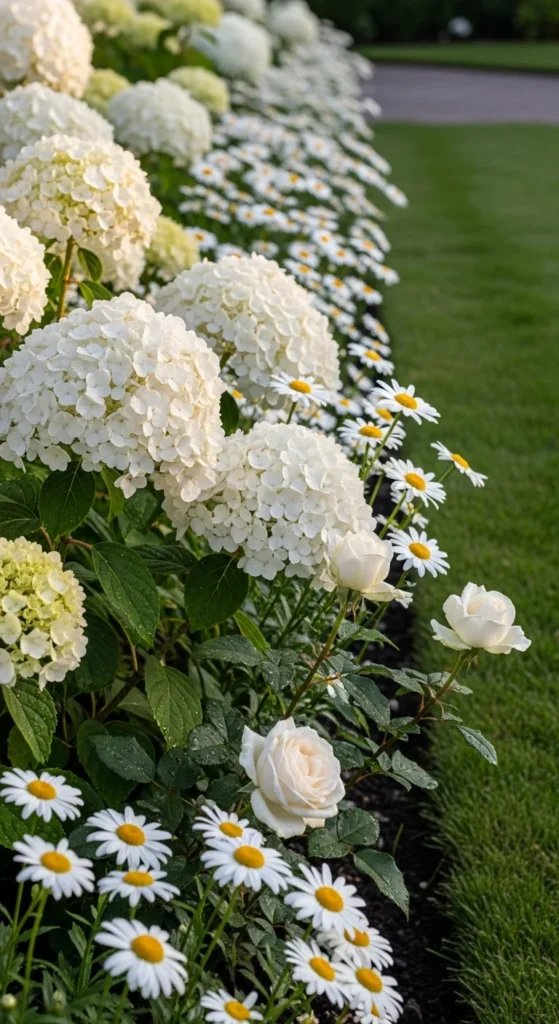
White borders stand out at night and look tidy in daylight. Use white daisies, hydrangeas, and roses to create a calm, glowing style. Plant taller shrubs at the back and fill the front with white alyssum or petunia. Keep the soil moist but not soggy. Adding white stones or pale mulch can make the color theme stronger. If parts of your yard feel dark, this border helps brighten the space. Trim old blooms often to keep the look consistent. If you’re short on plants, mix in white containers until everything grows in. This style suits entry paths and patio edges.
Cottage-Style Spillover Border
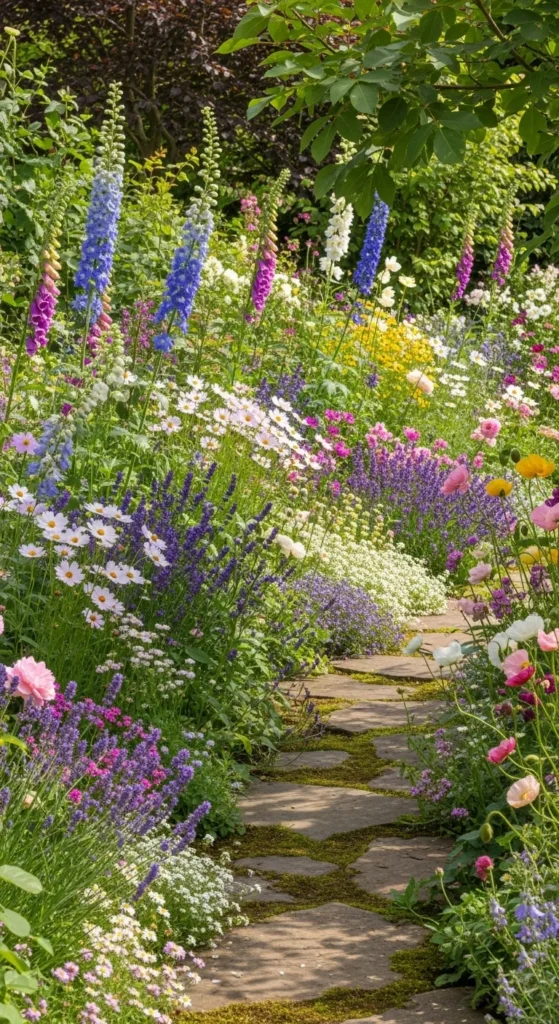
Cottage gardens feel relaxed and full. Mix perennials and annuals in a loose pattern. Use foxglove, daisies, cosmos, and lavender. Let plants spill gently over the edge to soften hard lines. Keep some taller blooms in the center to add height. You can reuse old pots by placing them behind plants to lift them. Add mulch to keep soil from drying out. Water calmly so soil stays steady. Cottage borders work well near porches or fences. Add simple stakes to support plants that lean too far. This style hides small gaps easily.
Low-Maintenance Shrub Line
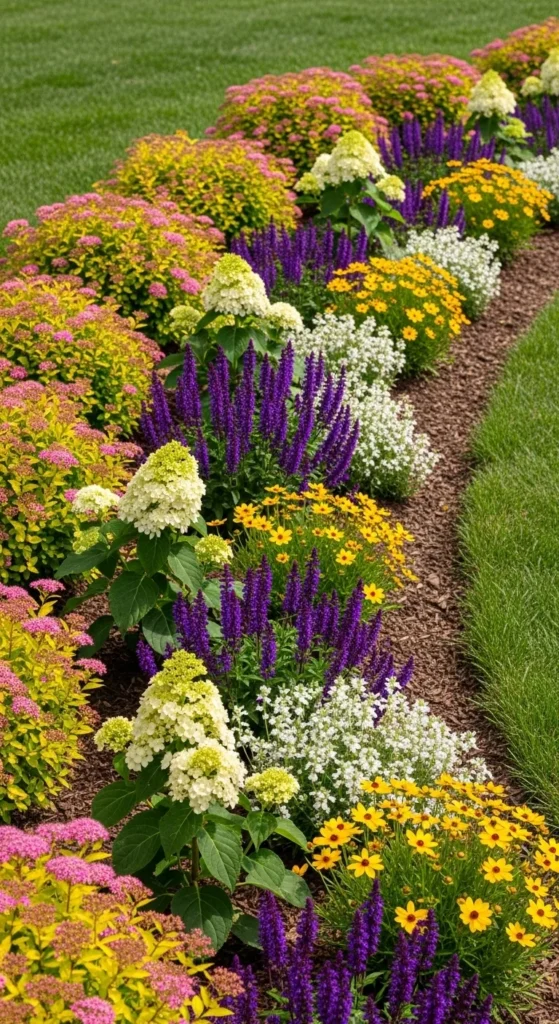
Shrubs anchor a border and keep it stable year-round. Plant dwarf hydrangeas or spirea at the back. Add easy flowers like salvia or catmint between them. Use low-growing plants in front to soften the edge. Shrub-based borders work well if you prefer fewer planting tasks. Trim shrubs lightly in winter and add compost in spring. Add a drip line to make watering hands-free. This border fits around driveways, walkways, or long fences.
Repeating Color Pattern Border

Repeating colors create a clean rhythm. Pick two or three shades like pink, yellow, and purple. Plant them in repeating groups along the border. Use taller versions of each color in the back and smaller ones in the front. This pattern helps the garden look tidy without much planning. Add mulch to make the colors stand out. If you find a gap, repeat the same color rather than switching. This border works best along long walkways or straight garden edges.
Border with Decorative Edging
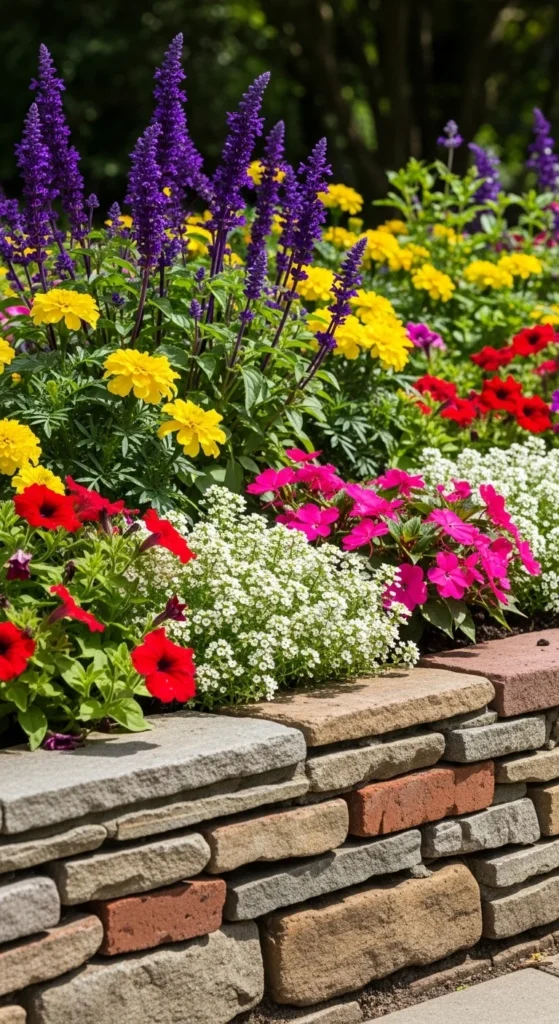
Edging makes any border look finished. Use bricks, stones, or recycled pavers to create a small wall. Place taller flowers in the back and shorter ones near the edging. Keep soil even so the border looks tidy from the street. You can paint stones white for a cleaner look. Add mulch behind the edging so weeds stay down. This approach works well along sidewalks or front-yard beds.
Soft Sunset-Tone Border

Warm tones create a relaxing mood. Use marigolds, coneflowers, coreopsis, and dahlias. Plant taller varieties toward the back. Add low growers like calibrachoa near the front. These colors pair nicely with terracotta pots or wooden edging. Water early so flowers stay upright. Add a thin path behind the border so you can trim easily. This border suits patios and seating areas.
Monochrome Purple Border
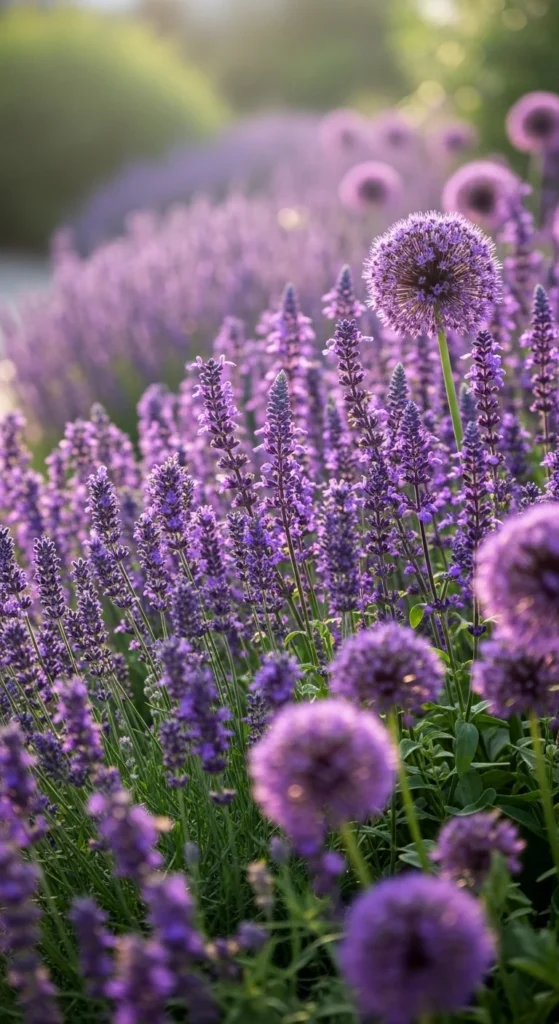
Purple borders look rich and balanced. Mix lavender, salvia, alliums, and petunias. Keep a mix of heights to prevent a flat look. Add silver foliage to highlight the purple tones. Water lightly so soil stays moist. Purple borders fit well near fences or along patios. If you get shade in the afternoon, purple blooms still stand out.
Mixed Annuals Refresh Border
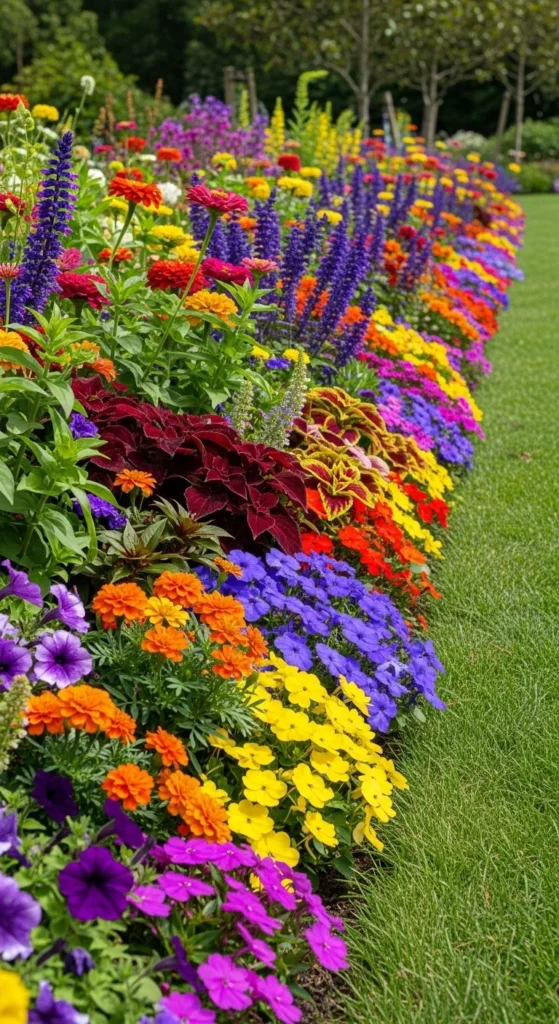
Annual-heavy borders offer serious color with low cost. Buy small packs of marigolds, zinnias, or petunias. Plant them closely so they fill gaps fast. Add compost before planting. Water gently and trim dead blooms. You can replace tired plants mid-season without disrupting the layout. This border suits entrances or areas viewed often by guests.
Front-Heavy Border for Narrow Paths
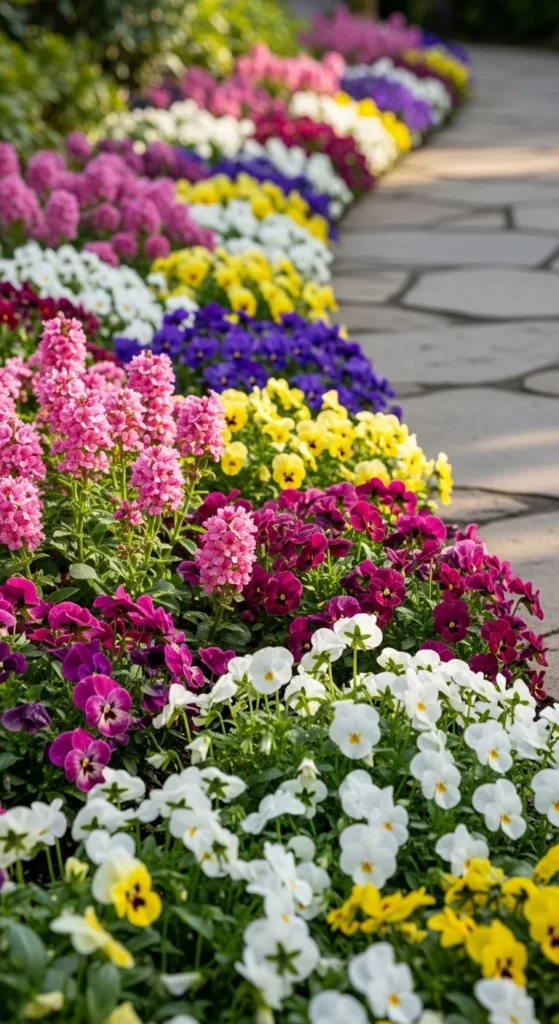
Narrow spaces call for smart planting. Keep most flowers under knee height. Use compact varieties of daisies, catmint, or dianthus. Add taller plants only at the back corners. This prevents flowers from falling into walkways. Water at the base so petals stay clean. Add a thin gravel strip along the path to keep soil from spilling. This border suits townhomes or small yards.
Border with Sculptural Plants
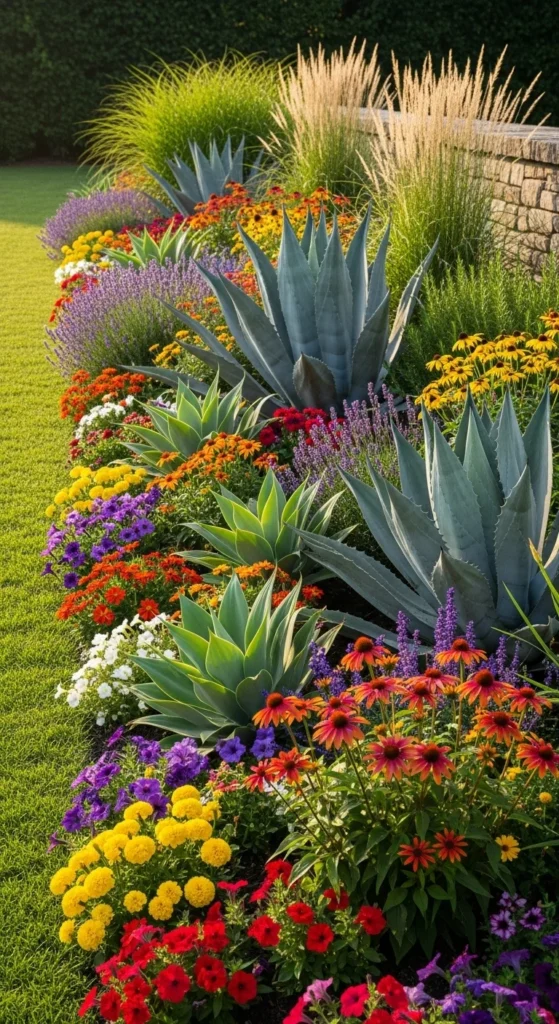
Sculptural plants add personality. Choose one or two bold shapes like yucca, agave, or tall grasses. Surround them with softer flowers such as lantana or daisies. This contrast builds a clean visual style. Water sparingly if you use drought-friendly plants. Add small stones around the sculptural center to highlight the shape. This border fits sunny areas and modern homes.
Curved Wave Border
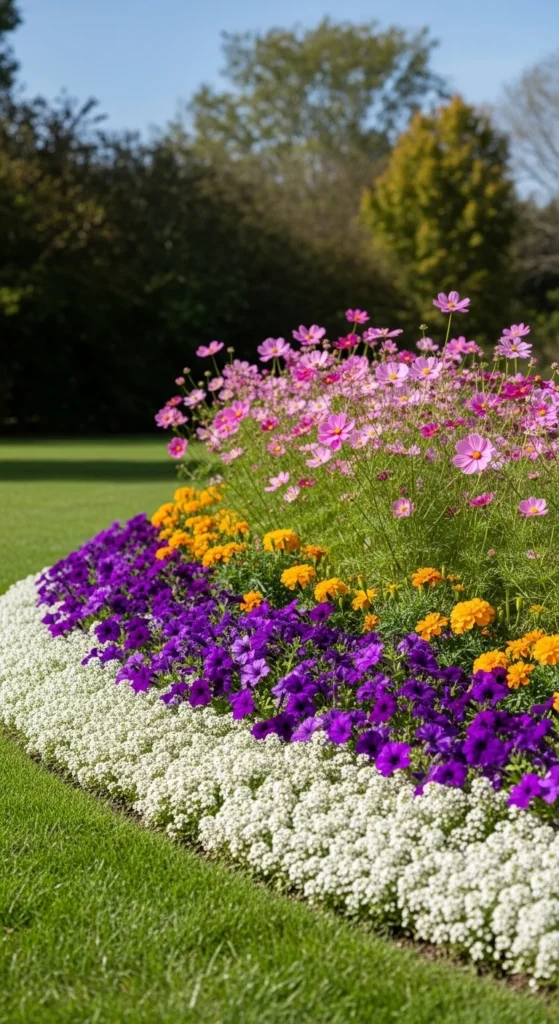
Curves add movement to your garden. Use a string or hose to map a curved line. Plant taller flowers in the deepest part of the curve and lower ones toward the front. Curved borders work best with repeated color clusters. Add mulch to define the shape. This design suits large yards and open lawns.
Pink Romance Border
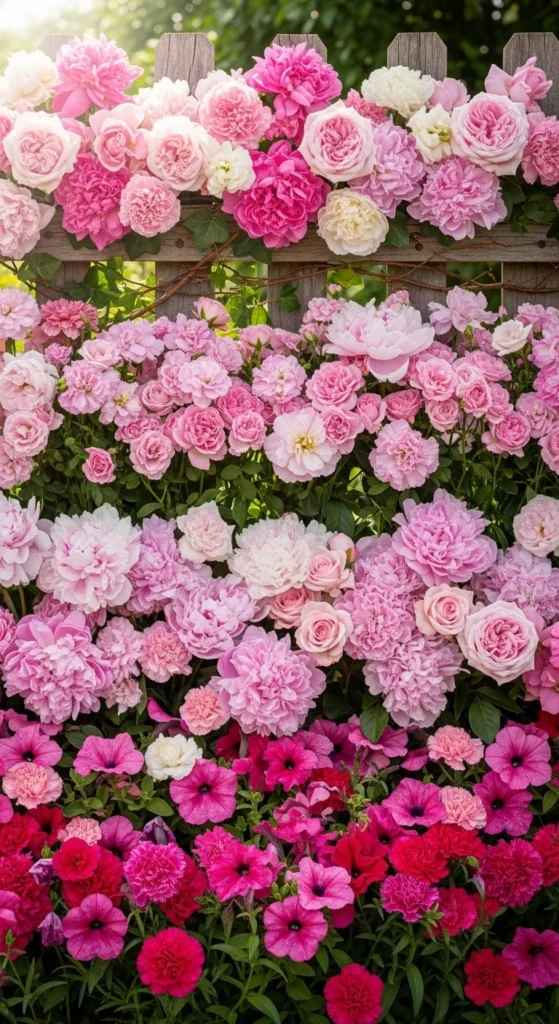
Pink flowers create a charming look. Mix roses, dianthus, cosmos, and zinnias. Keep darker pinks in the back and softer shades in front. Add dusty miller to break up the color. Water early so petals stay crisp. This border suits patios, fences, or sitting areas.
Bird-Friendly Border
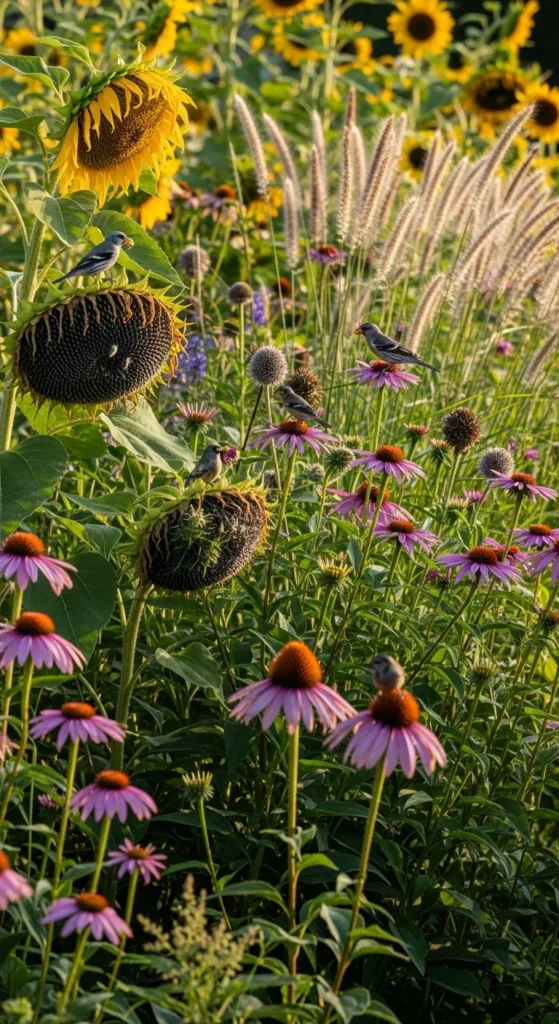
Pick flowers that draw birds, like coneflowers, sunflowers, and black-eyed susan. Leave some seed heads in place for birds to feed on. Add a small birdbath nearby. Keep taller plants at the back to create shelter. Water gently so soil stays loose. This border works well near patios where guests can watch nature.
Scented Walkway Edge
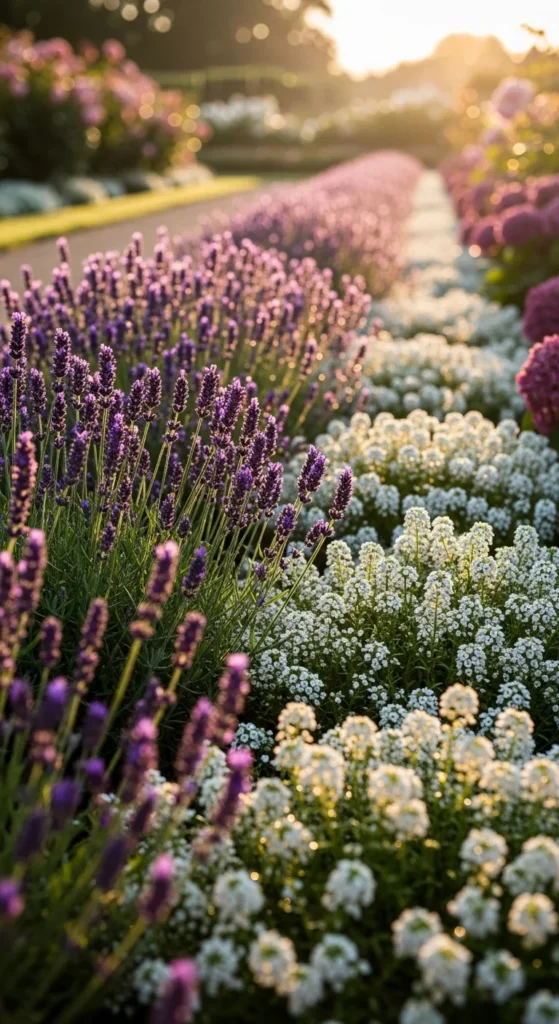
Scented edges make walking through your garden feel special. Plant lavender, sweet alyssum, dianthus, and nicotiana near the front. Add scented roses in the back. These plants enjoy light trimming. Keep soil loose so air moves through roots. This border fits sidewalks or patio edges where guests pass often.
Border with Recycled Containers
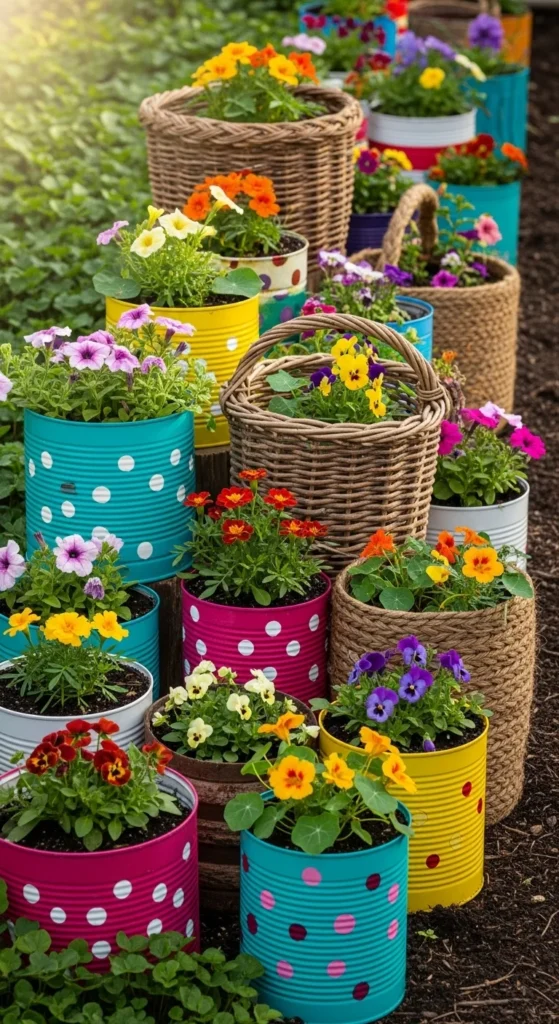
Recycled containers add charm and help you fill gaps easily. Use old cans, wooden crates, or baskets. Drill drainage holes and paint the containers to match your theme. Place them between perennials to bring variety. Add compost before planting. Water gently and rotate containers weekly. This border suits creative gardeners on a small budget.
Four-Season Structure Border
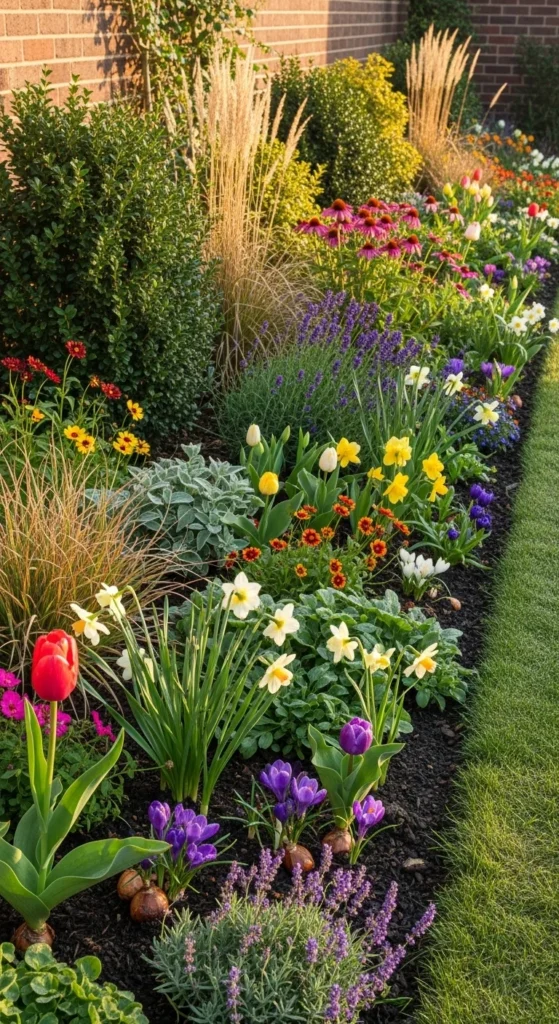
A four-season border stays interesting all year. Plant evergreen shrubs for winter shape. Add bulbs for spring color, then fill spaces with summer perennials. In fall, add mums or asters. This layered system keeps your garden lively in every season. Add mulch to protect bulbs. This border suits entryways or long paths.
Compact Border for Small Yards
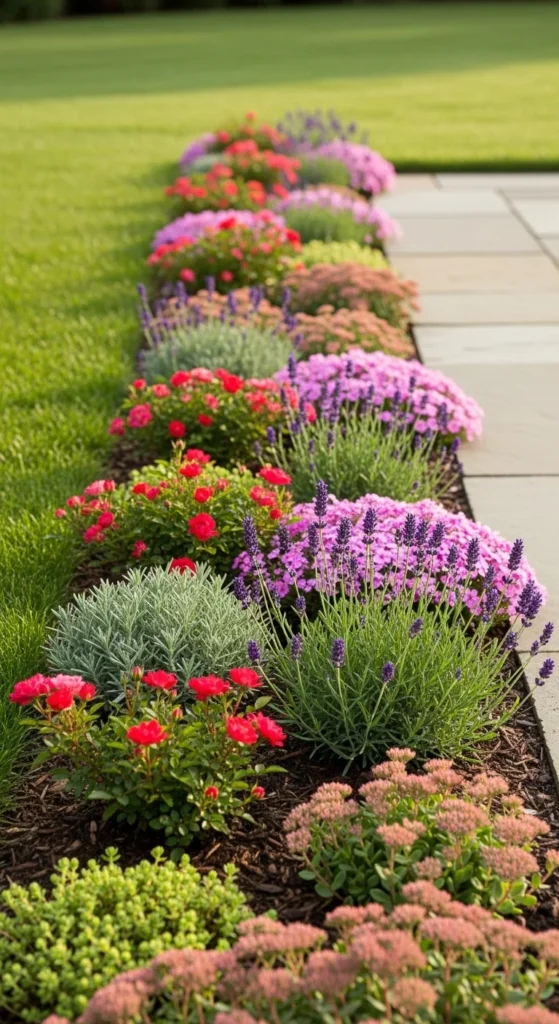
Small yards still shine with the right layout. Choose compact flowers like dianthus, catmint, or dwarf marigolds. Keep taller plants to the back corners. Use a repeating pattern to make the border look cohesive. Add mulch to keep weeds low. Water slowly so soil doesn’t wash out. This border fits patios, courtyards, and side yards.
CONCLUSION
A redesigned flower border can change the mood of your yard with just a few thoughtful updates. Whether you prefer soft colors, bold clusters, or neat structure, each idea offers a simple way to shape your space without overspending. Pick one design, start small, and build a border that makes guests pause and admire every time they visit.
Leave a Reply